

Web
Next.js
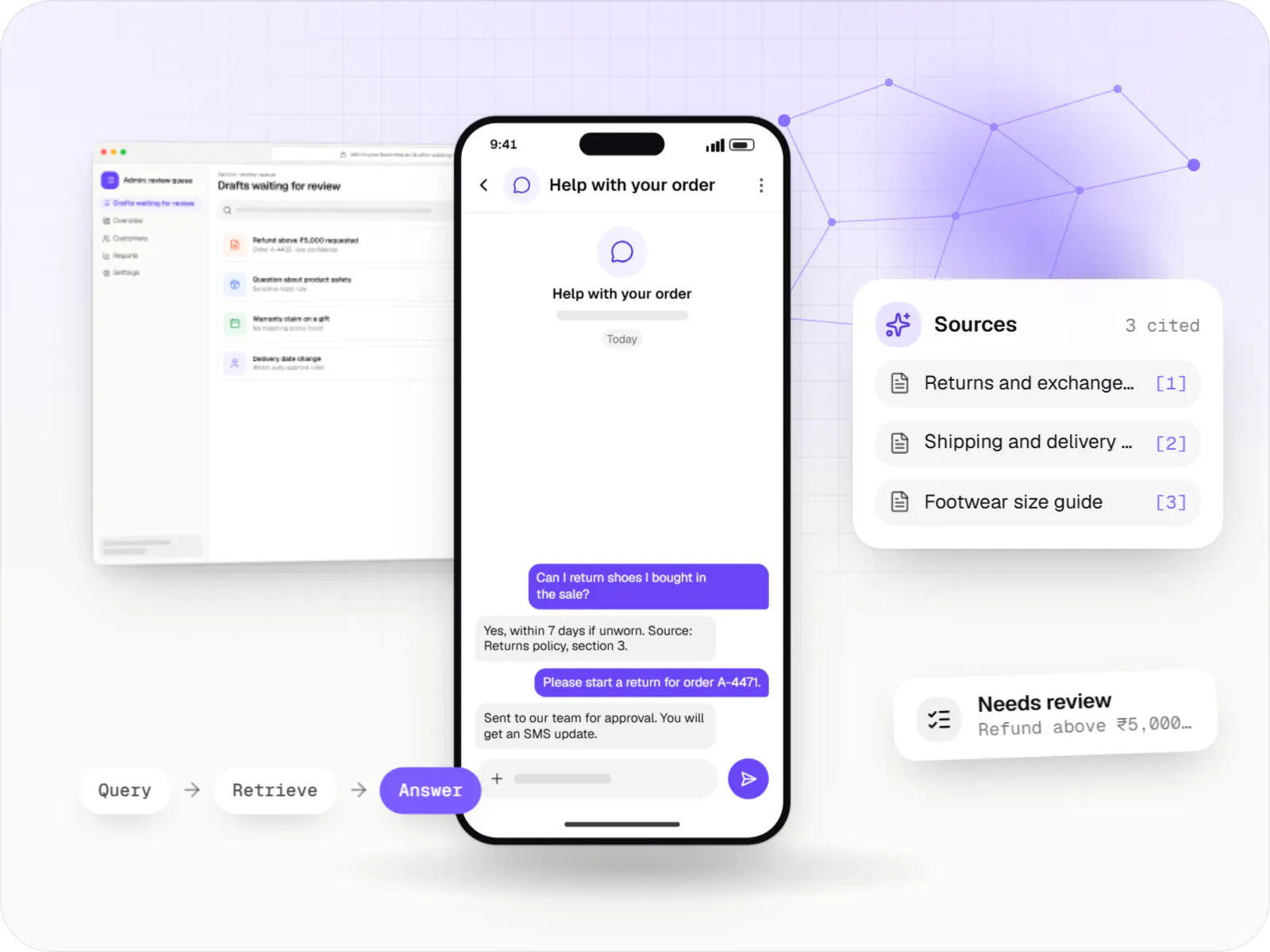
A modern web technology for fast, search-friendly websites, online stores and web applications that load quickly on mobile.
Used for
- Business websites
- Online stores
- Web apps
- Customer portals
Commerce engineering
Storefronts, apps and back-office tools where UPI, COD, couriers and GST are core features.
At a glance
What it is
Online stores, shopping apps and B2B ordering portals on Shopify, WooCommerce or custom stacks, wired to Indian payments, couriers and GST invoicing.
How to start
Tell us what you need in your own words. You talk to the developers who would build it and get a written, line-item estimate.
Get a project estimateIndian shoppers switch between UPI apps, expect a clear COD option, check delivery dates by pincode and often buy on a mid-range Android phone over an unsteady connection. A store that ignores any of these loses orders quietly.
We map your order flow first, from catalogue and pricing to payment, shipping, returns and refunds, then choose the platform. A new D2C label may need a well-configured Shopify store with a few custom apps; a distributor with tiered pricing and credit limits usually needs a custom B2B portal linked to its accounting system.

Mobile-first collections, product pages, bundles, reviews and search, with product structured data.
Android and iOS apps with push notifications and quick UPI checkout, sharing the website backend.
Customer-specific price lists, minimum order quantities, credit limits, GSTIN capture and quick reorders.
Seller KYC, commission rules, split settlements, seller dashboards and GST TCS reports for the operator.
UPI, cards, net banking, EMI and COD via Razorpay, PayU or Cashfree, plus UPI AutoPay for subscriptions.
Pincode serviceability, Shiprocket or direct Delhivery and Blue Dart APIs, labels, NDR handling and reverse pickups.
WhatsApp or IVR order confirmation, COD limits by pincode or order value, and prepaid incentives.
Webhook-driven order states and settlement reports matched to gateway payouts.
HSN codes, CGST/SGST or IGST by place of supply, credit notes and e-invoices where applicable.
Fields for Legal Metrology declarations and seller details under the Consumer Protection (E-Commerce) Rules, 2020.
Pages tested on mid-range phones and slow networks, with Core Web Vitals monitoring.
Solutions
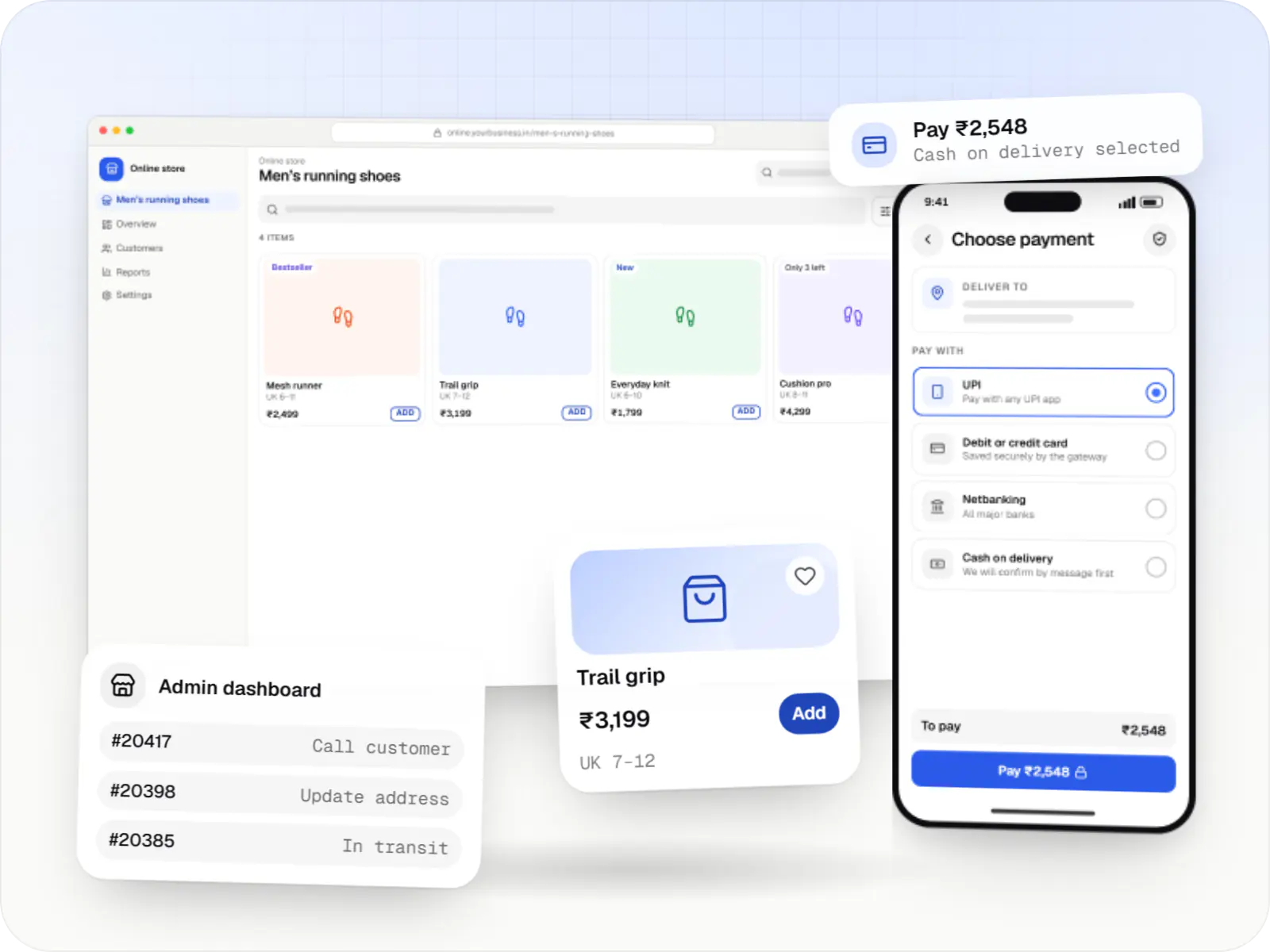
Fast, search-friendly online stores with UPI, card and COD checkout, GST invoices and courier integrations, on a hosted platform or custom code.
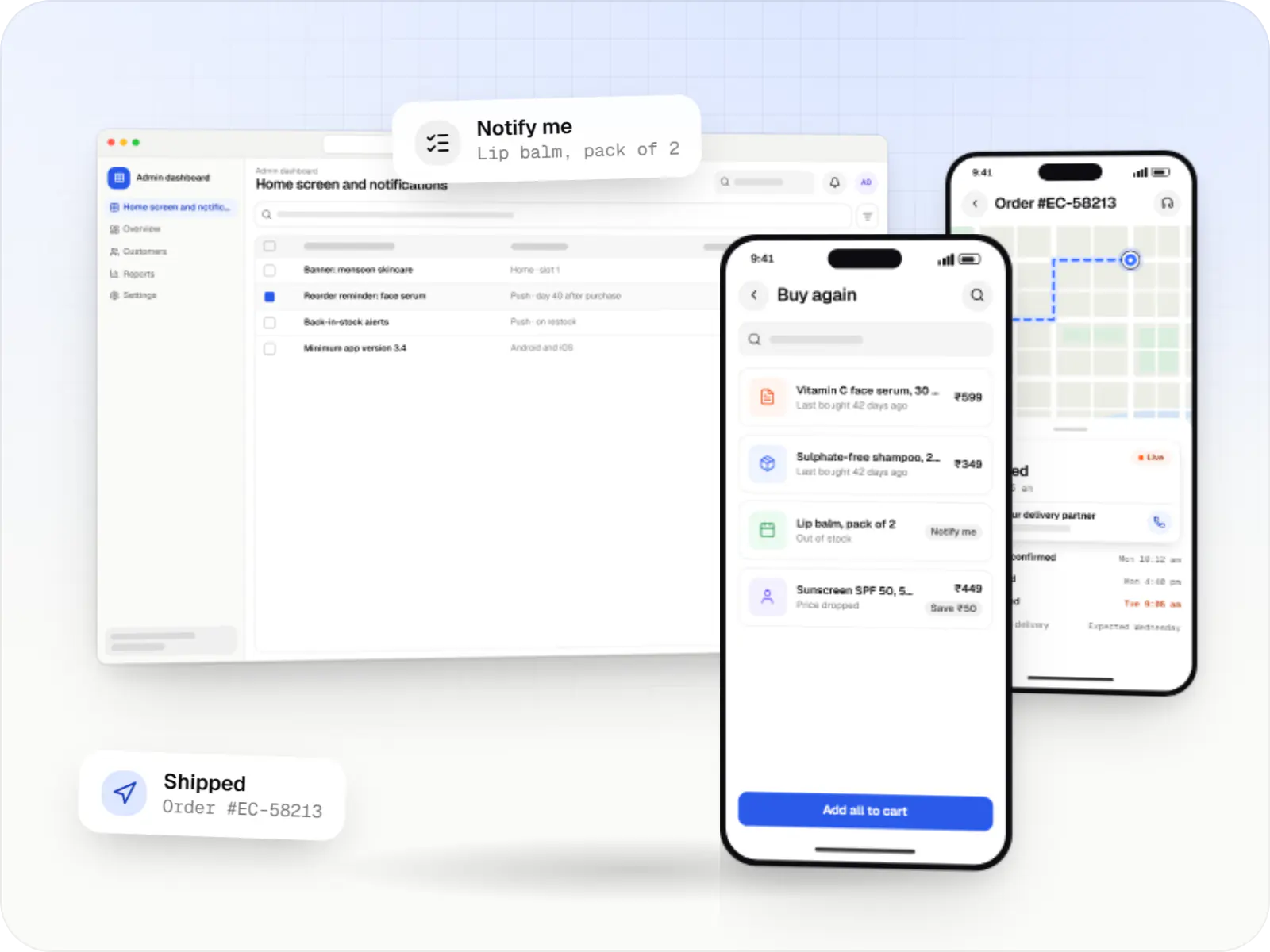
Android and iOS shopping apps with quick browsing, UPI checkout and push notifications, sharing one backend with your website.
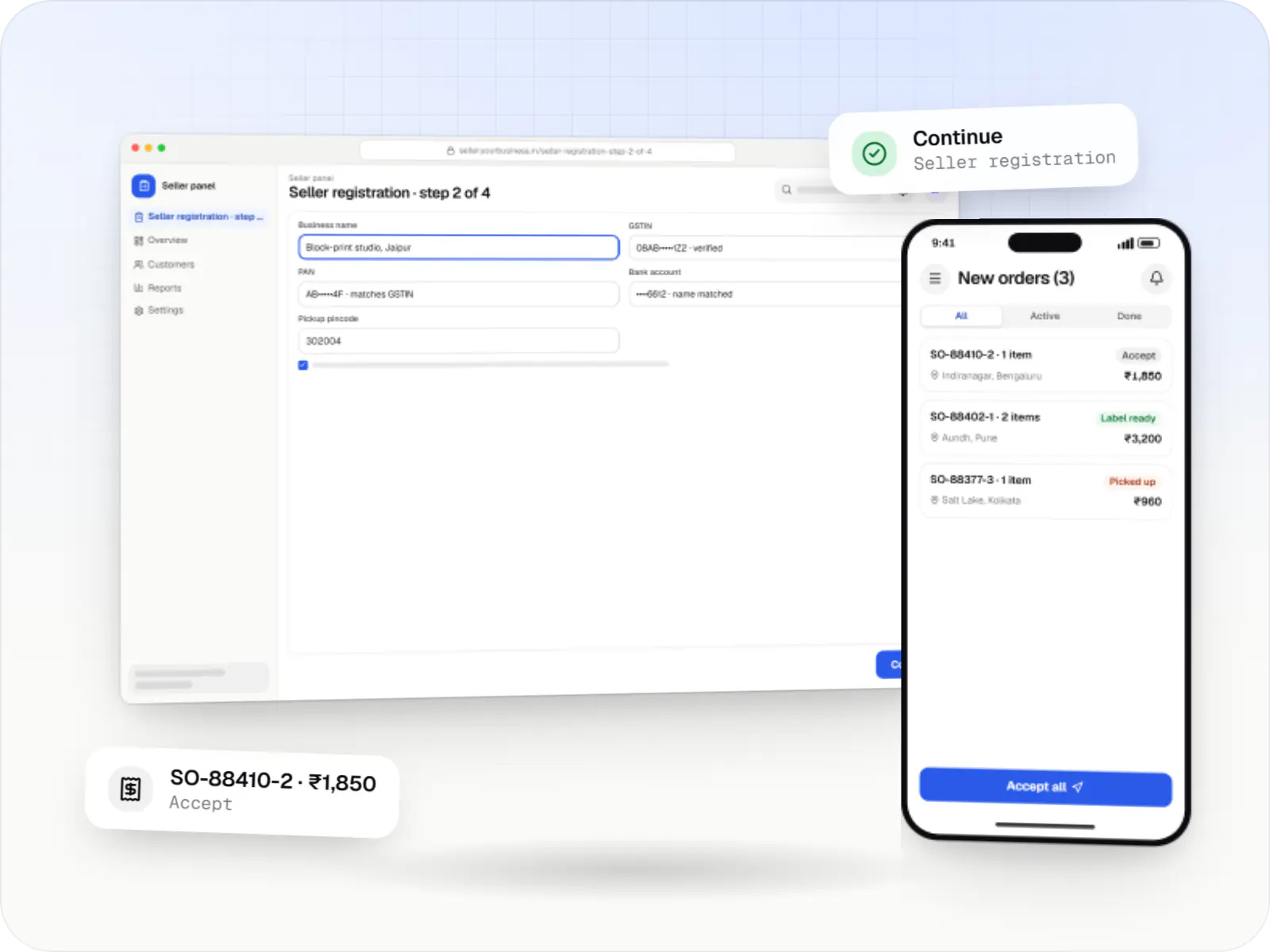
Multi-vendor marketplaces with seller onboarding, commission rules, split payouts, per-seller invoicing and catalogue moderation.
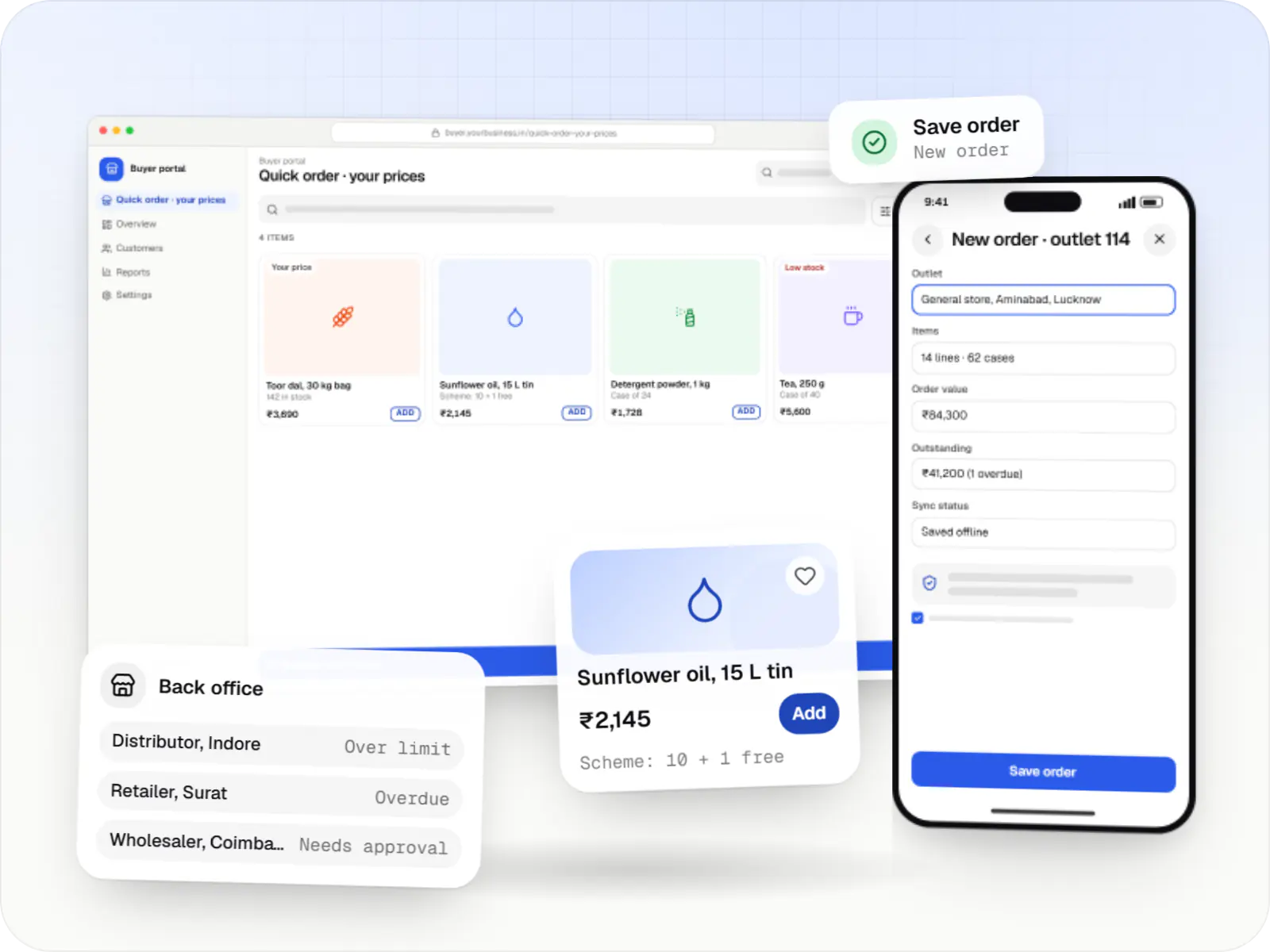
Ordering portals and apps for manufacturers, distributors and wholesalers, with buyer-specific pricing, credit limits, bulk ordering and ERP sync.
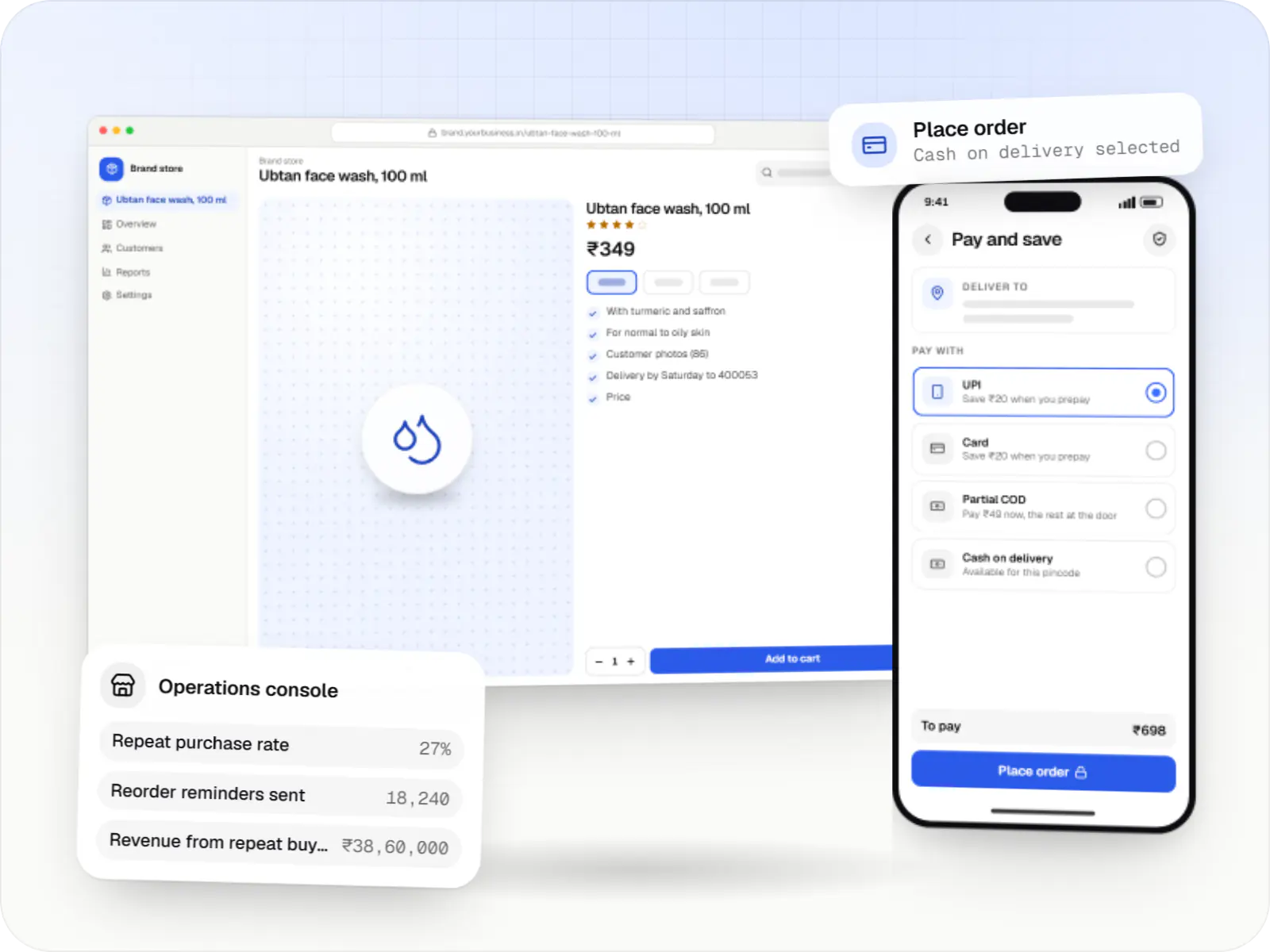
Brand-owned online stores for D2C companies, with conversion-focused checkout, retention tools, server-side tracking and multichannel stock sync.
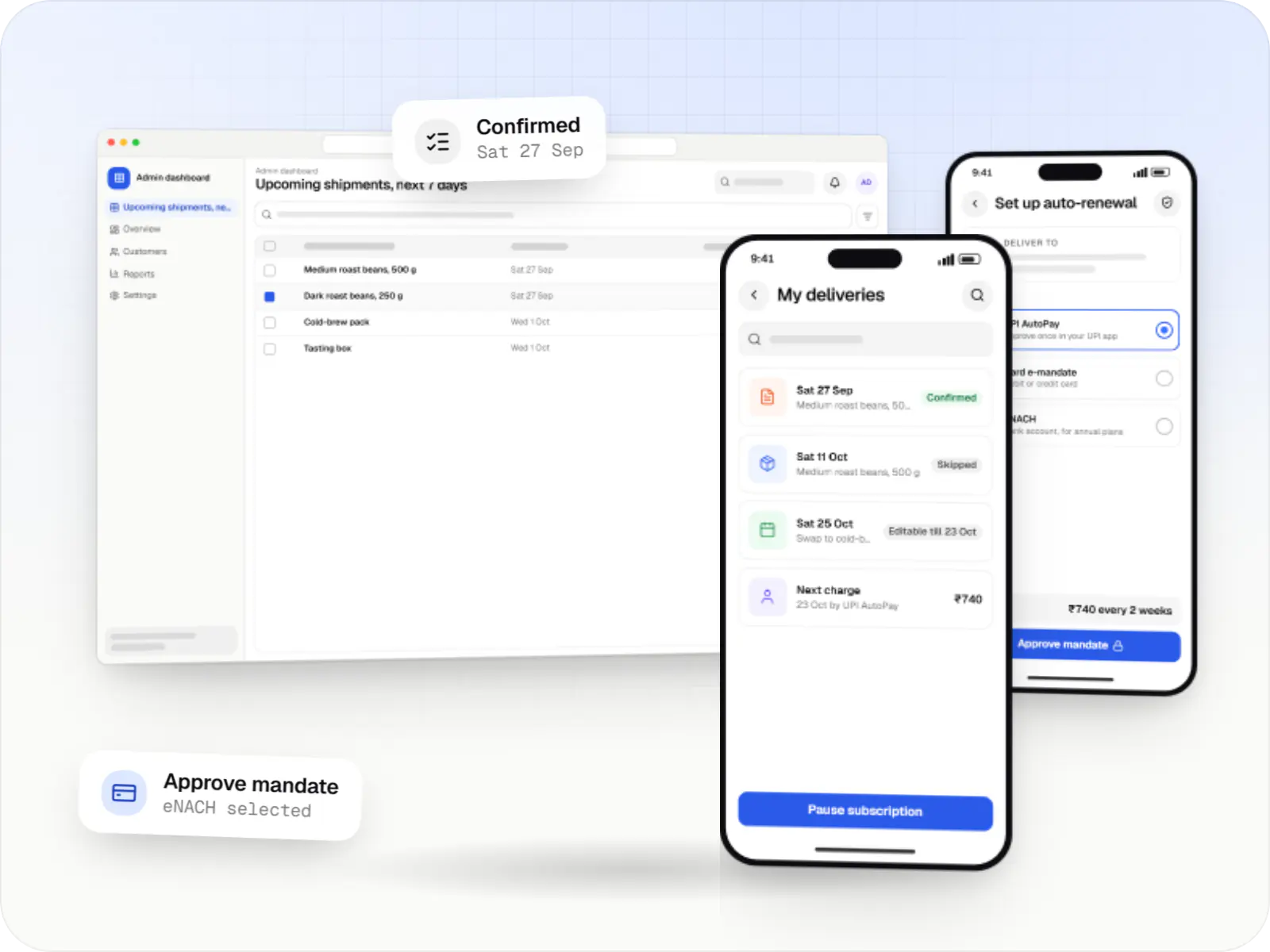
Subscription stores and memberships on UPI AutoPay, card mandates and eNACH, with pause, skip and swap controls and fulfilment planning.
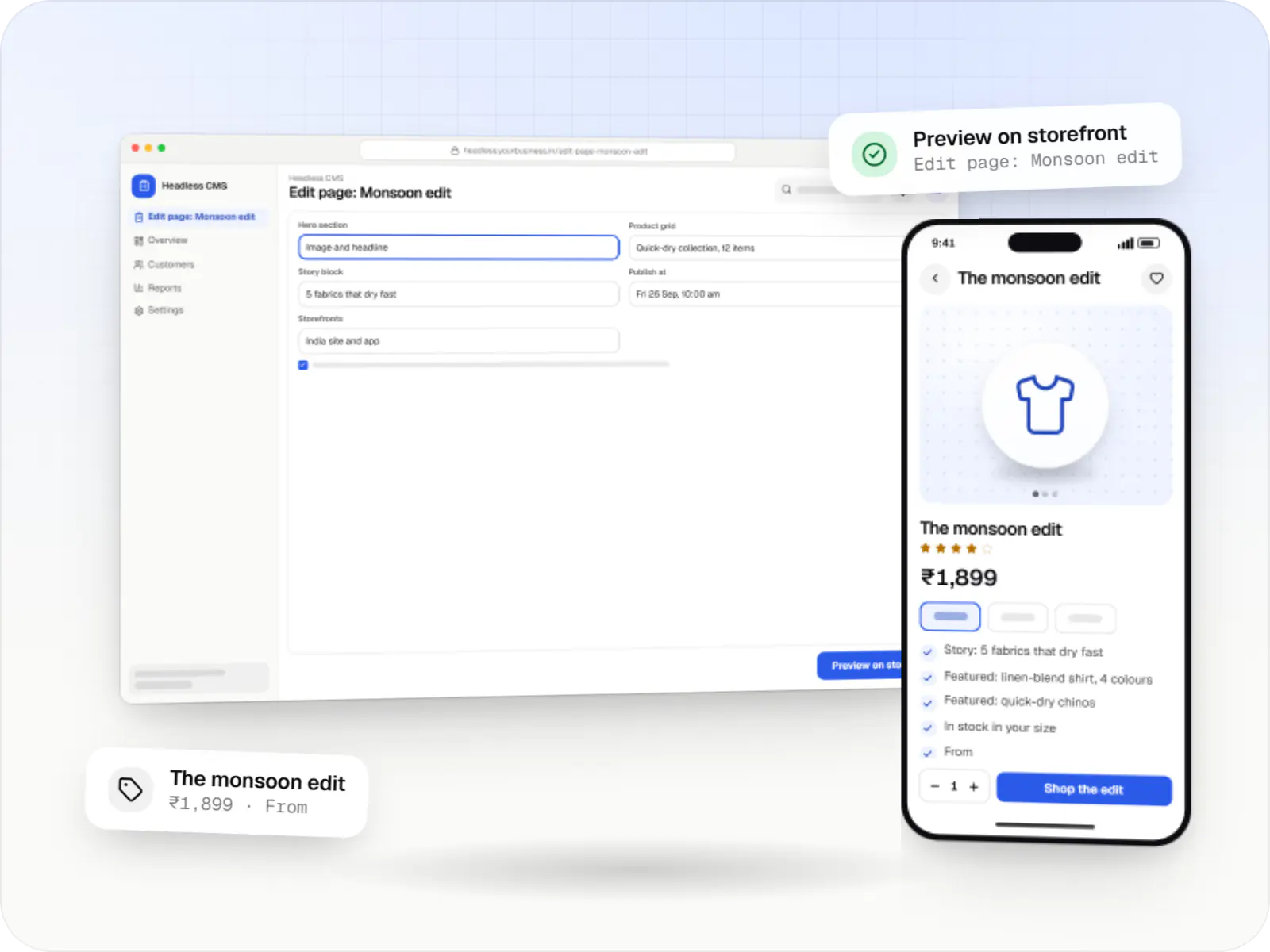
Next.js storefronts on a headless commerce engine and CMS, for brands that need speed, several storefronts or content-led shopping.
How it works
What happens between a shopper’s first search and the seller’s payout, and which part of the system handles each step.
Fast collection pages, filters and search help shoppers on mid-range phones find the right size, colour or variant quickly.
A pincode check shows the delivery date before payment; the shopper pays by UPI, card or EMI, or chooses cash on delivery within limits you set.
Prepaid orders are confirmed by the payment gateway’s webhook; COD orders get a WhatsApp or IVR confirmation first, cutting fake and impulse orders.
The order appears on the seller dashboard with a GST invoice and courier label ready to print, and the pickup is booked automatically.
Tracking updates flow from the courier’s API to the shopper’s phone; a failed delivery attempt raises an alert so your team can arrange a reattempt.
Approved returns trigger a reverse pickup and refund, and marketplace sellers are paid their share after commission on a fixed schedule.
Platforms
A fast website that can also install like an app, shopping apps for Android and iPhone, and an admin dashboard for orders, stock and payouts.
Marketing and content websites: fast, search-friendly pages with a CMS your team can update without a developer.
Installable web apps with offline support and notifications, useful when an app-store listing isn't essential or phones have little storage.
Apps for Android phones and tablets, tested on budget and mid-range devices and published on Google Play or privately.
Apps for iPhone and iPad, built to Apple's guidelines and released through TestFlight and the App Store.
Back-office panels for operations, support and finance teams: orders, users, content, reports and permissions.
Technology
Next.js storefronts load fast and are easy for Google to read; Node.js and NestJS handle orders and pricing; PostgreSQL and Redis keep stock accurate during sales; Razorpay takes UPI and cards; React Native or Flutter power the shopping apps; hosting is built on AWS.
Web
A modern web technology for fast, search-friendly websites, online stores and web applications that load quickly on mobile.
Used for
Web
Builds interactive screens in the browser, such as dashboards, admin panels and portals, that respond instantly as your team works.
Used for
Backend
Runs the server side of apps: fast, scalable back ends that power your app, website and integrations.
Used for
Backend
A structured way to build back ends on Node.js, so large business systems stay organised, testable and easy to hand over.
Used for
Data
A reliable database for the records your business runs on: orders, payments, bookings and stock, kept accurate and easy to report on.
Used for
Data
Keeps frequently used data in fast memory, so apps stay quick on busy days and live features like order tracking feel instant.
Used for
Payments & maps
Lets customers in India pay by UPI, cards, netbanking or wallets, and handles subscriptions, refunds and payouts to sellers or partners.
Used for
Cloud & DevOps
Cloud hosting for your app, website and data, with data centres in India and room to grow when traffic rises.
Used for
Mobile
Build Android and iOS apps in the same language as a React website, so one team can share code and skills across web and mobile.
Used for
Mobile
Build Android and iOS apps from one shared codebase, so you launch on both platforms faster with a consistent experience.
Used for
Flutter and the related logo are trademarks of Google LLC. We are not endorsed by or affiliated with Google LLC.
Plain-English glossary
Product preview
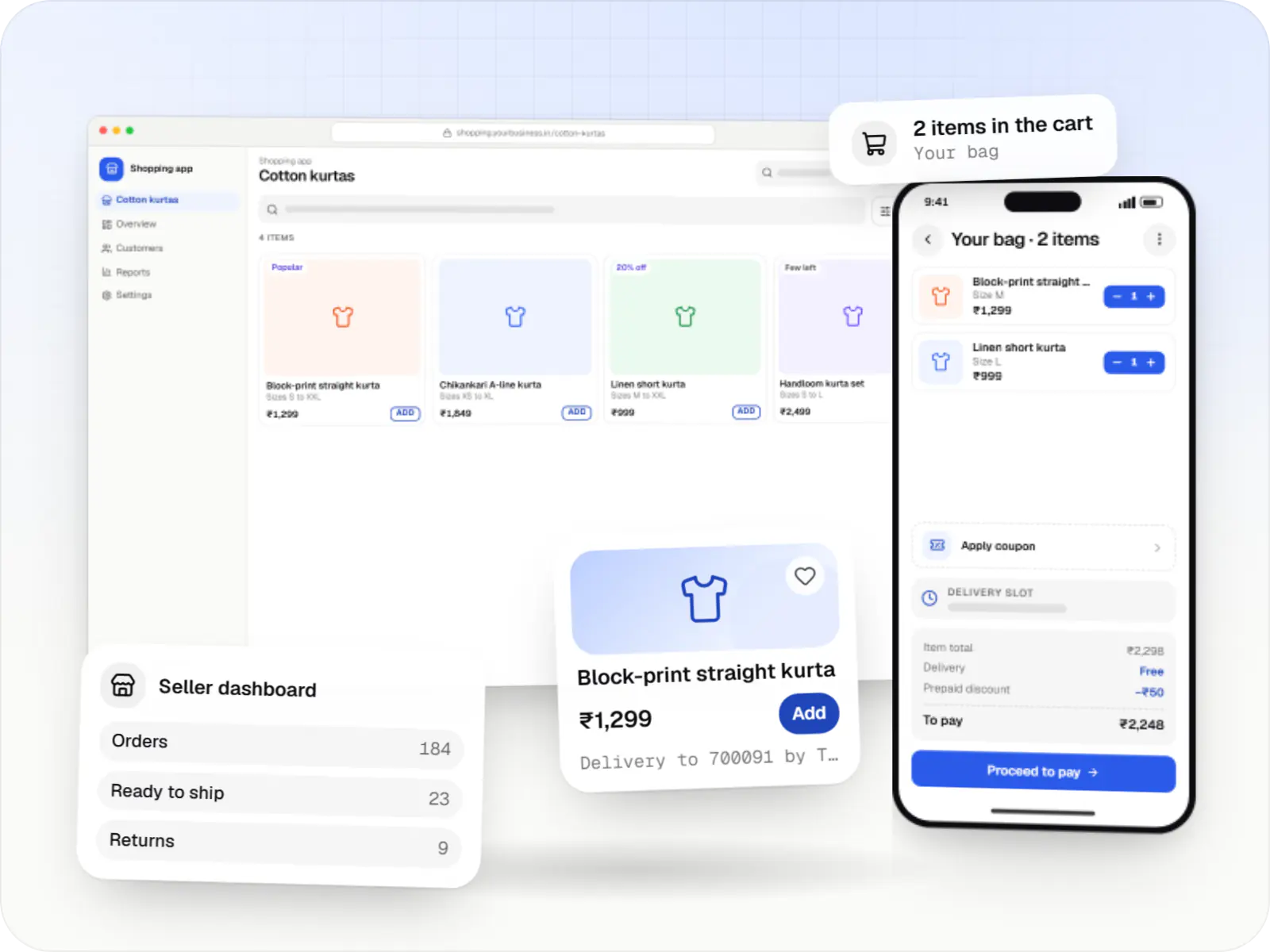
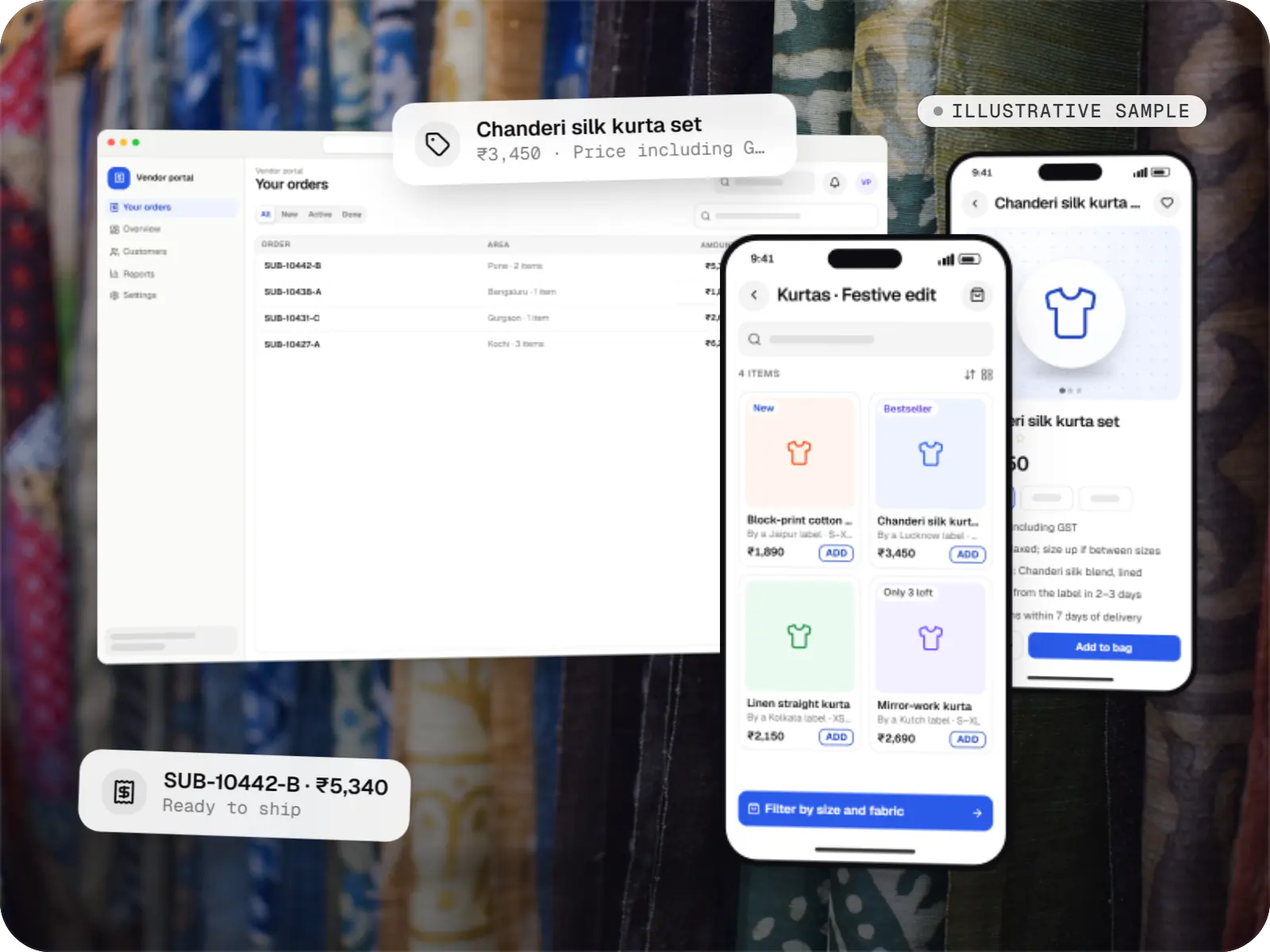
Illustrative screens from a fashion store with several sellers: the shopping app, a seller dashboard and the admin panel.
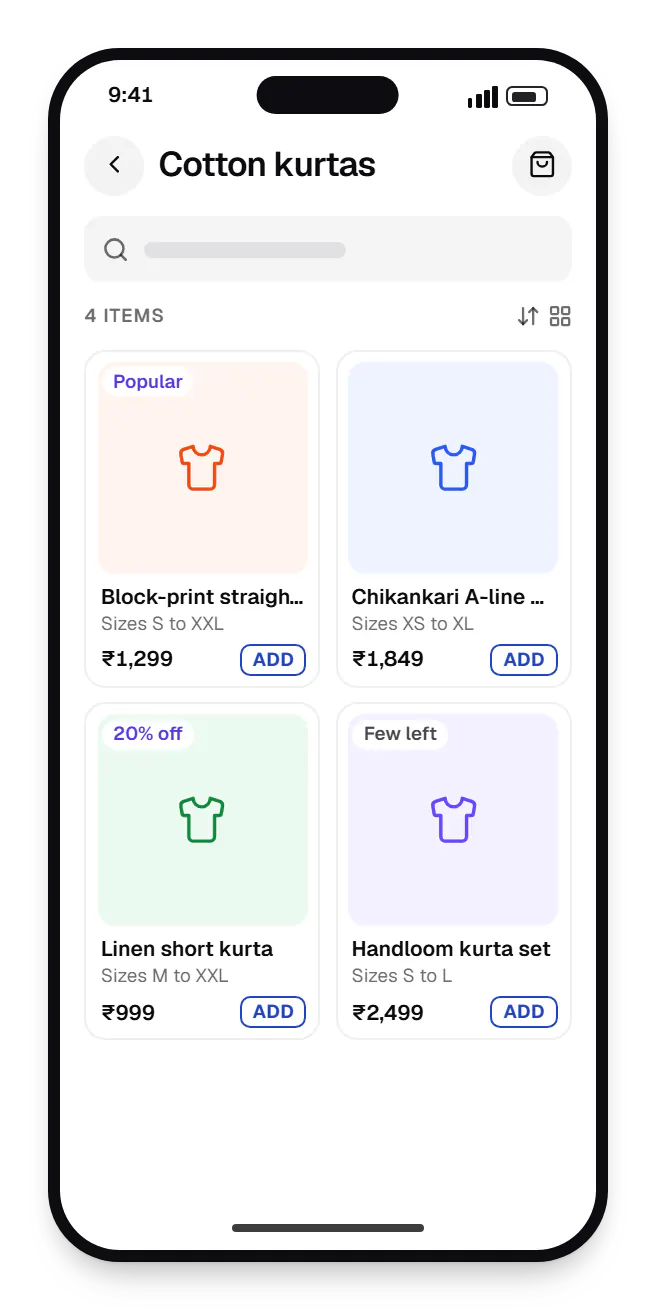
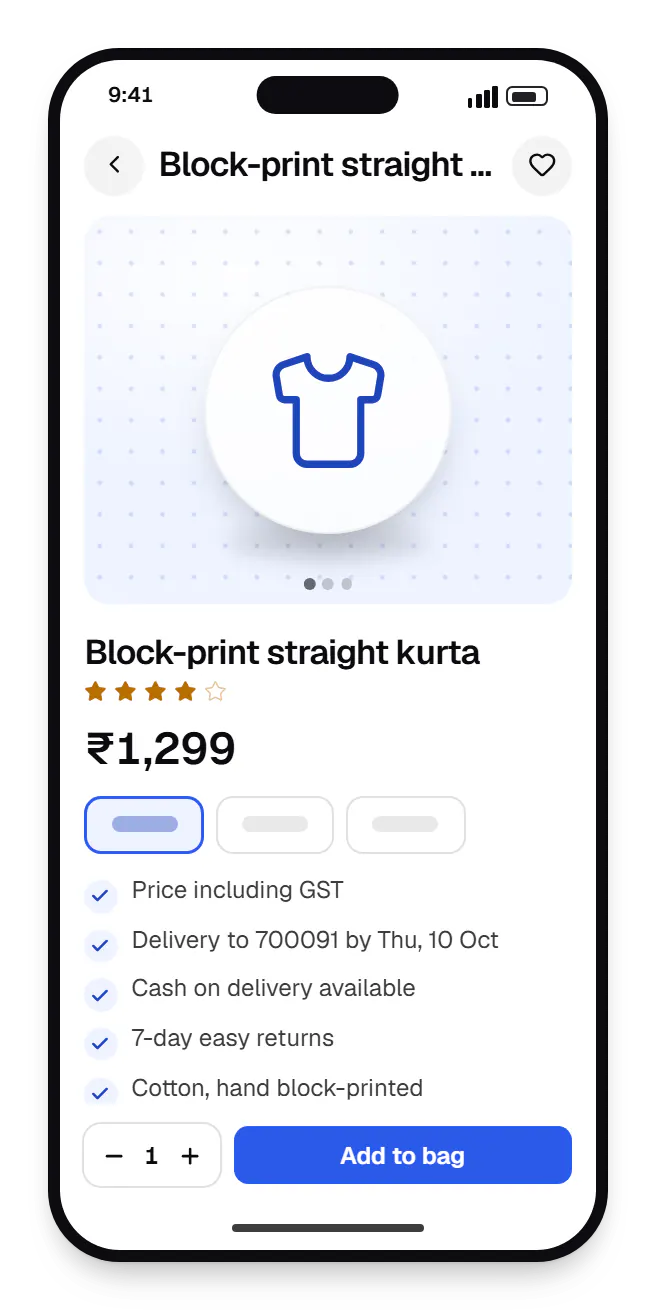
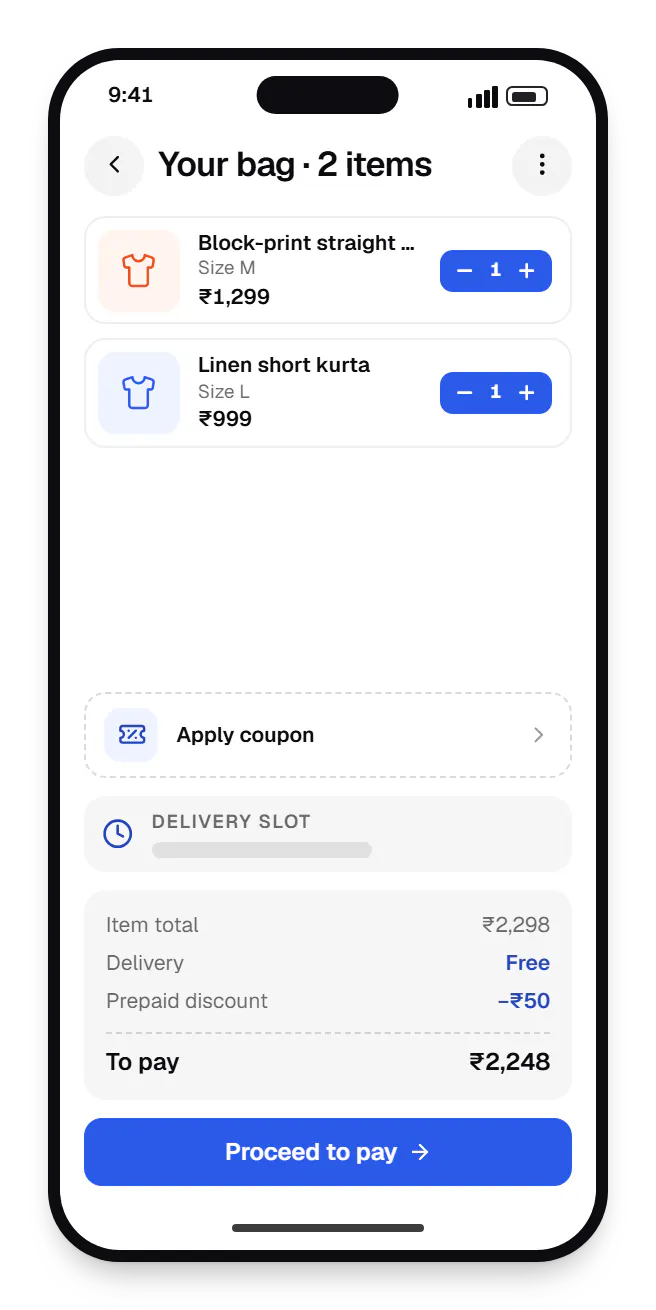
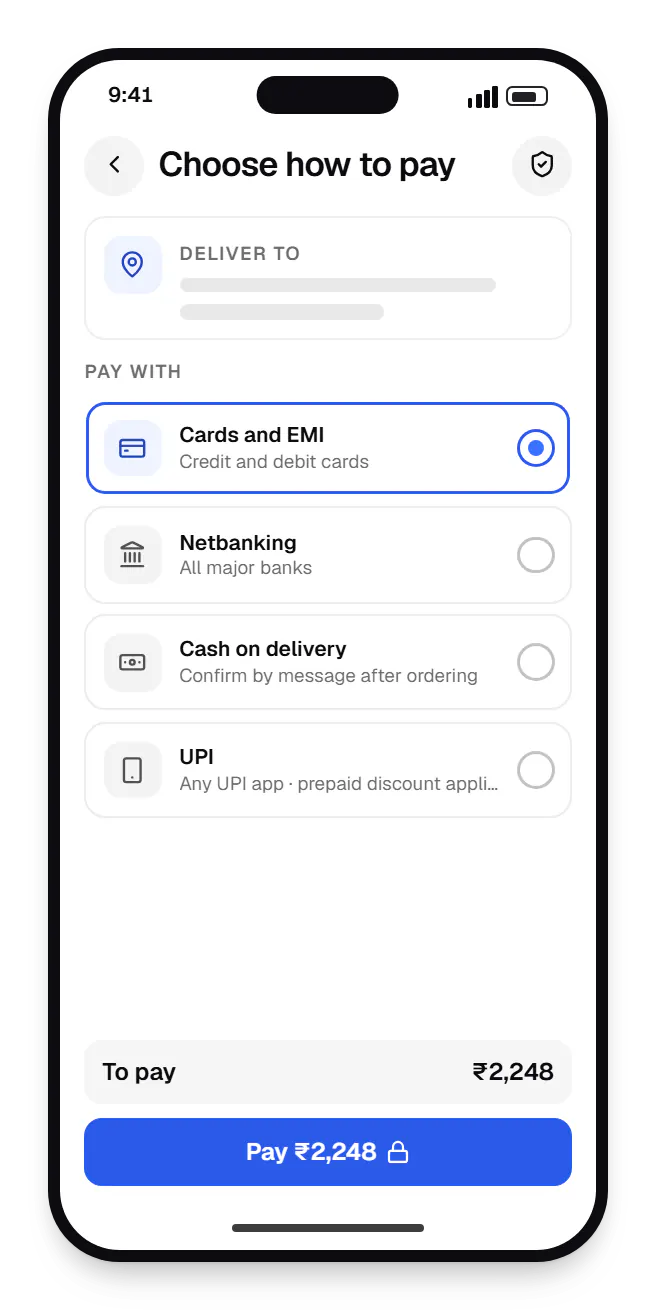
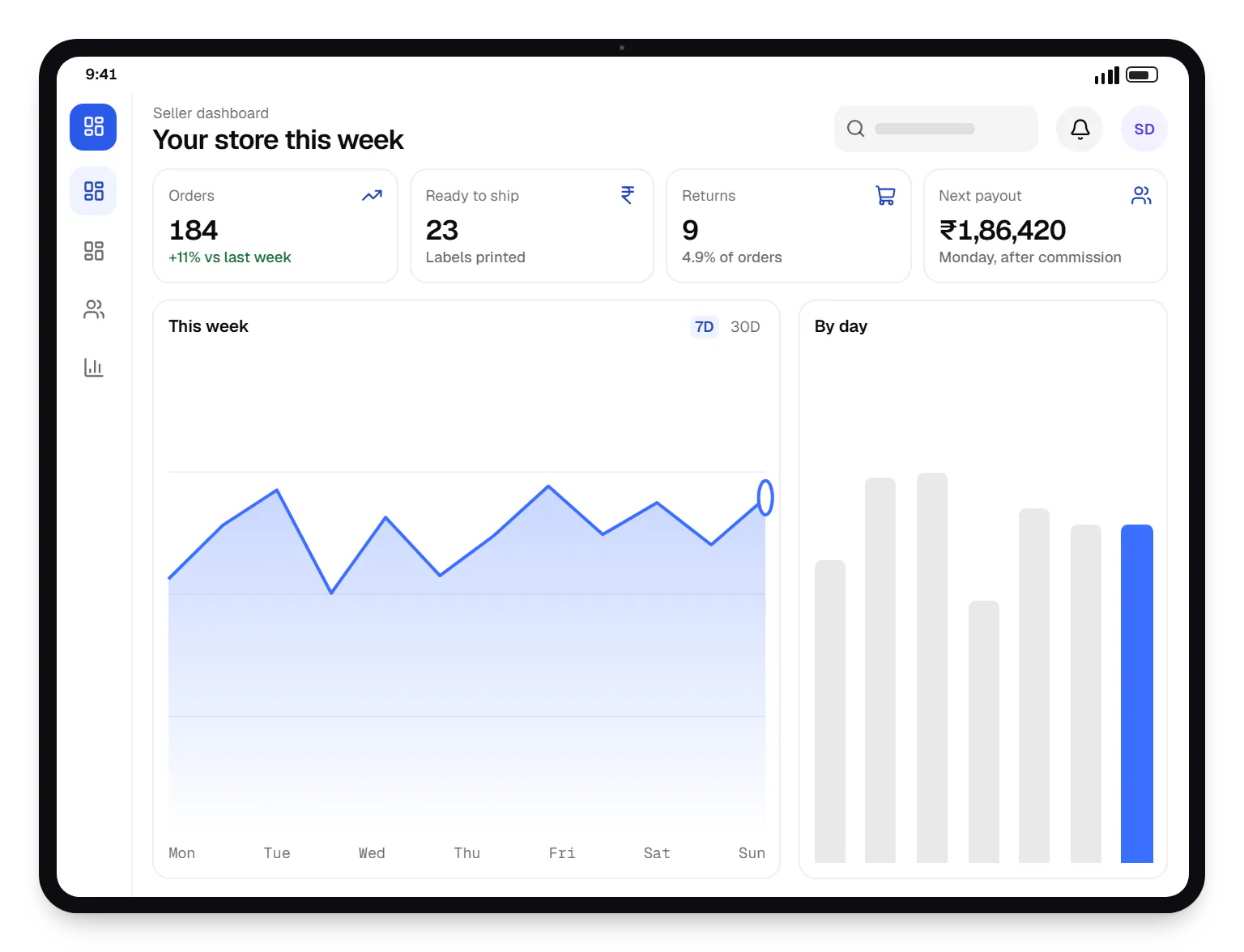
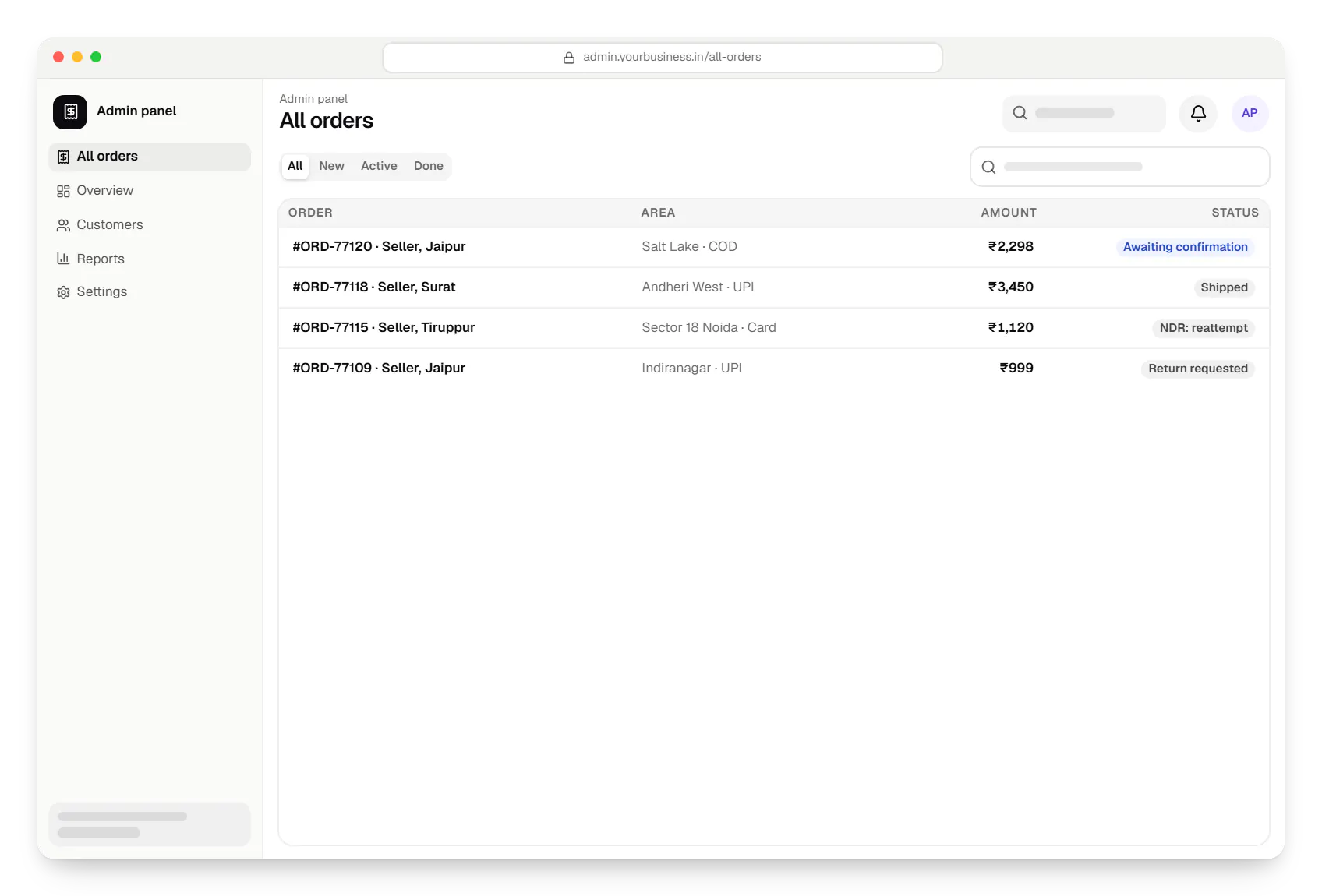
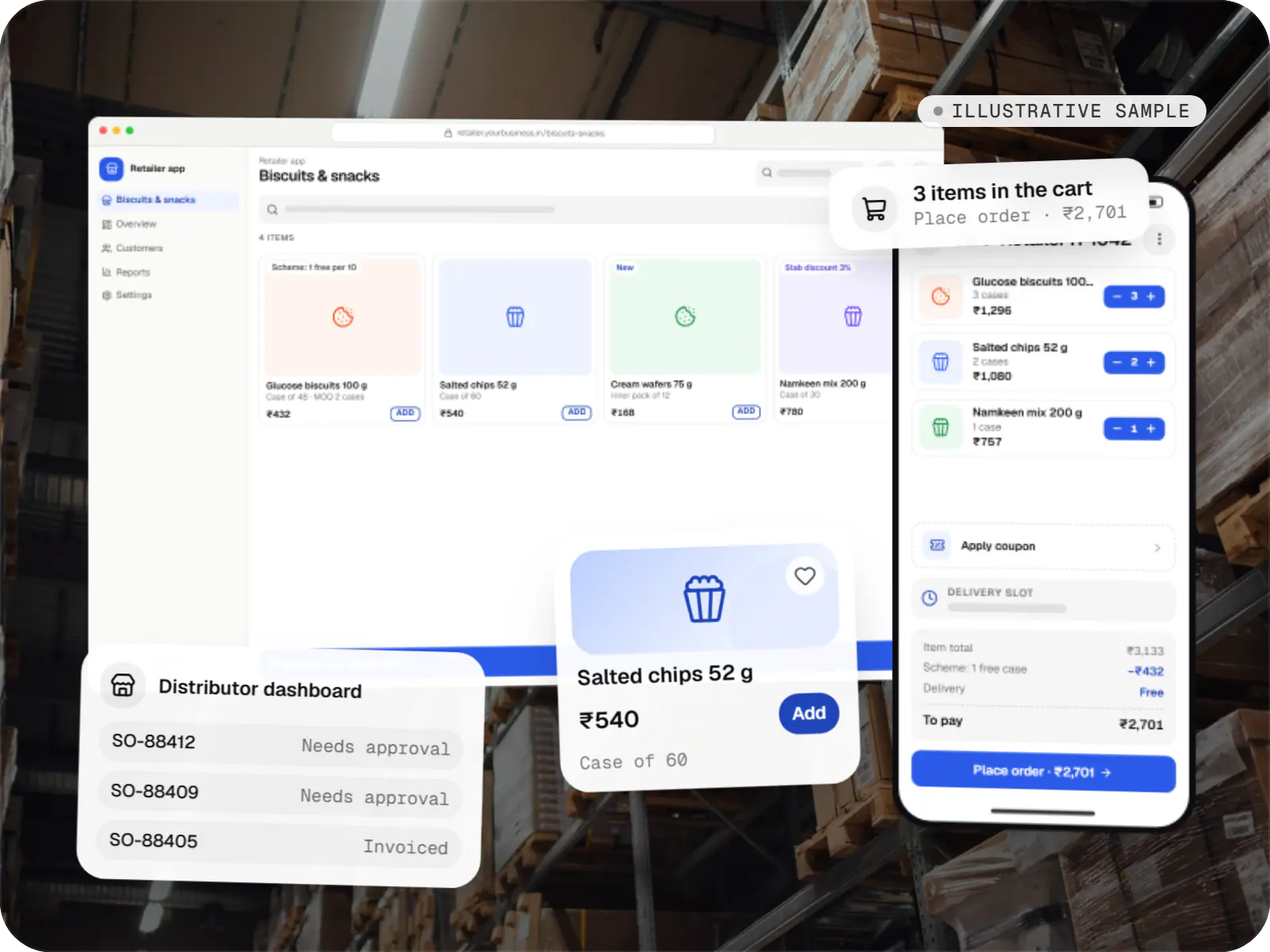
Sample screens: names, prices and figures are examples, not client data.
Work
E-commerce & marketplaces
An illustrative marketplace where independent fashion labels sell through one storefront, with vendor onboarding, commission rules, multi-pickup shipping, returns and scheduled payouts.
Runs on
Built with
E-commerce & marketplaces
An illustrative ordering app for a distributor's retailers and sales team, with tier pricing, credit limits, trade schemes and GST invoicing.
Runs on
Built with
Industries
Cost drivers
Shopify or WooCommerce costs less upfront than custom, but platform fees and app subscriptions add up.
Variants, bundles, multiple warehouses and customer-specific pricing add modelling work.
Each gateway, courier, ERP, marketplace or WhatsApp flow is separate build and test work.
Shopping apps add design, build and store release work.
Moving products, customers and SEO URLs, and preparing for festive traffic, need dedicated effort.
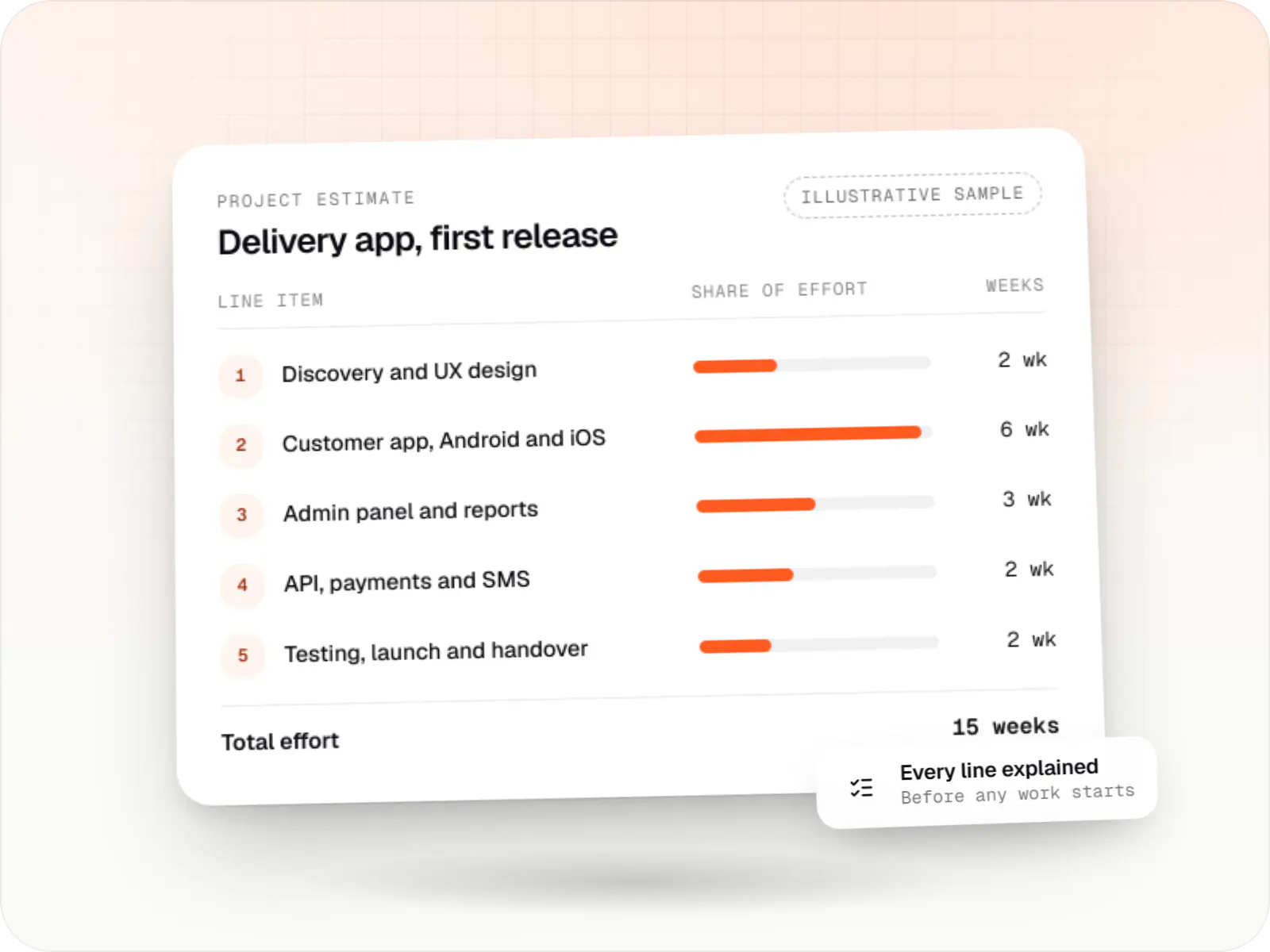
Estimates are written from your scope, with the effort and assumptions behind each line item.
How pricing worksProcess
How orders are priced, paid, packed, shipped and returned today, and where money or time leaks.
You getPlatform recommendation
Attributes, variants, pricing rules, tax classes and stock locations, structured for search and feeds.
You getCatalogue import template
Mobile-first listing, product, cart and checkout screens, prototyped before build.
You getClickable prototype
Storefront, admin, gateway, courier, WhatsApp and accounting integrations in short reviewable releases.
You getStaging store
Test orders across UPI, cards and COD, returns, refunds and invoices, plus load tests before sale events.
You getGo-live checklist
Monitoring, fixes, gateway and courier API changes, and improvements drawn from real order data.
You getMonthly support plan
More specific pages
E-commerce development in
FAQ
Shopify suits most new D2C brands: hosting, security and checkout are managed, and custom apps fill gaps. WooCommerce suits teams who want a self-hosted WordPress store and can maintain plugins and servers. Custom or headless builds suit B2B pricing, complex catalogues, marketplace logic or integrations that fight a platform's limits. We compare total cost over two to three years.
Yes. Most stores use one primary gateway such as Razorpay, PayU or Cashfree for UPI, cards, net banking and EMI; some add a second for failover. COD is its own payment state, with confirmation flows and limits. Order status comes from server-side webhooks, not the browser redirect, so payments do not go missing when a customer closes the app mid-payment.
Yes. Invoices carry HSN codes, CGST, SGST or IGST by place of supply, and returns generate credit notes. For B2B sellers above the e-invoicing turnover threshold, we connect to the Invoice Registration Portal through a GST Suvidha Provider or your accounting software to obtain an IRN and QR code. Your chartered accountant confirms the tax treatment; the system applies it consistently.
We export products, customers and order history, map them to the new structure and run test imports before cutover. Every old product, category and content URL gets a 301 redirect, and titles, meta descriptions and structured data carry over. After launch we watch Search Console for crawl errors. Some ranking movement is normal; careful redirects keep it limited.
Yes. On ONDC, brands usually join through a seller-side network participant, and we connect your catalogue, stock and orders to that platform. For Amazon and Flipkart we integrate their seller APIs, or a multichannel tool such as Unicommerce if you already use one. The aim is one source of truth for stock, so the same unit is not sold twice.
Next step
Share your catalogue size, order volumes and current tools. We will recommend a platform and send a line-item estimate.