Web
Next.js
A modern web technology for fast, search-friendly websites, online stores and web applications that load quickly on mobile.
Used for
- Business websites
- Online stores
- Web apps
- Customer portals
Company sites · Marketing sites · CMS
Business websites on a modern stack, connected to a CMS your marketing team can use, with the technical SEO foundations search engines expect.
At a glance
What it is
Fast, SEO-ready company and marketing websites with a CMS your team can edit, designed and built by our in-house team.
How to start
Tell us what you need in your own words. You talk to the developers who would build it and get a written, line-item estimate.
Get a project estimateFor many Indian businesses, the website is where a referral, a search or a forwarded WhatsApp message becomes a decision. Visitors want to know what you do, whether you serve their city and how to reach you, often on a phone with a weak signal.
Our website development work is built around that moment: pages that render quickly, content organised so search engines understand it, and clear routes to an enquiry, a call or a chat. We build most sites on Next.js with a headless CMS, and recommend WordPress when it is the more practical choice for your team.
Pre-rendered pages, AVIF or WebP images and minimal JavaScript, with Core Web Vitals checked.
Clean URLs, metadata, sitemaps, structured data and 301 redirects from old addresses.
Reusable sections, a media library, drafts, previews and scheduled publishing.
Forms routed to email, CRM or WhatsApp, with spam protection and source tracking.
Semantic markup, keyboard navigation, readable contrast and meaningful alt text.
HTTPS, backups and uptime monitoring on accounts registered to your company.
Use cases
Services, case studies, careers and investor or compliance pages.
Service and location pages, quote forms, click-to-call and WhatsApp buttons.
Feature pages, pricing tables, documentation hubs and sign-up flows.
Hindi or regional-language versions with translated URLs and hreflang tags.
Blogs, guides and knowledge bases with categories and on-site search.
URL mapping, content migration and redirects away from an ageing site.
Solutions
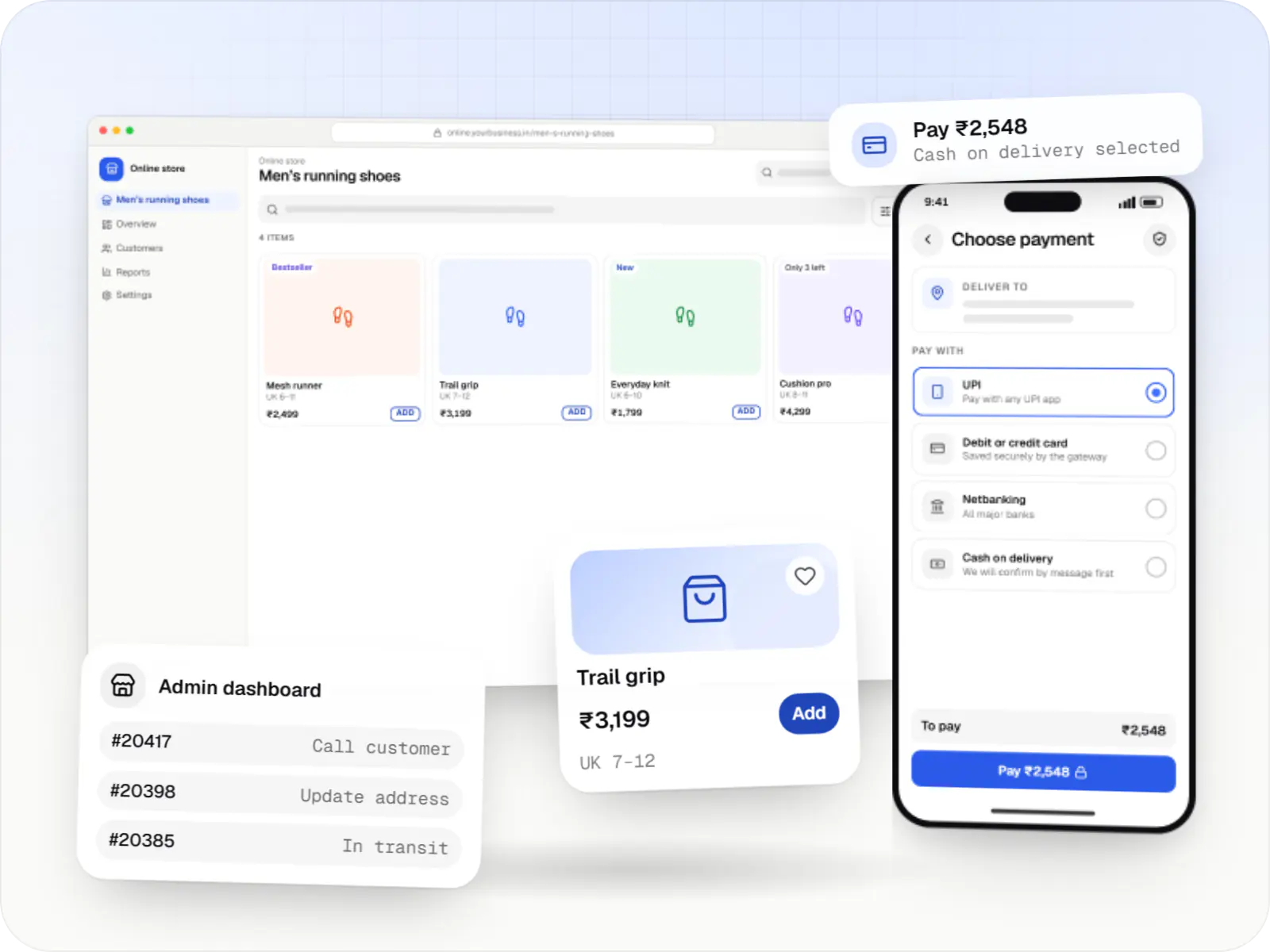
Fast, search-friendly online stores with UPI, card and COD checkout, GST invoices and courier integrations, on a hosted platform or custom code.
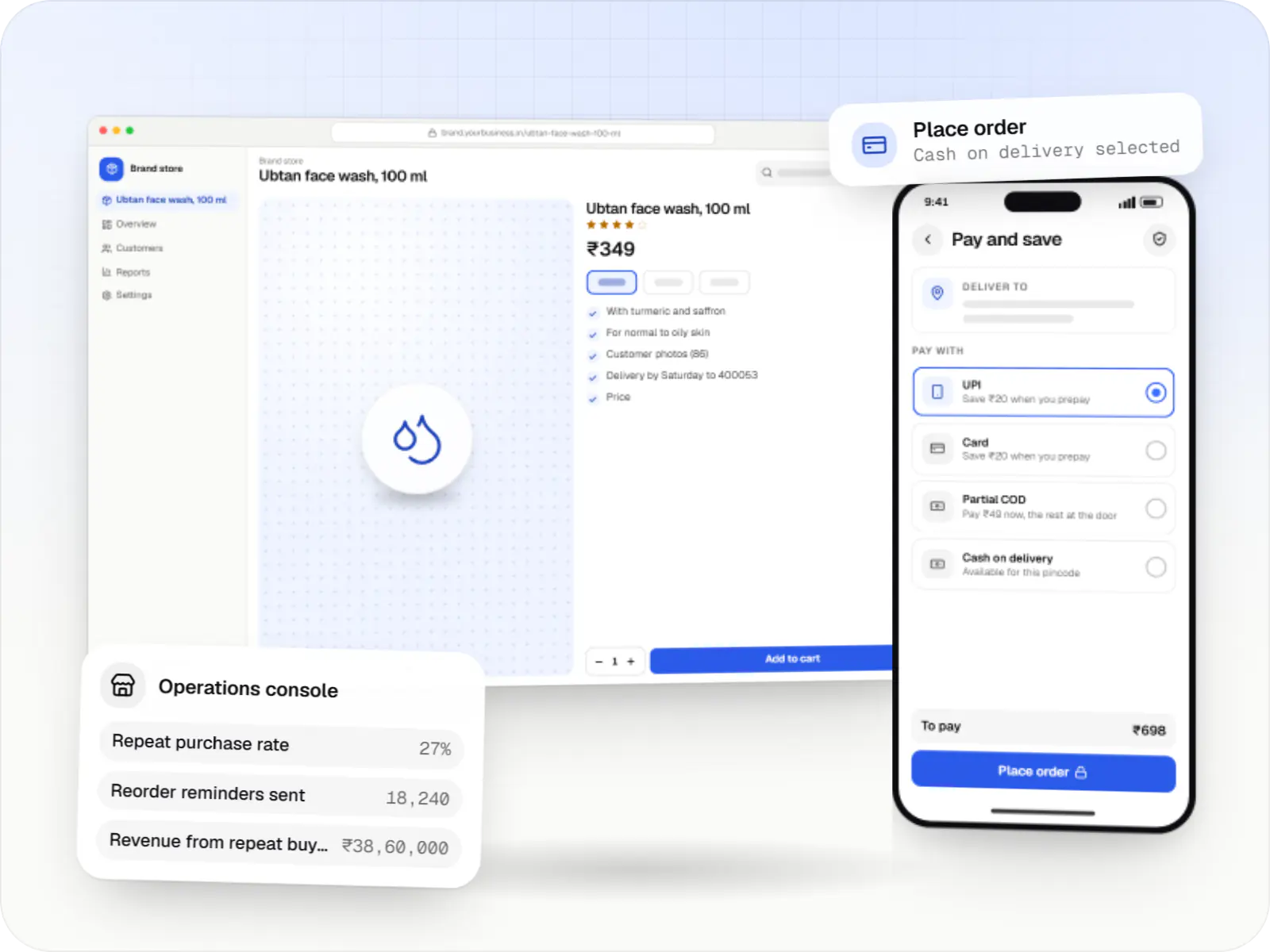
Brand-owned online stores for D2C companies, with conversion-focused checkout, retention tools, server-side tracking and multichannel stock sync.
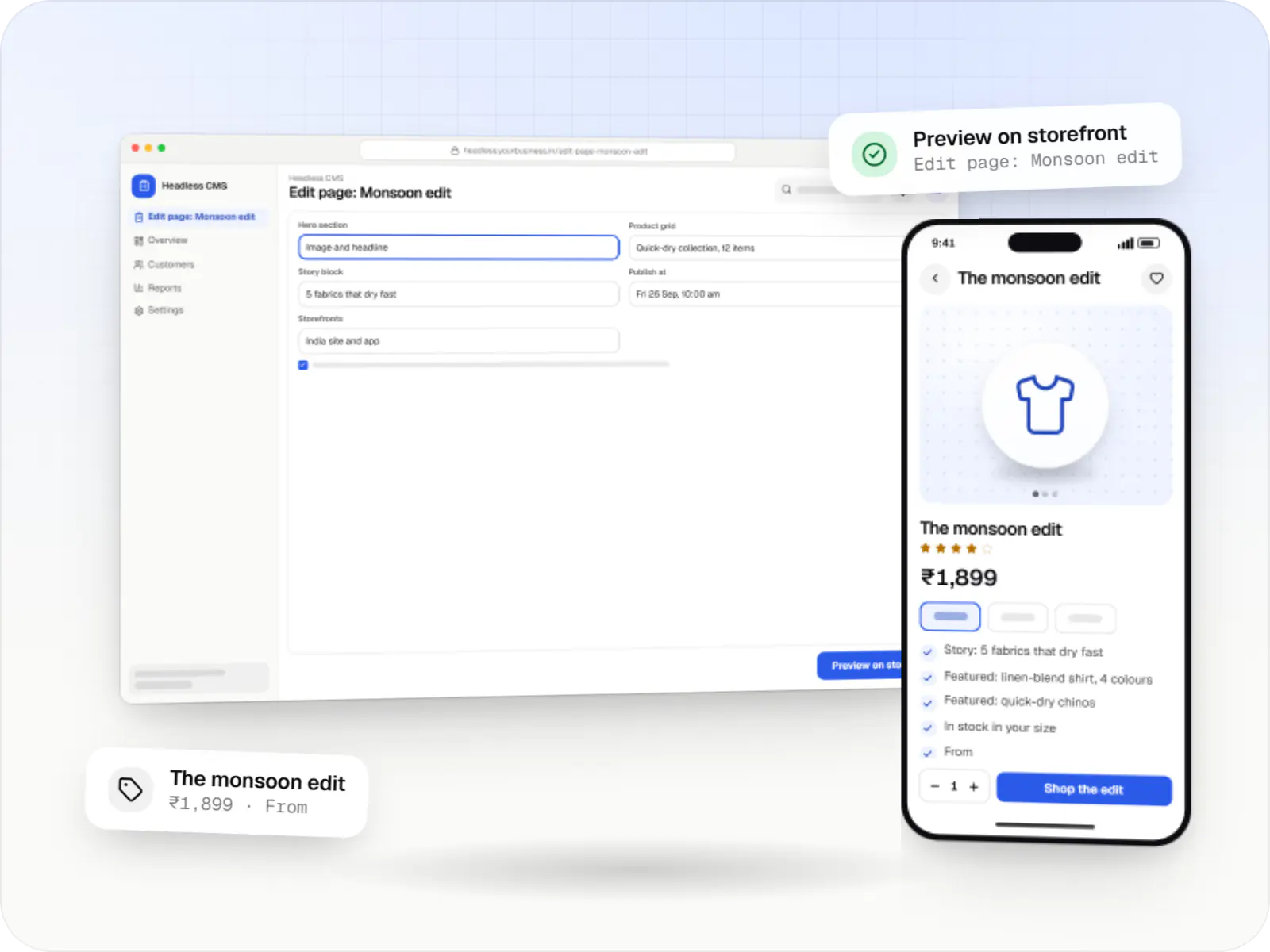
Next.js storefronts on a headless commerce engine and CMS, for brands that need speed, several storefronts or content-led shopping.
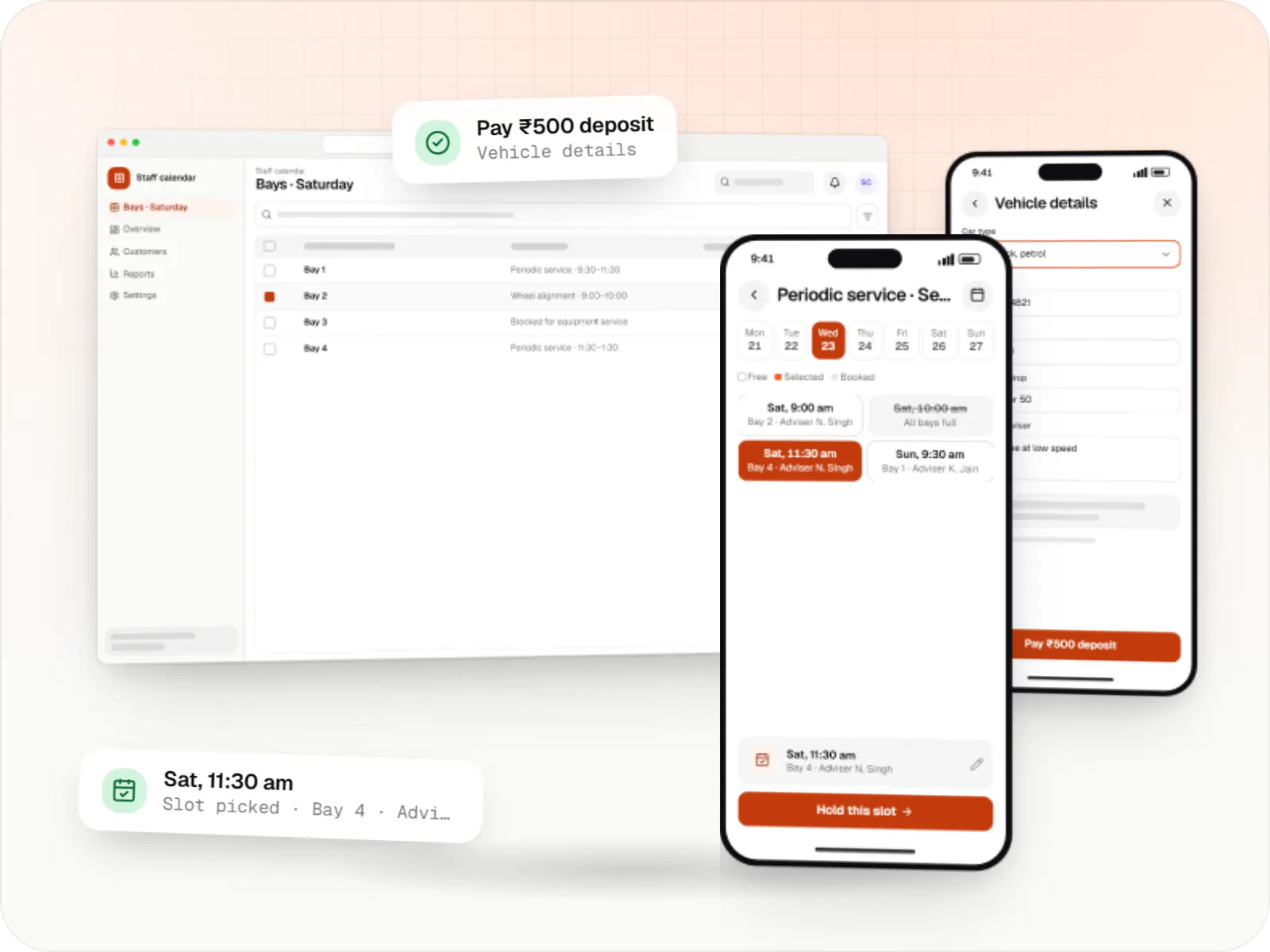
Custom scheduling software for consultants, service centres, labs and multi-location businesses: availability rules, reminders, payments and calendar sync.
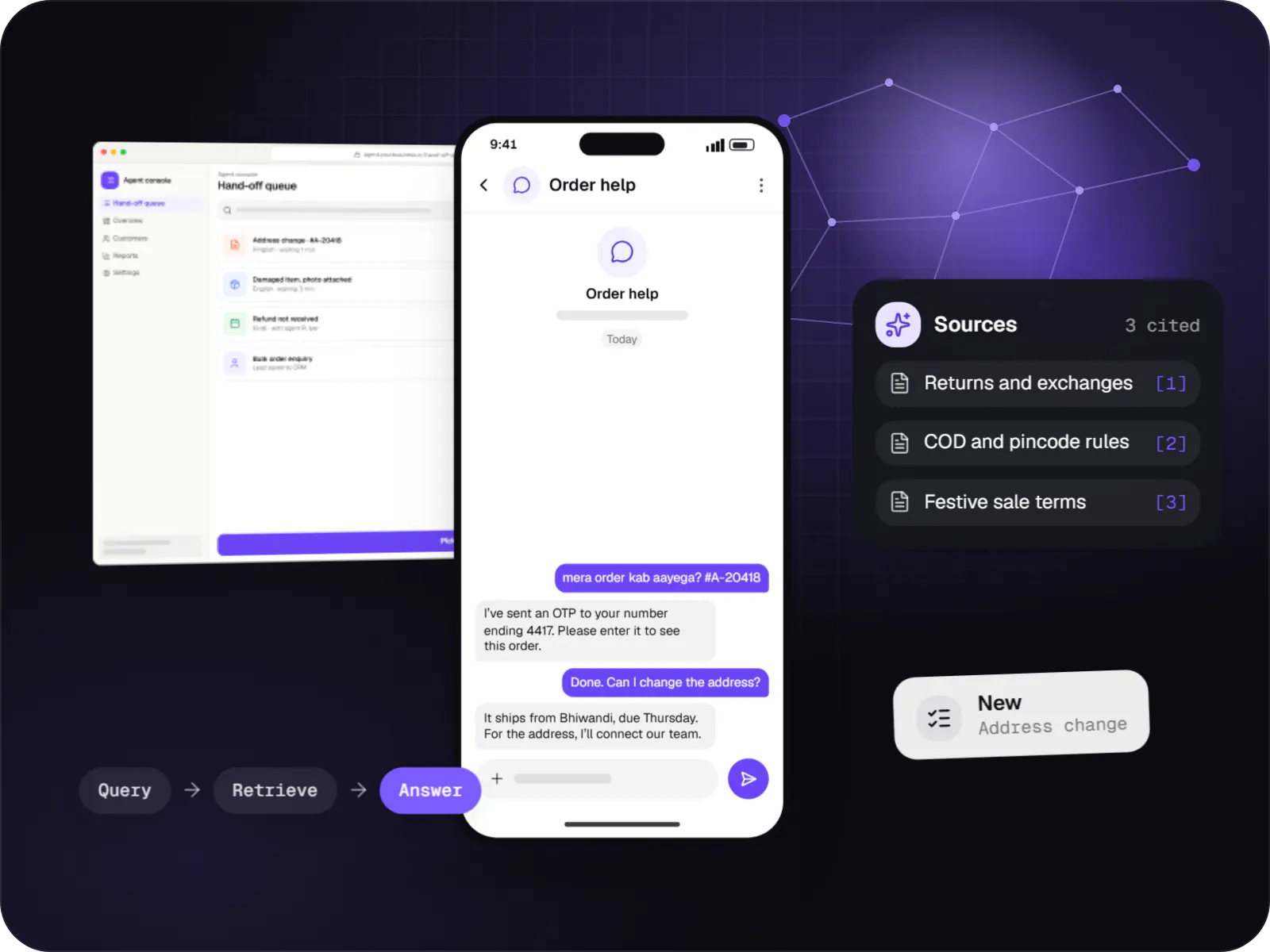
Support and sales chatbots for web, app and WhatsApp that answer from your own content and hand off to your team.
How it works
The path a typical customer takes from a Google search to a conversation with your team, and what the website does at each step.
Clear page titles, descriptions and structured data help Google show the right service or location page for searches like “interior designer in Sector 18 Noida”.
Pre-rendered pages served from a CDN appear almost at once, even on mobile data, so the visitor starts reading instead of pressing back.
Short sections answer the usual questions (services, areas served, timelines, starting prices and photos of past work), so the visitor can decide without calling first.
A short form, a click-to-call button or a WhatsApp link lets people get in touch the way they prefer, with spam filtering working quietly behind the form.
The enquiry lands in email, your CRM or a WhatsApp group with the page it came from, so the right person replies while the visitor is still interested.
Analytics shows which pages, searches and campaigns lead to enquiries, so you know what content to add or improve next.
Platforms
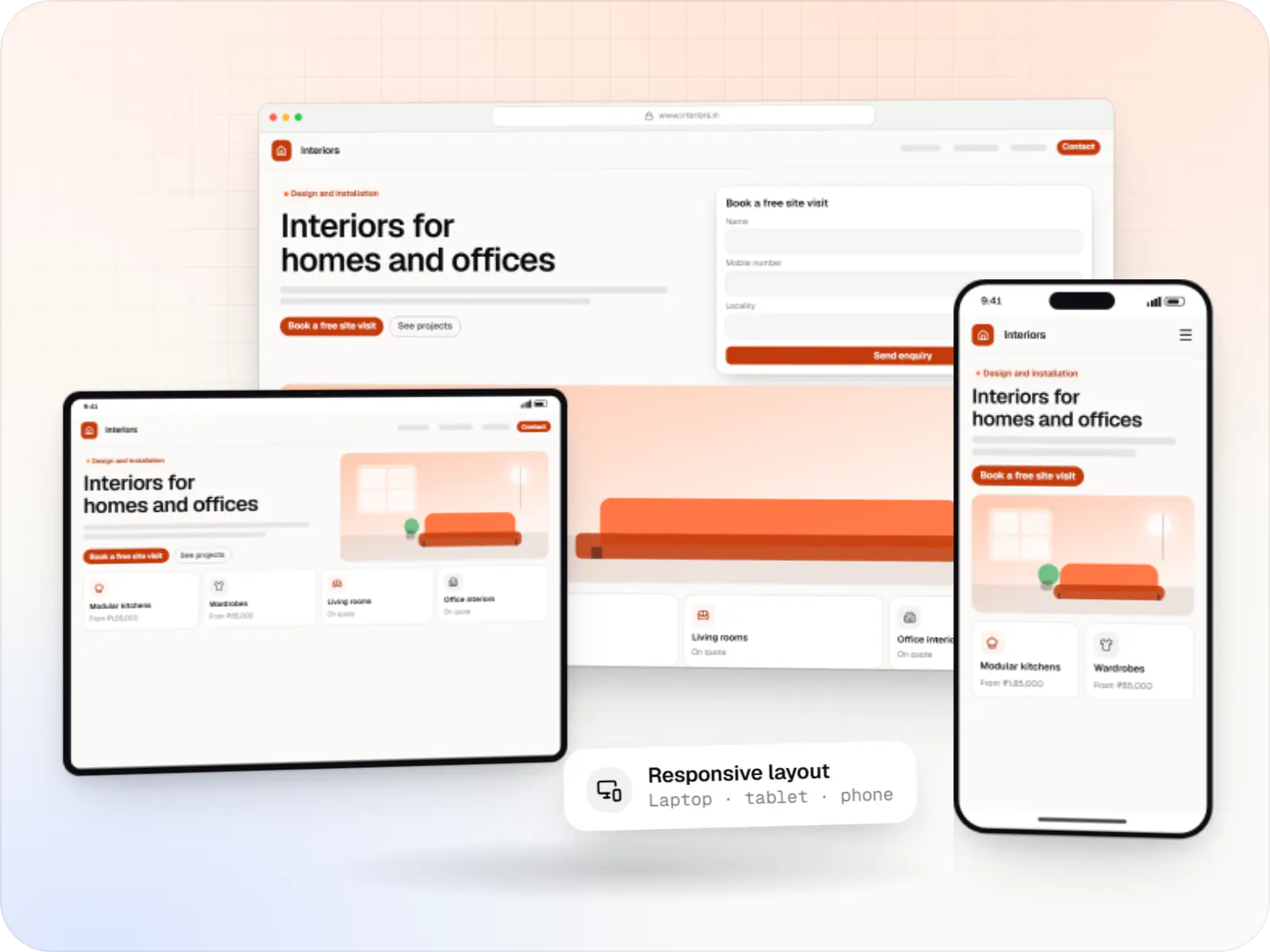
One responsive site that adapts to phones, tablets and desktops, with the option of an installable web app (PWA) for visitors who return often.
Marketing and content websites: fast, search-friendly pages with a CMS your team can update without a developer.
Installable web apps with offline support and notifications, useful when an app-store listing isn't essential or phones have little storage.
Technology
Next.js makes pages fast and easy for Google to read, React powers interactive sections, Node.js and PostgreSQL handle forms and content, and hosting built on AWS keeps the site available and backed up.
Web
A modern web technology for fast, search-friendly websites, online stores and web applications that load quickly on mobile.
Used for
Web
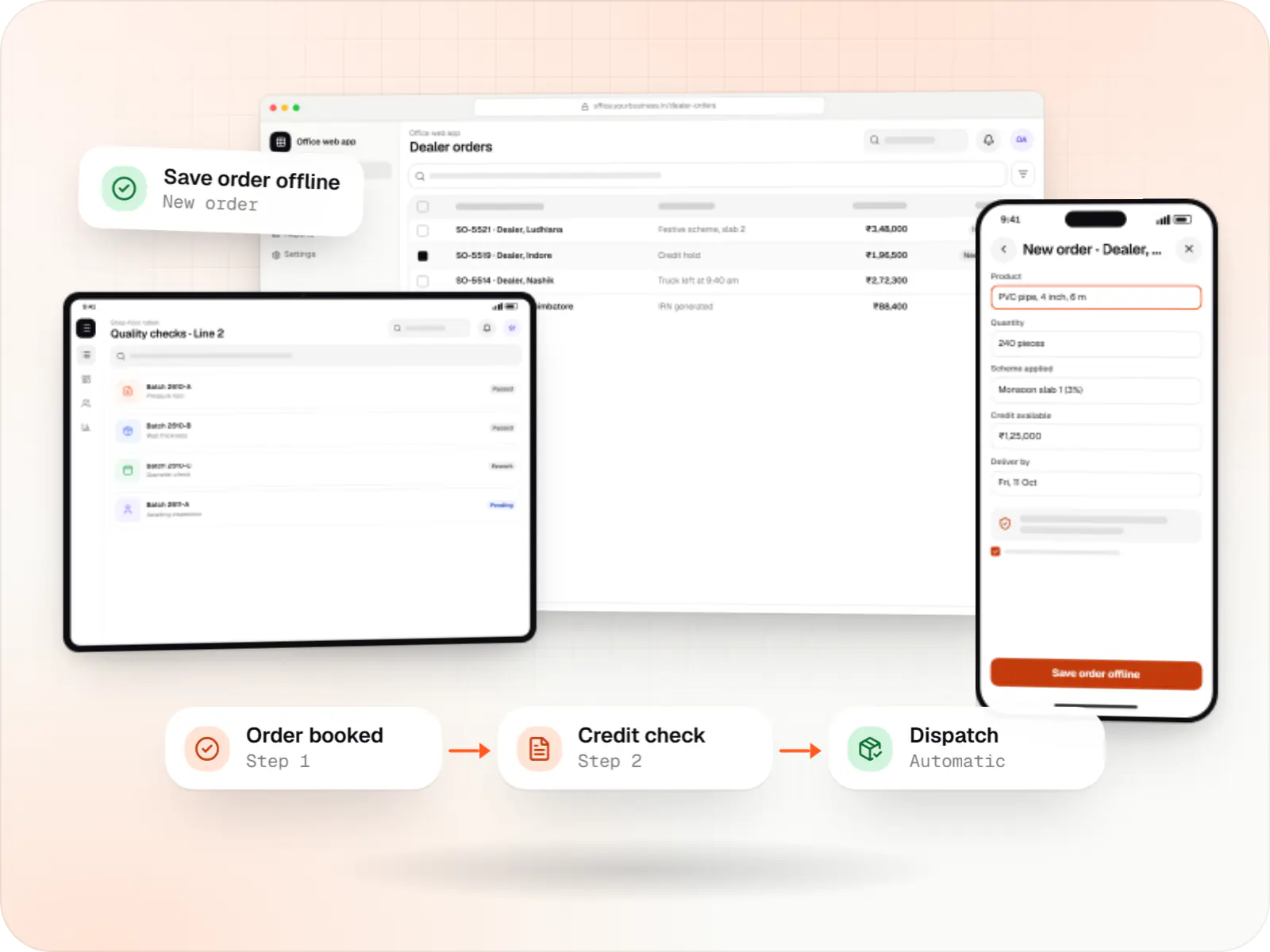
Builds interactive screens in the browser, such as dashboards, admin panels and portals, that respond instantly as your team works.
Used for
Backend
Runs the server side of apps: fast, scalable back ends that power your app, website and integrations.
Used for
Data
A reliable database for the records your business runs on: orders, payments, bookings and stock, kept accurate and easy to report on.
Used for
Cloud & DevOps
Cloud hosting for your app, website and data, with data centres in India and room to grow when traffic rises.
Used for
Plain-English glossary
Product preview
Illustrative screens from an interior design studio’s website: the same pages adapt to a desktop, a tablet and a phone.
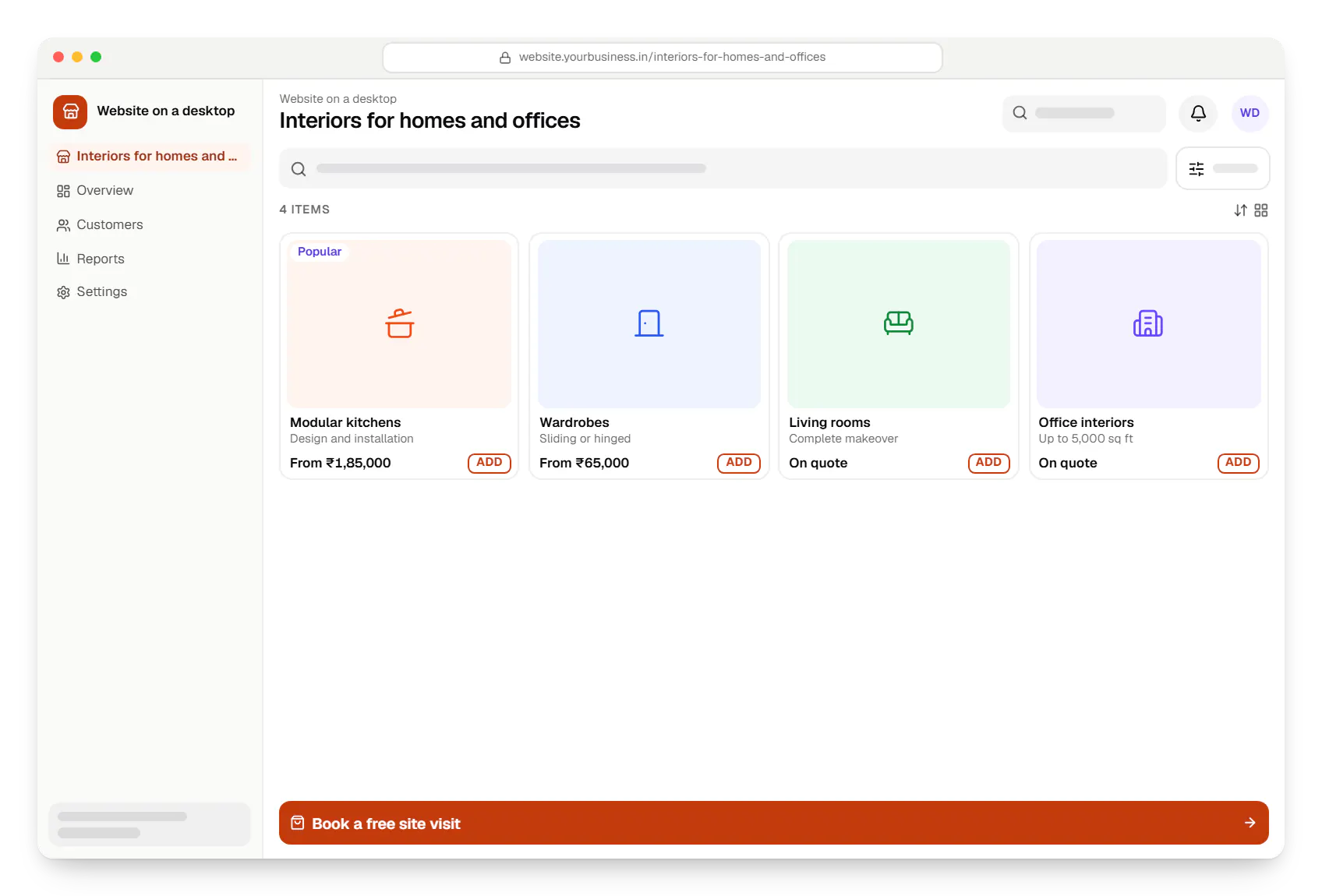
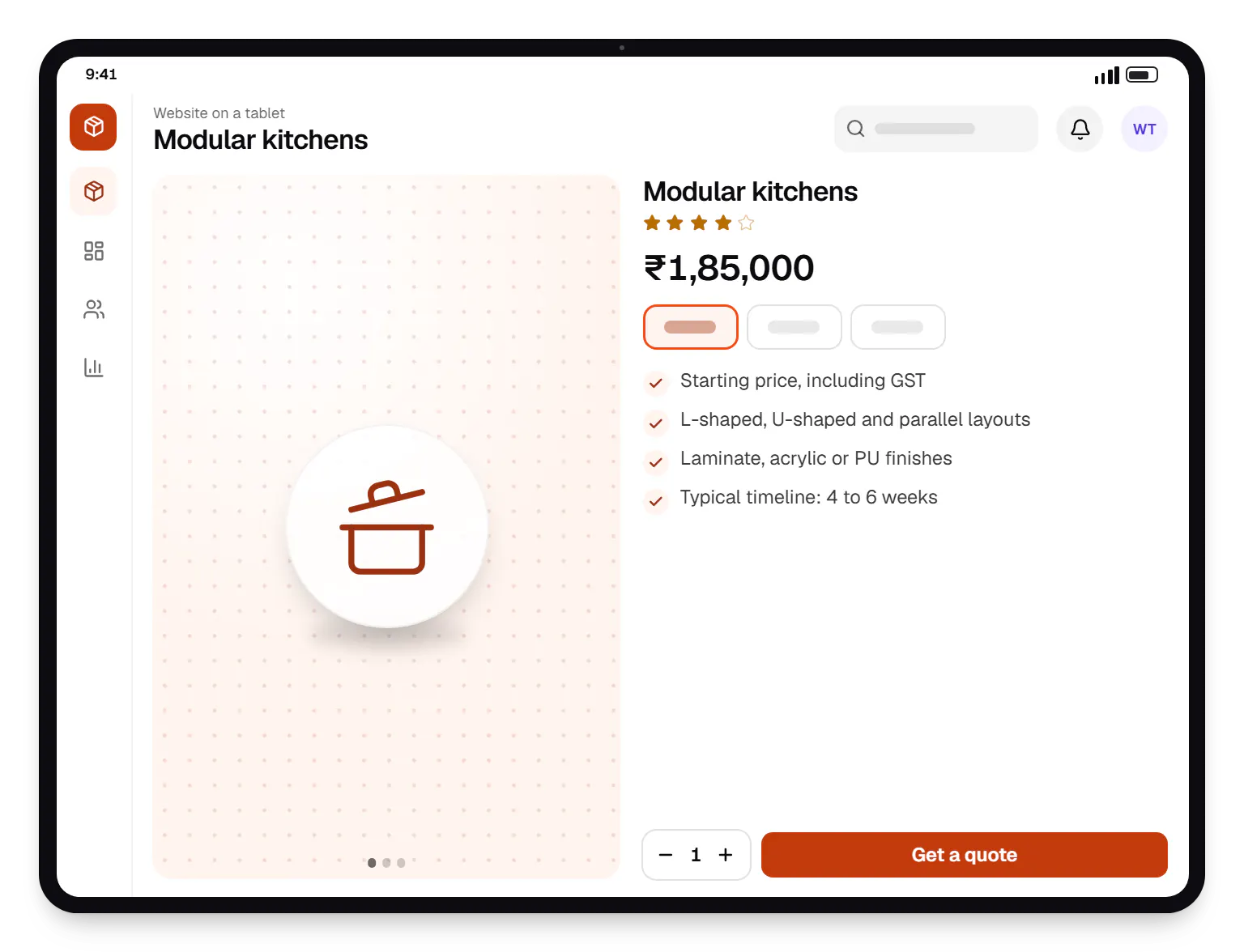
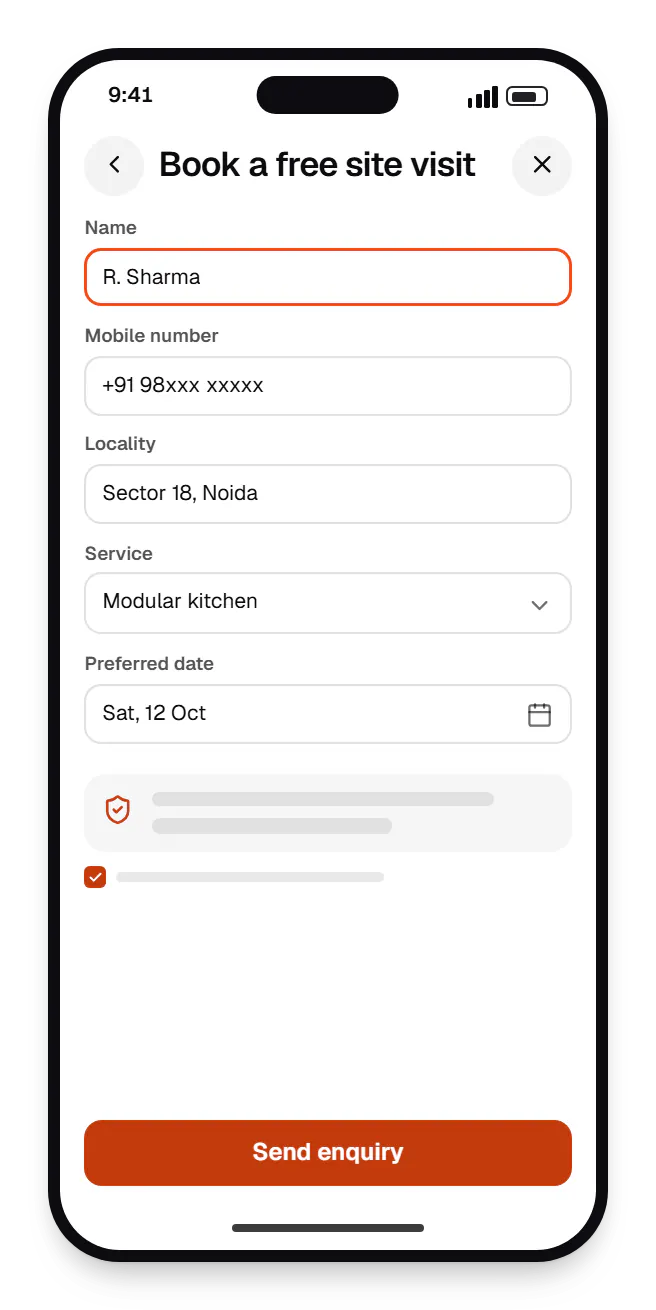
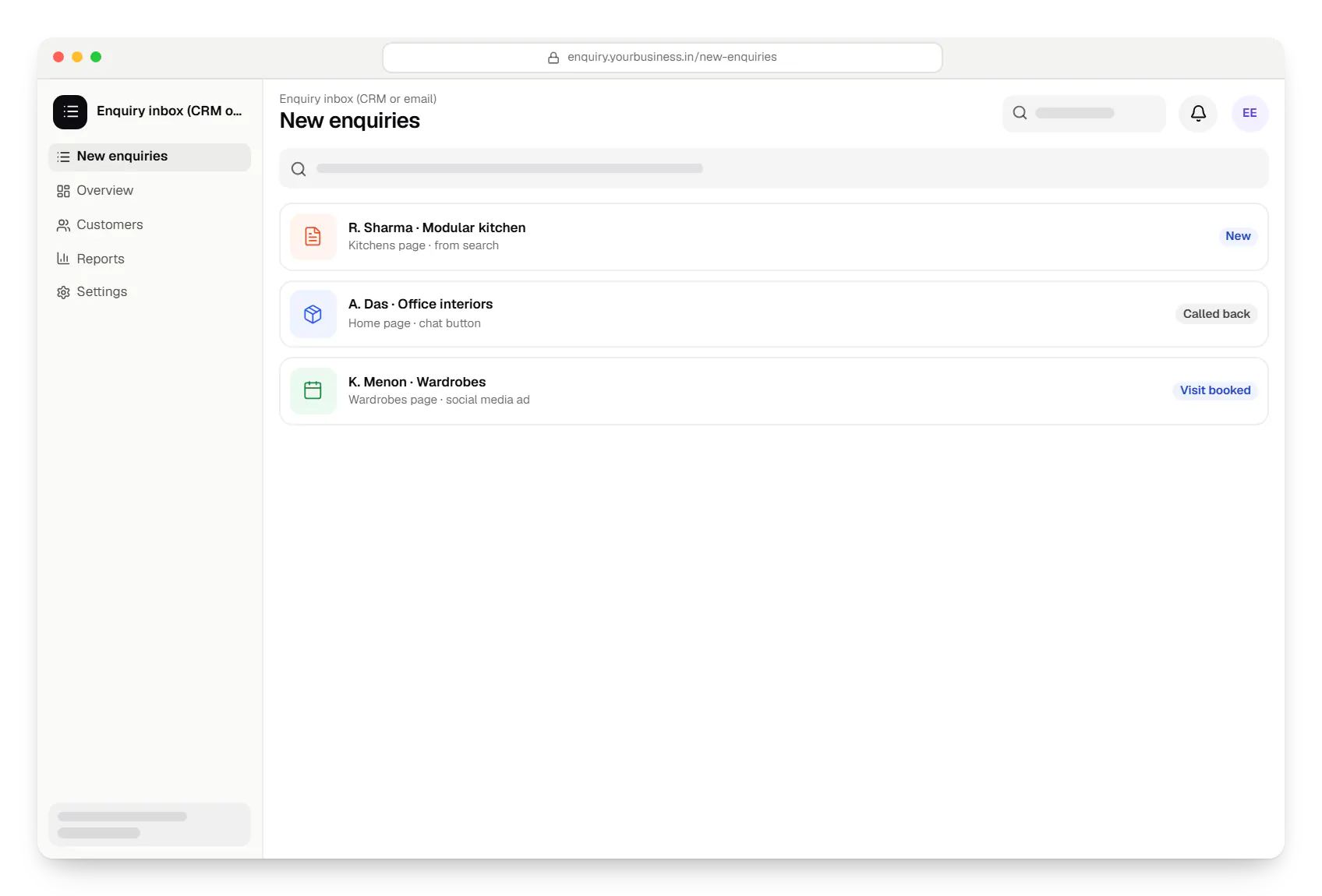
Sample screens: names, prices and figures are examples, not client data.
Industries
Cost drivers
Twenty pages built from four templates take less effort than eight bespoke layouts.
Final copy and photos from you speed things up; copywriting, translation and photography add scope.
Each language needs translated content, localised URLs and a fluent reviewer.
Moving hundreds of old posts, with redirects and clean-up, is planned work of its own.
CRM sync, booking widgets, payment links or custom calculators each add build and test time.
Estimates are written from your scope, with the effort and assumptions behind each line item.
How pricing worksProcess
Pages, the action each should prompt, and an audit of the content you already have.
You getSitemap and content plan
Mobile-first layouts for each template, then visual design in your brand style.
You getApproved page designs
Templates and sections connected to the CMS, with roles for your editors.
You getStaging site
Approved copy loaded, old content moved and every old URL mapped.
You getRedirect map
Speed, accessibility, forms, analytics, metadata and broken links tested on staging.
You getSigned-off launch checklist
DNS switch, Search Console submission and a walkthrough for your editors.
You getLive site and editor guide
FAQ
A rebuild can remove technical problems that hold rankings back, such as slow pages, poor mobile layouts, missing metadata or broken URLs. Rankings themselves depend on content, competition, links and time, so nobody can honestly promise positions. During a rebuild we protect what you already have by redirecting each old URL to its new equivalent and watching Search Console after launch.
WordPress is sensible for a standard marketing site when you want a large pool of freelancers and are comfortable keeping plugins updated. Next.js with a headless CMS suits businesses that care about speed, want custom interactive sections or plan to connect the site to a product or internal system. It has fewer plugins to patch but needs a developer for structural changes.
Yes. Editors can change text, images and SEO fields, build new pages from existing sections and preview changes before publishing. Roles can be set so a marketing executive drafts and a manager publishes. Structural changes, such as a new section type or a new integration, still need development. At handover we run a training session and leave a short illustrated guide.
We recommend that the domain, hosting and CMS accounts sit in your company’s name, with our team given access. Next.js sites typically run on a managed platform or AWS behind a CDN; WordPress sites go on managed hosting with daily backups. At handover we document the registrar, DNS, SSL and every login, and we can handle updates and monitoring monthly.
Next step
Send us your current site or a list of the pages you have in mind. We will outline the templates, CMS set-up and a transparent estimate.