


Web
Next.js
A modern web technology for fast, search-friendly websites, online stores and web applications that load quickly on mobile.
Used for
- Business websites
- Online stores
- Web apps
- Customer portals
Transportation & logistics
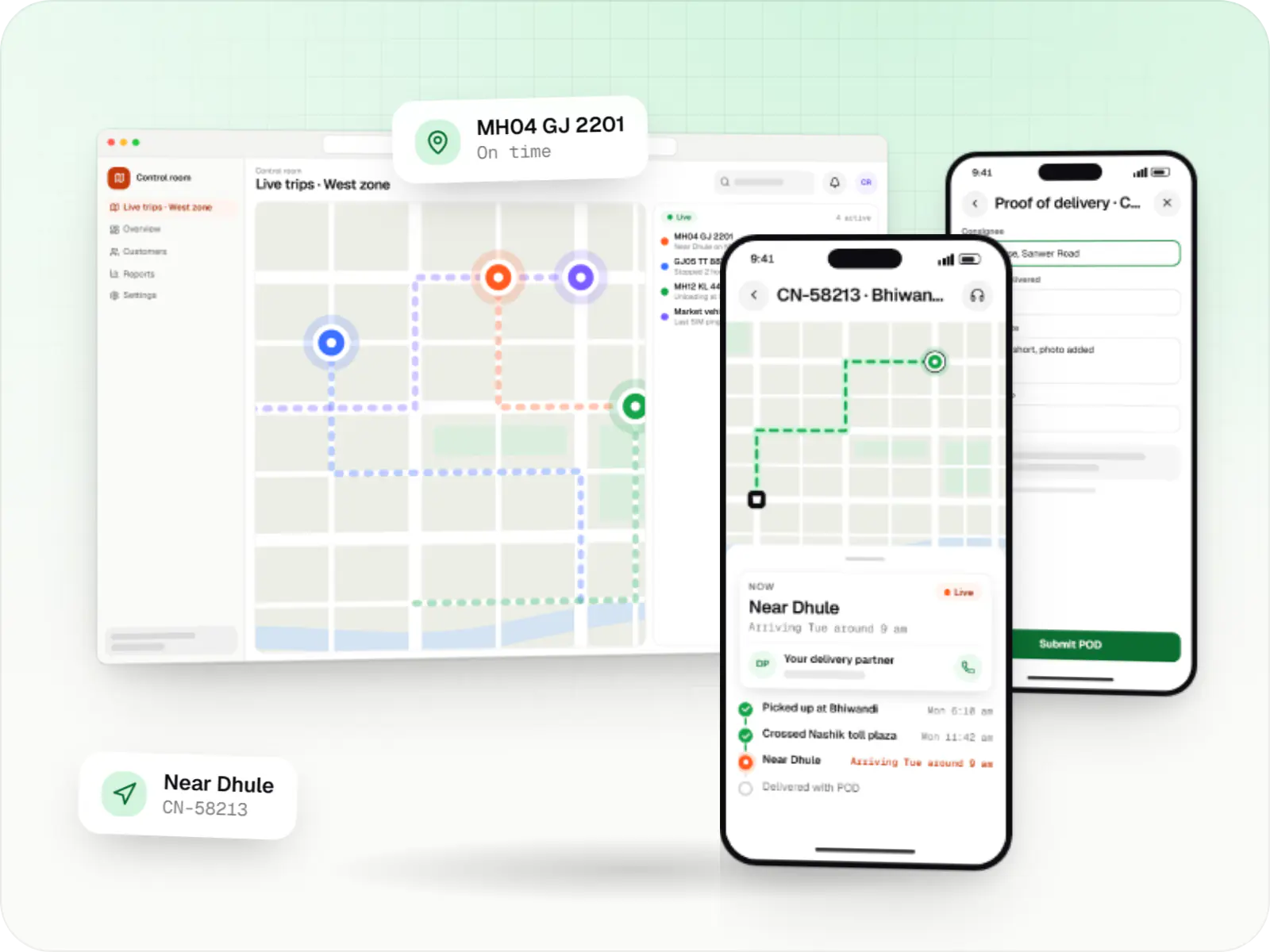
Transport and warehouse software for 3PLs, freight forwarders and logistics service providers: bookings, load planning, tracking, e-way bills, PODs and freight billing.
At a glance

We build logistics software for companies that move and store goods for others: client booking portals, transport management, market-vehicle sourcing, shipment tracking, warehouse operations, e-way bill automation, digital PODs, and billing with freight audit. Systems are designed around the data your shippers expect and the realities of Indian highways and hubs.
How to start
Tell us what you need in your own words. You talk to the developers who would build it and get a written, line-item estimate.
Get a project estimateA logistics company sells reliability, yet its operations are often held together by phone calls. Shippers ask where their consignment is; operations teams call drivers; e-way bills expire on delayed trucks; PODs arrive by courier weeks later and hold up billing. Much of the capacity comes from market vehicles and brokers, so the data you need sits with people you do not employ.
We build logistics platforms that turn this into a traceable flow. A booking creates a shipment with its documents, a vehicle is assigned from your fleet or the market, tracking comes from GPS devices, consent-based SIM tracking or a driver app, and the POD is captured at delivery with a photo and signature, ready for billing the same day.
We also connect the Indian systems logistics depends on: the e-way bill system through a GSP, FASTag data, courier APIs, and ULIP where your company is registered to use it.
Challenges
Tracking data arrives from GPS vendors, drivers' phones and transporters' updates in different formats.
Delayed or transhipped consignments need Part B updates and extensions before validity lapses.
Paper PODs delay billing and create disputes about delivery dates and shortages.
Finding and negotiating trucks through brokers happens on calls, with little record of rates.
Detention, multi-point delivery and fuel escalation charges are missed or disputed.
Solutions
Across 2 areas
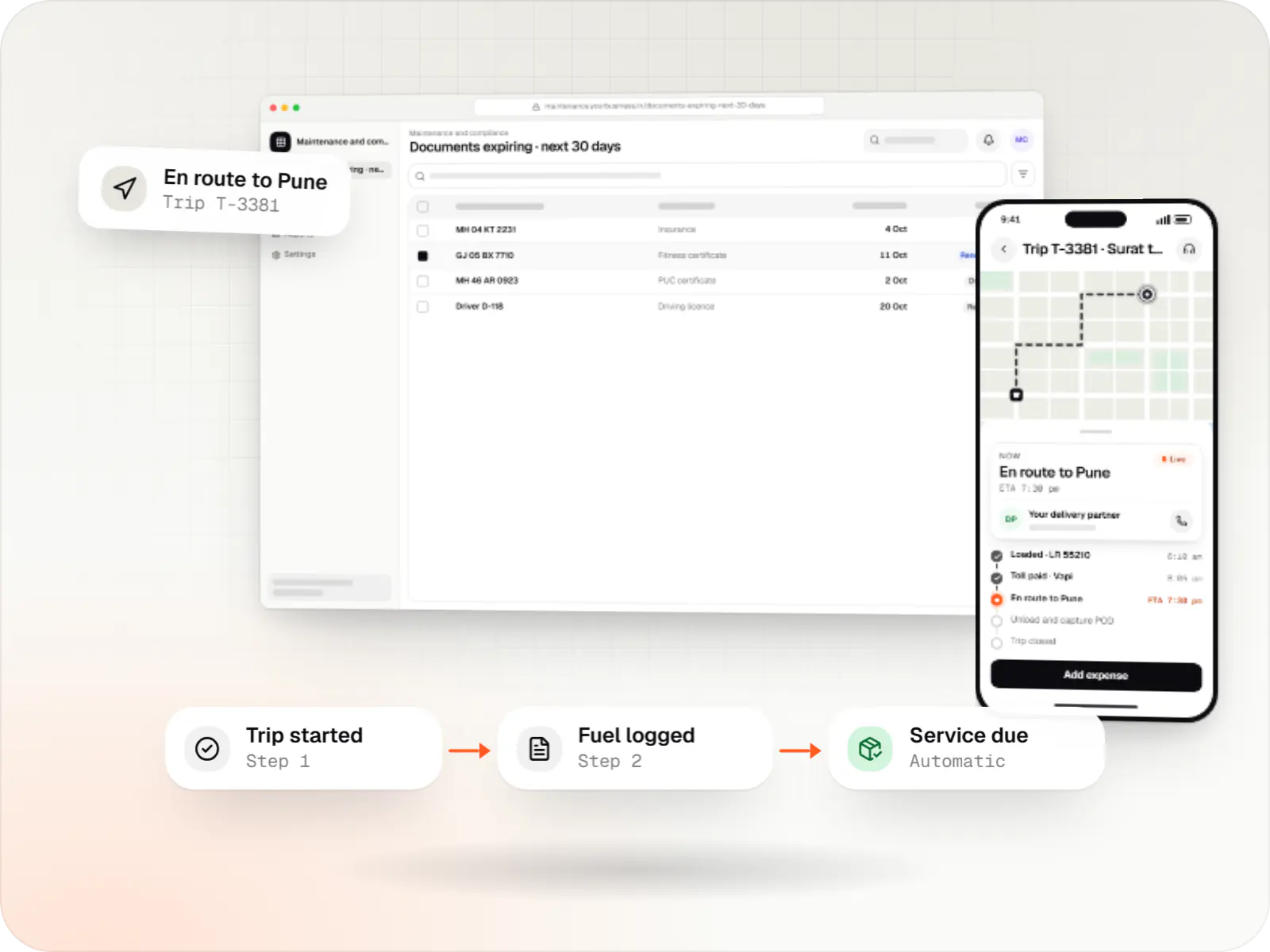
Custom fleet management software for GPS tracking, trips, driver apps, compliance reminders, maintenance and freight billing.
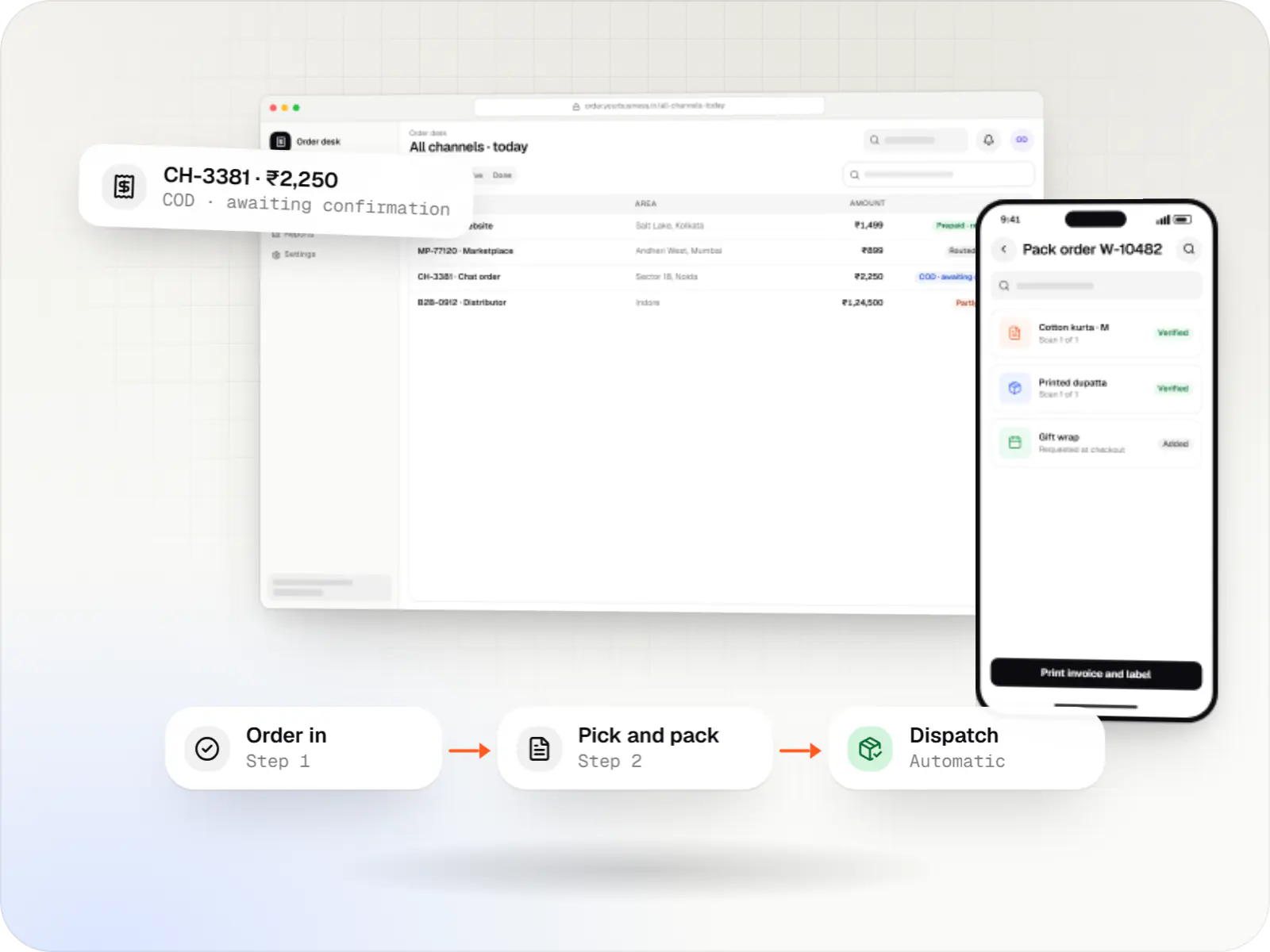
A central order management system that collects orders from every channel, routes them to the right location and tracks them to delivery and payment.
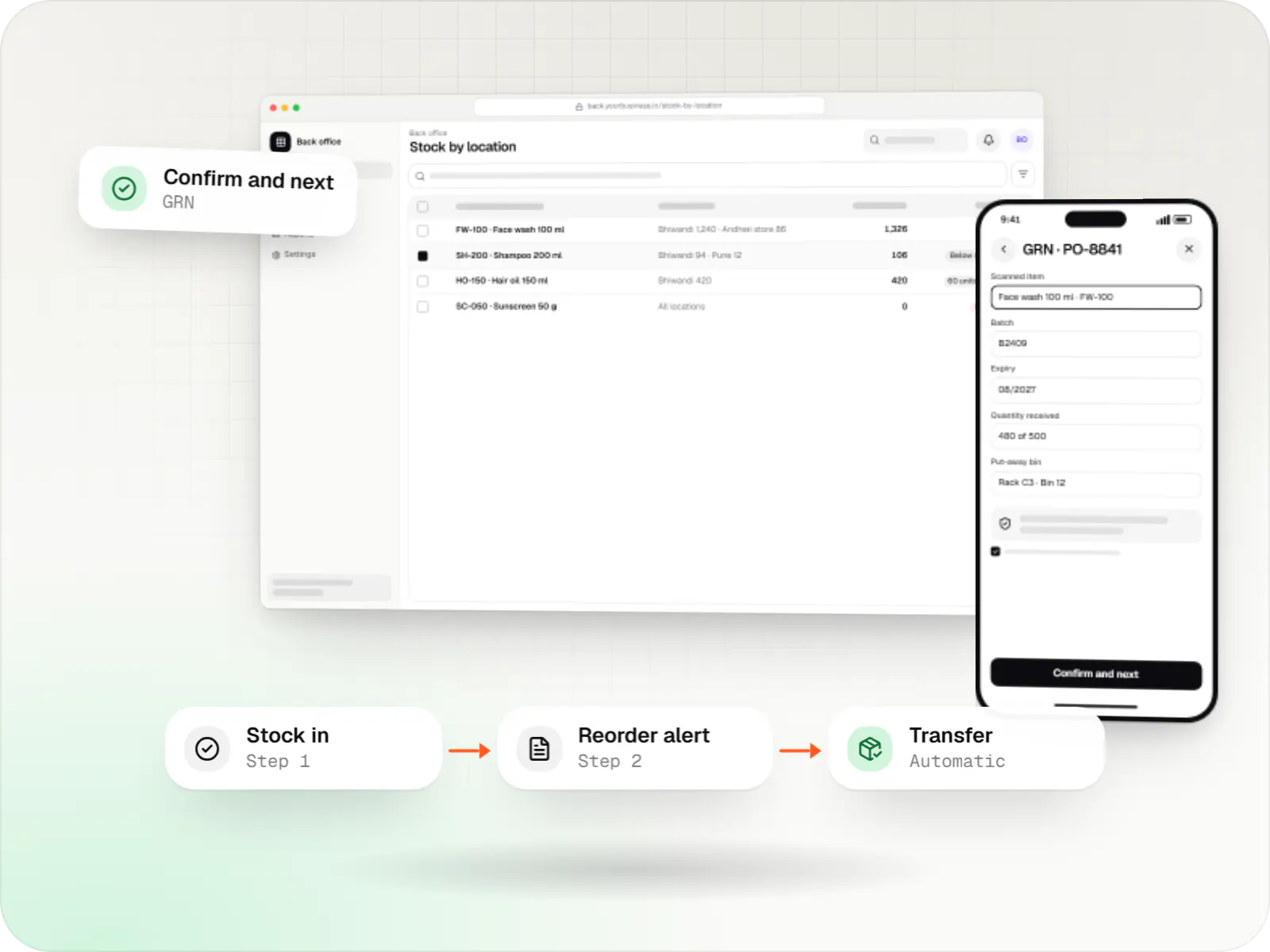
Custom inventory software for multi-location stock, batch and expiry tracking, barcode scanning and marketplace stock sync.
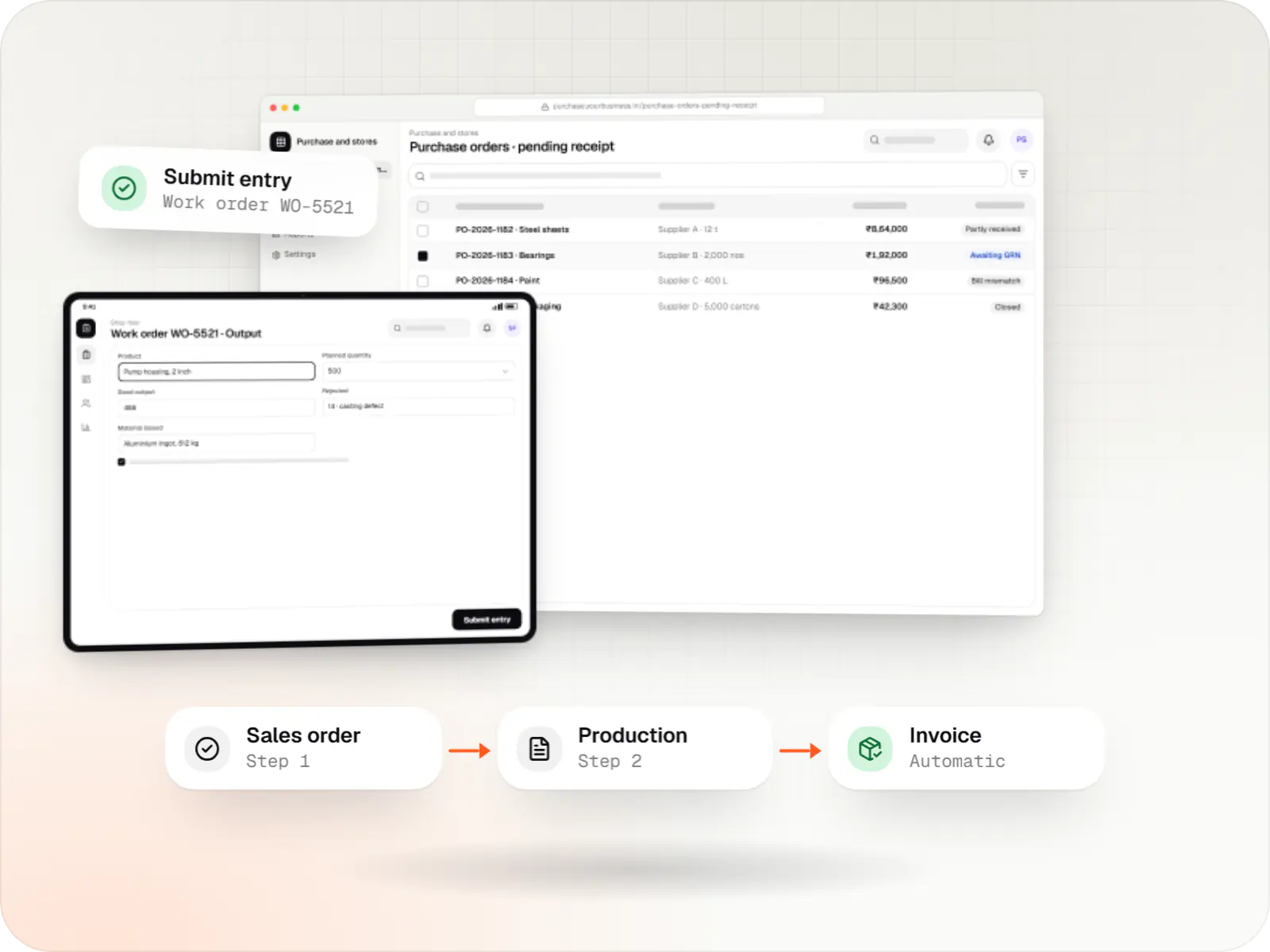
Custom ERP software connecting purchase, inventory, production, sales and GST compliance, alongside your existing accounting system.
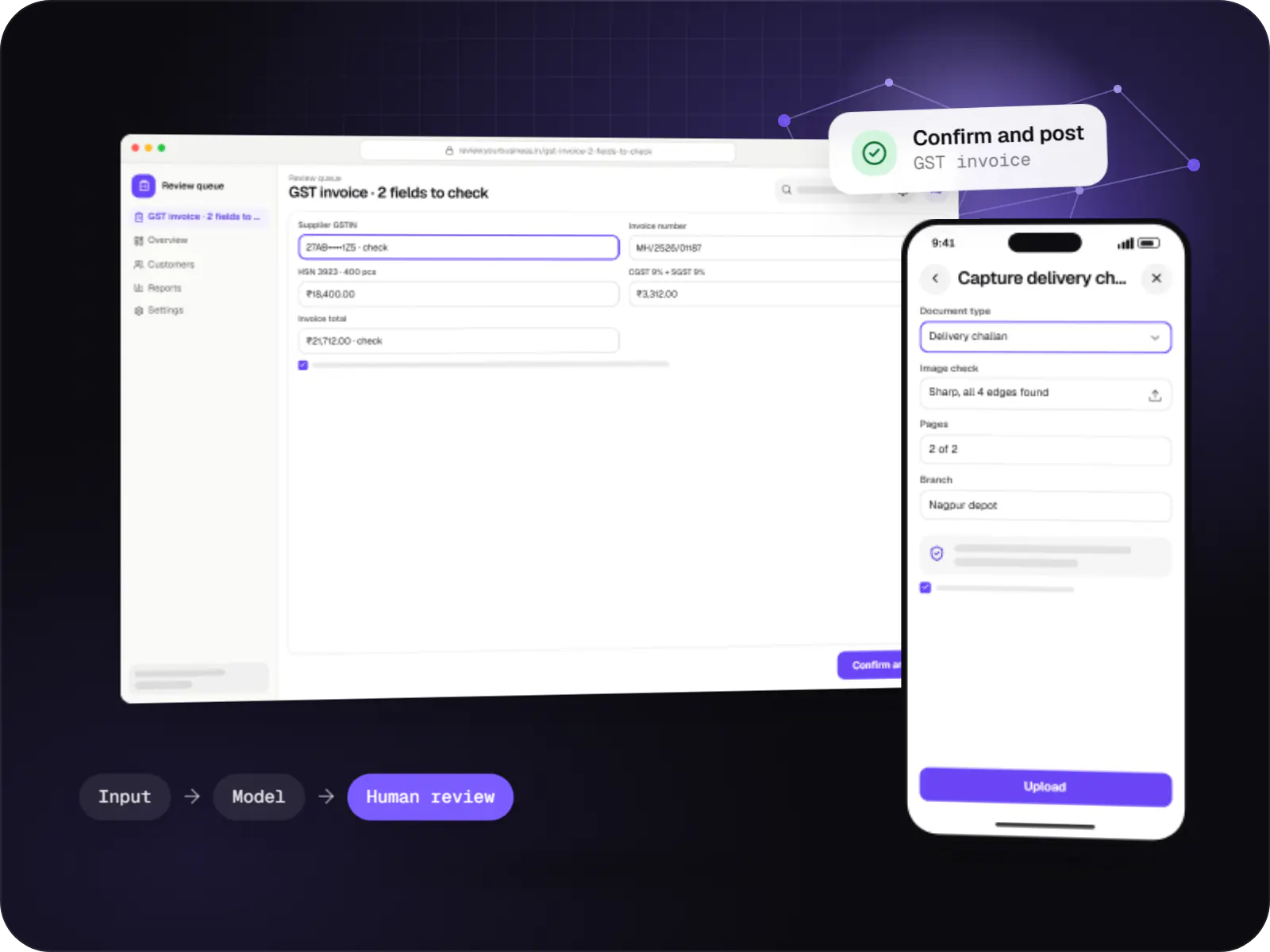
Data extraction from invoices, KYC documents, statements and forms into your systems, with validation rules and human review for uncertain fields.
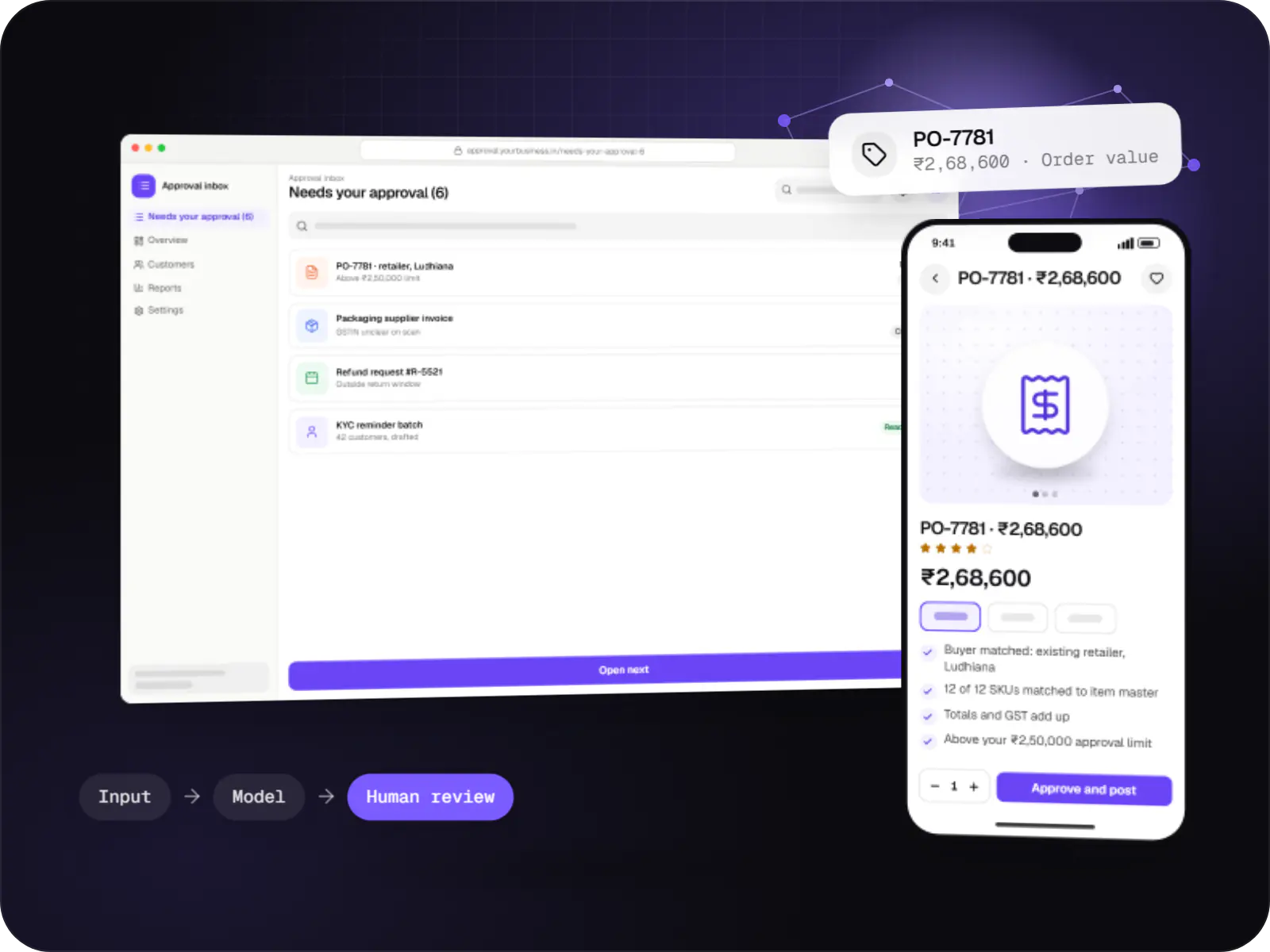
Automations for repetitive back-office work, with AI steps that read, classify and draft, and approvals where decisions matter.
Shippers create orders, upload invoices and track shipments; large clients integrate by API.
Load planning, vehicle assignment, multi-drop trips and transhipment handling.
Requests to empanelled vendors, rate quotes, document checks and trip advances.
GPS devices, consent-based SIM tracking and driver app pings merged into one timeline with ETA alerts.
Generation, Part B updates, consolidation and expiry alerts through GSP APIs.
Photo, signature or OTP at delivery, with shortage and damage notes visible to billing at once.
Inbound, putaway, picking and dispatch with barcode scanning for 3PL warehouses.
Contract rate cards, accessorial charges, GST invoices and checks on vendor bills.
How it works
Each step adds to one shipment record, so the shipper, your control room and your billing team always look at the same facts.
The shipper creates an order and uploads the invoice; larger clients send orders straight from their ERP through an API.
The e-way bill is created from consignment data through a GSP, with no typing on the government portal.
Own trucks are planned first; for the rest, empanelled vendors quote rates, and papers are checked before the trip advance is paid.
GPS devices, consent-based SIM tracking and driver app pings merge into one view, and delays raise alerts before the client calls.
The consignee signs or shares an OTP, and photos record any shortage or damage at the moment of delivery.
Freight, detention and multi-point charges come from the contract rate card, and the GST invoice goes out with the POD attached.
Market vendors' bills are checked against agreed rates and actual trip data, so overcharges are caught before money leaves.
Platforms
Browser-based applications with logins, roles and workflows, such as customer portals, SaaS products and internal tools.
Apps for Android phones and tablets, tested on budget and mid-range devices and published on Google Play or privately.
Back-office panels for operations, support and finance teams: orders, users, content, reports and permissions.
Installable web apps with offline support and notifications, useful when an app-store listing isn't essential or phones have little storage.
Technology
Next.js and React build client portals and control-room screens, Python calculates routes and arrival estimates, Google Maps shows every truck live, and trip history is stored on infrastructure built on AWS.
Web
A modern web technology for fast, search-friendly websites, online stores and web applications that load quickly on mobile.
Used for
Web
Builds interactive screens in the browser, such as dashboards, admin panels and portals, that respond instantly as your team works.
Used for
Backend
A structured way to build back ends on Node.js, so large business systems stay organised, testable and easy to hand over.
Used for
Backend
A programming language for AI features, data processing and automation: the engine behind document reading, reports and smart search.
Used for
Data
A reliable database for the records your business runs on: orders, payments, bookings and stock, kept accurate and easy to report on.
Used for
Data
Keeps frequently used data in fast memory, so apps stay quick on busy days and live features like order tracking feel instant.
Used for
Payments & maps
Adds maps, address search, live tracking and travel-time estimates to delivery, ride and field apps, so orders reach the right door.
Used for
Cloud & DevOps
Cloud hosting for your app, website and data, with data centres in India and room to grow when traffic rises.
Used for
Plain-English glossary
Product preview
Illustrative screens: consignments, vehicles and figures are examples.
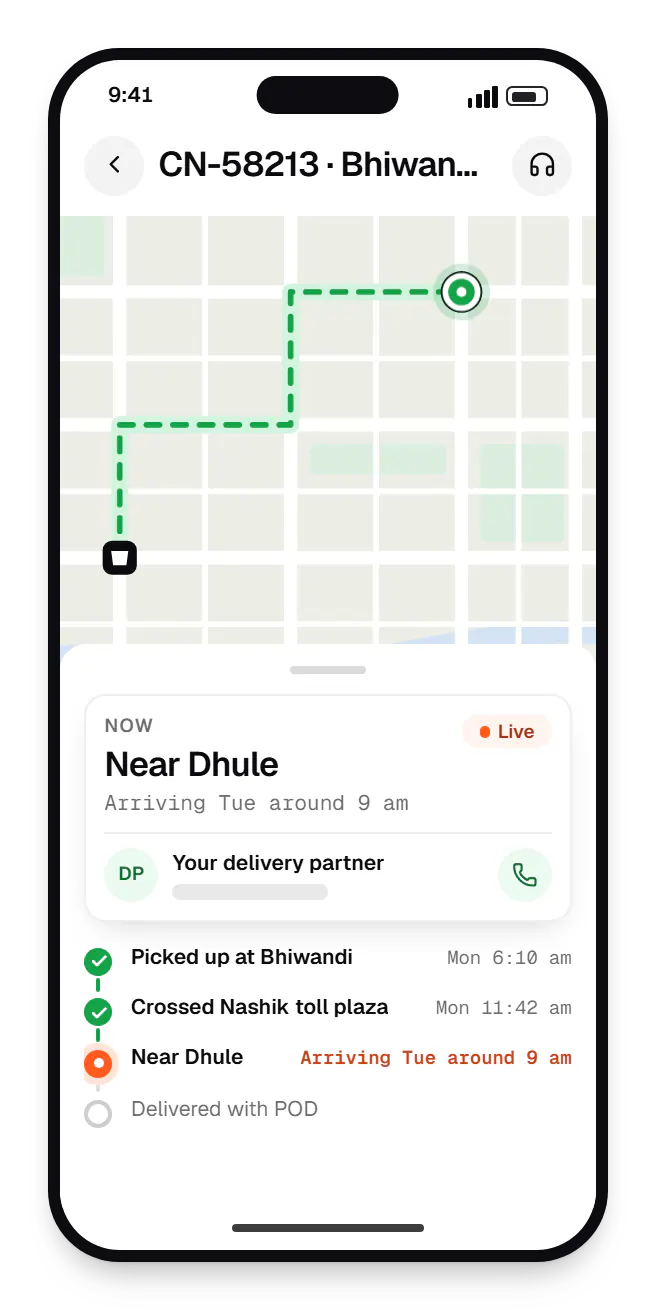
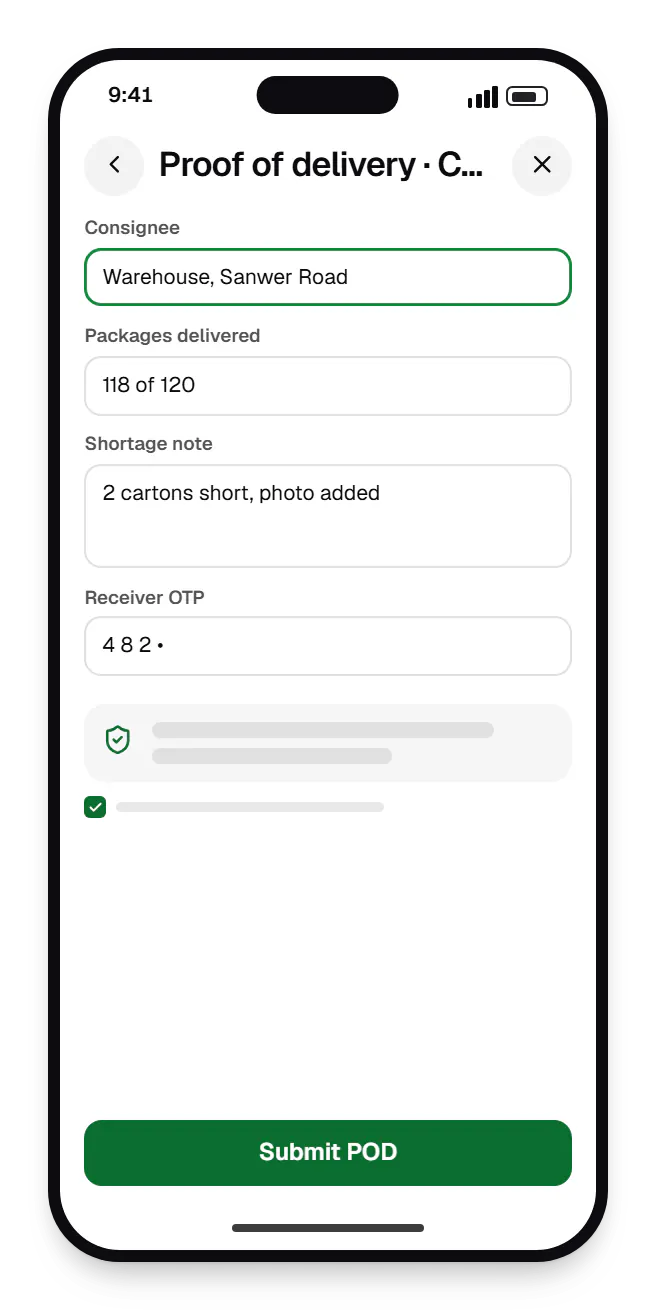
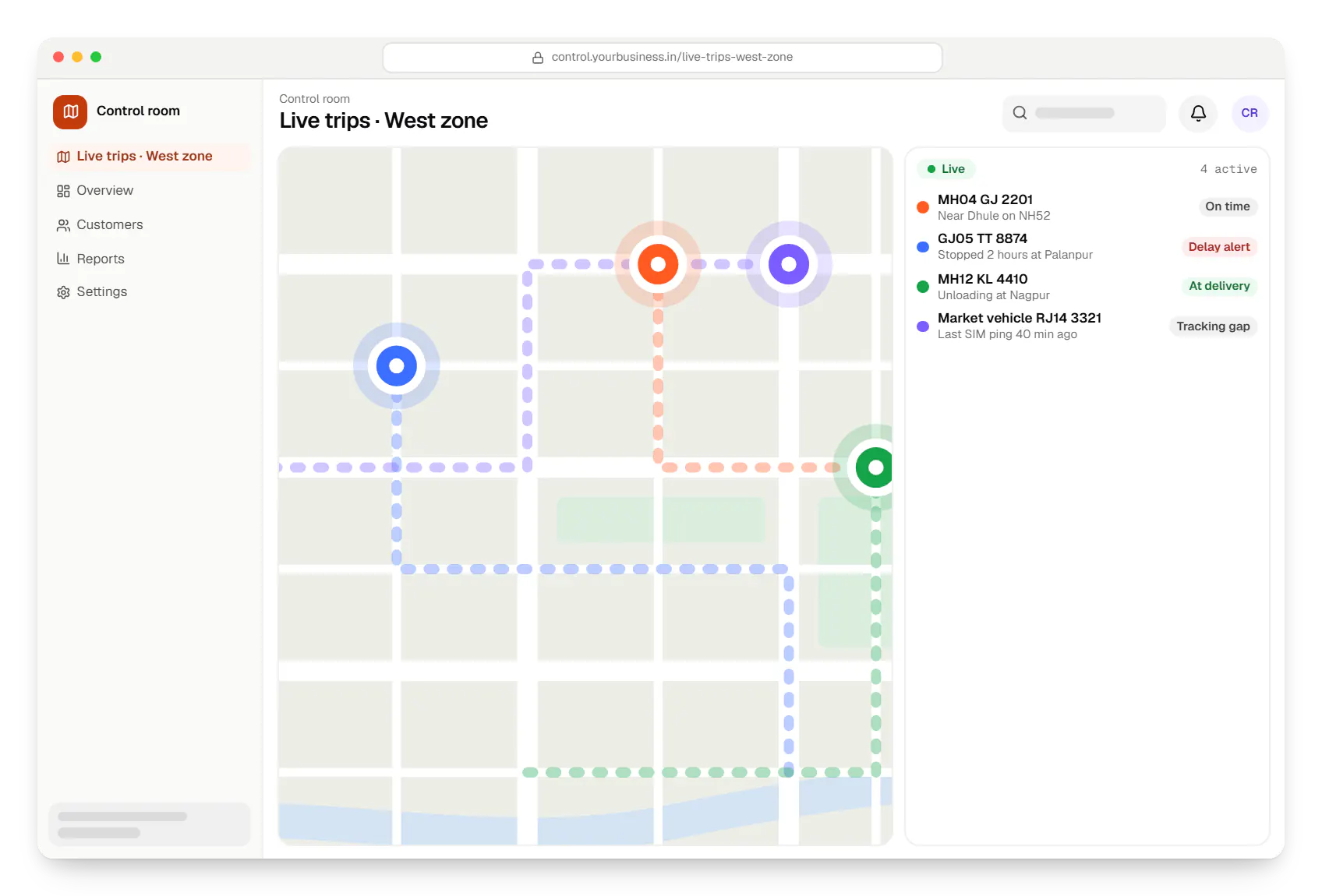
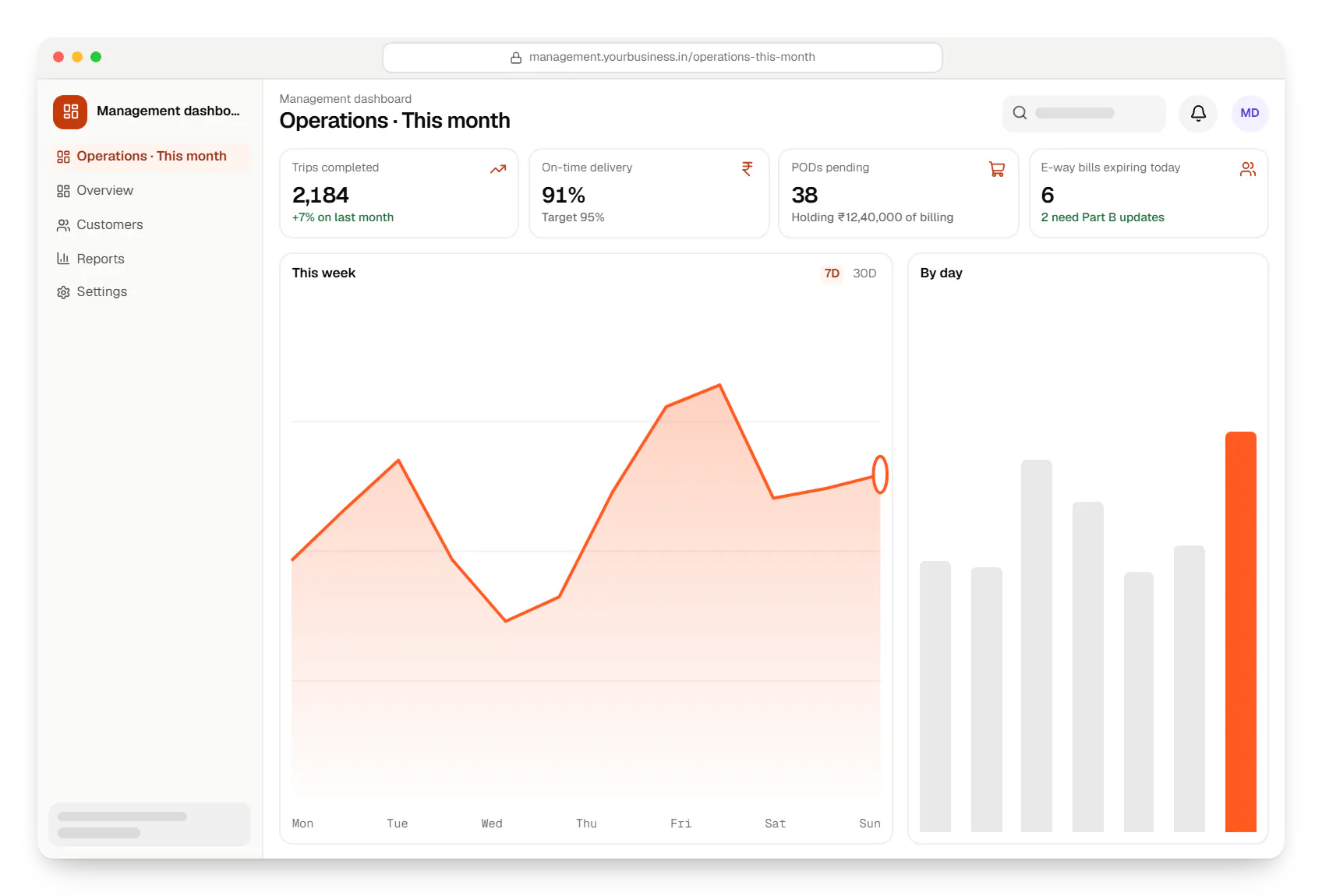
Sample screens: names, prices and figures are examples, not client data.
Work
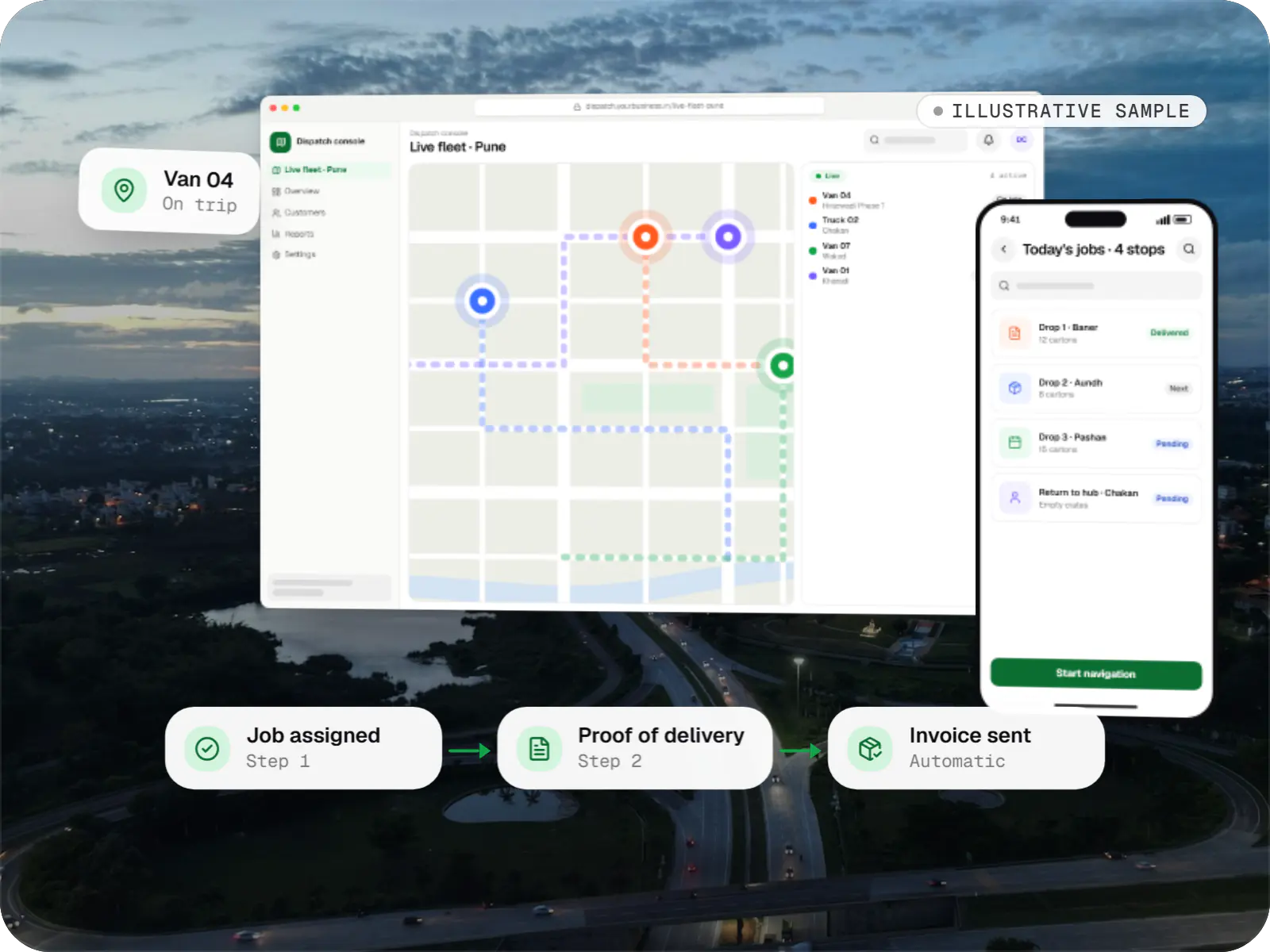
Business software
An illustrative SaaS for businesses running their own vehicles: live dispatch on a map, driver proof of delivery and per-trip billing for each customer.
Runs on
Built with
Cost drivers
Transport-only systems are lighter than platforms that combine transport, warehousing and client portals.
Each GPS vendor, SIM-tracking provider and telematics API has its own format and reliability quirks.
E-way bill, e-invoice, FASTag, ULIP and client ERP integrations each add setup and testing.
Contract rates with slabs, detention, multi-point and fuel-linked adjustments need careful modelling.
Estimates are written from your scope, with the effort and assumptions behind each line item.
How pricing worksServices
The design and engineering services our in-house team combines on projects in this sector.
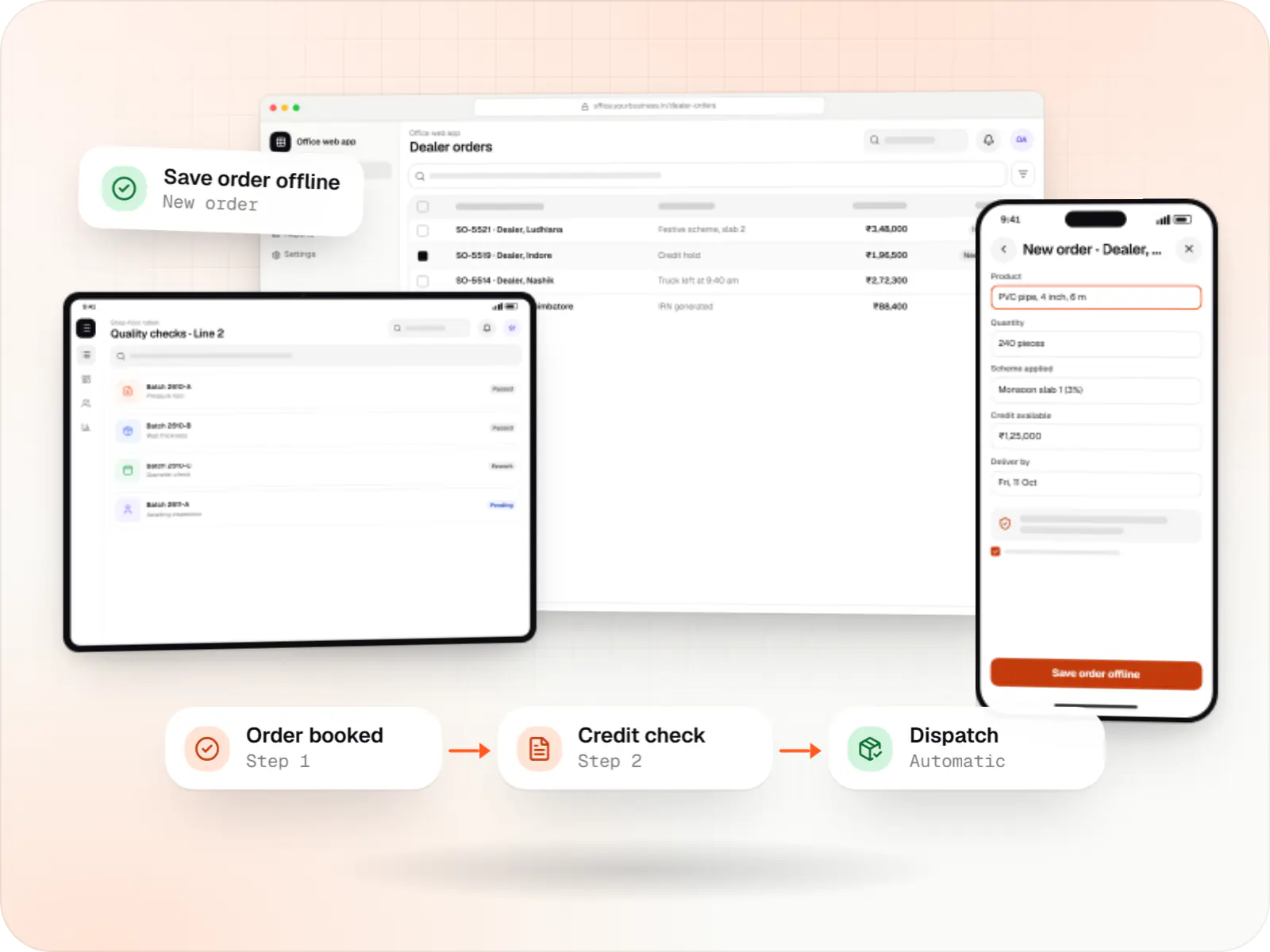
Software shaped around how your business runs, from approvals and inventory to billing and reports, replacing spreadsheets and disconnected tools.
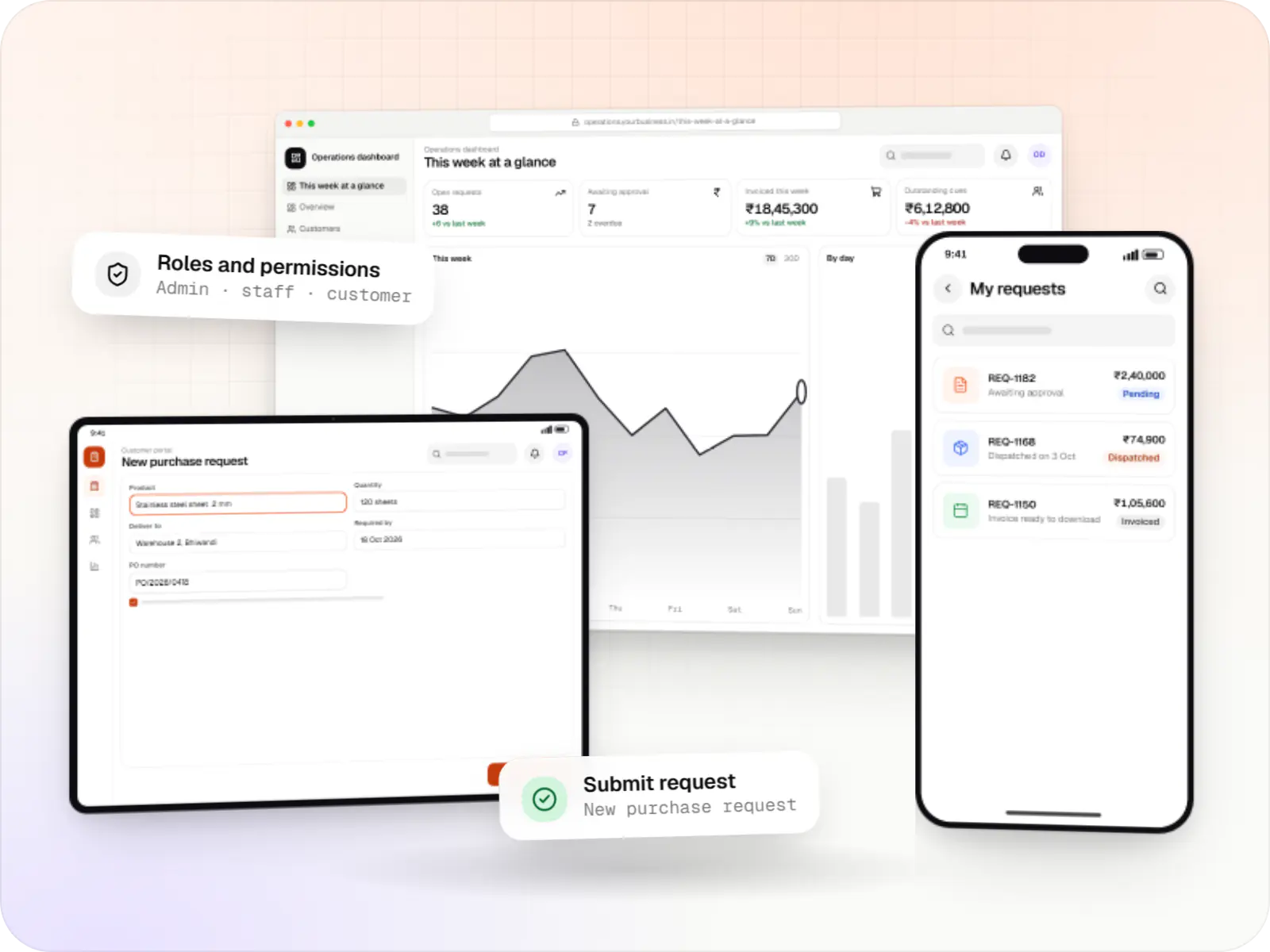
Browser-based products, customer portals, dashboards and internal tools, built on clean data models with secure roles and integrations.
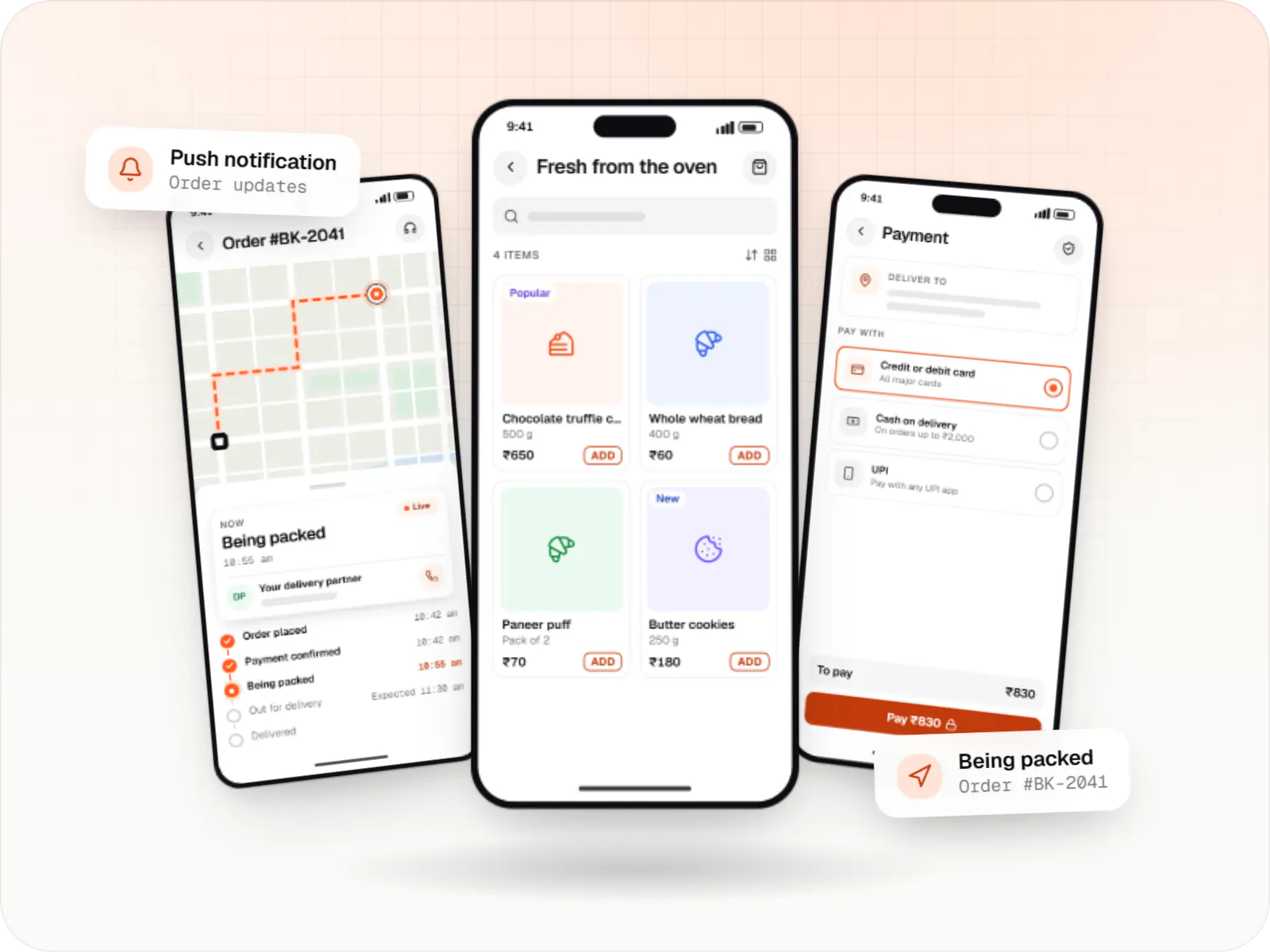
Native and cross-platform Android and iOS apps, from first release through regular store updates, built by our in-house designers and engineers.
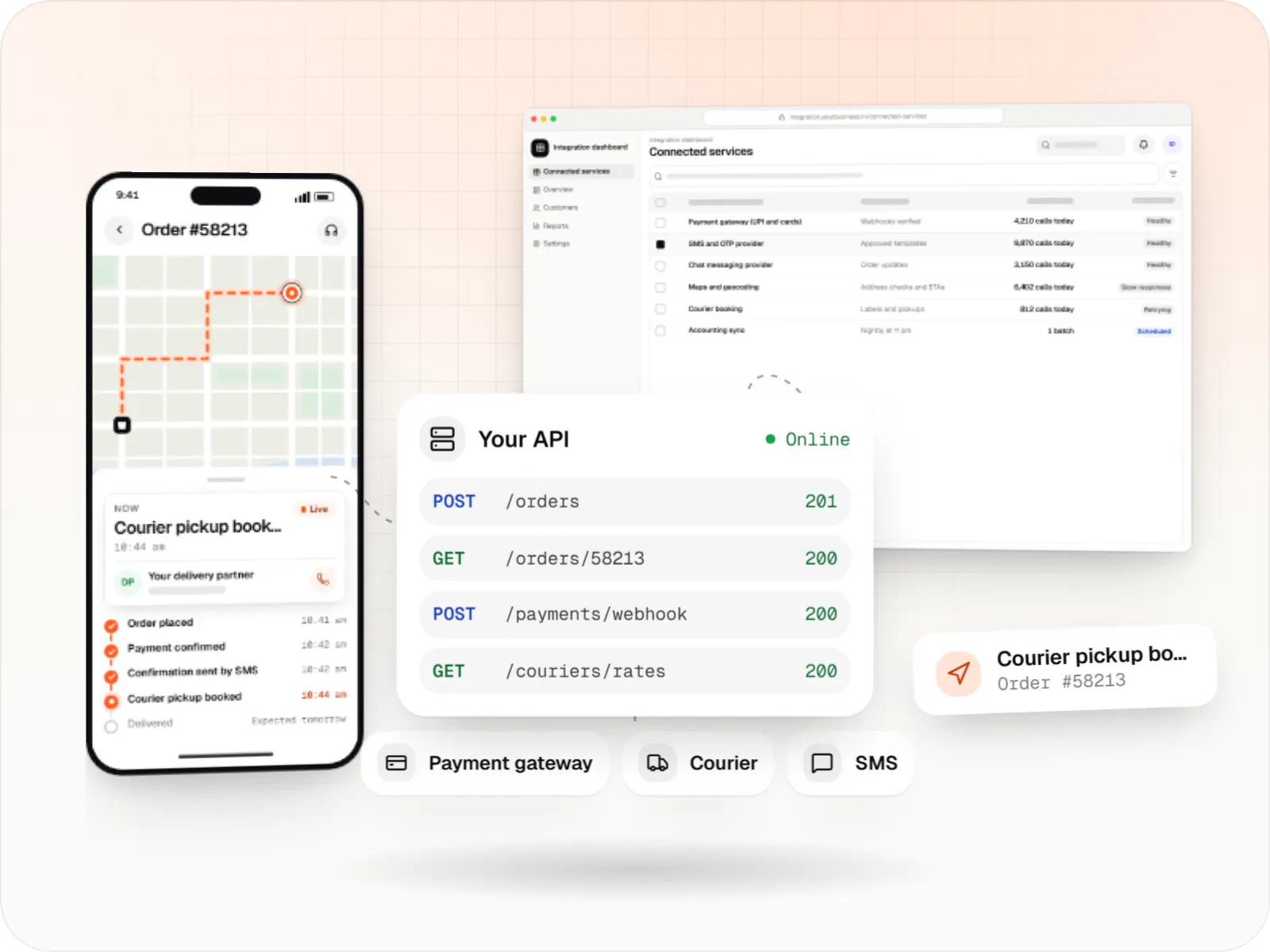
Secure, documented REST and GraphQL APIs, plus integrations that connect your apps to payment, logistics, GST, messaging and business systems.
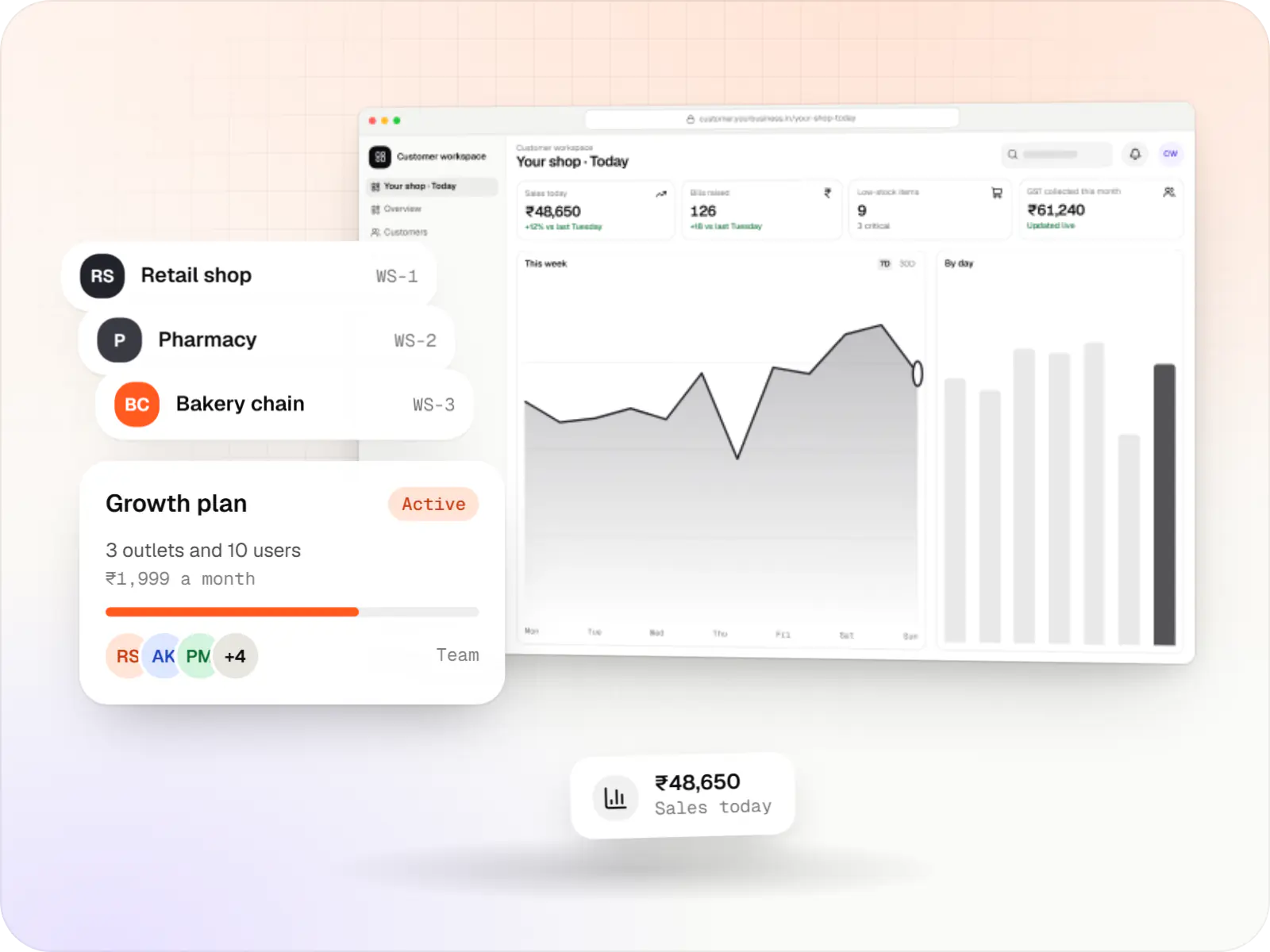
Multi-tenant SaaS products with subscription billing, team roles, onboarding and usage analytics, from first MVP to paying customers.
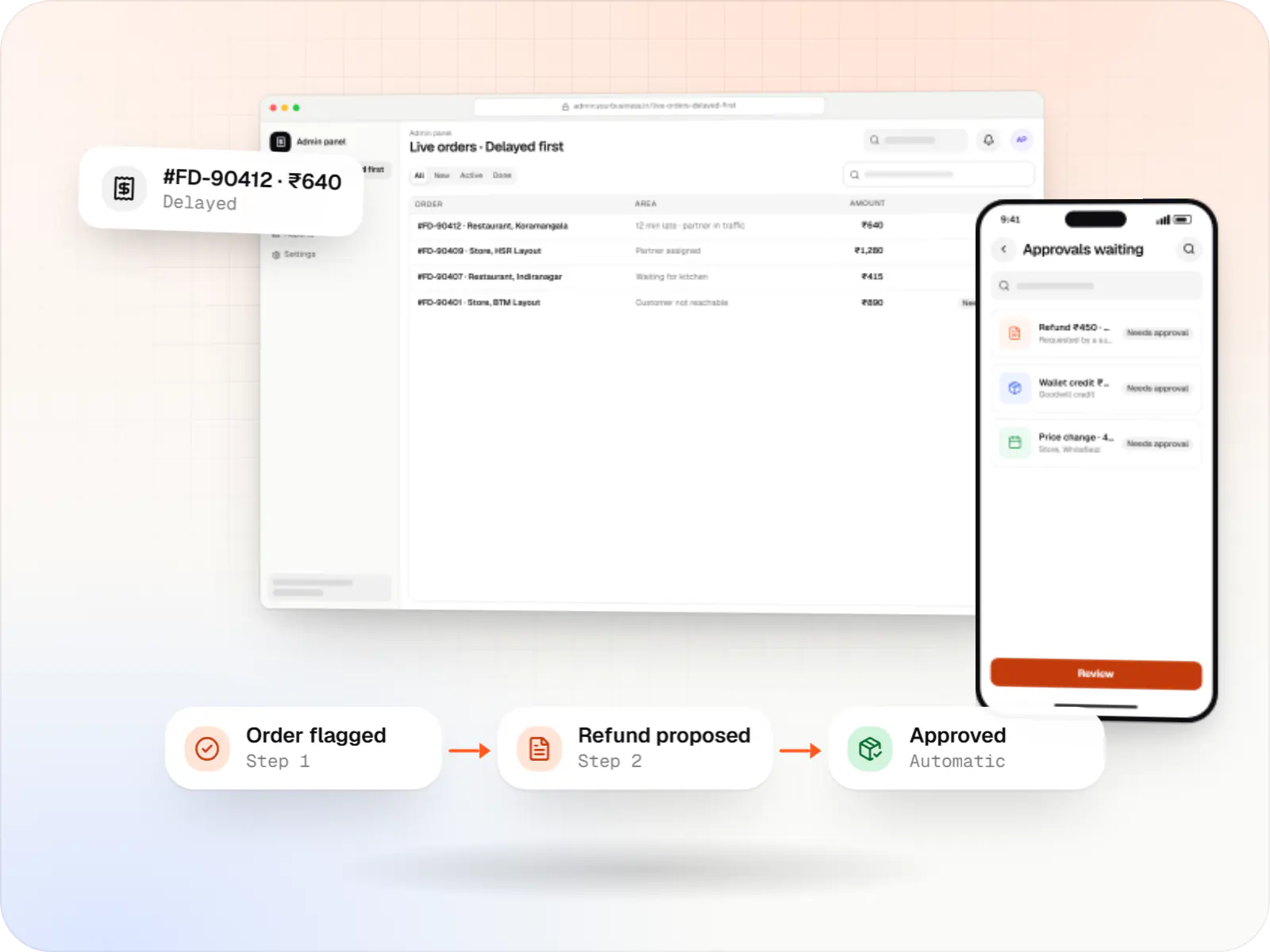
Back-office dashboards built around your team's daily tasks: order queues, approvals, catalogue management, payouts, reports and audit logs.
Dedicated pages
FAQ
Yes, with a few options. Consent-based SIM tracking uses the driver's mobile network location after the driver approves a consent SMS; it is coarser than GPS but needs no app. A lightweight driver app gives better accuracy if drivers will install it. For vehicles with existing GPS, we integrate the vendor's API. All sources feed one shipment timeline, and gaps in updates raise an alert so your team calls before the client does.
We integrate with the e-way bill system through a GST Suvidha Provider. The software generates e-way bills from consignment data, updates Part B when a vehicle is assigned or changed at transhipment, consolidates bills for multi-consignment trips, and extends validity when a delay is recorded. An expiry dashboard shows bills close to lapsing. API access is set up under your GSTIN or your client's, depending on who generates the bill.
The Unified Logistics Interface Platform, set up under the National Logistics Policy, gives registered companies API access to government data such as vehicle registration, driving licence and FASTag information. It can help verify market vehicles and drivers, or infer progress from toll crossings. Access needs registration and approval for specific use cases, so we first check whether ULIP adds enough over your current data sources, then integrate if your registration is in place.
If your work is standard full-truckload or part-load with simple rates, an off-the-shelf TMS may be enough. Custom software earns its cost when your service mix is unusual, clients demand integrations and reports a product cannot provide, or you want the platform itself to set you apart in client pitches. A middle path keeps an existing TMS and adds a client portal, tracking layer or billing module around it.
Yes. Warehousing and transport are modelled as connected operations: an outbound order in the warehouse creates a dispatch that becomes a trip, and clients see inventory, dispatches and deliveries in one portal. Warehouse screens support barcode scanning on Android handhelds, with batch and expiry handling where clients need it. Billing then combines storage, handling and freight charges per client contract, on one invoice or separate ones.
Next step
Share your service lines, fleet mix and the systems your clients use. We will outline an integration plan and a line-item estimate.