

Web
Next.js
A modern web technology for fast, search-friendly websites, online stores and web applications that load quickly on mobile.
Used for
- Business websites
- Online stores
- Web apps
- Customer portals
Order management
One queue for every order, from checkout or WhatsApp to delivered, returned or settled.
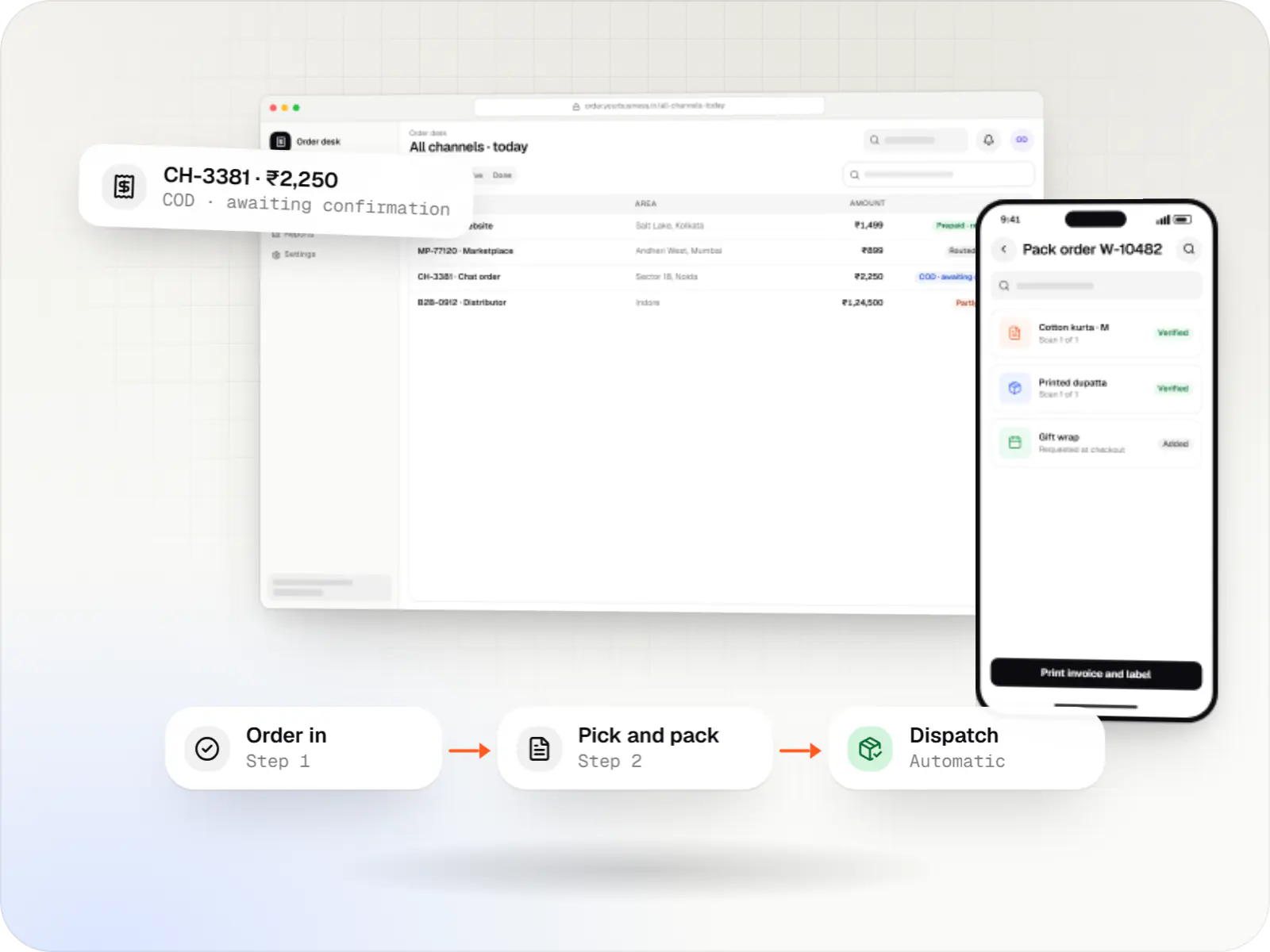
At a glance
What it is
A central order management system that collects orders from every channel, routes them to the right location and tracks them to delivery and payment.
How to start
Tell us what you need in your own words. You talk to the developers who would build it and get a written, line-item estimate.
Get a project estimateAs sellers add channels, each brings its own panel: a Shopify admin, two marketplace dashboards, a WhatsApp number that takes orders, and sales reps who phone them in. Staff copy orders between screens, and mistakes appear as wrong dispatches, missed SLAs or unpaid COD parcels.
An OMS pulls these into one order record with a consistent status model. Rules decide which warehouse or store fulfils each order, which courier ships it and when a cash-on-delivery order needs confirmation. Finance sees what was delivered, returned and paid.
Challenges
Orders re-typed from channel panels cause wrong addresses, quantities and SKUs.
Unconfirmed cash-on-delivery orders turn into return-to-origin shipments you pay for both ways.
COD remittances, gateway payouts and marketplace settlements are matched by hand.
Support staff check four systems to answer one "where is my order?" question.
What is included
Platform: Web app
Platform: Web and Android app
Platform: Web app
Platform: Admin dashboard
How it works
Whichever channel an order comes from, it follows one set of statuses to the end.
Every order lands in one queue with a common status, whichever channel it came from.
Cash-on-delivery orders from risky pin codes get a WhatsApp or IVR confirmation before anything is packed.
The order goes to the warehouse or store that has stock and serves the delivery pin code, and can be split if needed.
Staff scan items to verify them, print the GST invoice and label together, and the courier is chosen by rate and pin-code performance.
Tracking updates reach the customer on WhatsApp; failed delivery attempts appear as NDRs for the team to act on quickly.
Returns and refunds are processed, and COD remittances, gateway payouts and marketplace settlements are matched to orders.
Platforms
Operations and finance teams use a web app; warehouse and store staff use Android phones to pick, pack and hand over orders.
Browser-based applications with logins, roles and workflows, such as customer portals, SaaS products and internal tools.
Apps for Android phones and tablets, tested on budget and mid-range devices and published on Google Play or privately.
Back-office panels for operations, support and finance teams: orders, users, content, reports and permissions.
Technology
Chosen to cope with sale-day spikes, retry failed channel updates and keep every order's history in one place.
Web
A modern web technology for fast, search-friendly websites, online stores and web applications that load quickly on mobile.
Used for
Backend
Runs the server side of apps: fast, scalable back ends that power your app, website and integrations.
Used for
Data
A reliable database for the records your business runs on: orders, payments, bookings and stock, kept accurate and easy to report on.
Used for
Data
Keeps frequently used data in fast memory, so apps stay quick on busy days and live features like order tracking feel instant.
Used for
Cloud & DevOps
Packages your software so it runs the same way on every laptop and server, which makes releases predictable and moving hosts easier.
Used for
Cloud & DevOps
Cloud hosting for your app, website and data, with data centres in India and room to grow when traffic rises.
Used for
Integrations
Orders, customers and fulfilment status synced.
Order pull, acknowledgement and shipment updates.
Rates, AWB numbers, labels, tracking and NDR events.
Payment status, refunds and settlement reports.
Order confirmation, COD verification and delivery updates.
Invoices, credit notes and receipts posted to your books.
Plain-English glossary
Product preview
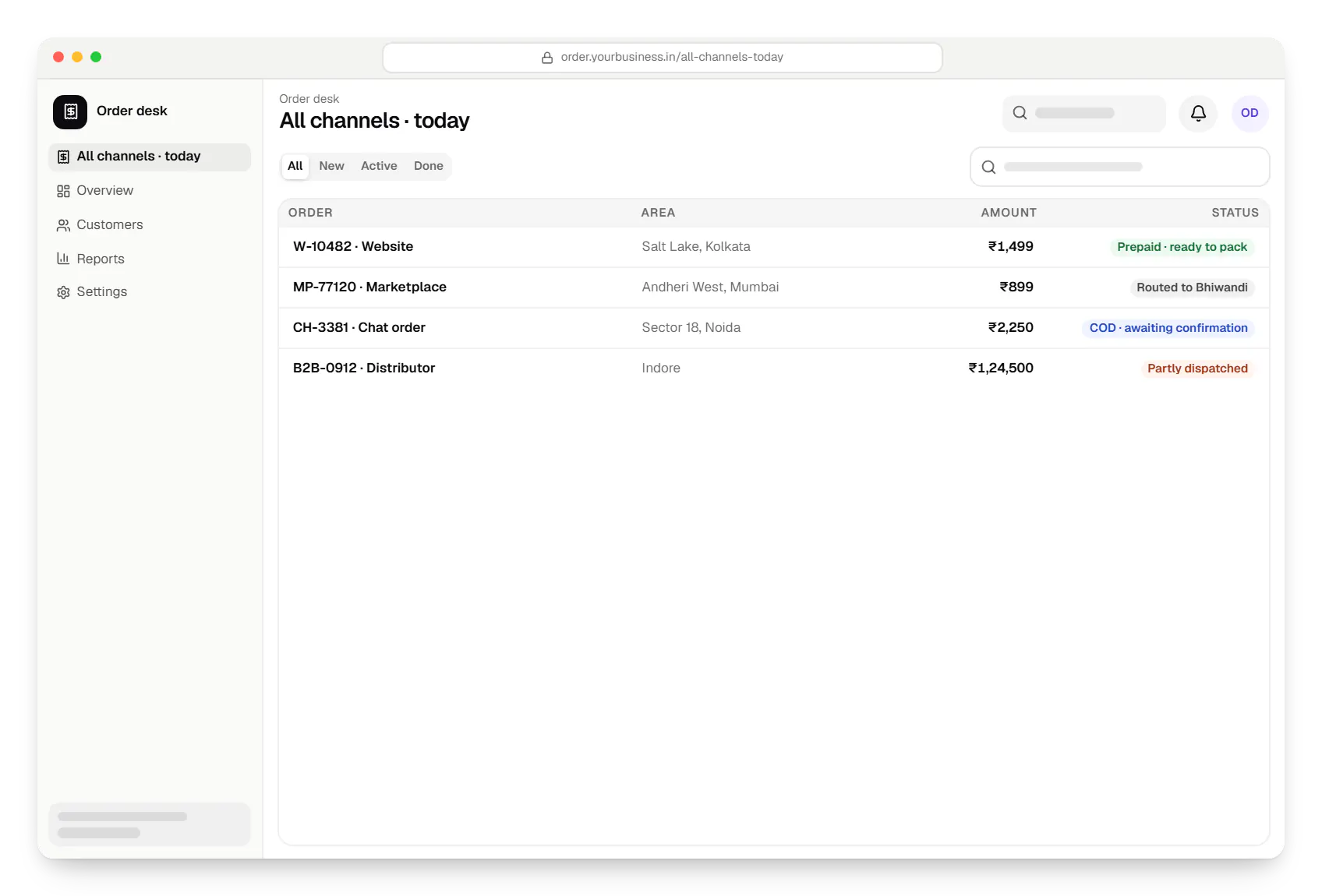
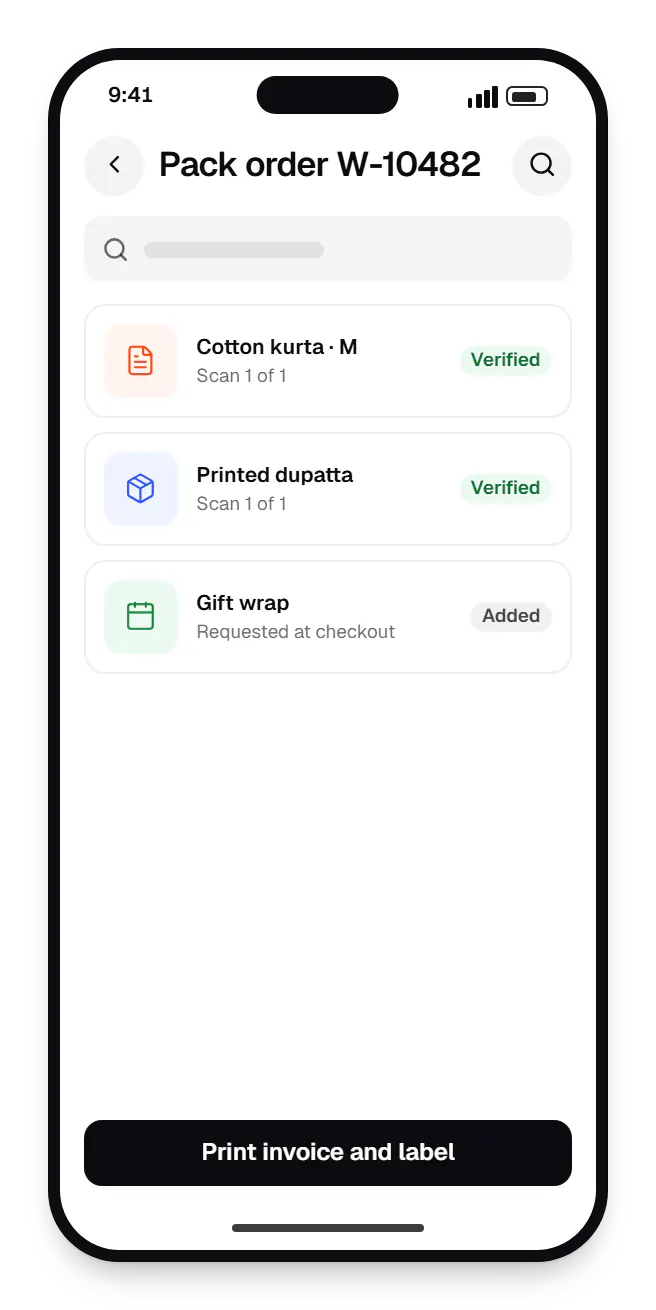
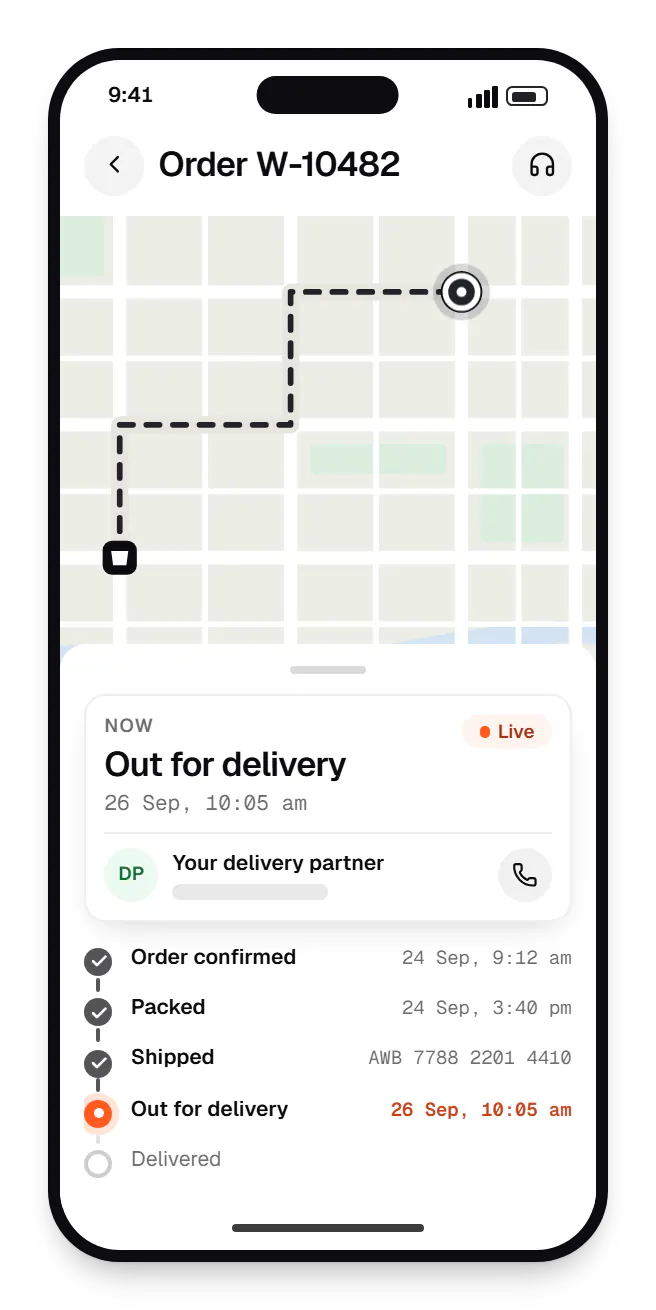
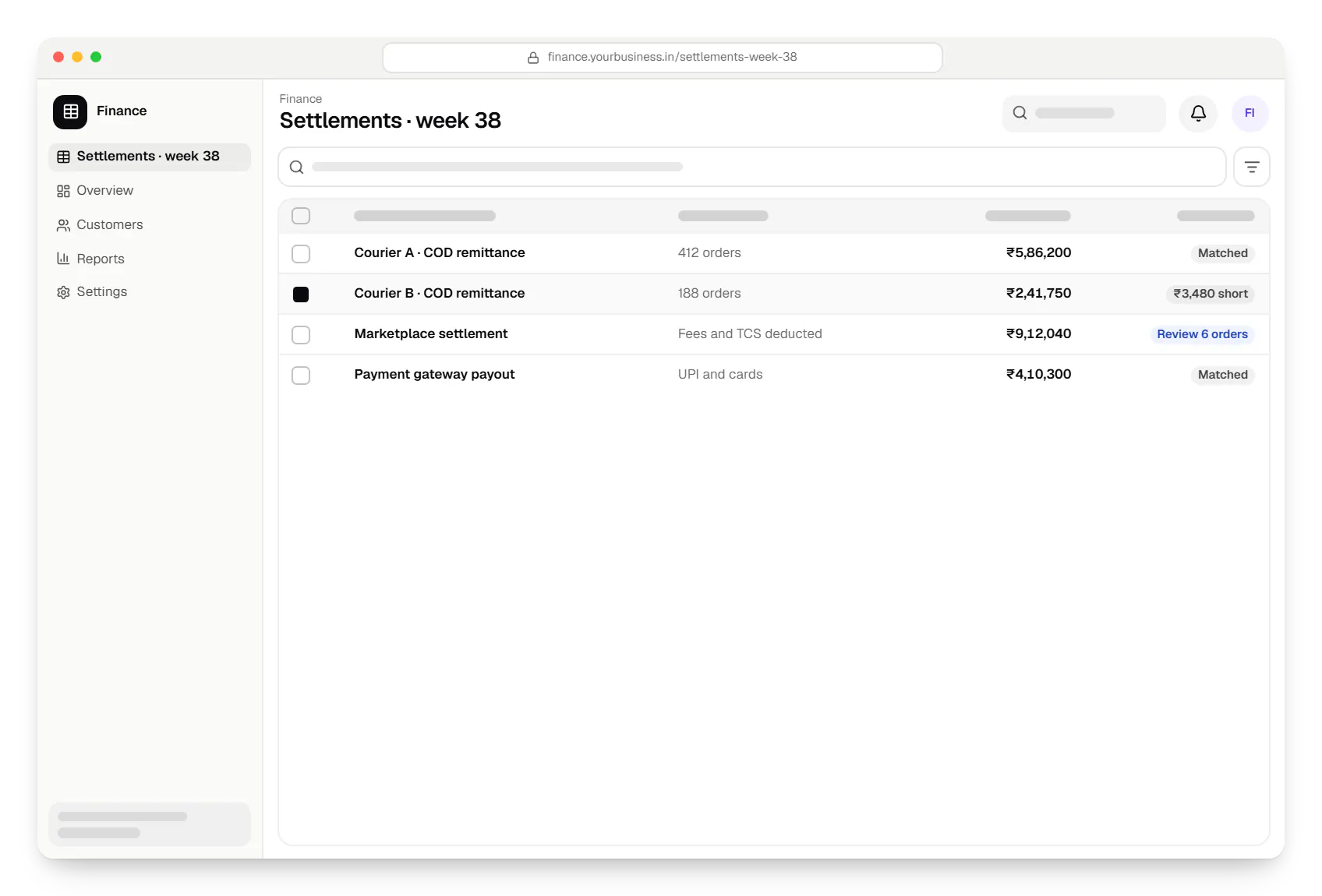
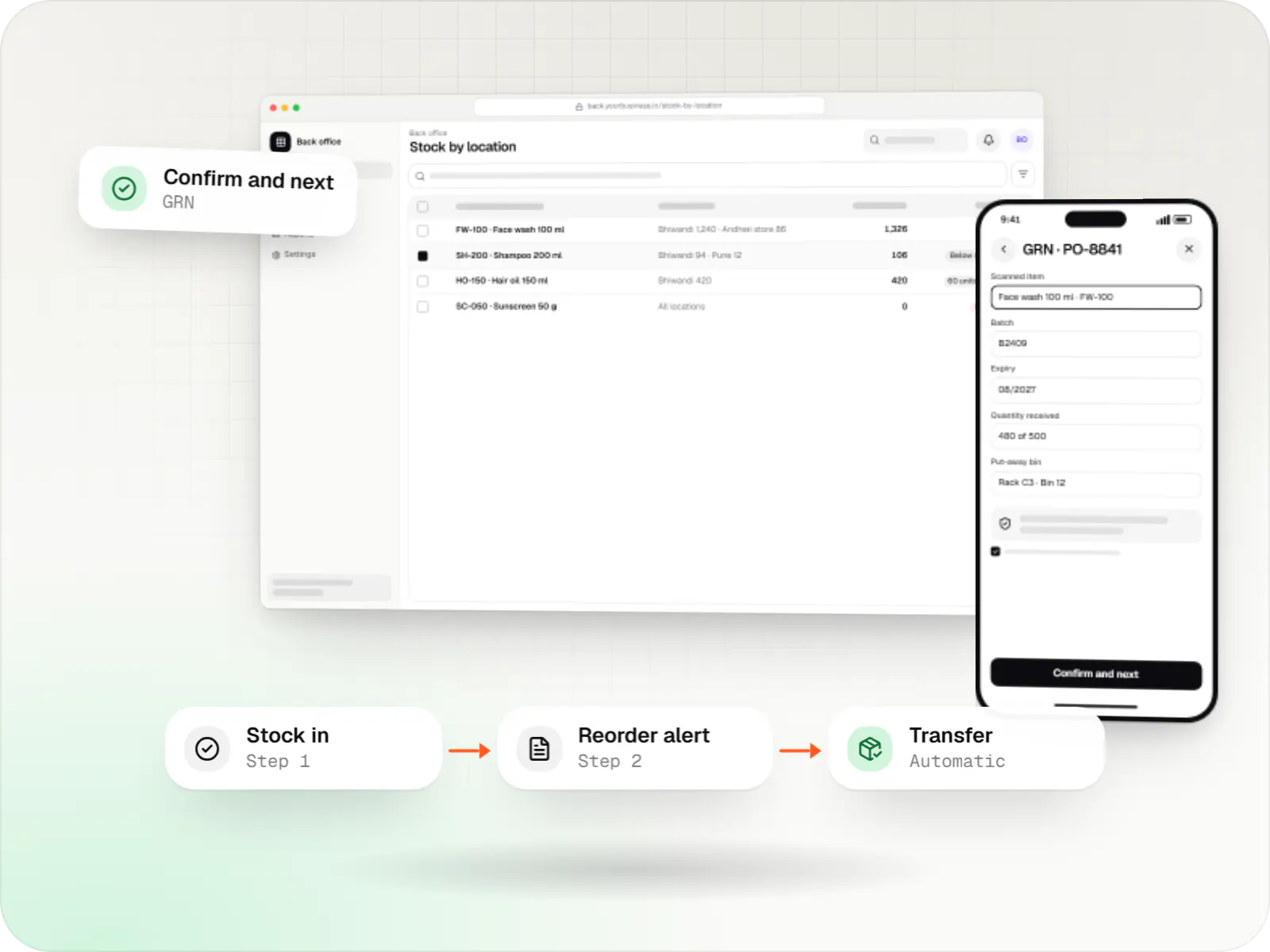
Sample screens: names, prices and figures are examples, not client data.
Work
E-commerce & marketplaces
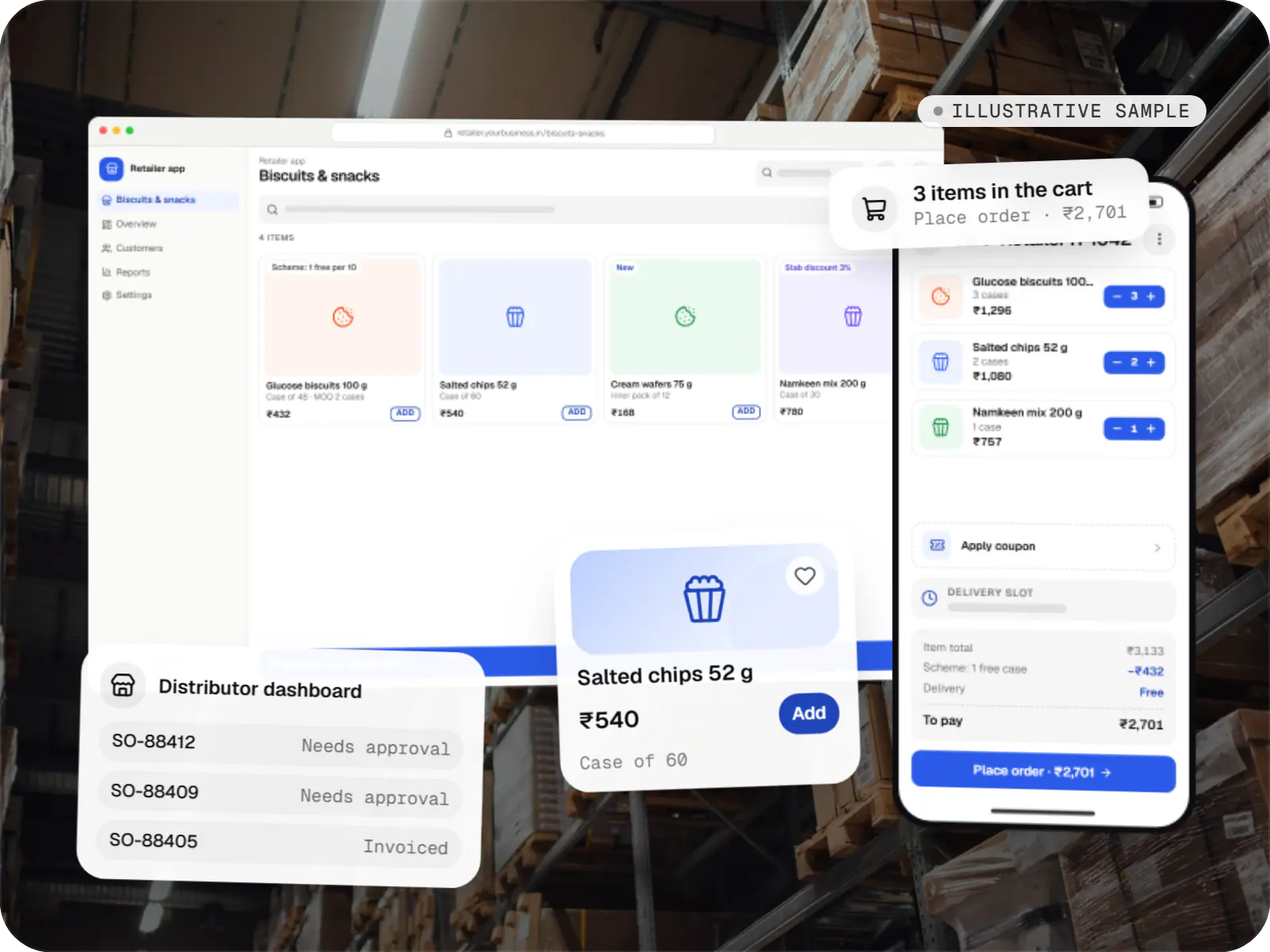
An illustrative ordering app for a distributor's retailers and sales team, with tier pricing, credit limits, trade schemes and GST invoicing.
Runs on
Built with
Services
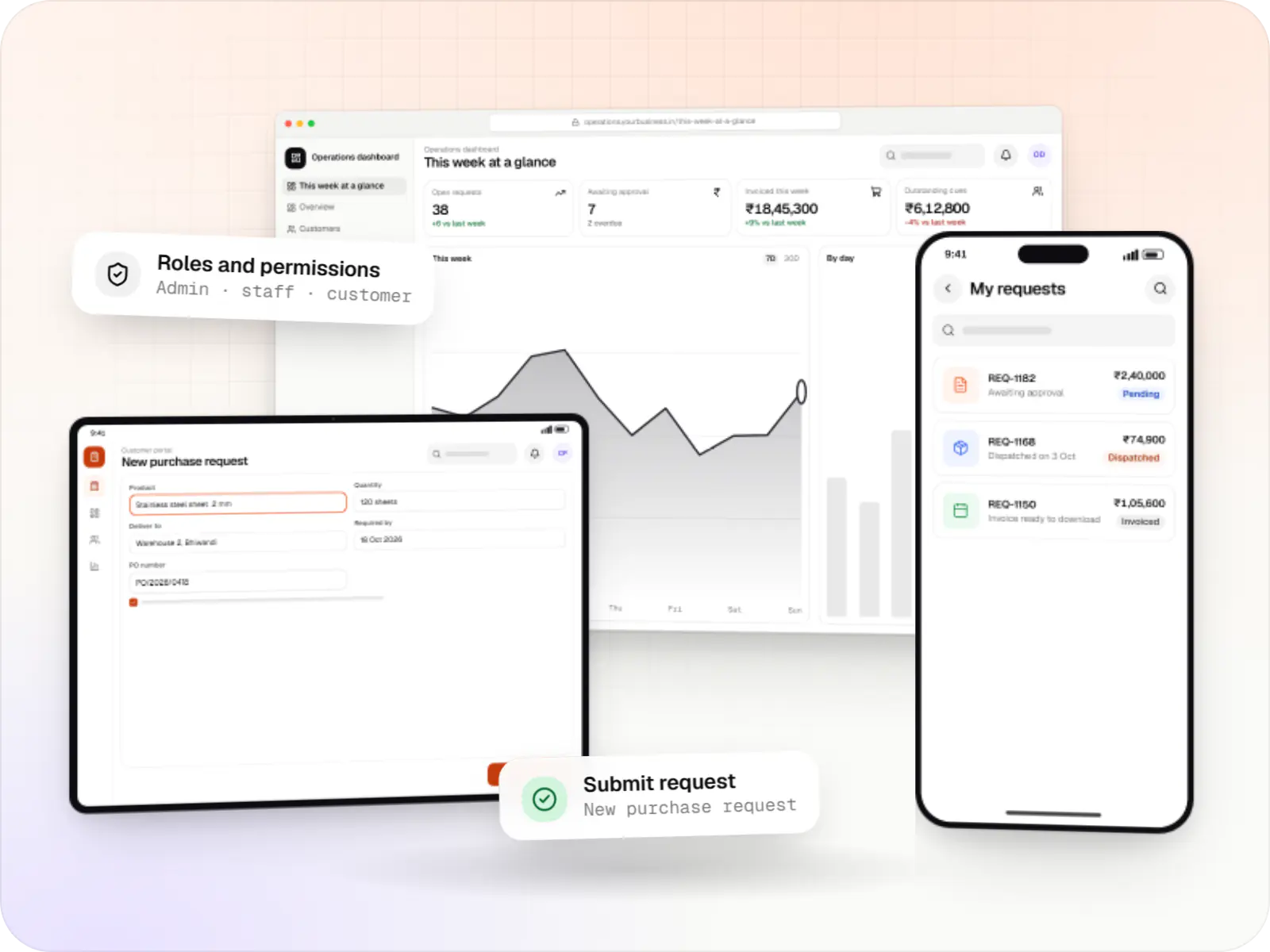
Browser-based products, customer portals, dashboards and internal tools, built on clean data models with secure roles and integrations.
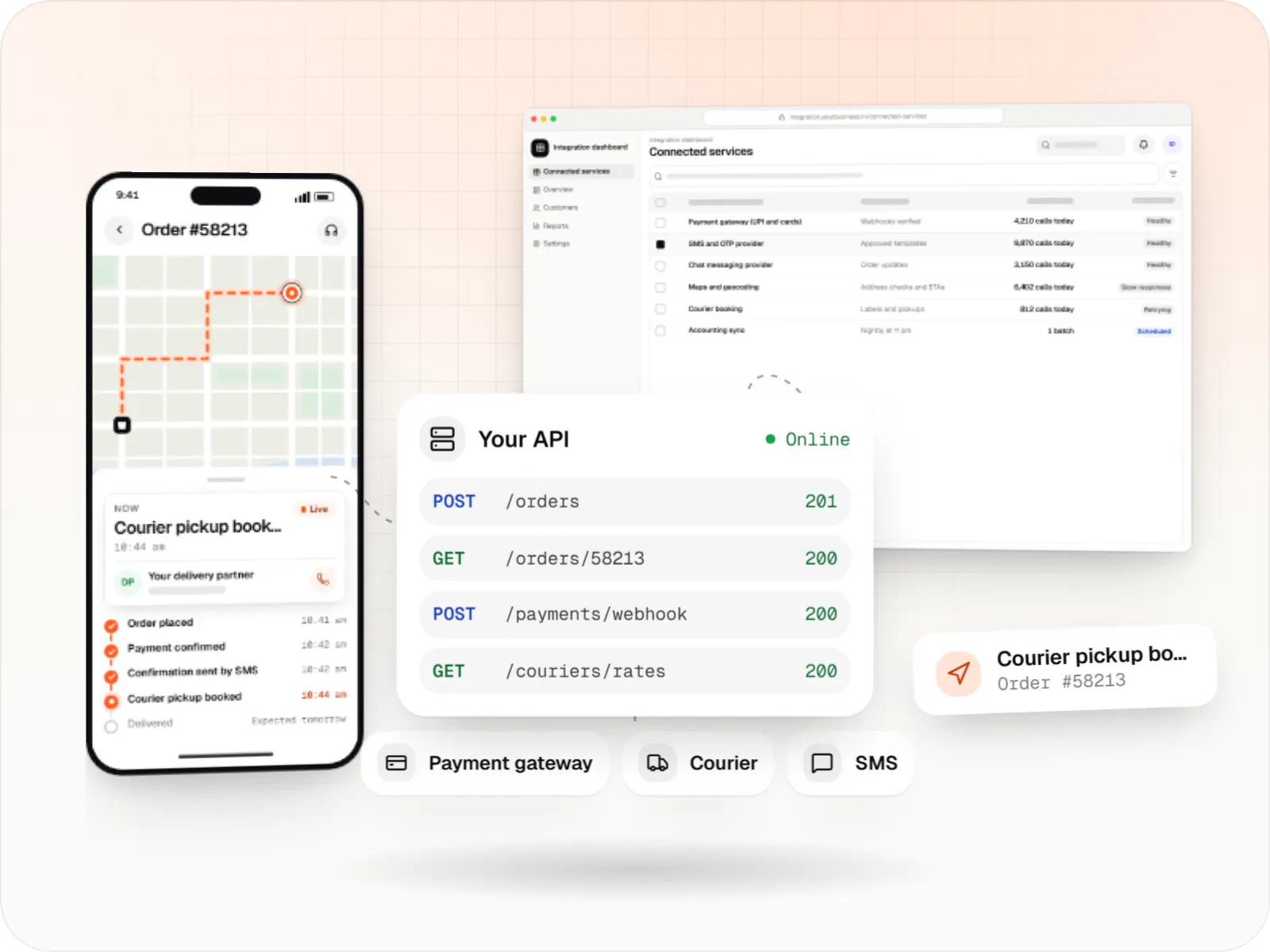
Secure, documented REST and GraphQL APIs, plus integrations that connect your apps to payment, logistics, GST, messaging and business systems.
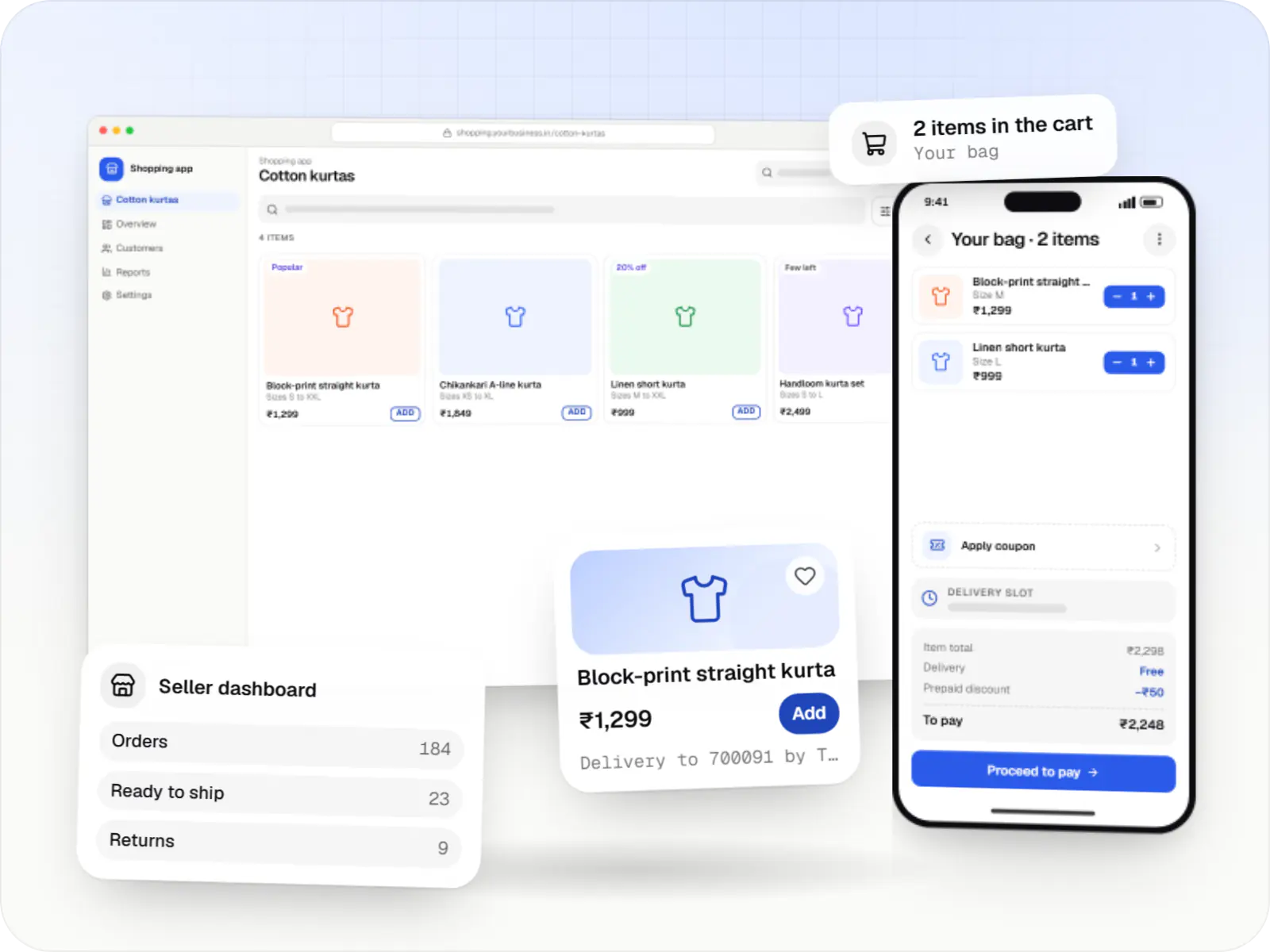
Online stores, shopping apps and B2B ordering portals on Shopify, WooCommerce or custom stacks, wired to Indian payments, couriers and GST invoicing.
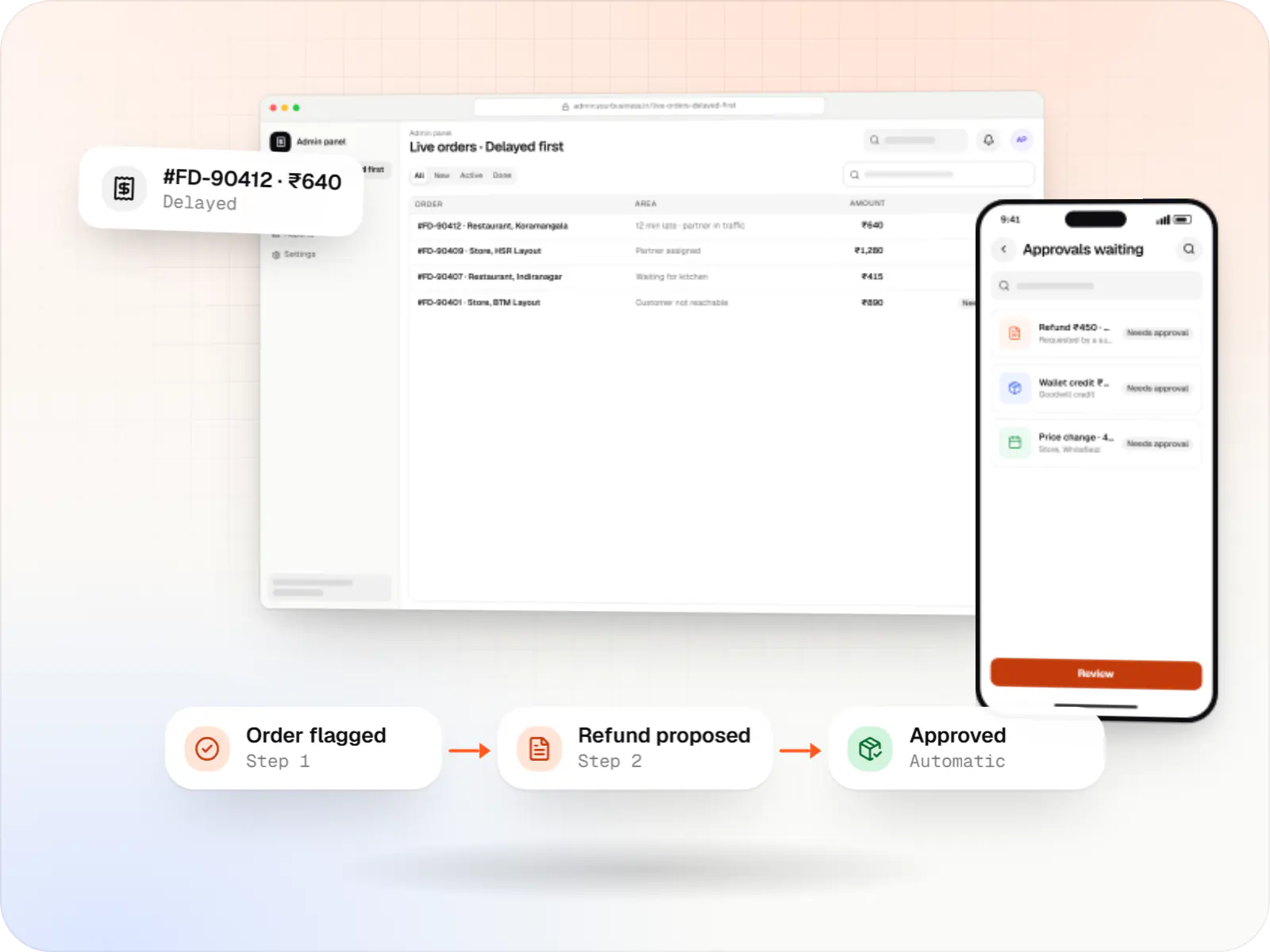
Back-office dashboards built around your team's daily tasks: order queues, approvals, catalogue management, payouts, reports and audit logs.
Industries
Cost drivers
Every storefront, marketplace and B2B source adds a connector to build and maintain.
Multi-warehouse, store fulfilment or split-shipment logic needs careful design and testing.
An aggregator is quicker; direct integrations with several couriers add effort.
Matching settlements across COD, gateways and marketplaces is a project in itself.
Sale days need queues, retries and load testing.
Estimates are written from your scope, with the effort and assumptions behind each line item.
How pricing worksFAQ
It can help, though no system removes RTO entirely. Common measures are confirming COD orders on WhatsApp or by IVR call before dispatch, flagging risky pin codes or repeat refusers, nudging customers towards prepaid UPI, and acting quickly on courier NDR events. The OMS records the outcome of each measure, so you can see which rules are worth keeping for your customers.
Yes. Routing rules consider stock at each location, whether the courier or store serves the delivery pin code, and priorities you set, such as clearing stock from a particular warehouse. If no single location has everything, the order can be split or held for consolidation. Store fulfilment works too, with a simple store app to accept, pack and hand over orders. Your operations team edits rules without code changes.
It can. B2B orders usually need customer-specific price lists, credit limits, GST invoices with the buyer's GSTIN, e-way bills for larger consignments and partial dispatch, while retail orders need speed and tracking. Both share the same stock and fulfilment engine, with different rules and screens. Sales reps or distributors place B2B orders through a portal or app, and the operations team sees one queue.
No. Your storefront and marketplace accounts keep running, and customers still buy there. The OMS reads orders from them, manages fulfilment centrally and writes status and tracking back, so staff rarely need to open each panel. Catalogue and pricing can stay in the channels or be managed centrally, depending on how many SKUs and channels you handle.
Related
Next step
Share your channels, typical daily order range and fulfilment setup. We will outline the OMS scope and a line-item estimate.