
Web
Next.js
A modern web technology for fast, search-friendly websites, online stores and web applications that load quickly on mobile.
Used for
- Business websites
- Online stores
- Web apps
- Customer portals
Industries · D2C brands
Build the channels you own, from site and app to WhatsApp, around customer data you control.
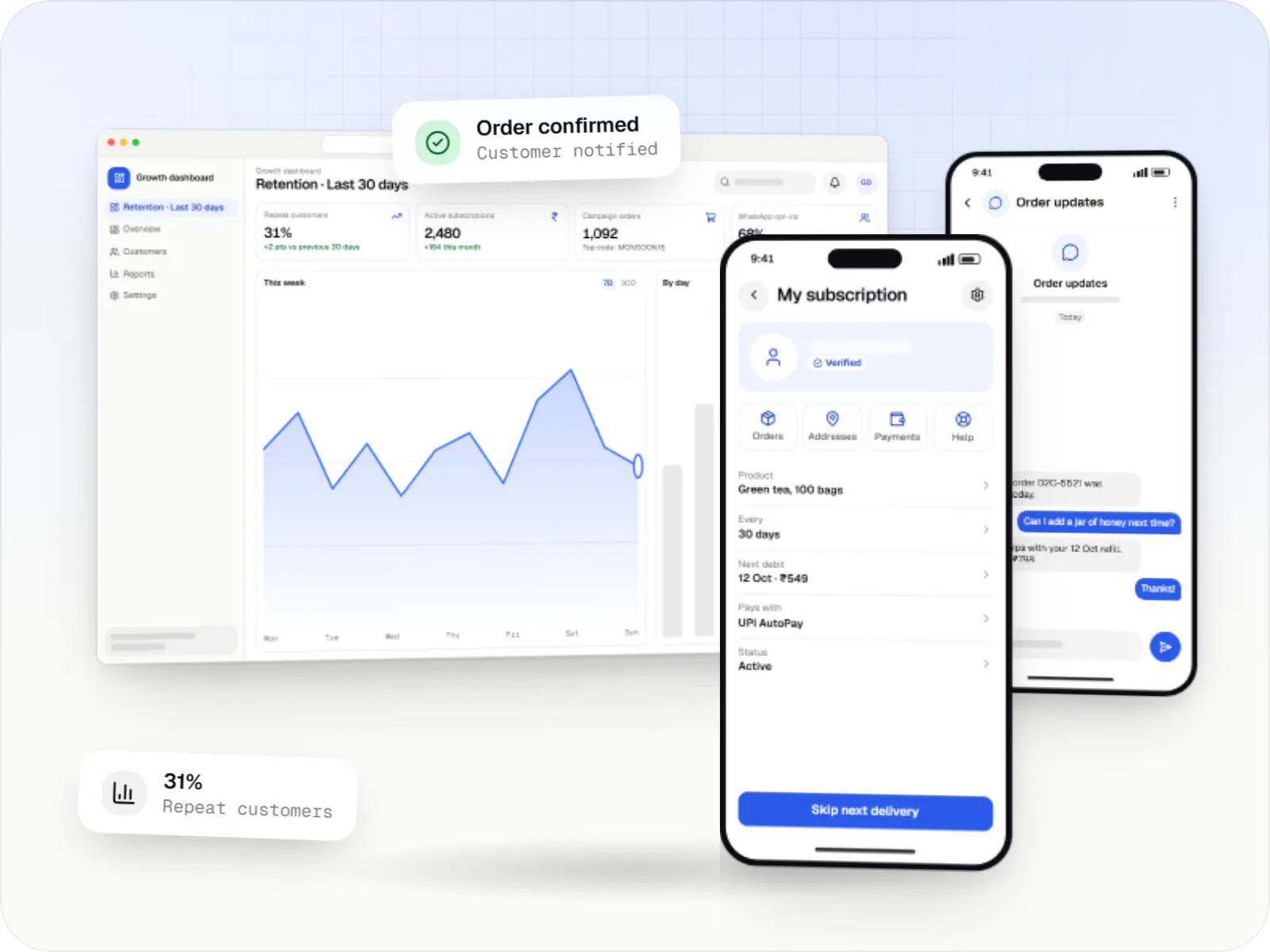
At a glance
What it is
Own-channel commerce for direct-to-consumer brands: storefronts, subscriptions, WhatsApp journeys and first-party customer data.

For founders and growth teams selling their own products directly to consumers, alongside or instead of marketplaces.
How to start
Tell us what you need in your own words. You talk to the developers who would build it and get a written, line-item estimate.
Get a project estimateA D2C brand's advantage is its direct relationship with customers. That advantage erodes when every function lives in a different plugin: reviews in one, subscriptions in another, WhatsApp messaging in a third, none sharing data cleanly.
We help brands keep the storefront they have where it works, and build the pieces that make them distinct: subscription and refill flows, bundles, landing pages that load quickly from paid social traffic, and a customer data layer the marketing team can actually use.
Challenges
Repeat purchases matter more each quarter, yet retention tooling is bolted on.
Dozens of apps slow the store and create conflicting customer records.
New customers default to cash on delivery, pushing up RTO on unproven buyers.
WhatsApp and SMS marketing needs recorded opt-ins, which the DPDP Act 2023 makes harder to ignore.
Solutions
Across 3 areas
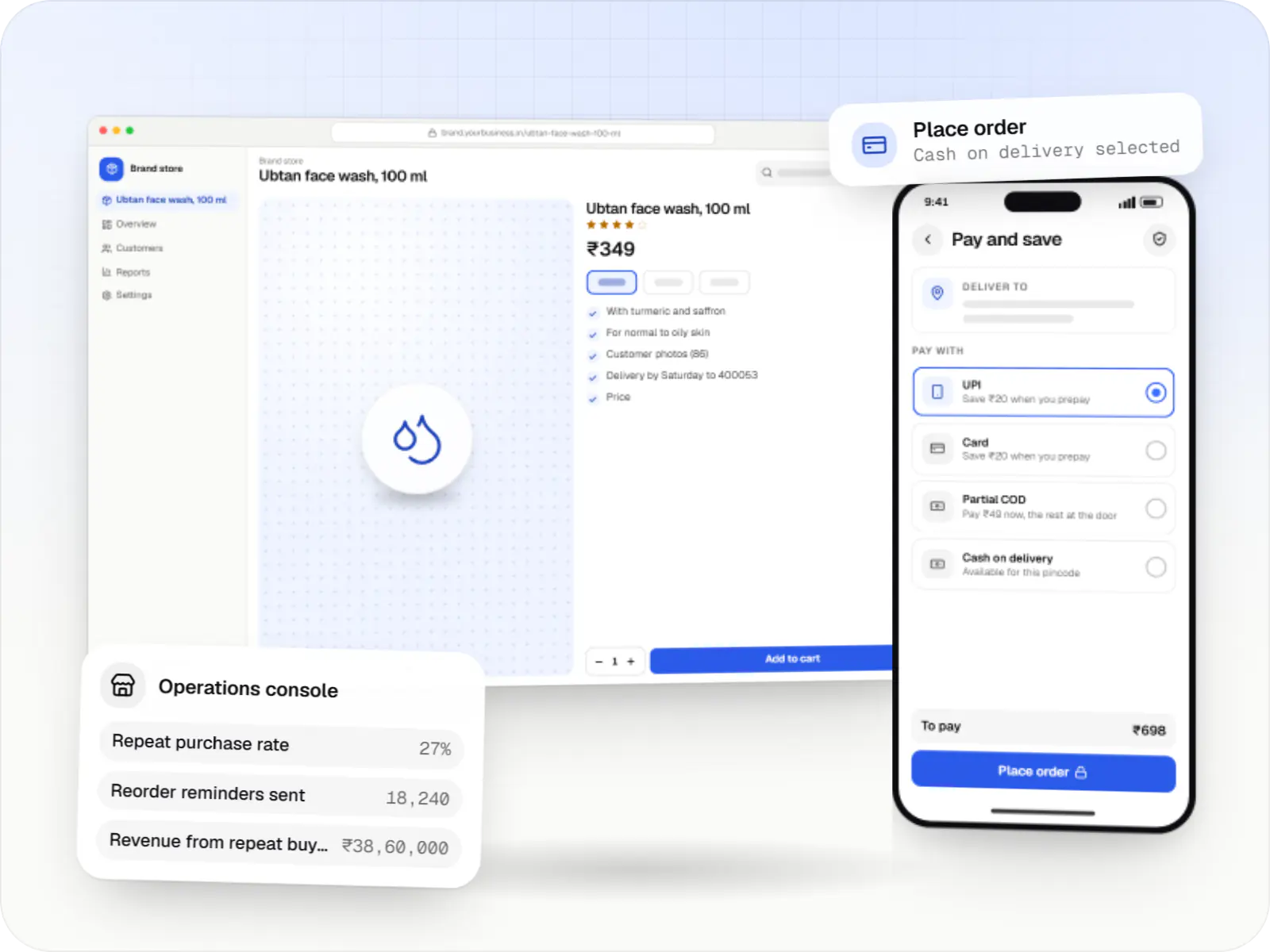
Brand-owned online stores for D2C companies, with conversion-focused checkout, retention tools, server-side tracking and multichannel stock sync.
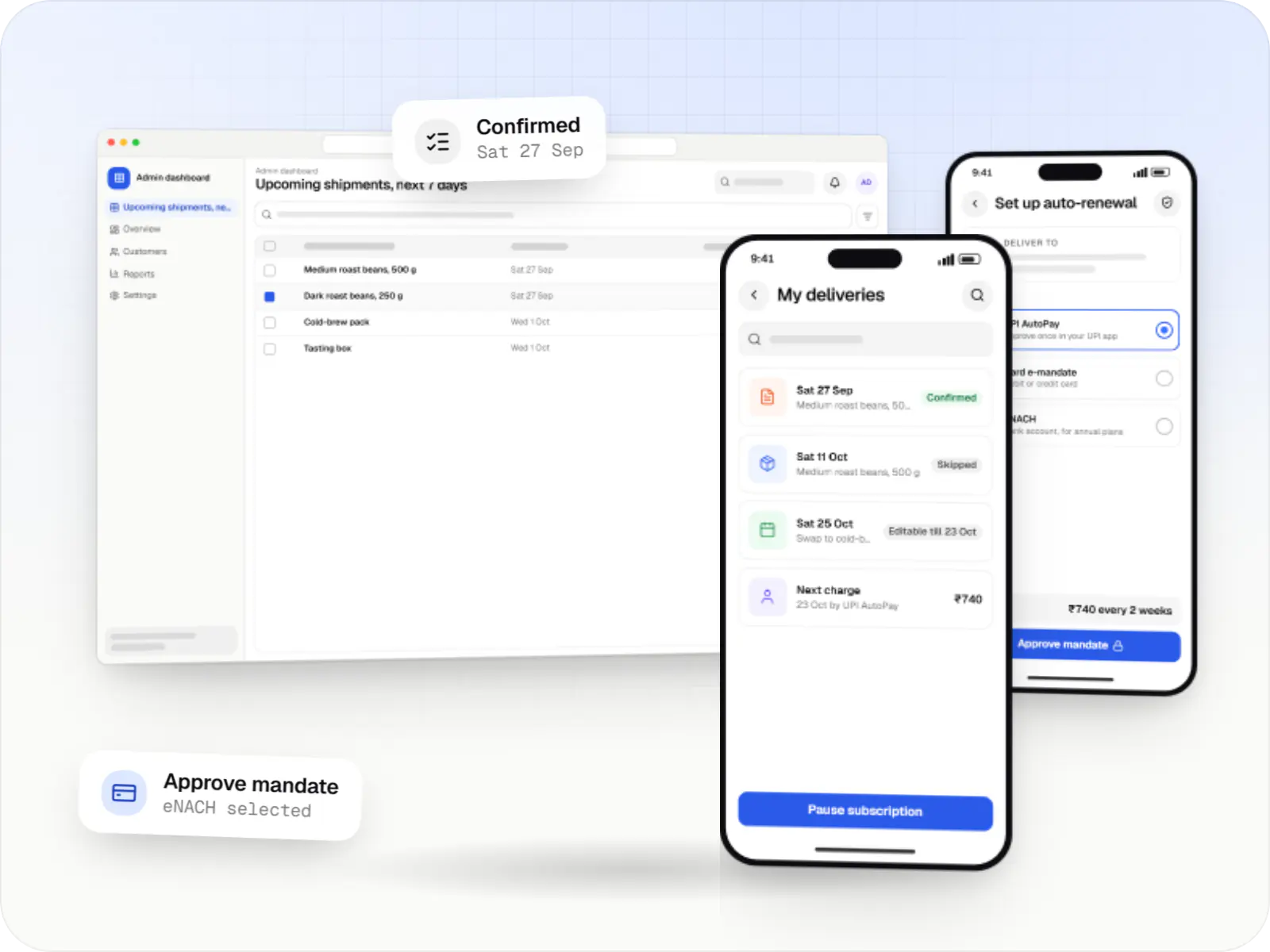
Subscription stores and memberships on UPI AutoPay, card mandates and eNACH, with pause, skip and swap controls and fulfilment planning.
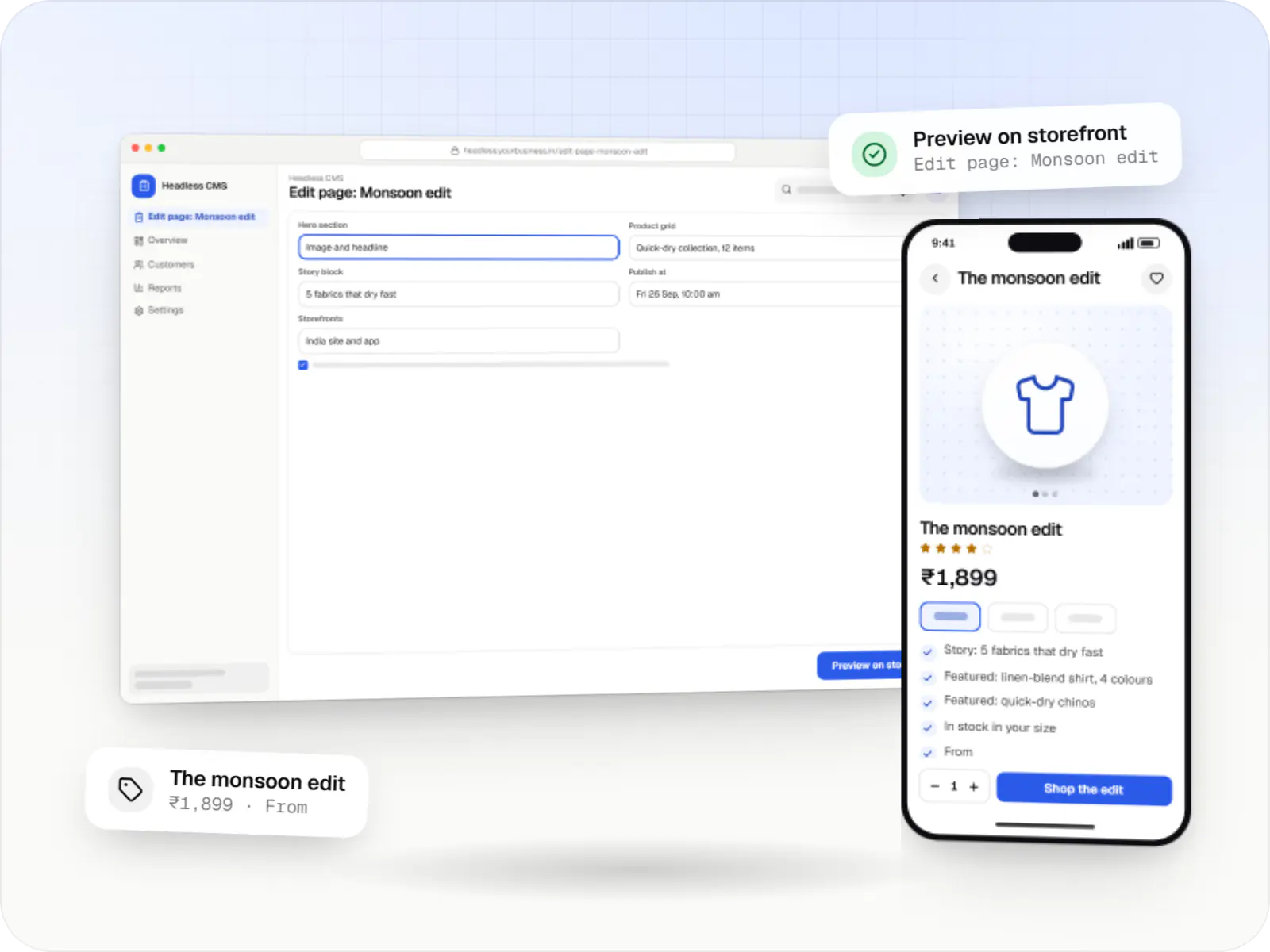
Next.js storefronts on a headless commerce engine and CMS, for brands that need speed, several storefronts or content-led shopping.
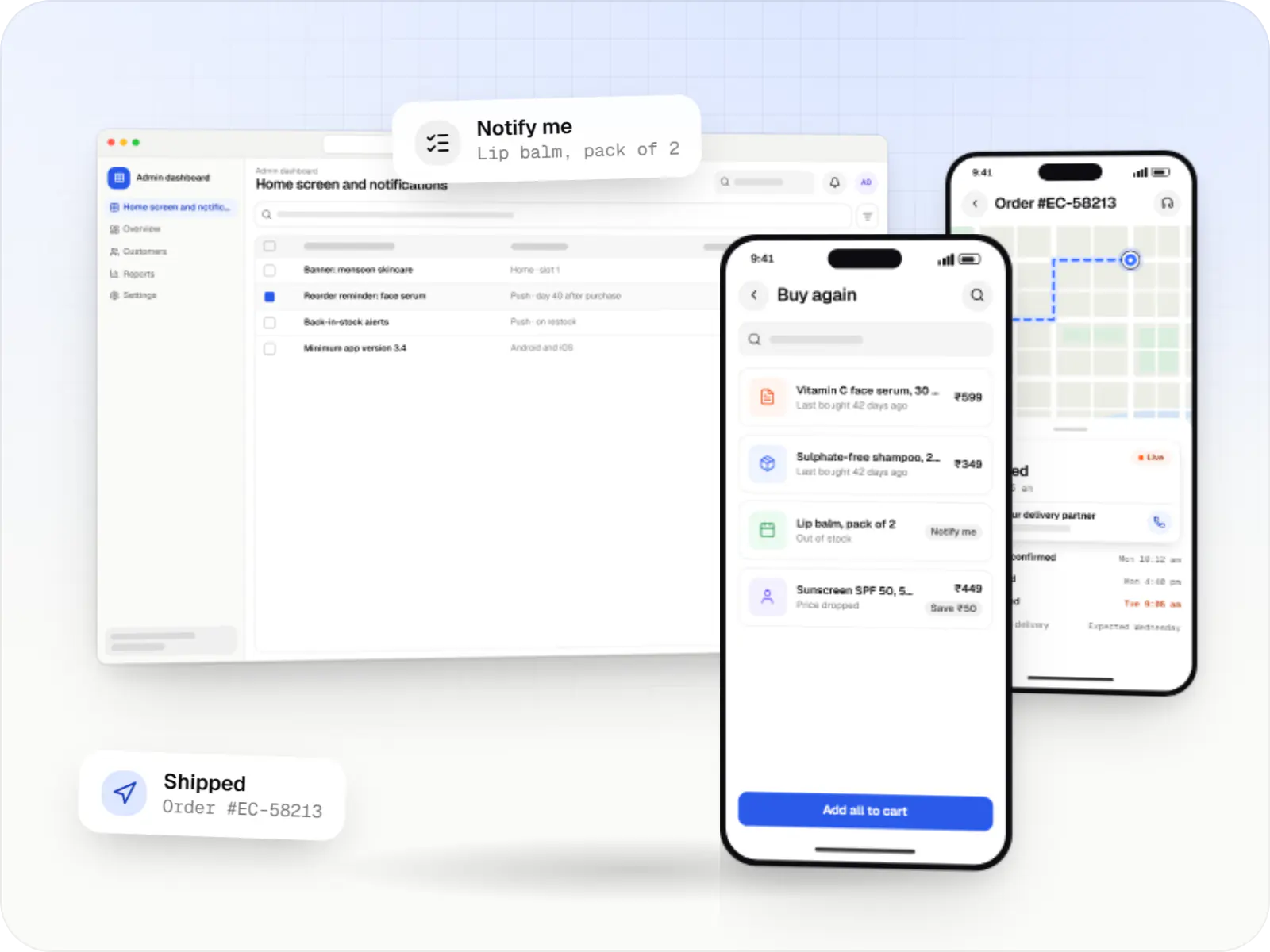
Android and iOS shopping apps with quick browsing, UPI checkout and push notifications, sharing one backend with your website.
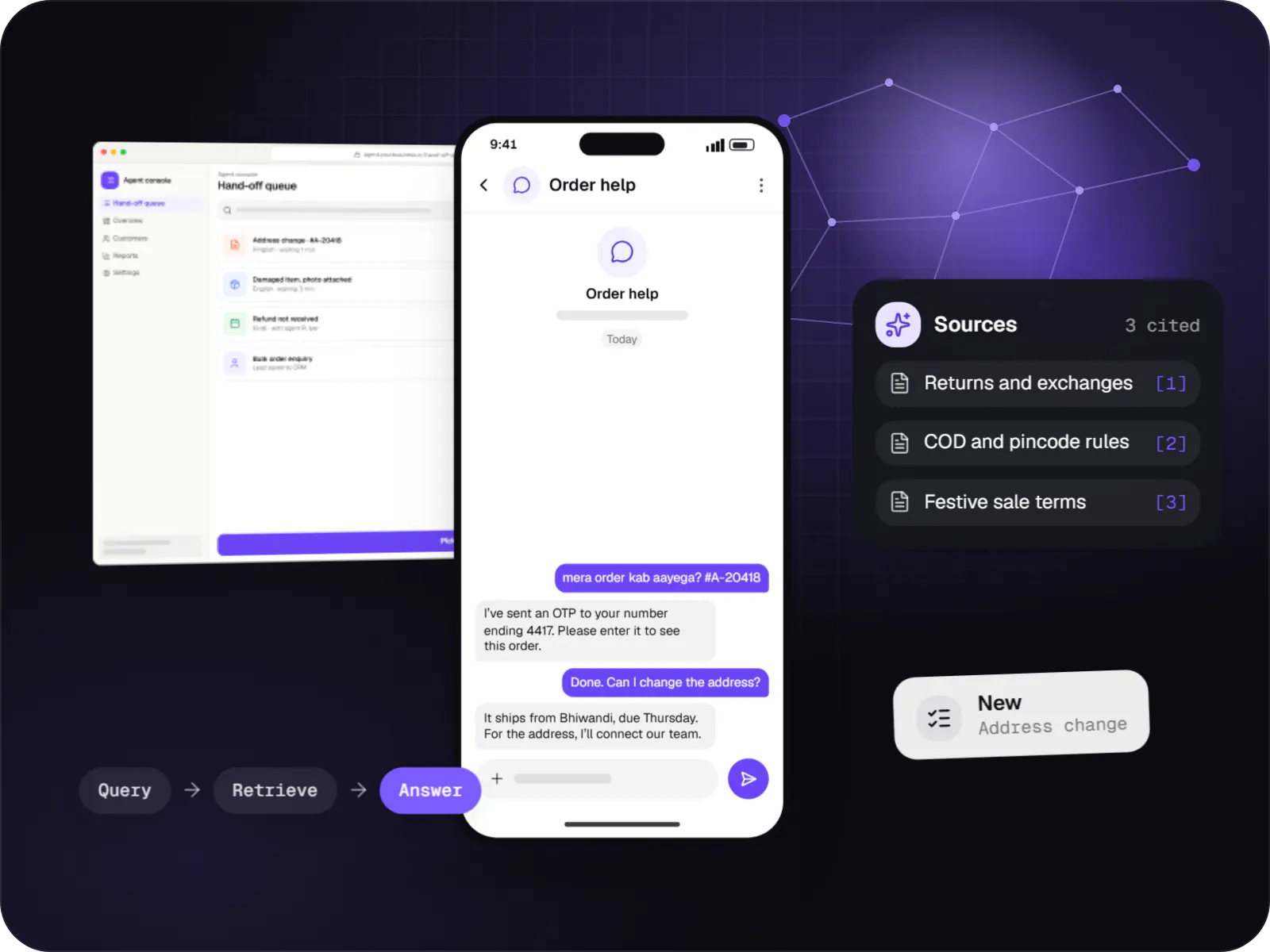
Support and sales chatbots for web, app and WhatsApp that answer from your own content and hand off to your team.
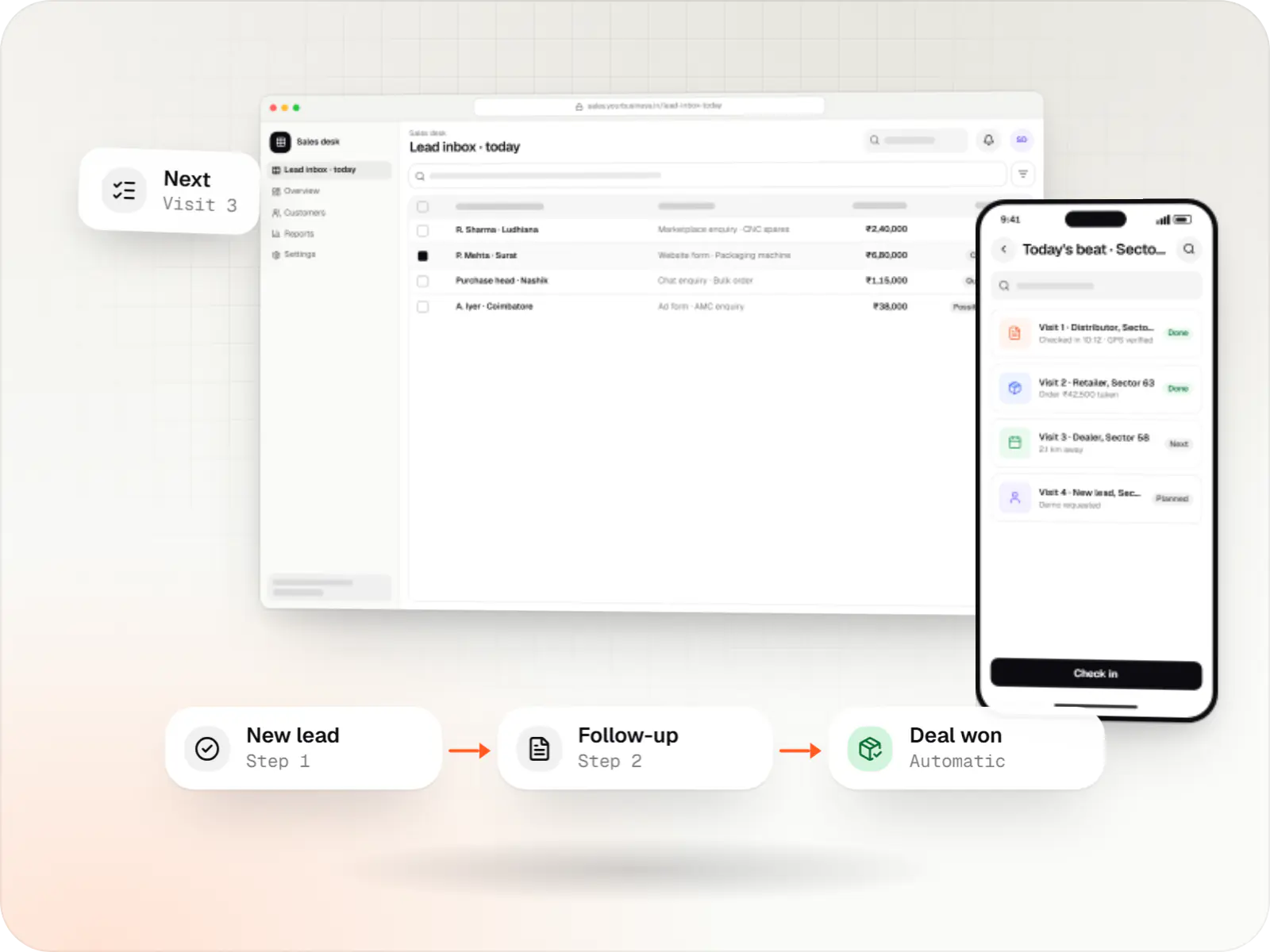
Custom CRM software that captures leads from every channel, keeps follow-ups on schedule and shows managers a live pipeline.
Recurring orders on UPI AutoPay or card mandates, with skip and pause controls.
Cart reminders, order updates and reorder links through the WhatsApp Business Platform.
Build-your-own kits, gift notes and festive hampers with correct stock deduction.
Orders, subscriptions, tickets and consents in one record.
Fast pages for influencer and ad campaigns, with coupon attribution.
How it works
Owning the channel means every step feeds the same customer record.
An influencer or ad link opens a fast page with the coupon already applied, so the source of the sale is recorded from the first click.
Checkout records separate opt-ins for WhatsApp, SMS and email, with the time and source of each, as the DPDP Act expects.
Confirmation, dispatch and delivery updates go out automatically, followed by a reorder link when the product is likely to run low.
They approve a UPI AutoPay mandate for refills and can skip or pause from a link, without raising a support ticket.
Orders, subscriptions, tickets and consents sit in one record, so segments come from your own data rather than plugin exports.
Then it starts again at step 1: Shopper lands from a campaign
Platforms
Marketing and content websites: fast, search-friendly pages with a CMS your team can update without a developer.
Installable web apps with offline support and notifications, useful when an app-store listing isn't essential or phones have little storage.
Apps for iPhone and iPad, built to Apple's guidelines and released through TestFlight and the App Store.
Apps for Android phones and tablets, tested on budget and mid-range devices and published on Google Play or privately.
Back-office panels for operations, support and finance teams: orders, users, content, reports and permissions.
Technology
Web
A modern web technology for fast, search-friendly websites, online stores and web applications that load quickly on mobile.
Used for
Web
Builds interactive screens in the browser, such as dashboards, admin panels and portals, that respond instantly as your team works.
Used for
Backend
Runs the server side of apps: fast, scalable back ends that power your app, website and integrations.
Used for
Data
A reliable database for the records your business runs on: orders, payments, bookings and stock, kept accurate and easy to report on.
Used for
Payments & maps
Lets customers in India pay by UPI, cards, netbanking or wallets, and handles subscriptions, refunds and payouts to sellers or partners.
Used for
Cloud & DevOps
Ready-made building blocks for mobile apps, such as push notifications, phone OTP login and crash reports, so you launch sooner.
Used for
Plain-English glossary
Product preview
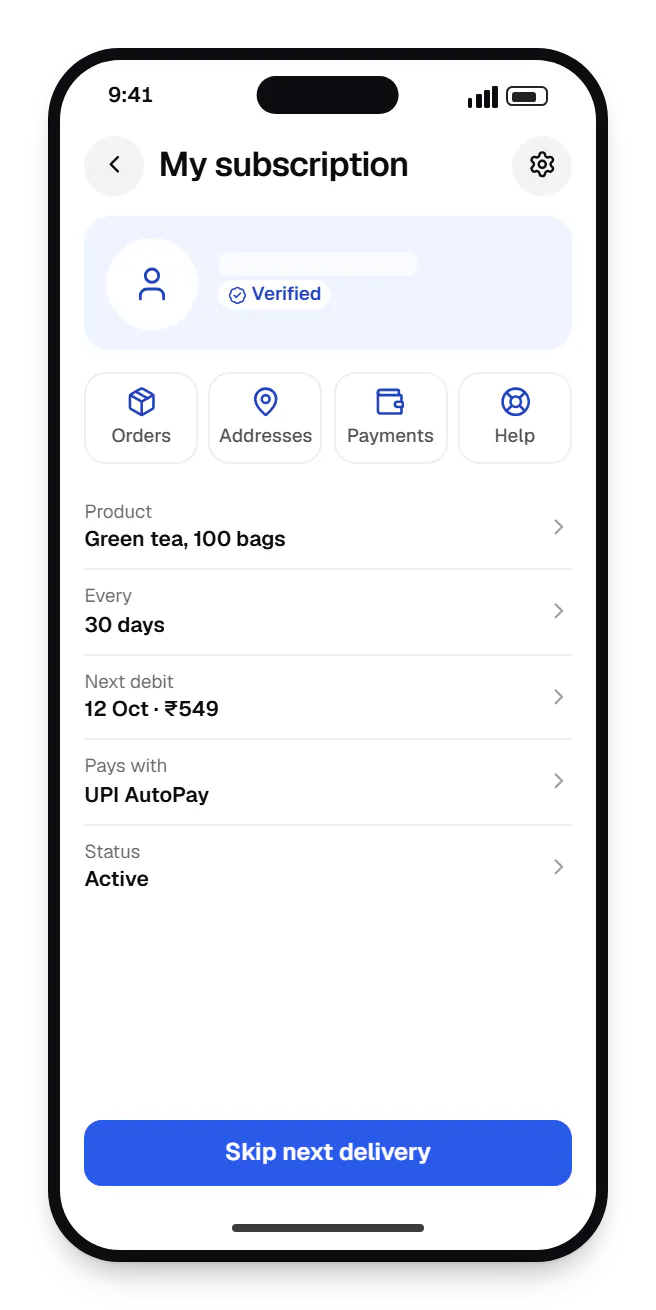
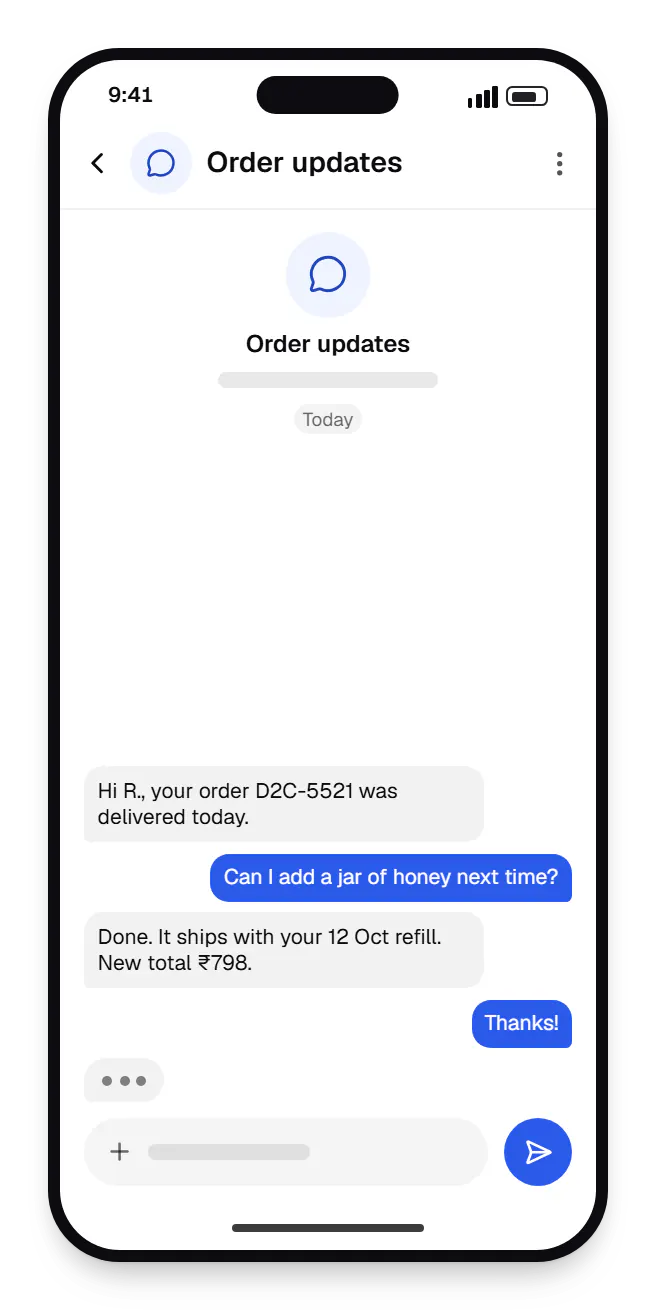
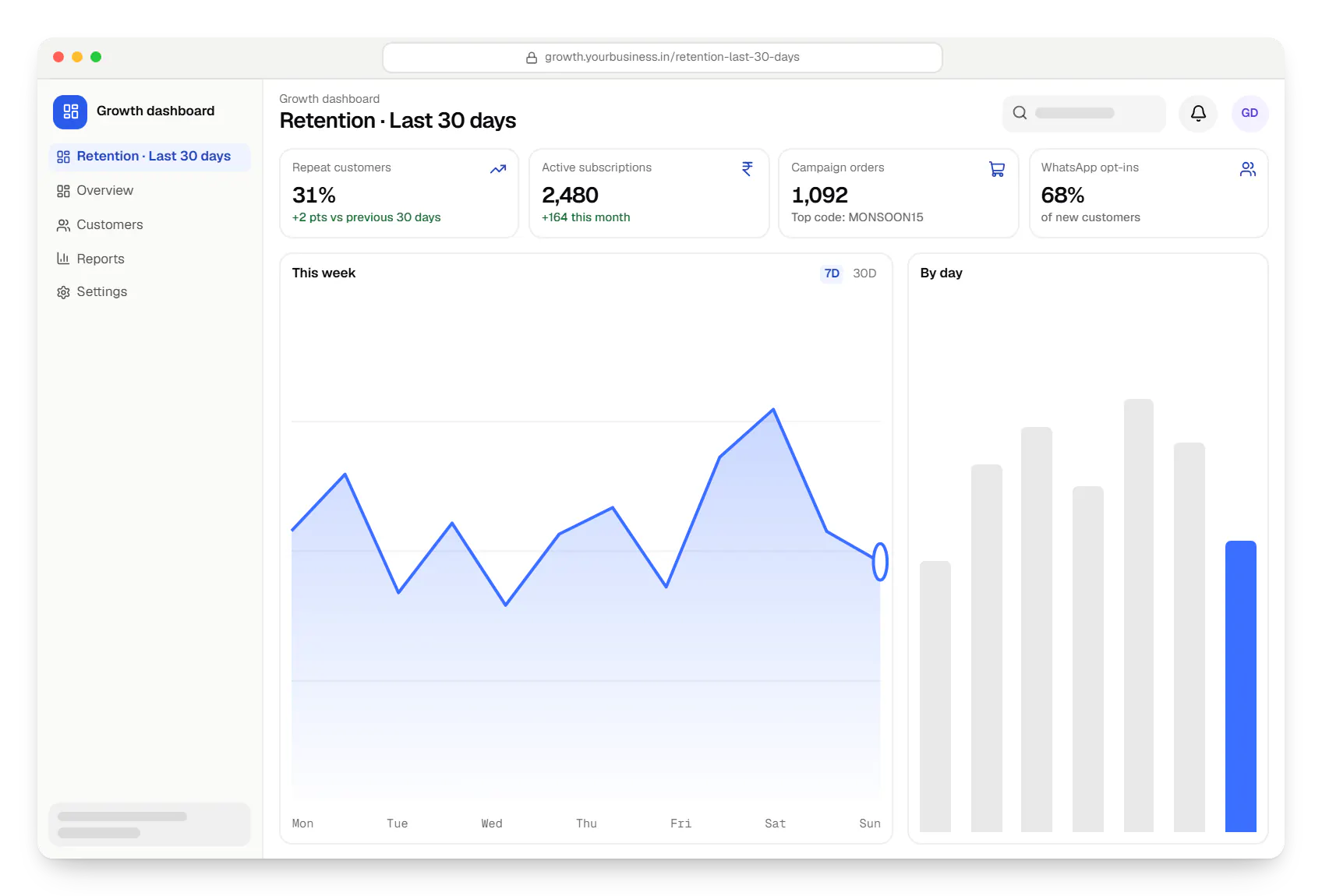
Sample screens: names, prices and figures are examples, not client data.
Work
AI solutions
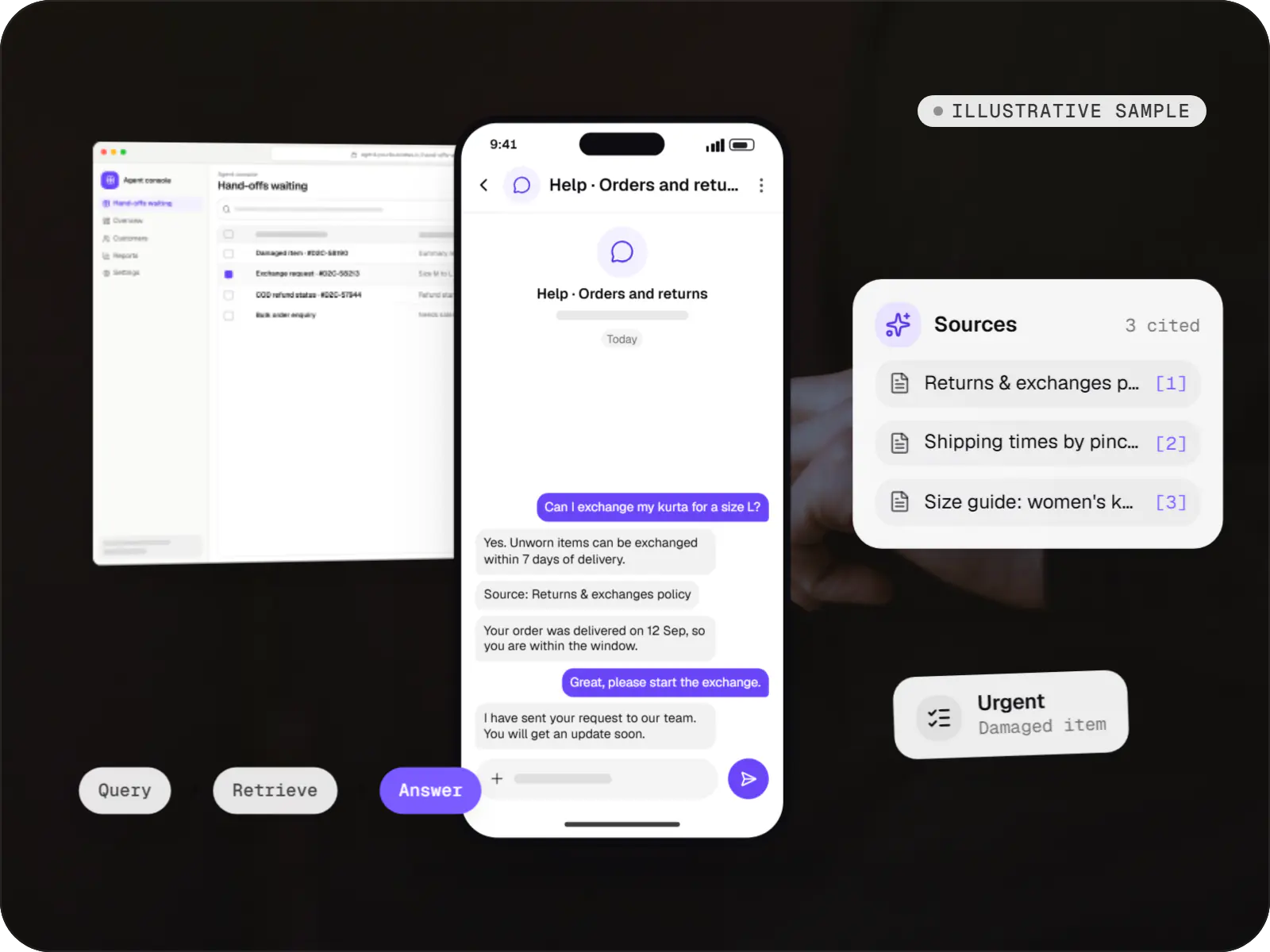
An illustrative AI assistant that answers order, return and product questions from a D2C brand's own policies and order data, with sources and a human hand-off.
Runs on
Built with
Cost drivers
Extending Shopify is quicker; headless or custom builds cost more but remove plugin limits.
Mandates, proration, skips and failed-payment retries add meaningful testing effort.
Connecting CRM, analytics, WhatsApp and courier tools determines much of the backend work.
Estimates are written from your scope, with the effort and assumptions behind each line item.
How pricing worksServices
The design and engineering services our in-house team combines on projects in this sector.
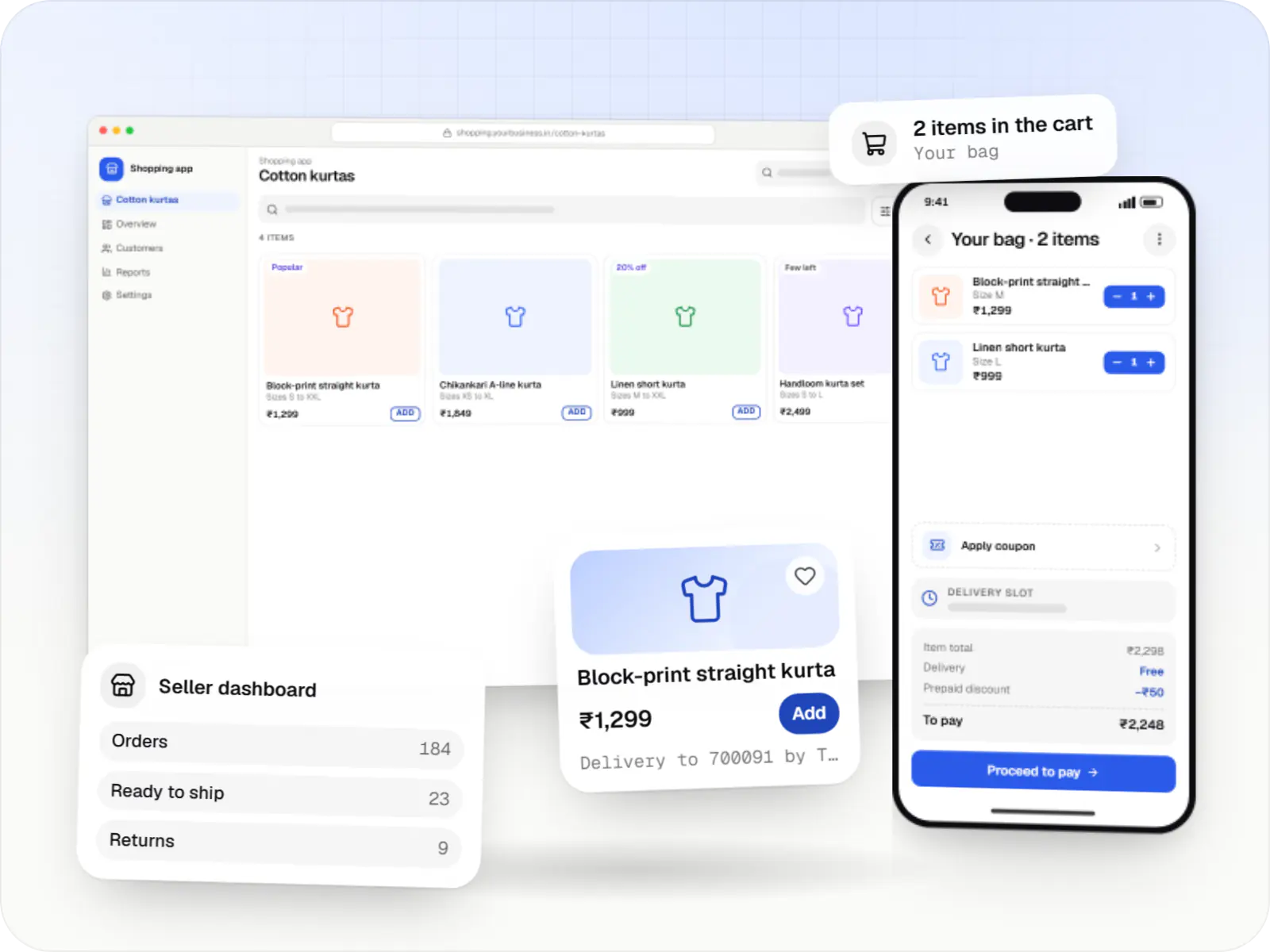
Online stores, shopping apps and B2B ordering portals on Shopify, WooCommerce or custom stacks, wired to Indian payments, couriers and GST invoicing.

Fast, SEO-ready company and marketing websites with a CMS your team can edit, designed and built by our in-house team.
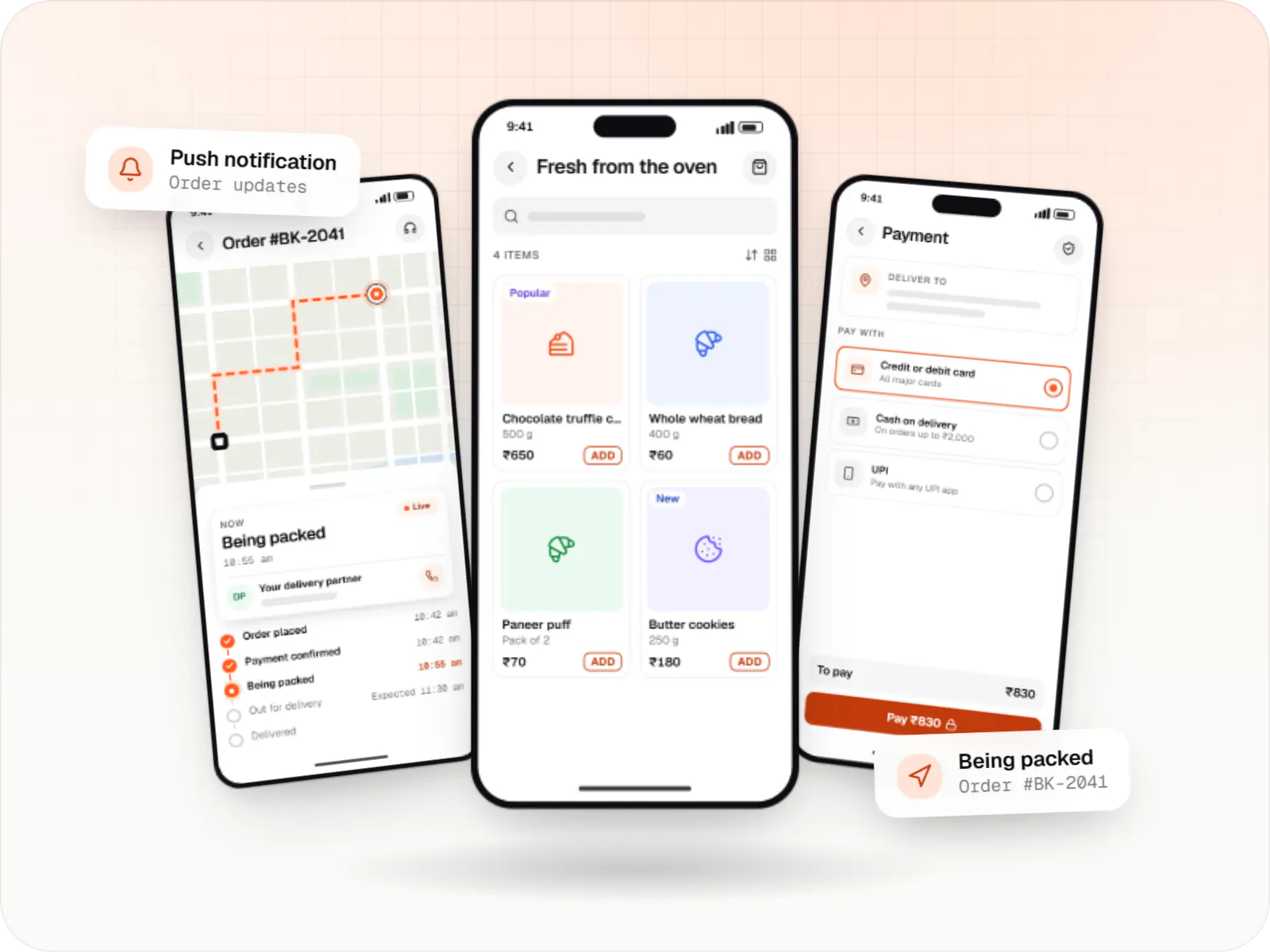
Native and cross-platform Android and iOS apps, from first release through regular store updates, built by our in-house designers and engineers.
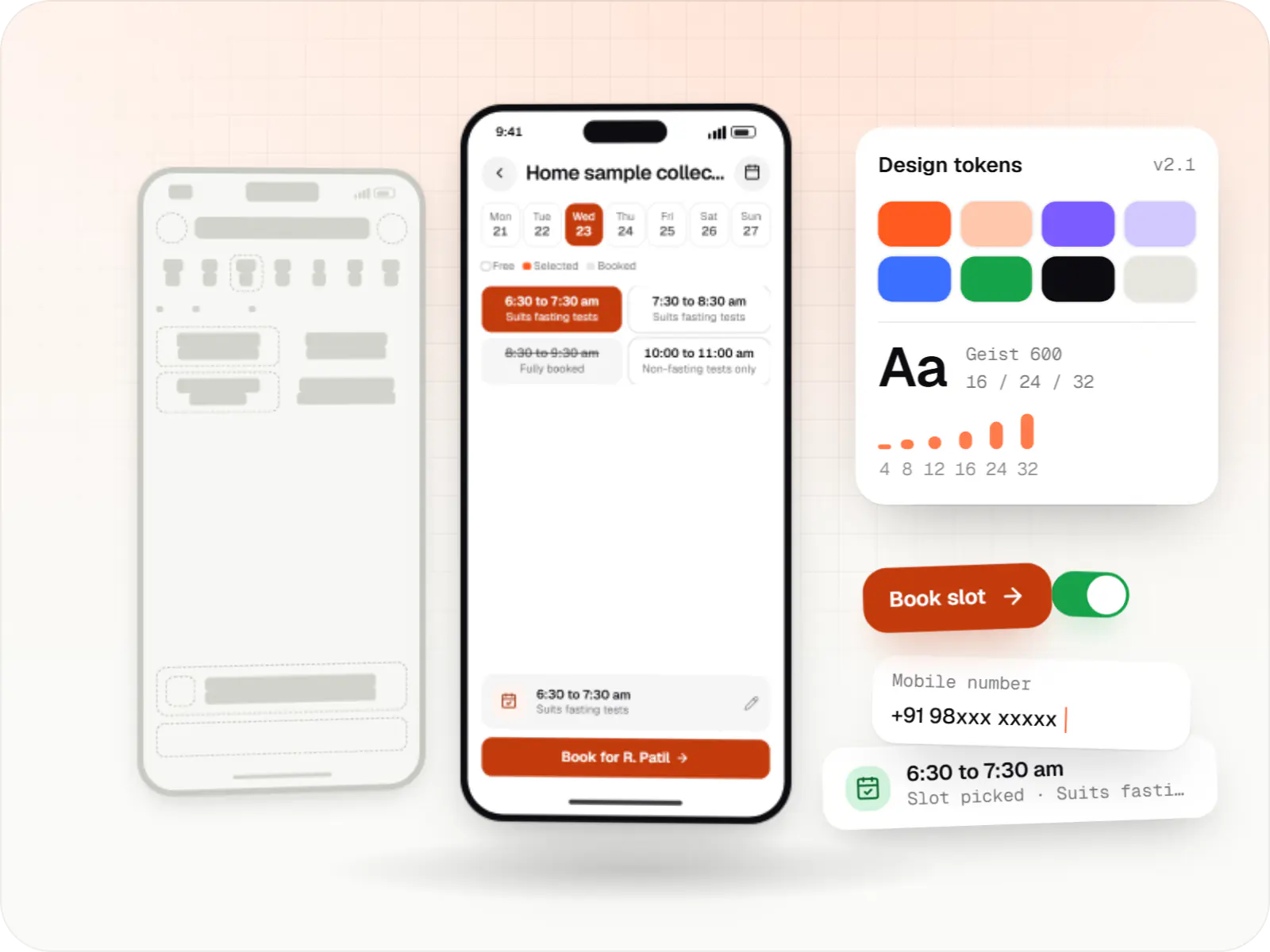
Product design for web and mobile apps: research, user flows, wireframes, prototypes and design systems that engineers can build from.
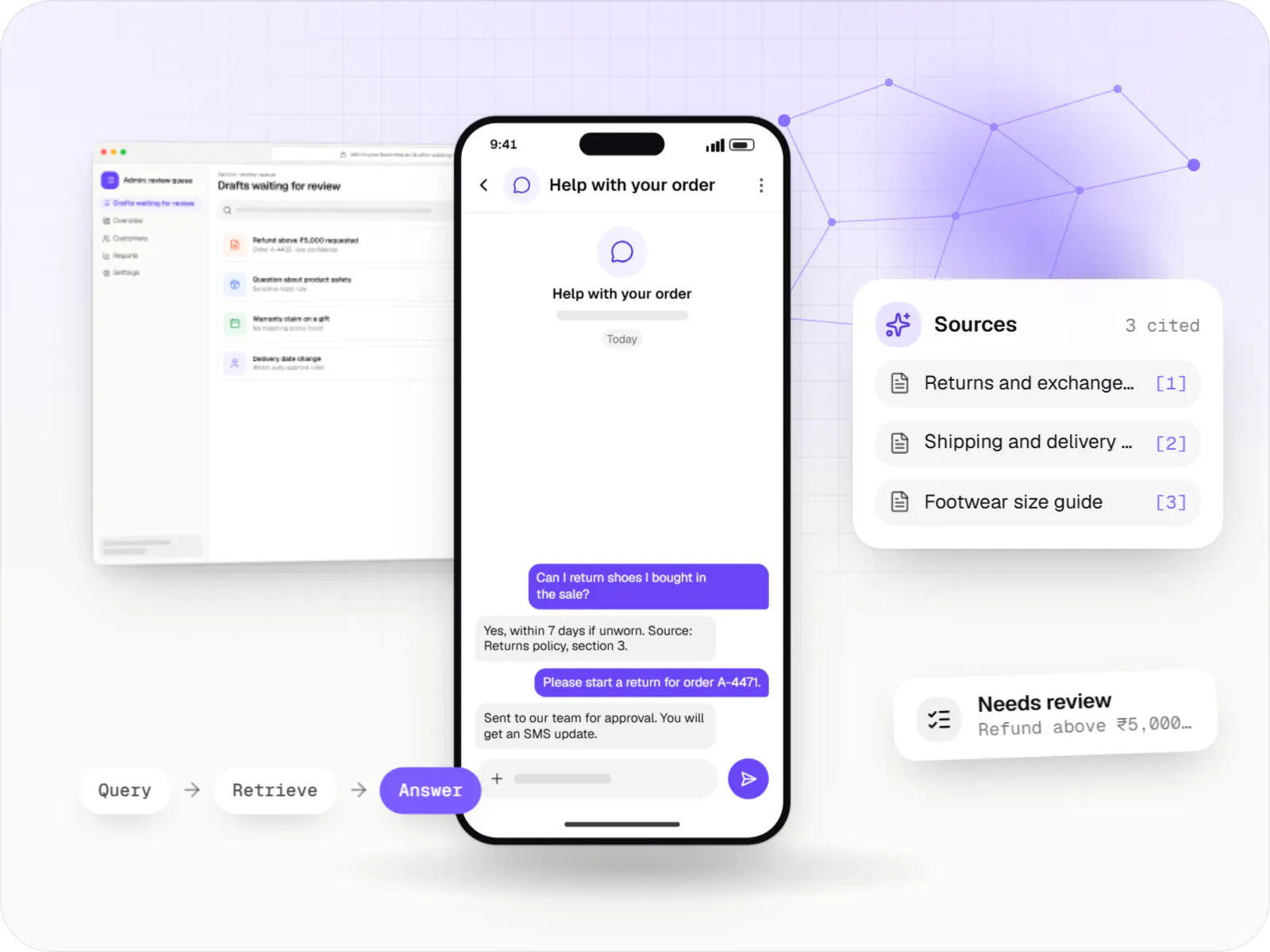
AI features and AI-first apps built on model APIs, retrieval over your own data, workflow automation or custom ML, with evaluation and human review.
FAQ
Most brands should start with a fast mobile website or PWA, because first-time buyers rarely install an app. An app starts paying off once you have repeat customers who reorder often, as in consumables, beauty or food, and you want push notifications, saved preferences and quicker reorders. We usually suggest validating repeat behaviour on the web first, then building the app on the same backend so nothing is duplicated.
Yes. UPI AutoPay lets customers approve a recurring mandate in their UPI app, and gateways such as Razorpay and Cashfree support it alongside card mandates. Mandate limits and pre-debit notification rules apply, so we design the flow around them: clear mandate amounts, reminders before each charge, retries for failed debits and easy pause or cancel options, so customers don't need to raise a support ticket.
We store explicit consent per channel, whether WhatsApp, SMS or email, with the time and source of each opt-in, and make opt-outs take effect everywhere. Segments are built from your own order data, not bought lists. We treat the Digital Personal Data Protection Act 2023 as a design input, including data minimisation and deletion on request, while your legal team confirms policy wording.
Next step
Tell us your current stack and the channel you want to own next. We'll suggest a phased plan.