




Mobile
Flutter
Build Android and iOS apps from one shared codebase, so you launch on both platforms faster with a consistent experience.
Used for
- Mobile apps
- Delivery apps
- E-commerce apps
- Booking apps
Finance
Product engineering for fintech startups and NBFC-backed businesses: payments, lending, wallets and investment apps built on UPI, eKYC and consent-based data flows.
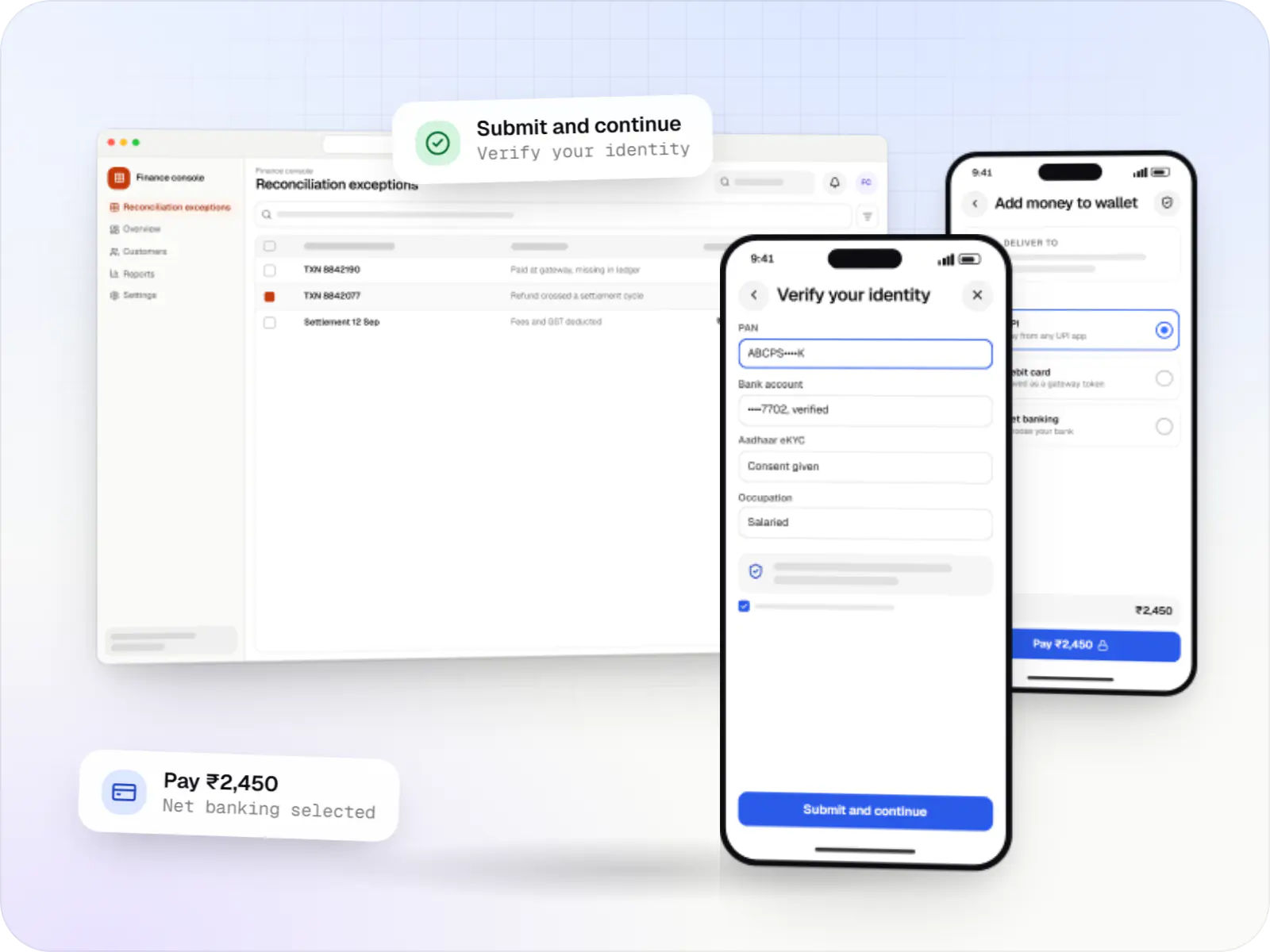
At a glance

We design and build fintech products end to end: customer apps, onboarding and KYC, payment flows, ledgers, partner APIs and the operations consoles behind them. We are not a regulated entity and do not give compliance advice. We build software that makes your obligations easier to meet, with audit trails, consent records and clear data boundaries.
Flutter and the related logo are trademarks of Google LLC. We are not endorsed by or affiliated with Google LLC.
How to start
Tell us what you need in your own words. You talk to the developers who would build it and get a written, line-item estimate.
Get a project estimateFintech in India runs on shared public rails — UPI, Aadhaar-based eKYC, the Account Aggregator framework, NACH and BBPS — combined with partnerships between startups and regulated banks or NBFCs. That makes the product hard in specific ways: money movement must reconcile to the paisa, every user action needs an audit trail, and a regulatory clarification can change a flow you shipped last quarter.
We build with those constraints designed in. Money lives in a double-entry ledger rather than a balance column, consent and KYC artefacts are kept apart from product data, and admin consoles let operations and compliance teams act without asking developers to run queries. Whether you are launching an MVP with a banking partner or rebuilding a product that outgrew its first version, we start from your regulated partner's requirements and work backwards.
Challenges
Gateway settlements, bank statements and your ledger disagree more often than founders expect, and each mismatch needs a resolution workflow.
Bank and NBFC partners bring security questionnaires, data-localisation expectations and audit needs.
Every extra verification step loses users, but skipping checks creates fraud and compliance exposure.
Promo abuse, mule accounts and account takeovers appear soon after launch and need rules, velocity checks and review queues.
Guidelines on digital lending, prepaid instruments and payment aggregators change, and hard-coded flows become expensive.
Solutions
Across 2 areas
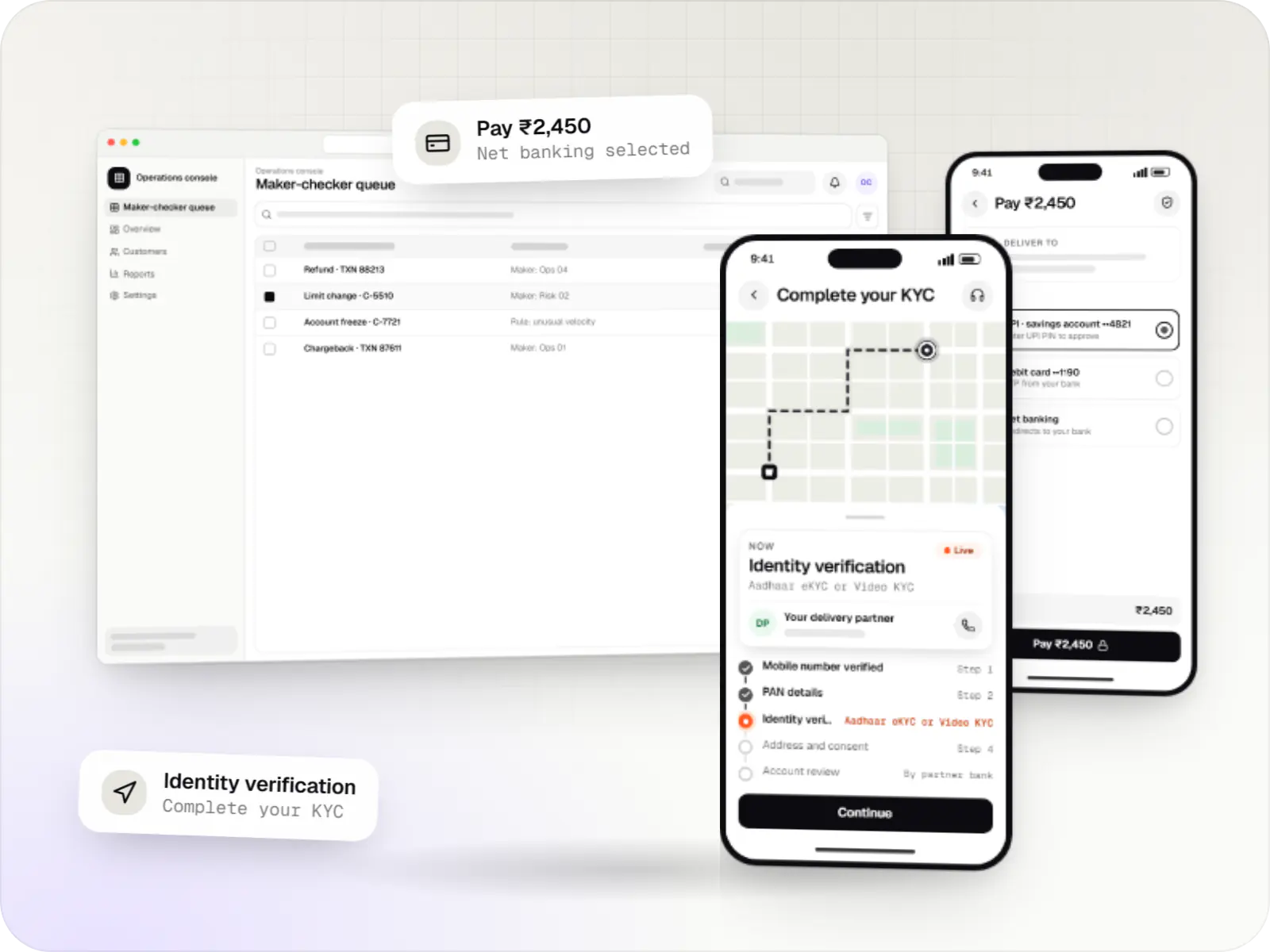
Secure fintech apps and back offices for payments, lending, investments and insurance, integrated with licensed banking, KYC and data partners.
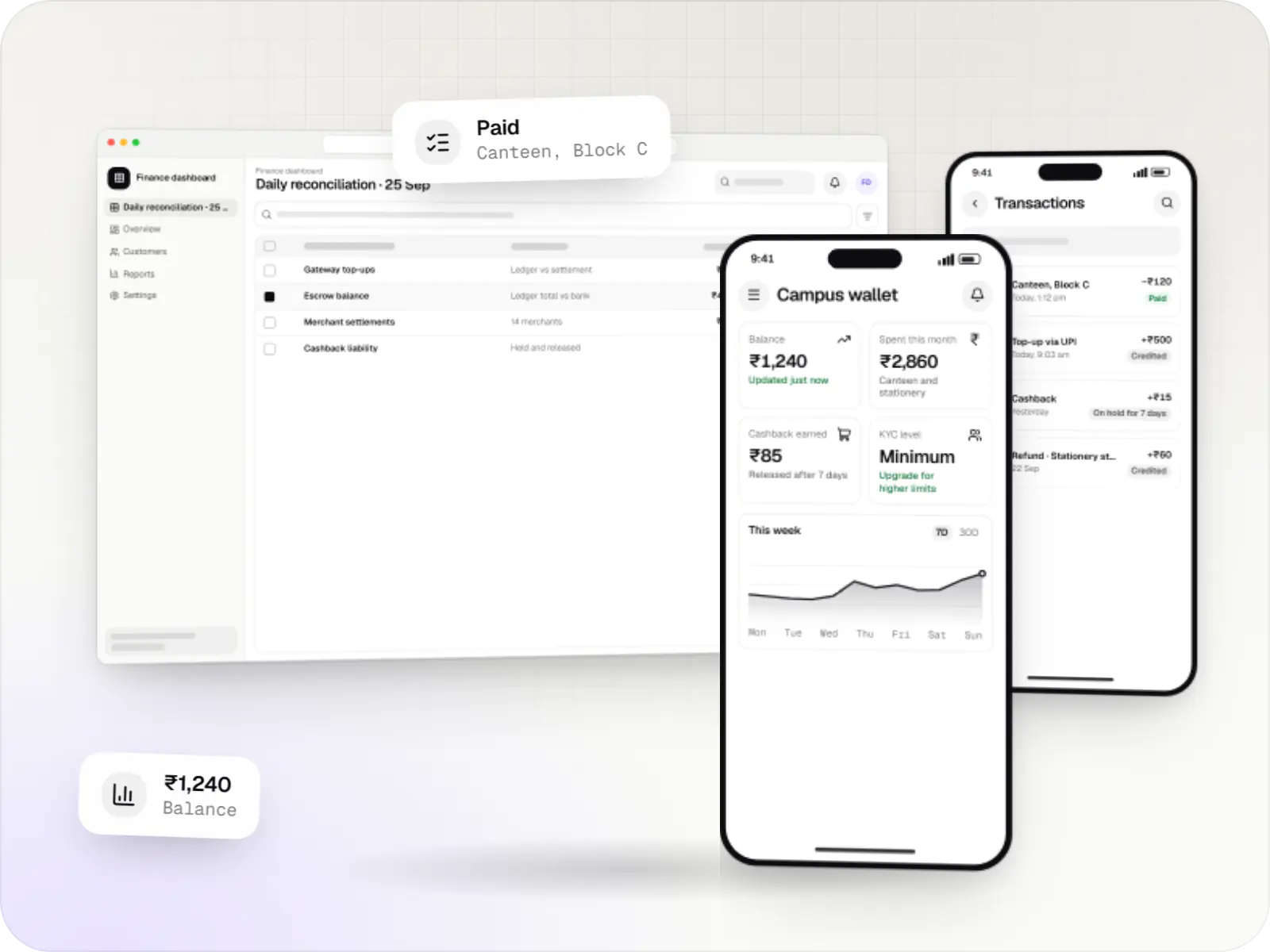
Digital wallet apps with top-ups, QR payments, rewards and a balance ledger, for closed-loop programmes or with a licensed PPI issuer.
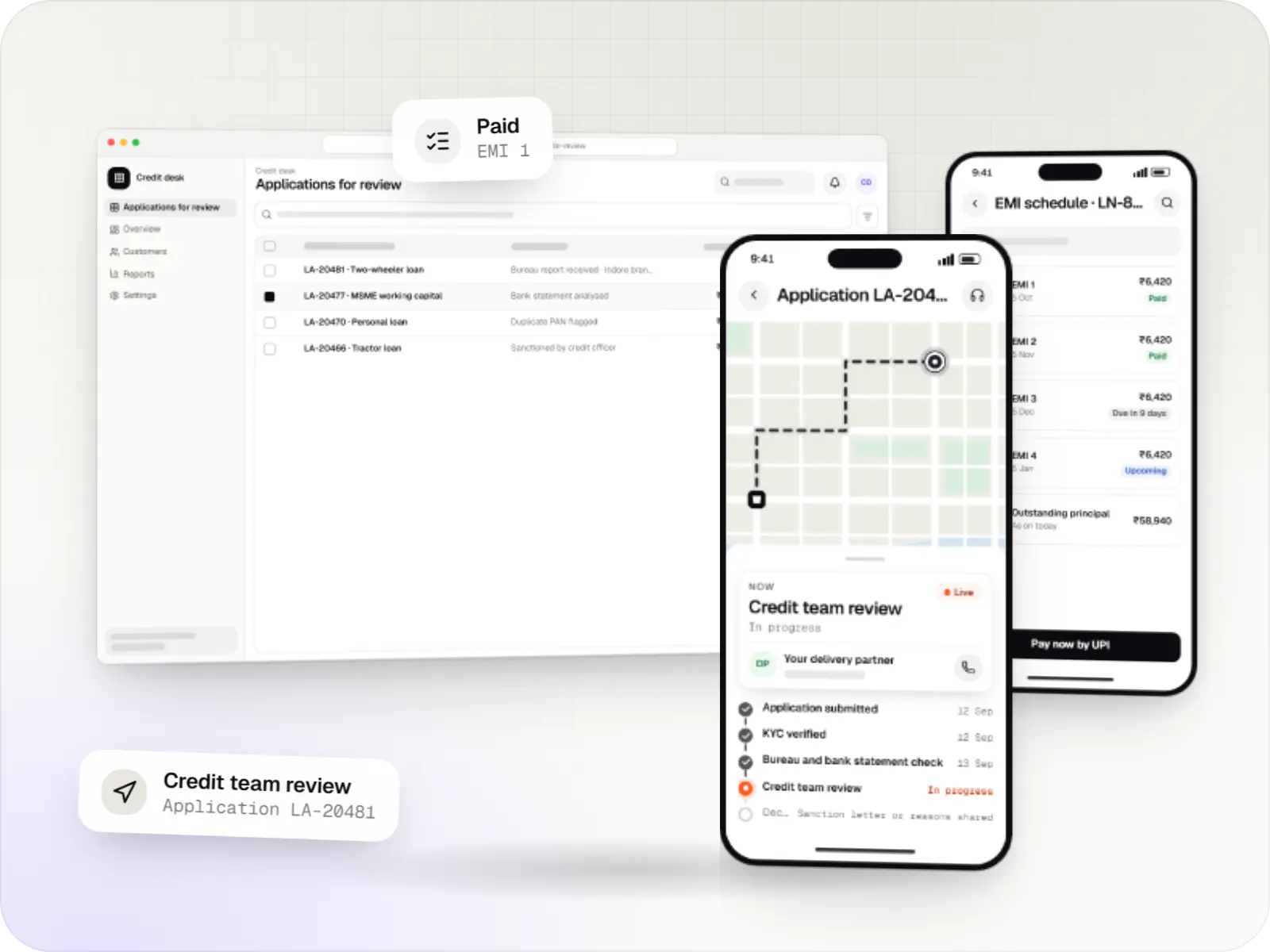
Custom loan origination and loan management software covering applications, underwriting, disbursal, EMIs, collections and reporting.
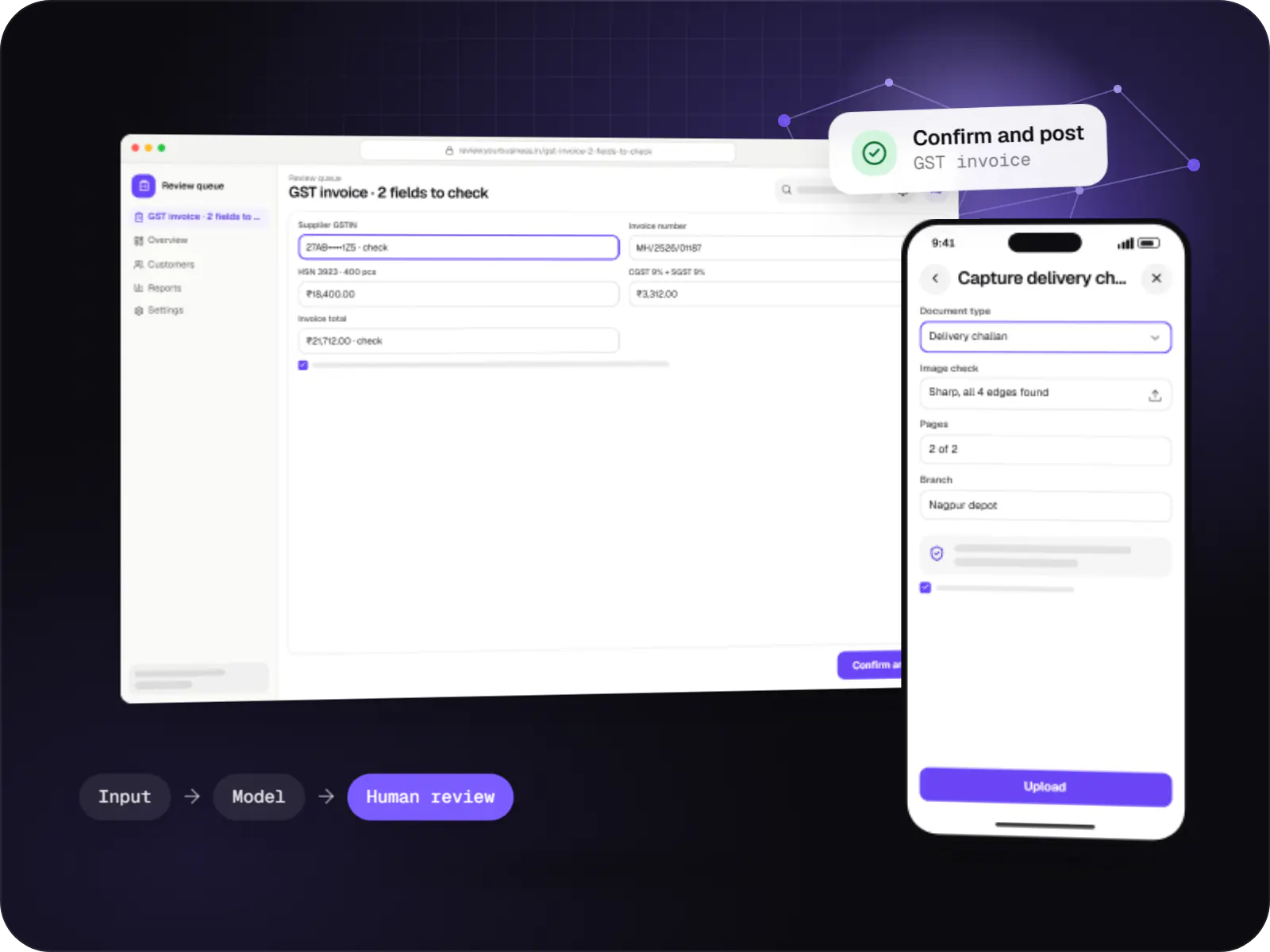
Data extraction from invoices, KYC documents, statements and forms into your systems, with validation rules and human review for uncertain fields.
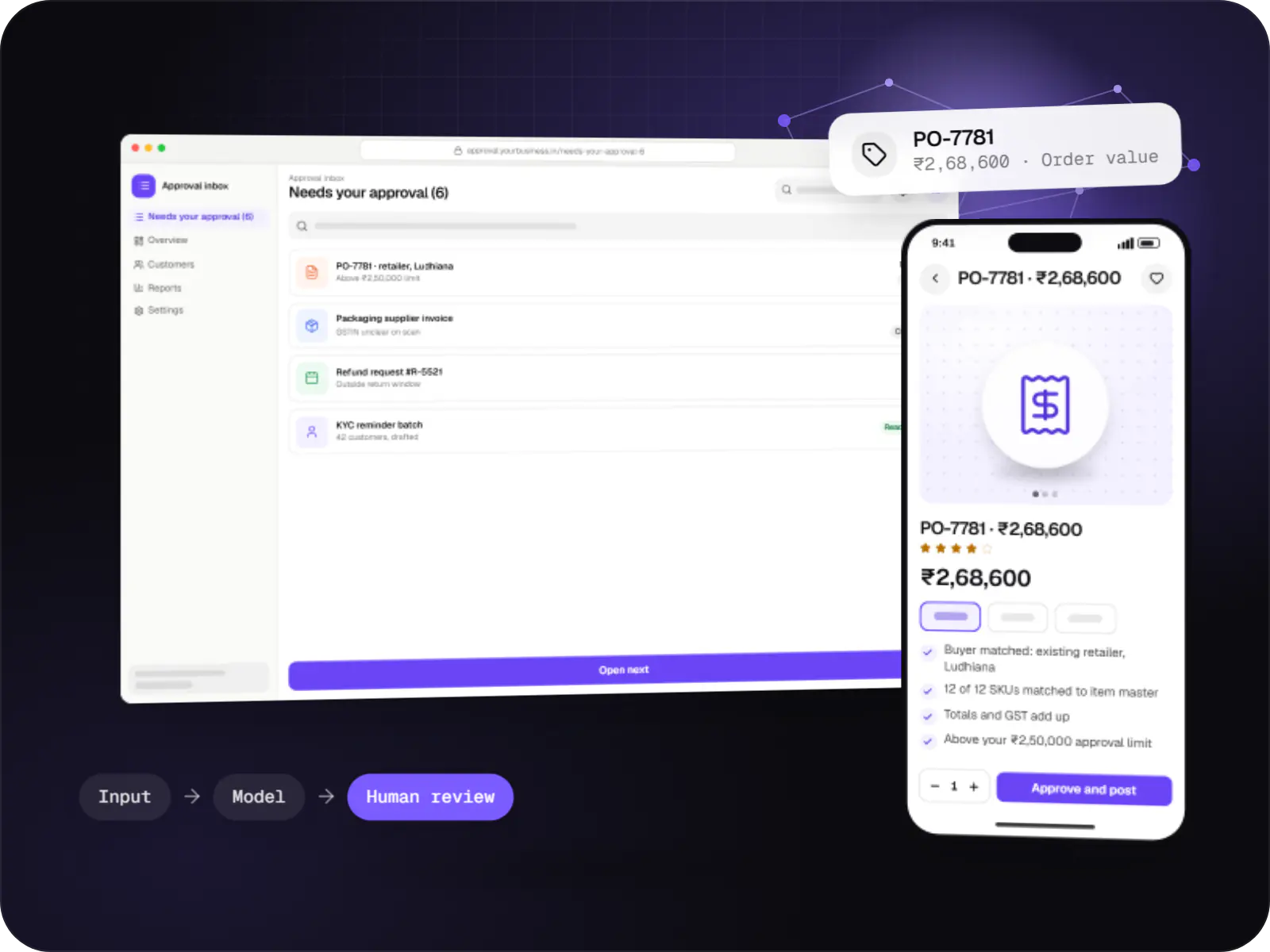
Automations for repetitive back-office work, with AI steps that read, classify and draft, and approvals where decisions matter.
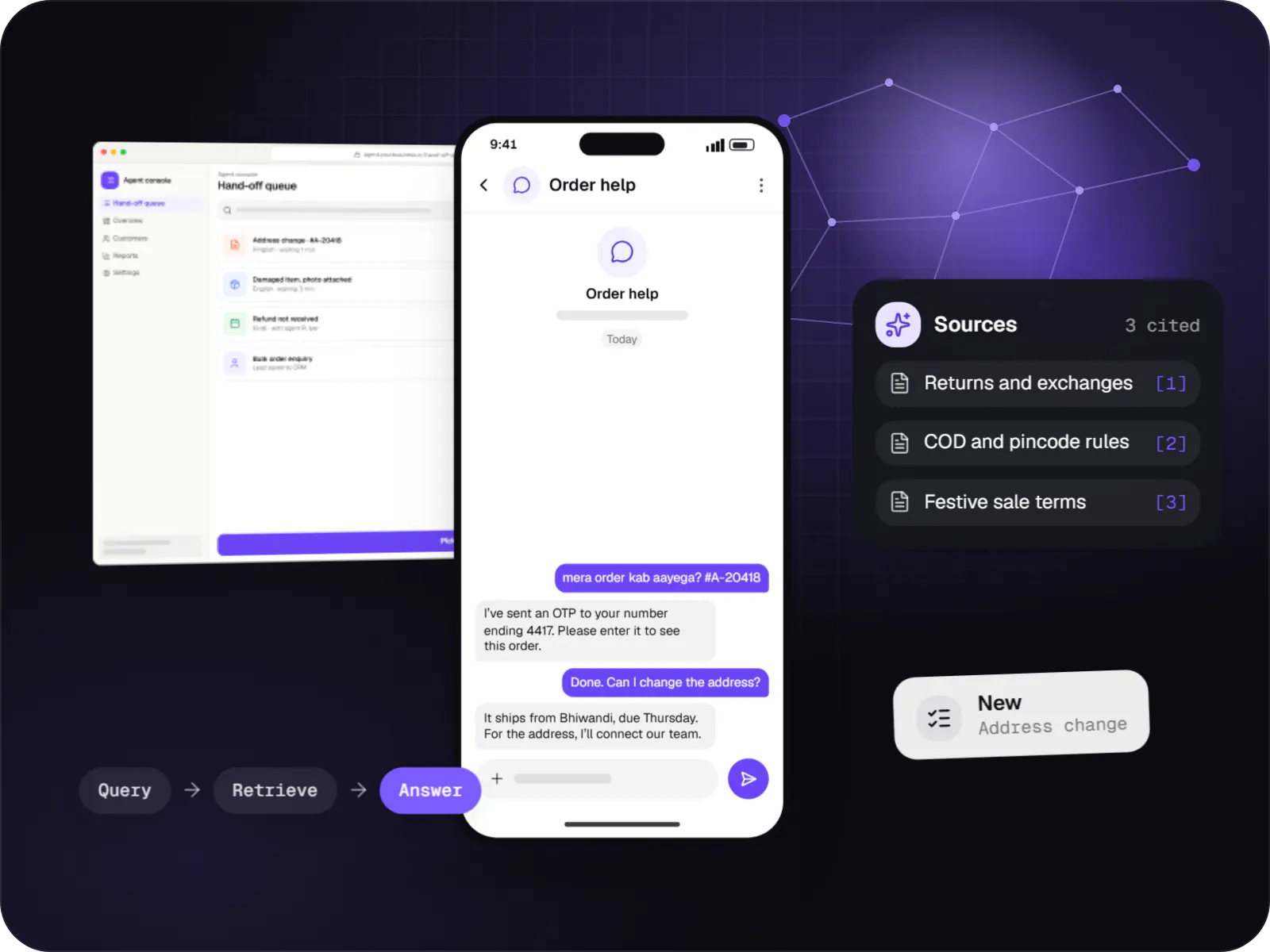
Support and sales chatbots for web, app and WhatsApp that answer from your own content and hand off to your team.
Immutable journal entries, balances derived from postings, idempotent APIs and daily reconciliation against bank and gateway reports.
PAN and penny-drop bank verification, Aadhaar-based eKYC and Video KYC via licensed providers, CKYC search and risk flags.
Purpose-specific consent, withdrawal and logs aligned with the DPDP Act and Account Aggregator consent artefacts.
Velocity limits, device binding and blocklists, with a review queue for flagged transactions.
Tools for support, KYC reviewers, finance and compliance, with maker-checker approval on sensitive actions.
How it works
From sign-up to a reconciled balance, each step leaves a record your partner bank or NBFC can inspect.
PAN, a penny-drop bank check and Aadhaar-based eKYC run inside the app, and consent is recorded before any data is fetched.
Device binding, velocity limits and blocklists run instantly. Anything unusual goes to a human review queue instead of being approved automatically.
The app opens the user's own UPI app by intent or QR, and the gateway confirms the result to your backend by webhook.
A double-entry posting records where the money came from and where it went. Balances are derived from postings, so every figure can be explained.
Settlement files and bank statements are matched to ledger entries each morning, and mismatches land in an exceptions queue with a likely cause.
Refunds, disputes, limit changes and audit exports happen with maker-checker approval, without developers running database queries.
Platforms
Apps for Android phones and tablets, tested on budget and mid-range devices and published on Google Play or privately.
Apps for iPhone and iPad, built to Apple's guidelines and released through TestFlight and the App Store.
One Flutter or React Native codebase for Android and iOS, with native modules where a feature needs them.
Browser-based applications with logins, roles and workflows, such as customer portals, SaaS products and internal tools.
Back-office panels for operations, support and finance teams: orders, users, content, reports and permissions.
Technology
Flutter or React Native gives you one app for Android and iOS, PostgreSQL keeps ledgers that must add up, and hosting built on AWS keeps payment data inside India.
Mobile
Build Android and iOS apps from one shared codebase, so you launch on both platforms faster with a consistent experience.
Used for
Mobile
Build Android and iOS apps in the same language as a React website, so one team can share code and skills across web and mobile.
Used for
Backend
A structured way to build back ends on Node.js, so large business systems stay organised, testable and easy to hand over.
Used for
Backend
A programming language for AI features, data processing and automation: the engine behind document reading, reports and smart search.
Used for
Data
A reliable database for the records your business runs on: orders, payments, bookings and stock, kept accurate and easy to report on.
Used for
Data
Keeps frequently used data in fast memory, so apps stay quick on busy days and live features like order tracking feel instant.
Used for
Cloud & DevOps
Cloud hosting for your app, website and data, with data centres in India and room to grow when traffic rises.
Used for
Payments & maps
Lets customers in India pay by UPI, cards, netbanking or wallets, and handles subscriptions, refunds and payouts to sellers or partners.
Used for
Flutter and the related logo are trademarks of Google LLC. We are not endorsed by or affiliated with Google LLC.
Integrations
Intent, QR and recurring mandates through your PSP bank or payment gateway.
Collections, refunds, payouts and settlement reports for reconciliation.
Consent-based bank statement fetch through a regulated FIU — your entity or your partner.
Aadhaar-based eKYC, V-CIP, face match and liveness from licensed providers.
CIBIL, Experian, Equifax and CRIF High Mark pulls where your entity or partner has membership.
e-Mandates for repayments and bill payment journeys through BBPS partners.
Plain-English glossary
Product preview
Illustrative screens from a UPI-enabled money app and the console behind it.
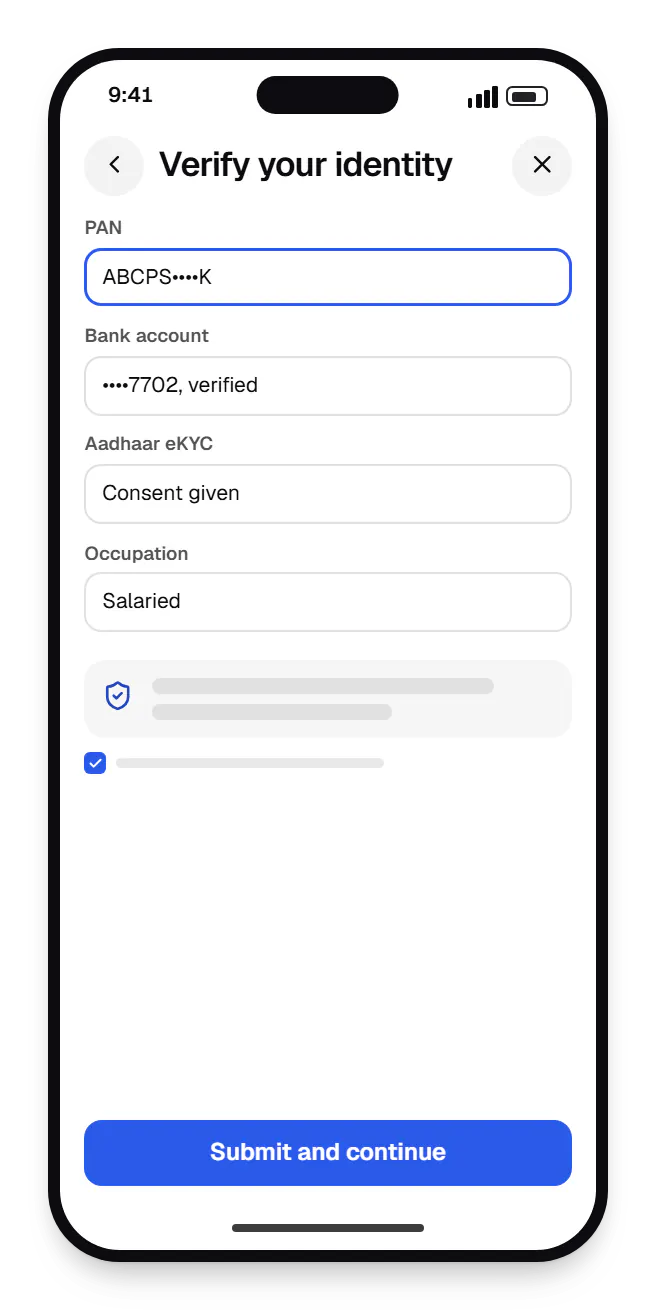
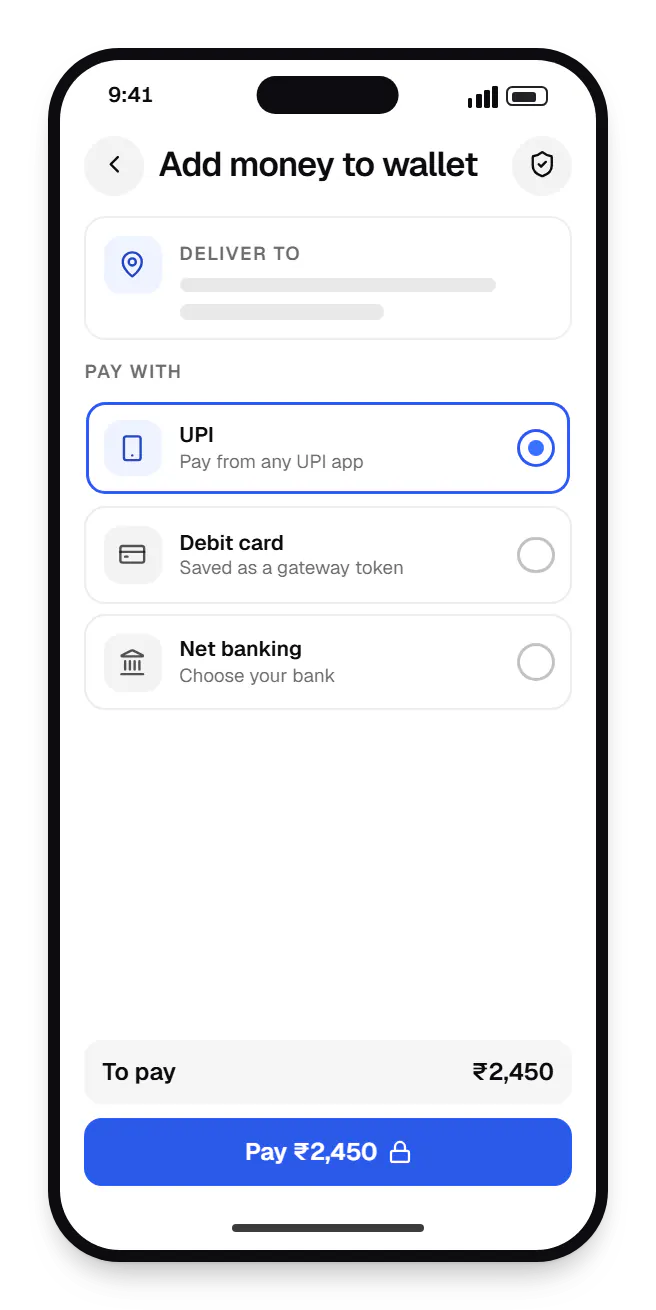
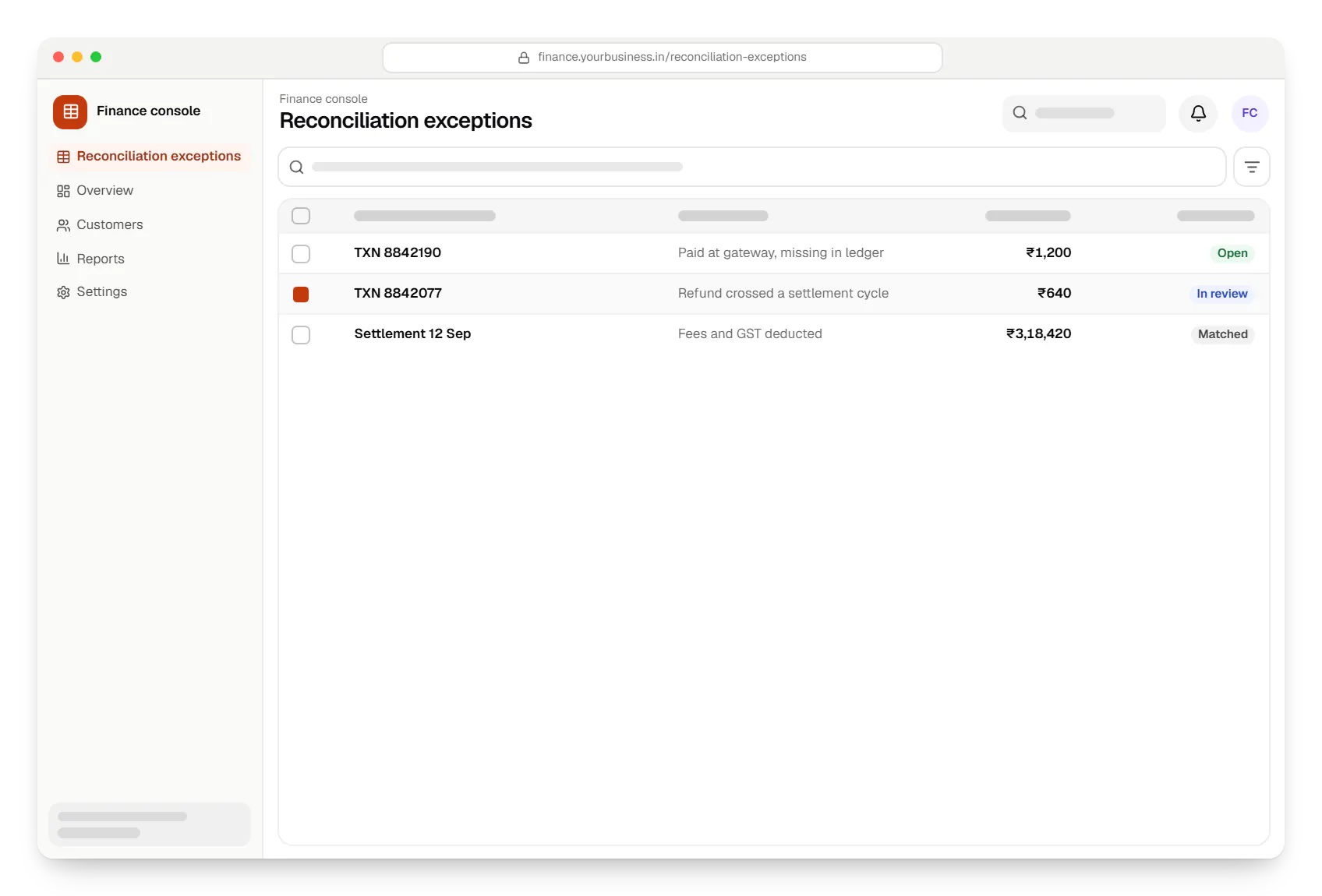
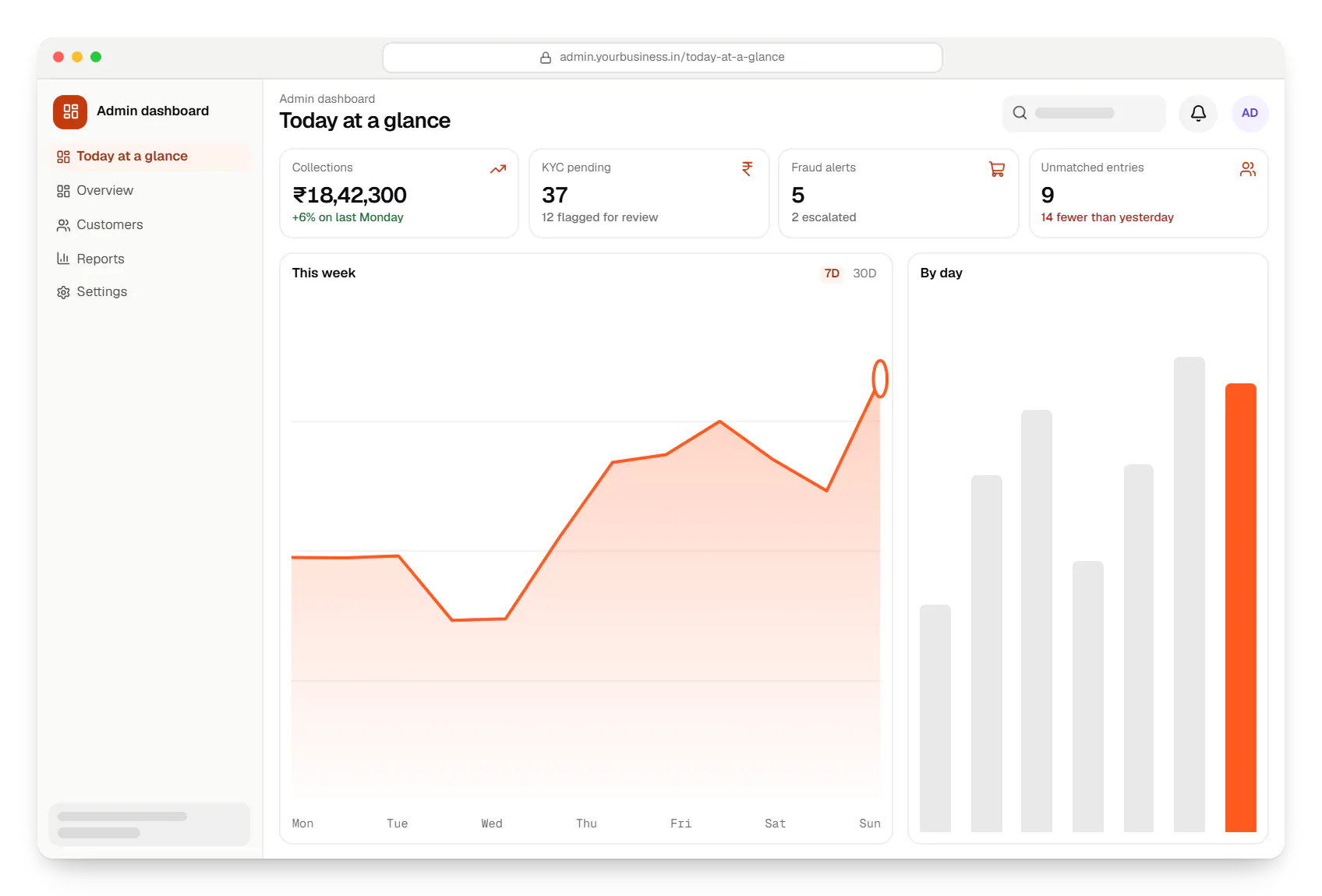
Sample screens: names, prices and figures are examples, not client data.
Cost drivers
A read-only finance tracker is far simpler than a product that holds funds, disburses loans or splits settlements between parties.
Each KYC, bureau, AA or banking API brings sandbox testing, certification steps and partner UAT cycles.
VAPT, partner questionnaires, key management and audit logging add effort before launch.
Maker-checker approvals, dispute handling and reviewer queues can be half the work and are easy to underestimate.
Estimates are written from your scope, with the effort and assumptions behind each line item.
How pricing worksServices
The design and engineering services our in-house team combines on projects in this sector.
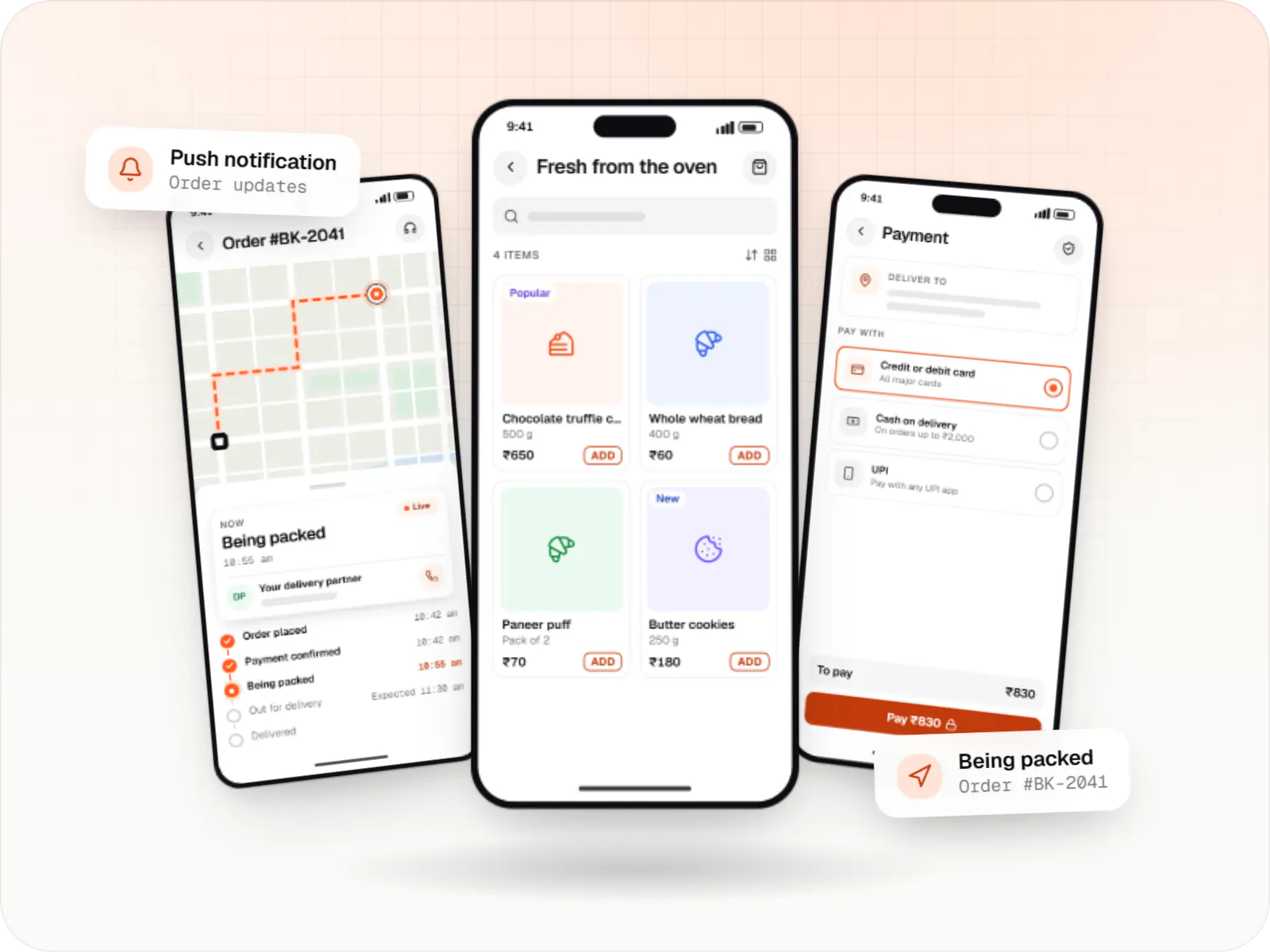
Native and cross-platform Android and iOS apps, from first release through regular store updates, built by our in-house designers and engineers.
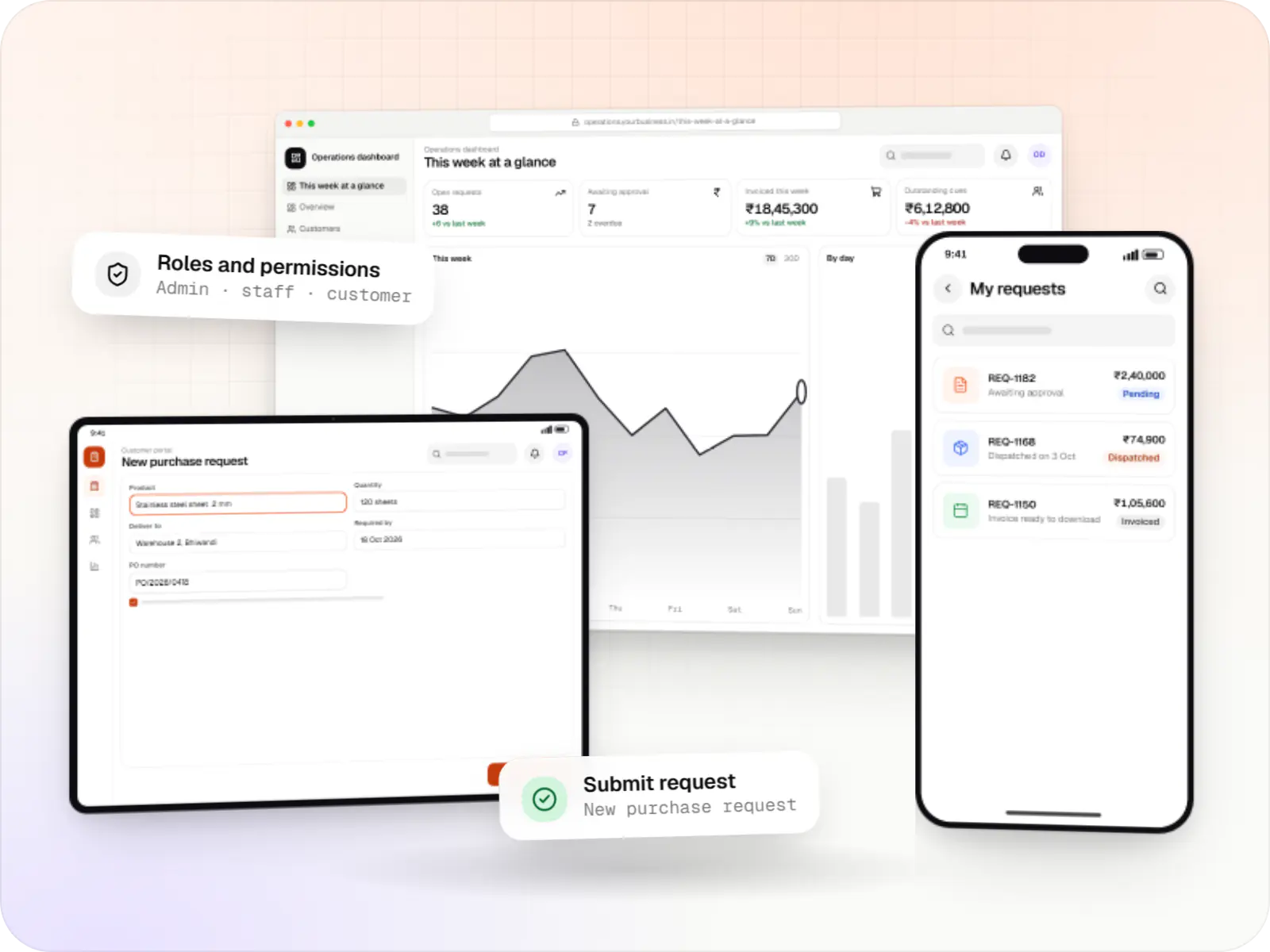
Browser-based products, customer portals, dashboards and internal tools, built on clean data models with secure roles and integrations.
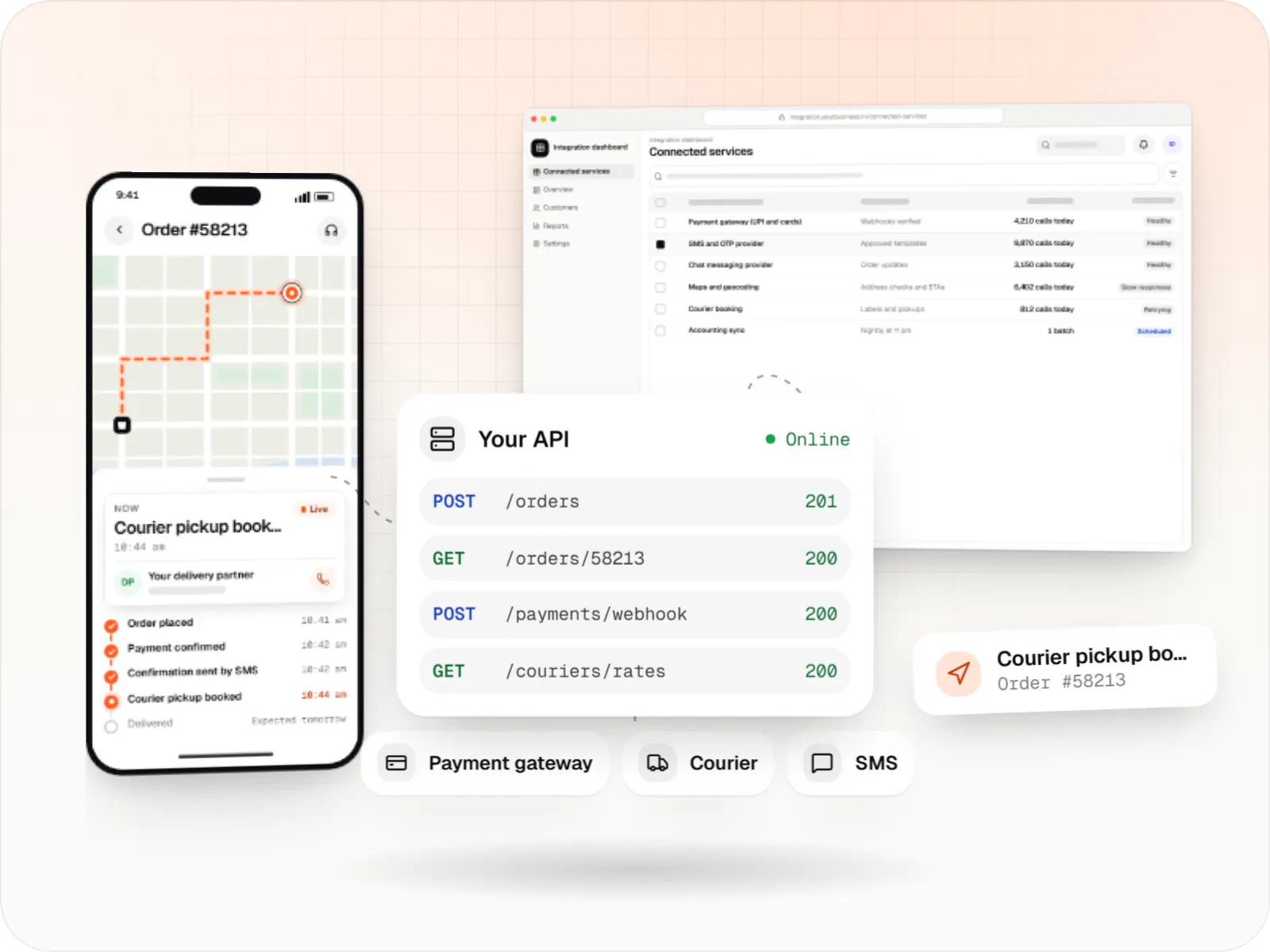
Secure, documented REST and GraphQL APIs, plus integrations that connect your apps to payment, logistics, GST, messaging and business systems.
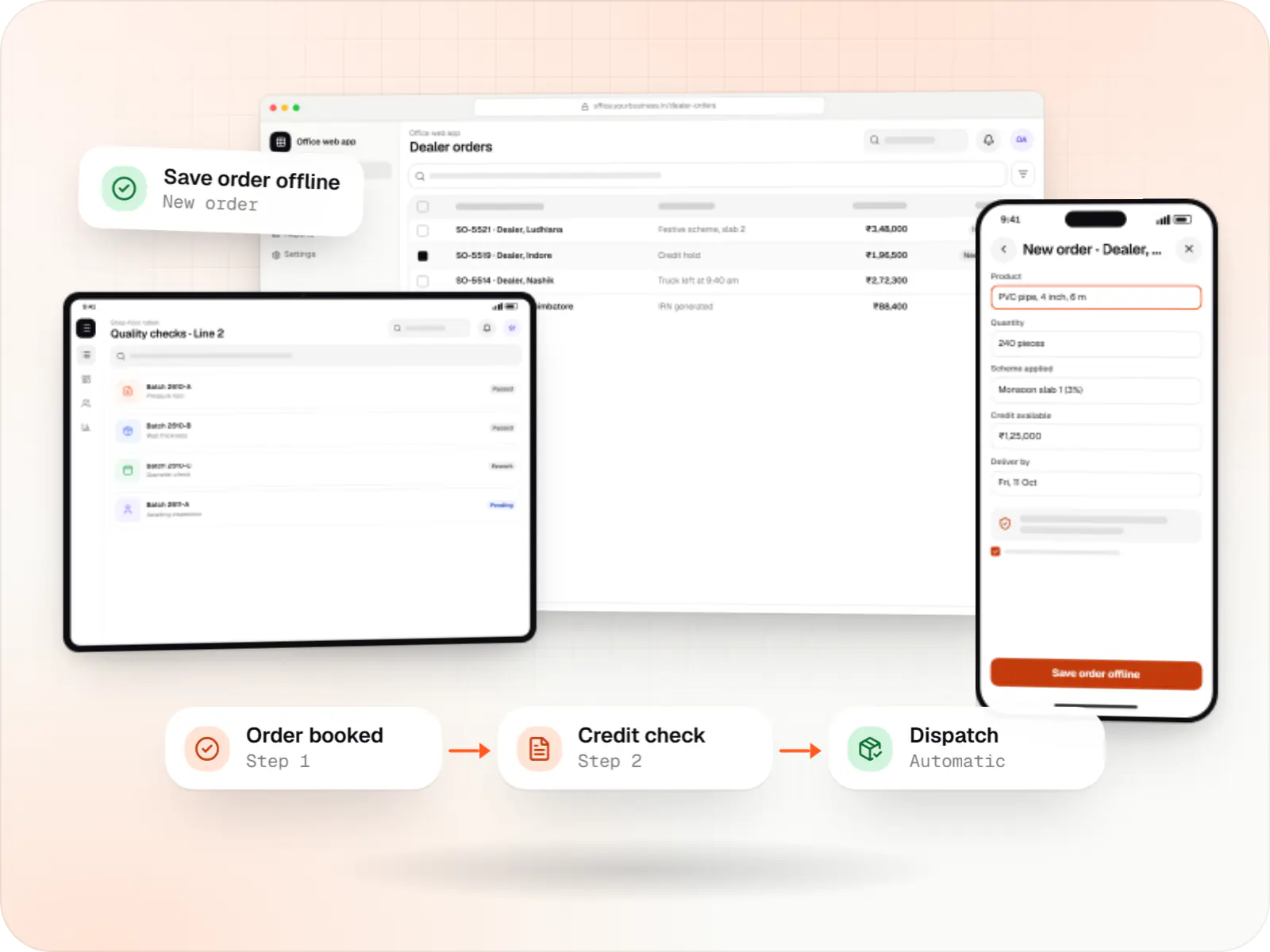
Software shaped around how your business runs, from approvals and inventory to billing and reports, replacing spreadsheets and disconnected tools.
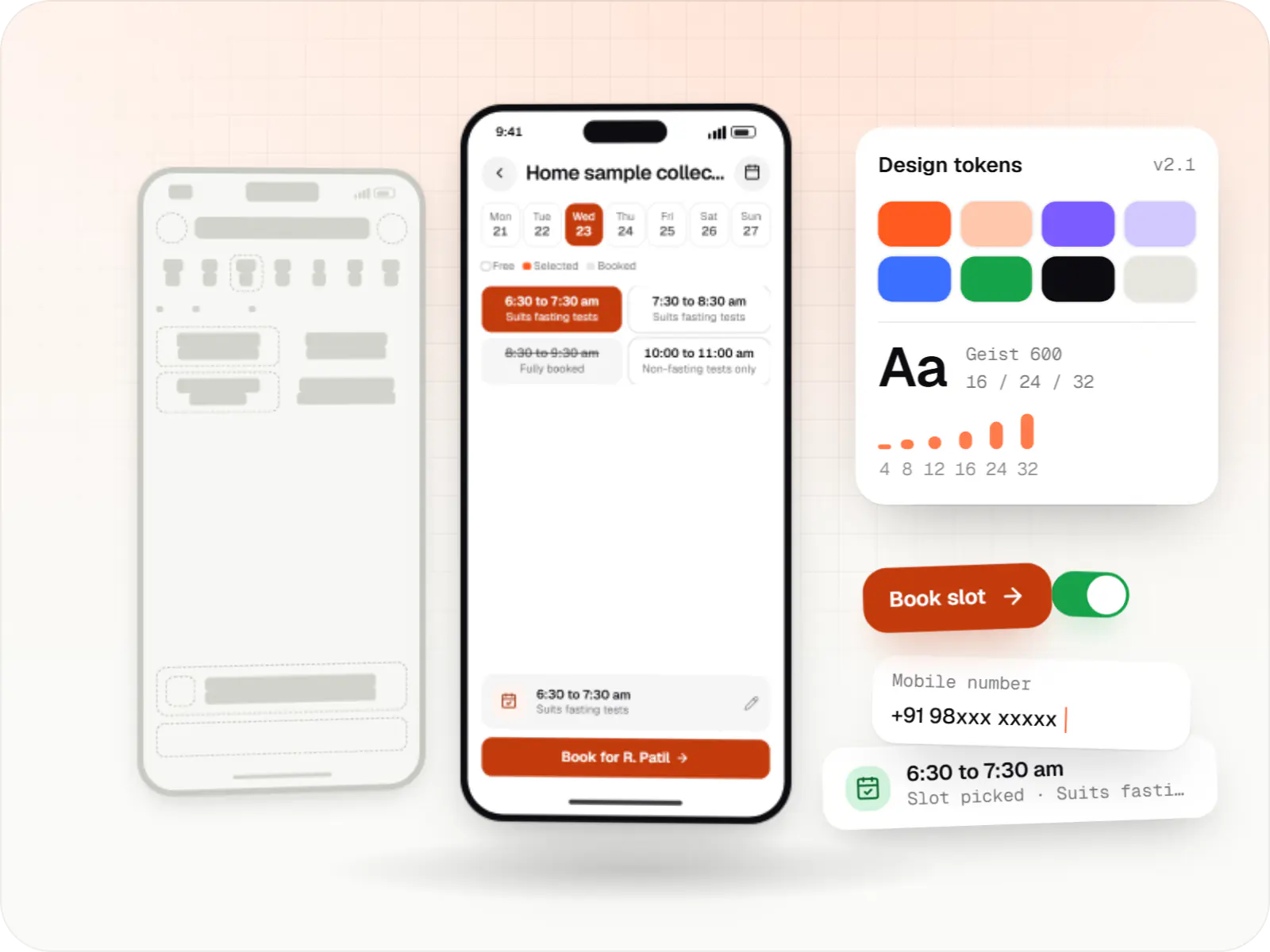
Product design for web and mobile apps: research, user flows, wireframes, prototypes and design systems that engineers can build from.
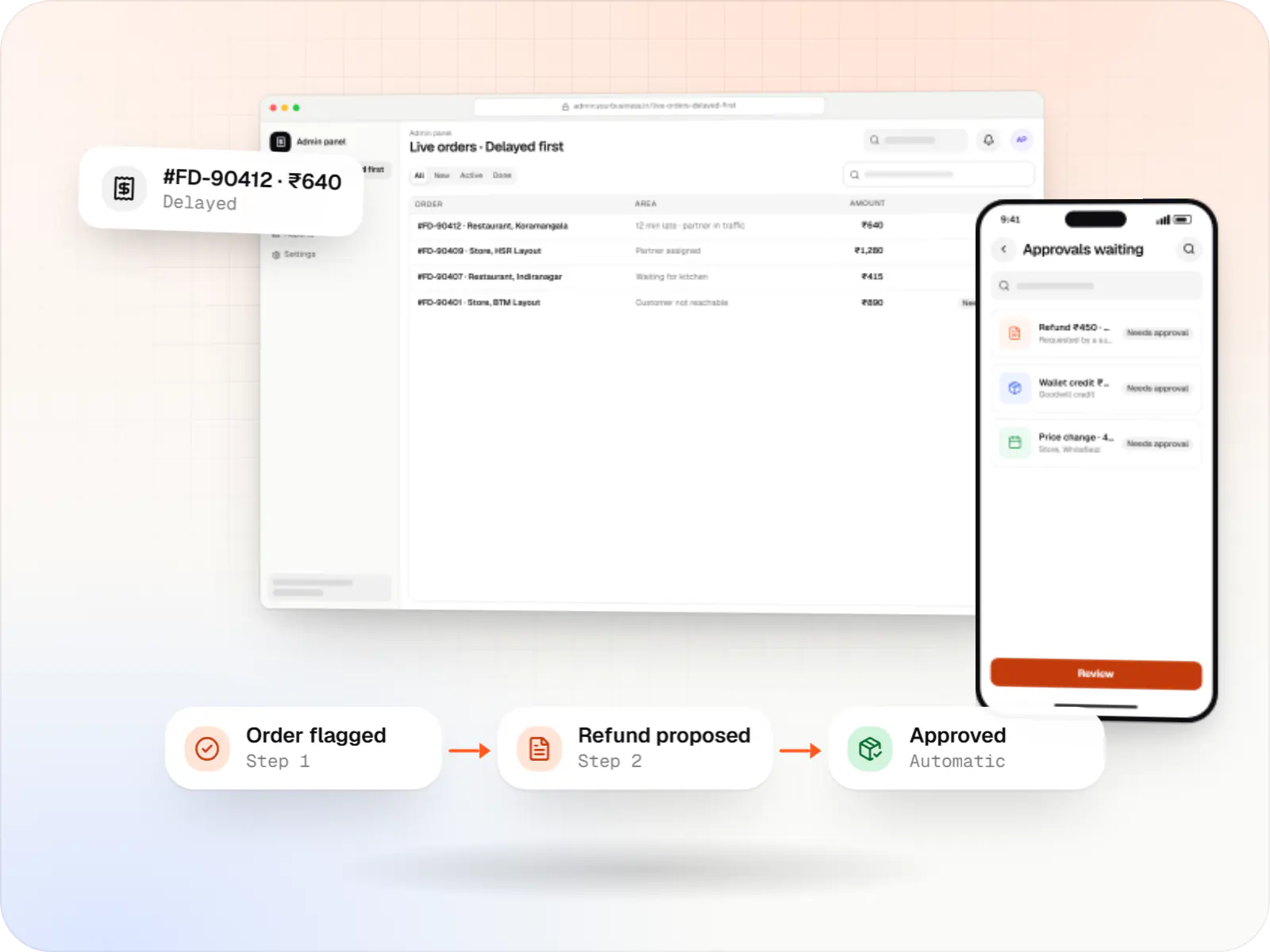
Back-office dashboards built around your team's daily tasks: order queues, approvals, catalogue management, payouts, reports and audit logs.
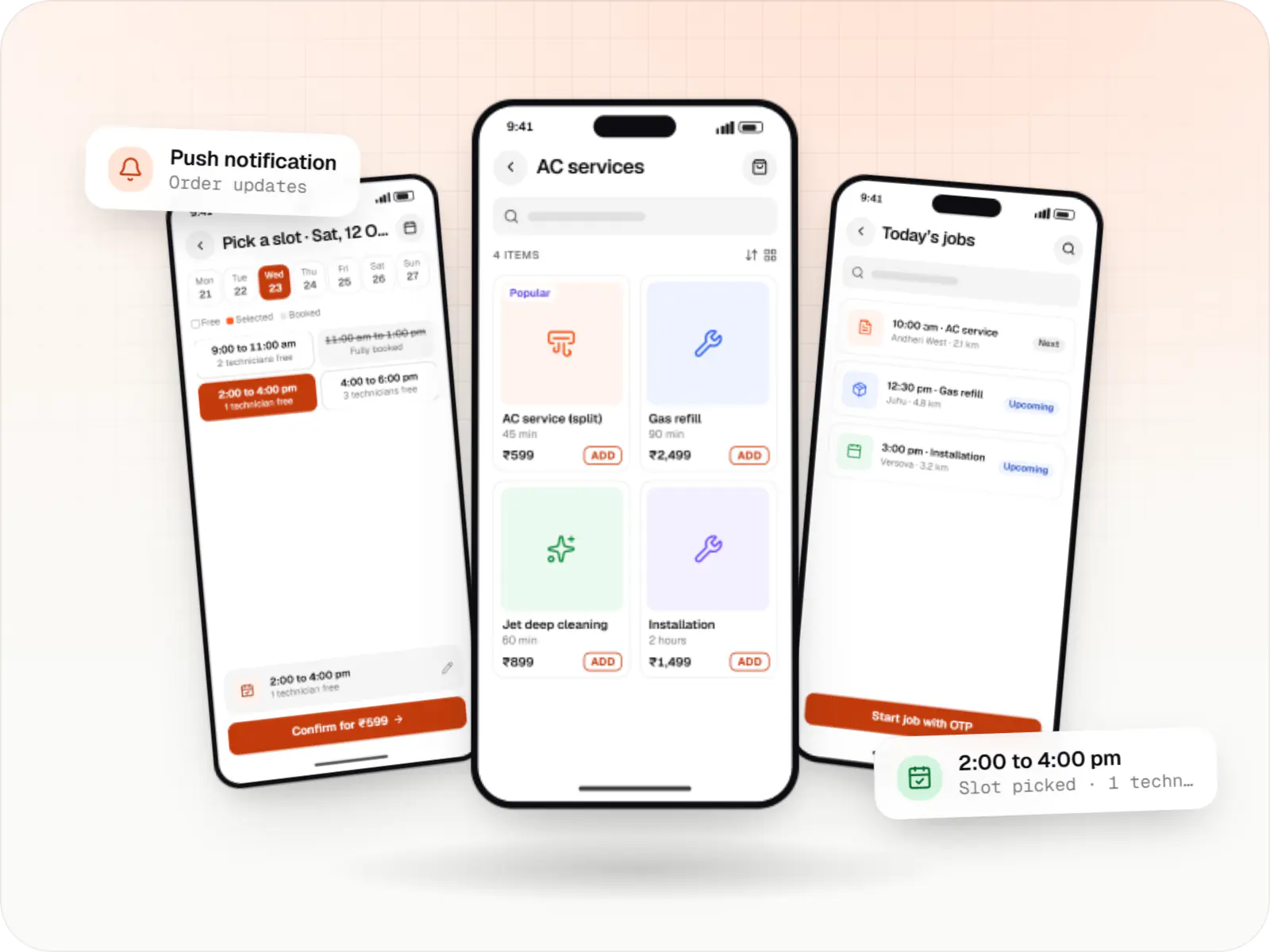
Android and iOS apps from one Dart codebase, built by engineers who know when Flutter is the right call and when native code is needed.
FAQ
We can build prototypes and the parts that do not depend on a licence: onboarding UX, ledger design and the operations console. Anything that holds customer money, lends or issues a prepaid instrument has to run under a regulated entity, and that partner's technical requirements will shape the architecture. We usually suggest a discovery phase now and locking integration details once the partner is signed, so you do not rebuild flows later.
RBI expects payment system data to be stored in India, so production data sits in India-region cloud infrastructure or your partner's environment. We encrypt data in transit and at rest, avoid storing card data by using gateway tokenisation, separate personal data from transaction records, and log every admin action. We also support your VAPT and partner security questionnaires. We are not auditors, so compliance sign-off stays with you and your regulated partner.
Usually NestJS or Python services on PostgreSQL, because transactions and relational constraints matter for ledgers. Redis handles rate limits, idempotency keys and short-lived sessions, and queues process webhooks and reconciliation jobs so a slow gateway callback never blocks a user. For mobile, Flutter or React Native suit most fintech apps; we choose native Kotlin or Swift when you need deep device-security features or a partner SDK that only ships natively.
A focused MVP — onboarding with KYC, one money flow such as UPI collections or a lending journey, a basic ledger and an admin console — typically takes three to five months including partner UAT. The build is rarely the slowest part: sandbox access, partner certification and security review often add weeks. Our timelines separate our work from third-party dependencies so you can see where any delay comes from.
Yes, where they are useful and controllable: extracting data from bank statements and salary slips, categorising transactions, drafting replies for support agents and flagging unusual activity for human review. We do not let a language model make credit or fraud decisions alone; those stay rule-based or model-scored with explainable inputs and a reviewer in the loop. Data sent to third-party AI APIs is minimised and masked, and only with your partner's approval.
Next step
Tell us who your bank or NBFC partner is, which rails you need and what must be live at launch. We will map the integrations and send a line-item estimate.