



Mobile
Flutter
Build Android and iOS apps from one shared codebase, so you launch on both platforms faster with a consistent experience.
Used for
- Mobile apps
- Delivery apps
- E-commerce apps
- Booking apps
Fintech apps
Apps, back offices and partner integrations for financial products, built with audits in mind.
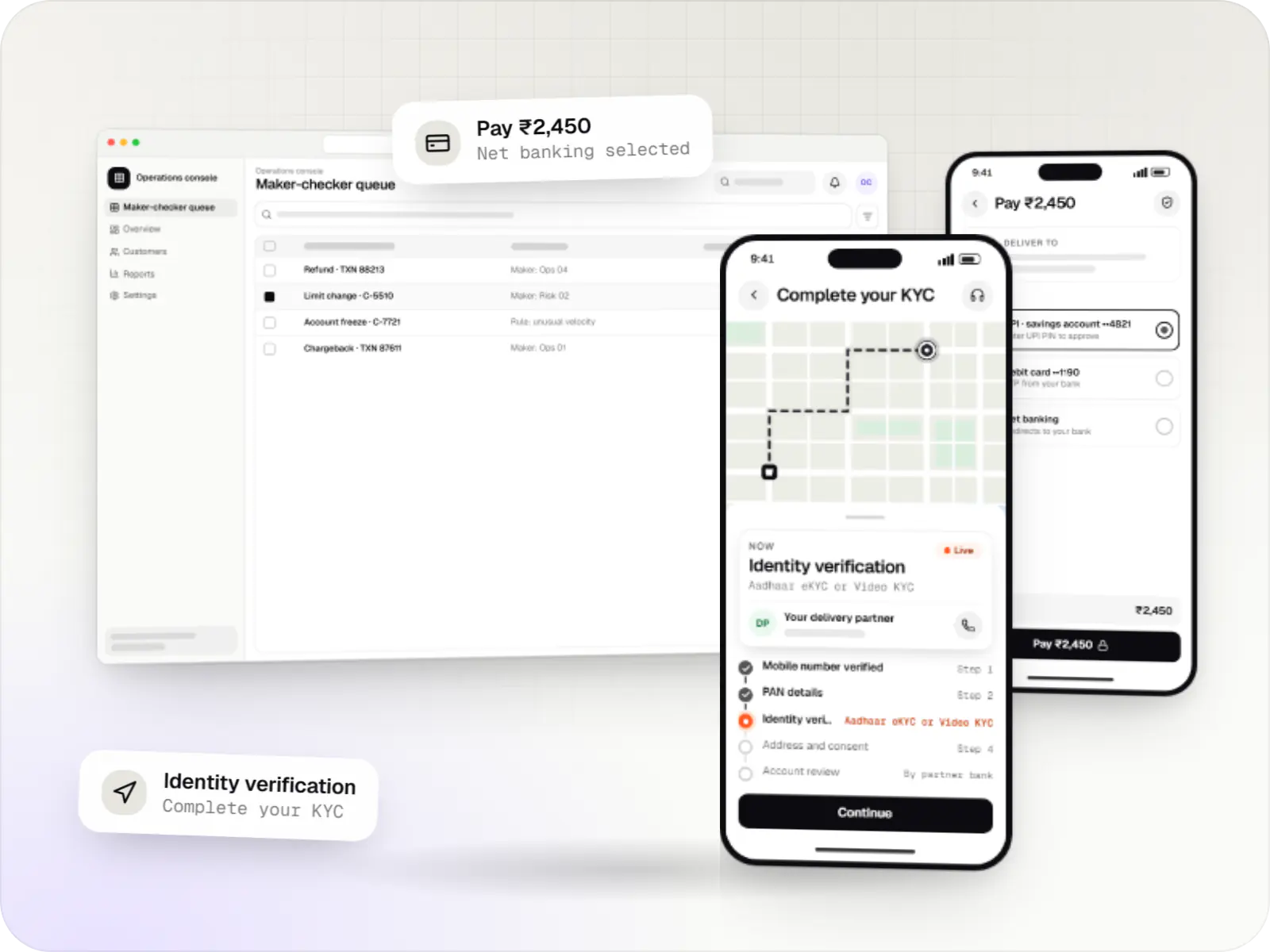
At a glance
What it is
Secure fintech apps and back offices for payments, lending, investments and insurance, integrated with licensed banking, KYC and data partners.
Flutter and the related logo are trademarks of Google LLC. We are not endorsed by or affiliated with Google LLC.
How to start
Tell us what you need in your own words. You talk to the developers who would build it and get a written, line-item estimate.
Get a project estimateA fintech product in India usually depends on regulated partners: a bank or NBFC that holds the licence, a payment aggregator, KYC providers, credit bureaus and sometimes an Account Aggregator.
We design product flows with those constraints in view, build the apps and services, and assemble the evidence partners ask for, such as architecture documents, data flow diagrams and VAPT remediation reports.
Challenges
Each bank, KYC and payment partner has its own API style, onboarding timeline and test data.
Timeouts, reversals and delayed webhooks must never leave balances wrong or payments duplicated.
Consent screens, disclosures and KYC steps have to fit naturally into onboarding.
Security controls must hold on inexpensive Android phones without making the app unusable.
What is included
Platform: Android and iOS app
Platform: Admin dashboard
Platform: Backend
How it works
Each step runs through your regulated partners and the rules your compliance team sets, including RBI guidelines and KYC requirements; the software applies those rules consistently and keeps a record.
The customer verifies their mobile number, the app is bound to the device, and consent and disclosure screens written with your compliance team are accepted.
Identity is verified by the method your partner's policy allows, such as Aadhaar eKYC, CKYC or Video KYC; full Aadhaar numbers are not stored.
The customer makes a UPI payment, sets up an AutoPay mandate, or starts a loan, investment or policy journey with clear disclosures.
Every money movement is written to a double-entry ledger, with idempotent calls to partner APIs so a retry never posts twice.
Sensitive actions and flagged transactions go to a maker-checker queue, and every action is logged.
Ledger totals are matched with bank and partner reports every day, and mismatches become exceptions for your team.
Platforms
Customers use apps for Android and iOS or the web; operations and finance teams use a secured admin dashboard.
Apps for Android phones and tablets, tested on budget and mid-range devices and published on Google Play or privately.
Apps for iPhone and iPad, built to Apple's guidelines and released through TestFlight and the App Store.
One Flutter or React Native codebase for Android and iOS, with native modules where a feature needs them.
Browser-based applications with logins, roles and workflows, such as customer portals, SaaS products and internal tools.
Back-office panels for operations, support and finance teams: orders, users, content, reports and permissions.
Technology
Chosen for exact money calculations, safe retries, audit-ready logs and hosting in Indian cloud regions.
Mobile
Build Android and iOS apps from one shared codebase, so you launch on both platforms faster with a consistent experience.
Used for
Mobile
Build Android and iOS apps in the same language as a React website, so one team can share code and skills across web and mobile.
Used for
Backend
A structured way to build back ends on Node.js, so large business systems stay organised, testable and easy to hand over.
Used for
Data
A reliable database for the records your business runs on: orders, payments, bookings and stock, kept accurate and easy to report on.
Used for
Data
Keeps frequently used data in fast memory, so apps stay quick on busy days and live features like order tracking feel instant.
Used for
Cloud & DevOps
Cloud hosting for your app, website and data, with data centres in India and room to grow when traffic rises.
Used for
Payments & maps
Lets customers in India pay by UPI, cards, netbanking or wallets, and handles subscriptions, refunds and payouts to sellers or partners.
Used for
Flutter and the related logo are trademarks of Google LLC. We are not endorsed by or affiliated with Google LLC.
Integrations
Collections, payouts, refunds and settlements.
Recurring debits through a sponsor bank or aggregator.
Consent-based sharing of bank statements and financial data.
Record search and download, and video-based identification.
Reports from TransUnion CIBIL, Experian, Equifax and CRIF High Mark through your membership.
Bill fetch and payment through an operating unit.
Mutual fund transactions for registered distributors.
Privacy & security
Aadhaar eKYC, Video KYC and CKYC run through licensed entities under your partner's policy; full Aadhaar numbers are not stored.
RBI digital lending guidelines, PPI licensing and payment aggregator rules are owned by your compliance team; we build and document the controls they specify.
TLS in transit, encryption at rest, field-level encryption for identifiers, managed keys, and hosting in Indian cloud regions in line with RBI's payment data storage requirement.
Tamper-evident logs of sensitive actions, velocity limits, device checks and review queues for suspicious activity.
Plain-English glossary
Product preview
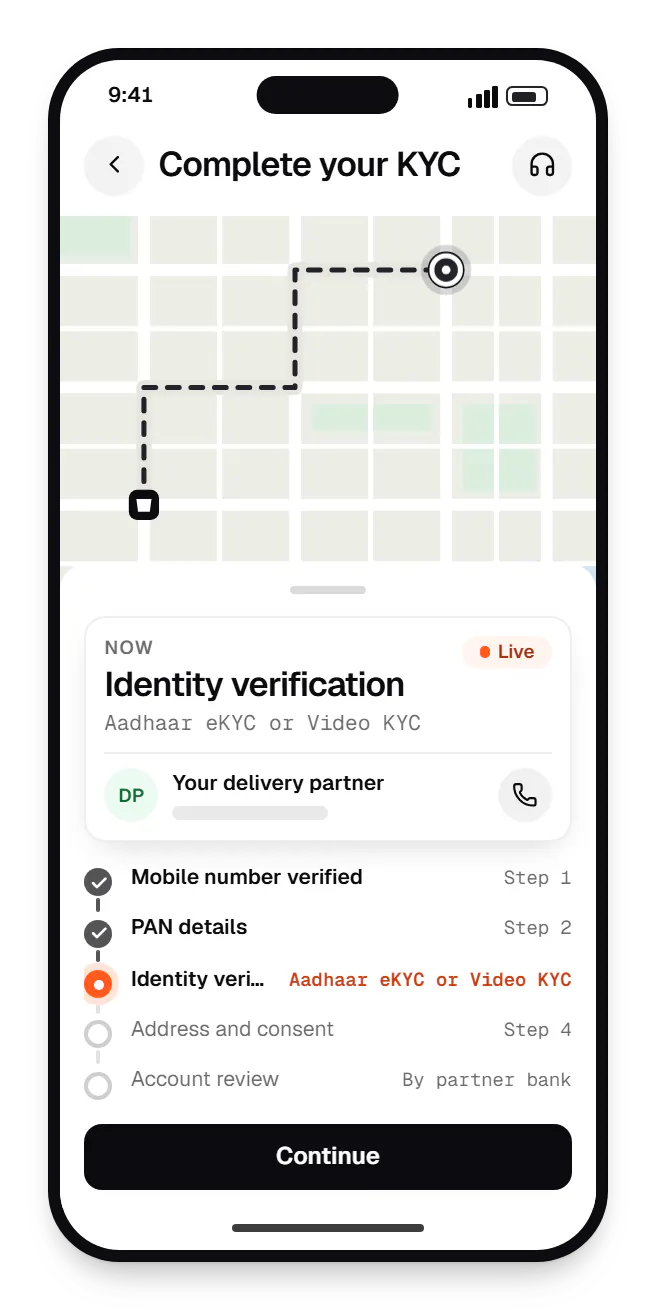
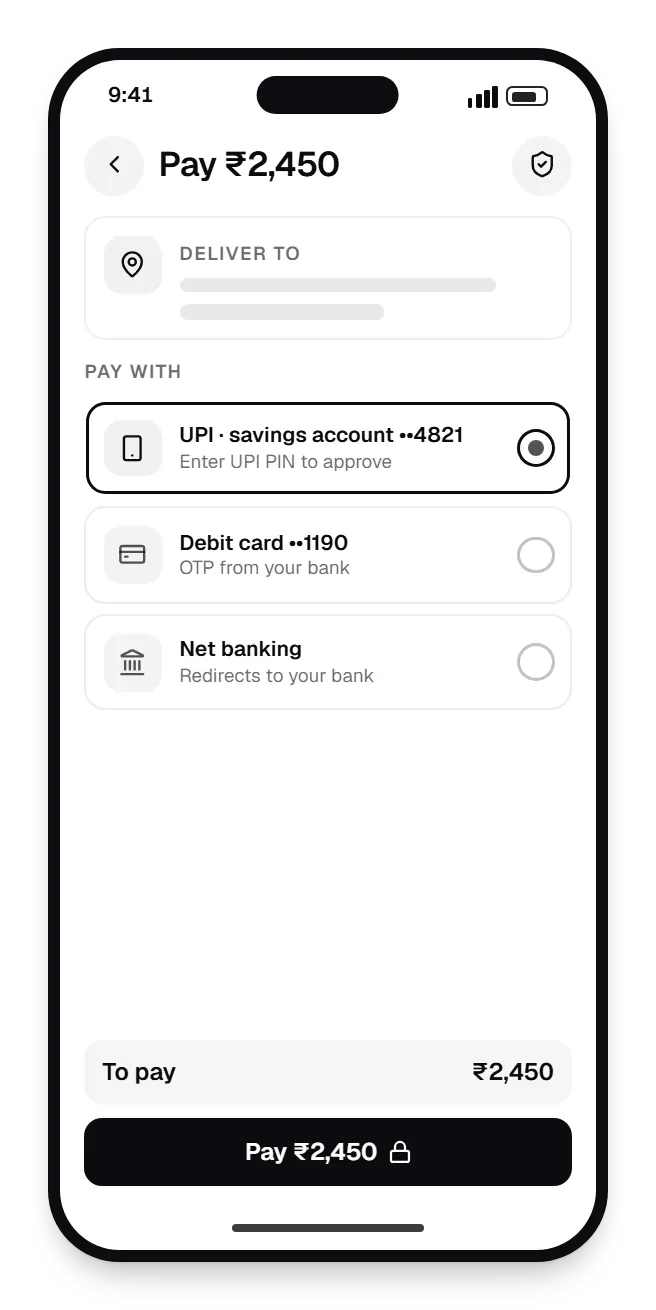
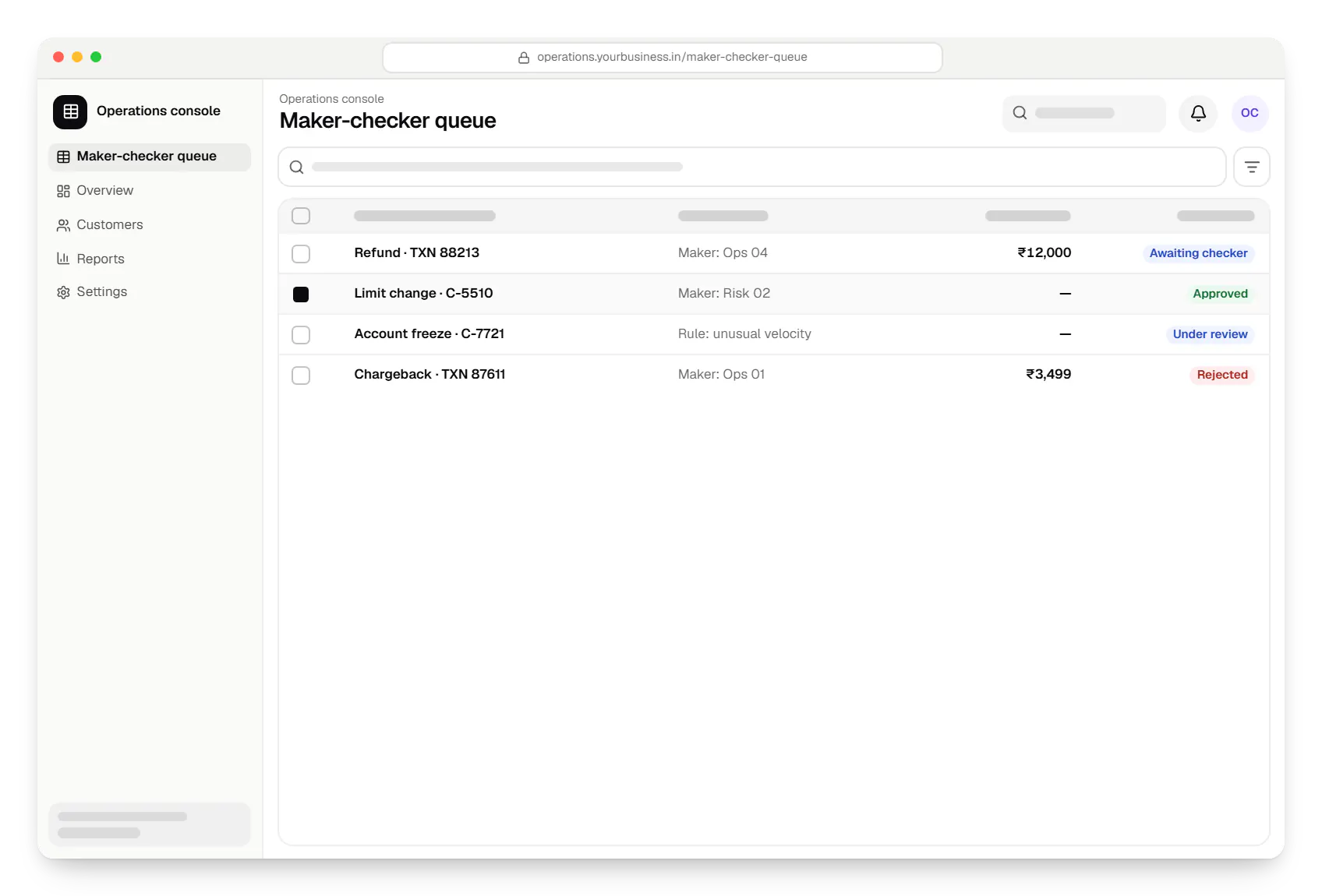
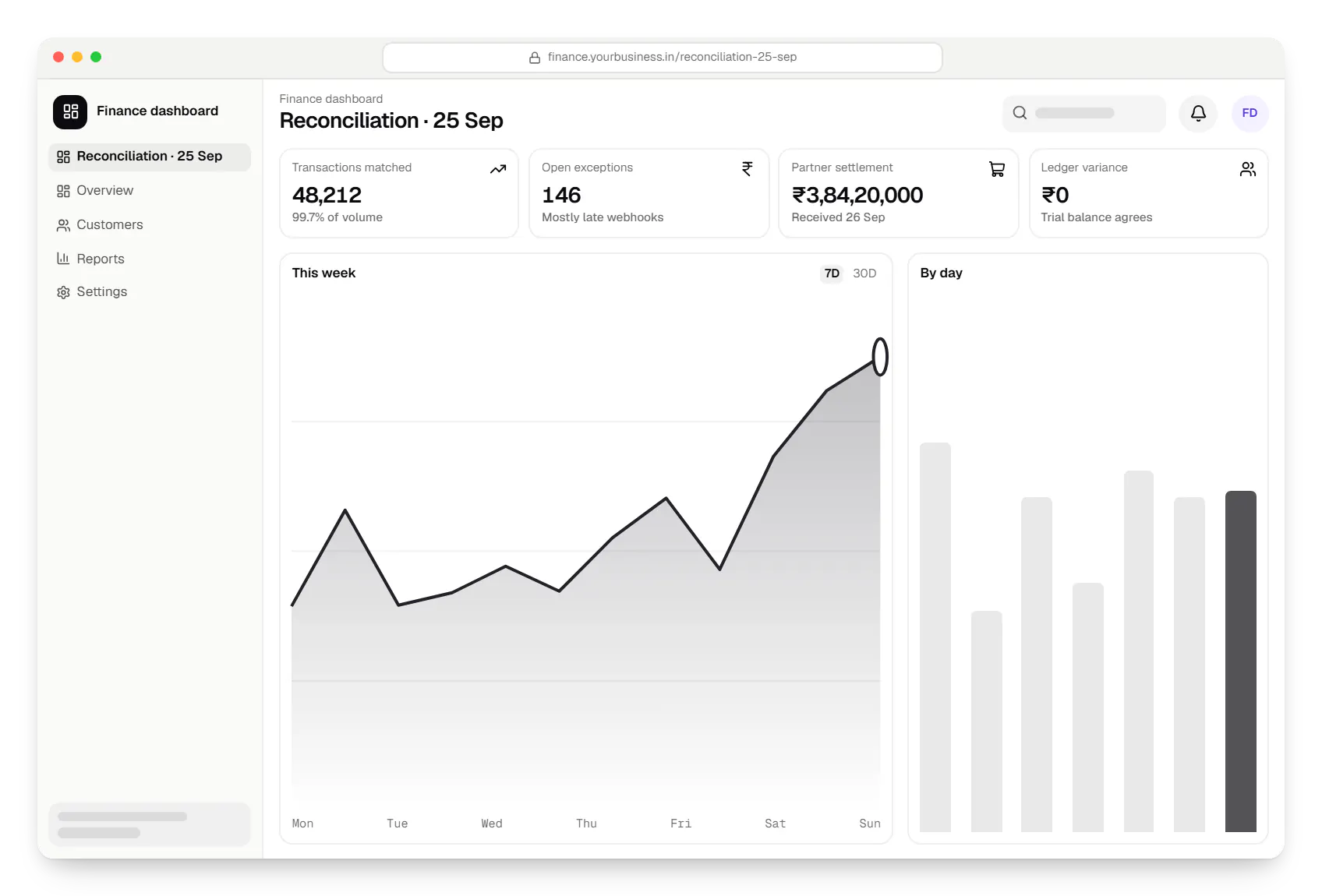
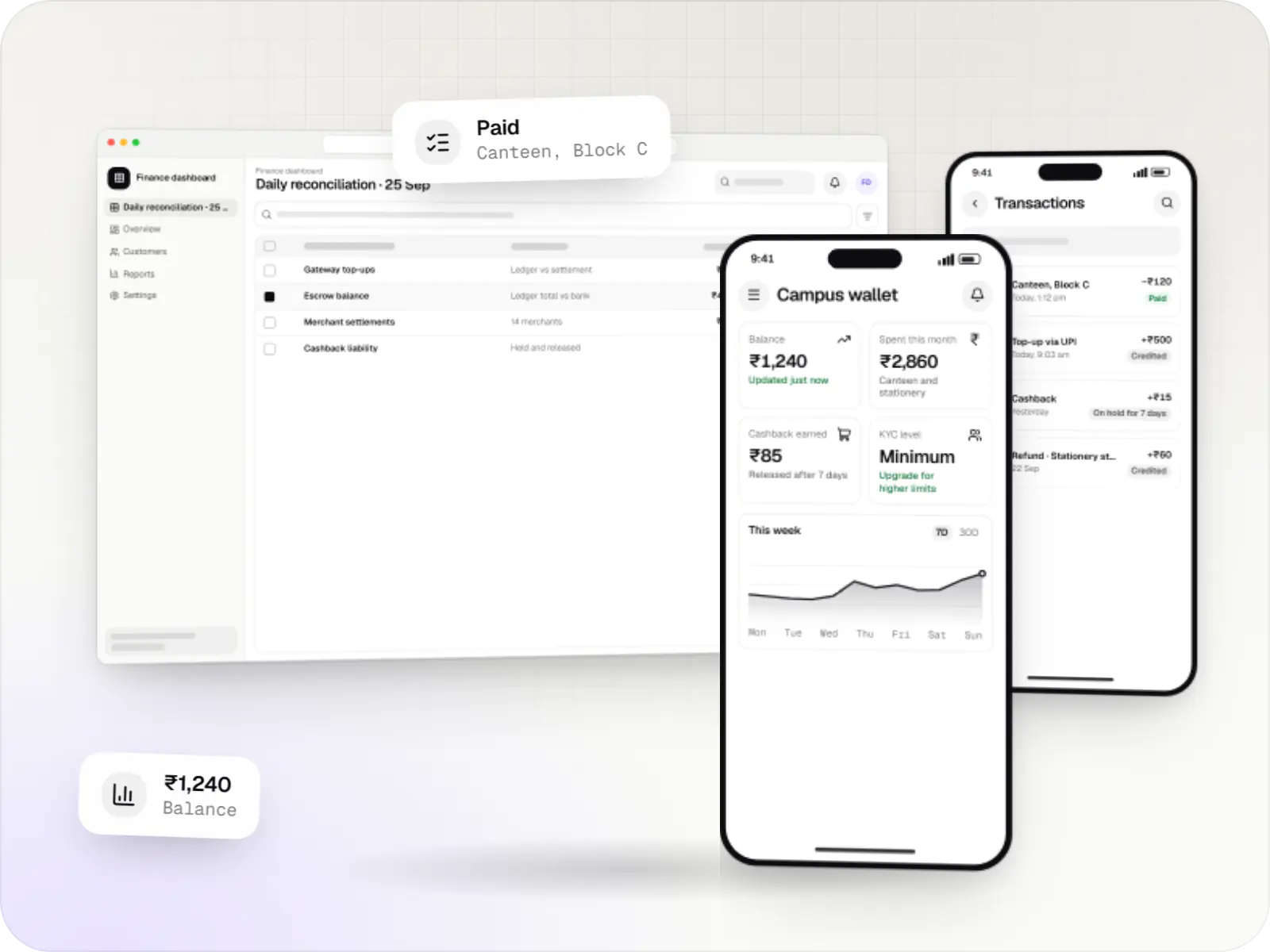
Sample screens: names, prices and figures are examples, not client data.
Cost drivers
Each partner adds sandbox work, certification steps and failure handling.
Products that hold balances or split payments need a stronger core than simple collections.
App protection, penetration test cycles and fixes are budgeted explicitly.
Tiered KYC, Video KYC and fallbacks add screens and states.
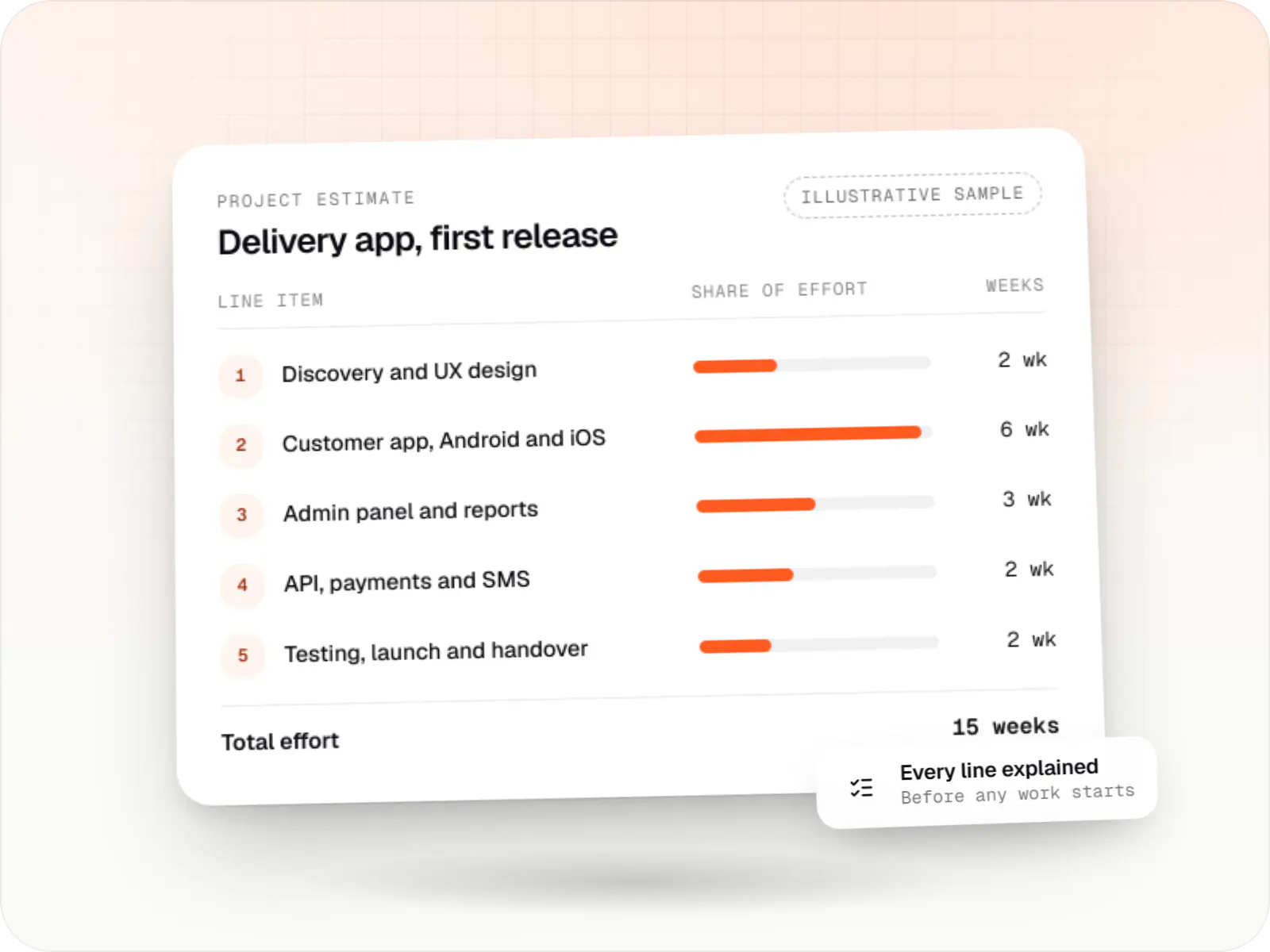
Estimates are written from your scope, with the effort and assumptions behind each line item.
How pricing worksServices
The disciplines a project like this draws on.
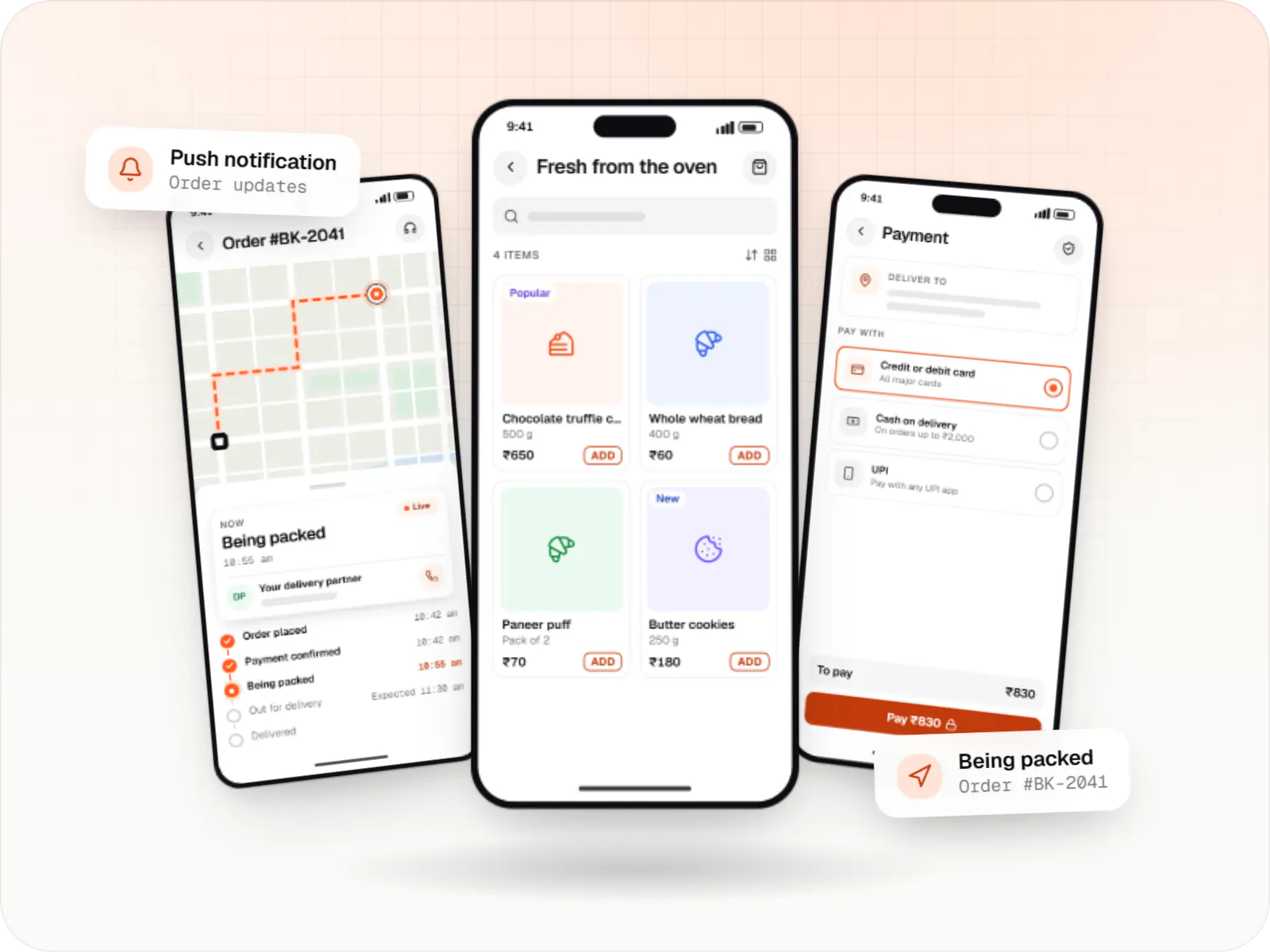
Native and cross-platform Android and iOS apps, from first release through regular store updates, built by our in-house designers and engineers.
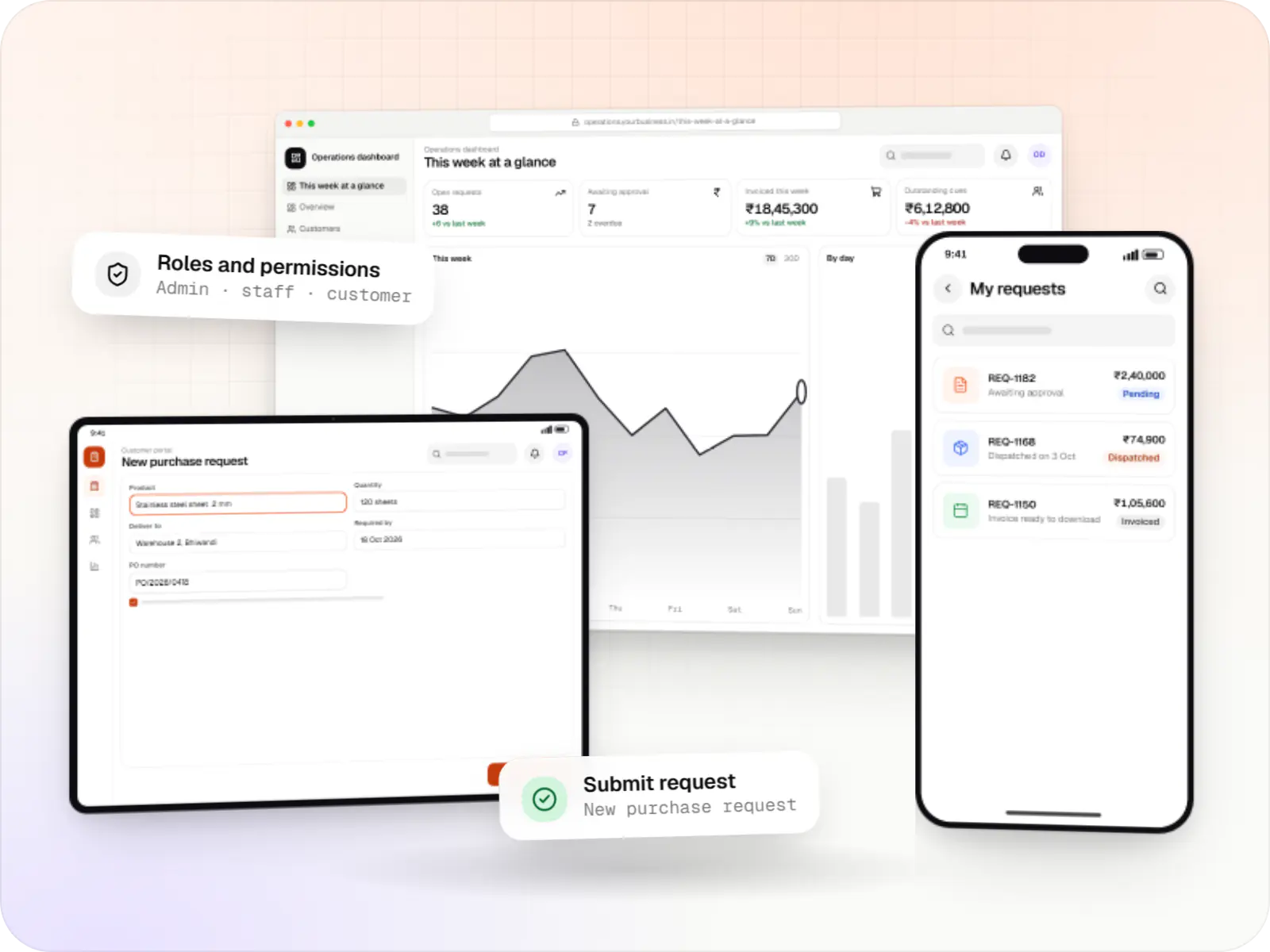
Browser-based products, customer portals, dashboards and internal tools, built on clean data models with secure roles and integrations.
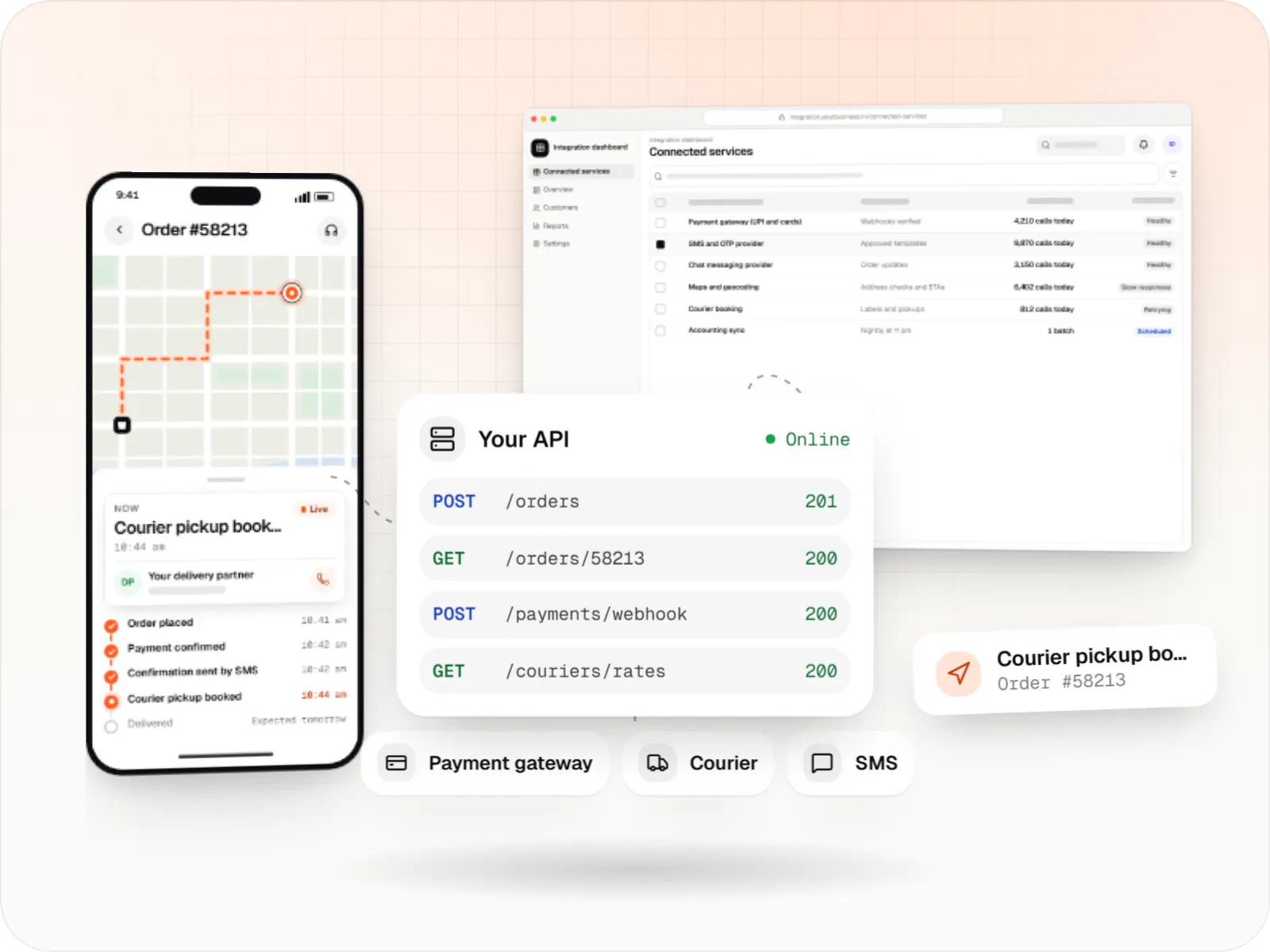
Secure, documented REST and GraphQL APIs, plus integrations that connect your apps to payment, logistics, GST, messaging and business systems.
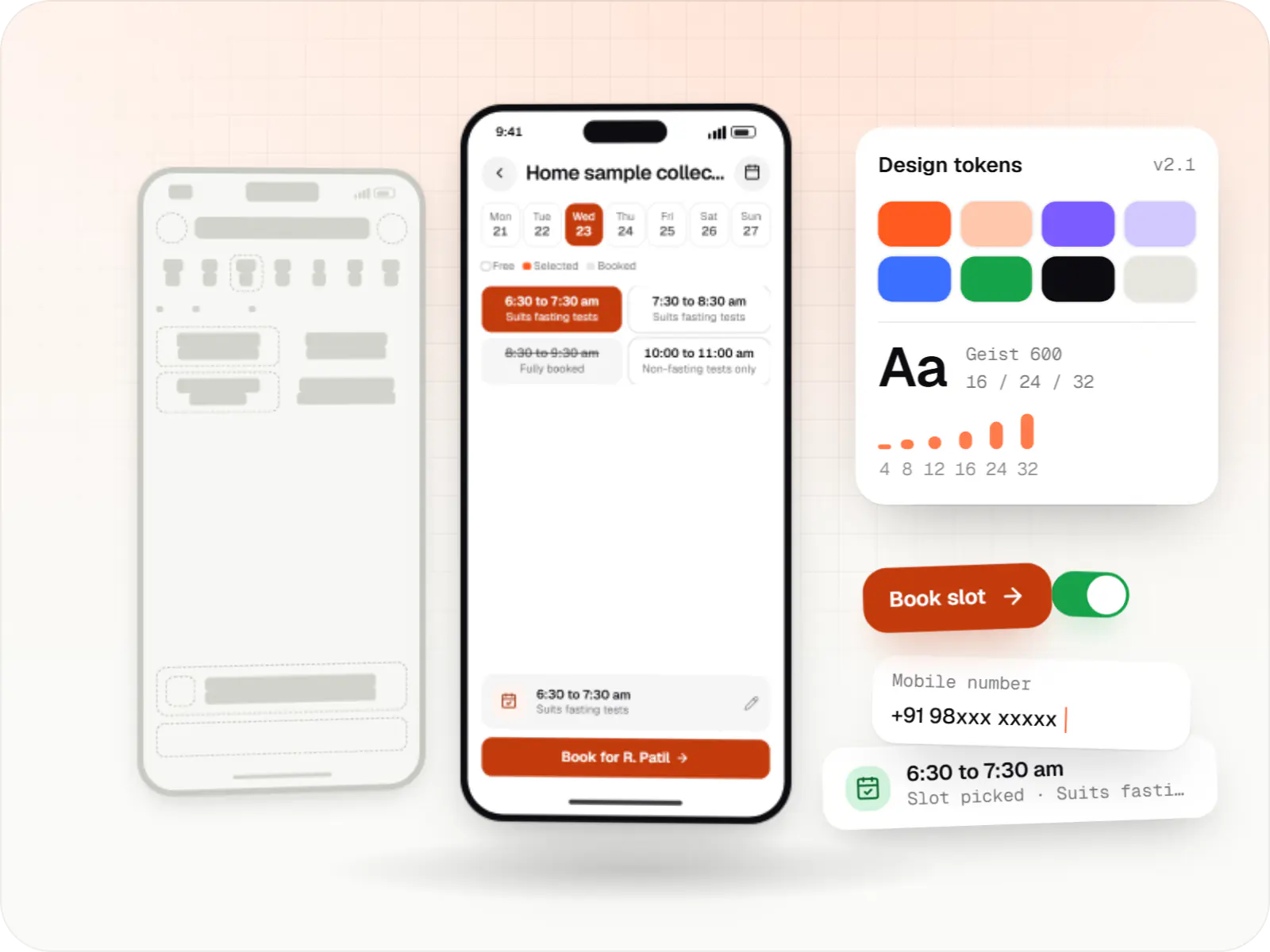
Product design for web and mobile apps: research, user flows, wireframes, prototypes and design systems that engineers can build from.
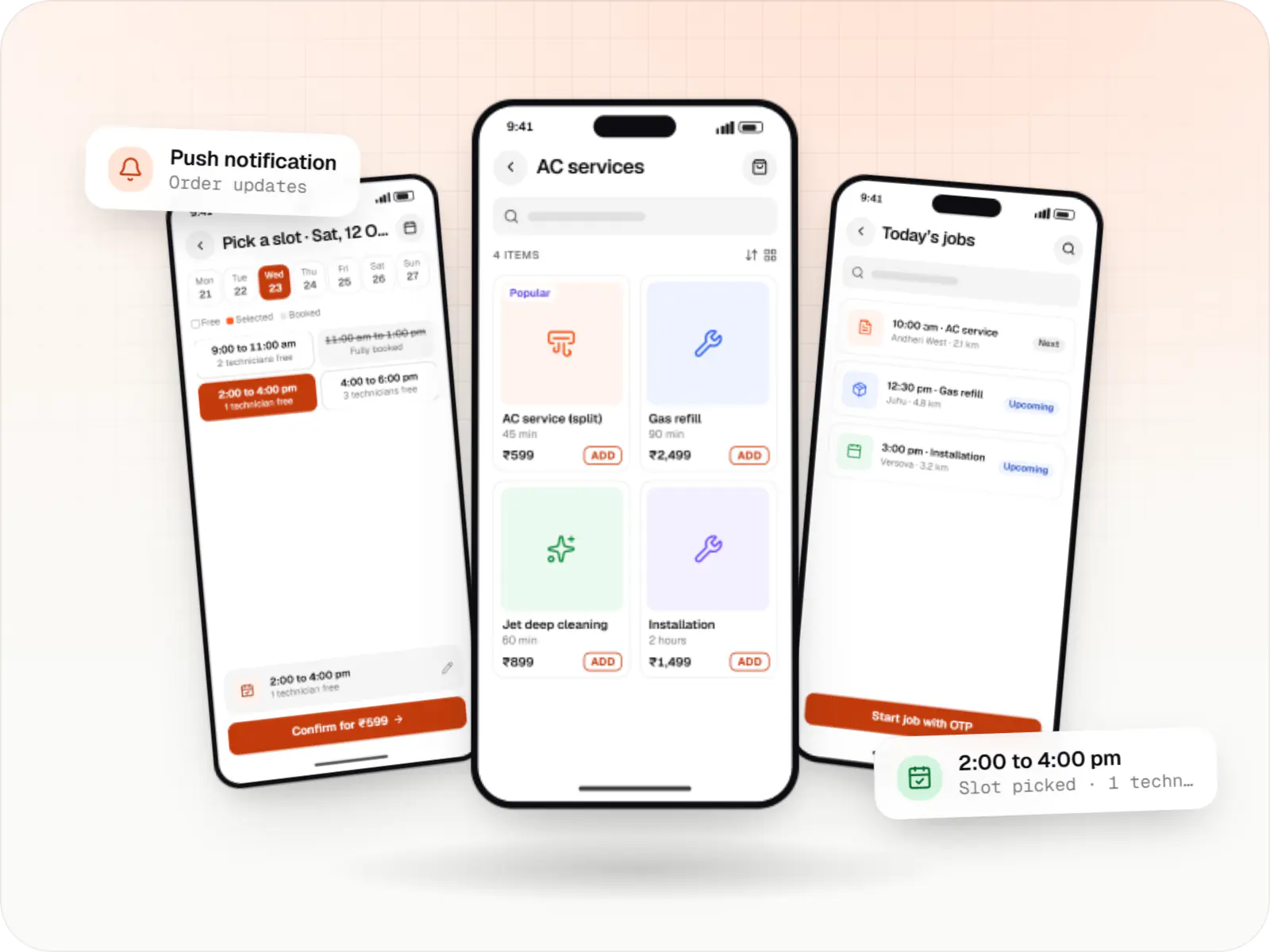
Android and iOS apps from one Dart codebase, built by engineers who know when Flutter is the right call and when native code is needed.
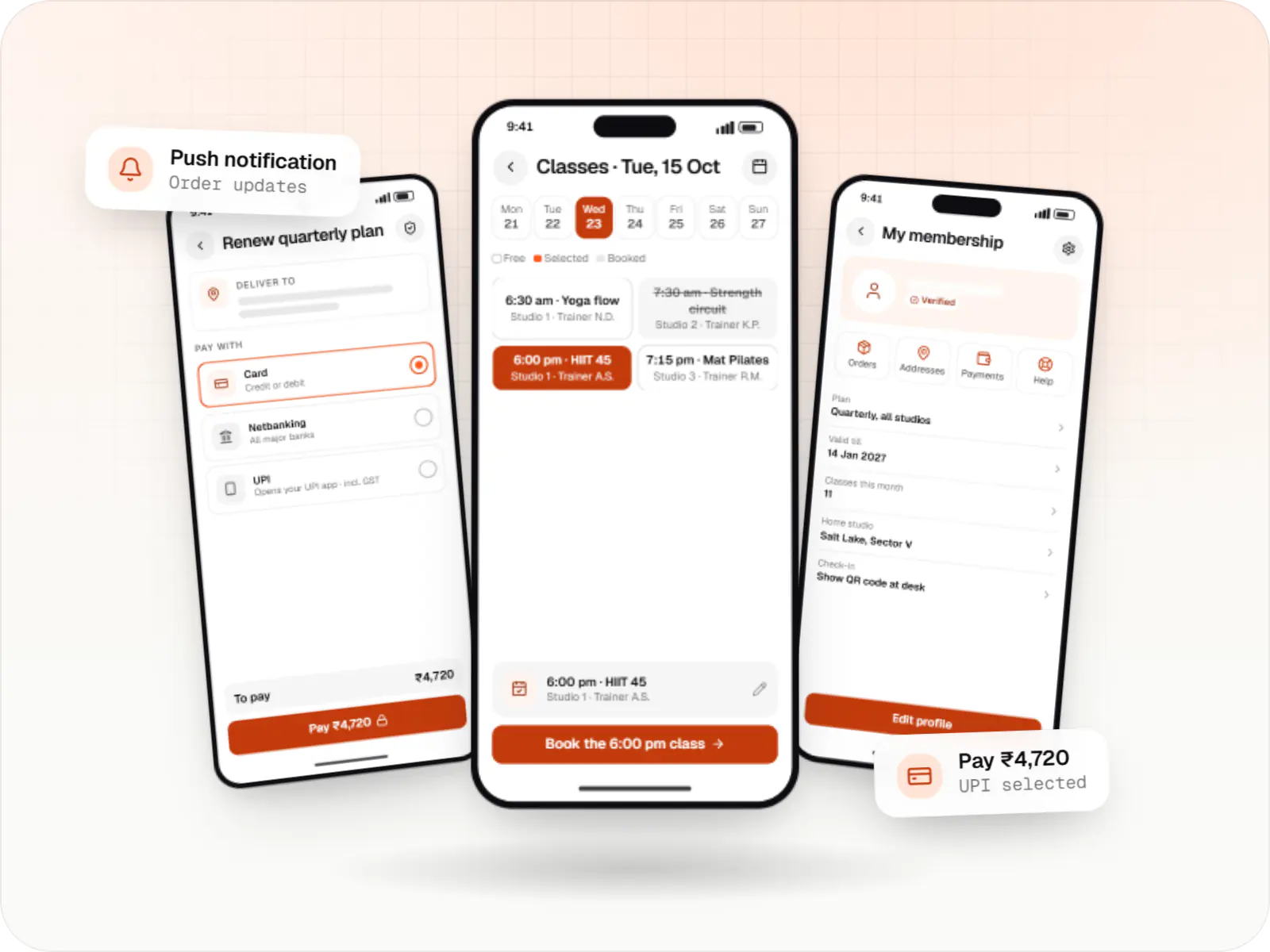
Android and iOS apps in React Native and TypeScript, suited to teams that already use React on the web and want shared logic across products.
FAQ
No. We are a software development team. Licences and registrations, such as NBFC registration, PPI authorisation or payment aggregator approval, are held by you or your regulated partner, and decisions on regulatory scope sit with your compliance advisers. We provide software built to those requirements, documentation of how each control is implemented, and support during partner reviews and audits.
Security runs through the build: threat modelling at design, mobile controls aligned with OWASP MASVS, dependency scanning and focused code review on sensitive modules. Before launch, most regulated partners require an independent vulnerability assessment and penetration test, commonly by a CERT-In empanelled auditor, which you commission. We fix the findings, document the remediation and support the retest.
Yes, with the user's explicit consent. Your organisation or lending partner participates as a Financial Information User, often through a technology service provider that connects to licensed Account Aggregators. The app raises a consent request, the user approves it in their chosen AA app, and statement data arrives in a standard format. We then parse it for cash-flow analysis or budgeting, within the consent's purpose and duration.
One core journey done properly: onboarding with KYC, the main transaction flow such as a loan application or payment, statements and notifications, and an operations console with maker-checker and audit logs. Partner integrations and security testing take significant time, so a first release typically needs four to six months. Rewards, advanced analytics and extra products follow once the core is stable.
Related
Next step
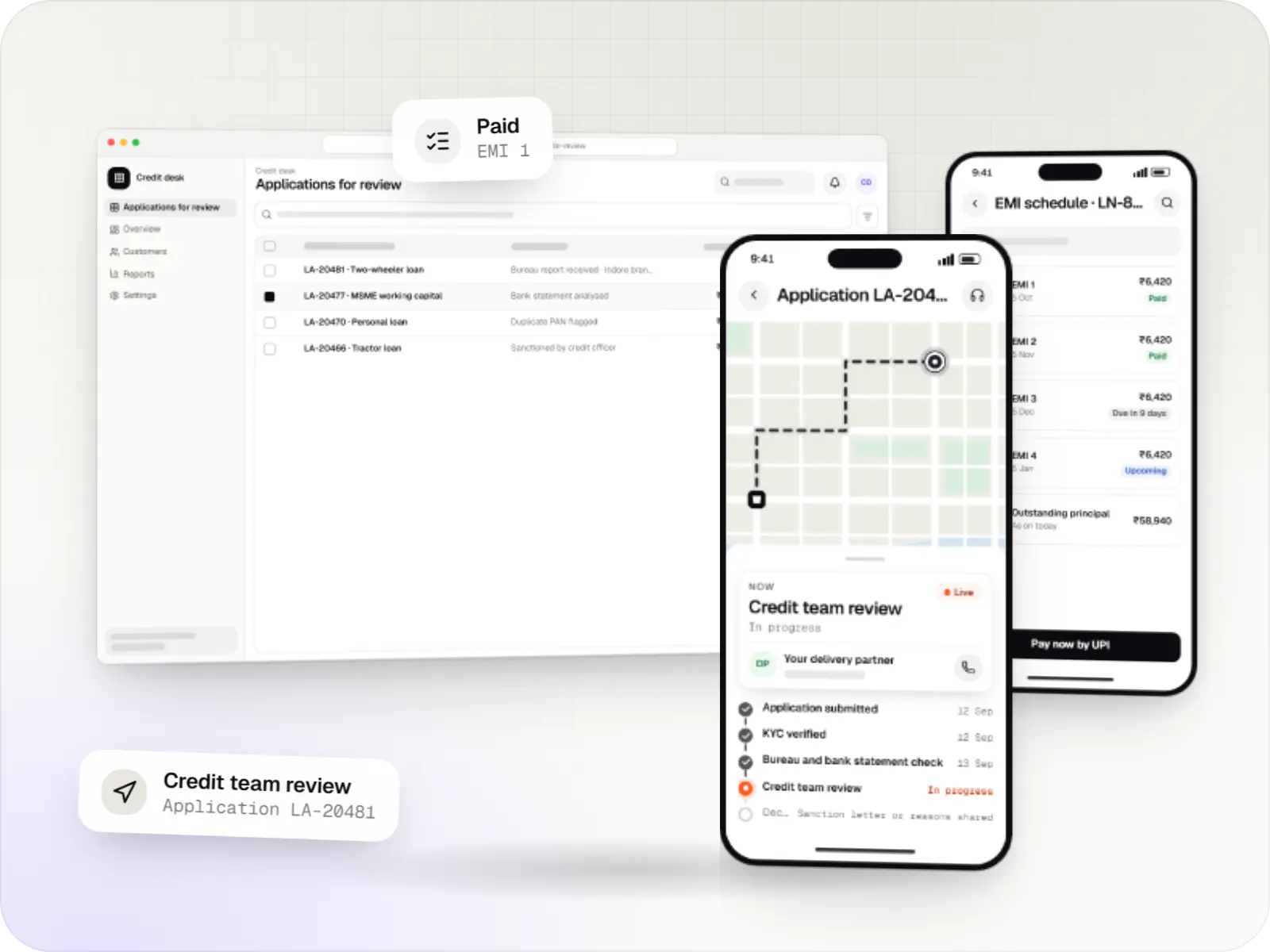
Share the product, your regulated partner and target launch window, and we will map integrations and compliance touchpoints.