Solutions
Fintech software development for regulated financial products
Fintech apps, loan management systems and digital wallets engineered with ledgers, KYC integrations and the audit trails regulated partners expect.

Where we fit in a fintech launch
A typical Indian fintech product involves several parties: a regulated entity such as a bank, NBFC or PPI issuer, infrastructure providers for KYC, payments and data, and the product company that designs the customer experience.
We act as the engineering team for the product company: turning product and compliance requirements into flows, building apps and back office, integrating partner sandboxes and preparing for security reviews. When a requirement depends on how a regulation is interpreted, we raise it early and build to the position your compliance team takes.

Solutions
Fintech products we engineer
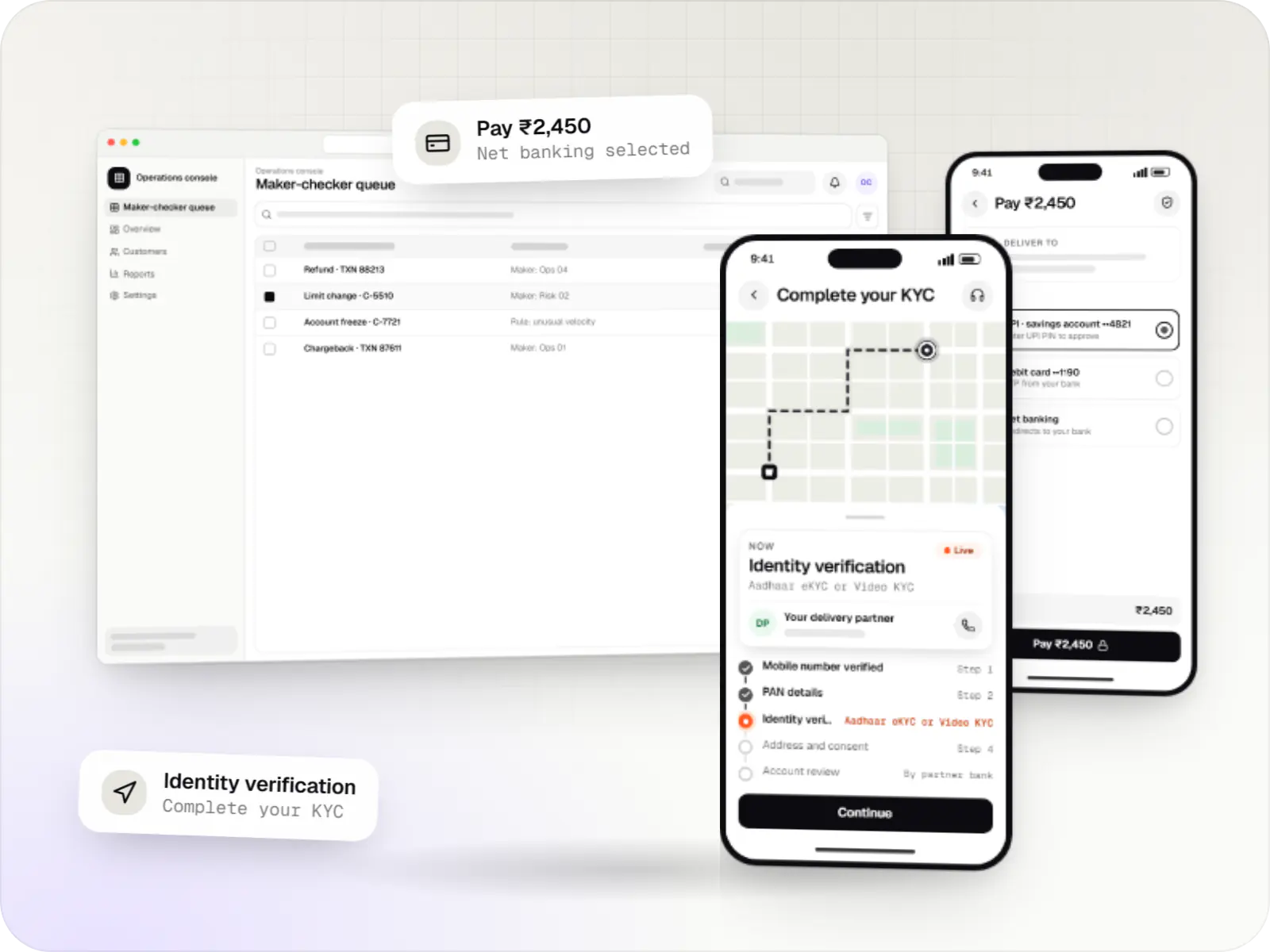
Secure fintech apps and back offices for payments, lending, investments and insurance, integrated with licensed banking, KYC and data partners.
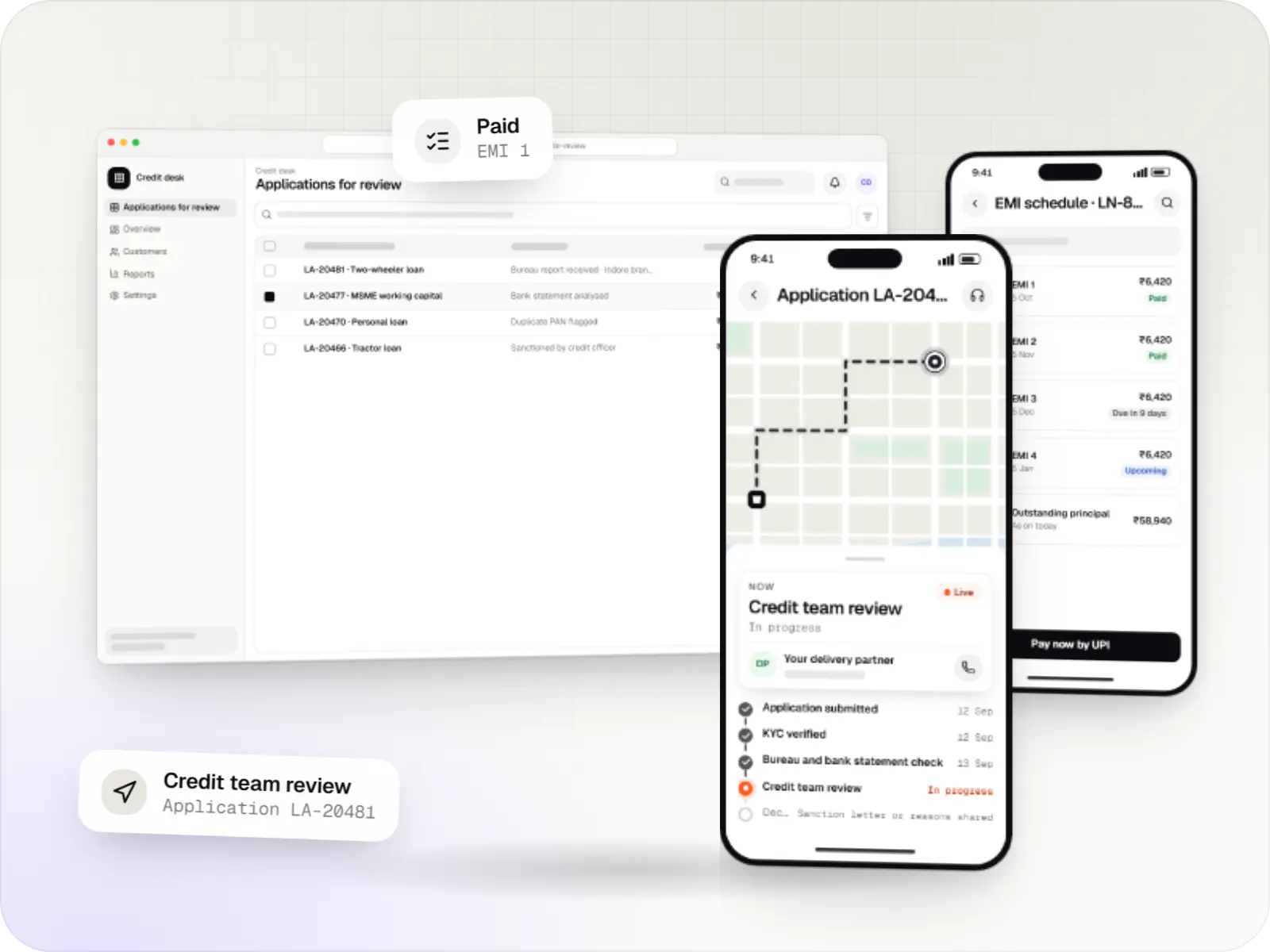
Custom loan origination and loan management software covering applications, underwriting, disbursal, EMIs, collections and reporting.
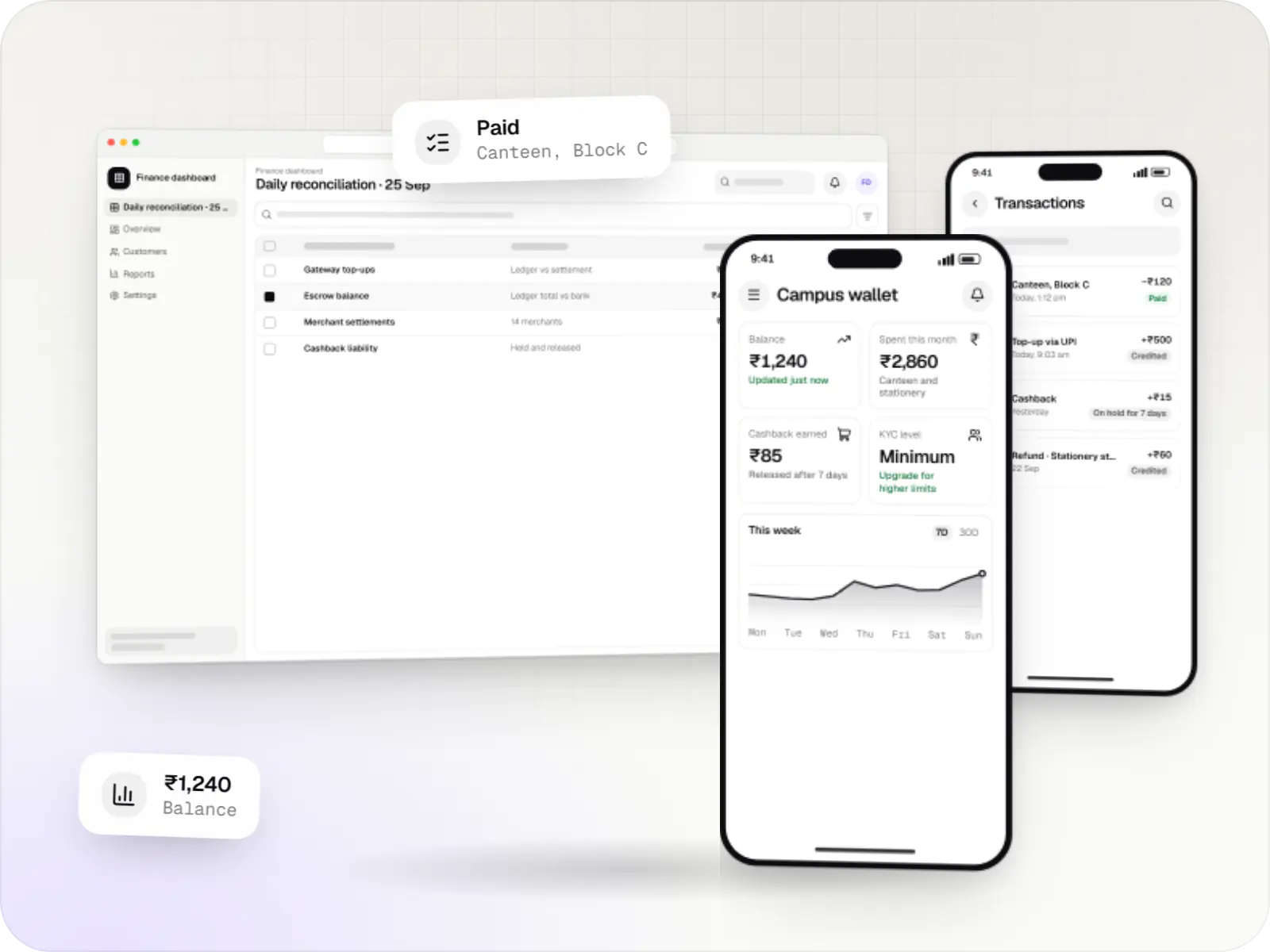
Digital wallet apps with top-ups, QR payments, rewards and a balance ledger, for closed-loop programmes or with a licensed PPI issuer.
Safeguards in every fintech build
Ledger before screens
A double-entry ledger with immutable entries, so every balance can be rebuilt from its transactions.
Idempotent money movement
Idempotency keys and explicit states on payments, payouts and mandates, so a retried call or late webhook is recognised instead of posting twice.
Daily reconciliation
Automated matching against gateway settlements, bank statements and partner reports, with exceptions queued for review.
Maker-checker and audit trails
Sensitive changes need a second approver, and every action is logged.
Data kept in India
Hosting in Indian cloud regions to support RBI's requirement that payment system data is stored in India.
Comparison
Who owns what in a regulated build
| Our engineering team | You and your regulated partners | |
|---|---|---|
| Licences and registrations (NBFC, PPI, payment aggregator) | Not provided; we build to the licensed entity's requirements | Held by you or your bank, NBFC or PPI partner |
| KYC and credit policy | Implements the flows, rules and checks you define | Defines KYC tiers, risk rules and credit policy |
| Regulatory interpretation | Flags questions and documents how each rule is implemented | Decides the position with legal and compliance advice |
| Security testing | Secure coding, internal testing and fixing VAPT findings | Commissions independent VAPT and audits |
How it works
How a regulated financial product is built and run
Licences, KYC policy and regulatory positions stay with you, your regulated partners and your compliance advisers; our part is the software that applies them.
- You and your compliance advisers
Step 1: Product and compliance requirements
You decide the product, the regulated partner and your position on rules such as RBI guidelines and KYC; we turn them into flows and states.
- Engineering team
Step 2: Partner integrations
Bank, KYC, payment, bureau or Account Aggregator APIs are integrated in partner sandboxes, with every failure case handled.
- Customer app
Step 3: Customer journey
Onboarding, KYC, consent screens and the core transaction are built to be clear on ordinary Android phones.
- Core services
Step 4: Ledger and money movement
Balances and payments are written to a double-entry ledger through idempotent APIs, so a retry never creates a duplicate.
- Independent auditor
Step 5: Security review
An independent VAPT, commissioned by you, tests the product; we fix the findings and document the fixes.
- Operations and finance teams
Step 6: Daily operations
Maker-checker approvals, complaint handling and daily reconciliation keep the product auditable after launch.
Platforms
Where fintech products run
Most fintech products pair a customer app with an internal console for operations, risk and finance teams.
- Mobile
Android app
Apps for Android phones and tablets, tested on budget and mid-range devices and published on Google Play or privately.
- Mobile
iOS app
Apps for iPhone and iPad, built to Apple's guidelines and released through TestFlight and the App Store.
- Mobile
Cross-platform mobile app
One Flutter or React Native codebase for Android and iOS, with native modules where a feature needs them.
- Web
Web application
Browser-based applications with logins, roles and workflows, such as customer portals, SaaS products and internal tools.
- Back office
Admin dashboard
Back-office panels for operations, support and finance teams: orders, users, content, reports and permissions.
Plain-English glossary
Fintech building blocks, in plain English
- NBFC
- Non-banking financial company: an RBI-registered lender or finance company that is not a bank. Many digital lending products are offered through one.
- Payment aggregator
- An RBI-authorised company that collects payments for merchants through UPI, cards and net banking, and settles the money to them.
- Ledger
- The system of record for money: every credit and debit, in order. A well-built ledger lets you rebuild any balance and explain it to an auditor.
- Reconciliation
- Checking that your records, your bank's and your partners' agree, transaction by transaction. Doing it daily catches problems while they are small.
- Sandbox
- A test version of a partner's system, with dummy data, where integrations are built and checked before any real money moves.
Product preview
Customer app and back office, side by side
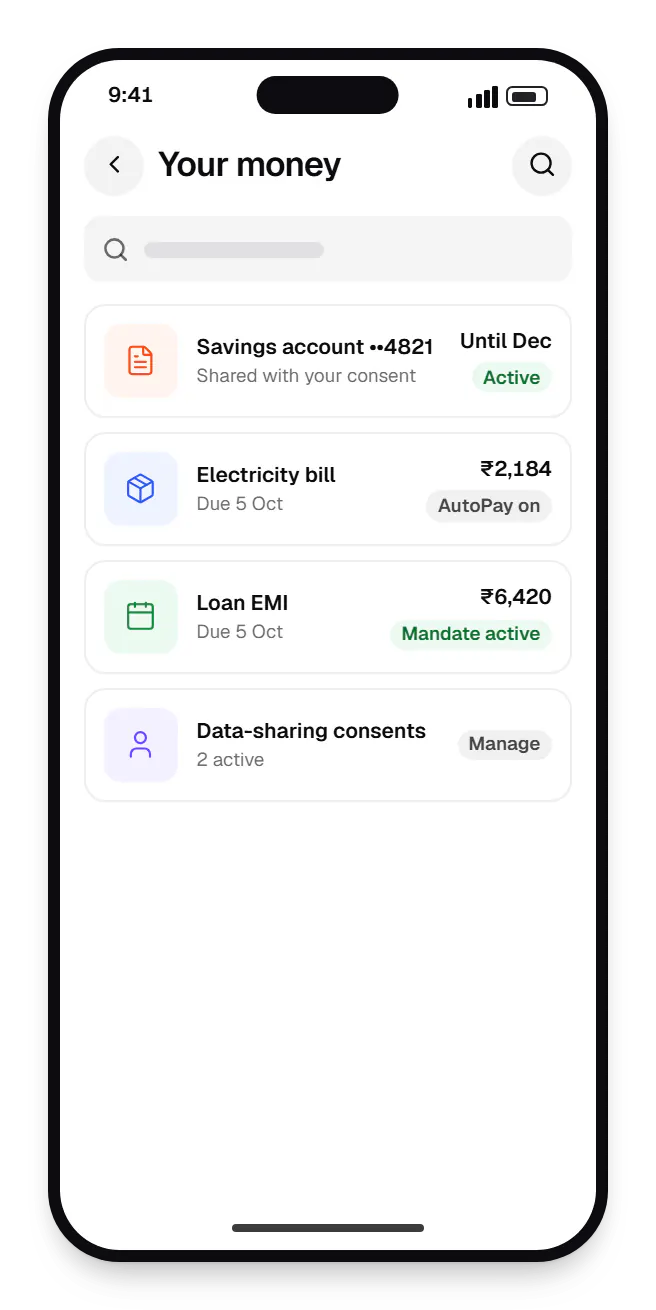
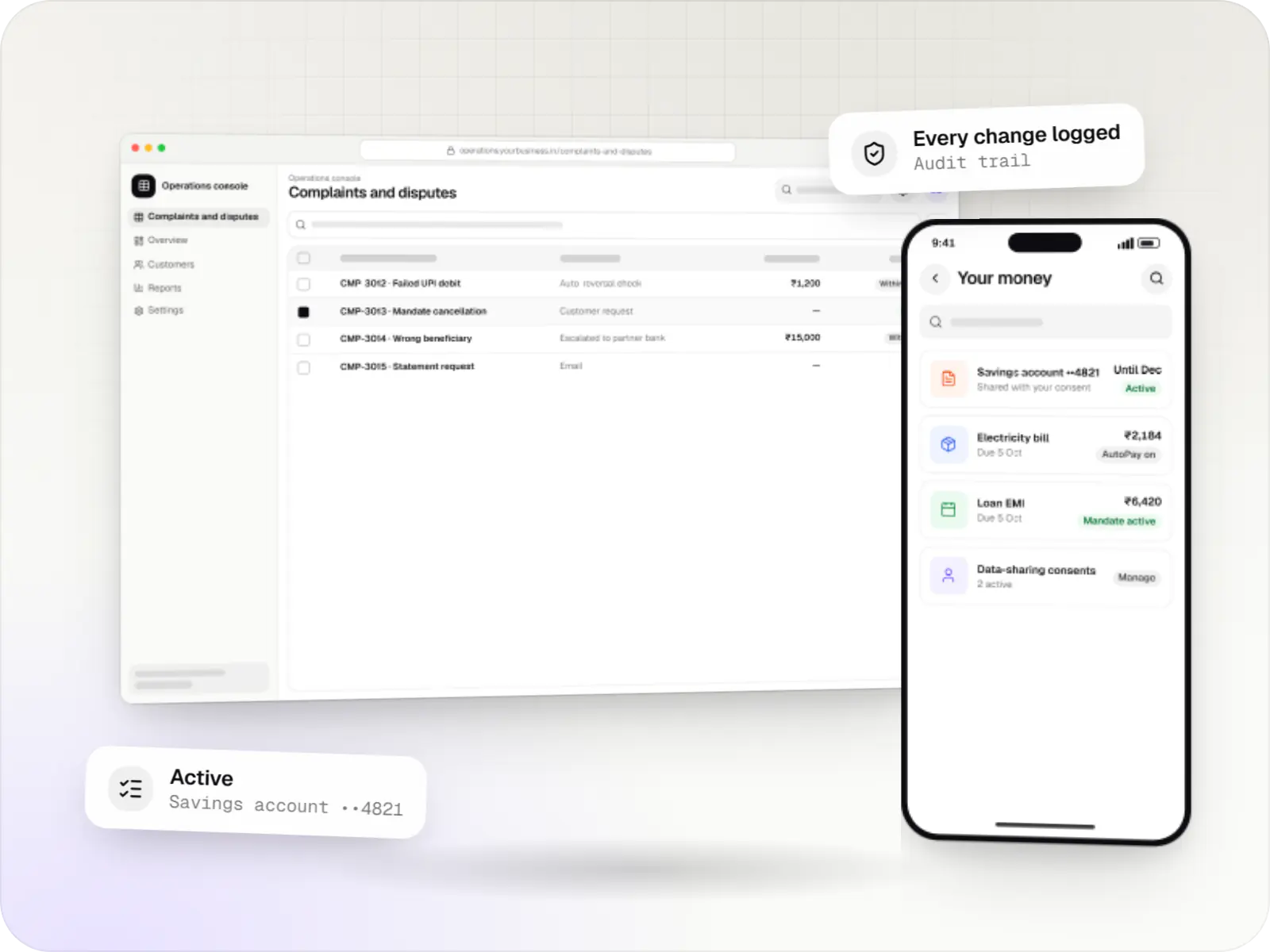
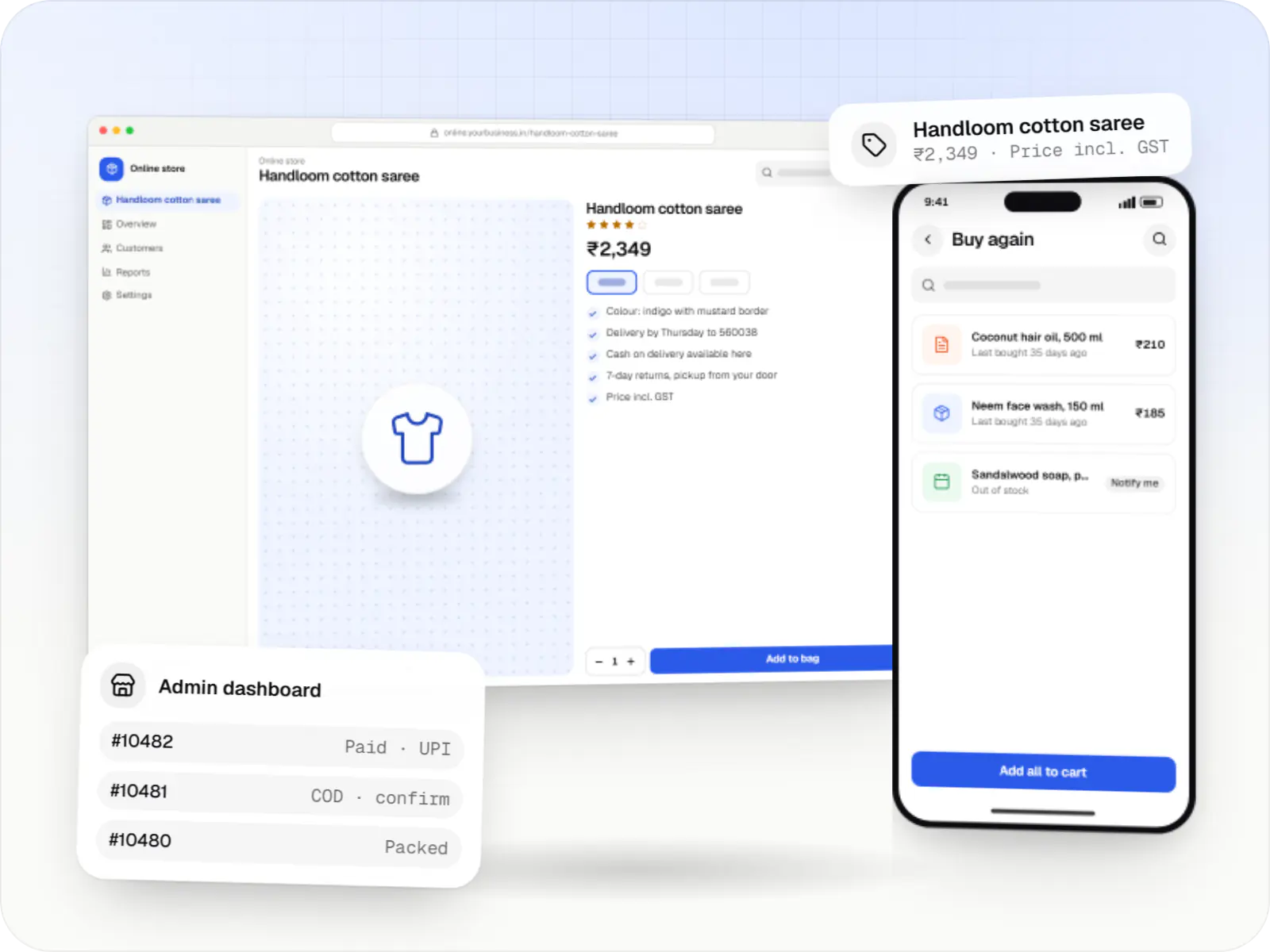
Customer app. Customers see linked accounts, bills, EMIs and consents in one app, with every permission visible and easy to withdraw. 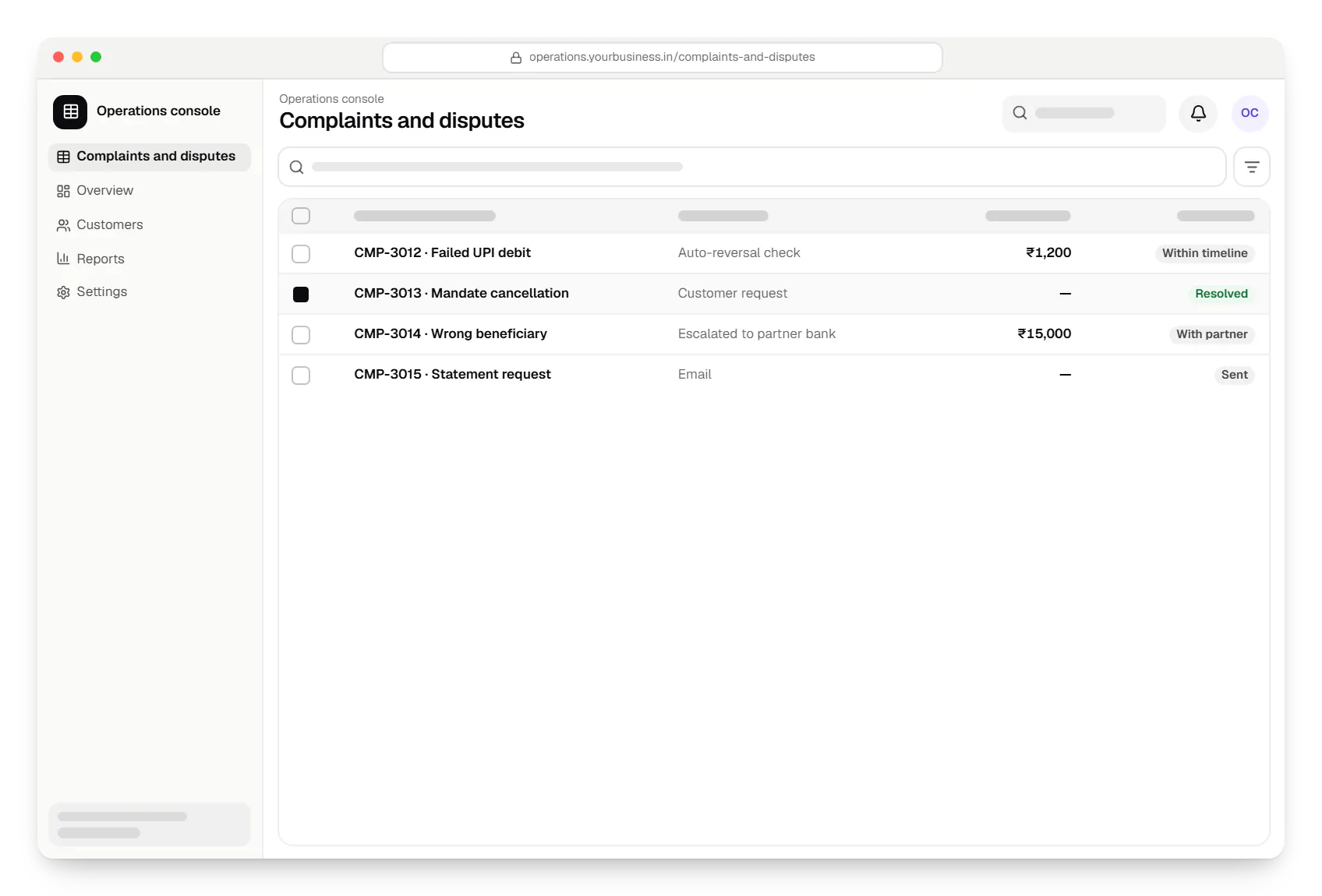
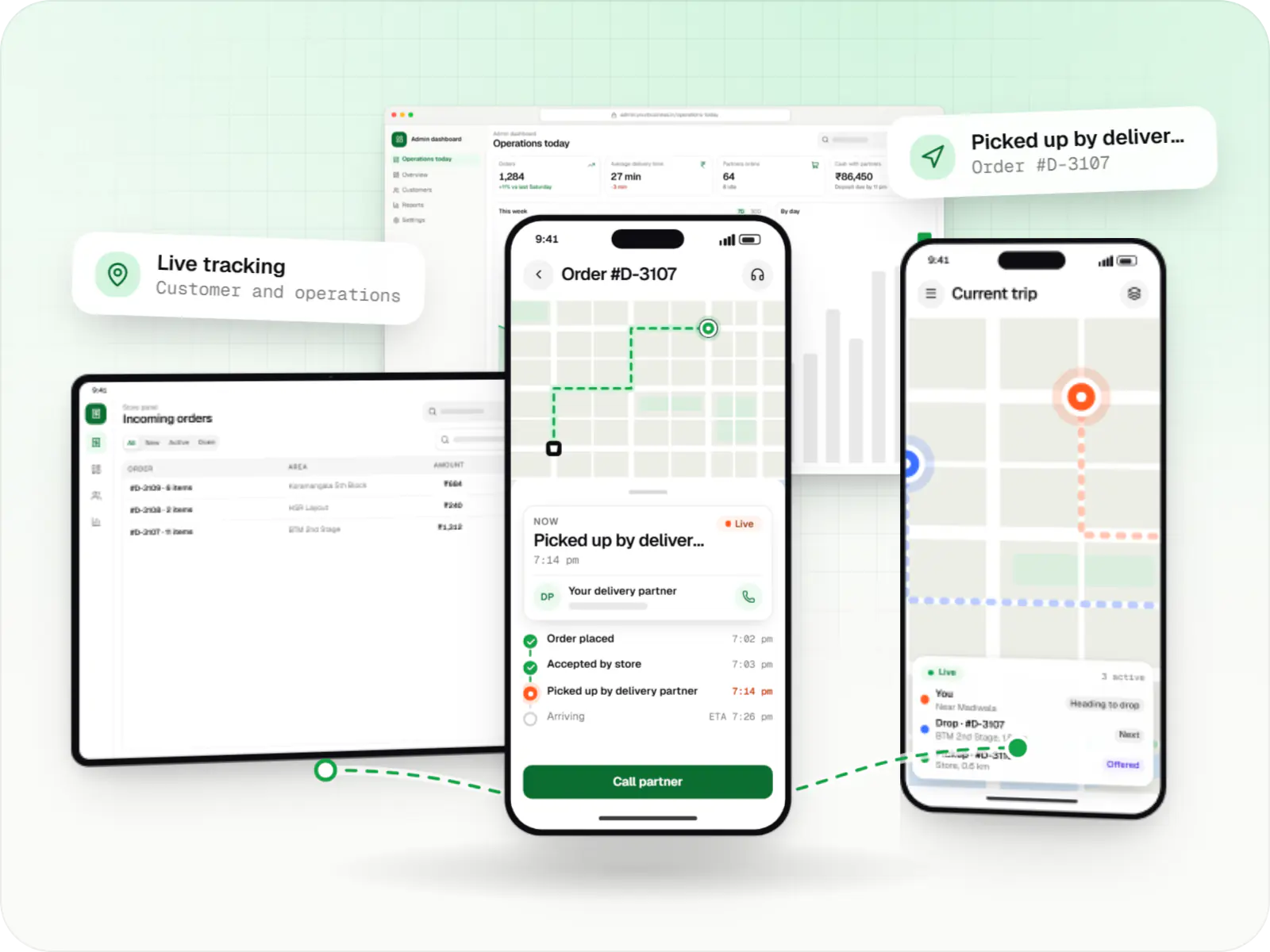
Operations console. Operations teams track complaints against timelines, escalate to partner banks and keep a full record for audits. 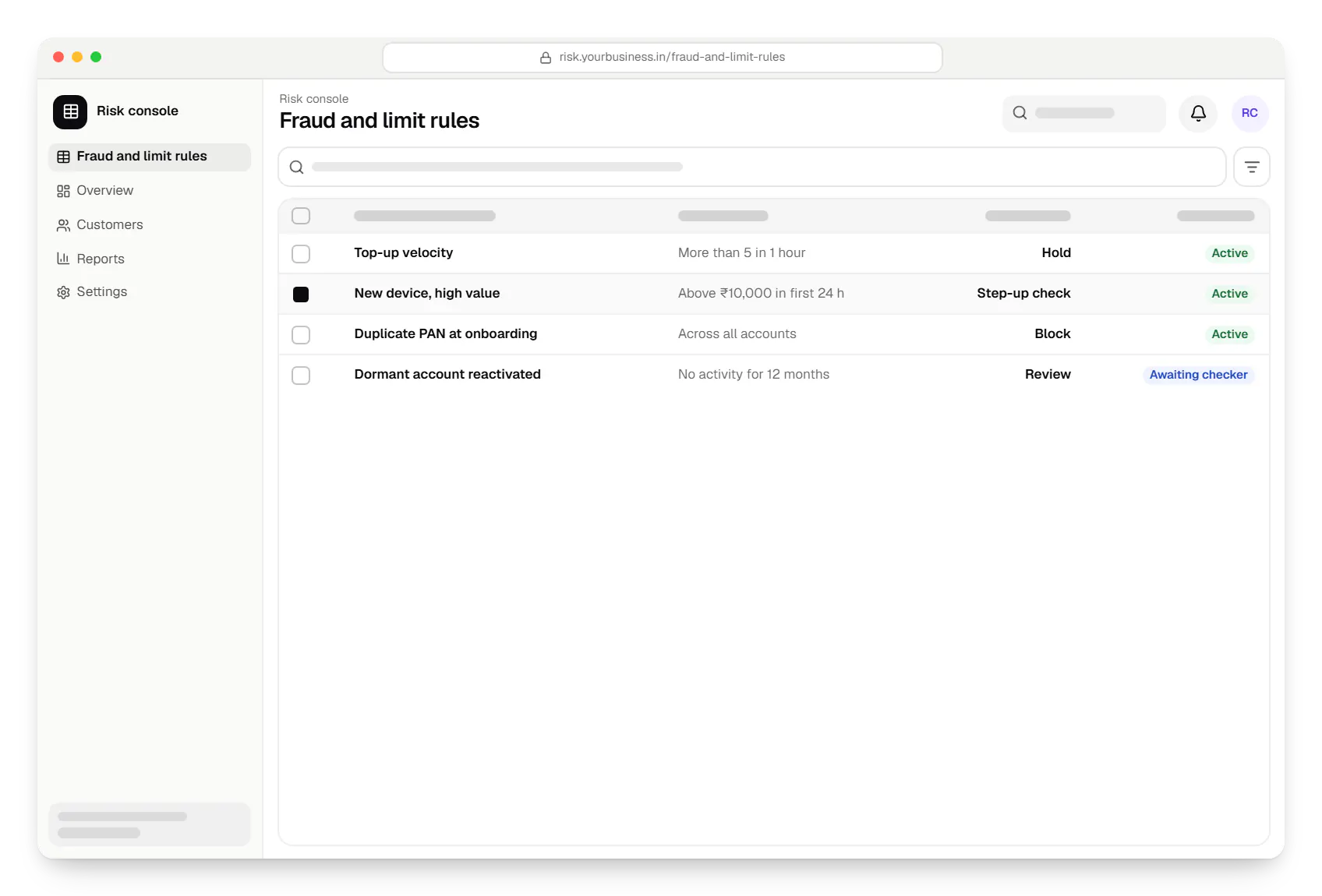
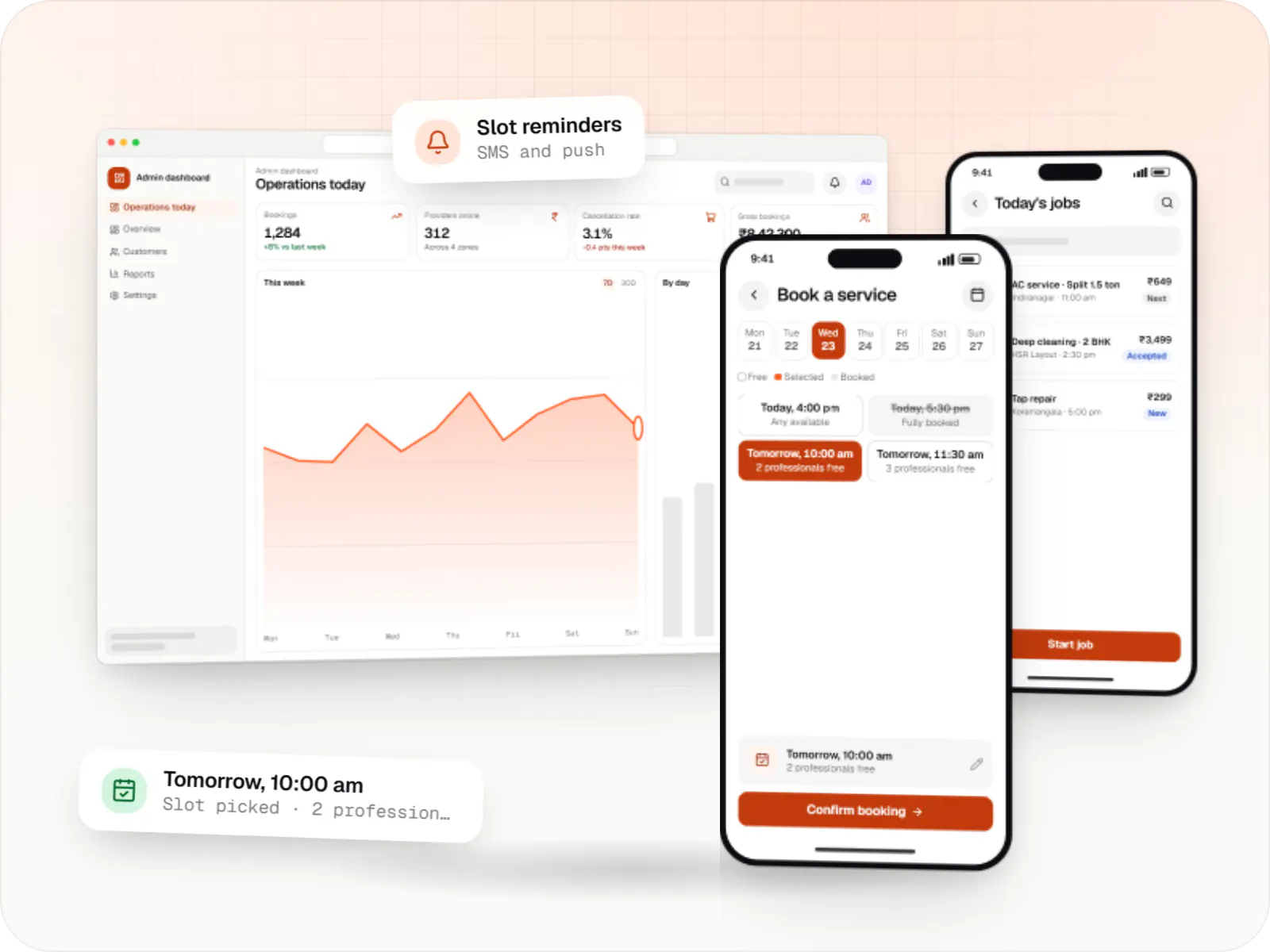
Risk console. Risk teams manage limits and fraud rules from the console, and a second person approves each change before it takes effect.
Sample screens: names, prices and figures are examples, not client data.
FAQ
Frequently asked questions
Do you work with NBFCs and banks directly, or only with fintech startups?
Both. Startups usually need the full product: apps, back office and partner integrations. NBFCs and banks more often need one system, such as a loan servicing module, a collections app or an onboarding journey, that must sit alongside a core system they already run. In those cases we work within your information security policies, use your cloud accounts and follow your change management process.
How is a fintech project different from a regular app project?
More time goes into designing money flows and failure cases before any UI is built. We document every state a transaction can be in, what happens on timeouts and reversals, and how it is reconciled. Testing covers negative and concurrency cases, not just happy paths. Plans also allow for partner sandbox onboarding and security reviews, which can take weeks.
Can you help us decide between partnering with a licensed entity and applying for our own licence?
We can explain the technical implications of each route: which APIs a partner bank or PPI issuer exposes, what data you would hold, and what a partner will expect in security reviews. The decision itself, and questions of eligibility or regulatory obligations, belong with your founders, compliance advisers and lawyers. We are a software team and do not give legal or regulatory advice.
Next step
Planning a financial product?
Bring your product idea and the partners you are speaking to, and we will map integrations and a phased build plan.