Web
Next.js
A modern web technology for fast, search-friendly websites, online stores and web applications that load quickly on mobile.
Used for
- Business websites
- Online stores
- Web apps
- Customer portals
E-commerce & marketplaces
Stores, marketplaces and B2B portals engineered around how you sell, not bent to fit a template.
Many e-commerce problems trace back to a mismatch between business model and software. A wholesaler forced into a retail cart re-keys orders by hand; a brand with three storefronts maintains three catalogues.
So we start with how money and goods move: who sets prices, who holds stock, who ships and who gets paid when. That decides which model you need, and whether a hosted platform can carry it or custom code will pay for itself.
Solutions
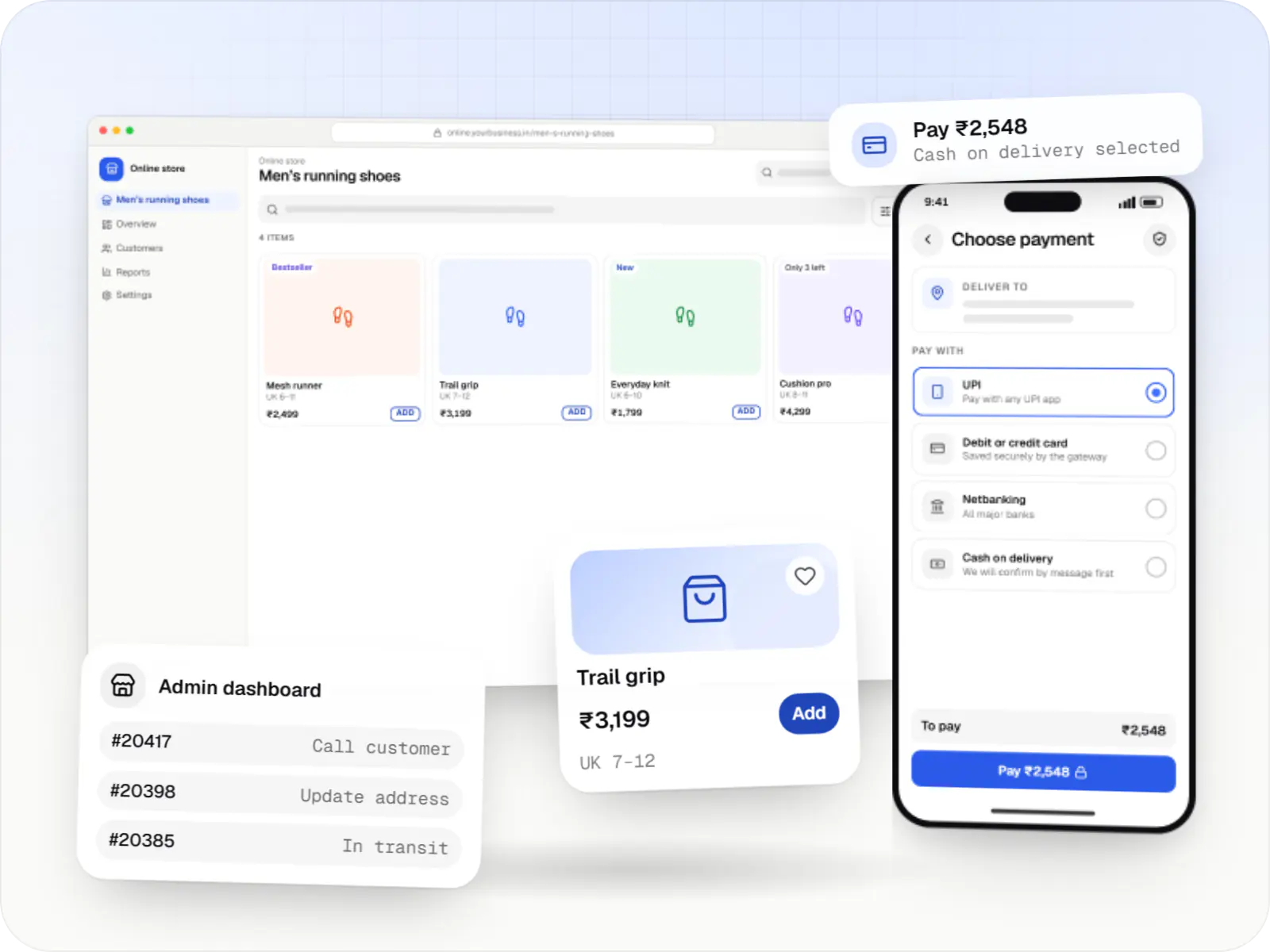
Fast, search-friendly online stores with UPI, card and COD checkout, GST invoices and courier integrations, on a hosted platform or custom code.
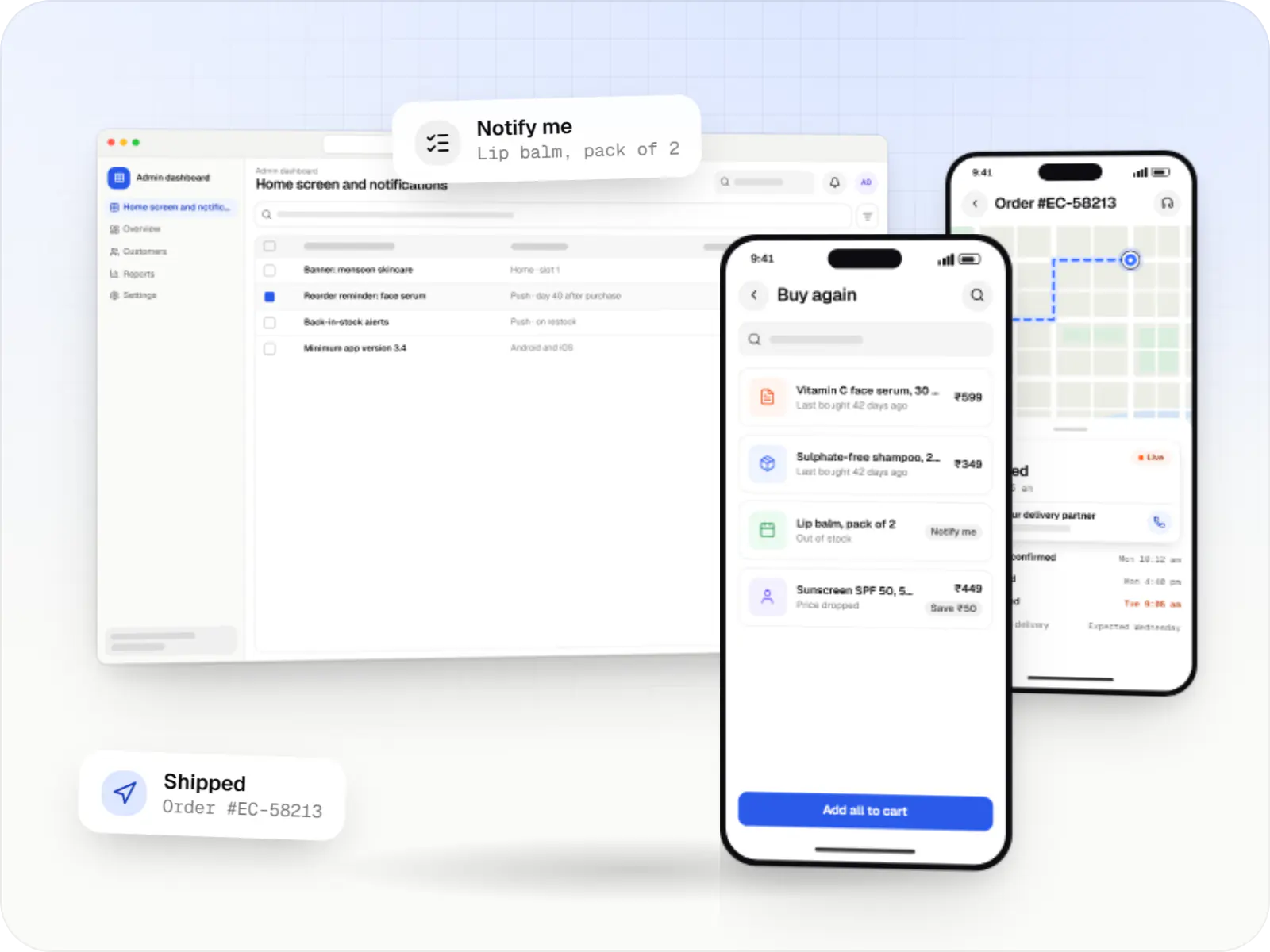
Android and iOS shopping apps with quick browsing, UPI checkout and push notifications, sharing one backend with your website.
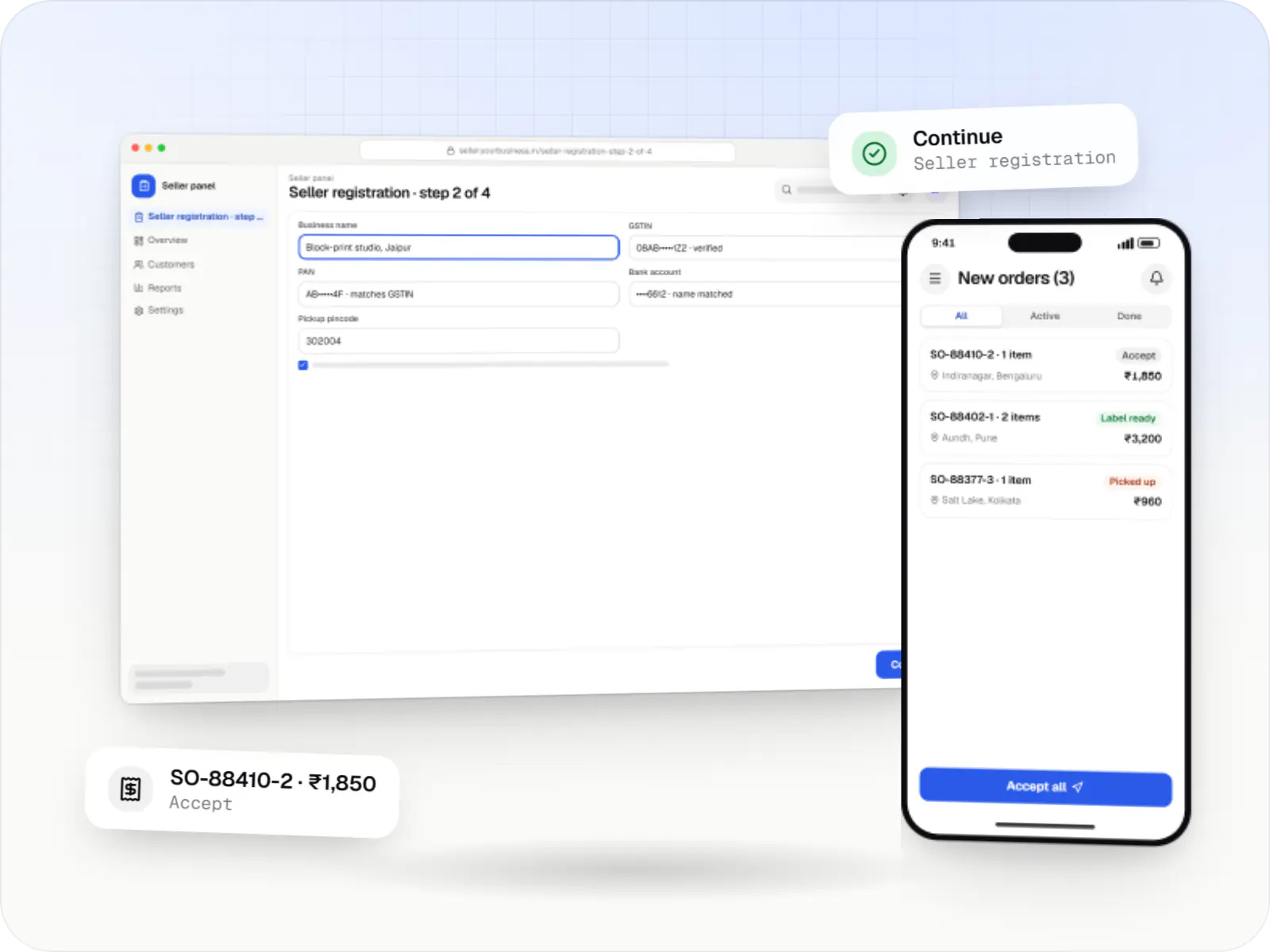
Multi-vendor marketplaces with seller onboarding, commission rules, split payouts, per-seller invoicing and catalogue moderation.
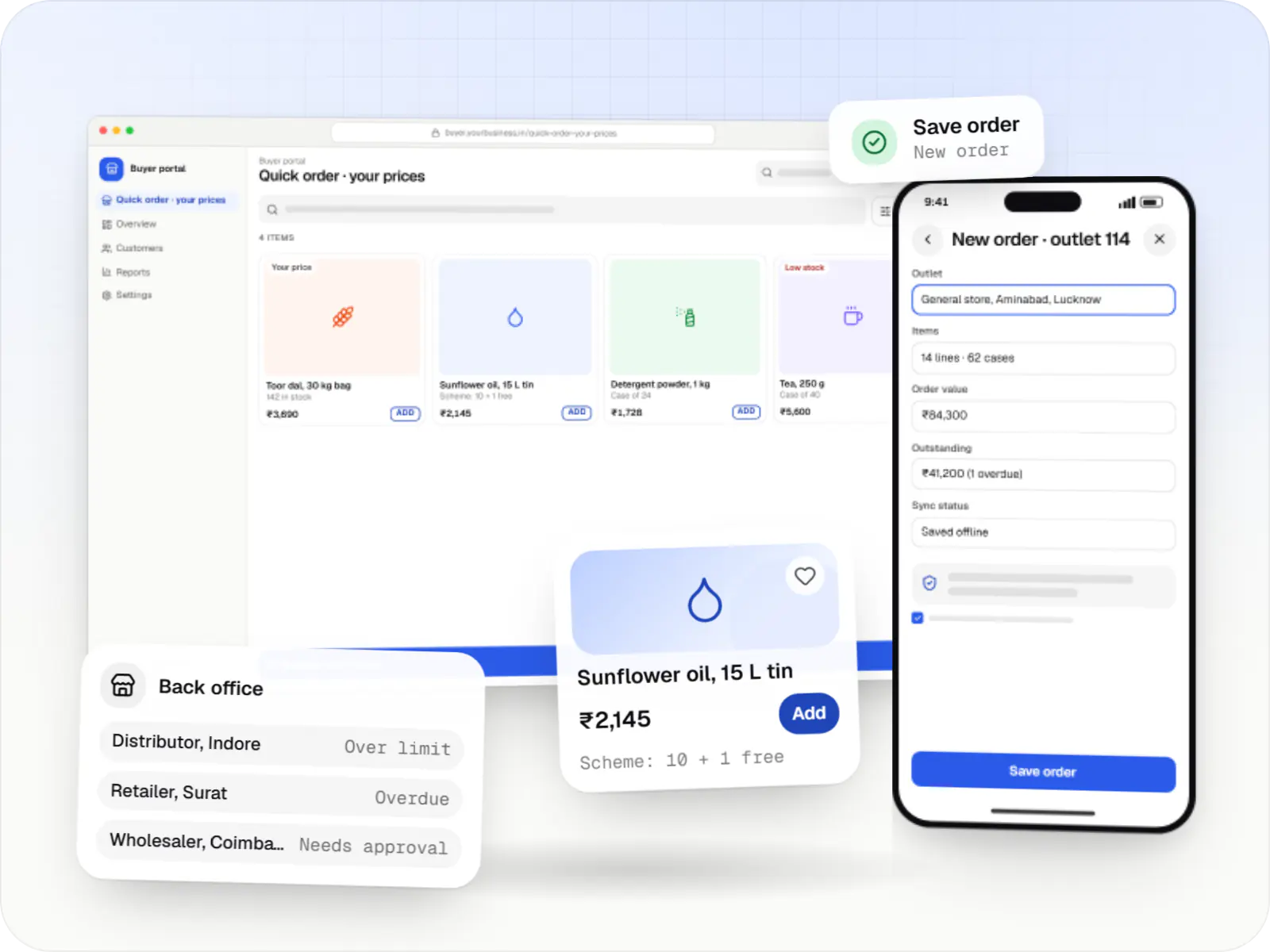
Ordering portals and apps for manufacturers, distributors and wholesalers, with buyer-specific pricing, credit limits, bulk ordering and ERP sync.
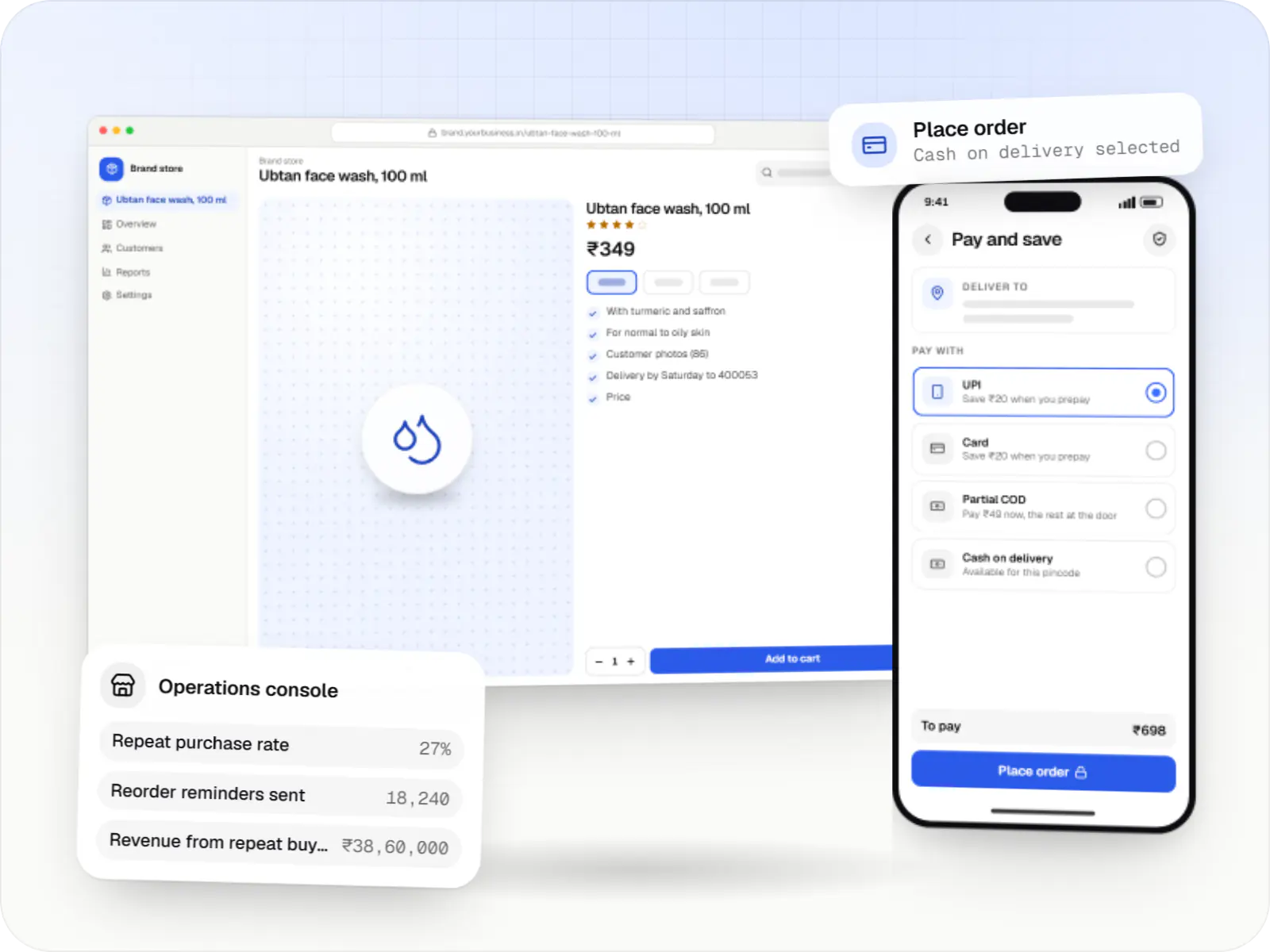
Brand-owned online stores for D2C companies, with conversion-focused checkout, retention tools, server-side tracking and multichannel stock sync.
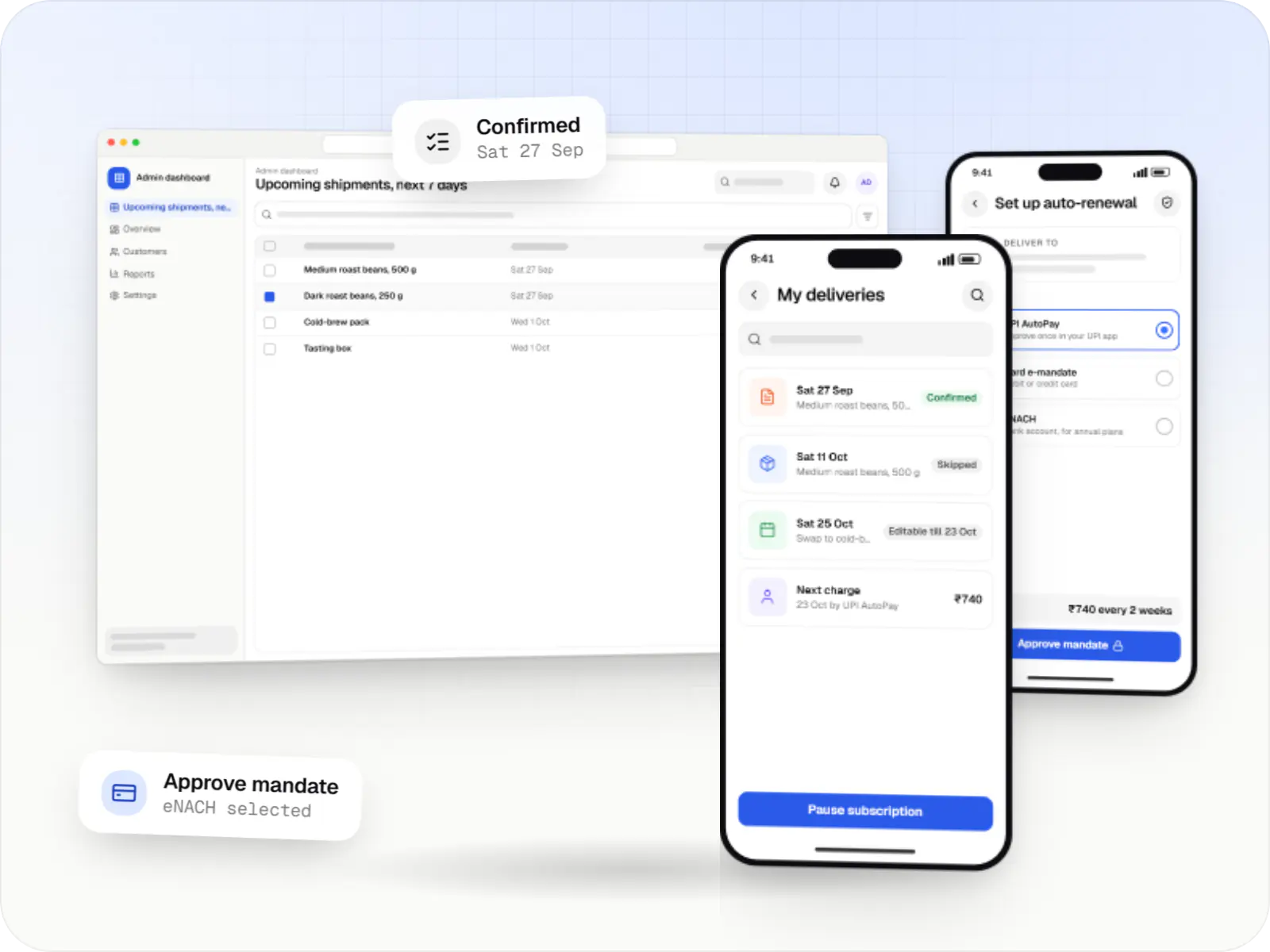
Subscription stores and memberships on UPI AutoPay, card mandates and eNACH, with pause, skip and swap controls and fulfilment planning.
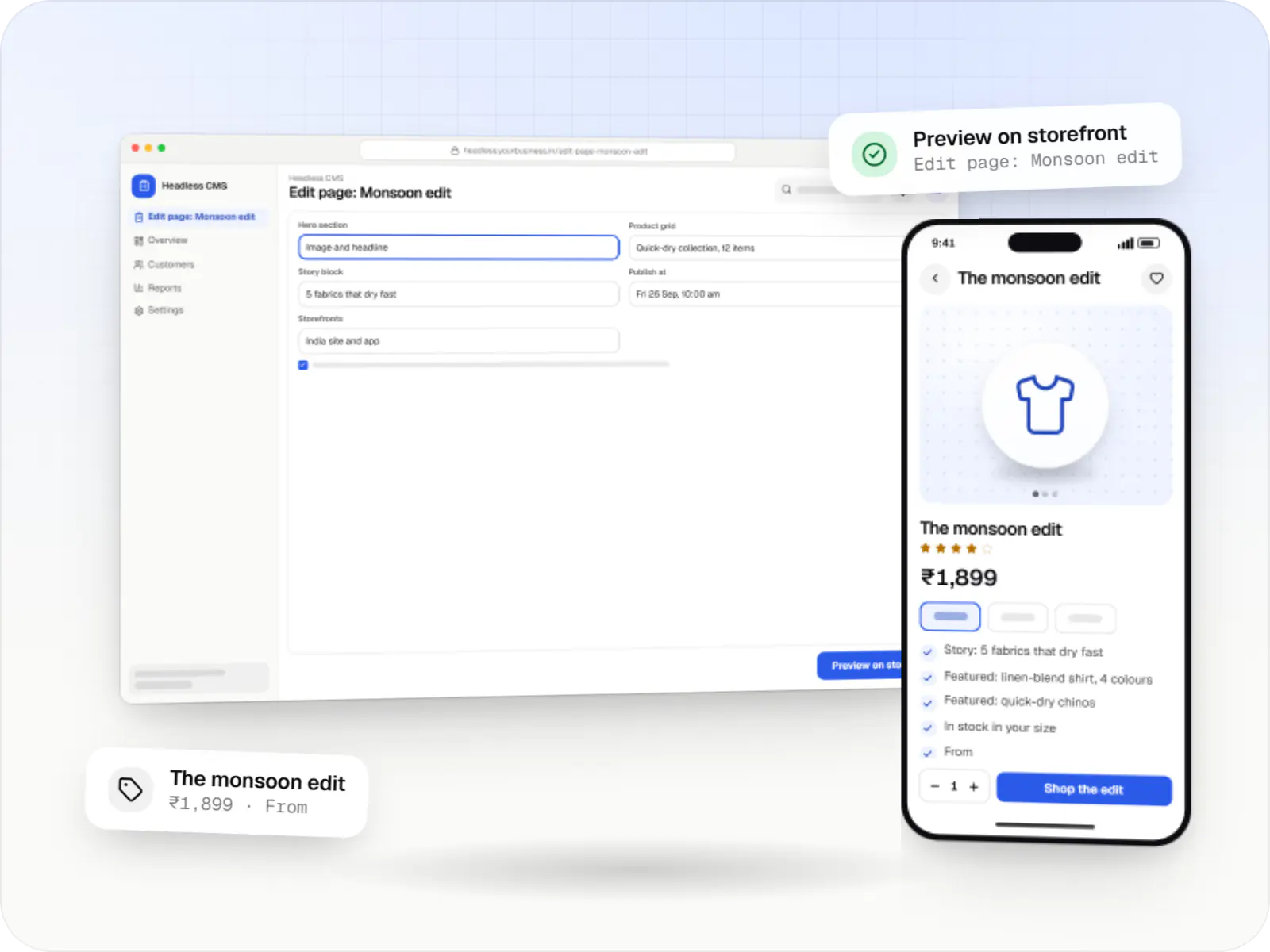
Next.js storefronts on a headless commerce engine and CMS, for brands that need speed, several storefronts or content-led shopping.
How it works
The same backbone sits under every store, shopping app and marketplace we build.
Search, a category page or an ad leads to a product page showing price, stock and a delivery date for their pincode.
The shopper pays by UPI, card, netbanking or wallet, or chooses COD where you allow it; the gateway confirms payment to your server.
Stock is reserved, a GST invoice with HSN codes is generated and the order appears in your admin or seller panel.
A shipping label is printed and a pickup booked through your courier aggregator or a direct courier account.
Tracking updates reach the shopper by WhatsApp, SMS or email, and failed attempts start an NDR follow-up.
Returns trigger reverse pickups and credit notes, while reminders and offers bring the customer back for the next order.
Then it starts again at step 1: Shopper finds a product
UPI intent and QR, cards, netbanking, wallets and COD, with payment status confirmed by webhook.
HSN codes, CGST and SGST or IGST by place of supply, and credit notes on returns.
Pincode serviceability, labels, tracking, NDR and RTO status via Shiprocket, Delhivery or a direct courier API.
Image optimisation, server rendering and caching, tested over mobile data.
Orders, refunds, coupons, stock and reports, with role-based staff access.
Comparison
| Hosted platform | Custom build | Headless | |
|---|---|---|---|
| Time to launch | Shortest: theme plus apps | Longer: built end to end | Longer: custom storefront on an engine |
| Custom pricing and checkout rules | Limited by plan and apps | Whatever the business needs | Flexible; depends on the engine |
| Running costs | Plan, app and possible transaction fees | Hosting and maintenance | Engine fees plus storefront hosting |
| Good fit for | Standard catalogues testing demand | B2B, marketplace or unusual models | Content-led brands, several storefronts |
Platforms
Websites and installable web apps for shoppers, repeat-buyer apps for Android and iOS, web panels for sellers and trade buyers, and an admin dashboard for your team.
Marketing and content websites: fast, search-friendly pages with a CMS your team can update without a developer.
Installable web apps with offline support and notifications, useful when an app-store listing isn't essential or phones have little storage.
Apps for Android phones and tablets, tested on budget and mid-range devices and published on Google Play or privately.
Apps for iPhone and iPad, built to Apple's guidelines and released through TestFlight and the App Store.
Browser-based applications with logins, roles and workflows, such as customer portals, SaaS products and internal tools.
Back-office panels for operations, support and finance teams: orders, users, content, reports and permissions.
Technology
Next.js for fast, search-friendly storefronts, Flutter or React Native for shopping apps, Node.js and PostgreSQL for orders and stock, and Razorpay for Indian payment methods.
Web
A modern web technology for fast, search-friendly websites, online stores and web applications that load quickly on mobile.
Used for
Web
Builds interactive screens in the browser, such as dashboards, admin panels and portals, that respond instantly as your team works.
Used for
Mobile
Build Android and iOS apps from one shared codebase, so you launch on both platforms faster with a consistent experience.
Used for
Mobile
Build Android and iOS apps in the same language as a React website, so one team can share code and skills across web and mobile.
Used for
Backend
Runs the server side of apps: fast, scalable back ends that power your app, website and integrations.
Used for
Backend
A structured way to build back ends on Node.js, so large business systems stay organised, testable and easy to hand over.
Used for
Data
A reliable database for the records your business runs on: orders, payments, bookings and stock, kept accurate and easy to report on.
Used for
Data
Keeps frequently used data in fast memory, so apps stay quick on busy days and live features like order tracking feel instant.
Used for
Payments & maps
Lets customers in India pay by UPI, cards, netbanking or wallets, and handles subscriptions, refunds and payouts to sellers or partners.
Used for
Cloud & DevOps
Cloud hosting for your app, website and data, with data centres in India and room to grow when traffic rises.
Used for
Flutter and the related logo are trademarks of Google LLC. We are not endorsed by or affiliated with Google LLC.
Plain-English glossary
Product preview
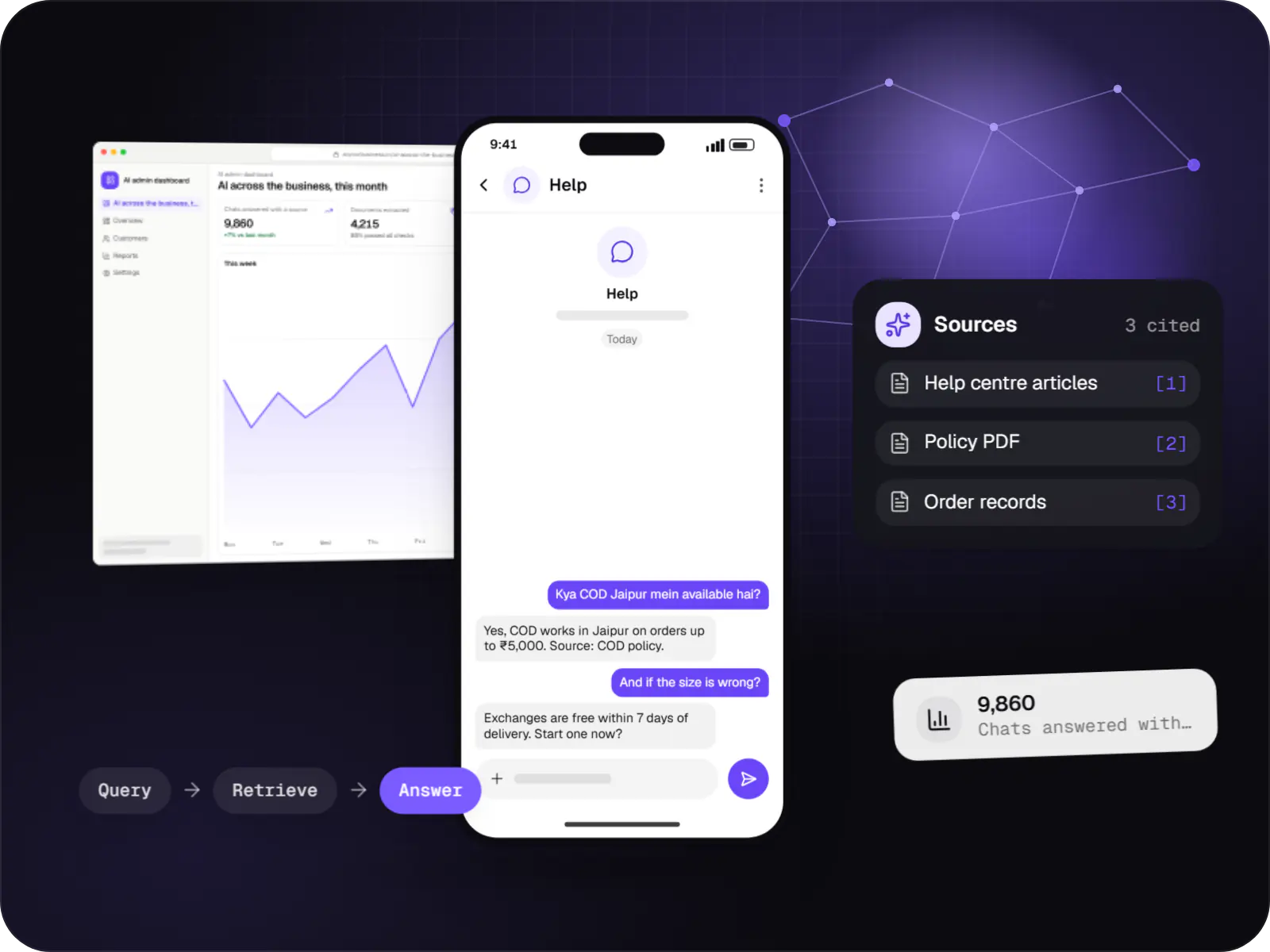
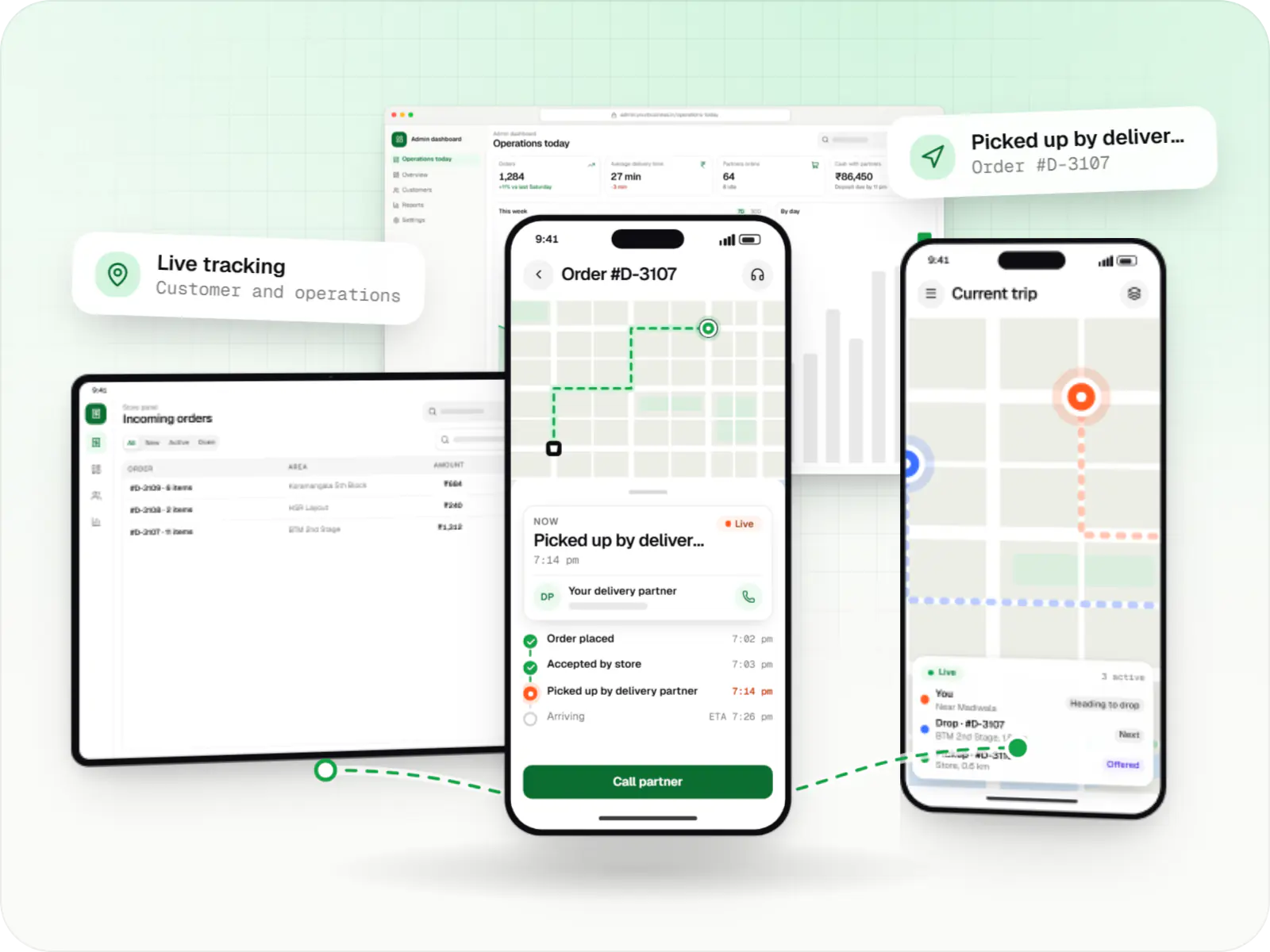
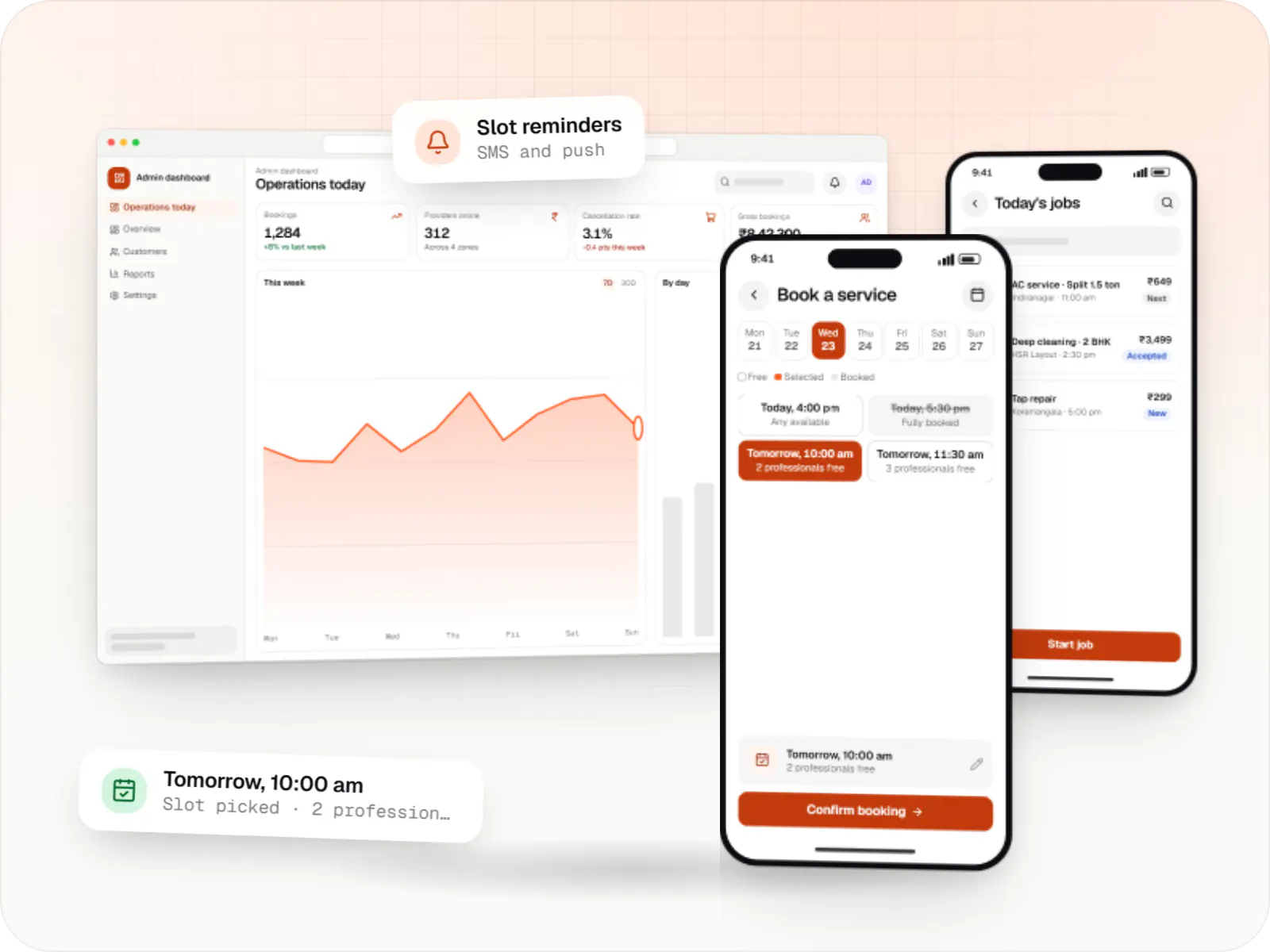
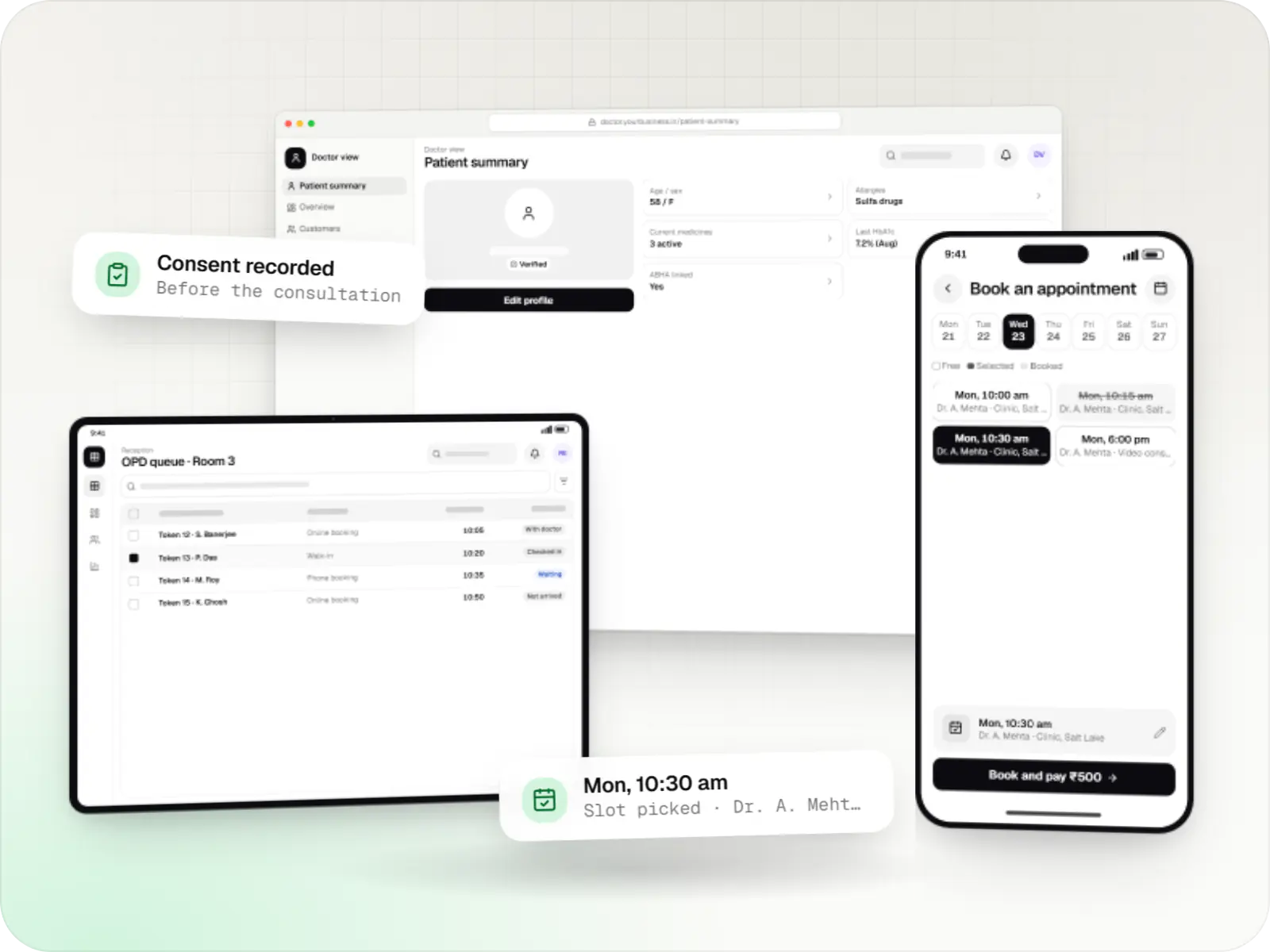
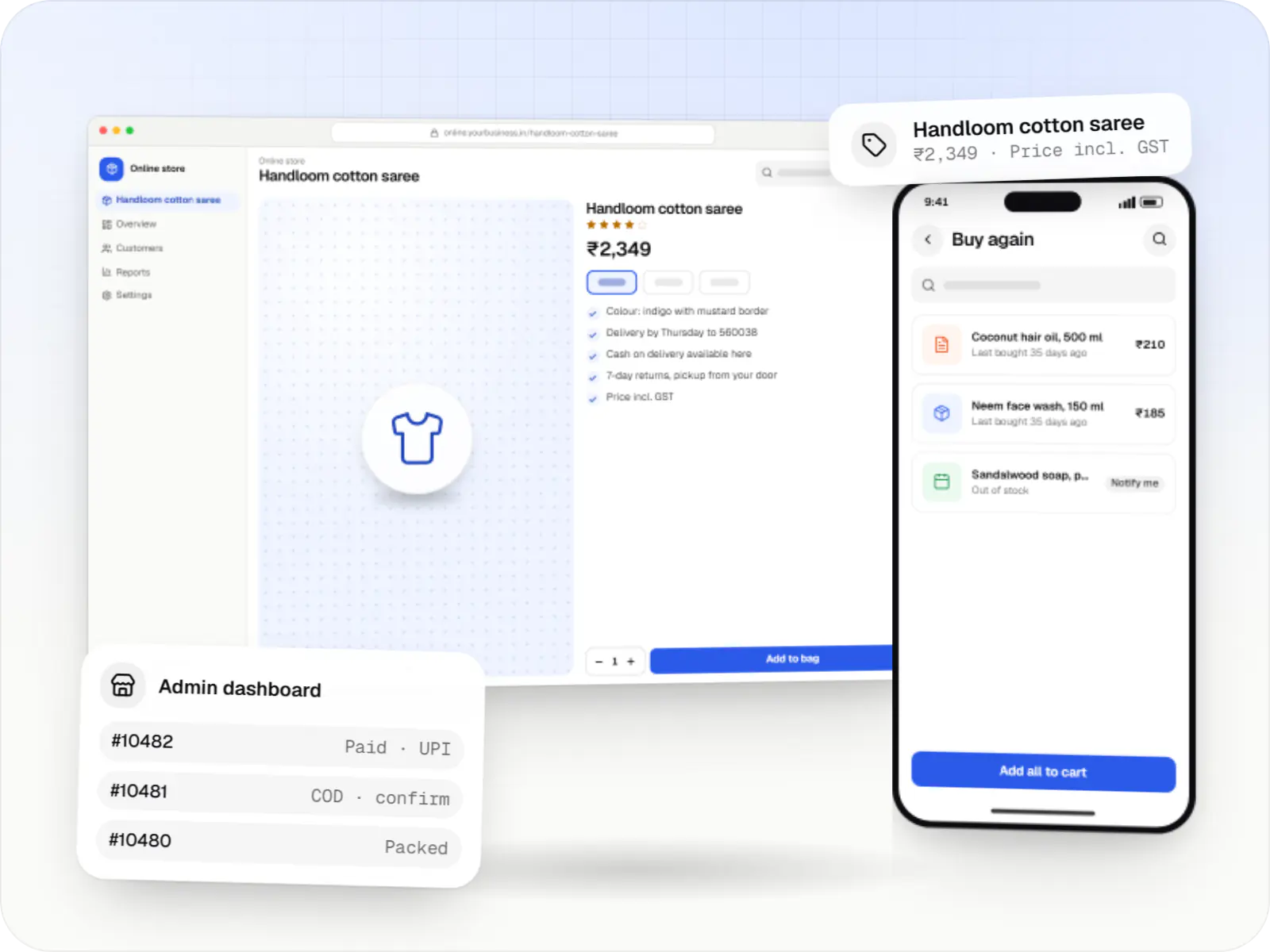
Illustrative screens from a store, a shopping app, an admin dashboard and a marketplace seller panel.
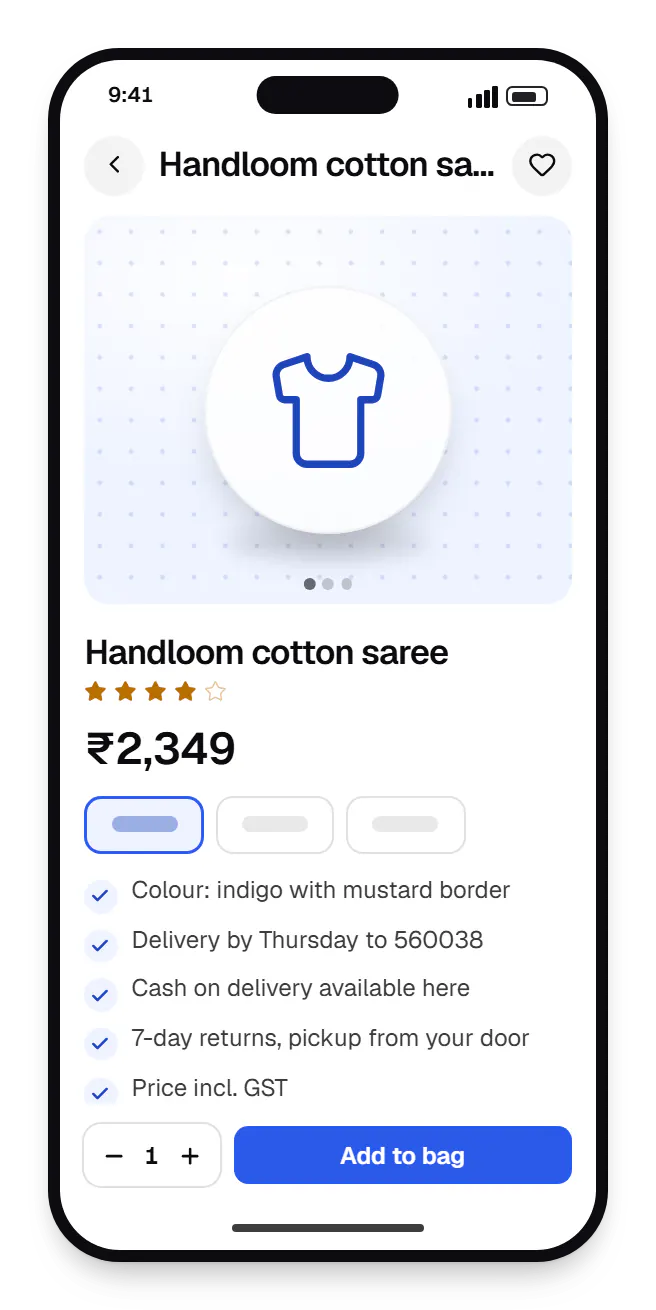
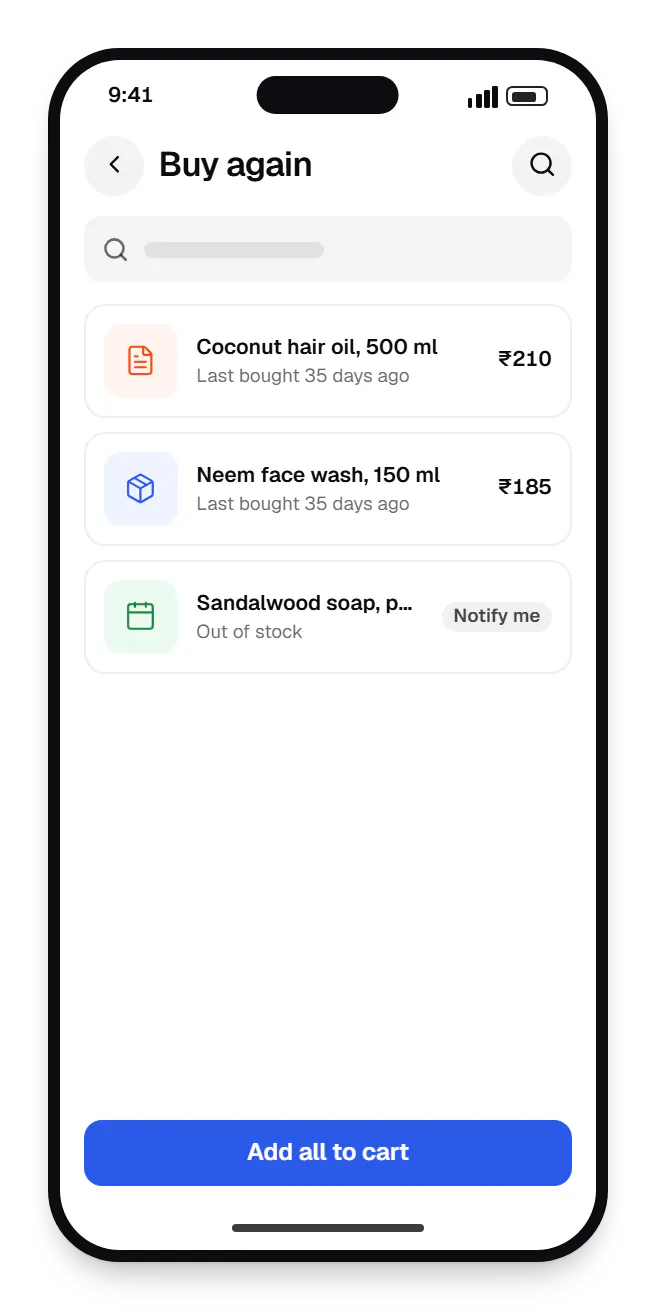
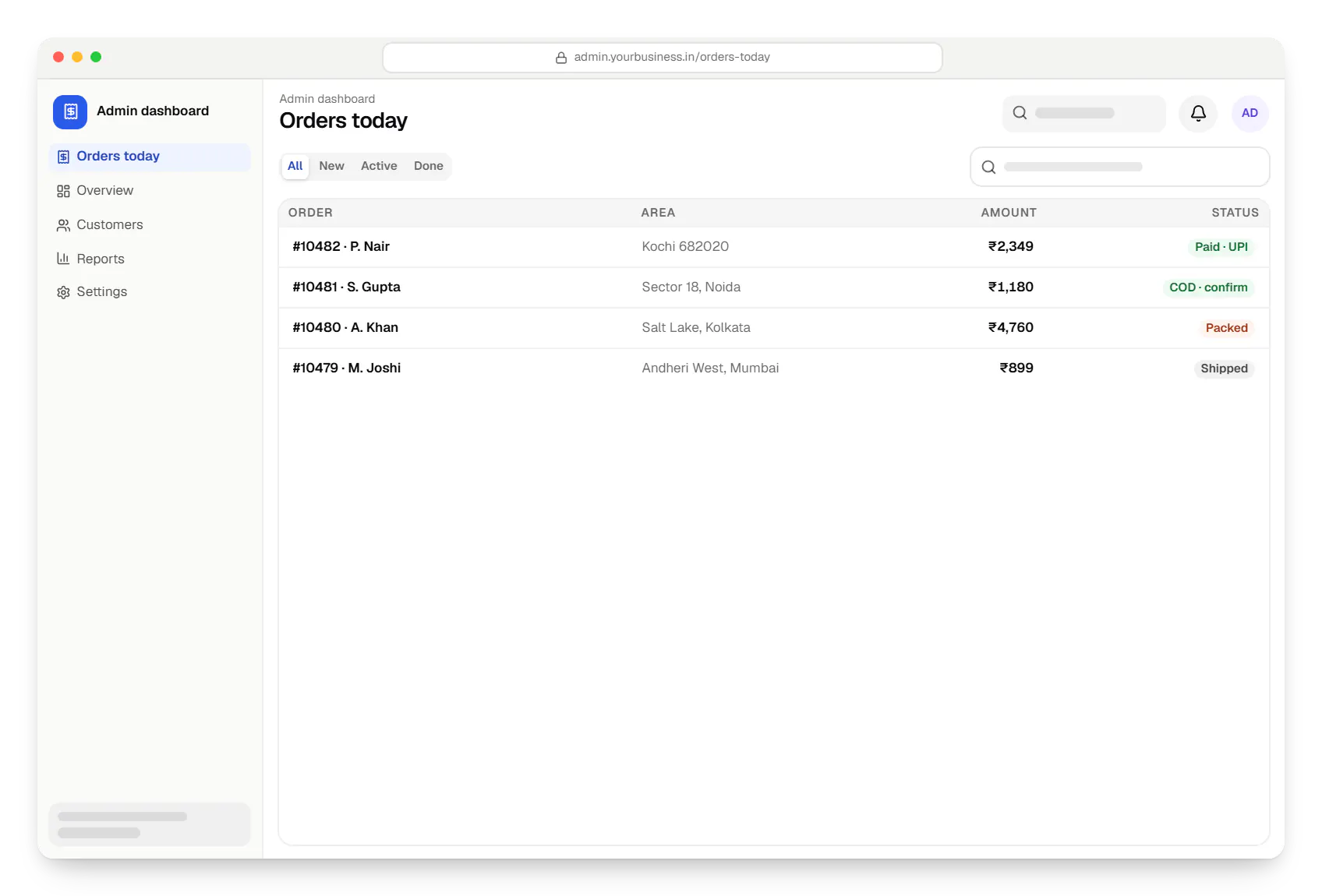
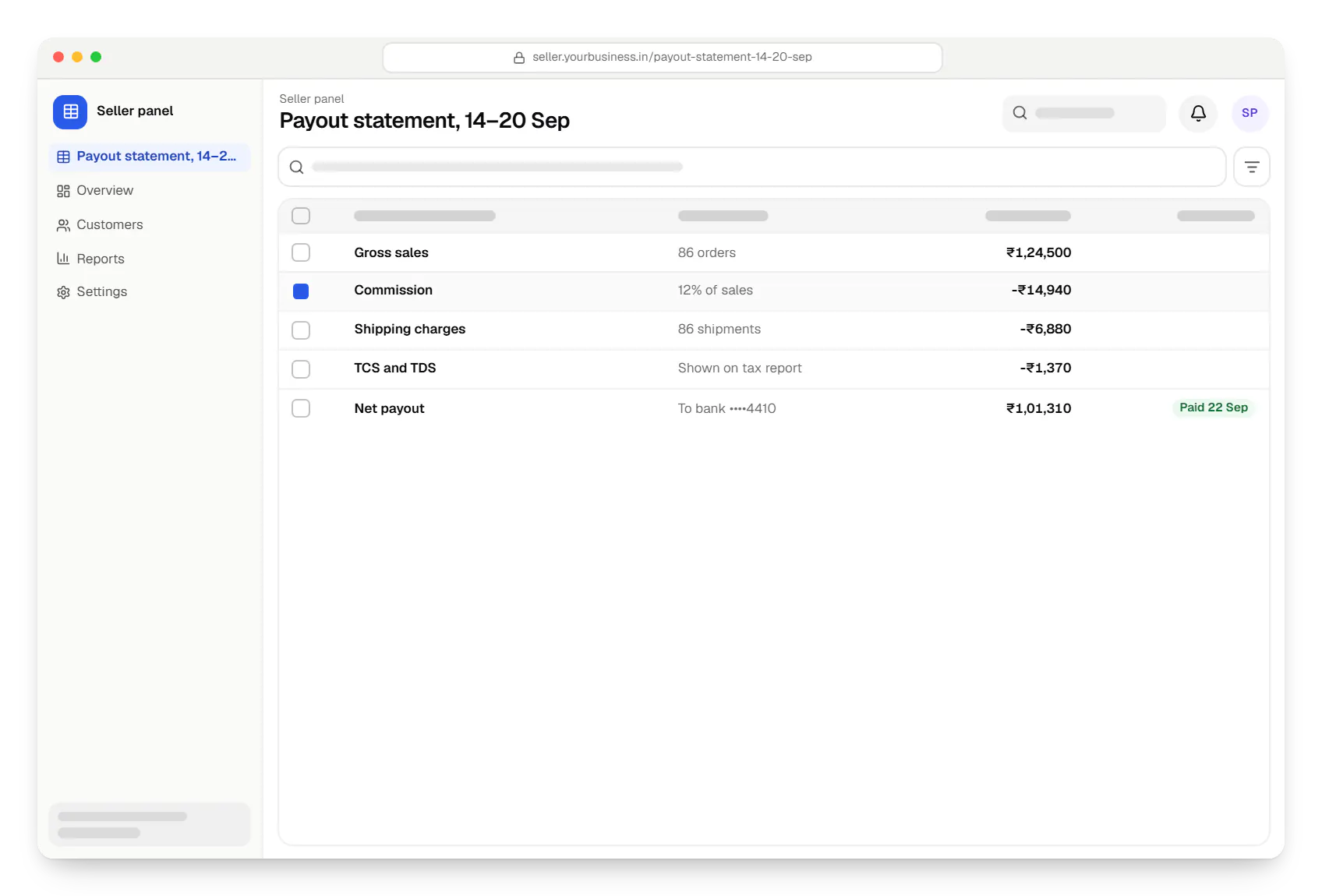
Sample screens: names, prices and figures are examples, not client data.
Industries
FAQ
Start with who owns the stock and the customer. Selling your own products to consumers points to a store. If other sellers list and ship while you take a commission, you need a marketplace with seller onboarding and settlements. If your buyers are retailers ordering in bulk on credit, start from a B2B portal. Where you need two of these, we plan one shared backend.
Yes, and we usually recommend it. One set of APIs for catalogue, cart, orders, payments and customers serves the website and the Android and iOS apps, so prices, stock and promotions stay consistent and new features are built once. If you already run Shopify or WooCommerce, the apps can use its APIs instead, within the limits those APIs set.
It can be. ONDC (Open Network for Digital Commerce) lets your catalogue appear in several buyer apps, which suits grocery, food and local retail. Sellers usually join through a seller-side participant; building your own network integration is a bigger technical and compliance project. We review your categories and operations first, and keep your own store as the channel where you control pricing and customer data.
Next step
Tell us how you sell today and where it breaks. We will suggest a model, a stack and a phased, line-item estimate.