



Web
React
Builds interactive screens in the browser, such as dashboards, admin panels and portals, that respond instantly as your team works.
Used for
- Web apps
- Admin panels
- Dashboards
- Customer portals
Industries · FMCG
See secondary sales, scheme spend and outlet coverage without waiting for distributor spreadsheets.
At a glance
What it is
Route-to-market software for FMCG companies: distributor management, sales force automation, retailer apps and secondary sales visibility.
For FMCG manufacturers and brands selling through super-stockists, distributors and general trade, as well as modern trade and quick commerce.
Flutter and the related logo are trademarks of Google LLC. We are not endorsed by or affiliated with Google LLC.
How to start
Tell us what you need in your own words. You talk to the developers who would build it and get a written, line-item estimate.
Get a project estimateAn FMCG company bills distributors, but its real performance is decided further down the chain: what distributors sell to retailers, and what retailers sell to shoppers. That secondary data usually arrives late, in different formats, from distributors running their own billing software.
We build the systems that close that gap: a distributor management system, sales force automation for field teams, retailer ordering and loyalty apps, and dashboards that tie scheme spend to outcomes. Channels such as ONDC and quick commerce can be added as the brand grows.
Challenges
Distributor data arrives weekly or monthly, too late to correct a territory.
Trade schemes and claims are hard to verify against actual retailer purchases.
Reps spend time on paperwork instead of outlet visits and merchandising.
General trade, modern trade and quick commerce pricing drift out of alignment.
Solutions
Across 3 areas
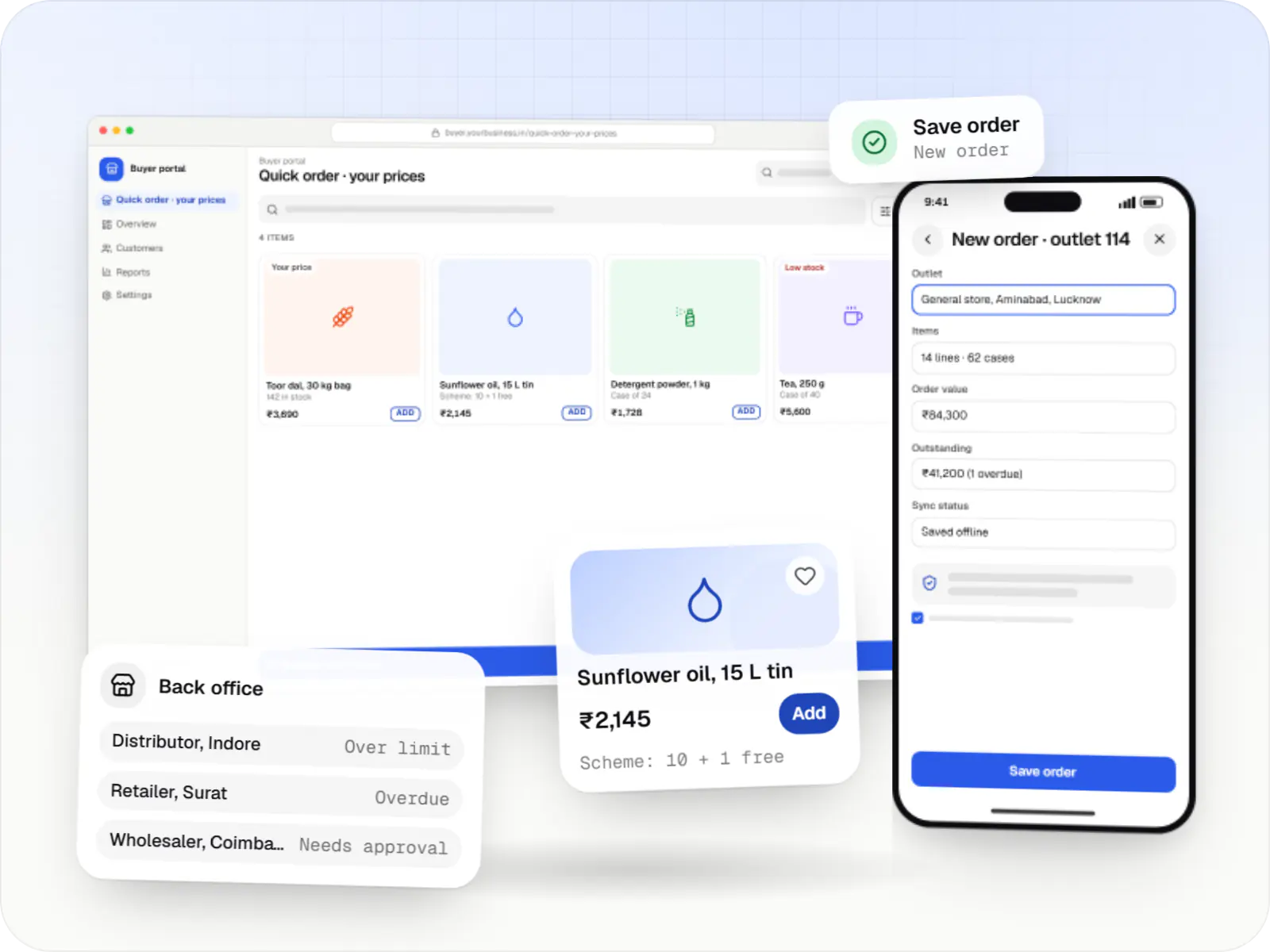
Ordering portals and apps for manufacturers, distributors and wholesalers, with buyer-specific pricing, credit limits, bulk ordering and ERP sync.
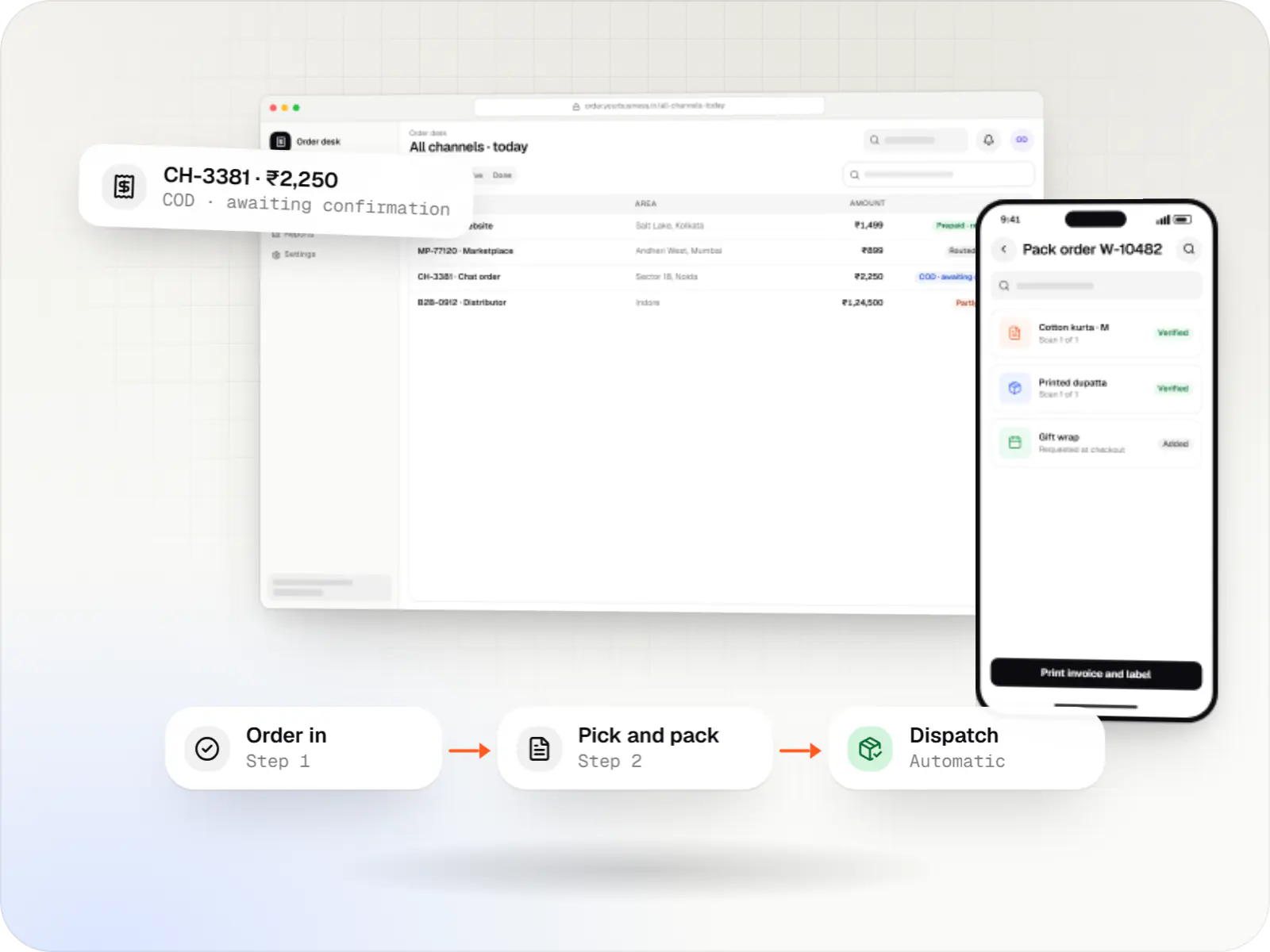
A central order management system that collects orders from every channel, routes them to the right location and tracks them to delivery and payment.
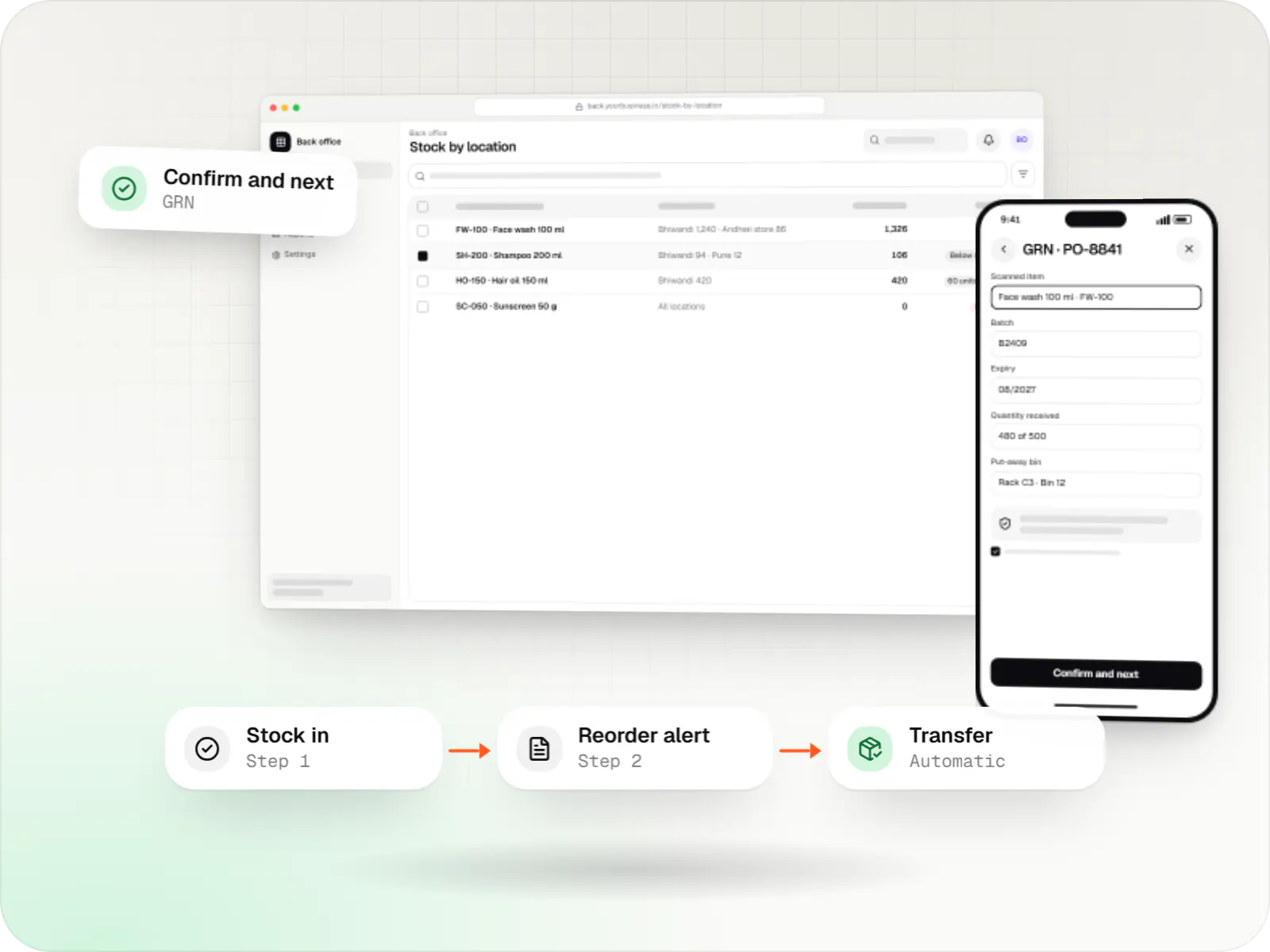
Custom inventory software for multi-location stock, batch and expiry tracking, barcode scanning and marketplace stock sync.
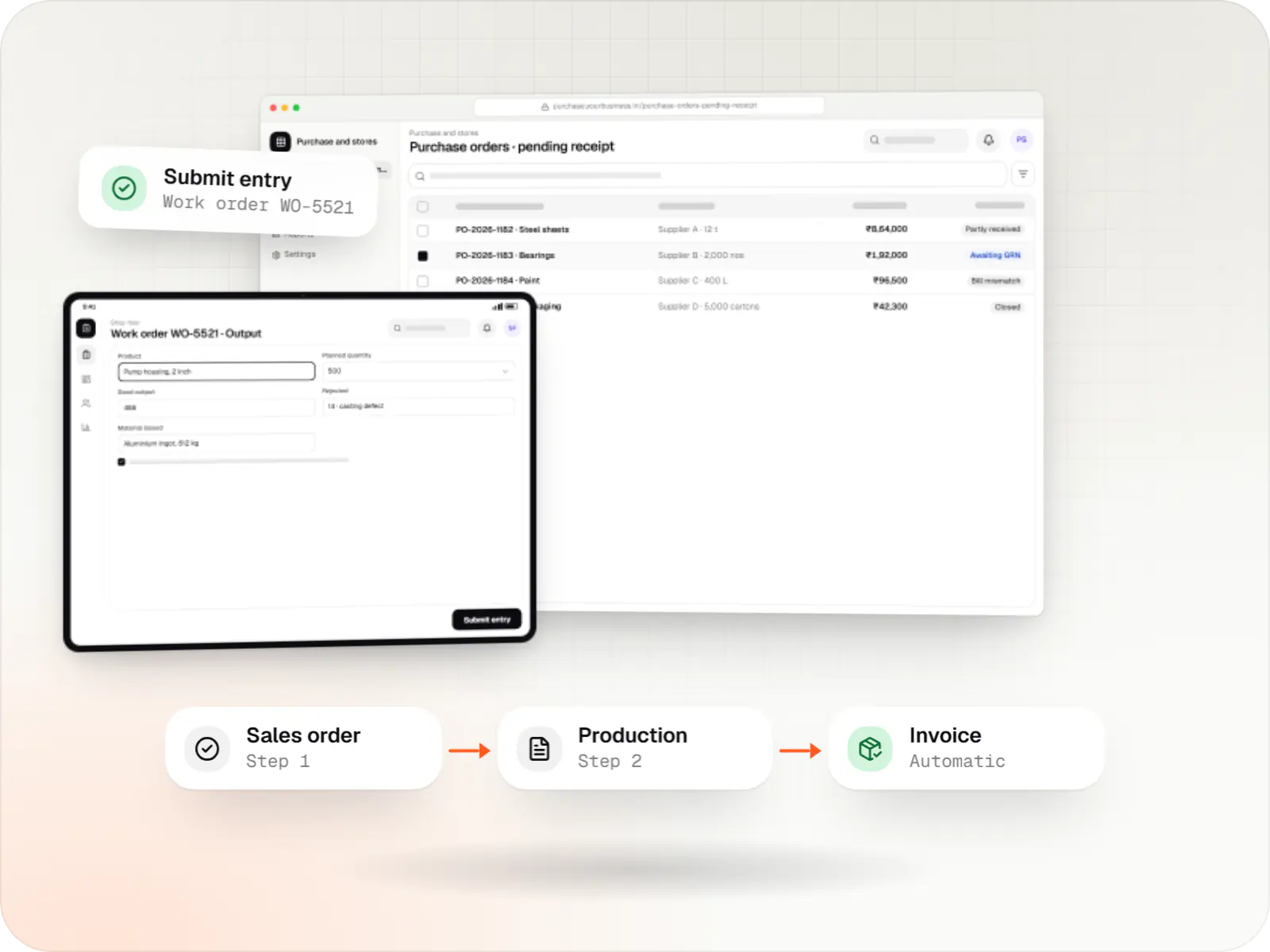
Custom ERP software connecting purchase, inventory, production, sales and GST compliance, alongside your existing accounting system.
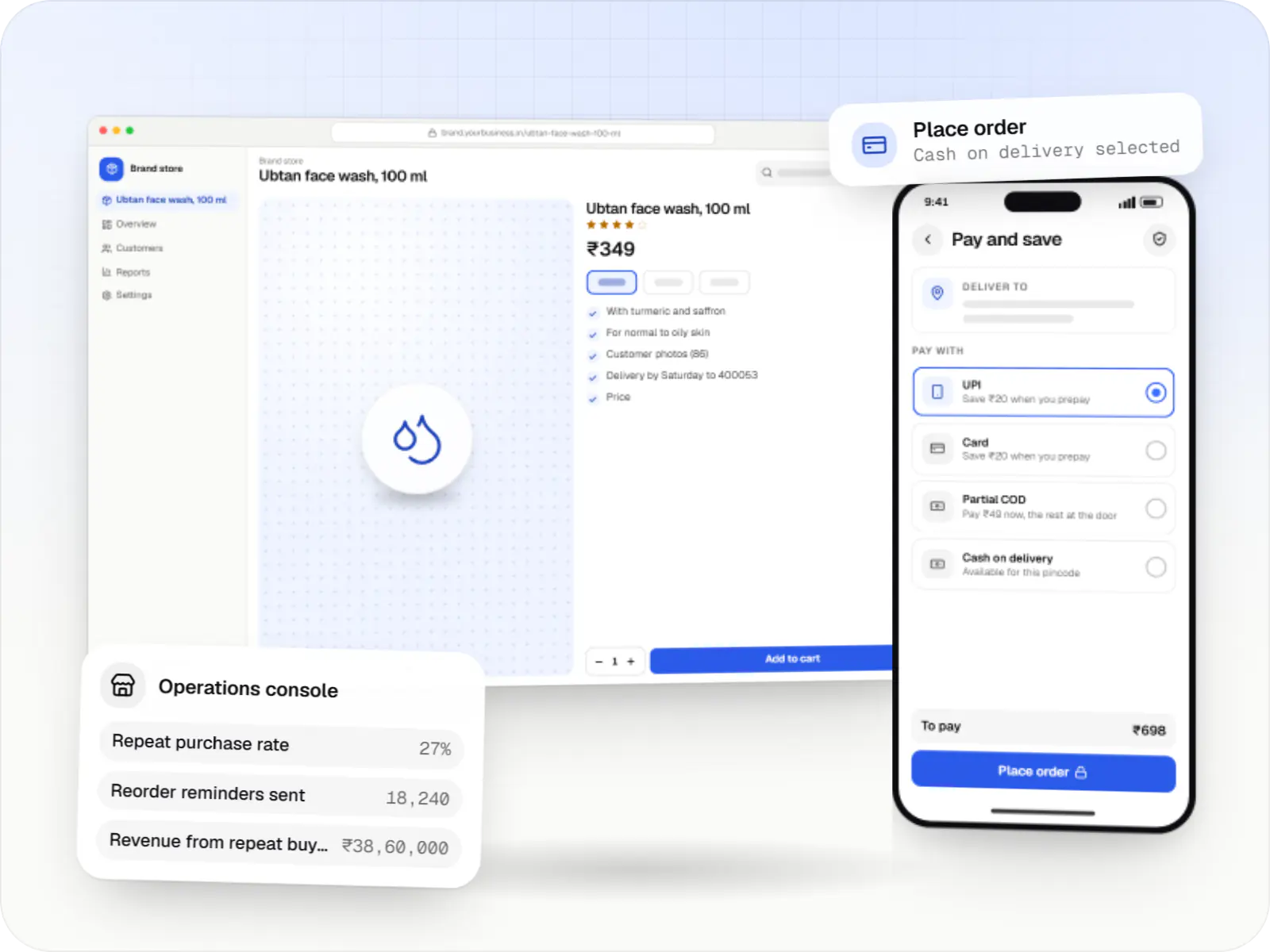
Brand-owned online stores for D2C companies, with conversion-focused checkout, retention tools, server-side tracking and multichannel stock sync.
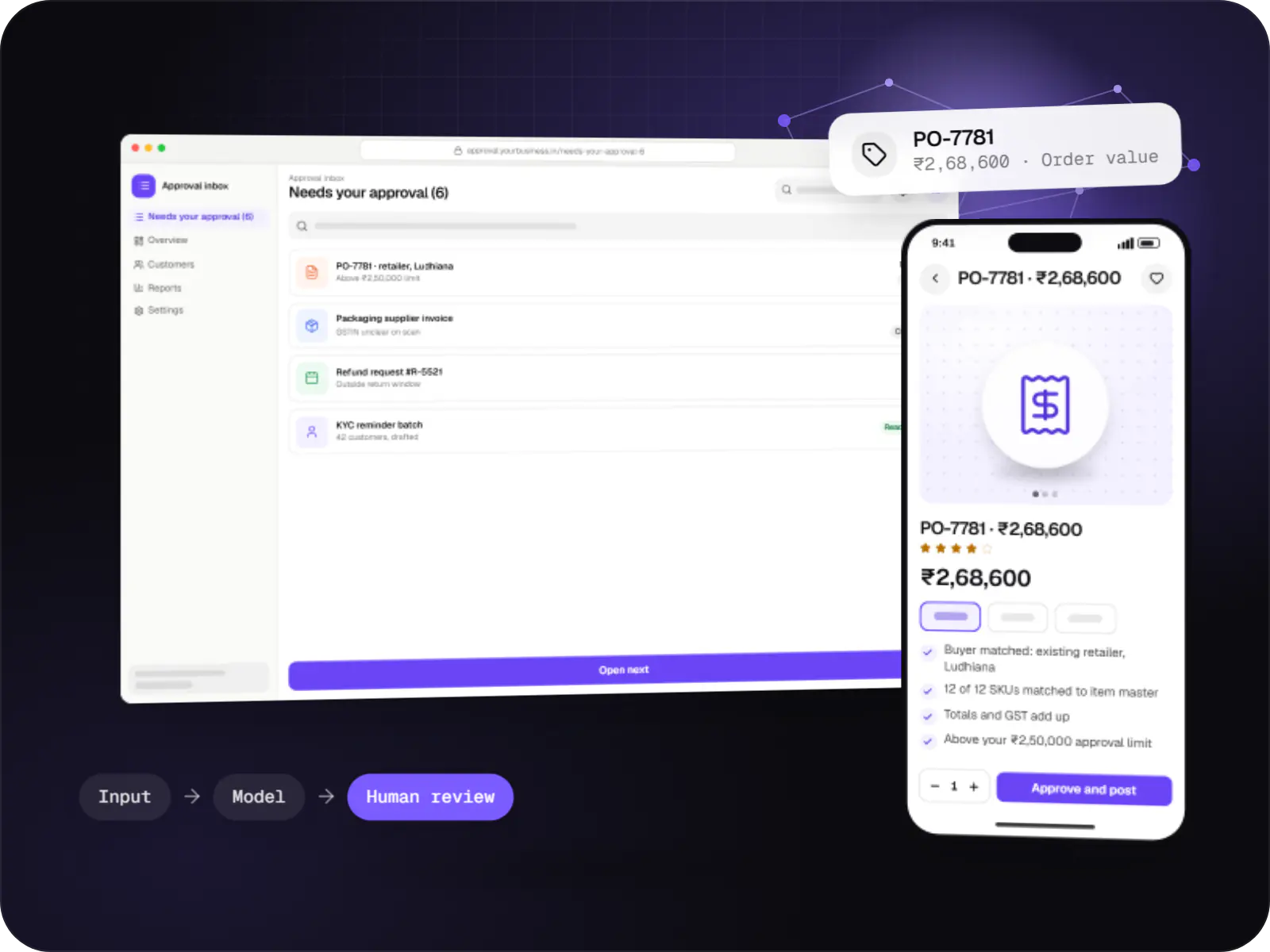
Automations for repetitive back-office work, with AI steps that read, classify and draft, and approvals where decisions matter.
Distributor billing, stock and claims in a common format, synced to head office.
Beat plans, outlet orders, must-sell lists and targets on the rep's phone.
Photo capture of shelves and displays with checklists by outlet type.
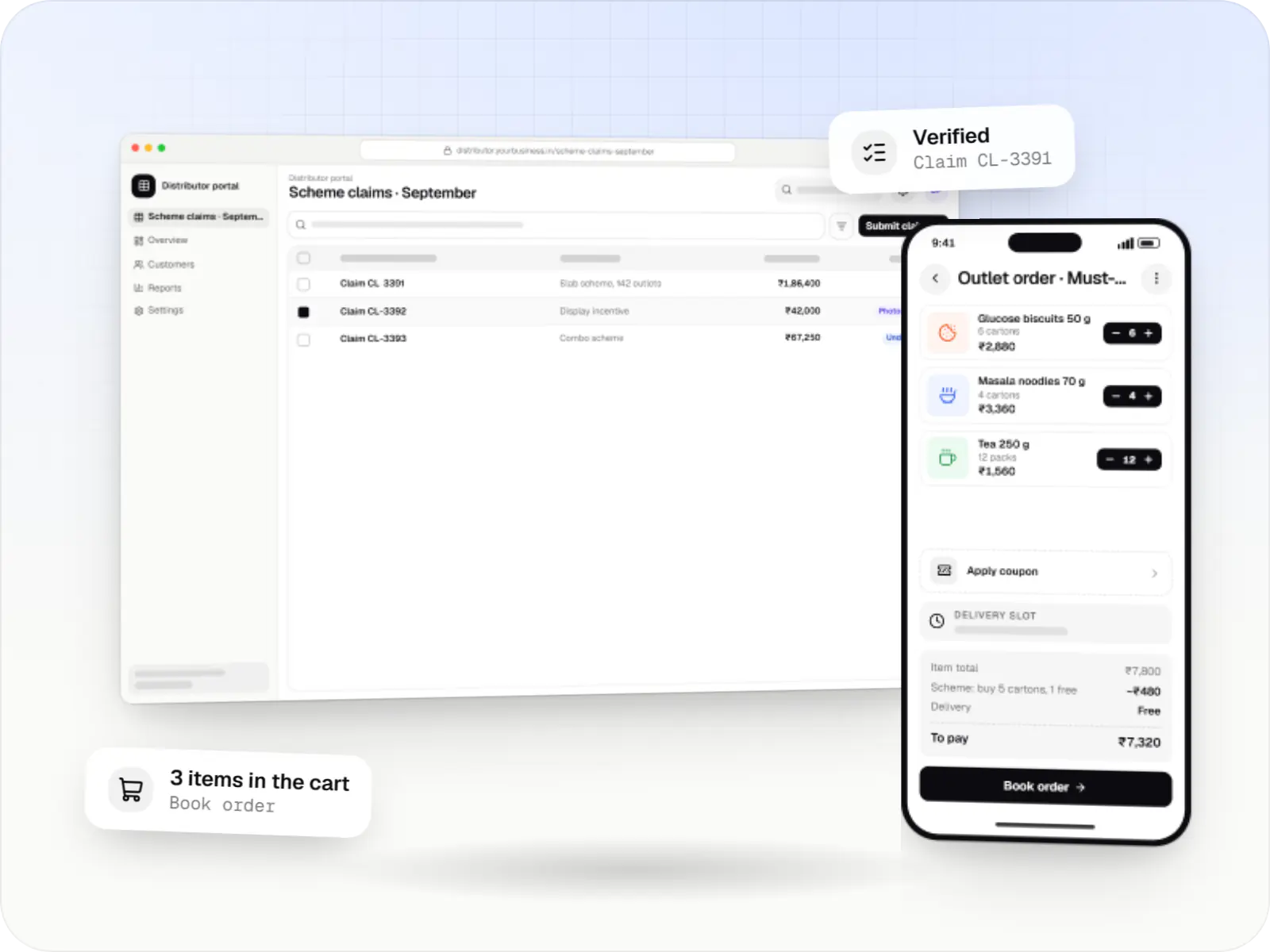
Schemes defined centrally, applied at order time and validated at claim.
Sales by SKU, outlet, beat and distributor, refreshed daily.
How it works
Each hop down the chain records data in a common format, so the brand sees sell-through daily instead of monthly.
Primary sales, price lists and scheme definitions are set centrally and shared with every distributor.
Reps follow beat plans, push must-sell lines and book orders with schemes applied at the moment of ordering.
Secondary invoices, stock and claims are recorded in the DMS, or pulled from the distributor's own billing software.
Display and shelf photos are captured against a checklist for that outlet type.
Scheme claims are checked against actual retailer purchases before they are settled, which closes a common source of leakage.
Sales by SKU, outlet, beat and distributor show which territories need attention this week, not next month.
Platforms
Apps for Android phones and tablets, tested on budget and mid-range devices and published on Google Play or privately.
Browser-based applications with logins, roles and workflows, such as customer portals, SaaS products and internal tools.
Installable web apps with offline support and notifications, useful when an app-store listing isn't essential or phones have little storage.
Back-office panels for operations, support and finance teams: orders, users, content, reports and permissions.
Technology
Web
Builds interactive screens in the browser, such as dashboards, admin panels and portals, that respond instantly as your team works.
Used for
Backend
A structured way to build back ends on Node.js, so large business systems stay organised, testable and easy to hand over.
Used for
Data
A reliable database for the records your business runs on: orders, payments, bookings and stock, kept accurate and easy to report on.
Used for
Data
Keeps frequently used data in fast memory, so apps stay quick on busy days and live features like order tracking feel instant.
Used for
Mobile
Build Android and iOS apps from one shared codebase, so you launch on both platforms faster with a consistent experience.
Used for
Cloud & DevOps
Cloud hosting for your app, website and data, with data centres in India and room to grow when traffic rises.
Used for
Flutter and the related logo are trademarks of Google LLC. We are not endorsed by or affiliated with Google LLC.
Plain-English glossary
Product preview
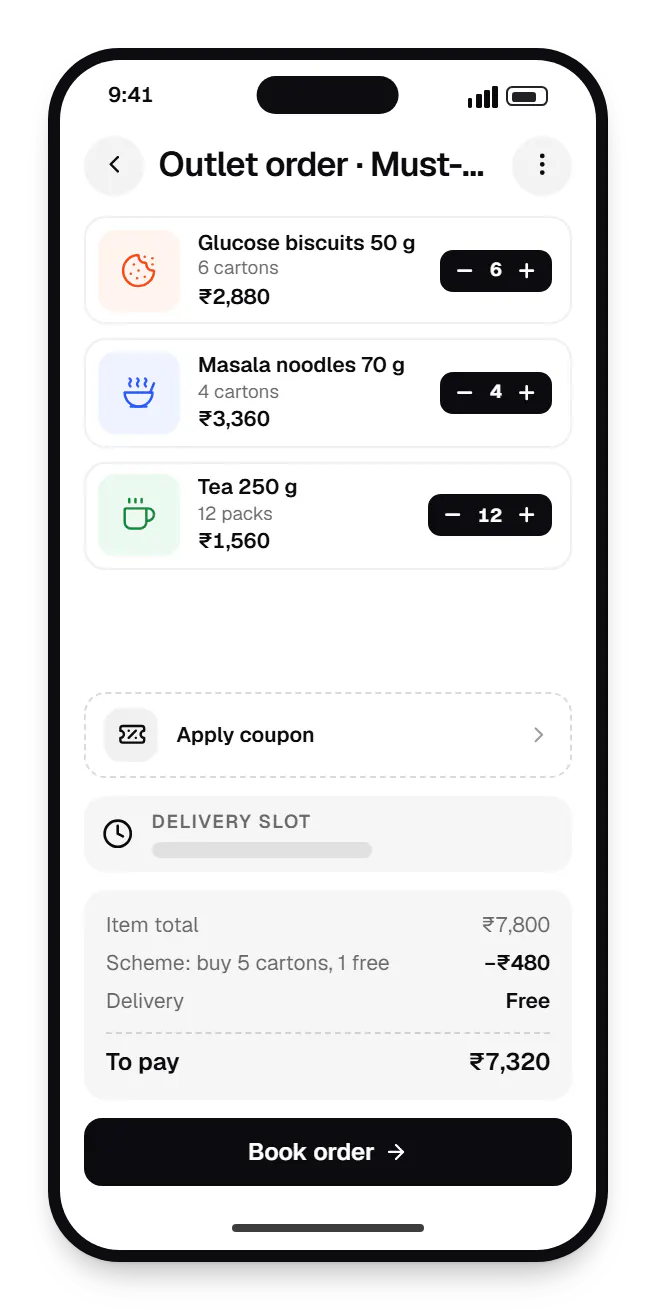
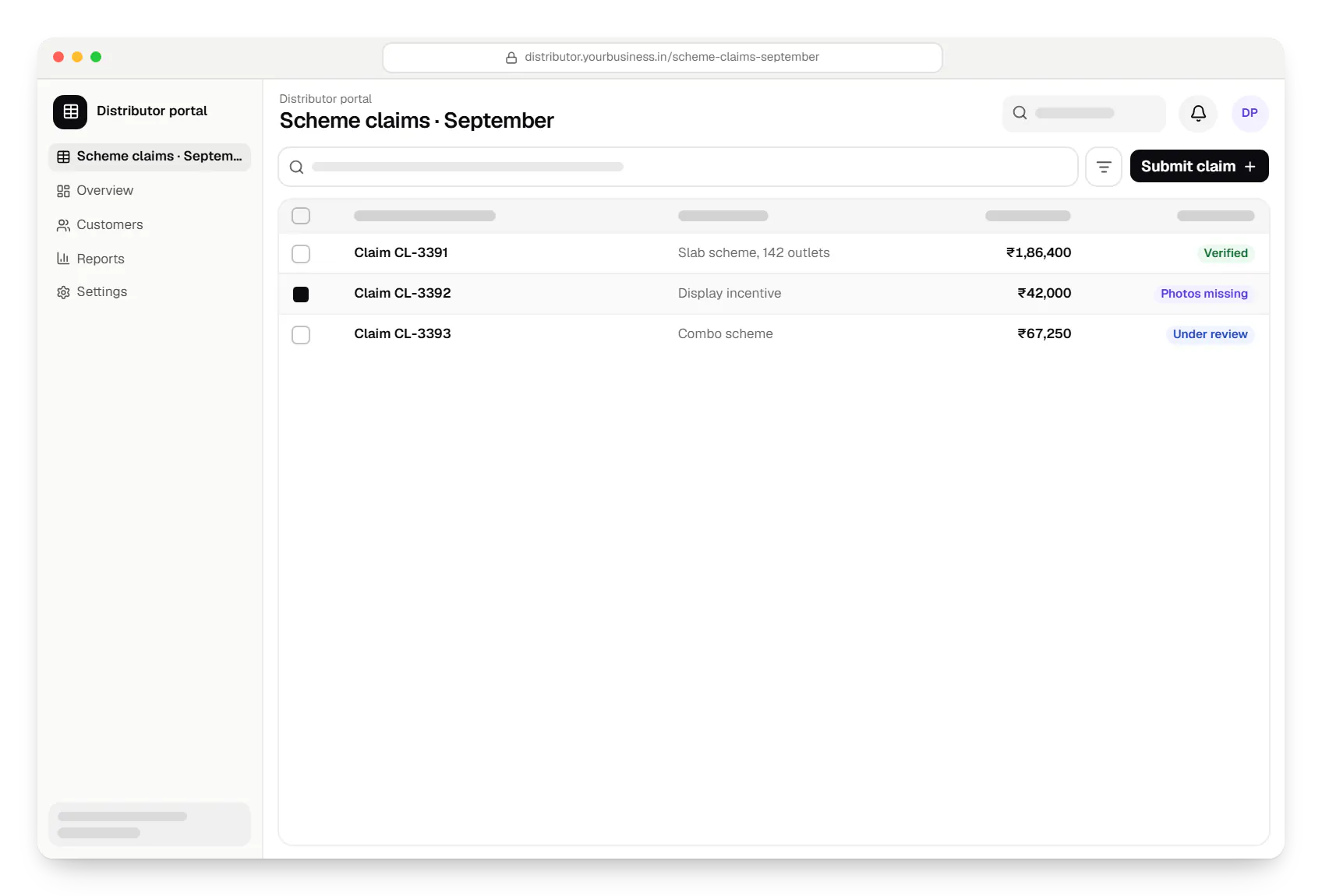
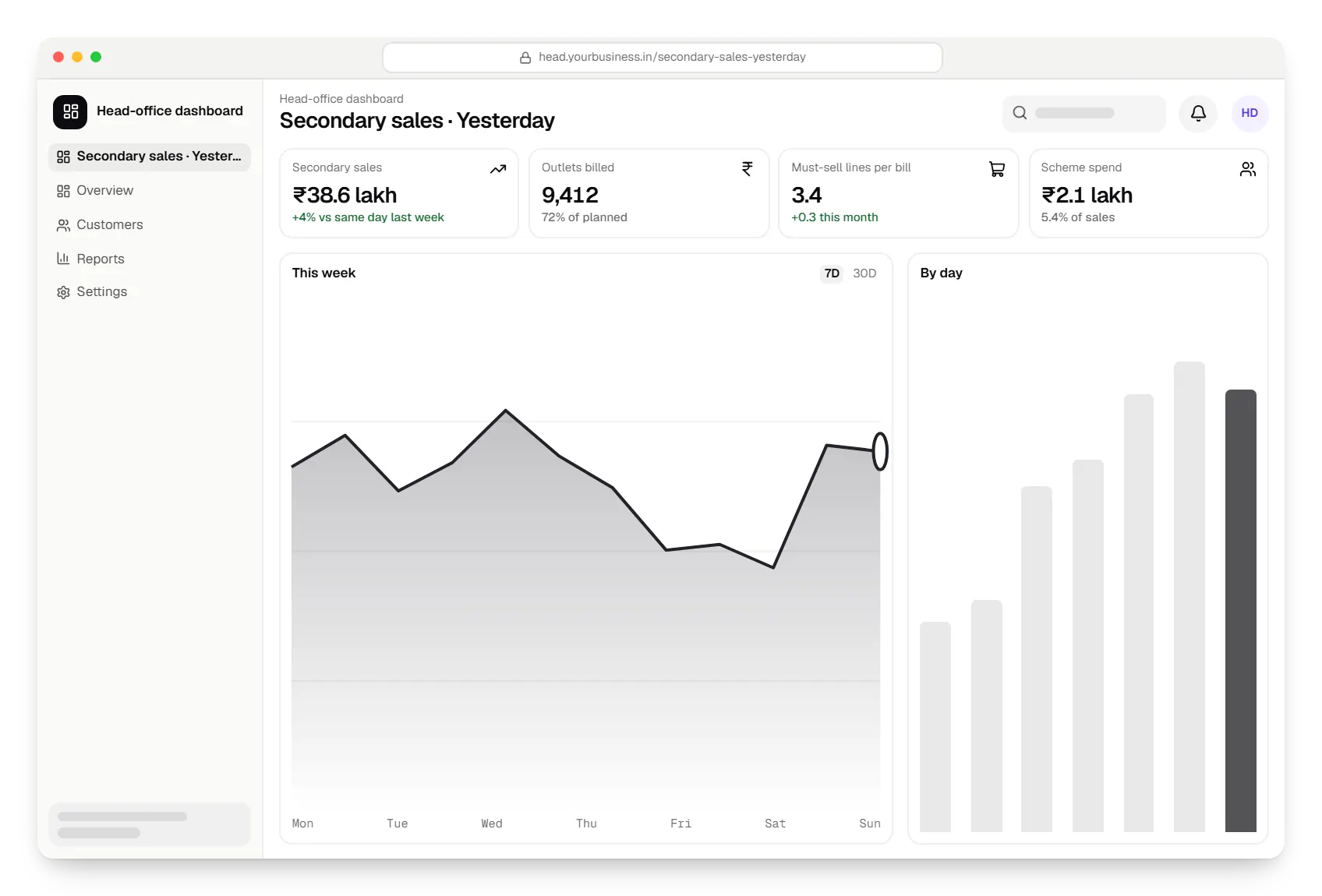
Sample screens: names, prices and figures are examples, not client data.
Cost drivers
Replacing distributor billing is larger than integrating with it; mixed approaches are common.
Outlet counts and daily order lines shape infrastructure, reporting and sync design.
Slab, combo and target-based schemes need a tested rules engine.
Estimates are written from your scope, with the effort and assumptions behind each line item.
How pricing worksServices
The design and engineering services our in-house team combines on projects in this sector.
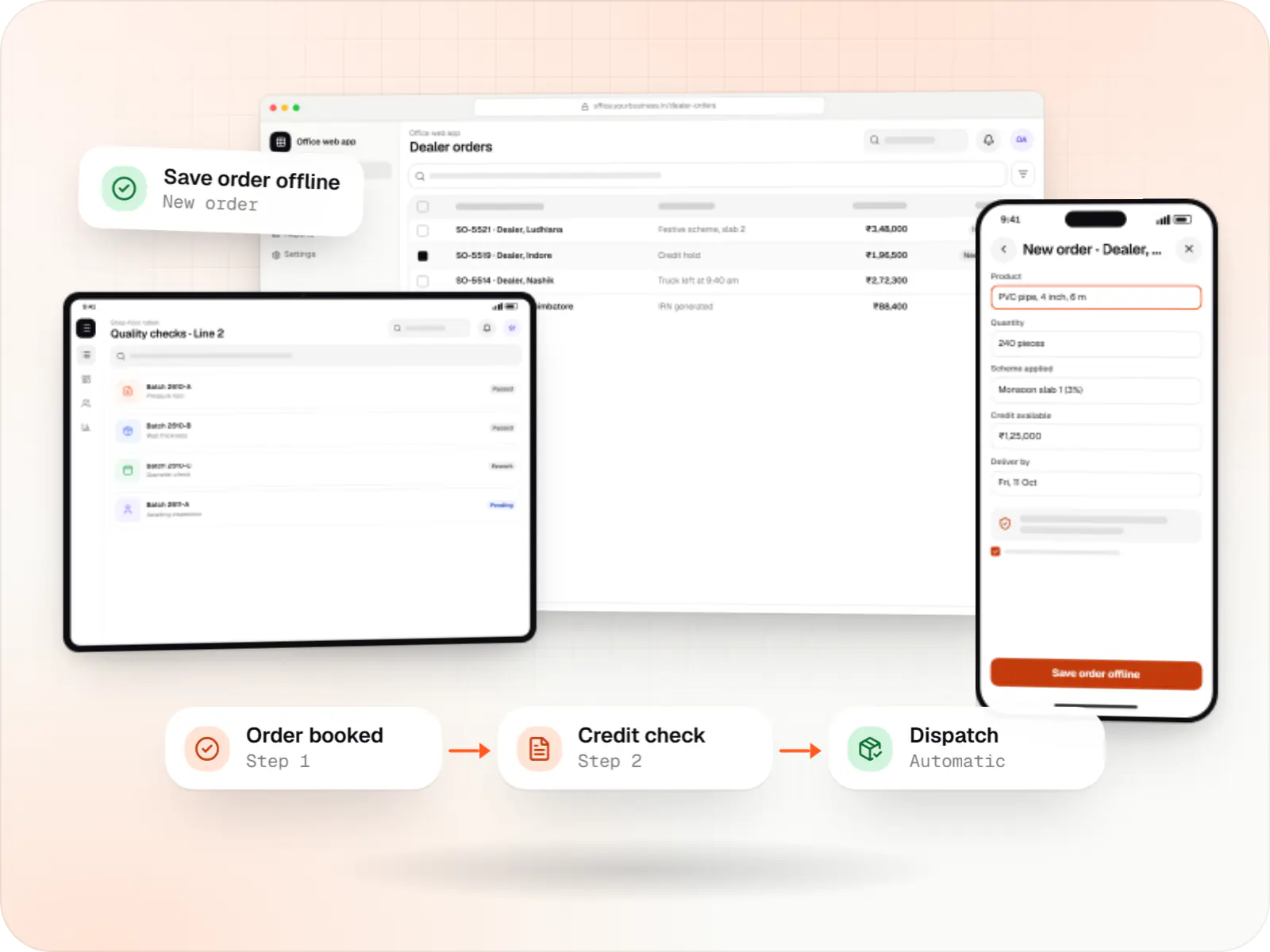
Software shaped around how your business runs, from approvals and inventory to billing and reports, replacing spreadsheets and disconnected tools.
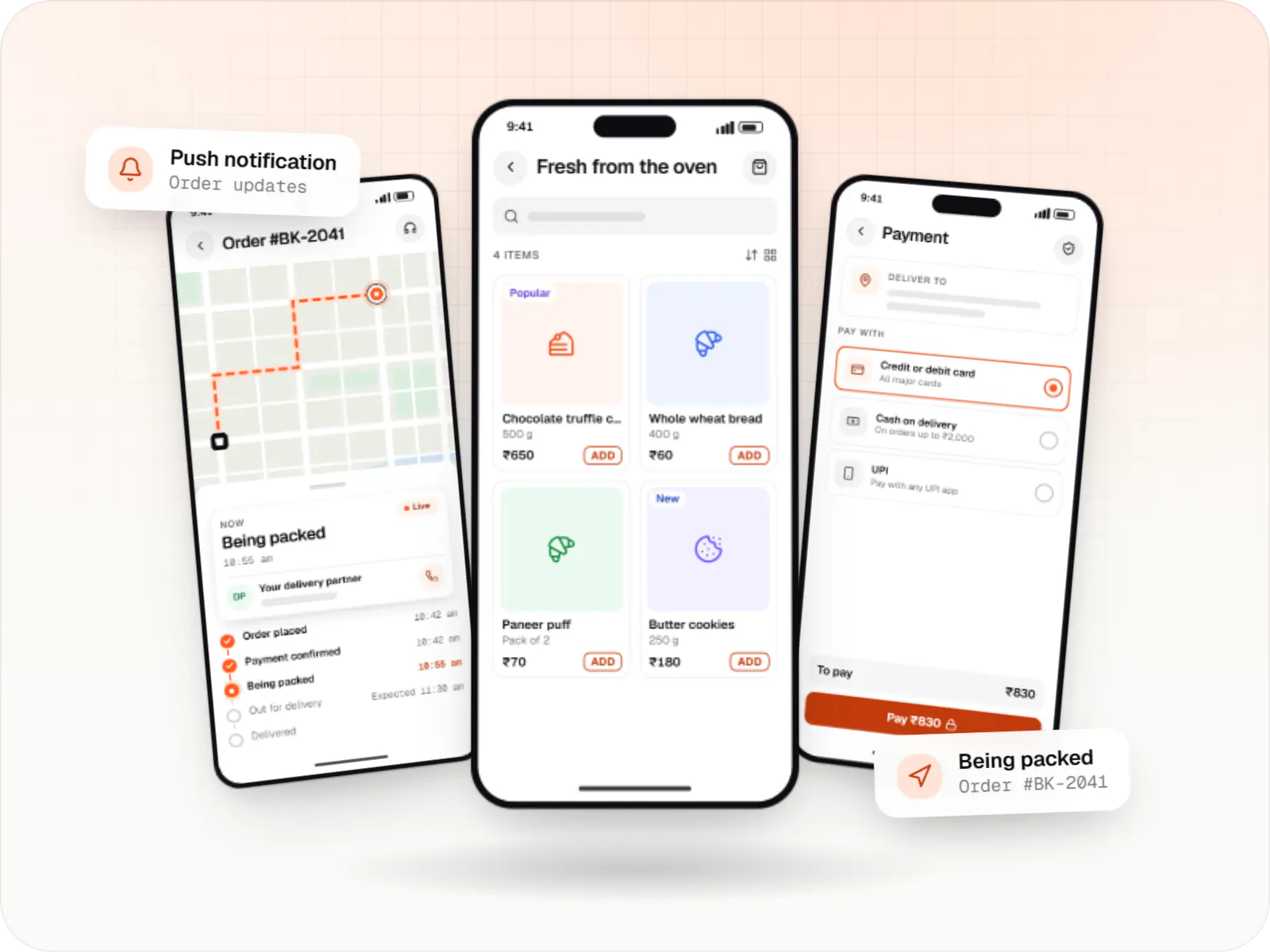
Native and cross-platform Android and iOS apps, from first release through regular store updates, built by our in-house designers and engineers.
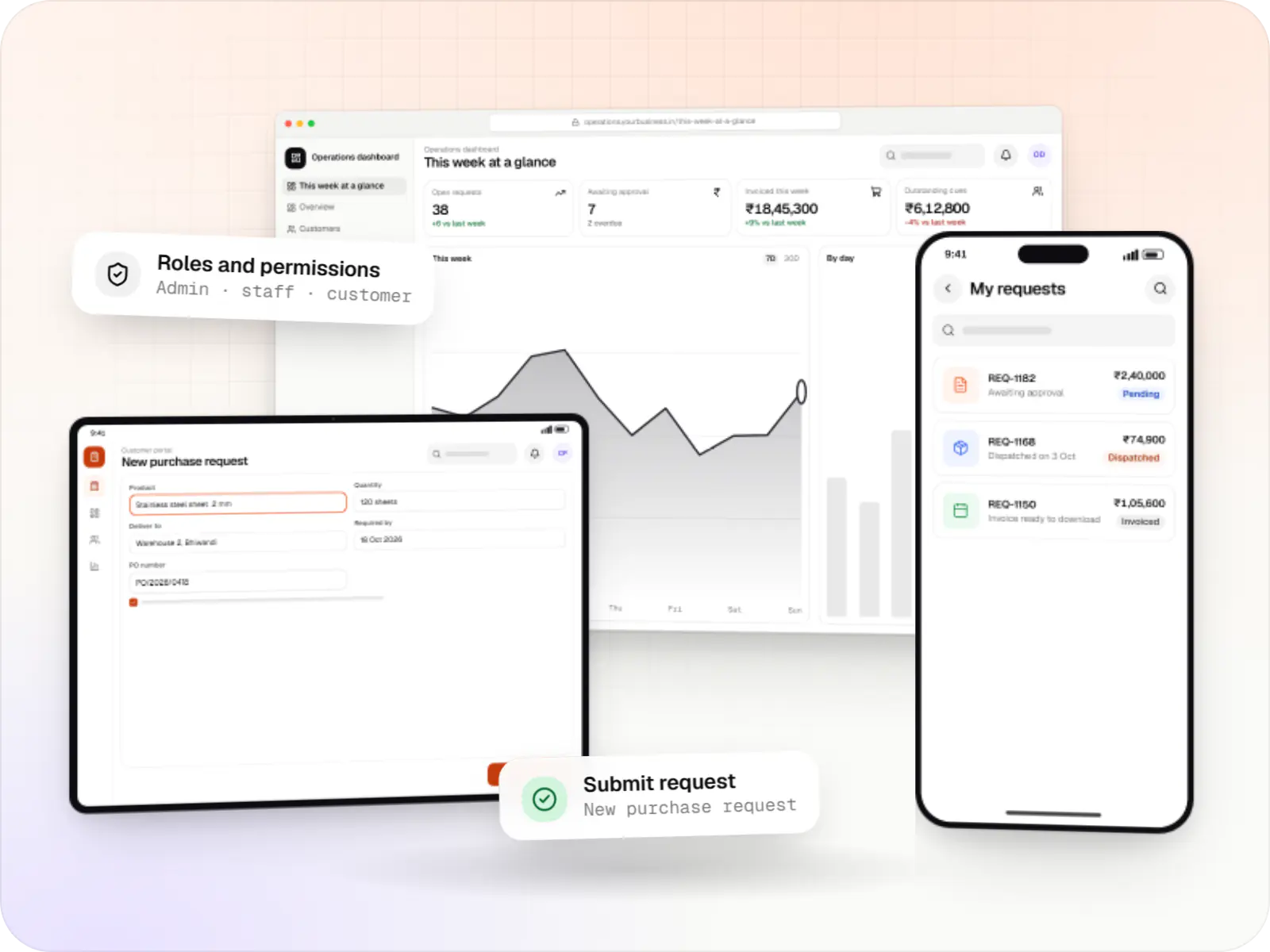
Browser-based products, customer portals, dashboards and internal tools, built on clean data models with secure roles and integrations.
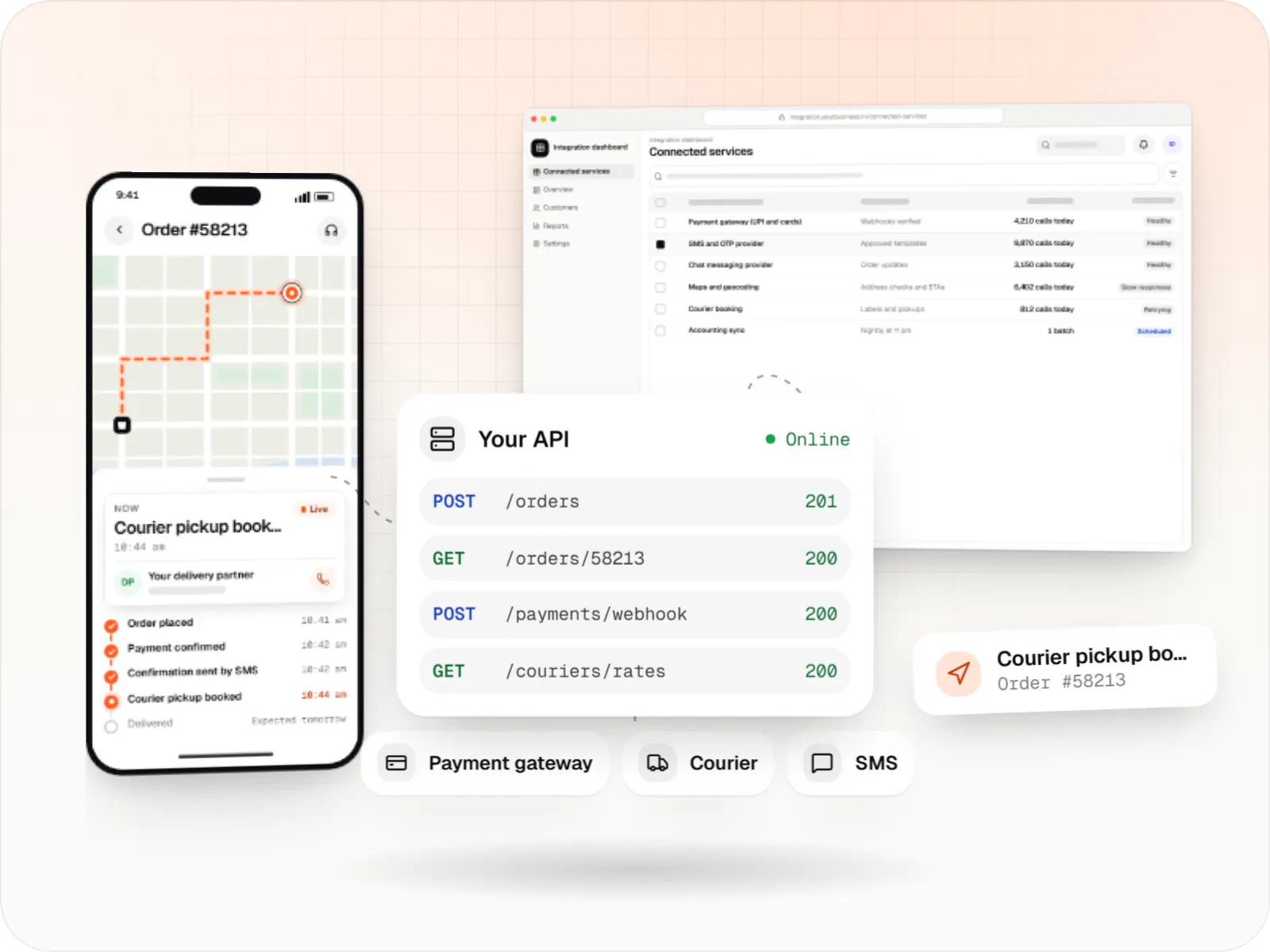
Secure, documented REST and GraphQL APIs, plus integrations that connect your apps to payment, logistics, GST, messaging and business systems.
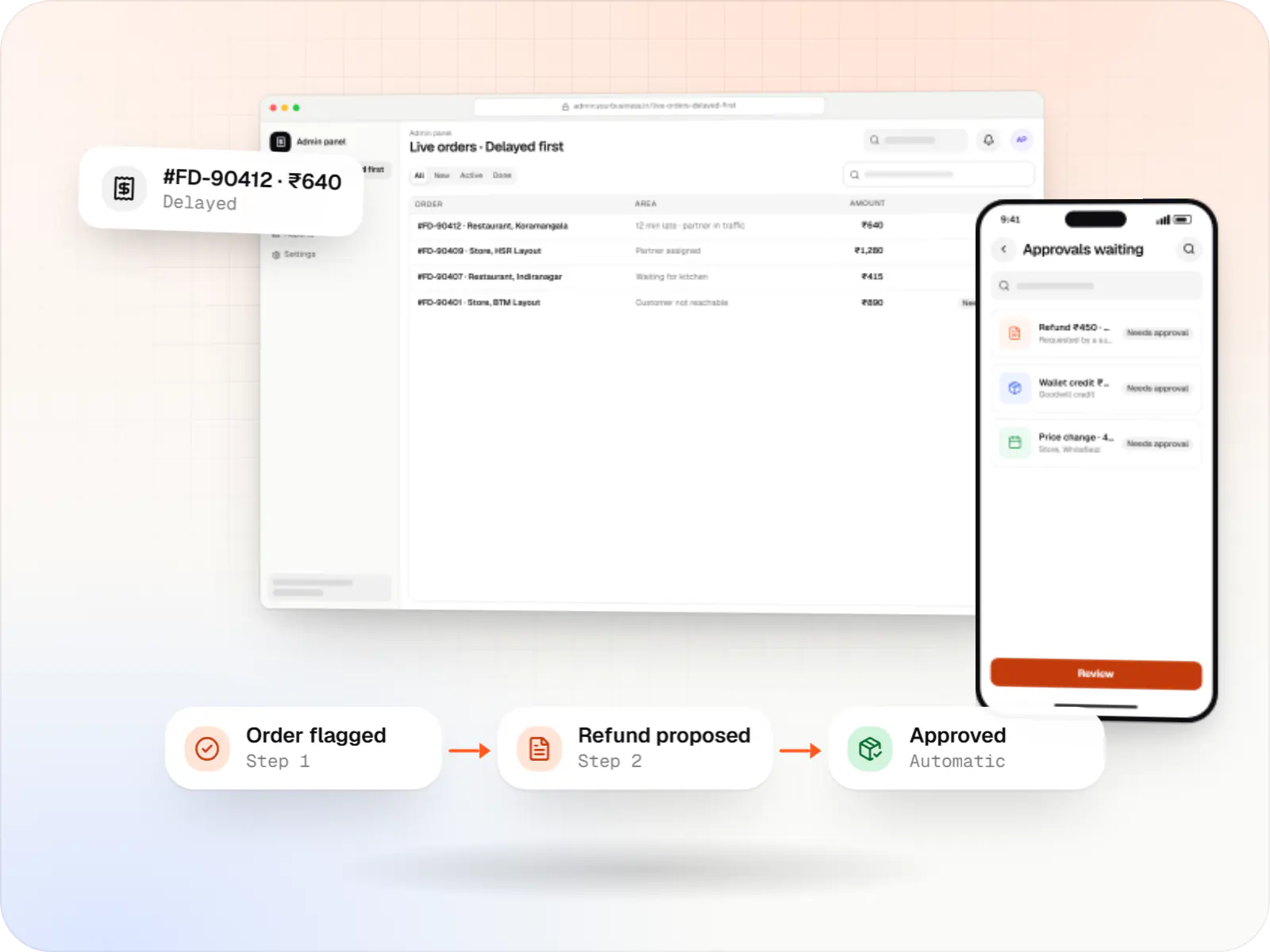
Back-office dashboards built around your team's daily tasks: order queues, approvals, catalogue management, payouts, reports and audit logs.
Work
Illustrative projects that show how we would approach a product in this sector.
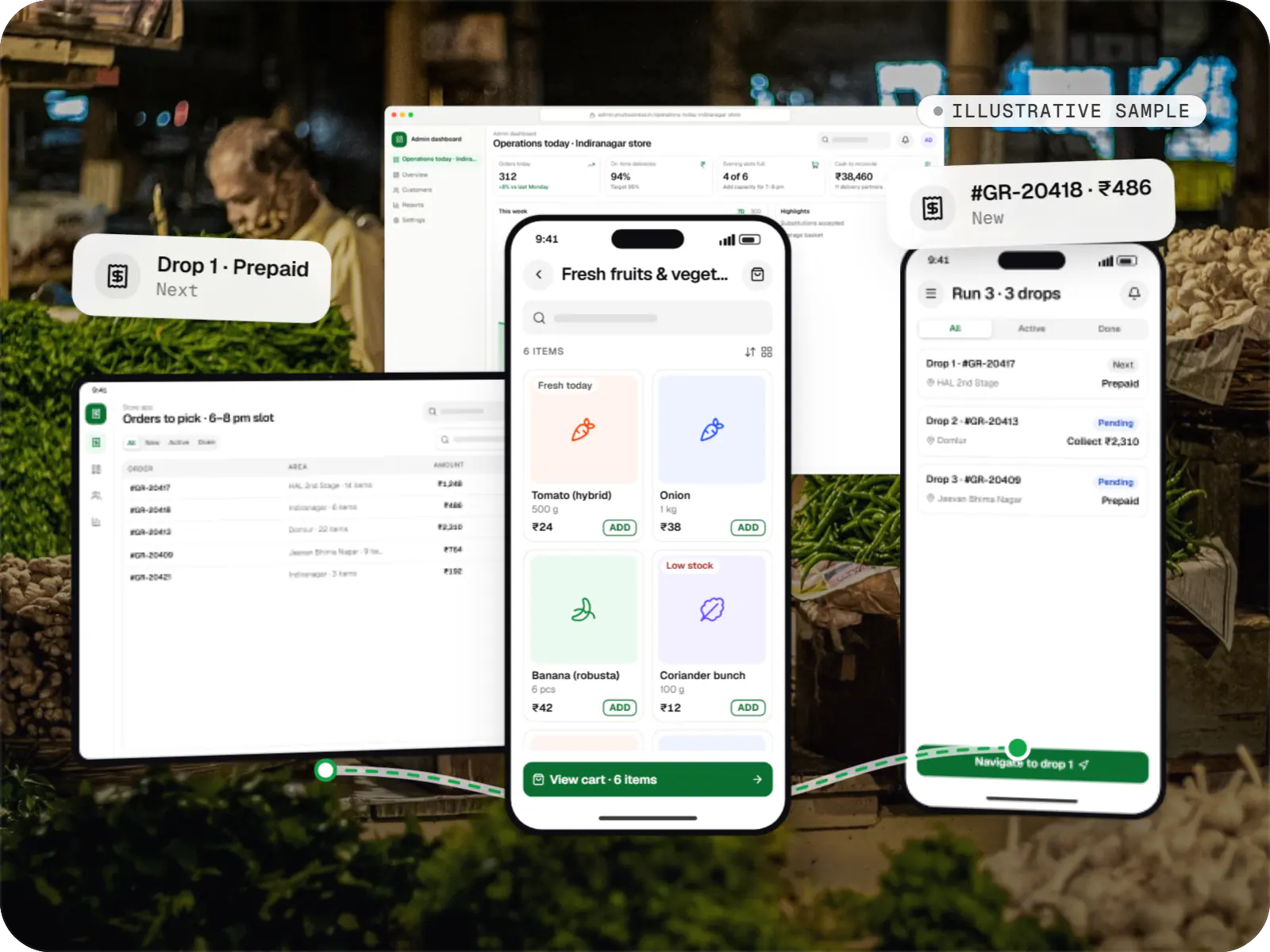
Delivery app development
An illustrative platform for neighbourhood grocery stores: slot or express delivery, store picking, batched delivery runs, and payment by UPI or cash on delivery.
Runs on
Built with
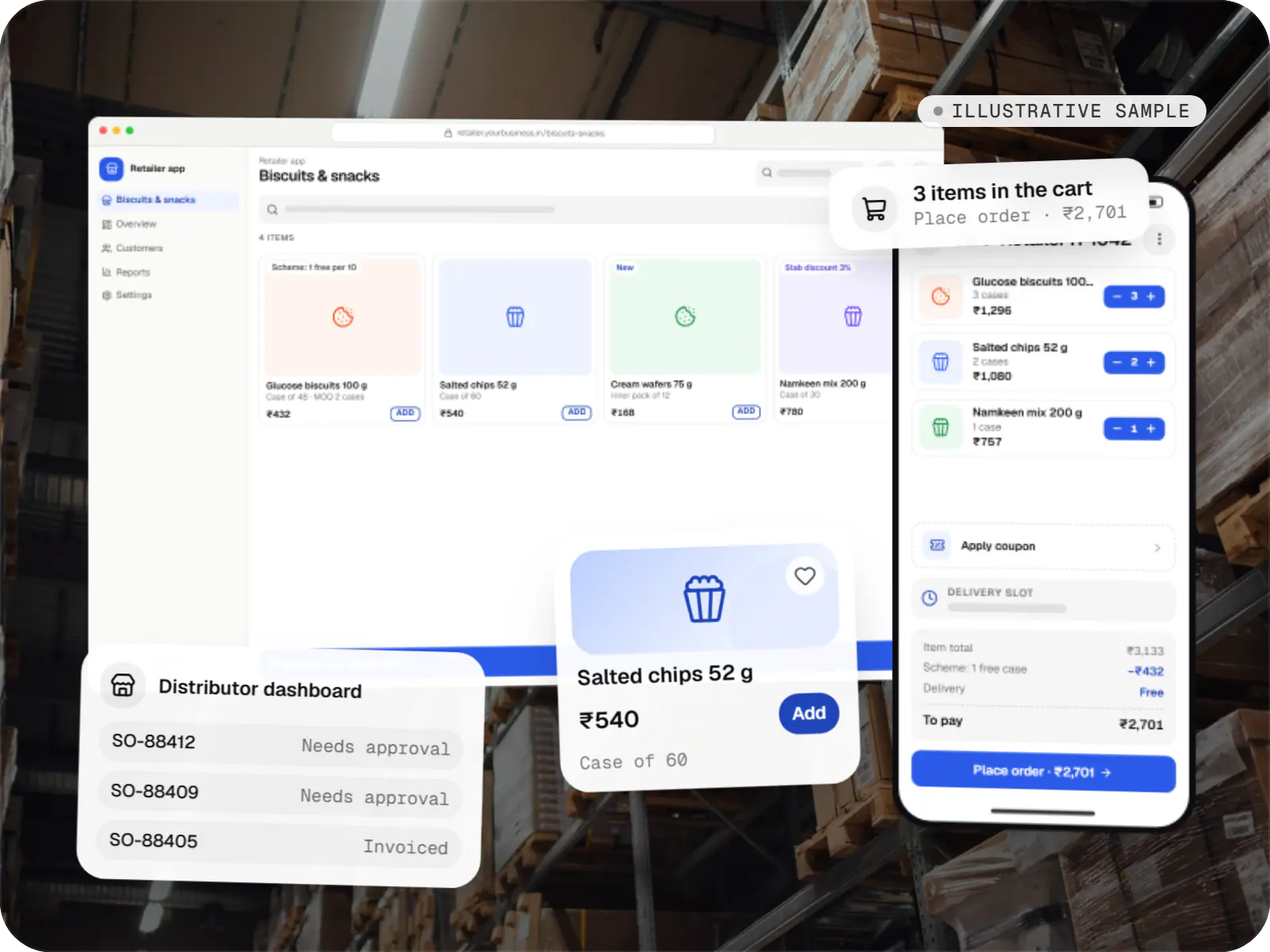
E-commerce & marketplaces
An illustrative ordering app for a distributor's retailers and sales team, with tier pricing, credit limits, trade schemes and GST invoicing.
Runs on
Built with
FAQ
Not necessarily. Some FMCG companies provide a full distributor management system that replaces local billing; others let distributors keep their software and collect data through integrations, uploads or a lightweight portal. Replacement gives cleaner data but needs more training and support. We often suggest a mixed approach: the DMS for new or smaller distributors, integrations for large ones already on stable systems.
Yes, with the right design. We sync only each rep's beat and relevant price lists to the phone, use search and pagination instead of loading everything, and keep heavy reporting on the server. Load testing before rollout covers peaks such as month-end, when order volumes spike across the whole field force at the same time, so sync queues and APIs are sized for them.
ONDC listing works through a seller-side network participant, and we can build or integrate the catalogue, inventory and order flows needed to connect through one. Quick commerce platforms usually work through their own seller portals and purchase orders. In both cases the software task is keeping catalogue data, pricing and stock allocation consistent with your other channels, which we build into the same backend.
Next step
Share how distributors report to you today. We'll propose a route-to-market setup and rollout plan.