

Web
Next.js
A modern web technology for fast, search-friendly websites, online stores and web applications that load quickly on mobile.
Used for
- Business websites
- Online stores
- Web apps
- Customer portals
D2C brand stores
Stores for direct-to-consumer brands that turn ad traffic into first orders, and first orders into repeat customers.
At a glance
What it is
Brand-owned online stores for D2C companies, with conversion-focused checkout, retention tools, server-side tracking and multichannel stock sync.
How to start
Tell us what you need in your own words. You talk to the developers who would build it and get a written, line-item estimate.
Get a project estimateMost D2C brands pay to acquire nearly every first customer, so the store has two measurable jobs: convert that traffic efficiently and bring the customer back without paying again. Theme-based stores get a brand started, but as campaigns, bundles and channels multiply, stacked apps slow pages down and clash at checkout.
Our D2C e-commerce development focuses on what moves those numbers: fast campaign landing pages, a short checkout, clean conversion data for ad platforms and retention flows the brand owns.
Challenges
Browser tracking loses events to blockers and privacy settings, so ad platforms optimise on partial data.
Separate apps for reviews, bundles and loyalty add scripts that slow pages and clash at checkout.
Inventory split between your site, marketplaces and quick-commerce leads to overselling.
Without purchase-cycle data and consented messaging, retention leans on discounts.
What is included
Platform: Website
Platform: Website and app
Platform: Website, app and WhatsApp
Platform: Admin dashboard
How it works
A D2C store has two jobs: convert the traffic you paid for, then bring that customer back without paying again.
A fast page built from reusable sections matches the ad’s promise and shows the product, customer photos and the offer.
Saved addresses and UPI make paying quick, while a prepaid discount or partial COD lowers the risk of returns.
The order is sent to ad platforms with hashed identifiers, so campaigns learn from complete data rather than what browser scripts caught.
The sale reduces stock everywhere you sell, keeping marketplace and quick-commerce listings accurate.
Delivery updates go out on the channels the customer opted into, and each marketing consent is logged separately.
Timed to the product’s usual cycle, a reminder, loyalty points or a subscribe-and-save offer brings the customer back.
Then it starts again at step 1: Shopper clicks an ad
Integrations
Server-side events with hashed identifiers.
Optional one-click checkout with address prefill and COD risk checks.
Opt-in order updates, reorder nudges and support.
Stock and order sync with Amazon, Flipkart and other channels.
Labels and tracking, with NDR data feeding COD rules.
Raw event data for cohort analysis.
Platforms
A fast website customers can install as a web app, optional apps for Android and iOS aimed at loyal buyers, and an admin dashboard for orders, stock and retention.
Marketing and content websites: fast, search-friendly pages with a CMS your team can update without a developer.
Installable web apps with offline support and notifications, useful when an app-store listing isn't essential or phones have little storage.
Apps for Android phones and tablets, tested on budget and mid-range devices and published on Google Play or privately.
Apps for iPhone and iPad, built to Apple's guidelines and released through TestFlight and the App Store.
Back-office panels for operations, support and finance teams: orders, users, content, reports and permissions.
Technology
Next.js and React for quick campaign and product pages, Node.js and PostgreSQL for orders, loyalty and consent records, Razorpay for prepaid-first checkout, and hosting built on AWS.
Web
A modern web technology for fast, search-friendly websites, online stores and web applications that load quickly on mobile.
Used for
Web
Builds interactive screens in the browser, such as dashboards, admin panels and portals, that respond instantly as your team works.
Used for
Backend
Runs the server side of apps: fast, scalable back ends that power your app, website and integrations.
Used for
Backend
A structured way to build back ends on Node.js, so large business systems stay organised, testable and easy to hand over.
Used for
Data
A reliable database for the records your business runs on: orders, payments, bookings and stock, kept accurate and easy to report on.
Used for
Payments & maps
Lets customers in India pay by UPI, cards, netbanking or wallets, and handles subscriptions, refunds and payouts to sellers or partners.
Used for
Cloud & DevOps
Cloud hosting for your app, website and data, with data centres in India and room to grow when traffic rises.
Used for
Plain-English glossary
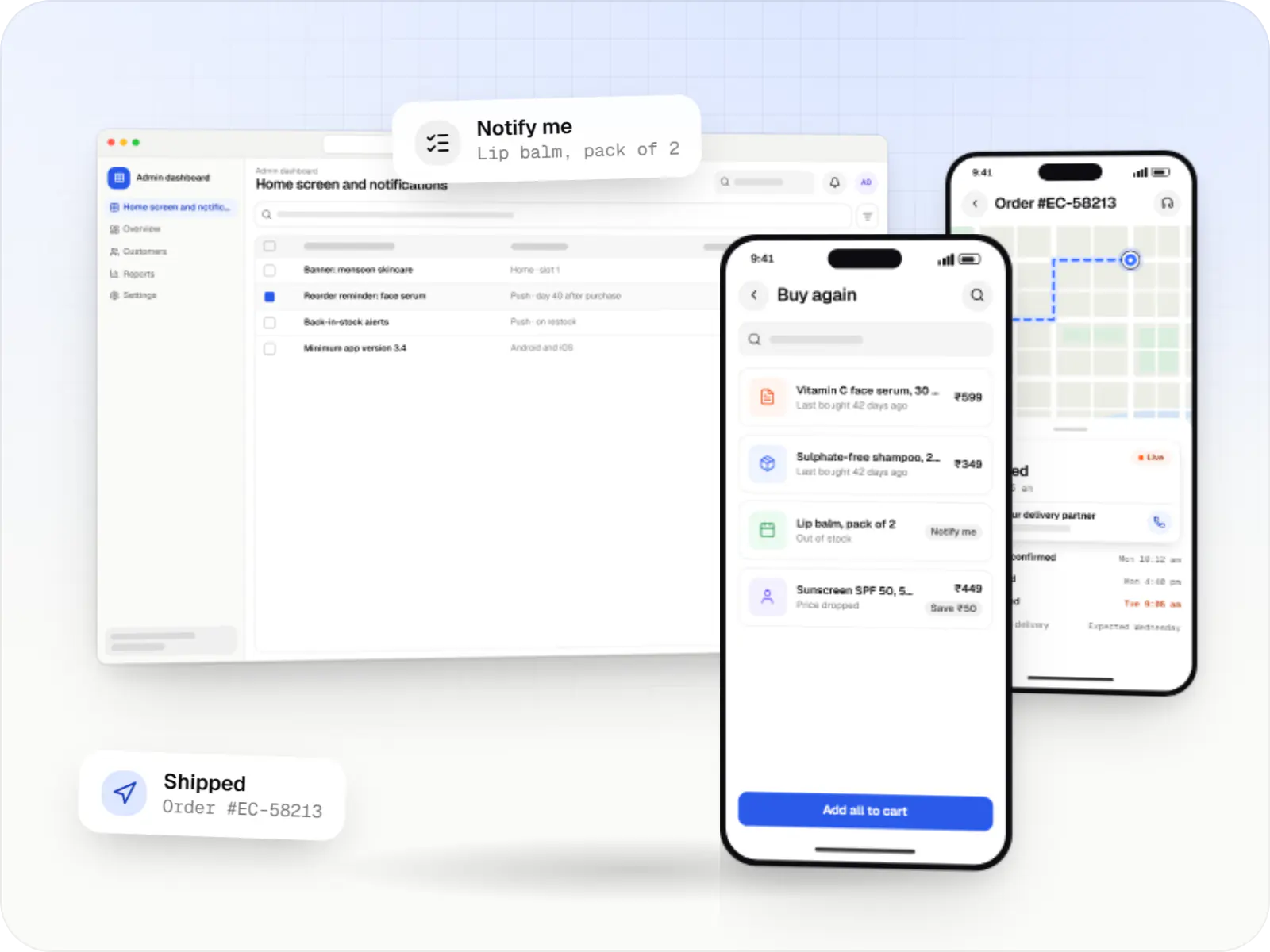
Product preview
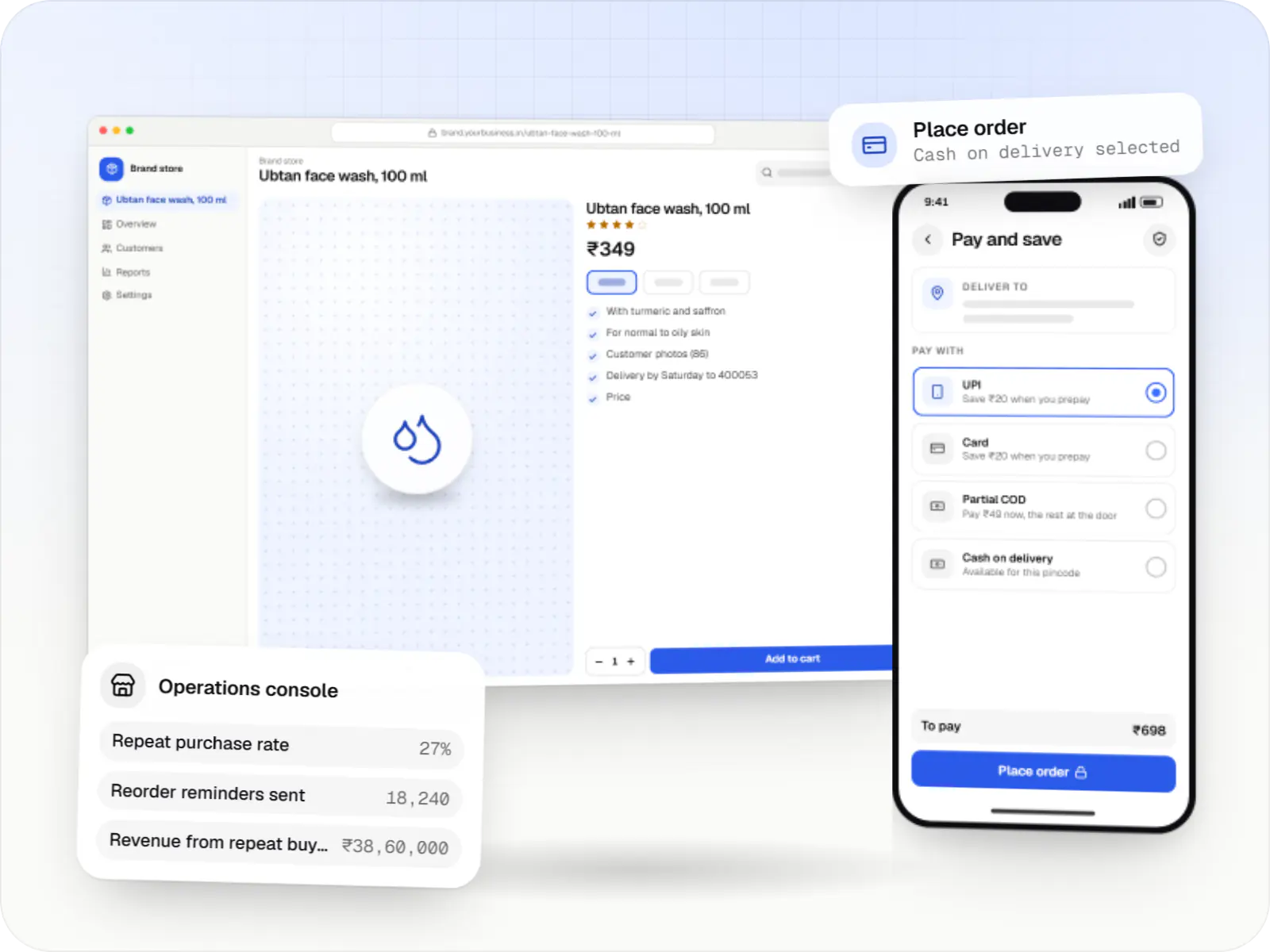
Illustrative screens, using a skincare brand’s own store as the example.
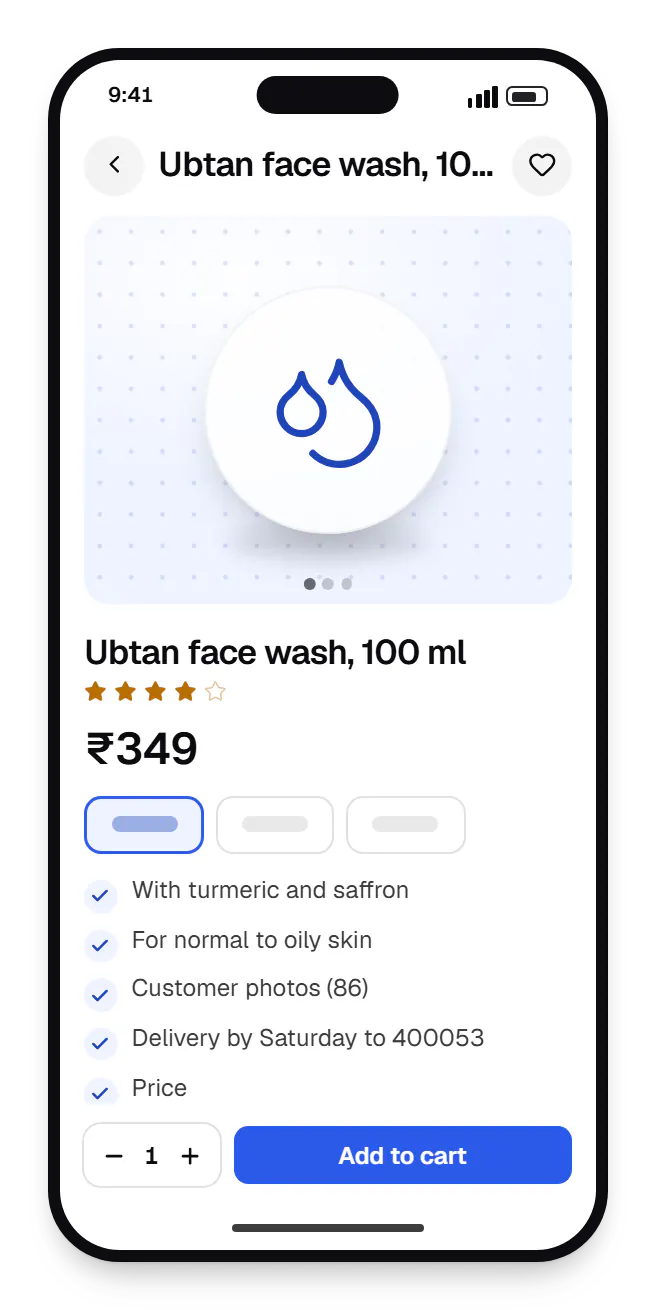
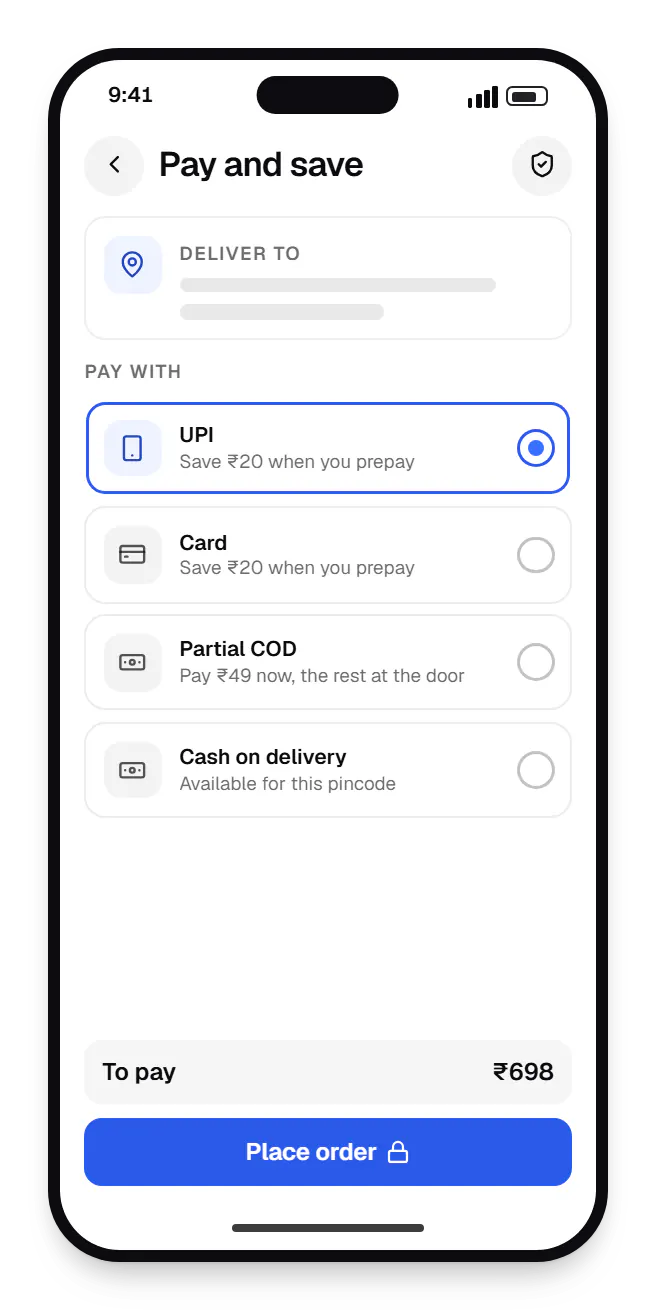
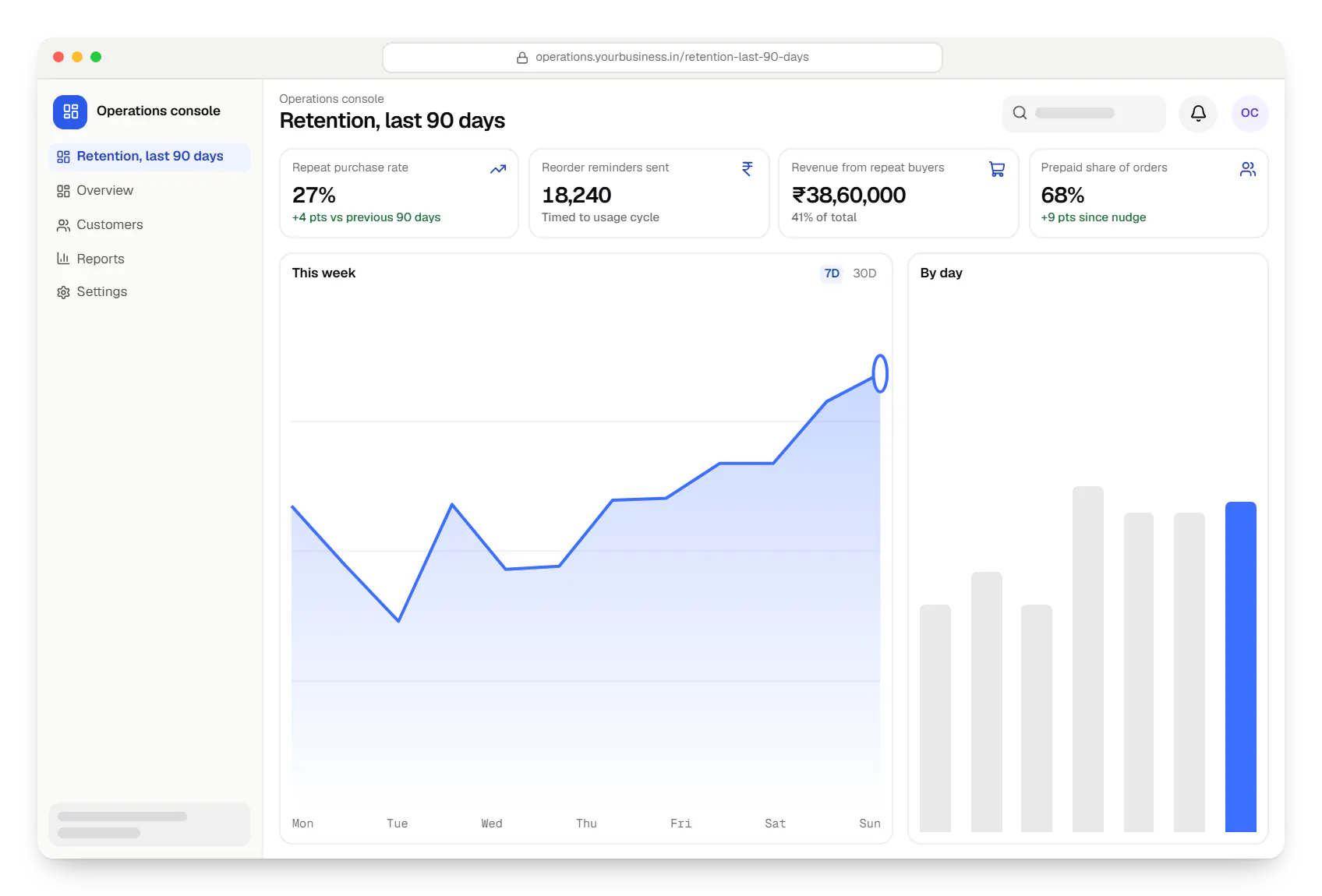
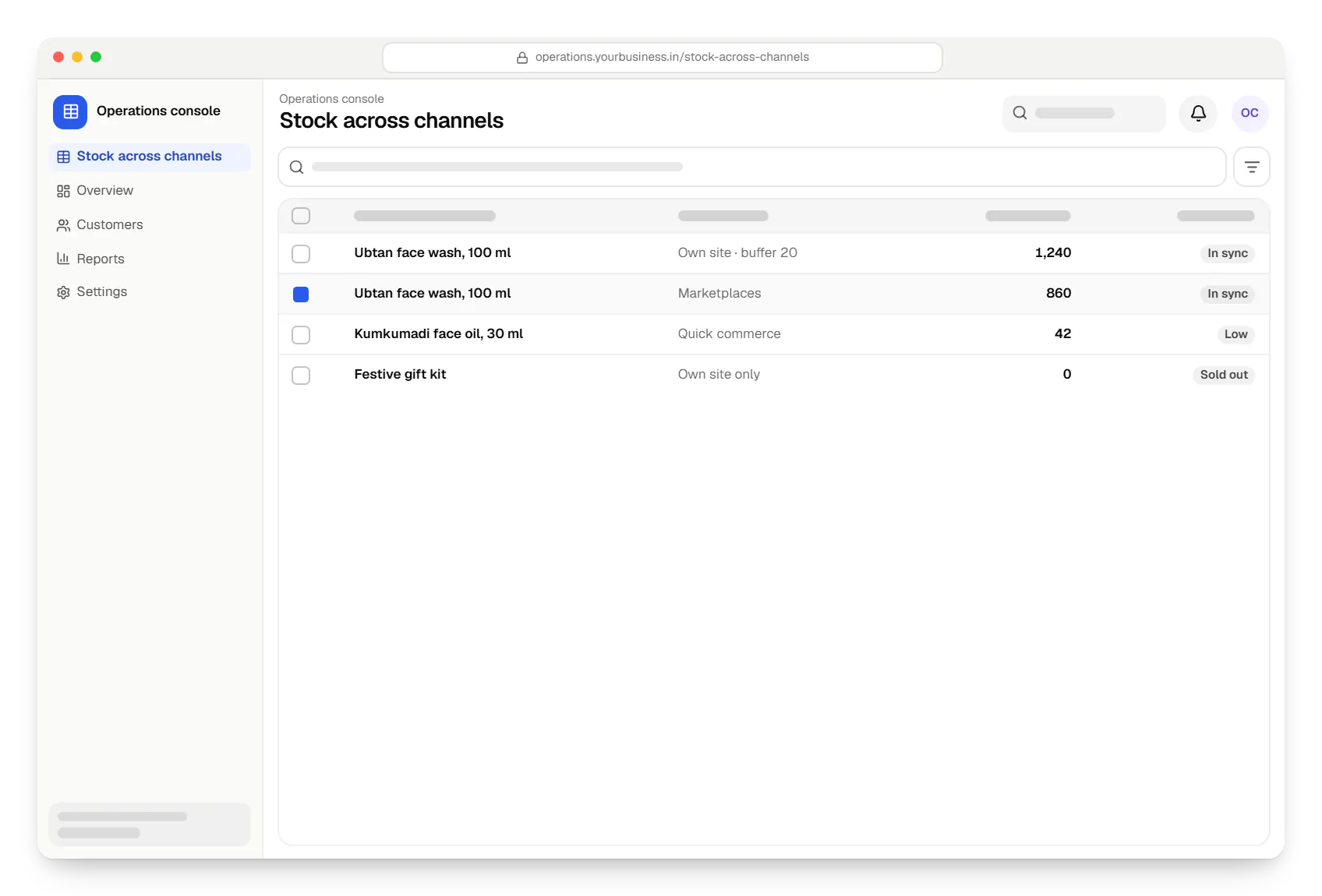
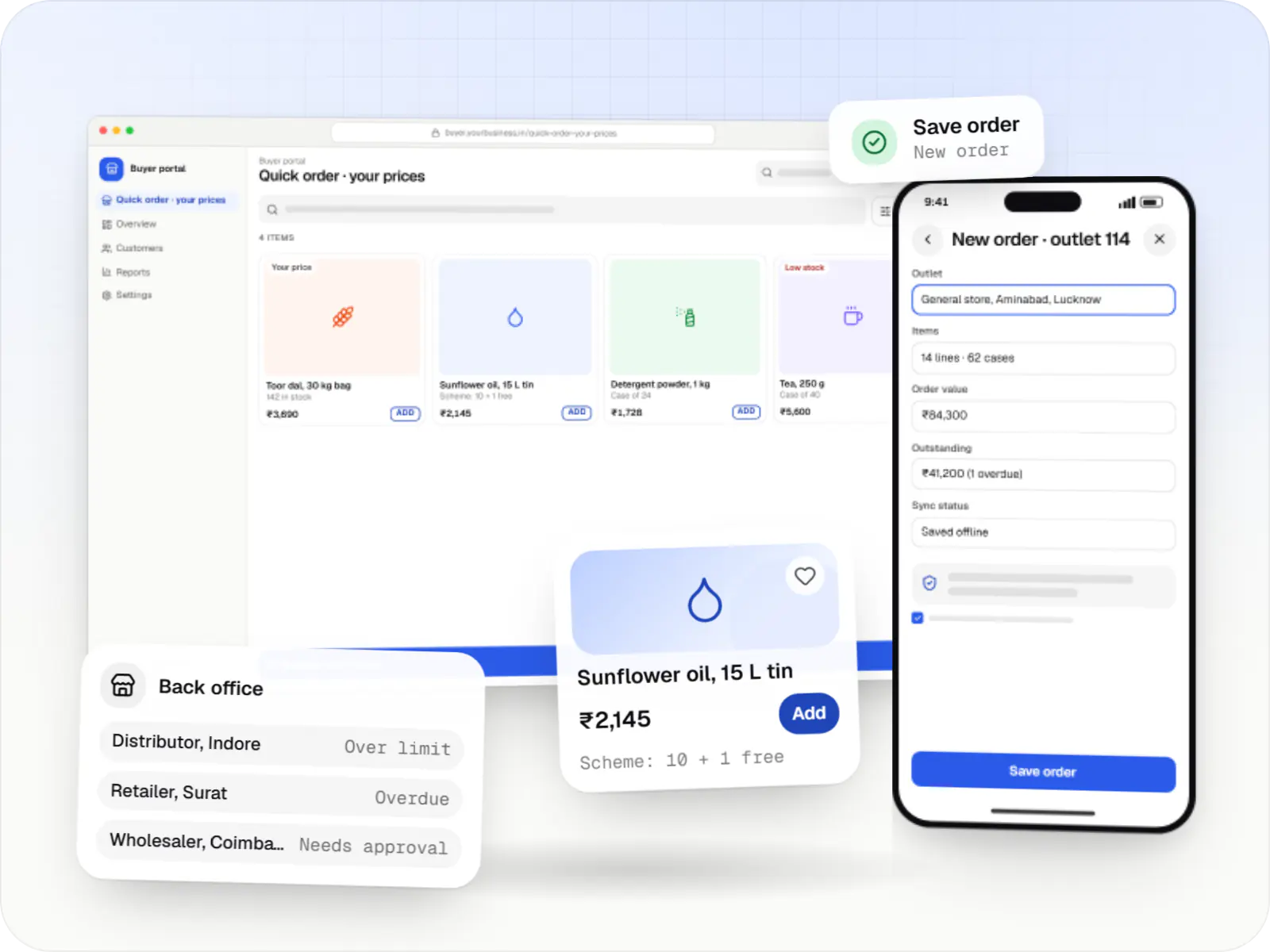
Sample screens: names, prices and figures are examples, not client data.
Industries
Services
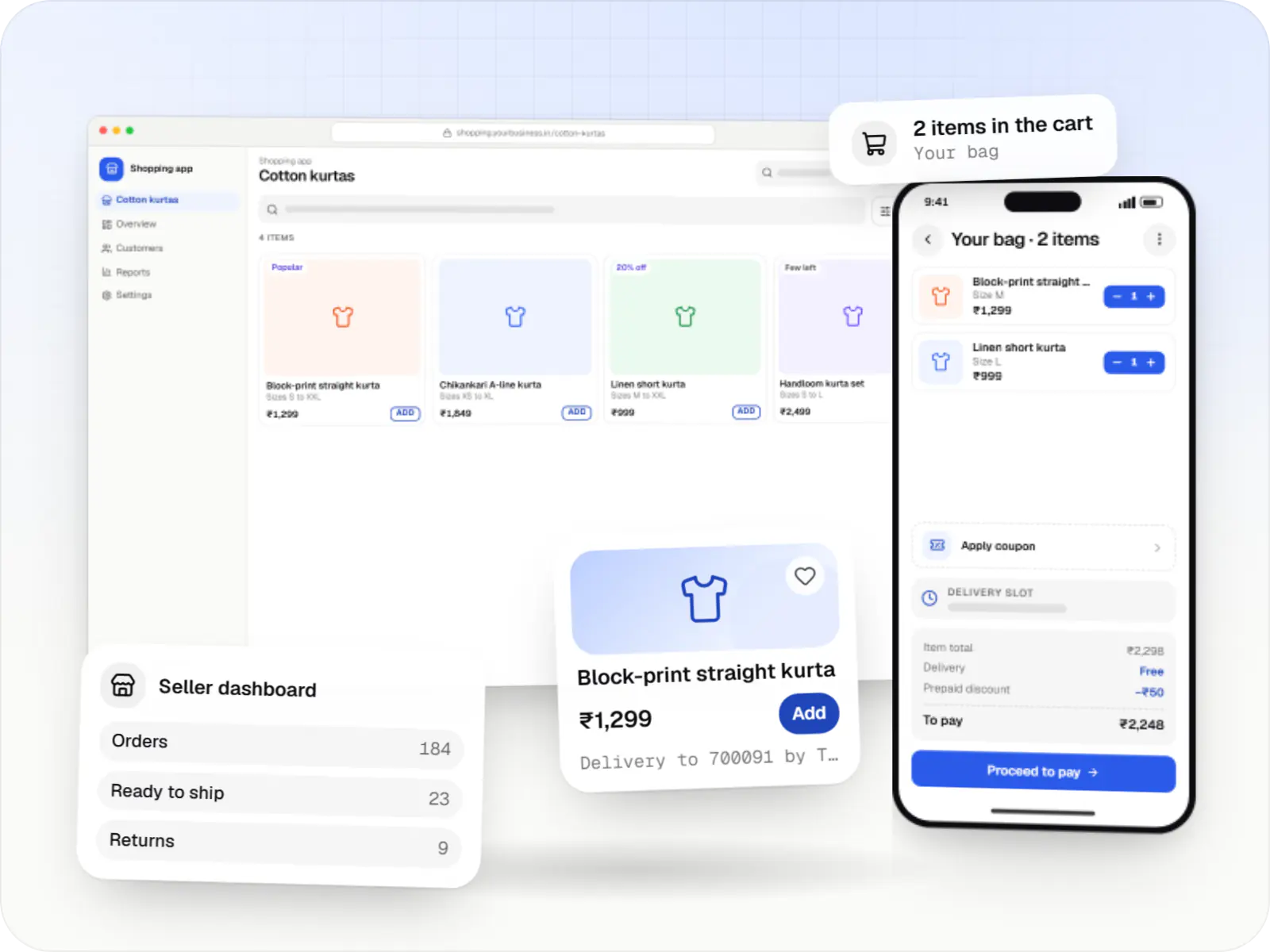
Online stores, shopping apps and B2B ordering portals on Shopify, WooCommerce or custom stacks, wired to Indian payments, couriers and GST invoicing.
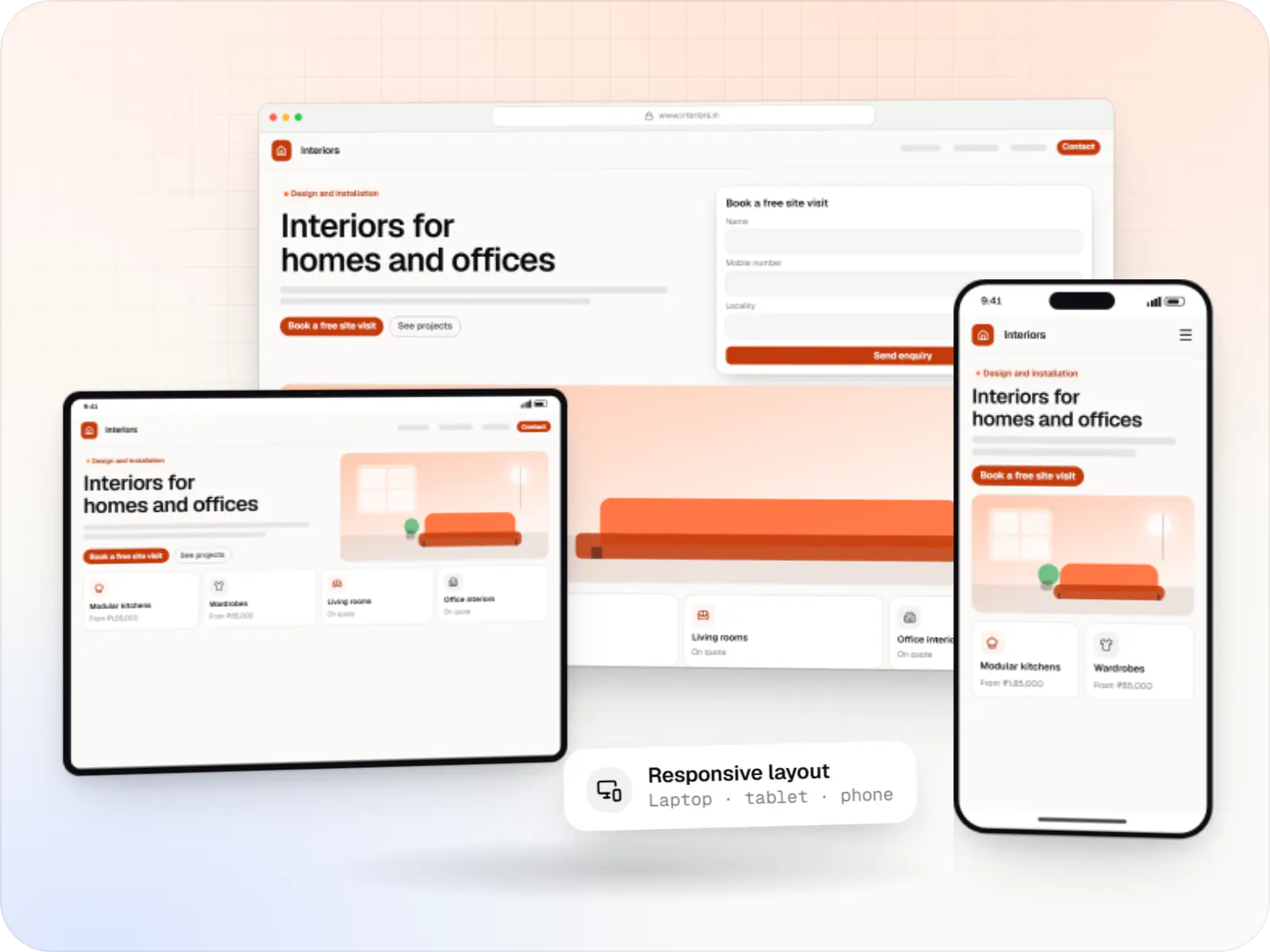
Fast, SEO-ready company and marketing websites with a CMS your team can edit, designed and built by our in-house team.
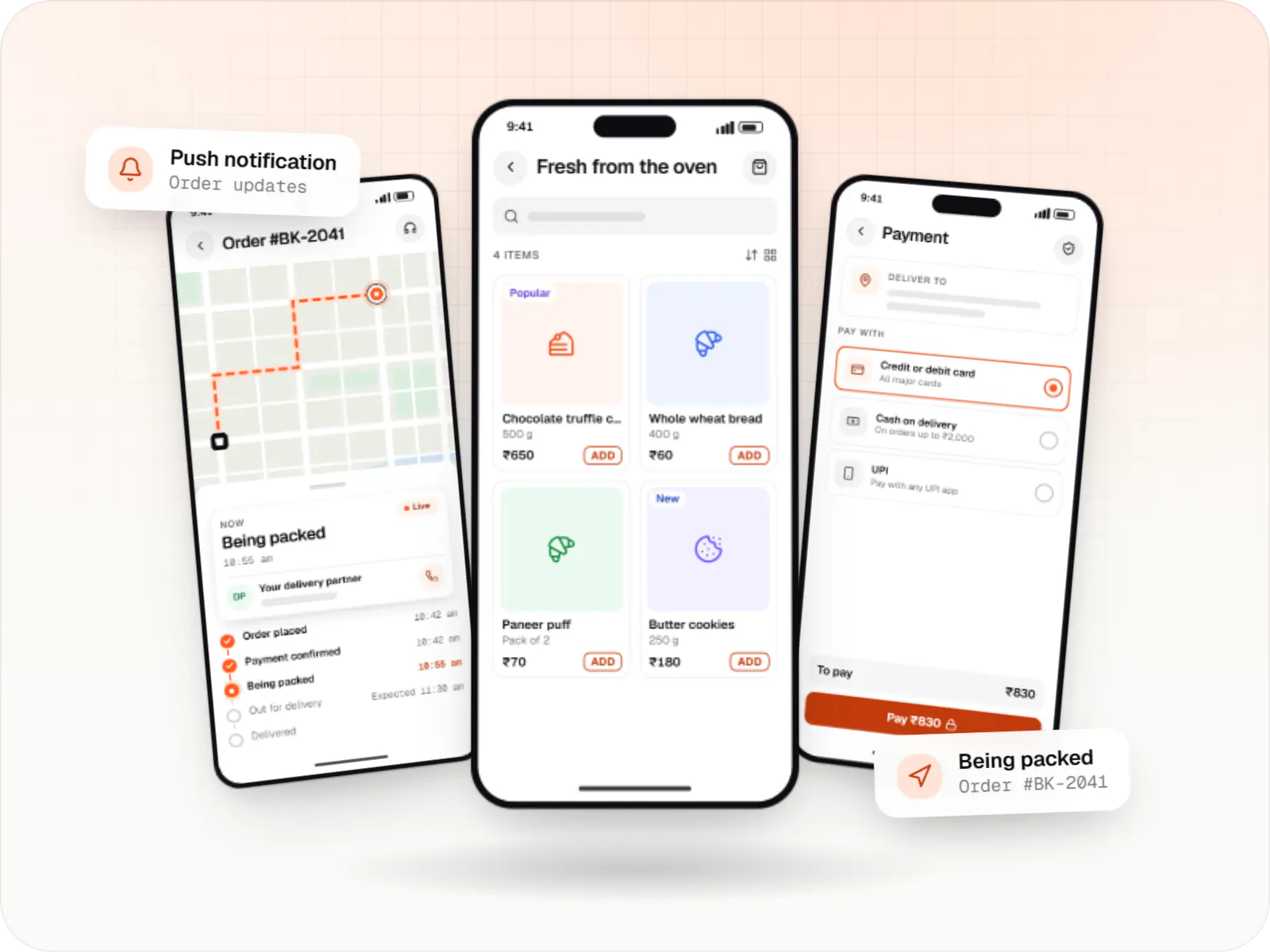
Native and cross-platform Android and iOS apps, from first release through regular store updates, built by our in-house designers and engineers.
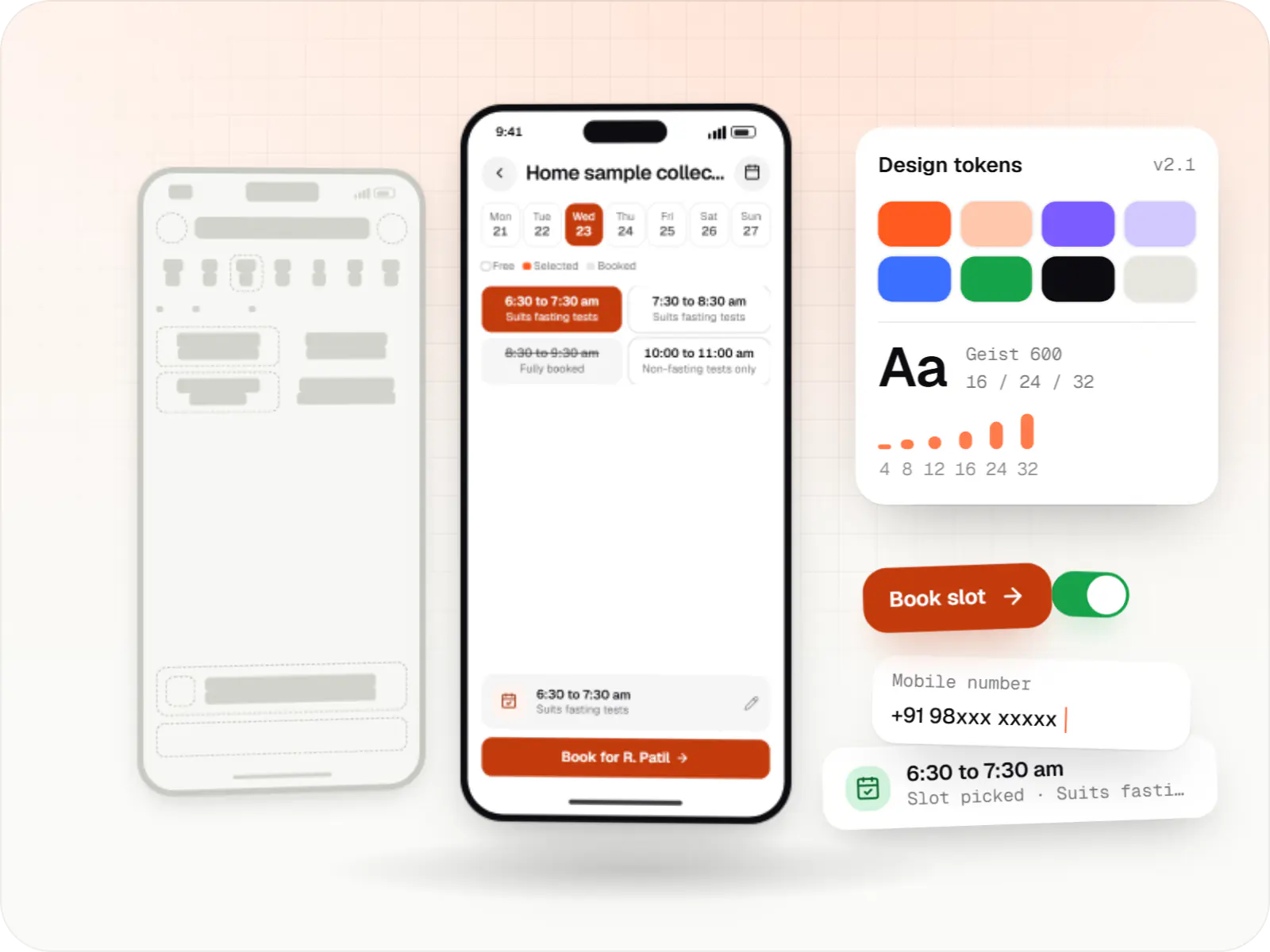
Product design for web and mobile apps: research, user flows, wireframes, prototypes and design systems that engineers can build from.
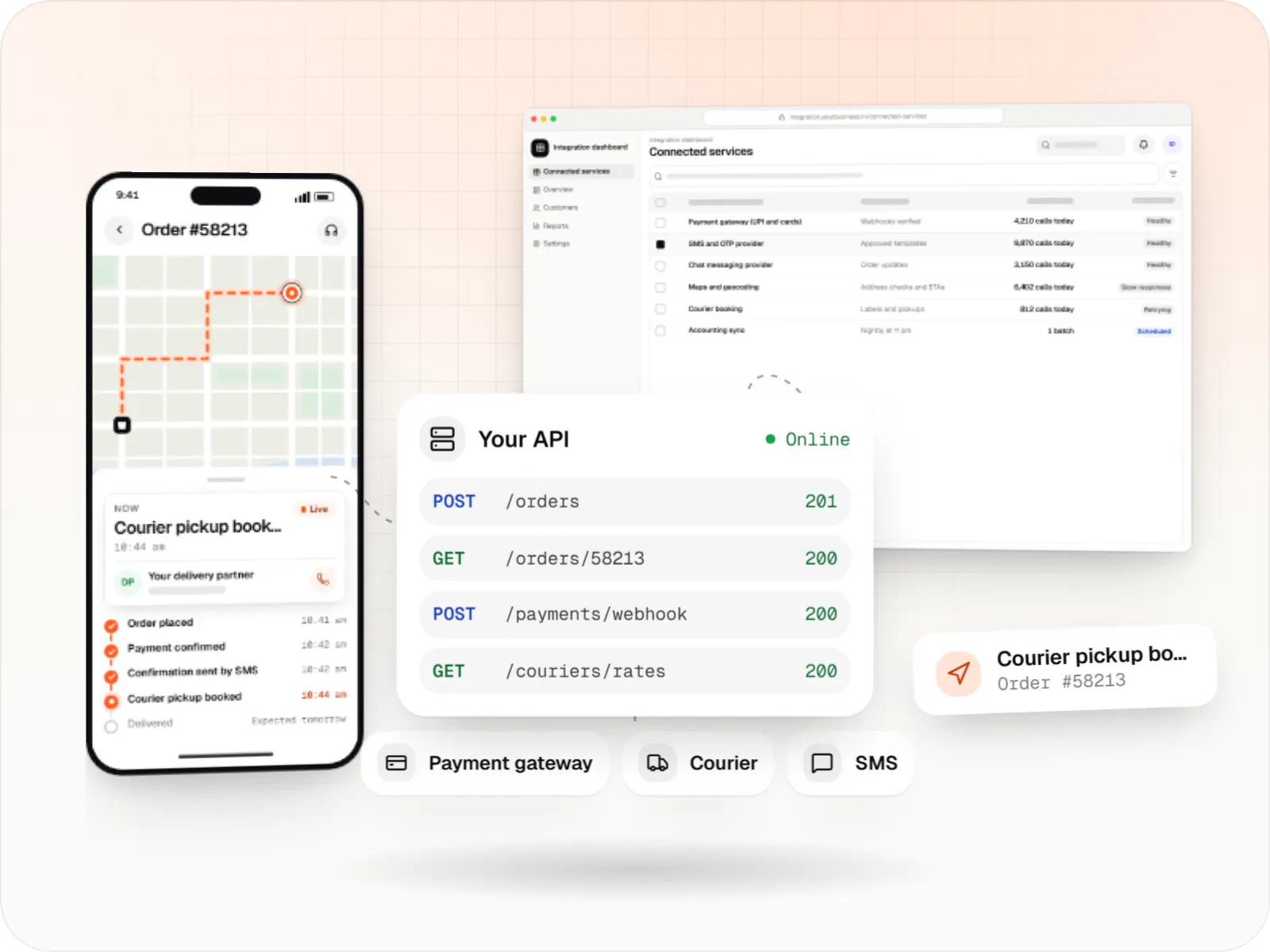
Secure, documented REST and GraphQL APIs, plus integrations that connect your apps to payment, logistics, GST, messaging and business systems.
Cost drivers
A custom theme on a hosted platform is quicker; a custom build suits unusual bundles, subscriptions or several storefronts.
Server-side events, consent handling and a warehouse for cohorts are separate workstreams.
Loyalty, referrals and subscribe-and-save each need rules, admin screens and edge cases.
Connecting an OMS for marketplaces and quick-commerce adds mapping and testing.
Estimates are written from your scope, with the effort and assumptions behind each line item.
How pricing worksFAQ
The commerce features overlap, but the priorities differ. A D2C store is judged on how well it converts paid traffic and how often customers return, so we put more effort into landing-page speed, clean conversion tracking, prepaid nudges and retention tools such as reorder reminders and loyalty. It also has to stay in step with the brand's marketplace and quick-commerce listings.
Yes. We send purchases and other key events from the server using the Meta Conversions API and Google's enhanced conversions, hashing identifiers such as email or phone before they leave your system and deduplicating against browser events. Ad platforms then get more complete data to optimise on. We also document which events fire where, so marketing can trust the numbers.
Use one source of truth for inventory, usually an order management system such as Unicommerce or EasyEcom, or your ERP. Your store reads available stock from it and pushes orders back in near real time, while the OMS manages marketplace listings. Safety buffers per channel for fast movers stop a sale on one channel overselling on another.
The Digital Personal Data Protection Act, 2023 expects consent to be specific, informed and easy to withdraw. In practice we build separate opt-ins for WhatsApp, SMS and email marketing, record when and how each was given, honour withdrawals across tools, and keep marketing data apart from what is needed to fulfil orders. Your legal adviser should review the final notices and policy.
Related
Next step
Show us your current store, ad channels and the metrics you track. We will point out quick wins and plan a build for your next stage.