


Web
Next.js
A modern web technology for fast, search-friendly websites, online stores and web applications that load quickly on mobile.
Used for
- Business websites
- Online stores
- Web apps
- Customer portals
Industries · Consumer goods
Connect the dealer network, the warranty card and the service visit into one customer record.
At a glance
What it is
Software for durable consumer goods brands: dealer ordering, product registration, warranty claims, service requests and D2C sales.
For makers of appliances, kitchenware, personal care devices, toys, luggage and other durable products sold through dealers, retailers and online.
Flutter and the related logo are trademarks of Google LLC. We are not endorsed by or affiliated with Google LLC.
How to start
Tell us what you need in your own words. You talk to the developers who would build it and get a written, line-item estimate.
Get a project estimateUnlike fast-moving goods, a durable product keeps generating work long after purchase: installation, warranty registration, service visits, spare parts and eventually an upgrade. Much of that sits with dealers and service partners, so the brand rarely sees the full picture.
We build software that follows the product: QR-based registration on the box, warranty validation by serial number, service requests routed to the nearest technician, and a dealer portal for orders and claims. The same data then powers a direct online channel.
Challenges
Registrations are lost or never made, so warranty checks turn into disputes.
Complaints arrive by phone and email with no tracking or technician visibility.
Parts stock is not linked to failure patterns or the installed base.
Orders, schemes and claims run through calls and spreadsheets.
Solutions
Across 3 areas
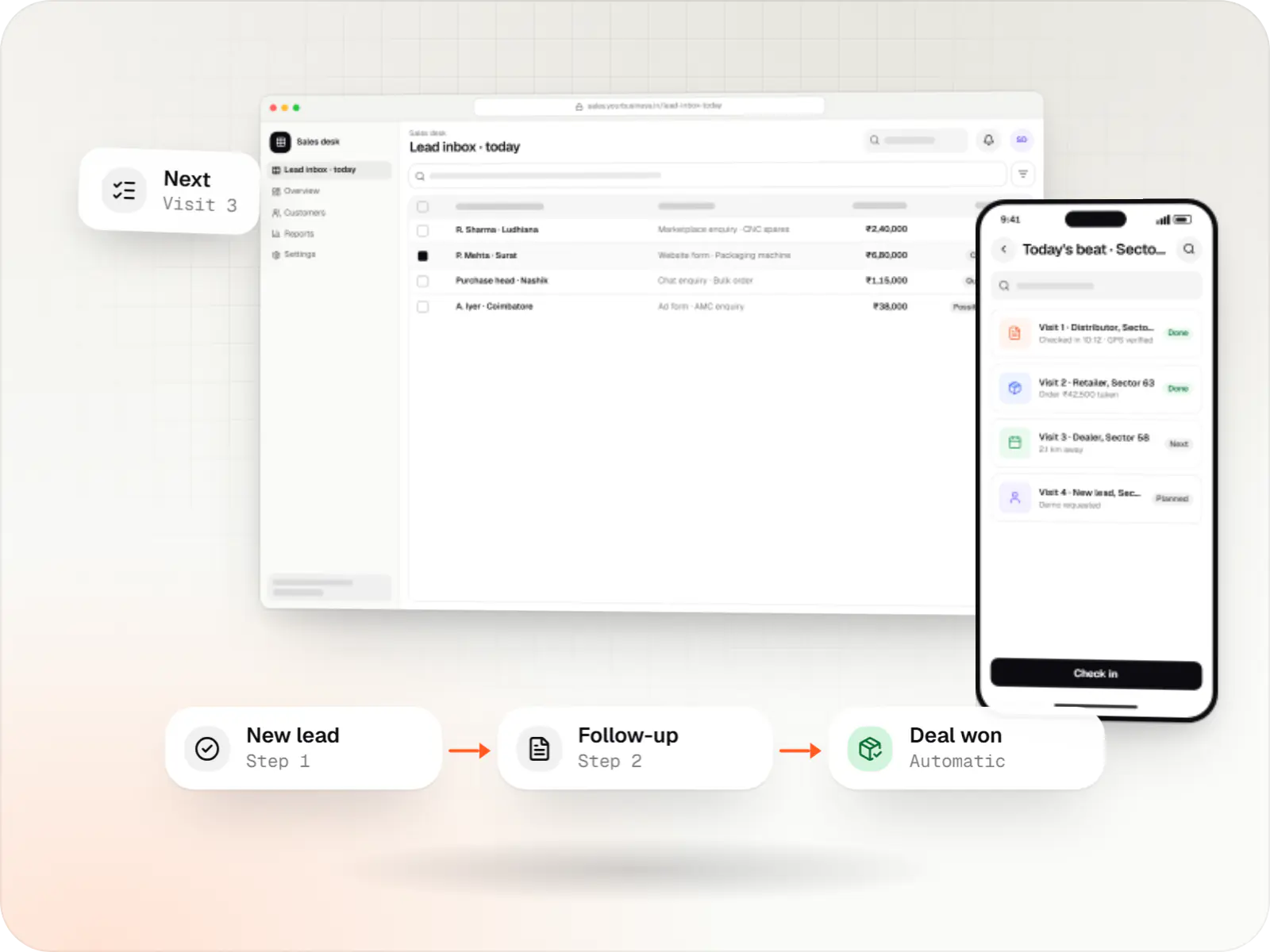
Custom CRM software that captures leads from every channel, keeps follow-ups on schedule and shows managers a live pipeline.
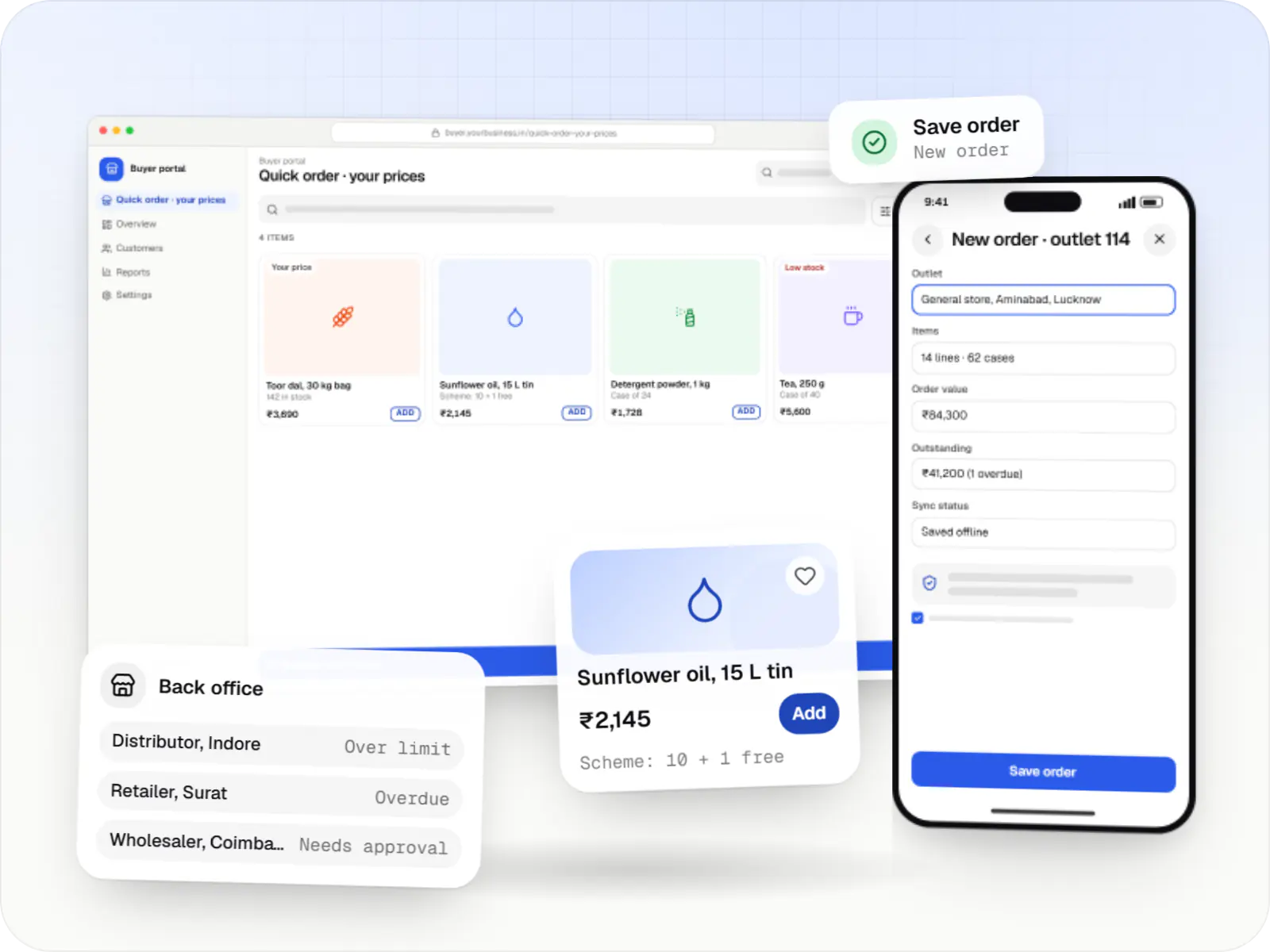
Ordering portals and apps for manufacturers, distributors and wholesalers, with buyer-specific pricing, credit limits, bulk ordering and ERP sync.
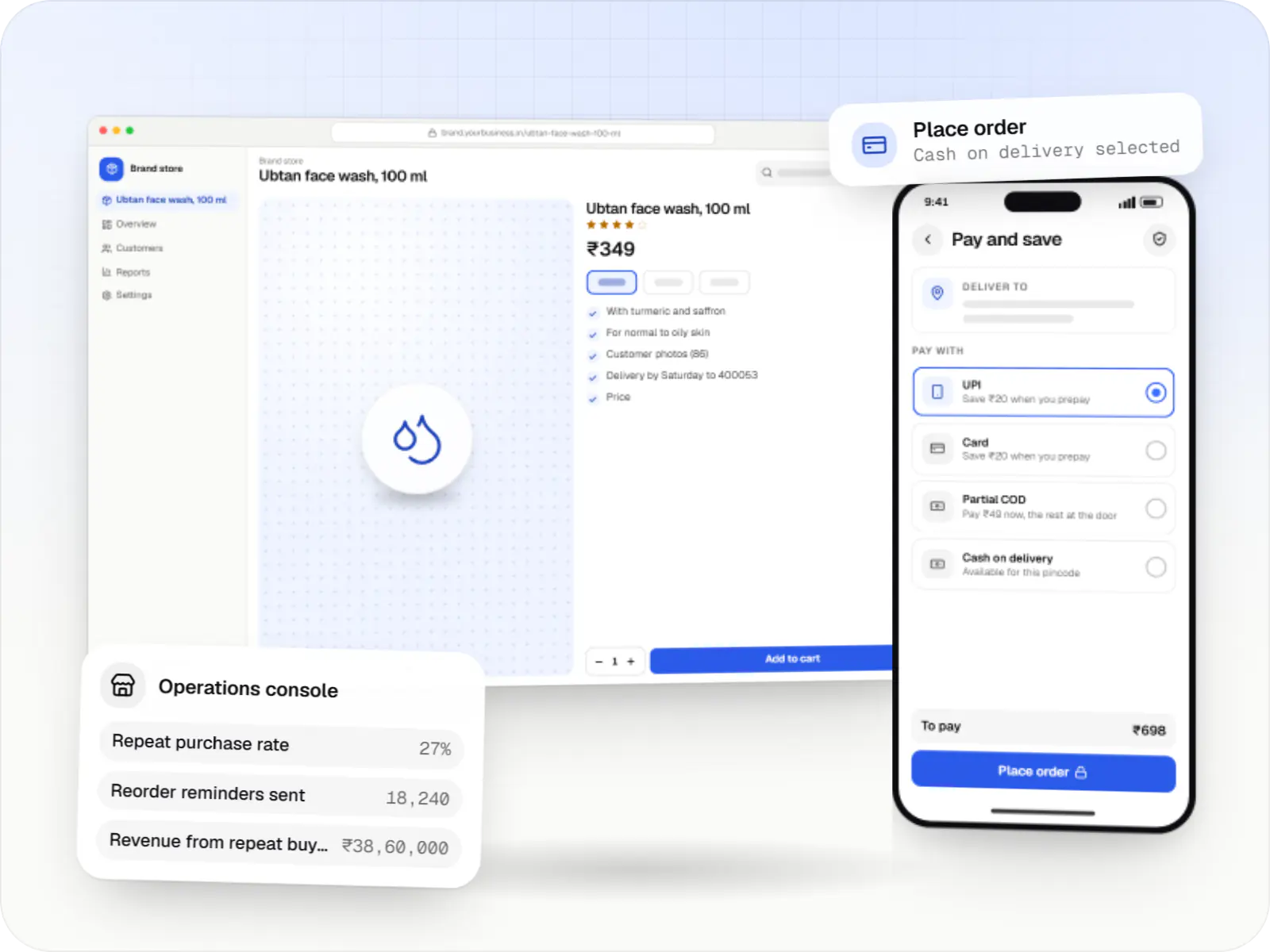
Brand-owned online stores for D2C companies, with conversion-focused checkout, retention tools, server-side tracking and multichannel stock sync.
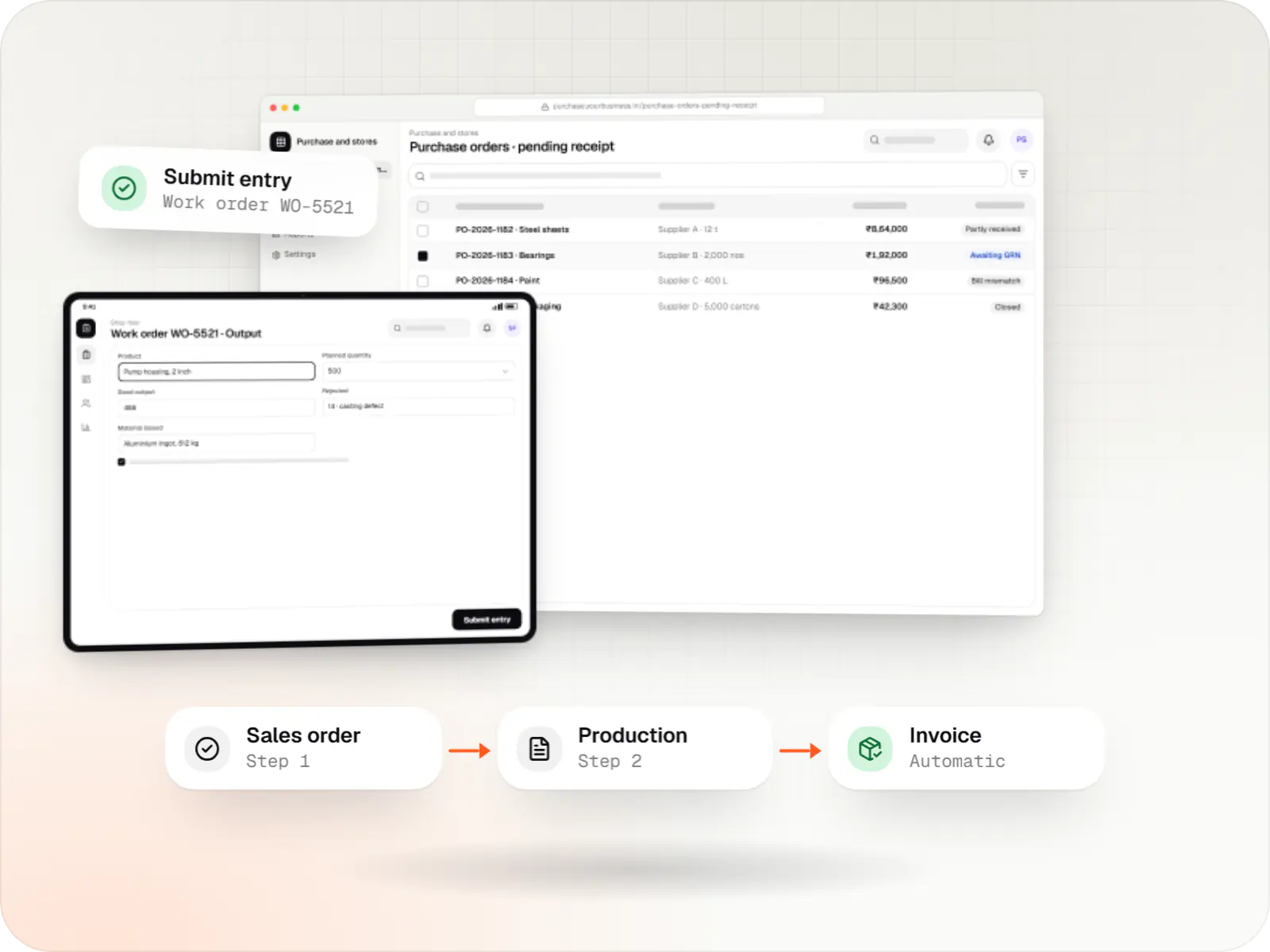
Custom ERP software connecting purchase, inventory, production, sales and GST compliance, alongside your existing accounting system.
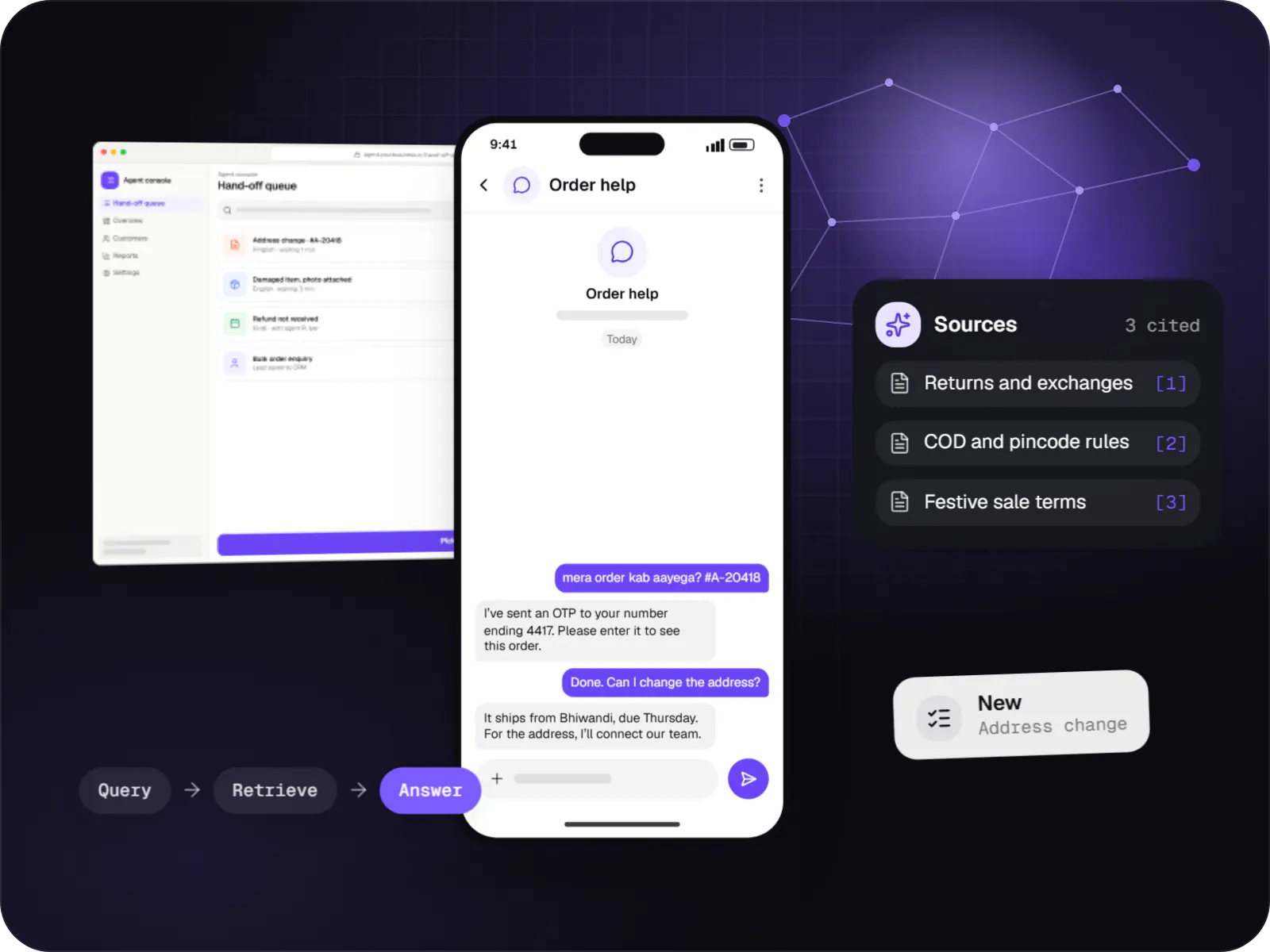
Support and sales chatbots for web, app and WhatsApp that answer from your own content and hand off to your team.
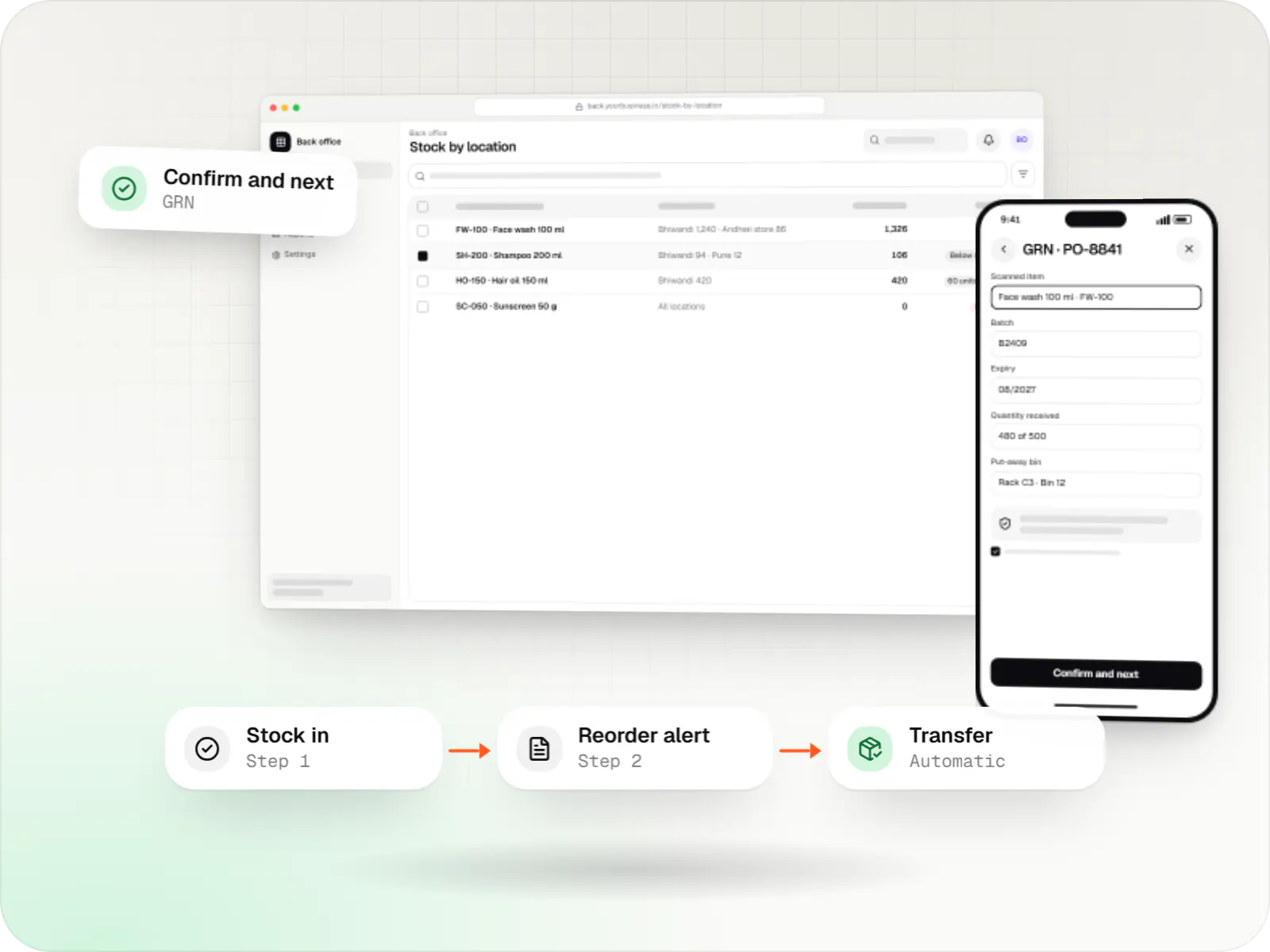
Custom inventory software for multi-location stock, batch and expiry tracking, barcode scanning and marketplace stock sync.
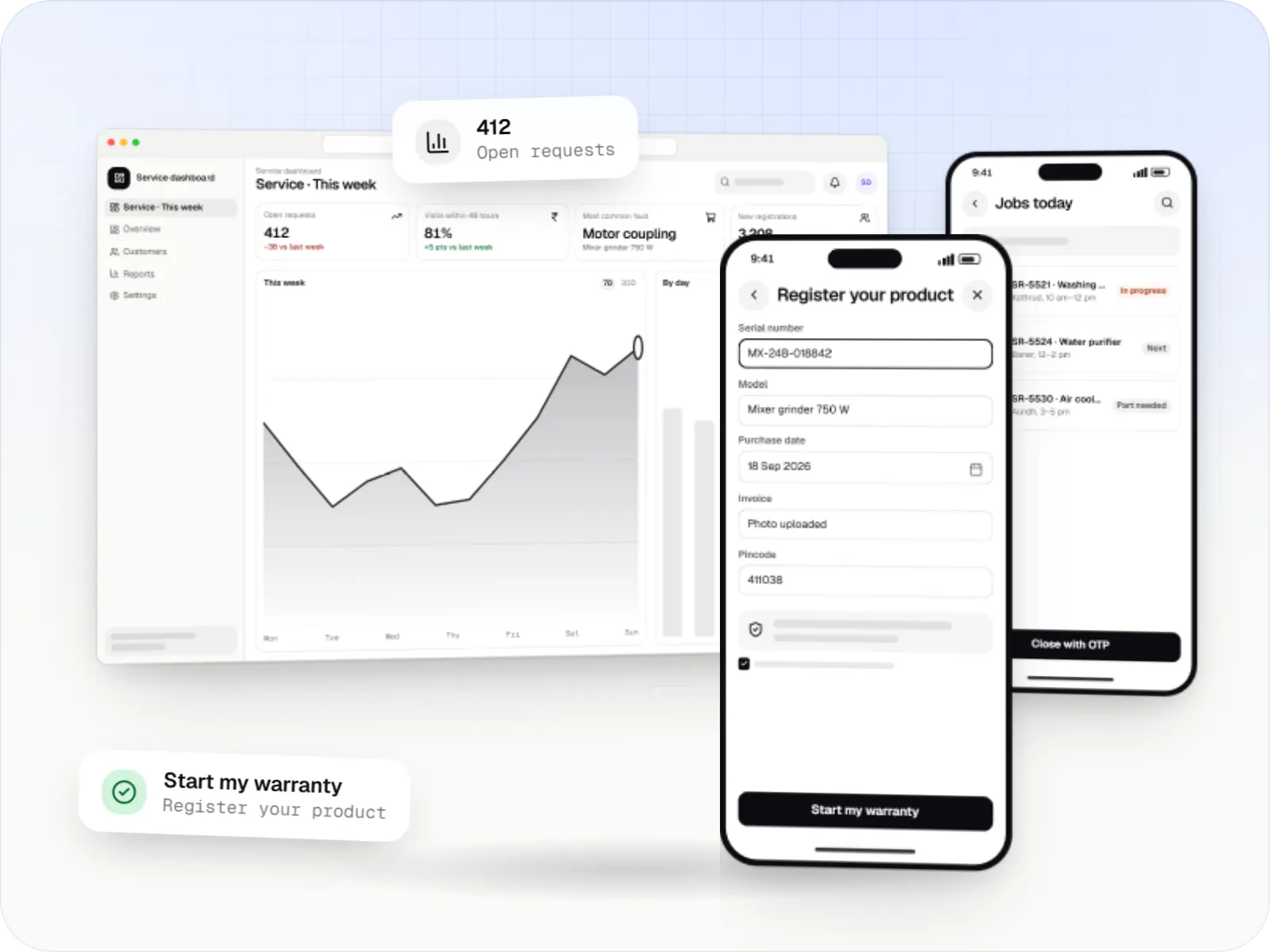
Owners scan the box to register serial number, purchase invoice and address.
Warranty status by serial, extended warranty sales and claim history.
Tickets assigned to service partners by pincode, with a technician app and OTP job closure.
Parts stock across service centres, linked to models and common faults.
Orders, schemes, stock returns and claims for authorised dealers.
How it works
One serial number links the sale, the warranty and every repair.
A web page opens with no app install and registers the serial number, invoice photo and address.
Warranty status, any extended warranty offer and the service history are attached to that serial number.
By WhatsApp, website or phone; because the serial is known, nobody has to ask for the bill again.
The nearest service partner is assigned, and parts commonly needed for that model and fault are flagged in advance.
Photos, parts used and the customer's OTP close the job, and the partner's payout is calculated from it.
Failure patterns by model feed spare parts planning and product fixes.
Platforms
Marketing and content websites: fast, search-friendly pages with a CMS your team can update without a developer.
Apps for Android phones and tablets, tested on budget and mid-range devices and published on Google Play or privately.
Browser-based applications with logins, roles and workflows, such as customer portals, SaaS products and internal tools.
Back-office panels for operations, support and finance teams: orders, users, content, reports and permissions.
Technology
Web
A modern web technology for fast, search-friendly websites, online stores and web applications that load quickly on mobile.
Used for
Backend
A structured way to build back ends on Node.js, so large business systems stay organised, testable and easy to hand over.
Used for
Data
A reliable database for the records your business runs on: orders, payments, bookings and stock, kept accurate and easy to report on.
Used for
Mobile
Build Android and iOS apps from one shared codebase, so you launch on both platforms faster with a consistent experience.
Used for
Payments & maps
Adds maps, address search, live tracking and travel-time estimates to delivery, ride and field apps, so orders reach the right door.
Used for
Cloud & DevOps
Cloud hosting for your app, website and data, with data centres in India and room to grow when traffic rises.
Used for
Flutter and the related logo are trademarks of Google LLC. We are not endorsed by or affiliated with Google LLC.
Plain-English glossary
Product preview
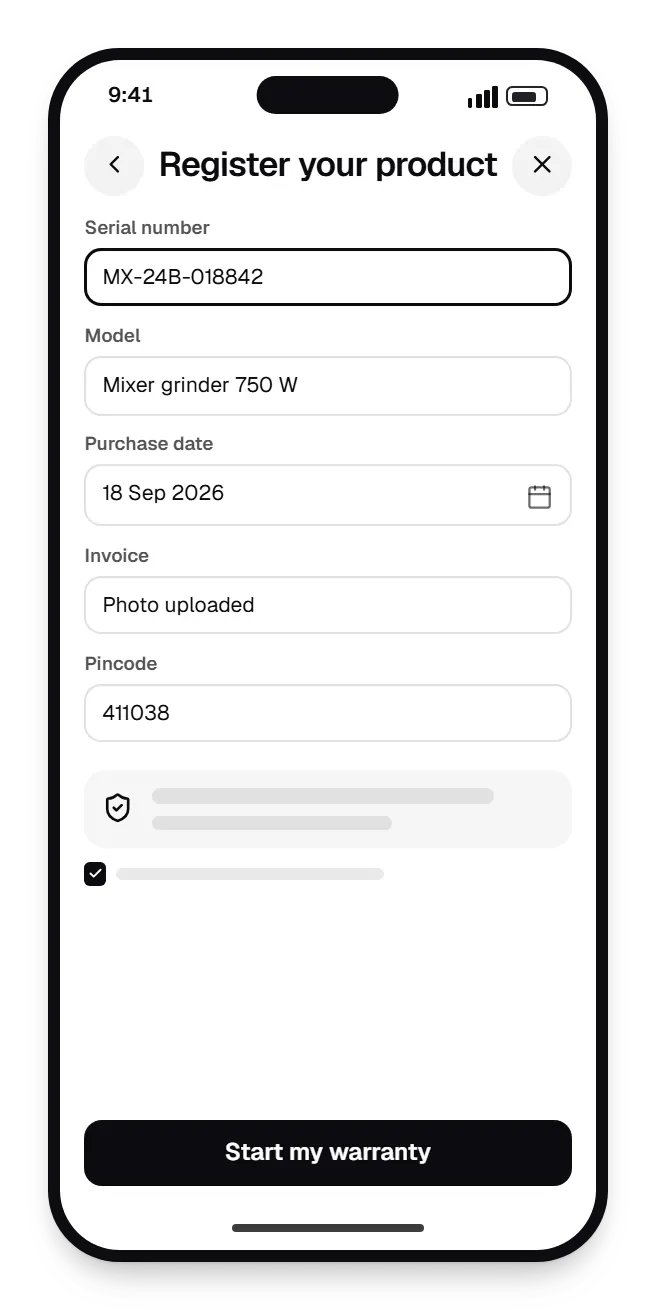
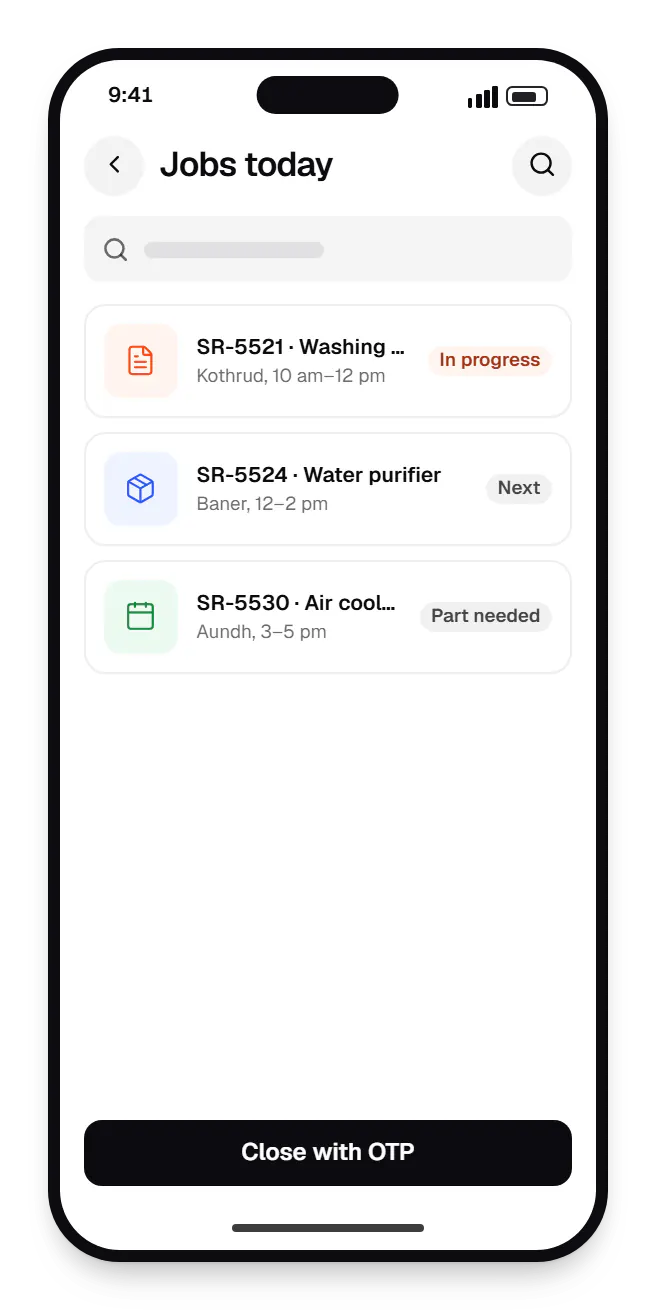
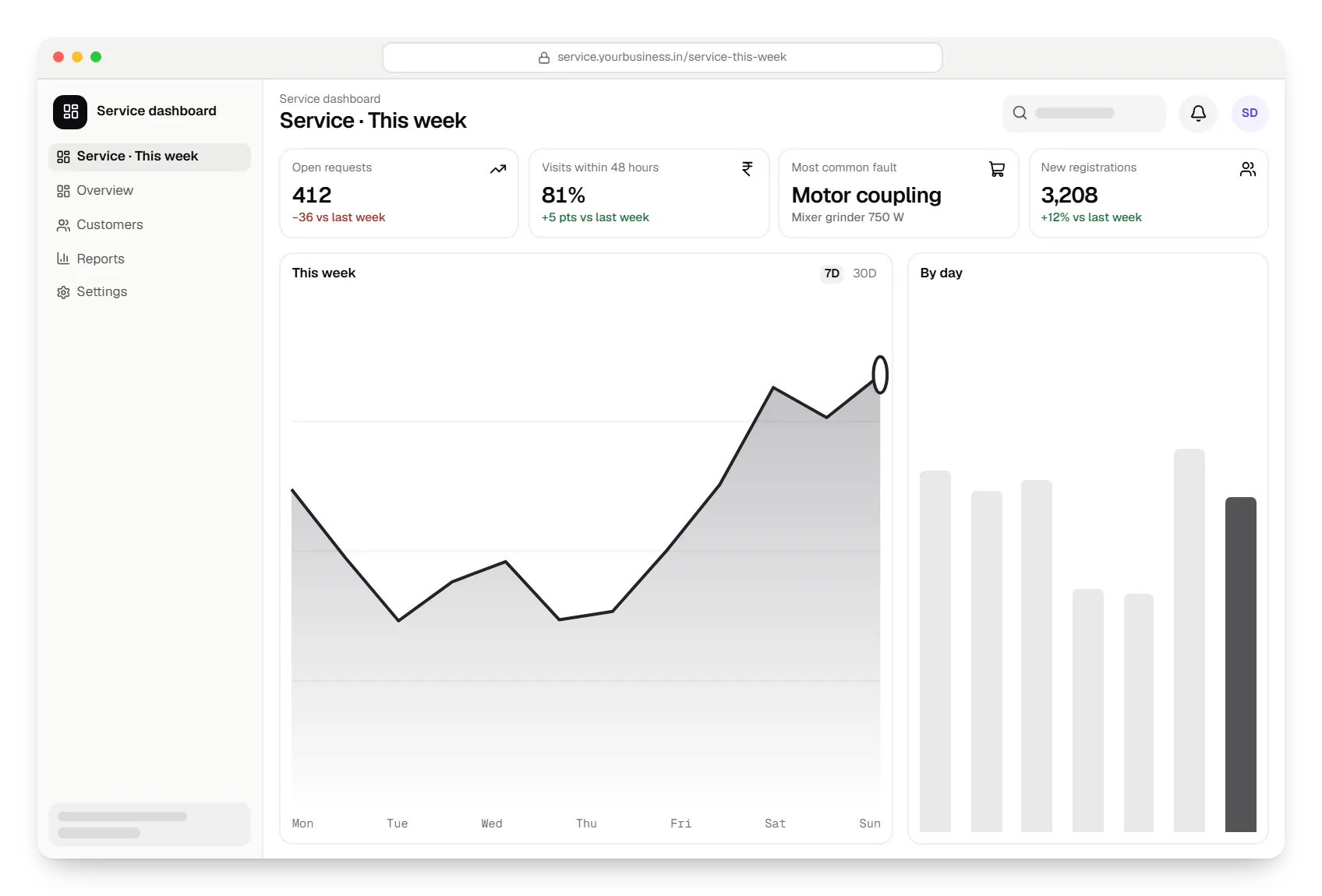
Sample screens: names, prices and figures are examples, not client data.
Cost drivers
Importing and validating historical serials and invoices from factories or ERPs takes planning.
More service partners and technicians mean more onboarding and support tooling.
Adding D2C sales on top of dealer and service modules expands scope.
Estimates are written from your scope, with the effort and assumptions behind each line item.
How pricing worksServices
The design and engineering services our in-house team combines on projects in this sector.
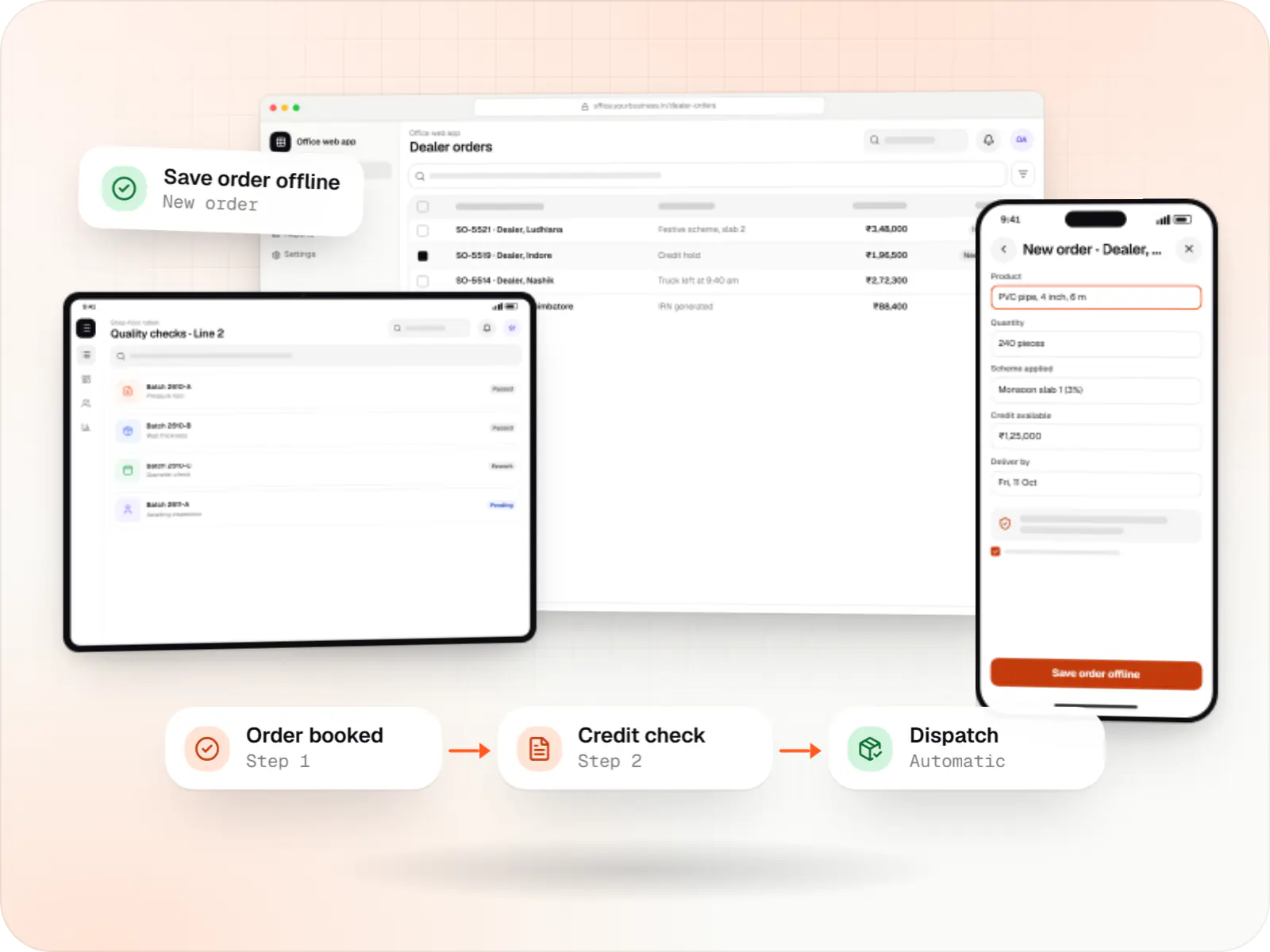
Software shaped around how your business runs, from approvals and inventory to billing and reports, replacing spreadsheets and disconnected tools.
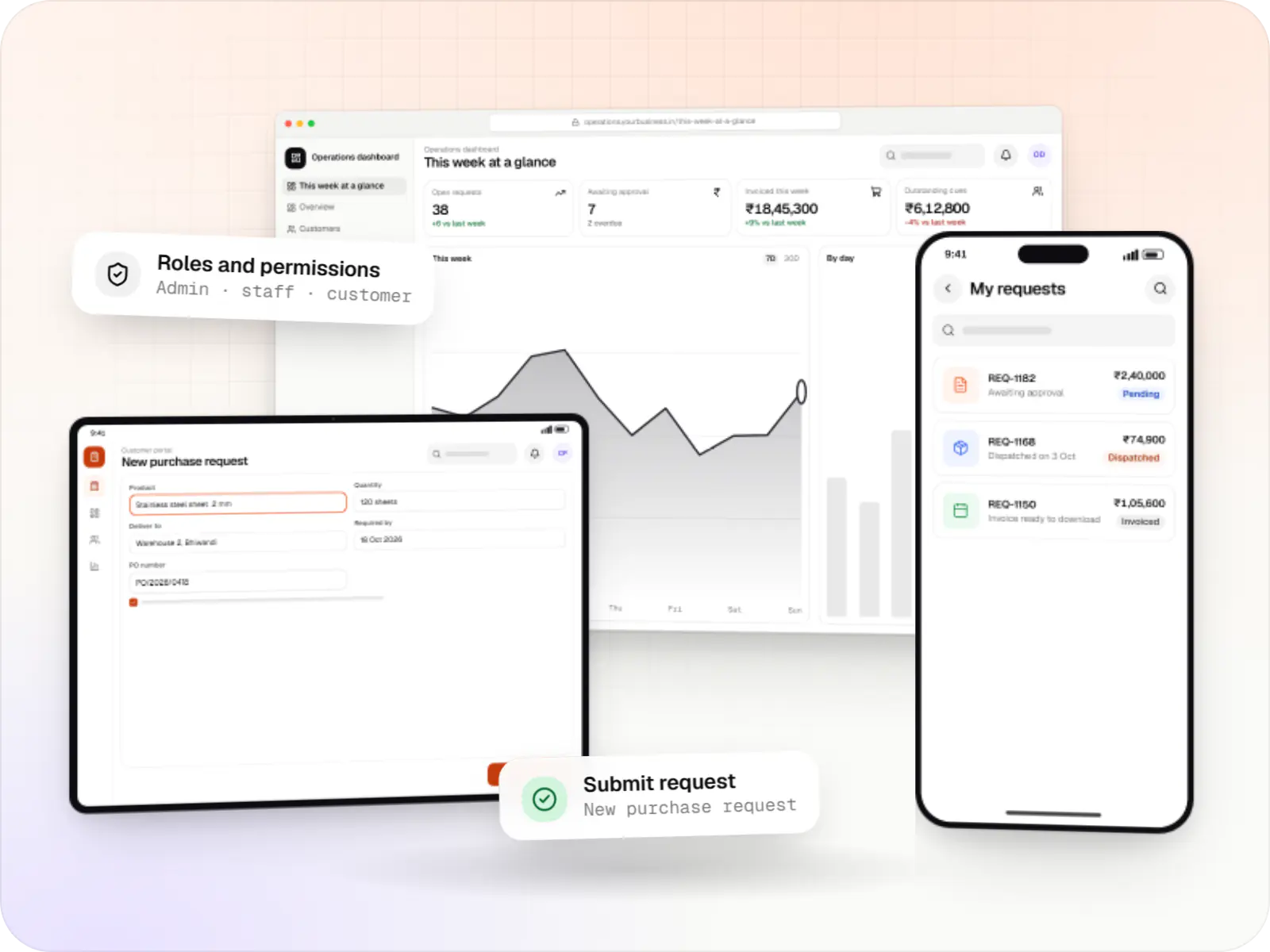
Browser-based products, customer portals, dashboards and internal tools, built on clean data models with secure roles and integrations.
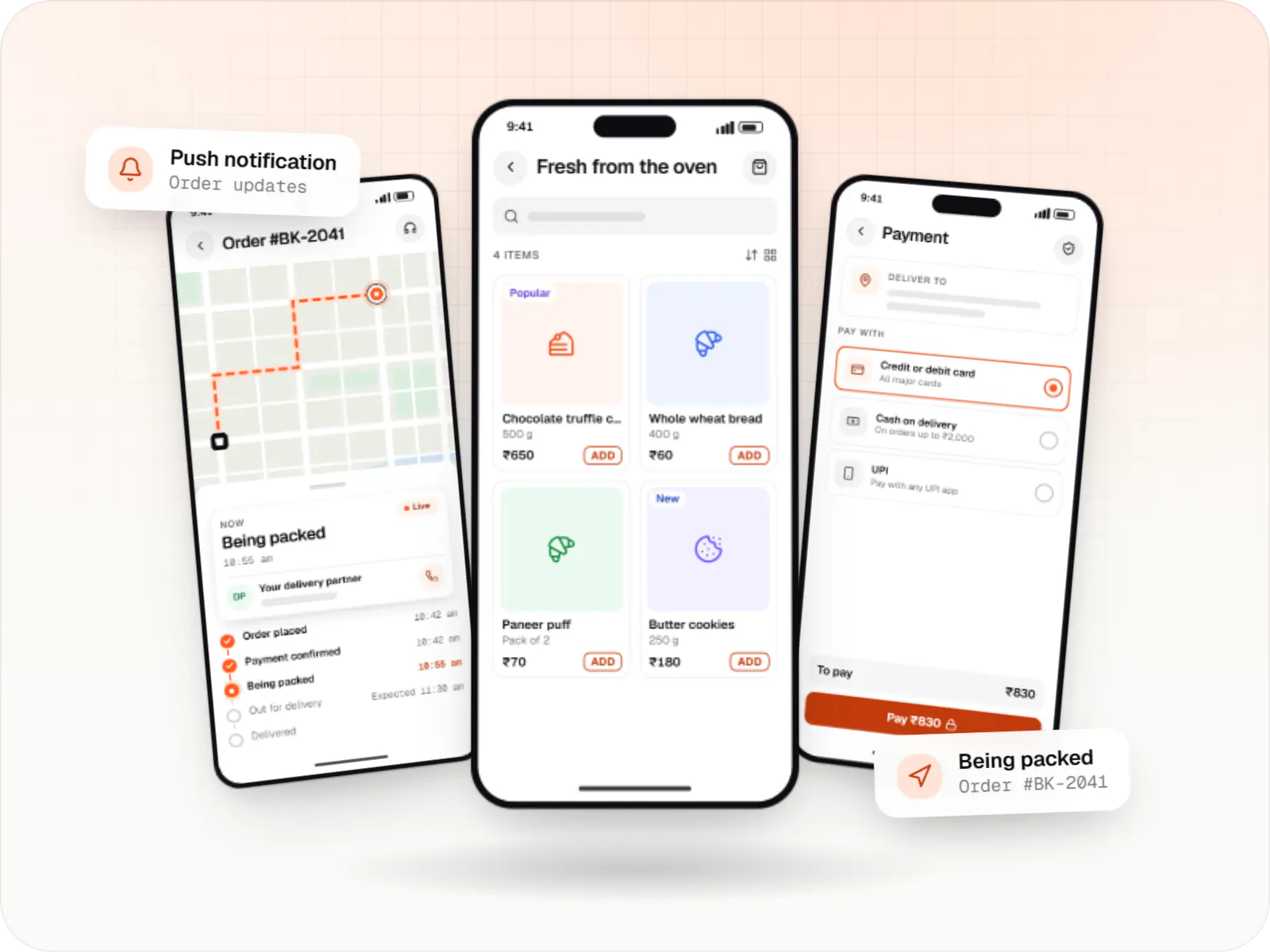
Native and cross-platform Android and iOS apps, from first release through regular store updates, built by our in-house designers and engineers.
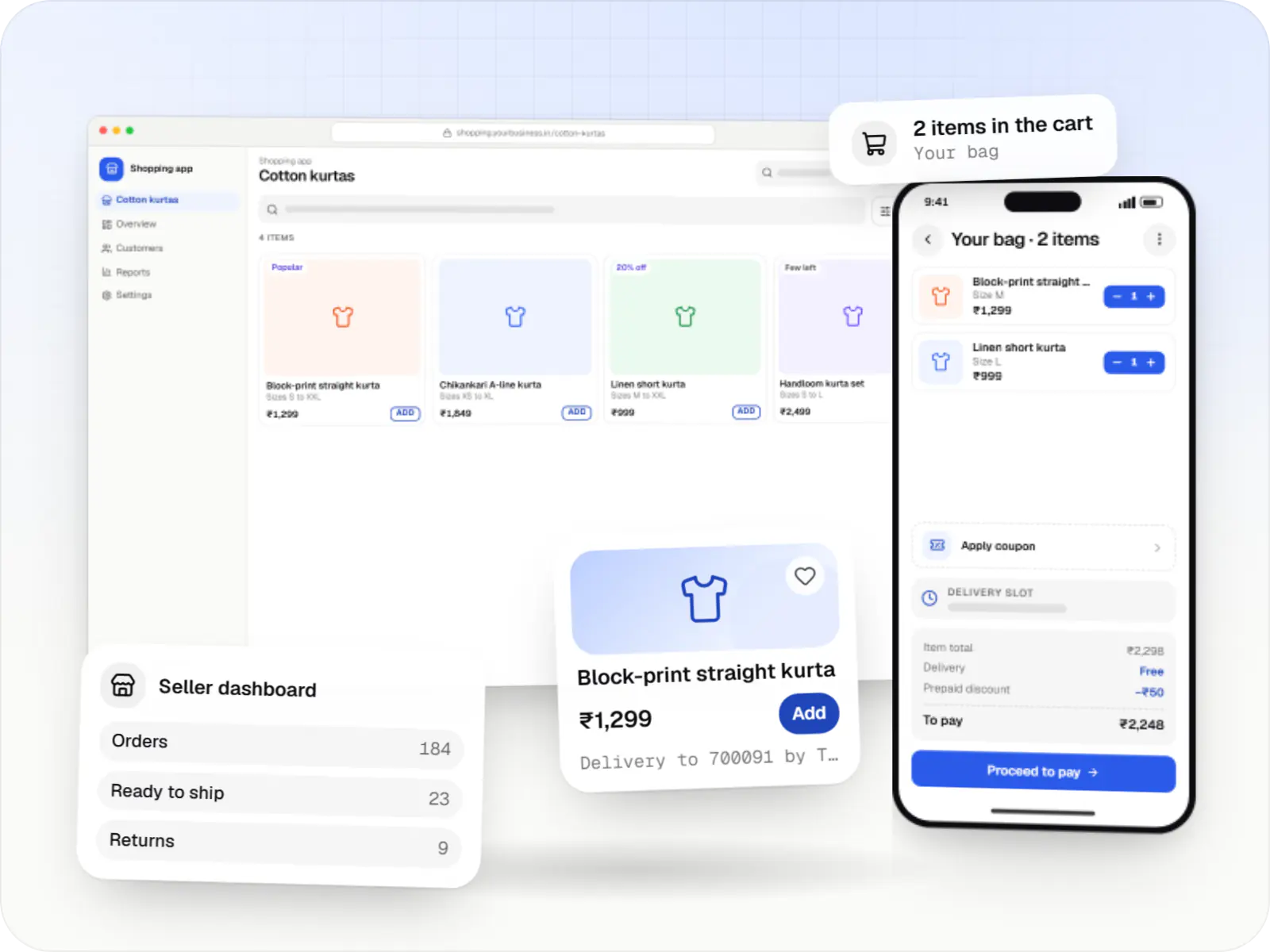
Online stores, shopping apps and B2B ordering portals on Shopify, WooCommerce or custom stacks, wired to Indian payments, couriers and GST invoicing.
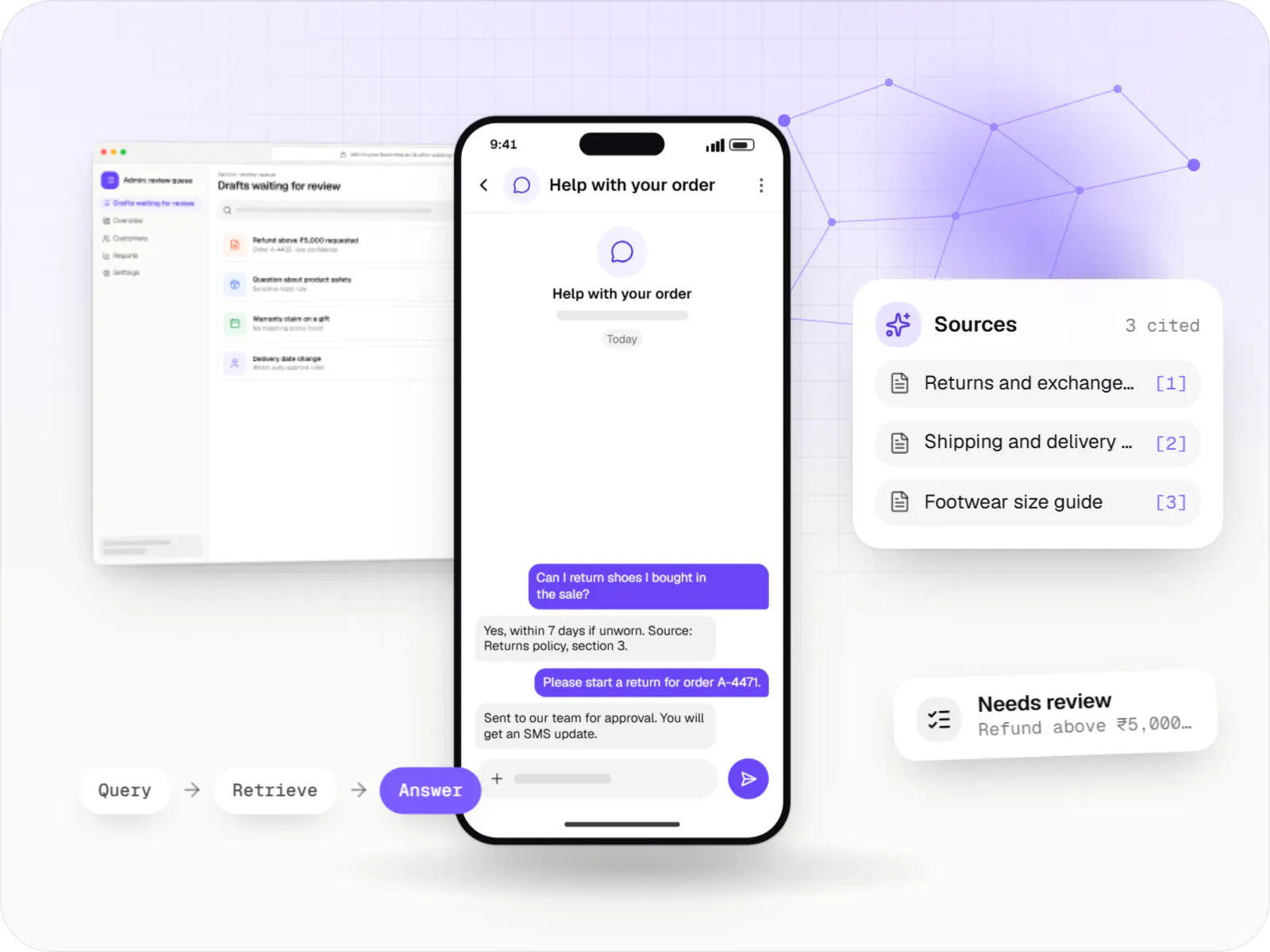
AI features and AI-first apps built on model APIs, retrieval over your own data, workflow automation or custom ML, with evaluation and human review.
Work
Illustrative projects that show how we would approach a product in this sector.
E-commerce & marketplaces
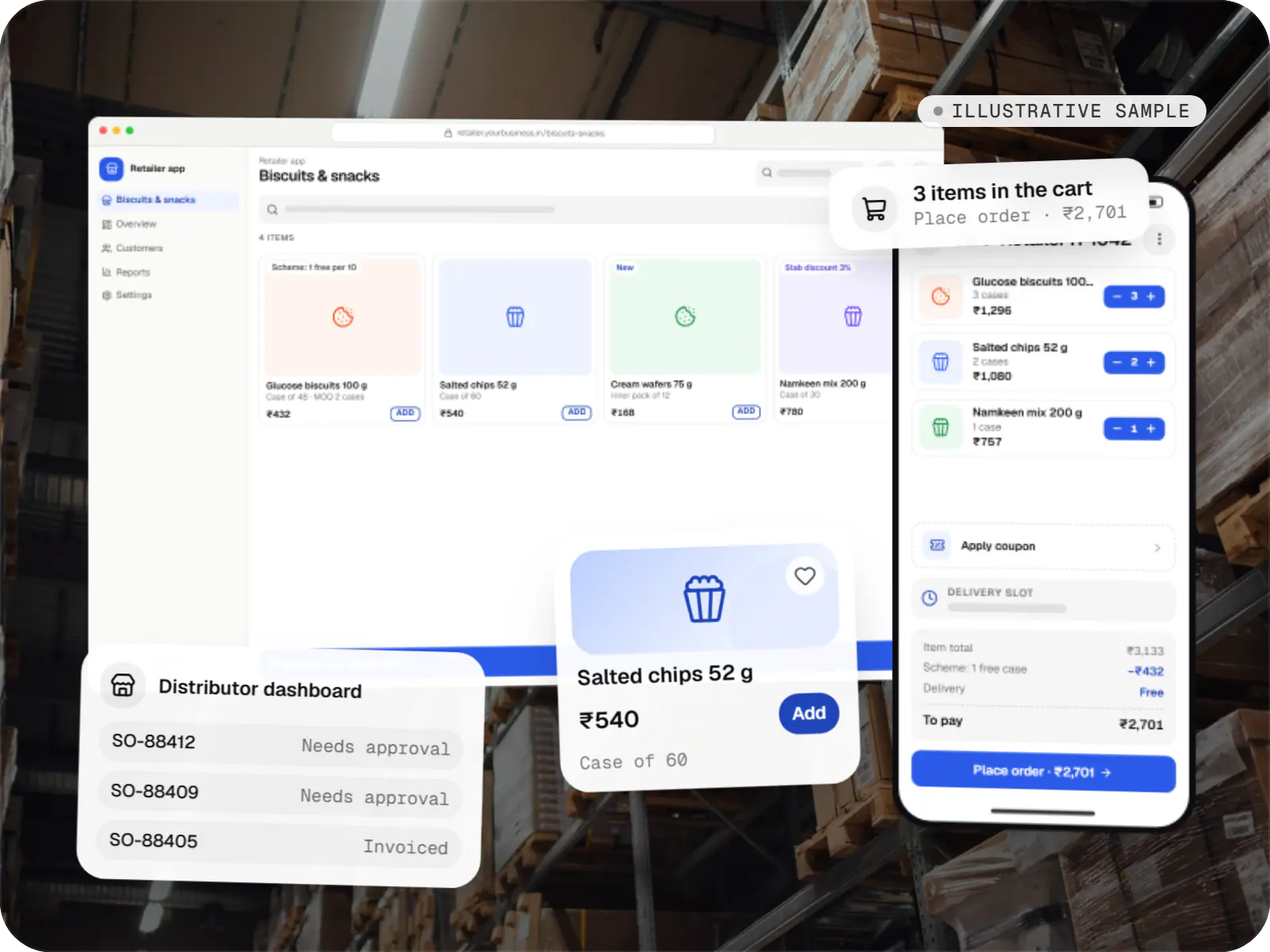
An illustrative ordering app for a distributor's retailers and sales team, with tier pricing, credit limits, trade schemes and GST invoicing.
Runs on
Built with
Locations
Cities where this sector is a significant part of the local economy. We work remotely with teams across India and meet in person where practical.

West Bengal
FAQ
Each unit or box carries a QR code linked to its serial number, printed at the factory or applied at packing. When a customer scans it, a web page opens with no app install needed, asking for purchase date, invoice photo and contact details, and records the warranty start. The same record is used later for service requests, so the technician already knows the model and purchase history.
Yes. Most smaller service partners work well with a technician app and a simple web dashboard for the partner's owner. Jobs arrive by pincode, technicians update status, capture photos and parts used, and close jobs with a customer OTP. Larger partners with their own systems can integrate through an API instead. Payouts per job can be calculated automatically from closed tickets.
A chatbot on WhatsApp or your website can handle well-defined tasks: checking warranty status by serial number, booking a service visit, sharing installation guides and tracking a ticket. It should hand over to a human agent for complaints, disputes or anything it isn't sure about. We connect it to your actual warranty and ticket data rather than letting it answer from general knowledge.
Next step
Tell us how registrations, dealers and service work today. We'll suggest where to start.