Skip to content
Softcoderz

Technology · Web

Next.js development

A modern web technology for fast, search-friendly websites, online stores and web applications that load quickly on mobile.

How we use it

We use Next.js for company websites, storefronts, SaaS front ends and portals where speed and search visibility matter: pages arrive as complete HTML for search engines and load quickly on mobile data.

Official site: nextjs.org (opens in new tab)

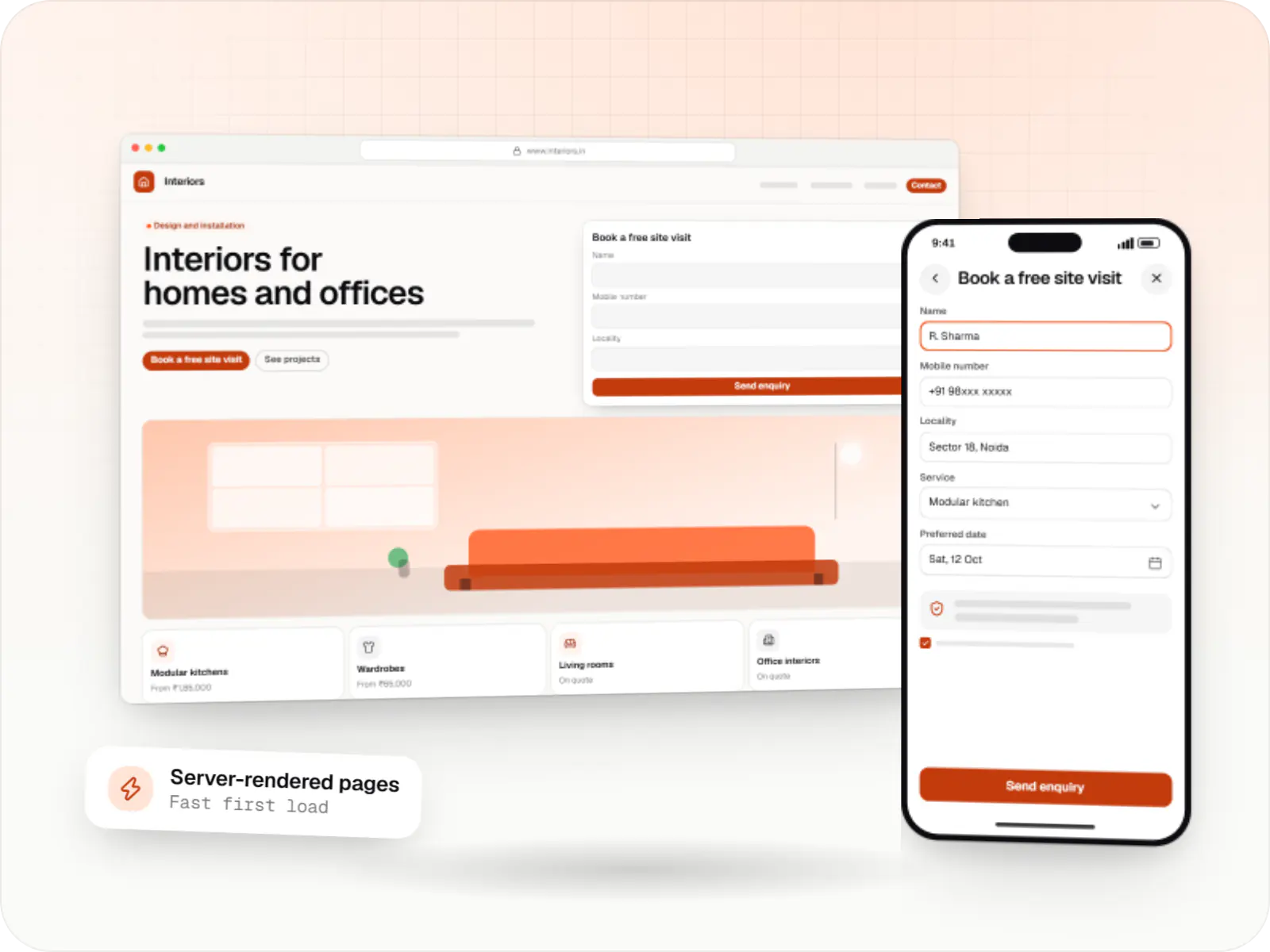
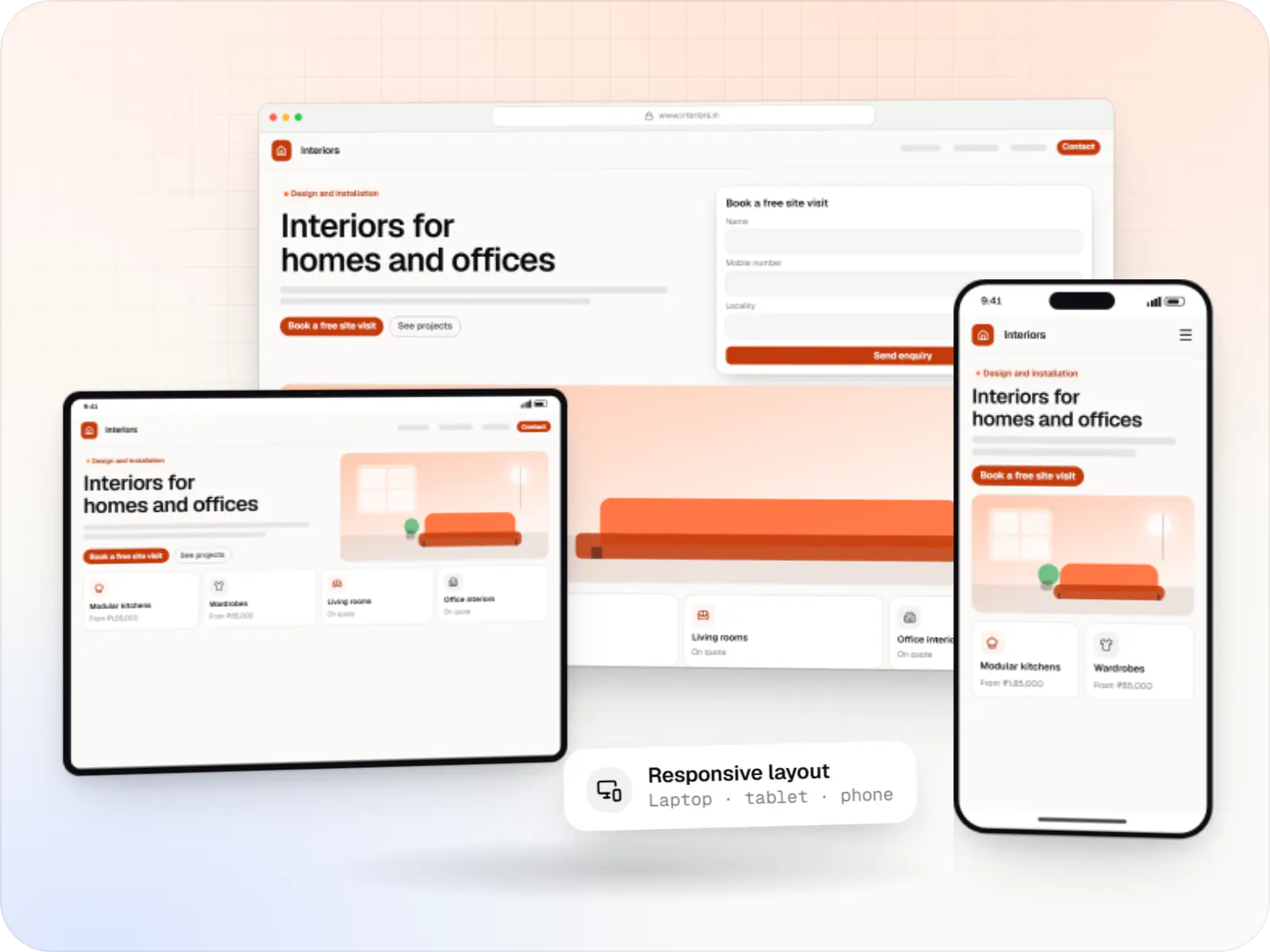
Business website built with Next.js in a browser, with its enquiry form on a phone
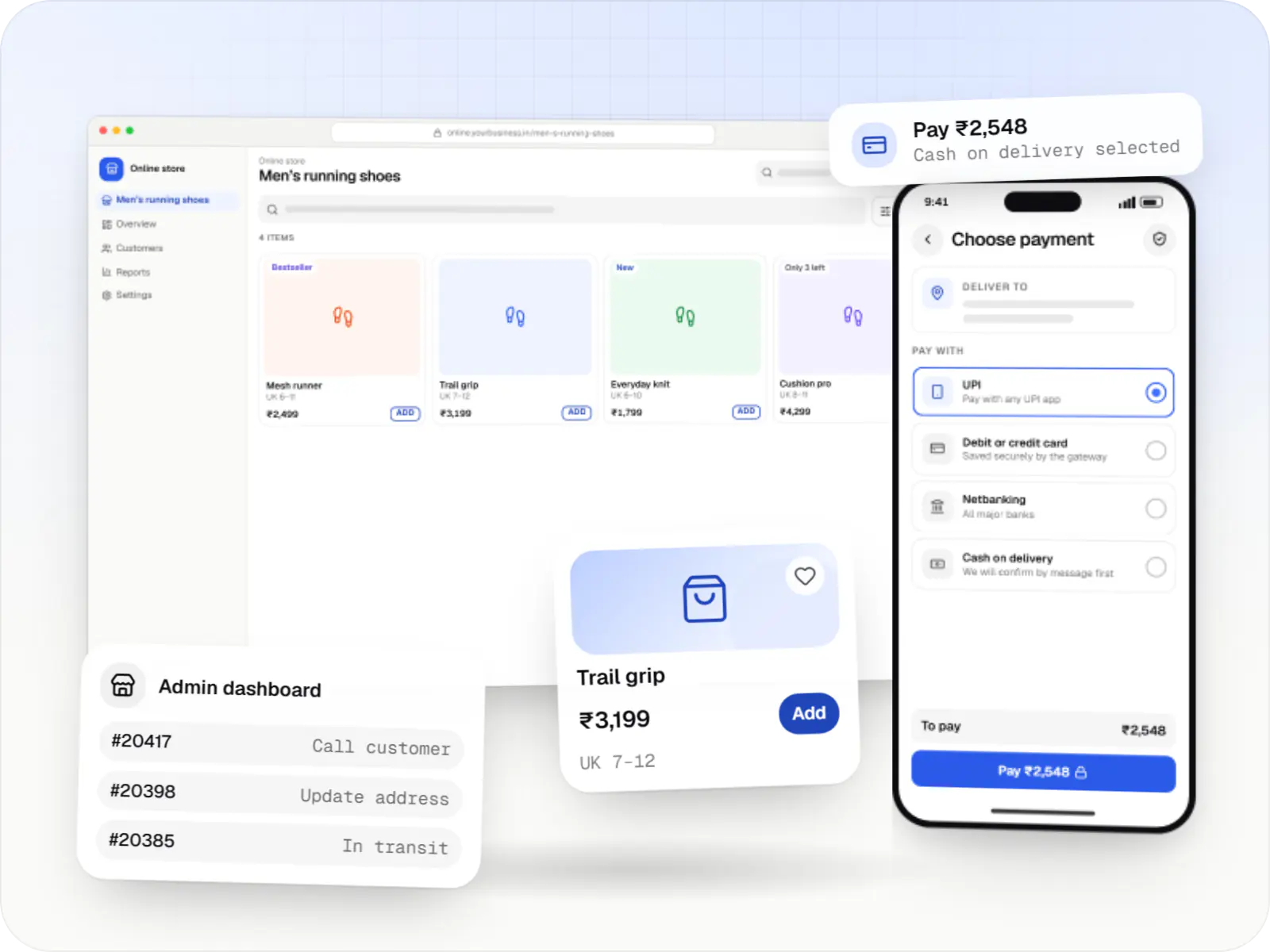
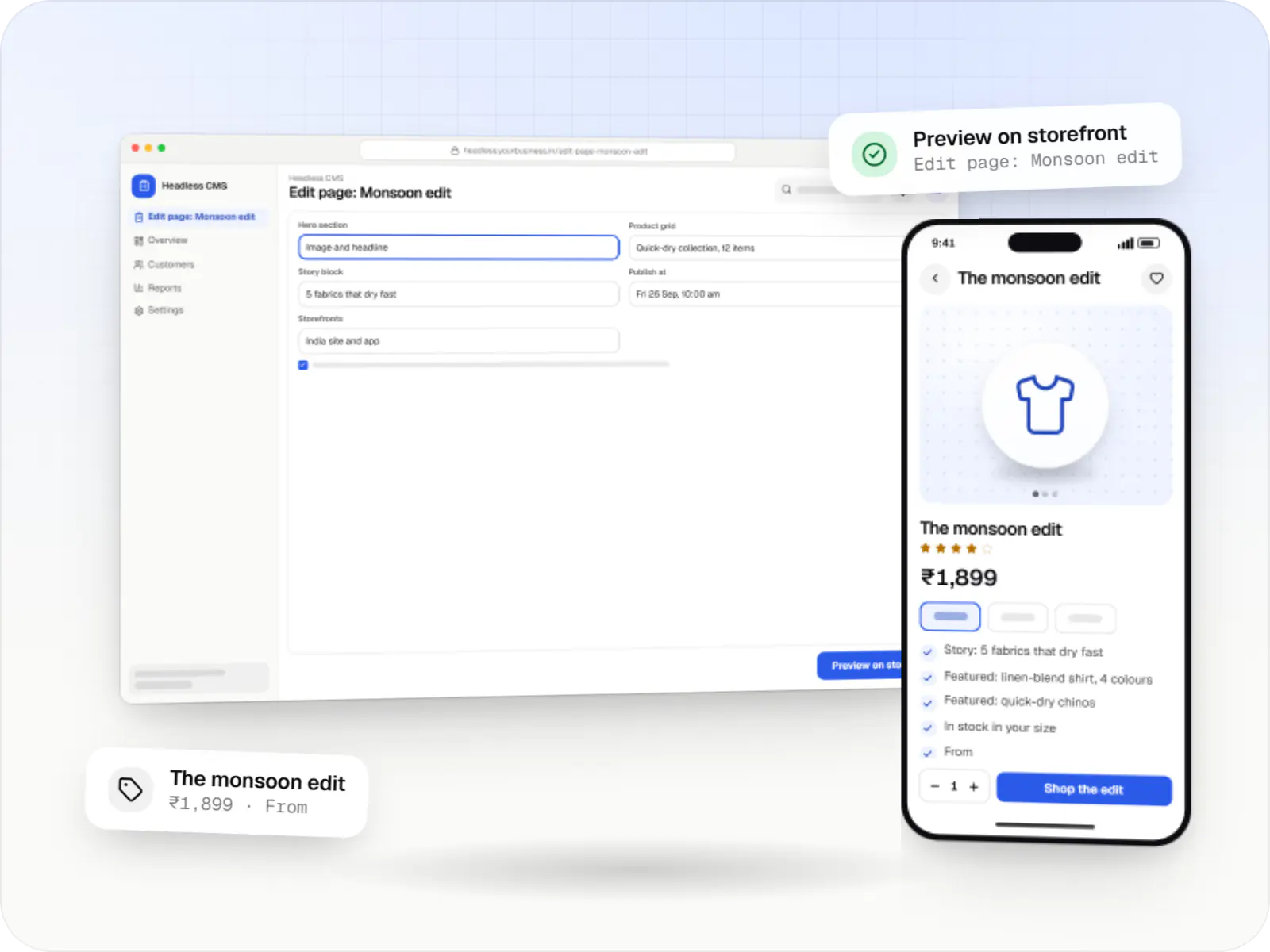
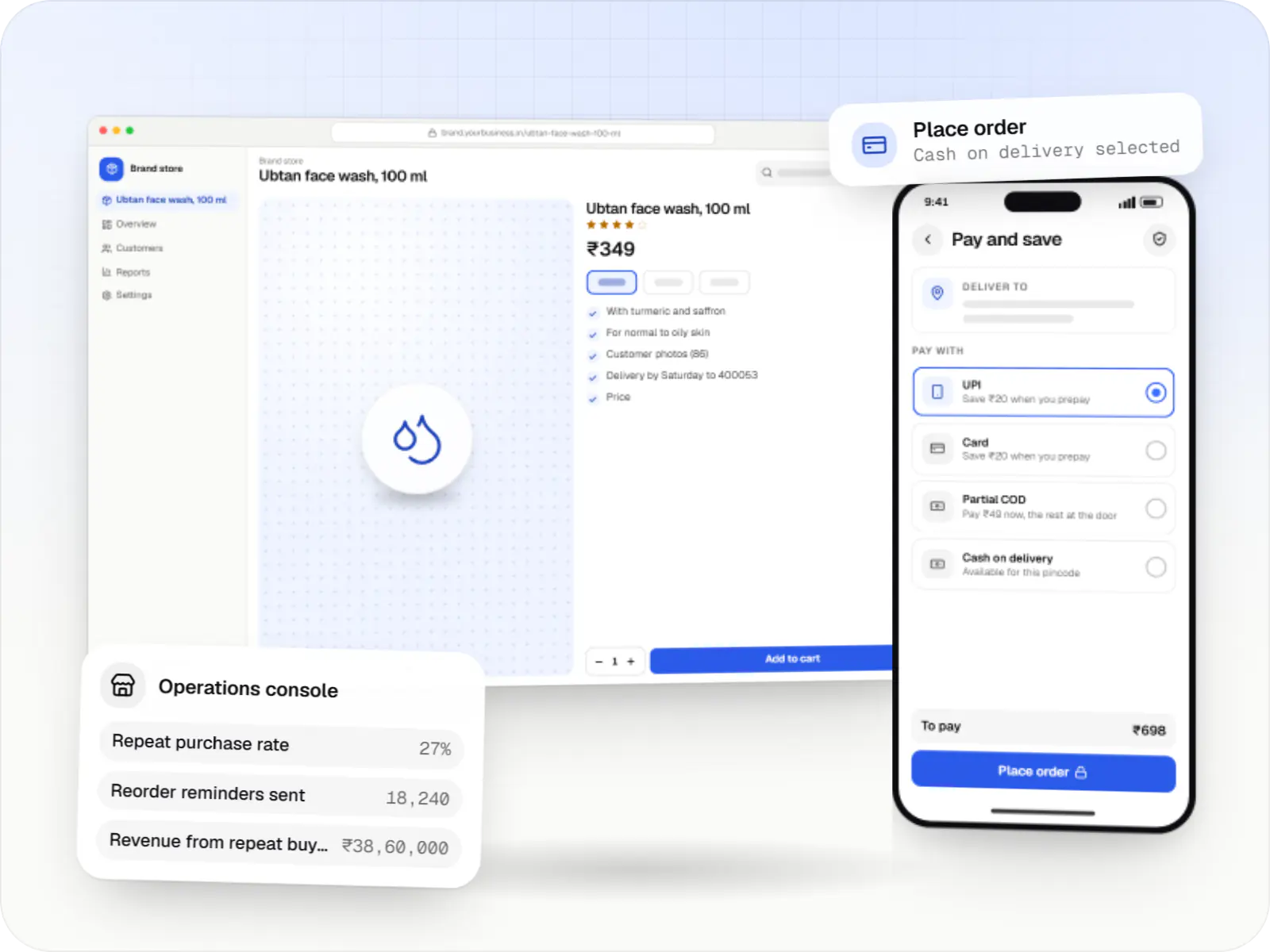
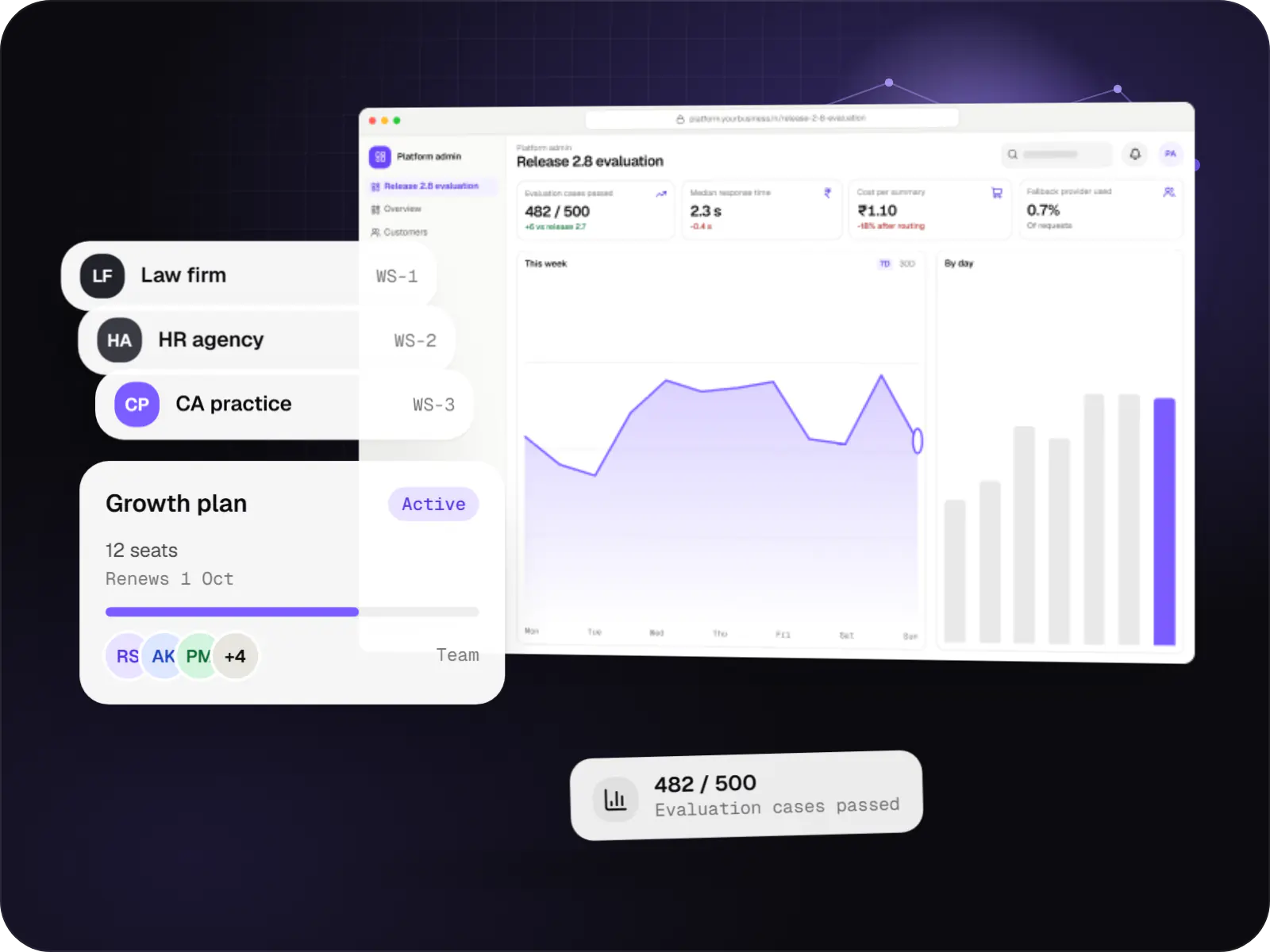
Illustrative previewA business website rendered on the server so pages load quickly and search engines can read them.

What Next.js is, and when it is the right choice

Next.js is a toolkit for building websites and web apps. It prepares each page on the server, so visitors and search engines get a complete page straight away instead of a blank screen that fills in later. For you, that means pages that load quickly on mobile data and are easier for search engines to read and rank.

Next.js suits products whose public pages must rank and load quickly: company sites, content hubs, online stores and SaaS marketing pages, plus logged-in apps that share their code. With the App Router and React Server Components, most pages send less JavaScript to the browser.

Use cases

What we build with Next.js

  • Company and service websites

    Content from a headless CMS, with structured data and fast mobile pages.

  • E-commerce storefronts

    Headless front ends for Shopify or custom back ends, with UPI and COD checkout.

  • SaaS front ends

    Marketing pages and the logged-in app in one codebase.

  • Customer and partner portals

    Secure areas for orders, invoices, documents and support.

  • Location and category pages

    Database-driven pages with unique content and correct canonicals.

Why Next.js matters for your business

  • Pages search engines can read

    Server rendering and static generation send complete HTML, so search engines and link previews see your real content.

  • Faster pages on mobile data

    Images and fonts are optimised automatically, so pages load quickly and do not jump around while loading.

  • Fewer moving parts

    Forms and small back-end tasks run in the same project through route handlers and server actions, with no separate service to maintain.

  • Hosting you control

    Runs on Vercel, or self-hosted on Node.js or Docker in any cloud, so you choose on cost and data location.

When we would not recommend Next.js

  • Internal dashboards with no public pages: if nothing needs to rank in search, a plain React app is often simpler and cheaper to host.
  • A small brochure site edited by non-developers: a well-tuned WordPress site may be enough, with less to maintain.
  • No one to keep it up to date: the framework changes quickly, and caching needs careful thought to avoid stale pages, so plan for regular maintenance.

Plain-English glossary

Next.js terms, in plain English

Server rendering
The page is built on the server before it reaches the visitor, so text and links are there from the first moment. It helps search rankings and makes pages feel faster on slow connections.
Headless CMS
A content editor your team uses to update text and images, kept separate from how the website looks. Marketing can publish changes without a developer, while the site stays fast.
Canonical URL
A tag that tells search engines which address is the main version of a page. It stops similar pages, such as filtered category lists, from competing with each other in search.
301 redirect
A permanent forward from an old web address to a new one. During a redesign or migration it keeps visitors and search rankings from being lost on pages that moved.

Services

Services that use Next.js

  • Website development

    Fast, SEO-ready company and marketing websites with a CMS your team can edit, designed and built by our in-house team.

  • Web application development

    Browser-based products, customer portals, dashboards and internal tools, built on clean data models with secure roles and integrations.

  • E-commerce development

    Online stores, shopping apps and B2B ordering portals on Shopify, WooCommerce or custom stacks, wired to Indian payments, couriers and GST invoicing.

  • SaaS development

    Multi-tenant SaaS products with subscription billing, team roles, onboarding and usage analytics, from first MVP to paying customers.

Solutions

Next.js in our solutions

  • E-commerce website development

    Fast, search-friendly online stores with UPI, card and COD checkout, GST invoices and courier integrations, on a hosted platform or custom code.

  • Headless commerce development

    Next.js storefronts on a headless commerce engine and CMS, for brands that need speed, several storefronts or content-led shopping.

  • D2C e-commerce development

    Brand-owned online stores for D2C companies, with conversion-focused checkout, retention tools, server-side tracking and multichannel stock sync.

  • AI SaaS development

    Multi-tenant SaaS products with AI at their core, built with tenant isolation, usage metering, model routing, evaluation and subscription billing.

Work

Sample projects

Illustrative projects that show how we plan and build products that use Next.js. They are samples, not client work.

  • AI solutions

    Illustrative sample

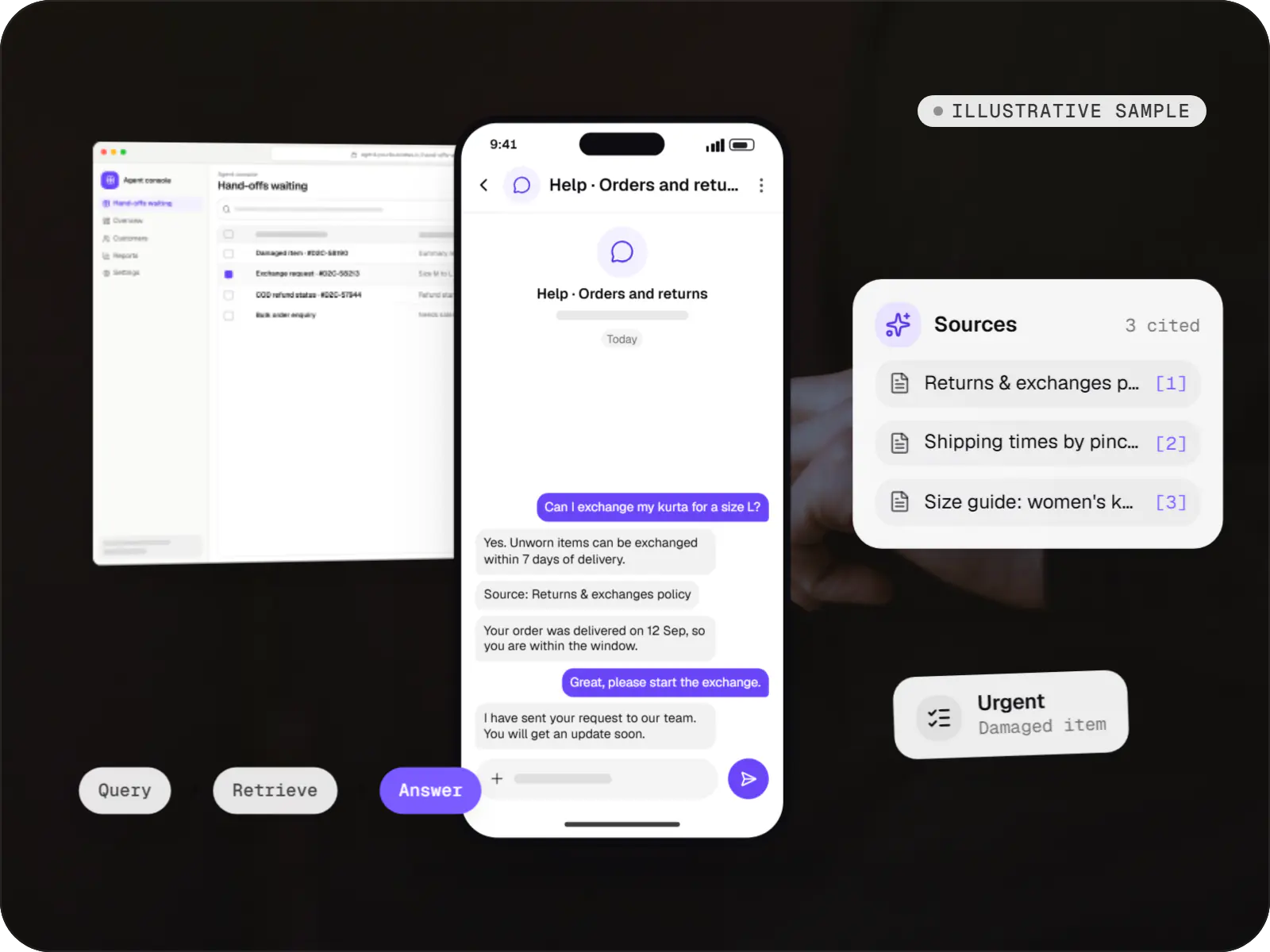
    AI customer support assistant for a D2C brand

    An illustrative AI assistant that answers order, return and product questions from a D2C brand's own policies and order data, with sources and a human hand-off.

    • E-commerce
    • AI assistant

    Runs on

    • Website
    • Admin

    Built with

    • Next.js
    • Python
    • OpenAI APIs
    • LLM integrations
    • PostgreSQL
    • +1 more
  • E-commerce & marketplaces

    Illustrative sample

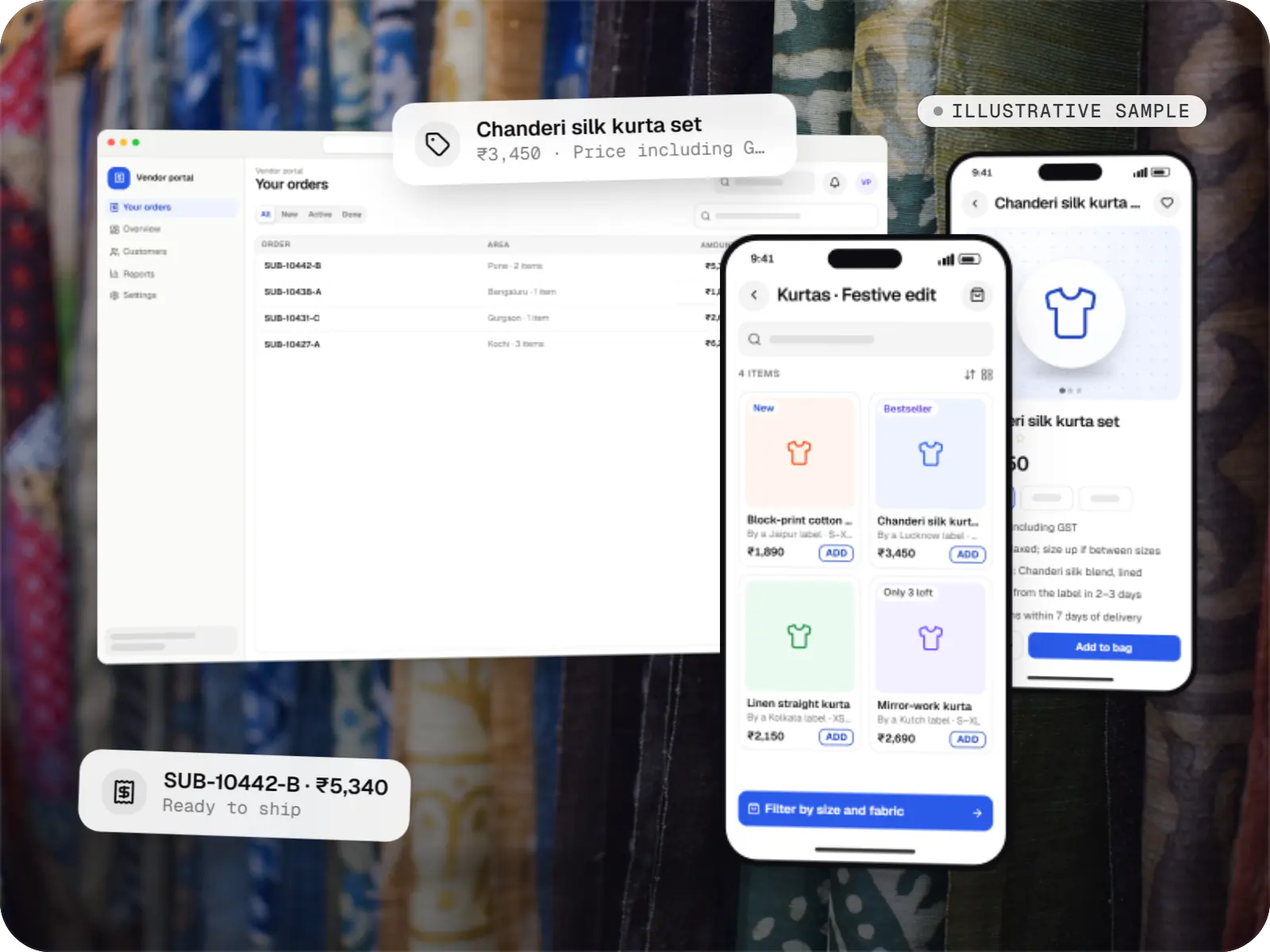
    Multi-vendor fashion marketplace

    An illustrative marketplace where independent fashion labels sell through one storefront, with vendor onboarding, commission rules, multi-pickup shipping, returns and scheduled payouts.

    • E-commerce
    • Marketplace web platform

    Runs on

    • Website
    • Web app
    • Admin

    Built with

    • Next.js
    • NestJS
    • PostgreSQL
    • Redis
    • AWS
    • +1 more
  • Device management & kiosk solutions

    Illustrative sample

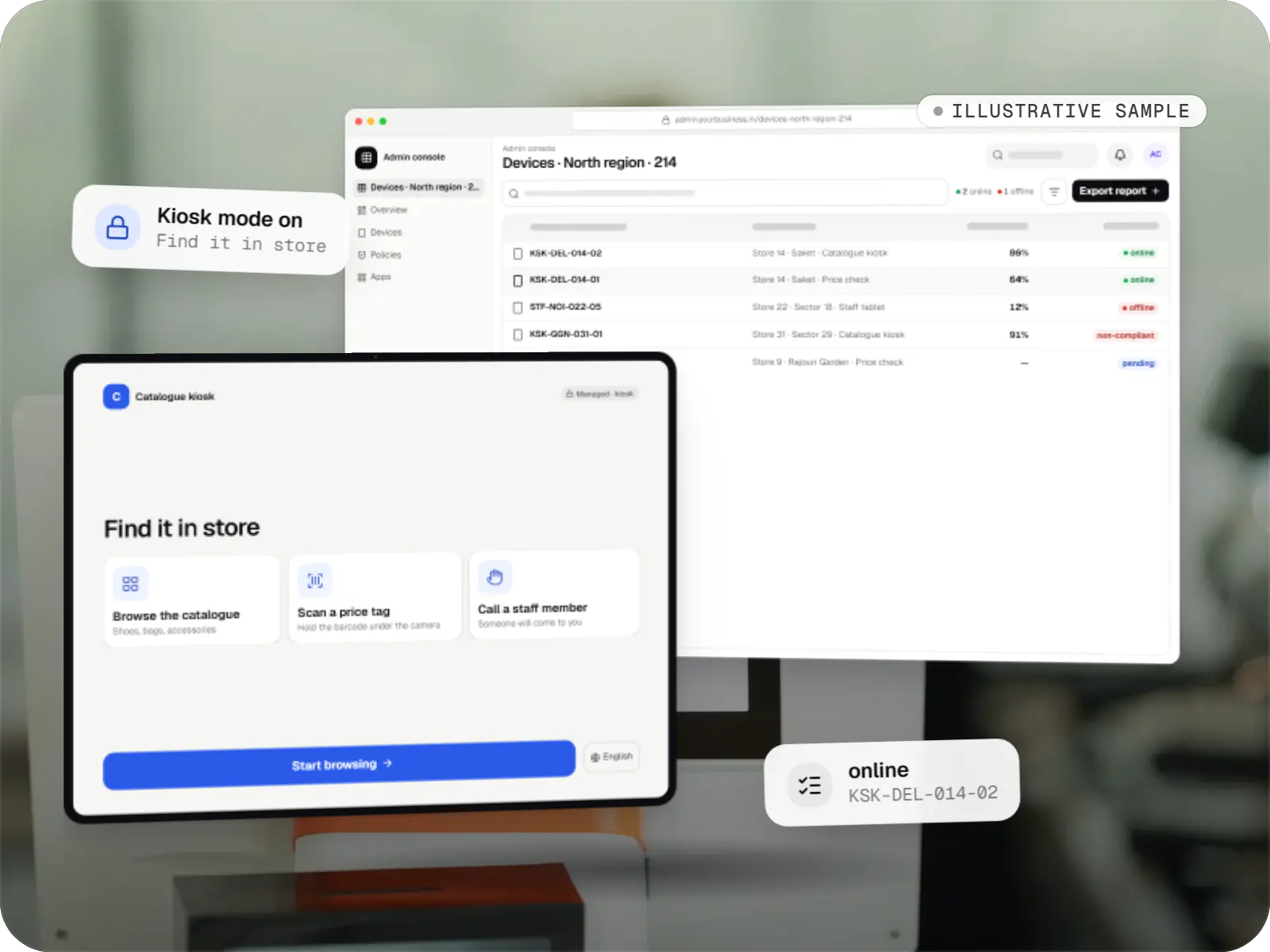
    Android kiosk and device management platform for retail stores

    An illustrative kiosk product for retail chains: locked Android tablets for catalogues and price checks, a staff launcher, and a console to enrol, update and monitor every device.

    • Retail
    • Device management platform

    Runs on

    • Android Enterprise
    • Admin
    • Web app

    Built with

    • Next.js
    • React
    • Android (Kotlin)
    • NestJS
    • PostgreSQL
    • +1 more
  • Device management & kiosk solutions

    Illustrative sample

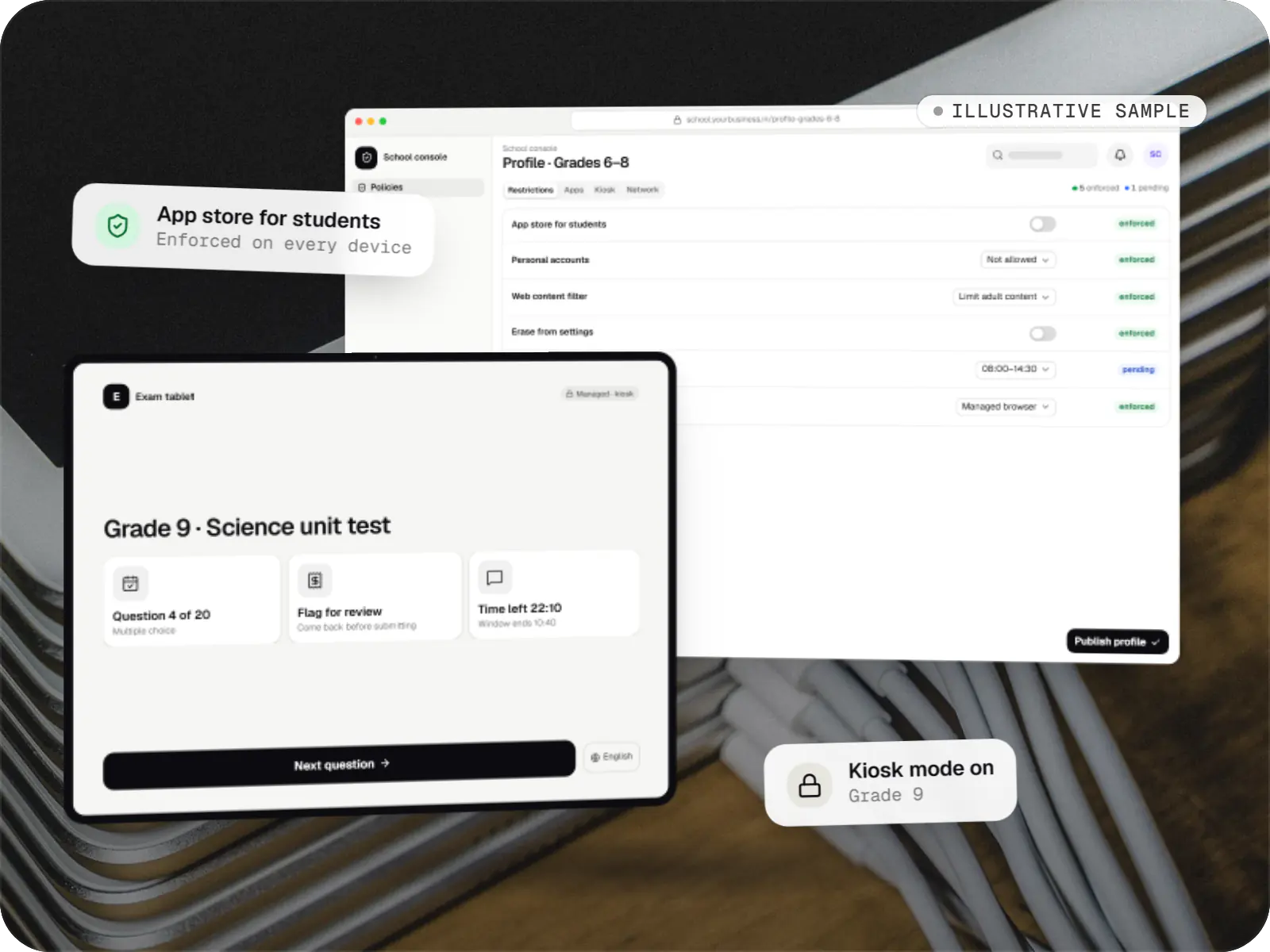
    Tablet management console for schools

    An illustrative console for school tablets: iPad devices through Apple School Manager and MDM, Android™ tablets through Android Enterprise, with class-based rules teachers can follow.

    • Schools
    • Device management SaaS

    Runs on

    • iPhone and iPad
    • Android Enterprise
    • Admin
    • Web app

    Built with

    • Next.js
    • NestJS
    • PostgreSQL
    • Redis
    • AWS
    • +1 more

Industries

Where it shows up by industry

Industries whose typical builds with us include Next.js.

FAQ

Frequently asked questions

Is Next.js better for SEO than a plain React app?

For public pages, usually yes. A plain React single-page app sends mostly empty HTML and relies on JavaScript to render content, which search engines handle less reliably and link previews can't read. Next.js puts titles, text, links and structured data in the initial HTML. Rankings still depend on content, internal links and speed.

Do we have to host a Next.js site on Vercel?

No. Vercel, the company behind Next.js, offers the most integrated hosting, but Next.js also runs as a Node.js server or Docker container on AWS, Google Cloud, Azure or an Indian VPS. Self-hosting gives more control over cost and data location but means handling caching, image optimisation and scaling yourself.

Can you migrate our WordPress site to Next.js without losing search traffic?

We plan the migration to protect it. WordPress can stay as a headless CMS for editors while Next.js renders the public site. We map every existing URL, add 301 redirects for any that change, keep titles and meta descriptions, and compare search traffic after launch. For a small brochure site, well-tuned WordPress may be enough.

Next step

Planning a Next.js build?

Share your pages, content sources and integrations, and we'll estimate the work line by line.

Or reach us directly

Mon–Sat, 10:00–19:00 IST