
Skip to content
Softcoderz
Illustrative sample

Marketplace

Multi-vendor fashion marketplace

One storefront for many independent labels, with the vendor tools, shipping and settlement logic behind it.

Not client work. This sample shows how we would scope and build this type of product. Names and figures in any previews are invented.

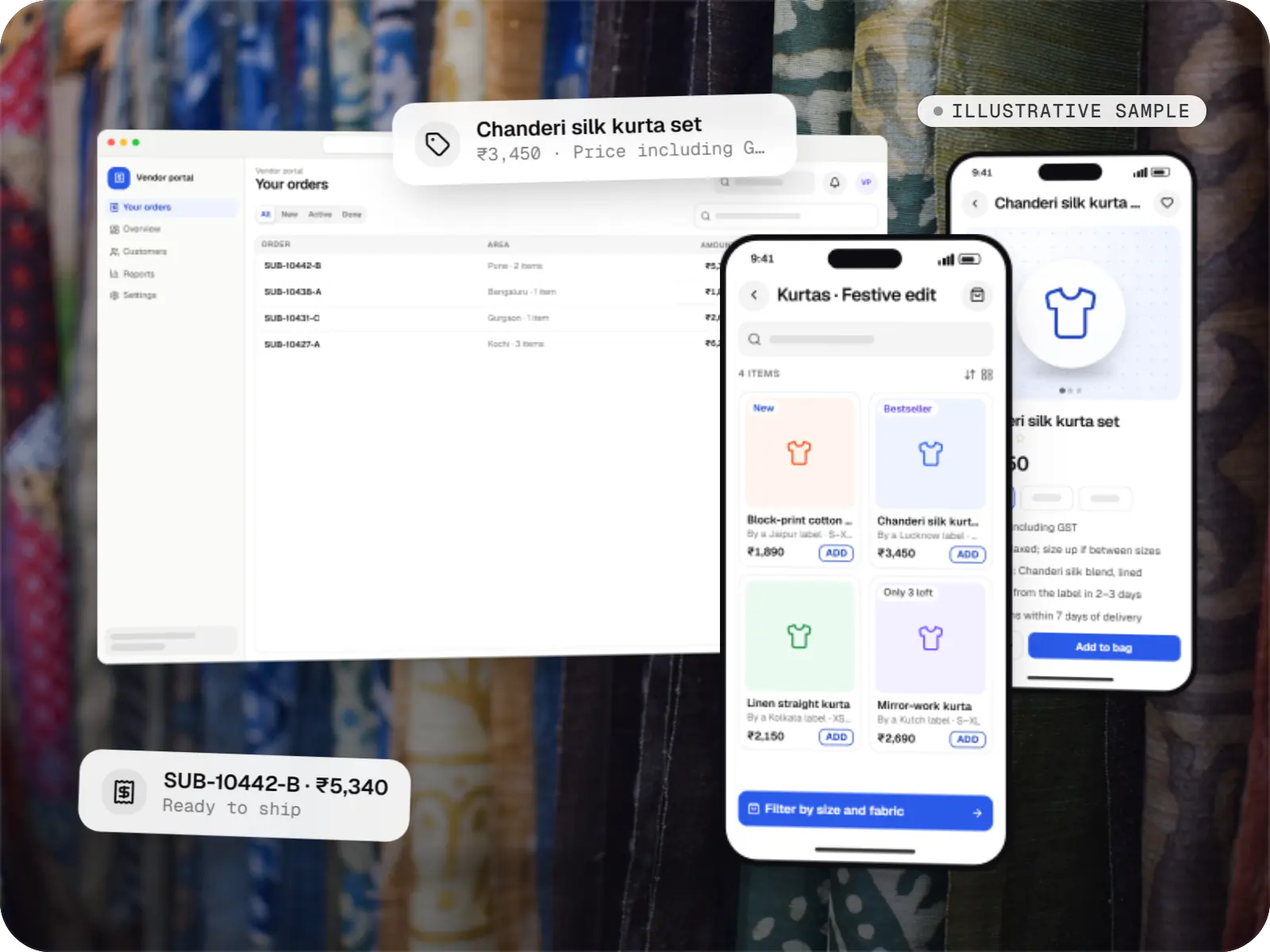
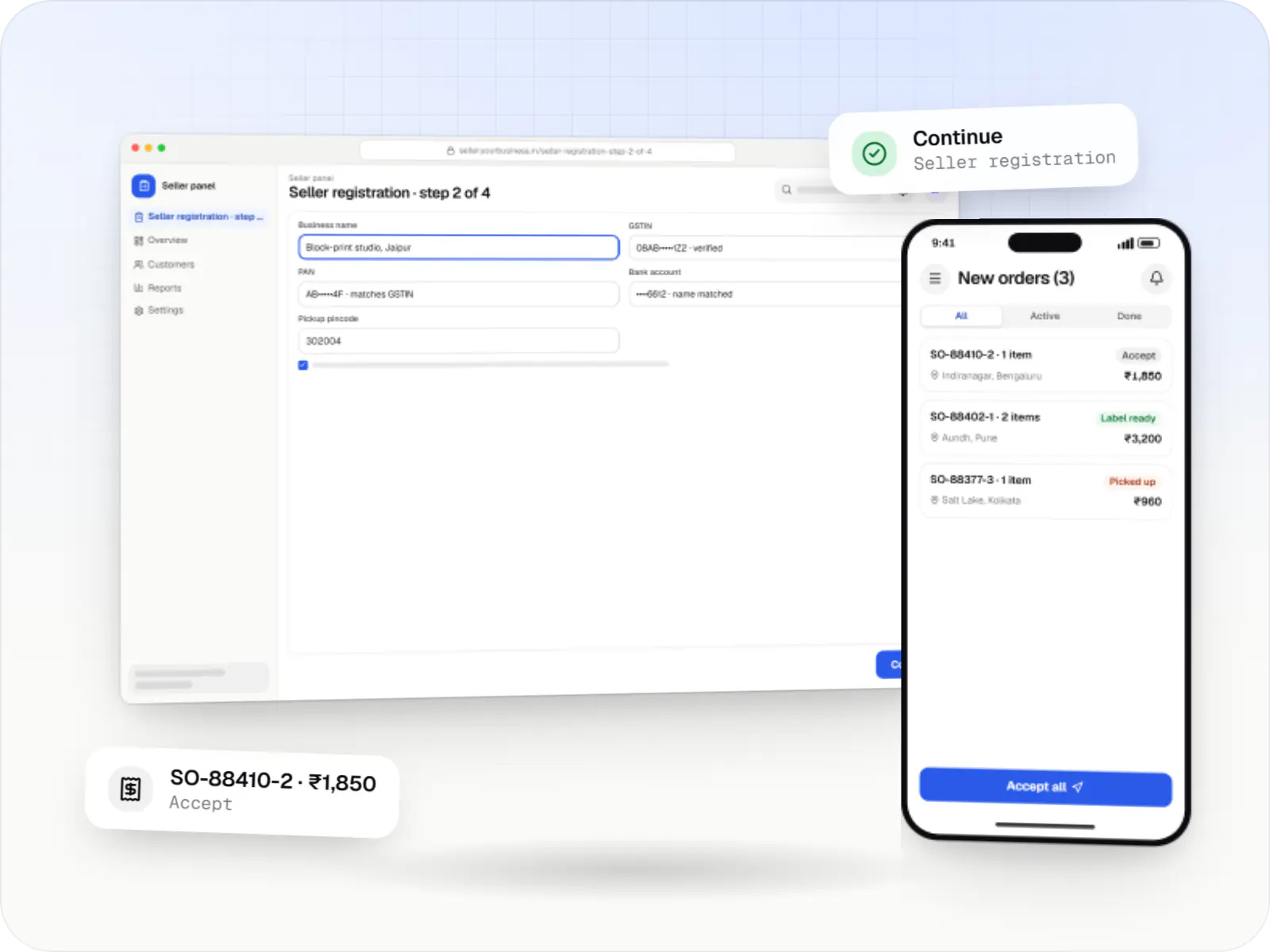
Sample multi-vendor fashion marketplace: vendor portal and storefront apps over a photo of a clothing rail
Illustrative sample

Overview

About this sample

This sample project shows how we would approach a multi-vendor fashion marketplace for independent labels and boutique designers. It is illustrative rather than client work, and the brands and products in our previews are invented. The scope is a web storefront, a vendor portal and an operations dashboard, all on one commerce backend.

Project facts

Illustrative sample
Status
Illustrative sample, not client work
Project type
Marketplace web platform
Runs on
  • Website
  • Web application
  • Admin dashboard
Built for
  • Shoppers
  • Vendors and labels
  • Operations team
  • Finance team
Typical timeline
Typical build: 16–22 weeks for storefront, vendor portal and operations dashboard

Product preview

The storefront, the vendor portal and the operations dashboard

Illustrative screens. Products, labels, prices and payouts are invented.

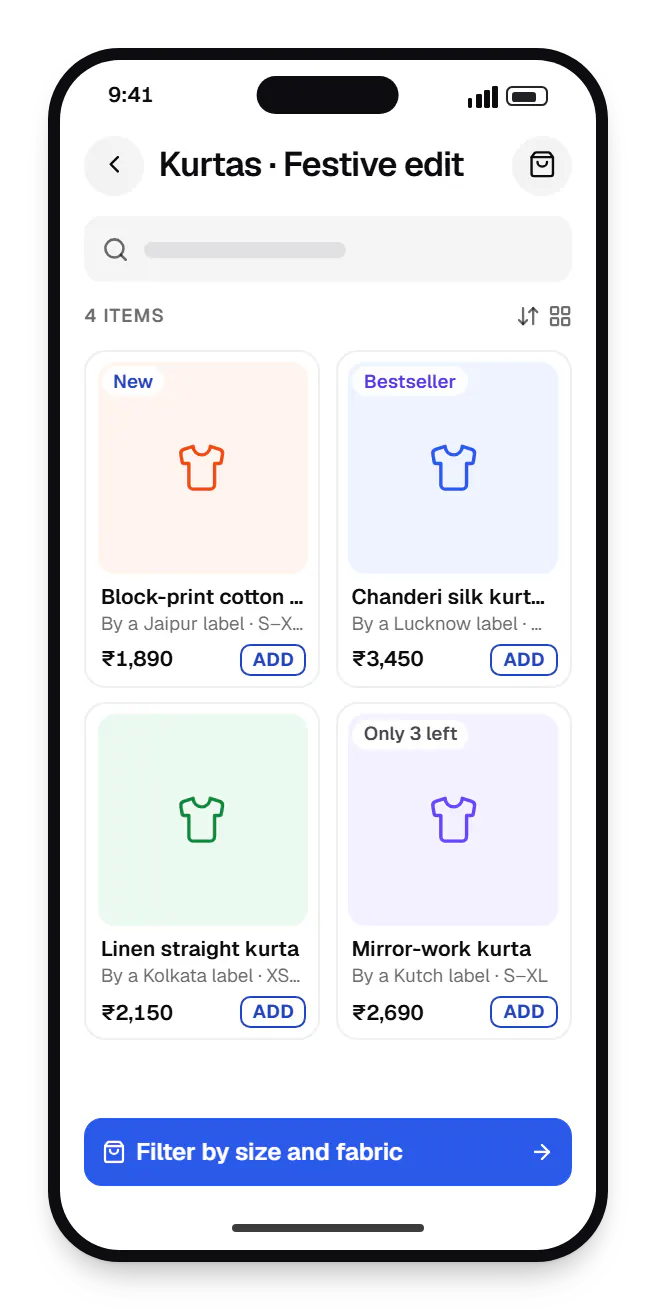
  • Multi-vendor fashion marketplace storefront catalogue on a phone, showing kurtas with prices
    Storefront. Shoppers filter across many labels by size, colour, fabric and occasion, and every product shows which label makes it.
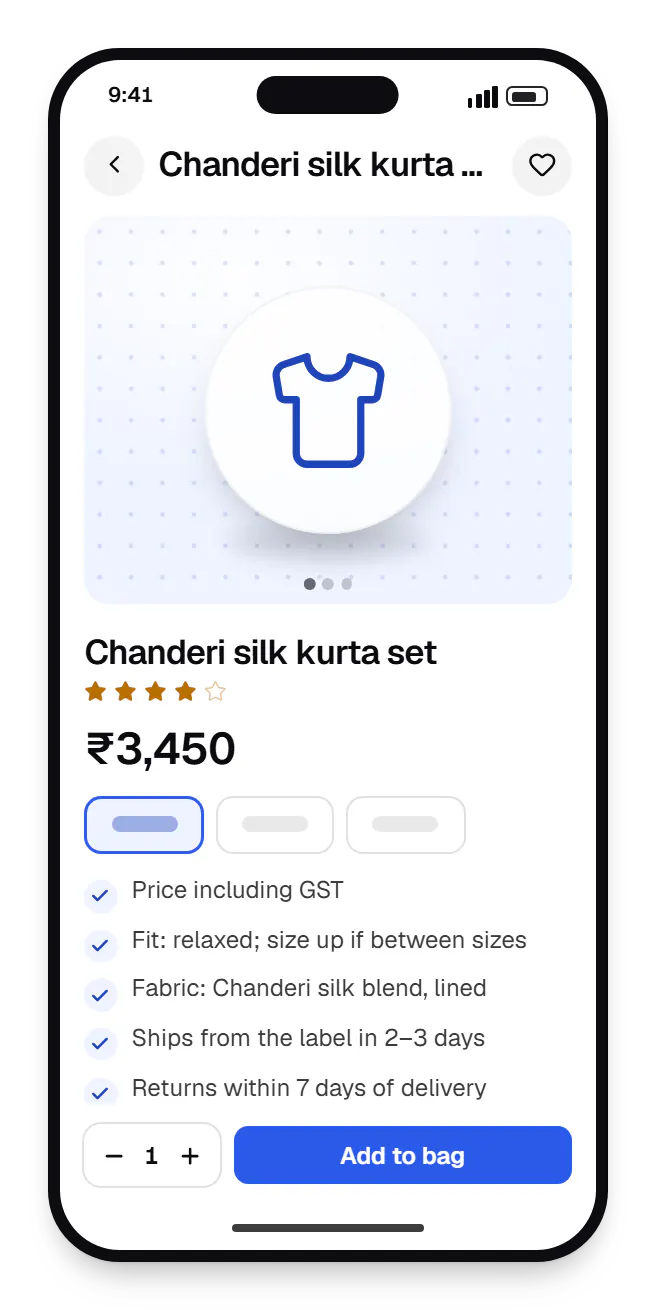
  • Multi-vendor fashion marketplace storefront product page on a phone, for chanderi silk kurta set, with price and options
    Storefront. Each label's own size chart and fit notes sit on the product page, which helps shoppers choose the right size and reduces size-related returns.
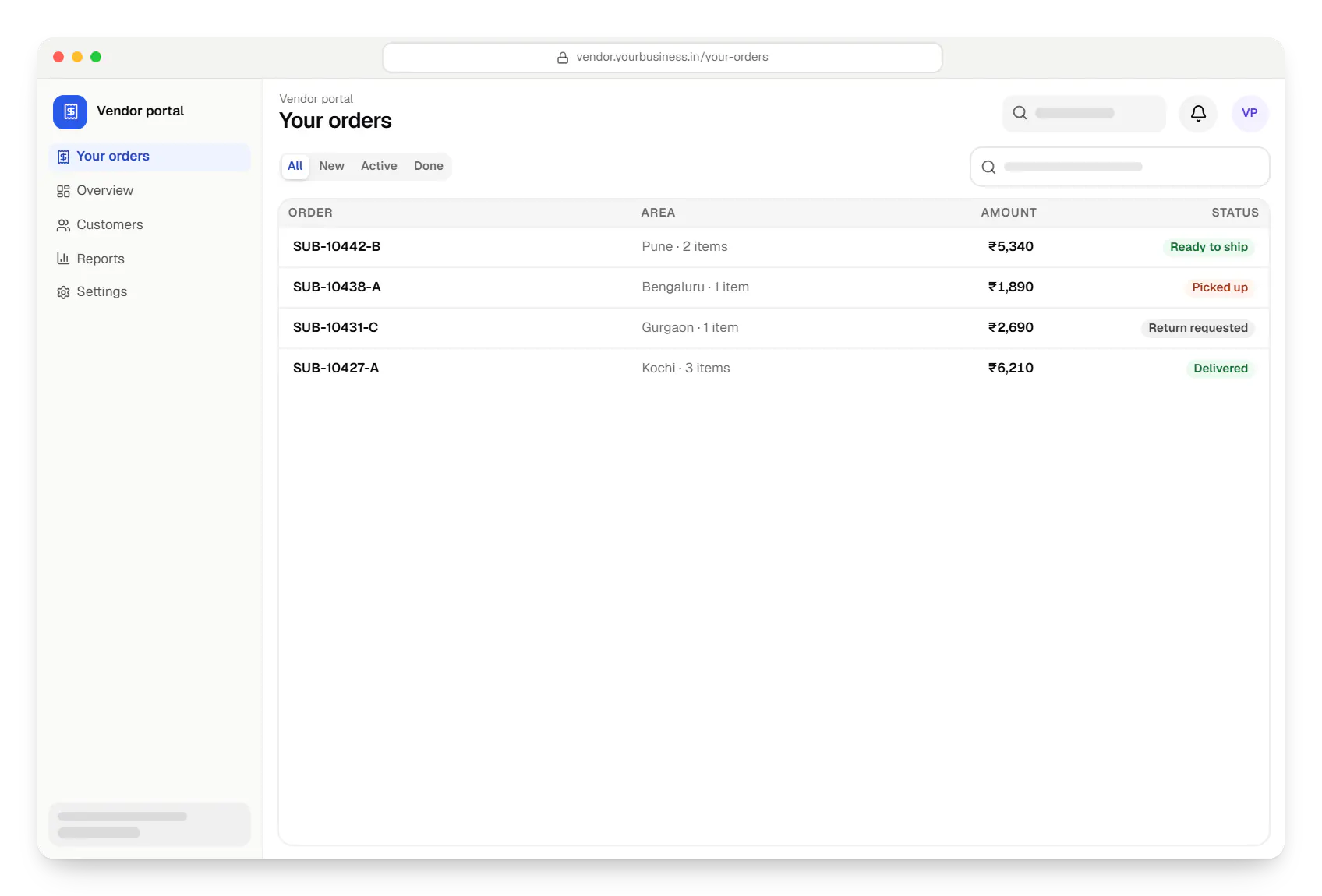
  • Multi-vendor fashion marketplace vendor portal order list in a web browser, with 4 orders and their status
    Vendor portal. Labels see only their own sub-orders, print shipping labels and follow returns, without seeing other labels' data.
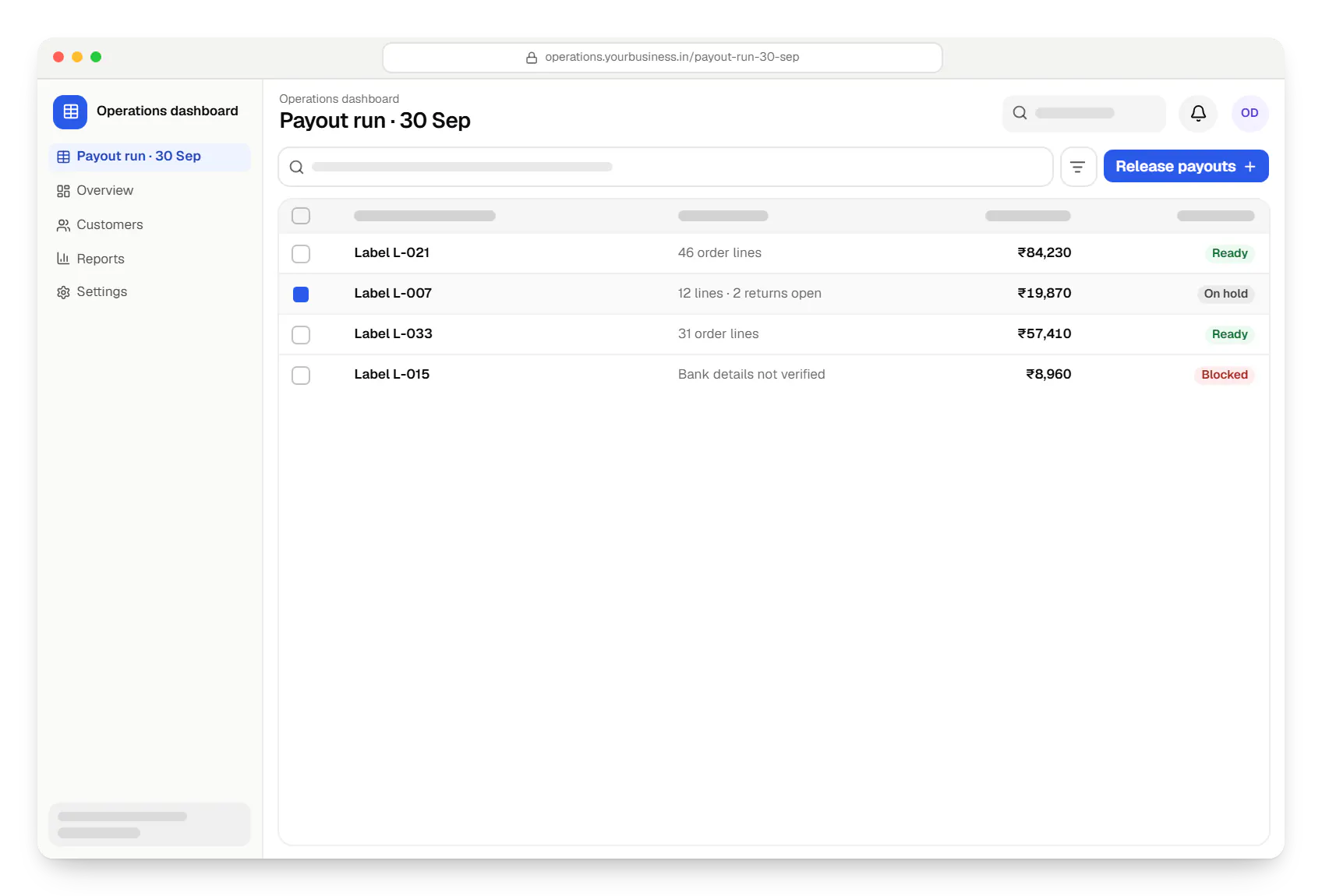
  • Multi-vendor fashion marketplace operations dashboard payout run table in a web browser, with 4 rows and status labels
    Operations dashboard. The finance team sees each label's earnings after commission, fees and returns, and releases payouts once the return window closes.
Illustrative preview

Sample screens: names, prices and figures are examples, not client data.

How it works

How an order flows from shopper to label to payout

One checkout for the shopper; behind it, each label ships its own items and is paid once the return window closes.

  1. Vendor portal

    Step 1: Label joins and lists products

    Labels sign up with GSTIN, PAN and bank details, then upload products in bulk with photos and their own size charts.

  2. Operations team

    Step 2: Catalogue is checked before it goes live

    Listings are checked for photo quality, size charts and descriptions, so the storefront looks consistent.

  3. Storefront

    Step 3: Shopper filters, checks fit and pays

    Shoppers filter by size, colour, fabric and occasion, read fit notes and pay online or by cash on delivery.

  4. Marketplace back end

    Step 4: Order splits by label

    A bag with items from three labels becomes three sub-orders, each packed and shipped from its own pickup address.

  5. Courier aggregator

    Step 5: Courier picks up and delivers

    Shipping labels, pickups, tracking and return pickups are booked through a courier aggregator.

  6. Finance team

    Step 6: Payout after the return window

    Each label's earnings, minus commission and fees, are held until the return window closes and then paid out with a statement.

How we would build it

From the problem to the architecture

The challenge

Fashion marketplaces carry problems a single-brand store does not:

  • Vendor quality: labels upload inconsistent photos, sizes and descriptions, each with its own size chart.
  • Returns: size-related returns are common in fashion, so payouts cannot be released the day an order ships.
  • Shipping from many places: every vendor has its own pickup address and packing habits.
  • Money flows: the operator collects payment, deducts commission and fees, handles tax collected at source under GST for e-commerce operators, and settles each vendor correctly.
  • Discovery: shoppers expect instant filters by size, colour, fabric and occasion.
Our proposed solution

  • Storefront: a Next.js site with fast category and collection pages, filters, label-specific size charts with fit notes, wishlists and prepaid or COD checkout.
  • Vendor portal: onboarding with GSTIN, PAN and bank account verification, bulk product upload by CSV with image and size-chart checks, order management and shipping labels.
  • Operations dashboard: catalogue moderation, vendor approvals, commission rules by category or vendor, and returns and dispute handling.
  • Shipping: a courier aggregator such as Shiprocket for multi-pickup shipping, tracking, reverse pickups and non-delivery reports.
  • Payouts: a ledger per order line holds vendor earnings until the return window closes, then settles them on a schedule.

Architecture

  • Storefront: Next.js with incremental static regeneration for catalogue pages, and images resized and served through a CDN.
  • API: NestJS on PostgreSQL, with each order split into vendor sub-orders at checkout.
  • Search: PostgreSQL full-text search at launch, with a move to a dedicated search engine planned once catalogue size and filter load justify it.
  • Redis: caching, carts and job queues for catalogue imports and payout runs.
  • Payments: Razorpay, with split settlements through Razorpay Route or bank payouts driven by the ledger.
  • Hosting: Docker containers on AWS.

Key features

What the product does

8 capabilities that shape the scope and the estimate.

  • Vendor onboarding with GSTIN, PAN and bank account checks
  • Bulk catalogue upload with image and size-chart validation
  • Filters by size, colour, fabric and occasion
  • Label-specific size charts and fit notes
  • Vendor sub-orders created at checkout
  • Multi-pickup shipping and reverse pickups via a courier aggregator
  • Commission rules by category or vendor
  • Payout ledger with holds until the return window closes

Platforms

Where the marketplace runs

A storefront website for shoppers, a web portal for labels and an operations dashboard, all on one commerce back end.

  • Web

    Website

    Marketing and content websites: fast, search-friendly pages with a CMS your team can update without a developer.

  • Web

    Web application

    Browser-based applications with logins, roles and workflows, such as customer portals, SaaS products and internal tools.

  • Back office

    Admin dashboard

    Back-office panels for operations, support and finance teams: orders, users, content, reports and permissions.

Technology

Marketplace technology, and why it matters

A Next.js storefront for fast catalogue pages, a NestJS back end that splits orders by label, and Razorpay for payments and settlements.

  • A modern web technology for fast, search-friendly websites, online stores and web applications that load quickly on mobile.

    Used for

    • Business websites
    • Online stores
    • Web apps
    • Customer portals
  • Backend

    NestJS

    A structured way to build back ends on Node.js, so large business systems stay organised, testable and easy to hand over.

    Used for

    • Business app back ends
    • SaaS platforms
    • Marketplaces
    • Admin panel back ends
  • A reliable database for the records your business runs on: orders, payments, bookings and stock, kept accurate and easy to report on.

    Used for

    • Orders and customers
    • Payments and ledgers
    • Stock and inventory
    • Bookings
  • Data

    Redis

    Keeps frequently used data in fast memory, so apps stay quick on busy days and live features like order tracking feel instant.

    Used for

    • Faster apps
    • Live order status
    • Shopping carts
    • Job queues and alerts
  • Payments & maps

    Razorpay

    Lets customers in India pay by UPI, cards, netbanking or wallets, and handles subscriptions, refunds and payouts to sellers or partners.

    Used for

    • UPI payments
    • Cards and netbanking
    • Subscriptions
    • Payment links
  • Cloud & DevOps

    AWS

    Cloud hosting for your app, website and data, with data centres in India and room to grow when traffic rises.

    Used for

    • App hosting
    • File and photo storage
    • Backups
    • Busy sale days
  • Cloud & DevOps

    Docker

    Packages your software so it runs the same way on every laptop and server, which makes releases predictable and moving hosts easier.

    Used for

    • Reliable releases
    • Same setup everywhere
    • Faster onboarding
    • Easy scaling

More work

Similar projects

Other illustrative projects with overlapping apps, industries or services. They are samples, not client work.

  • AI solutions

    Illustrative sample

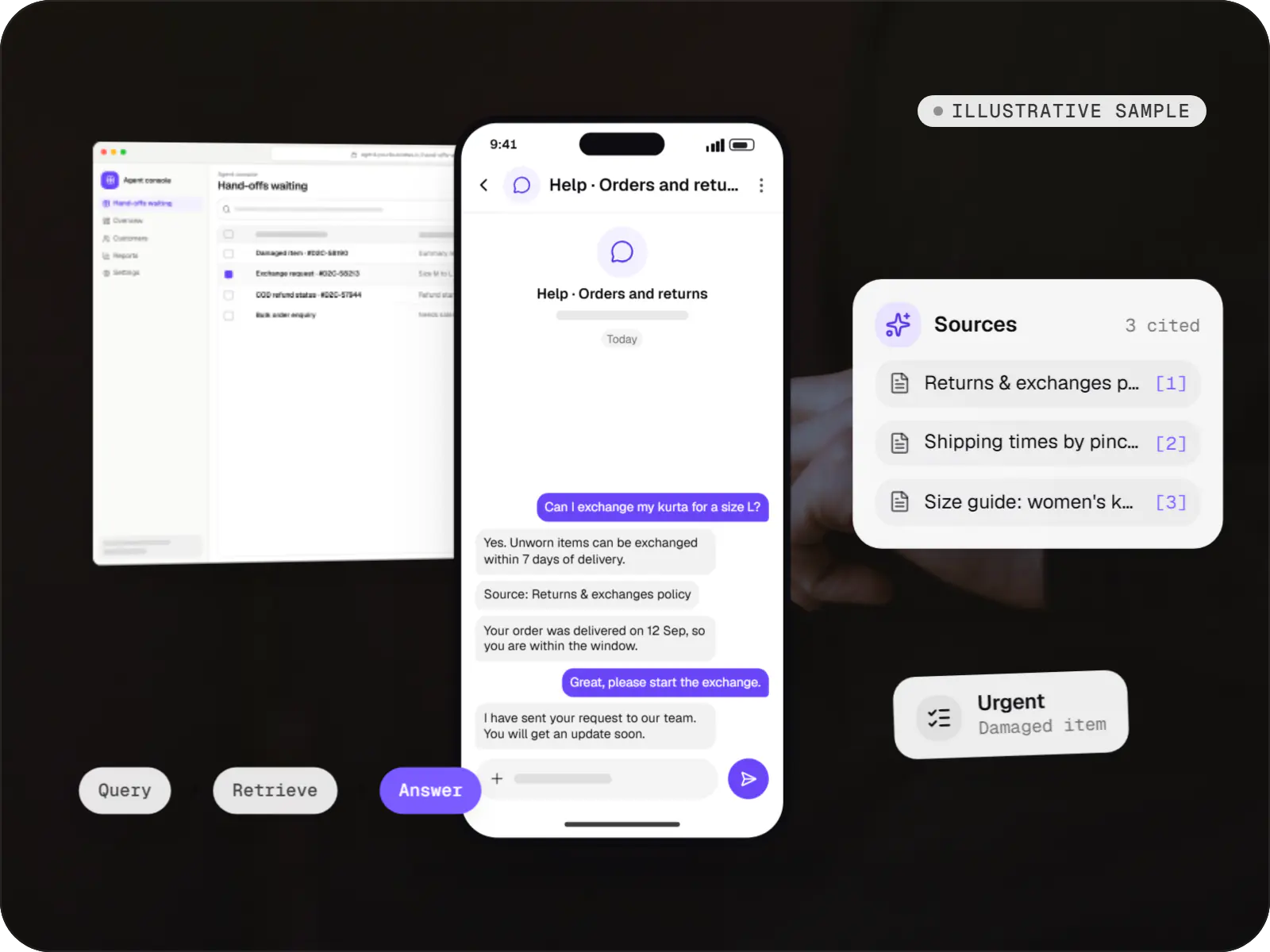
    AI customer support assistant for a D2C brand

    An illustrative AI assistant that answers order, return and product questions from a D2C brand's own policies and order data, with sources and a human hand-off.

    • E-commerce
    • AI assistant

    Runs on

    • Website
    • Admin

    Built with

    • Next.js
    • Python
    • OpenAI APIs
    • LLM integrations
    • PostgreSQL
    • +1 more
  • Device management & kiosk solutions

    Illustrative sample

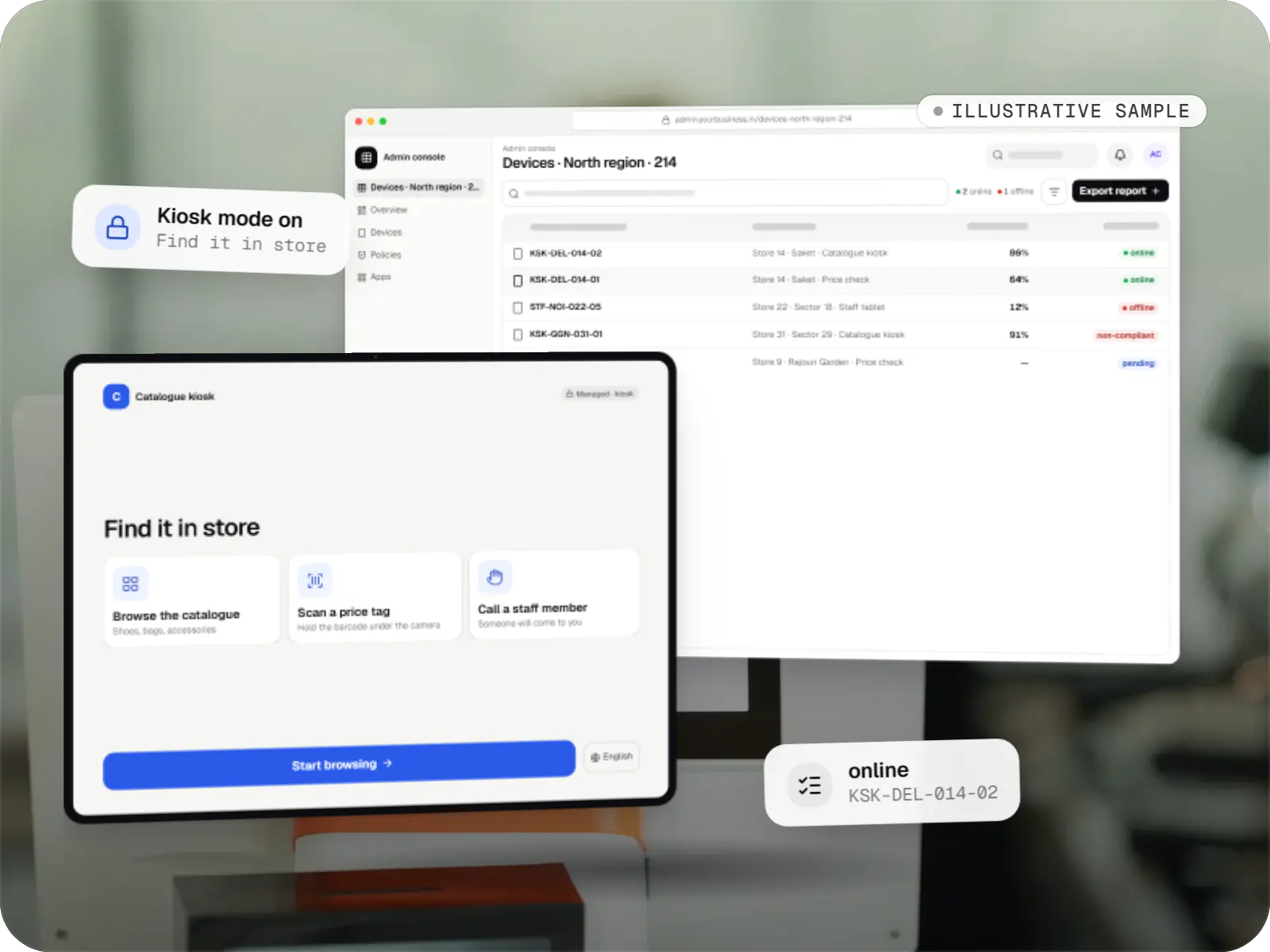
    Android kiosk and device management platform for retail stores

    An illustrative kiosk product for retail chains: locked Android tablets for catalogues and price checks, a staff launcher, and a console to enrol, update and monitor every device.

    • Retail
    • Device management platform

    Runs on

    • Android Enterprise
    • Admin
    • Web app

    Built with

    • Next.js
    • React
    • Android (Kotlin)
    • NestJS
    • PostgreSQL
    • +1 more
  • Delivery app development

    Illustrative sample

    Hyperlocal grocery delivery platform

    An illustrative platform for neighbourhood grocery stores: slot or express delivery, store picking, batched delivery runs, and payment by UPI or cash on delivery.

    • Retail
    • Mobile + web platform

    Runs on

    • Android
    • iOS
    • Cross-platform
    • Admin

    Built with

    • Flutter
    • NestJS
    • PostgreSQL
    • Redis
    • AWS
    • +1 more

FAQ

Frequently asked questions

How are vendor payouts and commissions calculated in a marketplace?

Every order line creates ledger entries: the sale, the marketplace commission, shipping and payment fees, tax collected at source where it applies, and any return adjustment. Earnings stay on hold until the return window closes, then move into a scheduled payout run. Vendors see the same line-by-line statement in their portal. The exact rules are agreed with your finance team and accountant.

Should we build a custom marketplace or start with Shopify and a marketplace app?

A hosted platform with a multi-vendor app can be a sensible way to test demand with a few labels. It gets harder when you need custom commission logic, vendor-specific shipping, your own payout ledger or a storefront the apps cannot support. A custom build costs more upfront but gives you full control of those rules and your data.

How do you keep a fashion storefront fast with a large catalogue?

Catalogue pages are pre-rendered and refreshed in the background when products change, so shoppers are not waiting on the database. Images are resized per device through a CDN, filters query an index rather than scanning products, and checkout loads only what it needs. We measure Core Web Vitals on mid-range Android phones before launch.

Next step

Launching a marketplace for designers or labels?

Share how you plan to onboard vendors and charge commission, and we will turn it into a phased estimate.