


Web
Next.js
A modern web technology for fast, search-friendly websites, online stores and web applications that load quickly on mobile.
Used for
- Business websites
- Online stores
- Web apps
- Customer portals
Multi-vendor marketplaces
Marketplaces where sellers onboard, list, ship and get settled accurately, while your team controls quality.
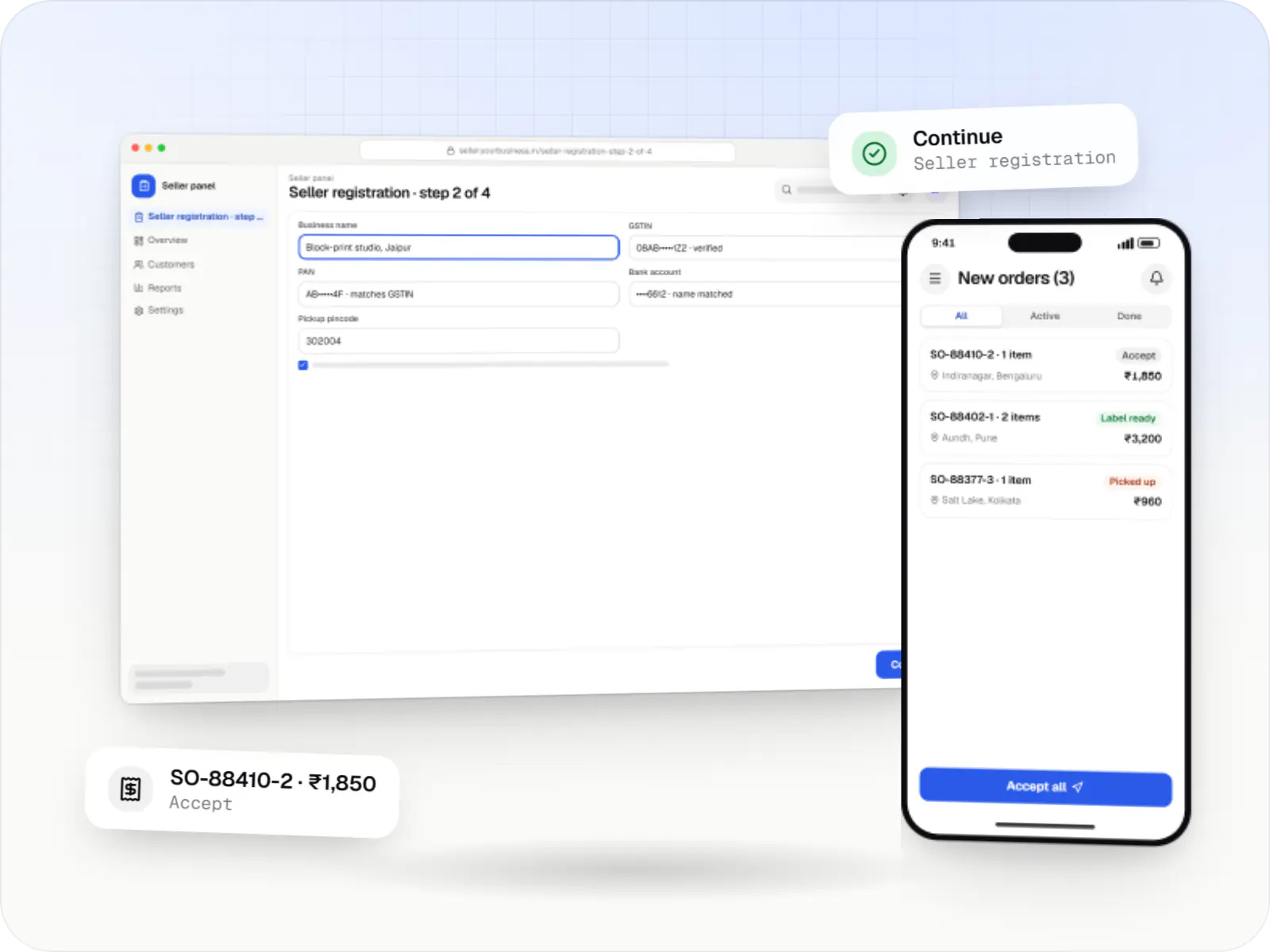
At a glance
What it is
Multi-vendor marketplaces with seller onboarding, commission rules, split payouts, per-seller invoicing and catalogue moderation.
How to start
Tell us what you need in your own words. You talk to the developers who would build it and get a written, line-item estimate.
Get a project estimateBuyers judge a marketplace on range, price and trust, and all three depend on sellers. If onboarding takes a week of emails, listings arrive half-filled or payouts are hard to check, good sellers leave.
So our multi-vendor marketplace development gives the seller panel and settlement engine as much weight as the storefront. Sellers verify their business, bulk-upload a catalogue, and see orders and payouts in one place. Your team gets moderation queues, commission controls and a ledger explaining every payout.
Challenges
Collecting PAN, GSTIN, bank details and agreements over email delays launches and invites errors.
Commissions, shipping, refunds and tax deductions worked out in spreadsheets produce settlements sellers cannot verify.
Several sellers creating the same product fragments reviews and clutters search.
Without verification, ratings and takedowns, one bad seller can dent confidence across the platform.
What is included
Platform: Website and apps
Platform: Web app
Platform: Admin dashboard
Platform: Admin dashboard
How it works
Buyers see one store. Behind it, every seller moves through onboarding, moderation, fulfilment and settlement.
The seller enters business details; PAN, GSTIN and bank account are verified automatically, and the seller agreement is accepted online.
Listings arrive by form or spreadsheet, are checked against category templates and wait in a moderation queue for approval.
The buyer pays once; behind the scenes the order splits into a sub-order for each seller involved.
Sellers accept their sub-orders, print labels and hand parcels to the courier from their own pickup address.
After delivery and the return window, the ledger calculates commission, shipping, refunds, TCS and TDS for every order.
Payouts go by split settlement or a payouts API, and the seller sees exactly how each amount was reached.
Integrations
Transfers each seller's share after your commission.
Checks seller details at sign-up.
Pickups and tracking from each seller's location.
Faceted search across all sellers.
Order alerts for sellers, updates for buyers.
Commission invoices and settlement exports.
Platforms
A website and apps for Android and iOS where buyers shop, a web app for sellers, and an admin dashboard for moderation, disputes and settlements.
Marketing and content websites: fast, search-friendly pages with a CMS your team can update without a developer.
Browser-based applications with logins, roles and workflows, such as customer portals, SaaS products and internal tools.
Apps for Android phones and tablets, tested on budget and mid-range devices and published on Google Play or privately.
Apps for iPhone and iPad, built to Apple's guidelines and released through TestFlight and the App Store.
Back-office panels for operations, support and finance teams: orders, users, content, reports and permissions.
Technology
Next.js and React for the storefront and seller panel, NestJS and PostgreSQL for sub-orders and the settlement ledger, Redis for fast carts and search, and Razorpay for split payments.
Web
A modern web technology for fast, search-friendly websites, online stores and web applications that load quickly on mobile.
Used for
Web
Builds interactive screens in the browser, such as dashboards, admin panels and portals, that respond instantly as your team works.
Used for
Backend
A structured way to build back ends on Node.js, so large business systems stay organised, testable and easy to hand over.
Used for
Backend
Runs the server side of apps: fast, scalable back ends that power your app, website and integrations.
Used for
Data
A reliable database for the records your business runs on: orders, payments, bookings and stock, kept accurate and easy to report on.
Used for
Data
Keeps frequently used data in fast memory, so apps stay quick on busy days and live features like order tracking feel instant.
Used for
Payments & maps
Lets customers in India pay by UPI, cards, netbanking or wallets, and handles subscriptions, refunds and payouts to sellers or partners.
Used for
Cloud & DevOps
Cloud hosting for your app, website and data, with data centres in India and room to grow when traffic rises.
Used for
Plain-English glossary
Product preview
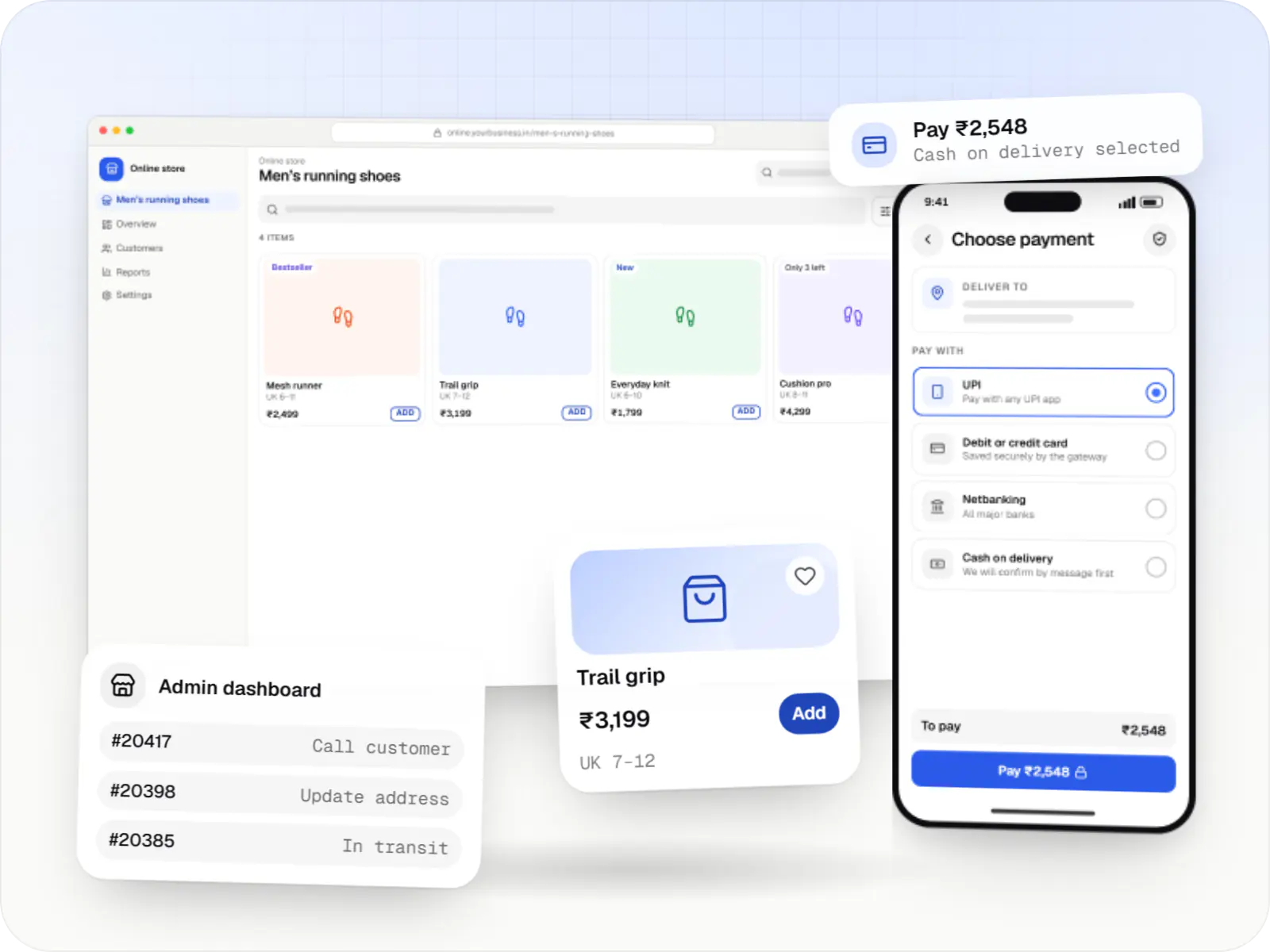
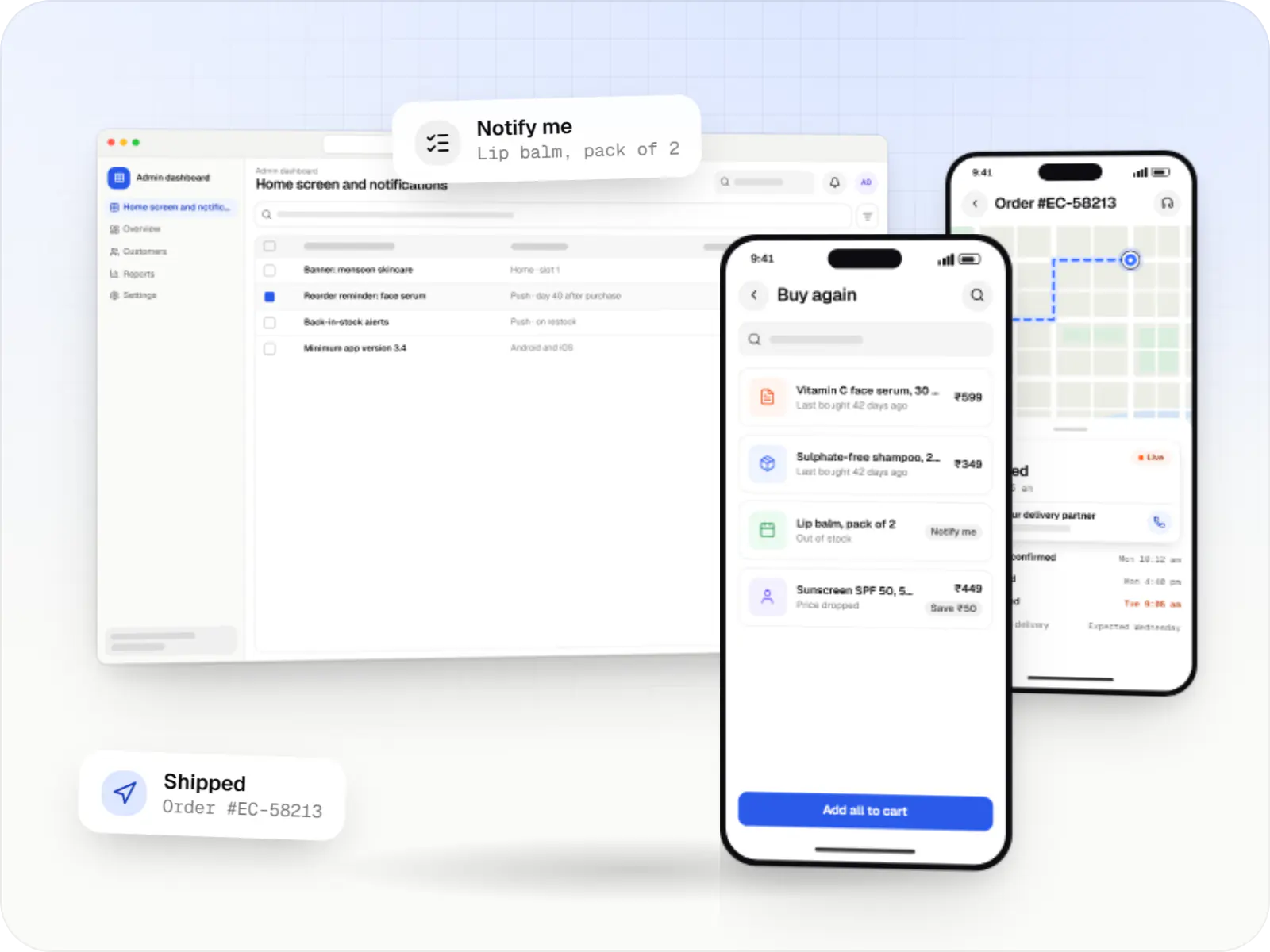
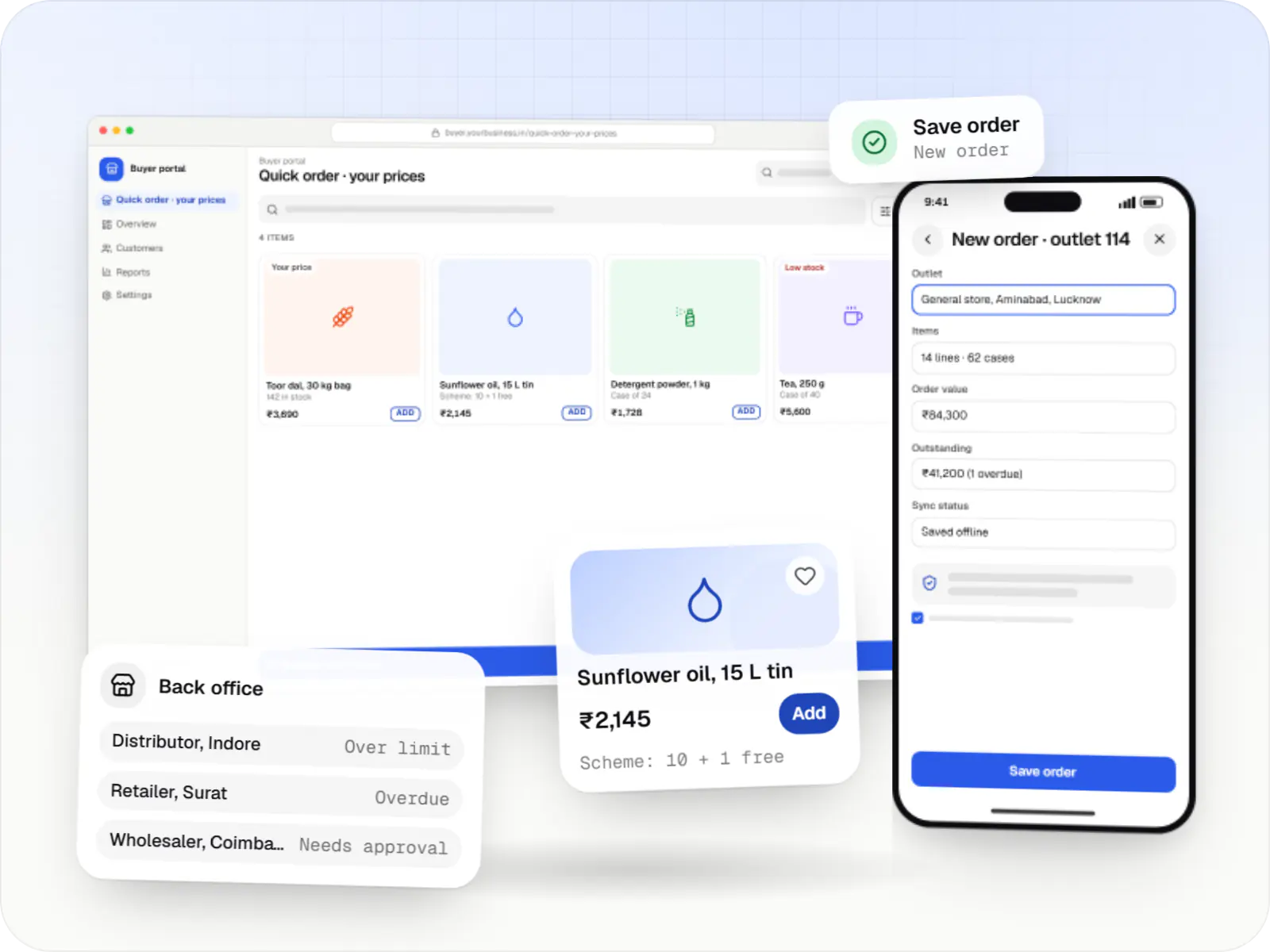
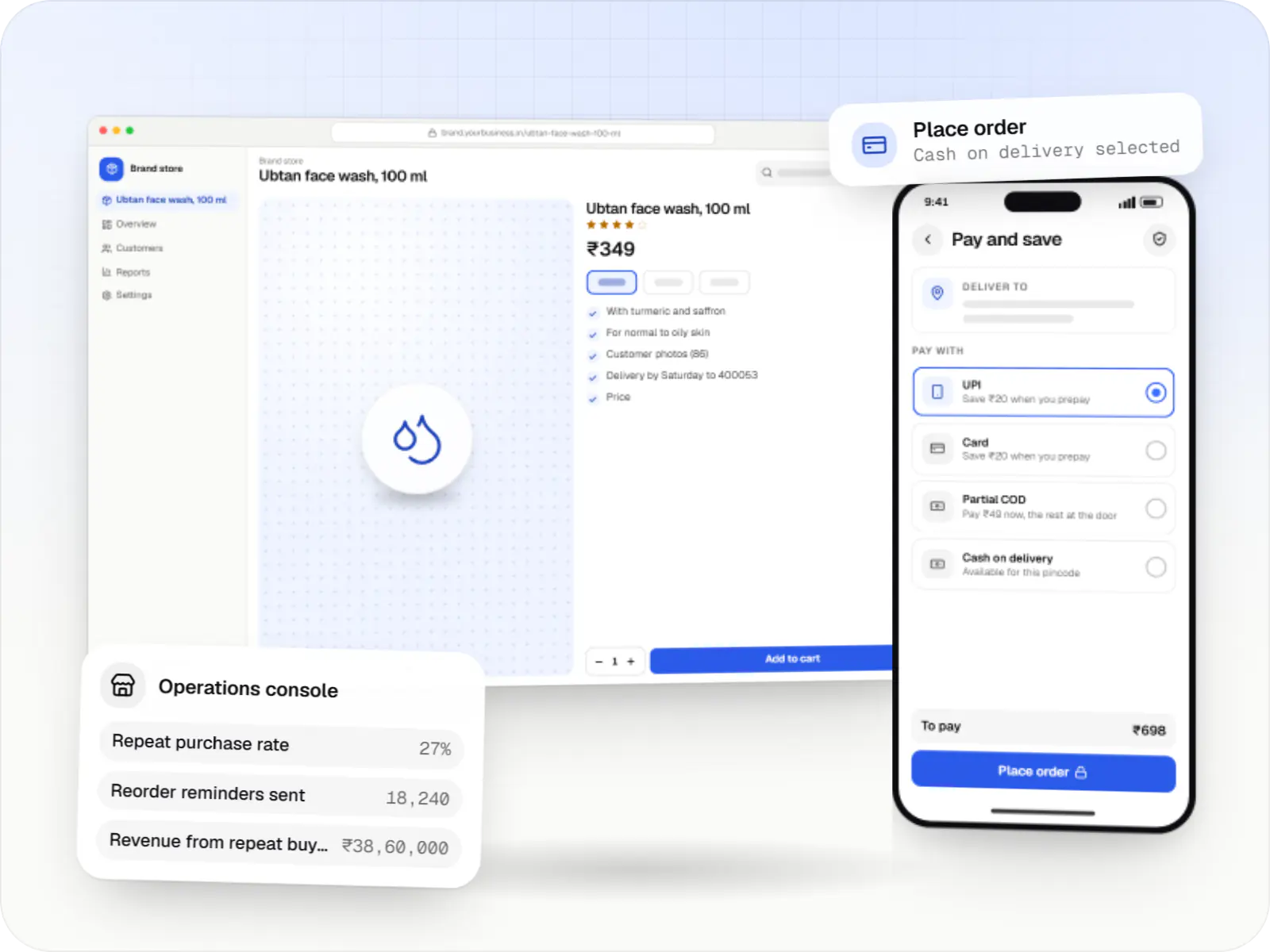
Illustrative screens, using a handcrafted home and fashion marketplace as the example.
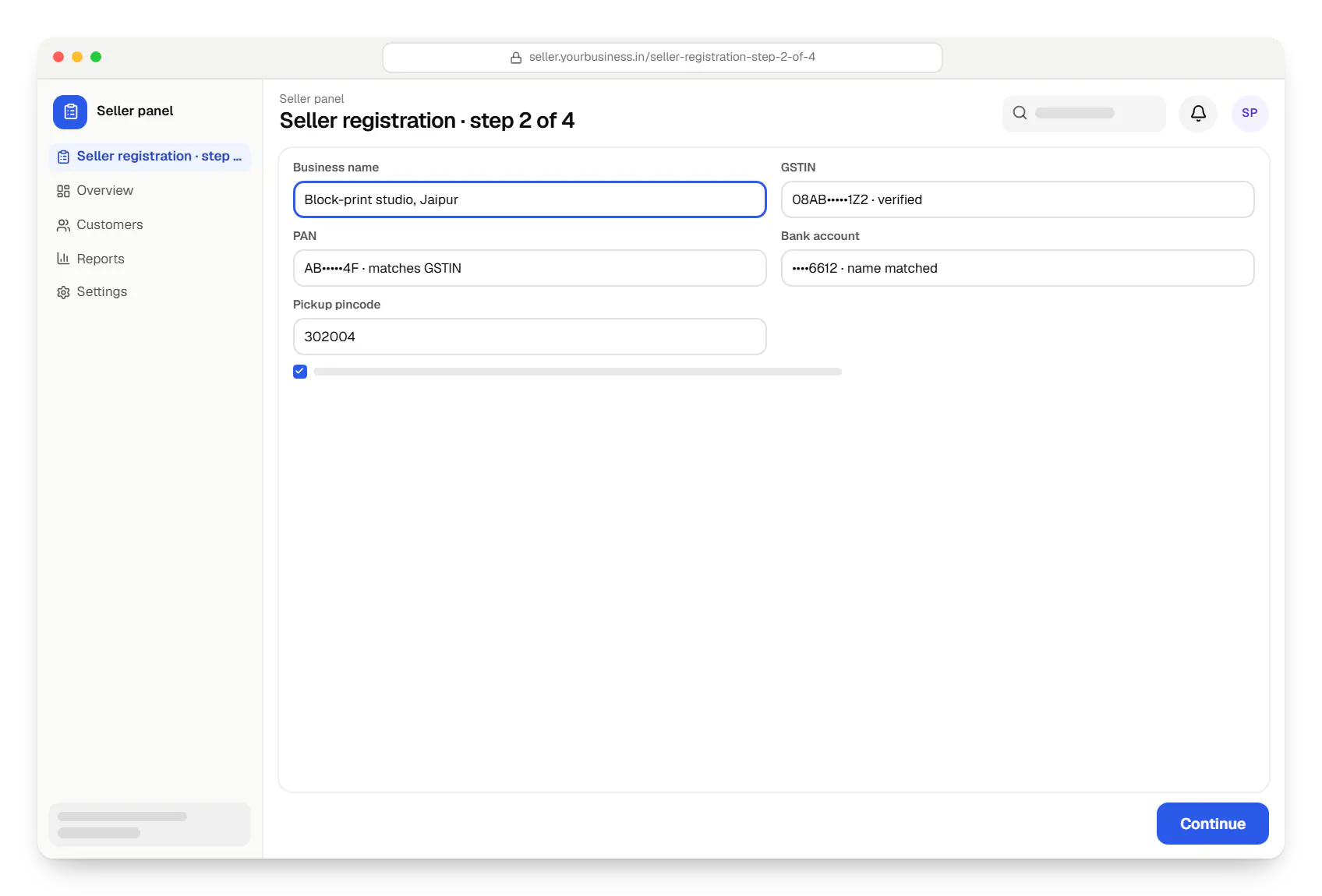
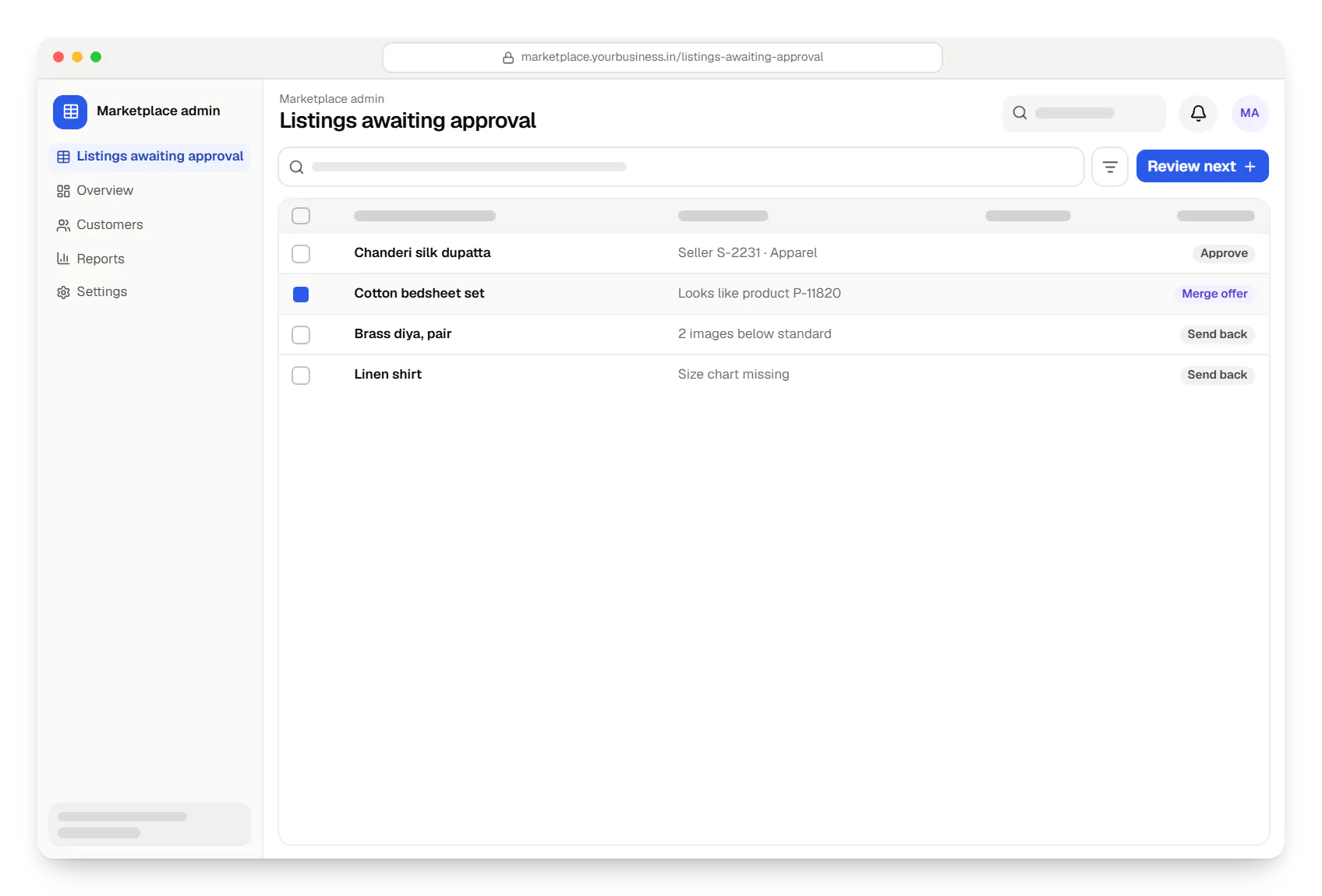
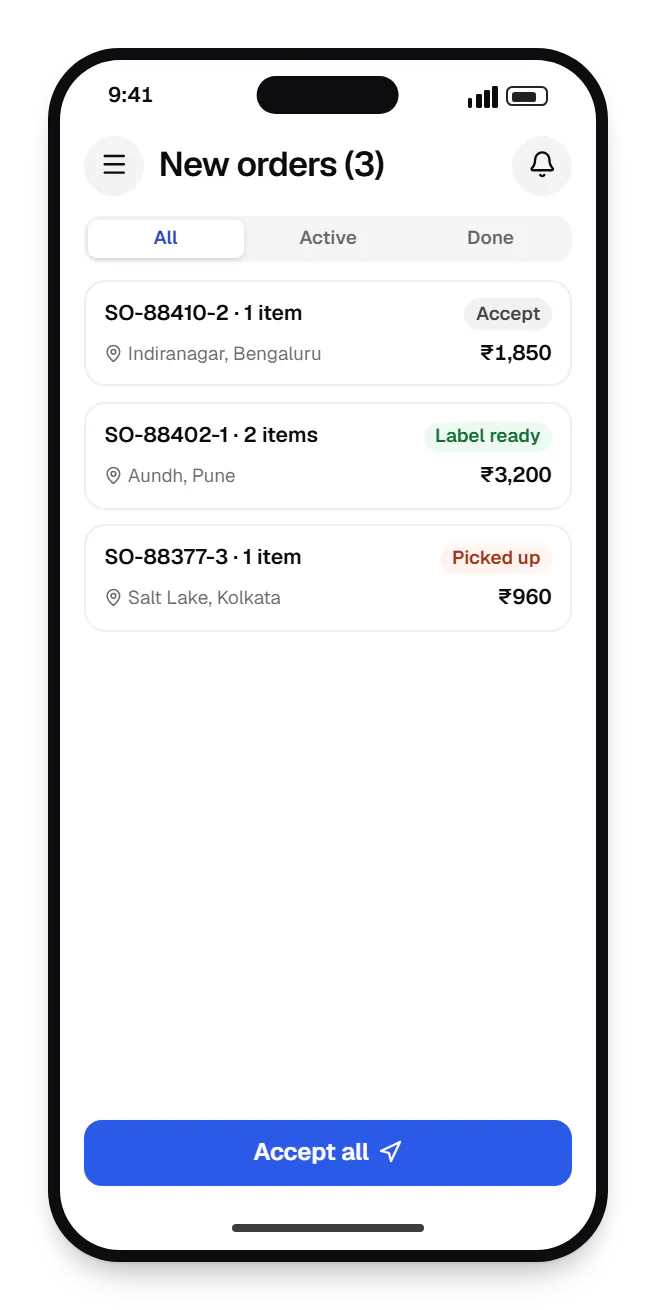
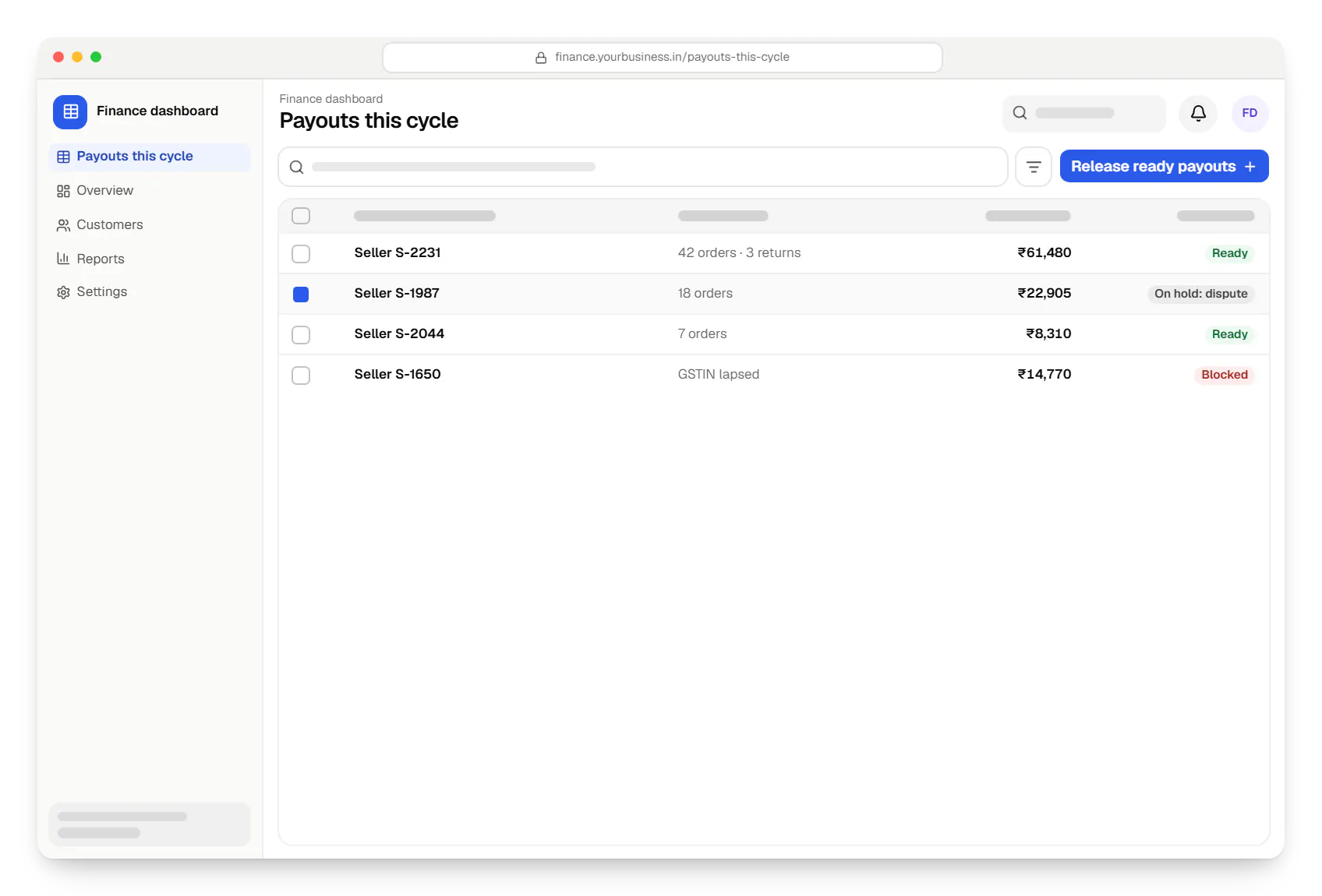
Sample screens: names, prices and figures are examples, not client data.
Industries
Services
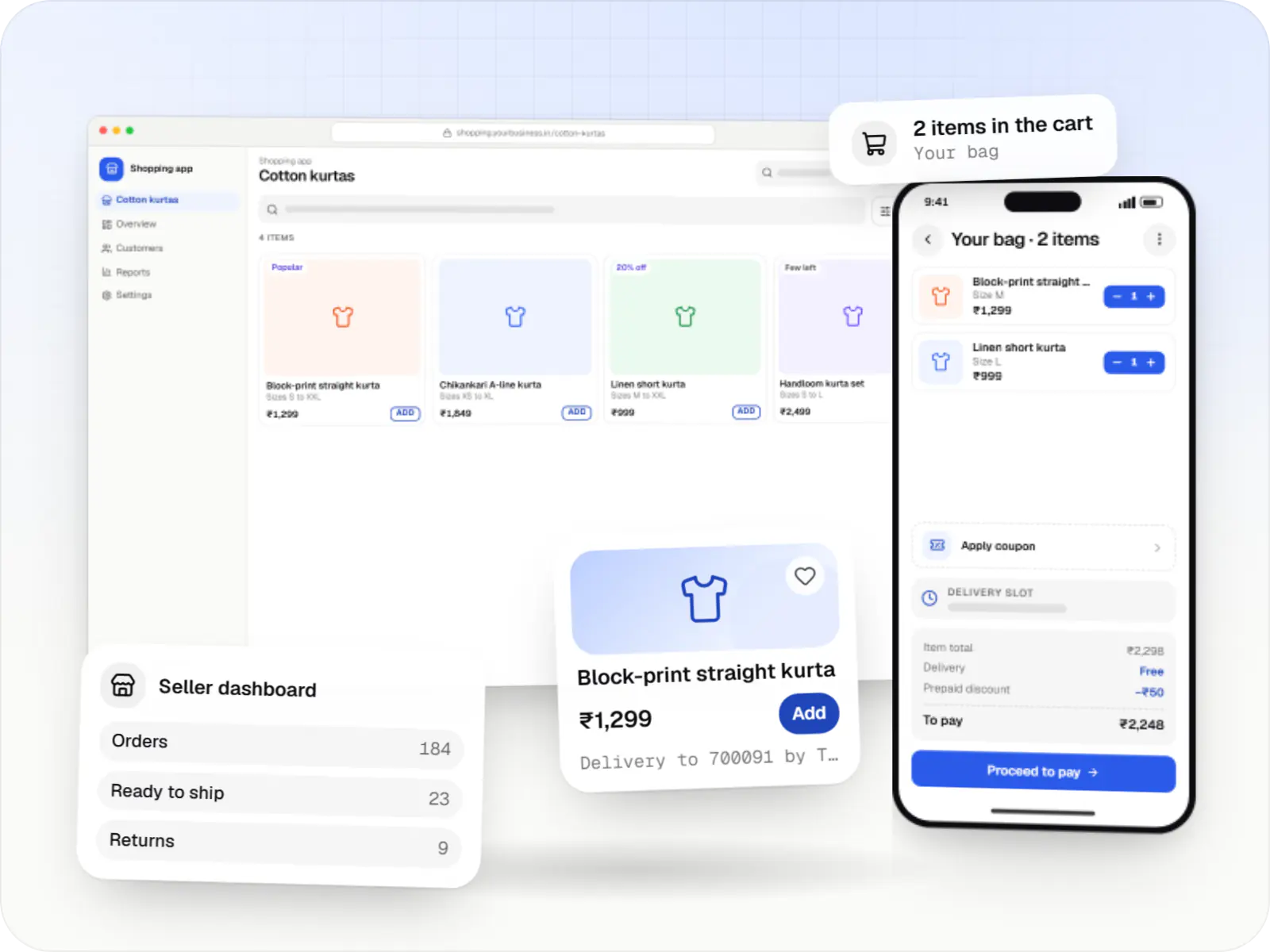
Online stores, shopping apps and B2B ordering portals on Shopify, WooCommerce or custom stacks, wired to Indian payments, couriers and GST invoicing.
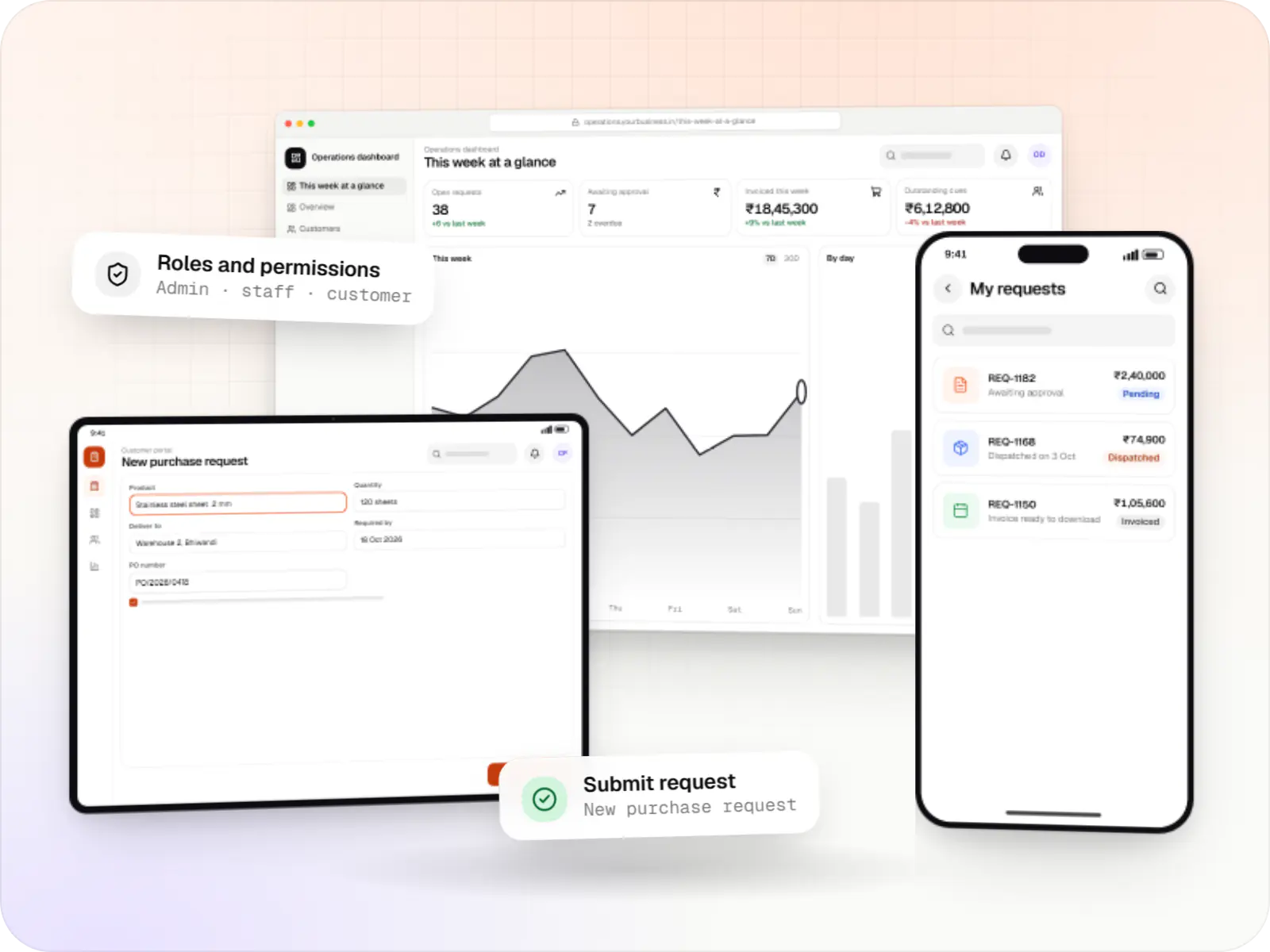
Browser-based products, customer portals, dashboards and internal tools, built on clean data models with secure roles and integrations.
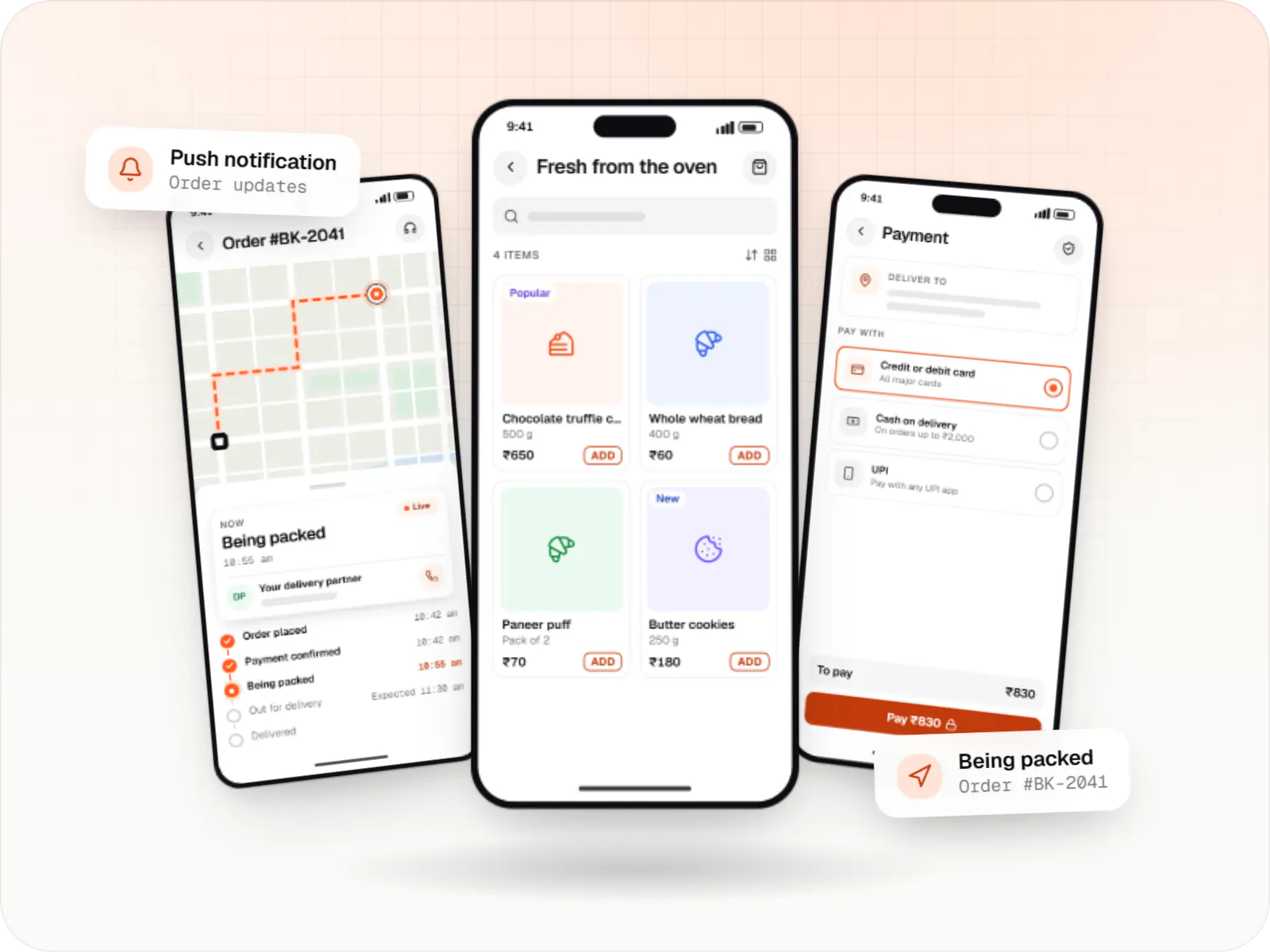
Native and cross-platform Android and iOS apps, from first release through regular store updates, built by our in-house designers and engineers.
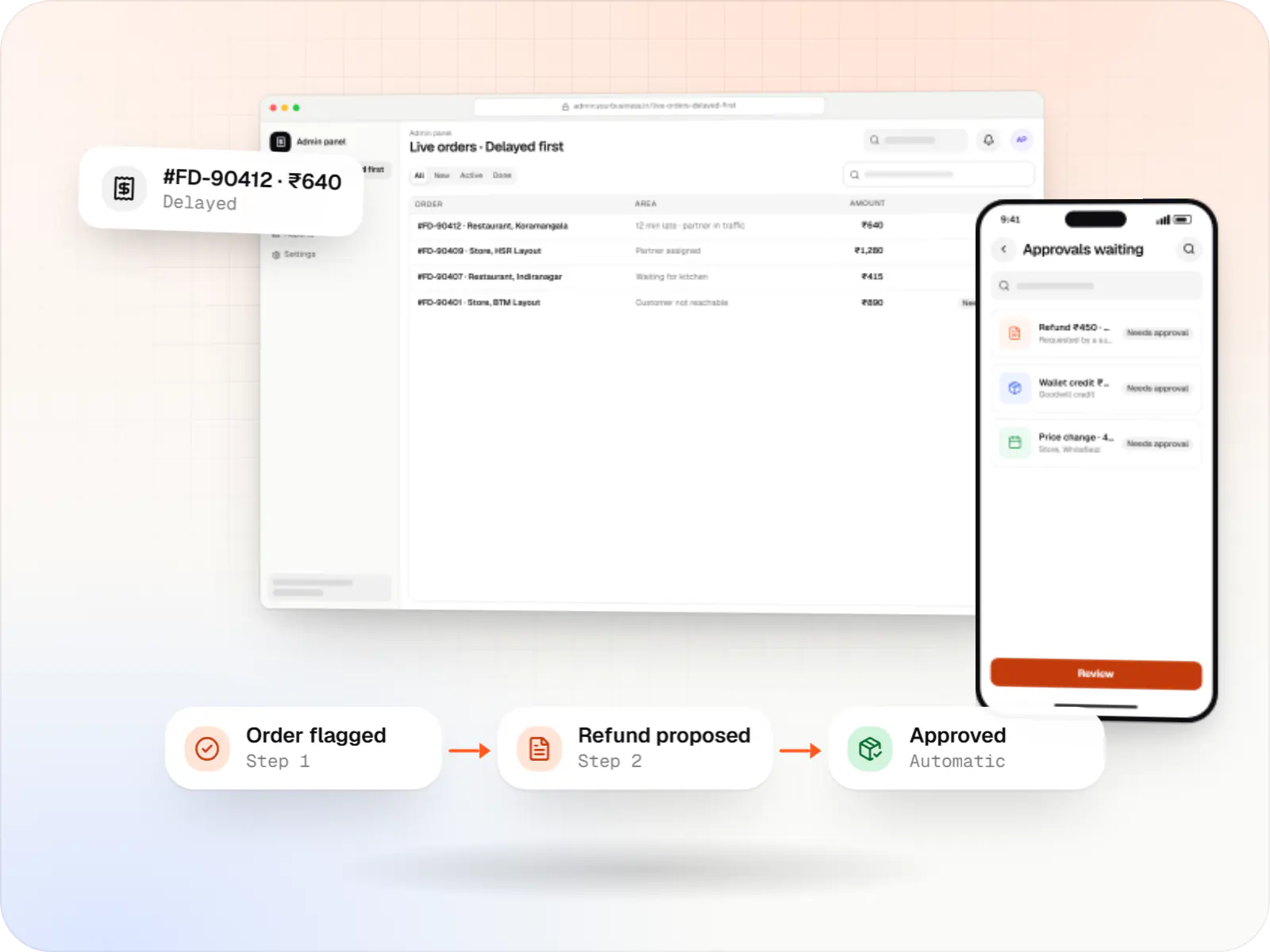
Back-office dashboards built around your team's daily tasks: order queues, approvals, catalogue management, payouts, reports and audit logs.
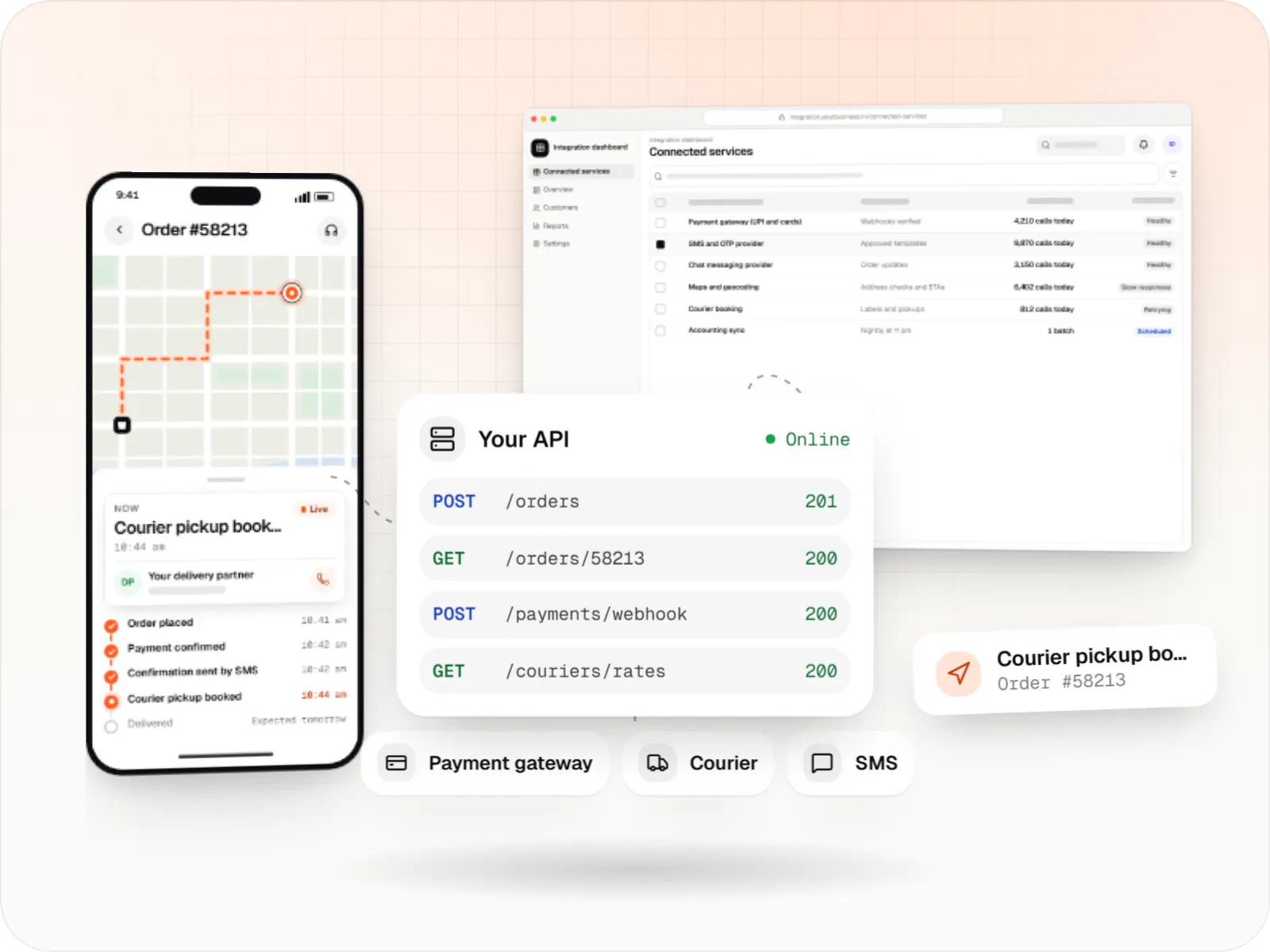
Secure, documented REST and GraphQL APIs, plus integrations that connect your apps to payment, logistics, GST, messaging and business systems.
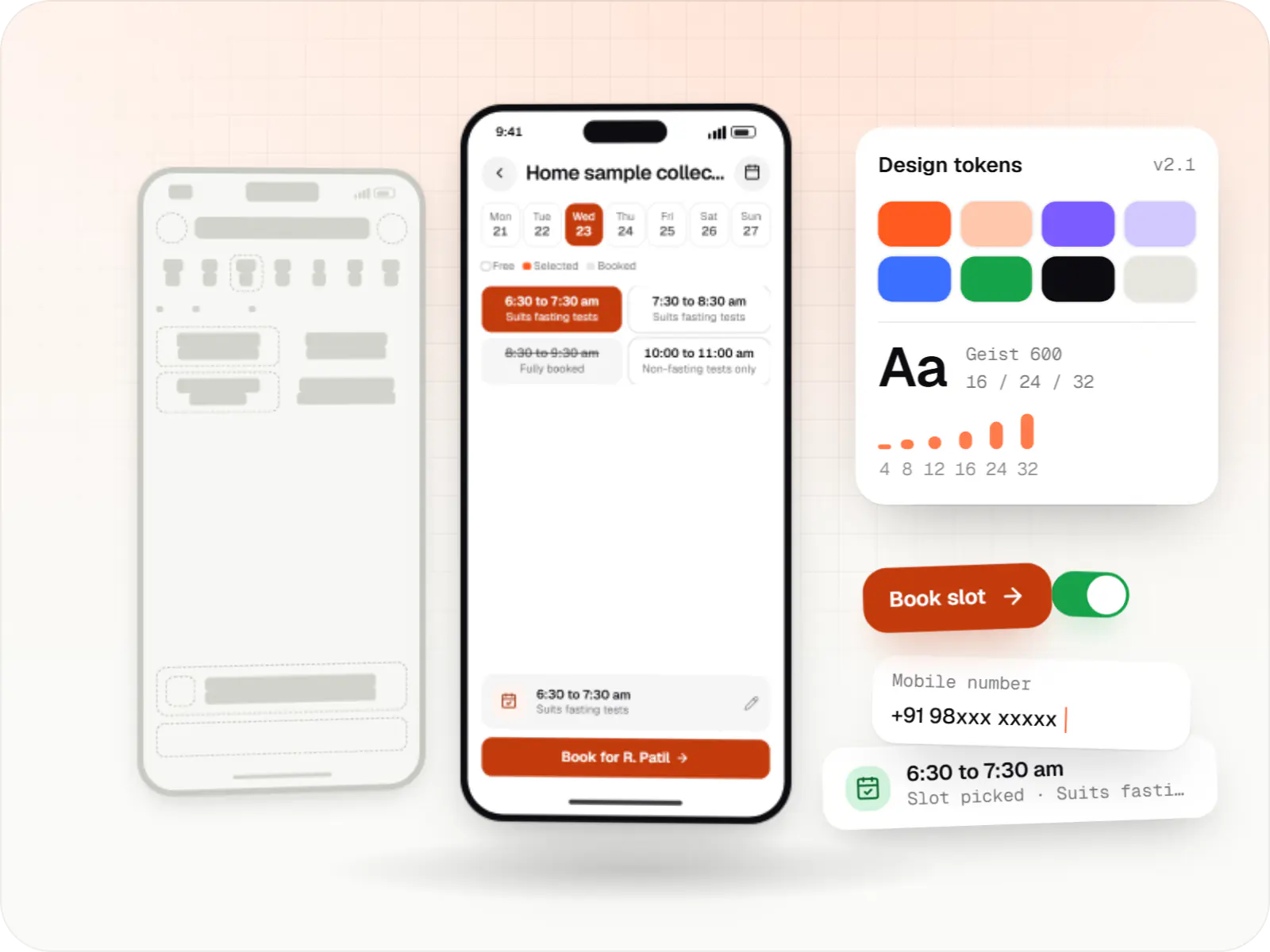
Product design for web and mobile apps: research, user flows, wireframes, prototypes and design systems that engineers can build from.
Work
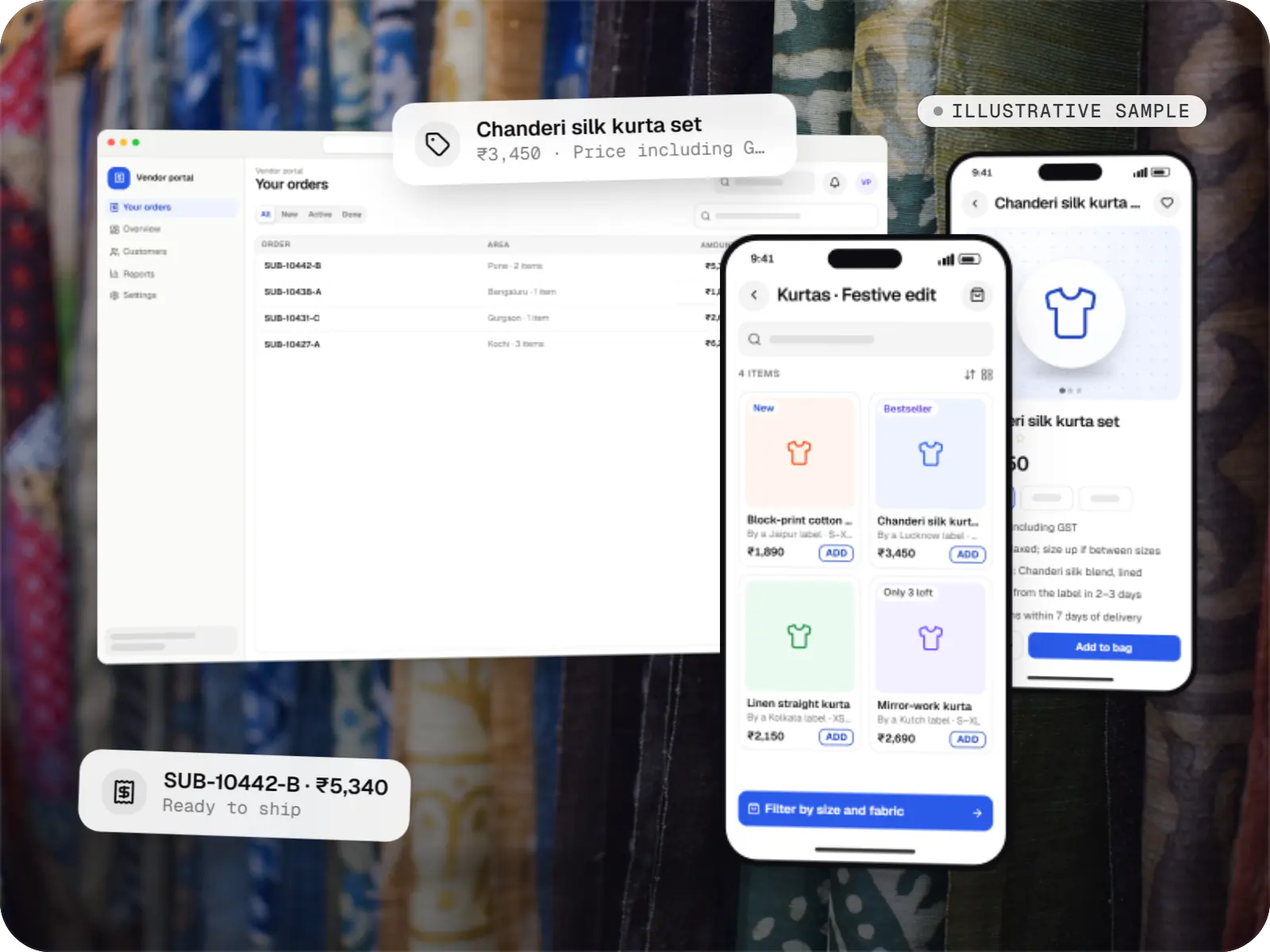
E-commerce & marketplaces
An illustrative marketplace where independent fashion labels sell through one storefront, with vendor onboarding, commission rules, multi-pickup shipping, returns and scheduled payouts.
Runs on
Built with
Cost drivers
Flat commission is simple; category rates, seller-funded offers and tax deductions add ledger logic.
Shared product pages with several seller offers need matching tools that per-seller listings do not.
Automated KYC and e-signed agreements take longer than manual approval.
Seller-shipped orders are simpler than marketplace-managed pickups or warehousing.
Seller and buyer apps each add scope; many marketplaces launch web-first.
Estimates are written from your scope, with the effort and assumptions behind each line item.
How pricing worksFAQ
Two patterns are common. With split settlements, the payment gateway transfers each seller's share to their bank account after deducting your commission. With scheduled payouts, the platform calculates what each seller is owed per cycle, after returns and deductions, and pays through a payouts API. The choice affects how funds flow through your accounts, so your finance adviser should confirm it.
E-commerce operators have obligations on both sides: tax collected at source (TCS) under GST on sellers' supplies, and tax deducted at source (TDS) under income-tax rules on payments to sellers. The platform must capture each seller's GSTIN and PAN, calculate deductions per settlement, show them on payout statements and produce filing reports. We build that data trail; your chartered accountant confirms rates and applicability.
We usually start sellers on a responsive web panel, because bulk listing, pricing and reports are easier on a larger screen. A seller app becomes worthwhile when sellers are small shops or artisans who run everything from a phone, or when fast order acceptance matters. WhatsApp order alerts can bridge the gap until an app is justified.
Structure plus review. Category templates require key attributes and image standards, and new sellers' listings pass through a moderation queue. For shared catalogues, matching on brand, model and barcode lets a second seller join an existing product page as another offer rather than creating a duplicate. Buyer reports and seller ratings feed takedown decisions.
A web-first marketplace with a buyer storefront, seller panel, basic commission rules and scheduled payouts typically takes a few months. Mobile apps, automated KYC, shared catalogues or managed logistics extend that. We usually suggest launching one category with a small group of sellers, then expanding features as real orders show what is needed.
Related
Next step
Tell us your niche, how sellers ship and how you plan to earn. We will outline an MVP, settlement model and estimate.