Web
Next.js
A modern web technology for fast, search-friendly websites, online stores and web applications that load quickly on mobile.
Used for
- Business websites
- Online stores
- Web apps
- Customer portals
Agriculture
Online stores, subscriptions and delivery apps for farms, organic brands and producer groups selling directly to households.
At a glance
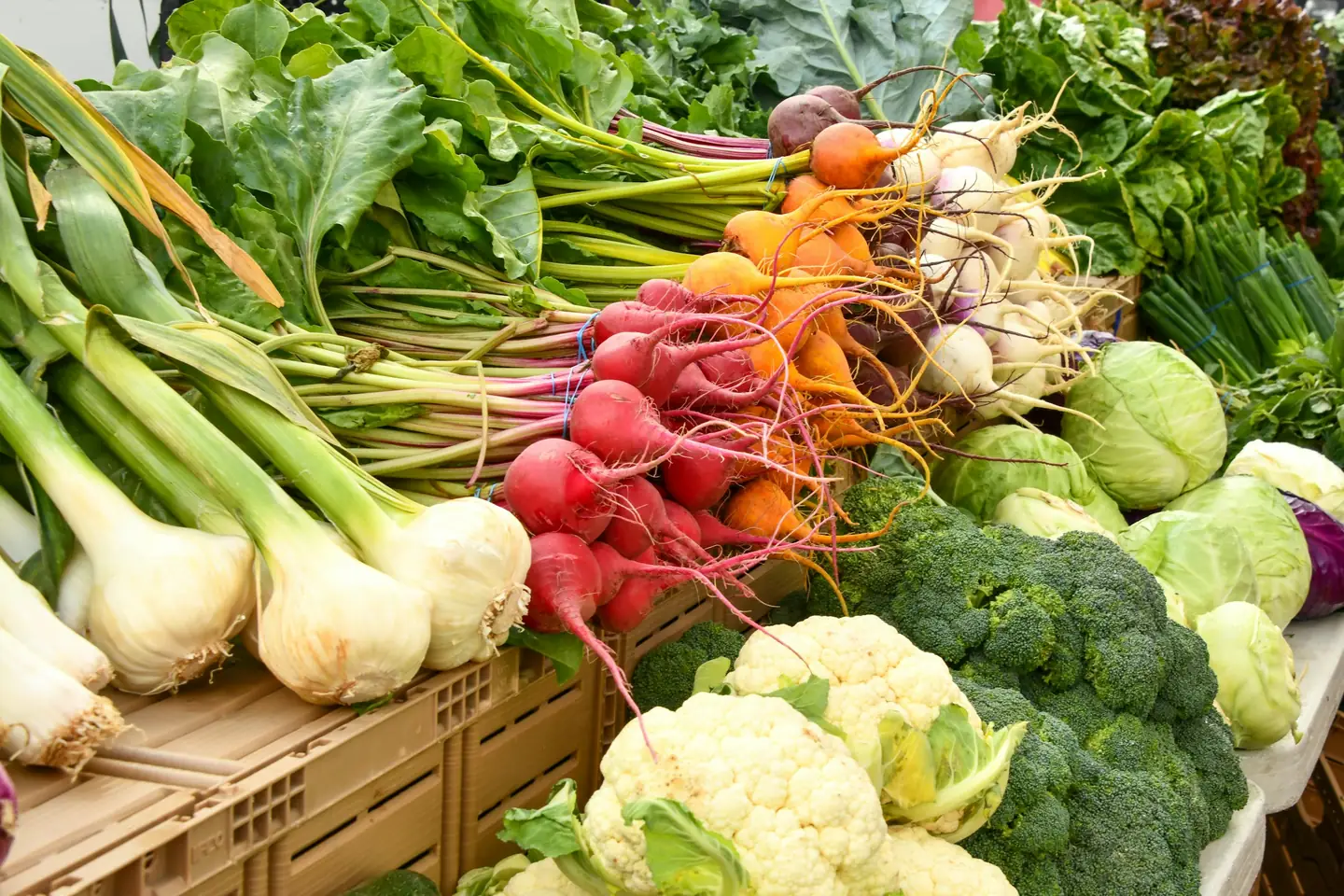
Farm-to-consumer brands sell what the land produces this week, not a fixed catalogue. We build ordering and delivery software that works with variable harvests.
Flutter and the related logo are trademarks of Google LLC. We are not endorsed by or affiliated with Google LLC.
How to start
Tell us what you need in your own words. You talk to the developers who would build it and get a written, line-item estimate.
Get a project estimateFarms, organic growers, producer groups and farm-fresh brands selling to households face problems a regular online store doesn't: availability depends on the harvest, items sold by weight are packed to slightly different weights, and customers want regular boxes on fixed days. Many start on WhatsApp and spreadsheets and outgrow them quickly. We build ordering and delivery systems designed around harvest-led supply.
Challenges
What you can sell depends on the week's harvest, not warehouse stock.
A 1 kg order may be packed at 950 g or 1.05 kg, and billing must adjust.
Weekly boxes, skips and substitutions managed in spreadsheets.
Customers want proof behind organic or residue-free labels.
Solutions
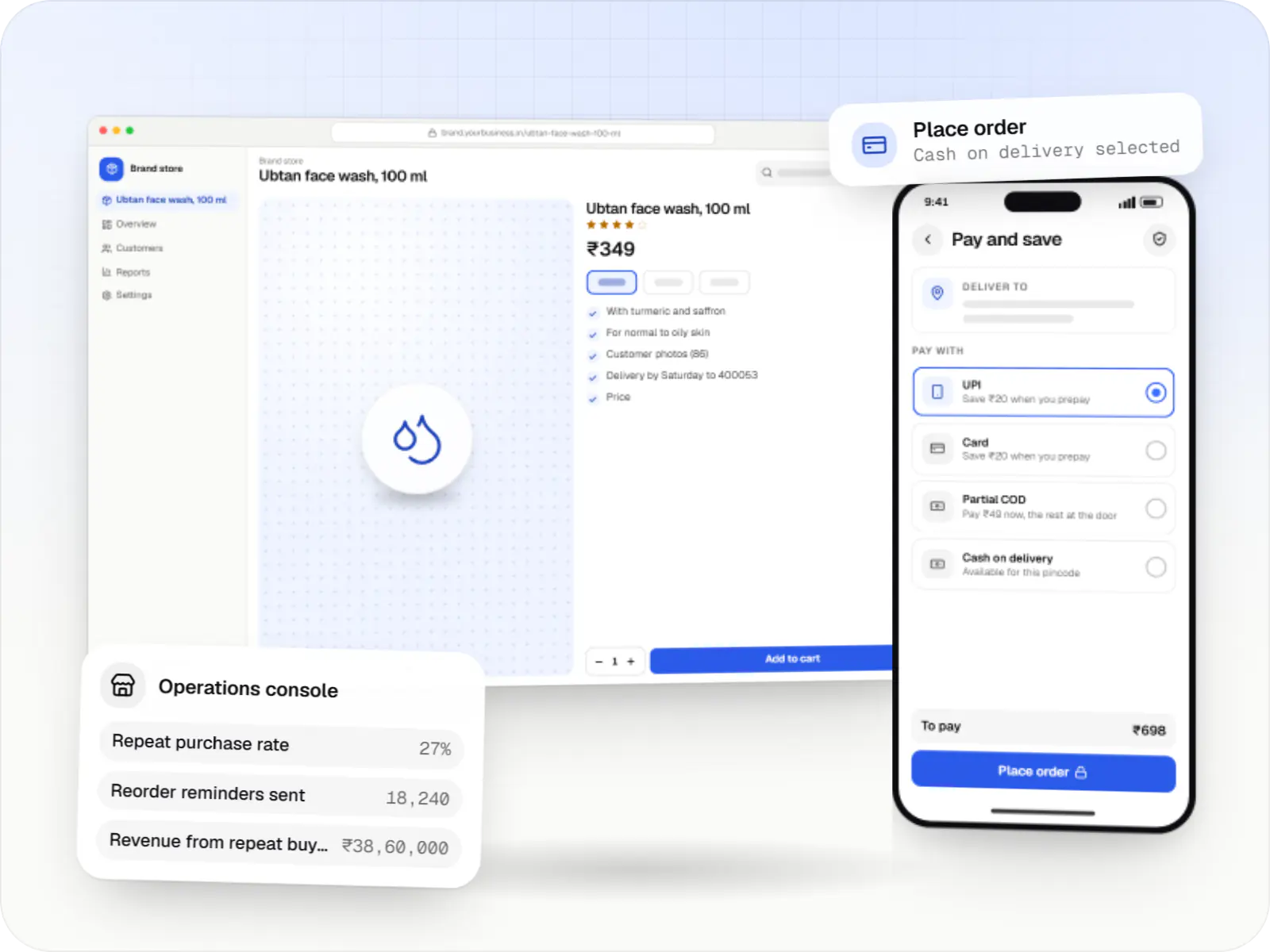
Brand-owned online stores for D2C companies, with conversion-focused checkout, retention tools, server-side tracking and multichannel stock sync.
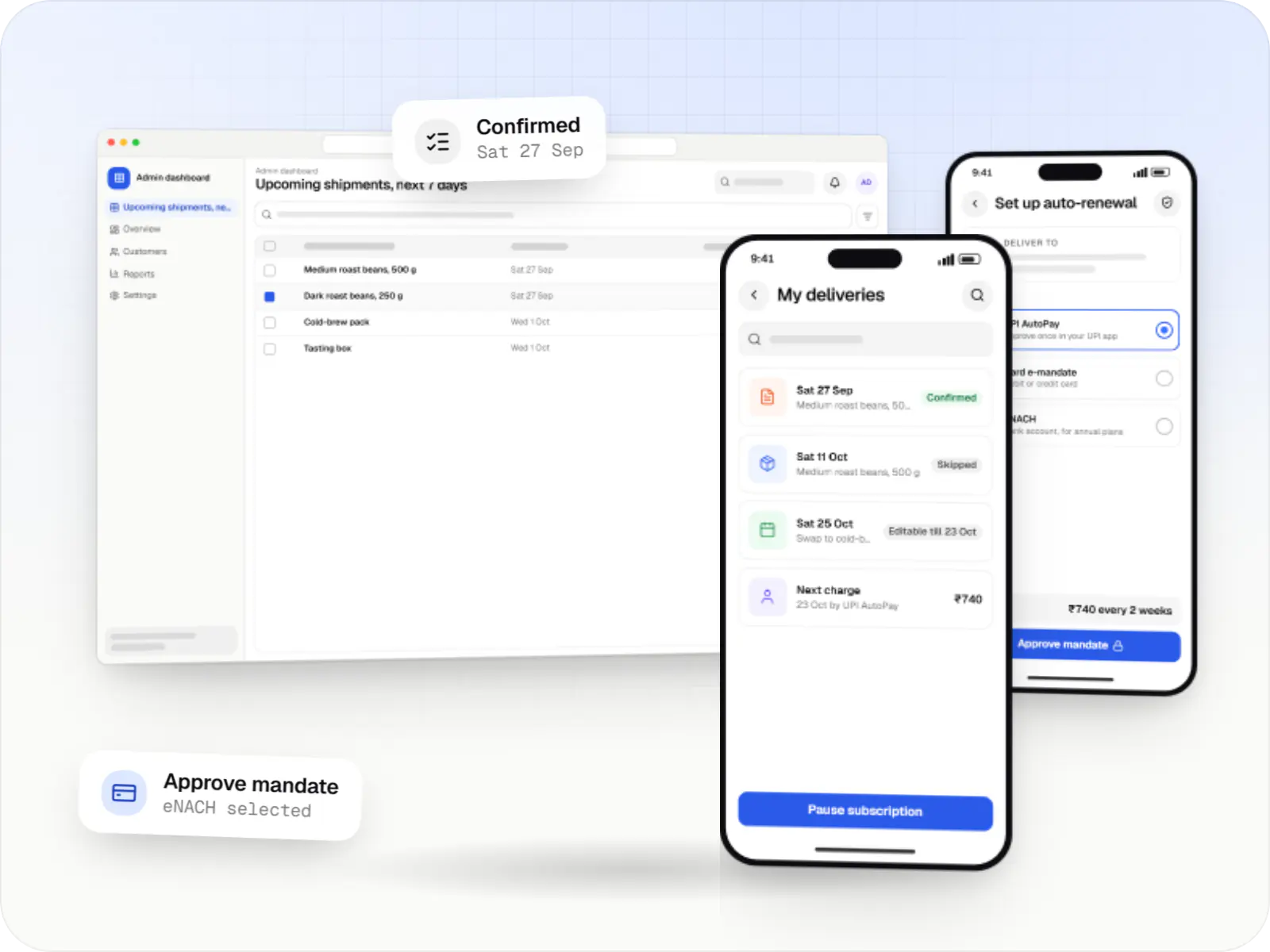
Subscription stores and memberships on UPI AutoPay, card mandates and eNACH, with pause, skip and swap controls and fulfilment planning.
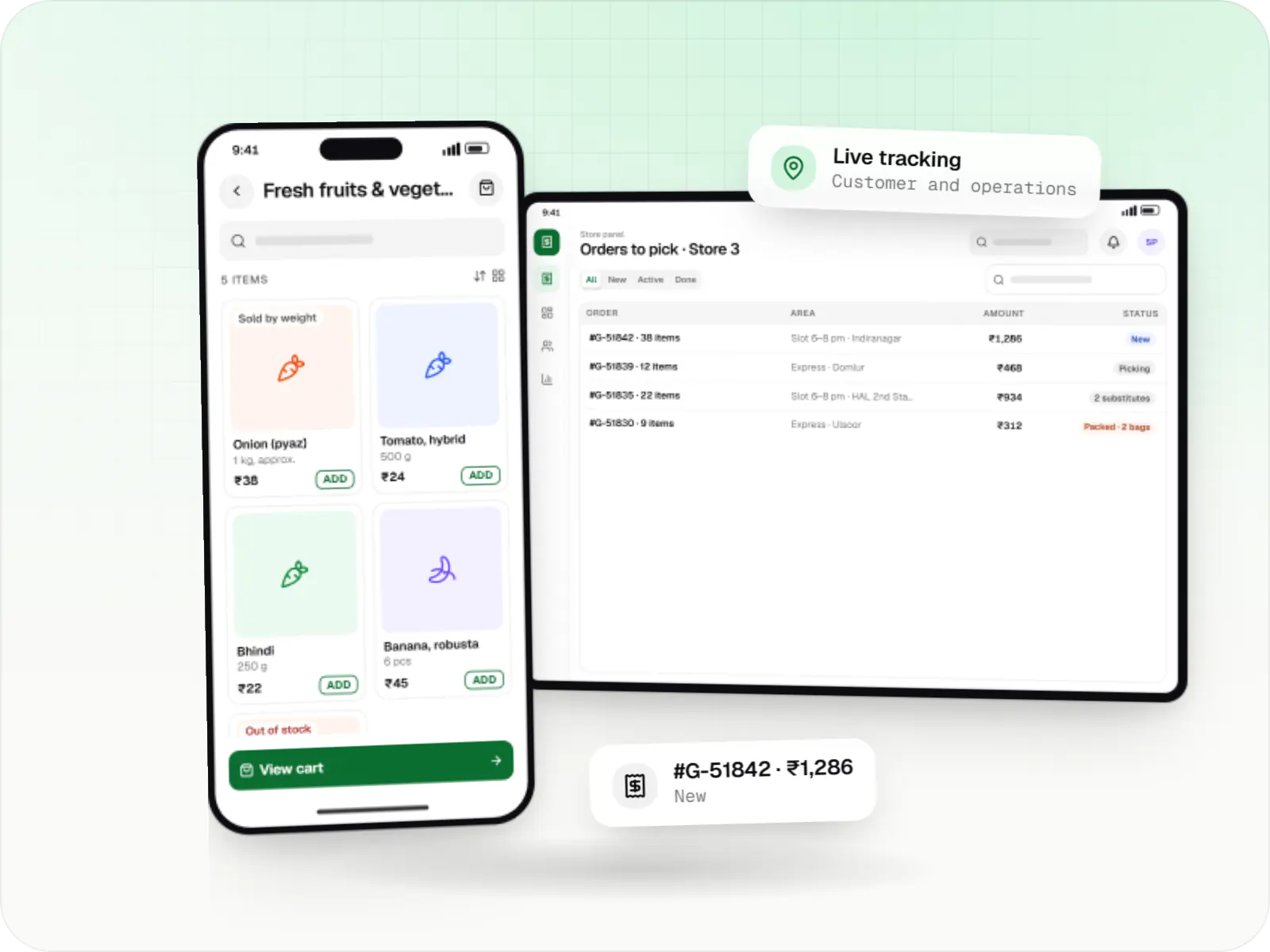
Grocery delivery apps for supermarkets, kirana chains and dark stores, with slots or express delivery, substitutions, picking and live tracking.
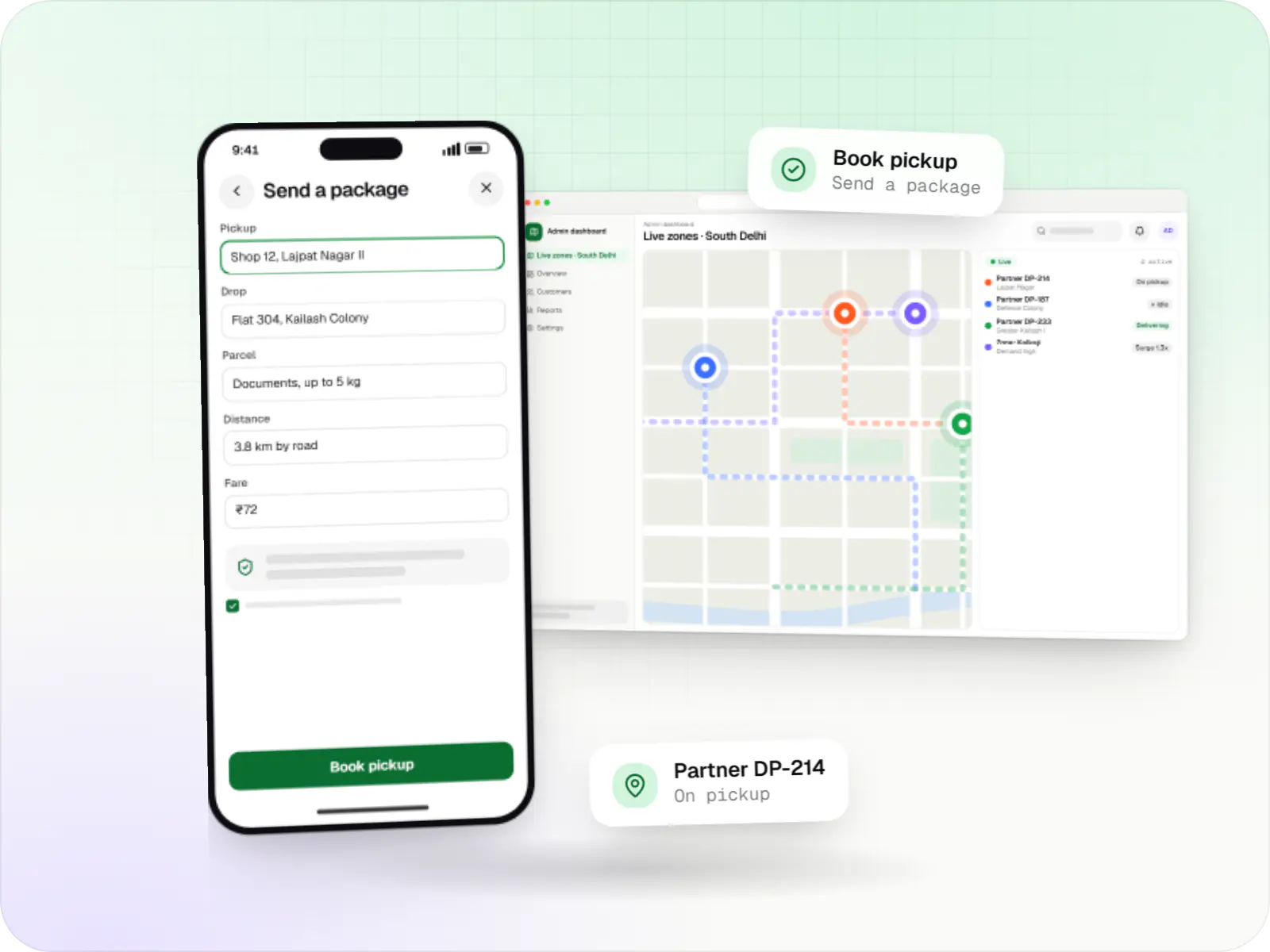
Hyperlocal delivery apps linking neighbourhood stores, pick-up-and-drop requests and delivery partners within a city, with zone-based dispatch and pricing.
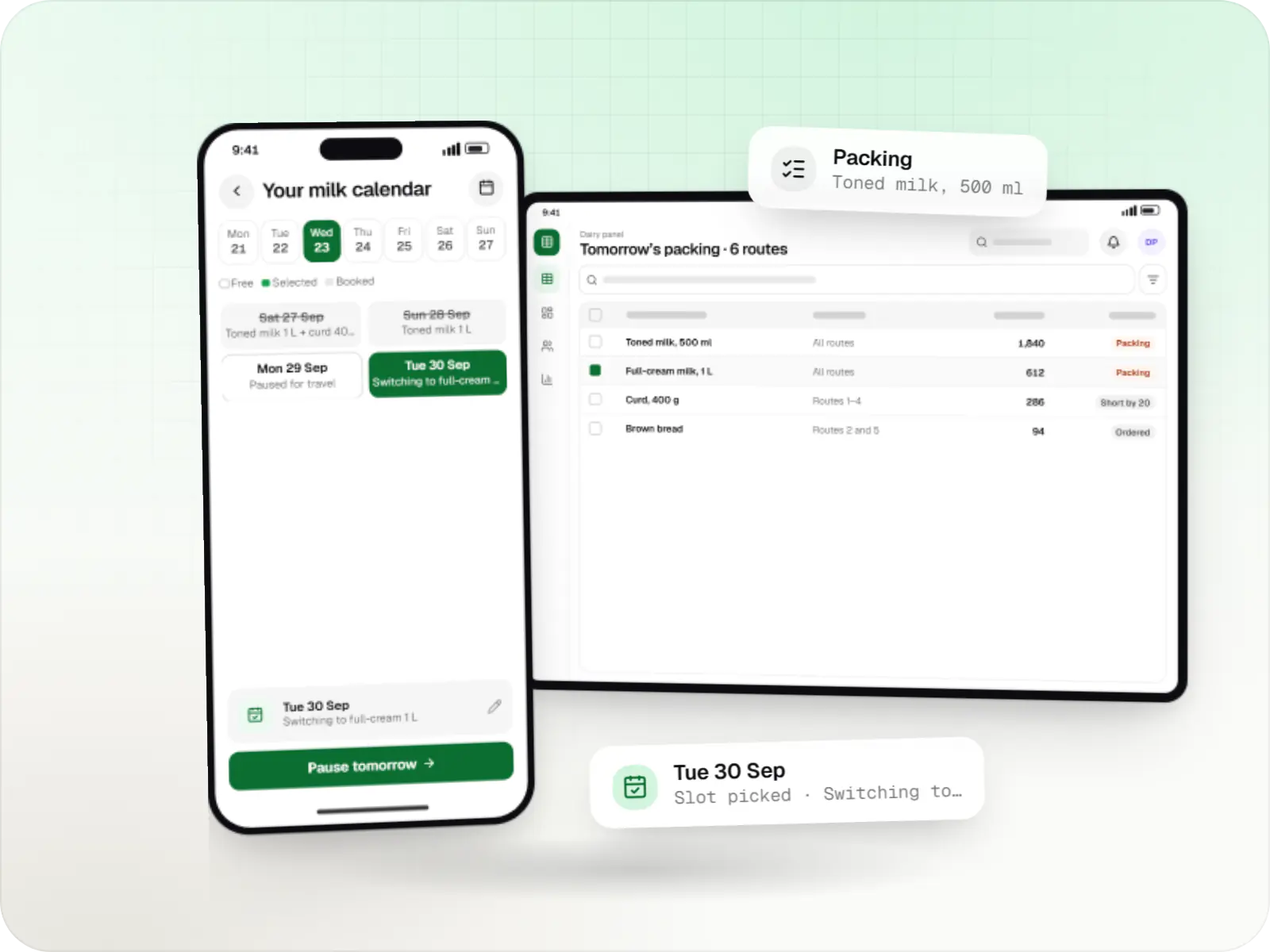
Subscription apps for milk, curd, bread and daily essentials, with delivery calendars, prepaid wallets, route sheets and next-day demand planning.
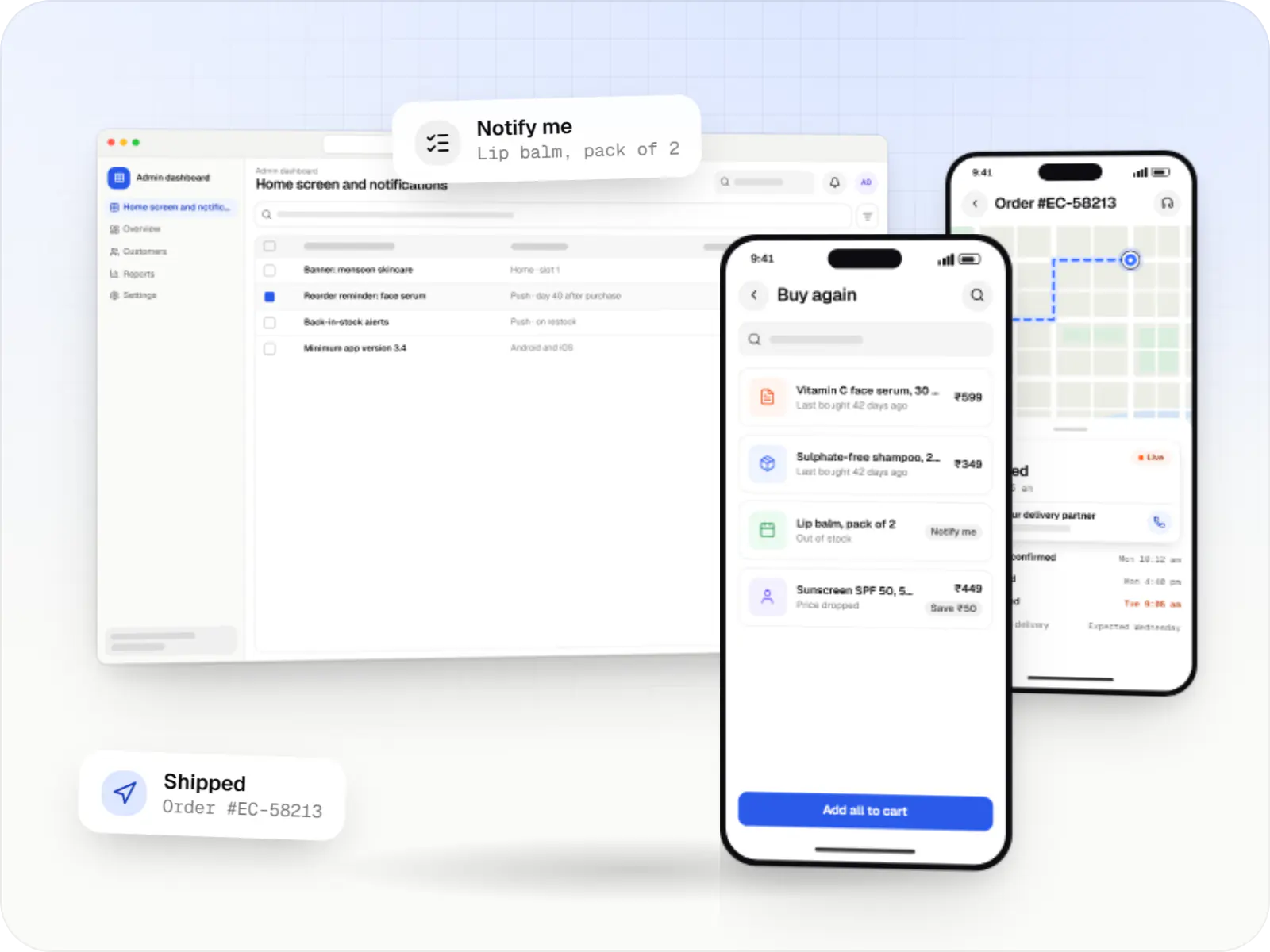
Android and iOS shopping apps with quick browsing, UPI checkout and push notifications, sharing one backend with your website.
Weekly availability set by the farm, with pre-orders and quantity caps.
Final amounts from packed weights, with wallet adjustments or refunds.
Weekly or fortnightly boxes with skip, swap and pause, billed by UPI AutoPay or wallet.
Delivery days by area, route sheets and proof of delivery.
NPOP or PGS-India certificate details and farm stories on product pages.
How it works
Expected harvest is entered with quantity caps, so customers can only order what will actually be picked.
Households order single items or a weekly box, choose the delivery day for their area and pay by UPI or from their wallet.
Orders are packed after picking, and the actual weight of each item is recorded at the packing table.
The final amount is calculated from packed weights, and any difference is credited to the wallet or refunded automatically.
Route sheets group orders by area and day, and the delivery partner records proof of delivery at each door.
Customers skip, swap or pause next week’s box, and UPI AutoPay or wallet billing follows those changes.
Then it starts again at step 1: Farm sets this week’s availability
Platforms
Marketing and content websites: fast, search-friendly pages with a CMS your team can update without a developer.
One Flutter or React Native codebase for Android and iOS, with native modules where a feature needs them.
Installable web apps with offline support and notifications, useful when an app-store listing isn't essential or phones have little storage.
Back-office panels for operations, support and finance teams: orders, users, content, reports and permissions.
Technology
A fast storefront, one app codebase for customers and delivery partners, and payments that handle wallet adjustments.
Web
A modern web technology for fast, search-friendly websites, online stores and web applications that load quickly on mobile.
Used for
Mobile
Build Android and iOS apps from one shared codebase, so you launch on both platforms faster with a consistent experience.
Used for
Backend
Runs the server side of apps: fast, scalable back ends that power your app, website and integrations.
Used for
Data
A reliable database for the records your business runs on: orders, payments, bookings and stock, kept accurate and easy to report on.
Used for
Payments & maps
Lets customers in India pay by UPI, cards, netbanking or wallets, and handles subscriptions, refunds and payouts to sellers or partners.
Used for
Payments & maps
Adds maps, address search, live tracking and travel-time estimates to delivery, ride and field apps, so orders reach the right door.
Used for
Flutter and the related logo are trademarks of Google LLC. We are not endorsed by or affiliated with Google LLC.
Plain-English glossary
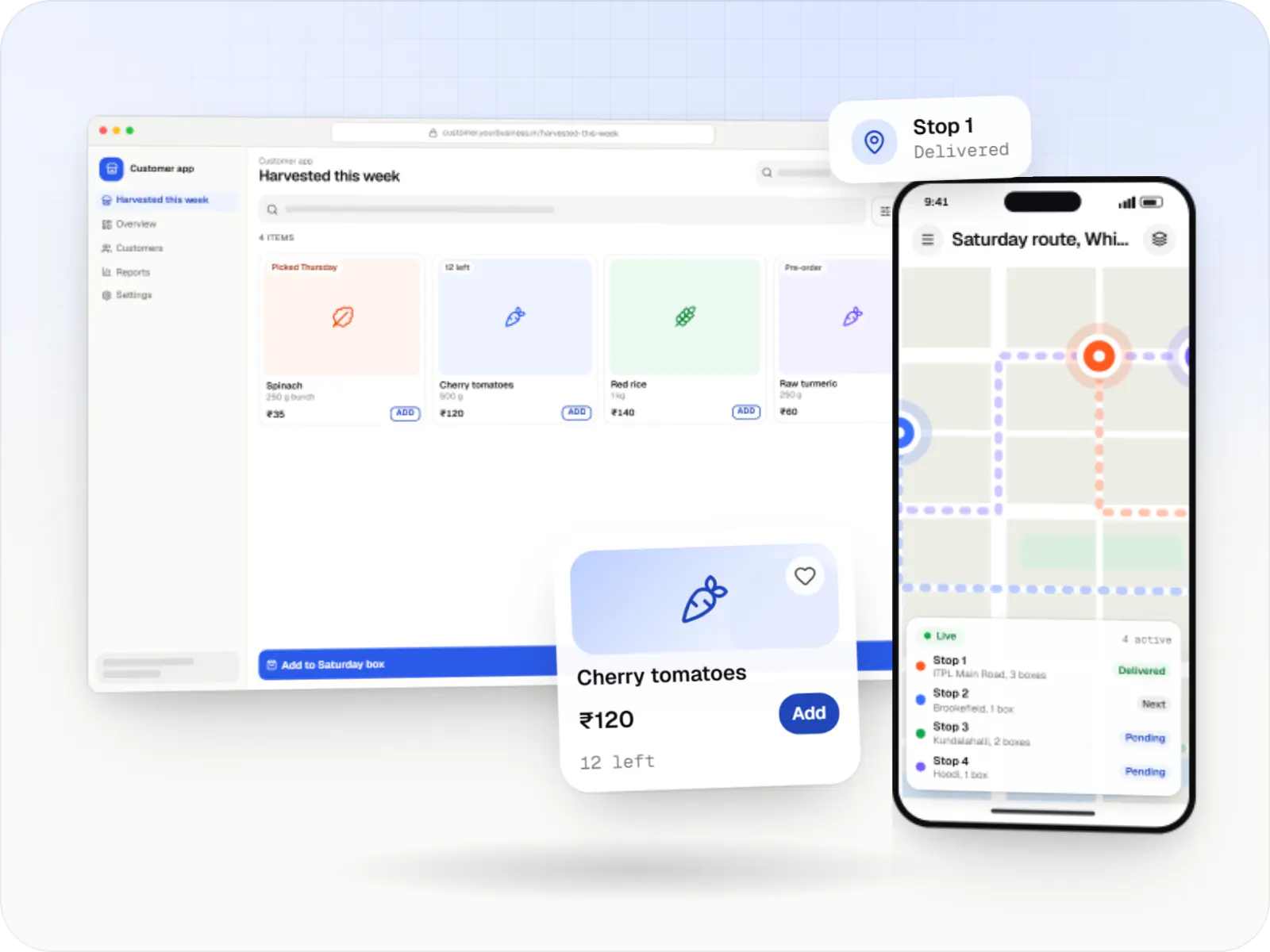
Product preview
Illustrative screens for an organic farm delivering around Whitefield, Bengaluru.
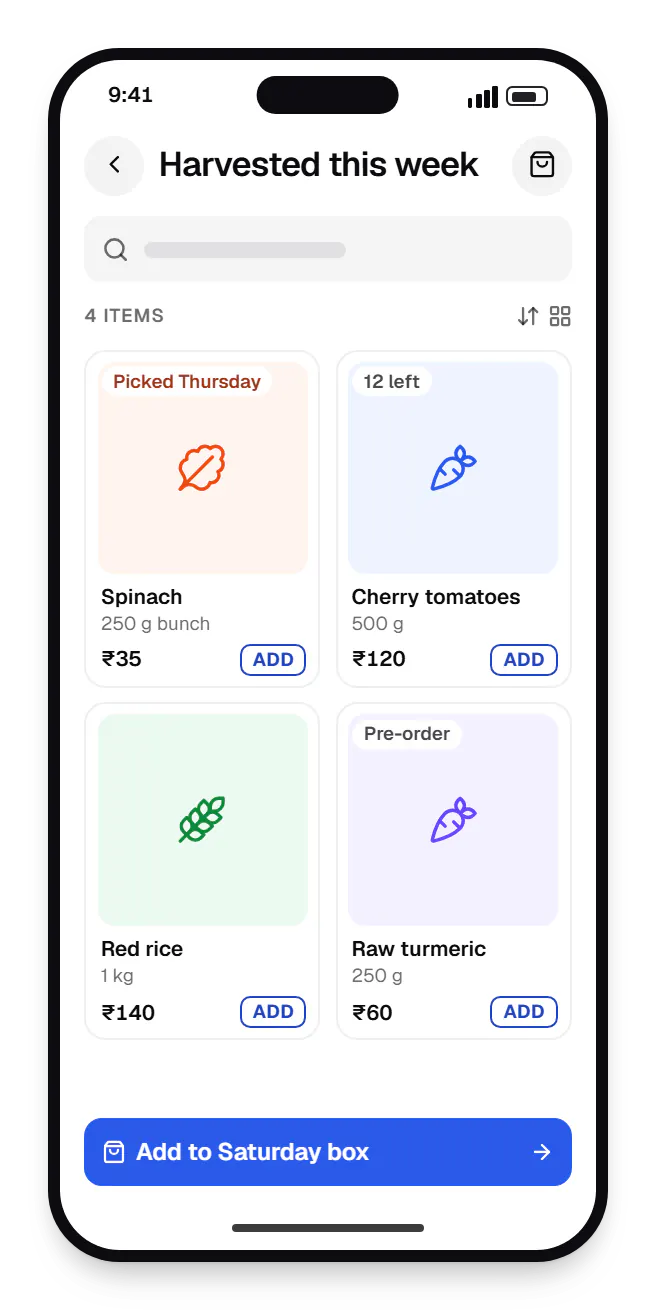
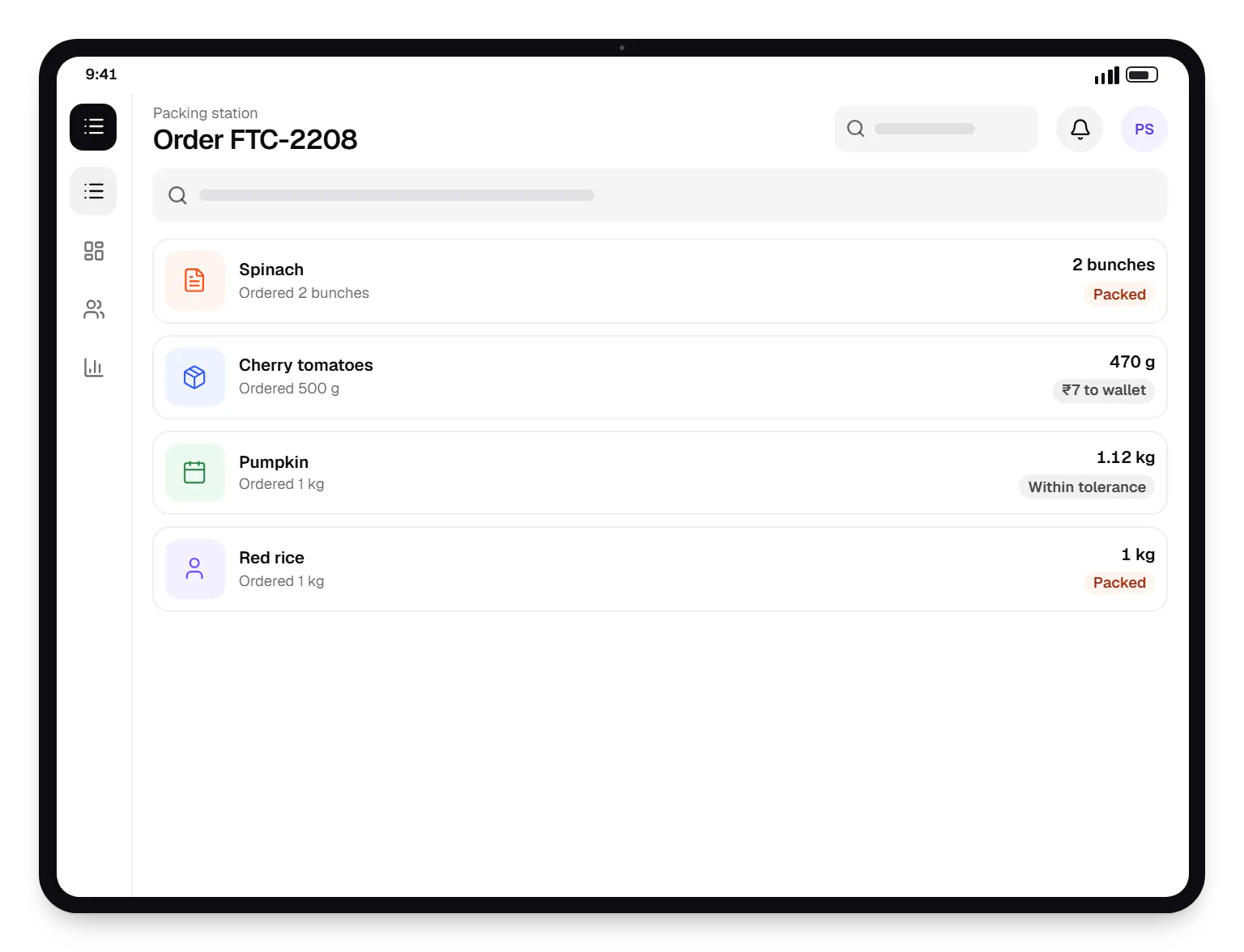
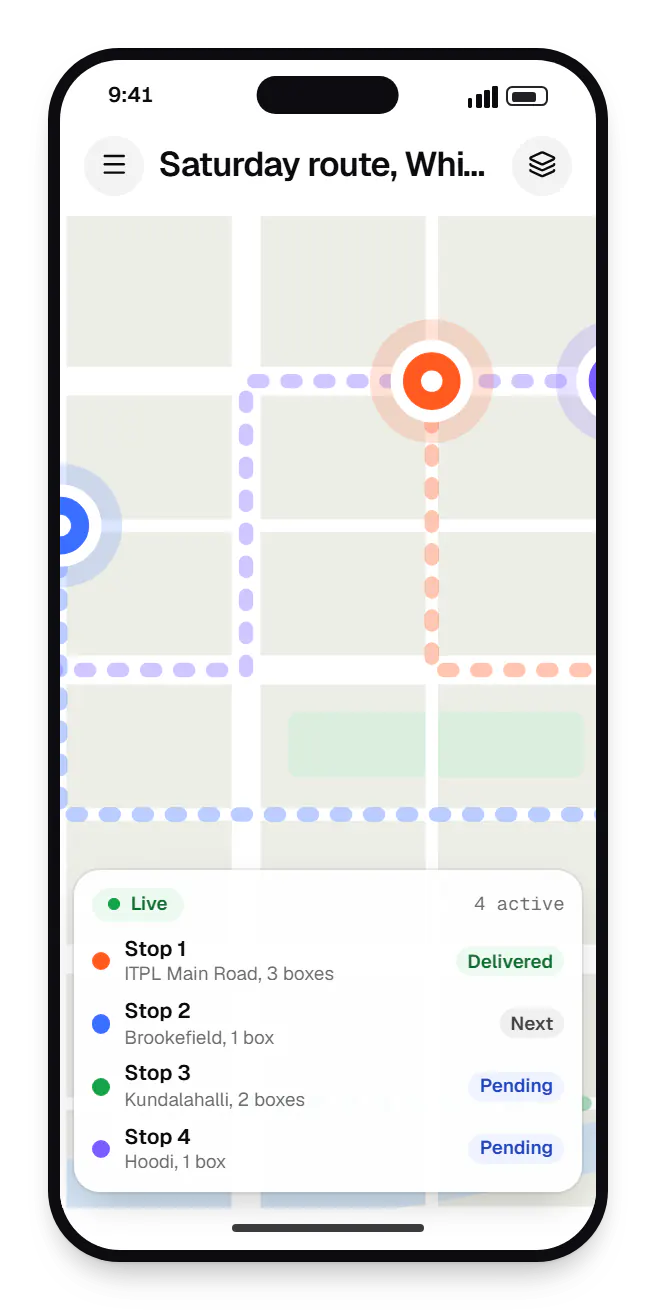
Sample screens: names, prices and figures are examples, not client data.
Cost drivers
Skips, swaps and substitutions add billing rules and edge cases.
A mobile-friendly website or PWA is a lighter start than store apps.
Own fleets need route and driver tools; courier partners need integrations.
Estimates are written from your scope, with the effort and assumptions behind each line item.
How pricing worksServices
The design and engineering services our in-house team combines on projects in this sector.
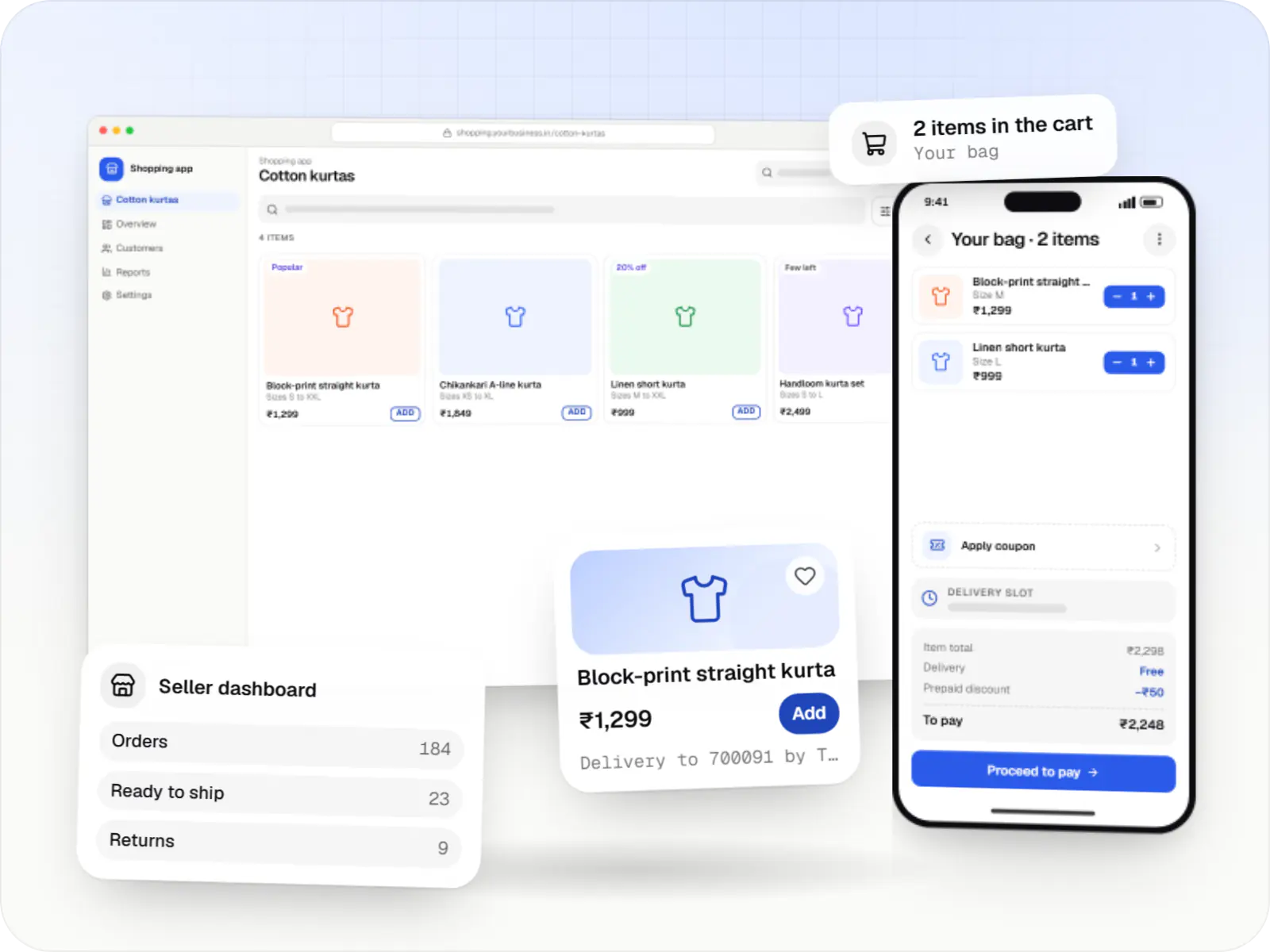
Online stores, shopping apps and B2B ordering portals on Shopify, WooCommerce or custom stacks, wired to Indian payments, couriers and GST invoicing.
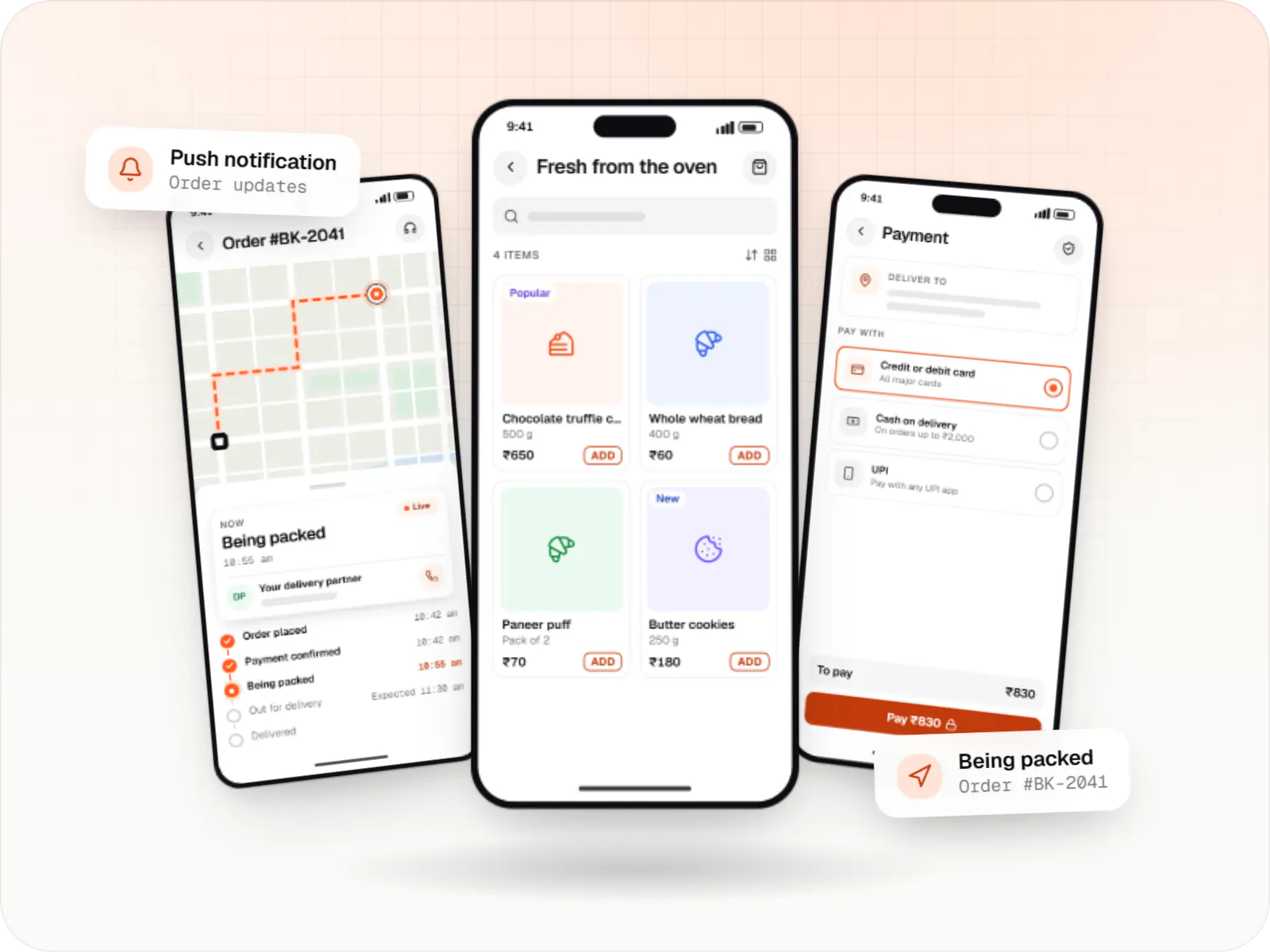
Native and cross-platform Android and iOS apps, from first release through regular store updates, built by our in-house designers and engineers.
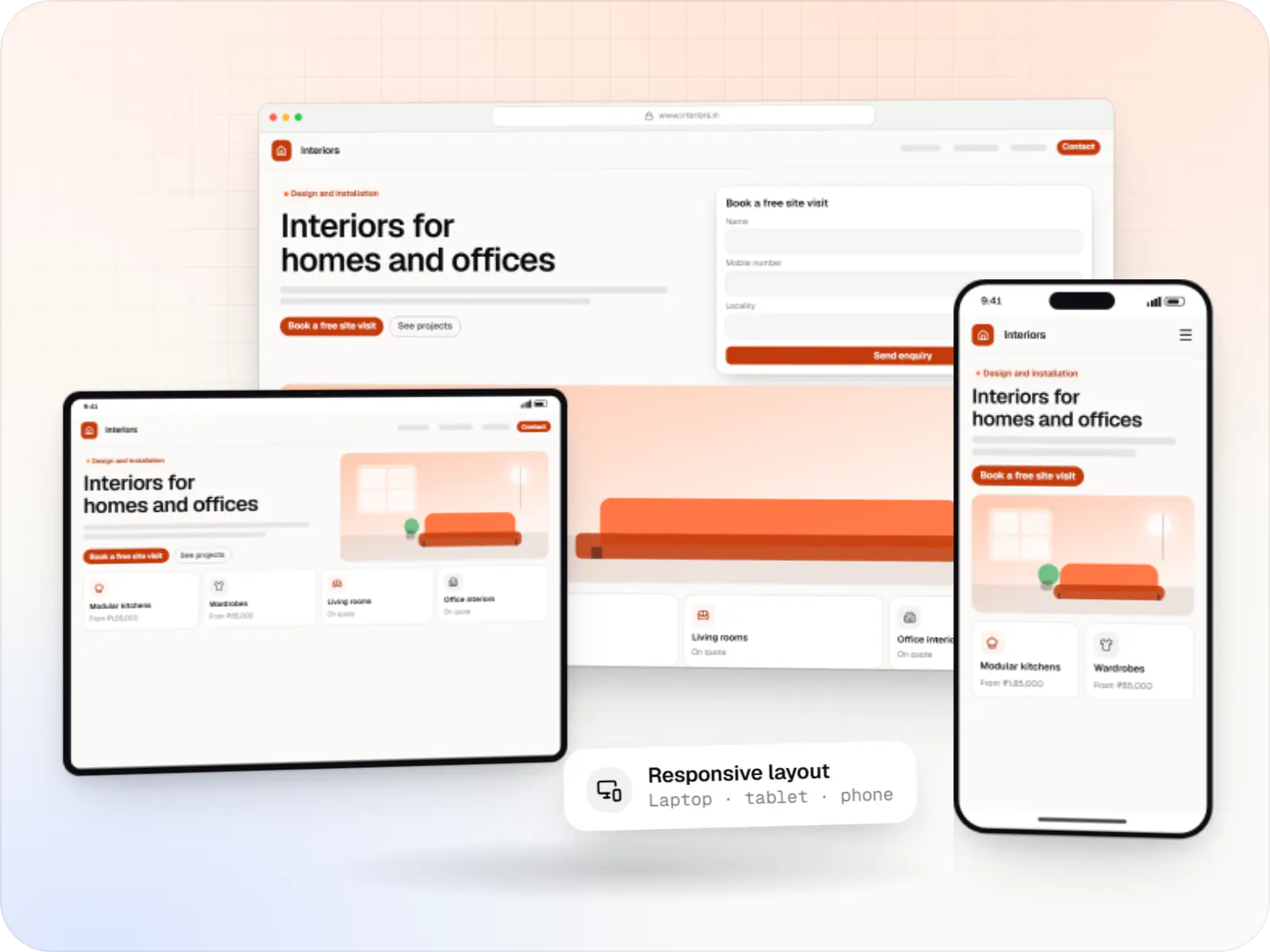
Fast, SEO-ready company and marketing websites with a CMS your team can edit, designed and built by our in-house team.
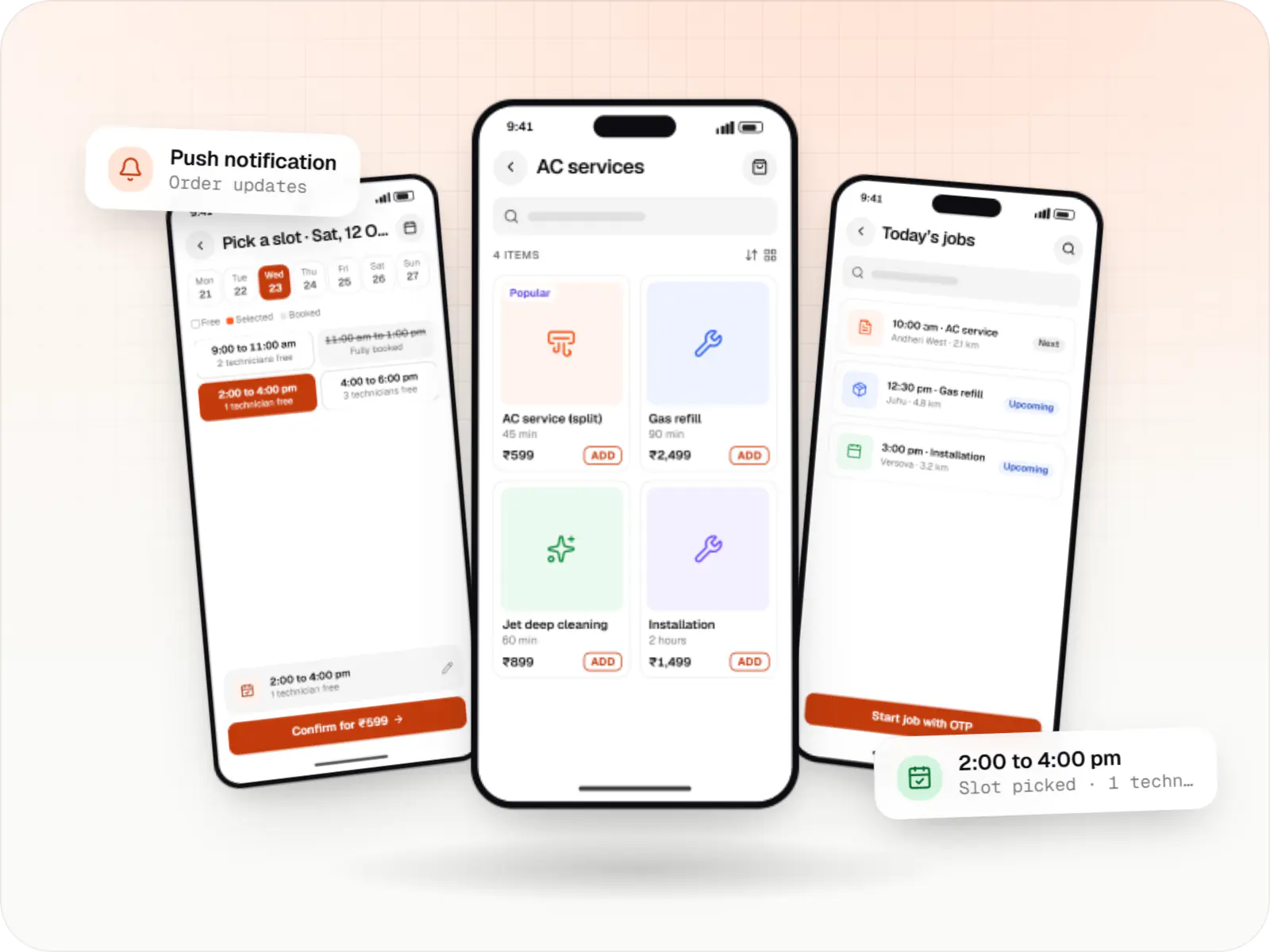
Android and iOS apps from one Dart codebase, built by engineers who know when Flutter is the right call and when native code is needed.
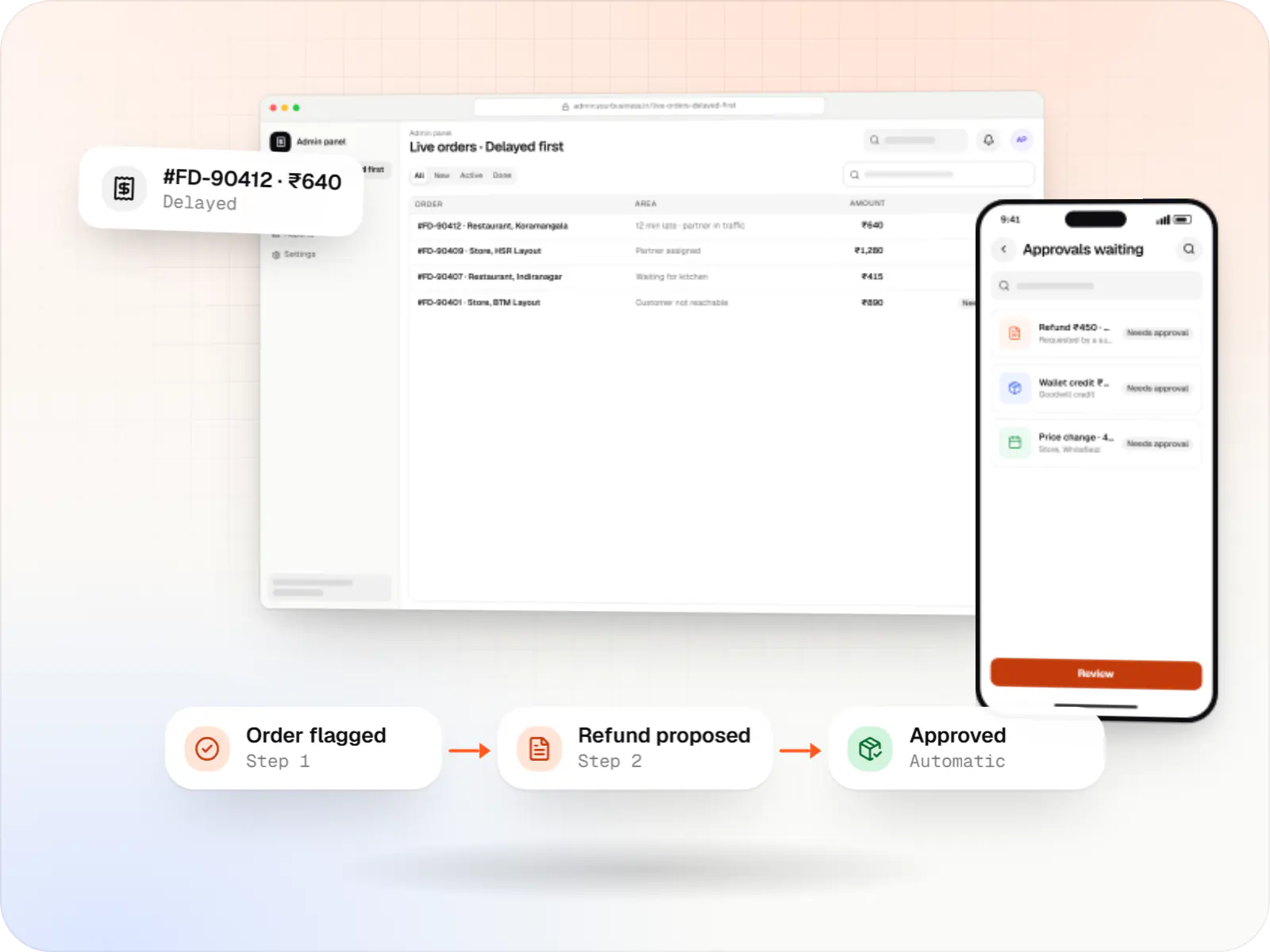
Back-office dashboards built around your team's daily tasks: order queues, approvals, catalogue management, payouts, reports and audit logs.
FAQ
We usually collect payment for the ordered amount, then calculate the final bill from the weight recorded at packing. If it is lower, the difference returns to the customer's wallet or is refunded; if it is higher within an agreed tolerance, you absorb it or add it to the next bill. You set the rules, and customers see them at checkout, so there are no surprises.
Yes. ONDC lets sellers reach buyers on participating consumer apps through a seller-side platform. You can join through an existing seller app provider or connect your own system to one, so ONDC orders flow into the same inventory and packing process as website orders. Harvest-limited stock needs care: we sync availability across channels so you don't oversell produce that isn't picked yet.
Show the certification you actually hold, such as NPOP certification through an accredited certification body or PGS-India certification for farmer groups, with certificate details and validity dates on product pages. The software stores certificates per farm and hides the organic label automatically if one expires. Residue test reports can be attached to batches. Labels should never go beyond what your certification supports.
Next step
Tell us what you grow and how you deliver, and we will suggest an ordering setup that fits.