Skip to content
Softcoderz

Technology · Backend

Node.js development

Runs the server side of apps: fast, scalable back ends that power your app, website and integrations.

How we use it

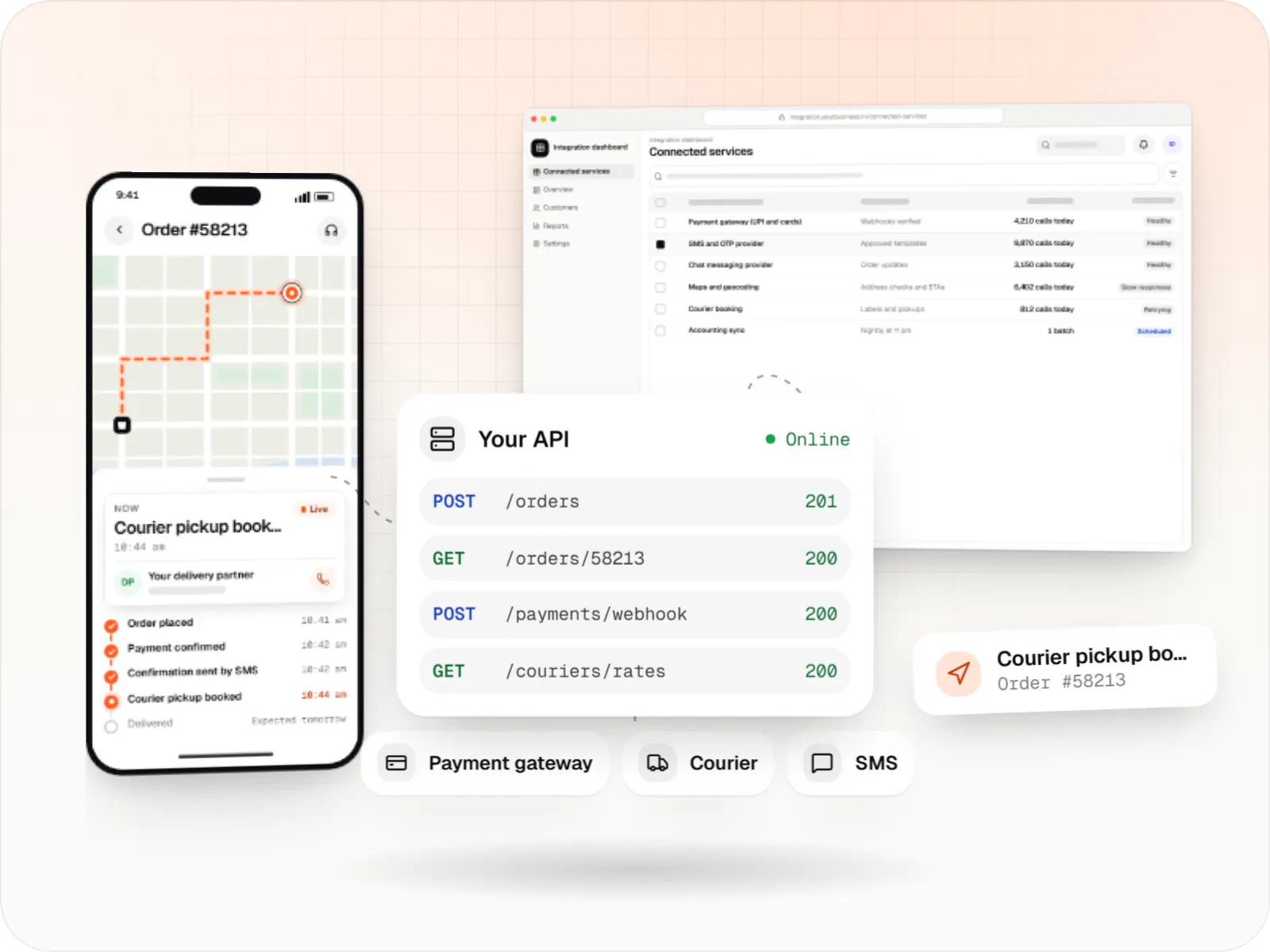
Node.js runs most of the back ends we build, from REST APIs and WebSocket tracking services to payment webhooks and background workers, written in TypeScript so types are shared with our front ends.

Official site: nodejs.org (opens in new tab)

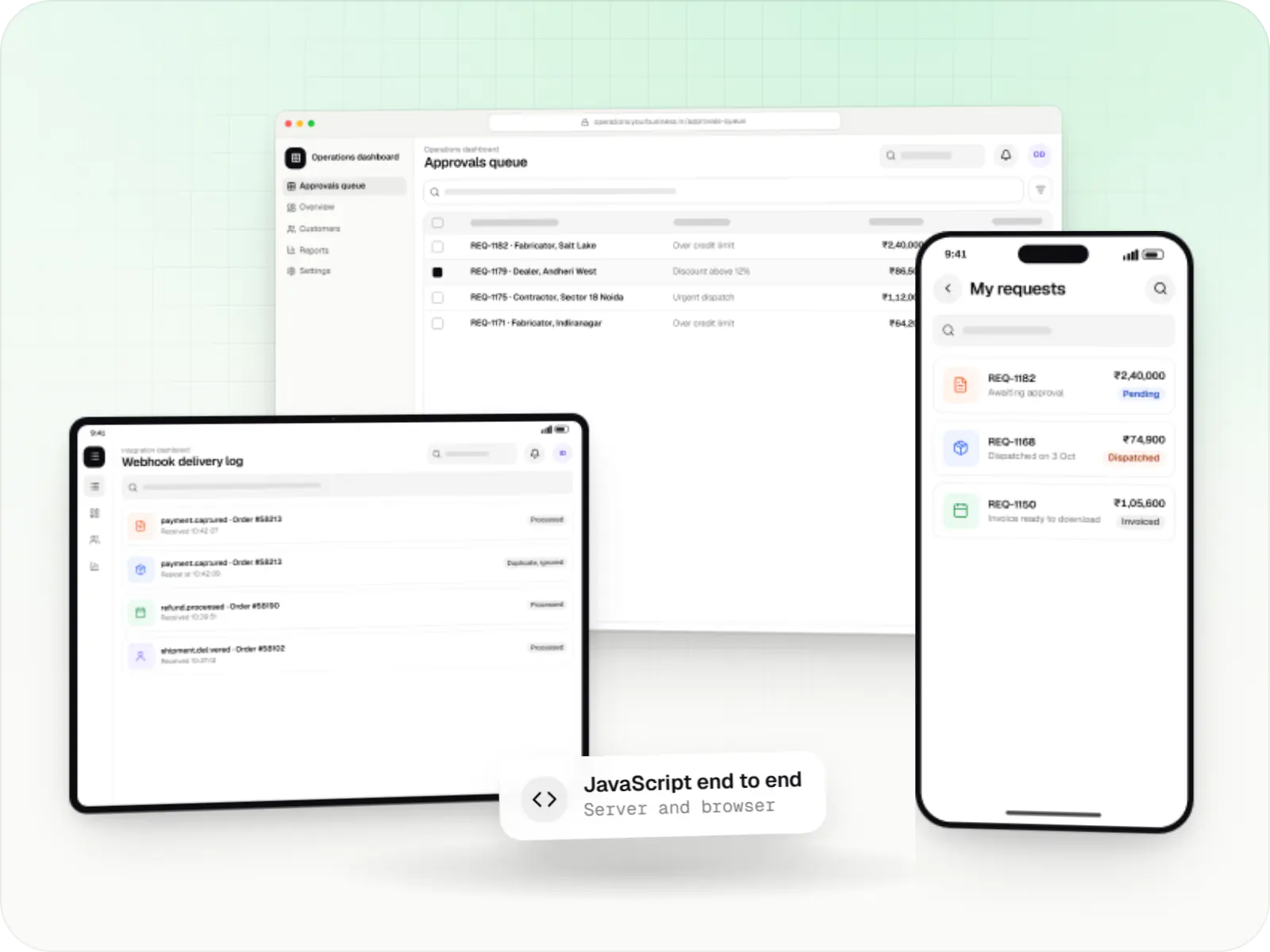
Node.js software shown as an approvals table in a browser, a webhook log and a customer portal on a phone
Illustrative previewOne language on the server and in the browser: the approvals screen, the phone portal and the webhook log behind them.

What Node.js is, and why it powers most of our back ends

Node.js runs the part of your product you never see: the server that stores orders, checks payments, sends notifications and talks to other systems. It uses JavaScript, the language of the web, so the same team can work on your app screens and the server behind them. For you, that means a responsive back end on modest hosting and fewer specialists to hire.

Most business back ends spend their time waiting on databases, payment gateways, SMS providers and courier APIs. Node.js handles that waiting efficiently, and one language across front end and back end keeps teams small.

Use cases

What we build with Node.js

  • REST and GraphQL APIs

    Versioned, documented APIs for apps and partners.

  • Real-time services

    Live order tracking, chat and dashboards over WebSockets.

  • Payment and webhook handling

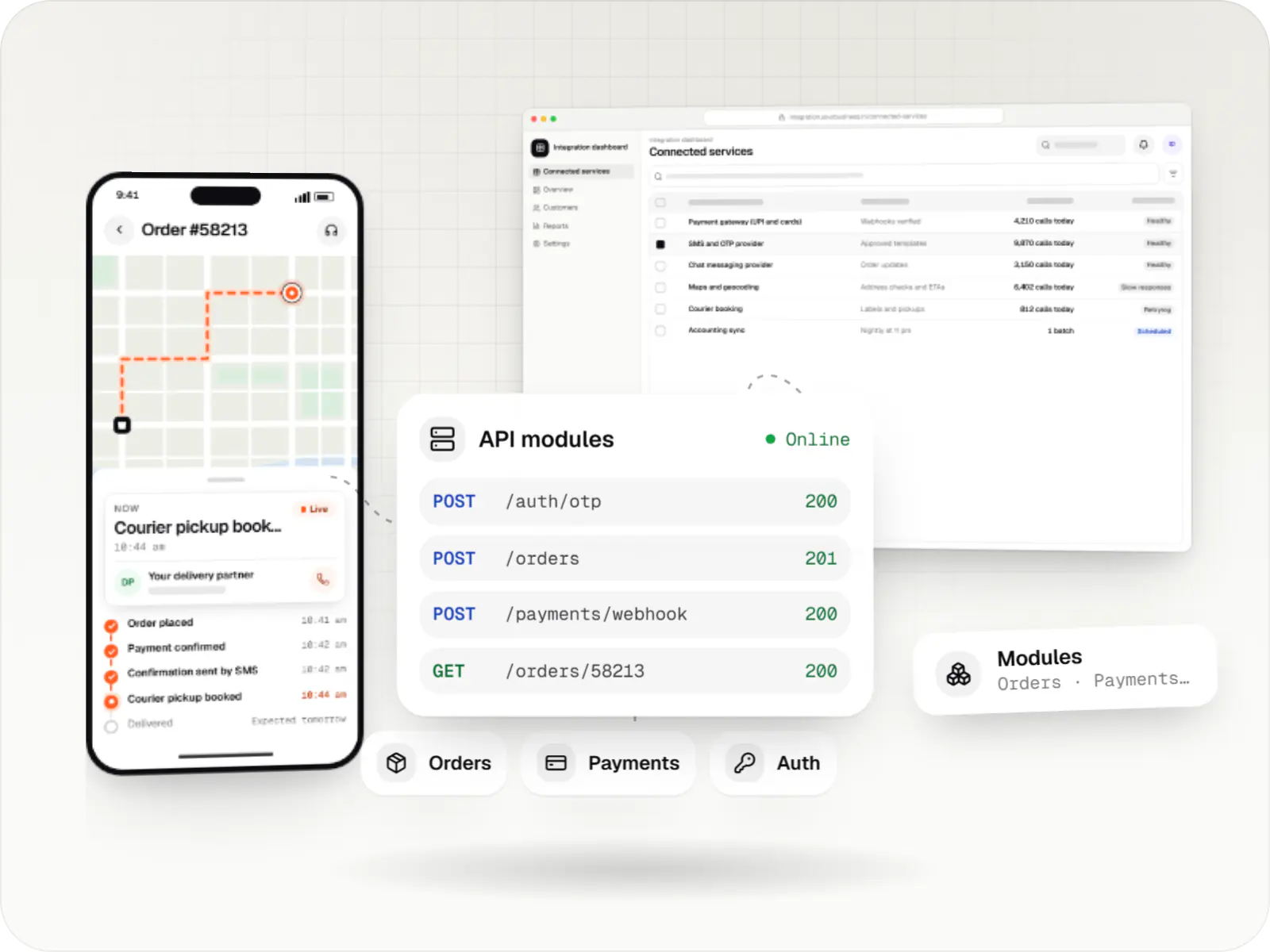
    Verified, idempotent processing of gateway and courier callbacks.

  • Background jobs

    Queues for notifications, invoices, imports and scheduled tasks.

Why Node.js matters for your app

  • Handles many users at once

    Efficient handling of many simultaneous connections keeps apps responsive on modest infrastructure.

  • Fewer mismatches between app and server

    TypeScript types are shared between the server and the apps, so data errors are caught before release.

  • Connects to the services you use

    Official SDKs exist for most payment, messaging and cloud services, which shortens integration work.

  • Simple to host

    Runs in containers or serverless setups on any major cloud.

Comparison

Node.js or Python for your back end?

Node.js or Python for your back end?
Node.jsPython
Typical strengthsAPIs, real-time features, integrationsData processing, ML, scripting
Shares code with web front endsYes, through TypeScriptNo
Heavy computationNeeds workers or separate servicesStrong library support
Frameworks we useNestJS, Fastify, ExpressFastAPI, Django

When we would not recommend Node.js

  • Heavy number crunching: image processing or large reports can block its event loop, so that work goes to worker threads, queues or Python services.
  • Data science and machine learning: Python has far stronger libraries for analysis and model work.
  • No one to look after dependencies: Node.js projects rely on many open-source packages and supply-chain risk is real, so we keep npm dependencies lean and audited, and someone needs to keep doing that after handover.

Plain-English glossary

Back-end terms, in plain English

API
The set of doors through which your apps, website and partners ask the server for data or send it orders. A well-documented API lets you add a new app or partner later without rebuilding the back end.
Webhook
A message another service sends to your server when something happens, such as 'payment received'. Handling webhooks carefully keeps order status correct even if the customer closes the app.
WebSocket
An always-open connection between the app and the server, so updates like a delivery partner's position or a new chat message appear instantly without refreshing.
Job queue
A to-do list for the server. Slow tasks such as sending invoices or WhatsApp messages wait in the queue and run in the background, so customers are not kept waiting.

Services

Services with a Node.js back end

  • API development

    Secure, documented REST and GraphQL APIs, plus integrations that connect your apps to payment, logistics, GST, messaging and business systems.

  • Web application development

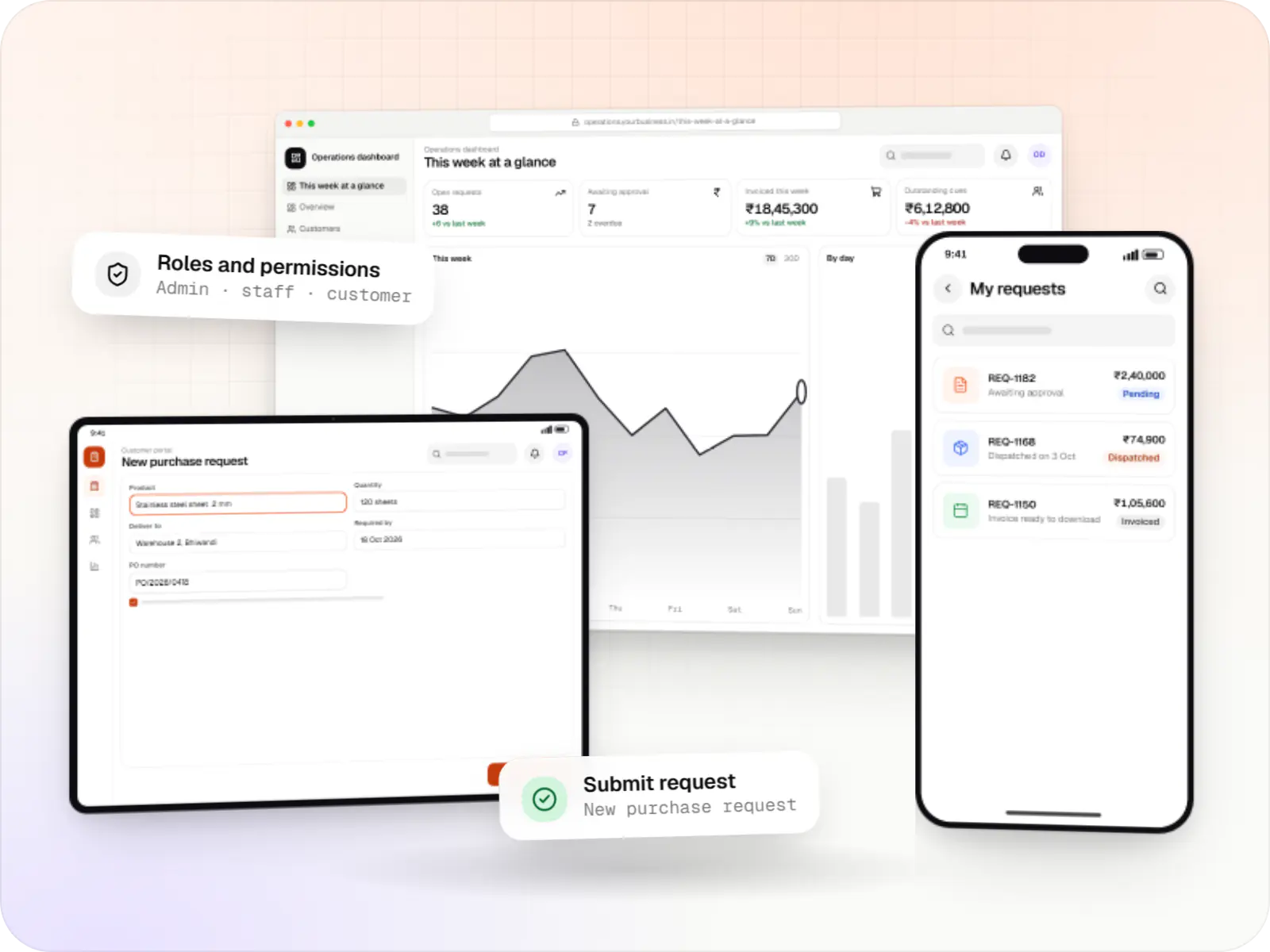
    Browser-based products, customer portals, dashboards and internal tools, built on clean data models with secure roles and integrations.

  • SaaS development

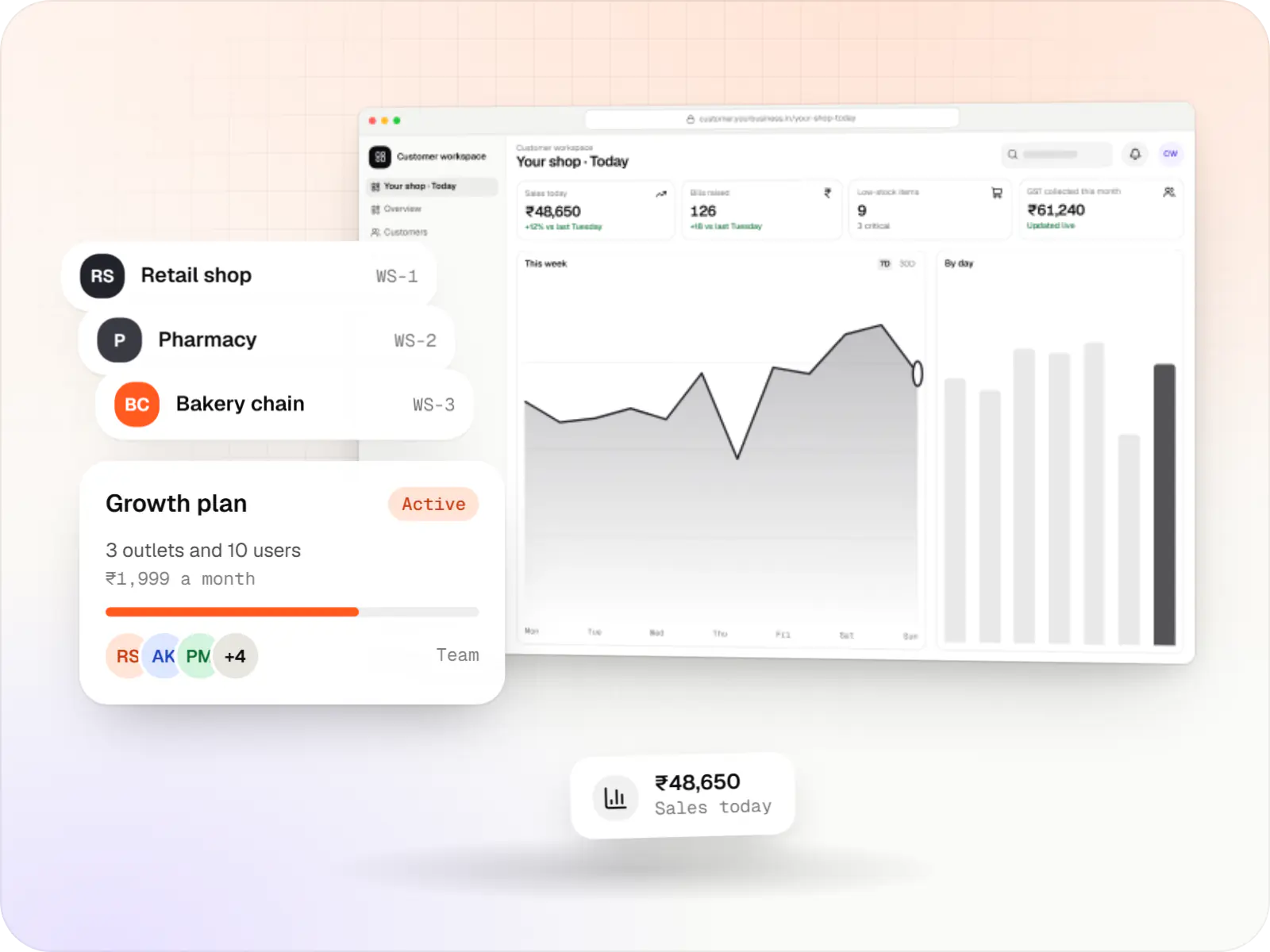
    Multi-tenant SaaS products with subscription billing, team roles, onboarding and usage analytics, from first MVP to paying customers.

  • Mobile app development

    Native and cross-platform Android and iOS apps, from first release through regular store updates, built by our in-house designers and engineers.

Solutions

Solutions running on Node.js

  • Hyperlocal delivery app development

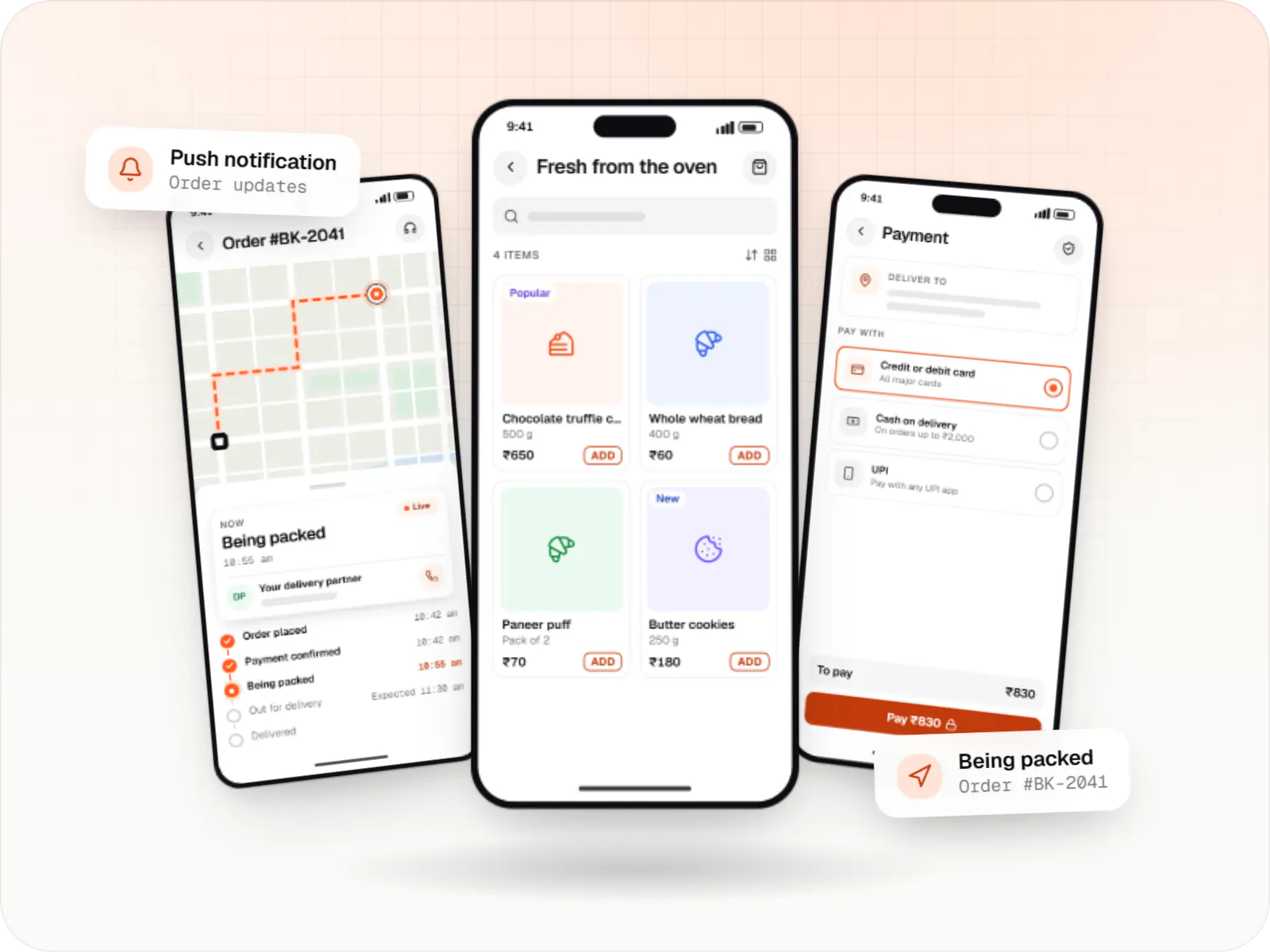
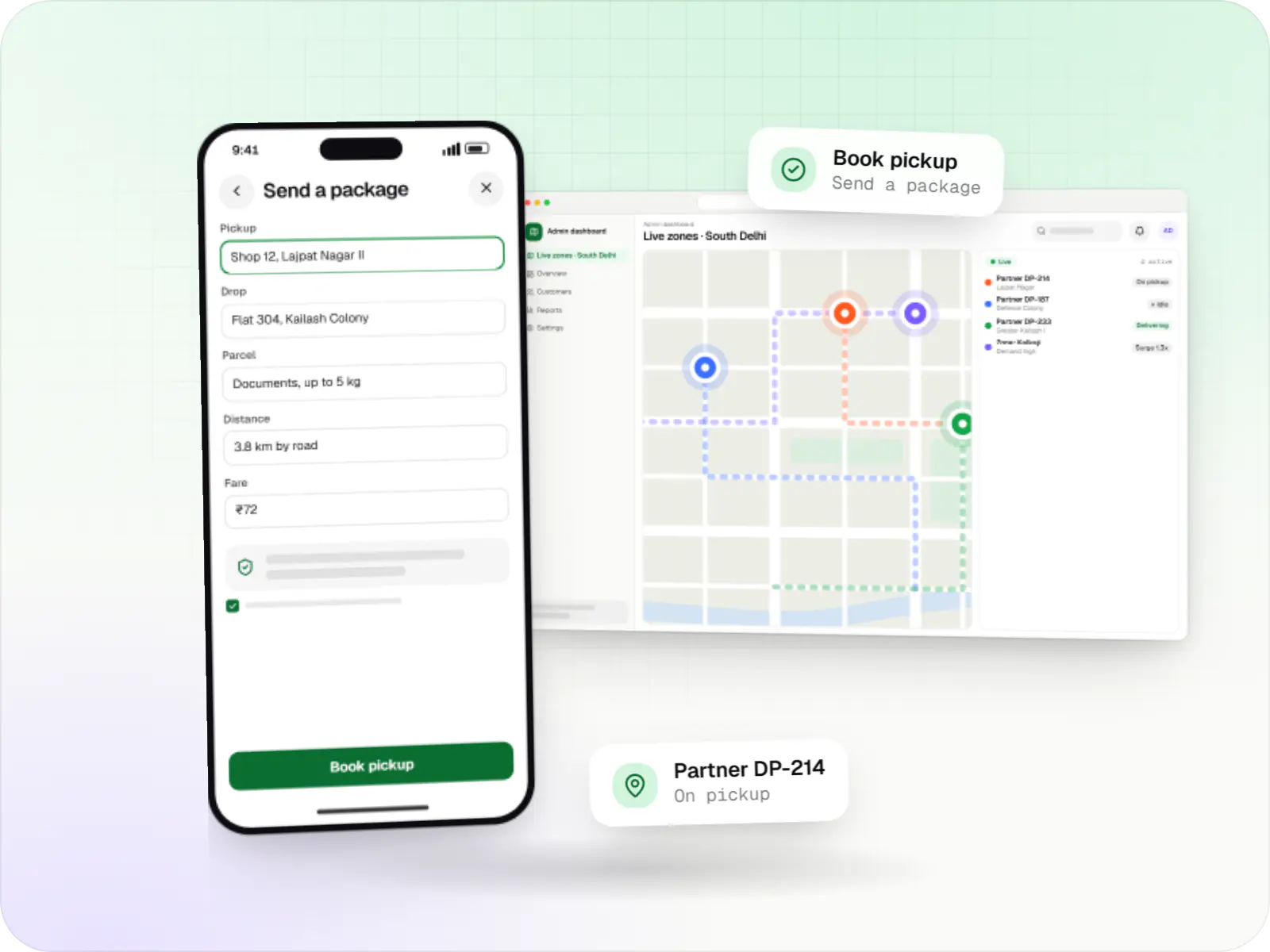
    Hyperlocal delivery apps linking neighbourhood stores, pick-up-and-drop requests and delivery partners within a city, with zone-based dispatch and pricing.

  • Taxi booking app development

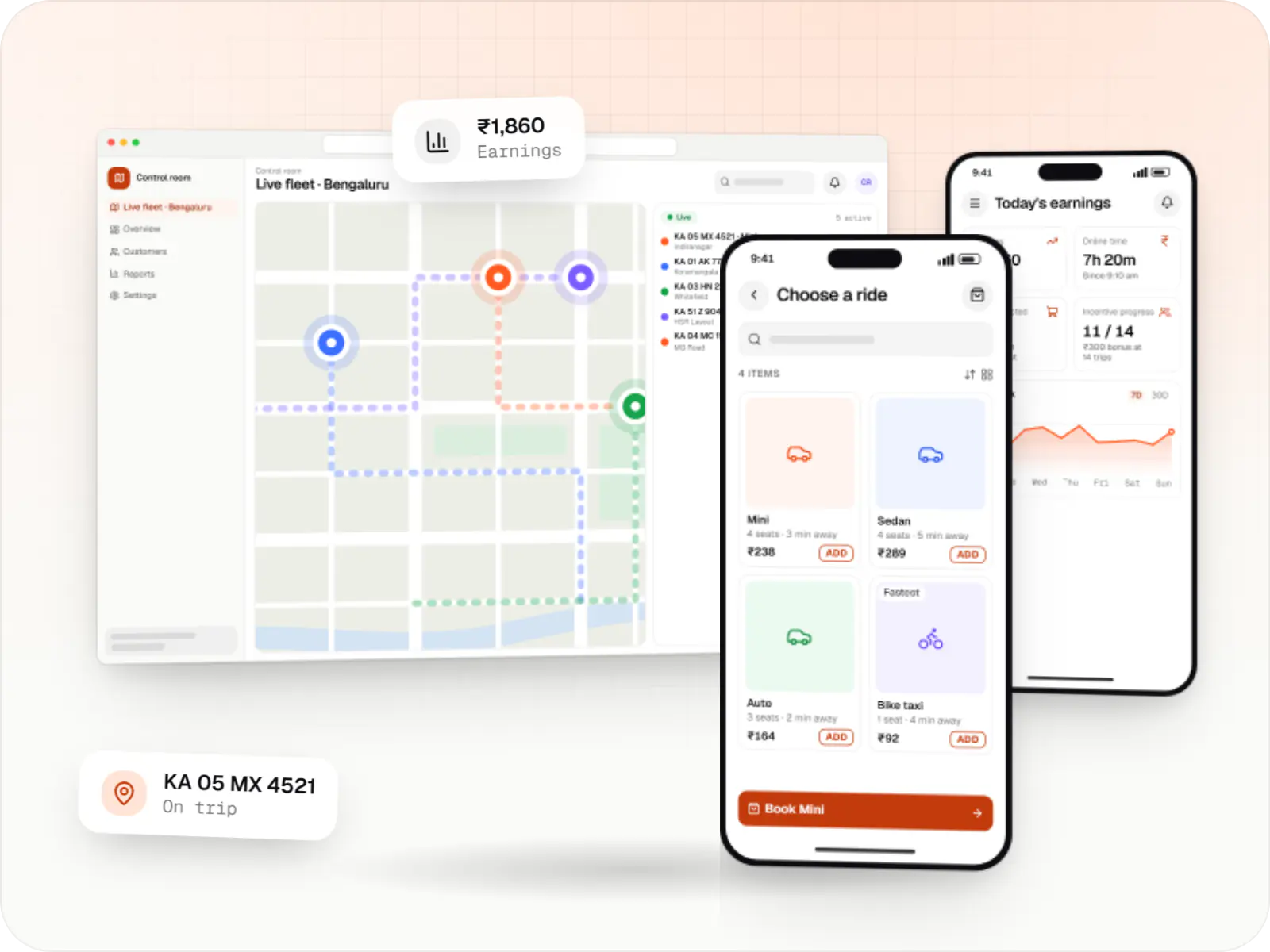
    Rider app, driver app, dispatch engine and admin console for cab, auto, bike taxi, rental and outstation services, with UPI, cash and live tracking.

  • Multi-vendor marketplace development

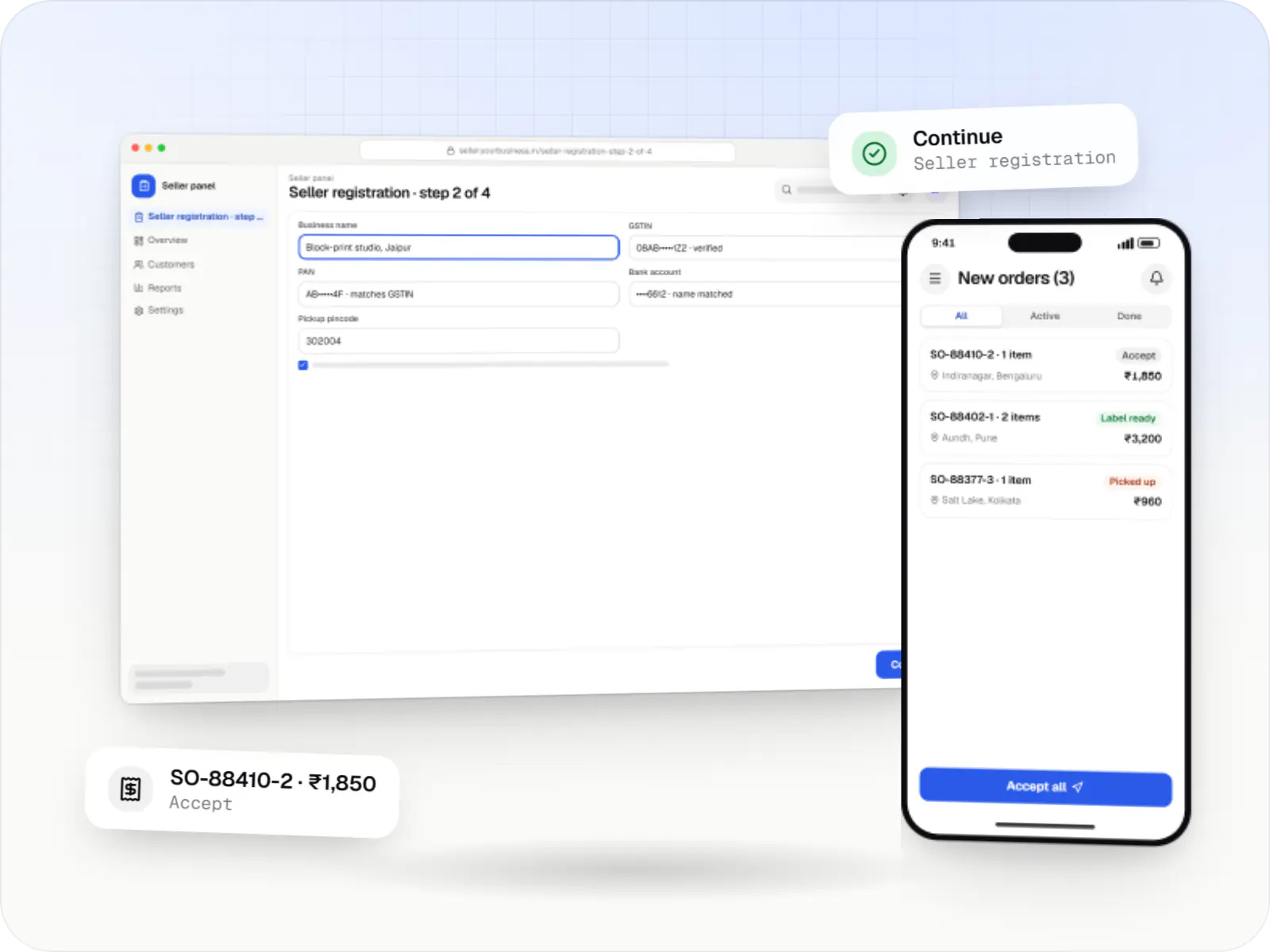
    Multi-vendor marketplaces with seller onboarding, commission rules, split payouts, per-seller invoicing and catalogue moderation.

  • AI chatbot development

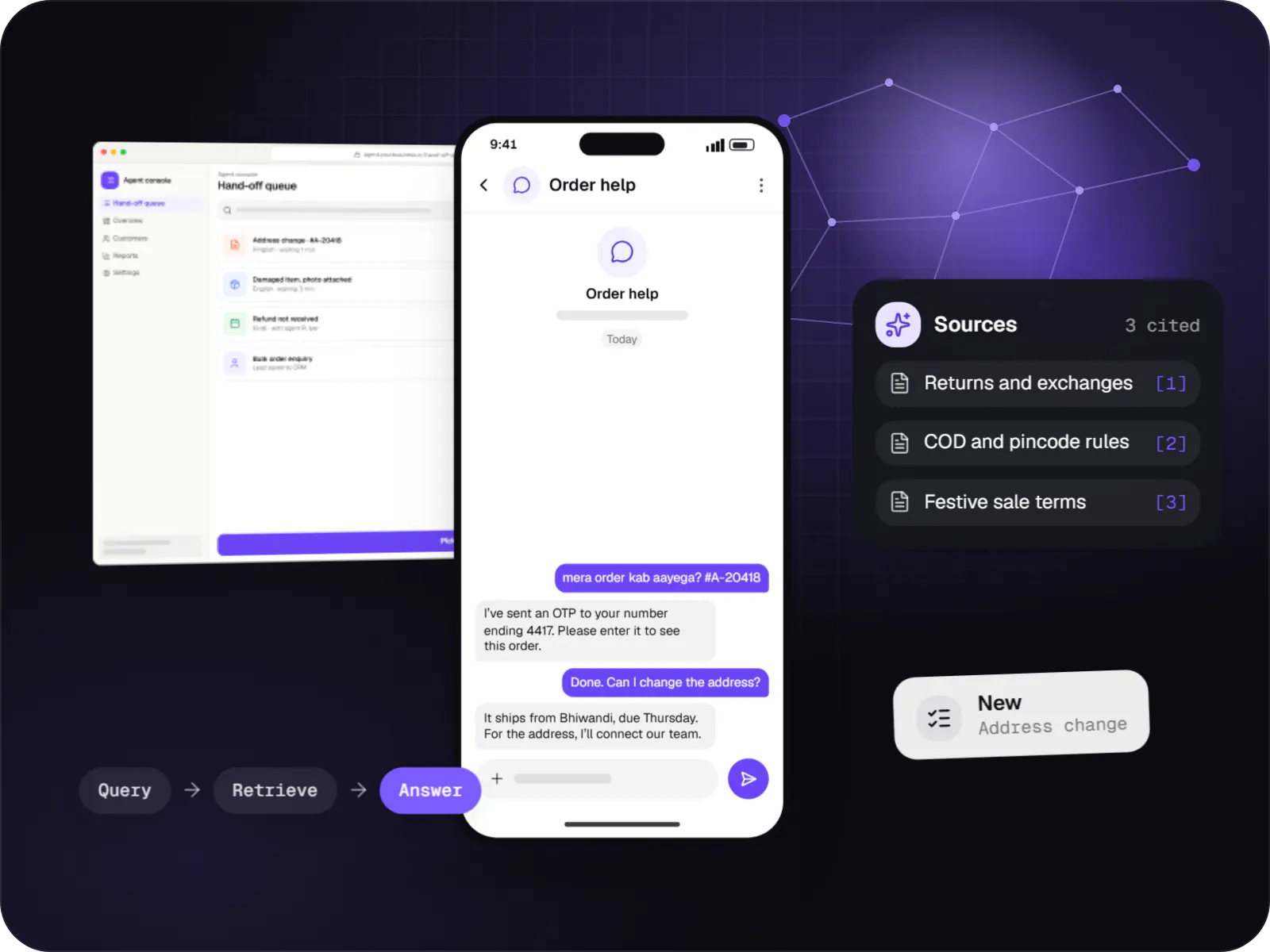
    Support and sales chatbots for web, app and WhatsApp that answer from your own content and hand off to your team.

Work

Sample projects

Illustrative projects that show how we plan and build products that use Node.js. They are samples, not client work.

  • E-commerce & marketplaces

    Illustrative sample

    B2B wholesale ordering app

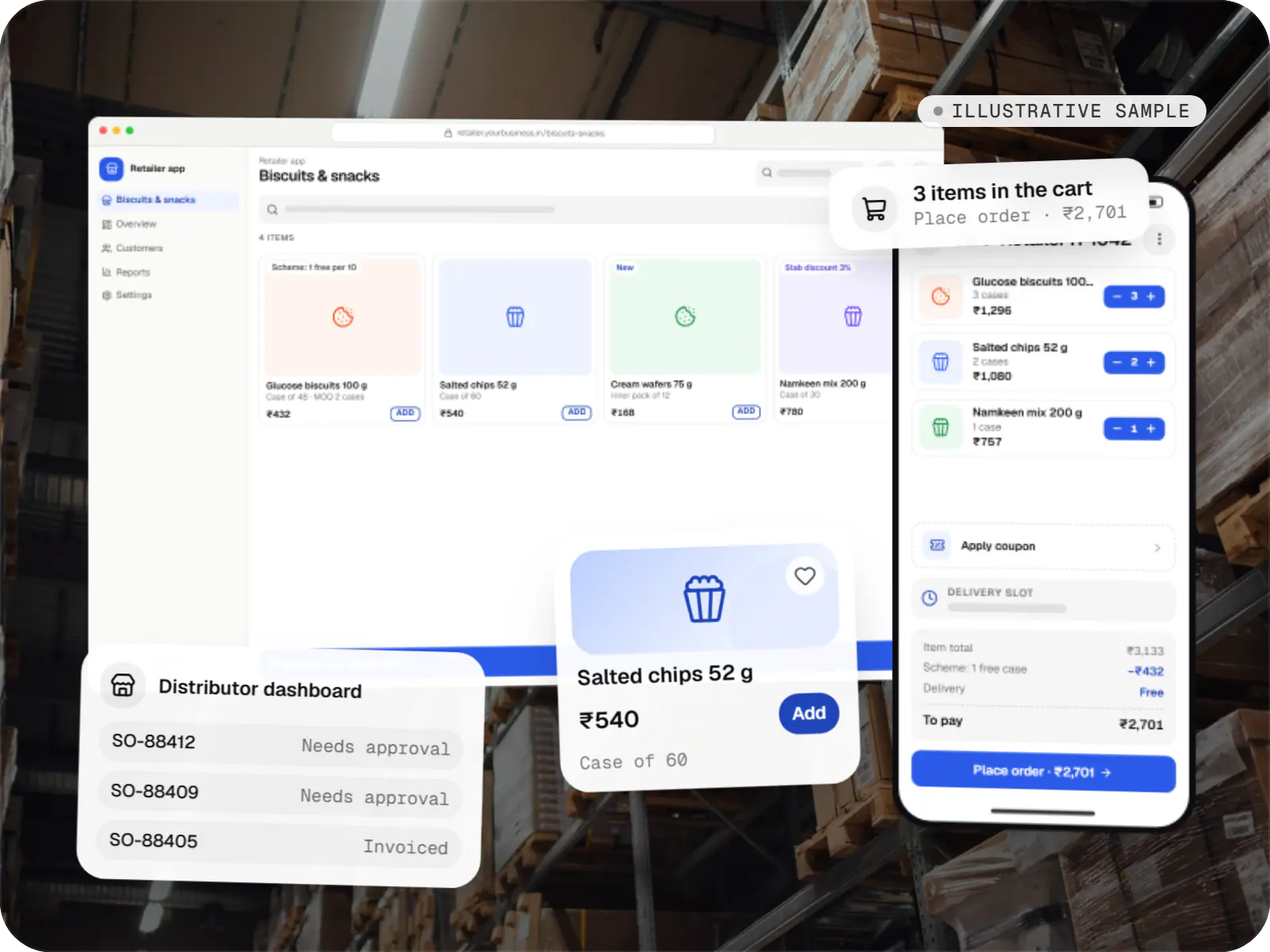
    An illustrative ordering app for a distributor's retailers and sales team, with tier pricing, credit limits, trade schemes and GST invoicing.

    • B2B commerce
    • Mobile app + web admin

    Runs on

    • Android
    • iOS
    • Cross-platform
    • Admin

    Built with

    • React Native
    • Node.js
    • PostgreSQL
    • Redis
    • AWS
    • +1 more
  • Business software

    Illustrative sample

    Fleet & dispatch management SaaS

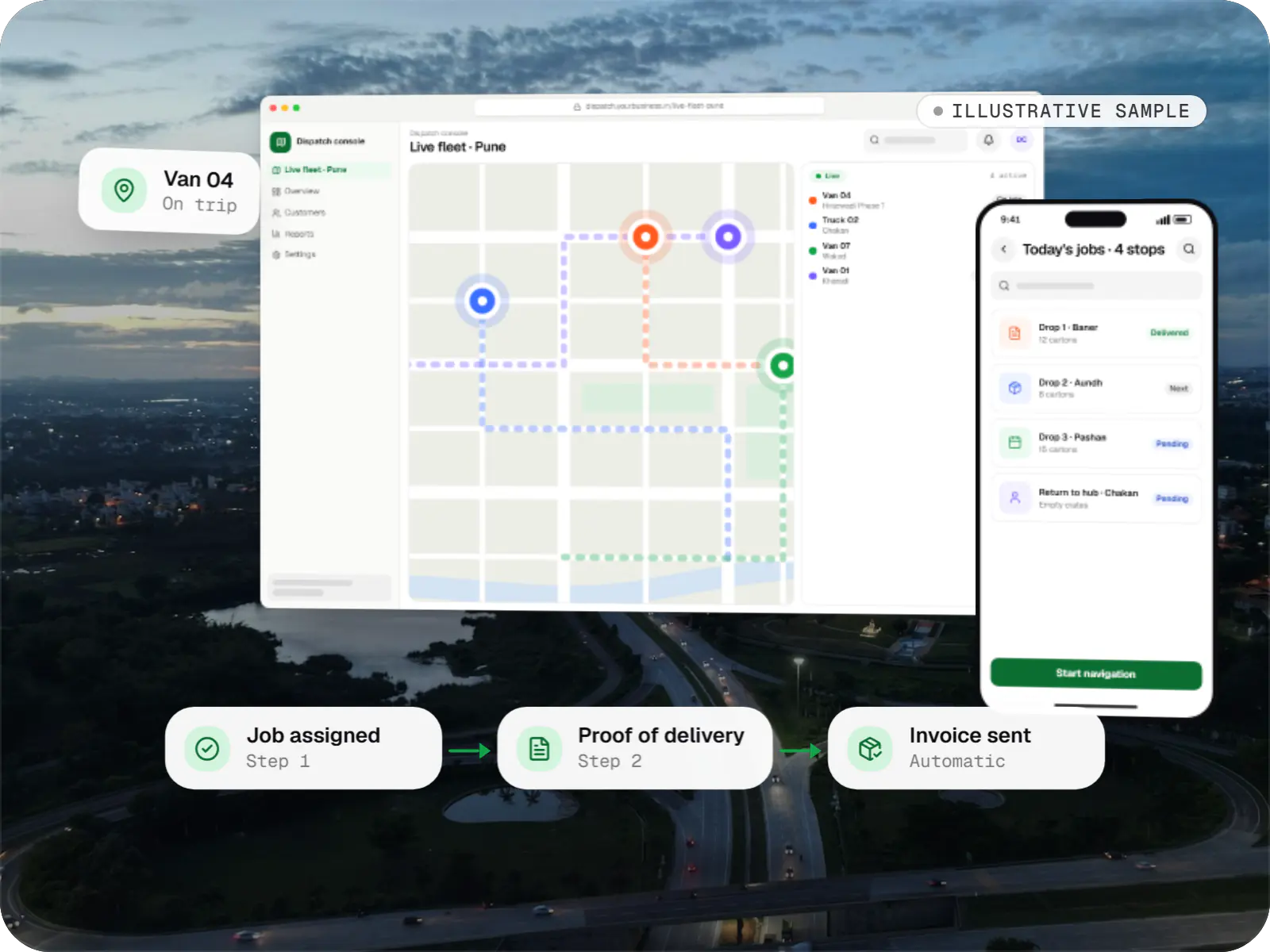
    An illustrative SaaS for businesses running their own vehicles: live dispatch on a map, driver proof of delivery and per-trip billing for each customer.

    • Transportation
    • SaaS

    Runs on

    • Web app
    • Android
    • iOS
    • Cross-platform

    Built with

    • React
    • React Native
    • Node.js
    • PostgreSQL
    • Redis
    • +1 more

FAQ

Frequently asked questions

Can Node.js handle high traffic for a delivery or booking app?

Yes, when the system is designed for it. We run several stateless Node.js instances behind a load balancer, use Redis for caching, rate limits and WebSocket fan-out, and move slow tasks to queues so API responses stay fast. Load testing with realistic order patterns before launch shows where the real limits are.

Do you use Express or NestJS for Node.js projects?

It depends on size. For small services and webhook handlers, a lightweight framework such as Fastify or Express keeps things simple. For larger back ends with many modules, roles and developers, we prefer NestJS, because its structure, dependency injection and validation conventions make the codebase easier to navigate and hand over.

How do you keep a Node.js back end secure?

We validate every input at the API boundary, use parameterised database queries, keep secrets in a managed vault rather than in code, and apply rate limiting and proper authentication. Dependencies are pinned, audited and updated on a schedule, with automated alerts for known vulnerabilities. Logs avoid personal data where possible, and access to production is limited and recorded.

Next step

Need a dependable API or back end?

Tell us which apps, partners and systems it must serve.

Or reach us directly

Mon–Sat, 10:00–19:00 IST