
Skip to content
Softcoderz
Illustrative sample

SaaS

Fleet & dispatch management SaaS

A multi-tenant dispatch product with live tracking, driver proof of delivery and per-trip billing, sold on subscription.

Not client work. This sample shows how we would scope and build this type of product. Names and figures in any previews are invented.

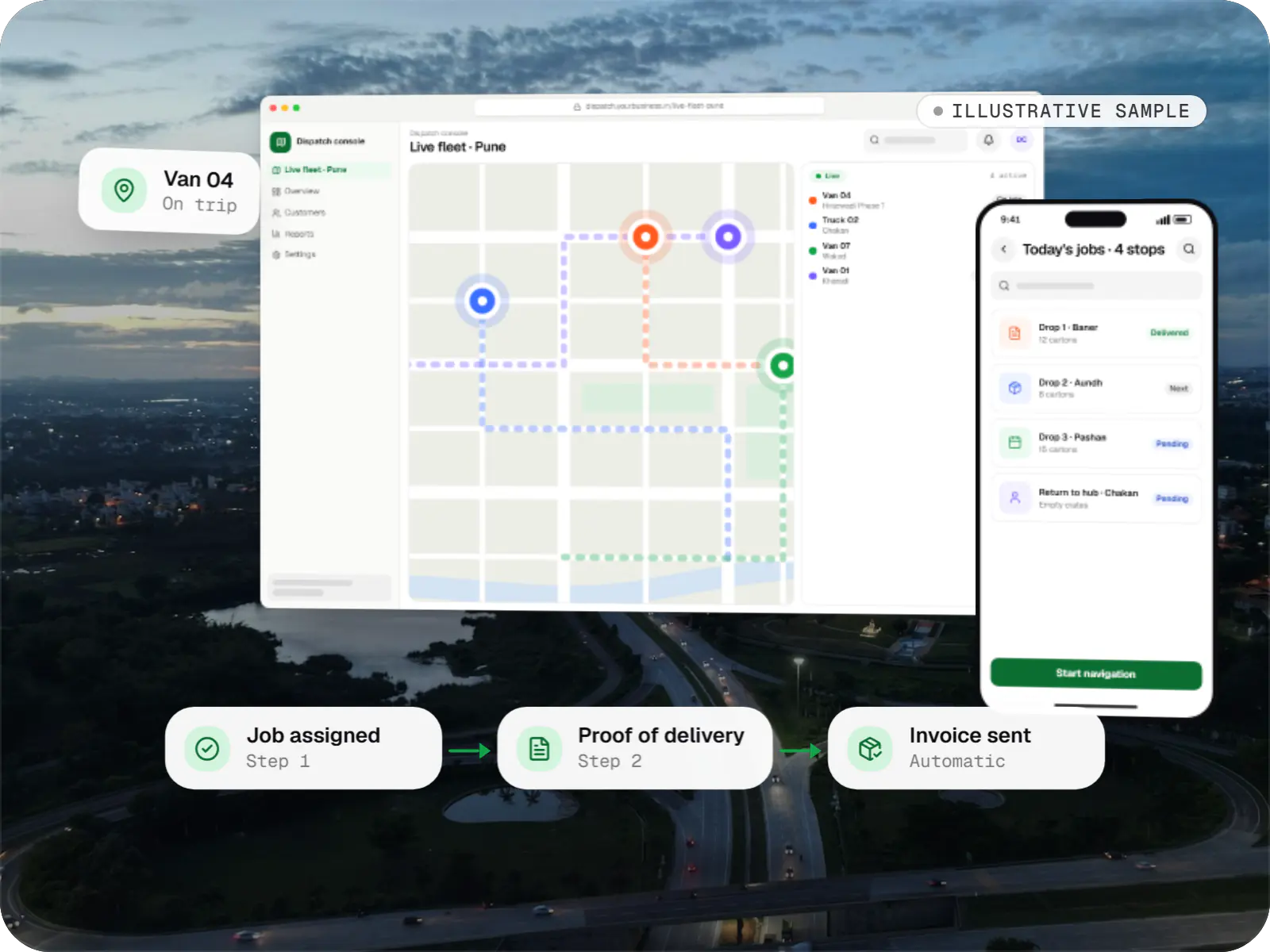
Sample fleet & dispatch management SaaS: dispatch console and driver apps over a photo of delivery vans
Illustrative sampleOffice records, a field app and the approval steps that connect them, in one system.

Overview

About this sample

This sample project shows how we would approach a multi-tenant fleet and dispatch product sold as SaaS to logistics operators, distributors and businesses with their own vehicles. It is illustrative, not client work, and the vehicles, routes and companies in our previews are invented.

Project facts

Illustrative sample
Status
Illustrative sample, not client work
Project type
SaaS
Solution area
Business software
Runs on
  • Web application
  • Android app
  • iOS app
  • Cross-platform mobile app
Built for
  • Fleet owners
  • Dispatchers
  • Drivers
  • End customers
  • Accounts team
Typical timeline
Typical build: 16–20 weeks to a first paid release

How it works

How a delivery job moves from booking to invoice

Each fleet using the SaaS runs this flow on its own data, separated from every other company on the platform.

  1. Dispatcher

    Step 1: Job is created

    Jobs come in from a customer order, a spreadsheet upload or the API, with pickup and drop addresses.

  2. Dispatch console

    Step 2: Assigned to a driver and vehicle

    The dispatcher drags the job onto a vehicle, helped by route and ETA suggestions on a live map.

  3. Driver app

    Step 3: Driver runs the job

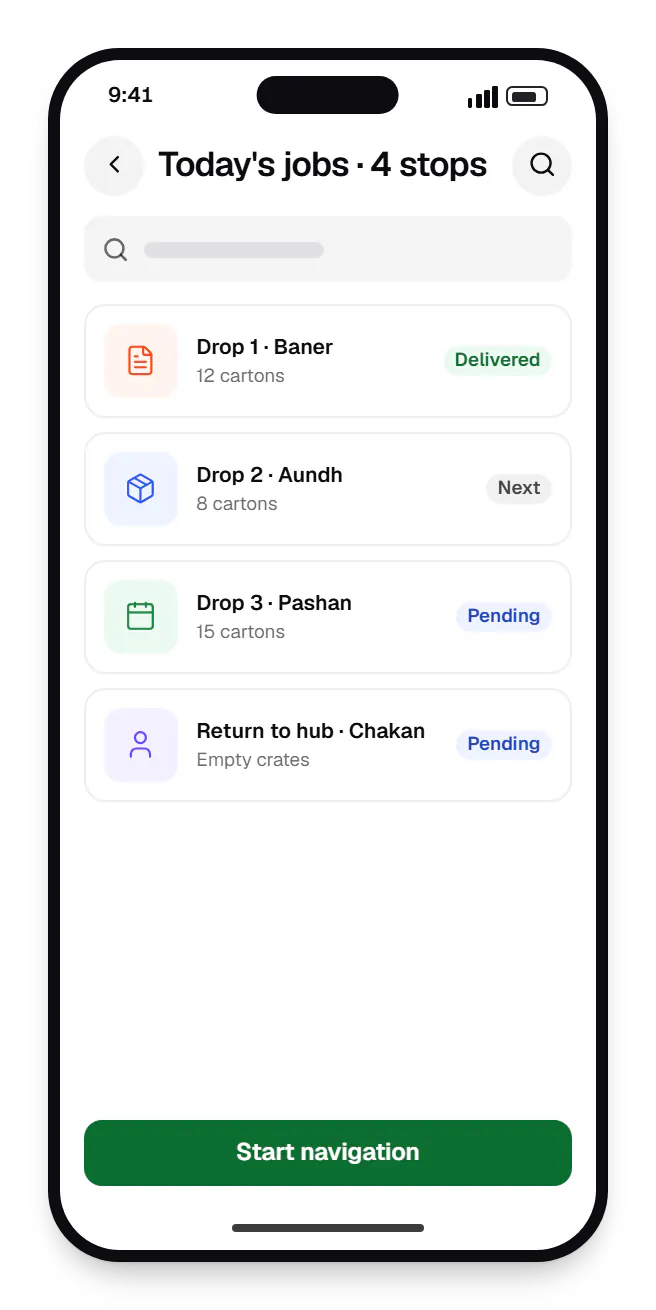
    The driver sees the day's jobs, navigates and updates status. The app keeps working offline and syncs later.

  4. End customer

    Step 4: Customer follows a tracking link

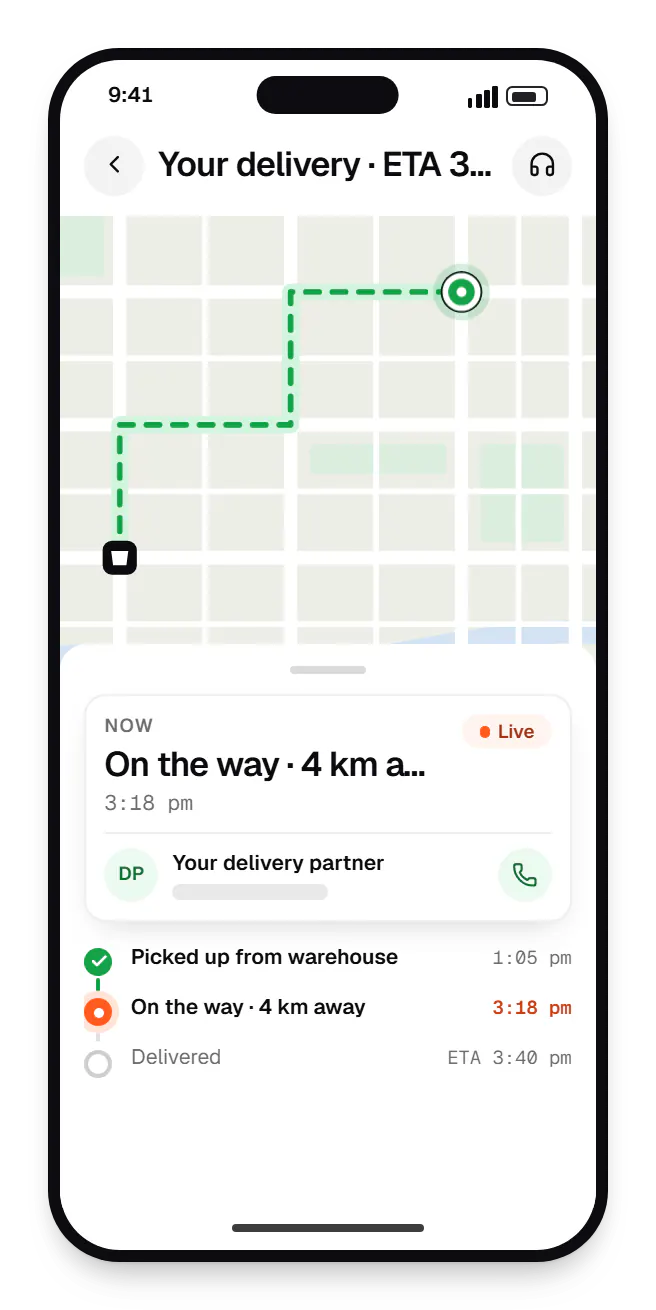
    A link sent by SMS or WhatsApp shows the live ETA, so fewer calls reach the dispatch desk.

  5. Driver app

    Step 5: Proof of delivery is captured

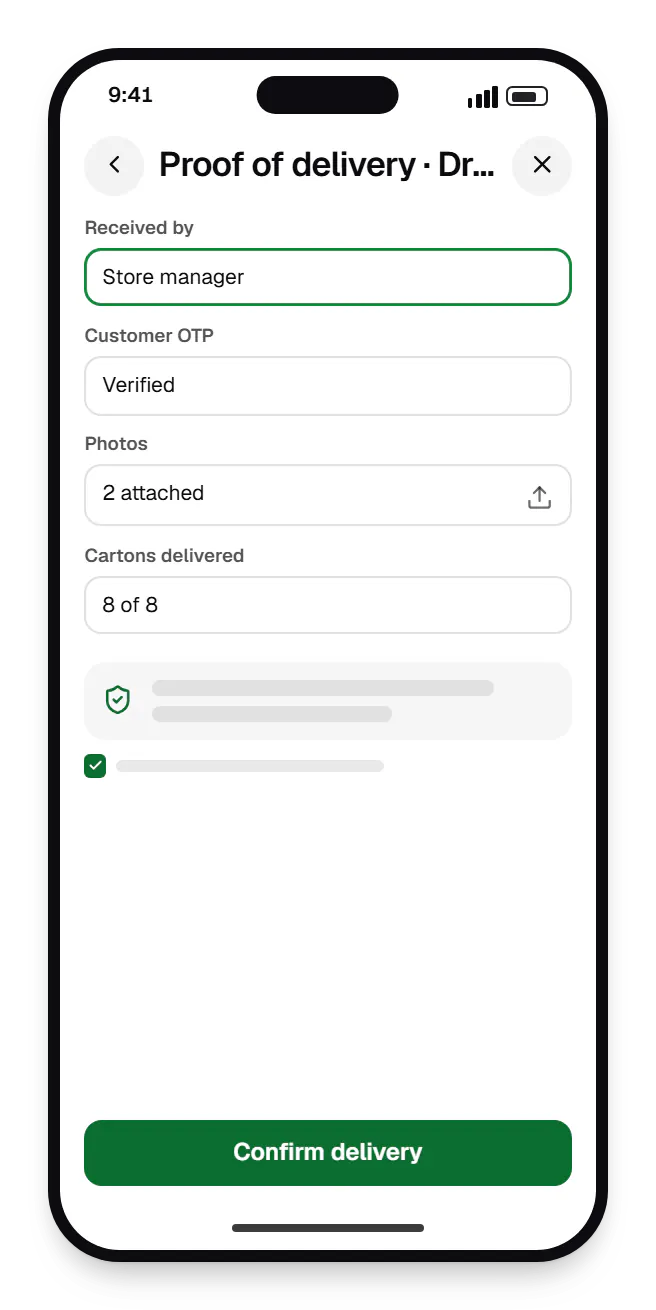
    A photo, signature or customer OTP confirms each drop and is attached to the job.

  6. Accounts team

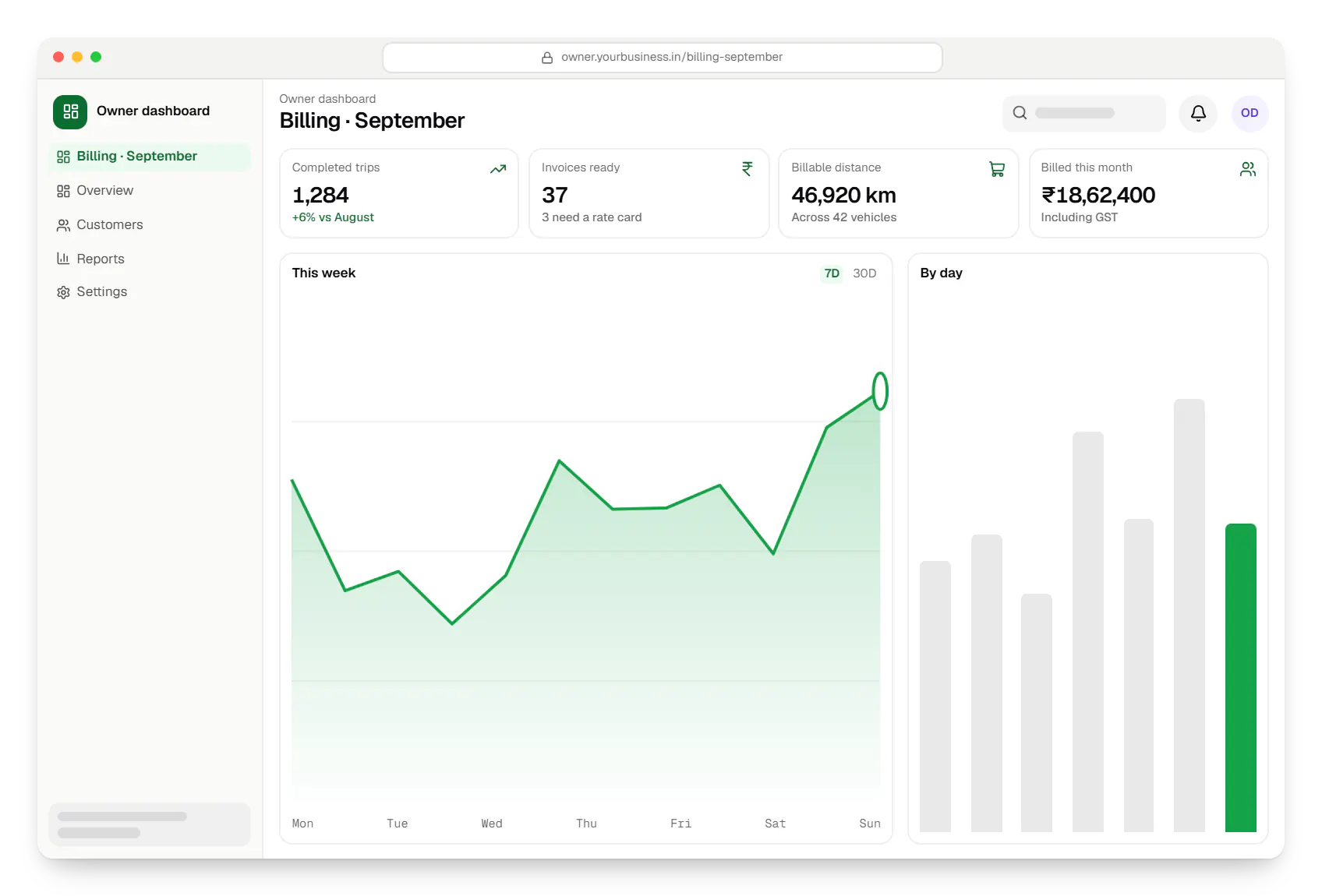
    Step 6: Monthly GST invoice per customer

    Completed trips are priced by each customer's rate card, per trip, kilometre or drop, and invoiced at month end.

How we would build it

From the problem to the architecture

The challenge

Many small and mid-sized fleets still dispatch by phone and WhatsApp, record deliveries on paper and build invoices from logbooks at month end. A SaaS product for them has to solve two sets of problems at once:

  • For each fleet: a live view of vehicles, faster job assignment, proof of delivery customers accept, and billing that matches how they charge: per trip, per kilometre or per drop.
  • For the SaaS business: self-serve sign-up, strict separation of each company's data, plans and subscription billing, and infrastructure costs that stay predictable as tenants add vehicles.
Our proposed solution

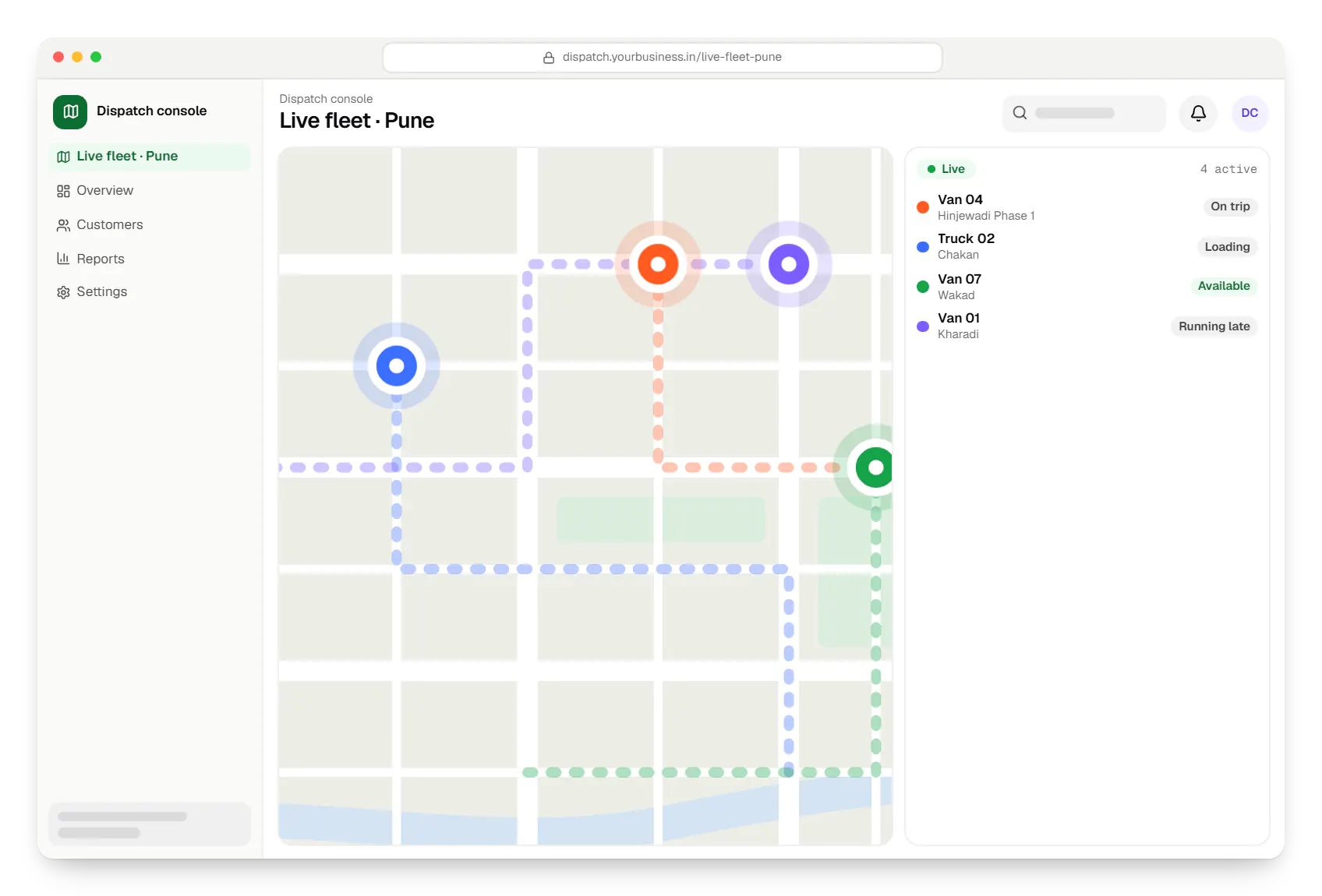
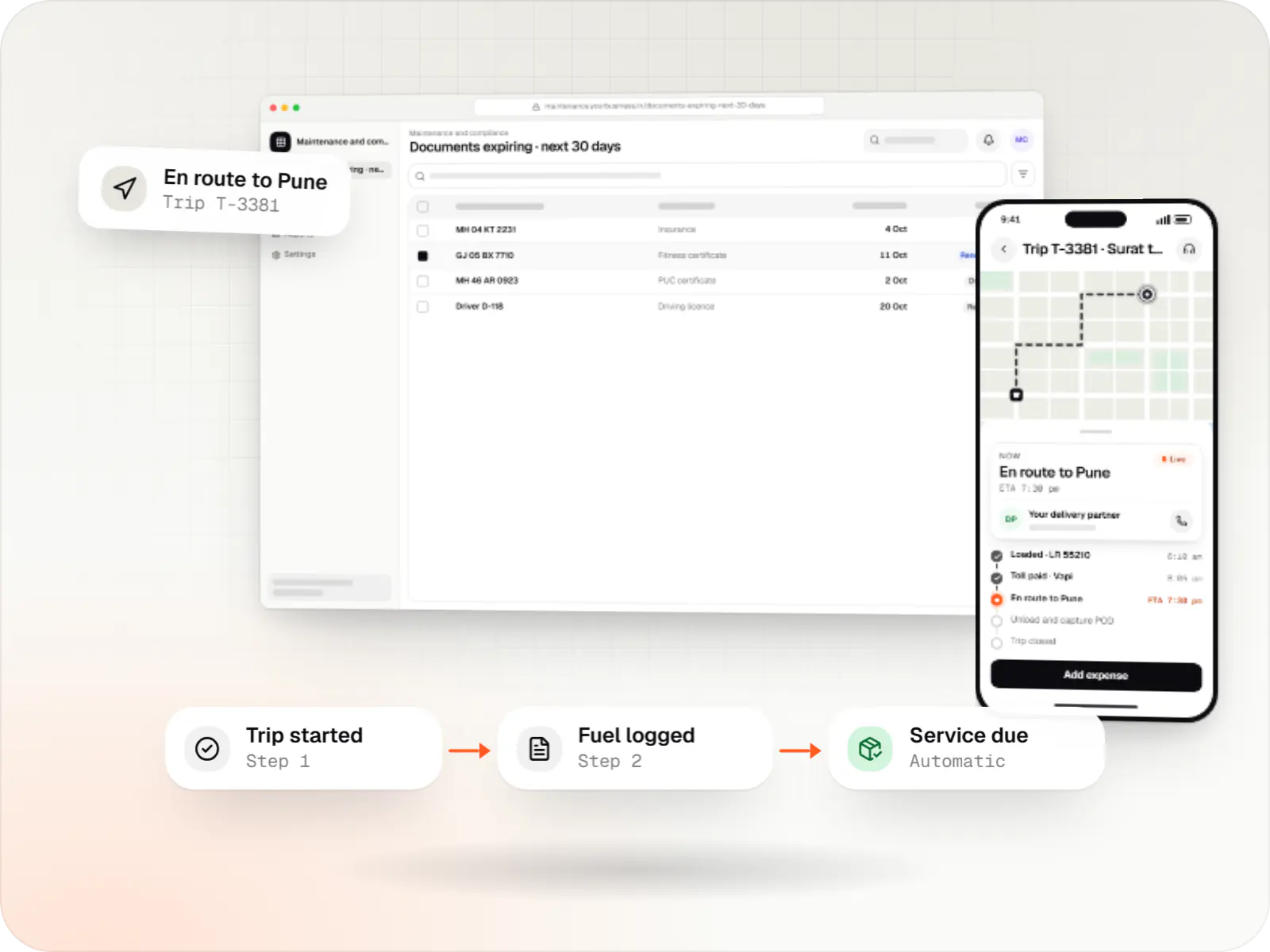
  • Dispatch console: a React web app with a job board, vehicles on a live map, drag-to-assign, route and ETA suggestions, and late-running alerts.
  • Driver app: a React Native app with the day's jobs, navigation hand-off, status updates and proof of delivery by photo, signature or customer OTP. It works offline and syncs when the network returns.
  • Customer tracking: a shareable link sent by SMS or WhatsApp with the live ETA.
  • Billing: rate cards per customer and monthly GST invoices from completed trips.
  • SaaS layer: tenant sign-up, plans with vehicle limits, subscription billing through Razorpay and roles for owners, dispatchers and accountants.

Architecture

  • Tenancy: one PostgreSQL database with a tenant ID on every row and row-level security, which is simpler to run than a schema per tenant at this stage.
  • Live location: drivers send location at an adaptive interval; Redis pub/sub fans updates out to dispatch consoles over WebSockets.
  • History: location points go into time-partitioned tables, so old data can be summarised or archived cheaply.
  • Maps: Google Maps Platform for geocoding, routes and ETAs, with responses cached to control usage costs.
  • Backend: Node.js services in Docker on AWS, with background workers for invoicing and reports.

Key features

What the product does

8 capabilities that shape the scope and the estimate.

  • Live map of vehicles and job status for dispatchers
  • Job assignment with route and ETA suggestions
  • Driver app with offline job list and background location
  • Proof of delivery by photo, signature or customer OTP
  • Shareable tracking links for end customers
  • Rate cards per customer: per trip, per kilometre or per drop
  • Monthly GST invoices generated from completed trips
  • Tenant sign-up, plans and subscription billing

Platforms

Where the dispatch product runs

A web console for dispatchers, owners and accountants, and a driver app for Android and iOS built from one codebase.

  • Web

    Web application

    Browser-based applications with logins, roles and workflows, such as customer portals, SaaS products and internal tools.

  • Mobile

    Android app

    Apps for Android phones and tablets, tested on budget and mid-range devices and published on Google Play or privately.

  • Mobile

    iOS app

    Apps for iPhone and iPad, built to Apple's guidelines and released through TestFlight and the App Store.

  • Mobile

    Cross-platform mobile app

    One Flutter or React Native codebase for Android and iOS, with native modules where a feature needs them.

Technology

Technology behind the dispatch SaaS, and why it matters

A React dispatch console, a React Native driver app, Node.js services with Redis for live updates, and Google Maps Platform for routes.

  • Builds interactive screens in the browser, such as dashboards, admin panels and portals, that respond instantly as your team works.

    Used for

    • Web apps
    • Admin panels
    • Dashboards
    • Customer portals
  • Build Android and iOS apps in the same language as a React website, so one team can share code and skills across web and mobile.

    Used for

    • Mobile apps
    • Shopping apps
    • Staff and field apps
    • Mobile apps for SaaS
  • Backend

    Node.js

    Runs the server side of apps: fast, scalable back ends that power your app, website and integrations.

    Used for

    • App back ends
    • Live order tracking
    • Chat and notifications
    • Payment processing
  • A reliable database for the records your business runs on: orders, payments, bookings and stock, kept accurate and easy to report on.

    Used for

    • Orders and customers
    • Payments and ledgers
    • Stock and inventory
    • Bookings
  • Data

    Redis

    Keeps frequently used data in fast memory, so apps stay quick on busy days and live features like order tracking feel instant.

    Used for

    • Faster apps
    • Live order status
    • Shopping carts
    • Job queues and alerts
  • Payments & maps

    Google Maps Platform

    Adds maps, address search, live tracking and travel-time estimates to delivery, ride and field apps, so orders reach the right door.

    Used for

    • Live delivery tracking
    • Address search
    • Store locator
    • Distance-based fees
  • Payments & maps

    Razorpay

    Lets customers in India pay by UPI, cards, netbanking or wallets, and handles subscriptions, refunds and payouts to sellers or partners.

    Used for

    • UPI payments
    • Cards and netbanking
    • Subscriptions
    • Payment links
  • Cloud & DevOps

    AWS

    Cloud hosting for your app, website and data, with data centres in India and room to grow when traffic rises.

    Used for

    • App hosting
    • File and photo storage
    • Backups
    • Busy sale days
  • Cloud & DevOps

    Docker

    Packages your software so it runs the same way on every laptop and server, which makes releases predictable and moving hosts easier.

    Used for

    • Reliable releases
    • Same setup everywhere
    • Faster onboarding
    • Easy scaling

More work

Similar projects

Other illustrative projects with overlapping apps, industries or services. They are samples, not client work.

  • E-commerce & marketplaces

    Illustrative sample

    B2B wholesale ordering app

    An illustrative ordering app for a distributor's retailers and sales team, with tier pricing, credit limits, trade schemes and GST invoicing.

    • B2B commerce
    • Mobile app + web admin

    Runs on

    • Android
    • iOS
    • Cross-platform
    • Admin

    Built with

    • React Native
    • Node.js
    • PostgreSQL
    • Redis
    • AWS
    • +1 more
  • Delivery app development

    Illustrative sample

    Hyperlocal grocery delivery platform

    An illustrative platform for neighbourhood grocery stores: slot or express delivery, store picking, batched delivery runs, and payment by UPI or cash on delivery.

    • Retail
    • Mobile + web platform

    Runs on

    • Android
    • iOS
    • Cross-platform
    • Admin

    Built with

    • Flutter
    • NestJS
    • PostgreSQL
    • Redis
    • AWS
    • +1 more
  • AI solutions

    Illustrative sample

    AI customer support assistant for a D2C brand

    An illustrative AI assistant that answers order, return and product questions from a D2C brand's own policies and order data, with sources and a human hand-off.

    • E-commerce
    • AI assistant

    Runs on

    • Website
    • Admin

    Built with

    • Next.js
    • Python
    • OpenAI APIs
    • LLM integrations
    • PostgreSQL
    • +1 more

FAQ

Frequently asked questions

How reliable is live tracking on budget Android phones?

Reasonably reliable, with honest limits. Some Android brands restrict background apps aggressively, so the driver app runs a foreground service, guides drivers through the battery settings for their phone model and adapts the location interval to speed and battery level. When a phone goes quiet, the console shows a last-seen time rather than a stale dot.

Why build a dispatch product as multi-tenant from the first release?

If the goal is to sell to many fleets, retrofitting tenancy later means touching every table, query and permission, which is expensive and risky. A tenant ID on every row, row-level security and tenant-aware background jobs cost a little more upfront. If you only need an internal tool for one fleet, we would build a simpler single-tenant version instead.

Can the platform take data from vehicle GPS trackers?

Yes, as an additional integration. Most tracker vendors offer an API or push data over standard protocols, and the platform can treat a tracker as another location source. We usually launch with phone-based tracking, because it needs no hardware and also captures proof of delivery, then add trackers for tenants whose vehicles already carry them.

Next step

Turning your dispatch tool into a SaaS product?

Tell us who your tenants are and how they bill customers, and we will outline the tenancy model and first release.

Or reach us directly

Mon–Sat, 10:00–19:00 IST