



Web
Next.js
A modern web technology for fast, search-friendly websites, online stores and web applications that load quickly on mobile.
Used for
- Business websites
- Online stores
- Web apps
- Customer portals
Transportation & logistics
Supply chain software for manufacturers, brands and distributors: procurement, supplier collaboration, multi-location inventory, distributor management and traceability.
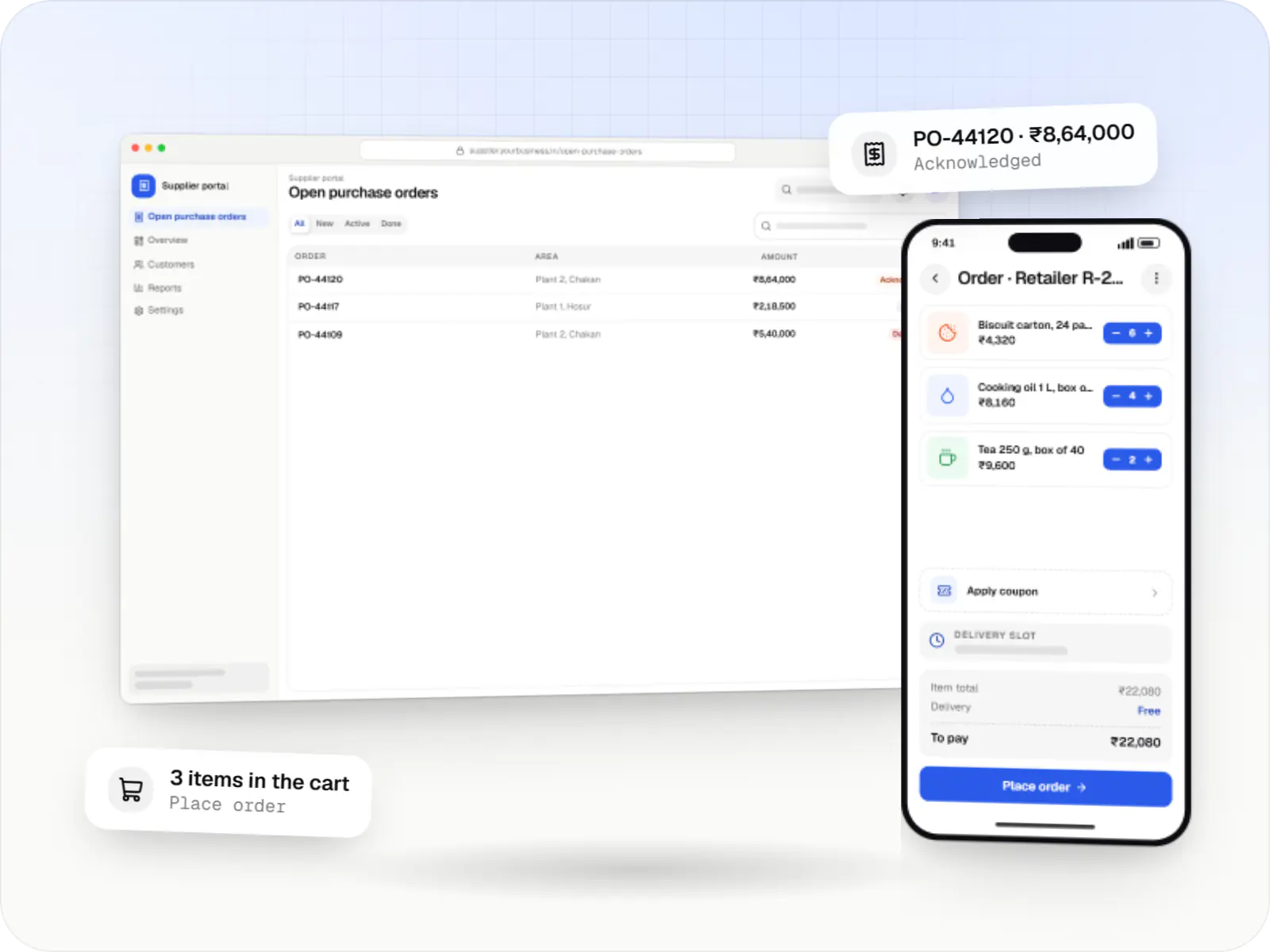
At a glance

We build software that coordinates the flow of goods between businesses: supplier portals, purchase orders and advance shipping notices, multi-location inventory visibility, distributor management systems for secondary sales, inputs for demand planning, and batch-level traceability.
How to start
Tell us what you need in your own words. You talk to the developers who would build it and get a written, line-item estimate.
Get a project estimateSupply chain problems are rarely about moving a single truck; they are about information arriving too late. A buyer does not know a supplier will miss a delivery, a plant runs short of one component, and a distributor overstocks slow SKUs while fast movers run out in the market.
We build supply chain software that shares the right data with the right partner: supplier portals for purchase orders and dispatch notices, inventory views across plants, warehouses and distributors, and distributor management systems that capture secondary sales. Planning then rests on what is happening now, not last month's spreadsheet.
Challenges
PO confirmations, delivery dates and quality issues are tracked over email.
Stock in plants, warehouses and with distributors is not visible to planners in one place.
Brands cannot see what distributors sell to retailers, so production plans lag demand.
Recalls and quality issues cannot be traced quickly to batches and suppliers.
Solutions
Across 3 areas
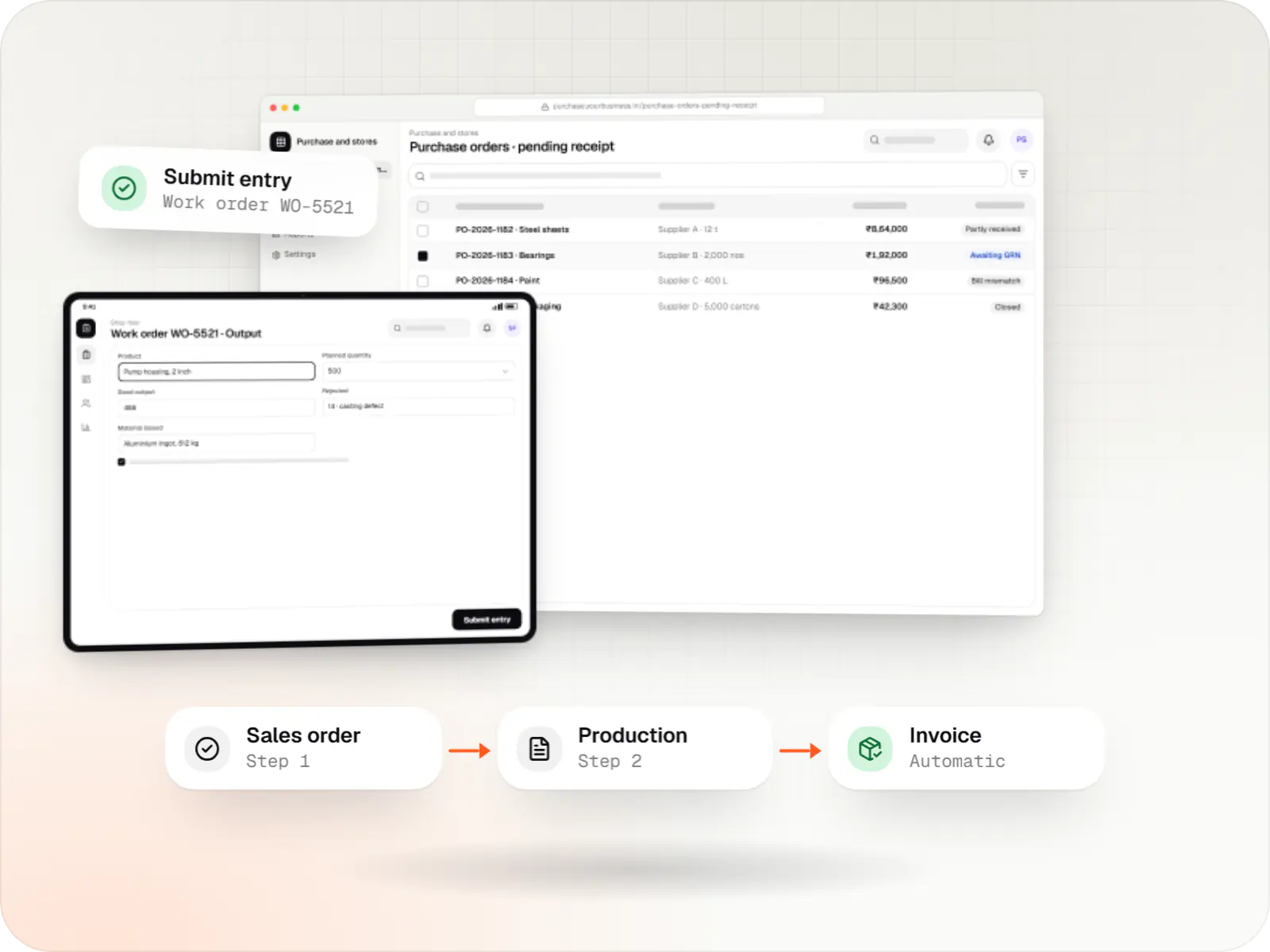
Custom ERP software connecting purchase, inventory, production, sales and GST compliance, alongside your existing accounting system.
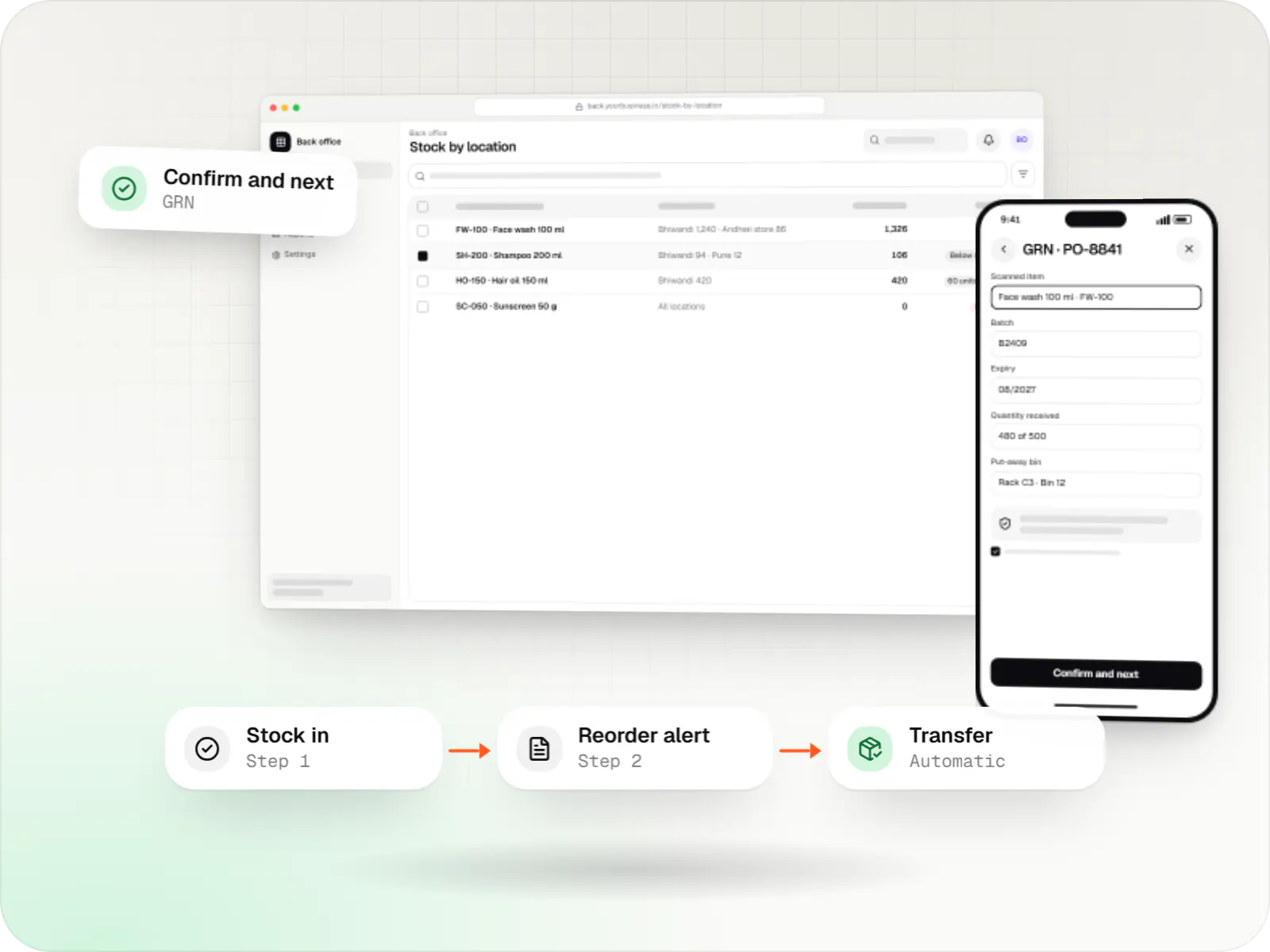
Custom inventory software for multi-location stock, batch and expiry tracking, barcode scanning and marketplace stock sync.
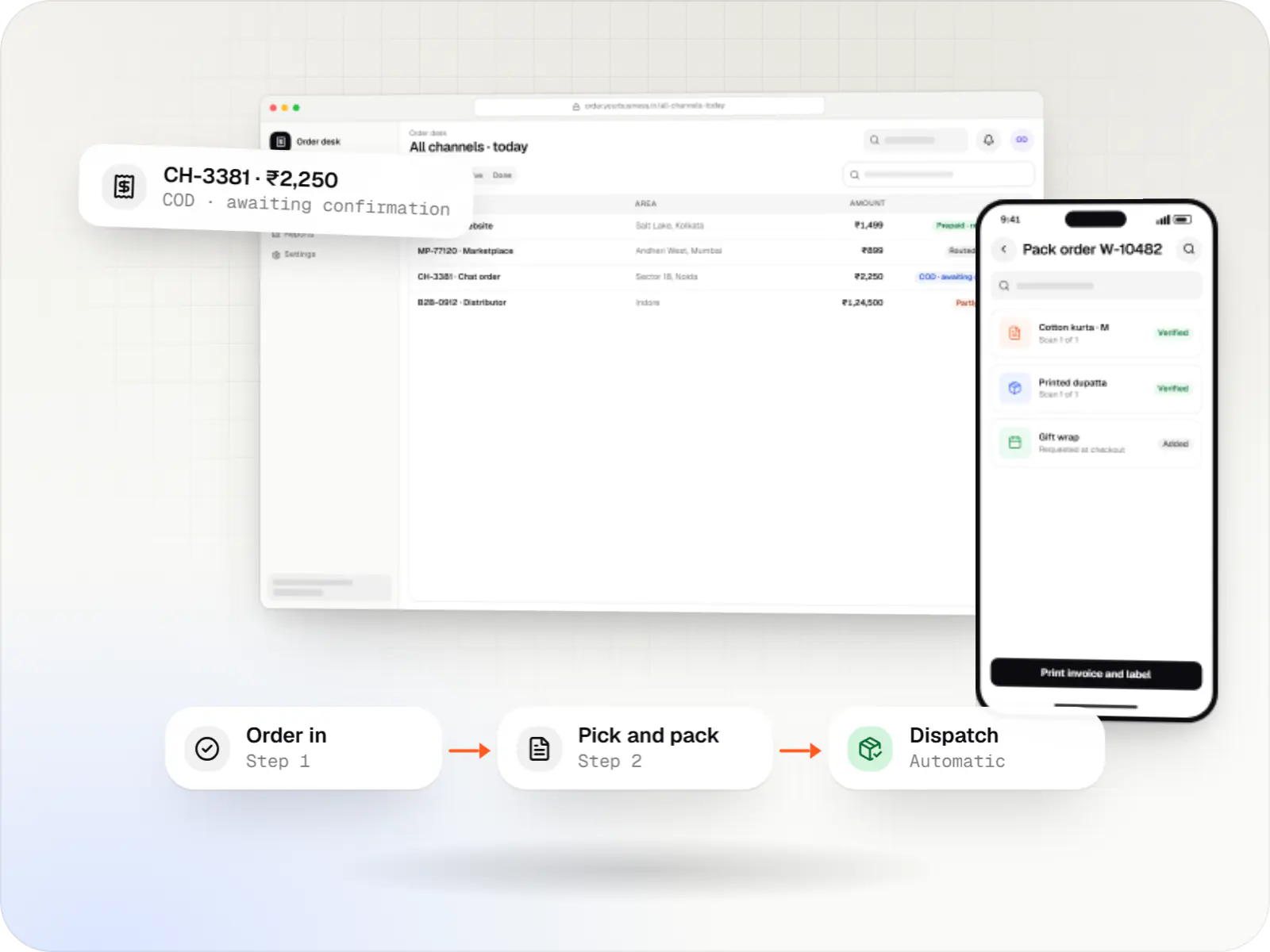
A central order management system that collects orders from every channel, routes them to the right location and tracks them to delivery and payment.
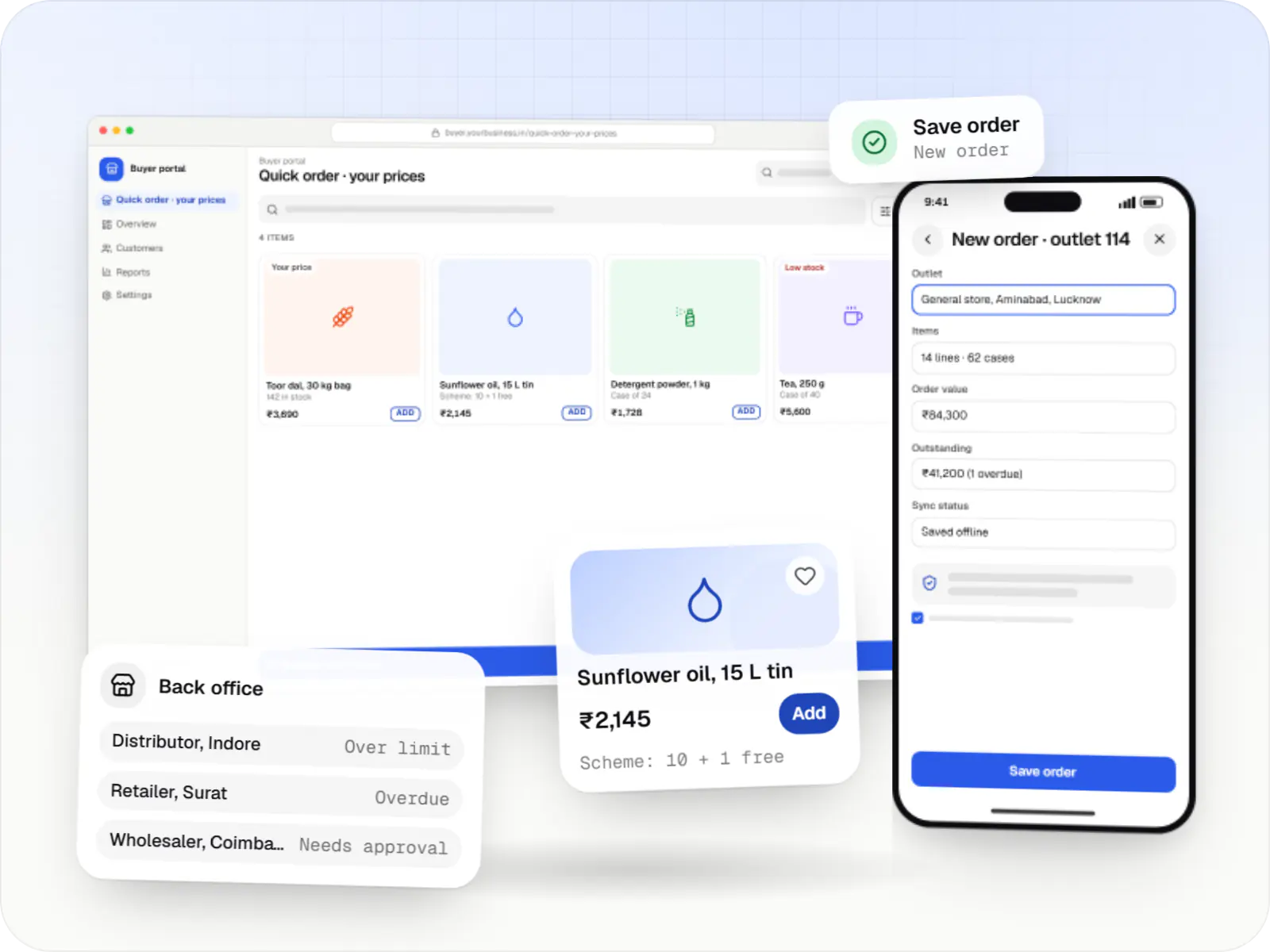
Ordering portals and apps for manufacturers, distributors and wholesalers, with buyer-specific pricing, credit limits, bulk ordering and ERP sync.
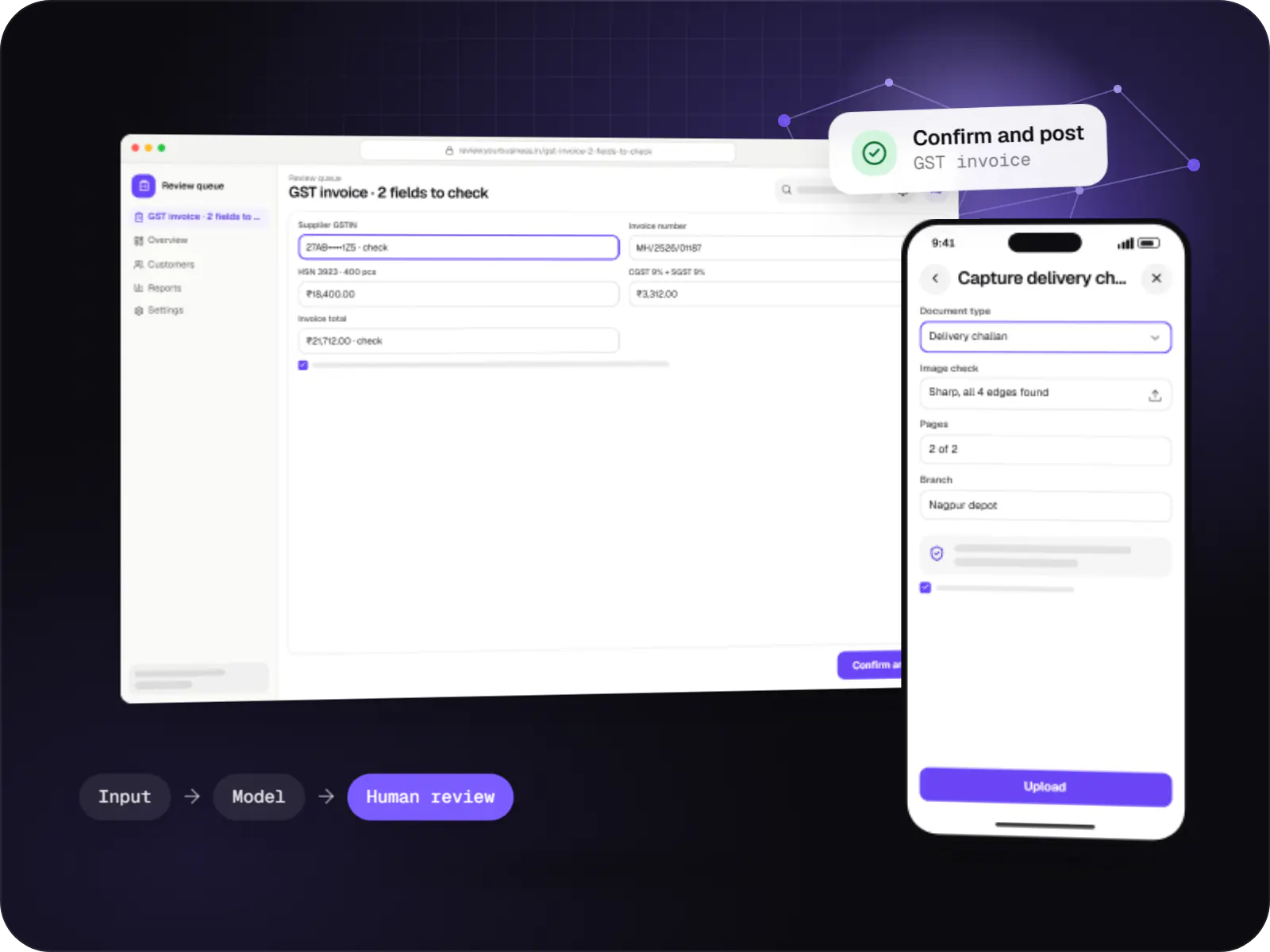
Data extraction from invoices, KYC documents, statements and forms into your systems, with validation rules and human review for uncertain fields.
PO acknowledgement, delivery schedules, ASNs, invoice upload and supplier scorecards.
Three-way matching of PO, goods receipt and invoice, with GST and TDS checks.
Stock by plant, warehouse and distributor, with transfer orders and reorder alerts.
Secondary sales, schemes, claims and retailer orders captured through a salesforce app.
Supplier lot to finished batch to shipment, searchable for recalls and audits.
How it works
What distributors sell feeds the next round of orders, so the cycle keeps correcting itself.
POs are raised from reorder alerts or the production plan and published to the supplier portal instead of an email thread.
The supplier acknowledges the PO, commits a delivery date and sends an advance shipping notice before dispatch.
The goods receipt, PO and supplier invoice are matched three ways, and quantity or price differences are held for review.
Plant, warehouse and distributor stock appear in one view, with transfers suggested where one location runs short.
Sales reps capture retailer orders, and secondary sales and scheme claims flow into the distributor management system.
Actual secondary sales and supplier performance feed the next forecast and production plan, which planners approve.
Then it starts again at step 1: Buyer issues a purchase order
Platforms
Browser-based applications with logins, roles and workflows, such as customer portals, SaaS products and internal tools.
Apps for Android phones and tablets, tested on budget and mid-range devices and published on Google Play or privately.
Back-office panels for operations, support and finance teams: orders, users, content, reports and permissions.
Technology
Next.js portals work on a supplier's or distributor's phone without an install, NestJS services sync masters and orders with your ERP, and Python forecasting gives planners suggestions they can check and override.
Web
A modern web technology for fast, search-friendly websites, online stores and web applications that load quickly on mobile.
Used for
Backend
A structured way to build back ends on Node.js, so large business systems stay organised, testable and easy to hand over.
Used for
Backend
A programming language for AI features, data processing and automation: the engine behind document reading, reports and smart search.
Used for
Data
A reliable database for the records your business runs on: orders, payments, bookings and stock, kept accurate and easy to report on.
Used for
Data
Keeps frequently used data in fast memory, so apps stay quick on busy days and live features like order tracking feel instant.
Used for
Cloud & DevOps
Cloud hosting for your app, website and data, with data centres in India and room to grow when traffic rises.
Used for
Plain-English glossary
Product preview
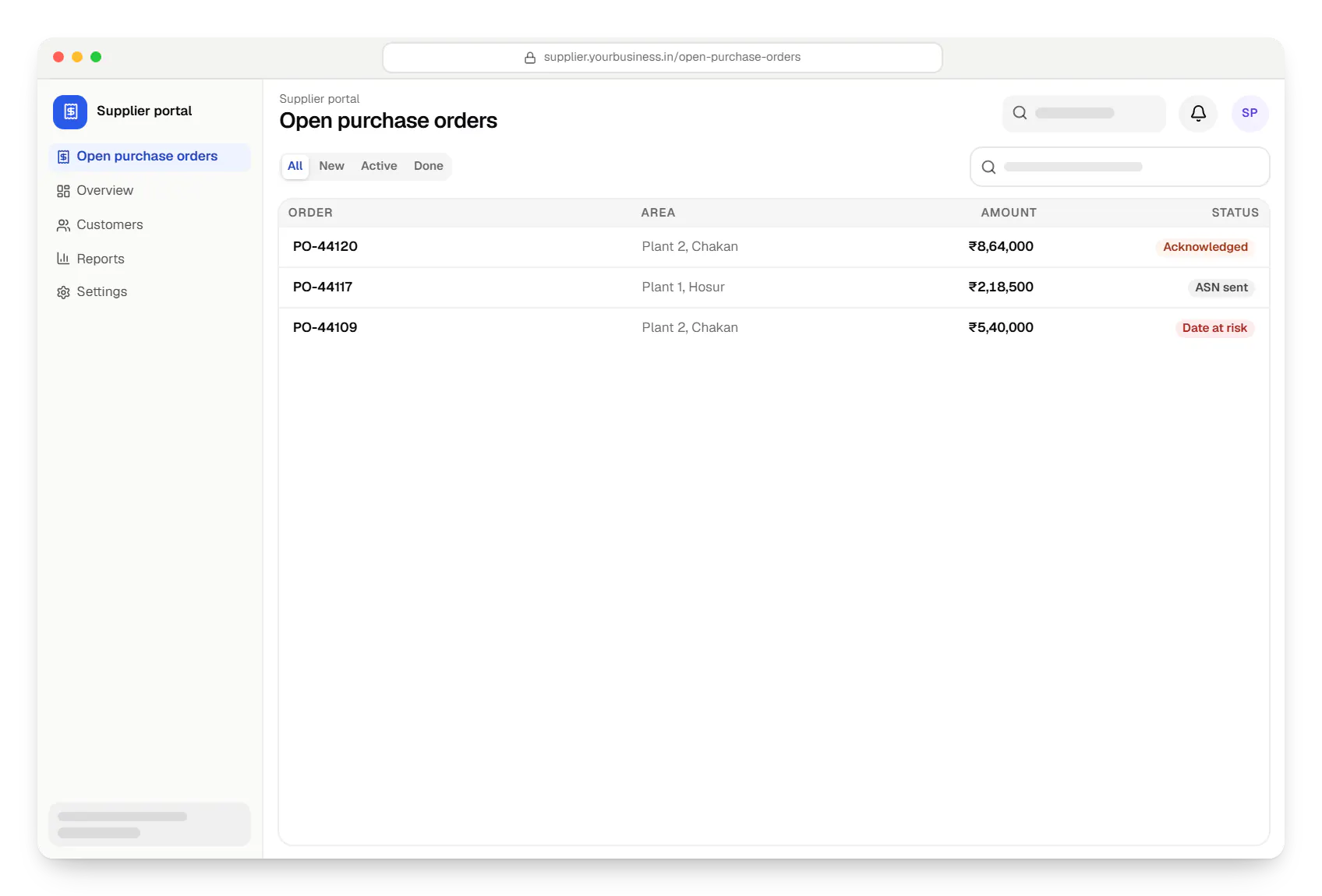
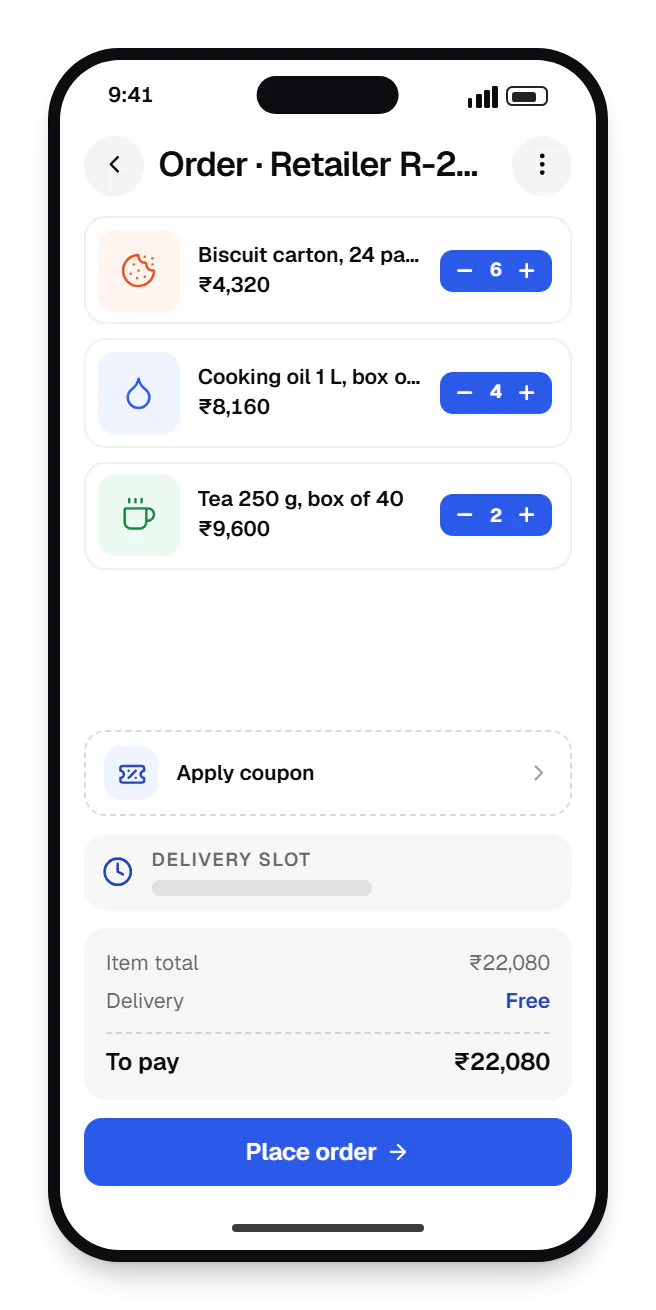
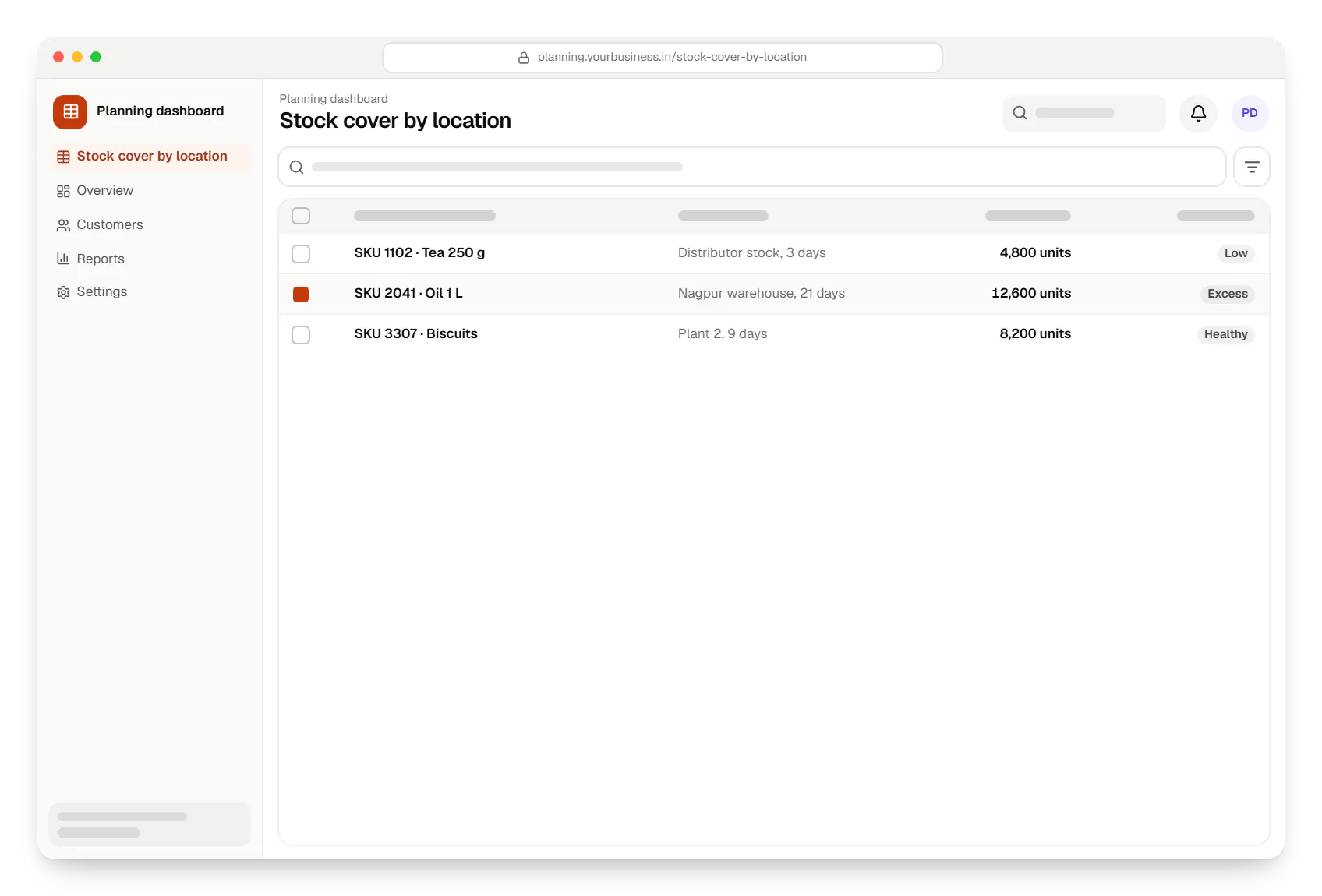
Sample screens: names, prices and figures are examples, not client data.
Work
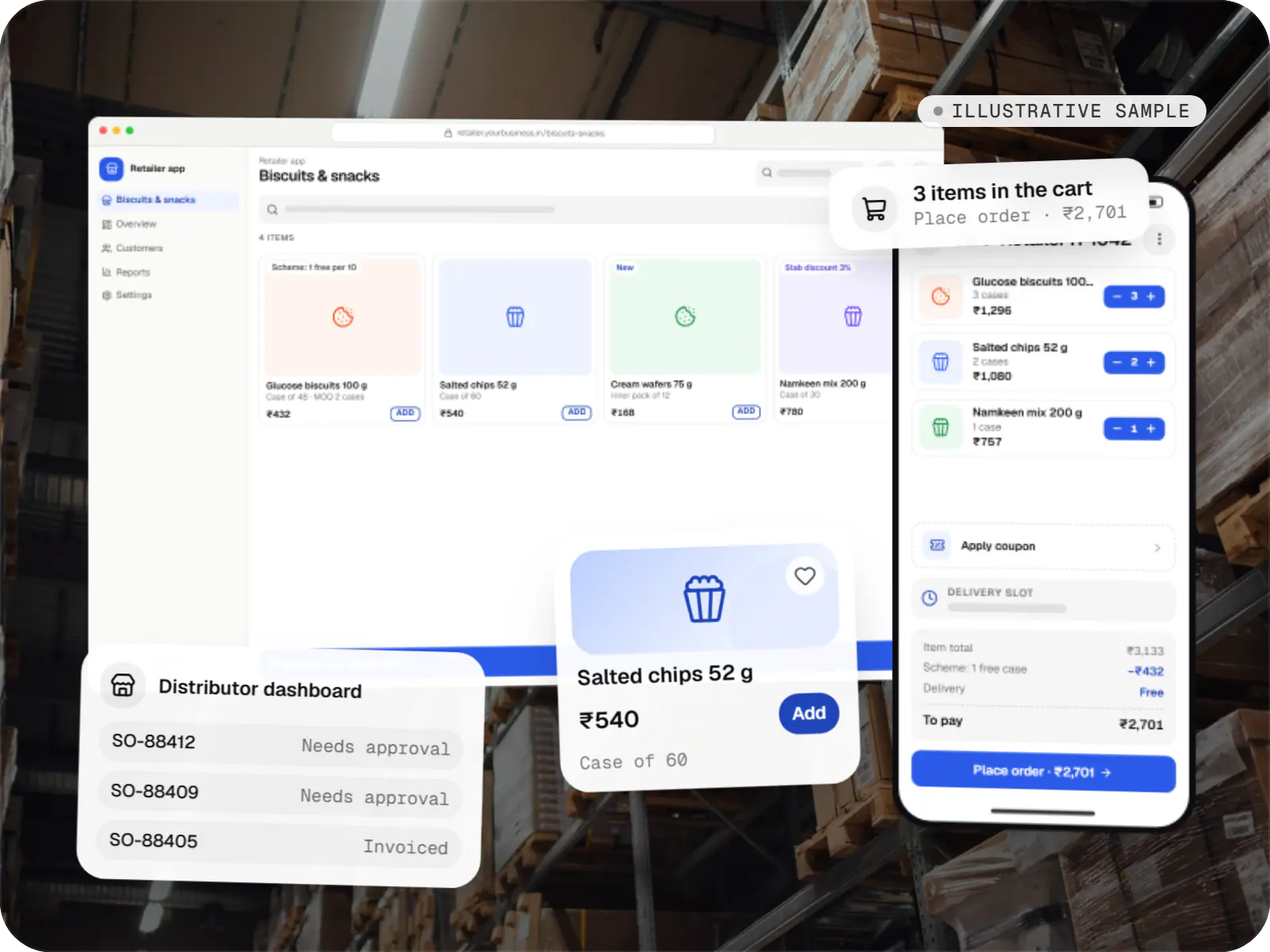
E-commerce & marketplaces
An illustrative ordering app for a distributor's retailers and sales team, with tier pricing, credit limits, trade schemes and GST invoicing.
Runs on
Built with
Cost drivers
Suppliers, plants, distributors and retailers each need portals, roles and onboarding.
Syncing masters, orders and stock with SAP, Oracle, Tally or a legacy ERP often dominates effort.
Forecasting and replenishment logic needs clean history and several rounds of tuning.
Estimates are written from your scope, with the effort and assumptions behind each line item.
How pricing worksServices
The design and engineering services our in-house team combines on projects in this sector.
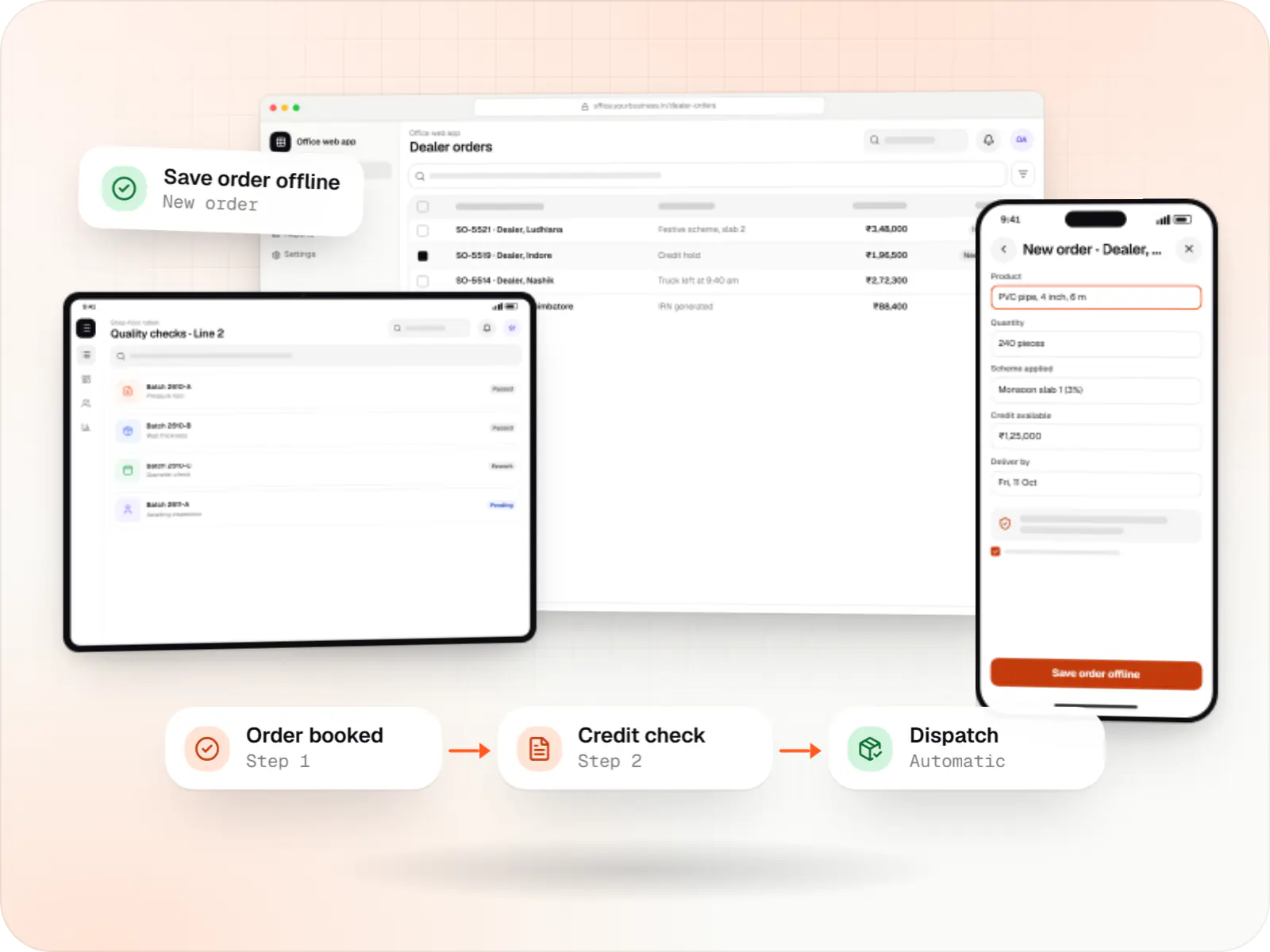
Software shaped around how your business runs, from approvals and inventory to billing and reports, replacing spreadsheets and disconnected tools.
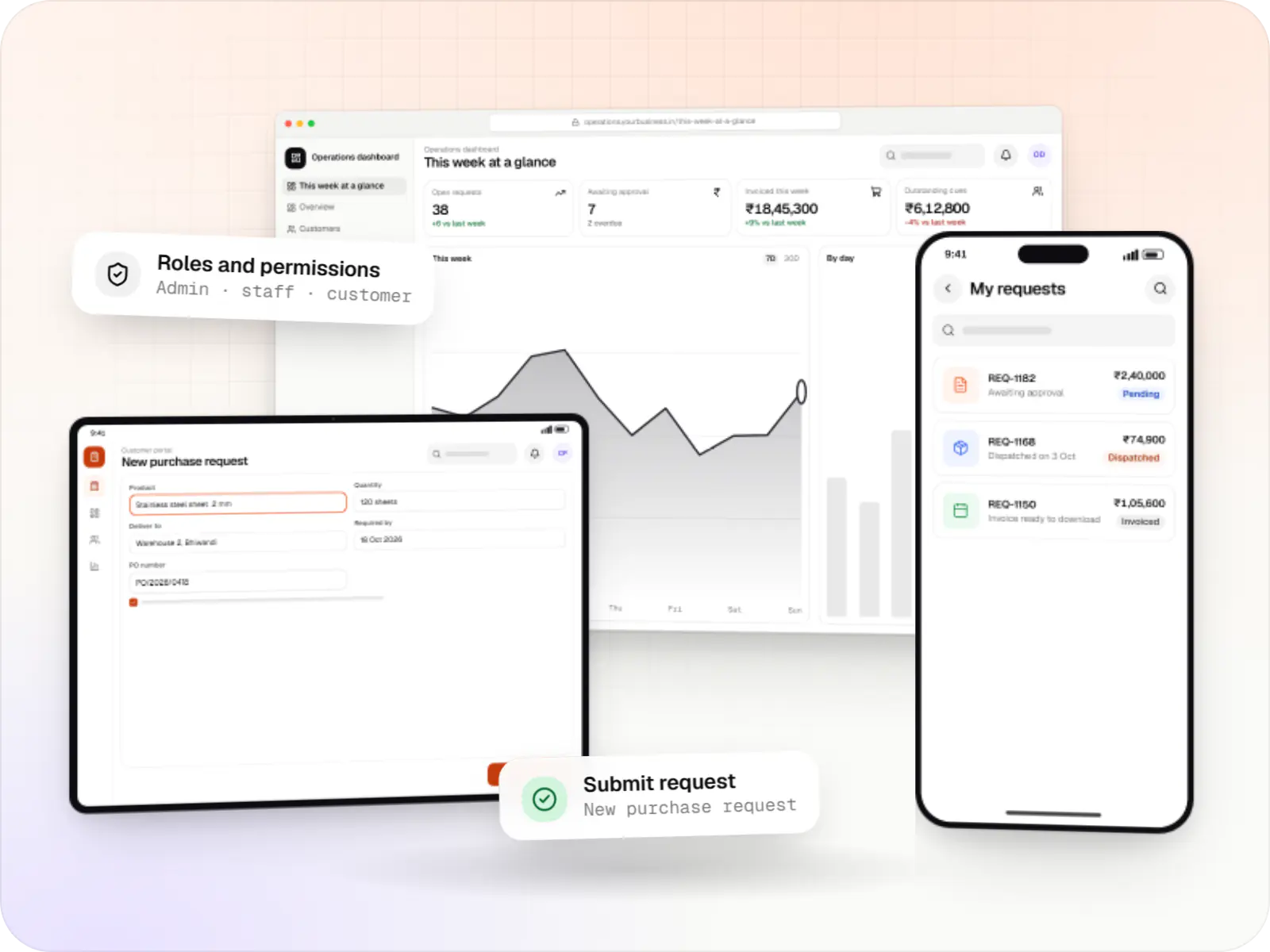
Browser-based products, customer portals, dashboards and internal tools, built on clean data models with secure roles and integrations.
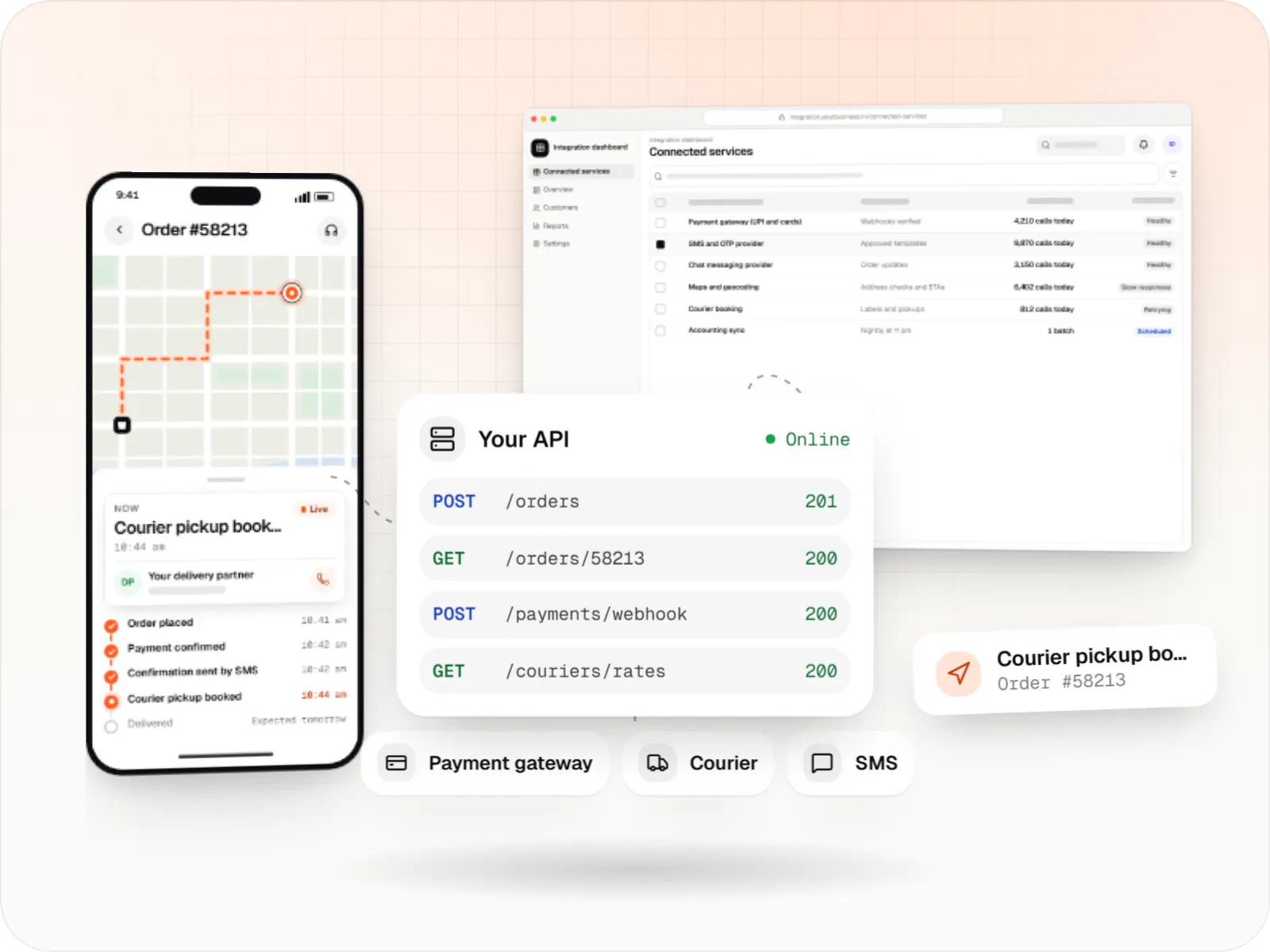
Secure, documented REST and GraphQL APIs, plus integrations that connect your apps to payment, logistics, GST, messaging and business systems.
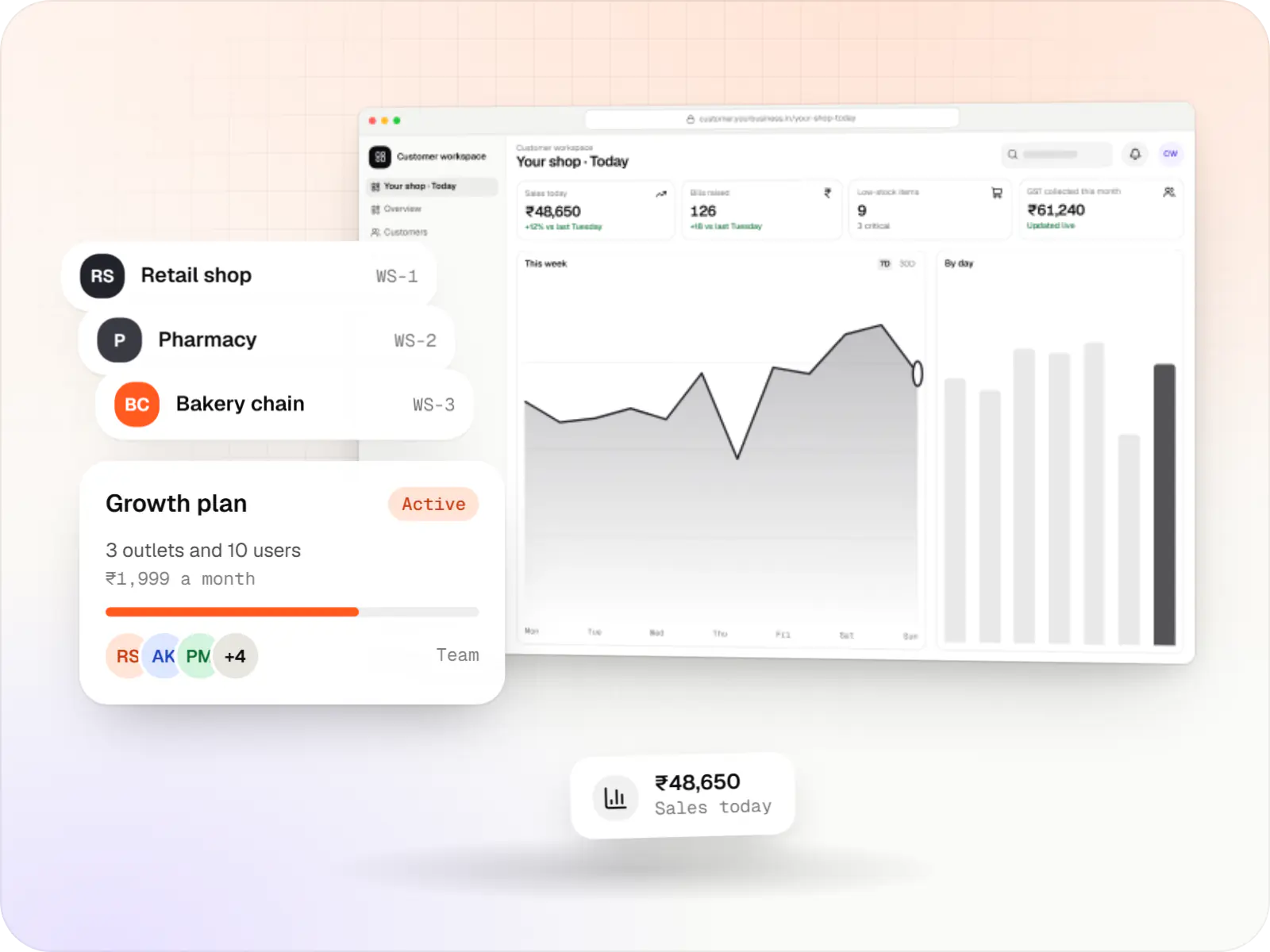
Multi-tenant SaaS products with subscription billing, team roles, onboarding and usage analytics, from first MVP to paying customers.
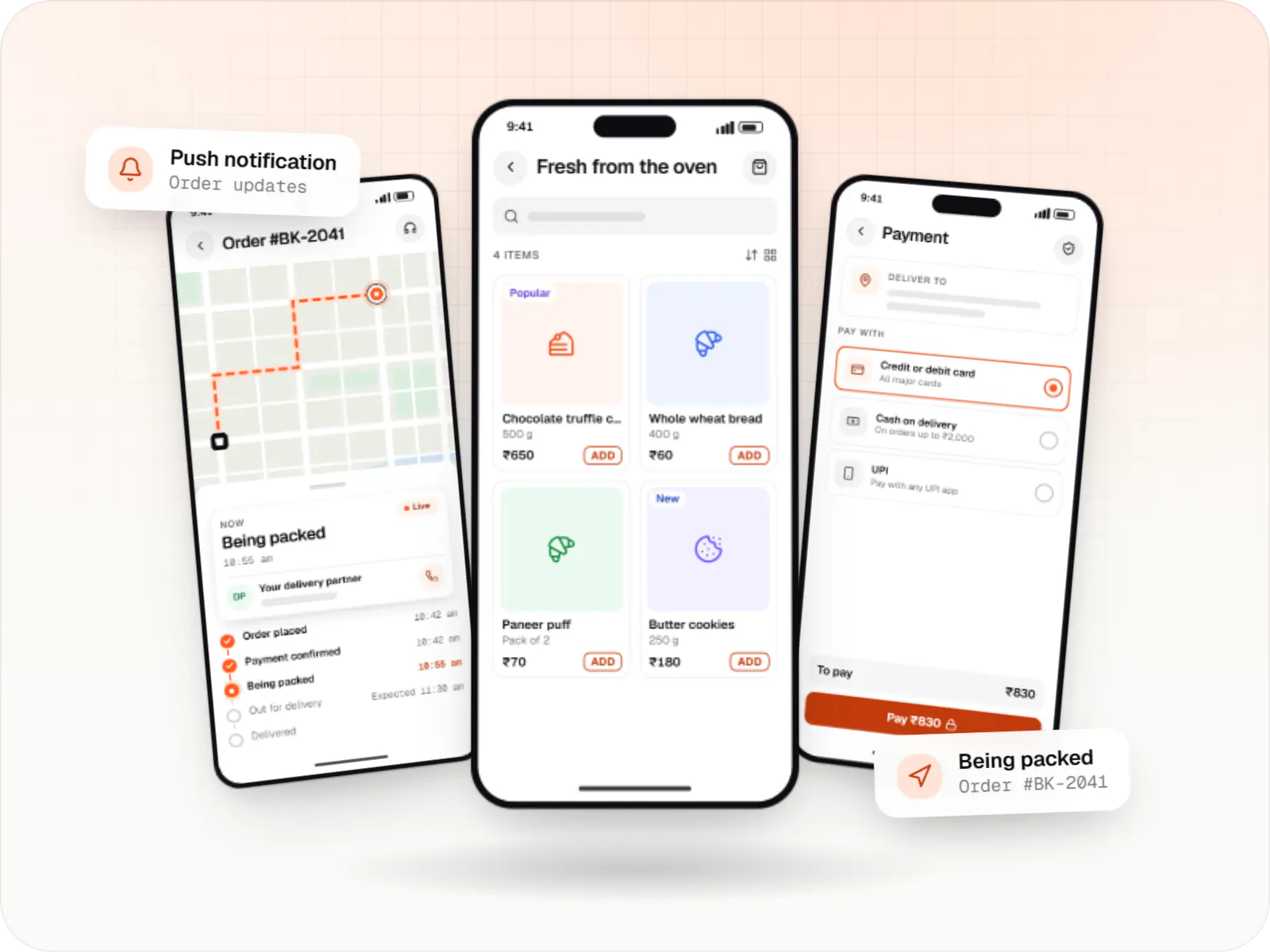
Native and cross-platform Android and iOS apps, from first release through regular store updates, built by our in-house designers and engineers.
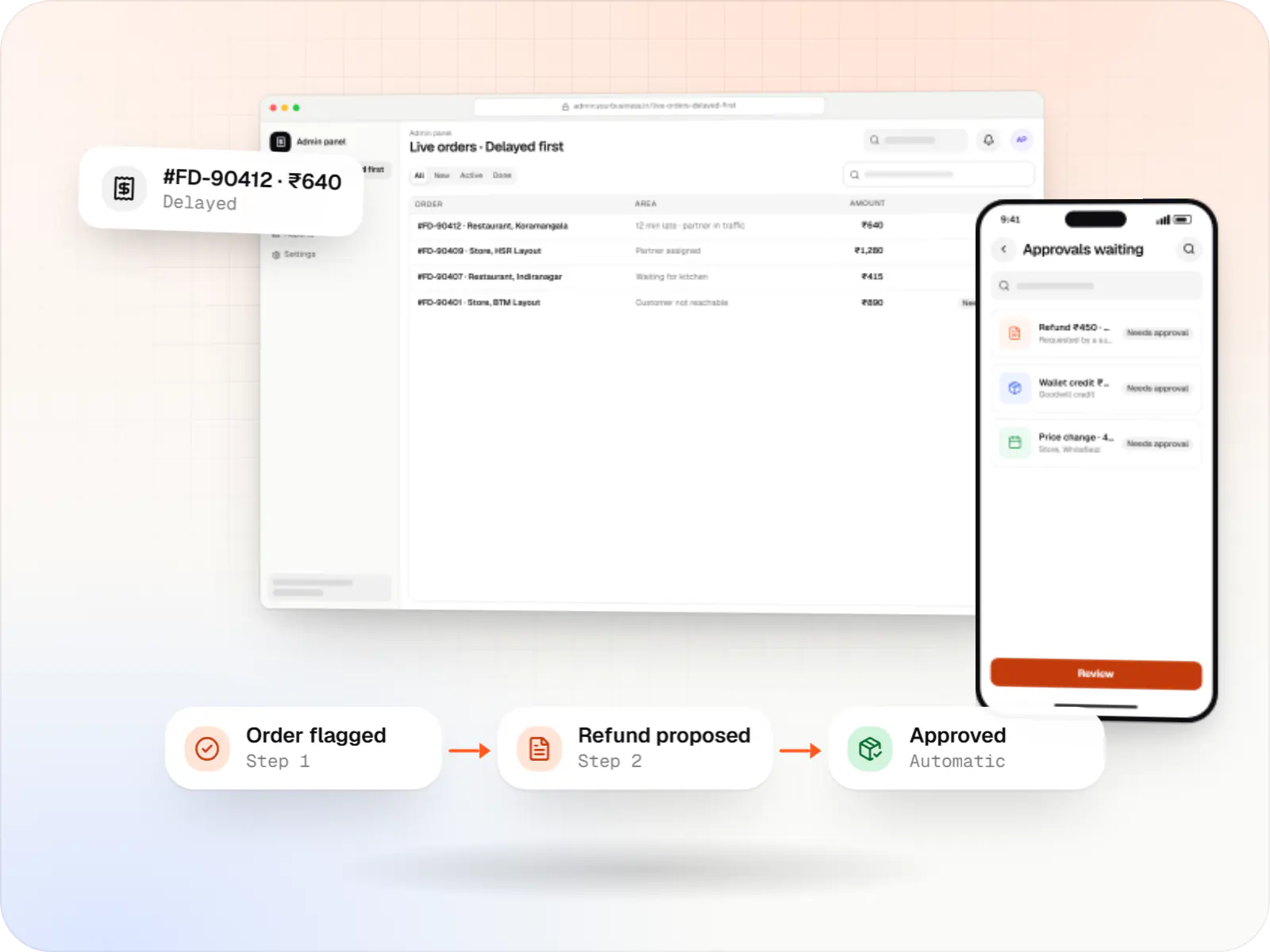
Back-office dashboards built around your team's daily tasks: order queues, approvals, catalogue management, payouts, reports and audit logs.
FAQ
An ERP runs your own company's transactions: procurement, production, primary sales to distributors and accounts. A DMS captures what happens after goods leave you — distributor stock, their sales to retailers, scheme claims and salesforce visits. Brands need both views to plan production against real market demand. We usually integrate the DMS with your ERP so primary invoices create distributor stock automatically, rather than duplicating ERP functions.
We can build forecasting models from sales history, seasonality, promotions and festival calendars, and they often improve on a spreadsheet average. Accuracy depends heavily on data quality and history length, and new SKUs or disrupted periods are hard for any model. We start with a baseline to compare against, report forecast error openly, and keep planners in control: the model suggests, and people approve replenishment and production plans.
Adoption improves when the portal saves suppliers work: POs in one place, faster payment when invoices match, and fewer chasing calls from your buyers. We keep onboarding simple, with mobile-friendly screens, WhatsApp or email alerts for new POs, and bulk uploads for larger suppliers. For suppliers who will not log in, your buyers can update on their behalf, so the data stays complete while adoption grows.
Next step
Tell us your partner network, ERP and where information arrives too late. We will propose what to connect first.