


Backend
Node.js
Runs the server side of apps: fast, scalable back ends that power your app, website and integrations.
Used for
- App back ends
- Live order tracking
- Chat and notifications
- Payment processing
REST · GraphQL · Webhooks · Integrations
APIs that power your mobile and web apps, expose services to partners and connect your systems to payment, logistics and government platforms.
At a glance
What it is
Secure, documented REST and GraphQL APIs, plus integrations that connect your apps to payment, logistics, GST, messaging and business systems.
How to start
Tell us what you need in your own words. You talk to the developers who would build it and get a written, line-item estimate.
Get a project estimateEvery app and dashboard we build talks to an API, so API design gets deliberate attention rather than growing screen by screen. We write the contract first, as an OpenAPI specification or GraphQL schema, agree it with the teams who will consume it, and generate typed clients and a mock server so front-end work can start early.
Good API development is mostly about the unhappy paths: a retry after a timeout, a webhook arriving twice, a provider changing a field without notice, a mobile app two versions behind. We design for each of these explicitly.
OAuth 2.0 and short-lived tokens for apps, scoped keys for partners, object-level checks on every request.
Explicit versions, changelogs and deprecation windows for partners.
Per-key limits, burst control and usage metering backed by Redis.
Idempotency keys on order and payment endpoints, so retries never create duplicates.
Retries with backoff and a delivery log that consumers can inspect.
Interactive OpenAPI docs, Postman collections, correlation IDs and error-rate alerts.
Integrations
UPI intent and QR flows, refunds, payment links and reconciliation.
IRN and e-way bill generation via an authorised GST Suvidha Provider.
Serviceability, rates, AWB generation, pickups and tracking.
Approved templates for updates and OTPs; inbound messages via Cloud API webhooks.
Aadhaar-based eKYC and PAN checks through licensed providers; consented DigiLocker fetch.
Consented bank statement retrieval via RBI-licensed Account Aggregators.
Buyer-side or seller-side participation through Beckn-based protocol APIs.
Ledger, voucher and stock sync, or REST connections where offered.
Geocoding and routes; model APIs behind your own endpoint with spend limits.
Solutions
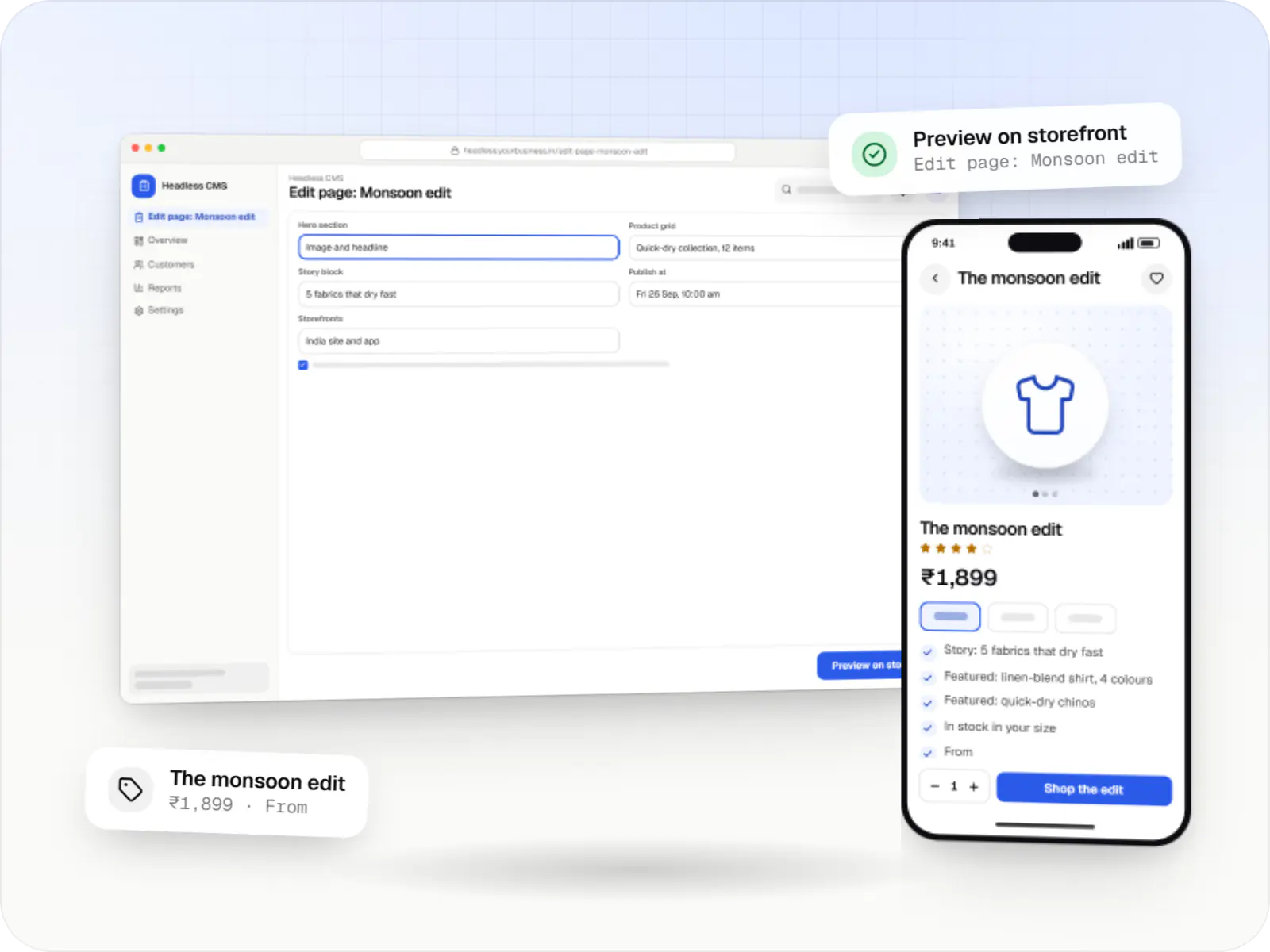
Next.js storefronts on a headless commerce engine and CMS, for brands that need speed, several storefronts or content-led shopping.
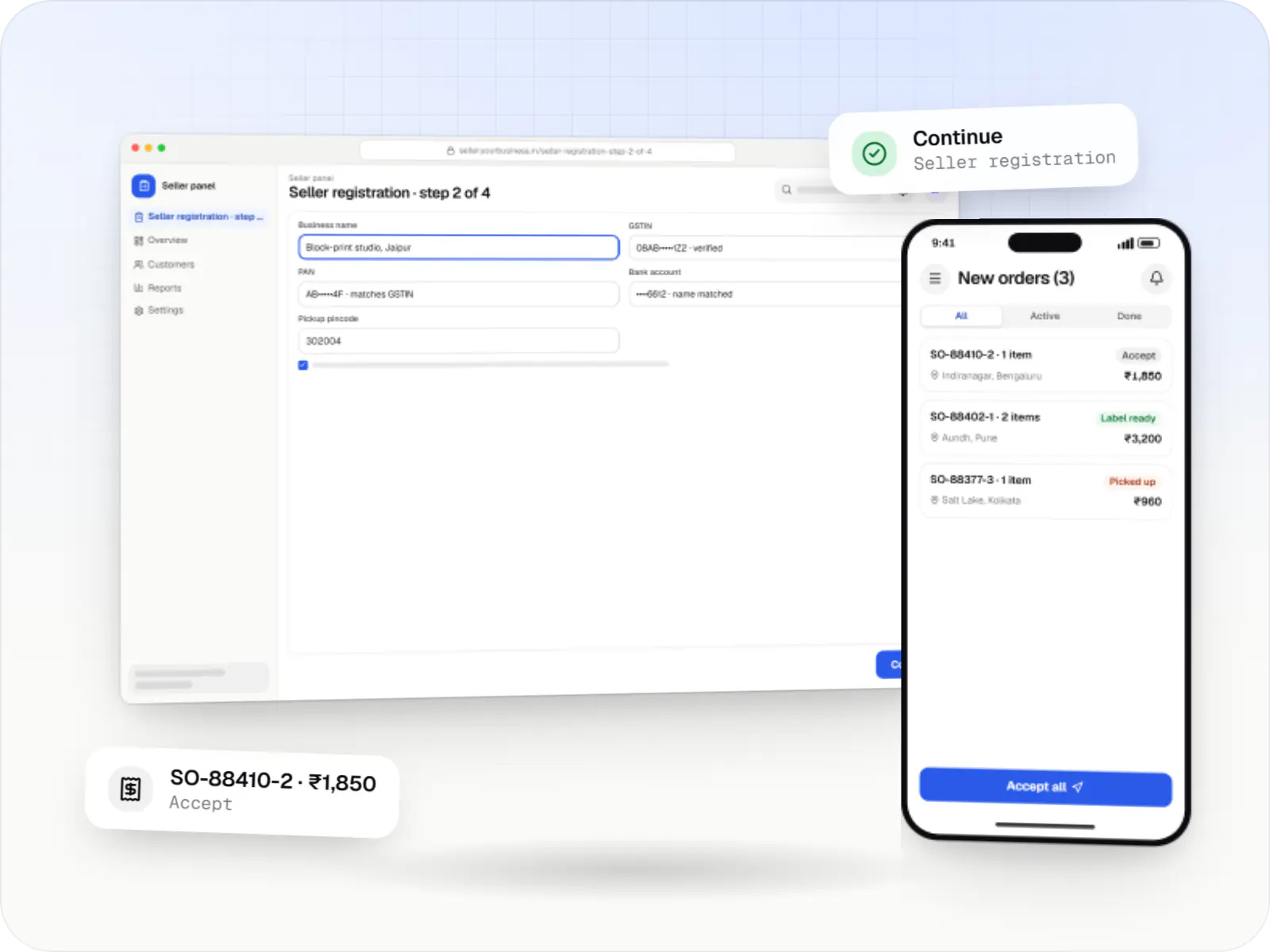
Multi-vendor marketplaces with seller onboarding, commission rules, split payouts, per-seller invoicing and catalogue moderation.
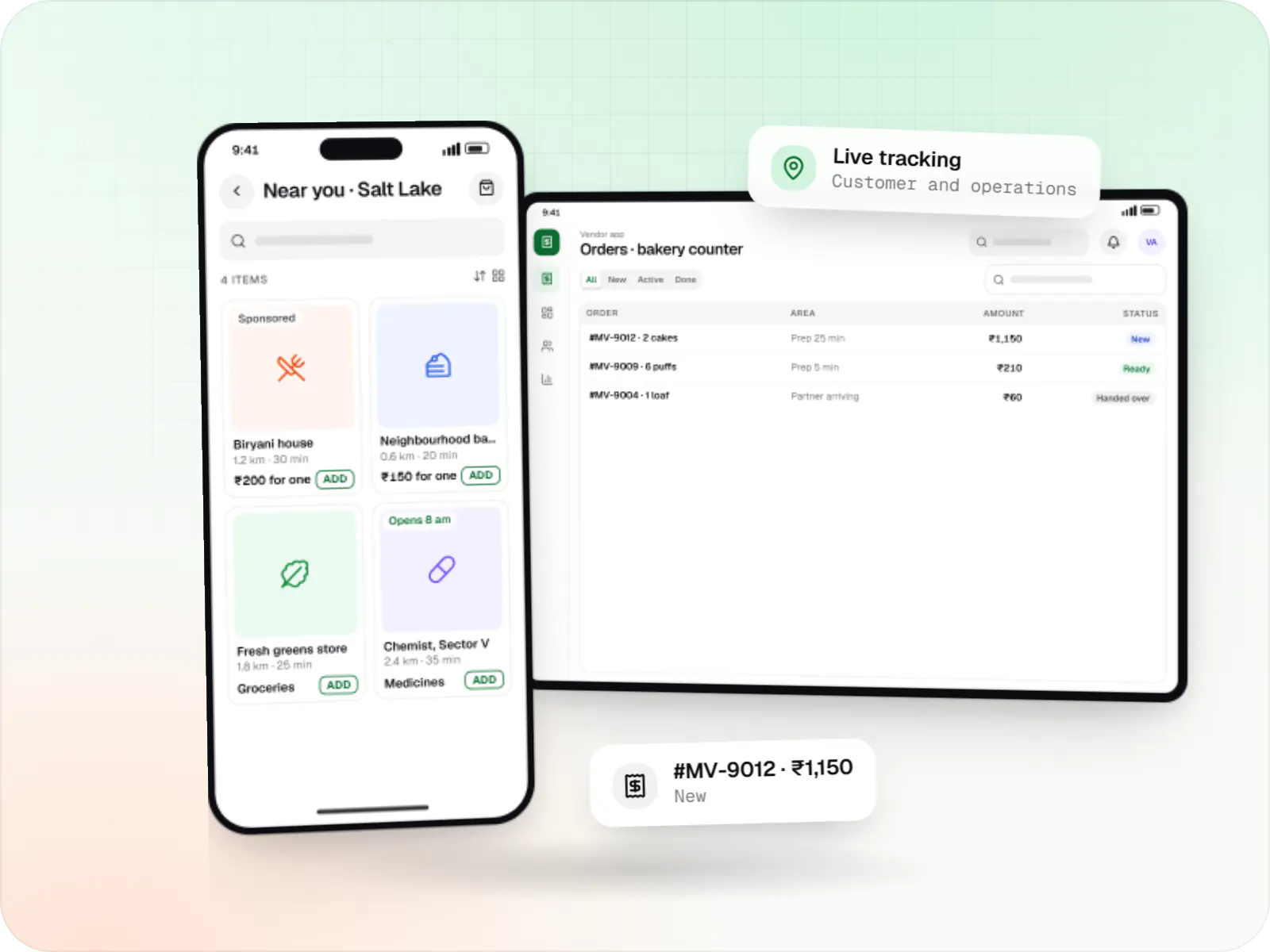
Aggregator delivery platforms where many local vendors sell through one app, with vendor onboarding, commissions, settlements and shared dispatch.
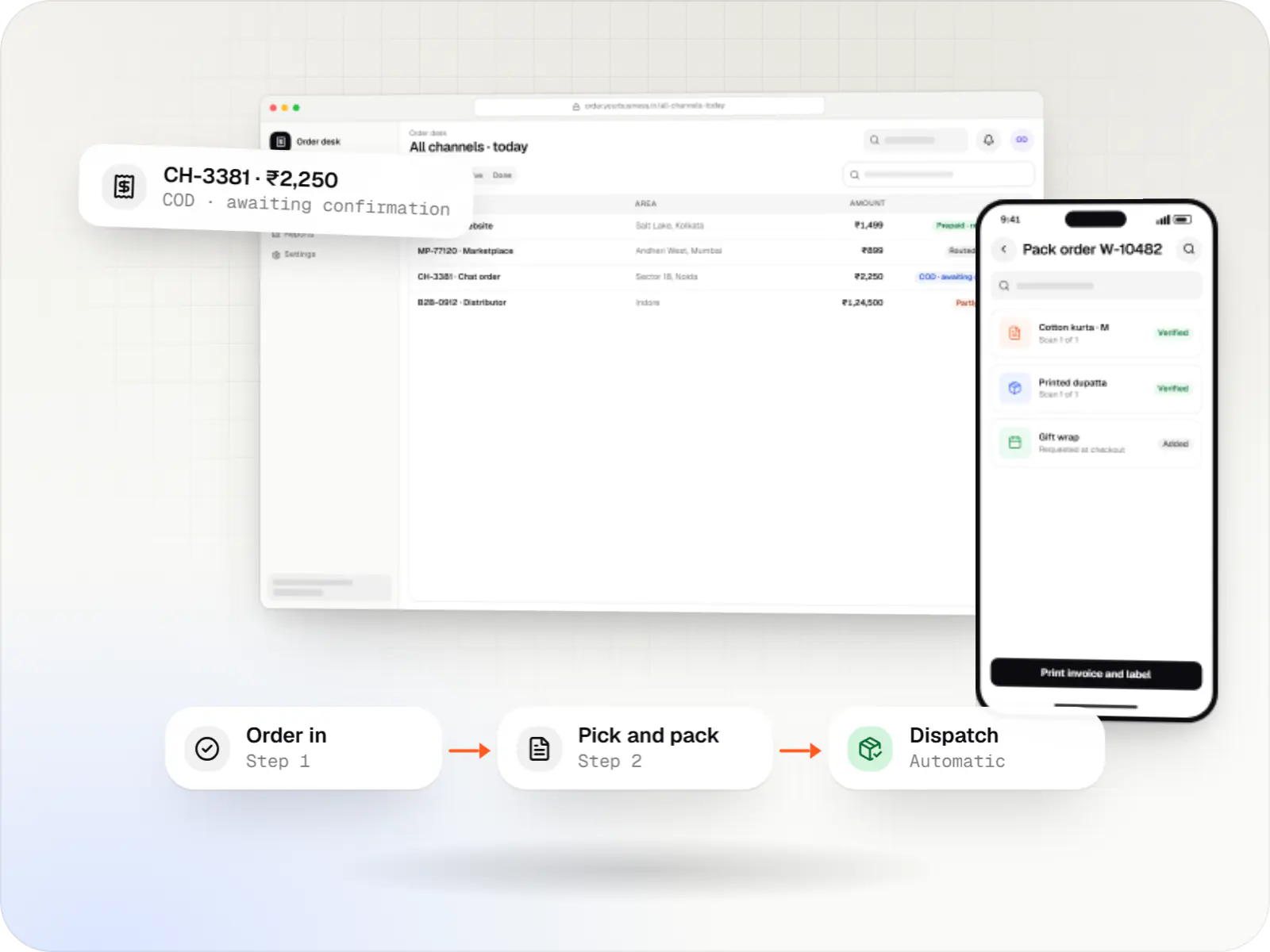
A central order management system that collects orders from every channel, routes them to the right location and tracks them to delivery and payment.
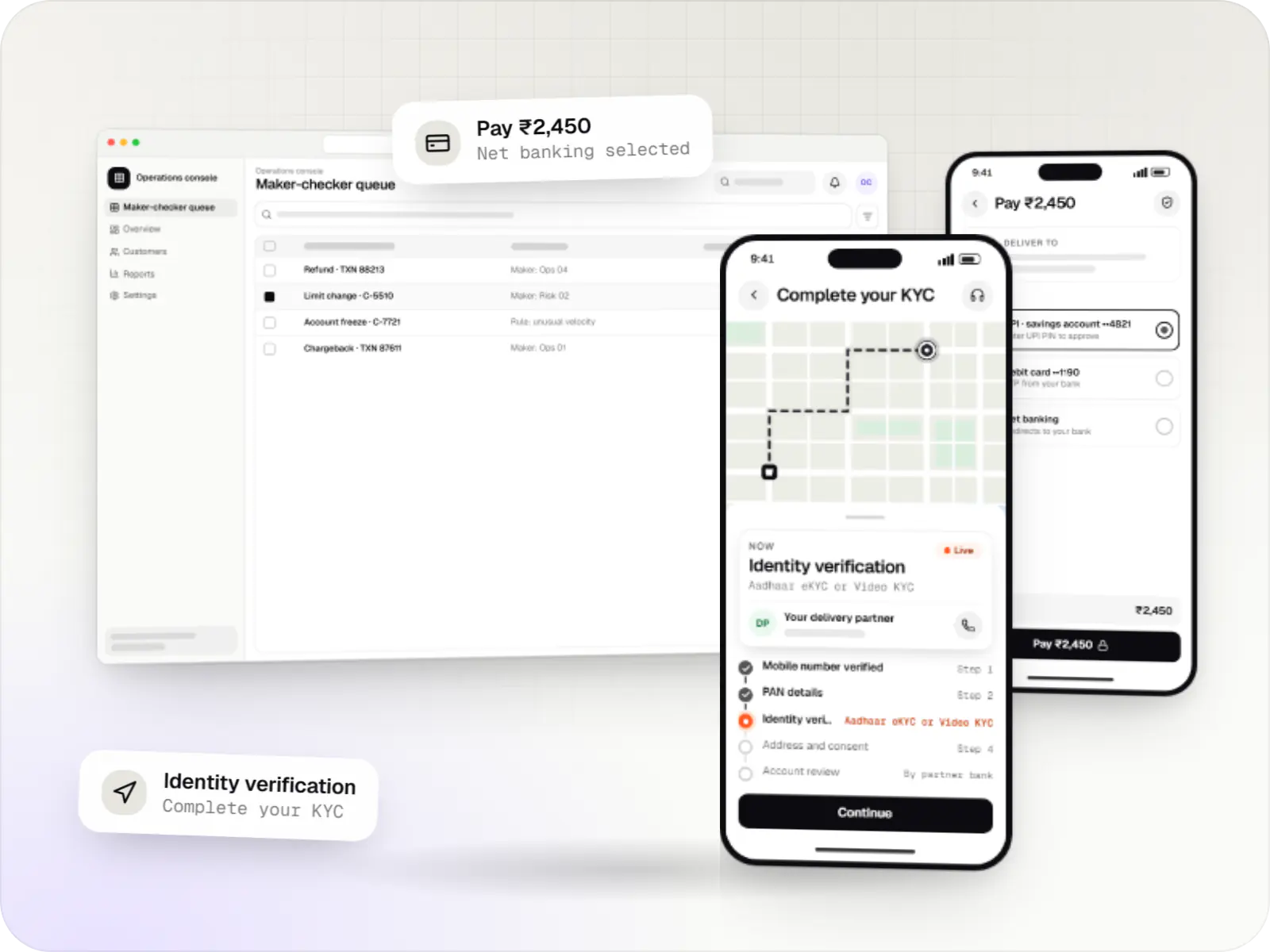
Secure fintech apps and back offices for payments, lending, investments and insurance, integrated with licensed banking, KYC and data partners.
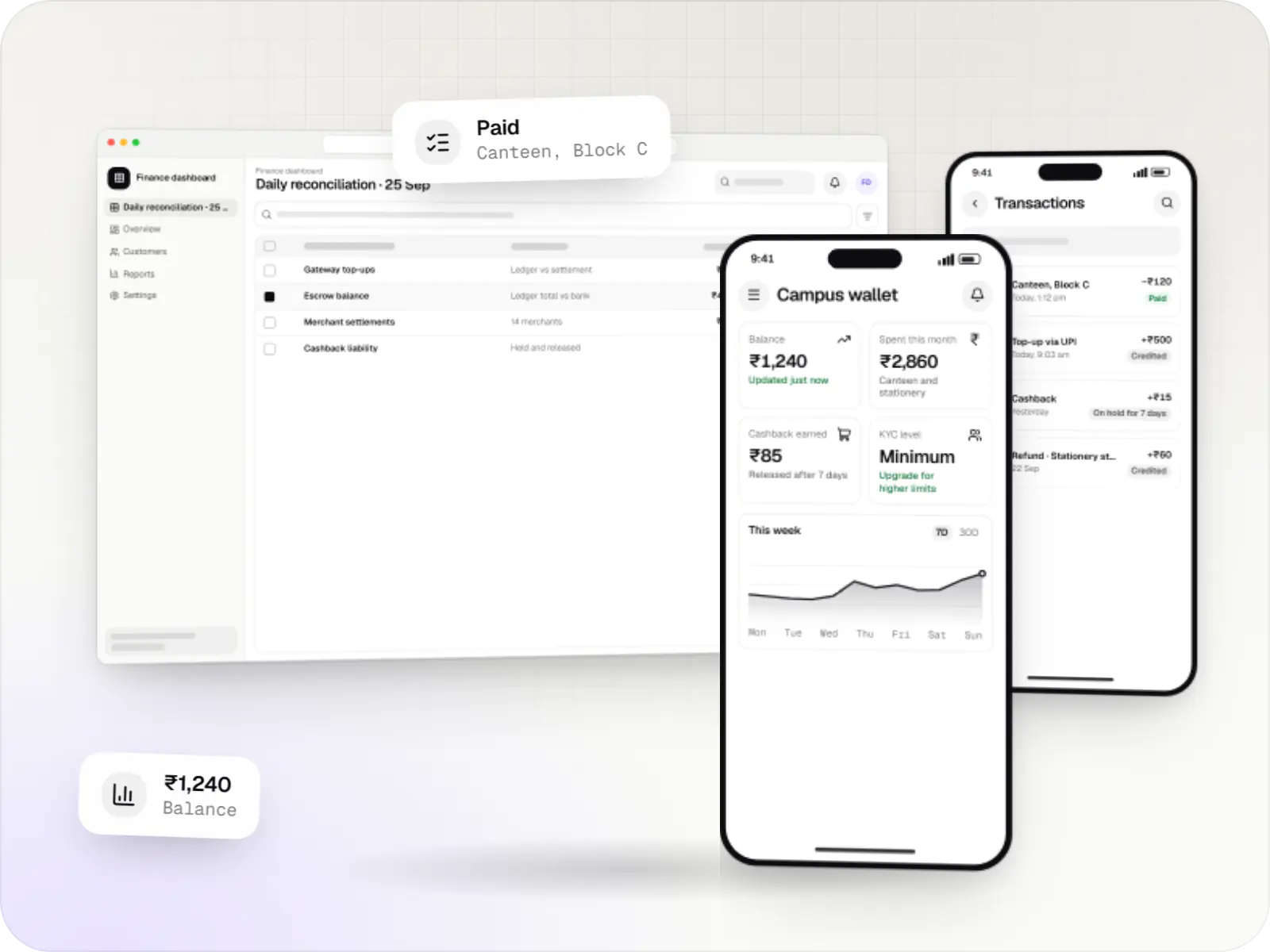
Digital wallet apps with top-ups, QR payments, rewards and a balance ledger, for closed-loop programmes or with a licensed PPI issuer.
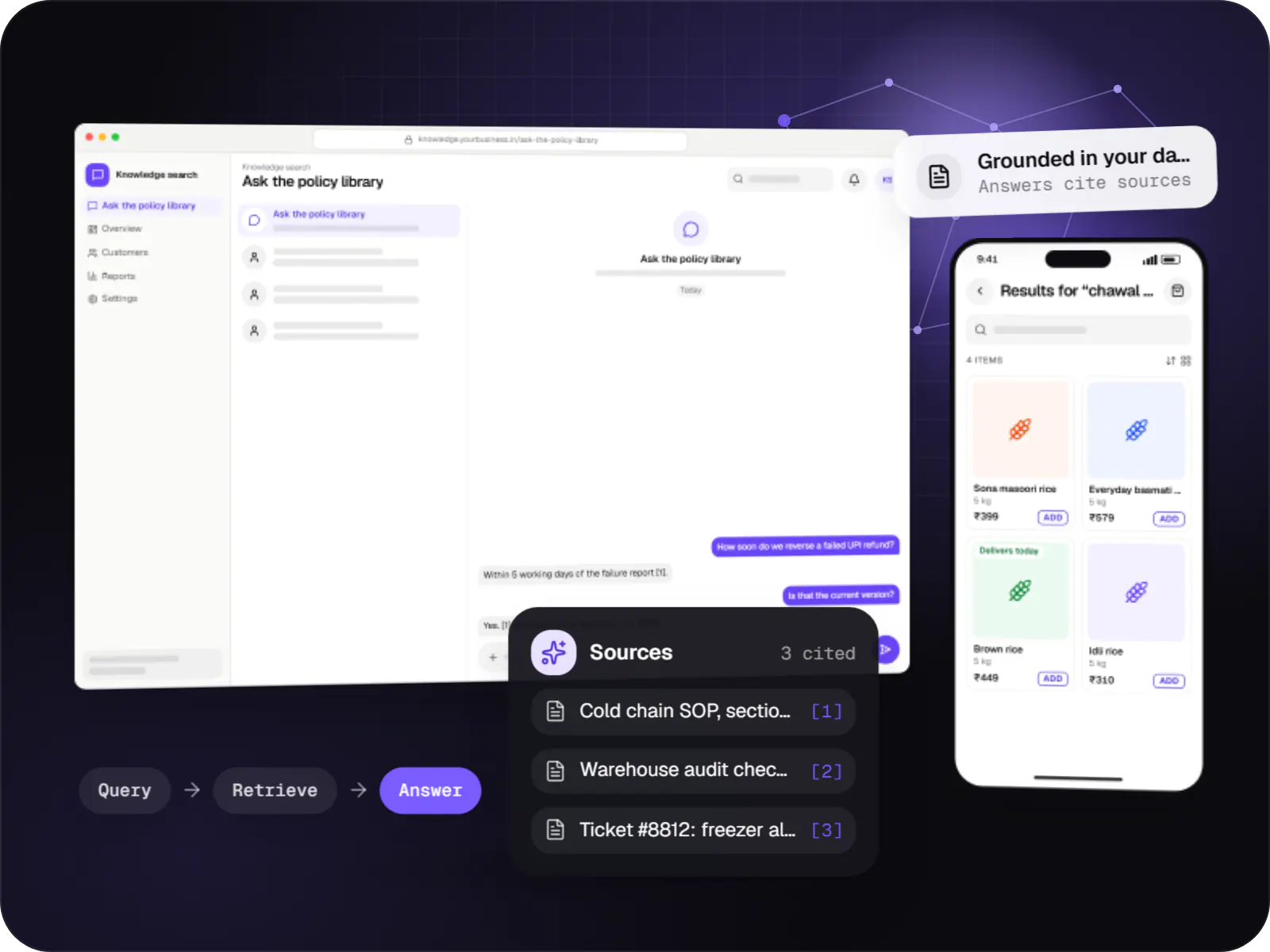
Search and question-answering over your documents, tickets and product data, with hybrid retrieval, citations and permission-aware results.
How it works
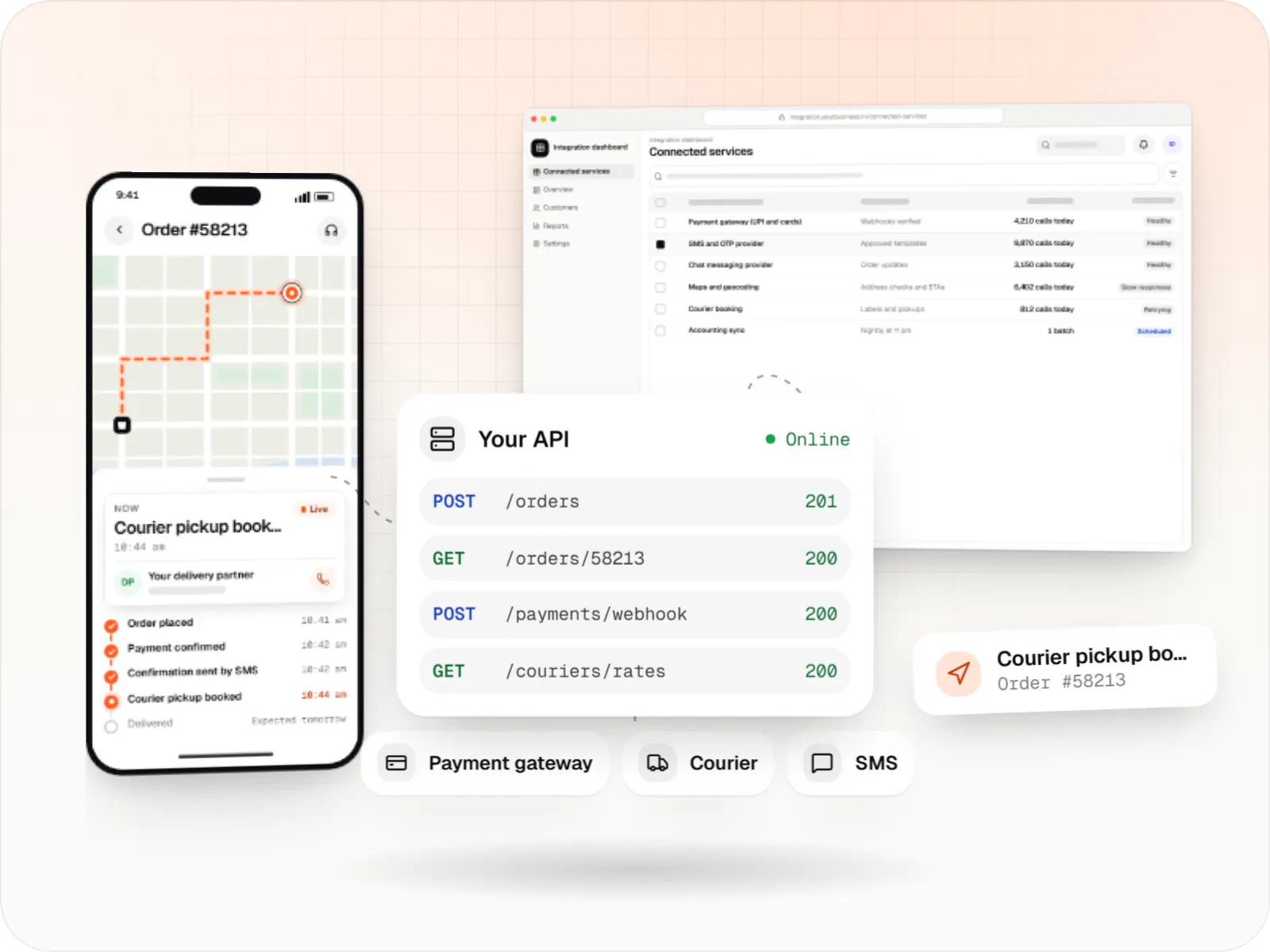
Your app never talks to the payment gateway, SMS provider or maps service directly: the API sits in the middle and keeps every step safe.
The app sends the order to your API with a unique request key, so a double tap or an automatic retry on a weak network can never create two orders.
It confirms who the customer is, recalculates prices and stock on the server rather than trusting the app, and saves the order before anything else happens.
The API starts a UPI or card payment; when it succeeds, the gateway sends a signed message (a webhook) back to the API, which marks the order paid.
The API checks that the address is serviceable, estimates the delivery time using a maps service and books a pickup through the courier’s API.
An approved SMS or WhatsApp template confirms the order, even if the customer has already closed the app.
The customer sees “Order confirmed” and your staff see the new order, because both read the same data from the same API.
Platforms
One API can power your website, your apps for Android and iPhone and your admin dashboard at the same time, so they always show the same data.
Browser-based applications with logins, roles and workflows, such as customer portals, SaaS products and internal tools.
One Flutter or React Native codebase for Android and iOS, with native modules where a feature needs them.
Apps for Android phones and tablets, tested on budget and mid-range devices and published on Google Play or privately.
Apps for iPhone and iPad, built to Apple's guidelines and released through TestFlight and the App Store.
Back-office panels for operations, support and finance teams: orders, users, content, reports and permissions.
Technology
Node.js and NestJS handle many requests at once, Python suits data-heavy work, PostgreSQL or MongoDB store the data, Redis handles rate limits and caching, and Docker with hosting built on AWS keeps every release consistent.
Backend
Runs the server side of apps: fast, scalable back ends that power your app, website and integrations.
Used for
Backend
A structured way to build back ends on Node.js, so large business systems stay organised, testable and easy to hand over.
Used for
Backend
A programming language for AI features, data processing and automation: the engine behind document reading, reports and smart search.
Used for
Data
A reliable database for the records your business runs on: orders, payments, bookings and stock, kept accurate and easy to report on.
Used for
Data
A flexible database for records that vary a lot from one to the next, such as mixed product catalogues, content and activity logs.
Used for
Data
Keeps frequently used data in fast memory, so apps stay quick on busy days and live features like order tracking feel instant.
Used for
Cloud & DevOps
Packages your software so it runs the same way on every laptop and server, which makes releases predictable and moving hosts easier.
Used for
Cloud & DevOps
Cloud hosting for your app, website and data, with data centres in India and room to grow when traffic rises.
Used for
Comparison
| REST | GraphQL | Webhooks | |
|---|---|---|---|
| Good fit for | Partner and public APIs | Screens combining data from several sources | Telling another system something changed |
| Main trade-off | Over- or under-fetching on complex screens | Query cost controls and heavier tooling | Receivers must verify signatures and handle retries |
Plain-English glossary
Product preview
Illustrative screens from an integration dashboard and the customer app it serves.
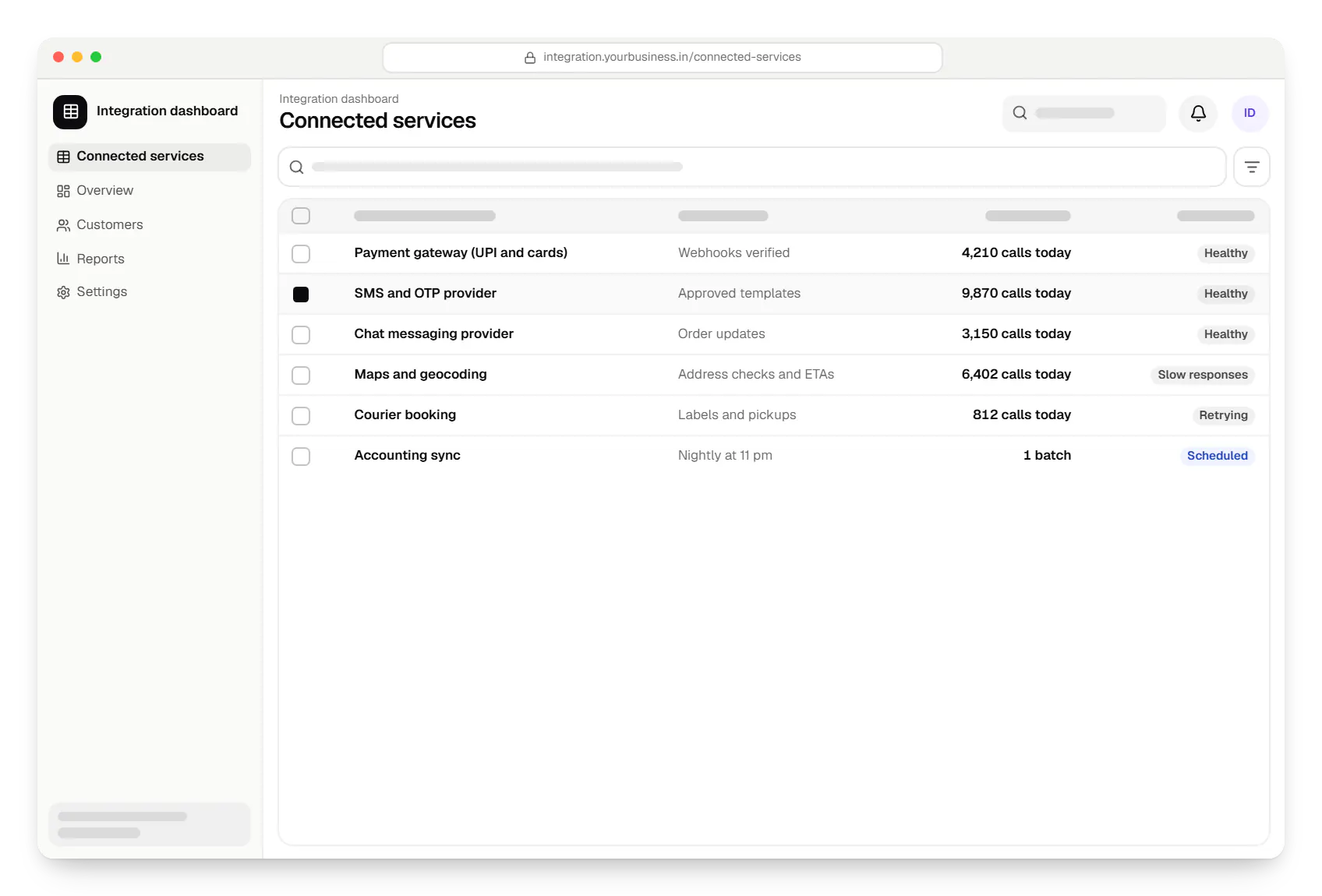
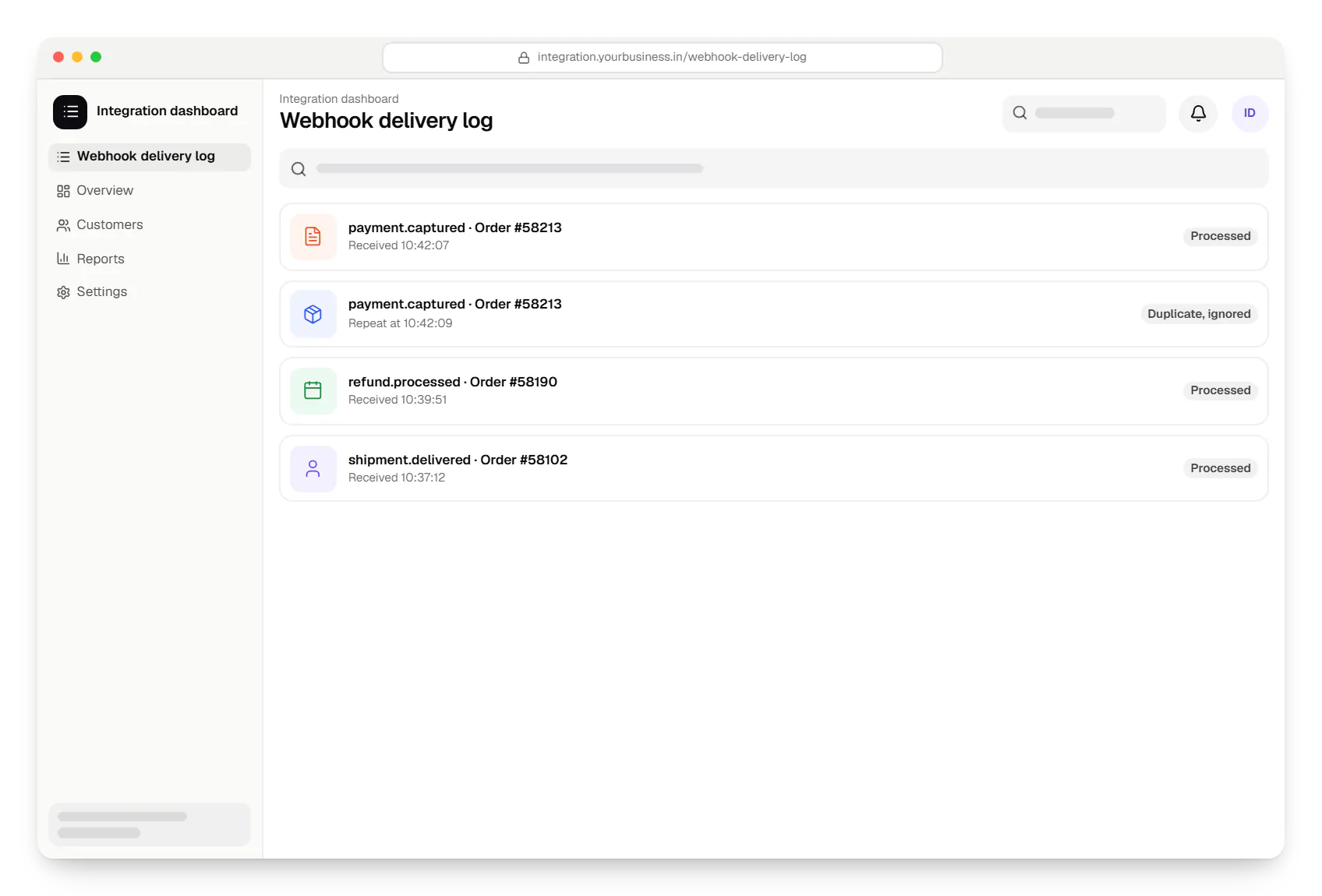
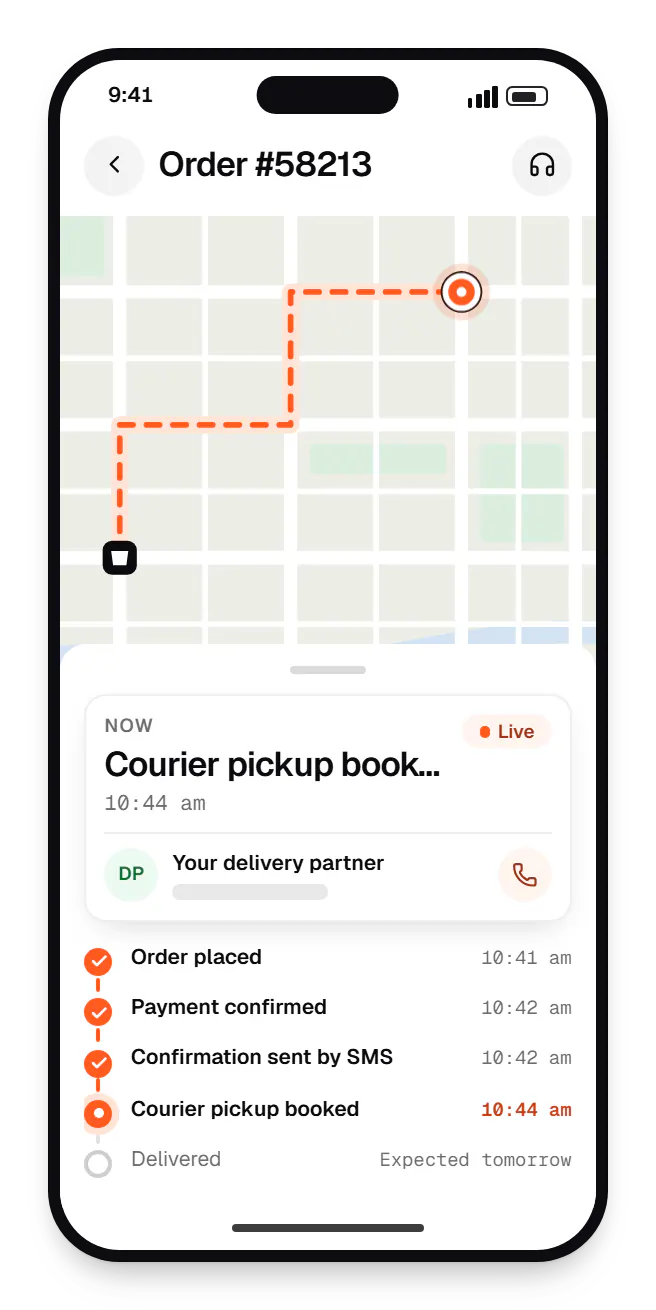
Sample screens: names, prices and figures are examples, not client data.
Work
Sample projects, not client work, where payment, messaging, maps and accounting integrations carry much of the product.
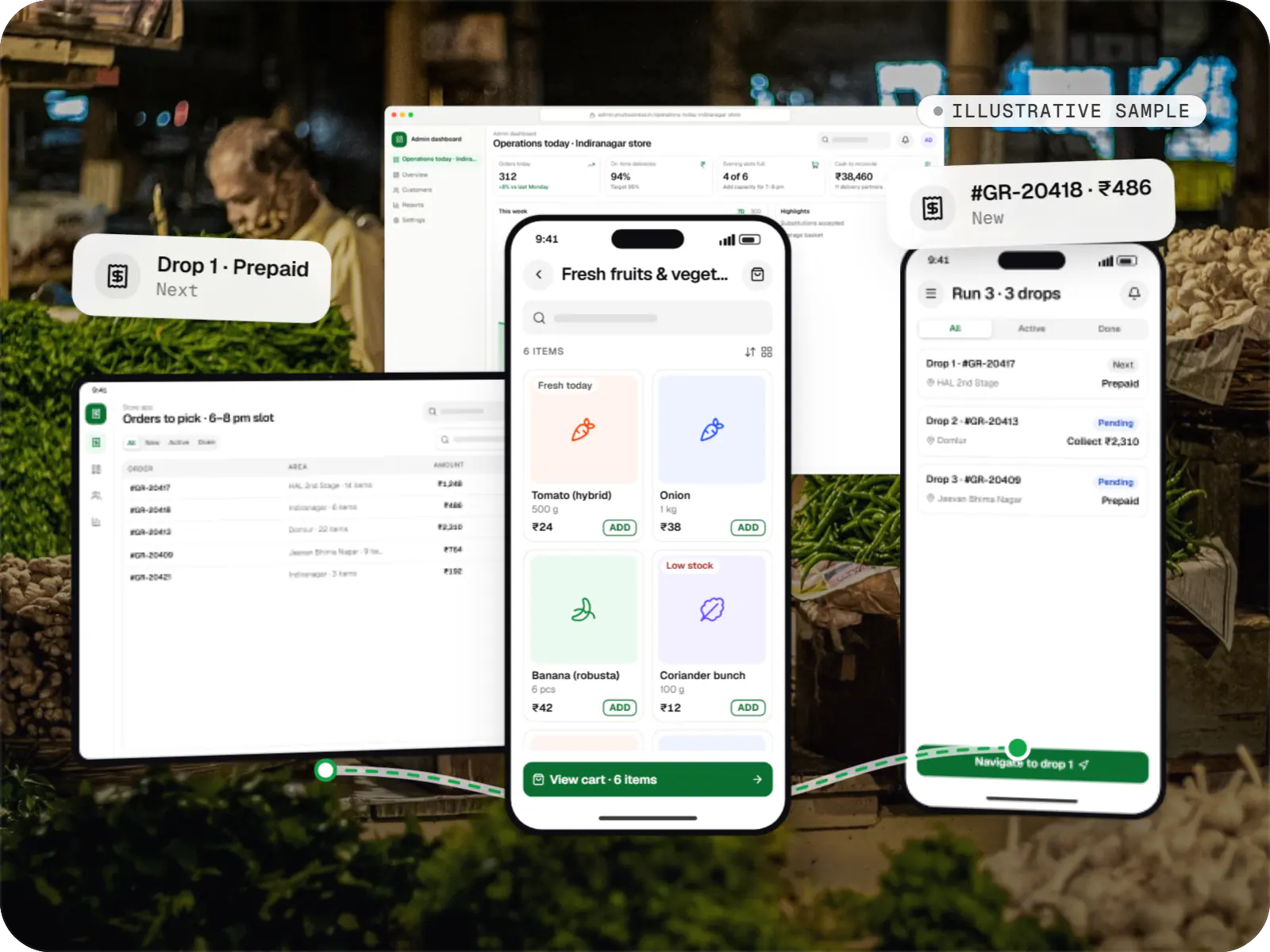
Delivery app development
An illustrative platform for neighbourhood grocery stores: slot or express delivery, store picking, batched delivery runs, and payment by UPI or cash on delivery.
Runs on
Built with
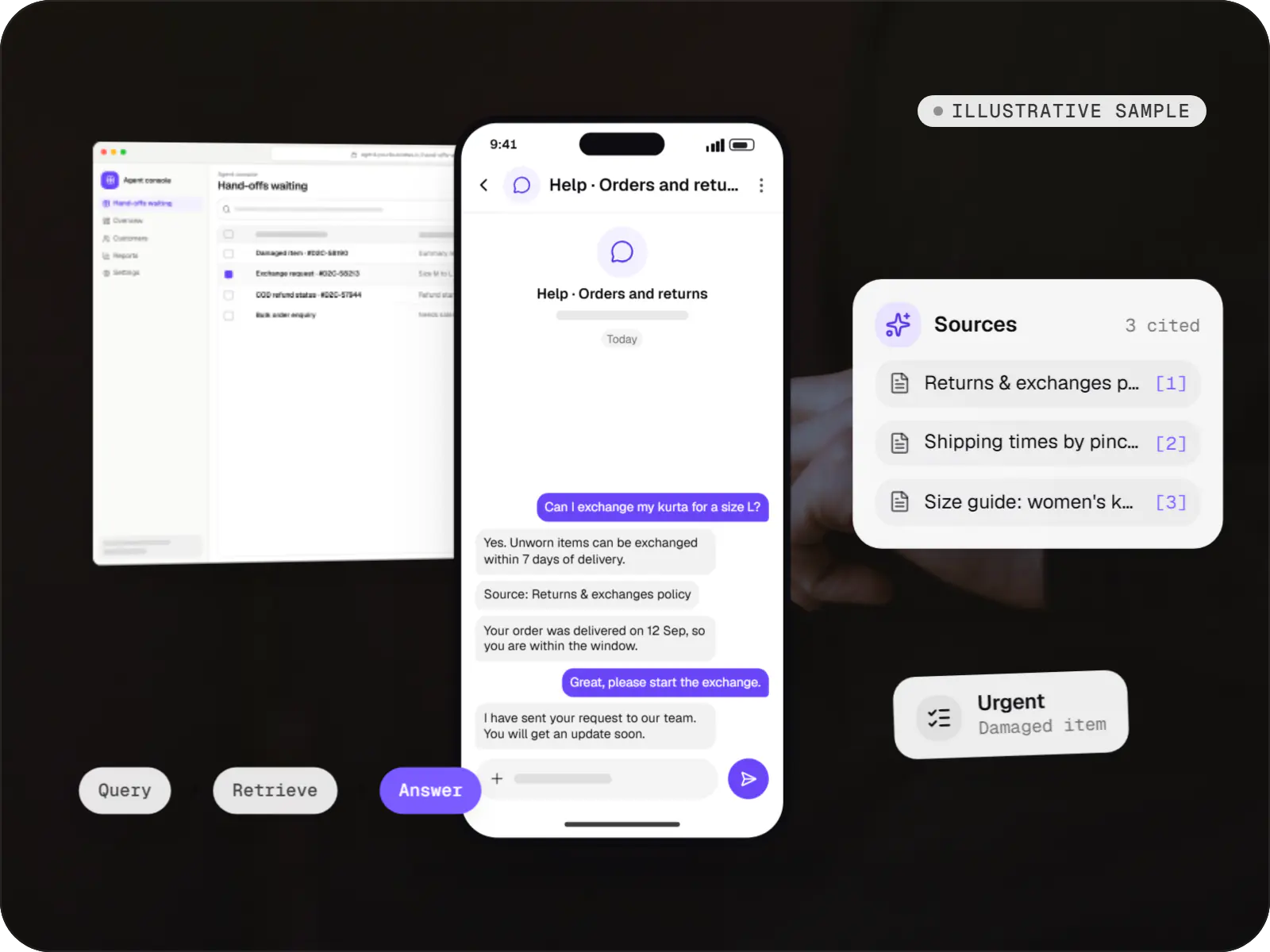
AI solutions
An illustrative AI assistant that answers order, return and product questions from a D2C brand's own policies and order data, with sources and a human hand-off.
Runs on
Built with
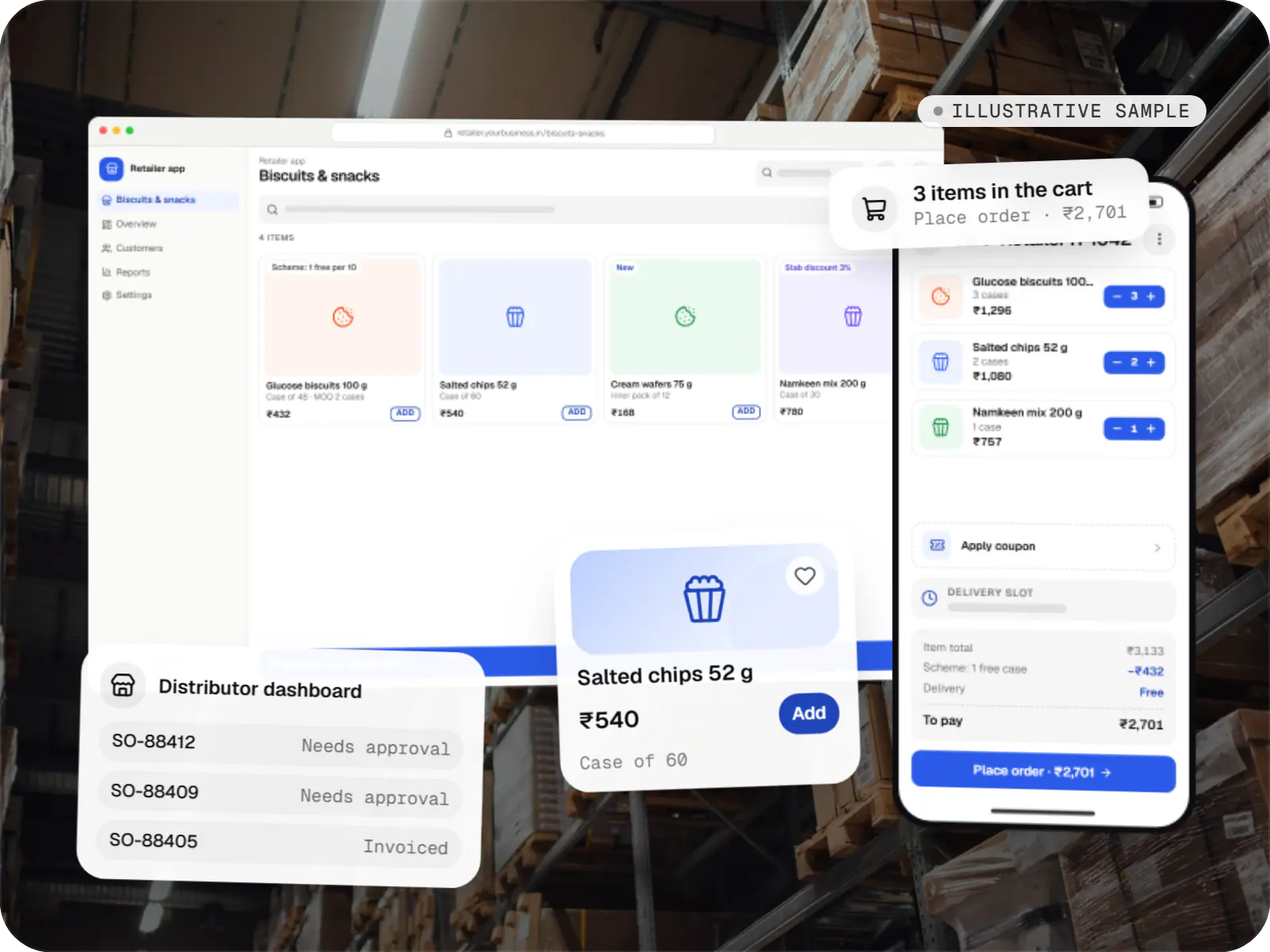
E-commerce & marketplaces
An illustrative ordering app for a distributor's retailers and sales team, with tier pricing, credit limits, trade schemes and GST invoicing.
Runs on
Built with
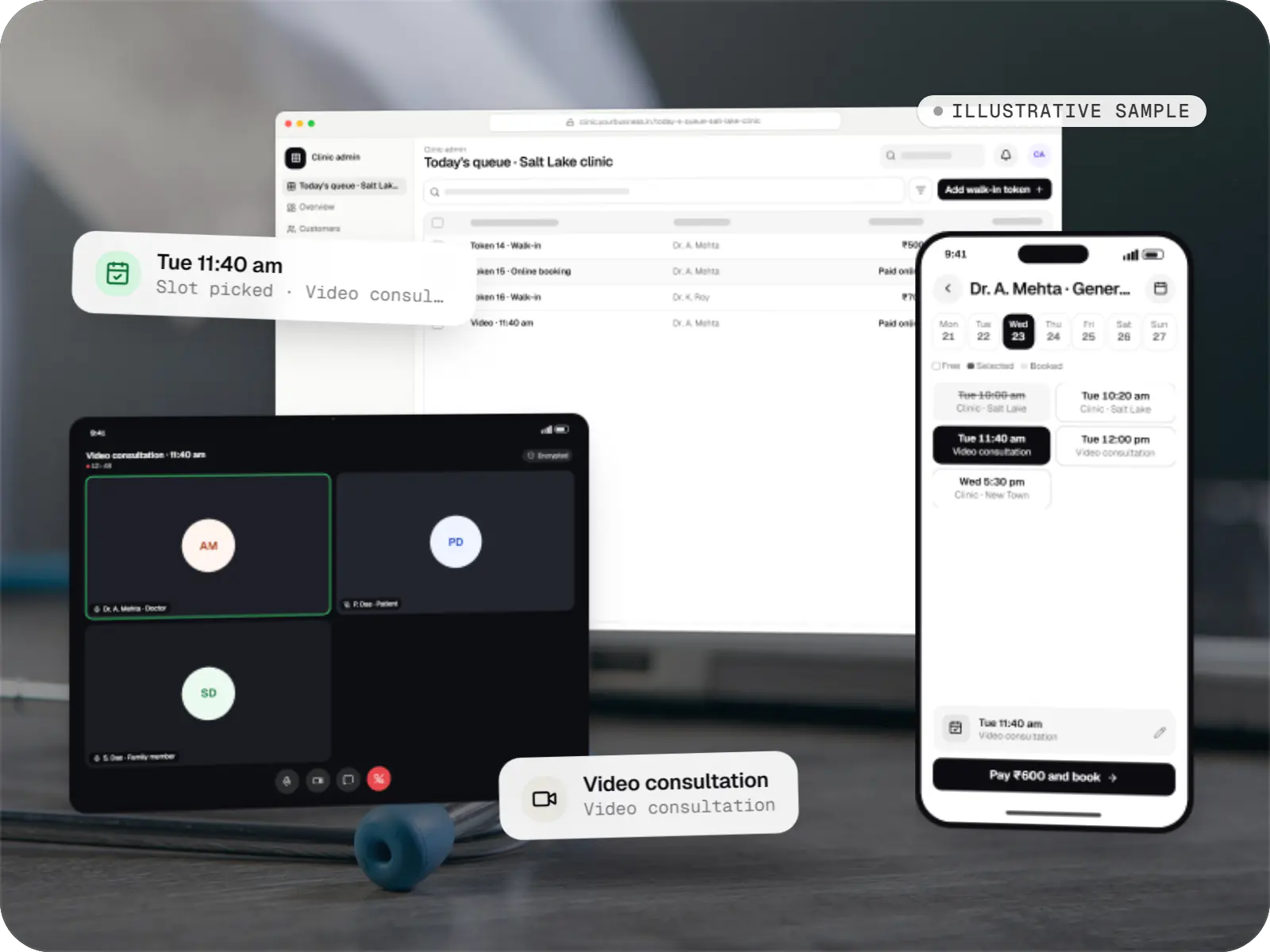
Healthcare software
An illustrative patient app, doctor app and clinic admin for in-person and video consultations, with digital prescriptions and consent-based record access.
Runs on
Built with
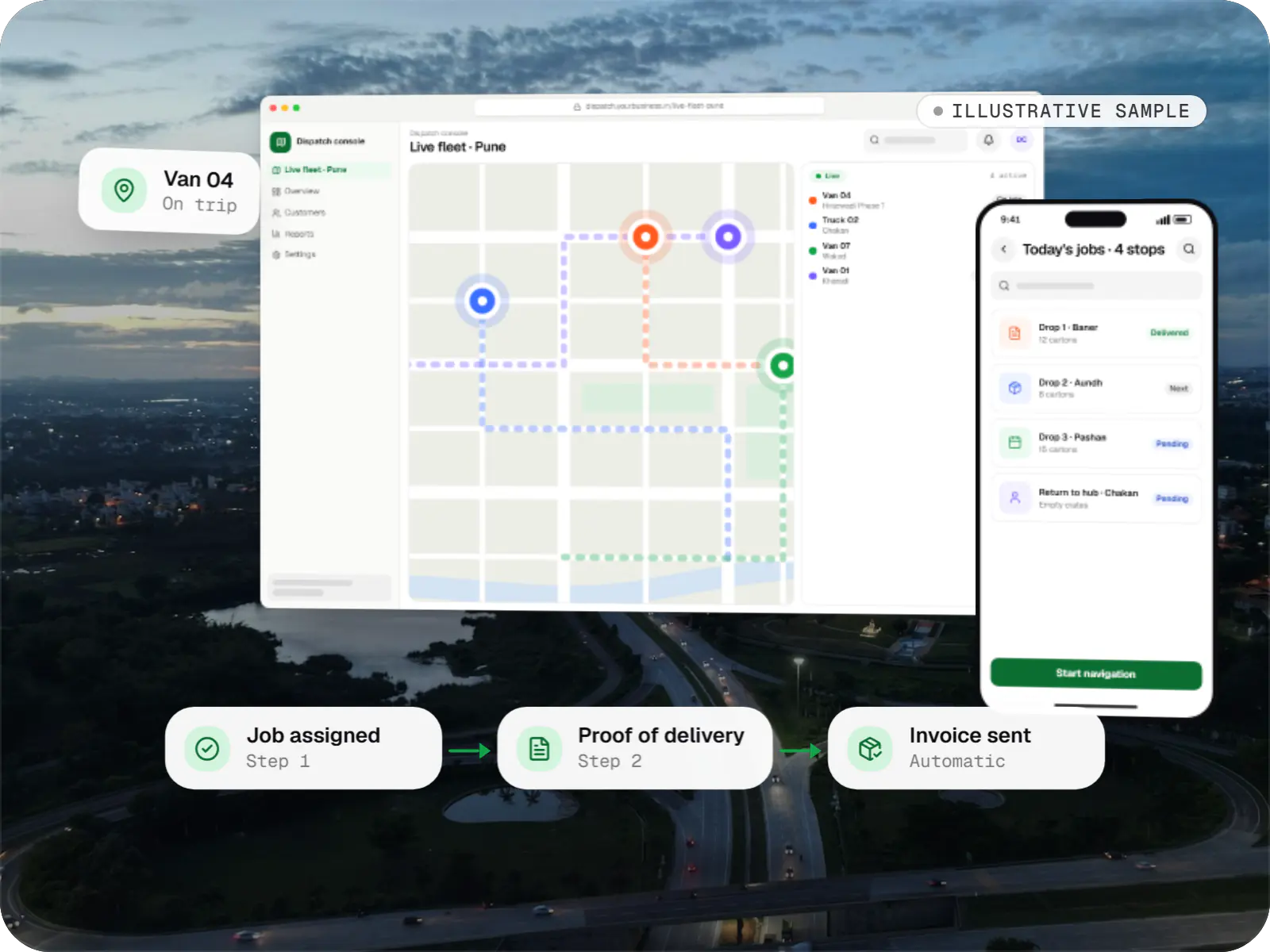
Business software
An illustrative SaaS for businesses running their own vehicles: live dispatch on a map, driver proof of delivery and per-trip billing for each customer.
Runs on
Built with
Industries
Cost drivers
Endpoints that price, reserve stock or move money need far more design and testing than simple reads.
Each provider brings its own sandbox behaviour, onboarding steps and edge cases.
Financial or health data adds audit logging, consent handling and review work.
High volumes or tight latency budgets need caching, queues and load testing.
Estimates are written from your scope, with the effort and assumptions behind each line item.
How pricing worksProcess
Who calls the API, how often, and what data each consumer may see.
You getAccess matrix
Resources, errors and pagination as an OpenAPI or GraphQL schema, reviewed with consumers.
You getApproved specification and hosted mock
Contract tests, provider sandbox tests and load tests on the heaviest endpoints.
You getTested API on staging
OWASP API Security Top 10 checks, including broken object-level authorisation.
You getSecurity checklist
Gradual rollout, dashboards, alerts and published documentation.
You getLive API and developer docs
FAQ
We treat webhooks as messages that may arrive late, twice or out of order. Each signature is verified, the raw event is stored before processing, and handlers are idempotent, so a repeated payment-captured event cannot mark an order paid twice. A scheduled job reconciles our records against the gateway’s settlement data and flags mismatches, such as a customer closing the app mid-payment.
Yes. We describe the running API in an OpenAPI document built from its code and observed traffic, which usually surfaces undocumented fields, inconsistent error formats and endpoints missing authorisation checks. Security issues are fixed first. We then introduce a versioned, documented contract that consumers can adopt gradually, keeping the old behaviour available for an agreed deprecation period.
We return only the fields each consumer needs, mask identifiers such as phone and account numbers, and enforce object-level checks so nobody can fetch another user’s record by changing an ID. Tokens are short-lived and access is logged. We build the consent and erasure flows the Digital Personal Data Protection Act 2023 expects, and follow ABDM or Account Aggregator specifications where they apply.
Often, yes. Options include reading the legacy database through a restricted read-only account, exchanging scheduled files over SFTP, or running a small adapter service beside the old system. Whichever works, we wrap it in a documented API so new apps never touch the legacy system directly, which makes replacing it later far easier.
Next step
Tell us which systems need to talk to each other, and we will propose a contract, a plan and an estimate.