

Mobile
Flutter
Build Android and iOS apps from one shared codebase, so you launch on both platforms faster with a consistent experience.
Used for
- Mobile apps
- Delivery apps
- E-commerce apps
- Booking apps
Industries · Grocery & supermarkets
Take grocery orders online and pick them accurately from the same shelves your walk-in customers use.
At a glance
What it is
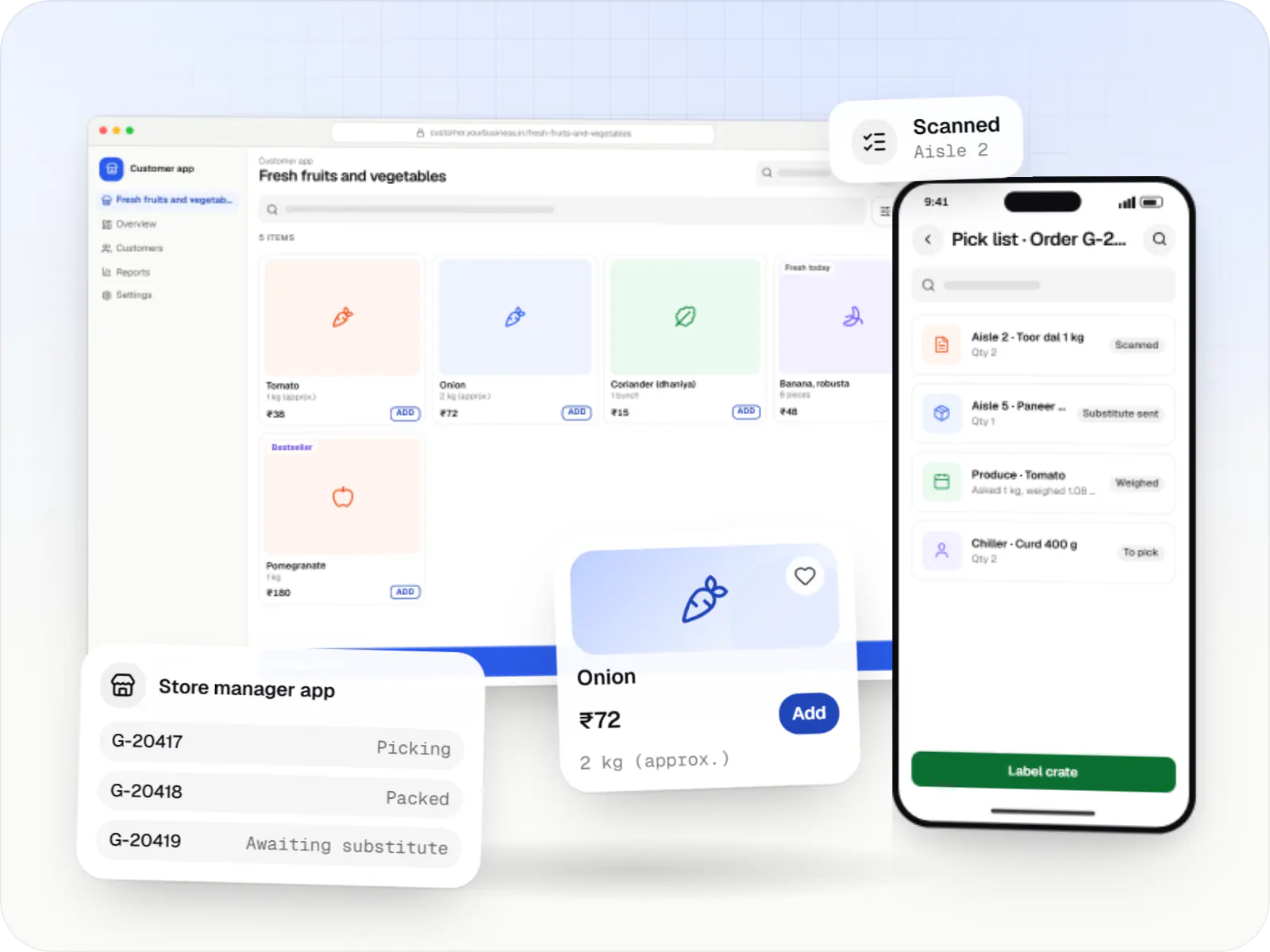
Store-connected grocery software: online ordering, picker apps, weighed items, substitutions, slot or express delivery and POS stock sync.
For supermarkets, grocery chains, kirana networks and hyperlocal grocery startups that fulfil orders from stores or dark stores.
Flutter and the related logo are trademarks of Google LLC. We are not endorsed by or affiliated with Google LLC.
How to start
Tell us what you need in your own words. You talk to the developers who would build it and get a written, line-item estimate.
Get a project estimateA grocery basket has dozens of items, many perishable, some sold by weight and a few likely to be out of stock by the time the order is picked. Customers expect delivery within a promised window, and margins leave little room for re-deliveries.
We build grocery software that starts with operations: accurate store stock, picker apps that handle weighed items and substitutions, delivery slots matched to capacity, and payment flows that settle the final bill correctly when weights change. The customer app and website sit on that foundation, designed for fast repeat ordering on budget phones.
Challenges
Shelf stock differs from system stock, so items go missing at picking and customers receive short deliveries.
Vegetables, fruit and staples are ordered by estimate but billed by actual weight.
Dairy, bakery and fresh produce need expiry checks and cold handling.
Small baskets and failed deliveries make every routing decision matter.
Pickers compete with walk-in customers for the same shelves at peak hours.
Solutions
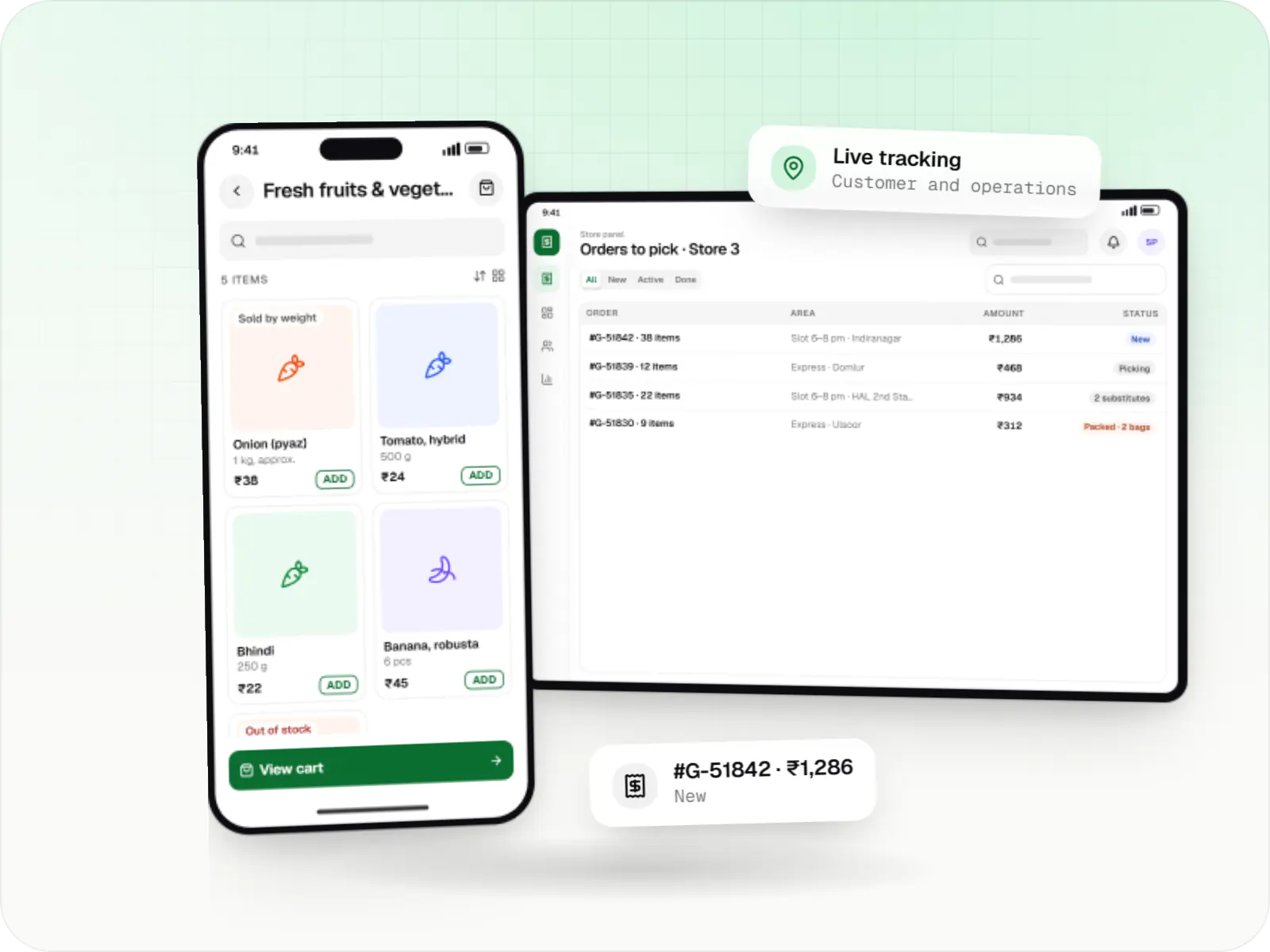
Grocery delivery apps for supermarkets, kirana chains and dark stores, with slots or express delivery, substitutions, picking and live tracking.
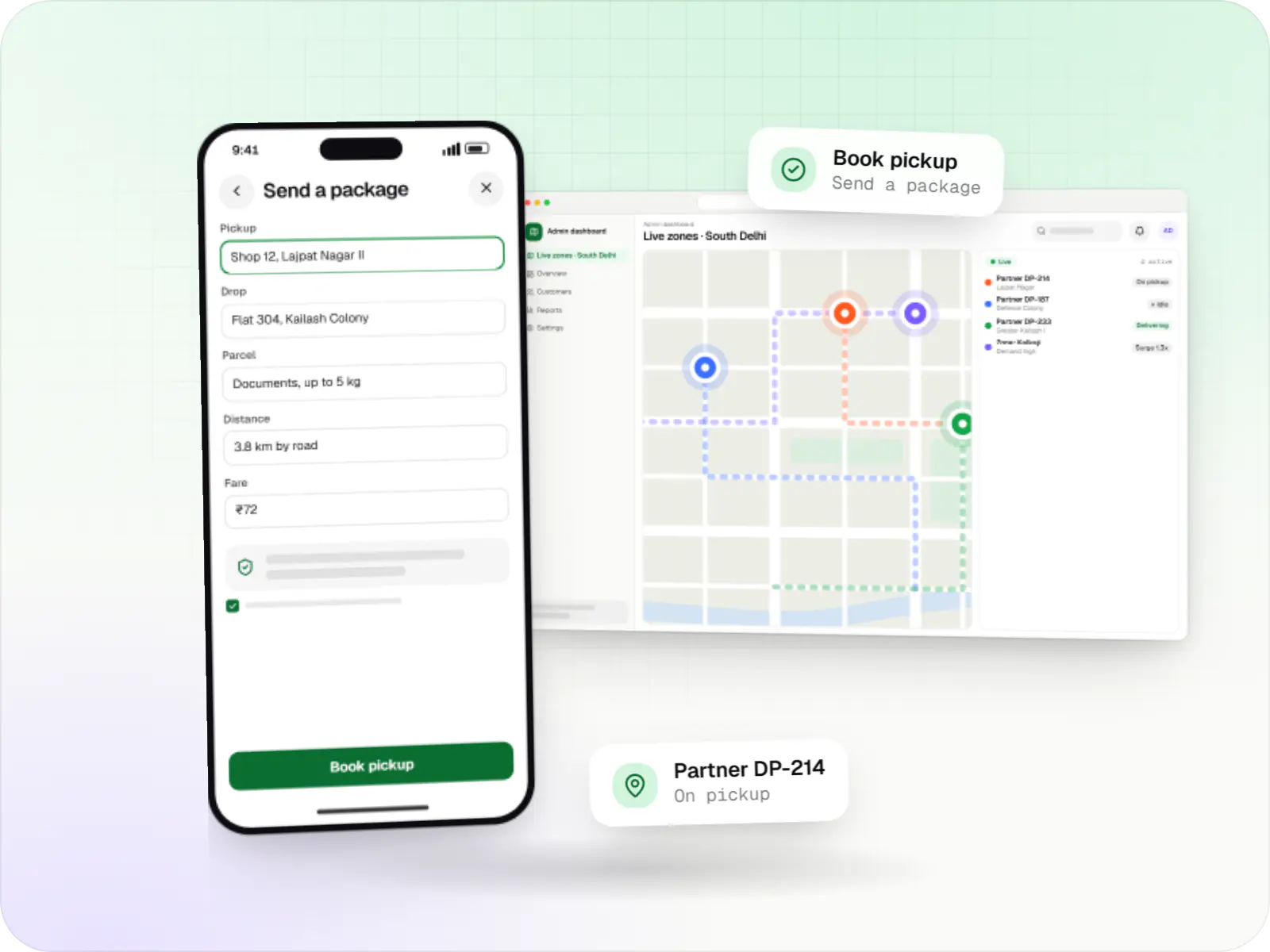
Hyperlocal delivery apps linking neighbourhood stores, pick-up-and-drop requests and delivery partners within a city, with zone-based dispatch and pricing.
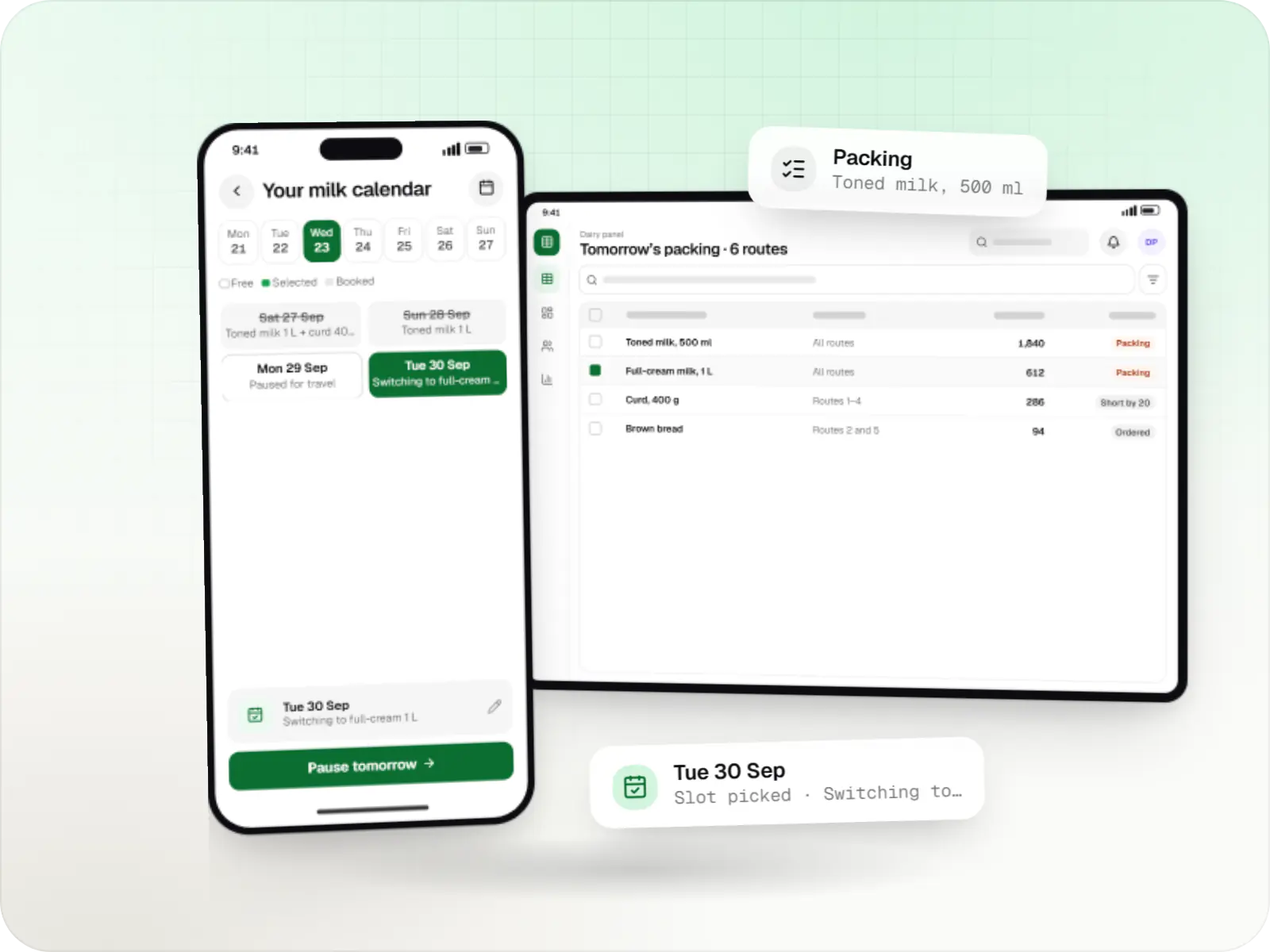
Subscription apps for milk, curd, bread and daily essentials, with delivery calendars, prepaid wallets, route sheets and next-day demand planning.
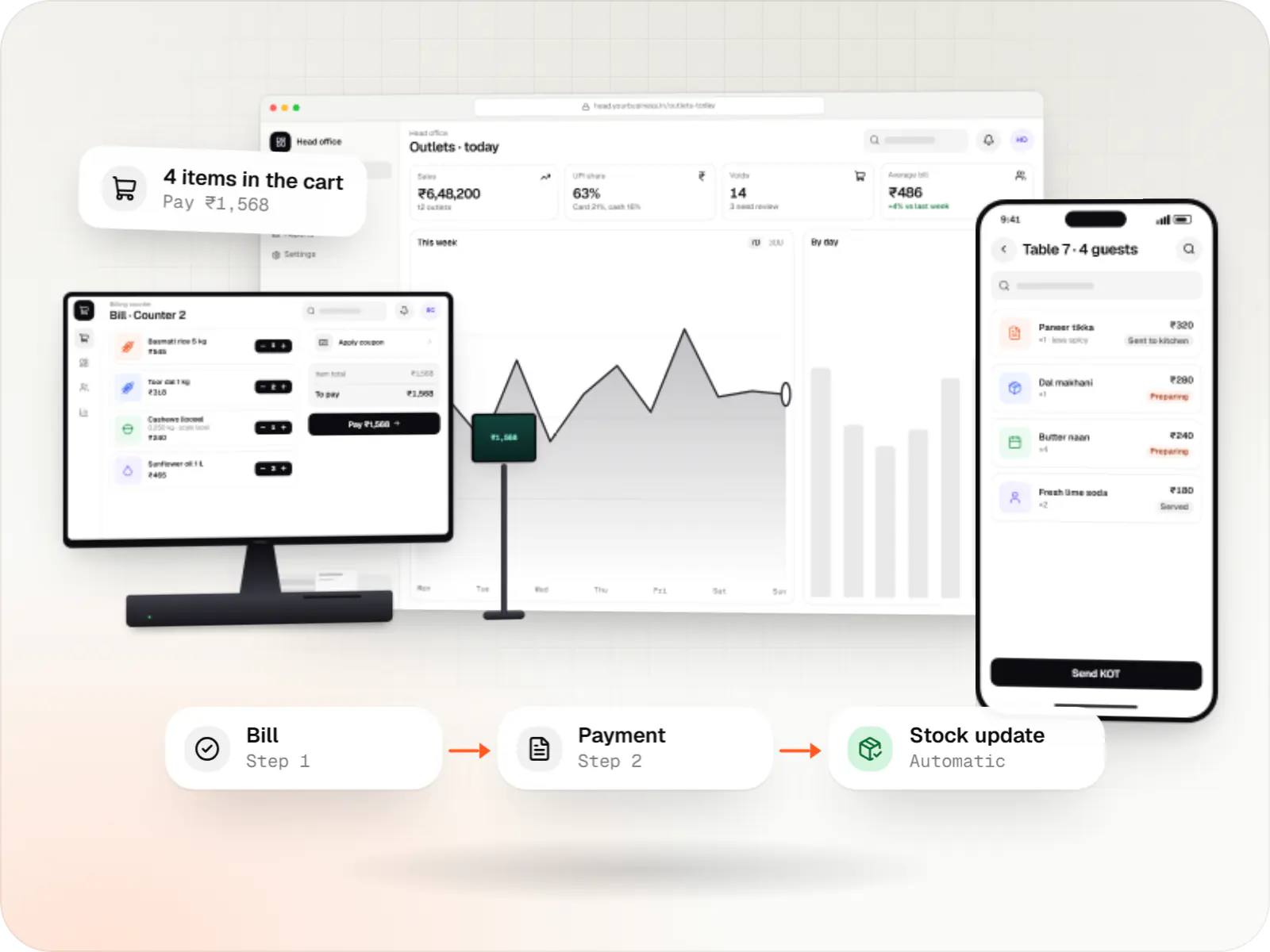
Custom point-of-sale software with offline billing, UPI QR payments, GST invoices, hardware integration and central control for multiple outlets.
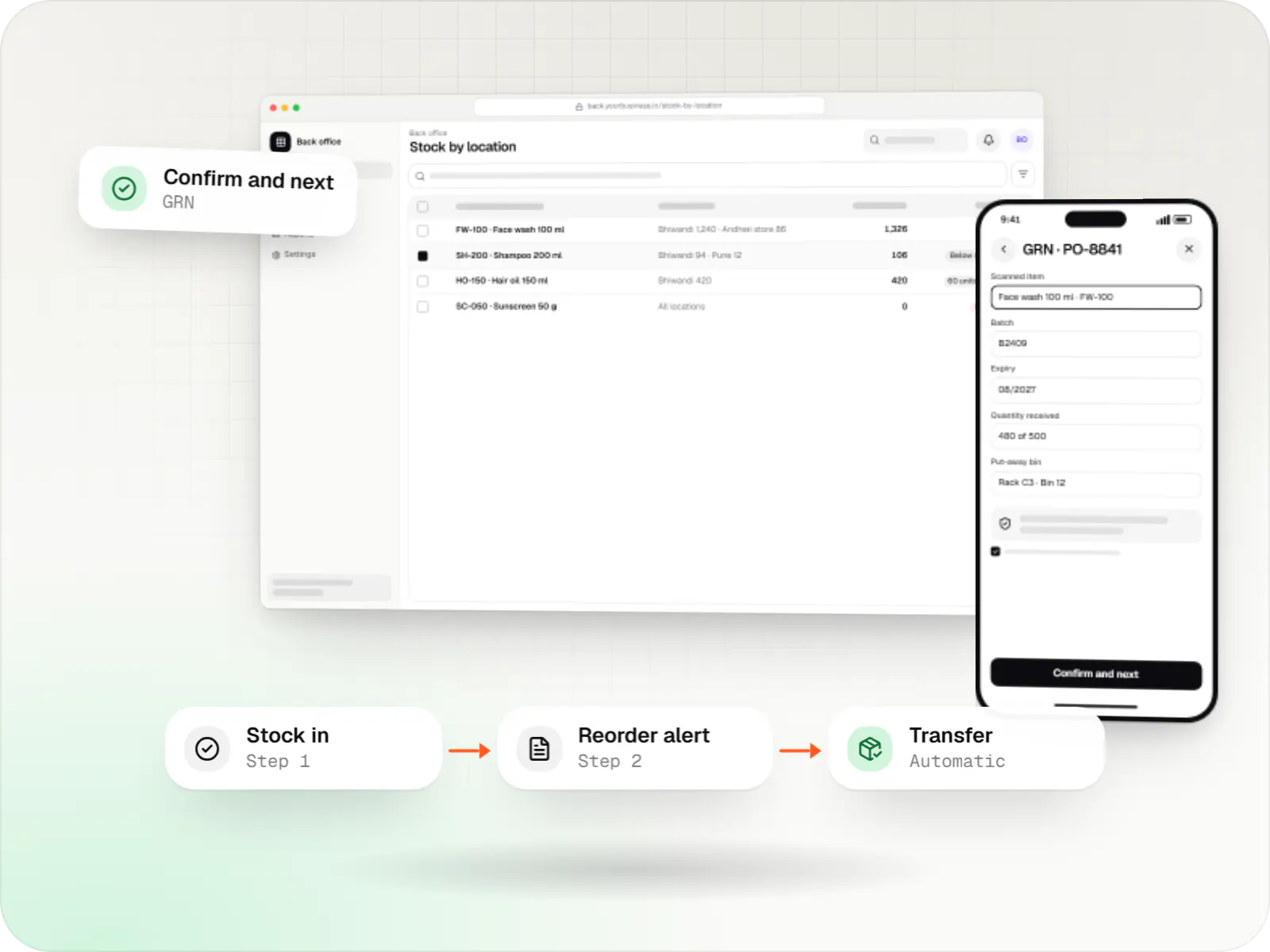
Custom inventory software for multi-location stock, batch and expiry tracking, barcode scanning and marketplace stock sync.
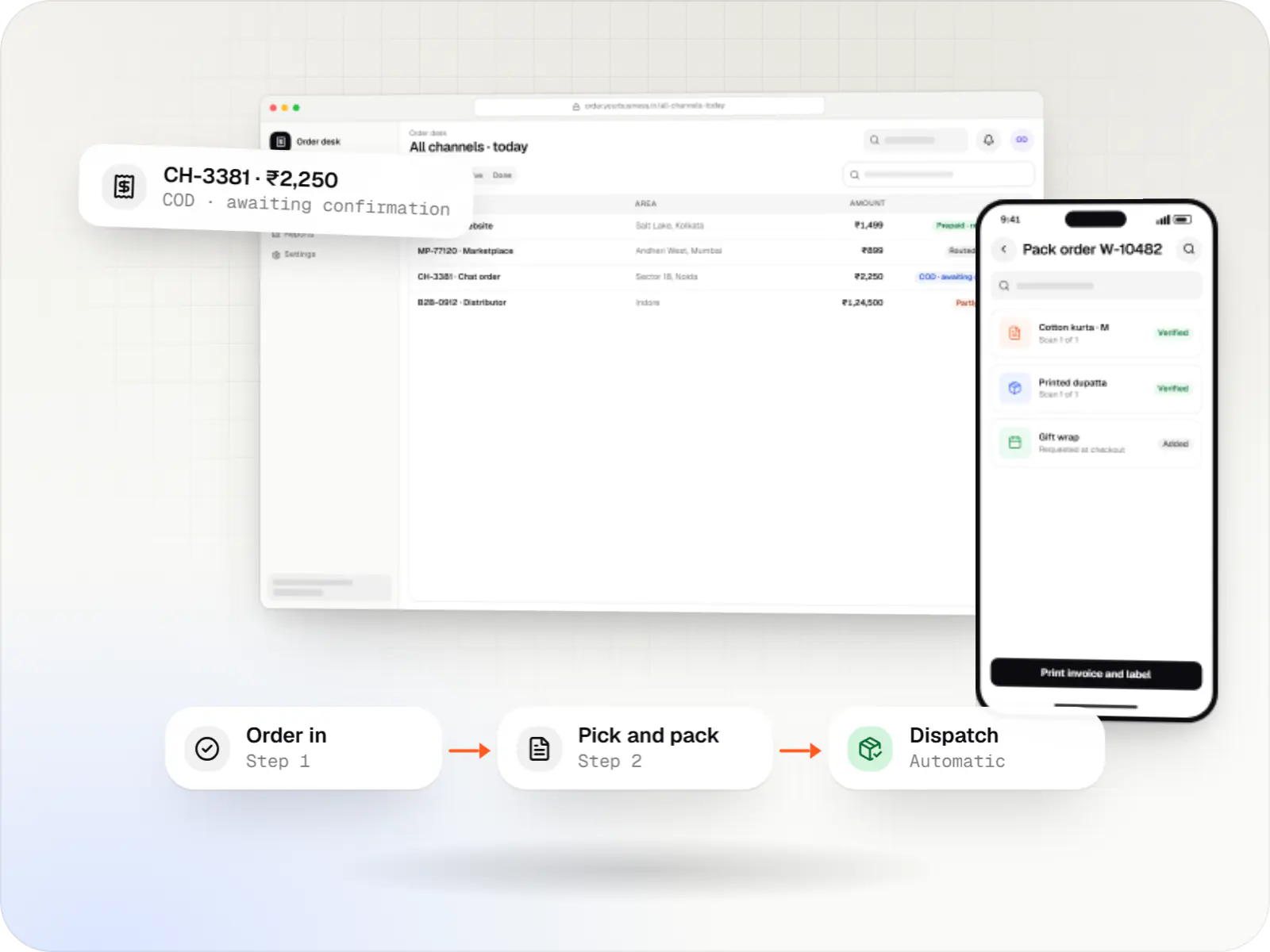
A central order management system that collects orders from every channel, routes them to the right location and tracks them to delivery and payment.
Variable-weight barcodes and scale integration, with the final bill adjusted after picking.
Customers pre-approve substitutes; pickers propose alternatives in-app for approval.
Pick lists sorted by aisle or zone, barcode verification and crate labelling.
Capacity-based delivery slots alongside quick delivery within a set radius.
One-tap reorder of usual items and daily milk or bread subscriptions.
Online stock drawn from store POS inventory with safety buffers, synced continuously.
How it works
Picking, weighing and substitutions are part of the flow, so the final bill matches what arrives at the door.
Usual items are one tap away, and search understands local names, so dhaniya finds coriander.
Only slots with picking and delivery capacity left are shown; express delivery appears within the set radius.
The pick list is sorted by aisle, each item is scanned, and loose produce is weighed on the store scale.
If an item is missing, the picker proposes an alternative in the app and the customer accepts or declines it.
Actual weights and substitutions update the bill, and any difference is refunded or collected before delivery.
Labelled crates are handed over, the customer tracks the delivery live and confirms it with an OTP.
Online sales reduce POS stock, so walk-in and online shoppers see the same shelf.
Platforms
Apps for Android phones and tablets, tested on budget and mid-range devices and published on Google Play or privately.
Apps for iPhone and iPad, built to Apple's guidelines and released through TestFlight and the App Store.
Installable web apps with offline support and notifications, useful when an app-store listing isn't essential or phones have little storage.
Marketing and content websites: fast, search-friendly pages with a CMS your team can update without a developer.
Back-office panels for operations, support and finance teams: orders, users, content, reports and permissions.
Technology
Mobile
Build Android and iOS apps from one shared codebase, so you launch on both platforms faster with a consistent experience.
Used for
Backend
Runs the server side of apps: fast, scalable back ends that power your app, website and integrations.
Used for
Data
A reliable database for the records your business runs on: orders, payments, bookings and stock, kept accurate and easy to report on.
Used for
Data
Keeps frequently used data in fast memory, so apps stay quick on busy days and live features like order tracking feel instant.
Used for
Payments & maps
Adds maps, address search, live tracking and travel-time estimates to delivery, ride and field apps, so orders reach the right door.
Used for
Payments & maps
Lets customers in India pay by UPI, cards, netbanking or wallets, and handles subscriptions, refunds and payouts to sellers or partners.
Used for
Cloud & DevOps
Ready-made building blocks for mobile apps, such as push notifications, phone OTP login and crash reports, so you launch sooner.
Used for
Flutter and the related logo are trademarks of Google LLC. We are not endorsed by or affiliated with Google LLC.
Plain-English glossary
Product preview
Illustrative screens from a store-connected grocery build.
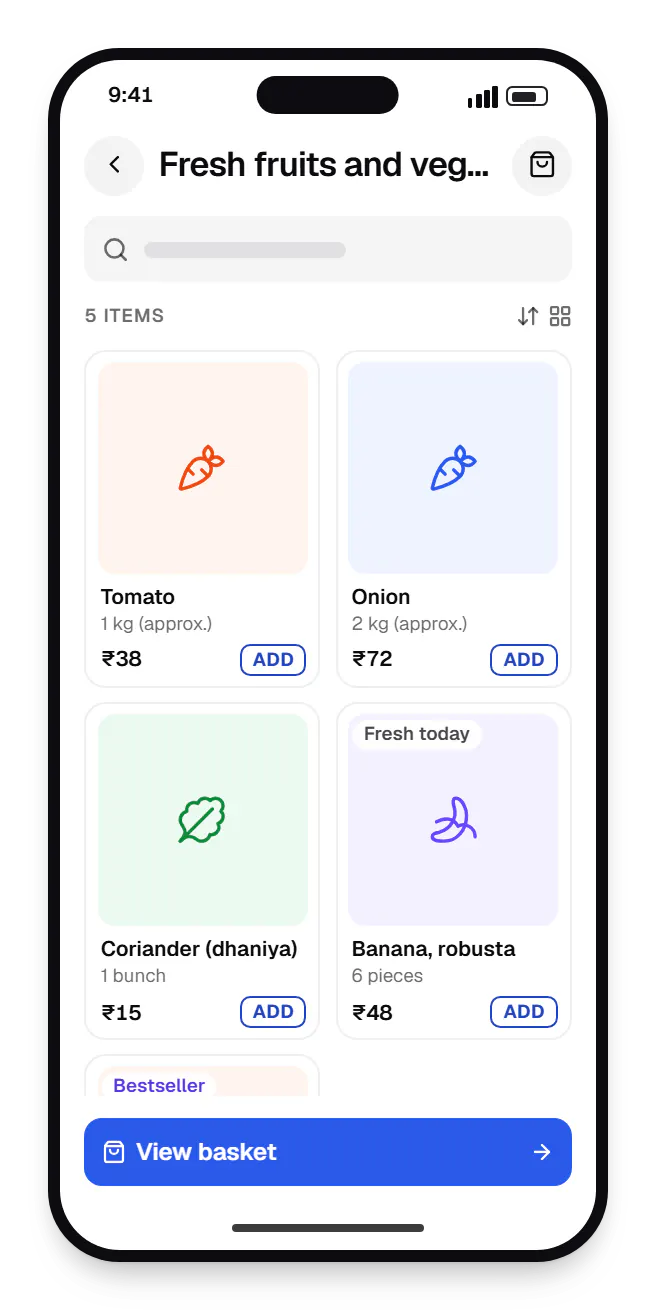
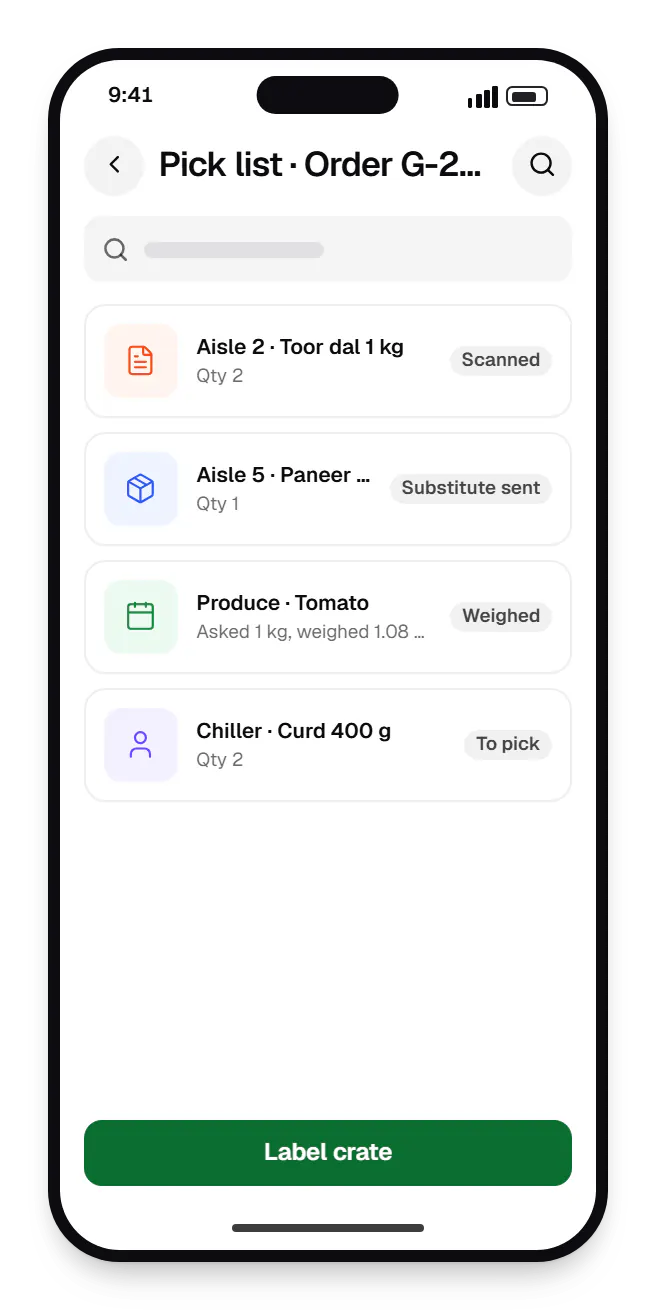
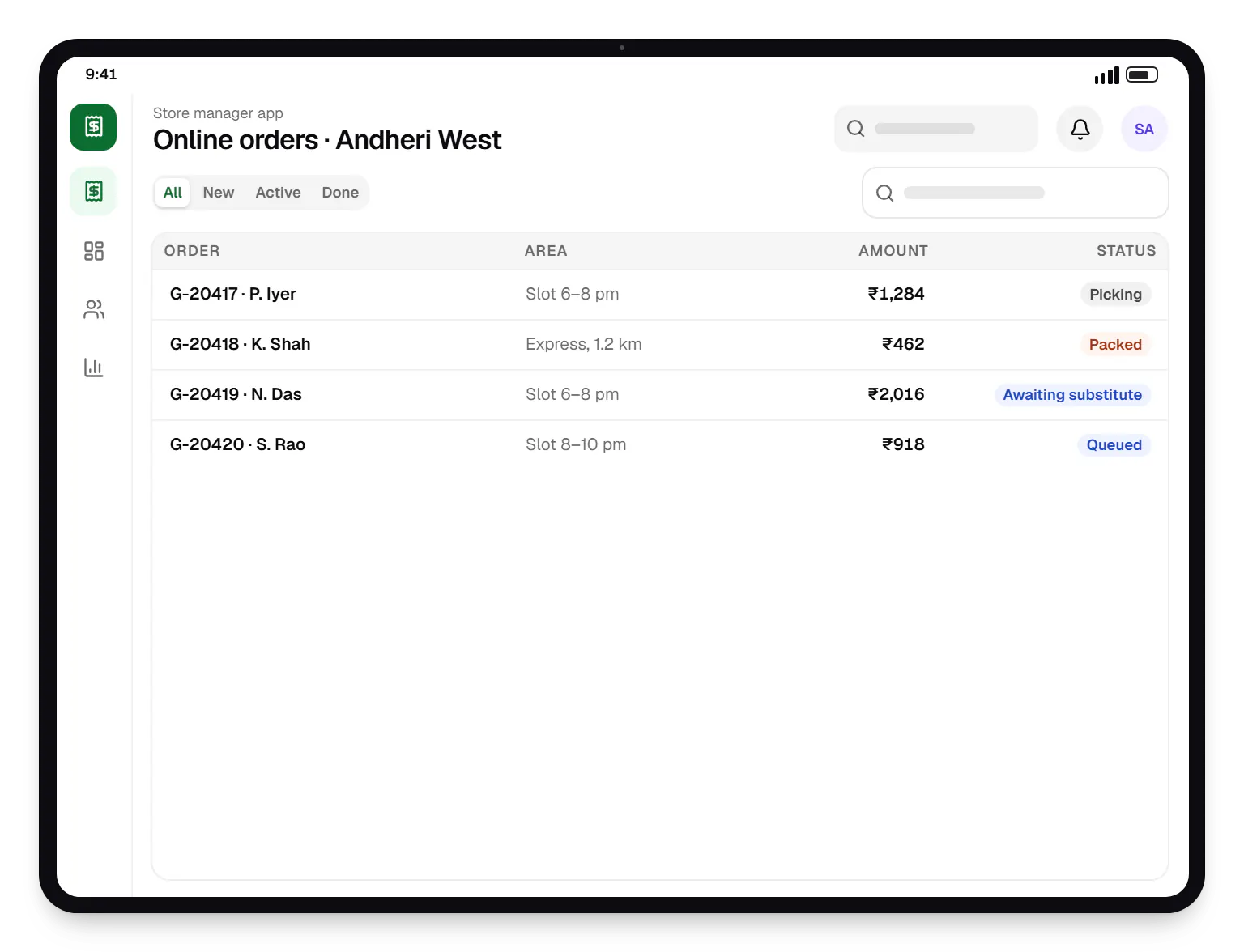
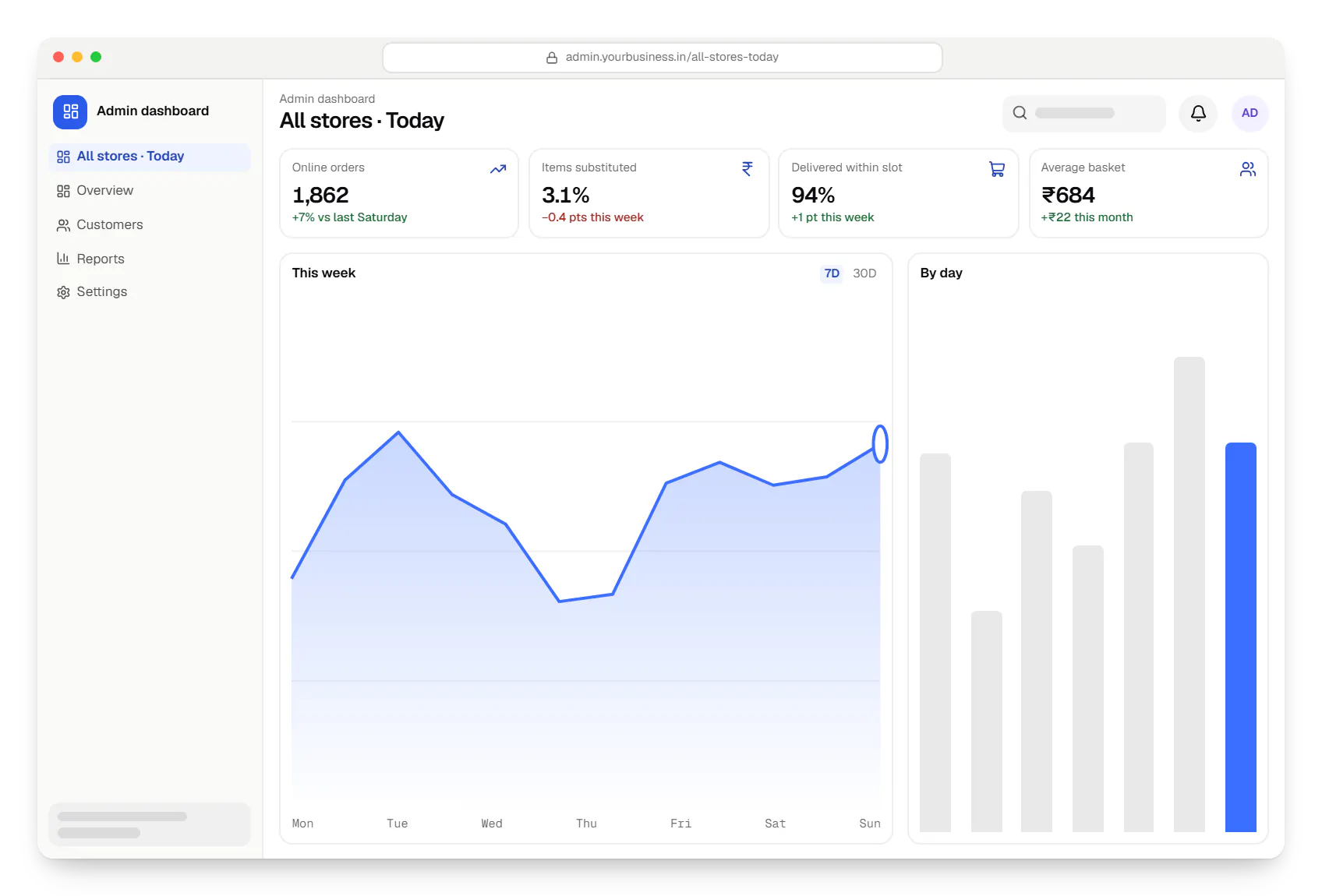
Sample screens: names, prices and figures are examples, not client data.
Work
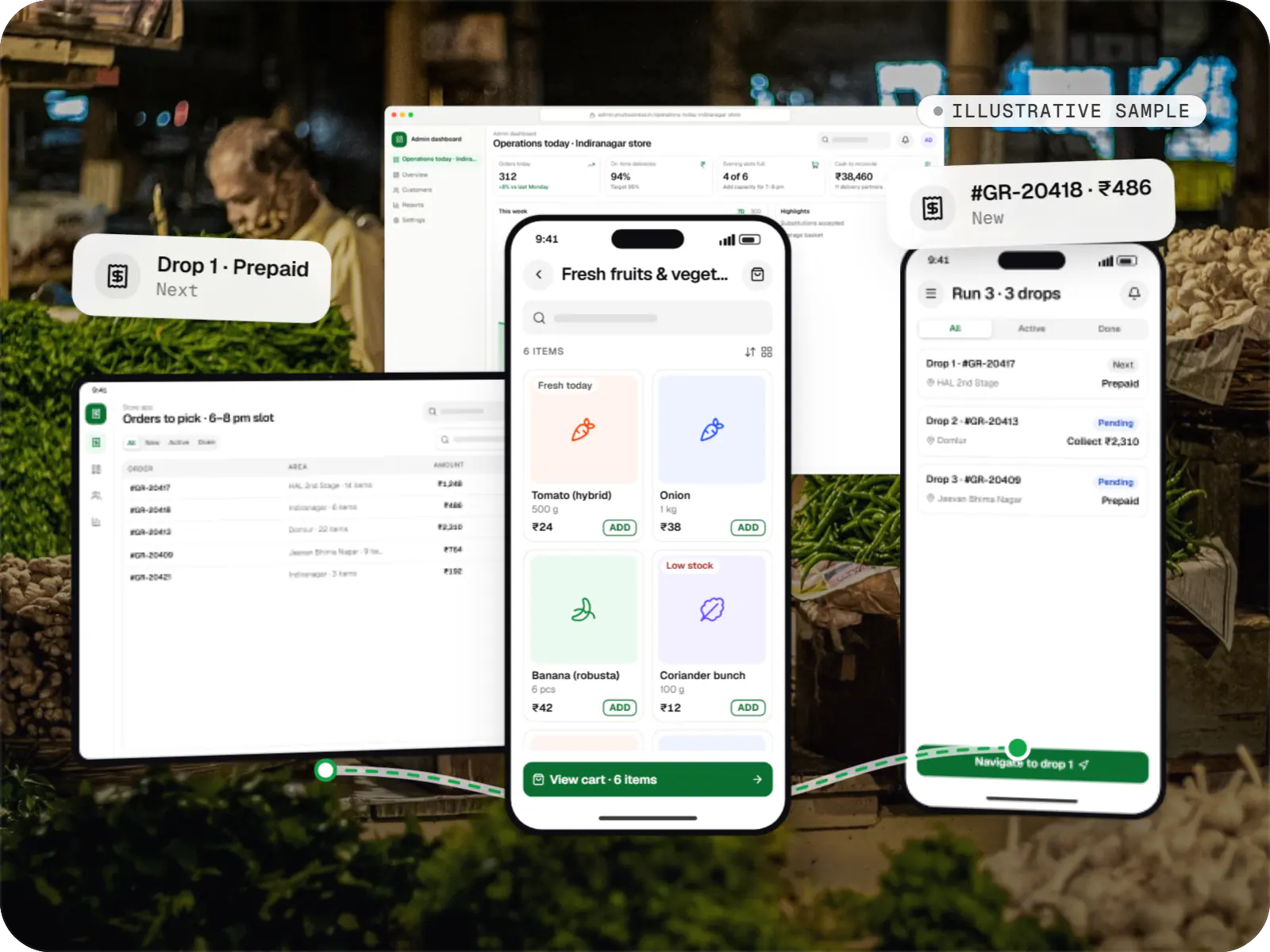
Delivery app development
An illustrative platform for neighbourhood grocery stores: slot or express delivery, store picking, batched delivery runs, and payment by UPI or cash on delivery.
Runs on
Built with
Cost drivers
Store picking, dark stores and quick delivery each need different stock and picker logic.
Reliable stock from your existing POS is the most important, and most variable, integration.
Thousands of SKUs with images, weights and GST rates need good import and clean-up tools.
Your own riders need a delivery app and dispatch; third-party partners need integration.
Estimates are written from your scope, with the effort and assumptions behind each line item.
How pricing worksServices
The design and engineering services our in-house team combines on projects in this sector.
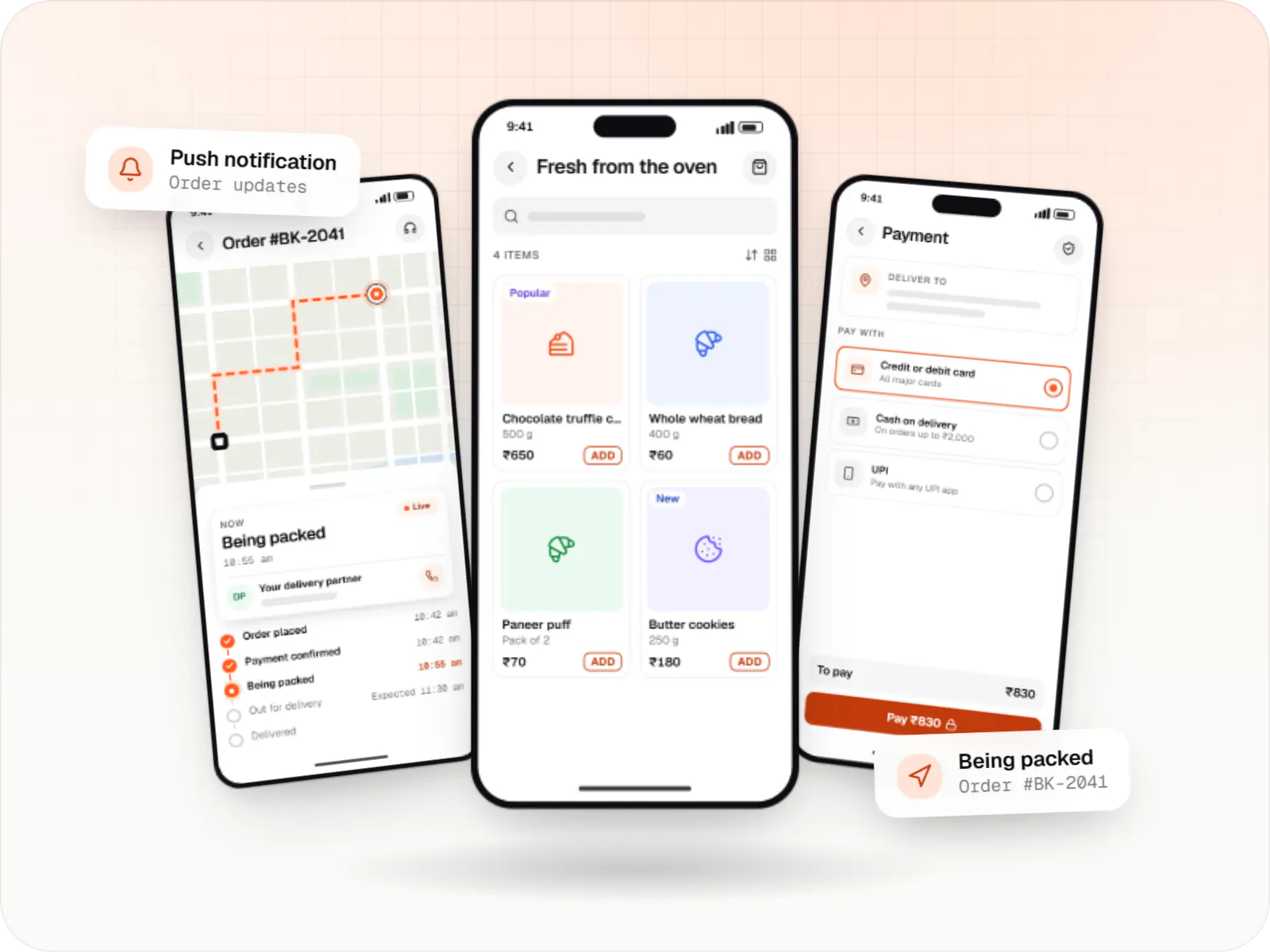
Native and cross-platform Android and iOS apps, from first release through regular store updates, built by our in-house designers and engineers.
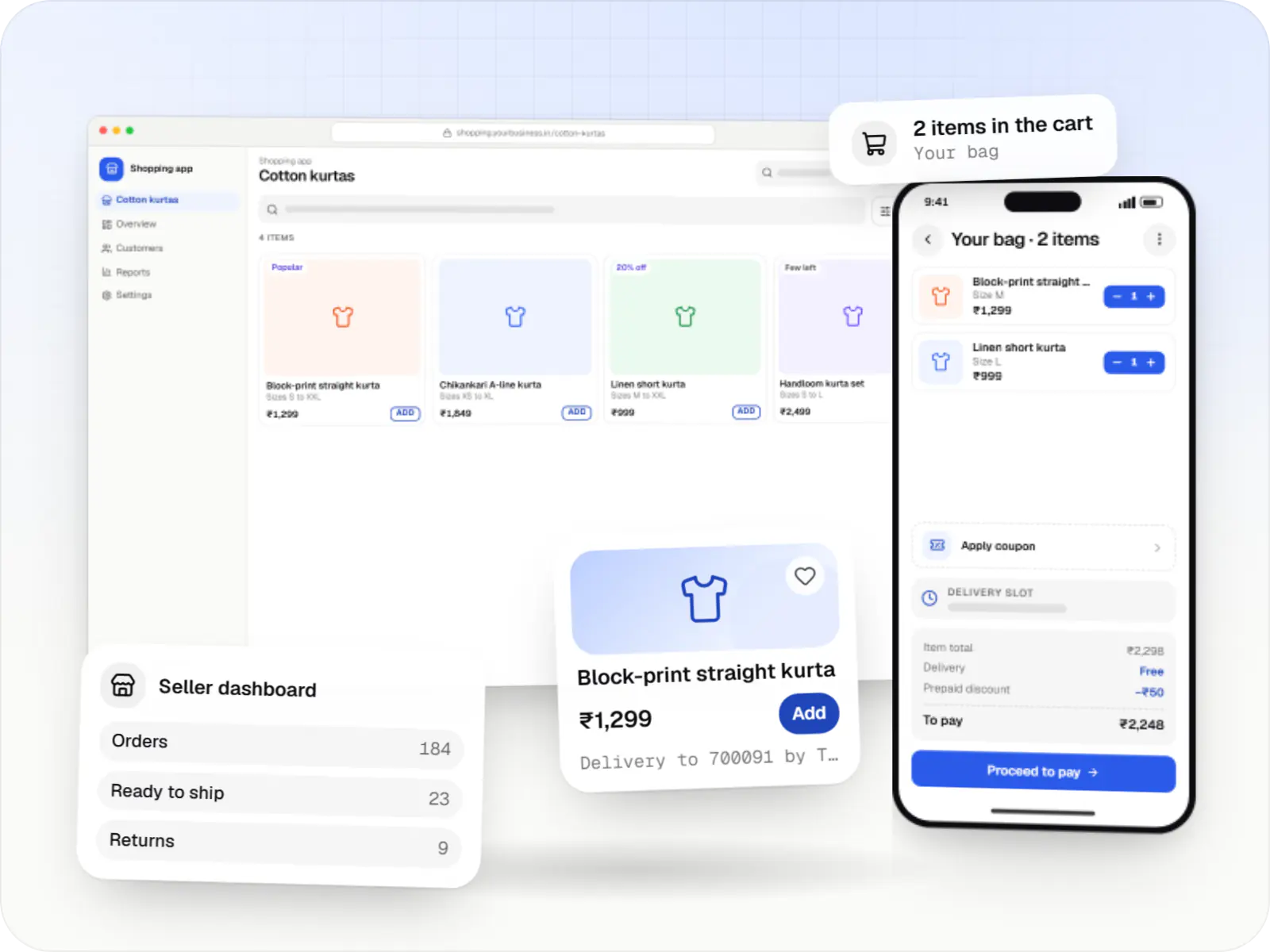
Online stores, shopping apps and B2B ordering portals on Shopify, WooCommerce or custom stacks, wired to Indian payments, couriers and GST invoicing.
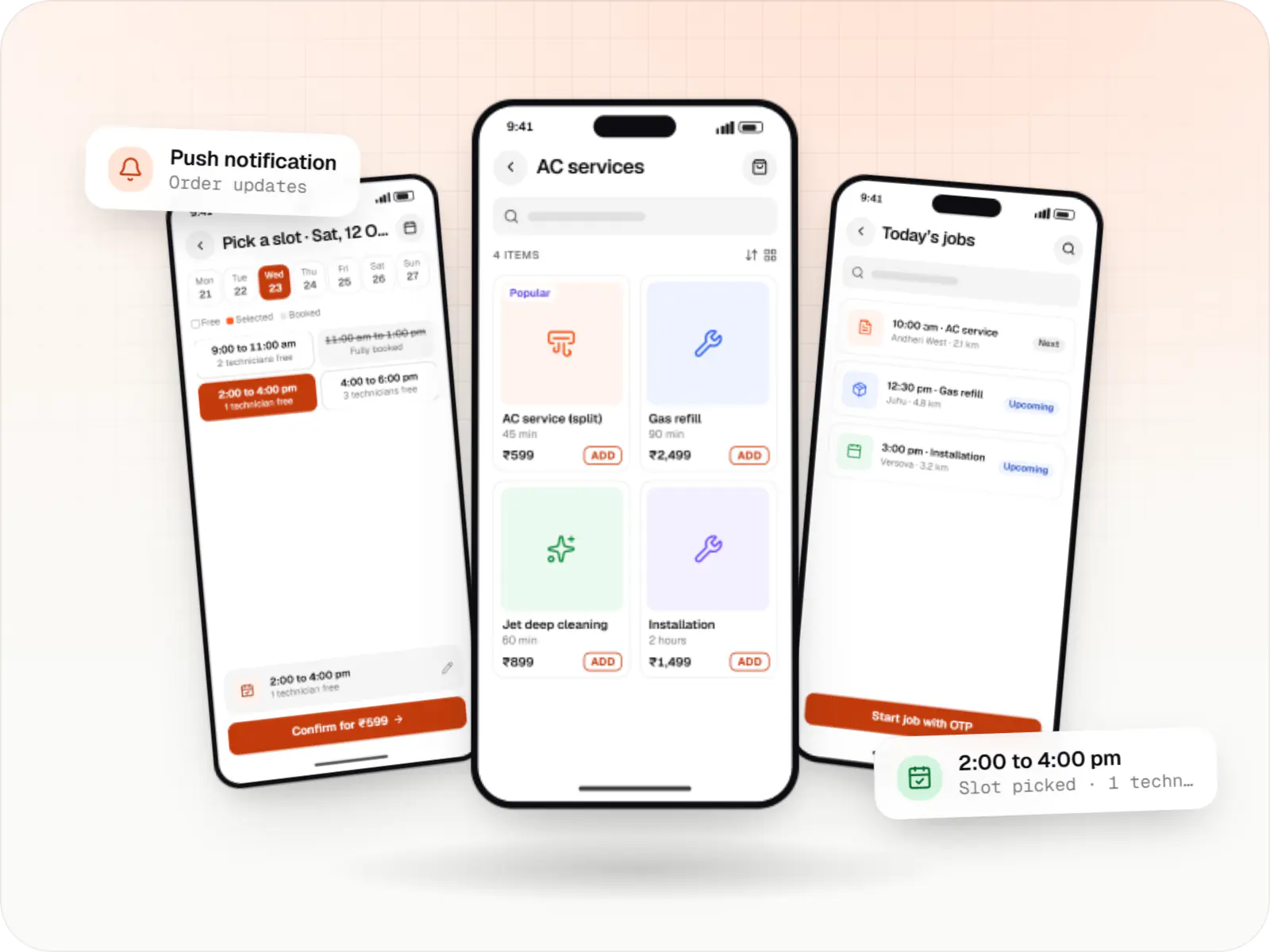
Android and iOS apps from one Dart codebase, built by engineers who know when Flutter is the right call and when native code is needed.
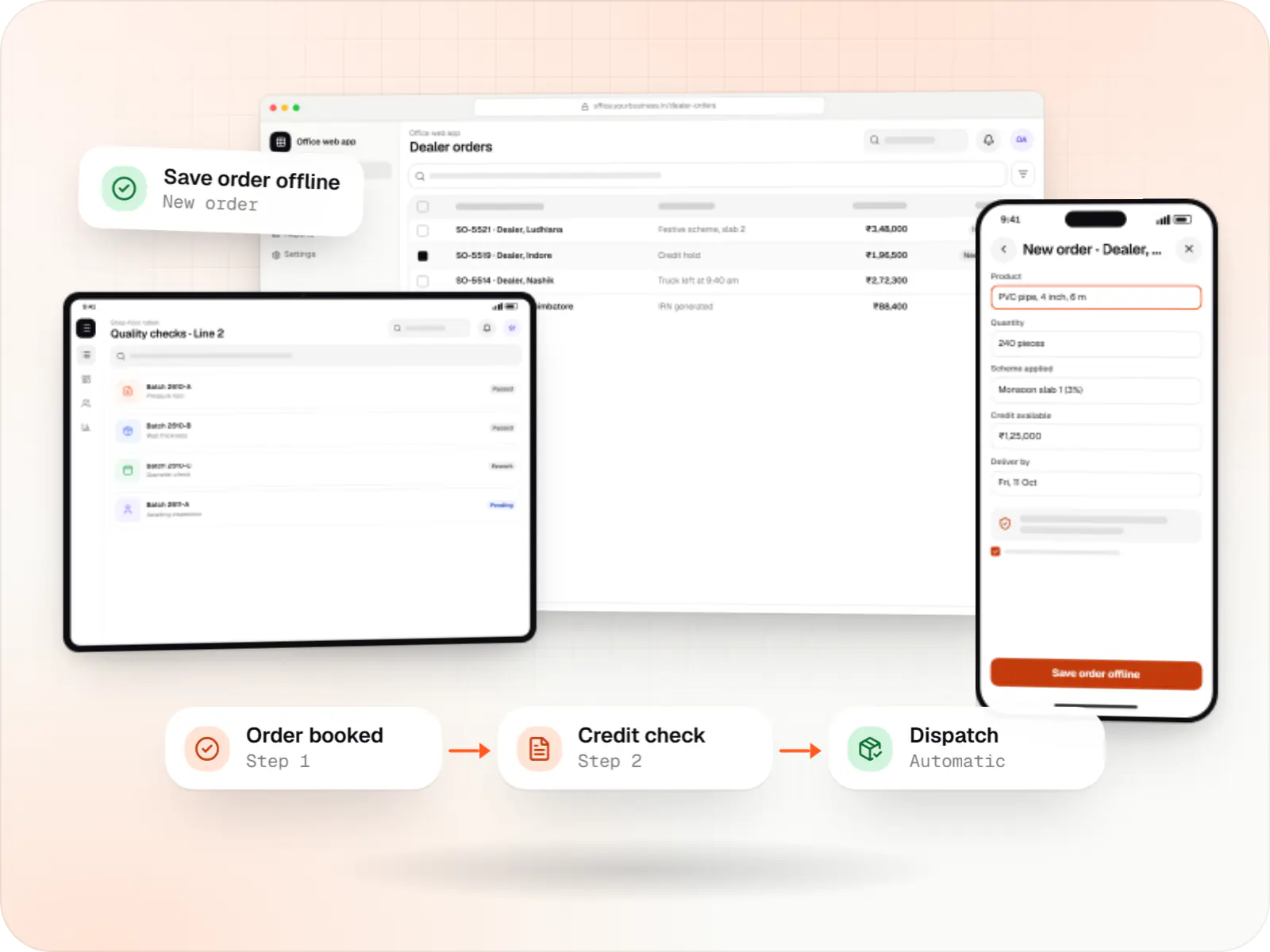
Software shaped around how your business runs, from approvals and inventory to billing and reports, replacing spreadsheets and disconnected tools.
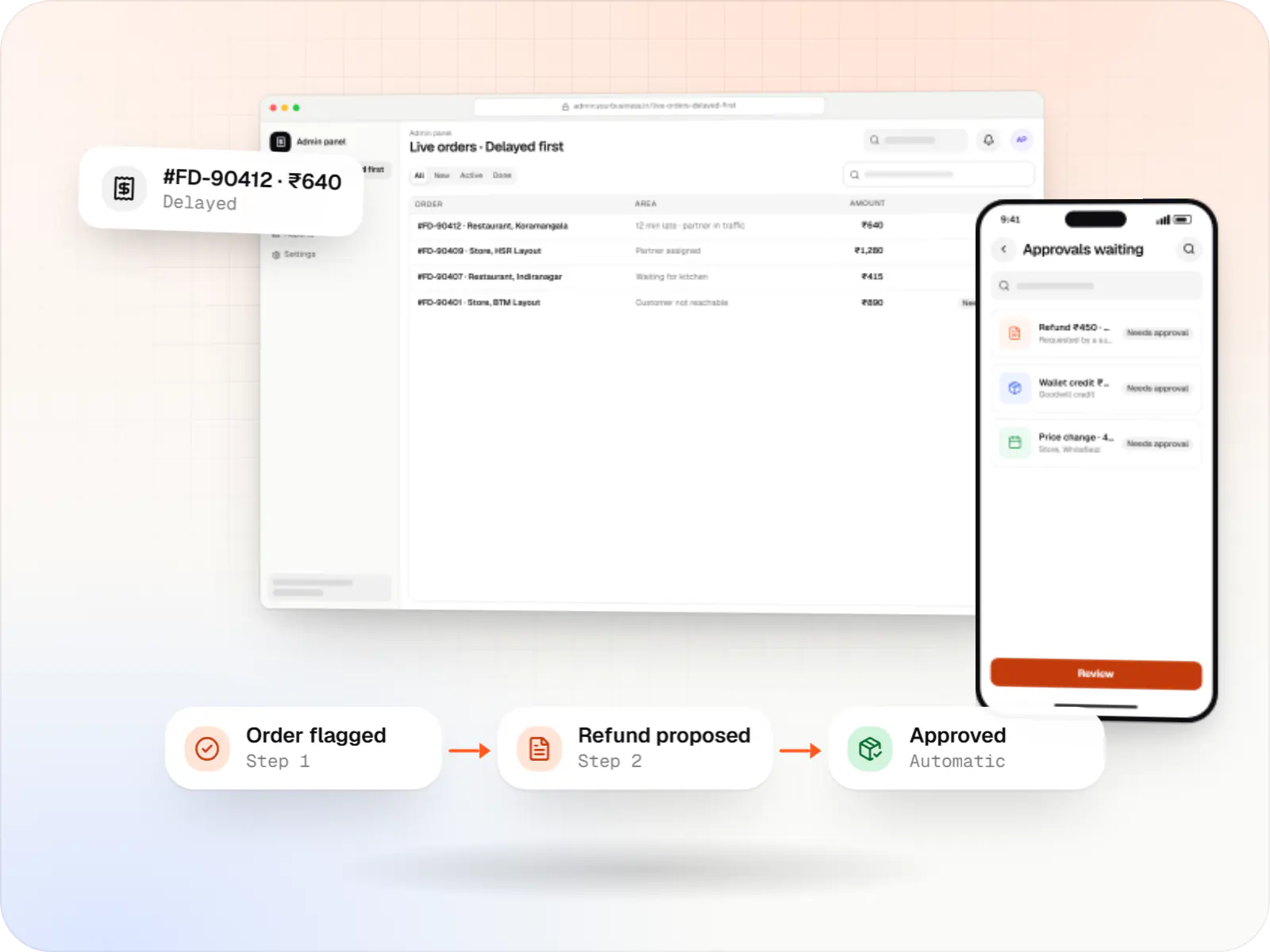
Back-office dashboards built around your team's daily tasks: order queues, approvals, catalogue management, payouts, reports and audit logs.
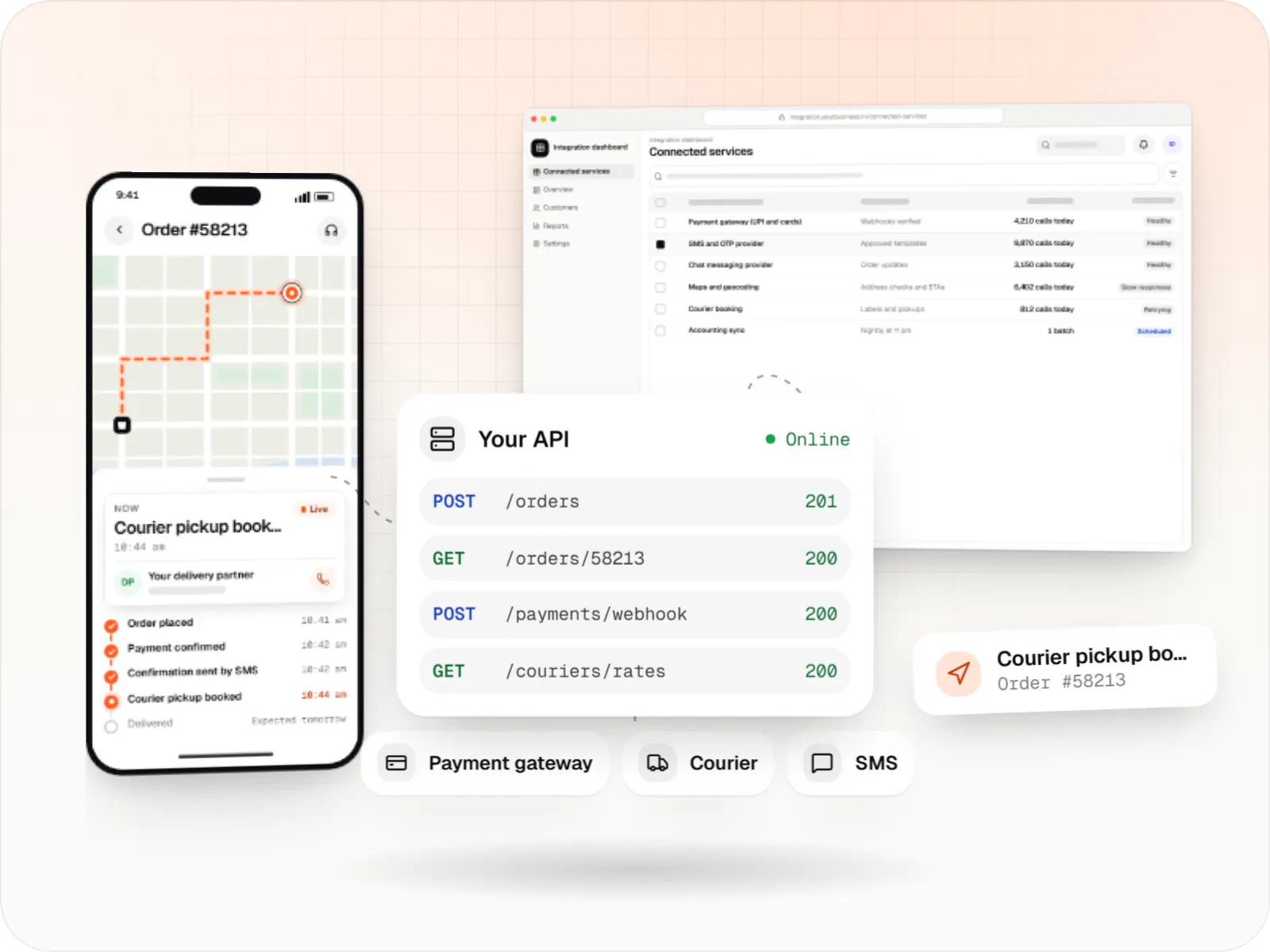
Secure, documented REST and GraphQL APIs, plus integrations that connect your apps to payment, logistics, GST, messaging and business systems.
FAQ
Loose items are listed with an approximate weight or pack size, and the customer is charged an estimate at checkout. At picking, the scale prints a variable-weight barcode or the picker enters the actual weight, and the final bill adjusts. For prepaid orders the difference is refunded or collected, and we design the flow so customers see the change clearly before delivery.
Yes, and many grocers start that way. Online stock is drawn from the store's POS inventory with a safety buffer, pickers use an app to collect items during quieter hours or across the day, and orders are staged for dispatch. As volumes grow, some businesses move fast-selling items to a dedicated picking area or a dark store, and the software can support both setups.
It depends on your stock depth, delivery radius and order density. Quick delivery needs a compact catalogue, dense demand and dedicated pickers and riders, which raises operating cost. Scheduled slots let you batch orders by area and pick from a full supermarket range. Many grocers offer both: express delivery for a limited range nearby, and slots for larger weekly baskets.
We treat that as a requirement. We keep the app small, compress product images, cache the catalogue for repeat visits and design checkout to recover from dropped connections. Search tolerates spelling variations and local names, so dhaniya finds coriander. Before release we test on older, budget Android devices on slow networks, because that's what many of your customers will use.
ONDC lets your store be discovered through buyer apps on the network while you keep your own operations. To join, you work through a seller network participant or become one, and your catalogue, stock and order status must flow to and from the network. We can build that connection into your grocery backend so ONDC orders are picked and delivered alongside orders from your own app.
Next step
Tell us how many stores, SKUs and daily orders you expect. We'll propose a phased build and fulfilment setup.