

Web
Next.js
A modern web technology for fast, search-friendly websites, online stores and web applications that load quickly on mobile.
Used for
- Business websites
- Online stores
- Web apps
- Customer portals
Industries · E-commerce
Checkout, catalogue, courier and returns tooling for sellers who want fewer manual steps between an order and a delivered parcel.
At a glance
What it is
Engineering for online sellers: storefronts, marketplace sync, order and returns operations, courier integrations and COD risk controls.

We work with online-first sellers, both brands and resellers, who run their own web store alongside Amazon, Flipkart and other marketplaces. Our focus is the operational software behind the storefront as much as the storefront itself.
How to start
Tell us what you need in your own words. You talk to the developers who would build it and get a written, line-item estimate.
Get a project estimateOnce an online store takes more than a handful of orders a day, the hard problems move behind the storefront. Stock has to stay in sync across your site and every marketplace. Orders need allocating to a warehouse, a courier and a label. Cash-on-delivery parcels come back unopened, and each return has to be inspected, restocked or written off.
We build e-commerce software that treats these operations as first-class features: an order pipeline you can see and control, courier and payment integrations that fail gracefully, and a catalogue your team can edit without a developer. The storefront sits on top, fast on mid-range Android phones and patchy mobile networks.
Challenges
Your site, Amazon and Flipkart each hold their own stock count, and manual updates lag behind real sales.
Unconfirmed COD orders, failed delivery attempts and return-to-origin shipments quietly eat into margin.
Different pincodes suit different couriers, and tracking updates arrive in formats your support team can't search.
Heavy themes and plugins make product pages sluggish on the budget phones most shoppers use.
Solutions
Across 3 areas
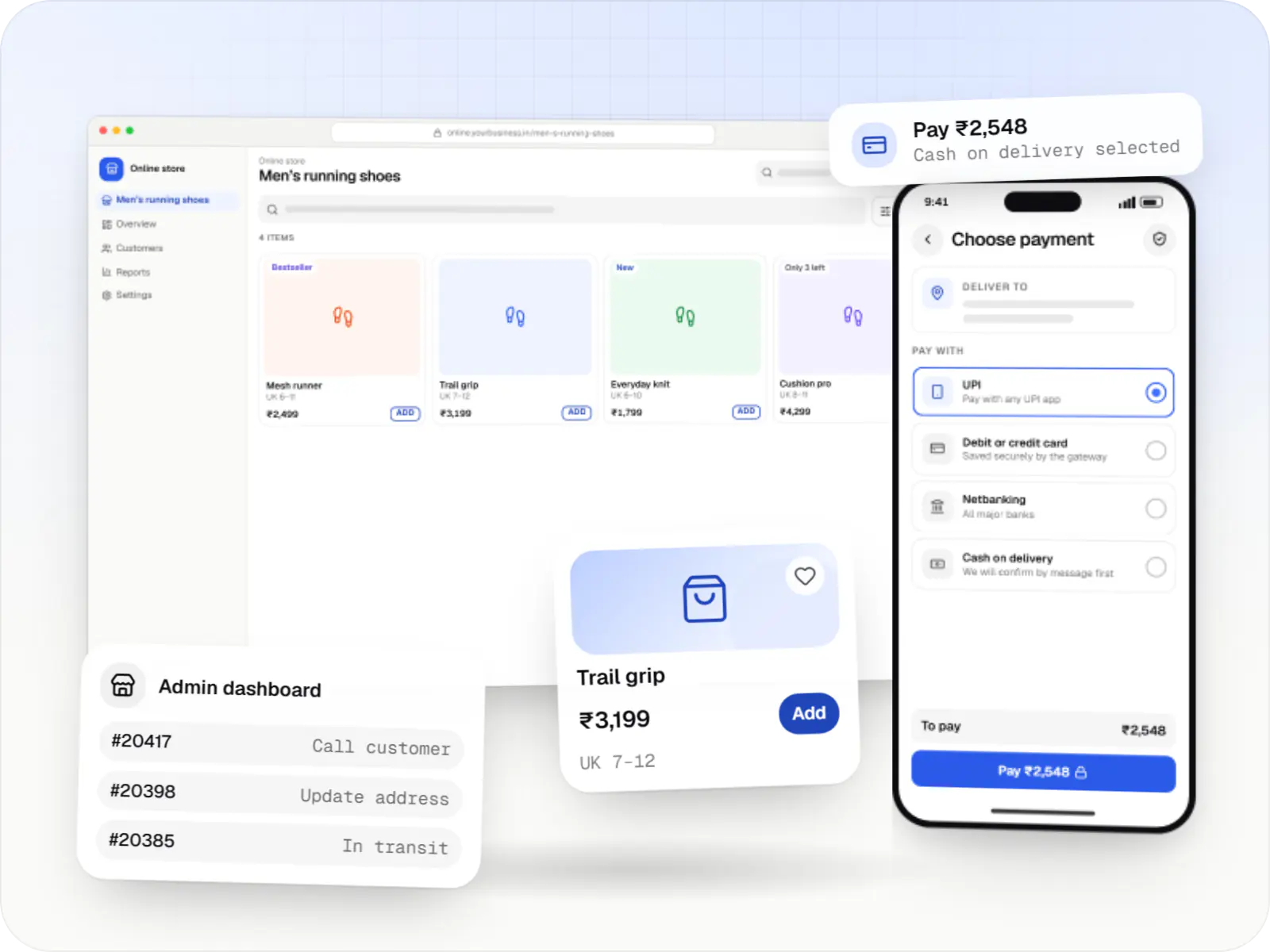
Fast, search-friendly online stores with UPI, card and COD checkout, GST invoices and courier integrations, on a hosted platform or custom code.
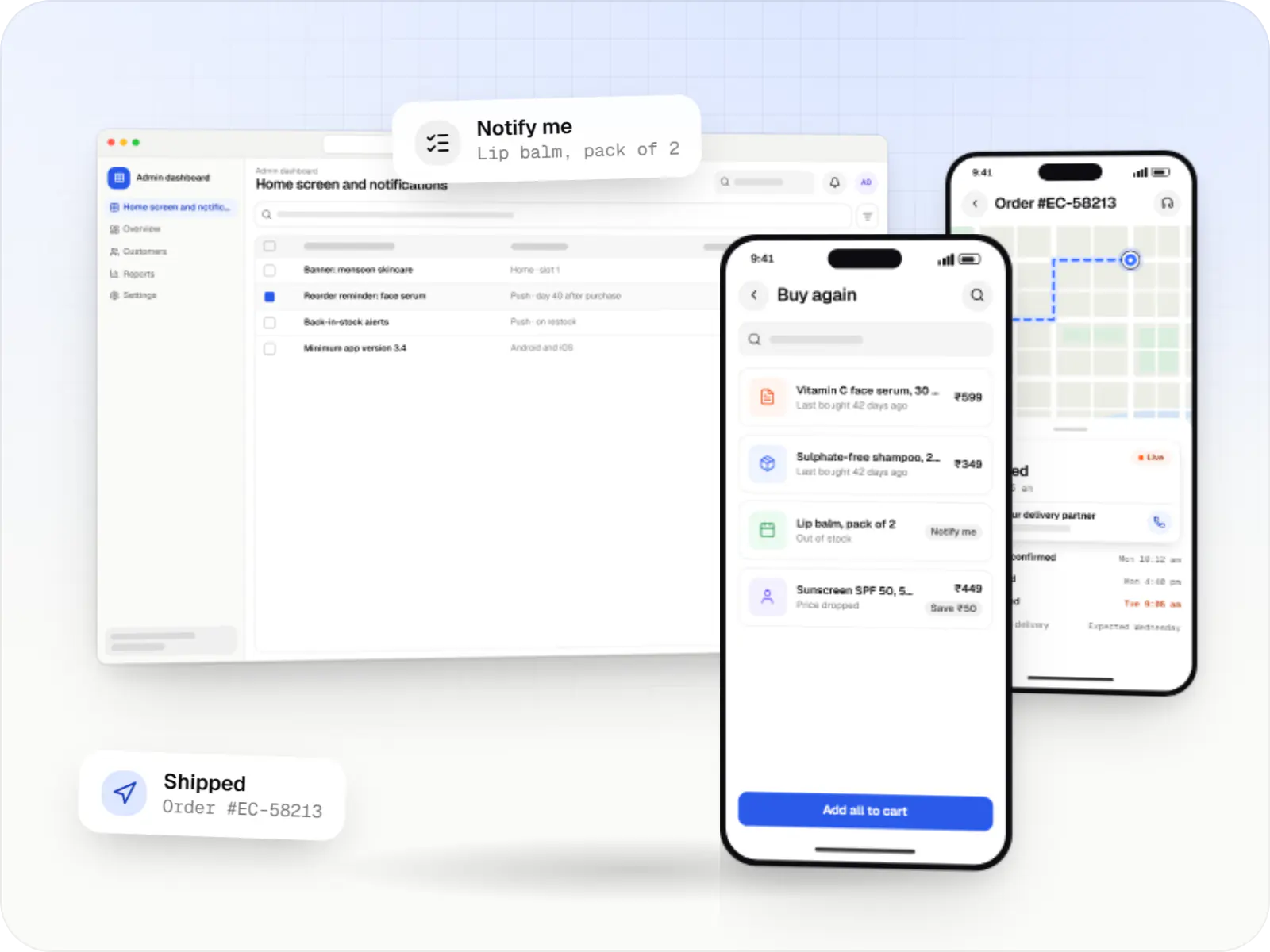
Android and iOS shopping apps with quick browsing, UPI checkout and push notifications, sharing one backend with your website.
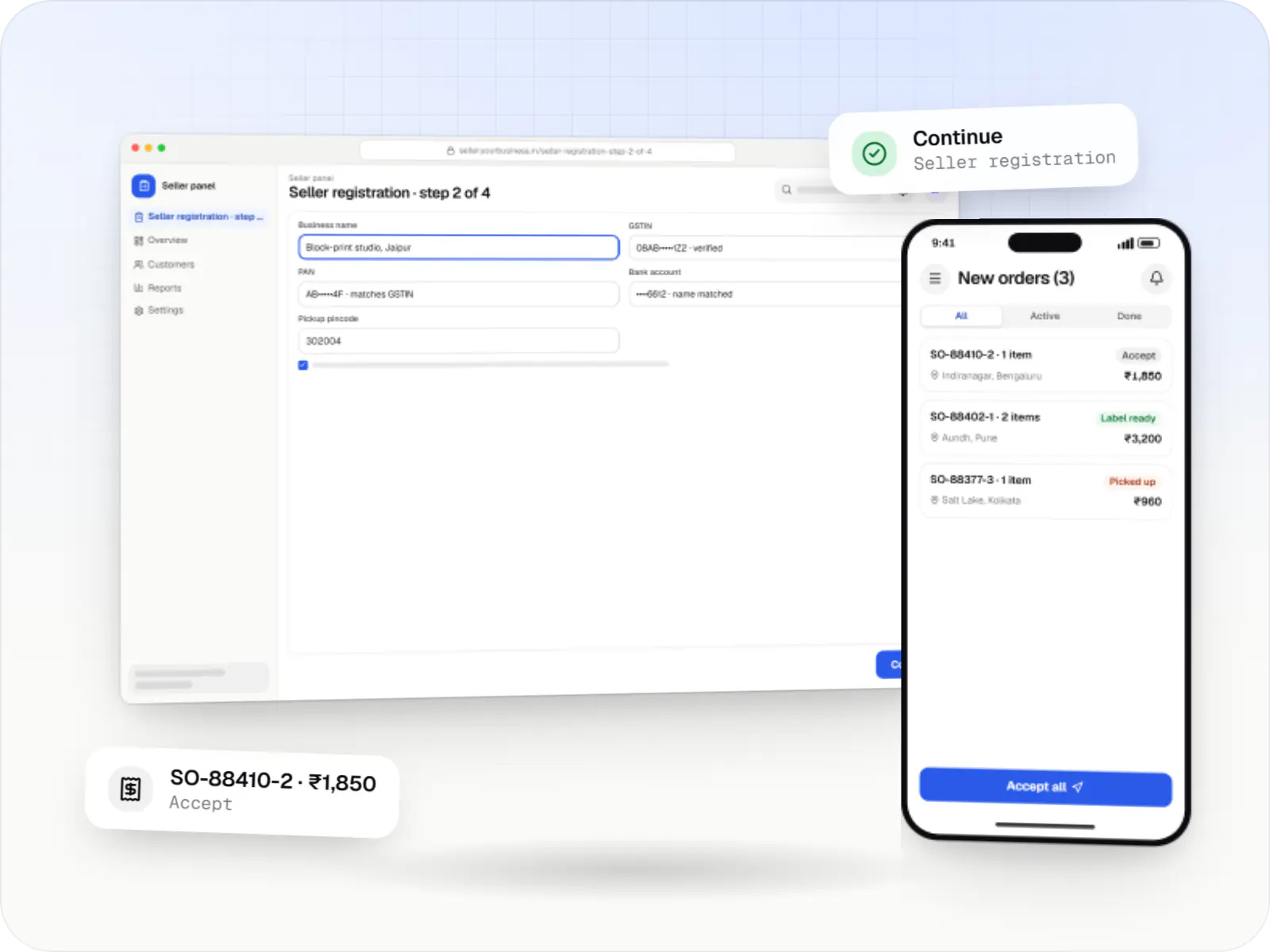
Multi-vendor marketplaces with seller onboarding, commission rules, split payouts, per-seller invoicing and catalogue moderation.
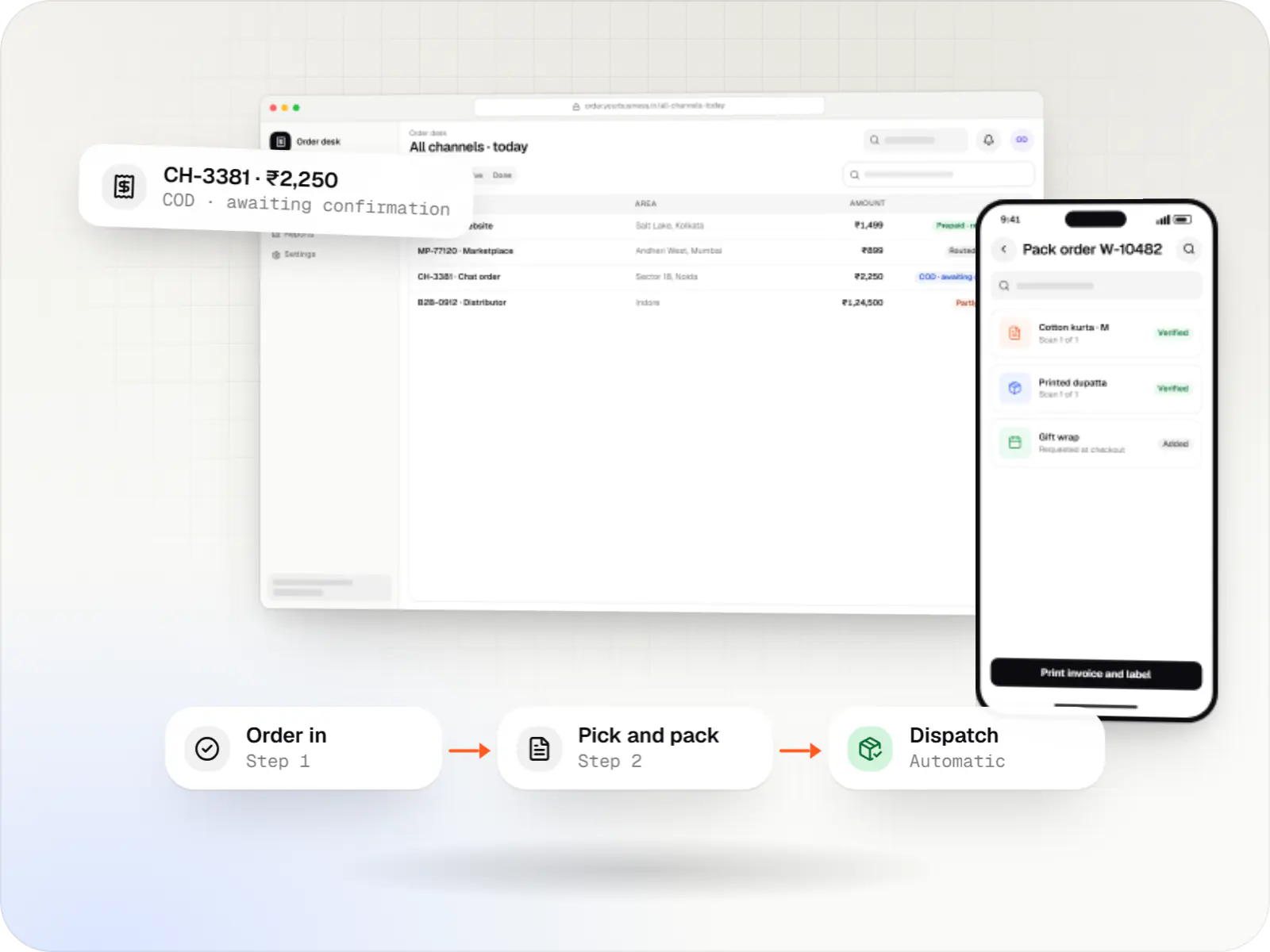
A central order management system that collects orders from every channel, routes them to the right location and tracks them to delivery and payment.
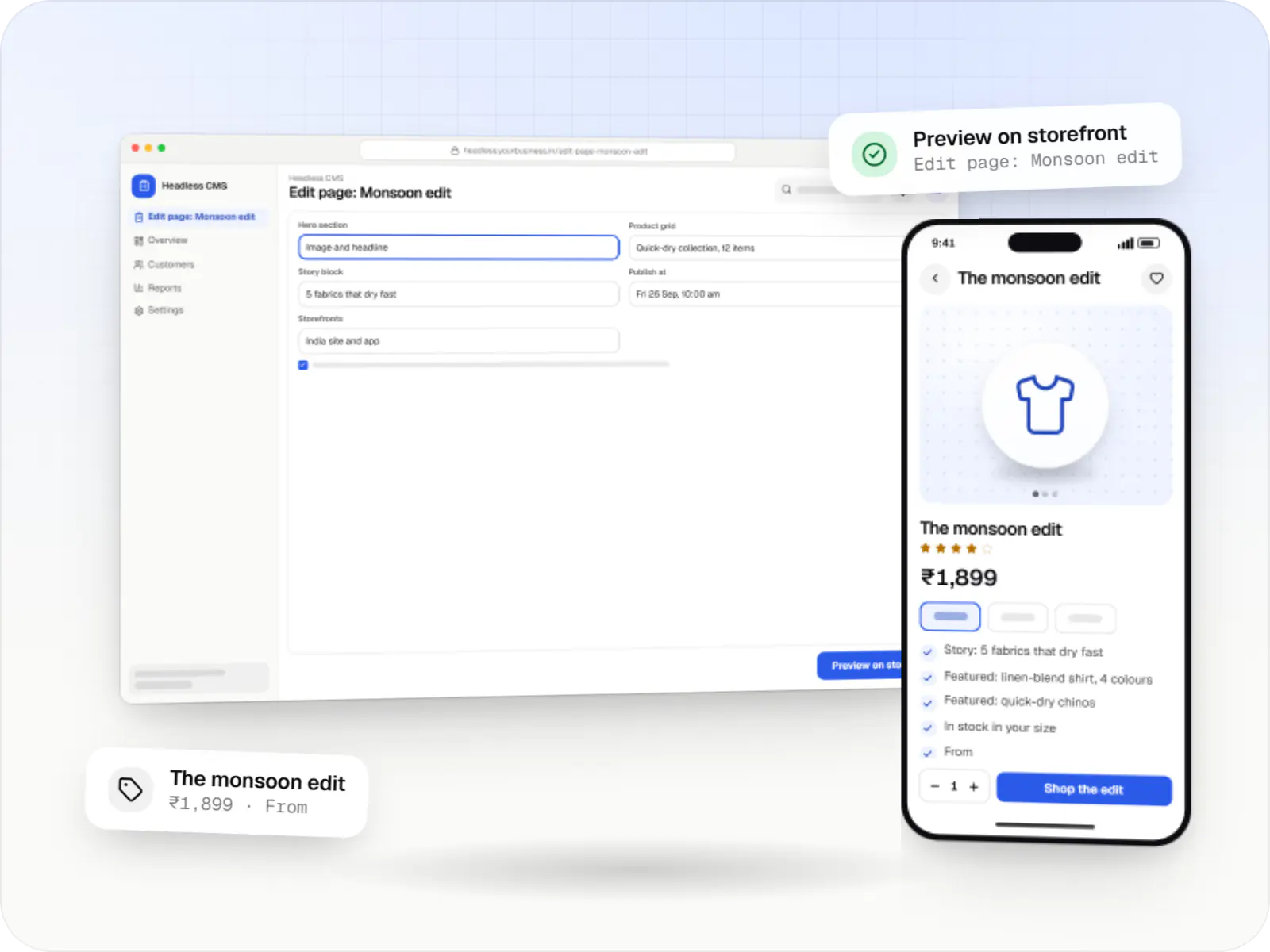
Next.js storefronts on a headless commerce engine and CMS, for brands that need speed, several storefronts or content-led shopping.
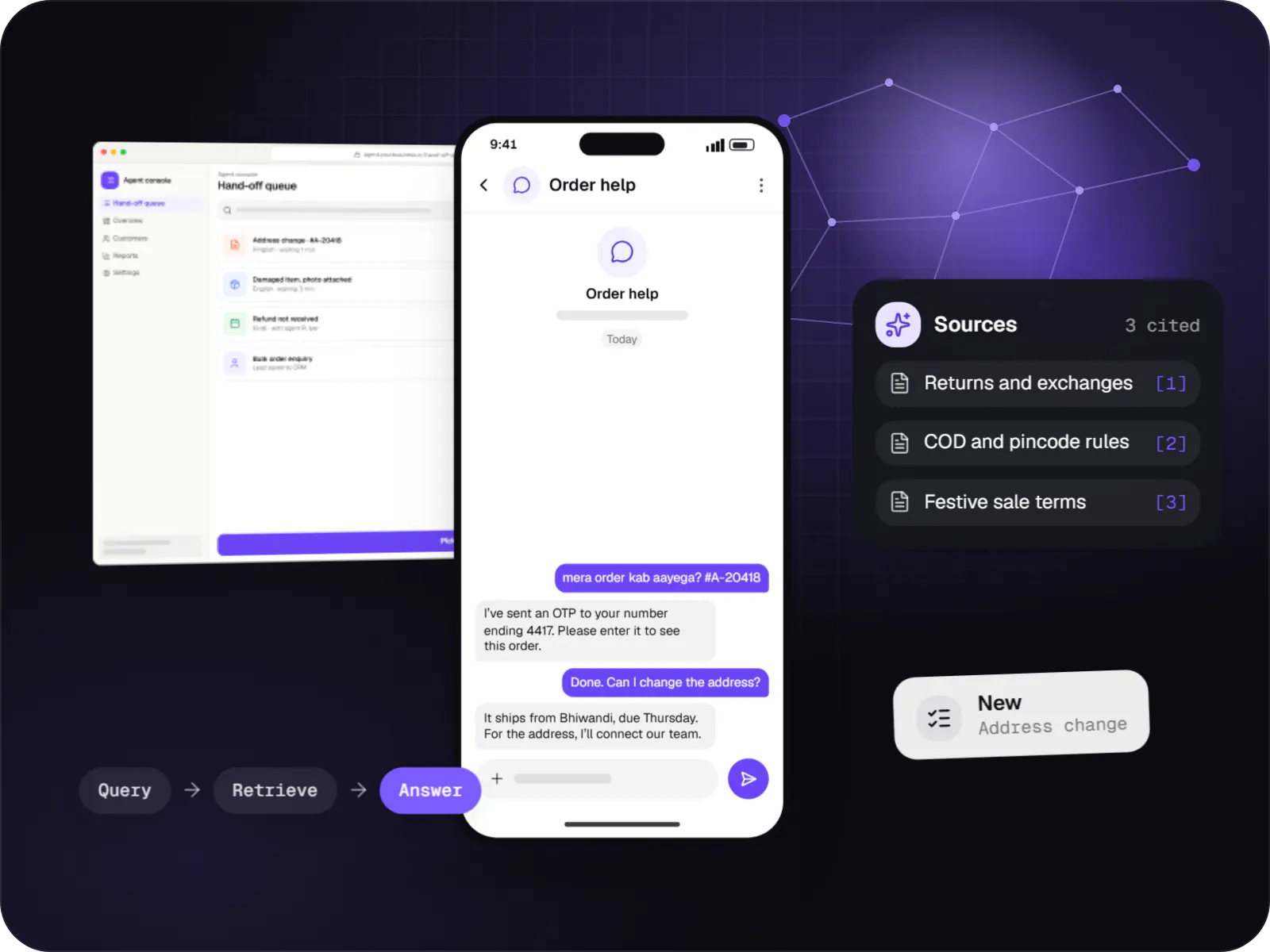
Support and sales chatbots for web, app and WhatsApp that answer from your own content and hand off to your team.
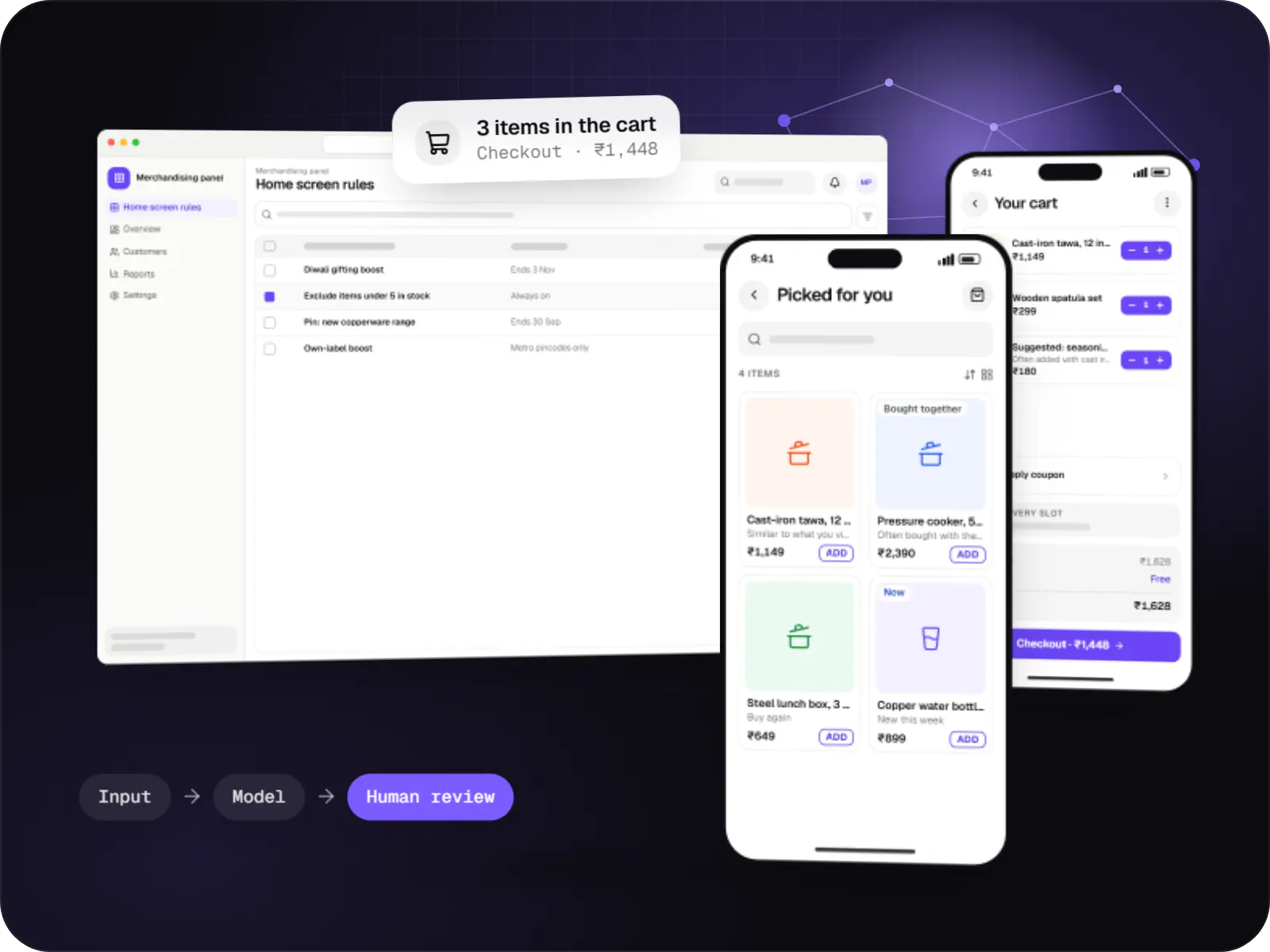
Product, content and offer recommendations built from your behavioural data, with business rules, cold-start handling and A/B testing.
Server-rendered product pages, compressed images and a short checkout with UPI, cards, wallets and COD.
Inventory and order sync with Amazon and Flipkart through their seller APIs, or via tools such as Unicommerce or EasyEcom.
Shiprocket, Delhivery or Shadowfax integrations for serviceability checks, AWB labels and tracking webhooks.
OTP or WhatsApp confirmation for COD orders, pincode-level COD rules and partial prepaid options.
Customer-initiated returns with photos, reverse pickups, quality checks and refund or store-credit rules.
Invoices with correct HSN codes and tax splits, credit notes for returns and exports for your accountant.
How it works
Each step is automated where it can be and visible to your team where it cannot.
They pay by UPI, card or wallet, or choose cash on delivery. A prepaid order is confirmed only after the payment gateway verifies the payment on the server.
Cash-on-delivery orders get an OTP or WhatsApp confirmation, and pincodes with poor delivery history can be nudged towards prepaid before anything ships.
The sale reduces stock on your site and pushes the new count to each marketplace, so the same unit is not sold twice.
A pick list, a packing check and a courier label with its AWB number come from one screen.
Tracking webhooks update the order automatically, and a failed attempt raises a reattempt task instead of quietly turning into an RTO.
Returned items are inspected, then restocked or written off, and the refund or store credit goes out with a GST credit note.
Platforms
Marketing and content websites: fast, search-friendly pages with a CMS your team can update without a developer.
Installable web apps with offline support and notifications, useful when an app-store listing isn't essential or phones have little storage.
Apps for Android phones and tablets, tested on budget and mid-range devices and published on Google Play or privately.
Apps for iPhone and iPad, built to Apple's guidelines and released through TestFlight and the App Store.
Back-office panels for operations, support and finance teams: orders, users, content, reports and permissions.
Technology
Web
A modern web technology for fast, search-friendly websites, online stores and web applications that load quickly on mobile.
Used for
Web
Builds interactive screens in the browser, such as dashboards, admin panels and portals, that respond instantly as your team works.
Used for
Backend
Runs the server side of apps: fast, scalable back ends that power your app, website and integrations.
Used for
Data
A reliable database for the records your business runs on: orders, payments, bookings and stock, kept accurate and easy to report on.
Used for
Data
Keeps frequently used data in fast memory, so apps stay quick on busy days and live features like order tracking feel instant.
Used for
Payments & maps
Lets customers in India pay by UPI, cards, netbanking or wallets, and handles subscriptions, refunds and payouts to sellers or partners.
Used for
Cloud & DevOps
Cloud hosting for your app, website and data, with data centres in India and room to grow when traffic rises.
Used for
Plain-English glossary
Product preview
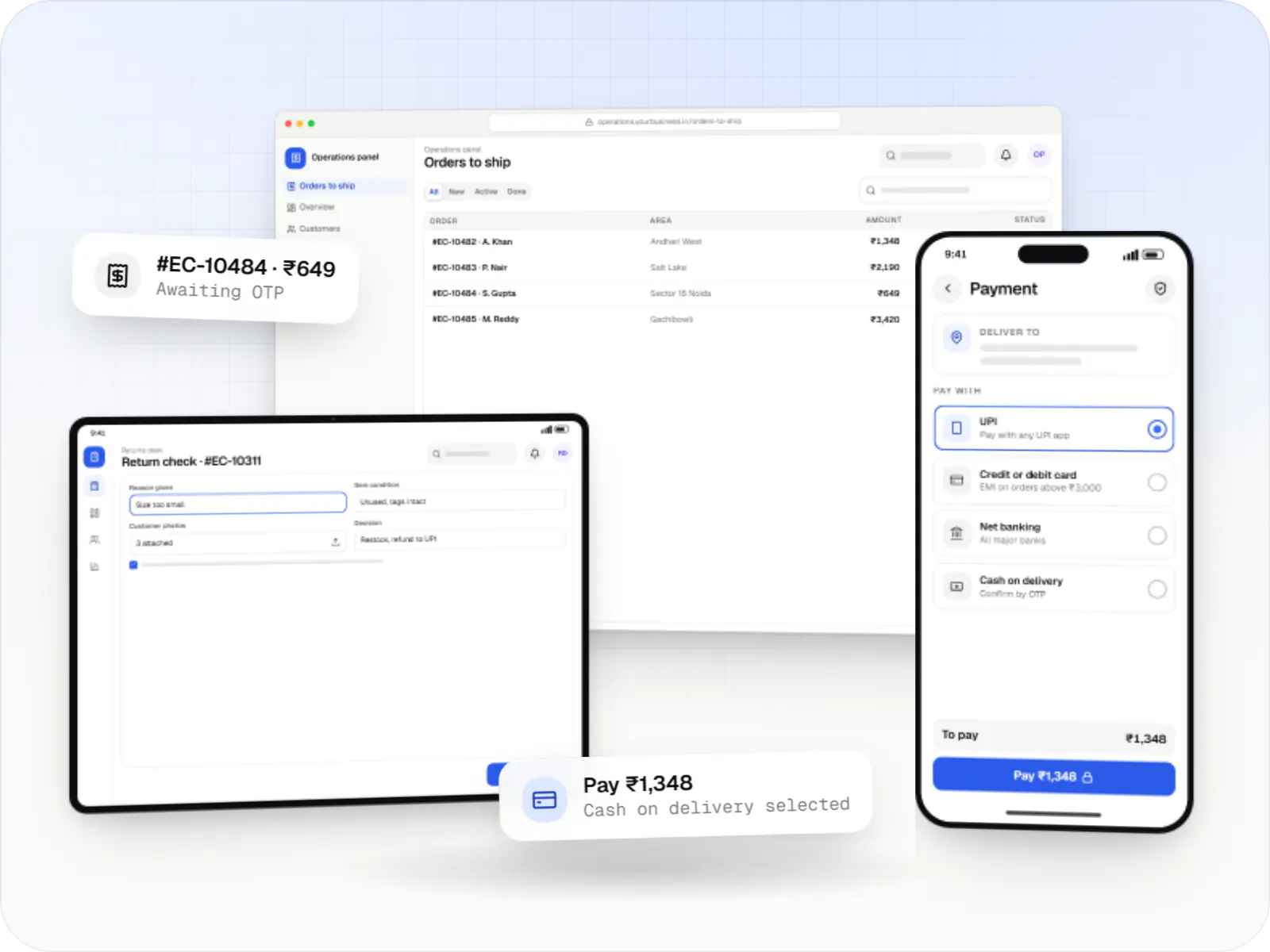
Sample screens from a typical build; the order pipeline behind them matters as much as the storefront.
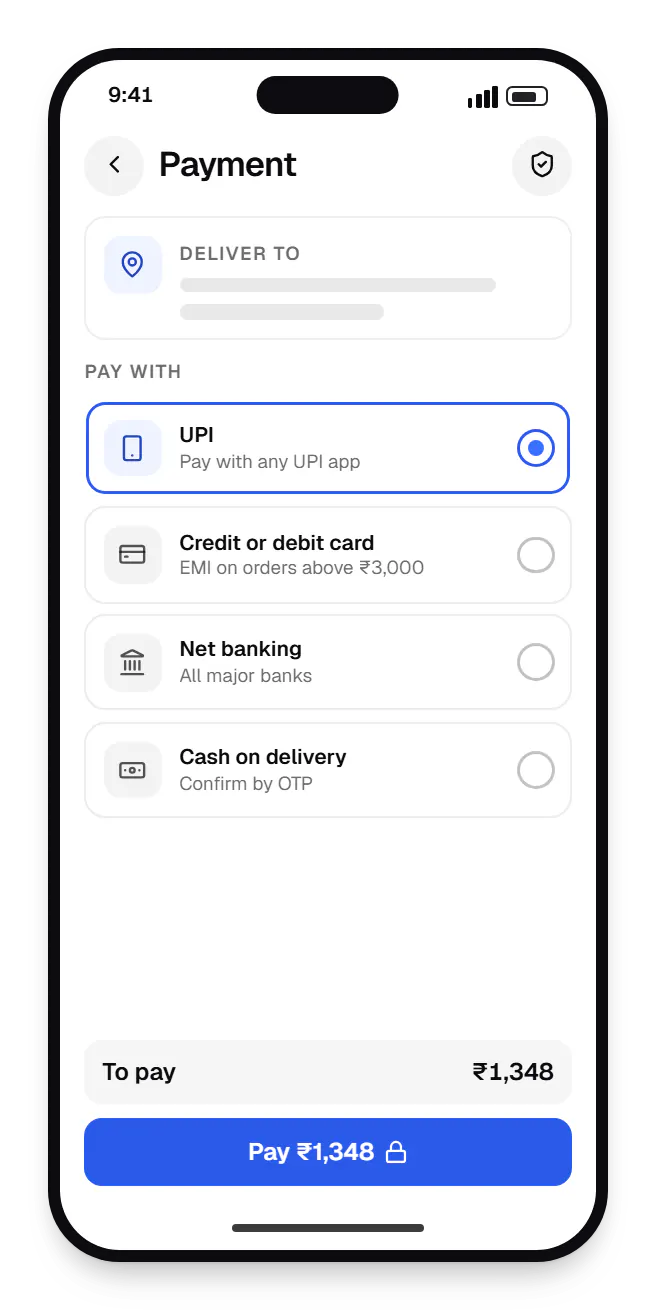
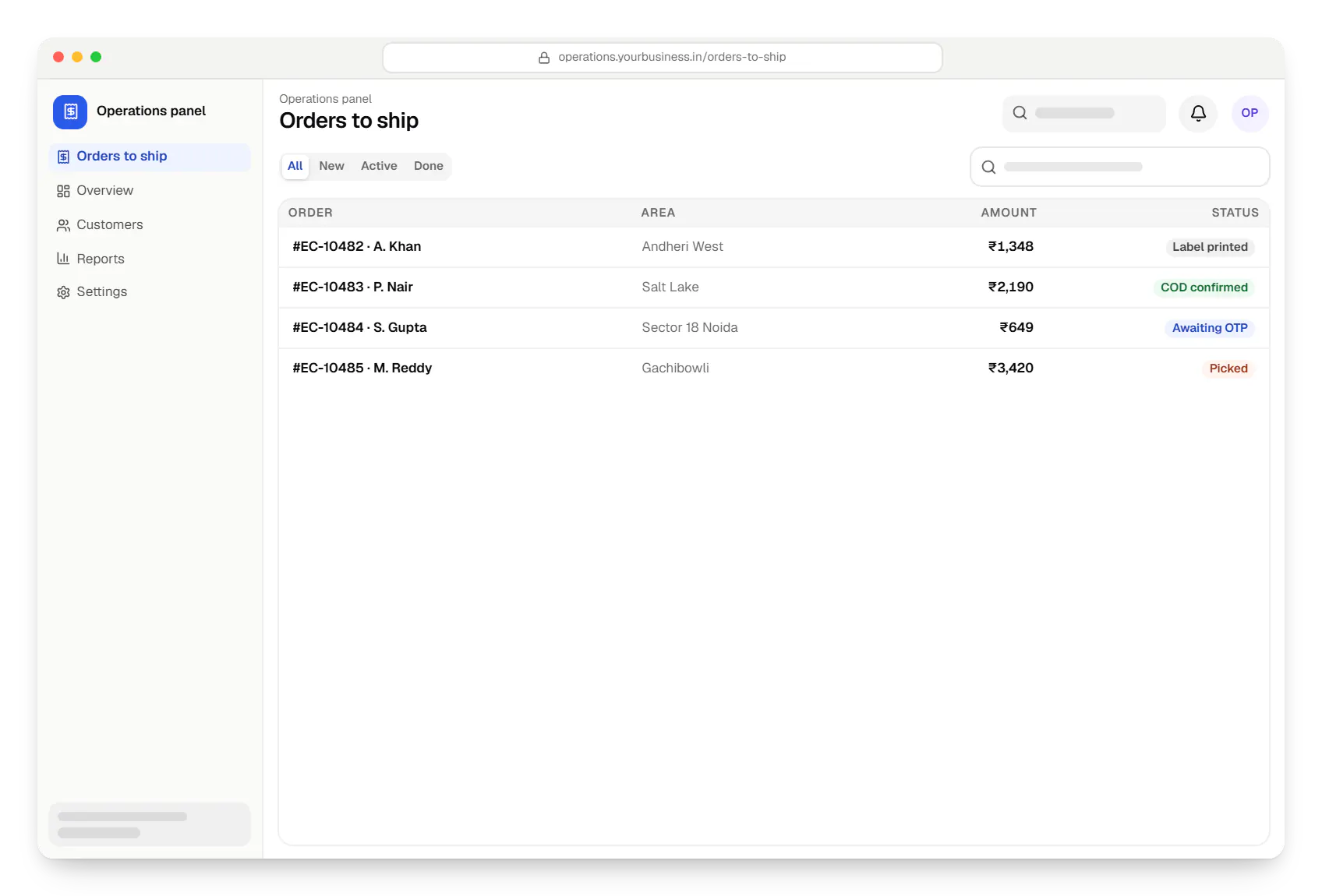
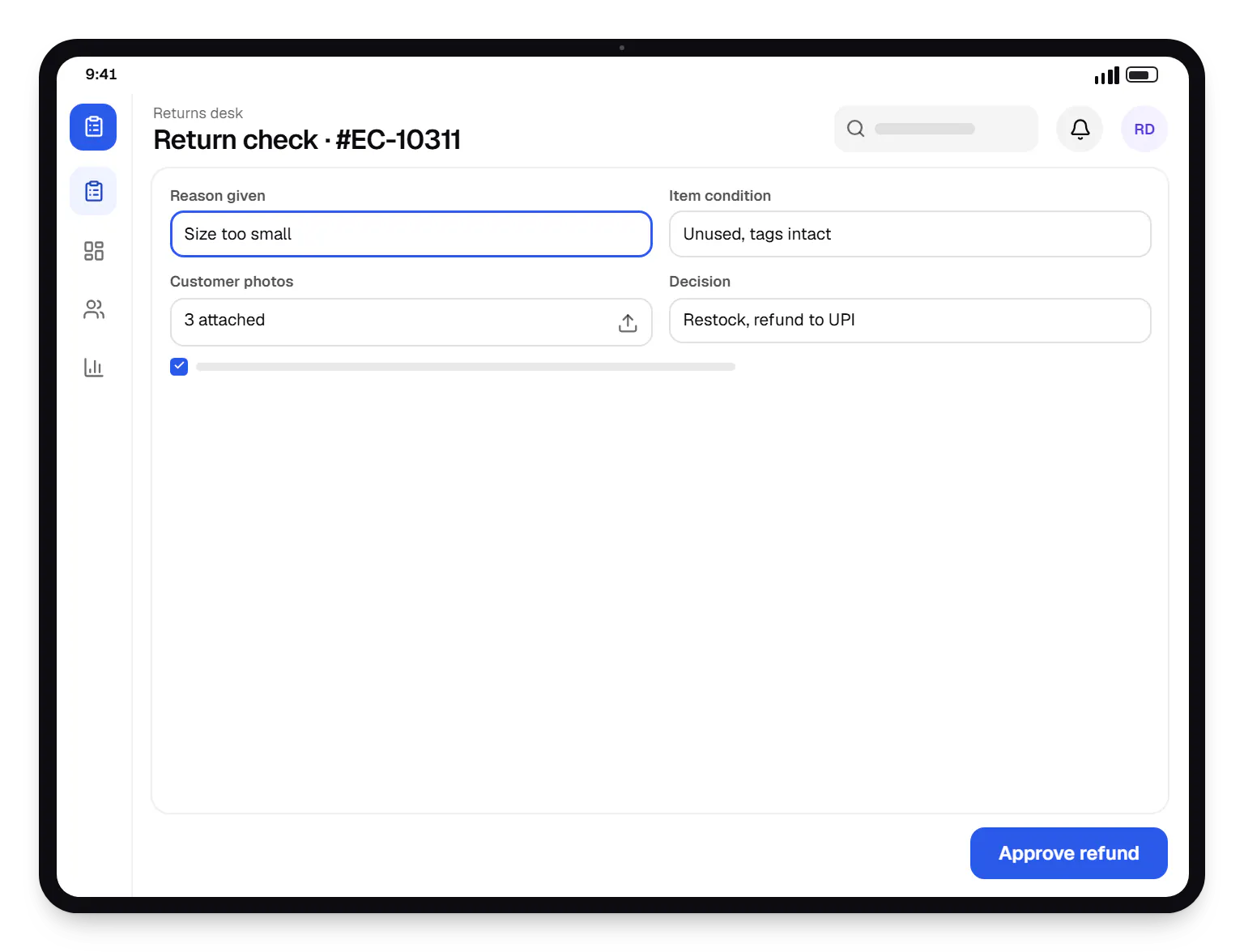
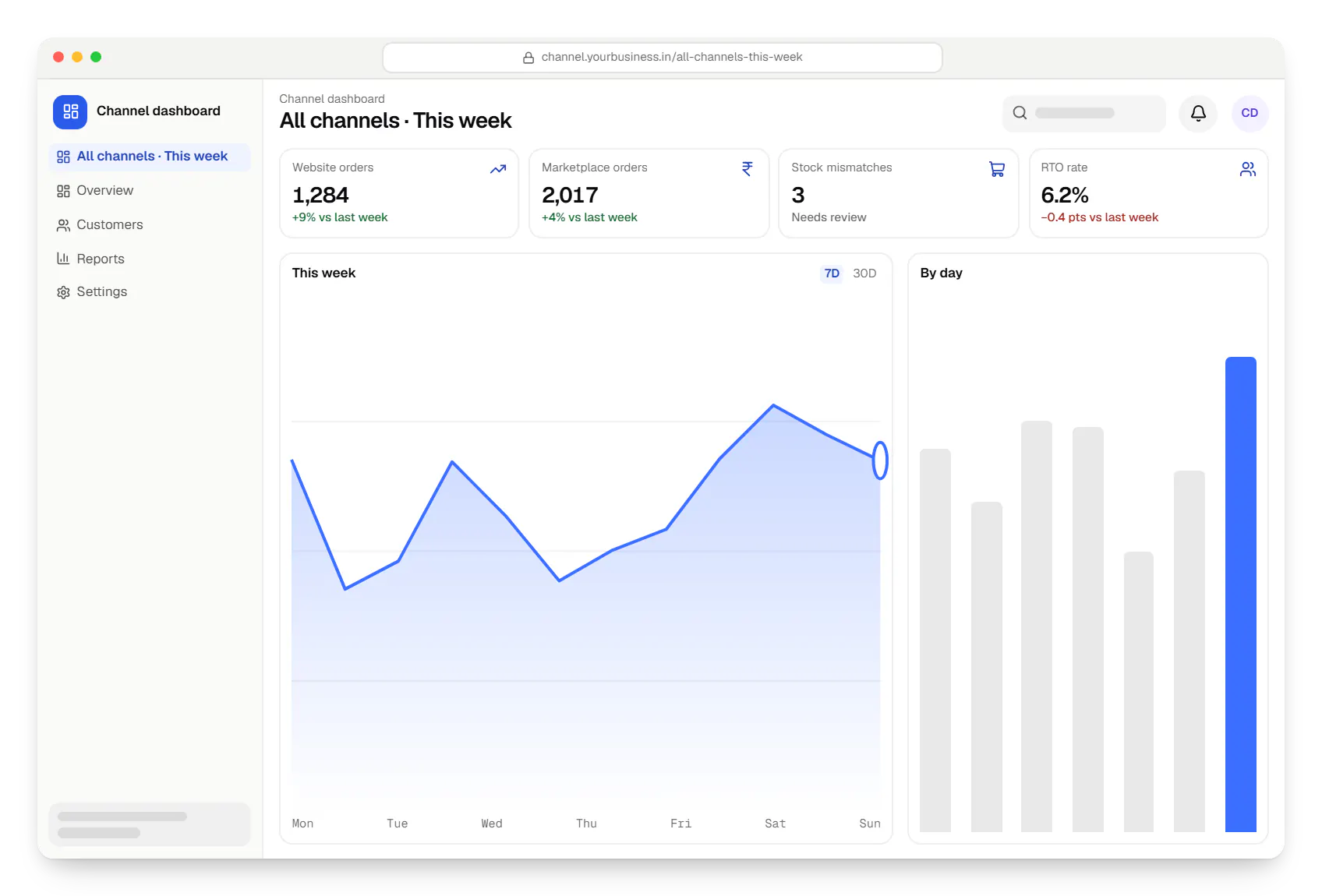
Sample screens: names, prices and figures are examples, not client data.
Work
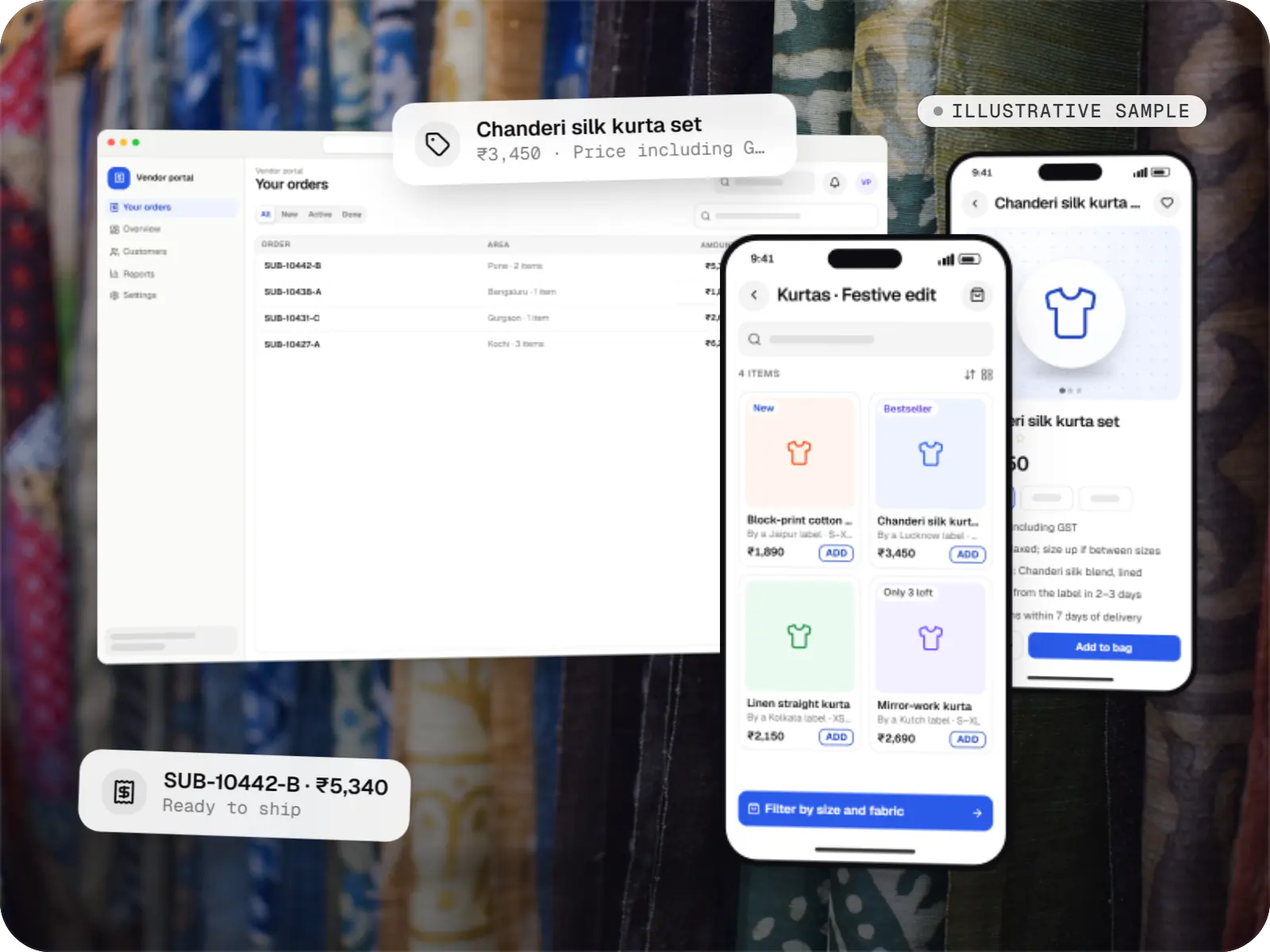
E-commerce & marketplaces
An illustrative marketplace where independent fashion labels sell through one storefront, with vendor onboarding, commission rules, multi-pickup shipping, returns and scheduled payouts.
Runs on
Built with
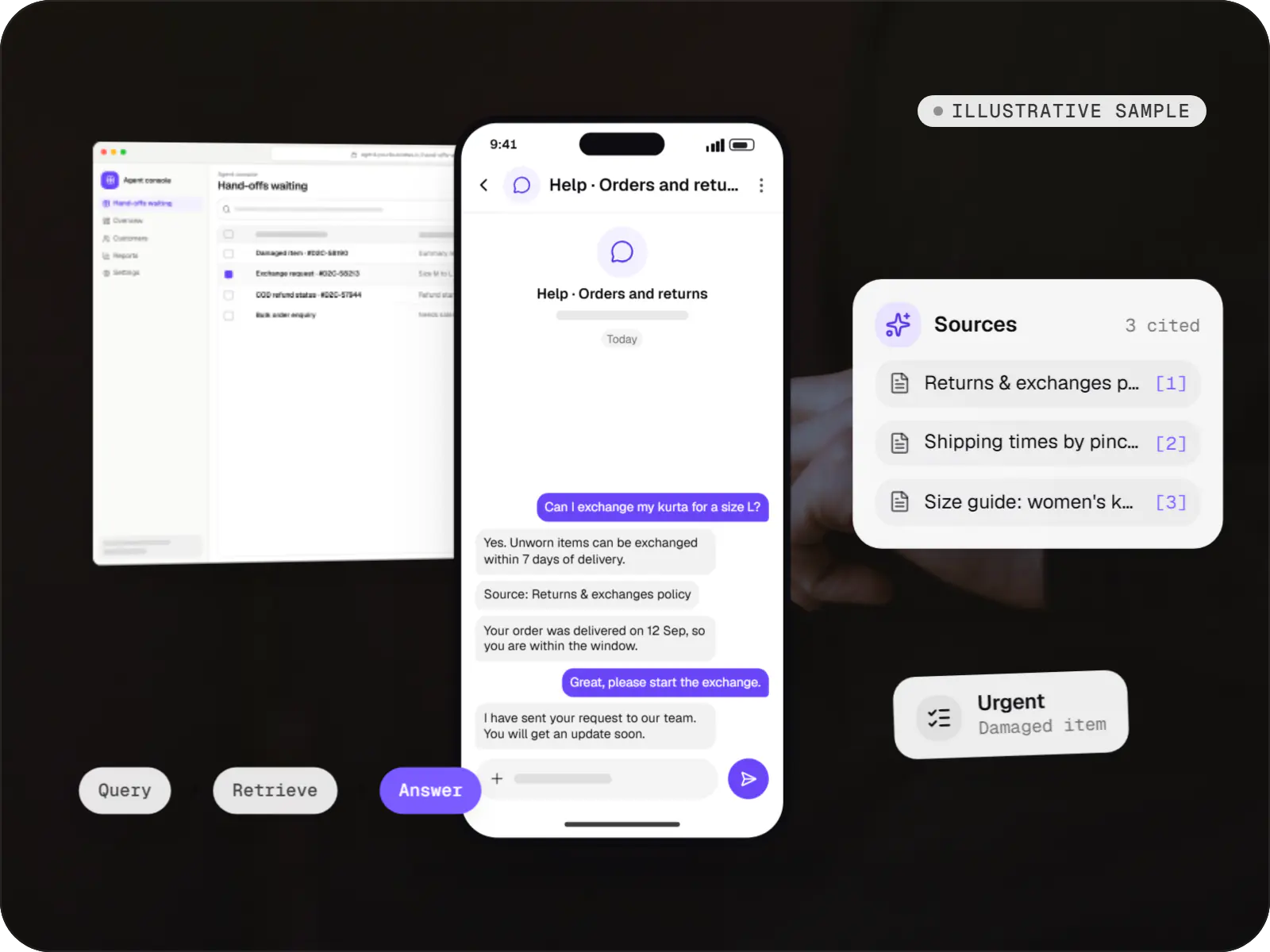
AI solutions
An illustrative AI assistant that answers order, return and product questions from a D2C brand's own policies and order data, with sources and a human hand-off.
Runs on
Built with
Cost drivers
Extending Shopify or WooCommerce costs less upfront than a custom or headless build, but limits how far checkout and operations can change.
Each marketplace, POS or warehouse system you connect adds mapping, error handling and monitoring.
Variants, bundles, B2B pricing and large SKU counts affect data modelling, search and import tooling.
Returns workflows, warehouse picking screens and custom reports are often as much work as the storefront.
Estimates are written from your scope, with the effort and assumptions behind each line item.
How pricing worksServices
The design and engineering services our in-house team combines on projects in this sector.
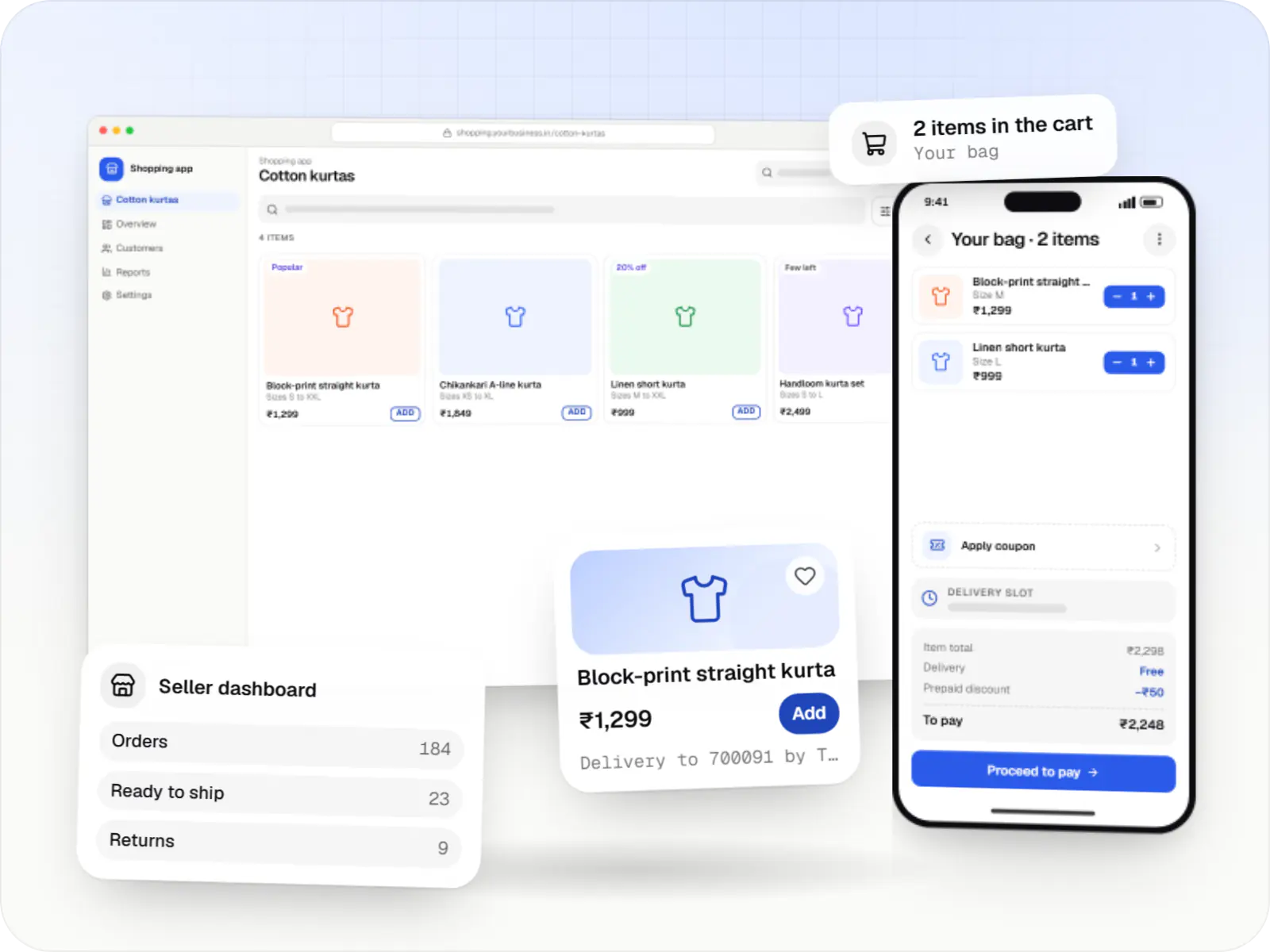
Online stores, shopping apps and B2B ordering portals on Shopify, WooCommerce or custom stacks, wired to Indian payments, couriers and GST invoicing.
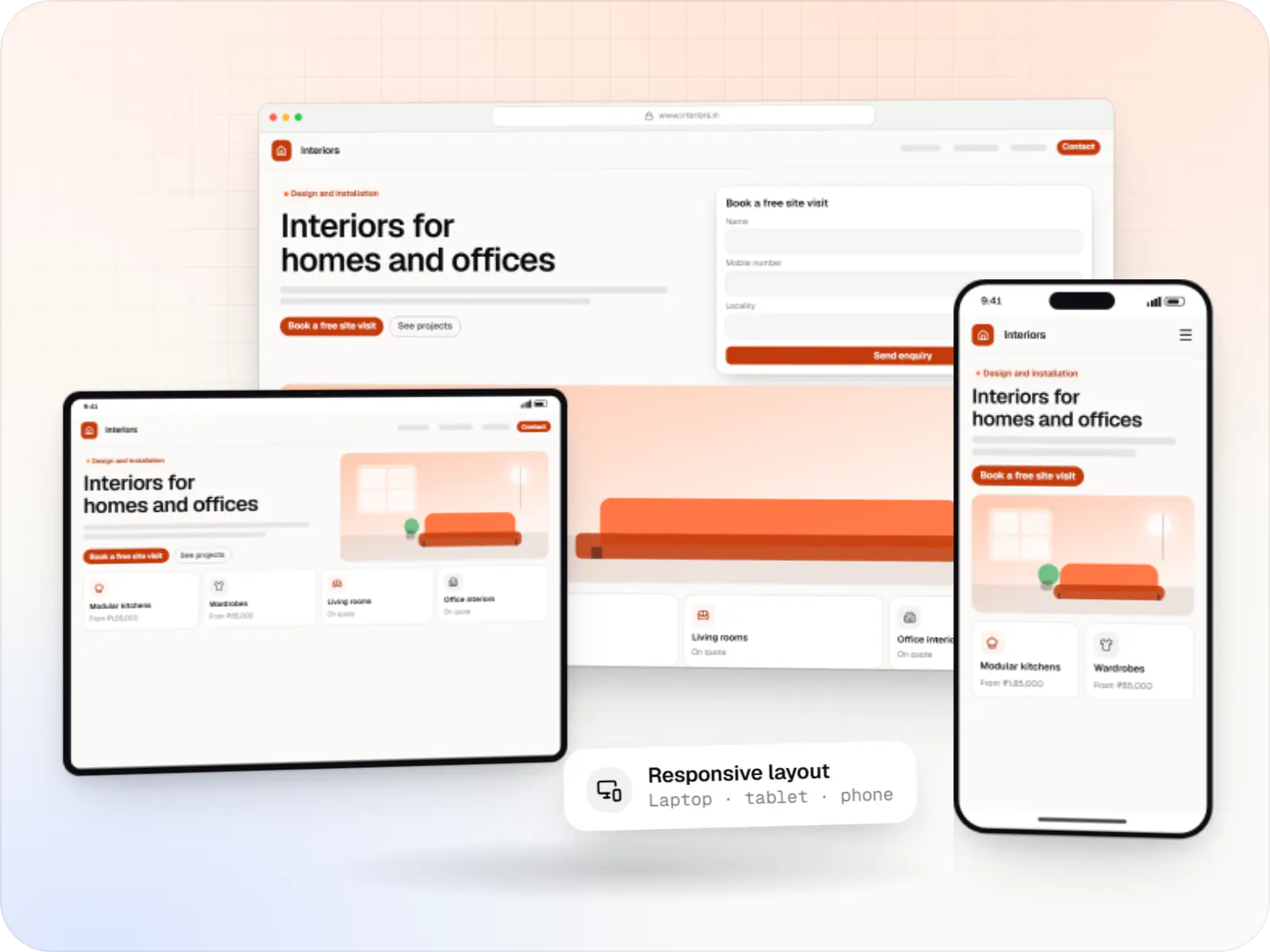
Fast, SEO-ready company and marketing websites with a CMS your team can edit, designed and built by our in-house team.
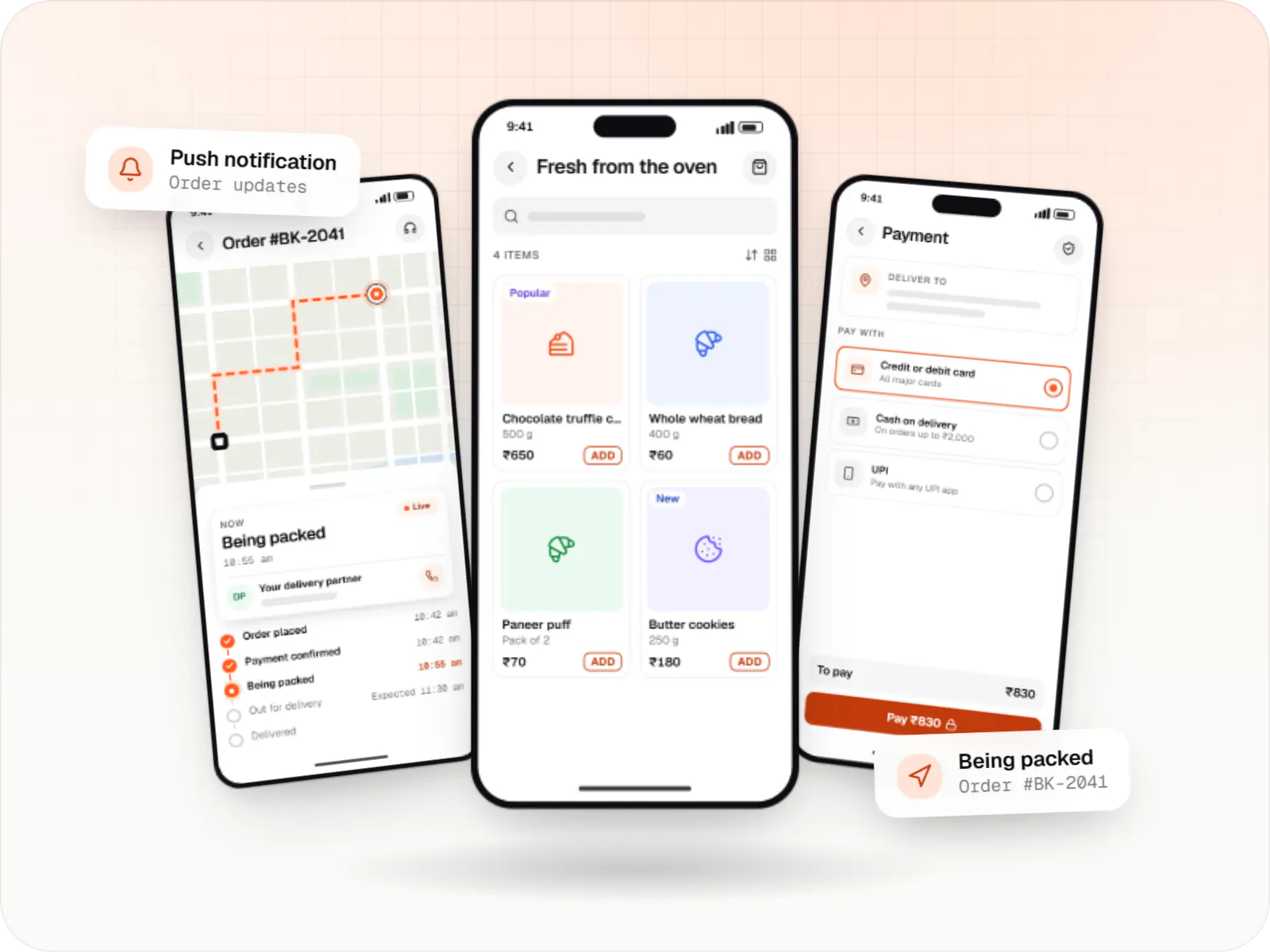
Native and cross-platform Android and iOS apps, from first release through regular store updates, built by our in-house designers and engineers.
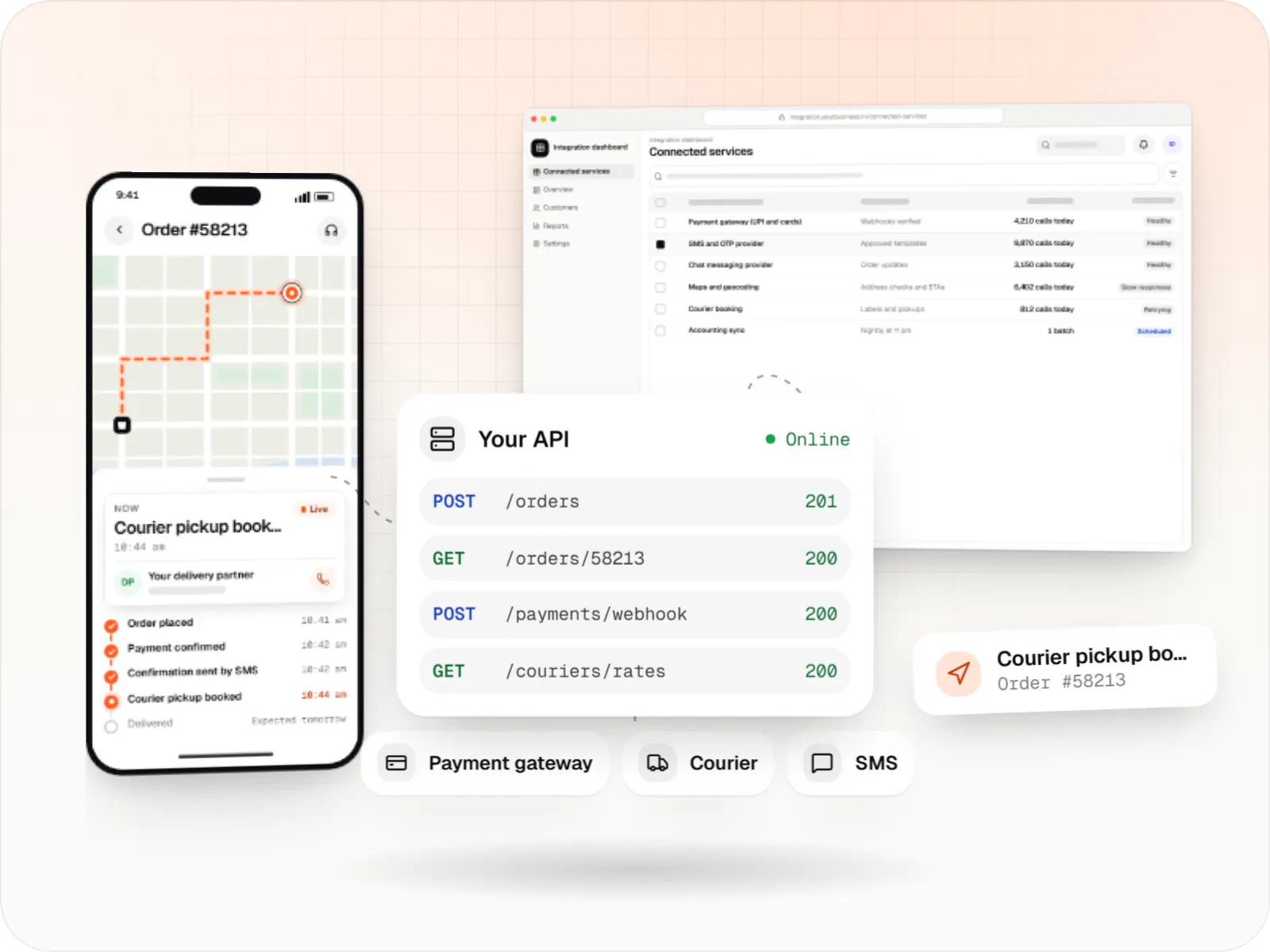
Secure, documented REST and GraphQL APIs, plus integrations that connect your apps to payment, logistics, GST, messaging and business systems.
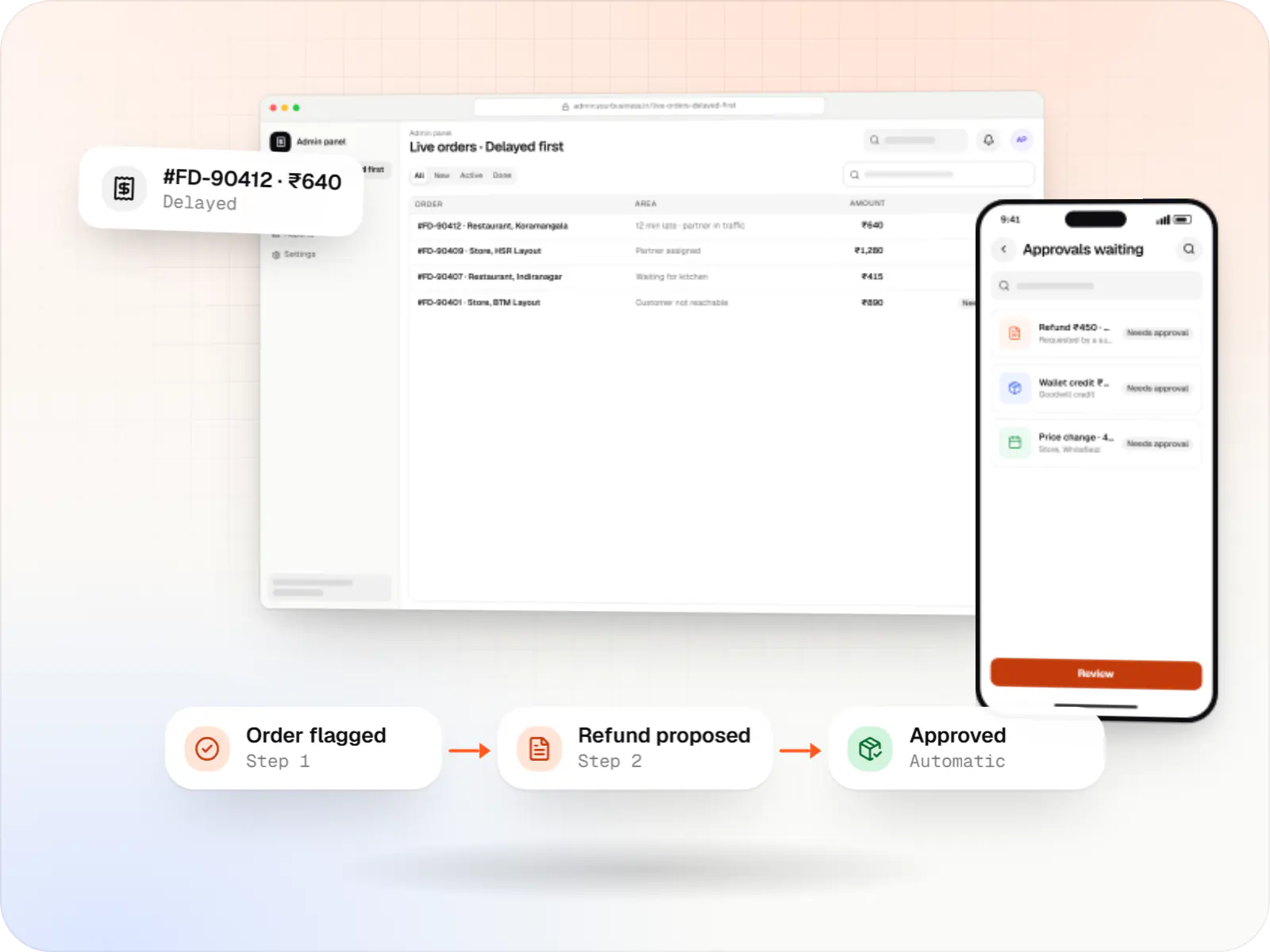
Back-office dashboards built around your team's daily tasks: order queues, approvals, catalogue management, payouts, reports and audit logs.
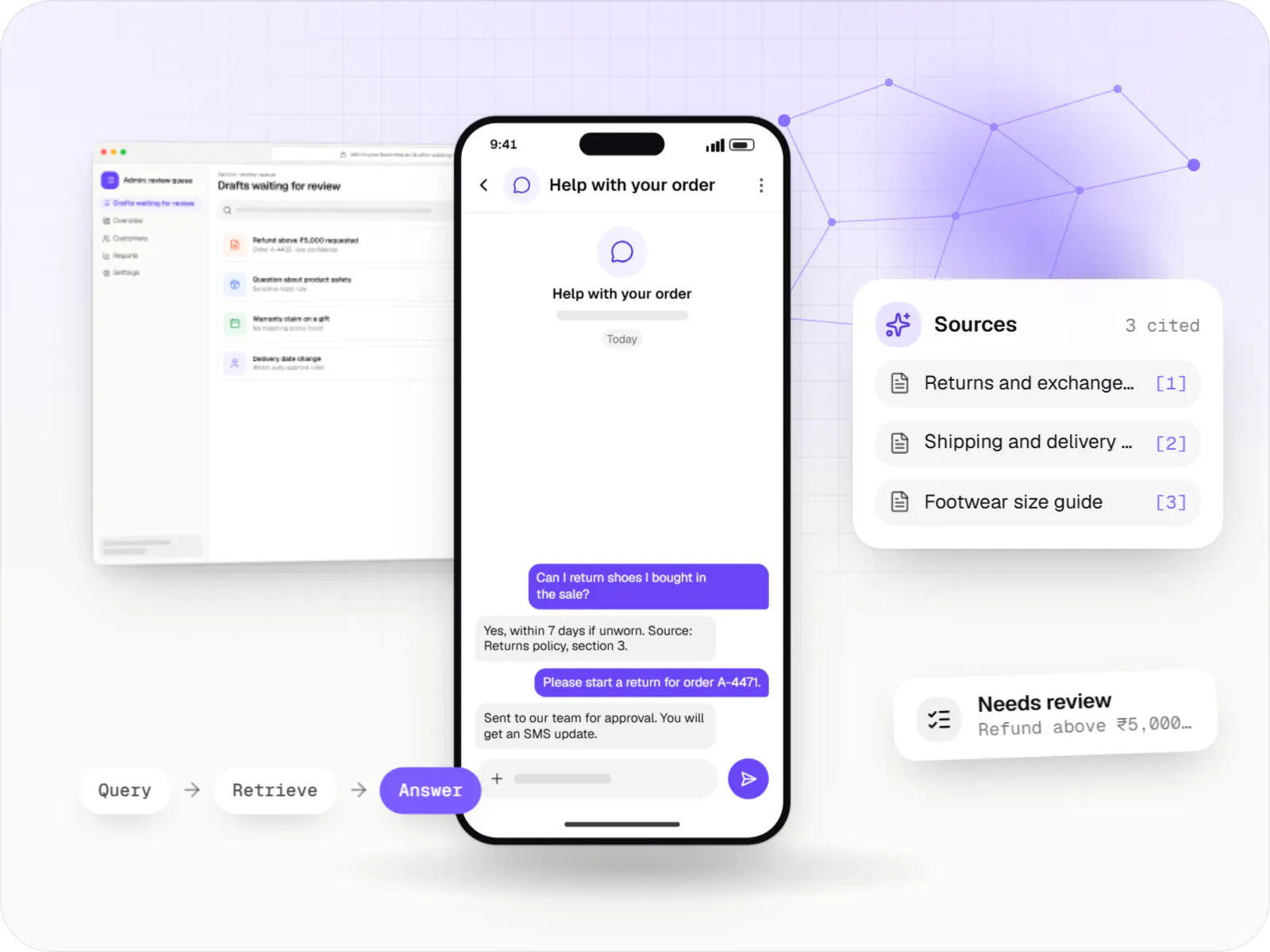
AI features and AI-first apps built on model APIs, retrieval over your own data, workflow automation or custom ML, with evaluation and human review.
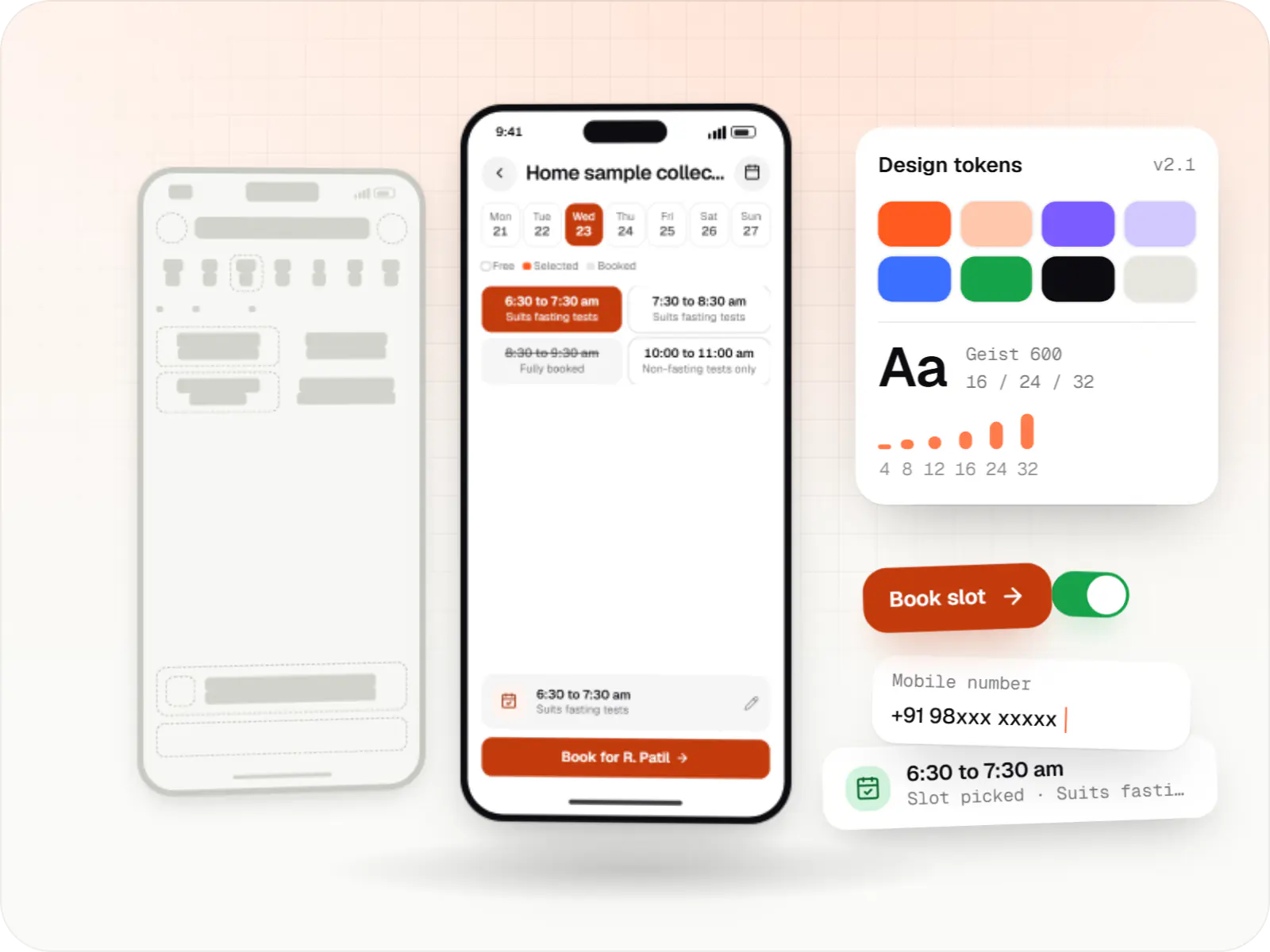
Product design for web and mobile apps: research, user flows, wireframes, prototypes and design systems that engineers can build from.
FAQ
It depends on how different your operations are. Shopify or WooCommerce is usually the sensible start when catalogue, checkout and fulfilment are standard, and we can build custom apps or integrations on top. A custom or headless build makes sense when you need unusual pricing, B2B flows, deep marketplace or ERP integration, or full control over performance and data. We'll set out both options, including running costs, before you commit.
Software can't eliminate RTO, but it can cut avoidable cases. Common measures are confirming COD orders by OTP or WhatsApp before dispatch, limiting COD for pincodes and customers with poor delivery history, nudging buyers towards prepaid with small incentives, and acting quickly on courier non-delivery reports so a reattempt is scheduled. We build these as configurable rules your team can tune as data comes in.
Yes, through Amazon's Selling Partner API and Flipkart's seller APIs, subject to the access your seller accounts have, or through a multichannel tool if you already use one. The usual scope is product and stock sync, order import and status updates. We add a reconciliation view so mismatches show up in one place instead of surfacing later as cancelled orders or customer complaints.
Most Indian stores use Razorpay, Cashfree, PayU or PhonePe's payment gateway for UPI, cards, net banking, wallets and EMI. We implement webhooks and server-side verification so an order is confirmed only once payment is actually captured, plus refund APIs for returns and cancellations. For international buyers, Stripe or PayPal can run alongside your domestic gateway, with currency and tax handling planned upfront.
Next step
Walk us through your order flow and channels. We'll map what can be automated and give you a phased, line-item estimate.