

Backend
Python
A programming language for AI features, data processing and automation: the engine behind document reading, reports and smart search.
Used for
- AI features
- Document reading
- Reports and analytics
- Task automation
AI recommendation systems
Product, content and offer recommendations built from your behavioural data, with business rules, cold-start handling and A/B testing.
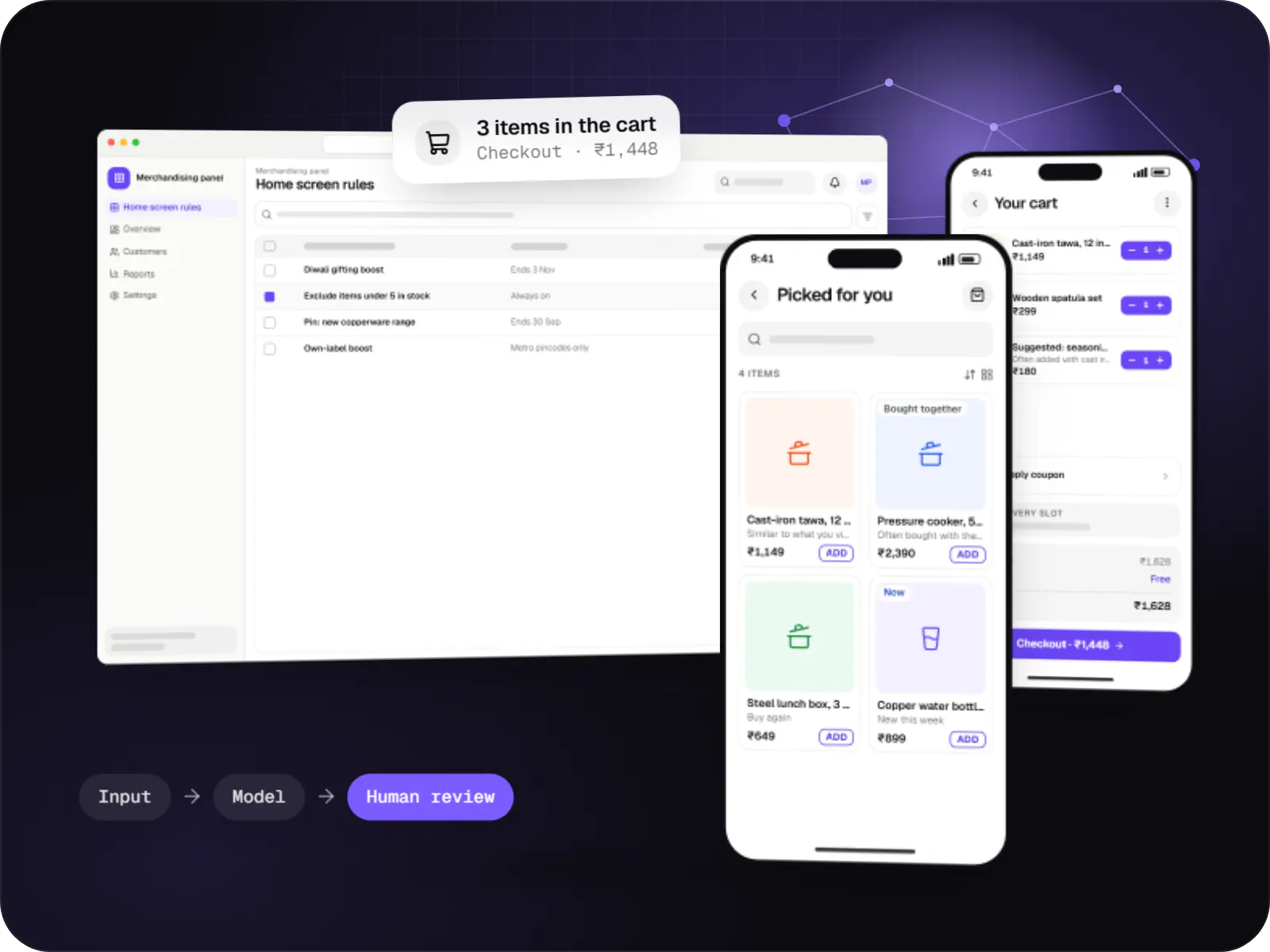
At a glance
How to start
Tell us what you need in your own words. You talk to the developers who would build it and get a written, line-item estimate.
Get a project estimateEvery recommendation project should begin with a simple baseline: bestsellers by category and city, recently viewed, frequently bought together. It is cheap, explainable and often hard to beat on small catalogues or thin traffic.
Once events are tracked properly, we train models on behaviour: matrix factorisation or two-tower retrieval for “people like you”, embeddings for “similar to this” when items are new. Candidates are re-ranked by rules: in stock, deliverable to the user’s pincode, within margin, not already bought. Every change runs as an A/B test.
Challenges
A static list ignores the gap between a first-time buyer in Indore and a repeat customer in Pune.
Items without history are never shown, so they never collect data.
Out-of-stock or undeliverable items waste the slot and frustrate buyers.
Without controlled tests, ranking changes are judged on anecdotes and seasonal noise.
What is included
Platform: App and website SDK
Platform: Backend services
Platform: API
Platform: Admin dashboard
How it works
Models suggest, your rules decide, and a controlled test shows whether it helped.
Views, searches, add-to-carts and purchases are tracked consistently, with consent, and linked to the account after login.
“Bought together”, “similar items” and “people like you” models each propose a few hundred possible products.
Out-of-stock, undeliverable-to-this-pincode and already-bought items are dropped; margin and variety are balanced.
A fast API returns the ranked list from cache in milliseconds. If a model is unavailable, bestsellers fill the slot.
Some shoppers keep the old version, so clicks, add-to-carts and orders show whether the change really helped.
Your team pins launches, excludes items or sets festive overrides, and models retrain on fresh data on a schedule.
Then it starts again at step 1: Shopper behaviour is recorded
Integrations
Items, attributes, prices and stock as the source of truth.
Behavioural data exported into the training pipeline.
Widgets or API responses in your theme or app.
Pincode and slot constraints applied at ranking time.
Text and image embeddings for items with no history.
Recommendations fed into push, email and WhatsApp campaigns.
Training data and experiment analysis.
Privacy & security
Behavioural tracking is disclosed and respects consent choices, in line with DPDP Act 2023 duties.
Health-related or religion-linked signals stay out of targeting without a clear, consented purpose.
Models train on internal IDs, not names, phone numbers or addresses.
The DPDP Act restricts behavioural monitoring of children, and learning apps for minors are designed around it.
Platforms
On your website and in your apps for Android and iOS, through an API any web app can call, with rules and experiments managed from an admin dashboard.
Marketing and content websites: fast, search-friendly pages with a CMS your team can update without a developer.
Apps for Android phones and tablets, tested on budget and mid-range devices and published on Google Play or privately.
Apps for iPhone and iPad, built to Apple's guidelines and released through TestFlight and the App Store.
Browser-based applications with logins, roles and workflows, such as customer portals, SaaS products and internal tools.
Back-office panels for operations, support and finance teams: orders, users, content, reports and permissions.
Technology
Python trains and scores the models, PostgreSQL keeps the history, Redis serves picks in milliseconds, and the nightly pipeline is built on AWS with Docker so it runs the same way every time.
Backend
A programming language for AI features, data processing and automation: the engine behind document reading, reports and smart search.
Used for
Data
A reliable database for the records your business runs on: orders, payments, bookings and stock, kept accurate and easy to report on.
Used for
Data
Keeps frequently used data in fast memory, so apps stay quick on busy days and live features like order tracking feel instant.
Used for
Cloud & DevOps
Cloud hosting for your app, website and data, with data centres in India and room to grow when traffic rises.
Used for
Cloud & DevOps
Packages your software so it runs the same way on every laptop and server, which makes releases predictable and moving hosts easier.
Used for
Backend
Runs the server side of apps: fast, scalable back ends that power your app, website and integrations.
Used for
Adds AI features such as chat assistants, document summaries and smart search to your product, built on OpenAI models with human review.
Used for
Plain-English glossary
Product preview
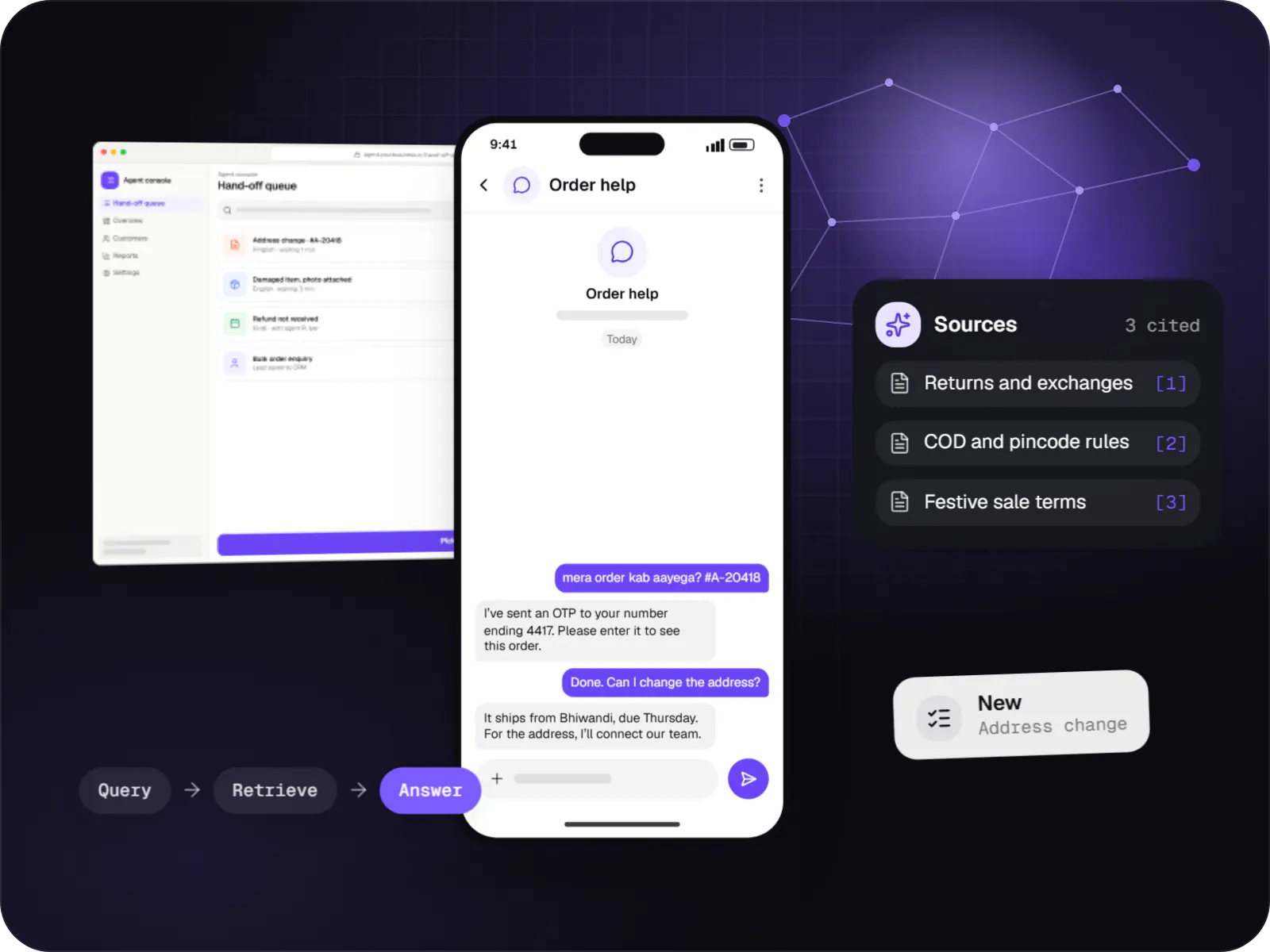
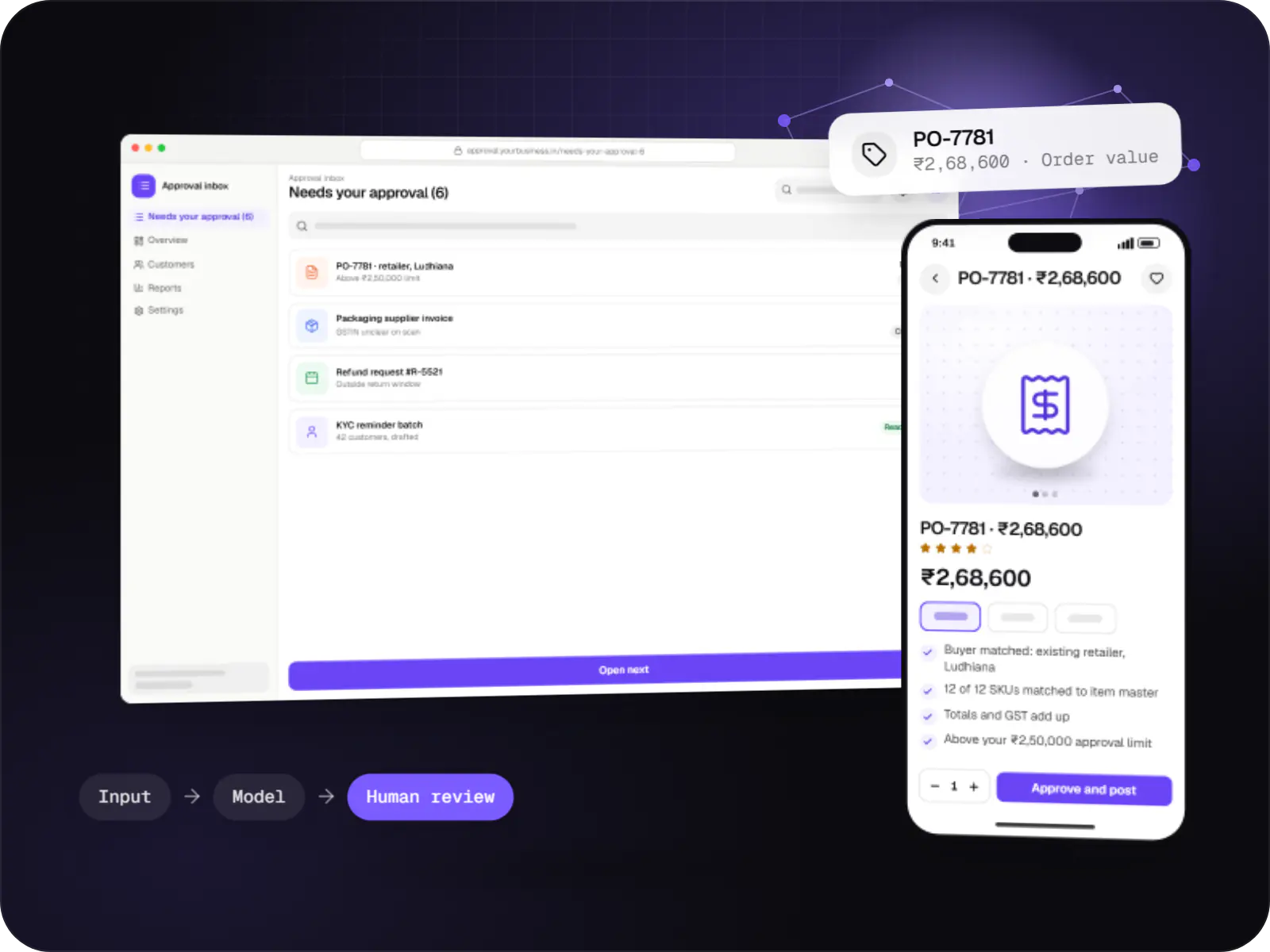
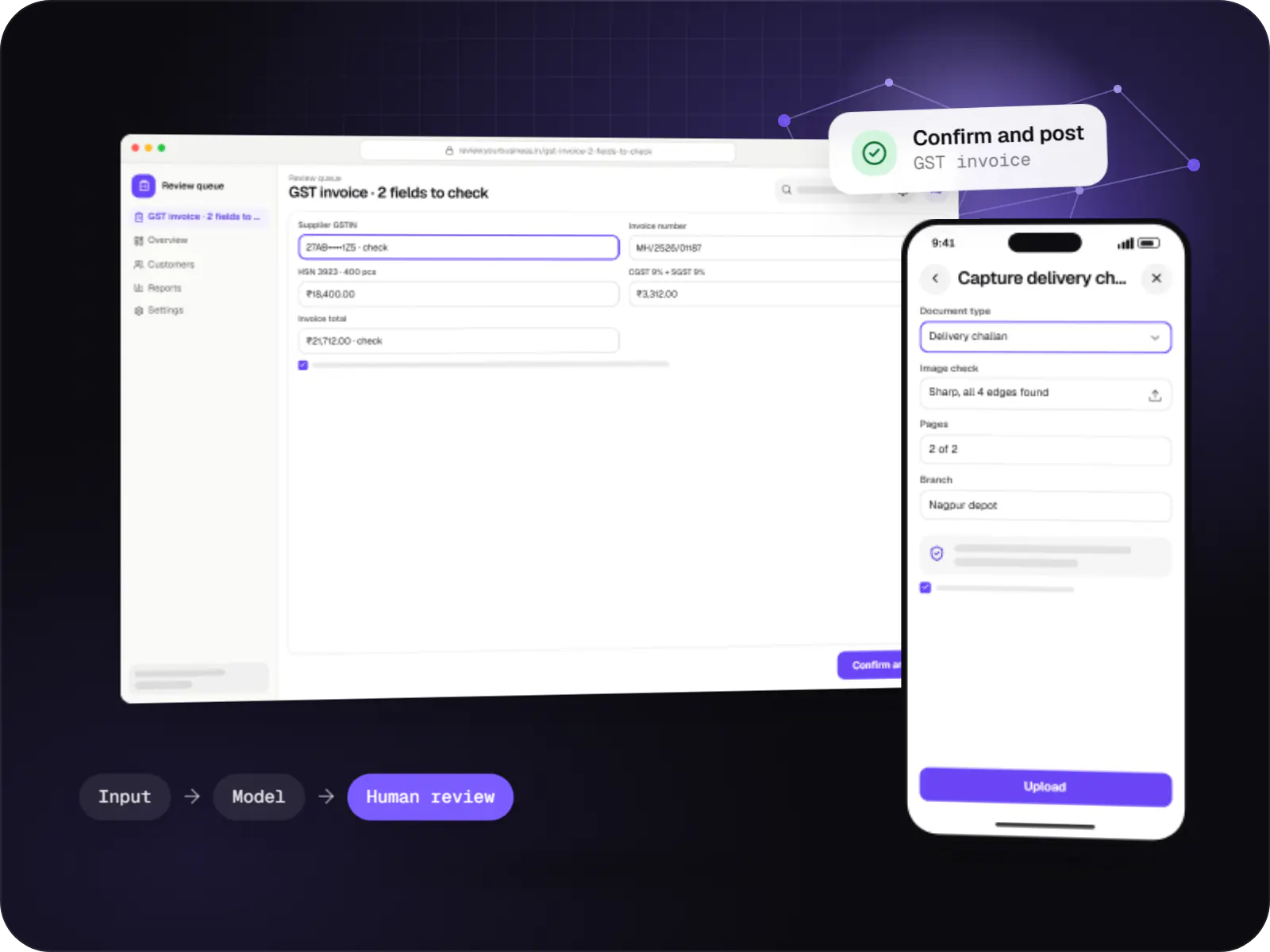
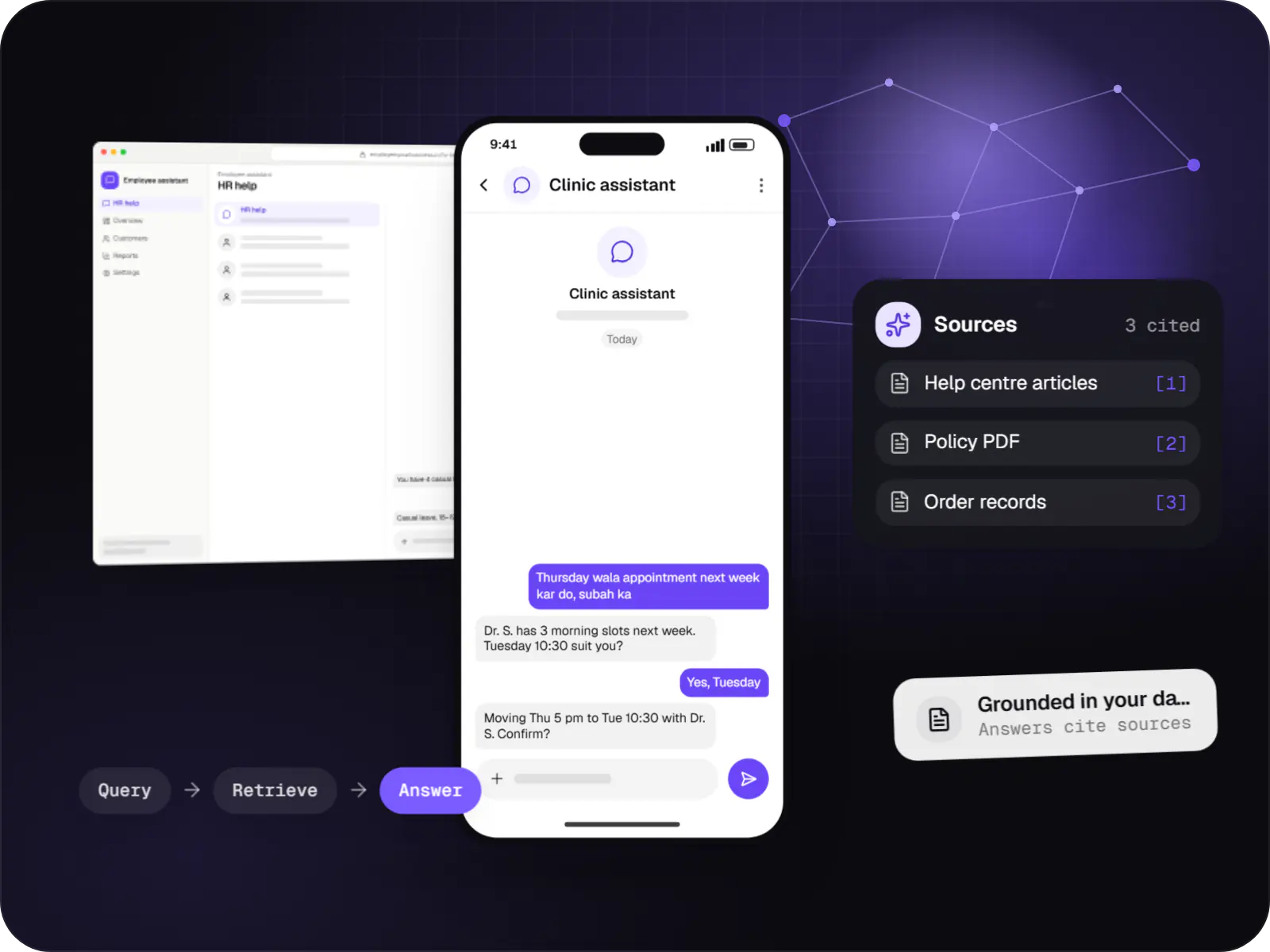
Illustrative screens, using a home and kitchen store as the example.
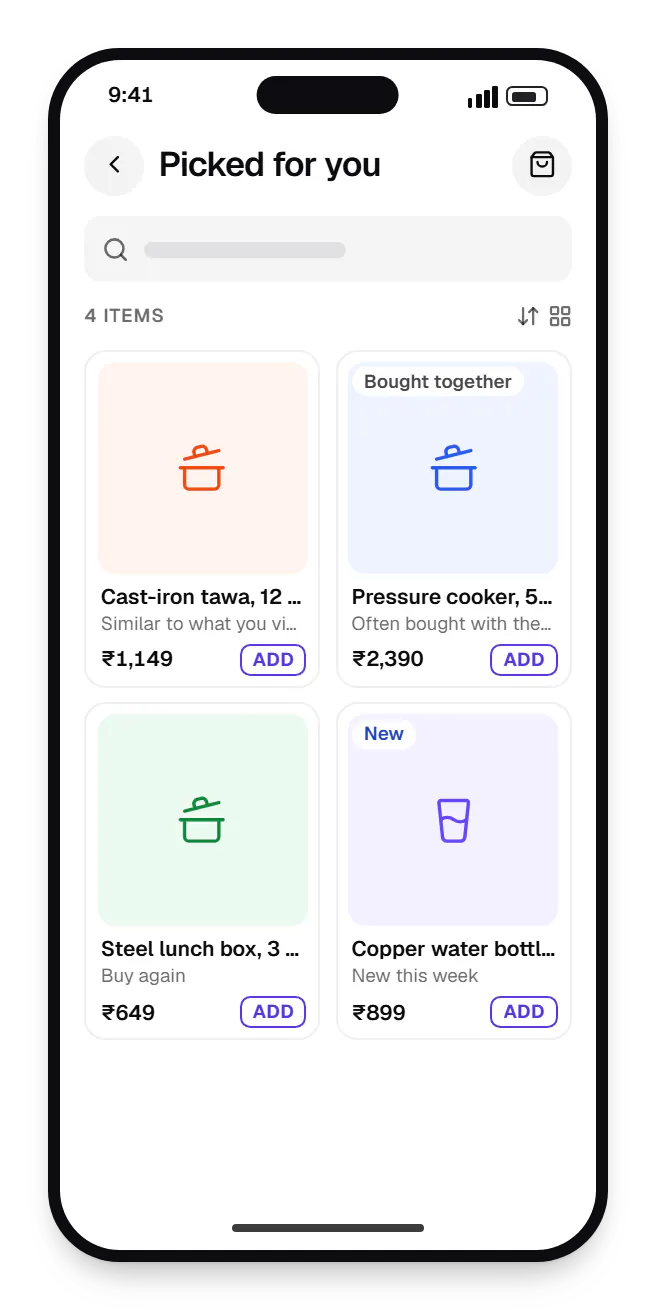
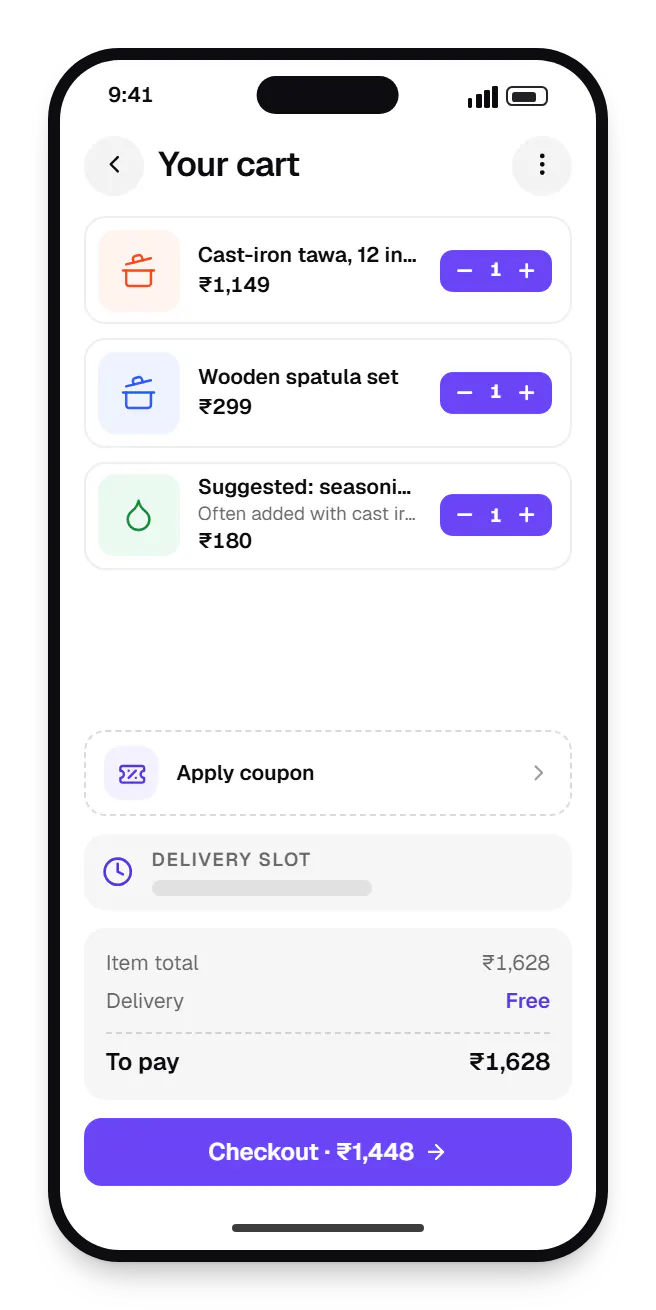
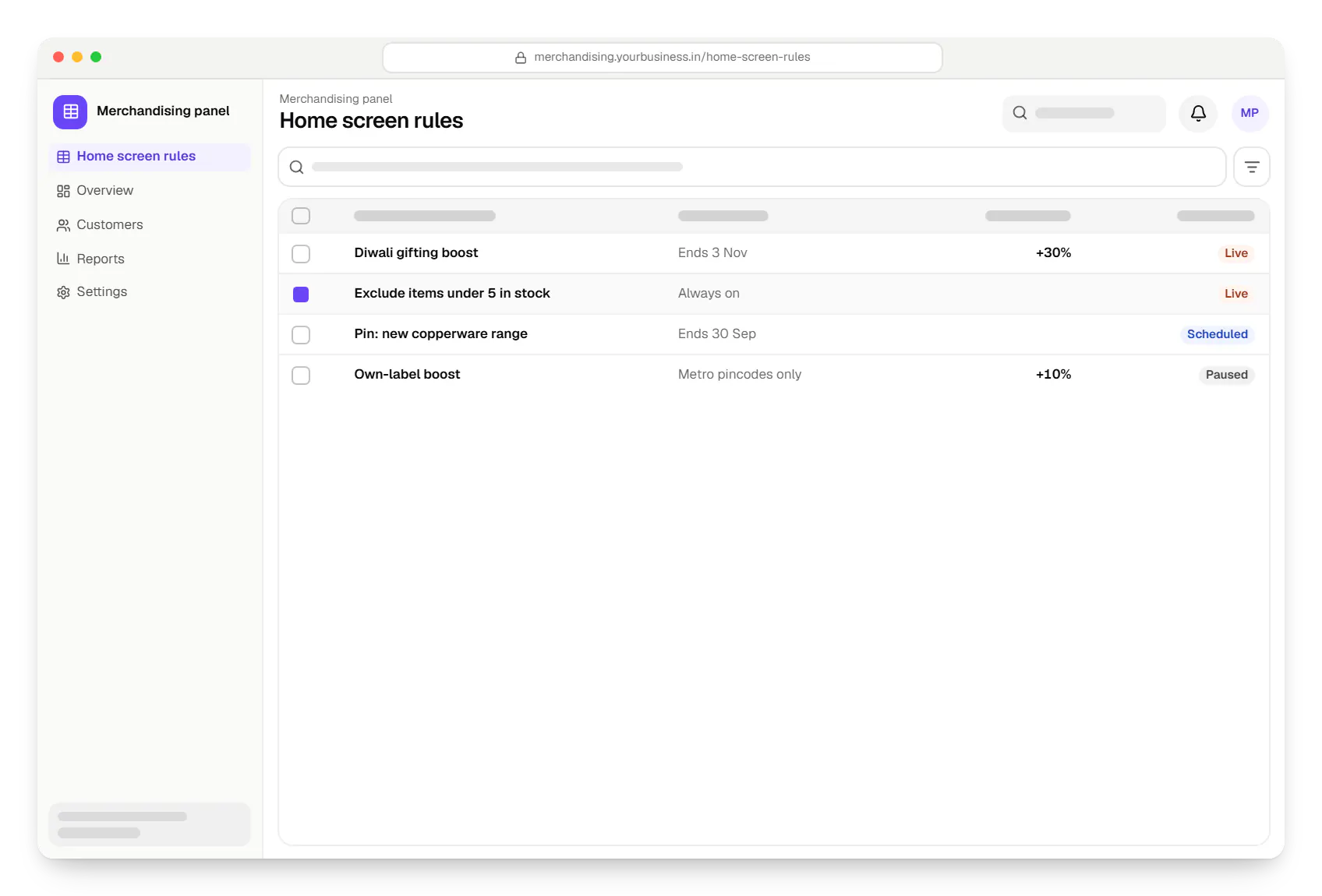
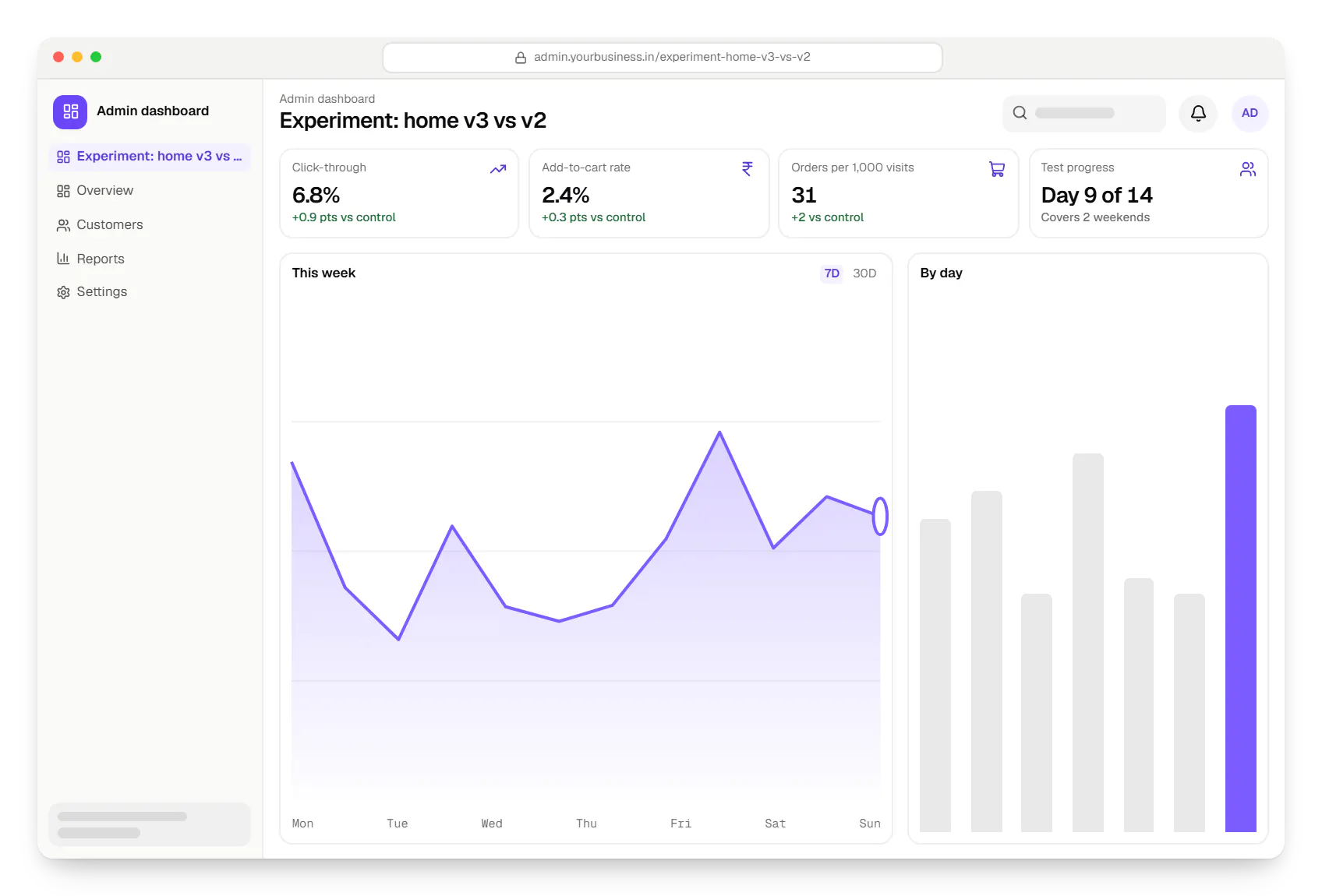
Sample screens: names, prices and figures are examples, not client data.
Industries
Services
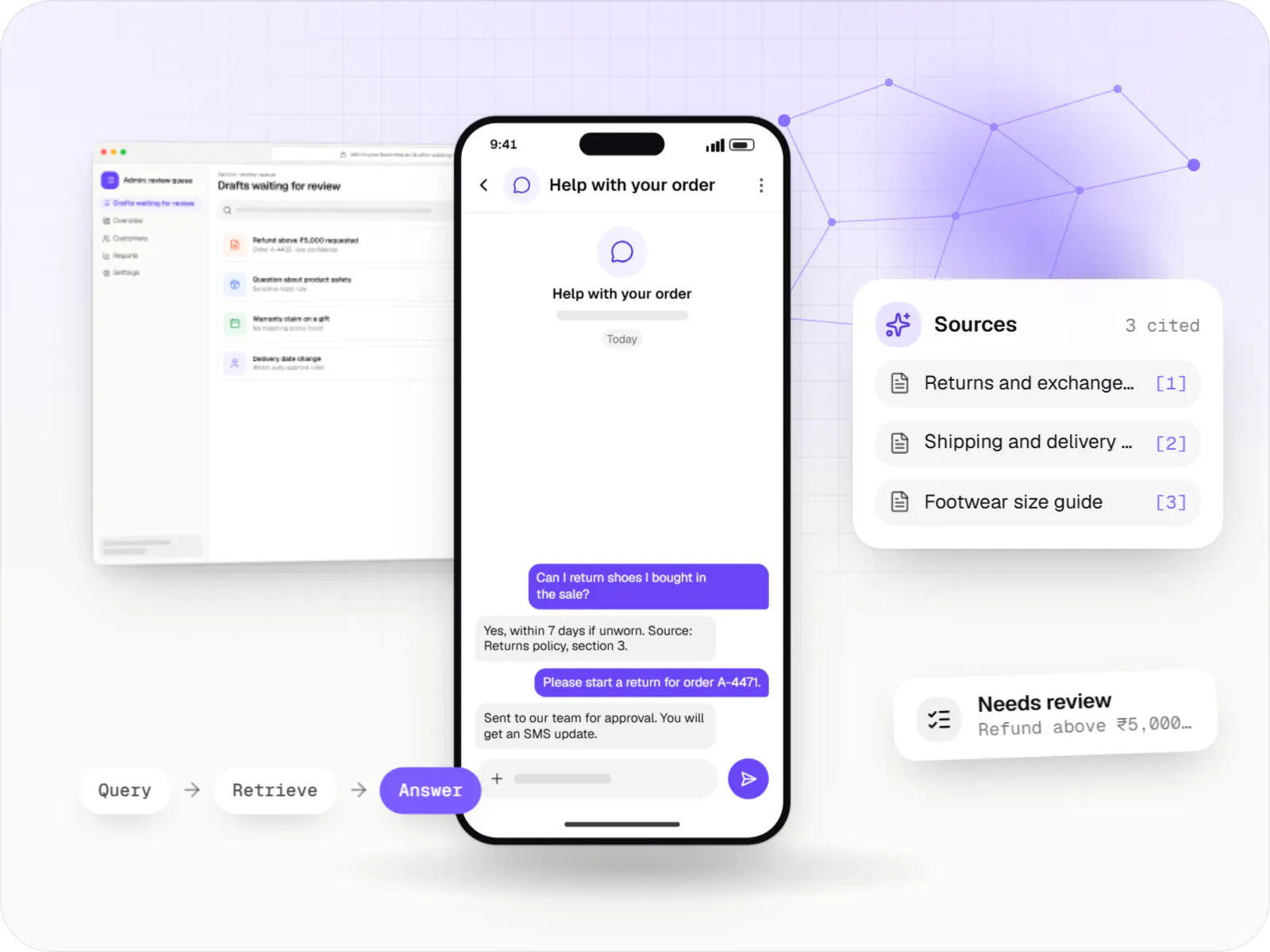
AI features and AI-first apps built on model APIs, retrieval over your own data, workflow automation or custom ML, with evaluation and human review.
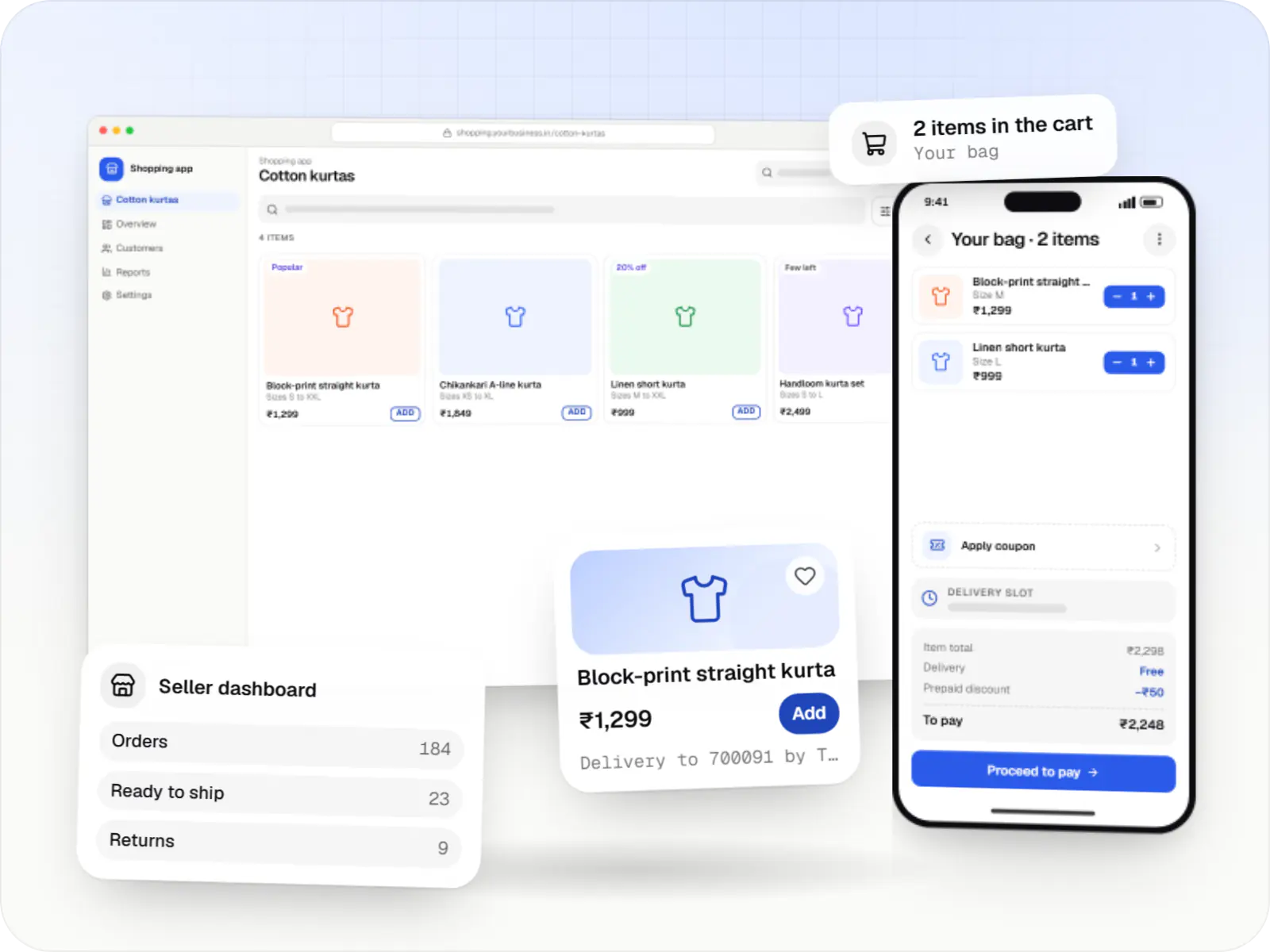
Online stores, shopping apps and B2B ordering portals on Shopify, WooCommerce or custom stacks, wired to Indian payments, couriers and GST invoicing.
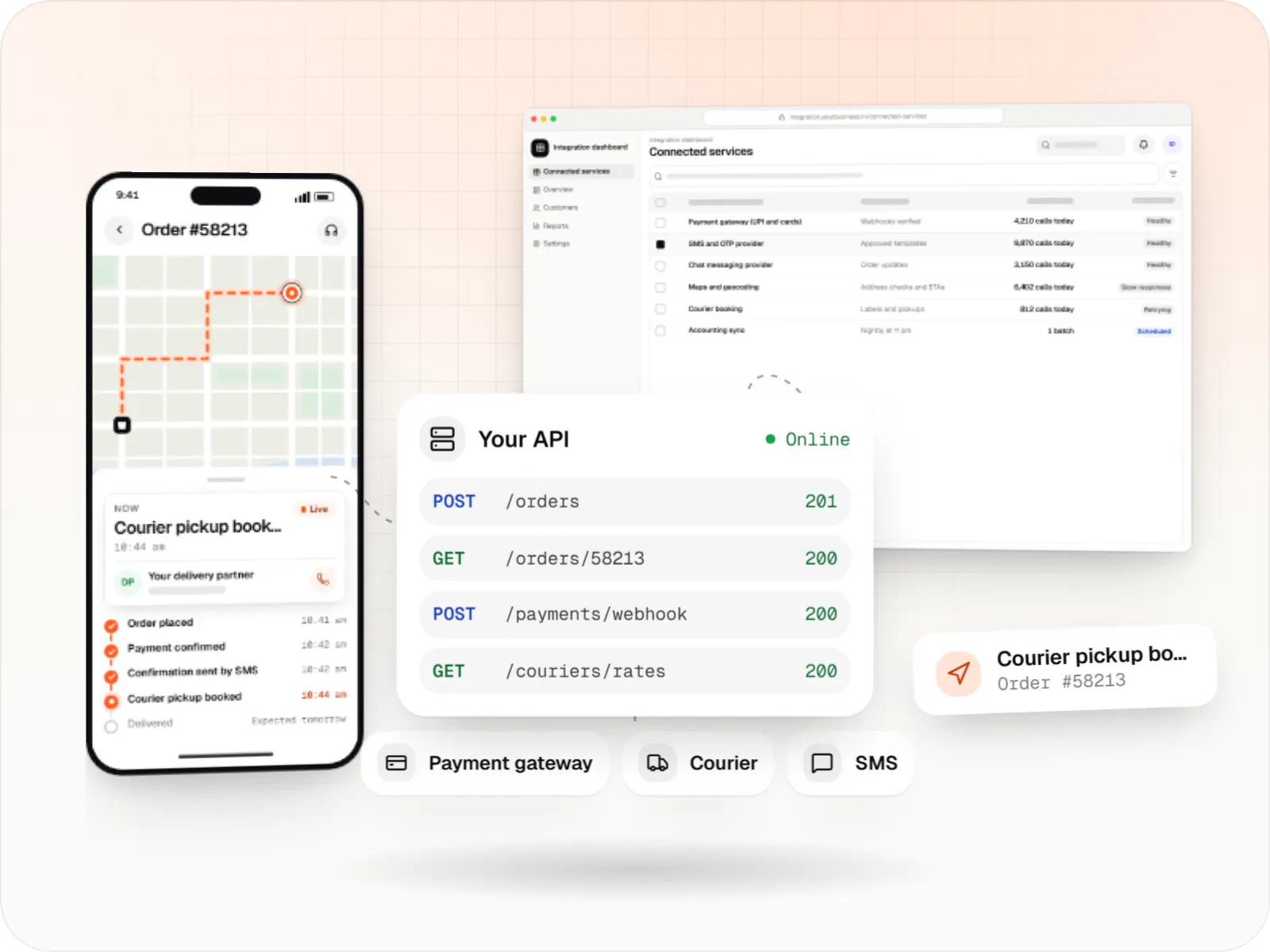
Secure, documented REST and GraphQL APIs, plus integrations that connect your apps to payment, logistics, GST, messaging and business systems.
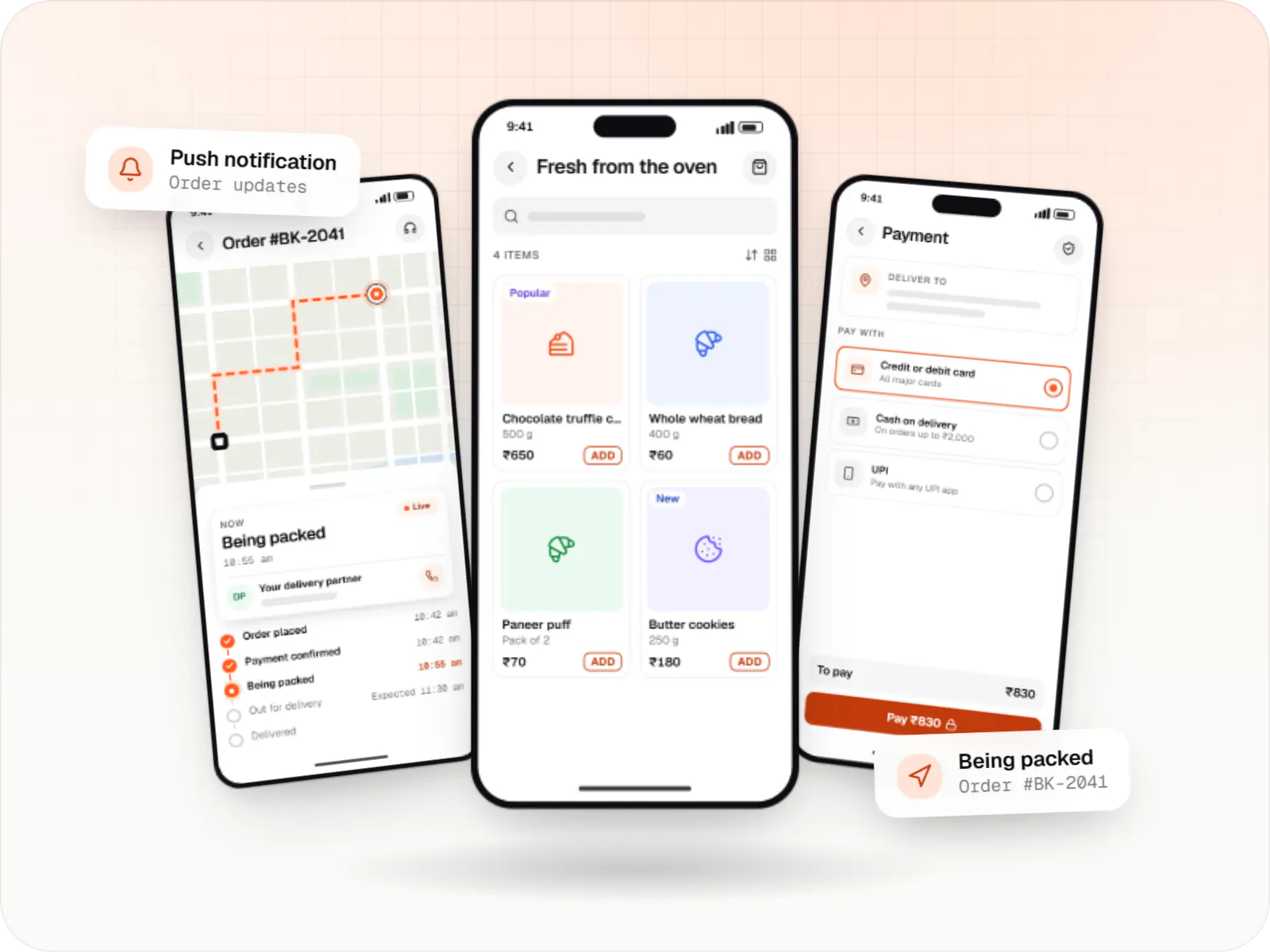
Native and cross-platform Android and iOS apps, from first release through regular store updates, built by our in-house designers and engineers.
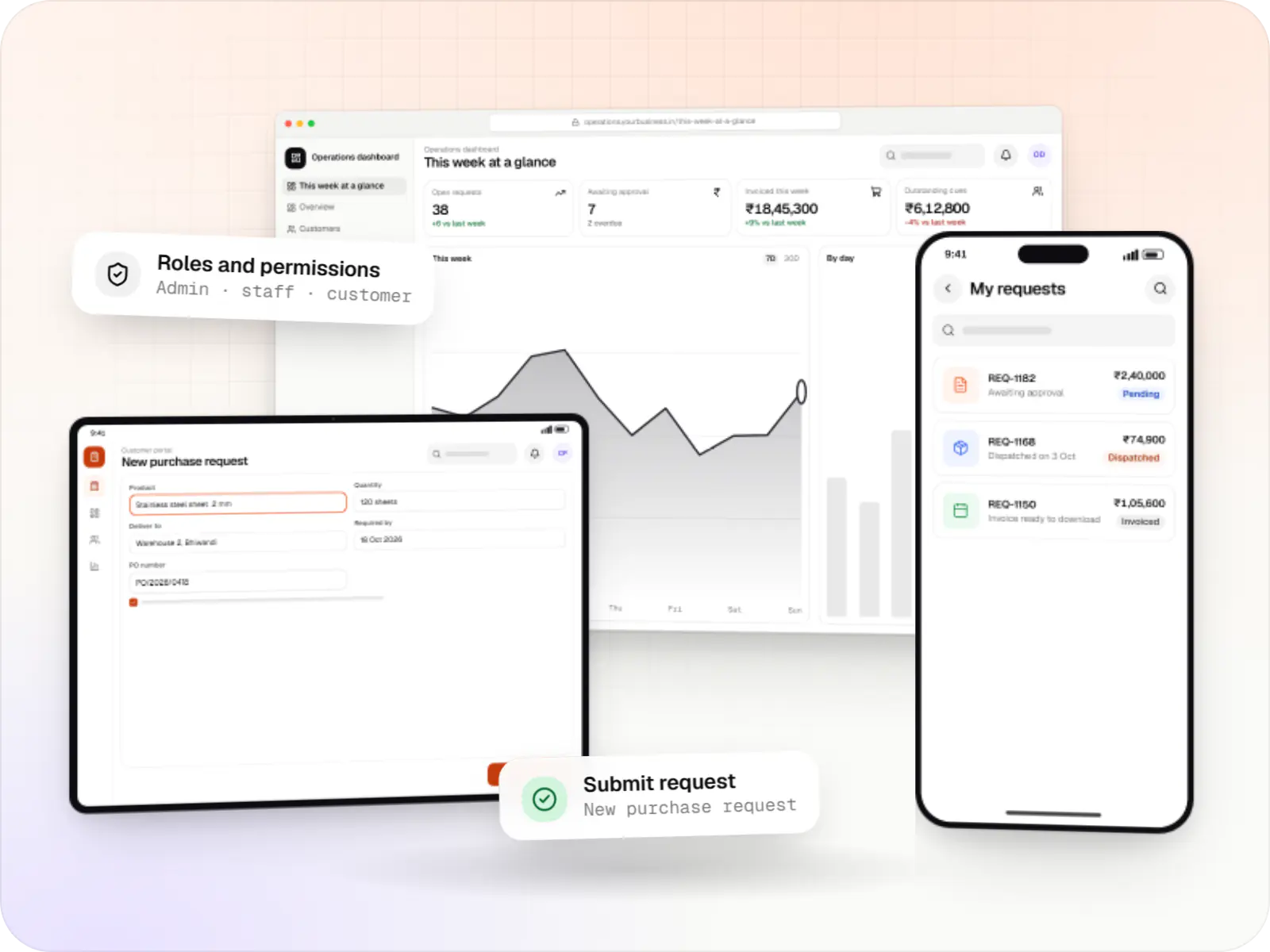
Browser-based products, customer portals, dashboards and internal tools, built on clean data models with secure roles and integrations.
Cost drivers
Clean events shorten the project; missing or messy tracking gets fixed first.
Home, product, cart, search and notifications each need their own logic and tests.
Session-aware ranking needs streaming infrastructure; daily batch scores are simpler.
Proper holdouts and reporting add engineering and analysis time.
Estimates are written from your scope, with the effort and assumptions behind each line item.
How pricing worksFAQ
There is no universal threshold; it depends on catalogue size and how many interactions each item gets. With a small catalogue or few repeat users, rules and popularity baselines often perform as well as a model. Collaborative filtering needs many users interacting with overlapping items. We run a simple offline comparison on your events and recommend what the data supports, which may be better tracking first.
That is the cold-start problem. New items are placed using their attributes and descriptions: text and image embeddings find similar products that already have history. A share of slots is reserved for exploration so new items collect data, and merchandisers can boost launches. New users see popular, location-relevant items until their own behaviour builds up over a few sessions.
Offline, we check recall and ranking quality on held-out history, which catches weak models early. The real test is online: A/B experiments comparing the new version with the current one on click-through, add-to-cart, conversion or course completion, with a holdout group on the baseline. Tests cover weekday and weekend patterns, and results are read with festive seasonality in mind.
Often, yes. Managed recommendation services from the major cloud providers, or the features built into your e-commerce platform, are a sensible first step for standard product suggestions. A custom build makes more sense when you need Indian-market constraints such as pincode serviceability, COD rules or multi-seller catalogues, want full control over ranking, or serve several apps. We will tell you which applies.
Next step
Share your catalogue size, active users and a sample of event data. We will say whether rules or a trained model come next.