

Web
Next.js
A modern web technology for fast, search-friendly websites, online stores and web applications that load quickly on mobile.
Used for
- Business websites
- Online stores
- Web apps
- Customer portals
Travel & hospitality
Search, booking and fulfilment engineering for online travel platforms, B2B agent portals and white-label booking products.
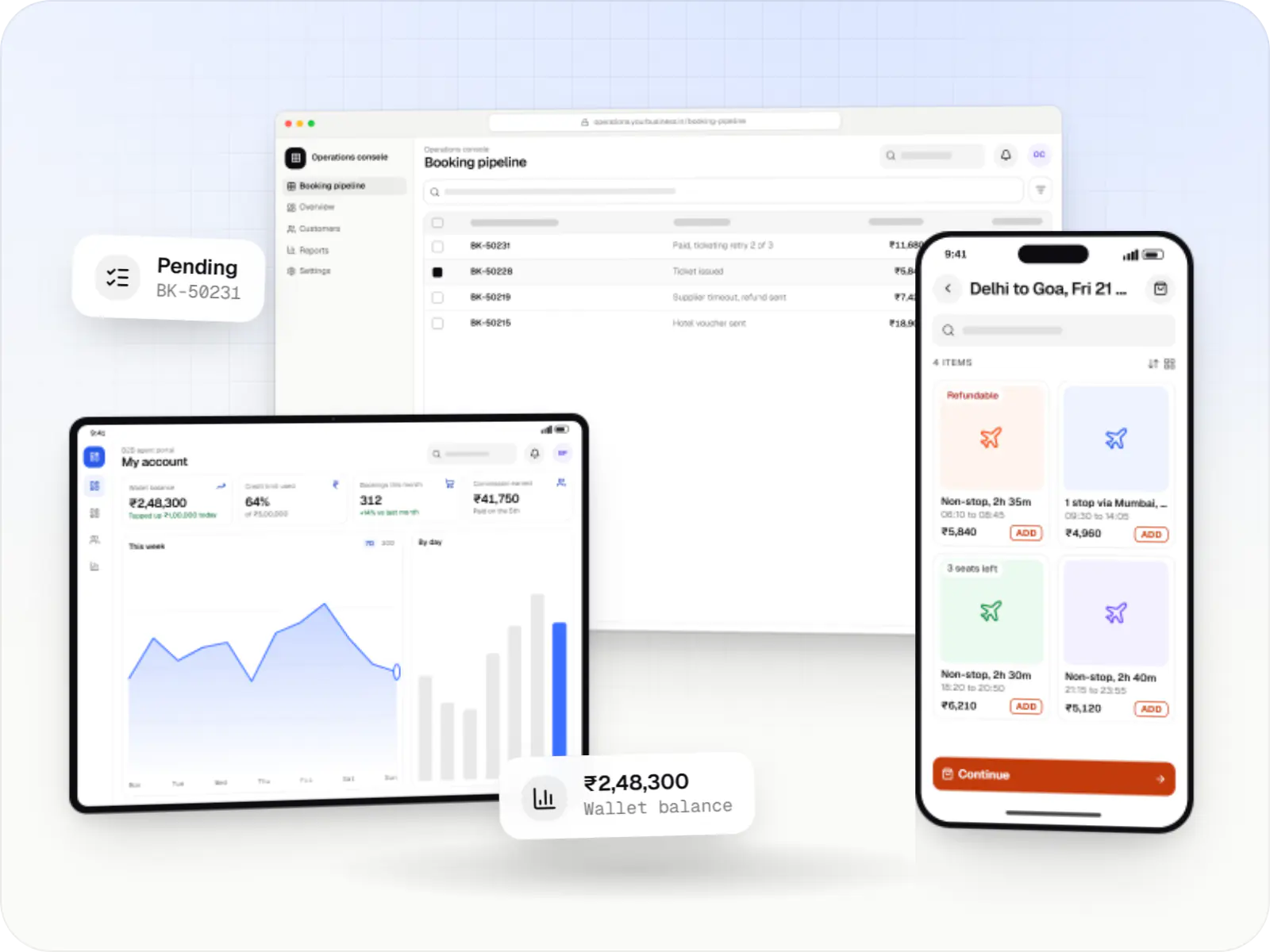
At a glance

Booking platforms depend on fast search, accurate fares and reliable ticketing. We engineer the supplier integrations, booking pipelines and reconciliation behind them.
How to start
Tell us what you need in your own words. You talk to the developers who would build it and get a written, line-item estimate.
Get a project estimateUnlike a travel agency, a booking platform is a software product first: many searches, a small share of bookings, and a promise that the fare shown is the fare charged. Behind the search box sit supplier APIs with rate limits and look-to-book ratios, fare rules, holds that expire and ticketing that can fail after payment. We build these platforms for OTAs, B2B distributors and companies adding travel to an existing product.
Challenges
Live searches hit supplier APIs that can be slow and may penalise high look-to-book ratios.
Fares and room rates move between search and payment.
Ticketing errors after payment need retries, alerts and automatic refunds.
B2B agents book on wallet balance or credit, and every booking must match supplier invoices.
Solutions
Across 4 areas
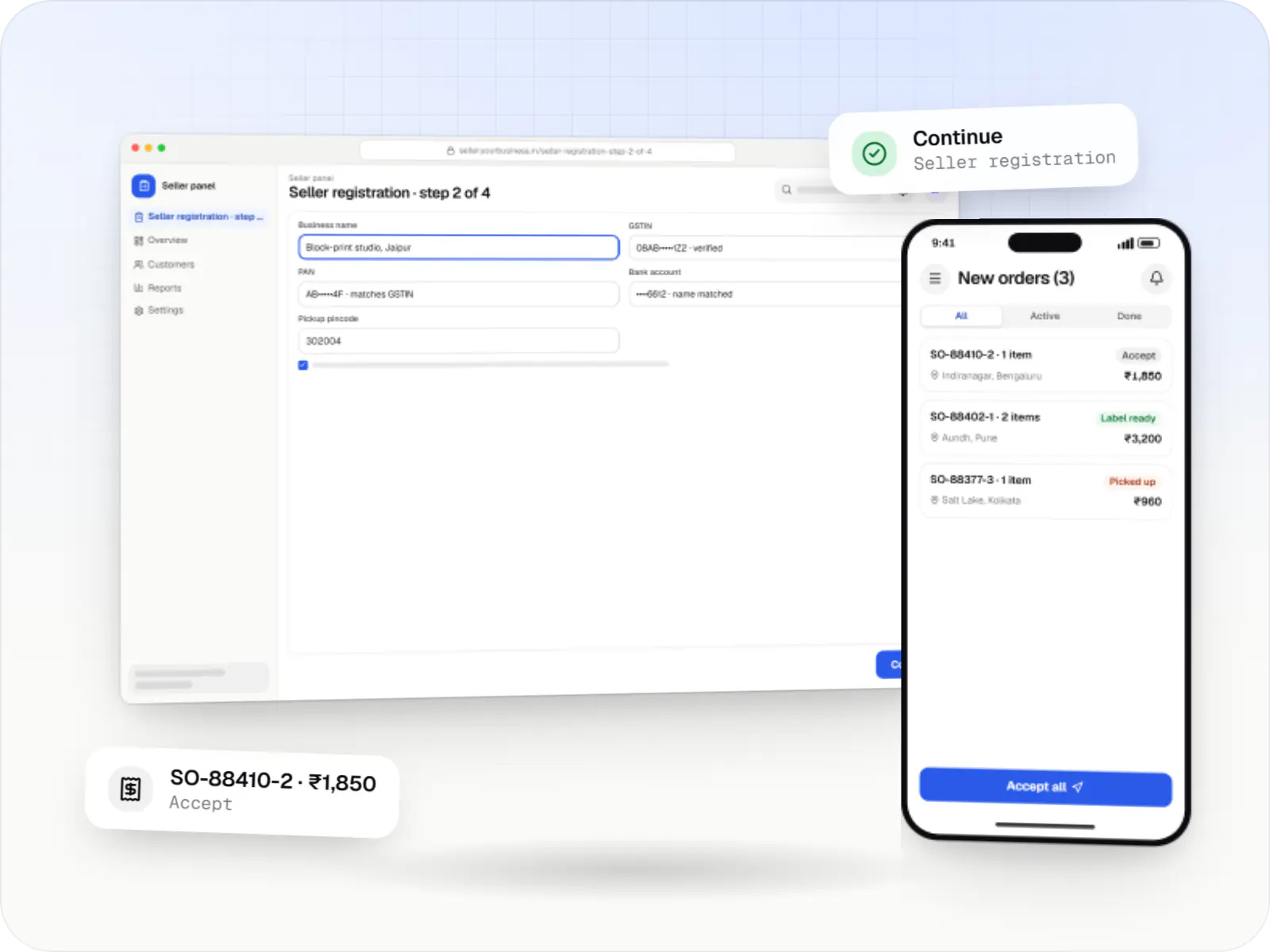
Multi-vendor marketplaces with seller onboarding, commission rules, split payouts, per-seller invoicing and catalogue moderation.
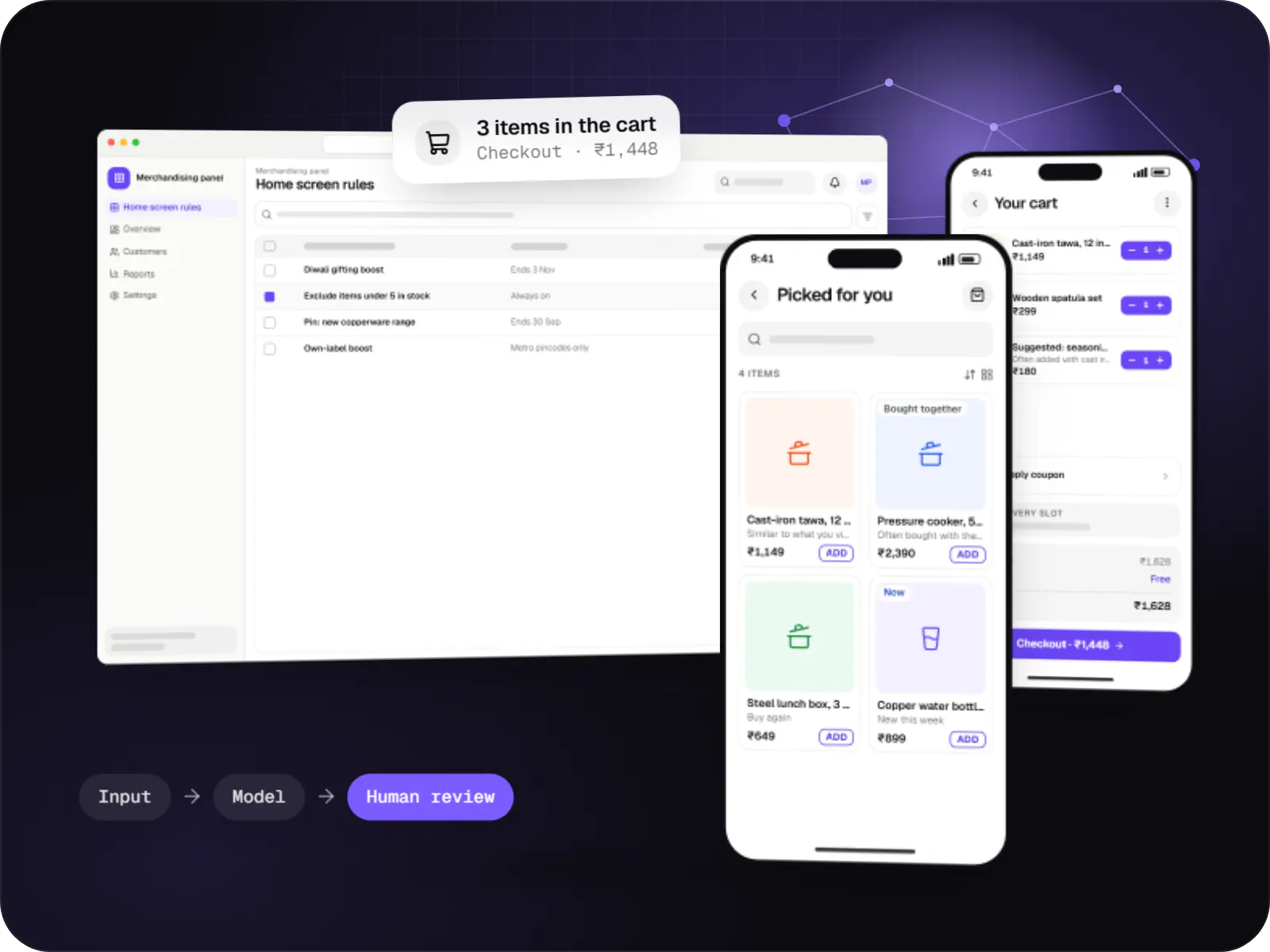
Product, content and offer recommendations built from your behavioural data, with business rules, cold-start handling and A/B testing.
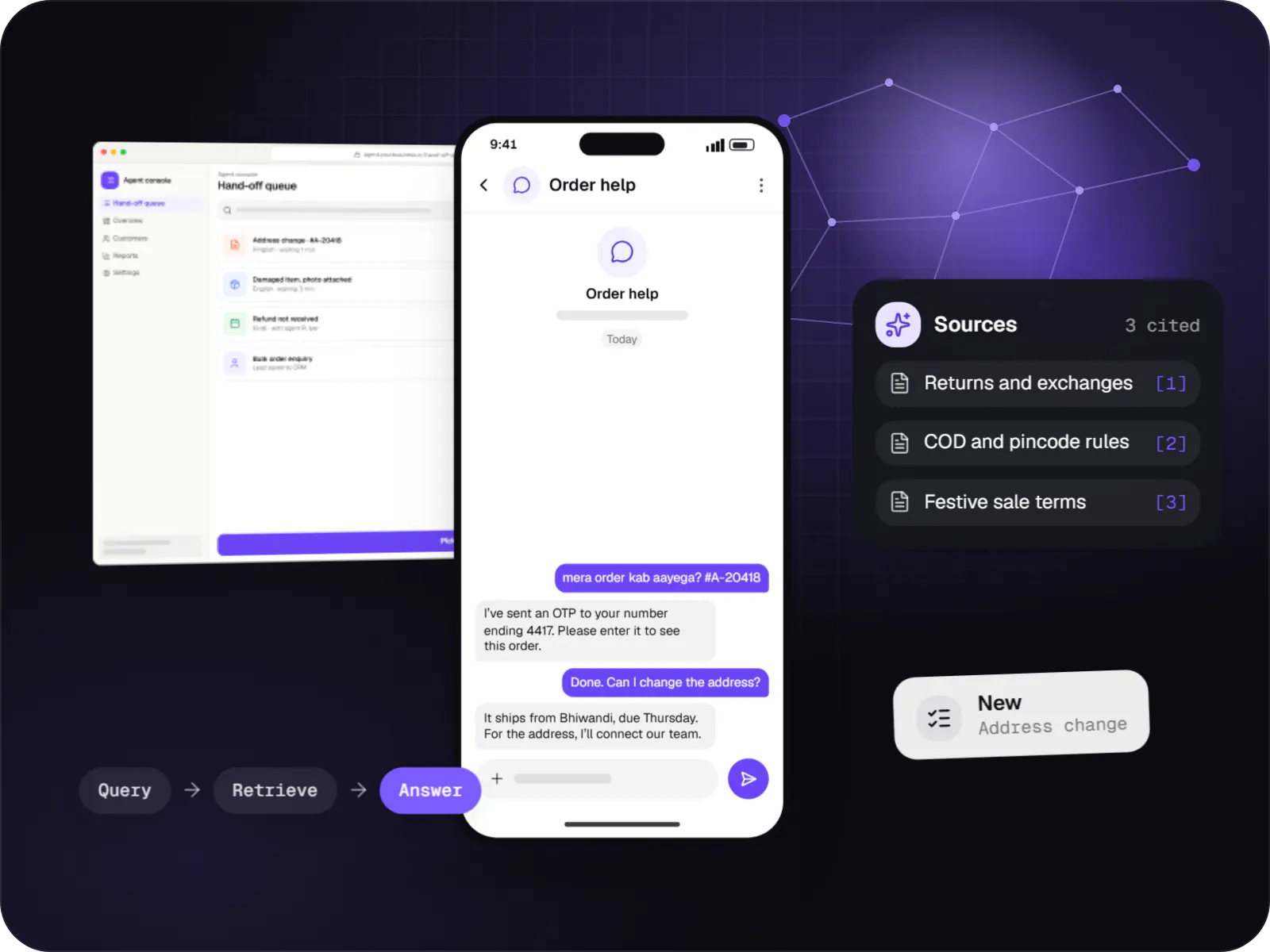
Support and sales chatbots for web, app and WhatsApp that answer from your own content and hand off to your team.
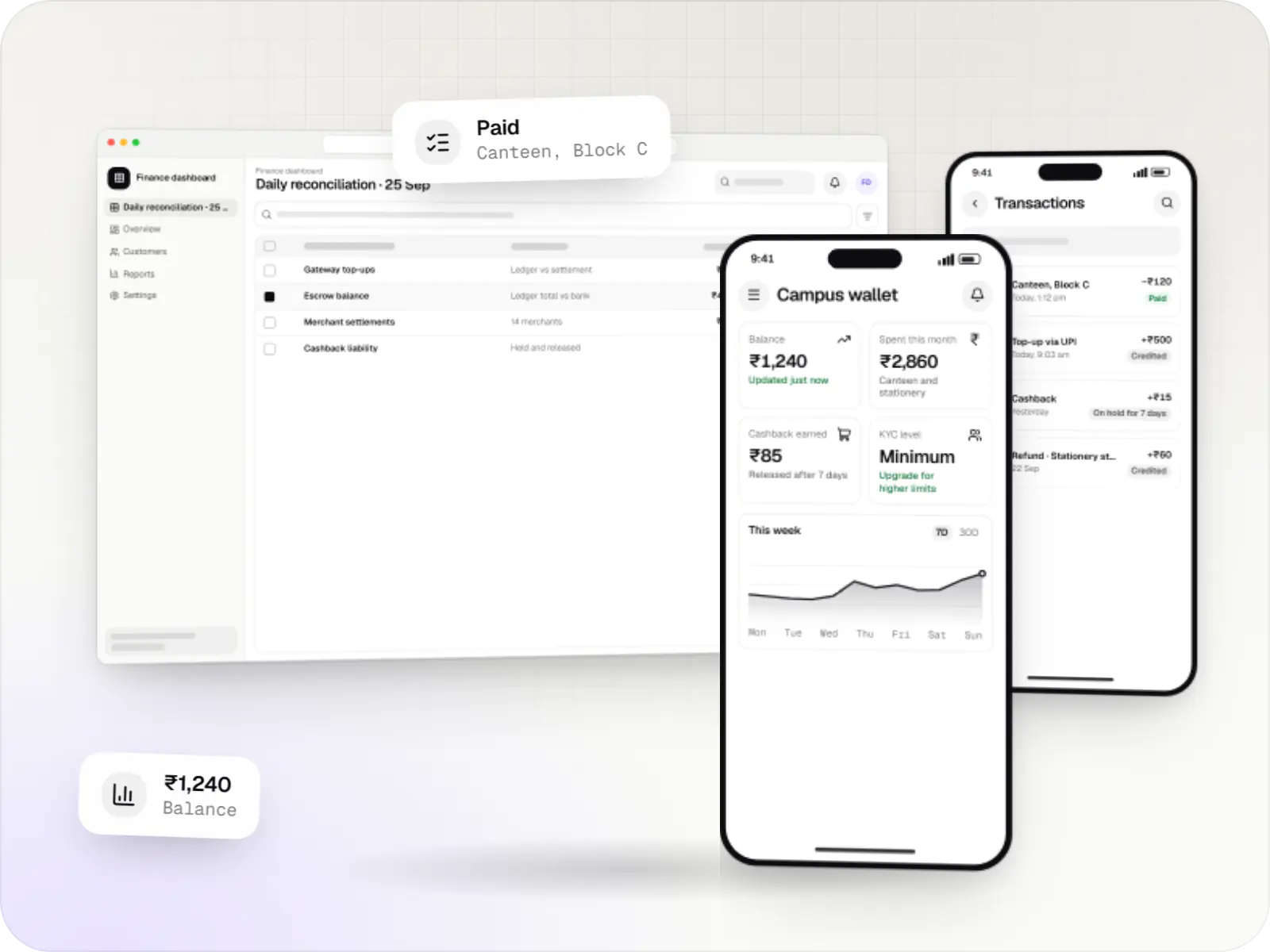
Digital wallet apps with top-ups, QR payments, rewards and a balance ledger, for closed-loop programmes or with a licensed PPI issuer.
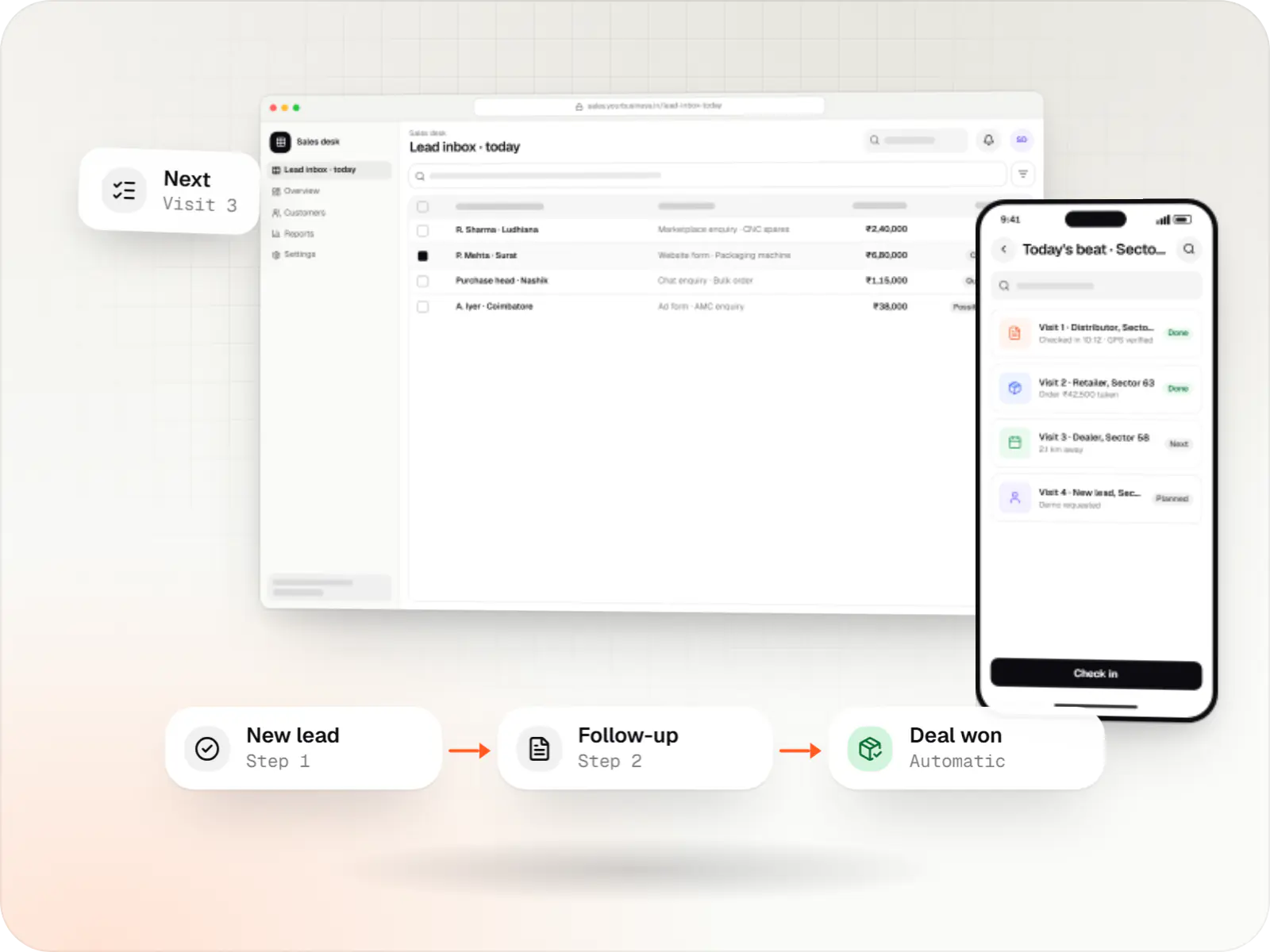
Custom CRM software that captures leads from every channel, keeps follow-ups on schedule and shows managers a live pipeline.
Results aggregated from several suppliers, de-duplicated hotels and cached fares with sensible expiry.
Rules by supplier, route, agent tier or channel, applied across web, app and API.
Hold, pay, ticket, confirm and cancel steps tracked explicitly, with alerts at each failure point.
Top-ups through UPI or bank transfer, credit limits and a ledger for every agent.
Supplier rules applied, gateway refunds pushed and GST credit notes issued.
How it works
The search layer asks several suppliers at once with strict time limits and shows cached fares first, so results appear in seconds rather than after the slowest supplier.
Before payment the selected fare or room is checked again with the supplier, and any change is shown to the customer before they pay, never after.
The seat or room is held while payment goes through by UPI or card, or from an agent’s wallet, and the booking moves to a paid state.
The ticket or confirmation is requested. If the supplier fails, the system retries where allowed and alerts operations instead of failing quietly.
The customer receives the e-ticket or voucher; if confirmation cannot complete within the set window, a gateway refund is issued and logged.
Bookings are matched with supplier invoices, agent wallet debits and commissions, and cancellations get GST credit notes.
Platforms
Browser-based applications with logins, roles and workflows, such as customer portals, SaaS products and internal tools.
One Flutter or React Native codebase for Android and iOS, with native modules where a feature needs them.
Back-office panels for operations, support and finance teams: orders, users, content, reports and permissions.
Installable web apps with offline support and notifications, useful when an app-store listing isn't essential or phones have little storage.
Technology
Made for many searches per booking: fare caching, containers that scale on sale days and search infrastructure built on AWS.
Web
A modern web technology for fast, search-friendly websites, online stores and web applications that load quickly on mobile.
Used for
Backend
A structured way to build back ends on Node.js, so large business systems stay organised, testable and easy to hand over.
Used for
Data
A reliable database for the records your business runs on: orders, payments, bookings and stock, kept accurate and easy to report on.
Used for
Data
Keeps frequently used data in fast memory, so apps stay quick on busy days and live features like order tracking feel instant.
Used for
Cloud & DevOps
Packages your software so it runs the same way on every laptop and server, which makes releases predictable and moving hosts easier.
Used for
Cloud & DevOps
Cloud hosting for your app, website and data, with data centres in India and room to grow when traffic rises.
Used for
Payments & maps
Lets customers in India pay by UPI, cards, netbanking or wallets, and handles subscriptions, refunds and payouts to sellers or partners.
Used for
Plain-English glossary
Product preview
Illustrative screens and figures; supplier mix and markups vary by platform.
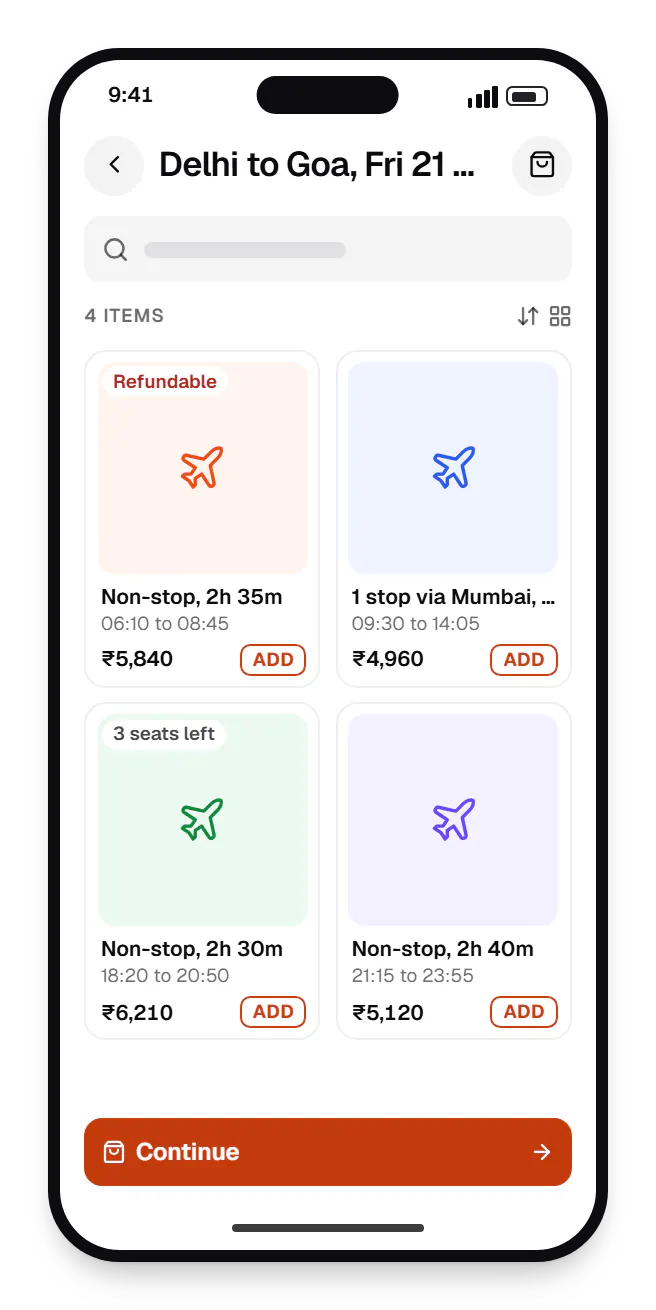
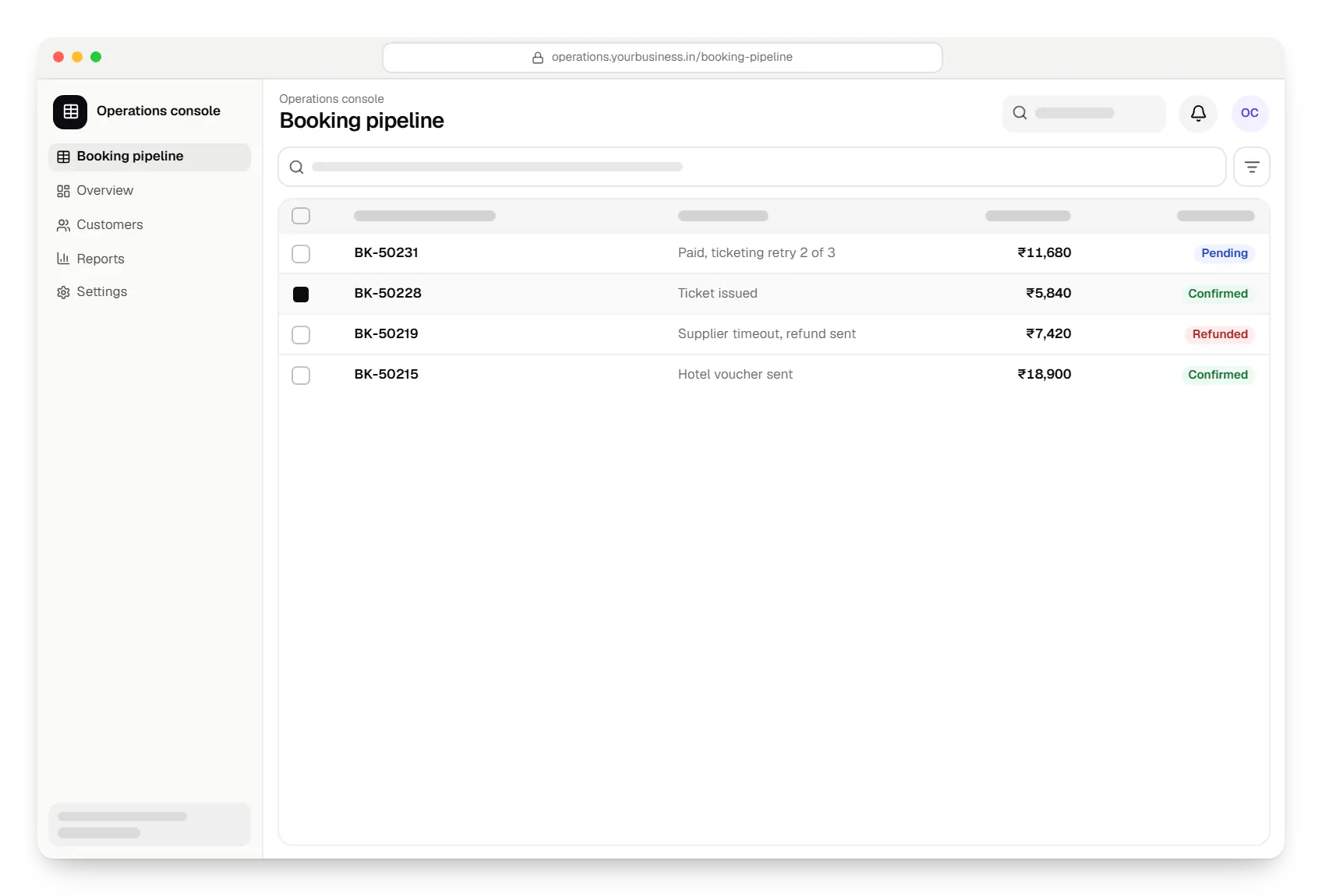
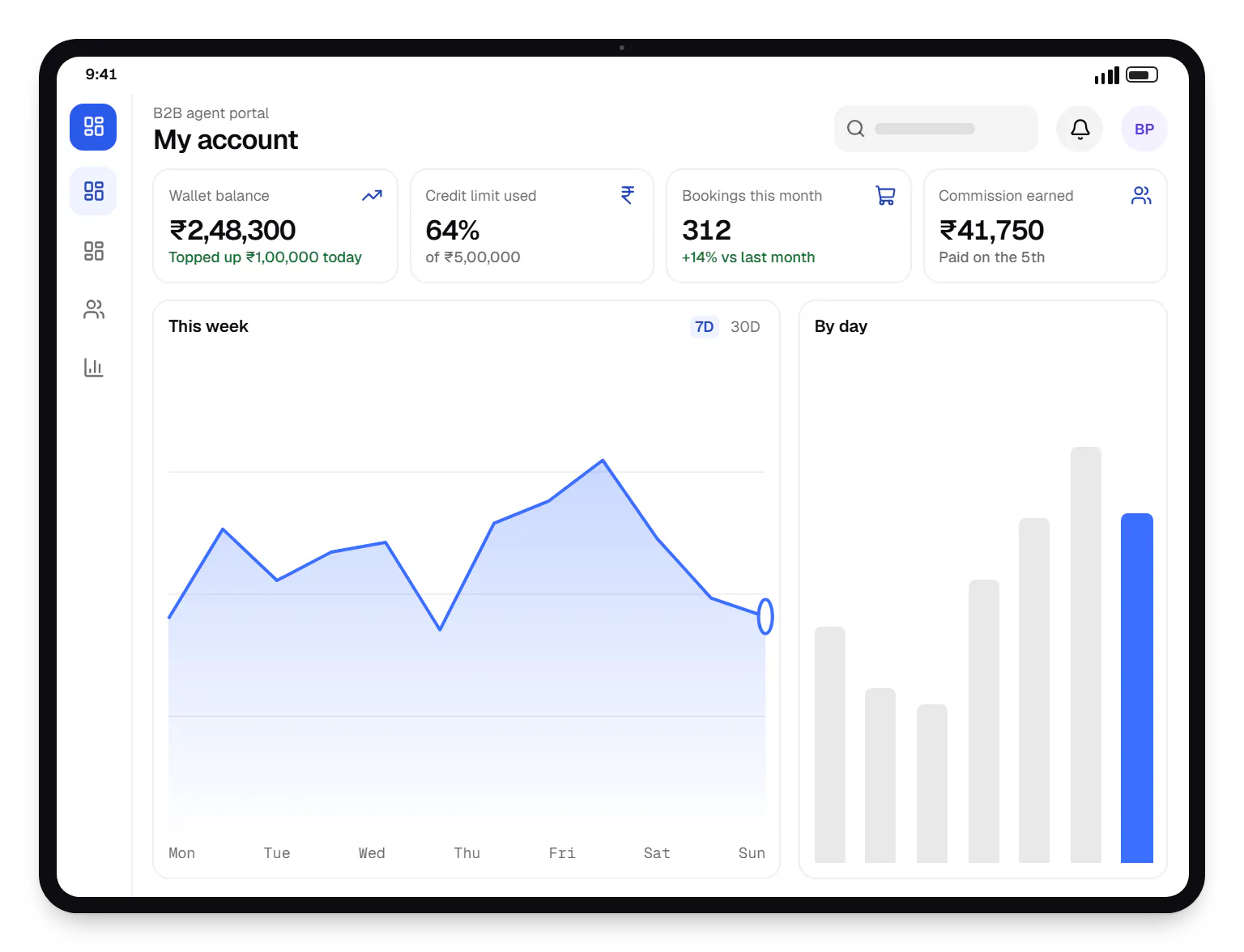
Sample screens: names, prices and figures are examples, not client data.
Cost drivers
Each supplier adds mapping, certification and failure handling; hotel content mapping is significant work.
Flights, hotels, buses and activities each have different flows and cancellation rules.
Agent onboarding, wallets, credit and white-label sites form a layer on top of B2C.
Estimates are written from your scope, with the effort and assumptions behind each line item.
How pricing worksServices
The design and engineering services our in-house team combines on projects in this sector.
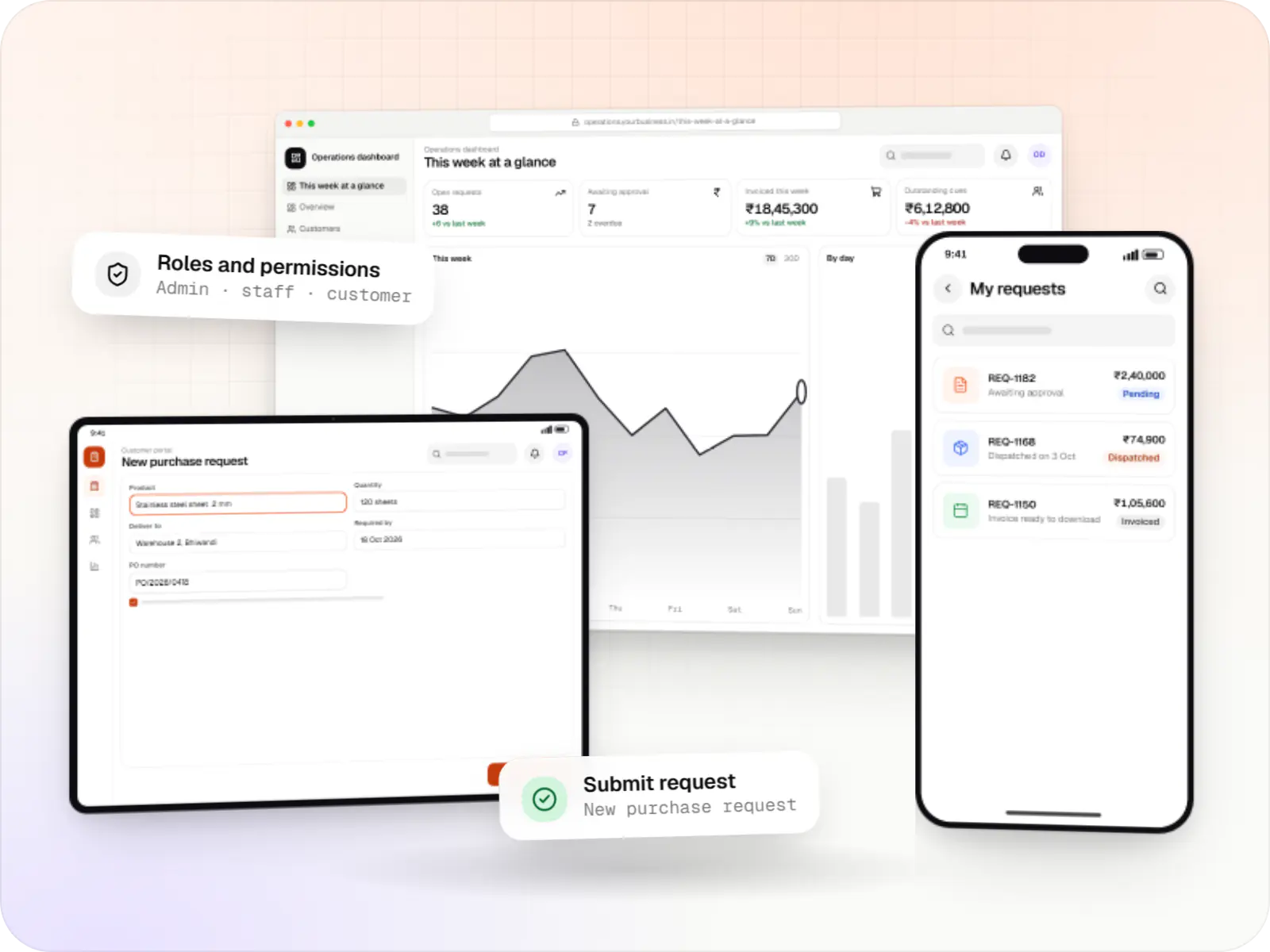
Browser-based products, customer portals, dashboards and internal tools, built on clean data models with secure roles and integrations.
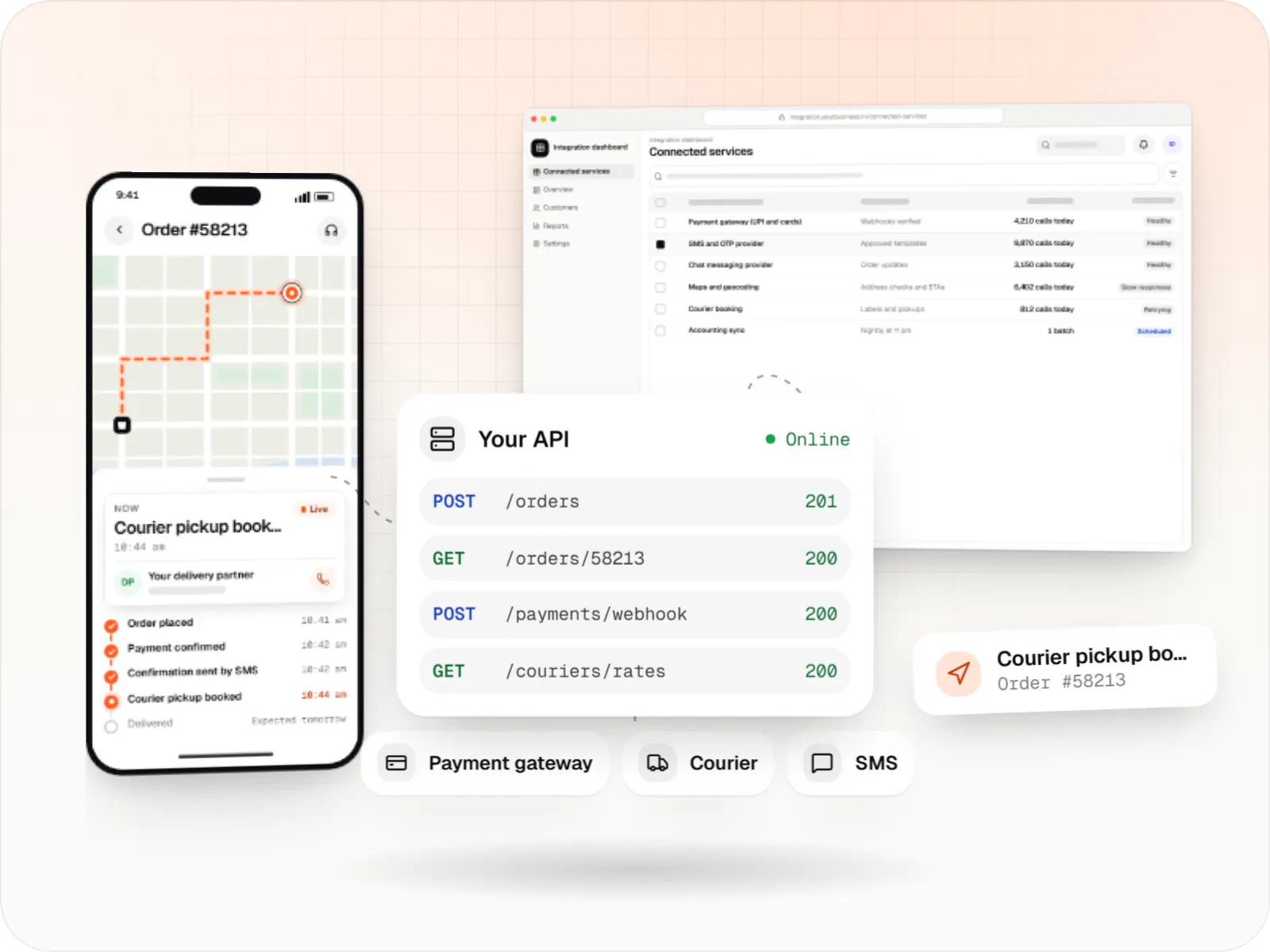
Secure, documented REST and GraphQL APIs, plus integrations that connect your apps to payment, logistics, GST, messaging and business systems.
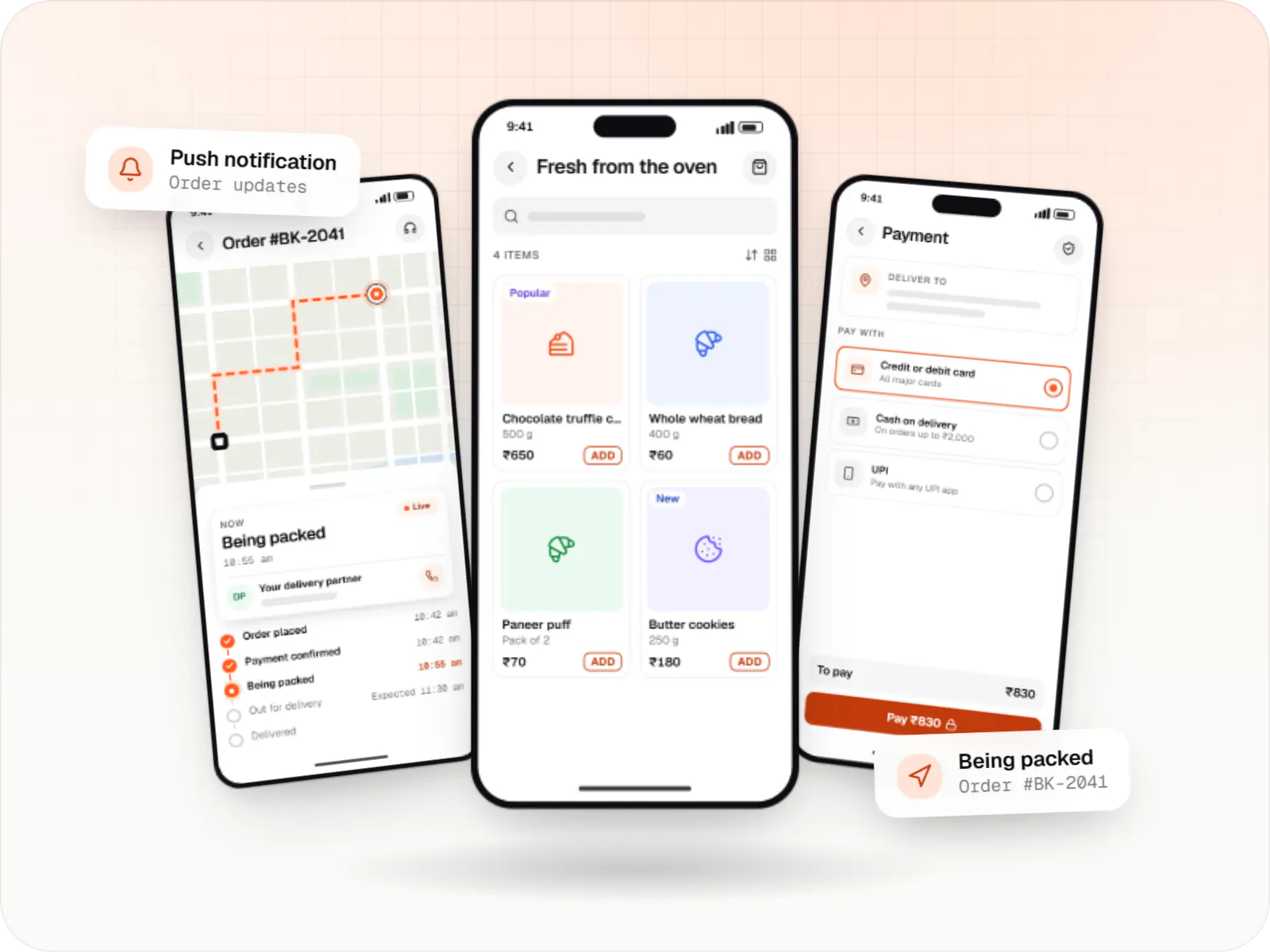
Native and cross-platform Android and iOS apps, from first release through regular store updates, built by our in-house designers and engineers.
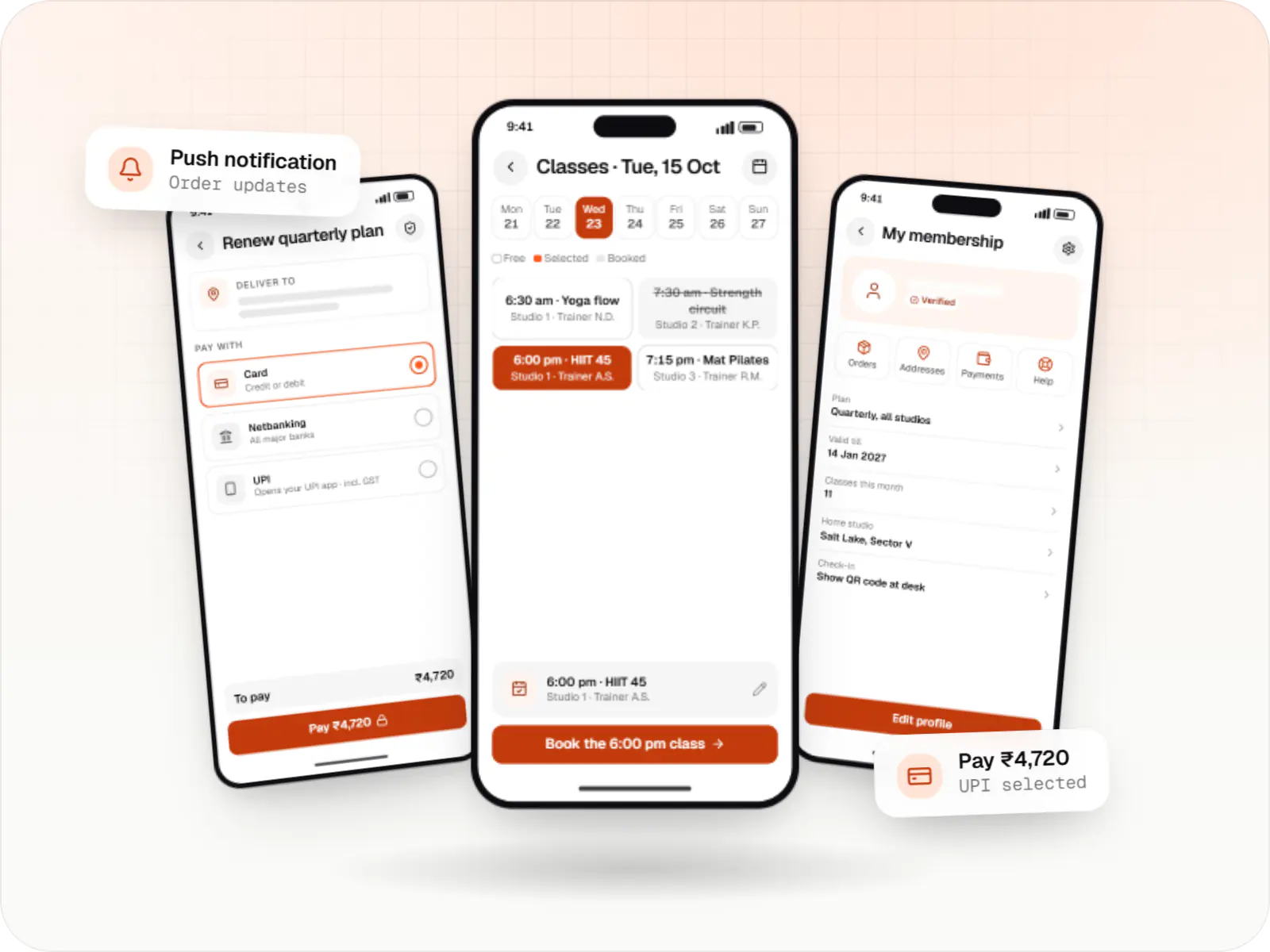
Android and iOS apps in React Native and TypeScript, suited to teams that already use React on the web and want shared logic across products.
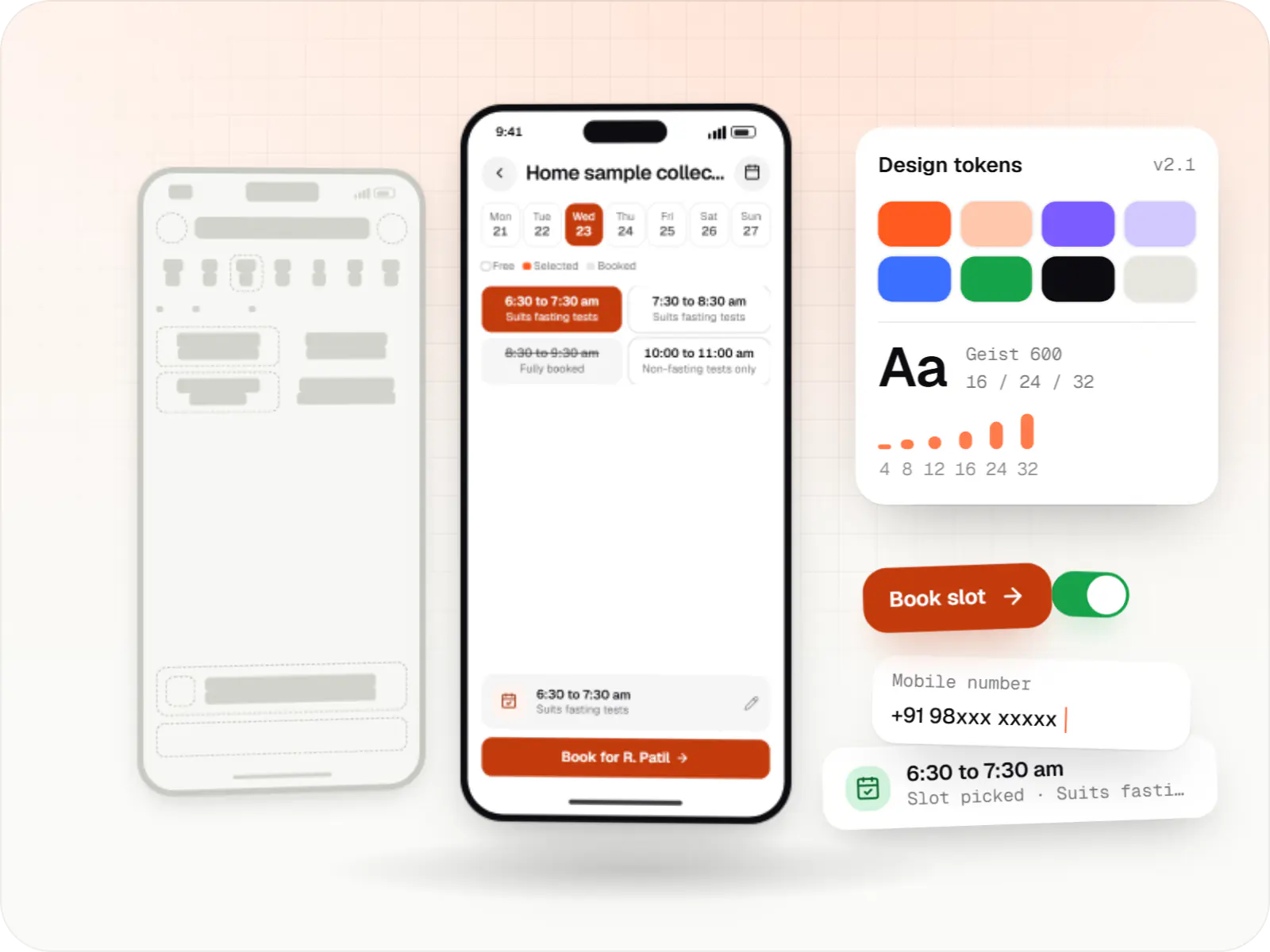
Product design for web and mobile apps: research, user flows, wireframes, prototypes and design systems that engineers can build from.
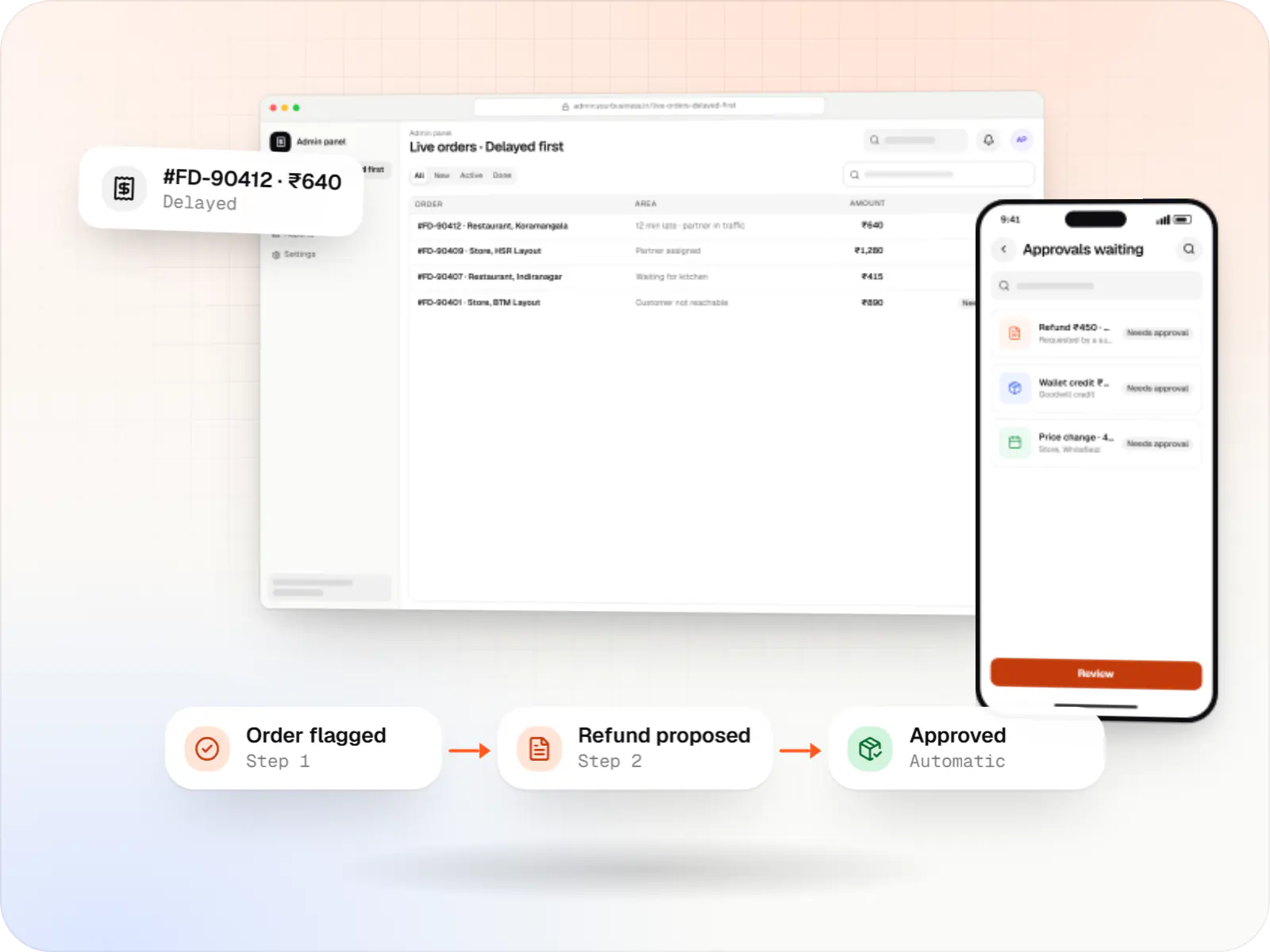
Back-office dashboards built around your team's daily tasks: order queues, approvals, catalogue management, payouts, reports and audit logs.
Locations
Cities where this sector is a significant part of the local economy. We work remotely with teams across India and meet in person where practical.

Rajasthan
FAQ
We query suppliers in parallel with strict timeouts, show results as they arrive, and cache fares and rates in Redis for a short, supplier-appropriate window. Static content such as hotel descriptions and images is stored locally and refreshed on a schedule, so only price and availability are fetched live. Before payment we re-price the chosen option, so any change appears before the customer is charged.
The booking moves to a pending state rather than failing silently. The system retries ticketing where the supplier allows, alerts your operations team and tells the customer the booking is being confirmed. If it still can't complete within a set window, a refund is triggered through the gateway and logged. We design this flow early, because it is where customer trust is won or lost.
Yes. Each agent gets a subdomain or their own domain with their branding, drawing on your inventory with their markups on top of your B2B rates. Bookings draw down the agent's wallet or credit line, and your dashboard shows performance and outstanding balances per agent. Logos and colours are simple; custom products and pricing rules per agent take longer.
Next step
Share your suppliers, products and expected search volumes, and we will review the architecture with you.