Skip to content
Softcoderz

Technology · AI

OpenAI API integration

Adds AI features such as chat assistants, document summaries and smart search to your product, built on OpenAI models with human review.

How we use it

We integrate OpenAI's APIs into products and internal tools, with evaluation, cost controls and a fallback plan built into every integration.

Official site: platform.openai.com (opens in new tab)

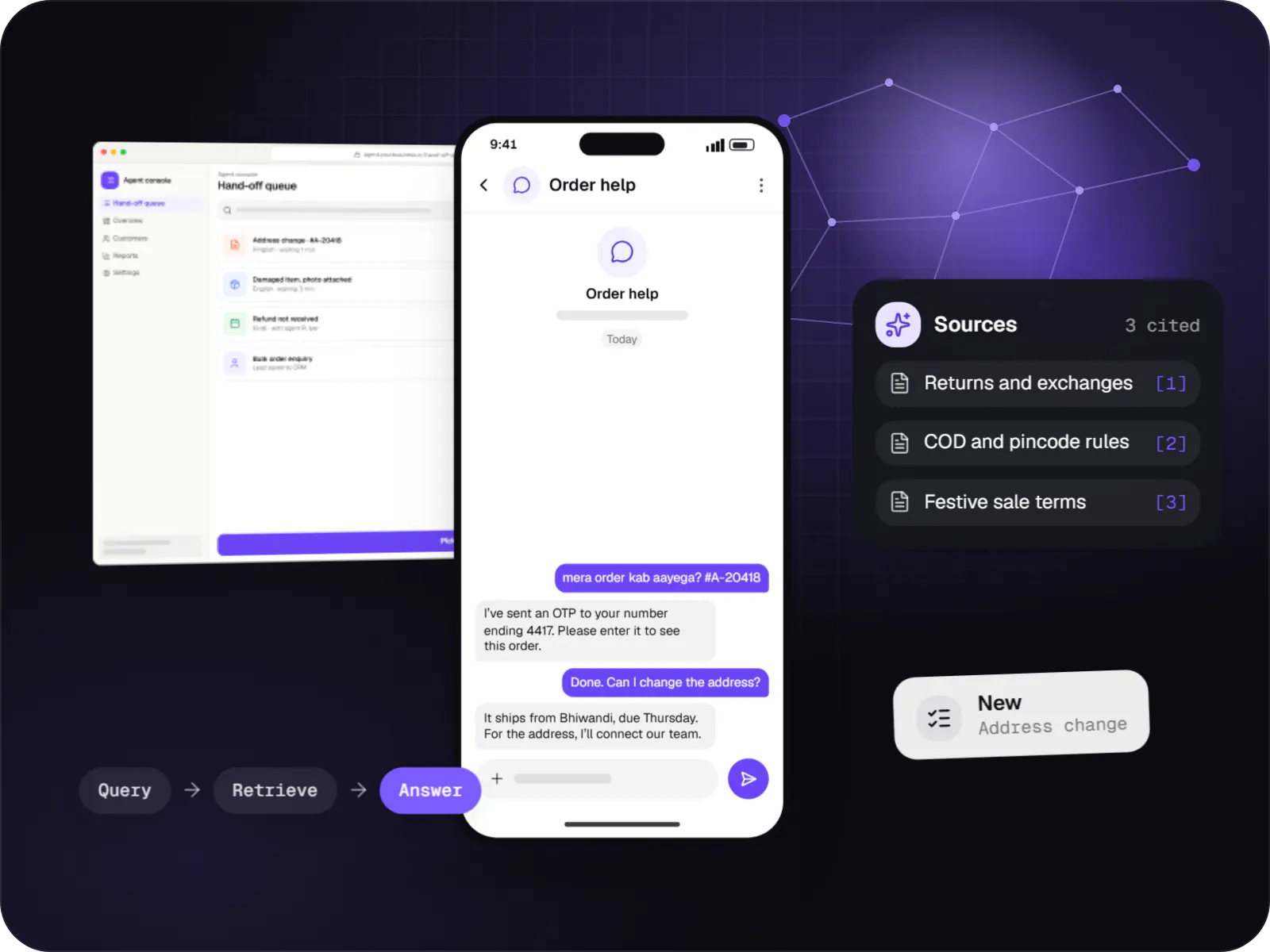
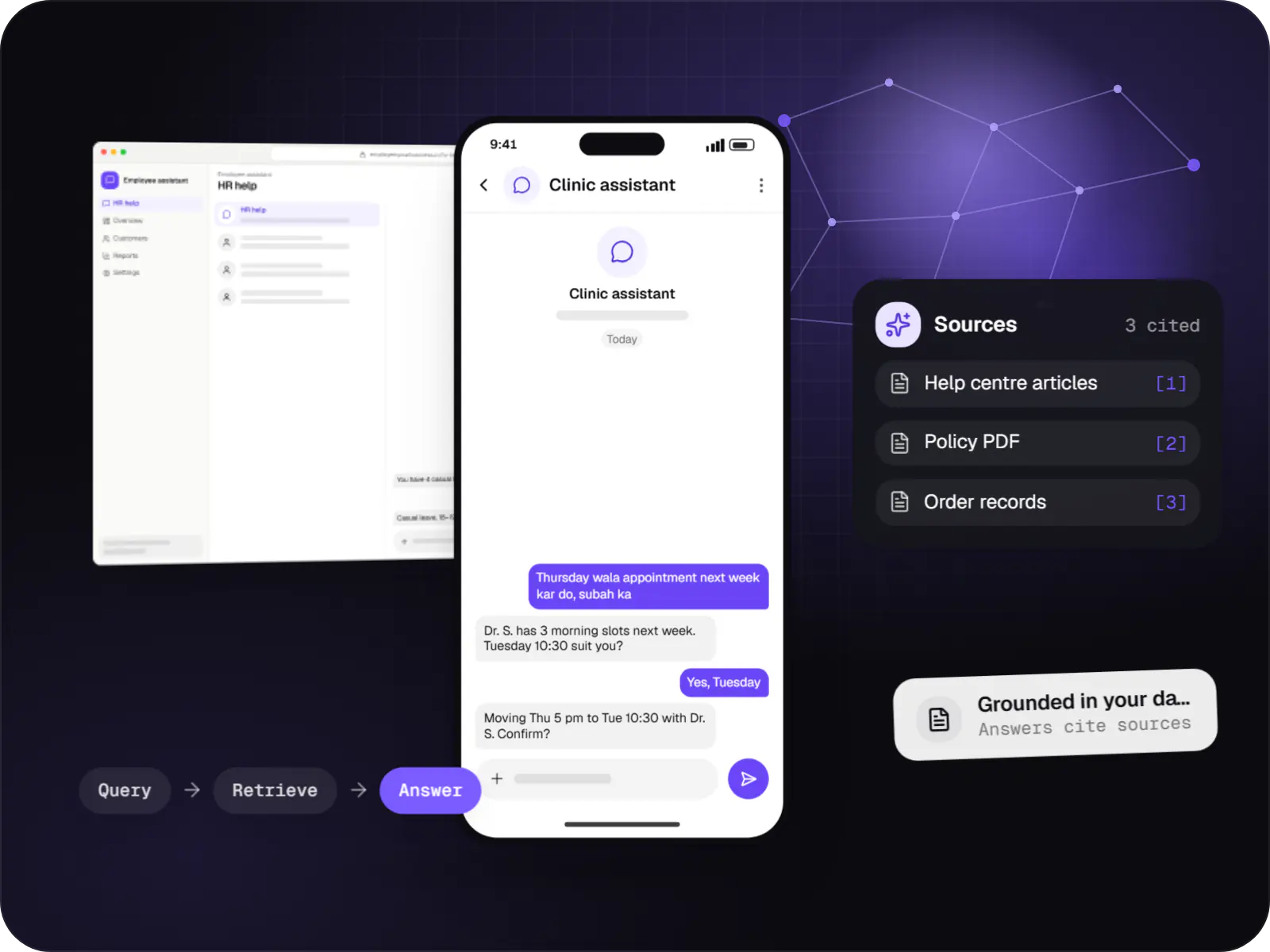
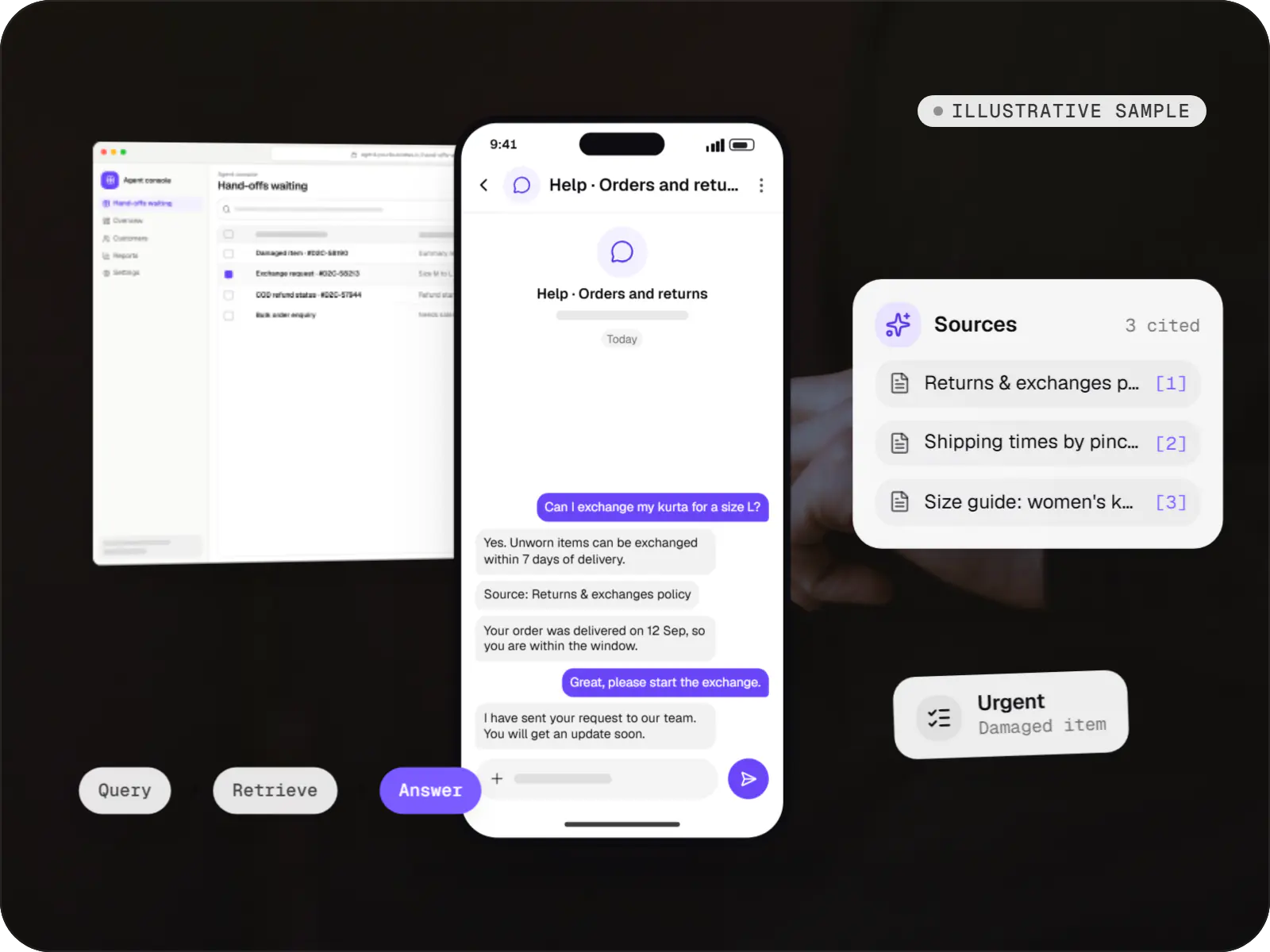
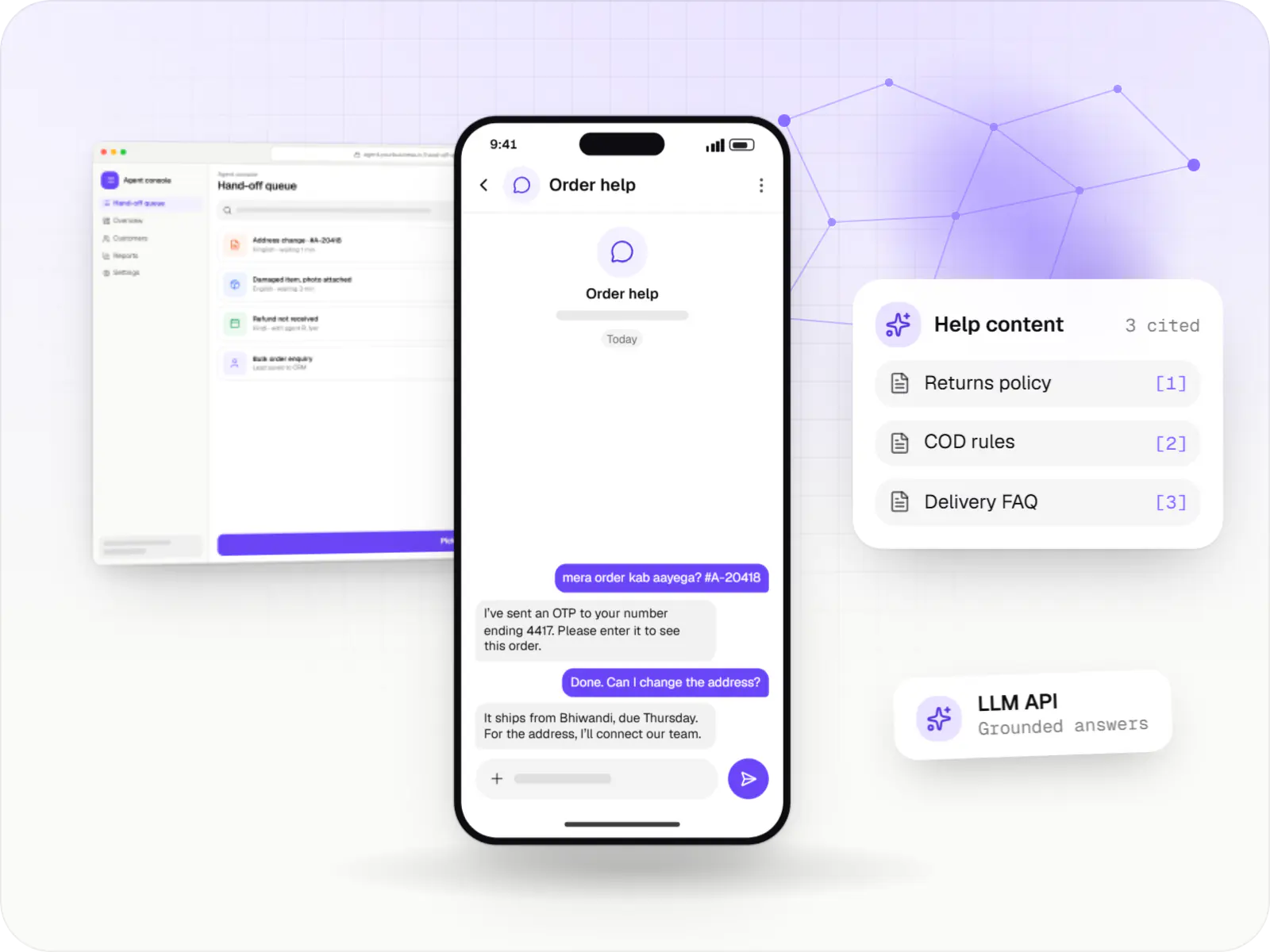
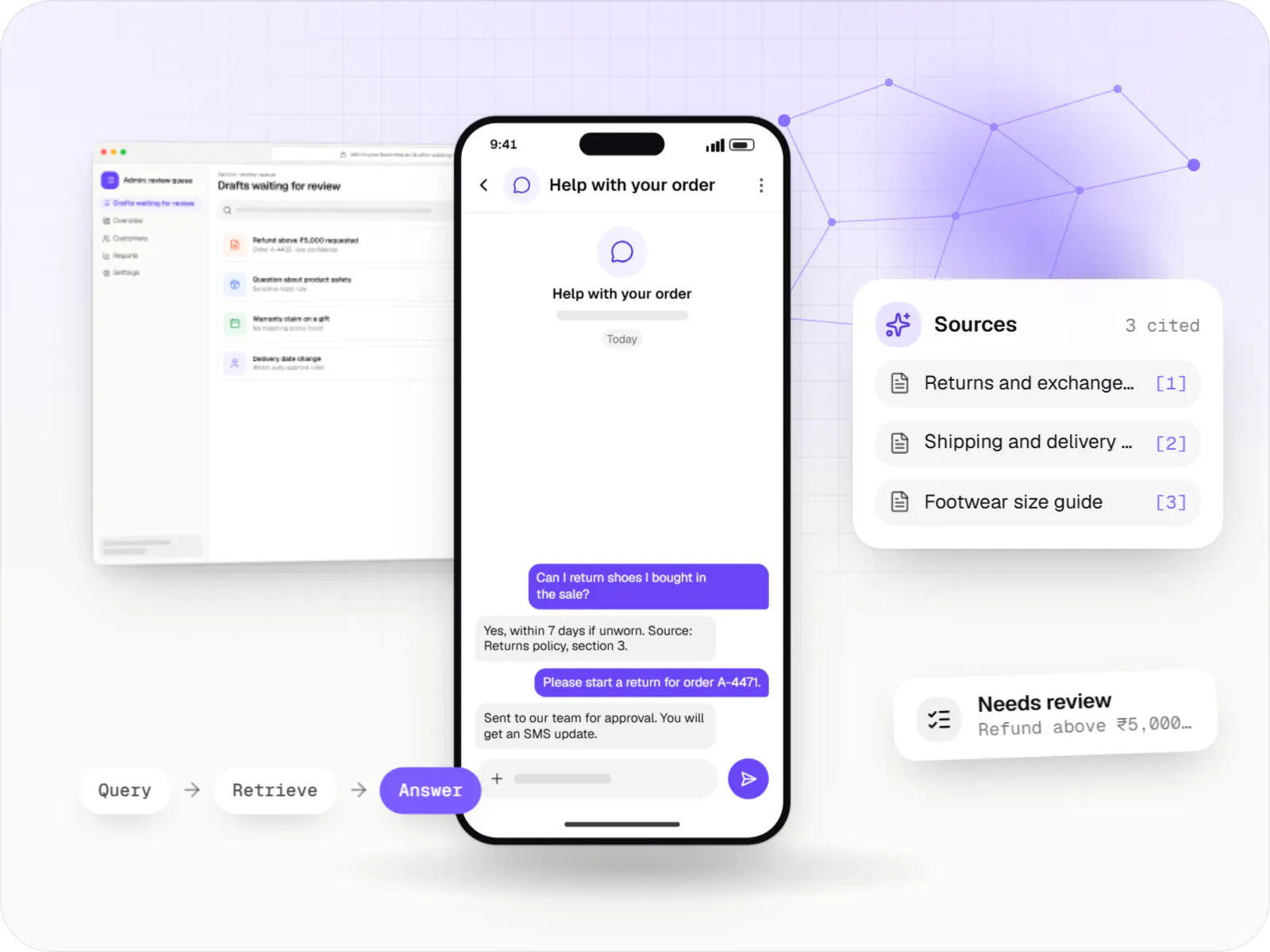
Support chat built on OpenAI APIs on a phone, with a cited answer and the agent hand-off queue
Illustrative previewA support assistant that calls a language-model API and answers from the business's own help content.

What the OpenAI APIs are, and how we use them responsibly

OpenAI offers its AI models as paid online services (APIs) that other software can call. We connect your product to them so it can answer questions, read documents, search by meaning or turn speech into text. For you, that means useful AI features without training a model from scratch, paid for by usage.

OpenAI's models are capable general-purpose tools for language, images and speech, offered through a well-documented API. That makes them a practical starting point for many AI features, but not a finished product. We ground answers in your data, validate outputs against schemas and keep a person in the loop for decisions that matter. Where data location or contract terms require it, the same models are available through Microsoft Azure.
Use cases

What we build with the OpenAI APIs

  • Support assistants

    Answers from your help articles with citations and handover to staff.

  • Document extraction

    Invoices, forms and purchase orders turned into data for review.

  • Semantic search

    Embeddings that find products, documents or tickets by meaning.

  • Voice notes to text

    Transcription for field teams and call summaries.

Why the OpenAI platform matters for your product

  • Answers in a fixed format

    Structured outputs and function calling return data that matches a schema and can call your own APIs, so AI results plug into your systems.

  • Text, images and audio

    One API handles typed questions, photos of documents and voice notes.

  • Search by meaning

    Embeddings power search and recommendations that understand what people mean, not just the words they type.

Privacy & security

How we handle data in OpenAI integrations

  • Data minimisation

    Only the fields a task needs are sent, with identifiers masked where possible.

  • Provider terms reviewed

    We check current API data-use and retention terms against your obligations.

  • Access-controlled logs

    Prompts and outputs are logged for review, with restricted access.

When we would not recommend an OpenAI model

  • When a simple rule does the job: fixed calculations, eligibility checks or form validation are cheaper and more reliable as ordinary code.
  • Decisions that must not be wrong: models can give confident but wrong answers (often called hallucinations), so refunds, medical advice or credit decisions stay with a person.
  • Data that cannot leave your systems: if contracts or rules forbid sending data to an outside provider, a self-hosted open model may fit better.
  • Very high volumes on a tight budget: costs grow with usage and behaviour can shift between versions, so we compare smaller or self-hosted models first.

Plain-English glossary

AI terms on this page, in plain English

Embeddings
Numbers that capture the meaning of a piece of text. They let search find 'refund for a damaged parcel' when the help article says 'returns for items that arrive broken'.
Hallucination
When an AI model gives a confident answer that is wrong. We reduce it by making the model answer from your own content, show its sources and hand unclear cases to a person.
Function calling
A way for the model to ask your software to do something specific, such as look up an order status. Your system decides what is allowed, so the model cannot act on its own.
Evaluation set
A list of real, anonymised questions with good answers, used to test the AI before launch and after every change. It shows whether quality went up or down.

Services

Services that include OpenAI work

  • AI app development

    AI features and AI-first apps built on model APIs, retrieval over your own data, workflow automation or custom ML, with evaluation and human review.

  • SaaS development

    Multi-tenant SaaS products with subscription billing, team roles, onboarding and usage analytics, from first MVP to paying customers.

  • Web application development

    Browser-based products, customer portals, dashboards and internal tools, built on clean data models with secure roles and integrations.

Solutions

AI solutions using OpenAI models

  • AI chatbot development

    Support and sales chatbots for web, app and WhatsApp that answer from your own content and hand off to your team.

  • AI virtual assistant development

    Assistants that book, schedule, look up records and raise requests by voice or text, with confirmation before every action.

  • Generative AI development

    Features that generate catalogue copy, reports, summaries, translations and images, with brand controls and a review step before anything is published.

  • AI document processing

    Data extraction from invoices, KYC documents, statements and forms into your systems, with validation rules and human review for uncertain fields.

  • AI search & knowledge systems

    Search and question-answering over your documents, tickets and product data, with hybrid retrieval, citations and permission-aware results.

Work

Sample projects

Illustrative projects that show how we plan and build products that use OpenAI APIs. They are samples, not client work.

  • AI solutions

    Illustrative sample

    AI customer support assistant for a D2C brand

    An illustrative AI assistant that answers order, return and product questions from a D2C brand's own policies and order data, with sources and a human hand-off.

    • E-commerce
    • AI assistant

    Runs on

    • Website
    • Admin

    Built with

    • Next.js
    • Python
    • OpenAI APIs
    • LLM integrations
    • PostgreSQL
    • +1 more

Industries

Where it shows up by industry

Industries whose typical builds with us include OpenAI APIs.

FAQ

Frequently asked questions

Does OpenAI use our API data to train its models?

According to OpenAI's published policies, API data is not used to train models by default, and business customers have options around retention. Policies change, so we review the current terms at the start of each project and limit exposure by design, sending only the fields a task needs and masking identifiers.

How do you stop an AI assistant from making up answers?

Errors can't be eliminated, but design choices reduce them. The assistant answers from retrieved passages of your own content and cites them, is instructed to say when it doesn't know, and hands unclear or sensitive cases to a person. We build an evaluation set of real questions, measure answer quality before launch and re-run it whenever prompts or models change.

How much will OpenAI API usage cost each month?

It depends on the model, how much text goes in and out of each request, and your volume. We estimate usage from realistic scenarios during discovery, then control cost with smaller models for simple steps, caching of repeated prompts, trimmed context and batch processing for non-urgent jobs. Usage dashboards and spending limits help avoid surprises after launch.

Next step

Exploring an AI feature with OpenAI?

Describe the task and the data involved. We'll tell you honestly whether a language model is the right tool.

Or reach us directly

Mon–Sat, 10:00–19:00 IST