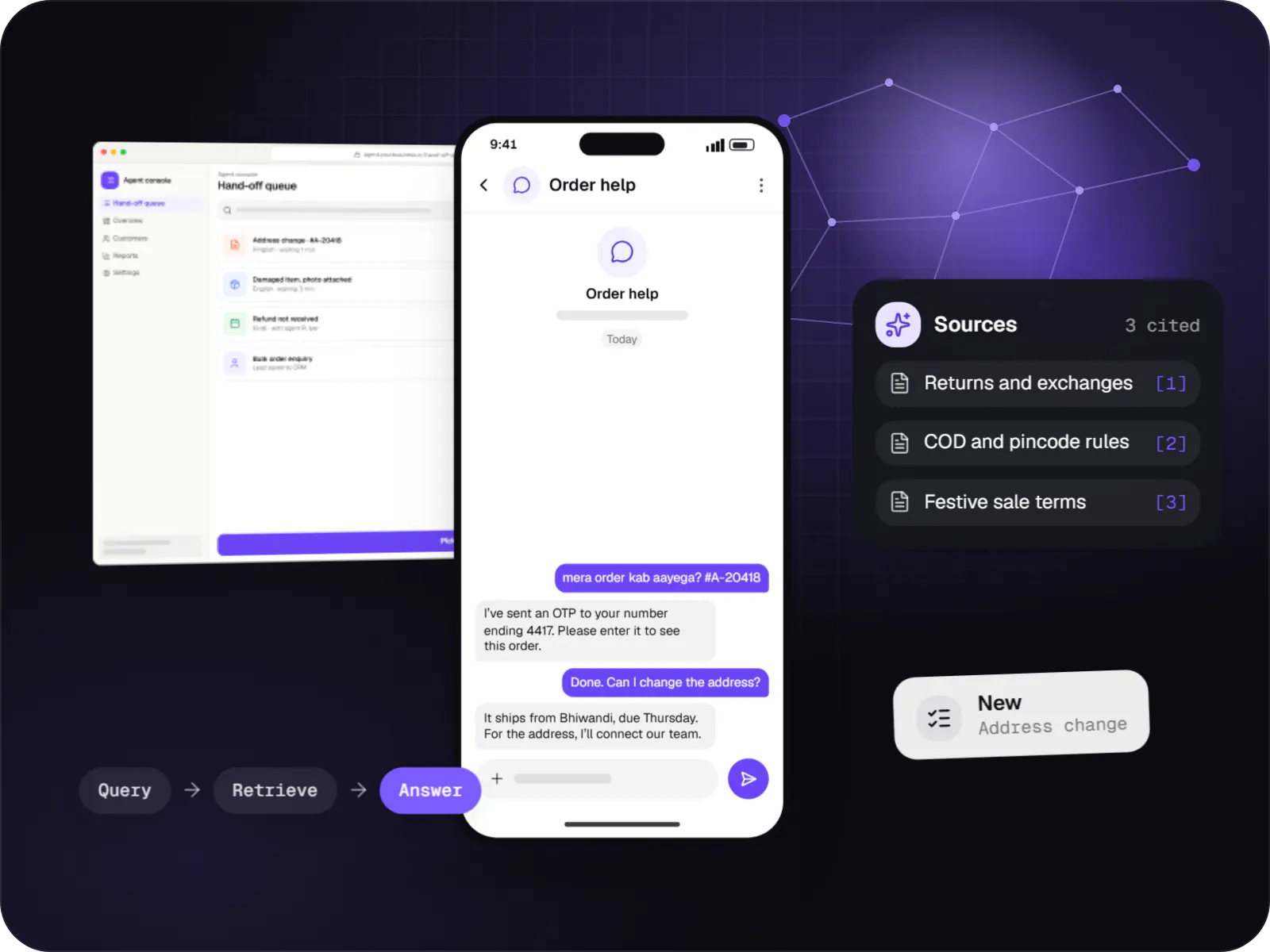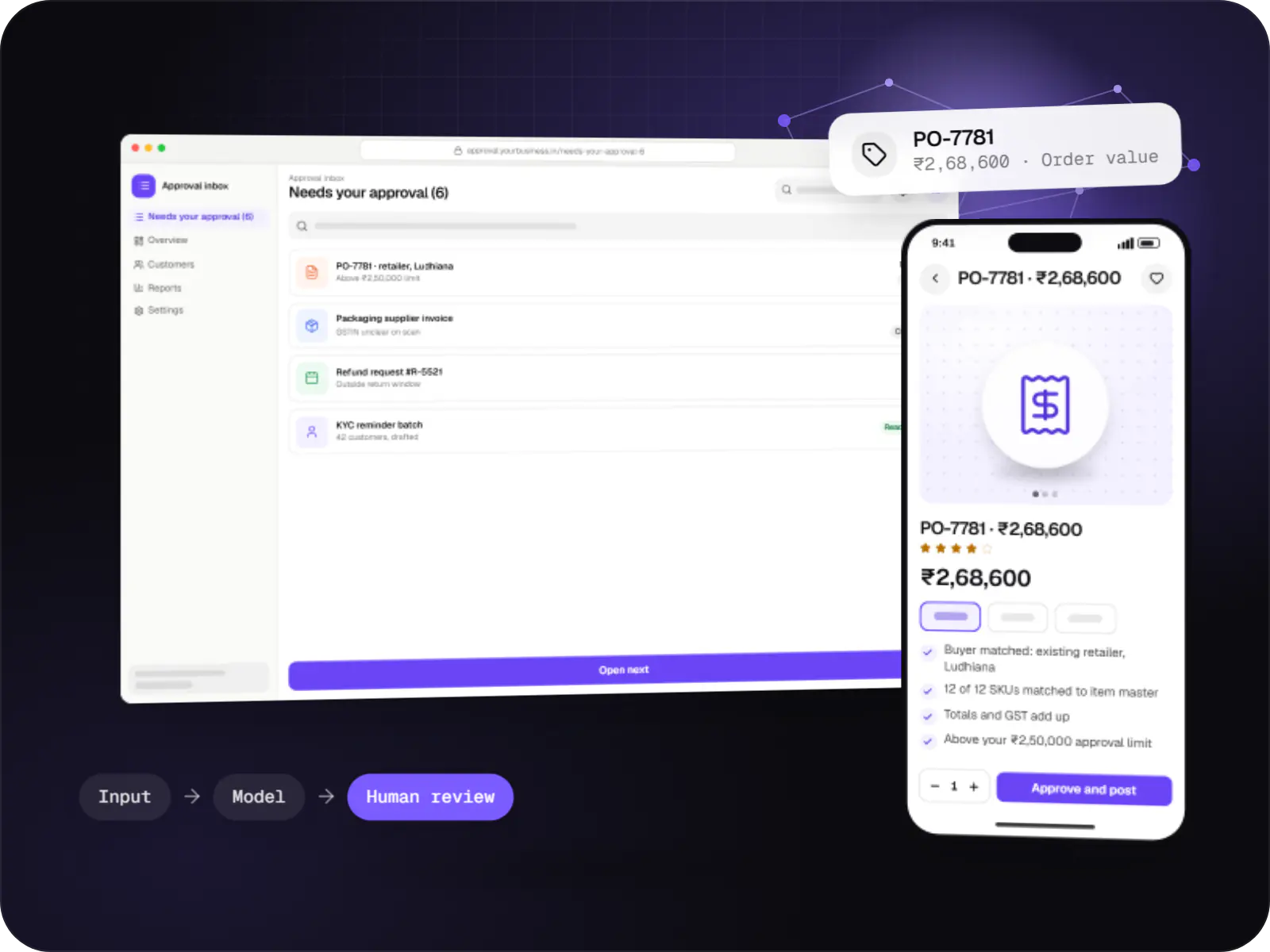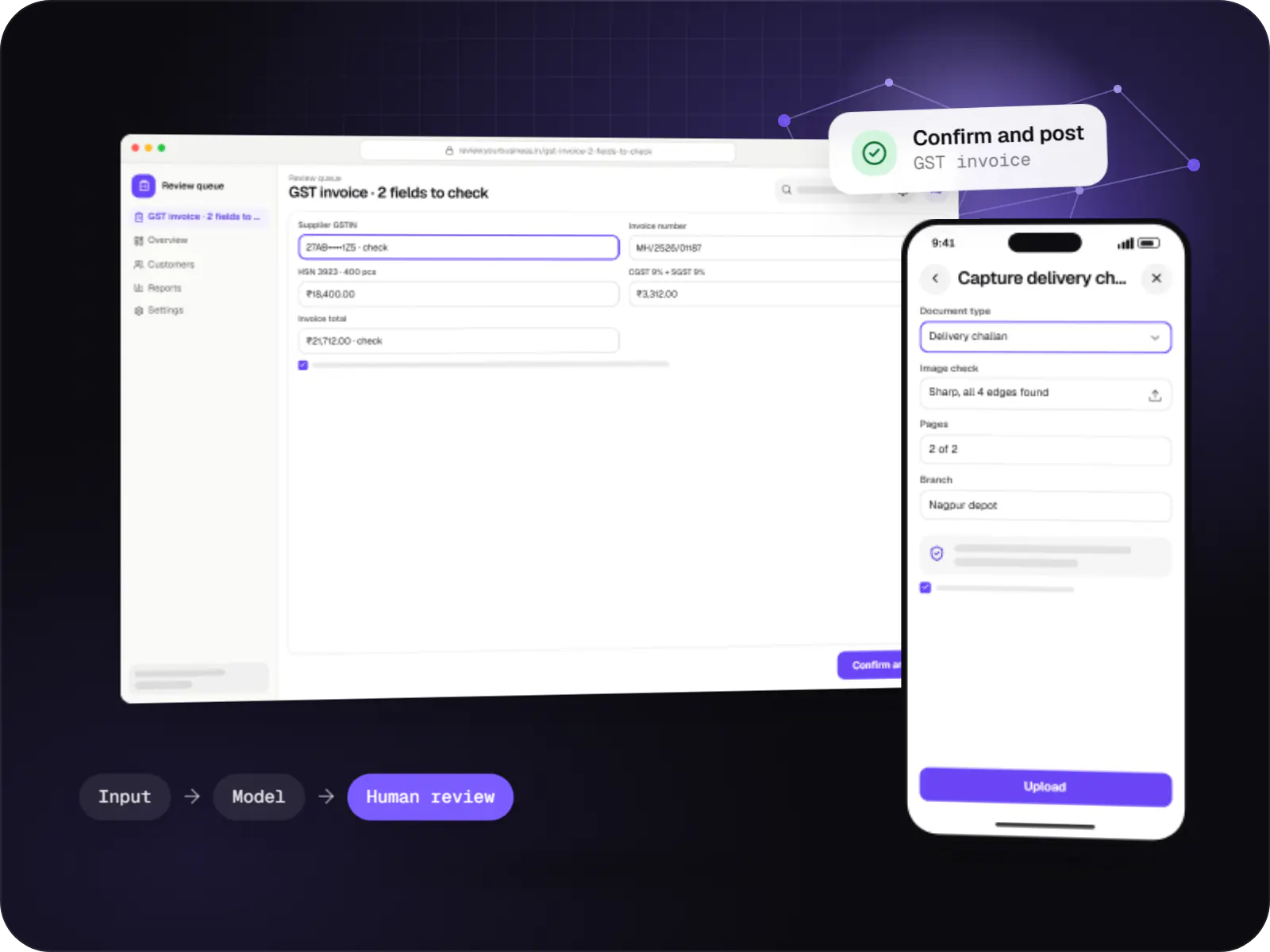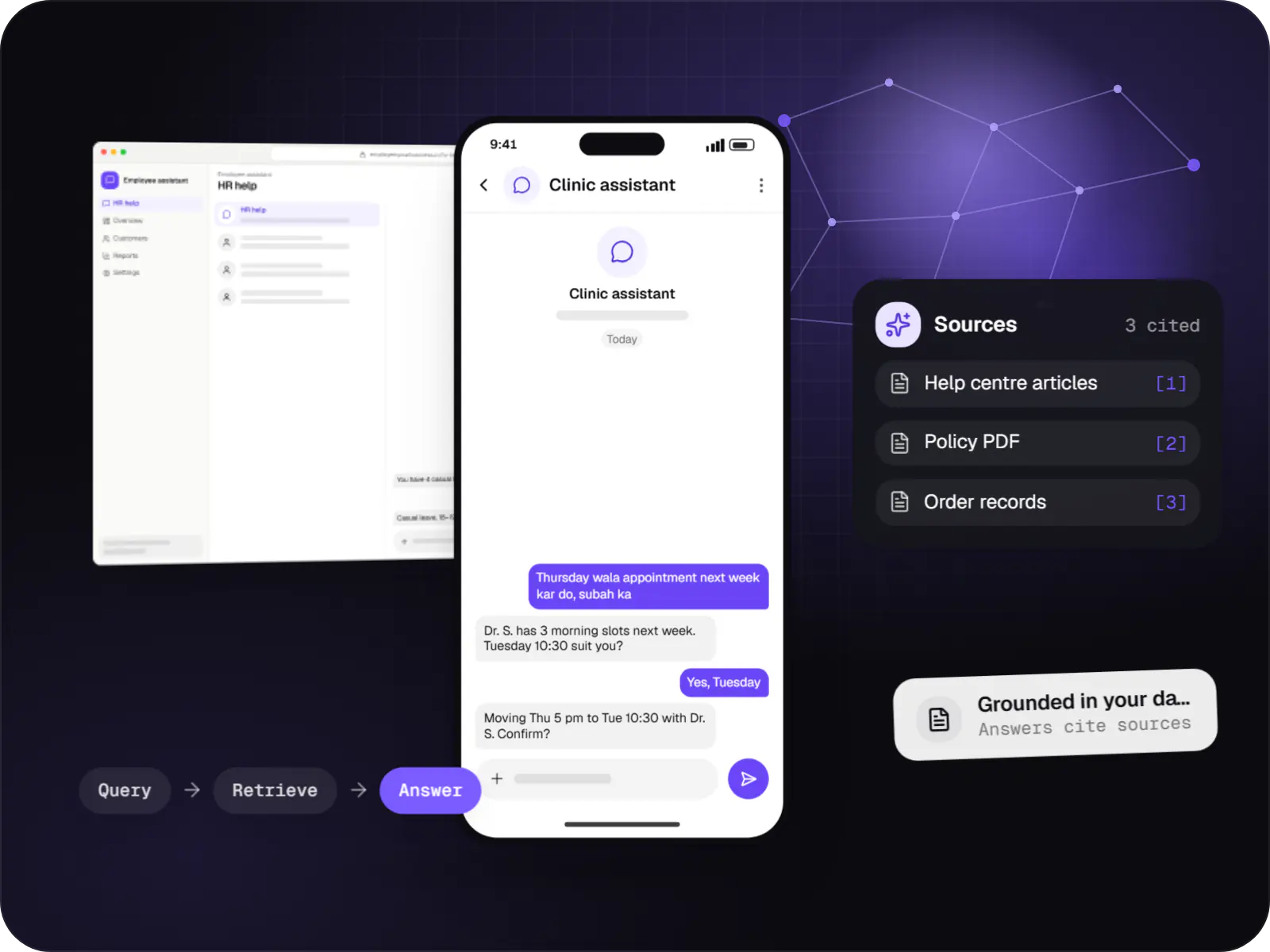
Adds AI features such as chat assistants, document summaries and smart search to your product, built on OpenAI models with human review.
Used for
- AI chatbots
- Document summaries
- Smart search
- Drafting replies
Generative AI development
Features that generate catalogue copy, reports, summaries, translations and images, with brand controls and a review step before anything is published.
At a glance
How to start
Tell us what you need in your own words. You talk to the developers who would build it and get a written, line-item estimate.
Get a project estimateGeneration is the easy part; controlling it is the work. Thousands of SKUs need descriptions that follow your tone, mention only real attributes, avoid banned claims and fit marketplace character limits. A report generator must quote the right figures, not approximate them.
So generation runs from structured inputs such as product attributes, source documents and database queries. Outputs are validated against rules, compared with approved examples and queued for editing. The edit history shows where prompts need work and which content types can move to lighter review.
Challenges
New SKUs go live with thin or copied descriptions that hurt search visibility.
Hindi, Tamil or Marathi versions of pages and notices trail the English originals.
Analysts copy figures from dashboards into narrative reports every month.
Call recordings, case files and tenders need summaries before anyone can act.
What is included
Platform: Admin dashboard
Platform: Web app
Platform: Web app
Platform: Web app
How it works
Reports, summaries and translations follow the same route: facts in, draft out, checks, then a person decides.
Attributes such as fabric, size, care instructions and price are read from your catalogue, so every fact in a draft has a source.
Your tone, banned words and approved examples guide the model, with separate templates per category and language.
Descriptions, bullet points and marketplace variants are drafted in bulk, within each channel’s character limits.
Drafts that mention specs missing from the data, medical claims or competitor names are flagged before anyone reads them.
Source and draft sit side by side. Editors approve, fix or reject with a reason, and their edits improve the next batch.
Only approved text is written back, with a record of who approved it and which prompt version produced it.
Then it starts again at step 1: Product data goes in
Integrations
Chosen per task on quality, language support and cost.
Run in your cloud when content must stay there or volume is high.
Hosted APIs or open diffusion models, licences reviewed.
Approved copy written back to product records.
Exports formatted to each marketplace’s template.
Drafts created for editorial review.
Read-only queries for figures reports must quote exactly.
Privacy & security
Validators reject drafts that mention specs or numbers absent from the source data.
Banned terms, medical or financial claims and competitor names are flagged before review.
Image model licences are documented; real people and trademarks are not generated without rights.
Unreleased products and client files go to providers under no-training terms, or to self-hosted models.
Platforms
A web app for editors and report writers, controls inside your admin dashboard, and approved copy published to your website or store.
Browser-based applications with logins, roles and workflows, such as customer portals, SaaS products and internal tools.
Back-office panels for operations, support and finance teams: orders, users, content, reports and permissions.
Marketing and content websites: fast, search-friendly pages with a CMS your team can update without a developer.
Technology
Models draft text and images; Python and Node.js services feed them your data and check the results; Next.js and React power the side-by-side review screens editors work in.
Adds AI features such as chat assistants, document summaries and smart search to your product, built on OpenAI models with human review.
Used for
Connects your product to AI language models from several providers, so each task uses a suitable model and you can switch later.
Used for
Backend
A programming language for AI features, data processing and automation: the engine behind document reading, reports and smart search.
Used for
Backend
Runs the server side of apps: fast, scalable back ends that power your app, website and integrations.
Used for
Web
A modern web technology for fast, search-friendly websites, online stores and web applications that load quickly on mobile.
Used for
Web
Builds interactive screens in the browser, such as dashboards, admin panels and portals, that respond instantly as your team works.
Used for
Data
A reliable database for the records your business runs on: orders, payments, bookings and stock, kept accurate and easy to report on.
Used for
Cloud & DevOps
Cloud hosting for your app, website and data, with data centres in India and room to grow when traffic rises.
Used for
Plain-English glossary
Product preview
Illustrative screens, using a catalogue and report generator for a fashion retailer as the example.
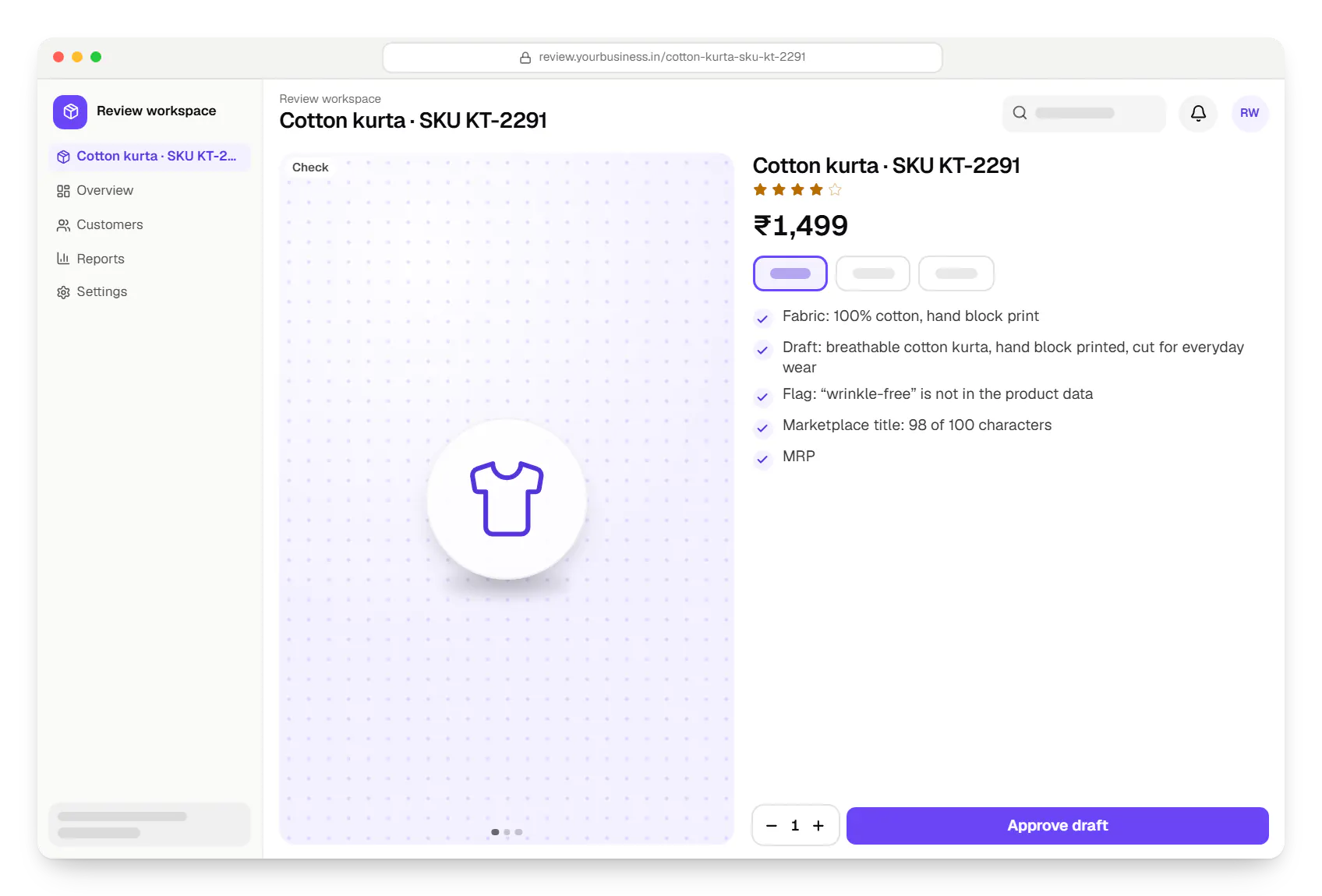
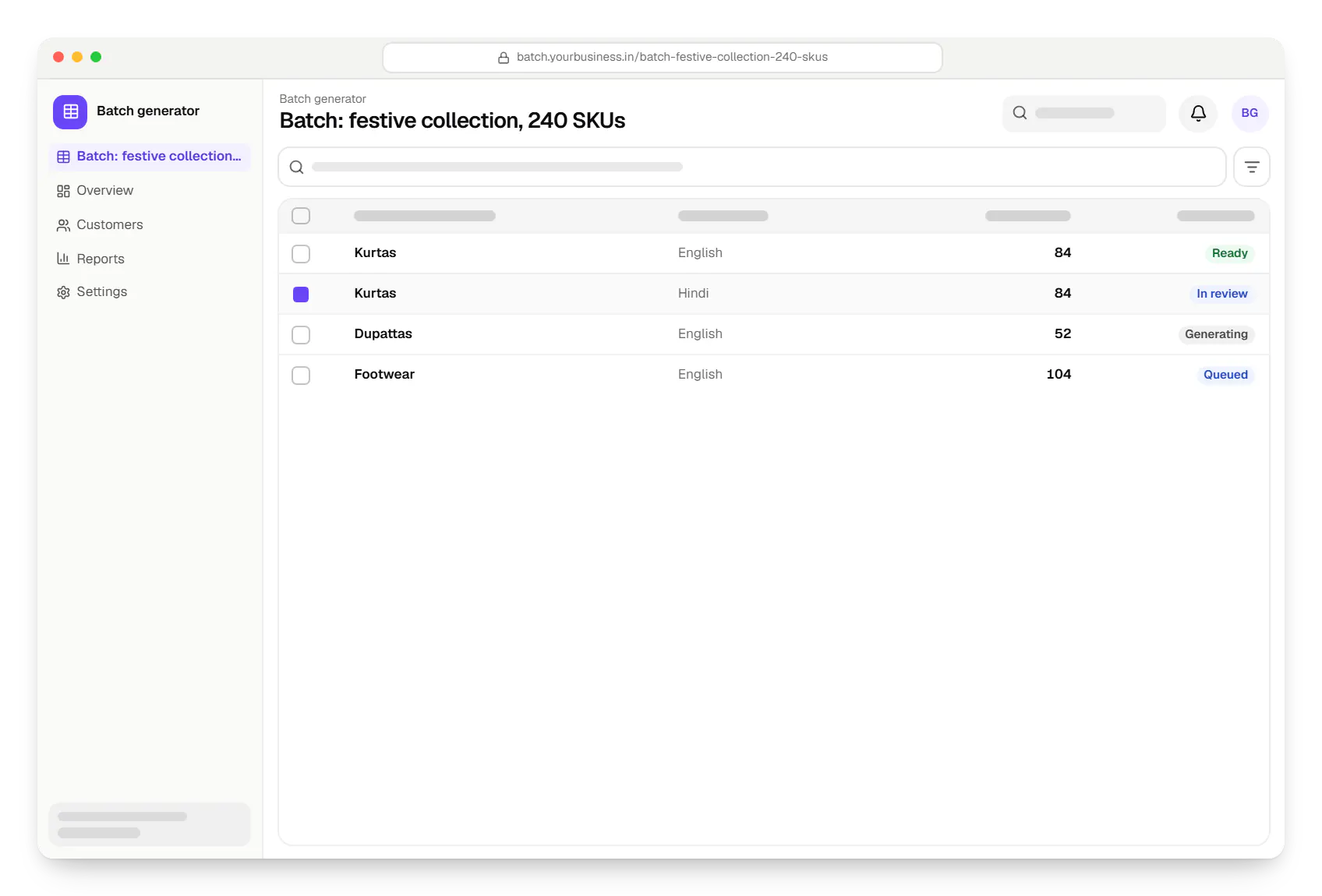
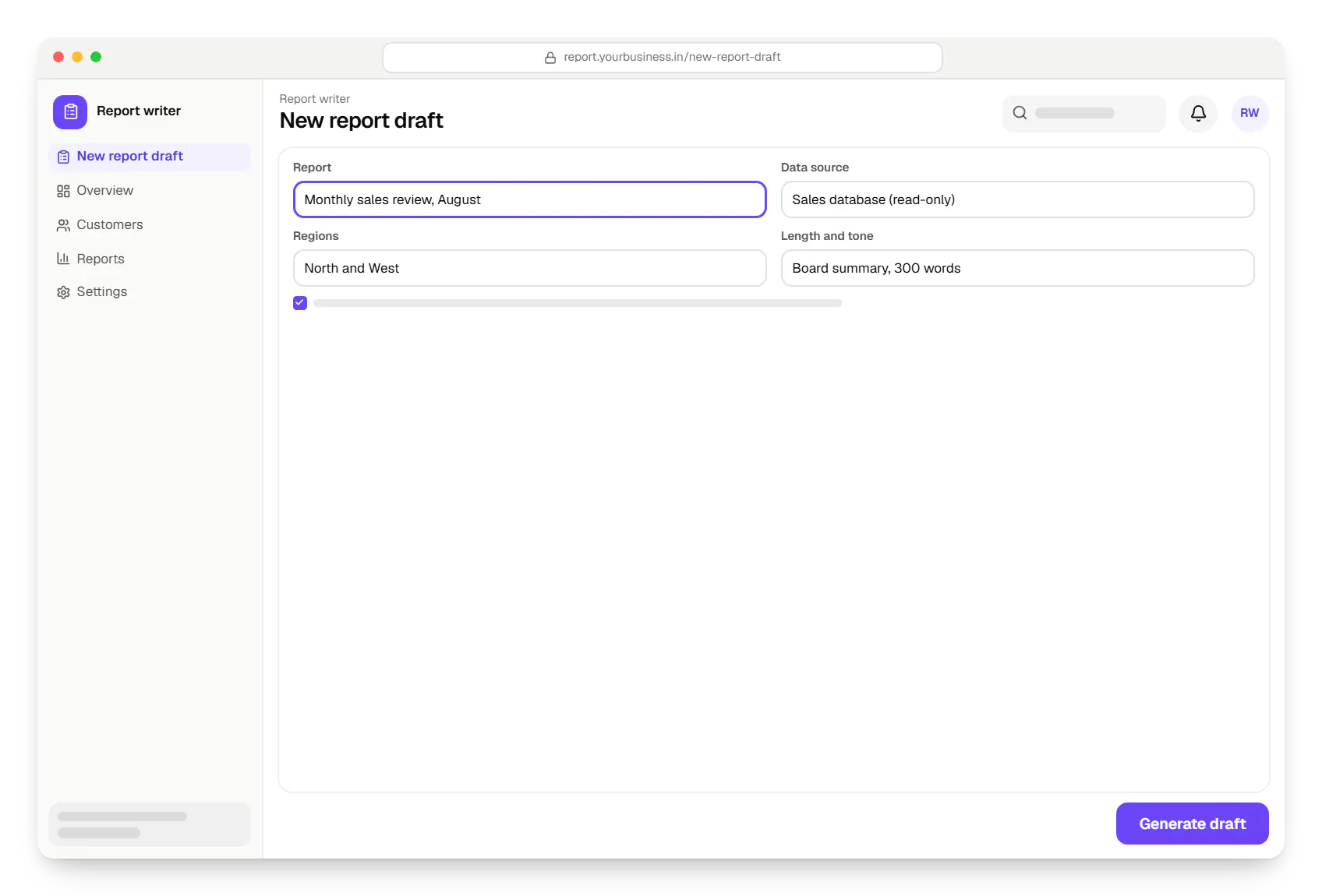
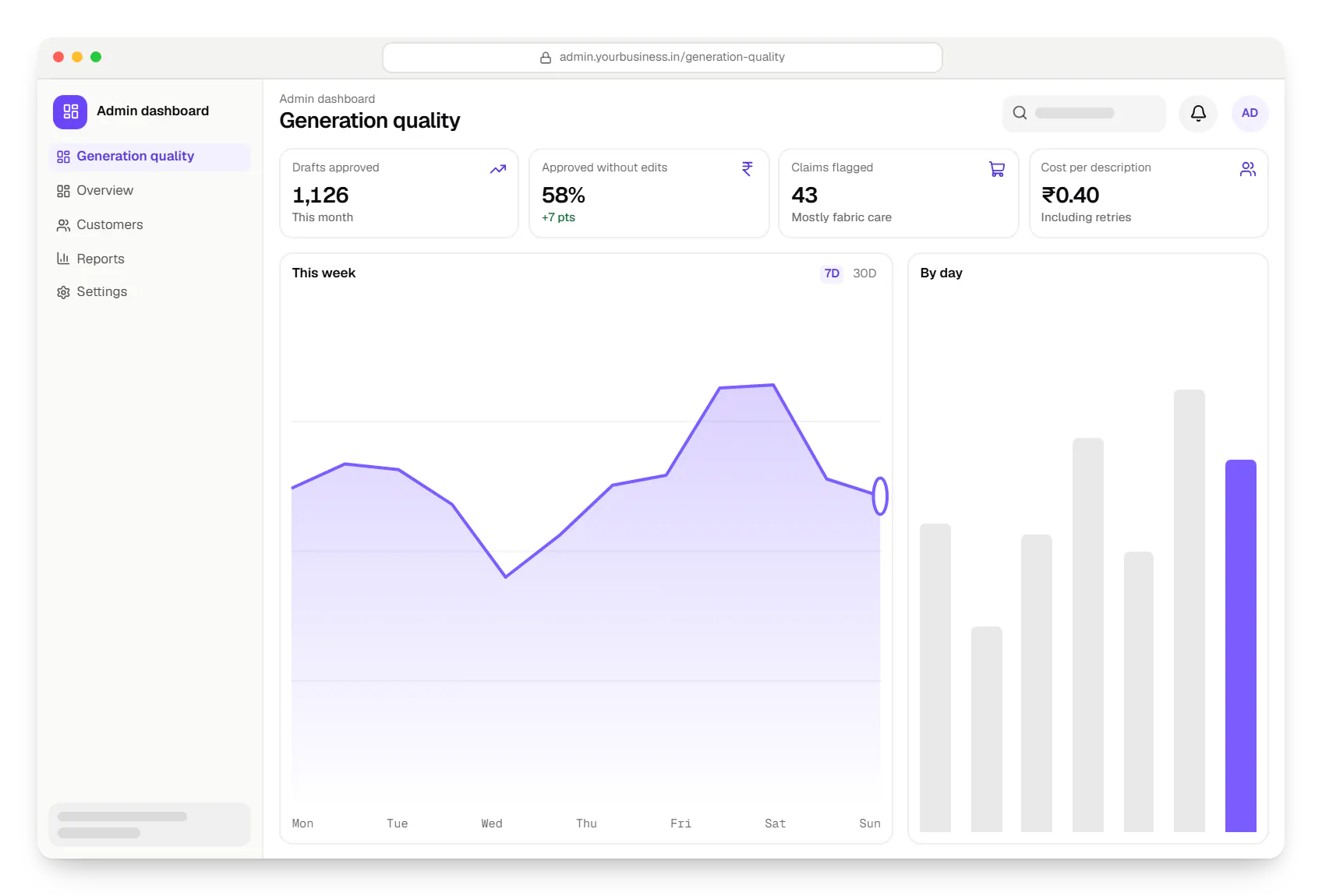
Sample screens: names, prices and figures are examples, not client data.
Industries
Services
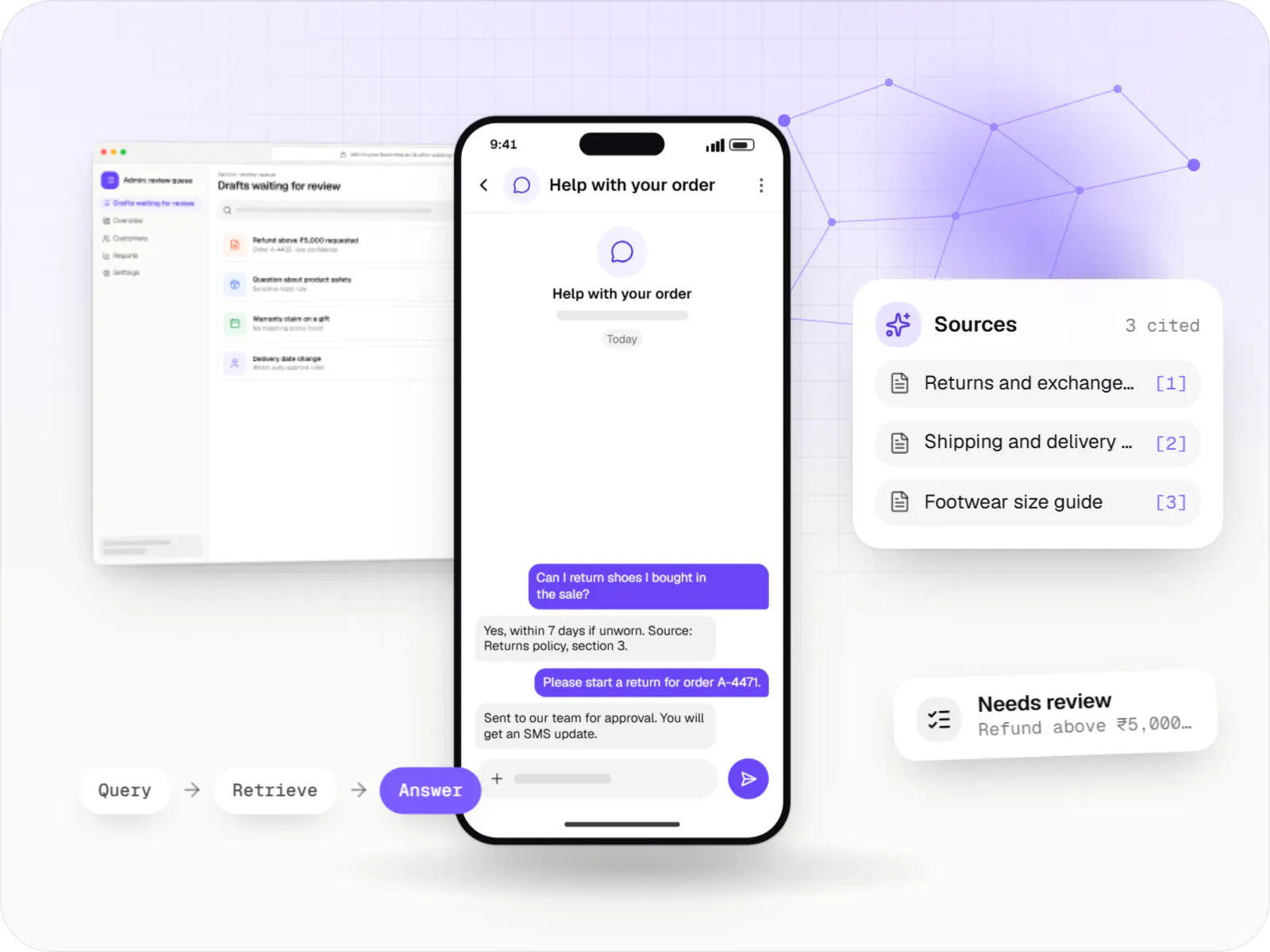
AI features and AI-first apps built on model APIs, retrieval over your own data, workflow automation or custom ML, with evaluation and human review.
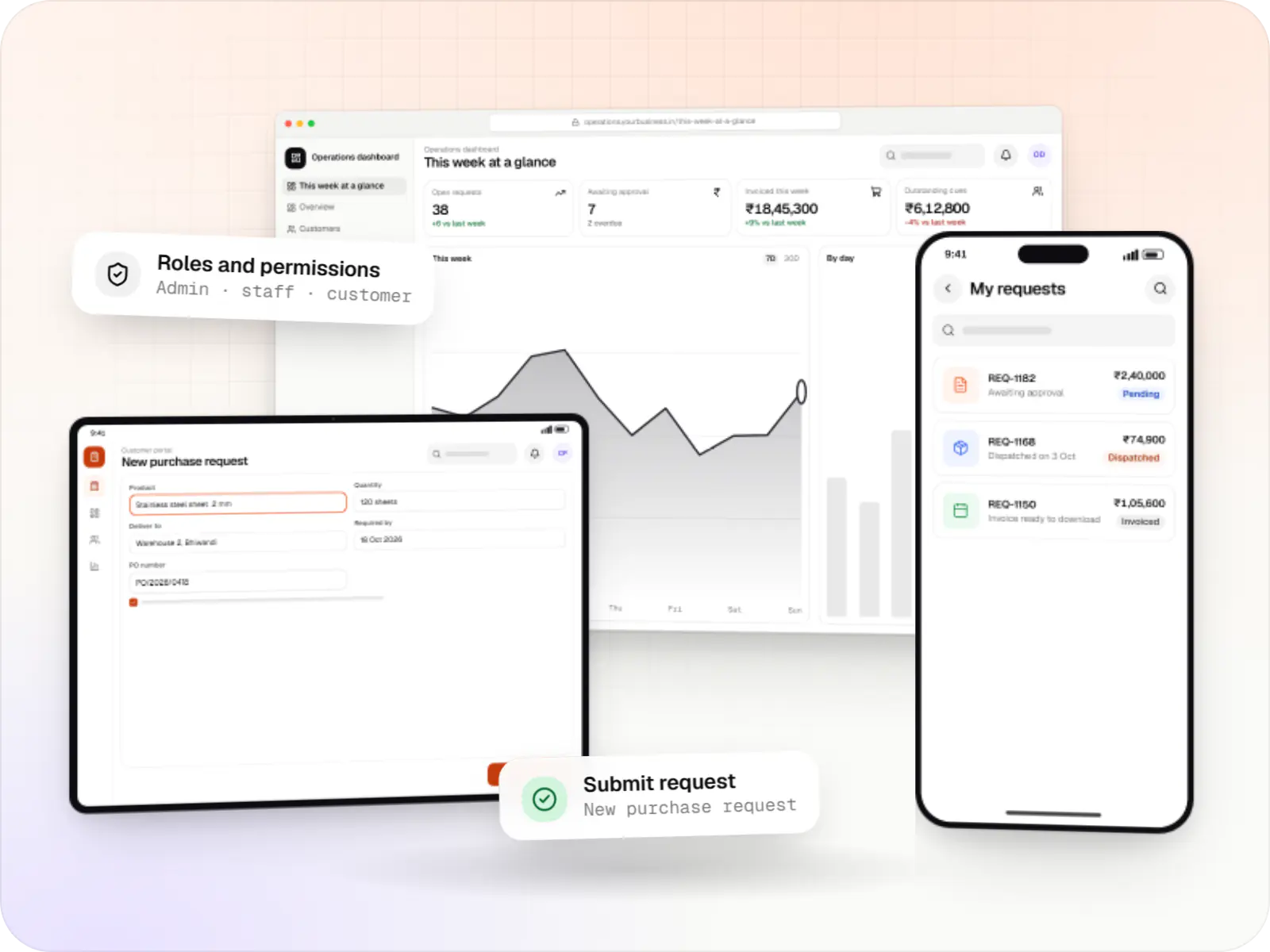
Browser-based products, customer portals, dashboards and internal tools, built on clean data models with secure roles and integrations.
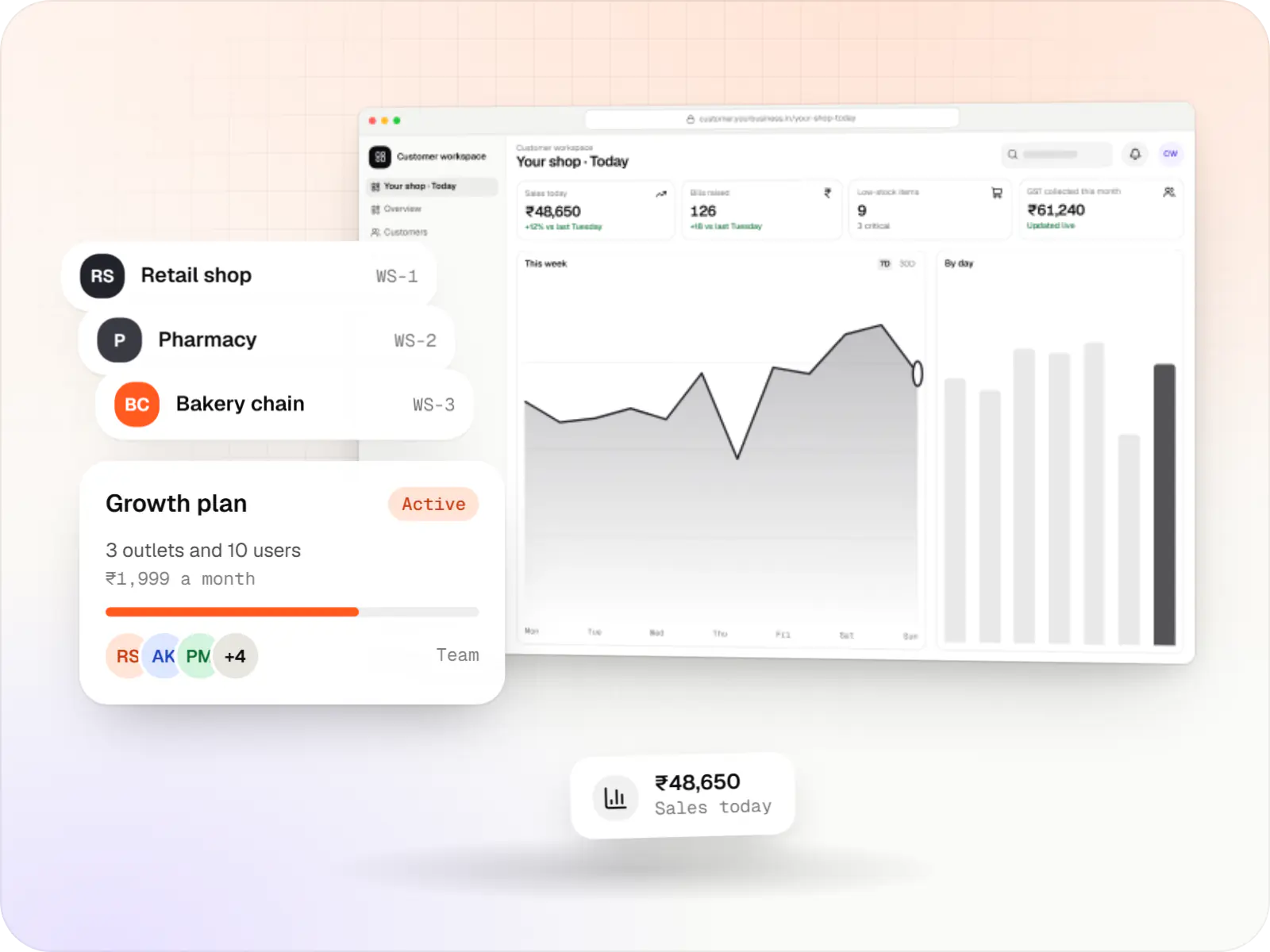
Multi-tenant SaaS products with subscription billing, team roles, onboarding and usage analytics, from first MVP to paying customers.
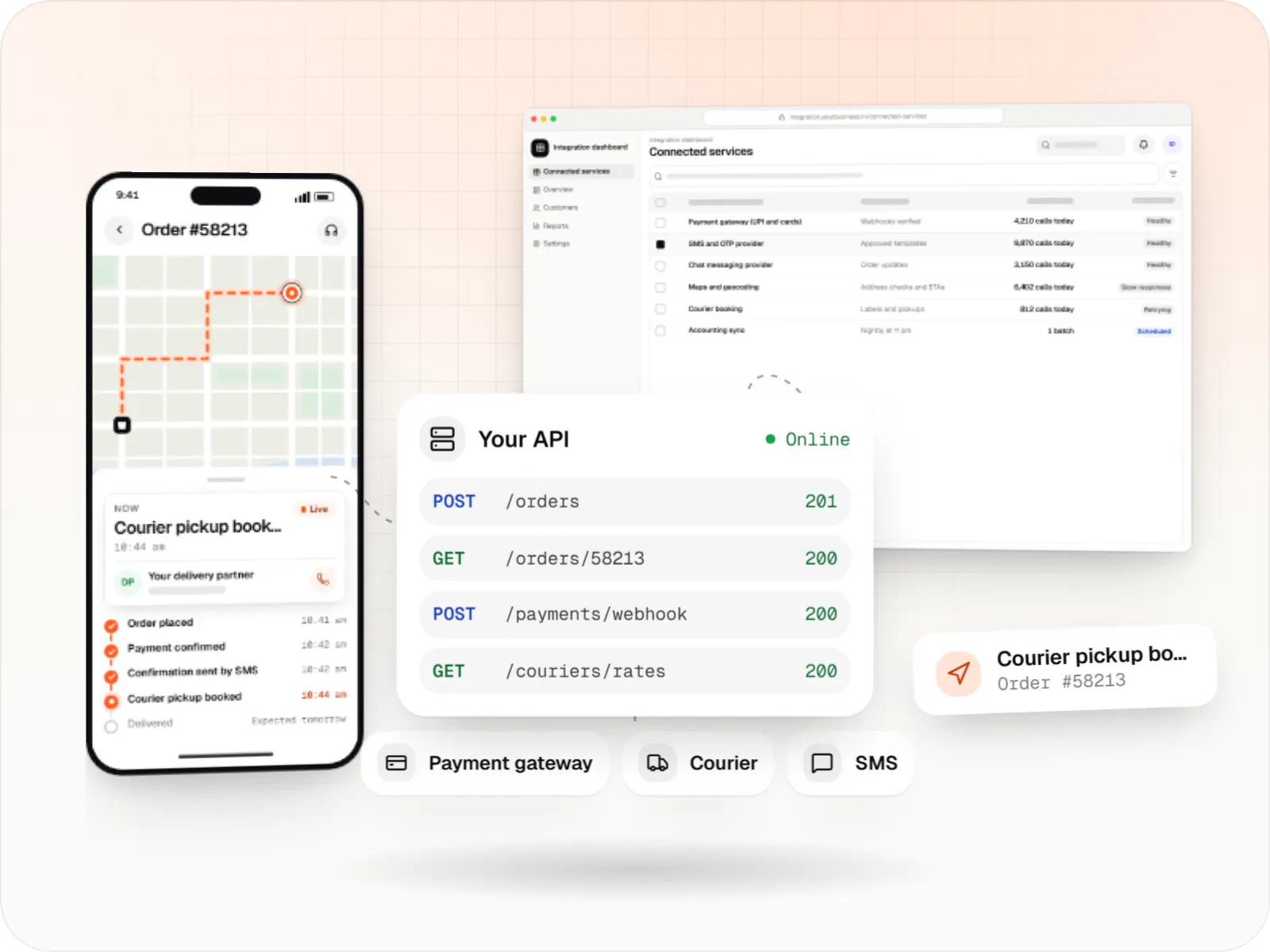
Secure, documented REST and GraphQL APIs, plus integrations that connect your apps to payment, logistics, GST, messaging and business systems.
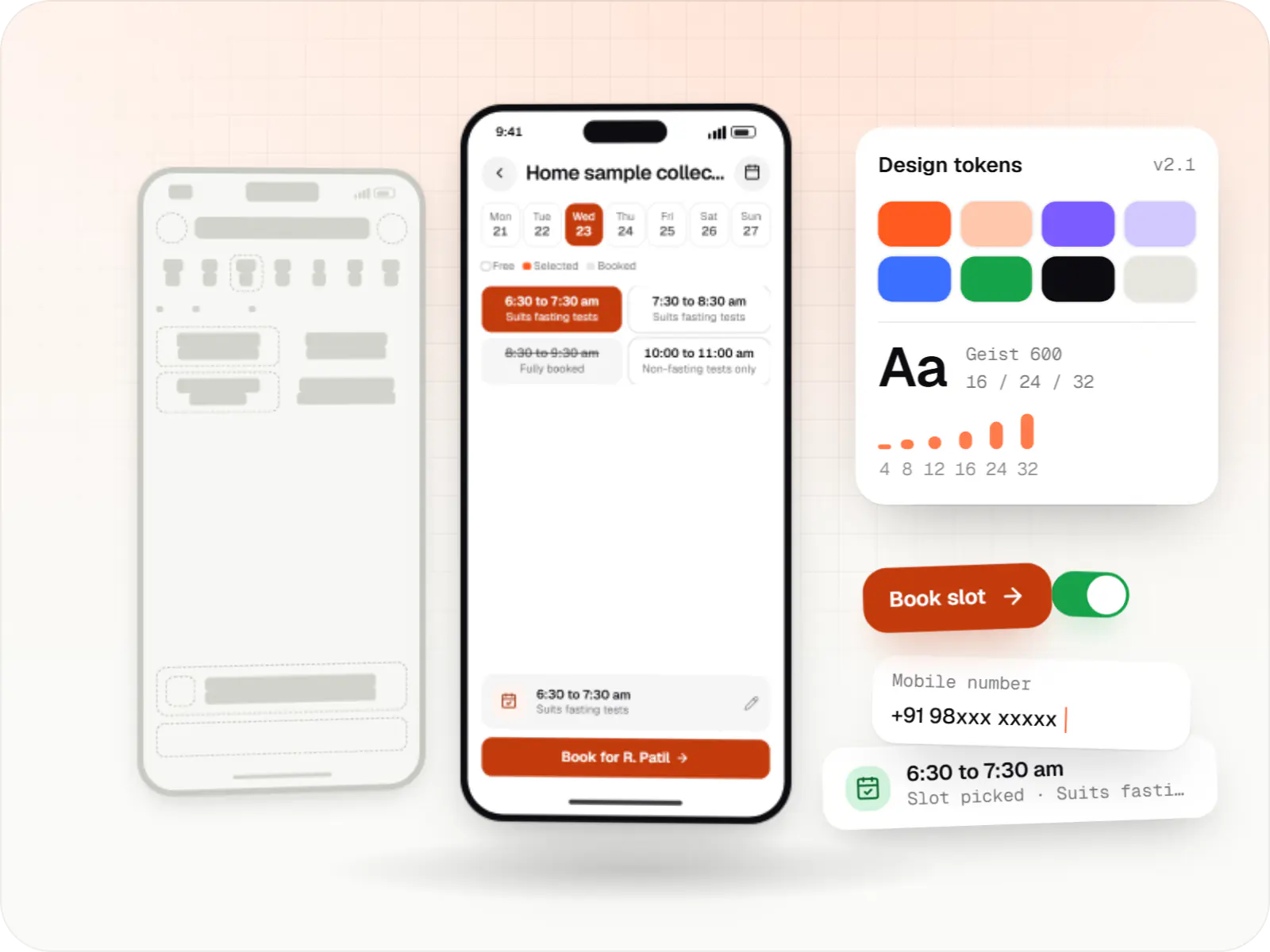
Product design for web and mobile apps: research, user flows, wireframes, prototypes and design systems that engineers can build from.
Cost drivers
Thousands of items need batching, retries and cost tracking; a few daily drafts do not.
Publishing without edits needs stricter validators and more evaluation than internal drafts.
Each language needs reference outputs and a fluent reviewer.
Image pipelines add GPU or API costs, moderation and licence review.
Estimates are written from your scope, with the effort and assumptions behind each line item.
How pricing worksFAQ
Start with prompts, examples and retrieval; they are cheaper to change and often enough. Fine-tuning helps when you need a consistent format or tone at very high volume, or want a smaller, cheaper model to match a larger one on a narrow task. It needs hundreds to thousands of high-quality examples and retraining when your style changes. We test both on your evaluation set before recommending it.
You own the outputs you commission from us, and major model providers’ terms generally assign output rights to the customer. Copyright protection for largely machine-generated material differs between countries and is still developing, so for important assets we recommend meaningful human editing. For images we check each model’s licence for commercial use. This is a practical view, not legal advice; your counsel should confirm it for high-value work.
Thin, repetitive or inaccurate text can; accurate, useful text generally does not, and search engines’ published guidance focuses on helpfulness rather than on how content was drafted. We generate from real attributes, vary structure across product types and have people review a sample of every batch. We avoid producing hundreds of near-identical pages, the pattern that tends to cause problems.
With your style guide turned into instructions, approved examples for each content type, and checks on vocabulary you do or do not use. Editors’ changes are logged, and recurring edits feed back into the prompts. For Indian-language content, fluent reviewers approve the reference examples, because a direct translation of an English tone rarely reads naturally in Hindi or Tamil.
Next step
Share the content you want more of and the data behind it. We will prototype a generator and show you the edit rate.