Skip to content
Softcoderz

Technology · AI

LLM integration services

Connects your product to AI language models from several providers, so each task uses a suitable model and you can switch later.

How we use it

We build integrations that can route between Anthropic Claude, Google Gemini, OpenAI and open-weight models such as Llama or Mistral, so no AI feature depends on a single provider.

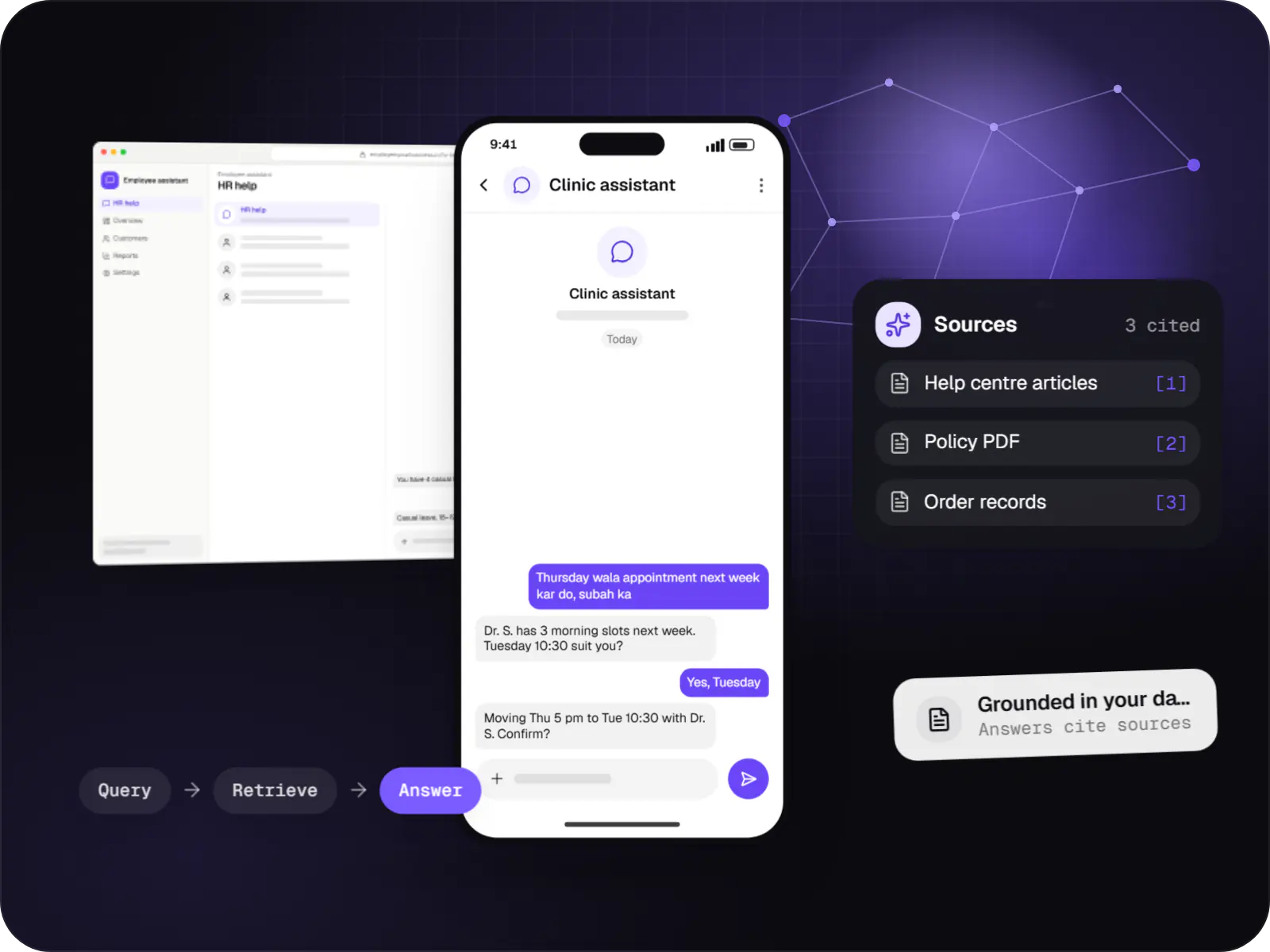
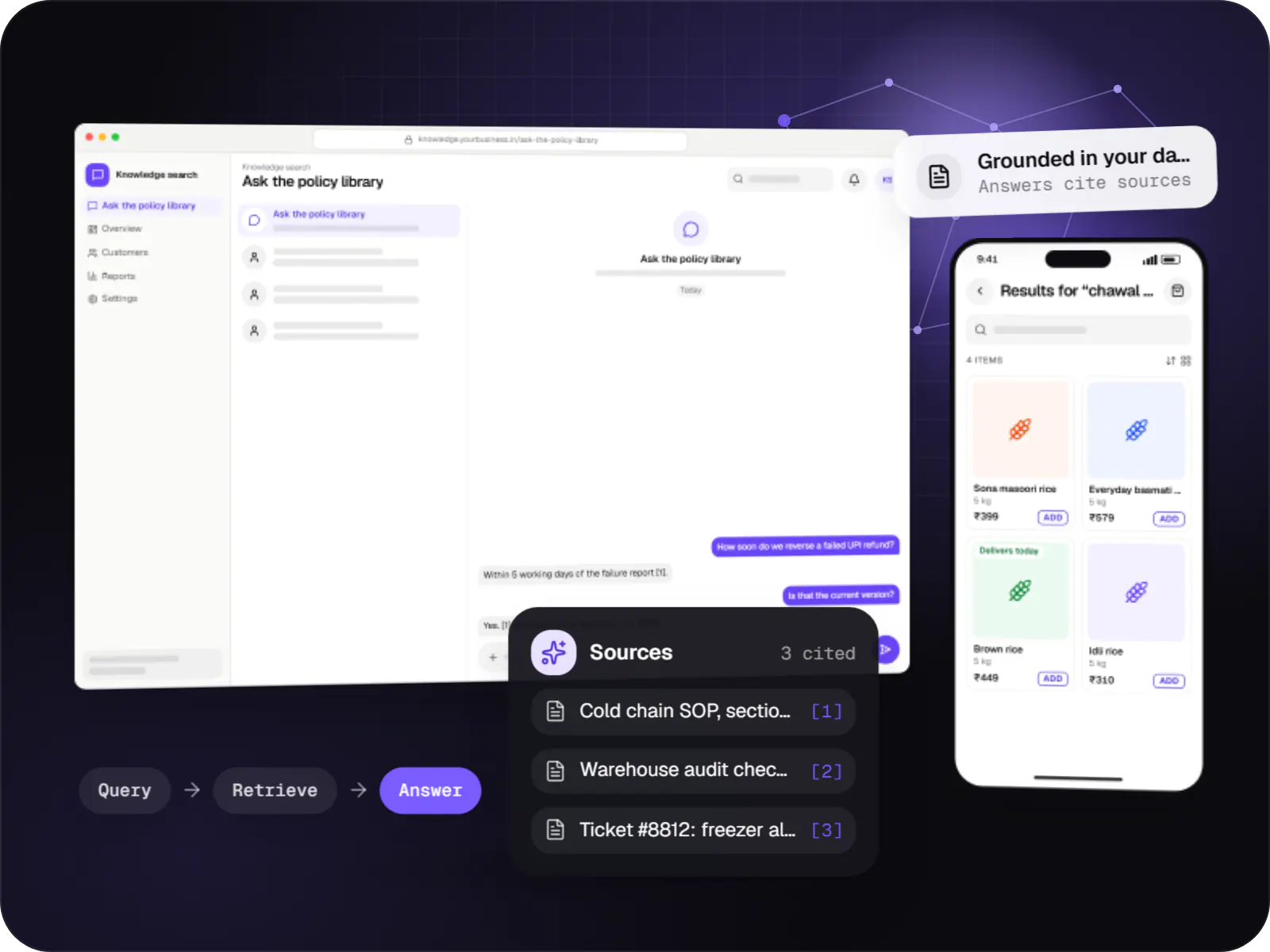
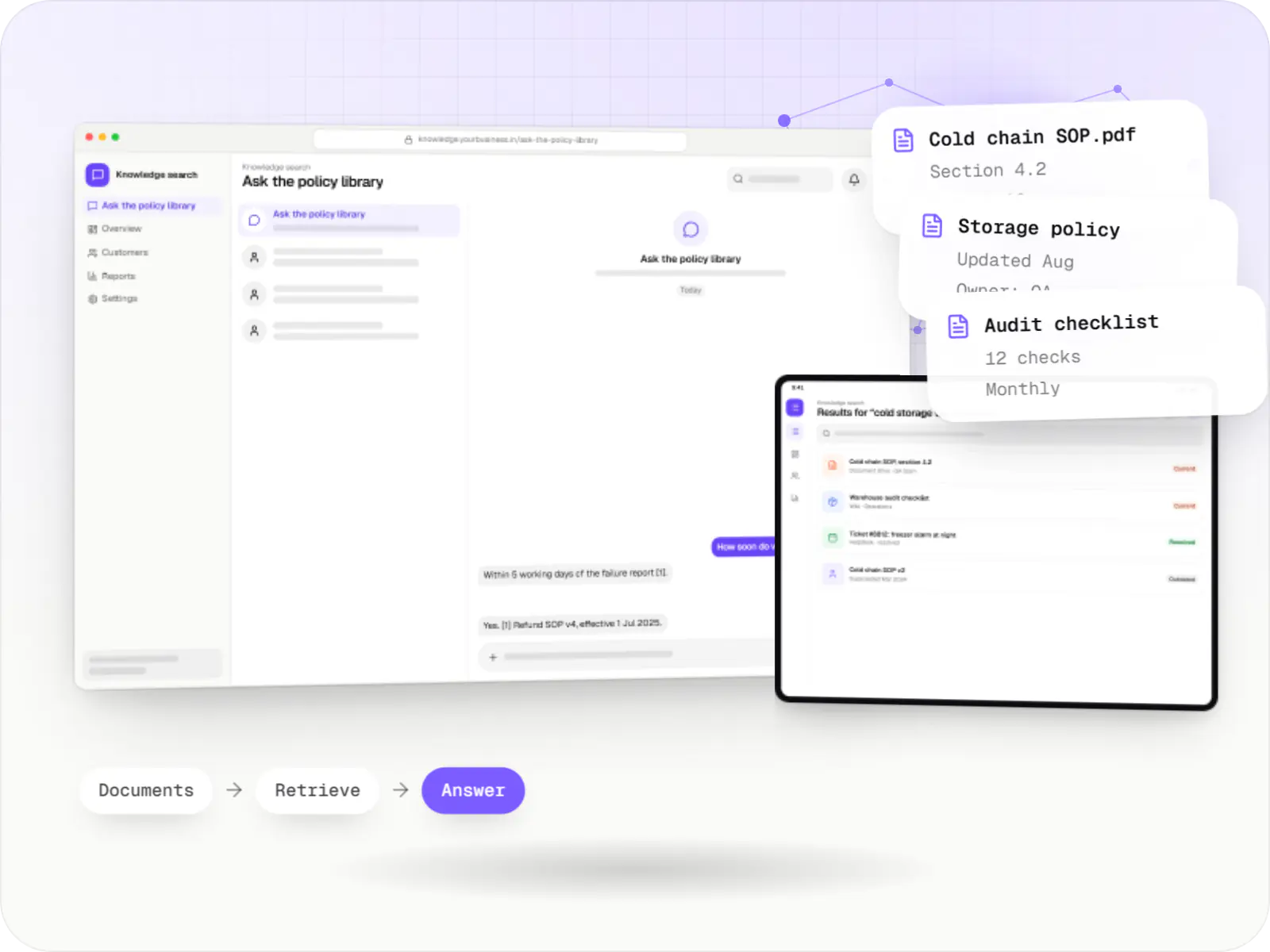
LLM integration: company documents retrieved to answer a policy question with citations in a browser
Illustrative previewCompany documents searched first, then summarised into an answer that links back to its sources.

What LLM integration means, and how we choose models

A large language model (LLM) is the kind of AI behind chat assistants: it reads and writes text. Several companies offer them, including Anthropic, Google and OpenAI, and some open models can run on your own servers. LLM integration means connecting your product to one or more of these in a way you can change later. For you, it avoids betting the product on a single provider's prices and terms.

Models differ in reasoning quality, speed, context length, language coverage and price, and their relative standing shifts every few months. A thin abstraction layer lets a feature switch models, or use different ones per task, without a rewrite. For Indian-language features we compare general models with Indic-focused options, such as AI4Bharat's open models or the government's Bhashini services, using test sets written the way your users write.
Use cases

What we build with language models

  • Model routing

    Faster, cheaper models for simple steps; stronger ones for complex reasoning.

  • Retrieval-augmented generation

    Answers grounded in your documents through vector search.

  • Self-hosted open models

    Private deployments in your cloud for sensitive data.

  • Multilingual assistants

    Hindi, Tamil and other languages, checked by native speakers.

  • Agentic workflows with approvals

    Multi-step tasks that call your tools, with sign-off on actions.

Why a model-agnostic approach matters for you

  • No single-vendor dependency

    Switch providers if pricing, terms or quality change.

  • Cost matched to the task

    Pay for a stronger model only where the task needs it.

  • Data residency options

    Hosting chosen to fit your data obligations.

  • Fair comparisons

    One test set scores every candidate model, so choices rest on evidence.

When we would not recommend a custom LLM integration

  • One simple feature on one provider: if you only need, say, a summary button, calling one provider directly is quicker; we still keep the code easy to switch later.
  • Self-hosting without steady volume: self-hosting open-weight models gives control over data location but brings GPU costs and operational work, which pays off only at high, steady volumes or under strict data rules.
  • Tasks that need exact answers: calculations, pricing and compliance checks belong in ordinary code, with a model at most drafting the explanation.

Plain-English glossary

Language model terms, in plain English

Large language model (LLM)
AI software trained on large amounts of text that can read, summarise and write. It is good at language tasks but can be wrong, so important outputs are checked.
Open-weight model
A model whose files are published, so it can run on your own servers instead of a provider's. It keeps data in-house, at the cost of running the hardware yourself.
Model routing
Sending each request to the model that suits it: a small, low-cost model for simple sorting and a stronger one for complex questions. It keeps quality up and monthly costs down.
Agentic workflow
A setup where the model plans steps and uses your tools, such as looking up an order. We limit what it can do and require human approval for anything that changes money or records.

Services

Services involving LLM work

  • AI app development

    AI features and AI-first apps built on model APIs, retrieval over your own data, workflow automation or custom ML, with evaluation and human review.

  • Custom software development

    Software shaped around how your business runs, from approvals and inventory to billing and reports, replacing spreadsheets and disconnected tools.

  • SaaS development

    Multi-tenant SaaS products with subscription billing, team roles, onboarding and usage analytics, from first MVP to paying customers.

Solutions

Solutions built on language models

  • AI workflow automation

    Automations for repetitive back-office work, with AI steps that read, classify and draft, and approvals where decisions matter.

  • AI virtual assistant development

    Assistants that book, schedule, look up records and raise requests by voice or text, with confirmation before every action.

  • AI search & knowledge systems

    Search and question-answering over your documents, tickets and product data, with hybrid retrieval, citations and permission-aware results.

  • AI SaaS development

    Multi-tenant SaaS products with AI at their core, built with tenant isolation, usage metering, model routing, evaluation and subscription billing.

  • Generative AI development

    Features that generate catalogue copy, reports, summaries, translations and images, with brand controls and a review step before anything is published.

Work

Sample projects

Illustrative projects that show how we plan and build products that use LLM integrations. They are samples, not client work.

  • AI solutions

    Illustrative sample

    AI customer support assistant for a D2C brand

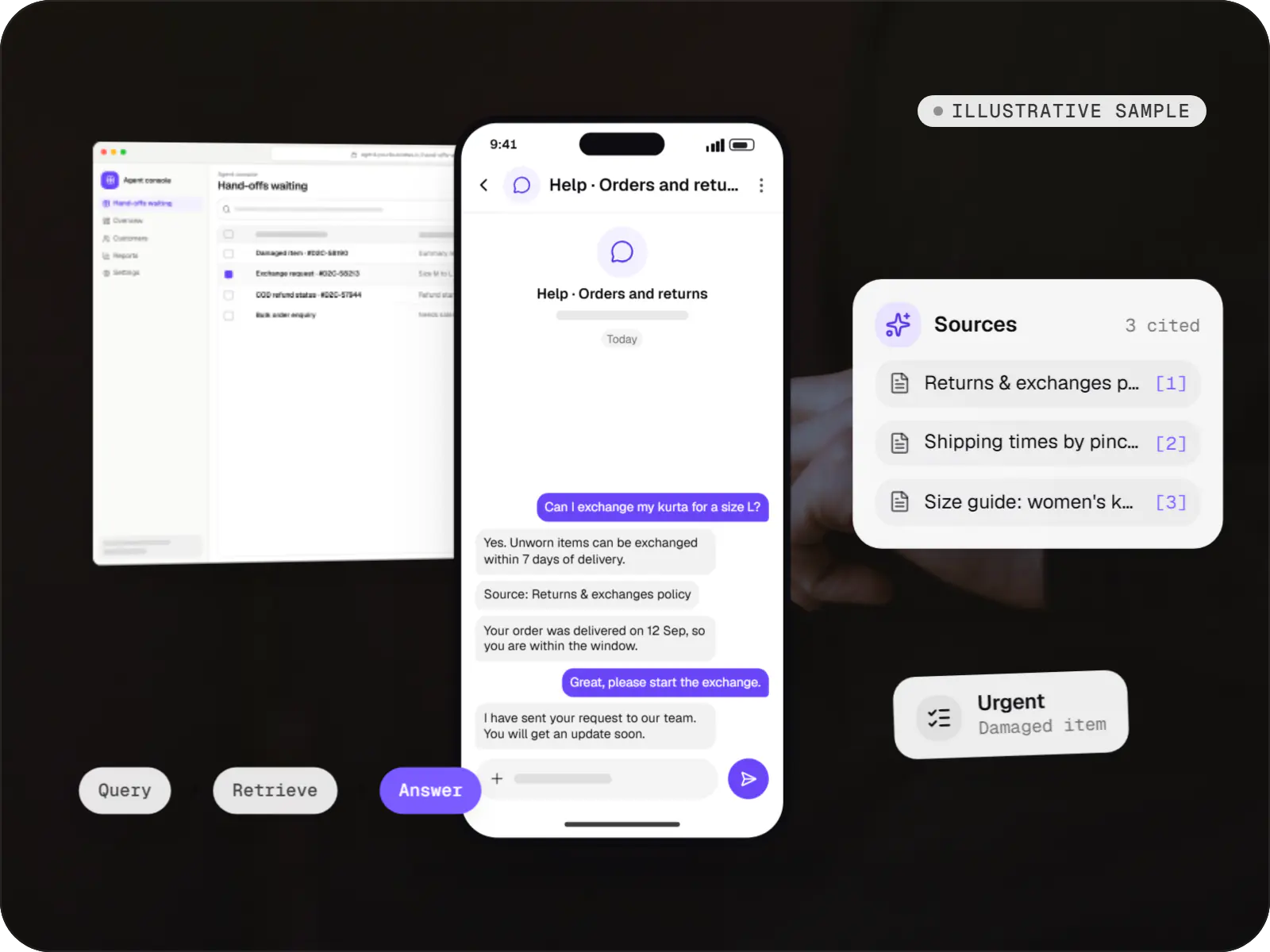
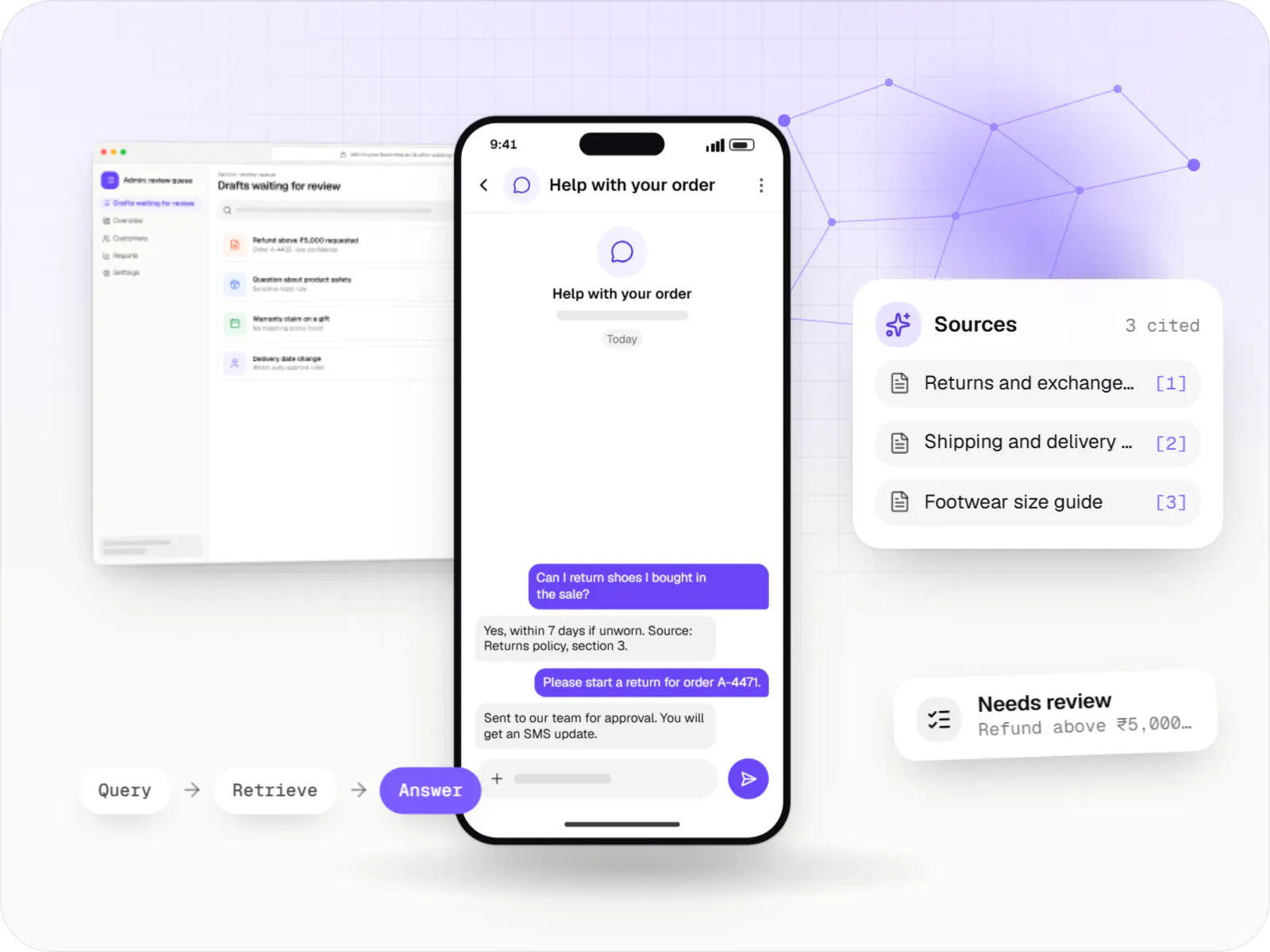
    An illustrative AI assistant that answers order, return and product questions from a D2C brand's own policies and order data, with sources and a human hand-off.

    • E-commerce
    • AI assistant

    Runs on

    • Website
    • Admin

    Built with

    • Next.js
    • Python
    • OpenAI APIs
    • LLM integrations
    • PostgreSQL
    • +1 more

Industries

Where it shows up by industry

Industries whose typical builds with us include LLM integrations.

FAQ

Frequently asked questions

Should we self-host an open-weight model or use an API?

Use an API unless you have a clear reason not to. APIs are quicker to start with, need no GPUs and are maintained by the provider. Self-hosting makes sense when data must stay within your infrastructure, volumes are high and steady enough to justify dedicated hardware, or you need a fine-tuned model you control.

How well do language models handle Hindi and other Indian languages?

Quality varies by model, language and task. Larger general models handle Hindi reasonably well, and other Indian languages with more variation, especially informal or transliterated text such as Hinglish. We test candidate models on real examples from your users, have native speakers check the answers and add translation or Indic-specific models where they perform better.

What is an agentic workflow, and is it safe for our business?

An agentic workflow lets a model plan steps and call tools, such as looking up an order, drafting a refund or updating a CRM record. It is safer when permissions are narrow and consequential actions need human approval. We limit which tools an agent can use, log every step, set spending and rate limits, and start with read-only actions before allowing changes.

Next step

Unsure which model suits your use case?

Share a few real examples of the task. We'll test candidate models and explain the trade-offs.

Or reach us directly

Mon–Sat, 10:00–19:00 IST