

Backend
Python
A programming language for AI features, data processing and automation: the engine behind document reading, reports and smart search.
Used for
- AI features
- Document reading
- Reports and analytics
- Task automation
Media & technology
Product engineering for companies building AI products: the apps, pipelines, evaluation and infrastructure around your models.
At a glance

AI companies are strong on models and stretched on the product around them. We build that product layer so your ML team stays on the model.
How to start
Tell us what you need in your own words. You talk to the developers who would build it and get a written, line-item estimate.
Get a project estimateA notebook that answers well on twenty examples is not yet a product. Customers need a fast interface, an API with keys and limits, predictable costs, and answers that do not quietly degrade between model versions. Enterprise buyers ask where their data goes.
We build this layer around third-party, open-weight or your own trained models.
Challenges
Without test sets, every prompt or model change is a gamble.
Token and GPU spend outpaces revenue without caching and limits.
Slow responses and provider downtime need streaming and fallbacks.
PII redaction, residency and no-training terms come up in reviews.
Solutions
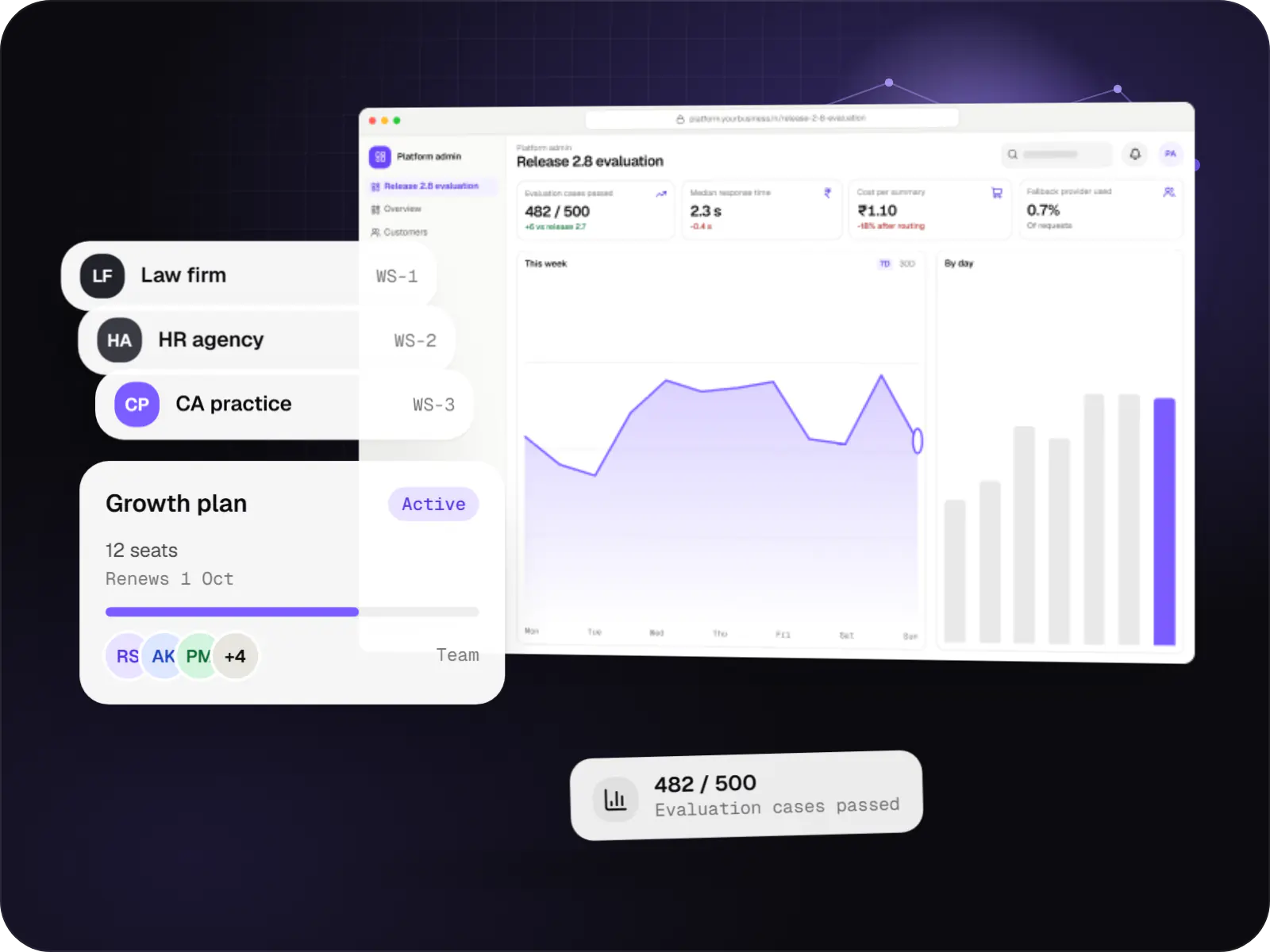
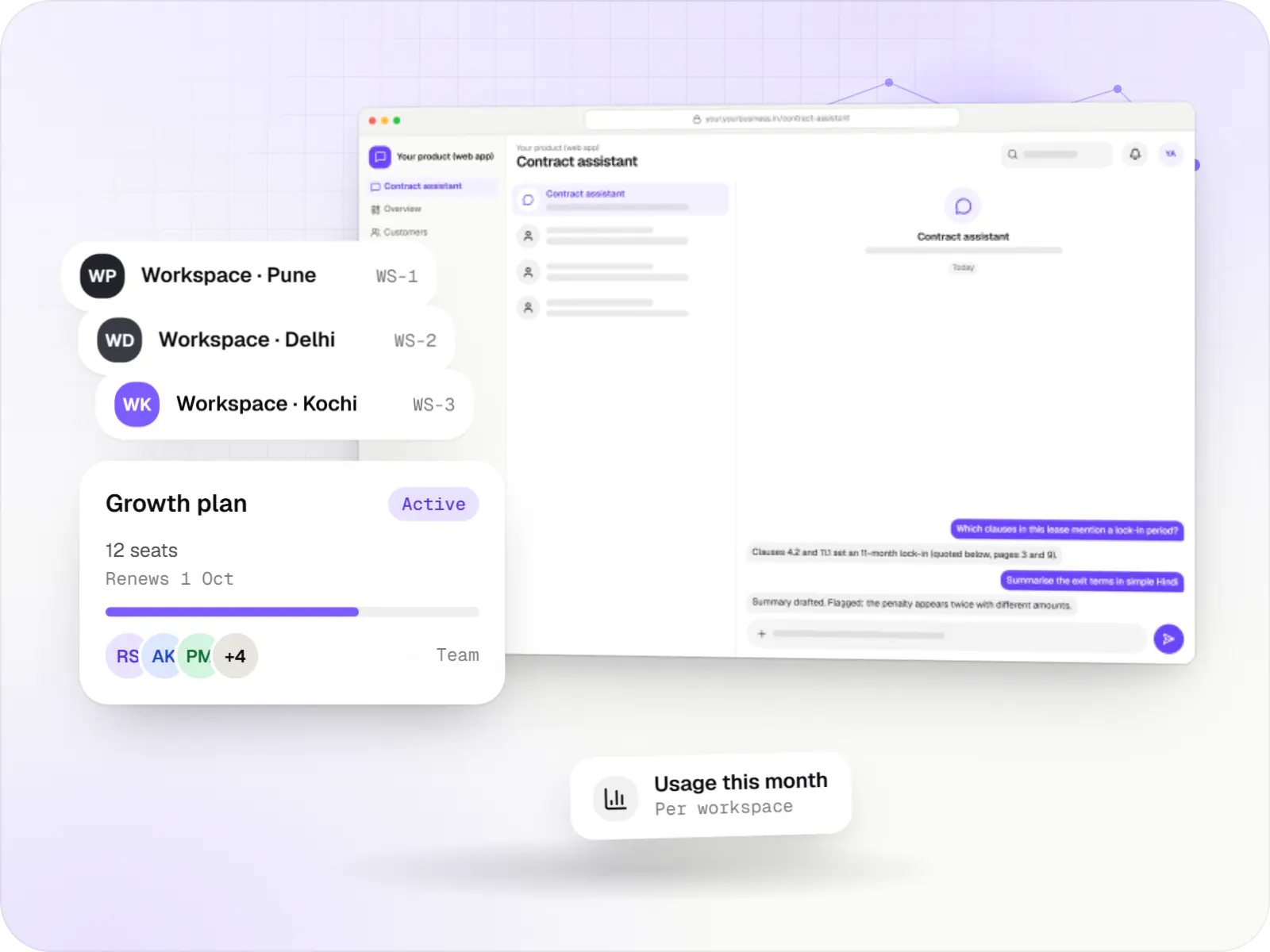
Multi-tenant SaaS products with AI at their core, built with tenant isolation, usage metering, model routing, evaluation and subscription billing.
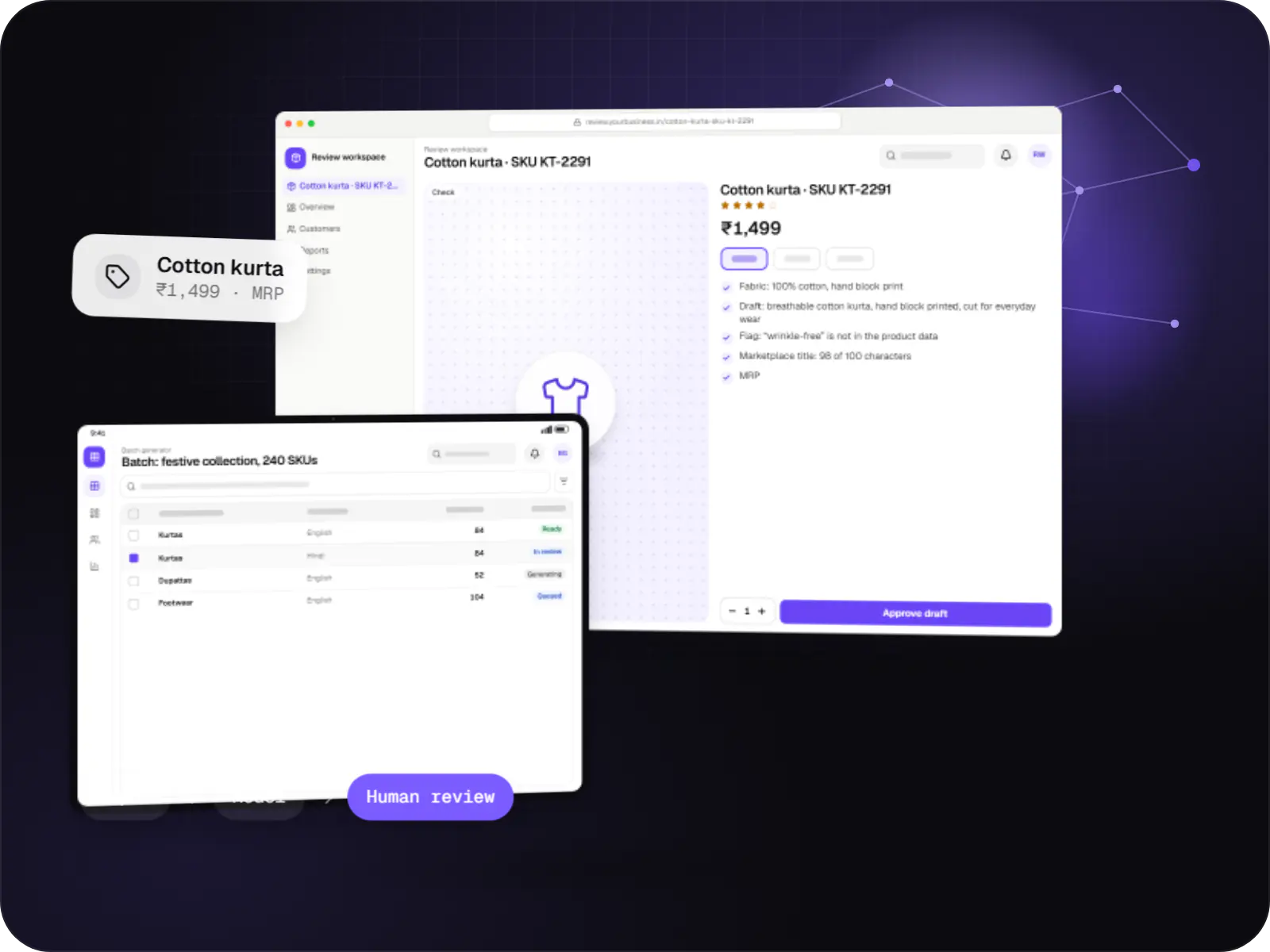
Features that generate catalogue copy, reports, summaries, translations and images, with brand controls and a review step before anything is published.
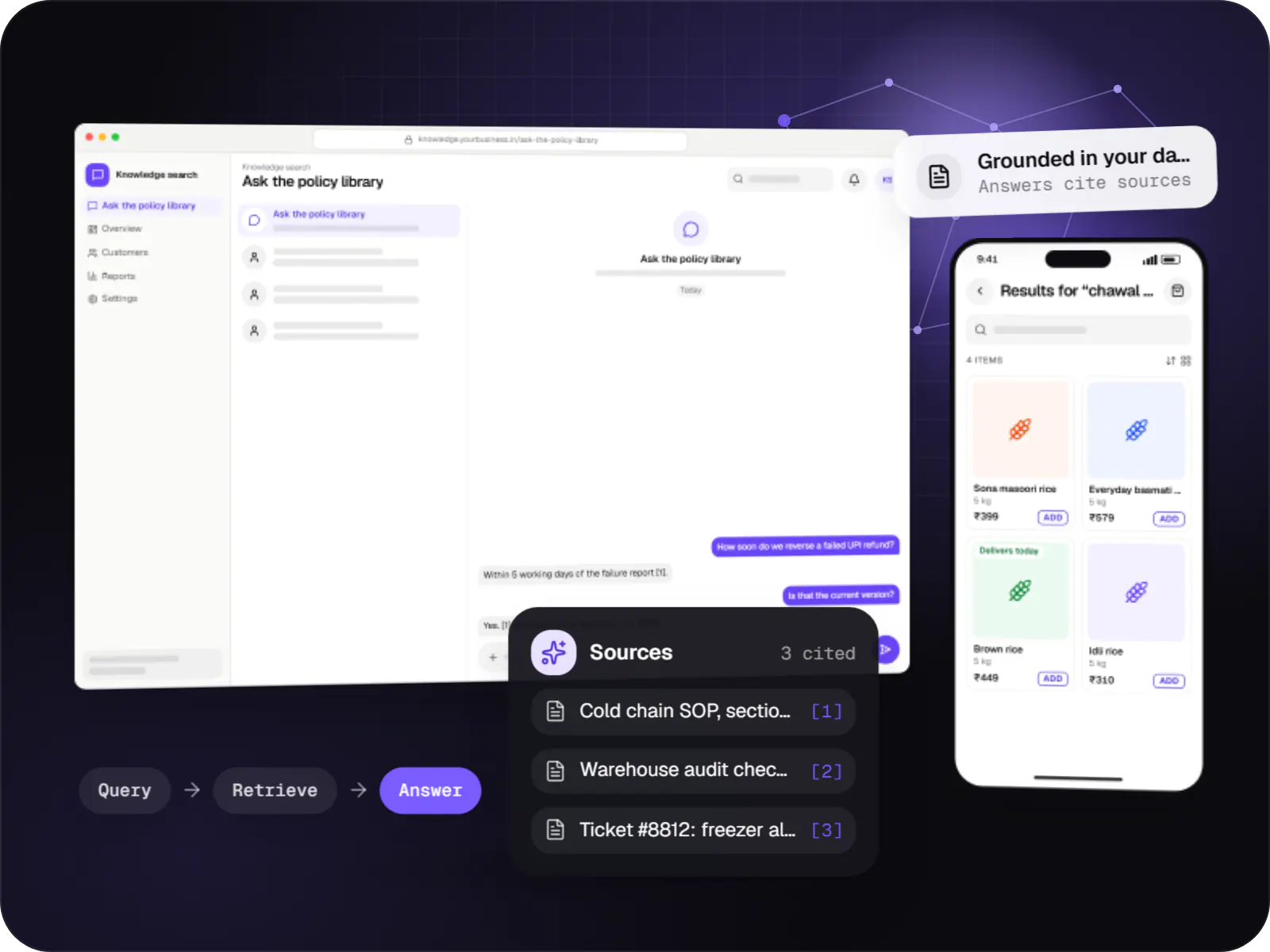
Search and question-answering over your documents, tickets and product data, with hybrid retrieval, citations and permission-aware results.
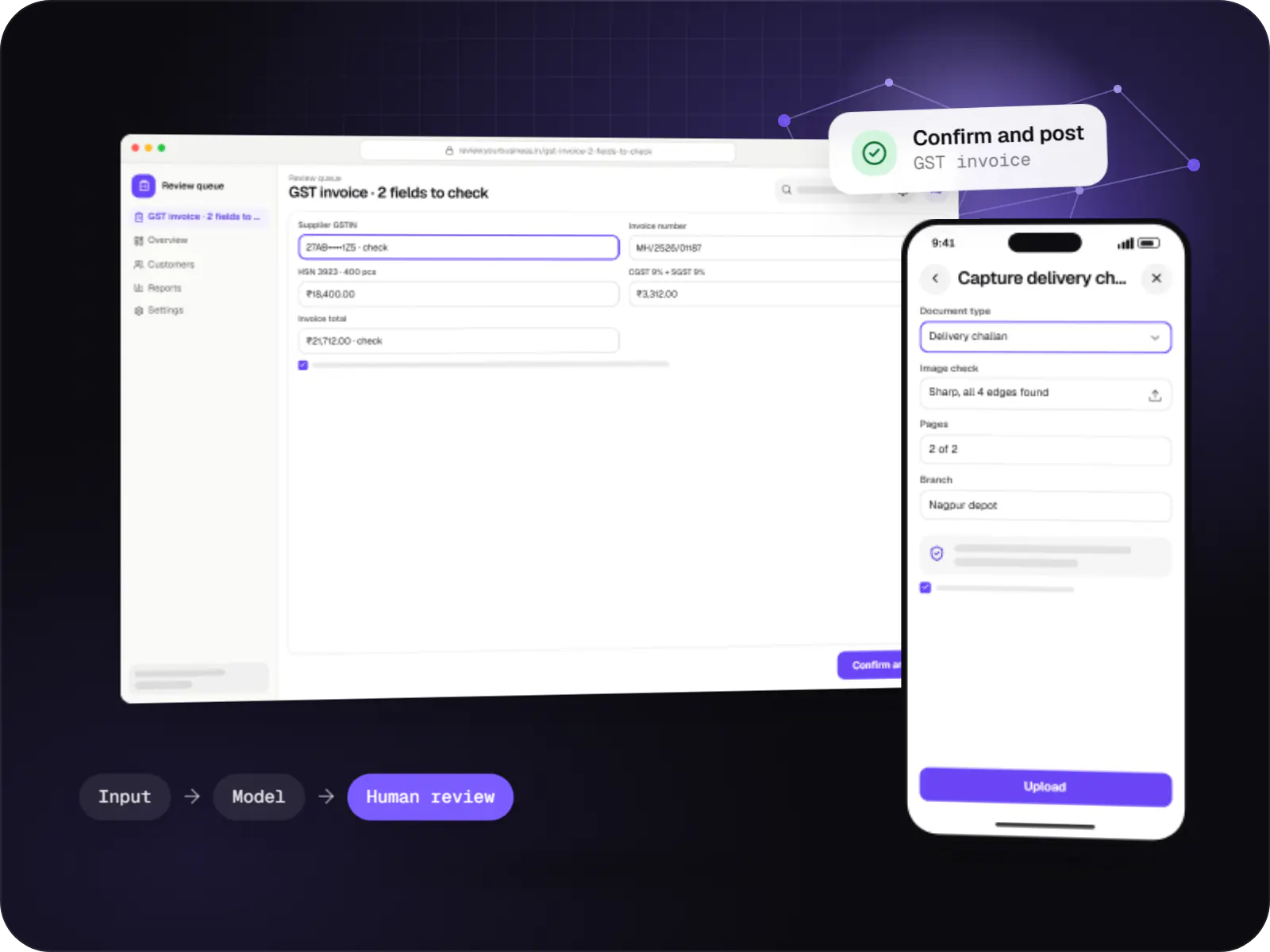
Data extraction from invoices, KYC documents, statements and forms into your systems, with validation rules and human review for uncertain fields.
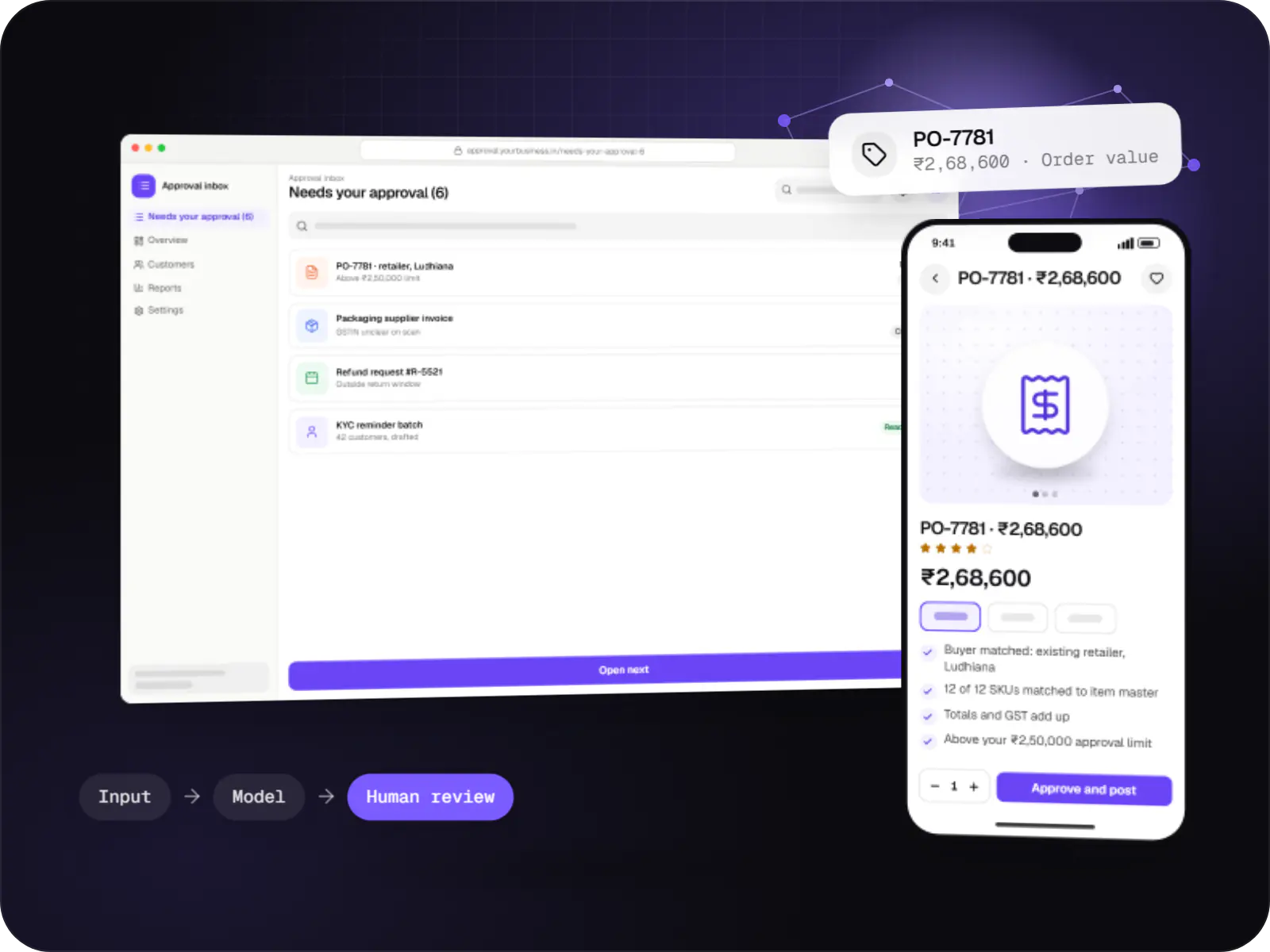
Automations for repetitive back-office work, with AI steps that read, classify and draft, and approvals where decisions matter.
One API over several providers, with fallbacks.
Test sets, automated scoring and human review.
Labelling and review workflows for training data.
Credits or per-call pricing from metered usage.
Low-confidence outputs routed to reviewers.
How it works
Every answer passes through checks your customers never see, and those checks are most of the engineering.
Someone asks a question or uploads a document. The request carries their account or API key, so rate limits and billing apply from the start.
Details such as phone numbers or PAN are masked where the customer's policy requires it, before anything reaches a model.
The gateway routes the request to the right model, your own or a provider's, and falls back to another if the first is slow or down.
Outputs are checked against rules and a confidence score. Low-confidence or sensitive answers go to a human review queue instead of straight to the user.
Tokens, pages or calls are recorded against the customer's credits or plan, so cost and revenue stay visible for every account.
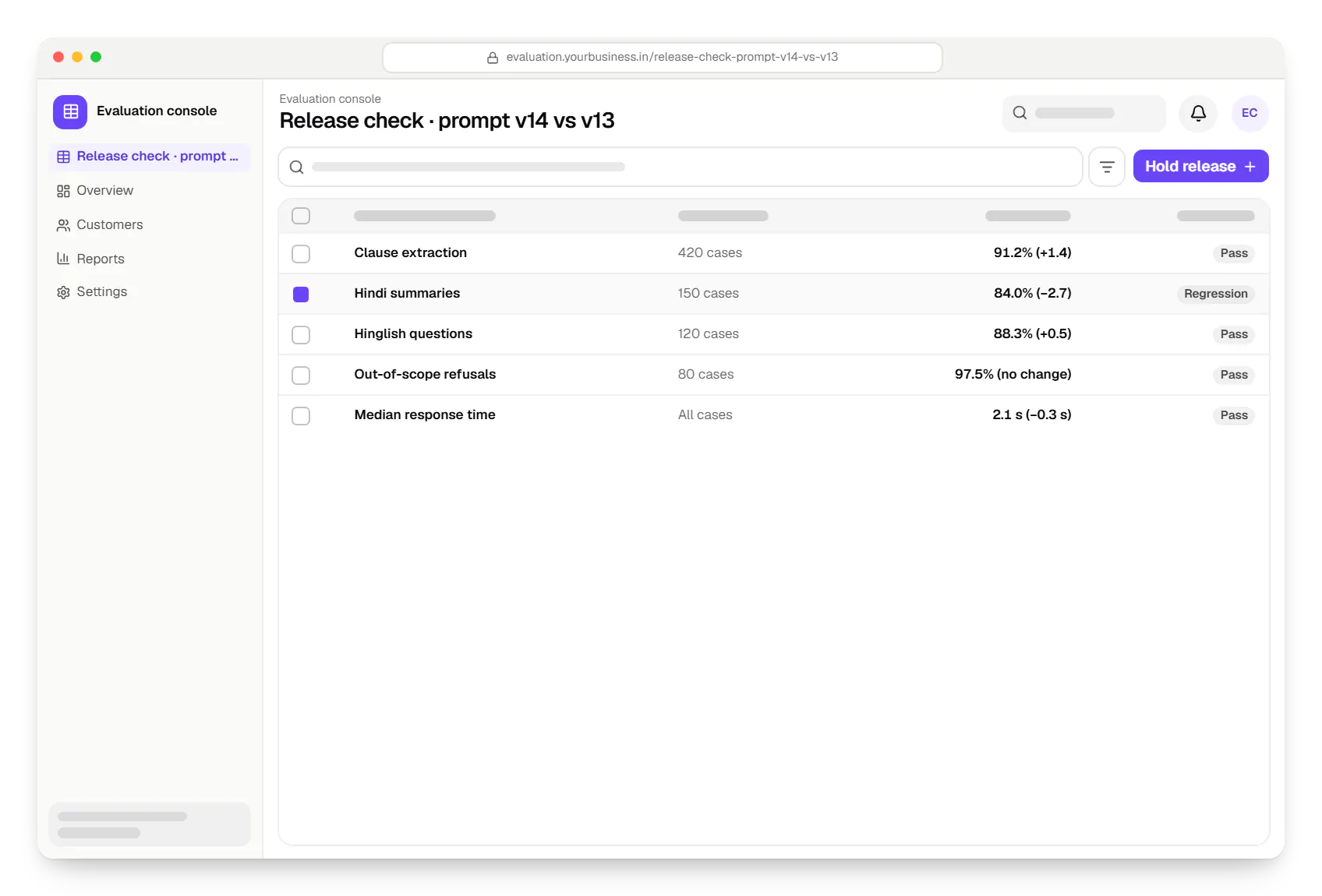
Before any prompt or model change ships, it runs against your test sets; a drop in scores holds the release until someone reviews it.
Platforms
Browser-based applications with logins, roles and workflows, such as customer portals, SaaS products and internal tools.
Back-office panels for operations, support and finance teams: orders, users, content, reports and permissions.
One Flutter or React Native codebase for Android and iOS, with native modules where a feature needs them.
Technology
Python runs models, pipelines and evaluation, LLM integrations put third-party and open-weight models behind one gateway, and Next.js delivers the interface your customers use.
Backend
A programming language for AI features, data processing and automation: the engine behind document reading, reports and smart search.
Used for
Connects your product to AI language models from several providers, so each task uses a suitable model and you can switch later.
Used for
Adds AI features such as chat assistants, document summaries and smart search to your product, built on OpenAI models with human review.
Used for
Web
A modern web technology for fast, search-friendly websites, online stores and web applications that load quickly on mobile.
Used for
Backend
A structured way to build back ends on Node.js, so large business systems stay organised, testable and easy to hand over.
Used for
Data
A reliable database for the records your business runs on: orders, payments, bookings and stock, kept accurate and easy to report on.
Used for
Data
Keeps frequently used data in fast memory, so apps stay quick on busy days and live features like order tracking feel instant.
Used for
Cloud & DevOps
Cloud hosting for your app, website and data, with data centres in India and room to grow when traffic rises.
Used for
Cloud & DevOps
Packages your software so it runs the same way on every laptop and server, which makes releases predictable and moving hosts easier.
Used for
Plain-English glossary
Product preview
Illustrative screens for a document-question product; the same layers apply to other AI features.
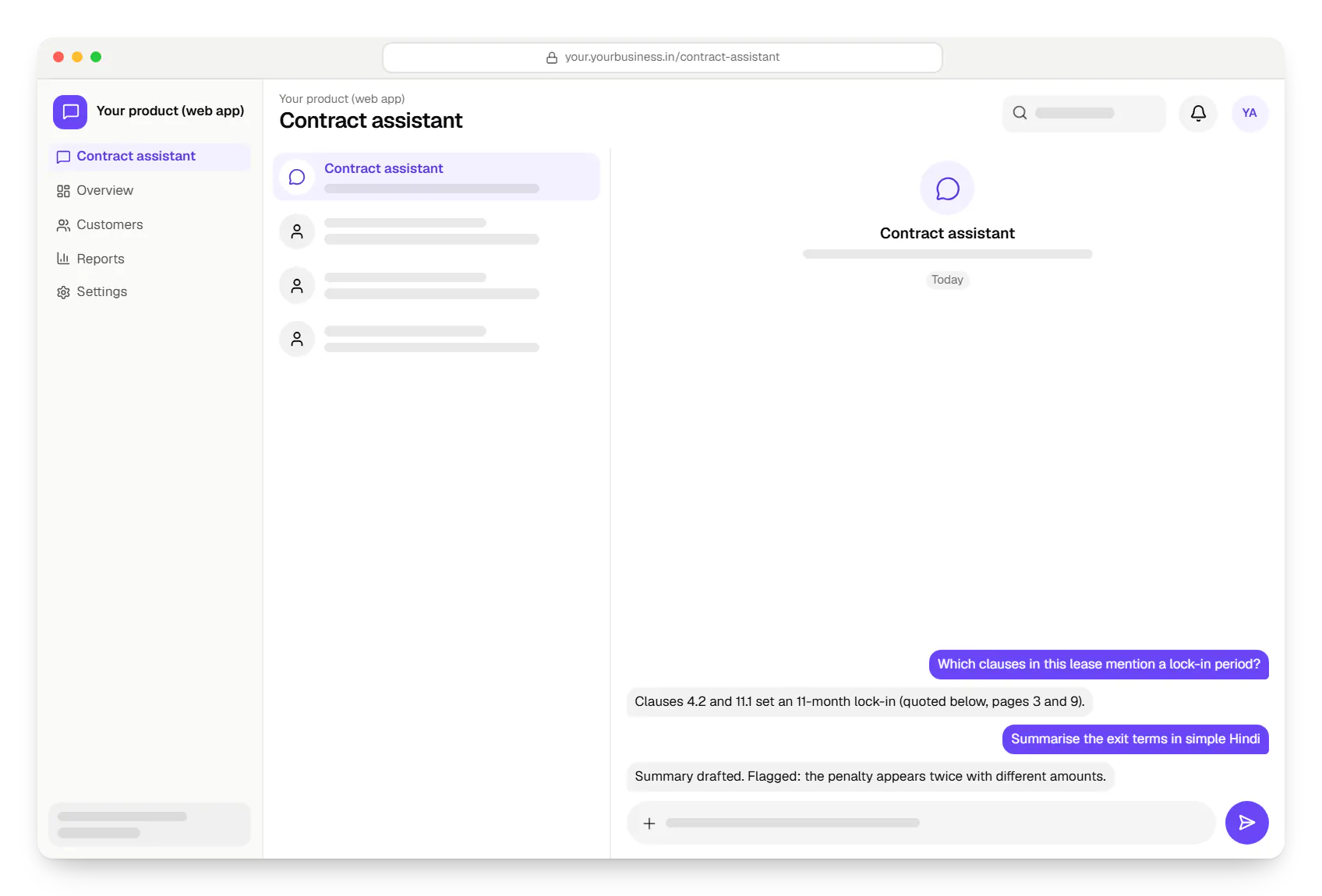
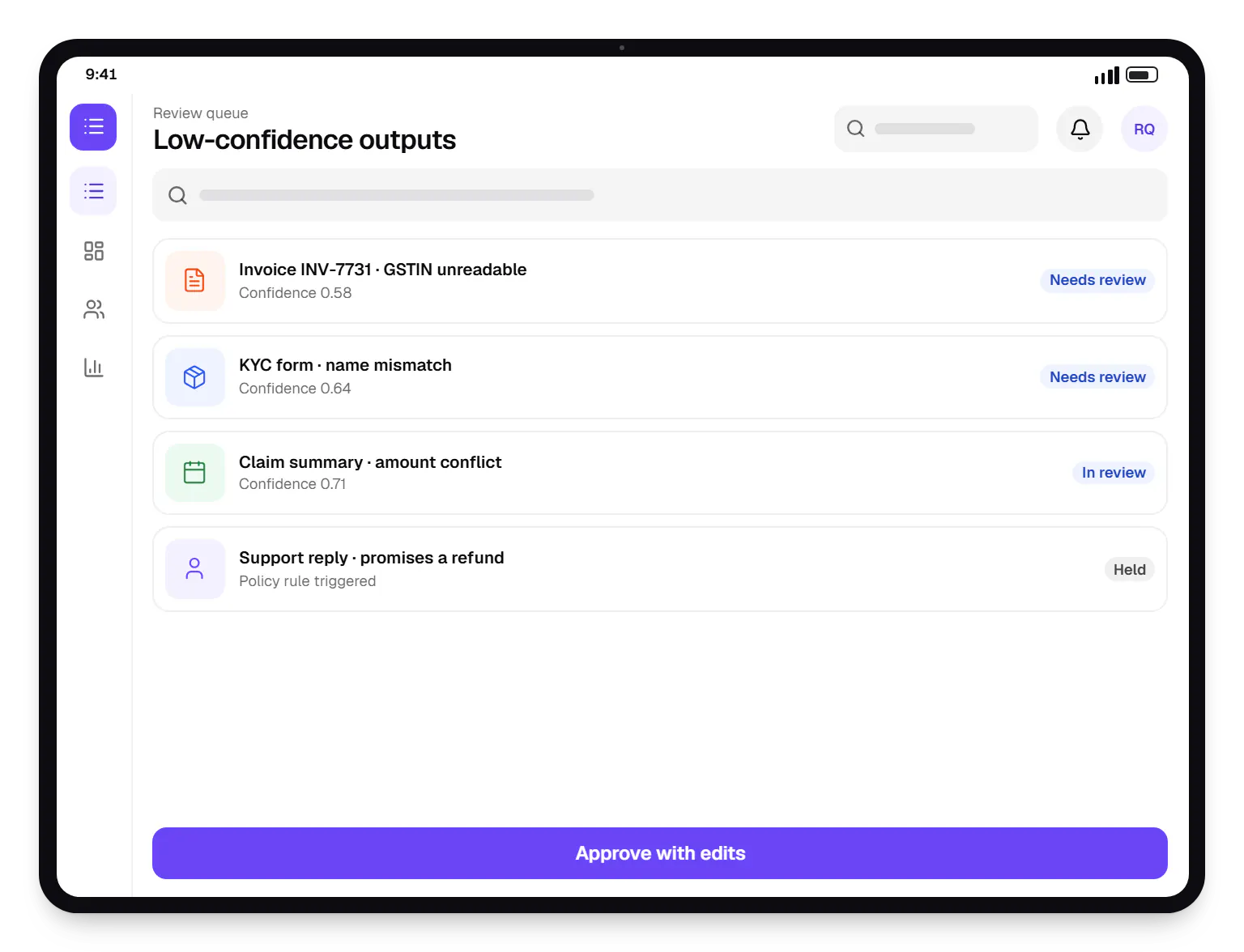
Sample screens: names, prices and figures are examples, not client data.
Cost drivers
Self-hosting adds GPU infrastructure, serving and monitoring.
Domain-specific test sets and human grading take expert time.
Redaction, audit logs and regional hosting add scope.
Estimates are written from your scope, with the effort and assumptions behind each line item.
How pricing worksServices
The design and engineering services our in-house team combines on projects in this sector.
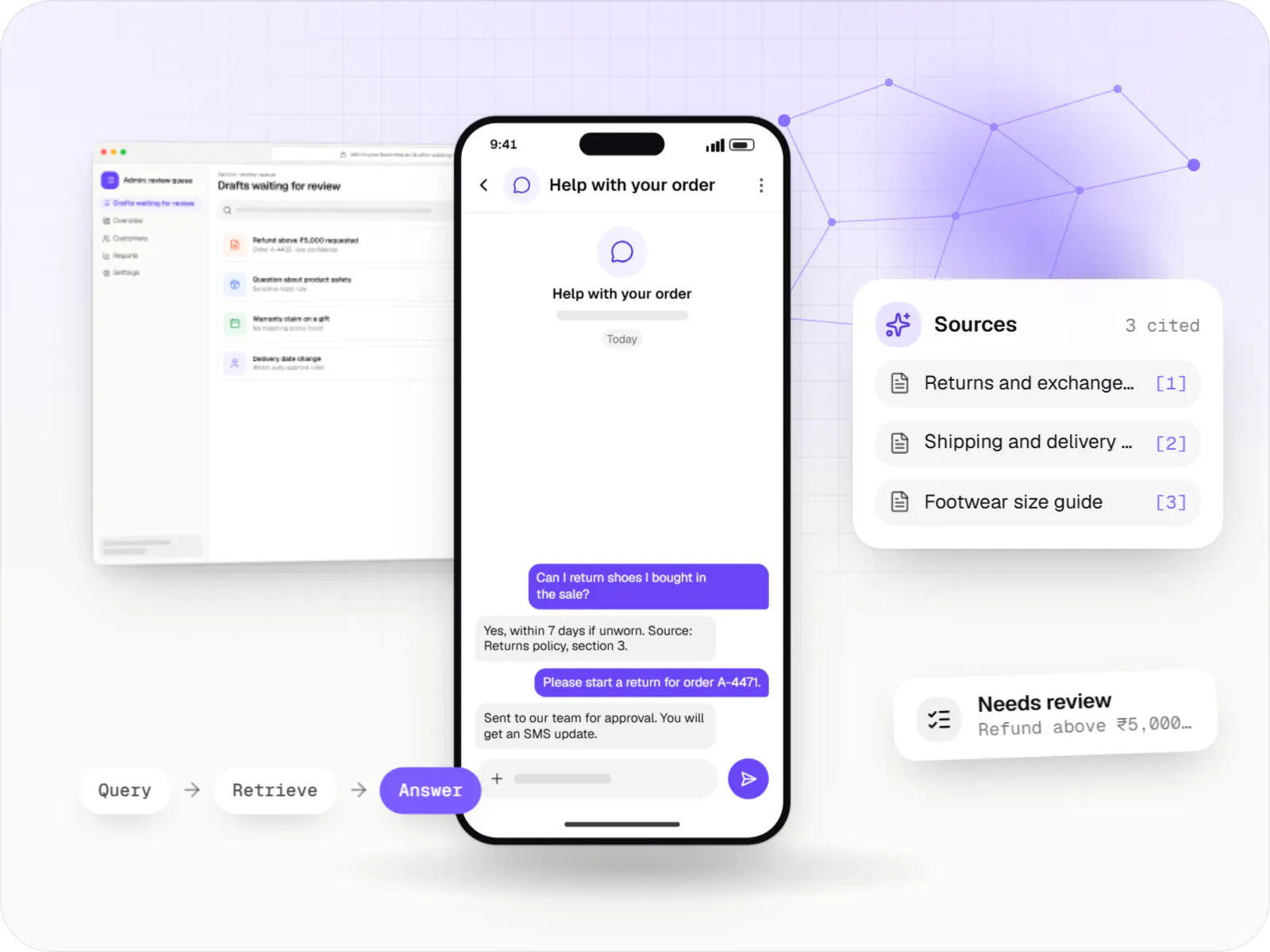
AI features and AI-first apps built on model APIs, retrieval over your own data, workflow automation or custom ML, with evaluation and human review.
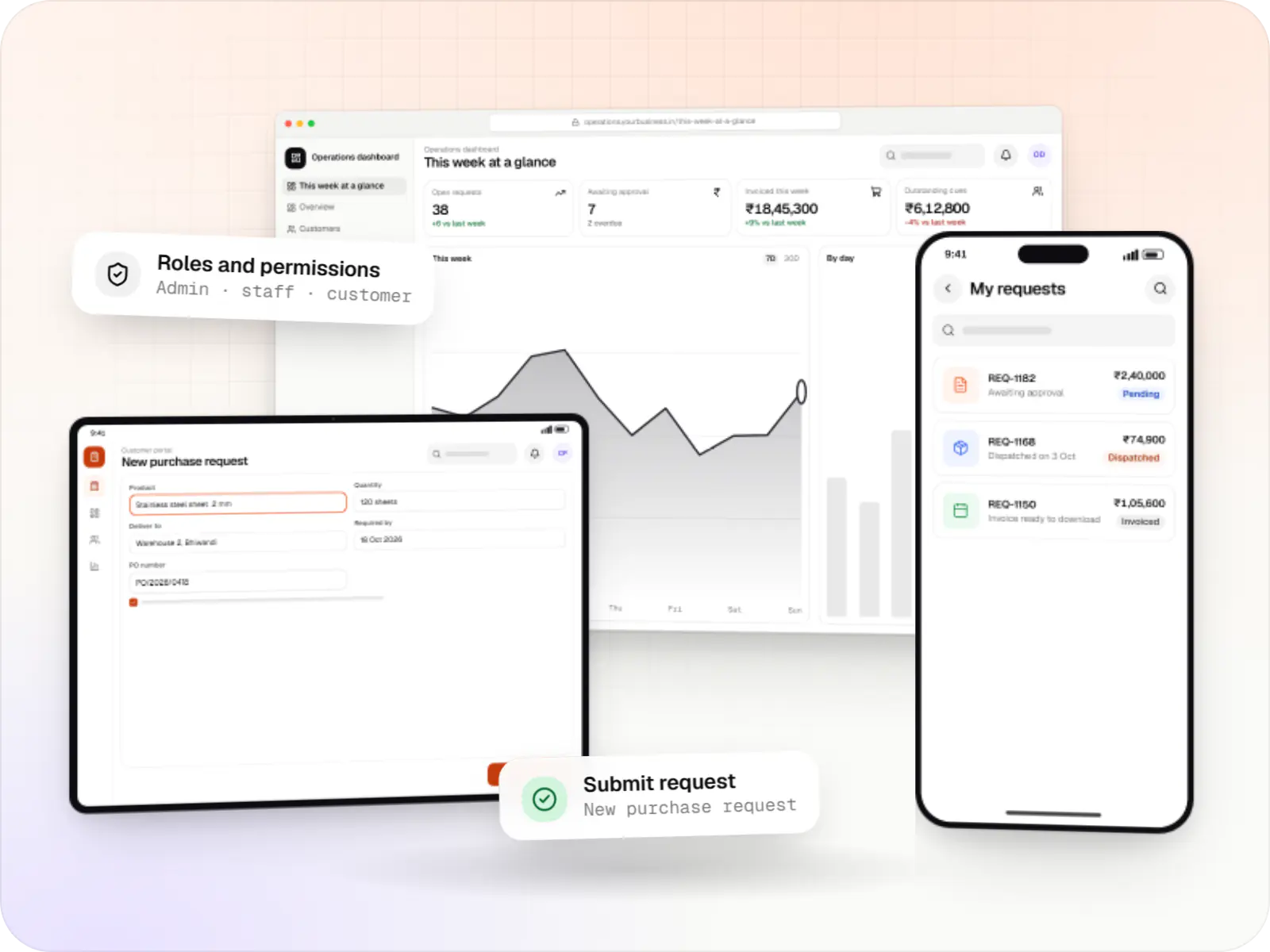
Browser-based products, customer portals, dashboards and internal tools, built on clean data models with secure roles and integrations.
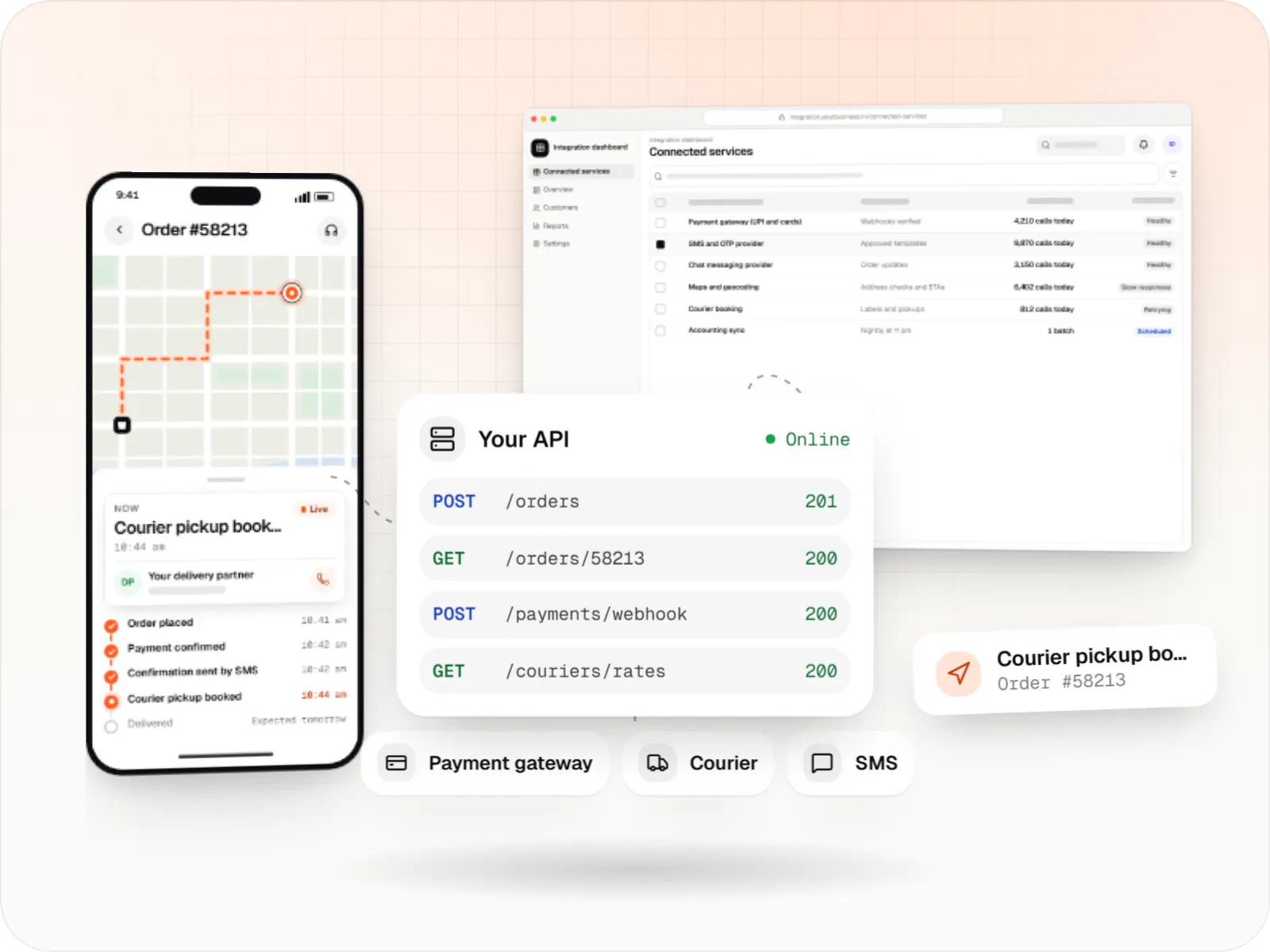
Secure, documented REST and GraphQL APIs, plus integrations that connect your apps to payment, logistics, GST, messaging and business systems.
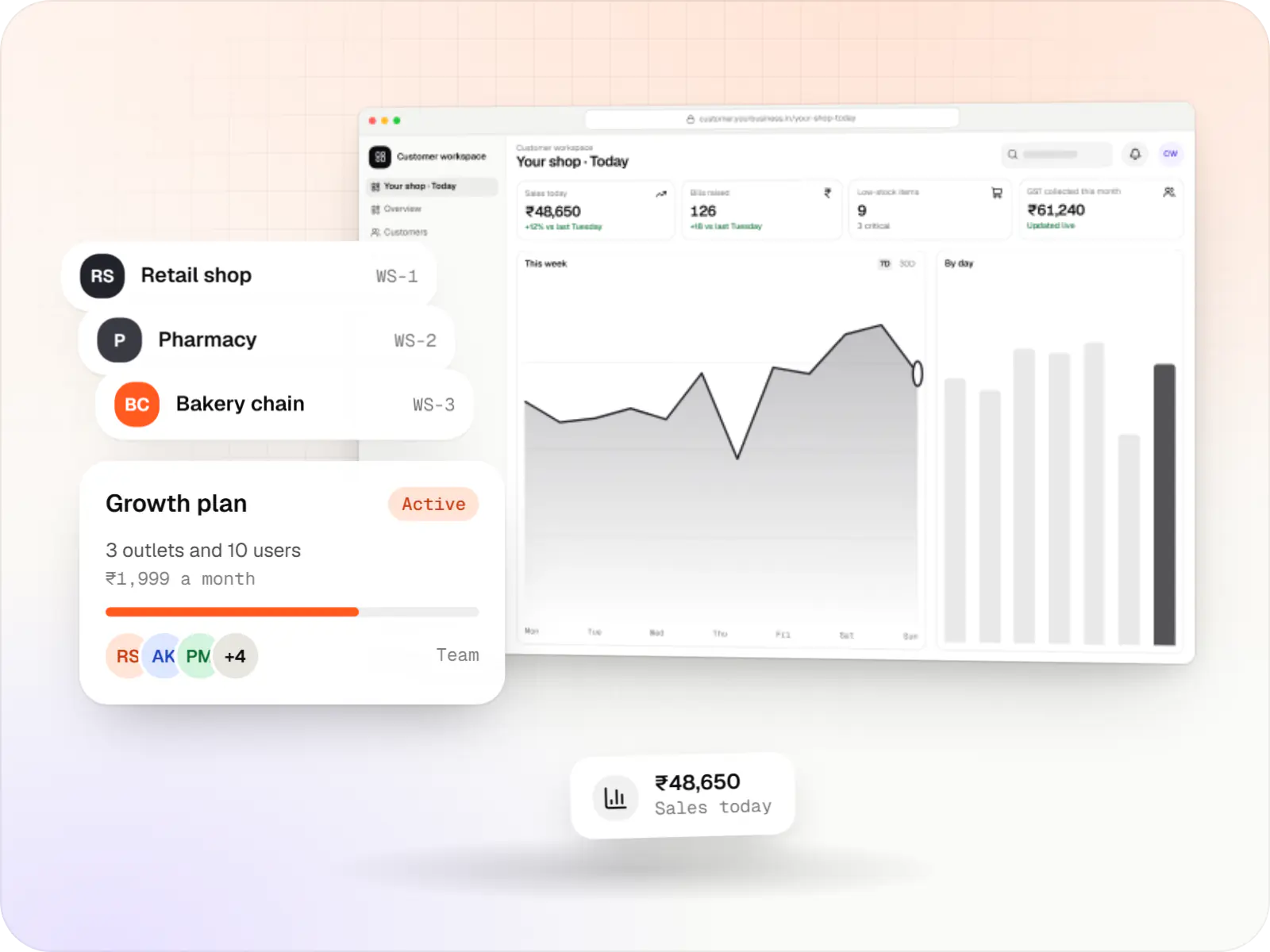
Multi-tenant SaaS products with subscription billing, team roles, onboarding and usage analytics, from first MVP to paying customers.
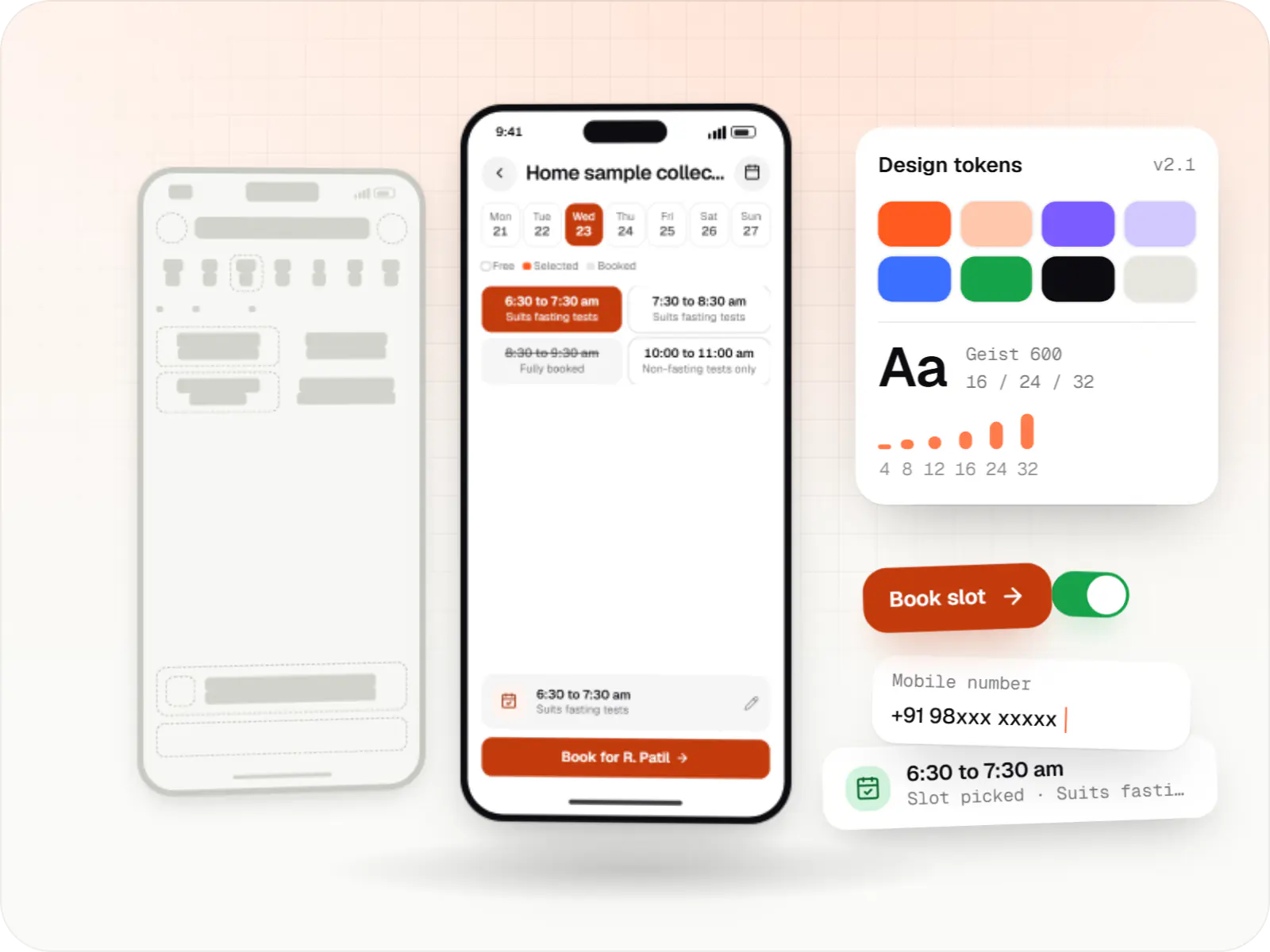
Product design for web and mobile apps: research, user flows, wireframes, prototypes and design systems that engineers can build from.
Locations
Cities where this sector is a significant part of the local economy. We work remotely with teams across India and meet in person where practical.

Karnataka
FAQ
Mostly the product around them: interfaces, APIs, pipelines, evaluation, deployment and billing. We integrate third-party models, build retrieval-augmented systems and fine-tune smaller task-specific models where the data justifies it. We do not pre-train foundation models. If the model is your core IP, we build to your ML team’s interface.
We build a test set of realistic inputs with expected outputs or grading criteria, agreed with your domain experts. Every prompt, model or retrieval change runs against it, scored by rules, a judge model with spot checks, and human reviewers for sensitive cases. It will not make outputs perfect, but it stops silent regressions.
Often, but test rather than assume. Model quality varies across Indian languages, scripts and transliterated text. We add Hindi, regional-language and Hinglish examples to your evaluation set, compare models on them and handle script detection and transliteration. For voice products, speech recognition on Indian accents is a separate test.
Next step
Share your model setup and users; we will scope the product layer.