


Web
Next.js
A modern web technology for fast, search-friendly websites, online stores and web applications that load quickly on mobile.
Used for
- Business websites
- Online stores
- Web apps
- Customer portals
Finance
Practice and compliance software for CA firms, bookkeeping teams and in-house finance: GST workflows, client document collection and Tally or Zoho Books integrations.
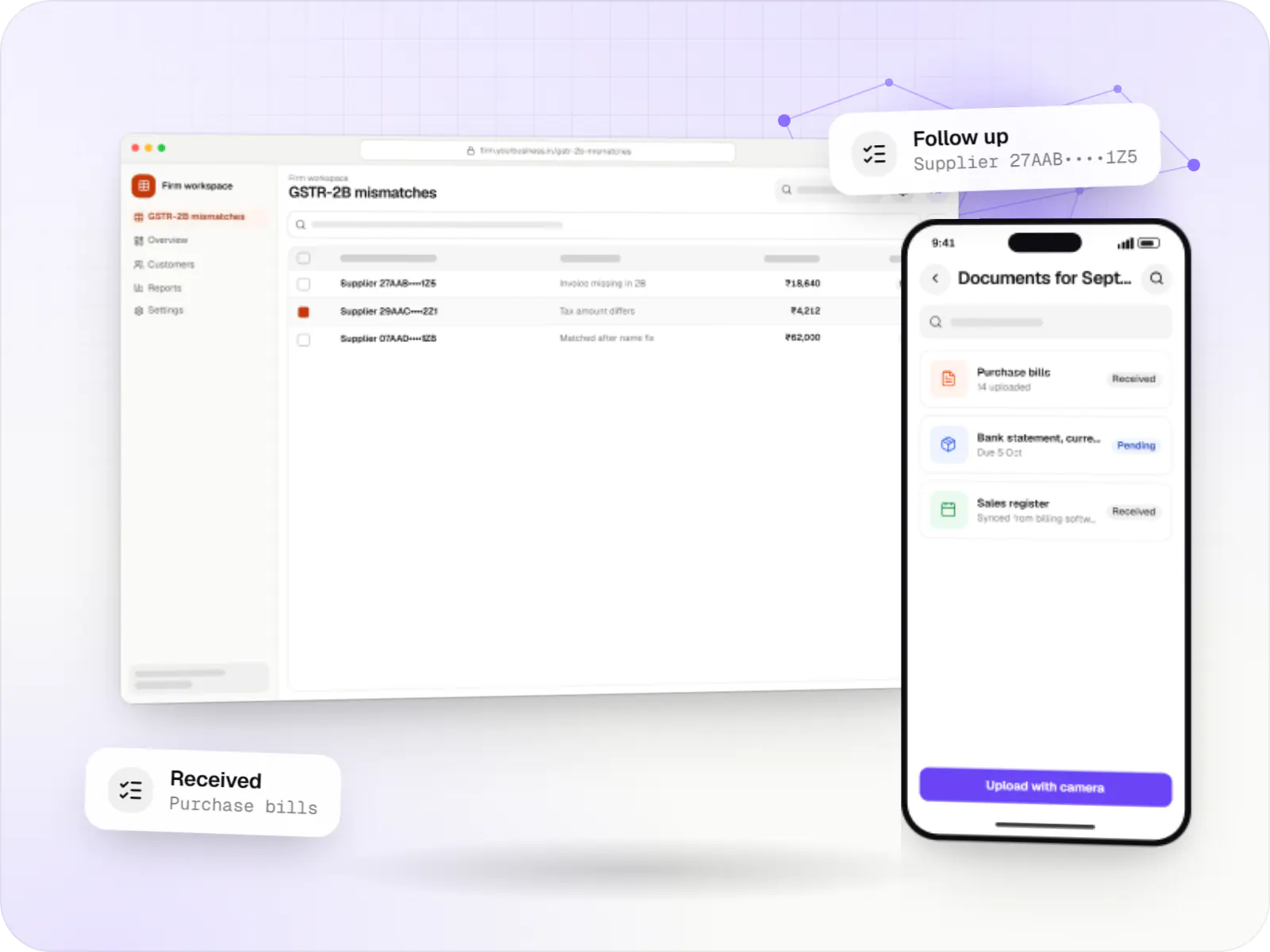
At a glance

We build software for accounting practices and finance teams: client portals, compliance calendars, GST reconciliation, e-invoicing and e-way bill integrations, document collection, and connectors to Tally and Zoho Books. The aim is fewer email chases and fewer re-keyed numbers during filing season.
How to start
Tell us what you need in your own words. You talk to the developers who would build it and get a written, line-item estimate.
Get a project estimateFor a CA firm or bookkeeping practice, most hours do not go into accounting judgement. They go into collecting purchase invoices, bank statements and sales data from clients, reconciling them, and meeting monthly GST and TDS due dates across dozens or hundreds of entities.
We build client portals and internal tools that collect documents on a schedule, match purchase registers against GSTR-2B, track every client's filing status, and push clean entries into Tally or Zoho Books. For in-house finance teams, the same building blocks support e-invoicing, e-way bills and month-end close.
Challenges
Clients send invoices late, in mixed formats, over email and WhatsApp, usually close to the due date.
Reconciling purchase registers with GSTR-2B line by line is slow when vendor names and invoice numbers differ.
GST, TDS, advance tax, ROC and income-tax dates across many clients live in spreadsheets.
Figures are entered into Tally, the GST portal and client reports separately.
Solutions
Across 2 areas
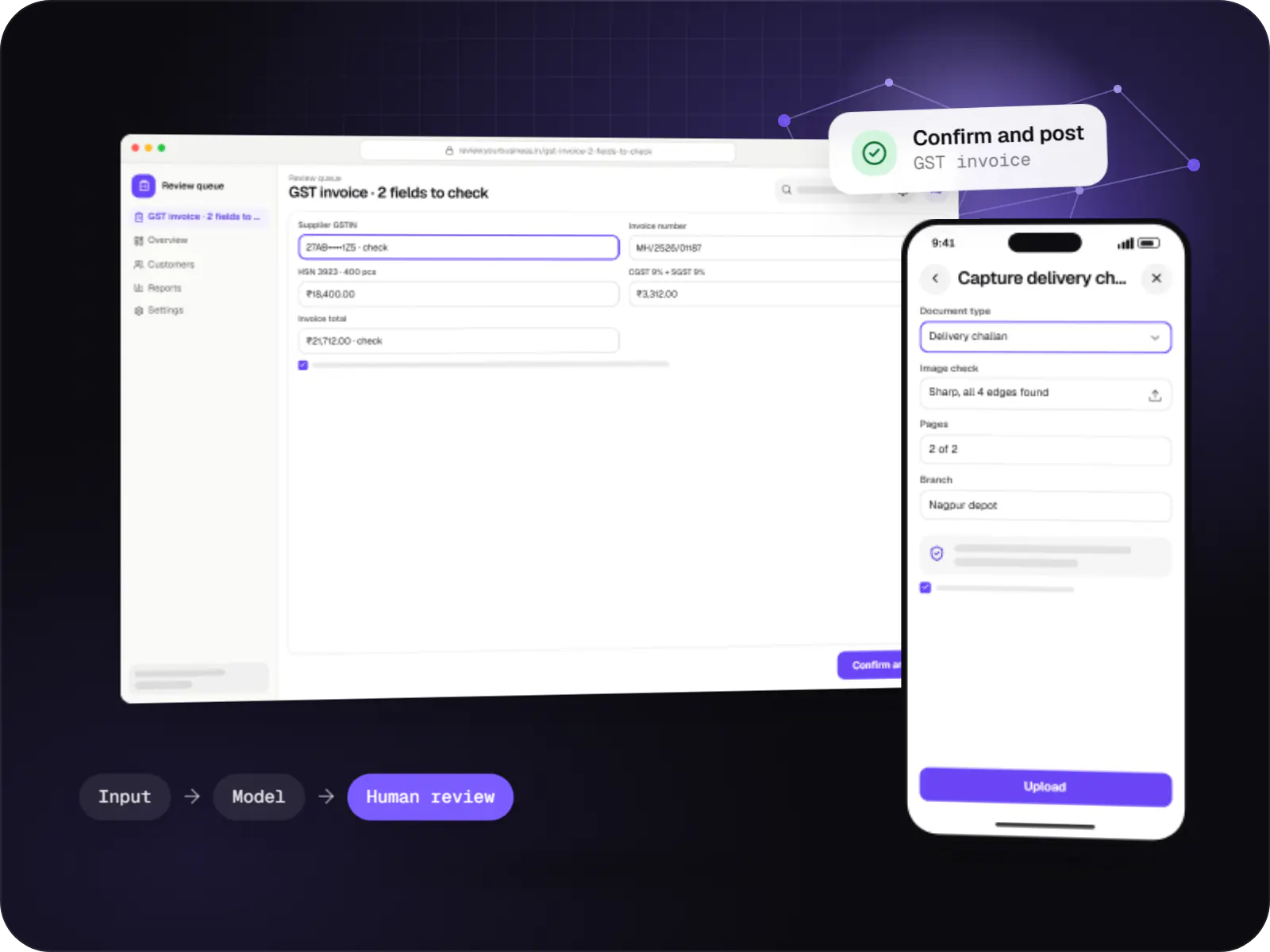
Data extraction from invoices, KYC documents, statements and forms into your systems, with validation rules and human review for uncertain fields.
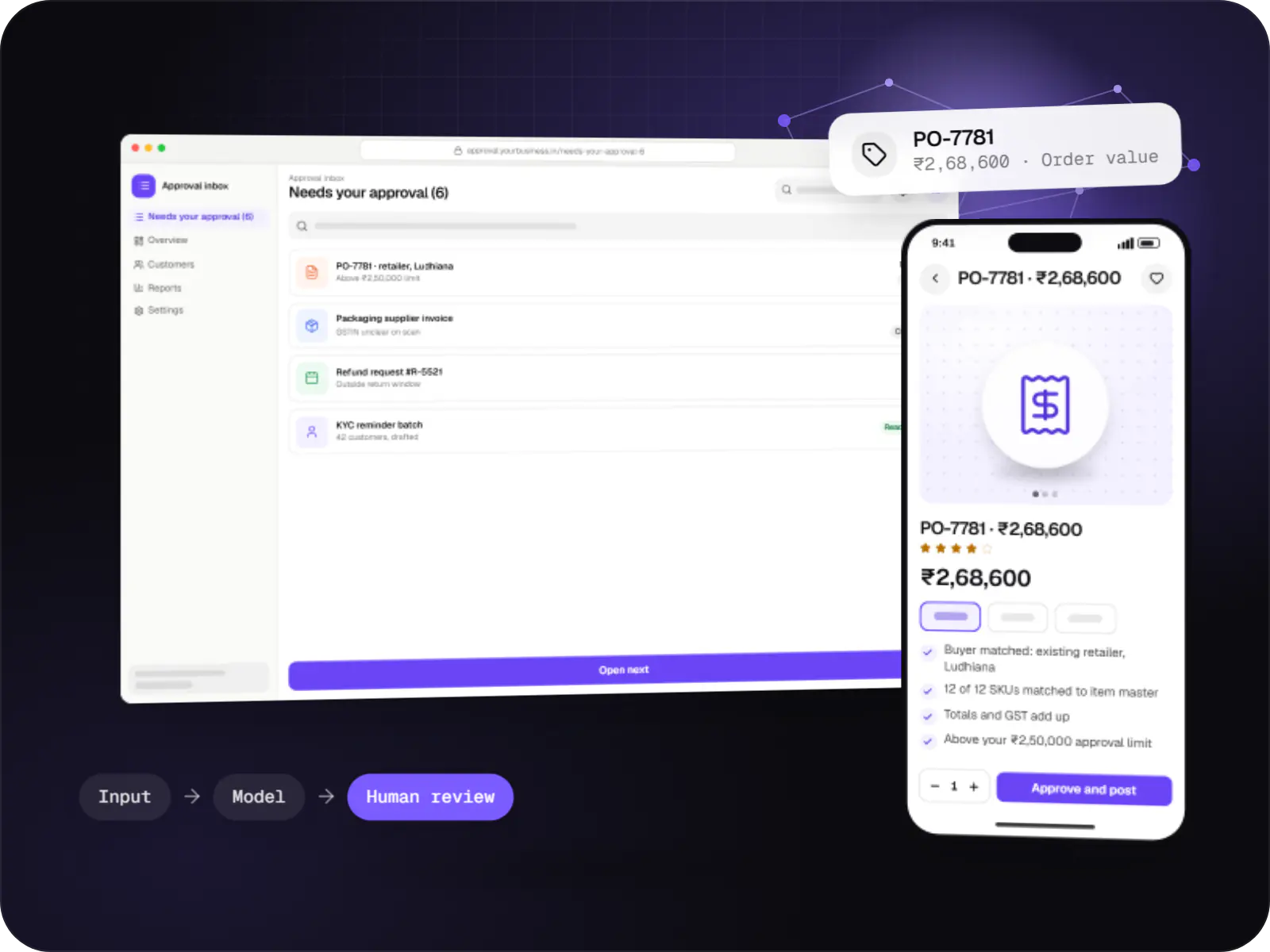
Automations for repetitive back-office work, with AI steps that read, classify and draft, and approvals where decisions matter.
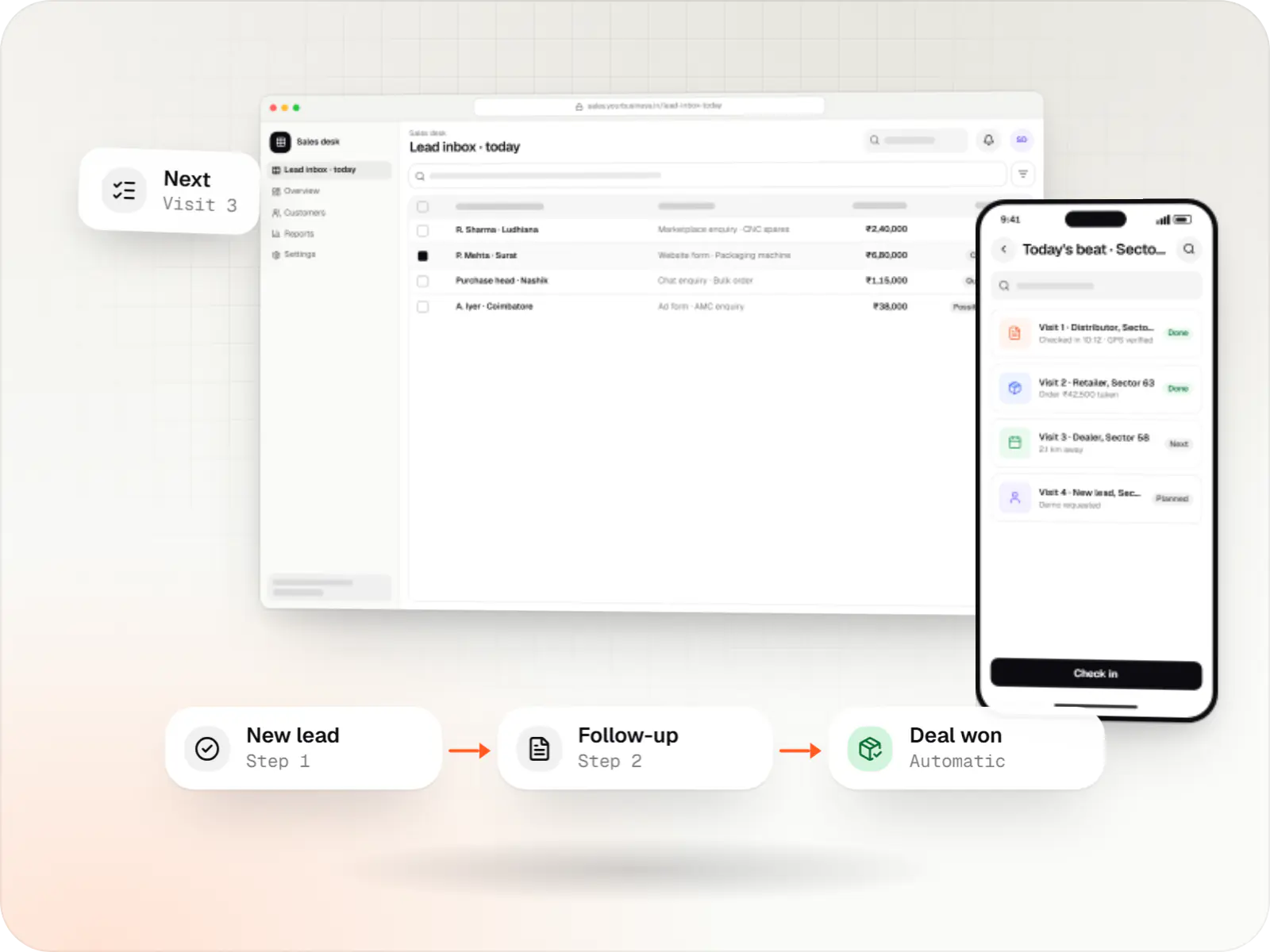
Custom CRM software that captures leads from every channel, keeps follow-ups on schedule and shows managers a live pipeline.
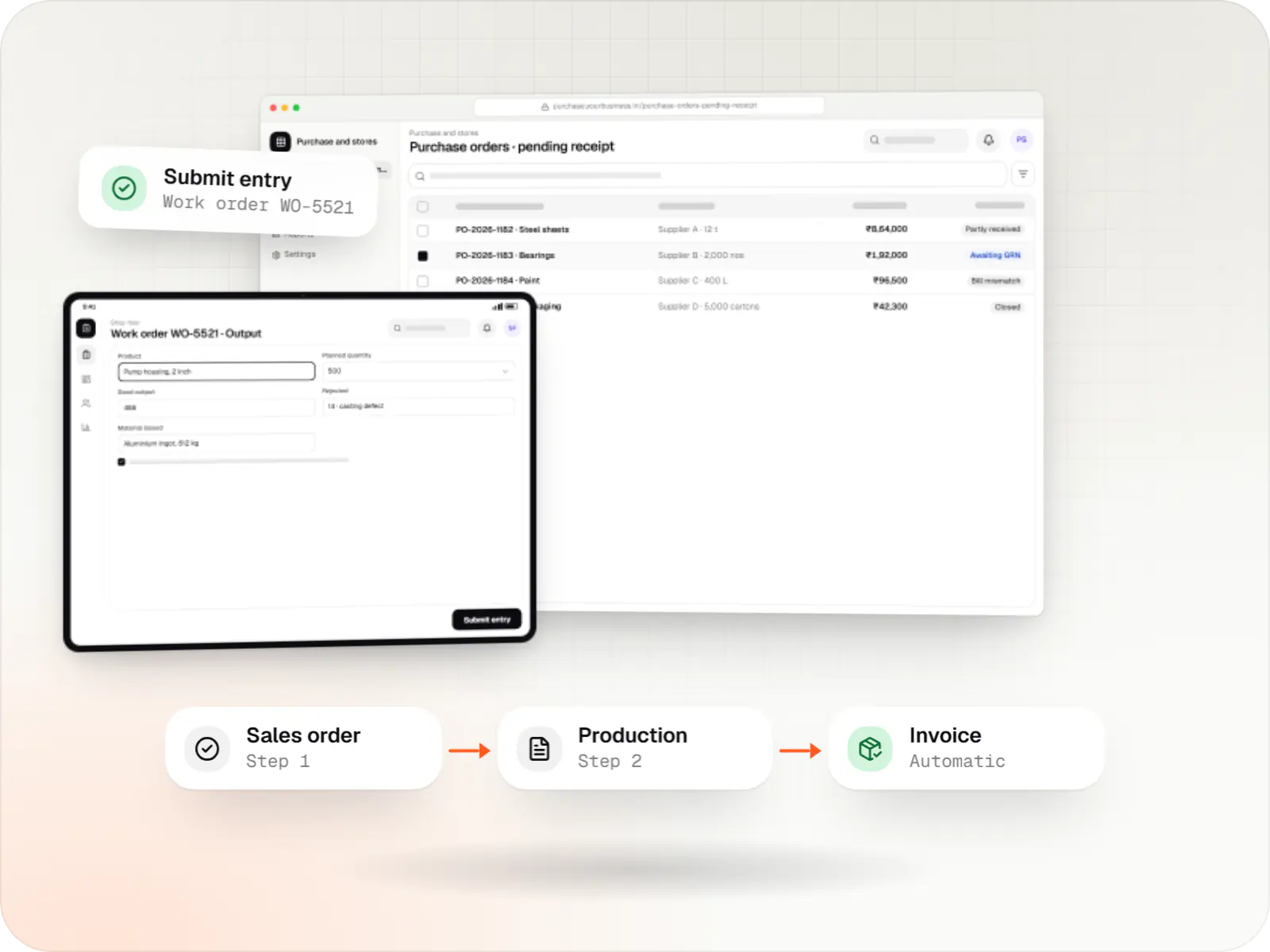
Custom ERP software connecting purchase, inventory, production, sales and GST compliance, alongside your existing accounting system.
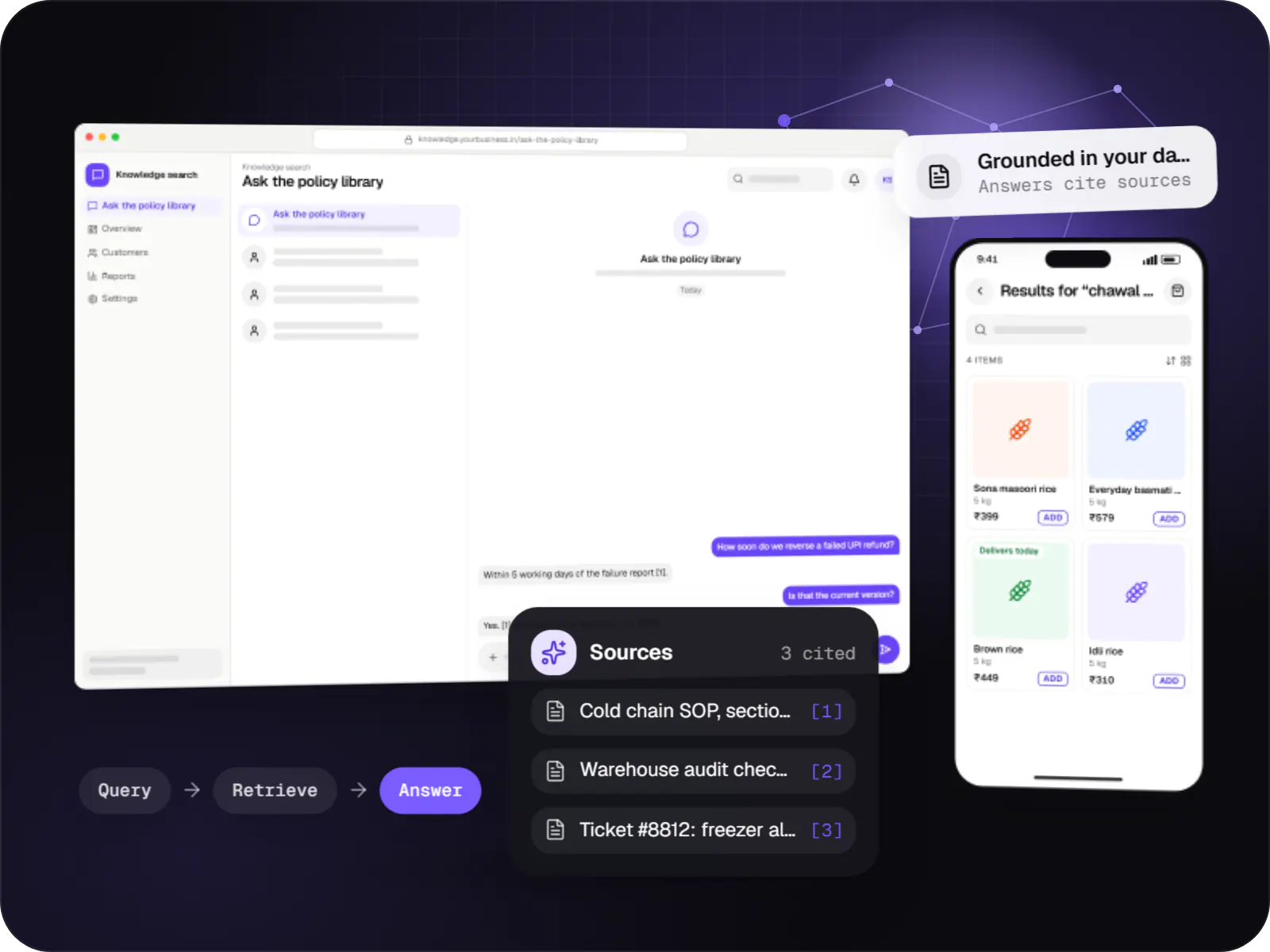
Search and question-answering over your documents, tickets and product data, with hybrid retrieval, citations and permission-aware results.
Scheduled document requests, phone-camera uploads and each filing's status visible to the client.
Fuzzy matching of purchase registers with GSTR-2B, mismatch reports and vendor follow-up lists.
IRN and QR generation through a GST Suvidha Provider, with e-way bills created from the same invoice data.
Per-client due dates, staff assignment, reminders and a partner view of what is pending.
Vouchers and masters synced through Tally's XML interface or the Zoho Books API, with an error queue.
How it works
The same cycle repeats every month for every client, which is why small time savings add up quickly.
A scheduled request asks each client for purchase bills and bank statements, which they upload from a phone camera or forward by email.
GSTIN, invoice number, date and tax amounts are pulled out with a confidence score, and unclear fields are marked for review.
Staff correct only what the software was unsure about, while GSTIN formats and invoice totals are cross-checked automatically.
Entries are paired with supplier-filed data even when names and invoice numbers differ slightly, and mismatches become a vendor follow-up list.
Approved vouchers post to the client's books. A failure, such as a missing ledger, comes back to a fix-it queue instead of disappearing.
Each return shows as pending, prepared or filed, so partners see which clients are at risk before the due date.
Then it starts again at step 1: Client uploads bills and statements
Platforms
Browser-based applications with logins, roles and workflows, such as customer portals, SaaS products and internal tools.
Back-office panels for operations, support and finance teams: orders, users, content, reports and permissions.
Windows and macOS apps for billing counters, kiosks and offline-heavy work, where a browser isn't enough.
Apps for Android phones and tablets, tested on budget and mid-range devices and published on Google Play or privately.
Technology
Python and language-model services read invoices and statements, PostgreSQL keeps each client's data separate, and document storage built on AWS keeps uploads encrypted and backed up.
Web
A modern web technology for fast, search-friendly websites, online stores and web applications that load quickly on mobile.
Used for
Backend
A structured way to build back ends on Node.js, so large business systems stay organised, testable and easy to hand over.
Used for
Backend
A programming language for AI features, data processing and automation: the engine behind document reading, reports and smart search.
Used for
Data
A reliable database for the records your business runs on: orders, payments, bookings and stock, kept accurate and easy to report on.
Used for
Connects your product to AI language models from several providers, so each task uses a suitable model and you can switch later.
Used for
Cloud & DevOps
Cloud hosting for your app, website and data, with data centres in India and room to grow when traffic rises.
Used for
Plain-English glossary
Product preview
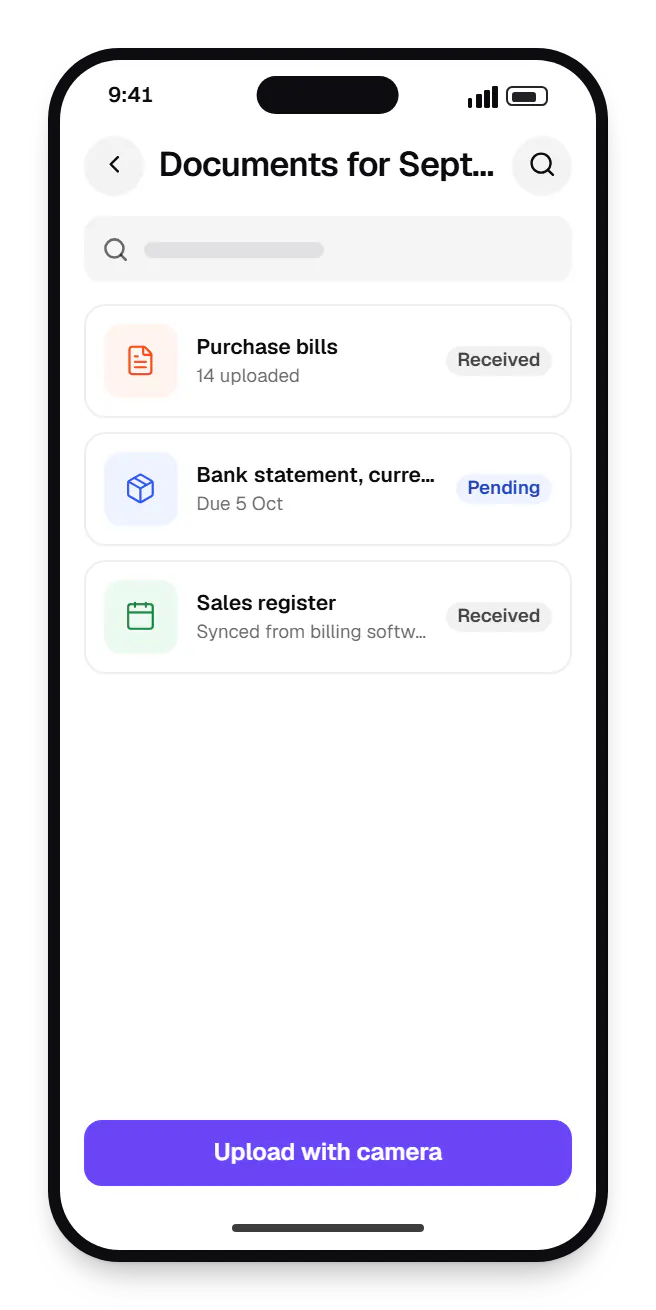
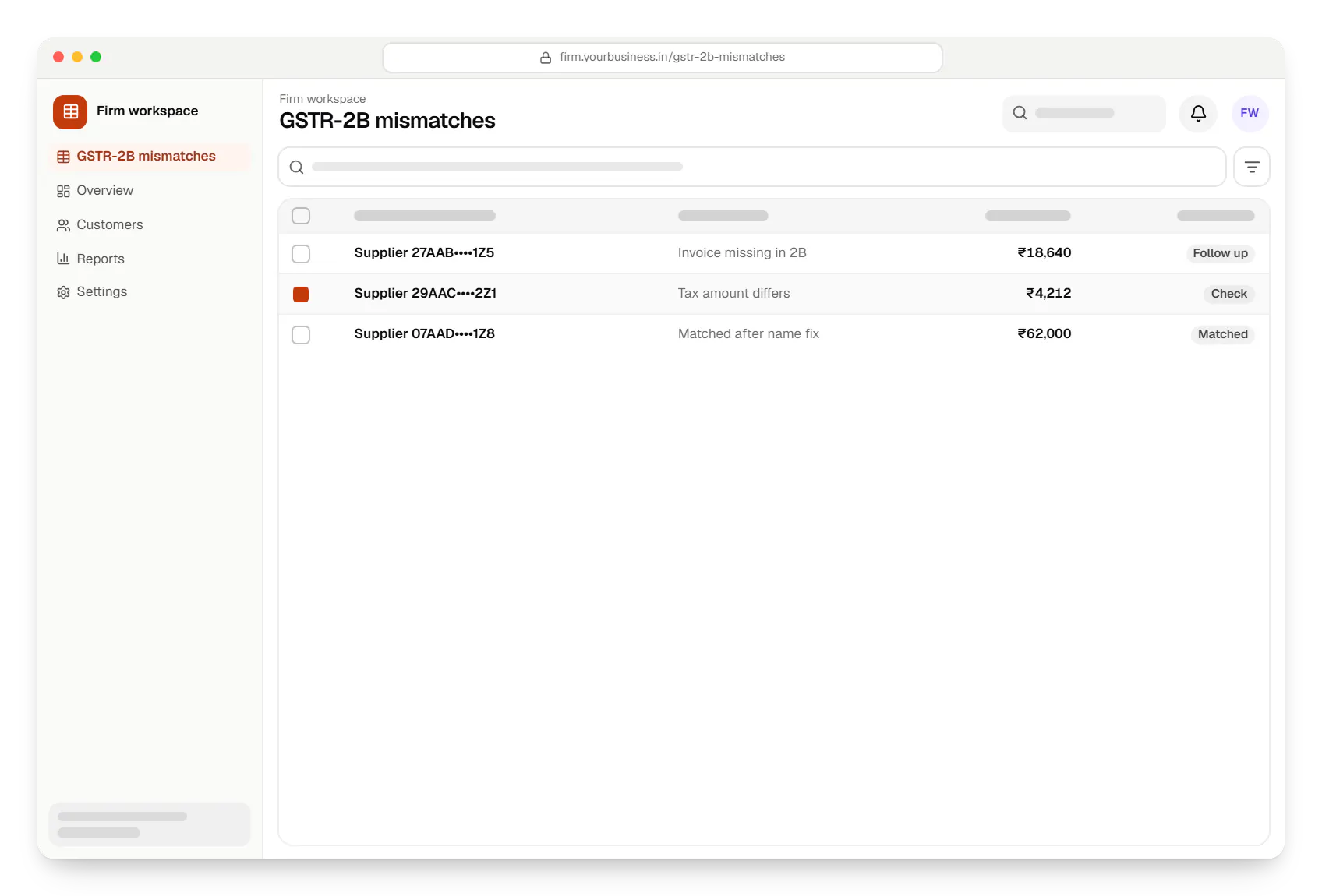
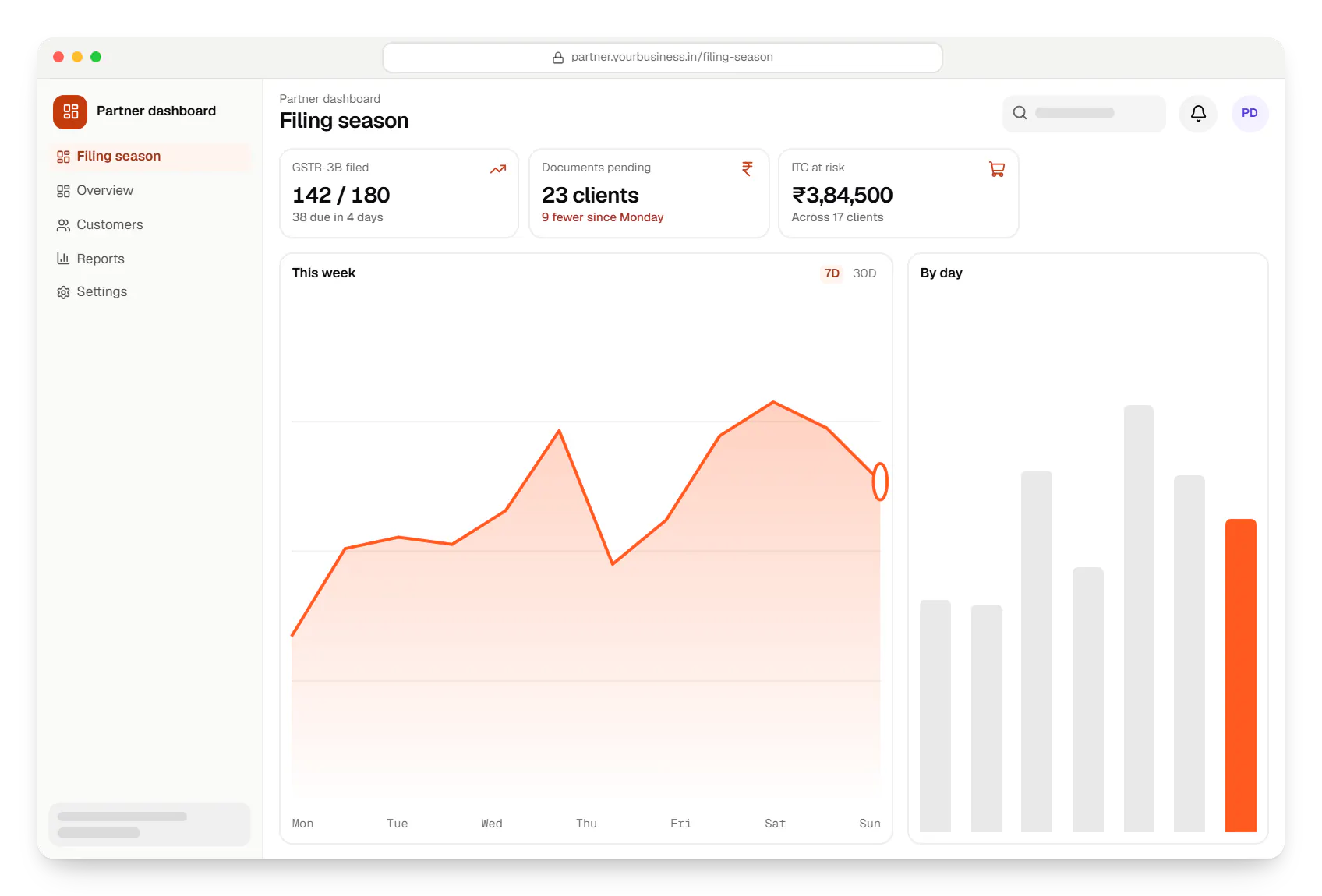
Sample screens: names, prices and figures are examples, not client data.
Cost drivers
Tally (desktop, needs a local sync agent), Zoho Books (cloud API) and GSP APIs each carry different effort.
Printed GST invoices are easier to extract than handwritten bills or scanned bank statements.
Firms handling many GSTINs, branches and staff roles need careful permissions and bulk actions.
Estimates are written from your scope, with the effort and assumptions behind each line item.
How pricing worksServices
The design and engineering services our in-house team combines on projects in this sector.
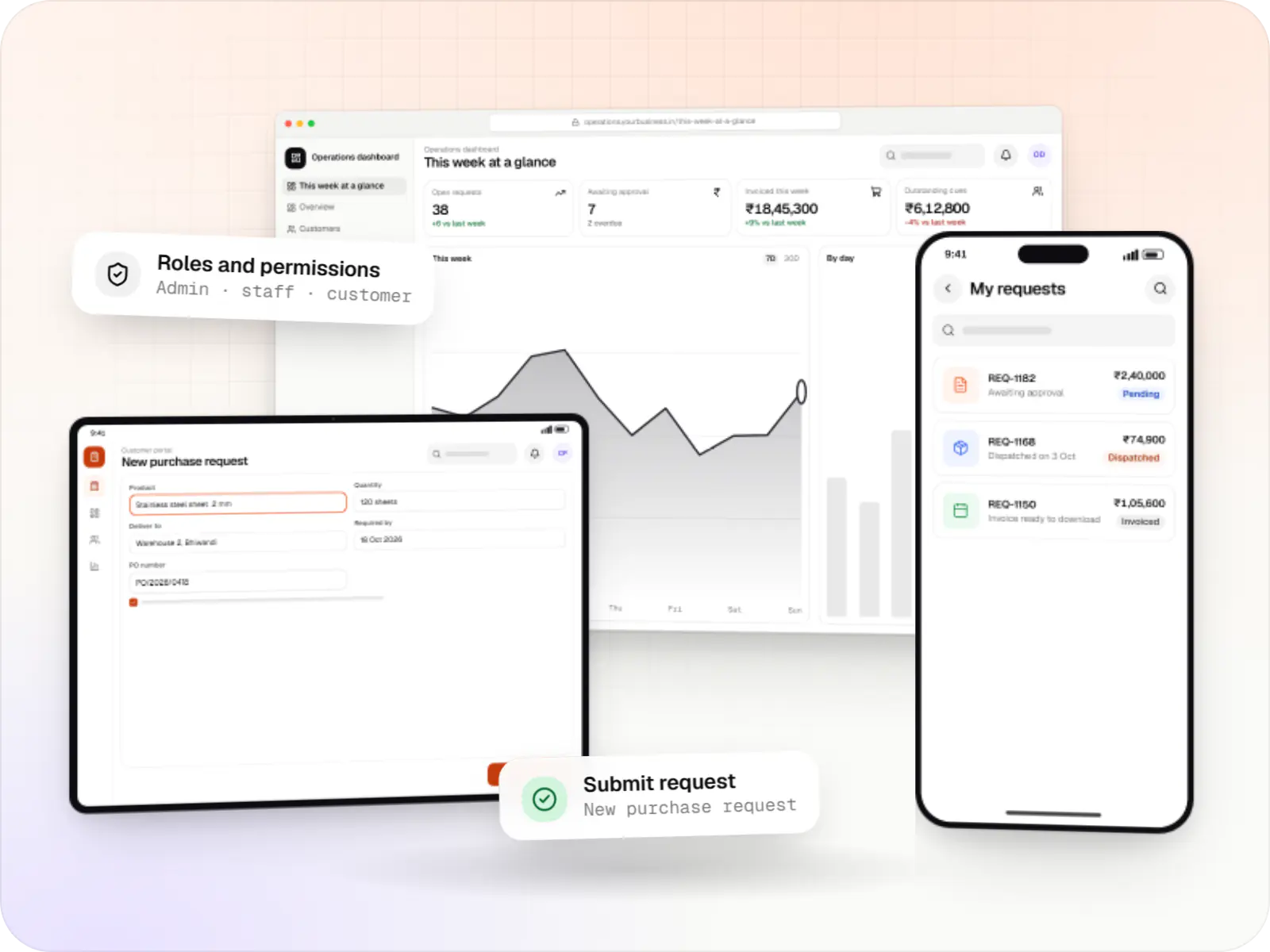
Browser-based products, customer portals, dashboards and internal tools, built on clean data models with secure roles and integrations.
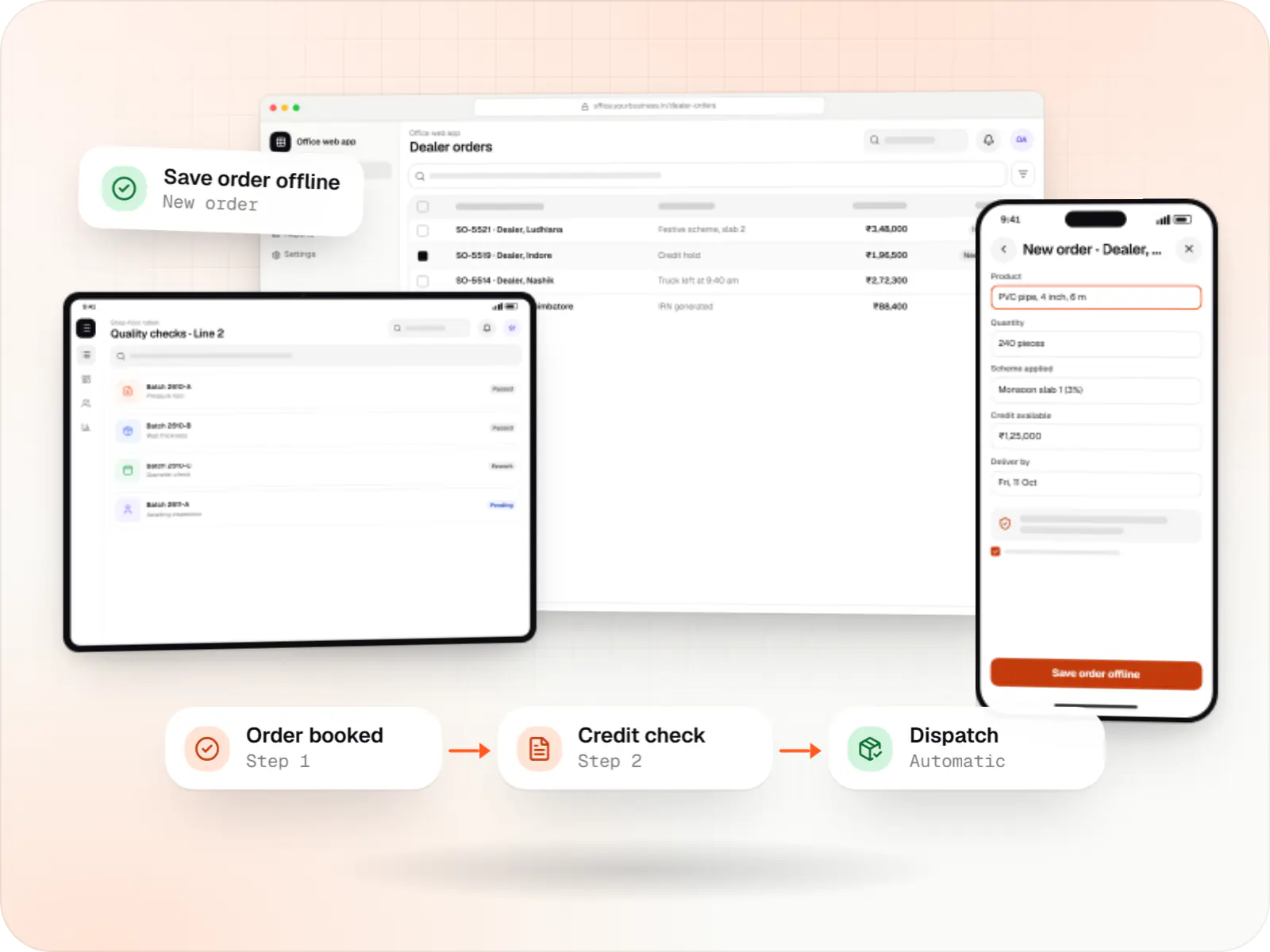
Software shaped around how your business runs, from approvals and inventory to billing and reports, replacing spreadsheets and disconnected tools.
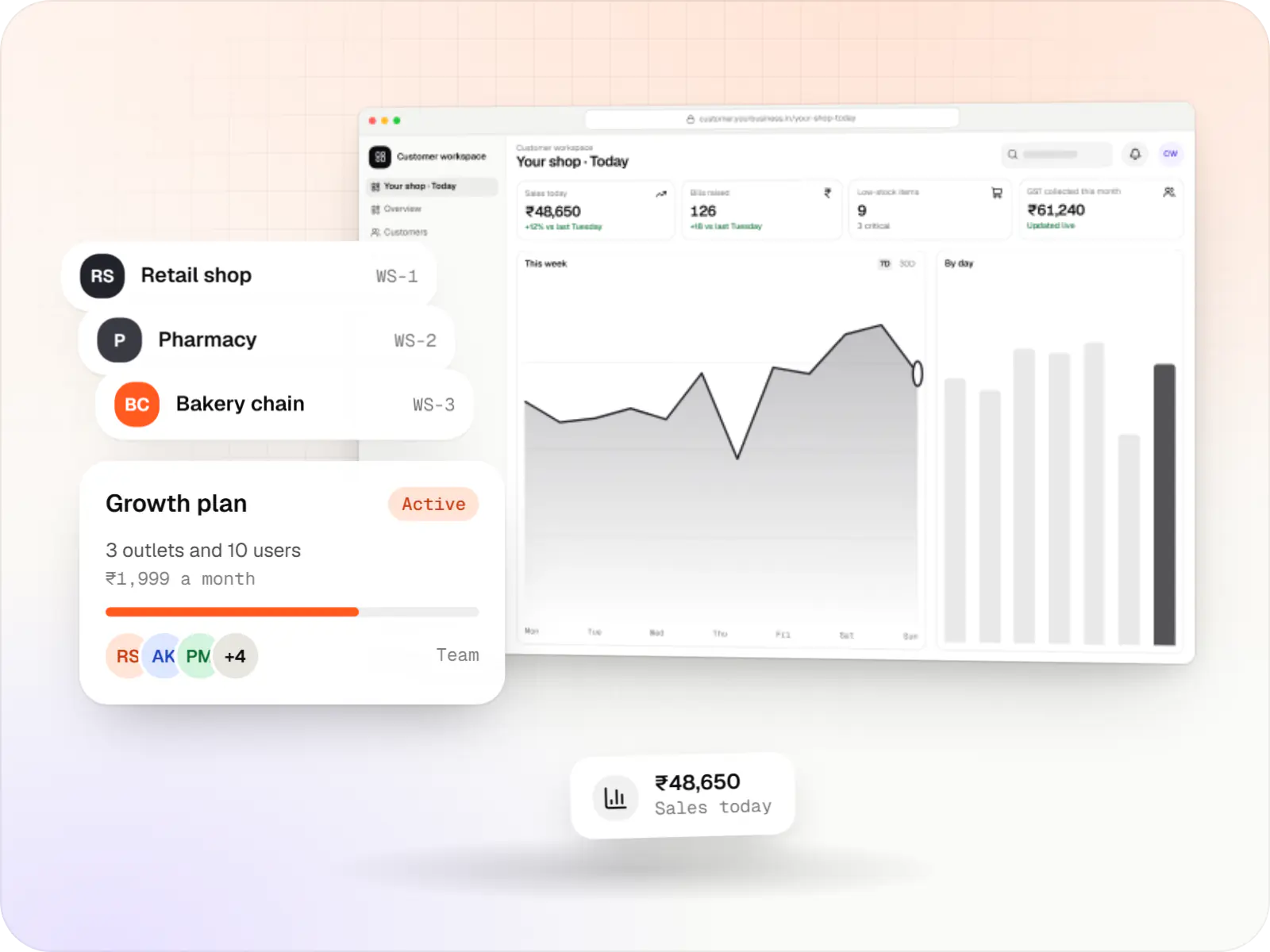
Multi-tenant SaaS products with subscription billing, team roles, onboarding and usage analytics, from first MVP to paying customers.
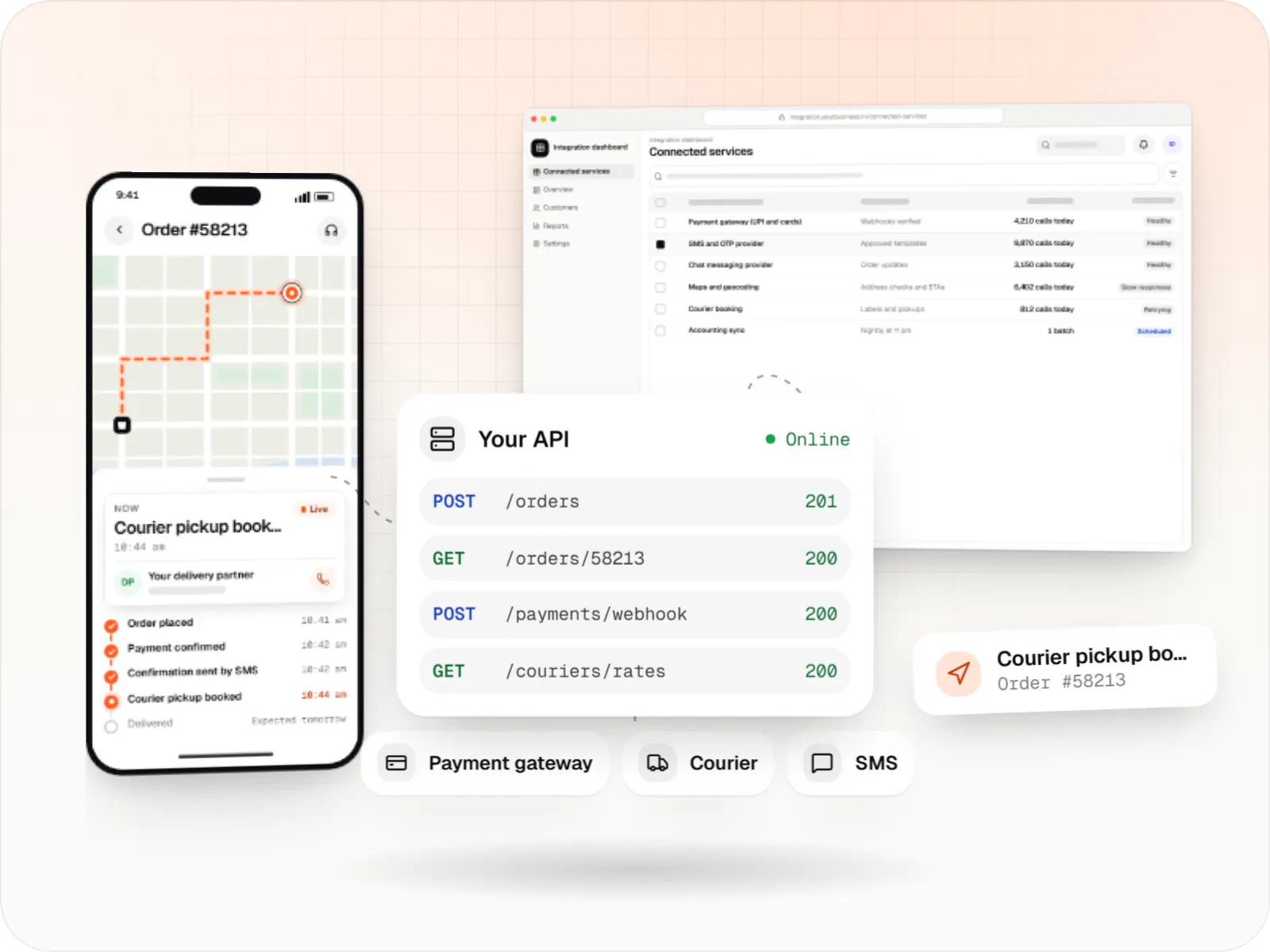
Secure, documented REST and GraphQL APIs, plus integrations that connect your apps to payment, logistics, GST, messaging and business systems.
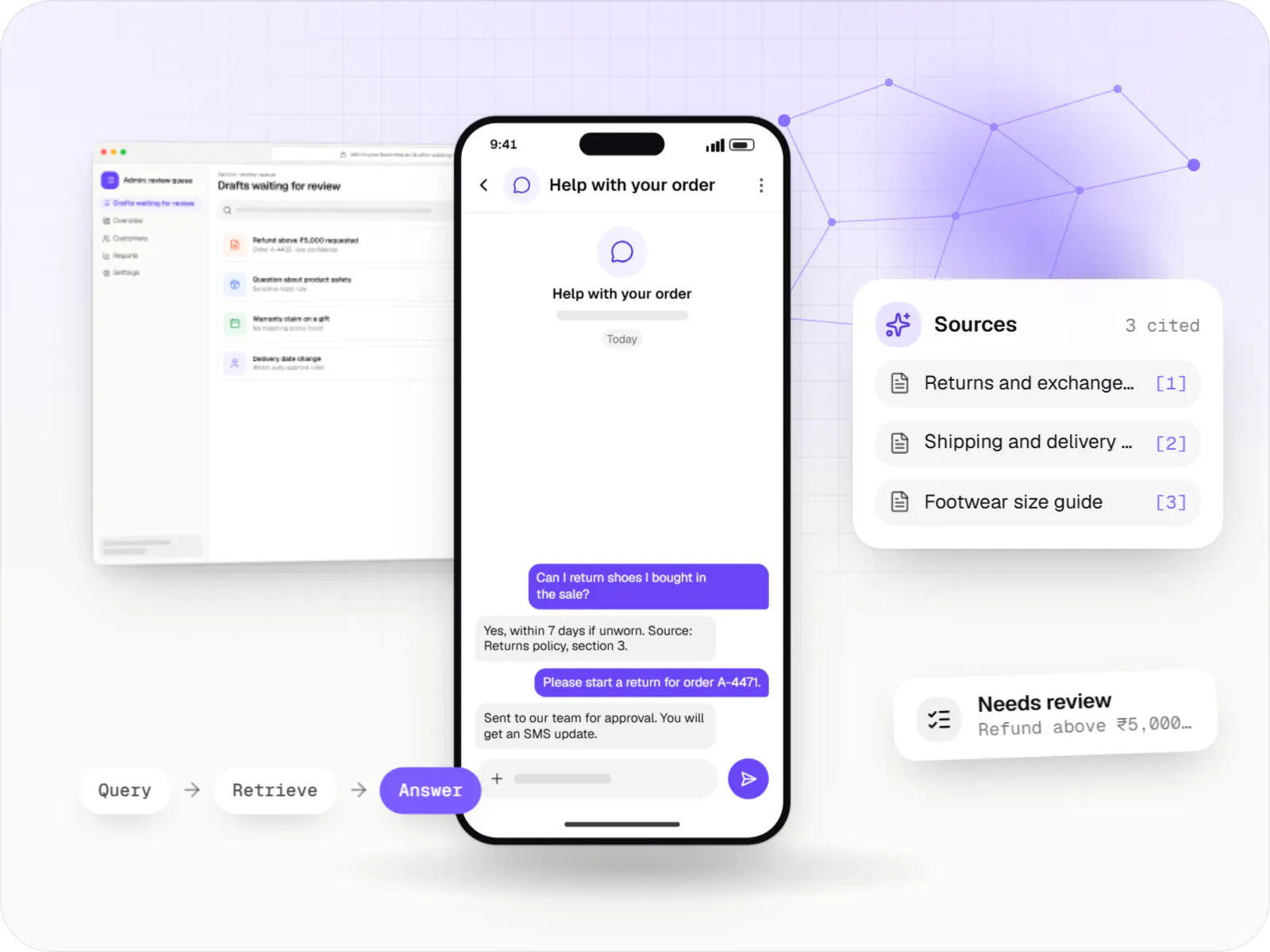
AI features and AI-first apps built on model APIs, retrieval over your own data, workflow automation or custom ML, with evaluation and human review.
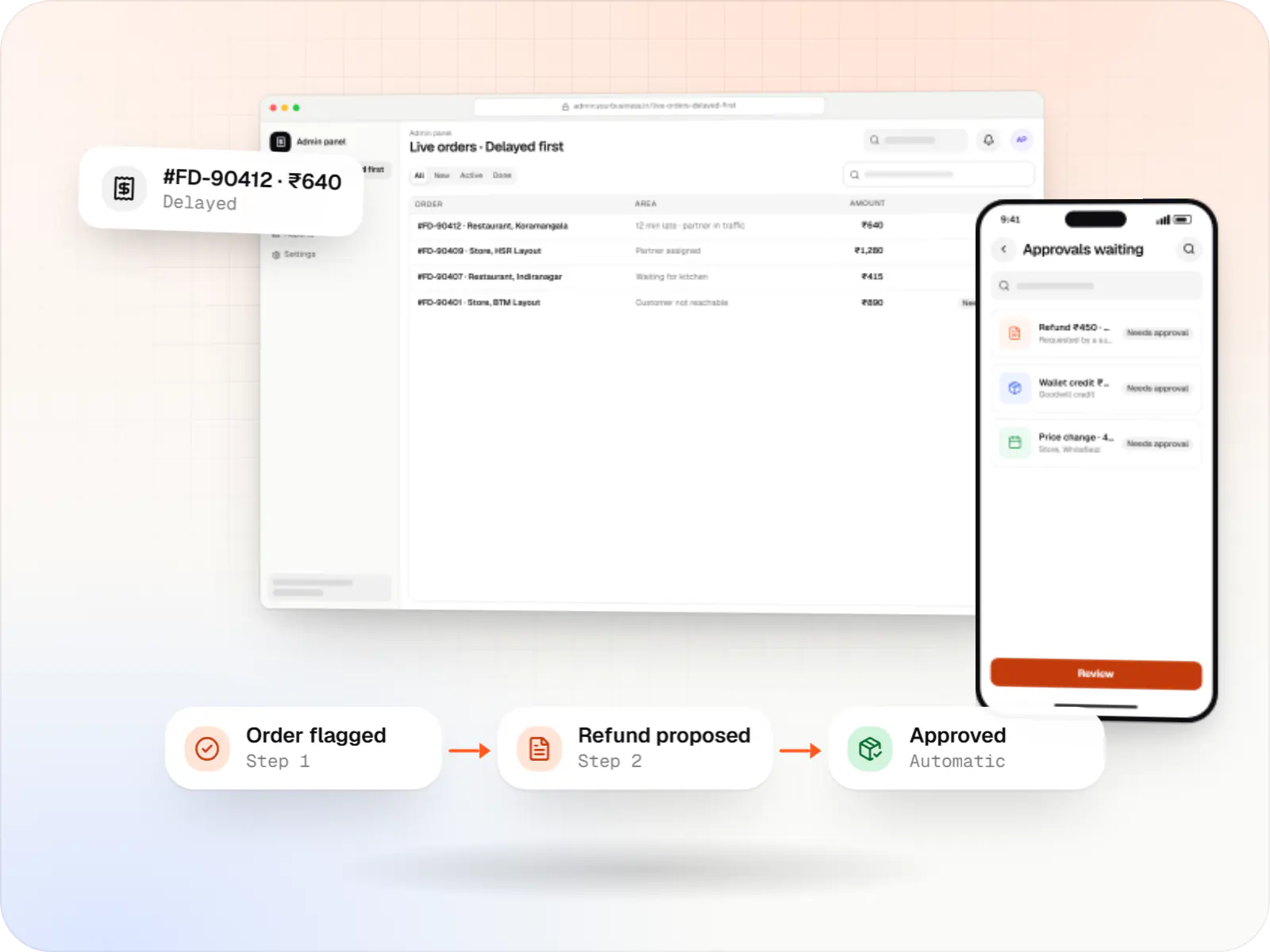
Back-office dashboards built around your team's daily tasks: order queues, approvals, catalogue management, payouts, reports and audit logs.
FAQ
Yes. Tally runs on a local machine, so we usually install a small sync agent there that talks to Tally through its XML over HTTP interface, pushing vouchers and pulling masters and ledgers. The agent queues changes when the machine is offline and reports failures, such as a missing ledger, back to the web app for someone to fix. For Tally hosted on a remote server, the same agent runs on that server instead.
No. Scraping is fragile and pushes clients to share portal passwords. For e-invoicing, e-way bills and return data, we integrate through a GST Suvidha Provider (GSP) or an application service provider built on one, which offers authorised API access with the taxpayer's consent. Some workflows, such as importing GSTR-2B, can also run from files clients download themselves. We choose the route based on volume, cost and how much automation you need.
For printed GST invoices, extraction handles most fields well, but not every time: skewed photos, handwritten bills and unusual layouts cause errors. So we design it as assistance. Each field carries a confidence score, low-confidence documents go to a reviewer, and GSTIN formats and totals are cross-checked before posting. The saving comes from reviewing instead of typing, and we measure accuracy on your own documents during a pilot.
Next step
Tell us how many clients or entities you handle and which tools you use today. We will suggest what to automate first.