

Mobile
Flutter
Build Android and iOS apps from one shared codebase, so you launch on both platforms faster with a consistent experience.
Used for
- Mobile apps
- Delivery apps
- E-commerce apps
- Booking apps
Business & enterprise
MVP-first product development for Indian startups: focused first releases, phased roadmaps and engagement terms that match your runway.
At a glance
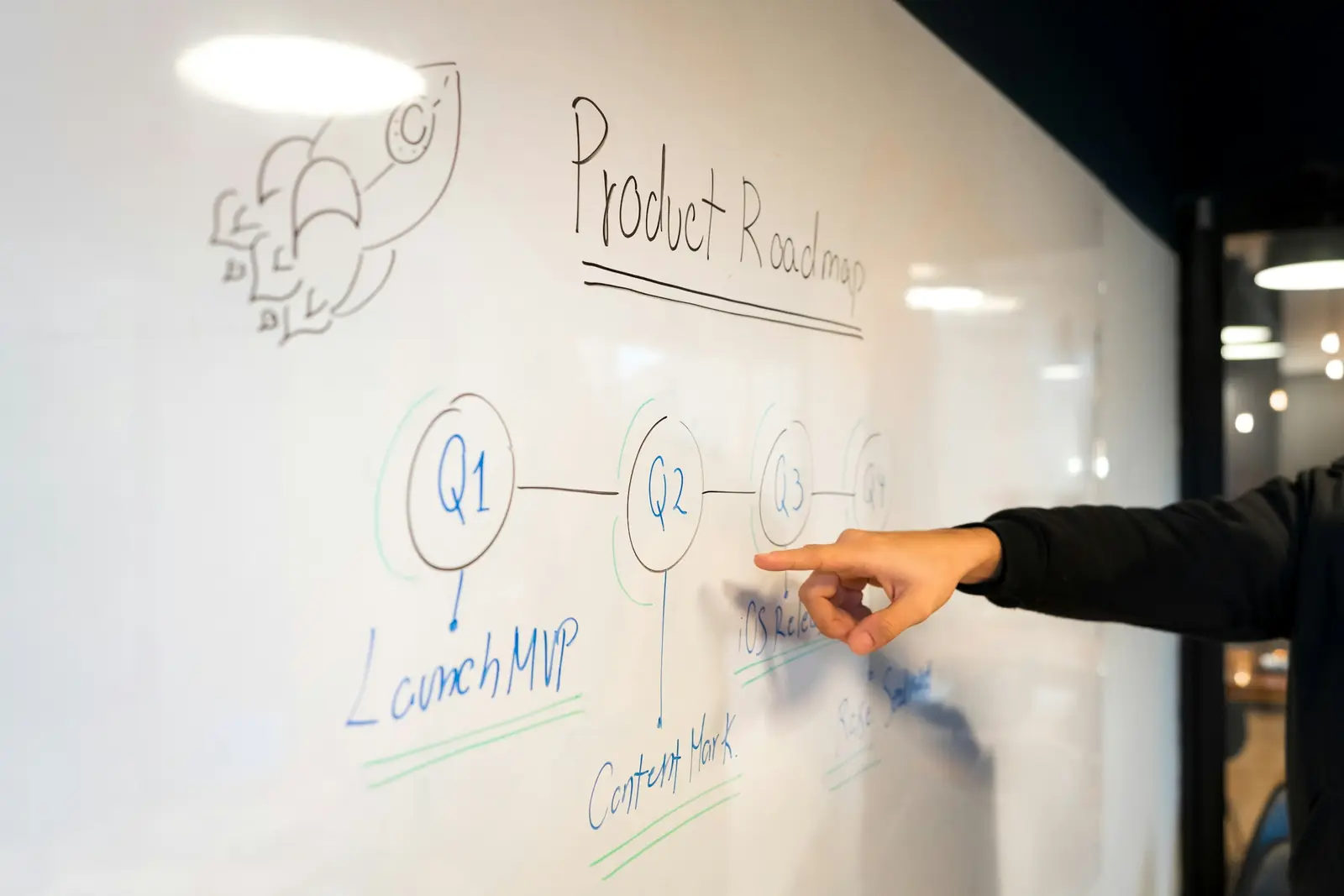
Early-stage teams need to learn fast without burning runway on features nobody uses. We scope a focused MVP, build it on foundations that last, and extend it in phases as usage and funding grow.
Flutter and the related logo are trademarks of Google LLC. We are not endorsed by or affiliated with Google LLC.
How to start
Tell us what you need in your own words. You talk to the developers who would build it and get a written, line-item estimate.
Get a project estimateStartups rarely struggle because the first code was imperfect. They struggle when months go into a large first version before anyone outside the team has used it. We work MVP-first: find the riskiest assumption in your idea, build the smallest product that tests it with real users, and plan the next phases around what you learn.
That isn't throwaway work. The first release sits on foundations you can grow on (clean data models, authentication, analytics and a deployment pipeline), so phase two extends phase one. You get direct access to the developers building your product, and the code and accounts are yours from day one.
Challenges
Feature lists grow with every investor meeting until the first release is unaffordable.
Non-technical founders need architecture decisions they can trust and understand.
Earlier builds without documentation, tests or a deployment process are hard to extend.
After launch it is unclear whether to fix, extend or pivot, and team size needs to flex.
Solutions
Across 6 areas
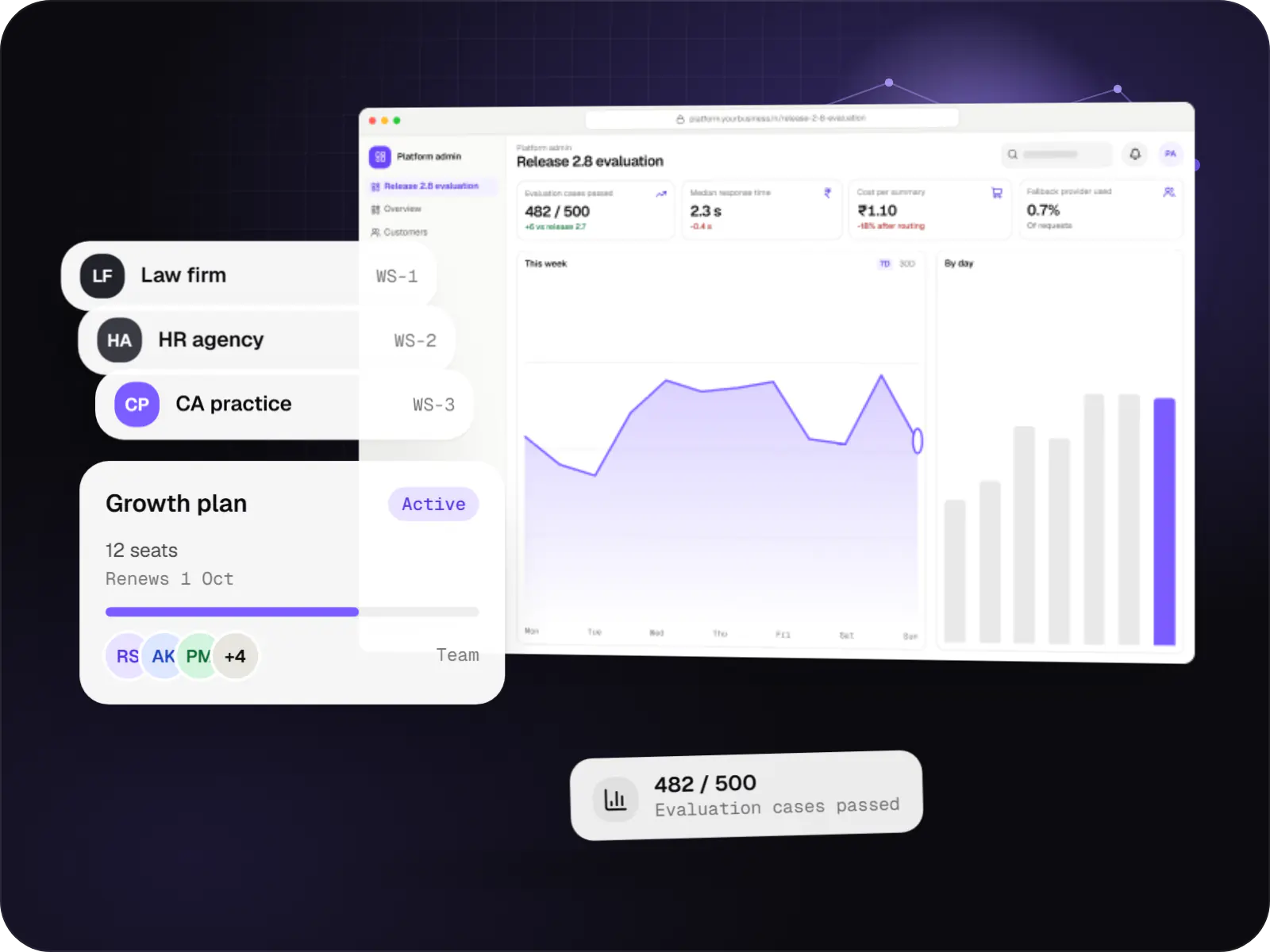
Multi-tenant SaaS products with AI at their core, built with tenant isolation, usage metering, model routing, evaluation and subscription billing.
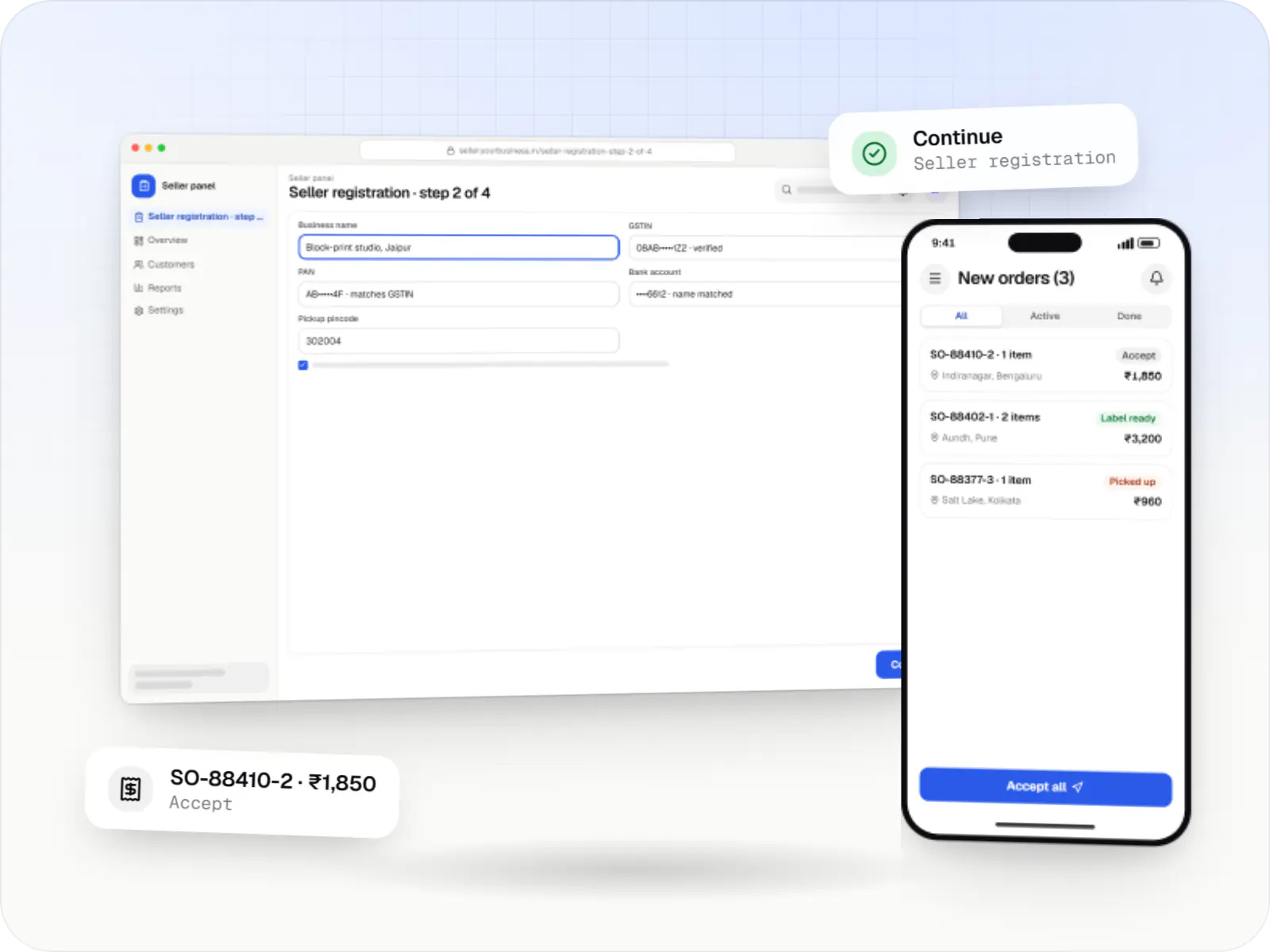
Multi-vendor marketplaces with seller onboarding, commission rules, split payouts, per-seller invoicing and catalogue moderation.
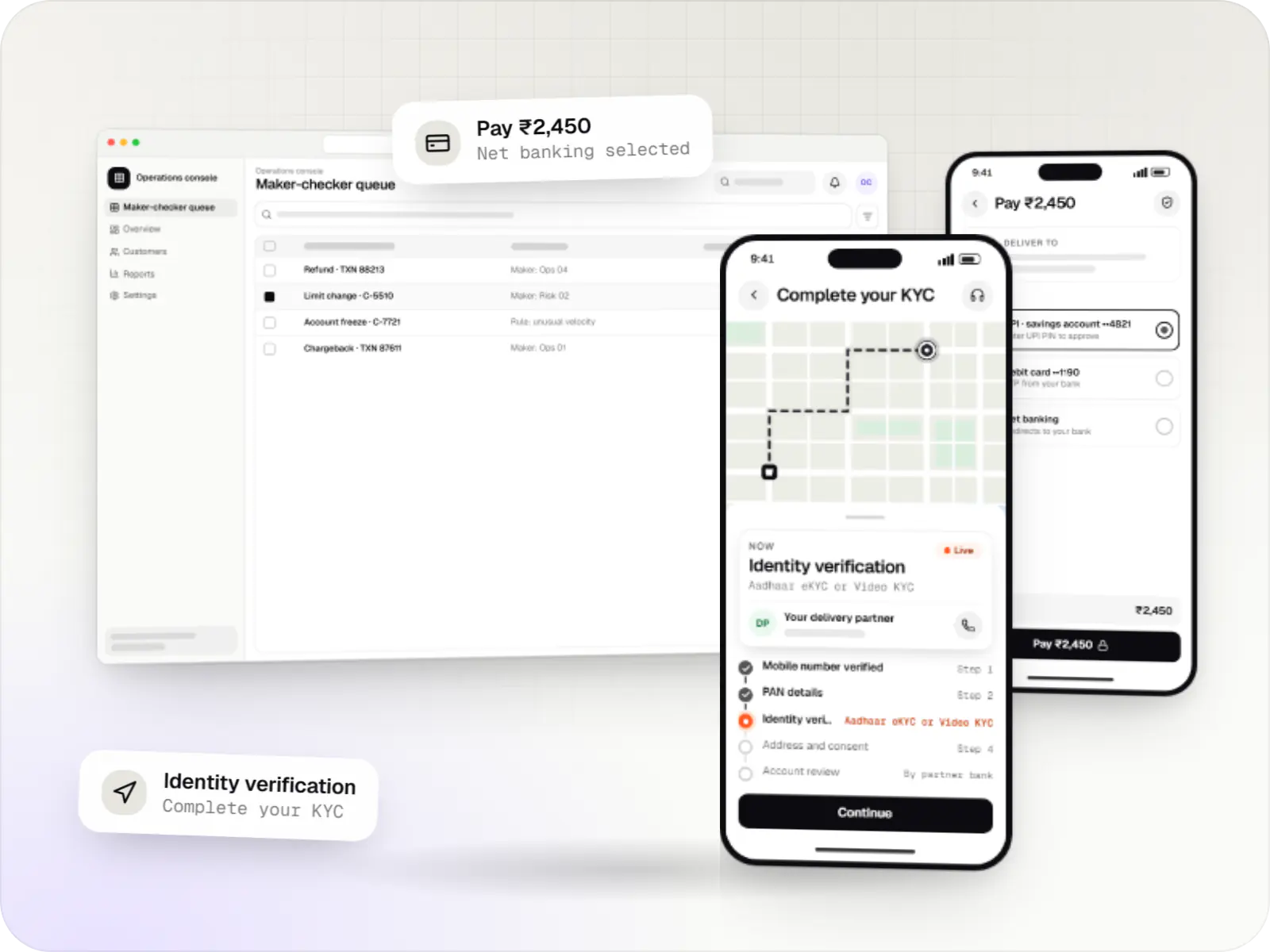
Secure fintech apps and back offices for payments, lending, investments and insurance, integrated with licensed banking, KYC and data partners.
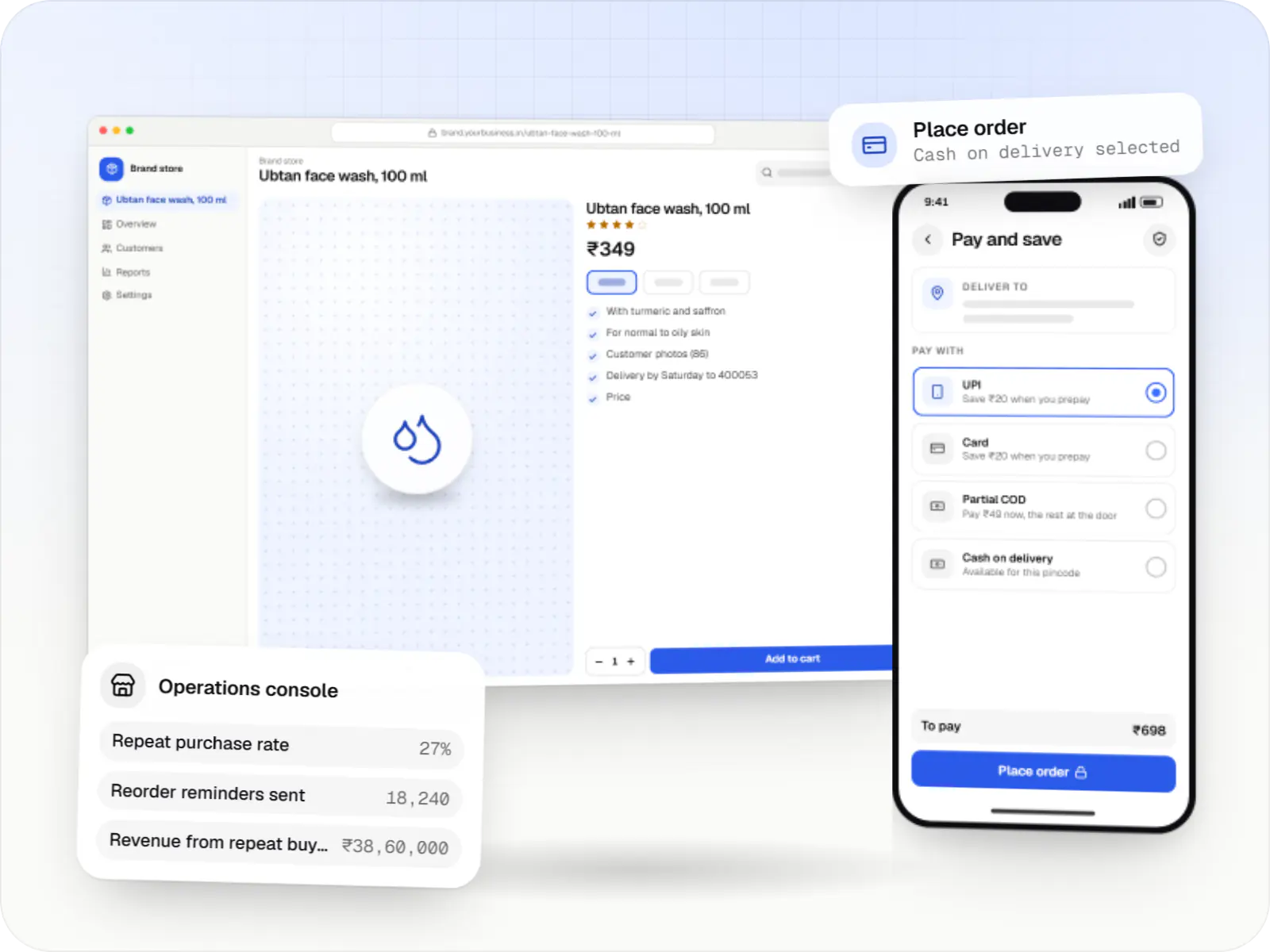
Brand-owned online stores for D2C companies, with conversion-focused checkout, retention tools, server-side tracking and multichannel stock sync.
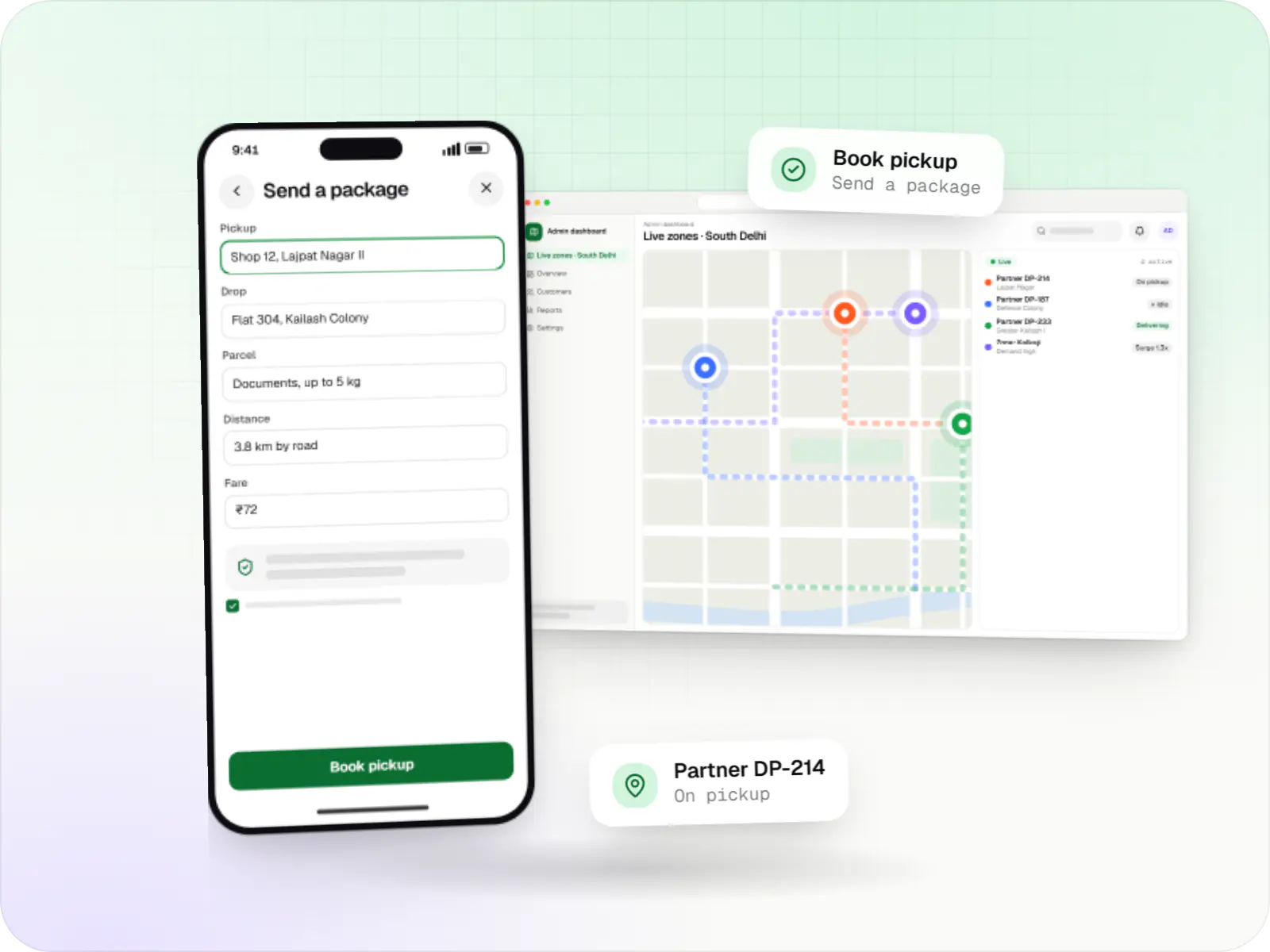
Hyperlocal delivery apps linking neighbourhood stores, pick-up-and-drop requests and delivery partners within a city, with zone-based dispatch and pricing.
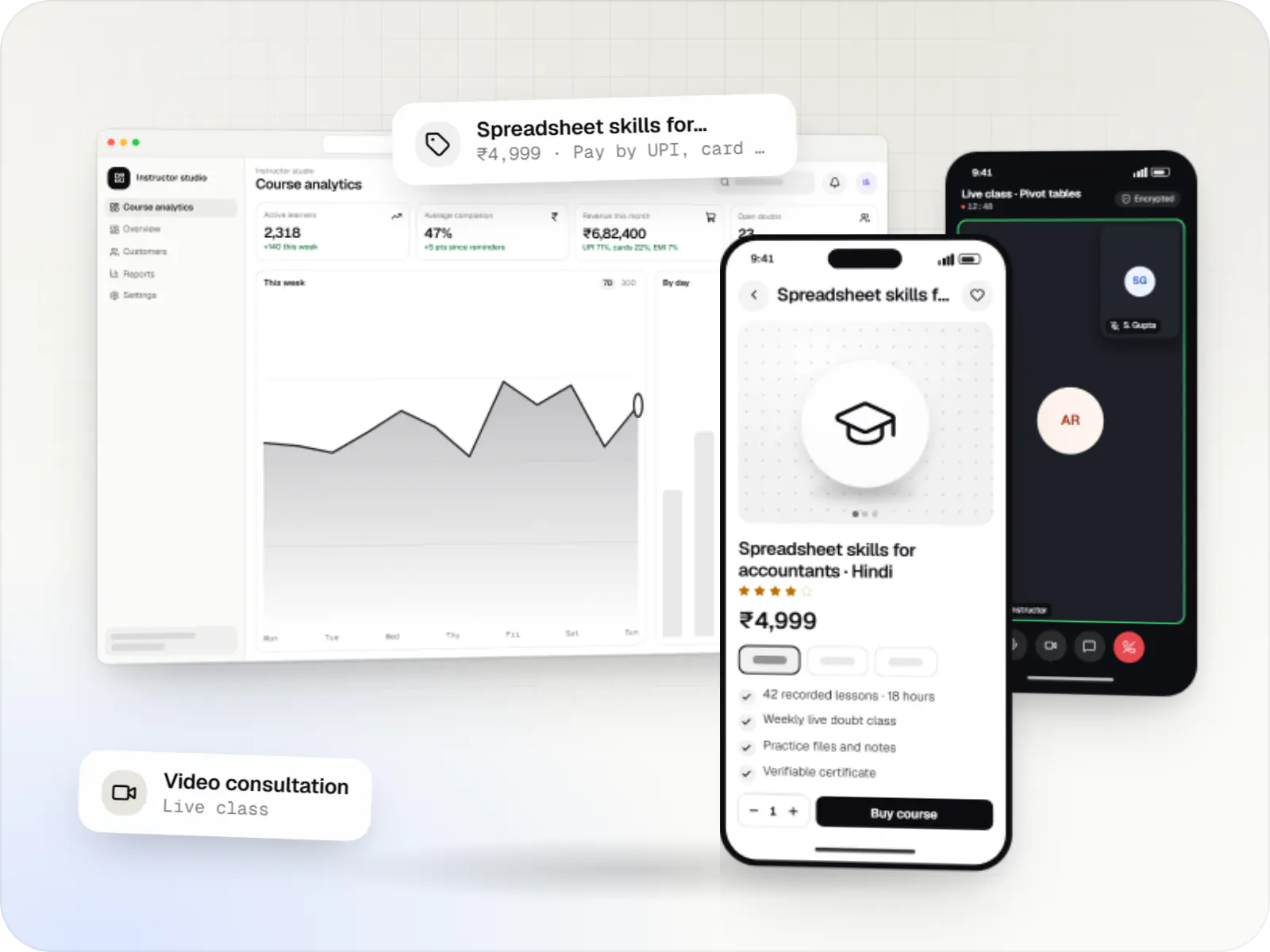
Course platforms with protected video, live classes, assessments, certificates and payments, designed for multilingual content and learners on low bandwidth.
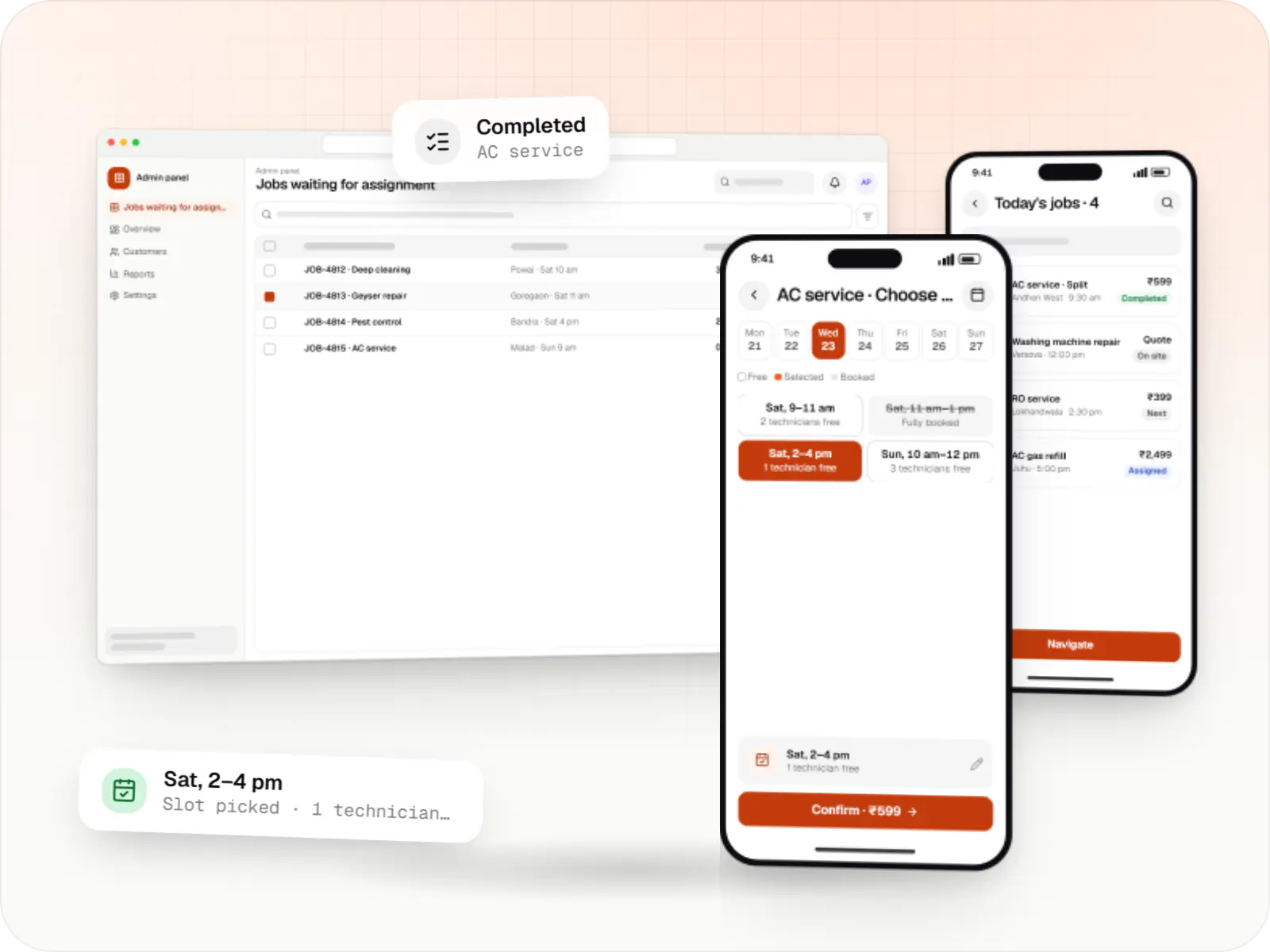
Customer app, professional app and admin panel for repairs, cleaning, appliance servicing and beauty at home, with slot booking, on-site quotes and payouts.
Features ranked must-have, next and later, so the MVP matches your runway.
Fixed-scope for a defined MVP, a monthly team for iteration, or hourly for smaller changes.
Code in your repository, cloud and store accounts in your name, IP assigned in the contract.
Product analytics and crash reporting live before launch, so you can show real usage.
Architecture notes and a clean repository that hold up to technical review.
Conventions and handover sessions so your first engineers can take over smoothly.
How it works
Whatever the idea, a well-built first release runs the same learning loop, and each pass through it shapes the next release.
People join with a mobile number and OTP or a Google account, and onboarding asks only what the core journey needs, so fewer drop off before trying it.
They book, buy, learn or list whatever your idea is about. Each key tap is recorded as an analytics event that was defined before launch.
UPI, cards or subscriptions run through a payment gateway, so you learn whether people will pay, not only whether they sign up.
Founders approve listings, answer support queries and correct data from a simple admin panel instead of editing the live database.
Activation, retention and funnel drop-offs show where users succeed or give up, alongside crash reports from real devices.
The team fixes the biggest drop-off or adds the next feature, releases within days, and the loop starts again with fresh data.
Then it starts again at step 1: A new user signs up
Platforms
One Flutter or React Native codebase for Android and iOS, with native modules where a feature needs them.
Browser-based applications with logins, roles and workflows, such as customer portals, SaaS products and internal tools.
Installable web apps with offline support and notifications, useful when an app-store listing isn't essential or phones have little storage.
Back-office panels for operations, support and finance teams: orders, users, content, reports and permissions.
Technology
Chosen so one small team can ship Android, iOS and web quickly, and hand over code your future engineers will recognise.
Mobile
Build Android and iOS apps from one shared codebase, so you launch on both platforms faster with a consistent experience.
Used for
Mobile
Build Android and iOS apps in the same language as a React website, so one team can share code and skills across web and mobile.
Used for
Web
A modern web technology for fast, search-friendly websites, online stores and web applications that load quickly on mobile.
Used for
Backend
A structured way to build back ends on Node.js, so large business systems stay organised, testable and easy to hand over.
Used for
Data
A reliable database for the records your business runs on: orders, payments, bookings and stock, kept accurate and easy to report on.
Used for
Cloud & DevOps
Ready-made building blocks for mobile apps, such as push notifications, phone OTP login and crash reports, so you launch sooner.
Used for
Adds AI features such as chat assistants, document summaries and smart search to your product, built on OpenAI models with human review.
Used for
Flutter and the related logo are trademarks of Google LLC. We are not endorsed by or affiliated with Google LLC.
Plain-English glossary
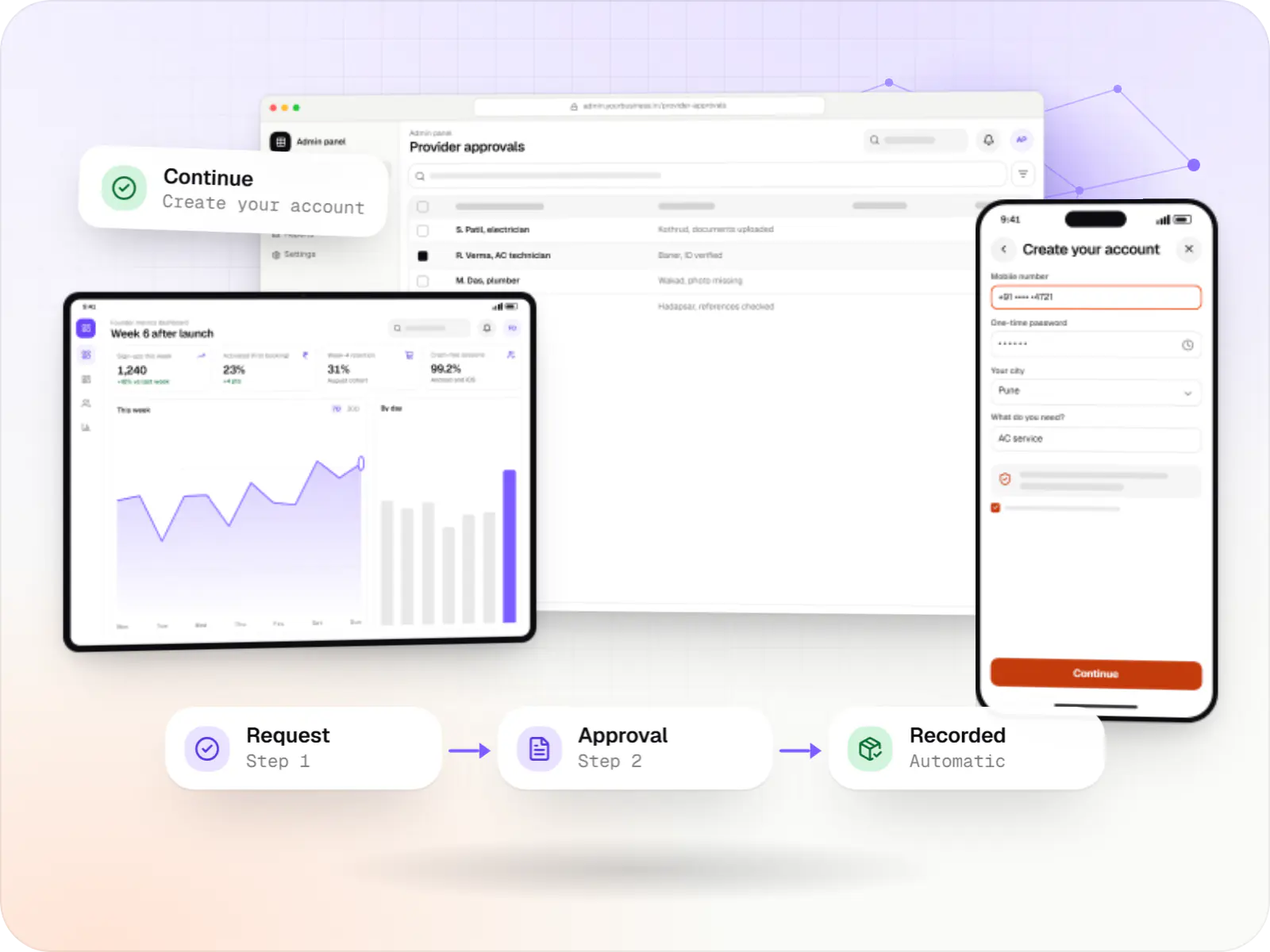
Product preview
Illustrative screens from a home-services marketplace MVP, one of the product types founders bring to us. The data is sample data.
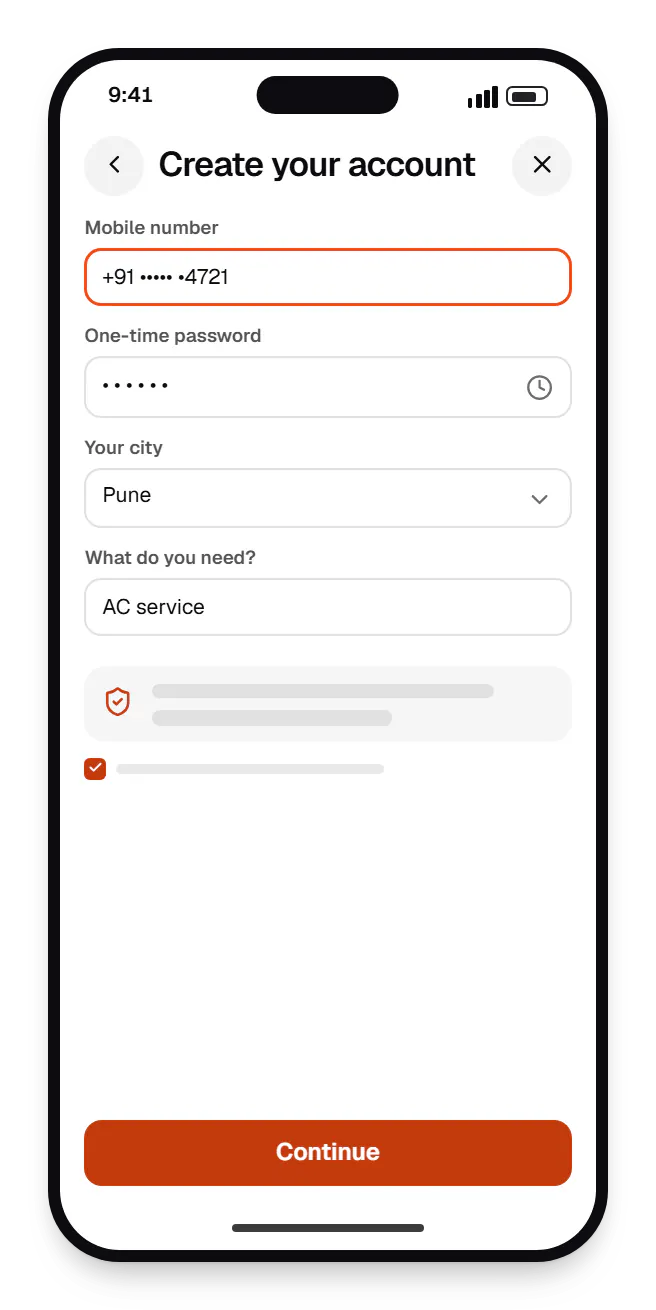
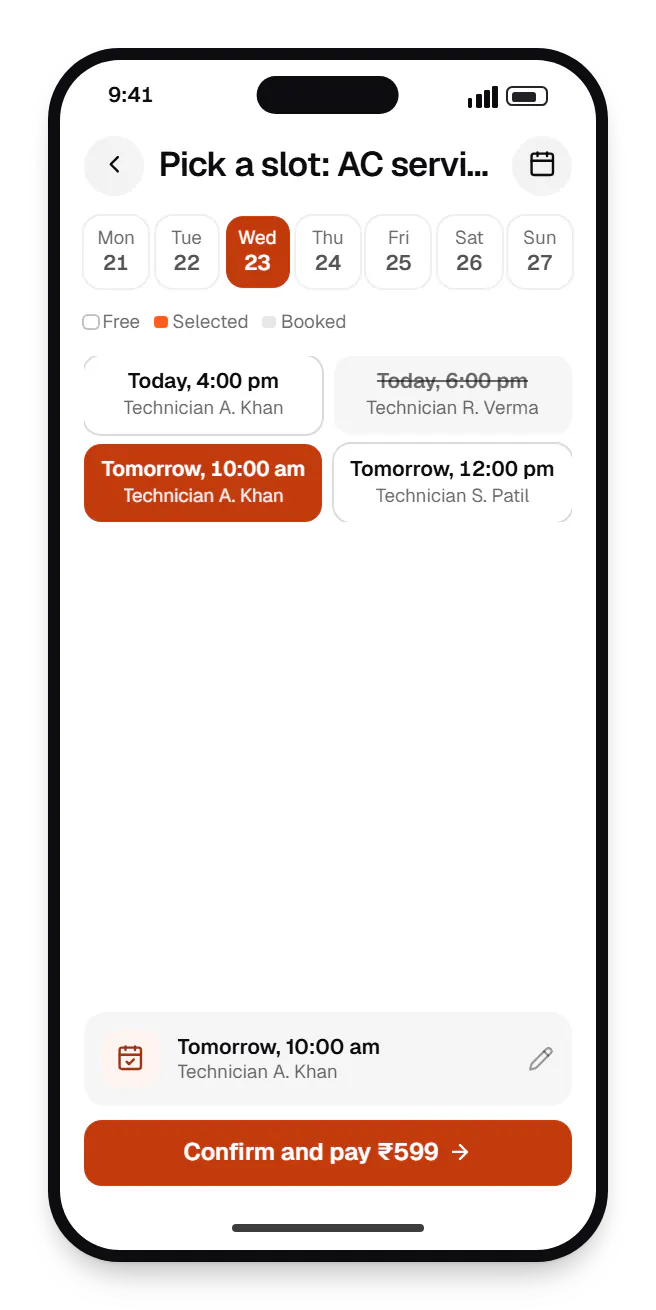
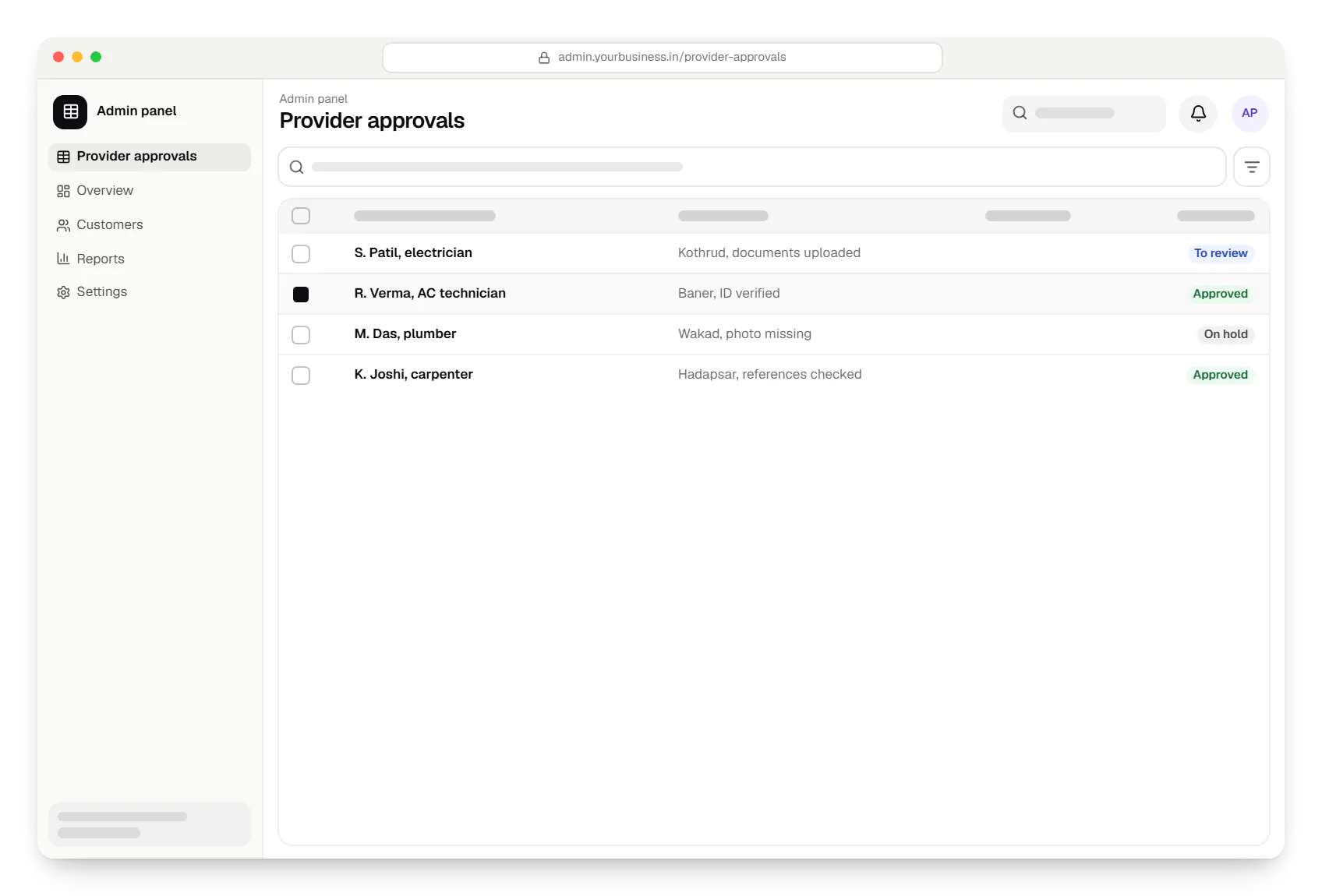
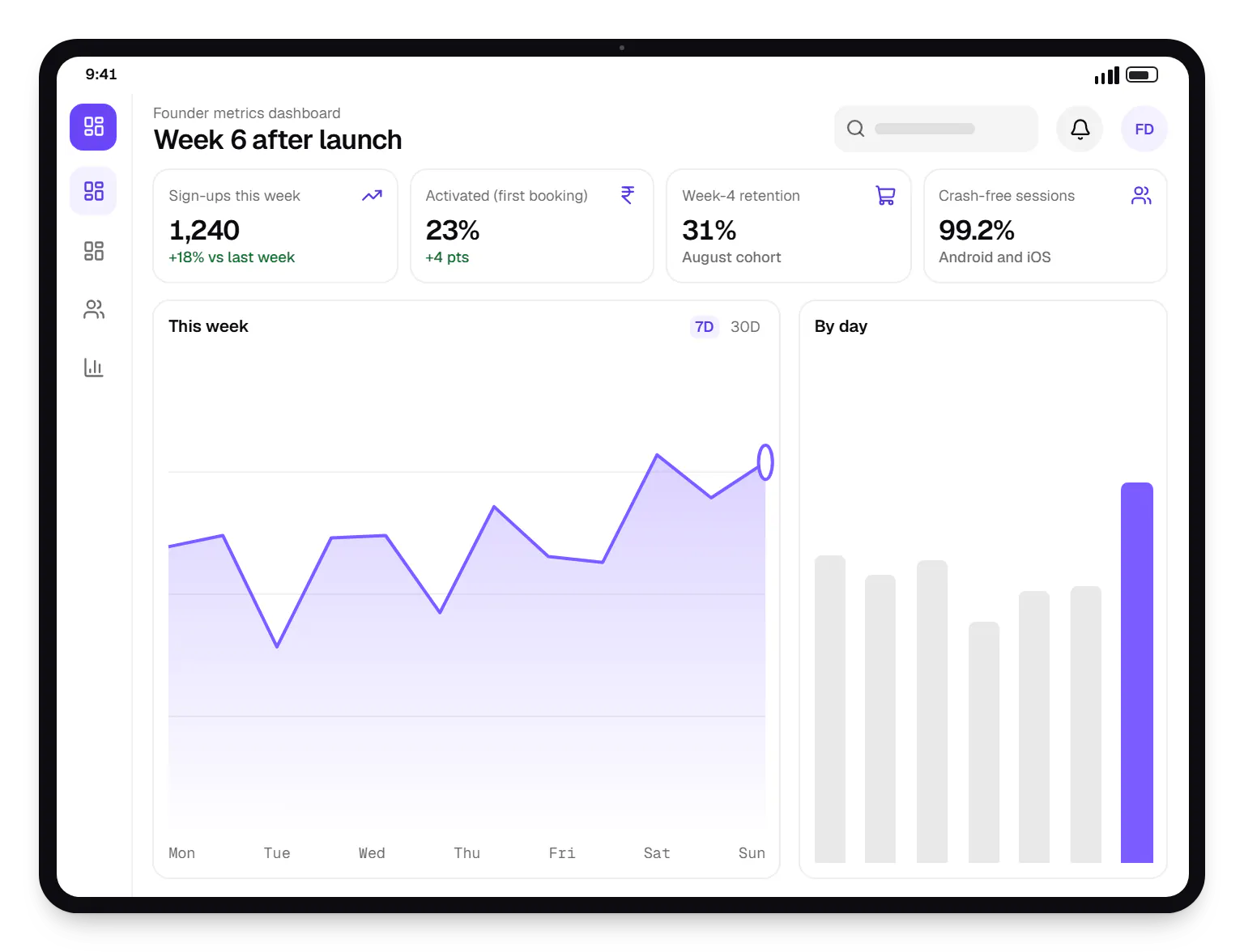
Sample screens: names, prices and figures are examples, not client data.
Cost drivers
A marketplace with customers, providers and admins is effectively three products; a single role is far simpler.
One web app or one cross-platform app costs less than native apps plus a website.
Payments, KYC, maps or AI APIs add integration work and running costs.
Managed services for auth, notifications and search keep phase one lean.
Estimates are written from your scope, with the effort and assumptions behind each line item.
How pricing worksProcess
We map users, the core journey and the one assumption the MVP must test, then cut scope to fit budget and timeline.
You getPrioritised feature list and line-item estimate
Key screens linked in Figma, so you can test with early users or show investors before development.
You getInteractive prototype
Short, demoable iterations on a production-ready stack, with analytics events defined up front.
You getWorking product on staging
Go-live or store release, crash reporting and a dashboard of activation and retention events.
You getLive product with baseline metrics
Plan phase two from real data: fix drop-offs, add the next feature set or harden the platform for growth.
You getPhase-two roadmap
Services
The design and engineering services our in-house team combines on projects in this sector.
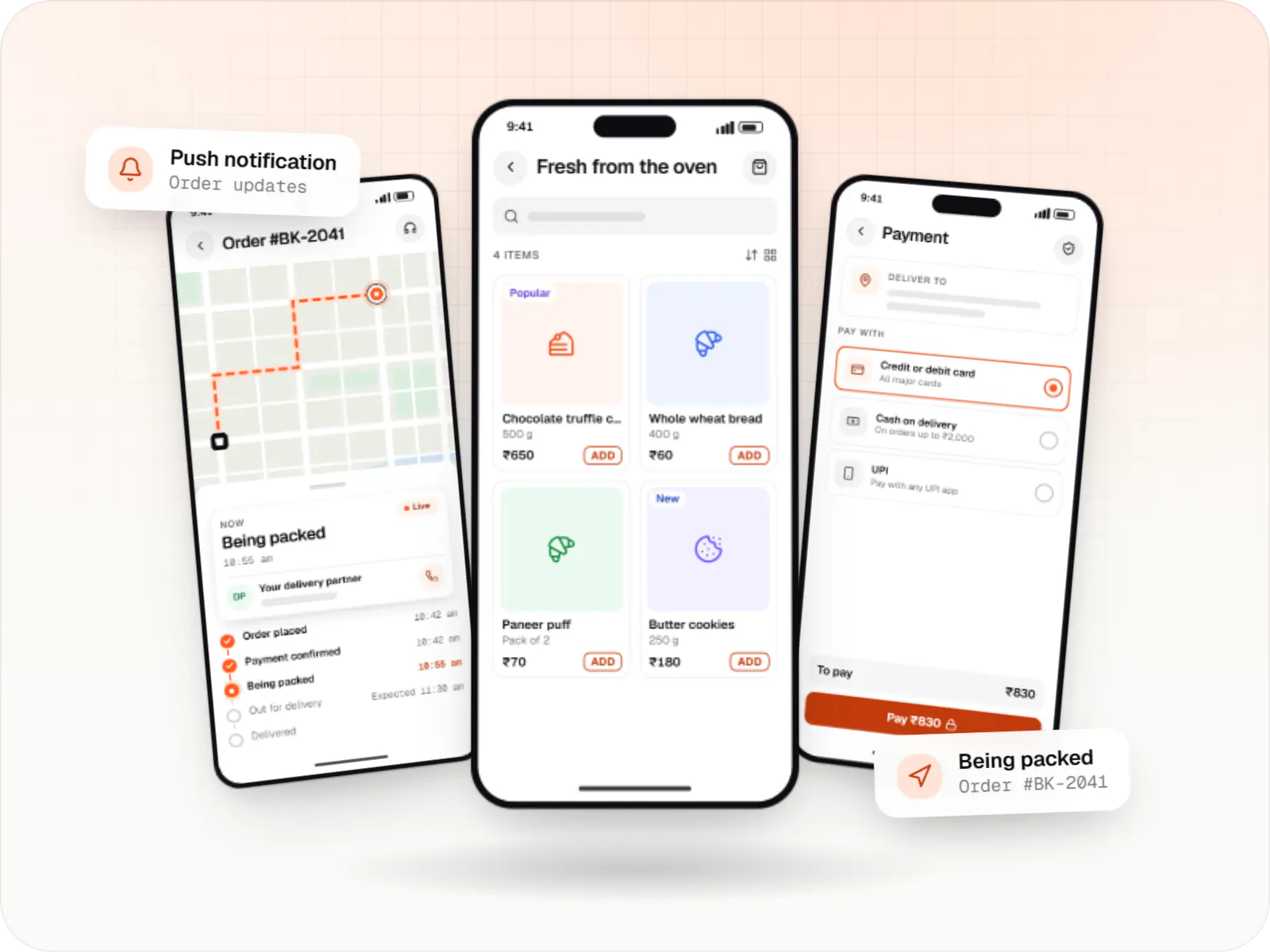
Native and cross-platform Android and iOS apps, from first release through regular store updates, built by our in-house designers and engineers.
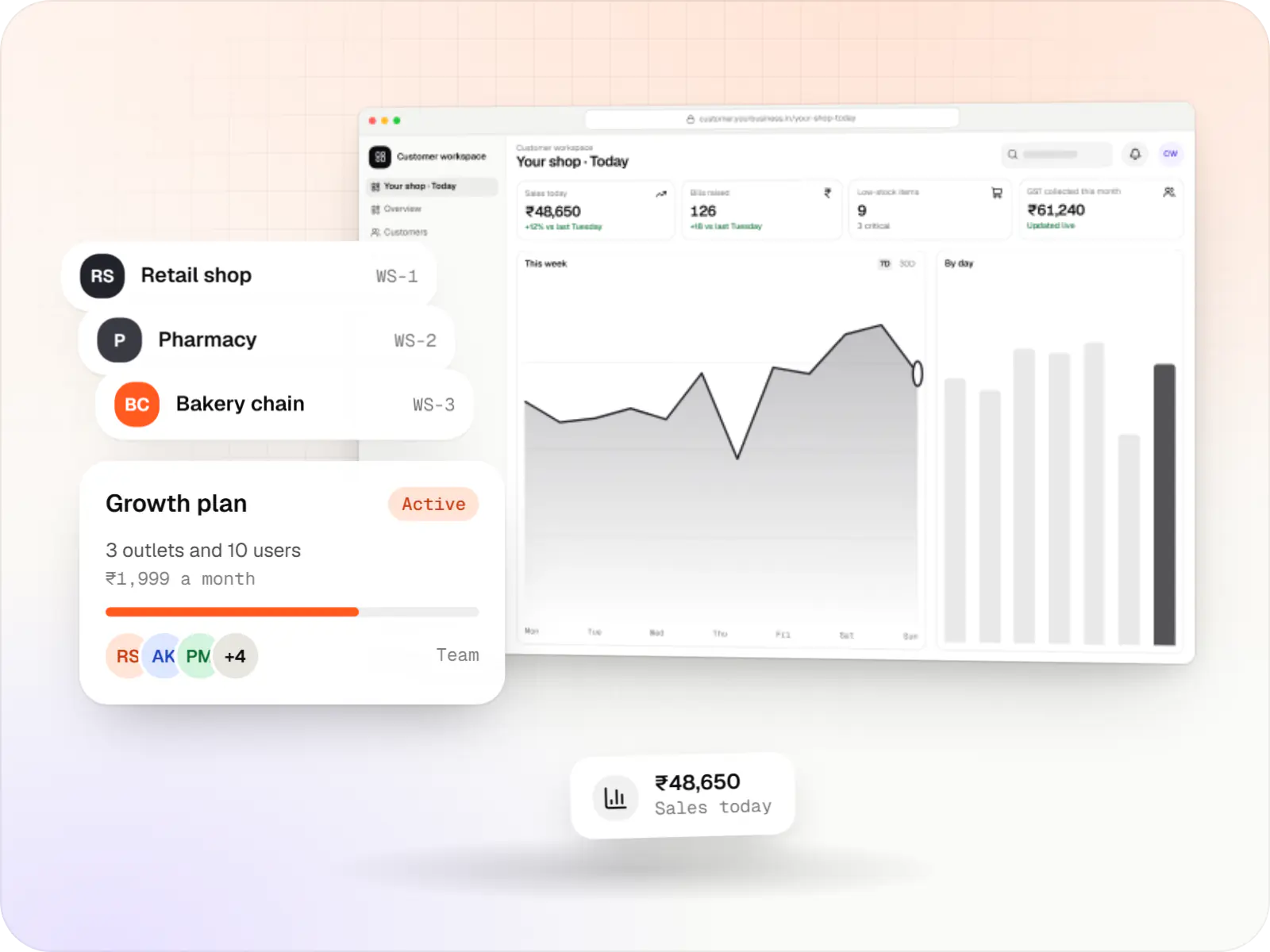
Multi-tenant SaaS products with subscription billing, team roles, onboarding and usage analytics, from first MVP to paying customers.
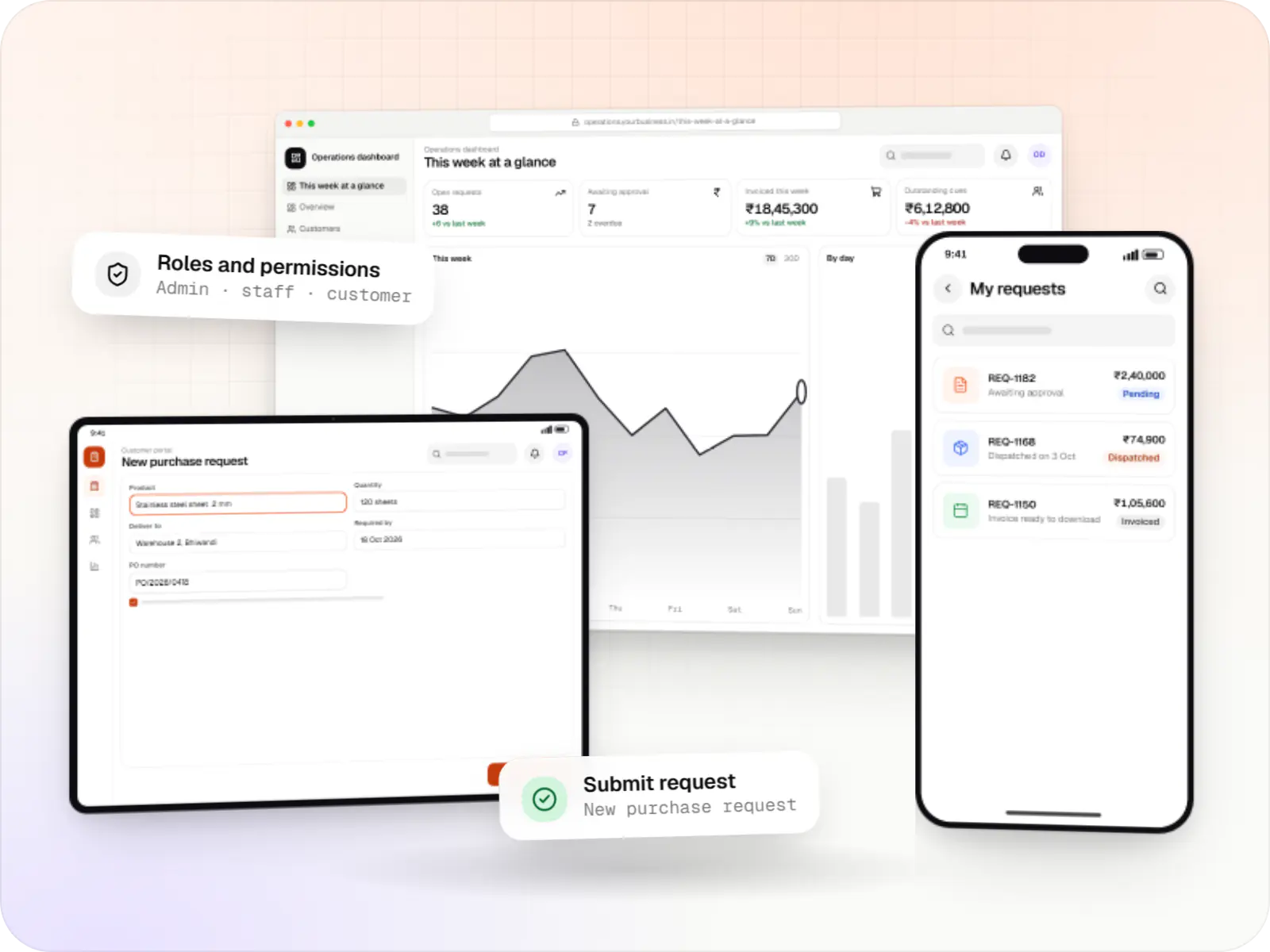
Browser-based products, customer portals, dashboards and internal tools, built on clean data models with secure roles and integrations.
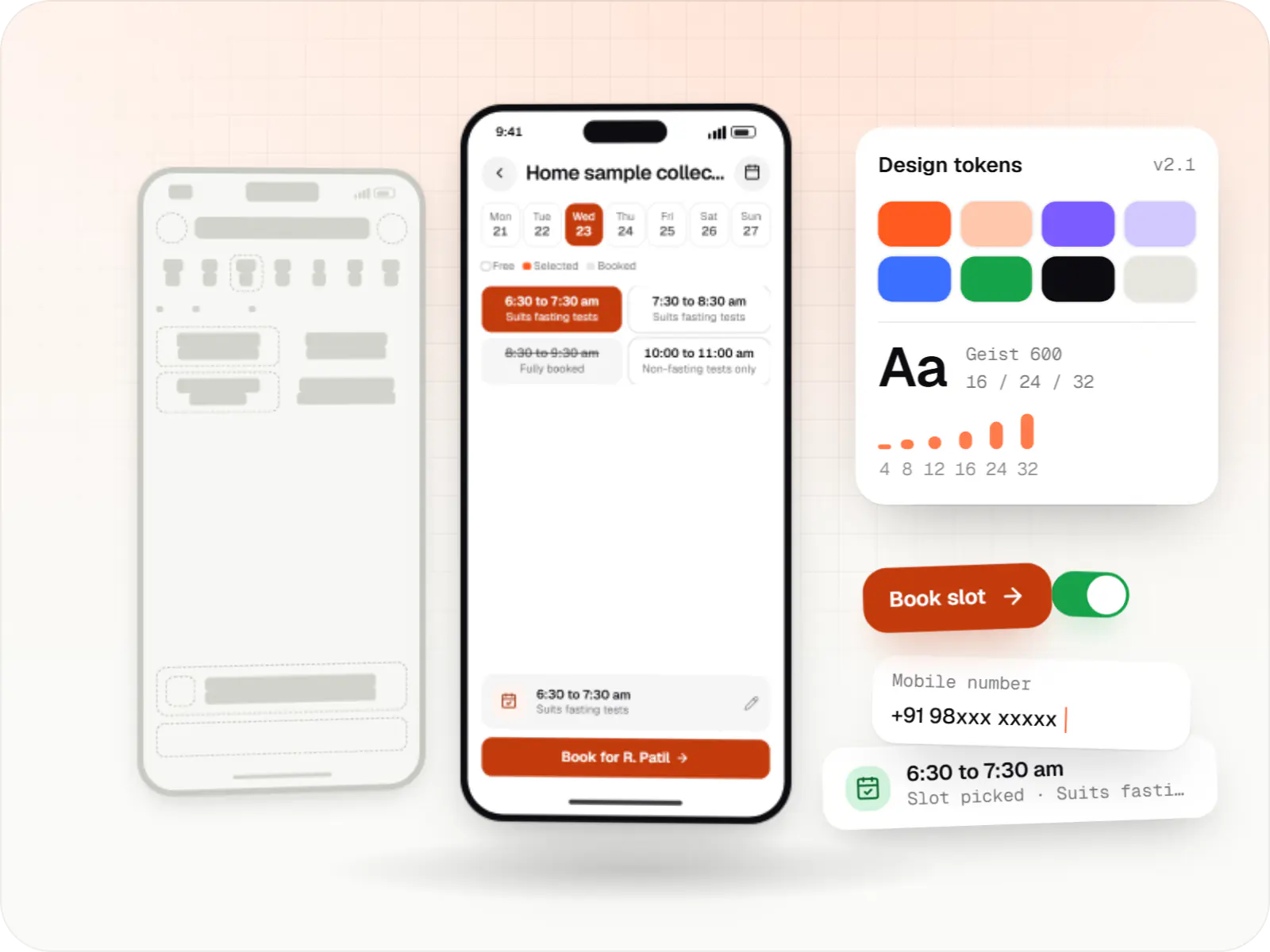
Product design for web and mobile apps: research, user flows, wireframes, prototypes and design systems that engineers can build from.
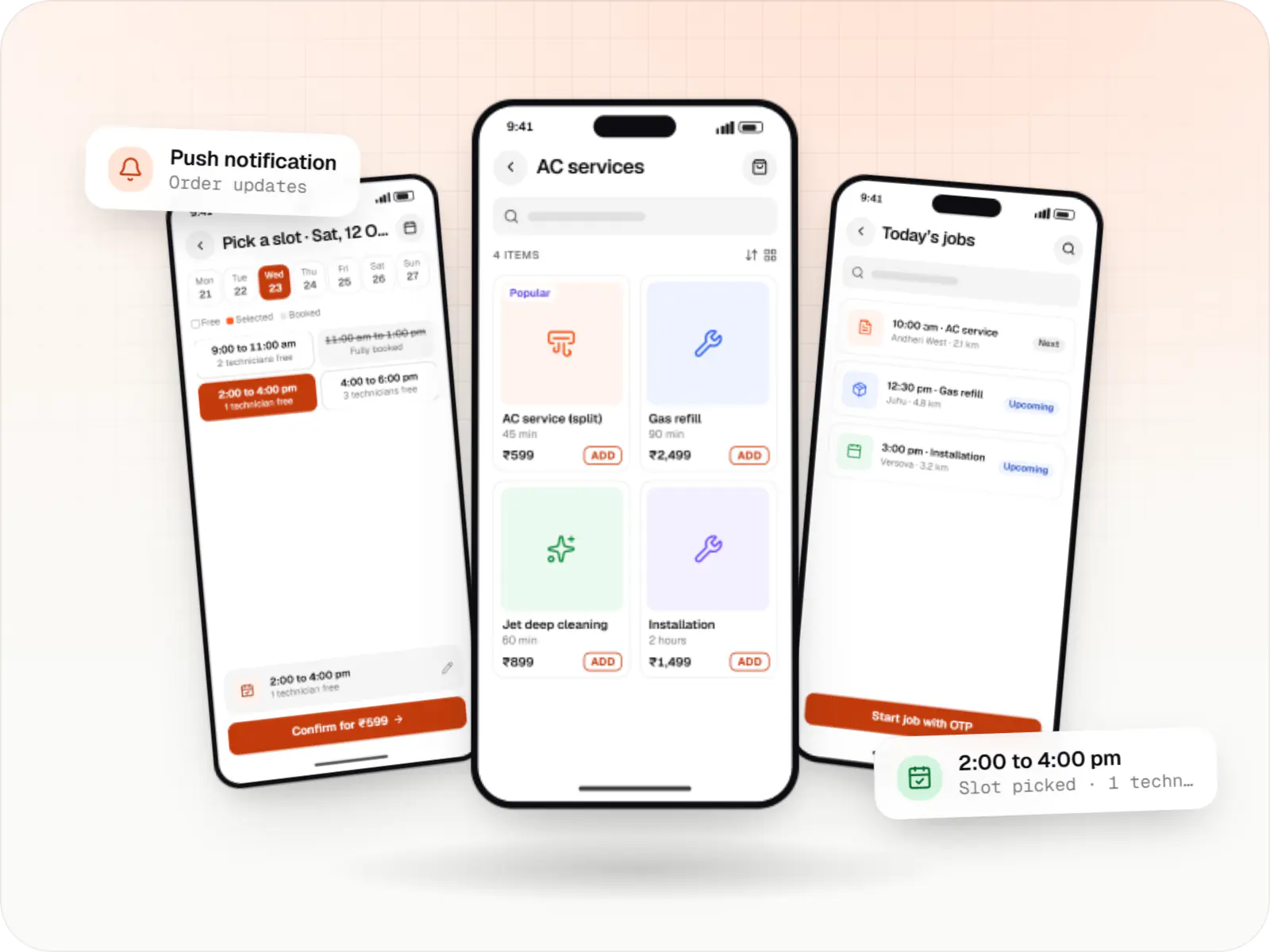
Android and iOS apps from one Dart codebase, built by engineers who know when Flutter is the right call and when native code is needed.
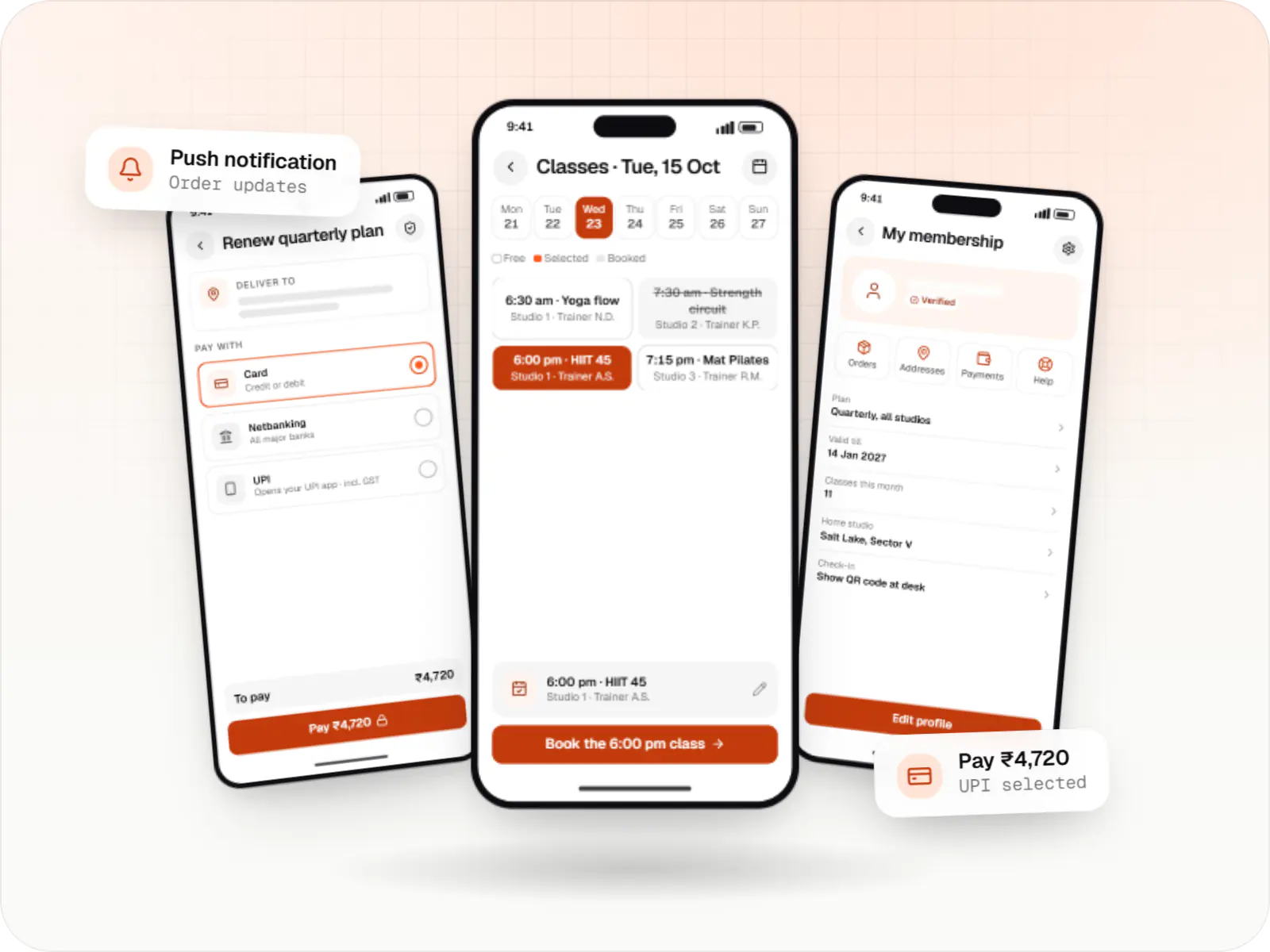
Android and iOS apps in React Native and TypeScript, suited to teams that already use React on the web and want shared logic across products.
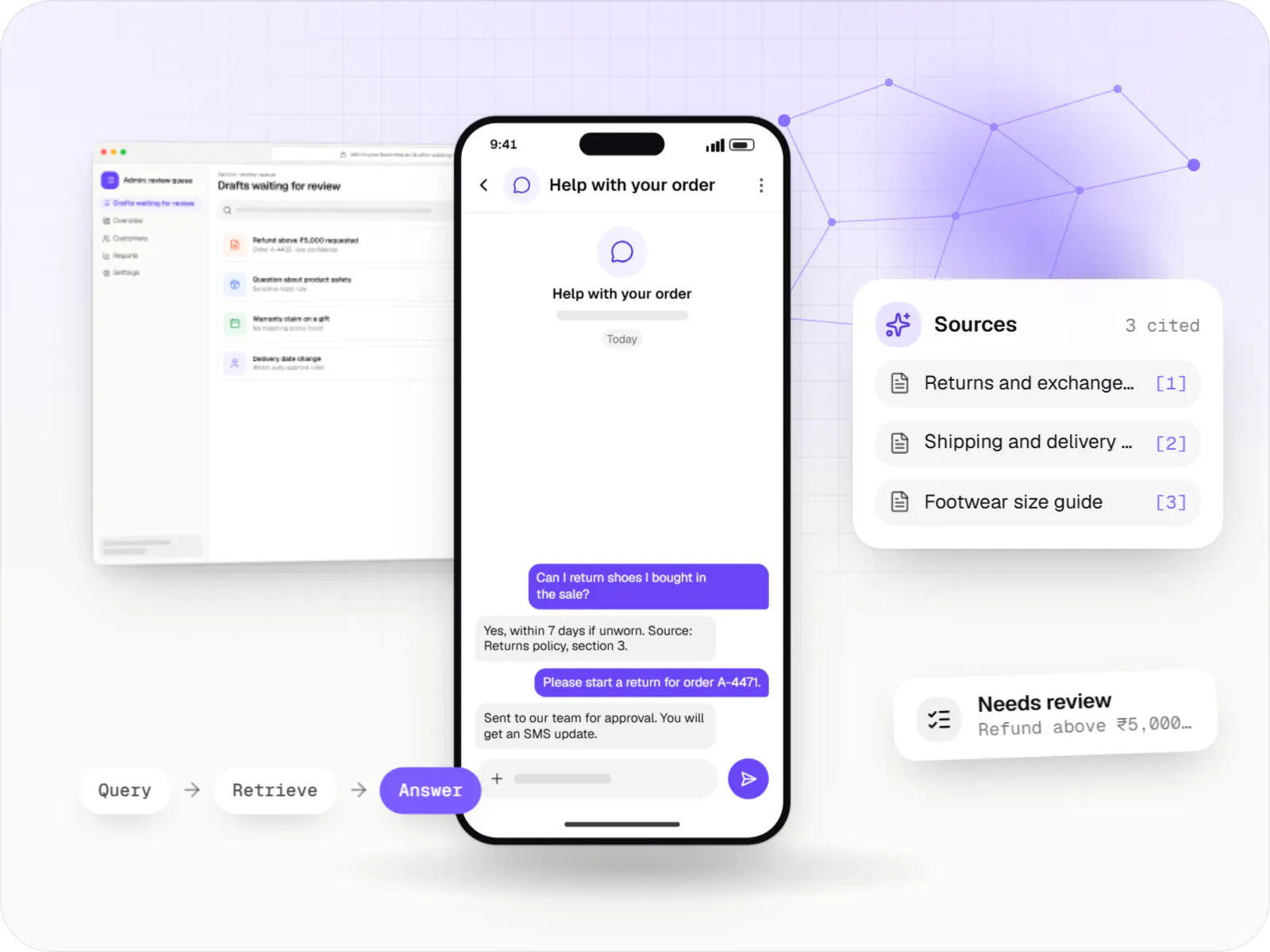
AI features and AI-first apps built on model APIs, retrieval over your own data, workflow automation or custom ML, with evaluation and human review.
Locations
Cities where this sector is a significant part of the local economy. We work remotely with teams across India and meet in person where practical.

Delhi NCR · Haryana

Karnataka

Telangana

Chandigarh Tricity

Kerala
FAQ
Keep what one type of user needs to complete the core job end to end (sign up, do the main thing, pay if relevant) plus basic admin tools for your team. Referral schemes, loyalty points, advanced filters, extra languages and a second user type can usually wait. Our test for every feature: does leaving it out stop us learning whether the idea works? If not, it moves to phase two.
Both, plus hourly for smaller work. Fixed scope suits a well-defined MVP once discovery has settled the feature list. A monthly team suits founders who expect to change direction after launch, since priorities can shift every sprint without renegotiating scope. Many startups use fixed scope for the first release and move to monthly for iteration. Estimates are line-item either way.
Yes. The repository sits under your organisation's account, cloud and app-store accounts are registered to your company, and the contract assigns intellectual property to you on payment. Design files, environment documentation and credentials are handed over too. Investors and acquirers check code ownership during due diligence, and it is far easier to show when it was set up correctly from the first commit.
Yes. Post-launch work usually shifts from features to reliability: load testing, database indexing, caching, background jobs, monitoring and security reviews before larger customers arrive. We can grow the team for a growth phase, or help you hire and hand over to your own engineers. Because the MVP sits on production-grade foundations, the next phase usually extends it rather than rewriting it.
Next step
Send a pitch deck or a short brief, and we will suggest an MVP scope with a phased estimate.