



Mobile
Flutter
Build Android and iOS apps from one shared codebase, so you launch on both platforms faster with a consistent experience.
Used for
- Mobile apps
- Delivery apps
- E-commerce apps
- Booking apps
Transportation & logistics
Software for courier companies, last-mile delivery firms and hyperlocal delivery services: bookings, AWBs, hub scans, routes, proof of delivery and COD reconciliation.
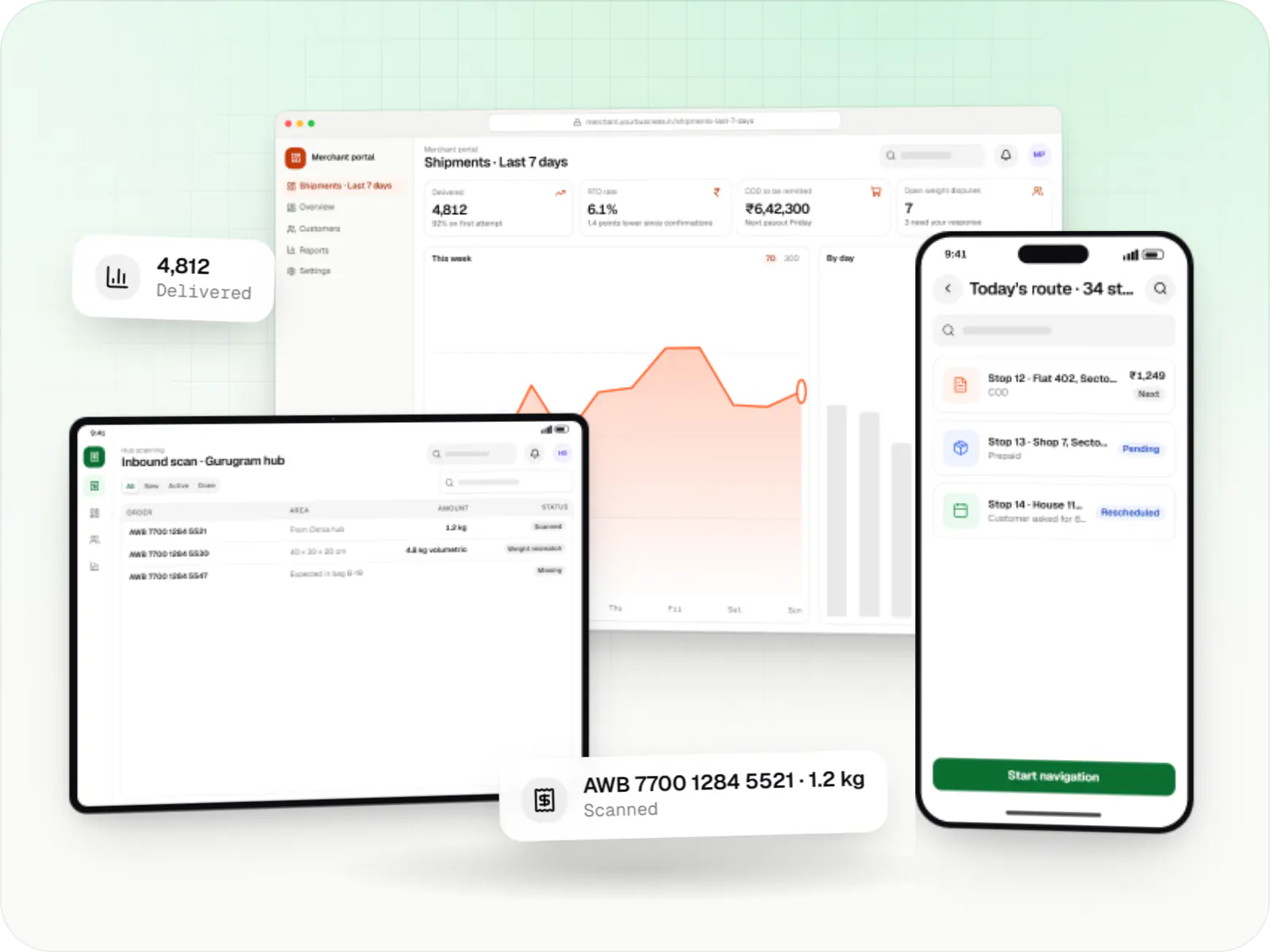
At a glance

We build courier and last-mile software: merchant booking portals and APIs, AWB generation, pincode serviceability, hub and sorting scans, delivery partner apps with route planning, OTP or photo proof of delivery, NDR handling and COD remittance.
Flutter and the related logo are trademarks of Google LLC. We are not endorsed by or affiliated with Google LLC.
How to start
Tell us what you need in your own words. You talk to the developers who would build it and get a written, line-item estimate.
Get a project estimateCourier and last-mile businesses run on scans. A parcel is booked, picked up, scanned into a hub, sorted, bagged, moved, scanned out and delivered, often within a day. Each missed scan becomes a customer query, and each COD shipment becomes cash that must reach the merchant accurately.
We build software for regional courier firms, franchise networks, e-commerce last-mile partners and hyperlocal delivery services. The focus is dependable scanning on basic Android phones, sensible routes for delivery partners, and clean reconciliation of COD, weight disputes and returns.
Challenges
Unreachable customers and wrong addresses send parcels back, costing courier and merchant alike.
Cash collected by delivery partners must be matched to shipments and remitted to merchants on schedule.
Declared and actual weights differ, and volumetric calculations are contested without evidence.
Parcels go missing between hubs when scans are skipped or done in bulk later.
Solutions
Across 3 areas
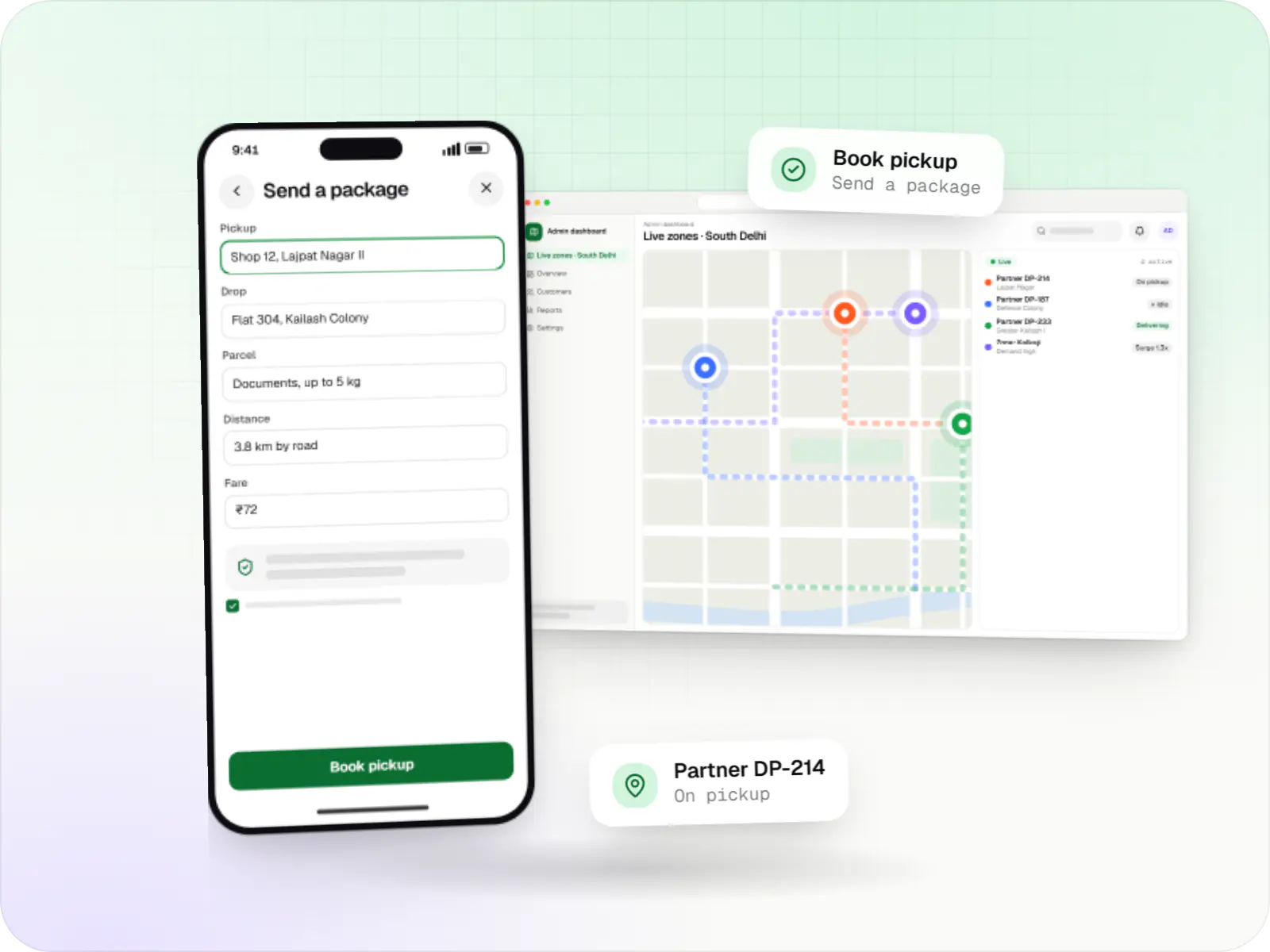
Hyperlocal delivery apps linking neighbourhood stores, pick-up-and-drop requests and delivery partners within a city, with zone-based dispatch and pricing.
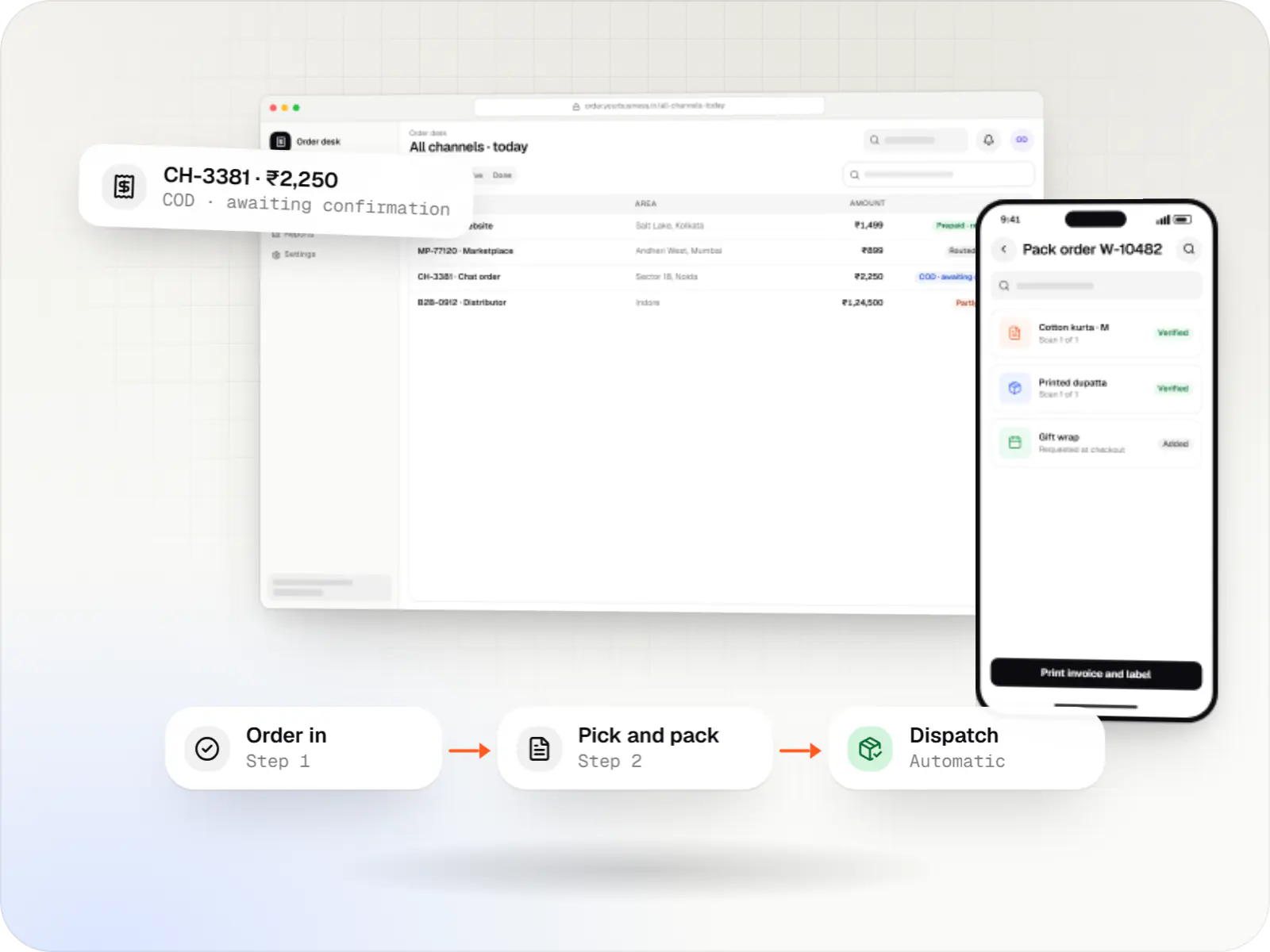
A central order management system that collects orders from every channel, routes them to the right location and tracks them to delivery and payment.
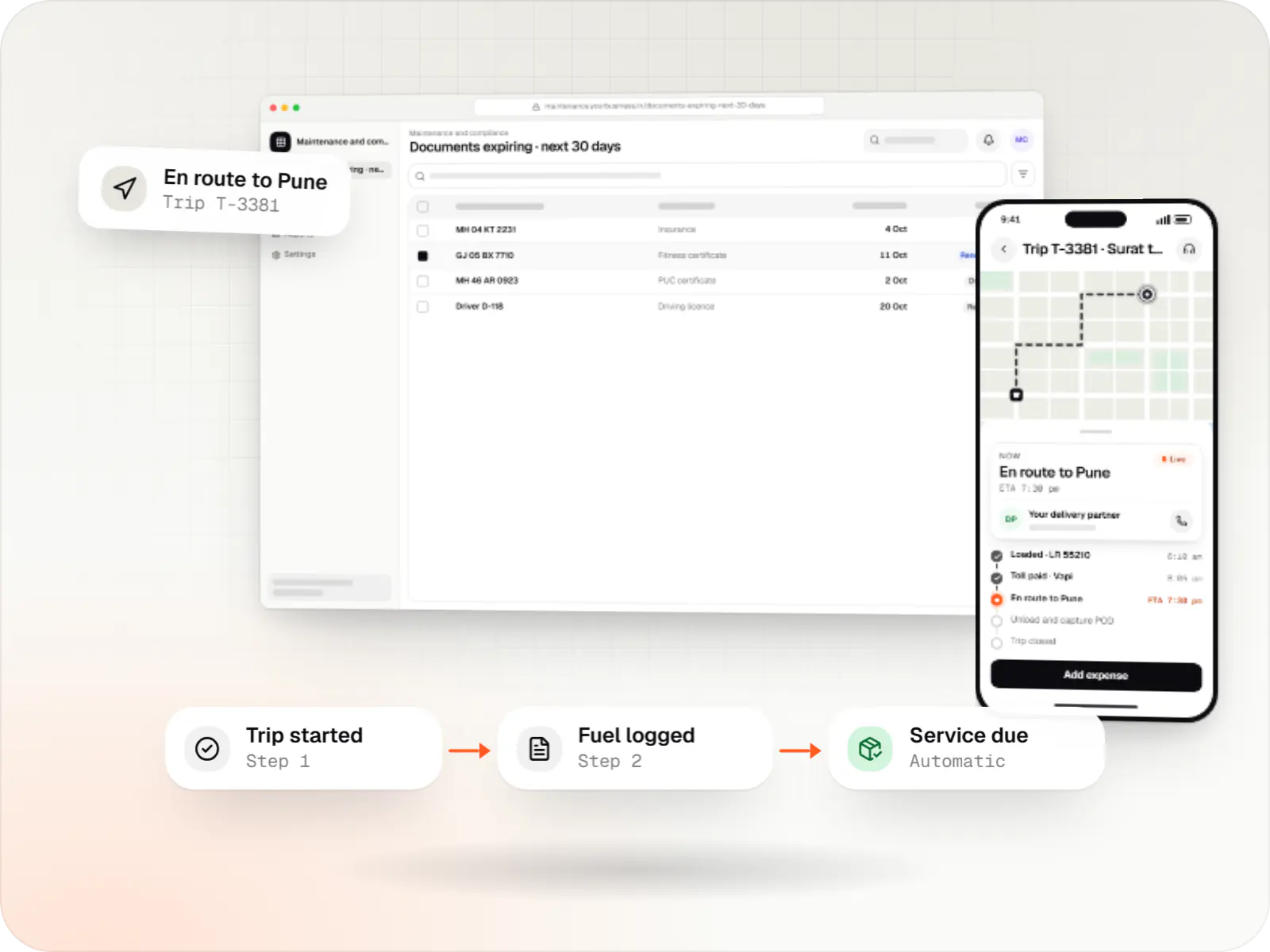
Custom fleet management software for GPS tracking, trips, driver apps, compliance reminders, maintenance and freight billing.
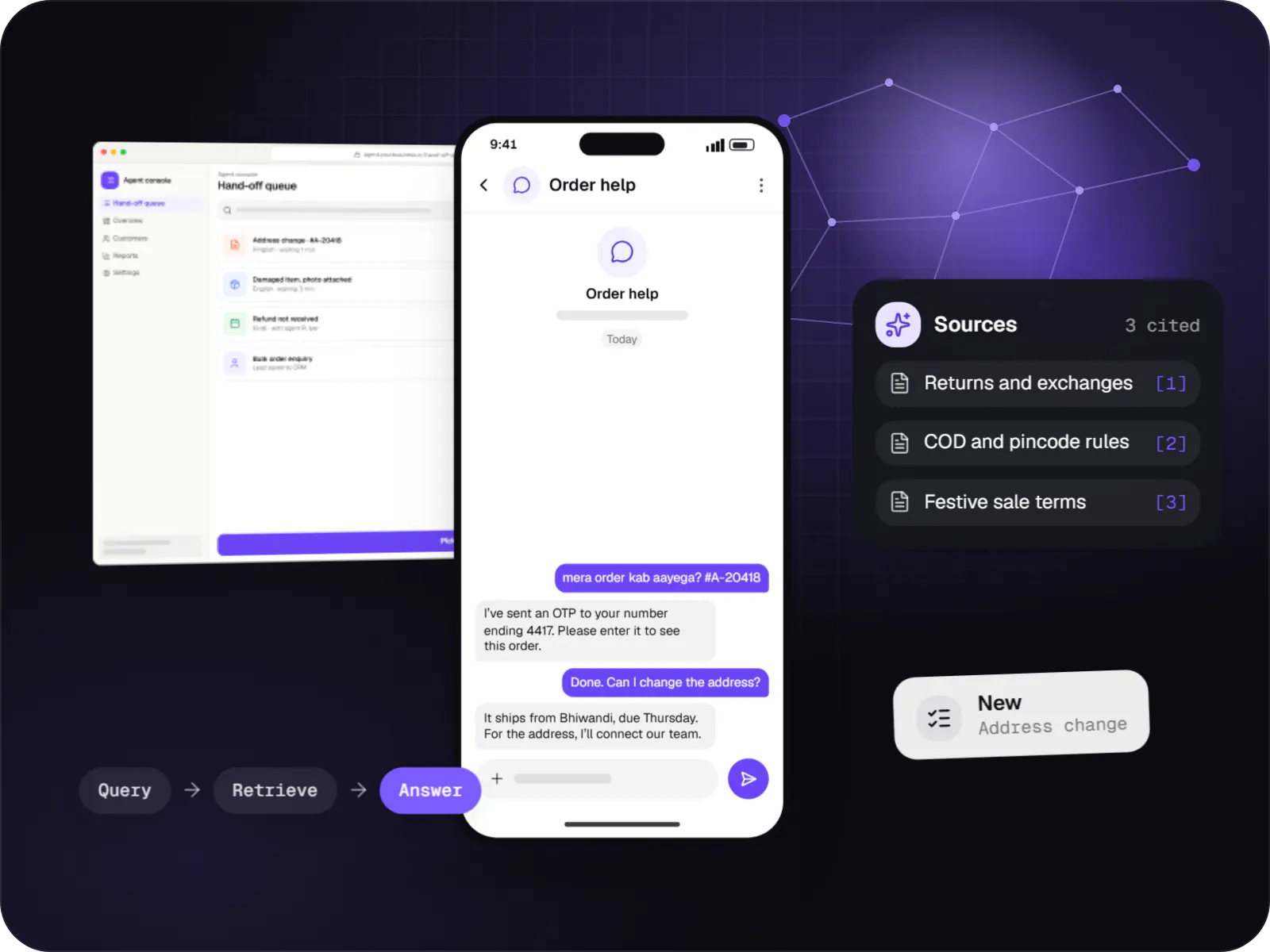
Support and sales chatbots for web, app and WhatsApp that answer from your own content and hand off to your team.
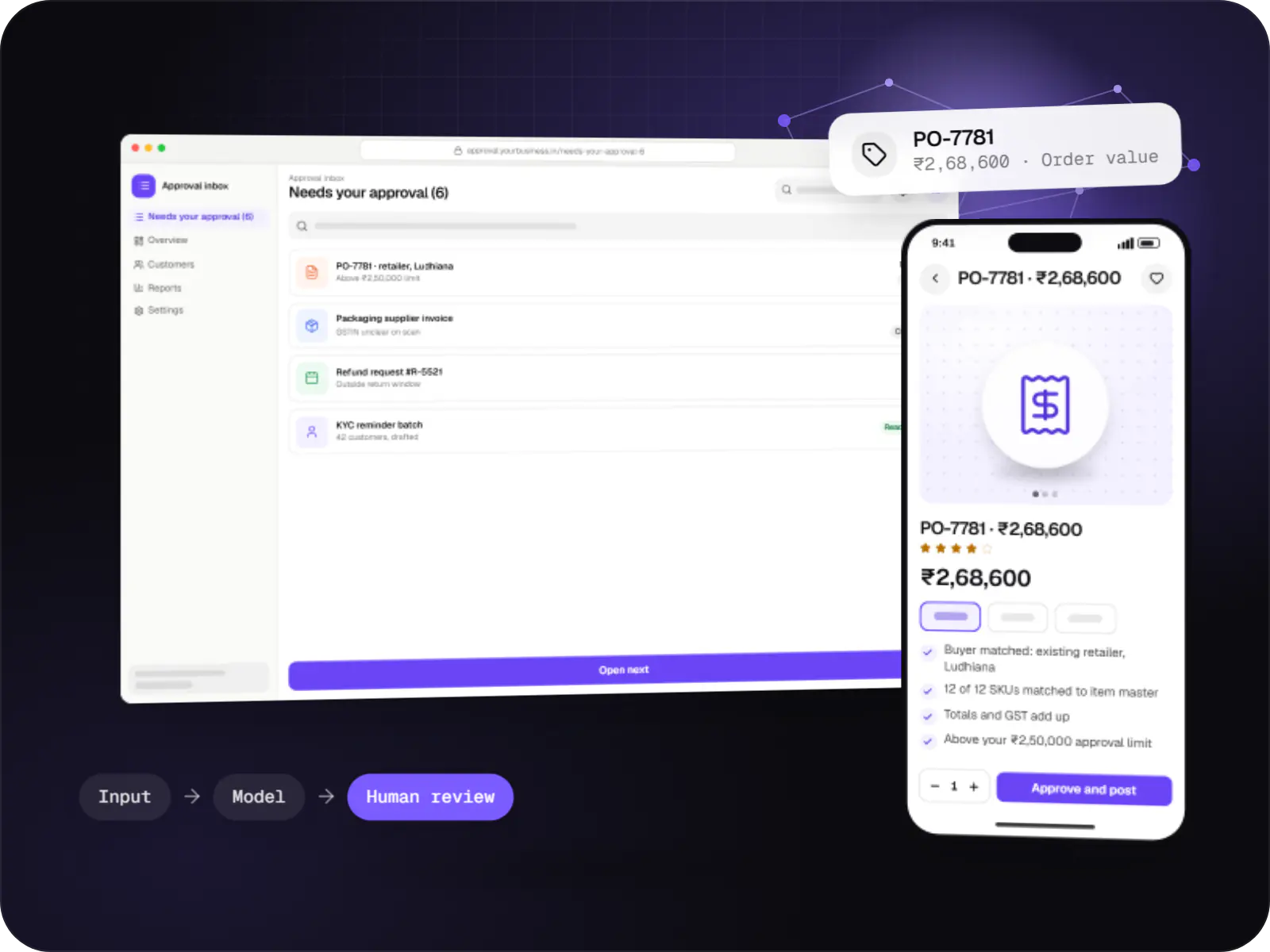
Automations for repetitive back-office work, with AI steps that read, classify and draft, and approvals where decisions matter.
Bookings, bulk uploads, label printing, rate calculator and plugins for Shopify or WooCommerce stores.
Pincode serviceability, zone-based rates, volumetric weight and COD charges.
Barcode scanning for inbound, bagging, manifests and outbound, with missed-scan alerts.
Planned routes, masked calling, OTP or photo POD and COD collection by UPI or cash.
Failed-delivery reasons, WhatsApp re-attempt requests, partner cash deposits and merchant payouts.
How it works
Orders arrive by bulk upload, API or store plugin; pincode serviceability and the rate are checked, and an AWB label is printed.
The parcel is scanned at the merchant's door, so its journey starts with a timestamped record.
Inbound scans, actual weight with a photo, bagging and manifests happen at the hub, and missed scans raise alerts.
Parcels are sequenced into a route, and the delivery partner calls customers through masked numbers.
The customer shares an OTP or the delivery partner takes a photo, and COD is collected by UPI or cash.
If delivery fails, the customer picks a new slot or corrects the address on WhatsApp, instead of the parcel heading back.
Cash deposits from delivery partners are matched to shipments, and merchants receive their remittance with a statement on schedule.
Platforms
Apps for Android phones and tablets, tested on budget and mid-range devices and published on Google Play or privately.
Browser-based applications with logins, roles and workflows, such as customer portals, SaaS products and internal tools.
Back-office panels for operations, support and finance teams: orders, users, content, reports and permissions.
Marketing and content websites: fast, search-friendly pages with a CMS your team can update without a developer.
Technology
Flutter builds a small delivery partner app that scans barcodes with the phone camera, Redis and PostgreSQL keep up with scans across every hub, and Google Maps sequences each day's stops.
Mobile
Build Android and iOS apps from one shared codebase, so you launch on both platforms faster with a consistent experience.
Used for
Web
A modern web technology for fast, search-friendly websites, online stores and web applications that load quickly on mobile.
Used for
Backend
A structured way to build back ends on Node.js, so large business systems stay organised, testable and easy to hand over.
Used for
Data
A reliable database for the records your business runs on: orders, payments, bookings and stock, kept accurate and easy to report on.
Used for
Data
Keeps frequently used data in fast memory, so apps stay quick on busy days and live features like order tracking feel instant.
Used for
Payments & maps
Adds maps, address search, live tracking and travel-time estimates to delivery, ride and field apps, so orders reach the right door.
Used for
Payments & maps
Lets customers in India pay by UPI, cards, netbanking or wallets, and handles subscriptions, refunds and payouts to sellers or partners.
Used for
Flutter and the related logo are trademarks of Google LLC. We are not endorsed by or affiliated with Google LLC.
Plain-English glossary
Product preview
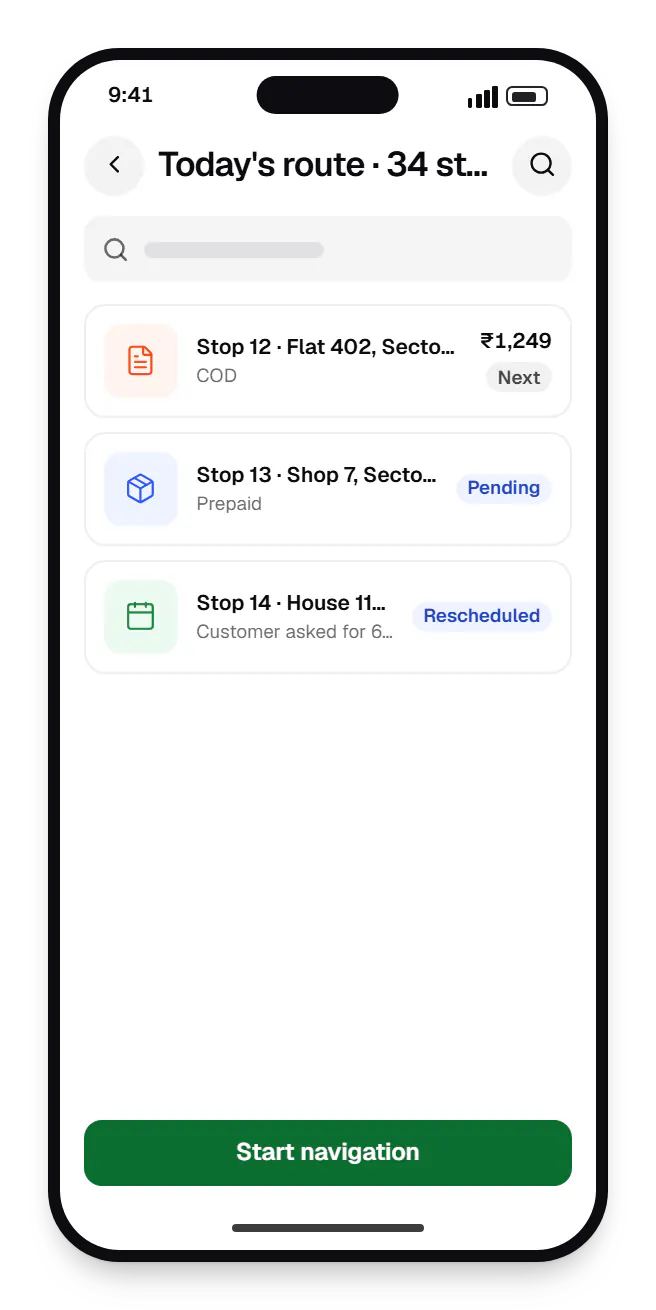
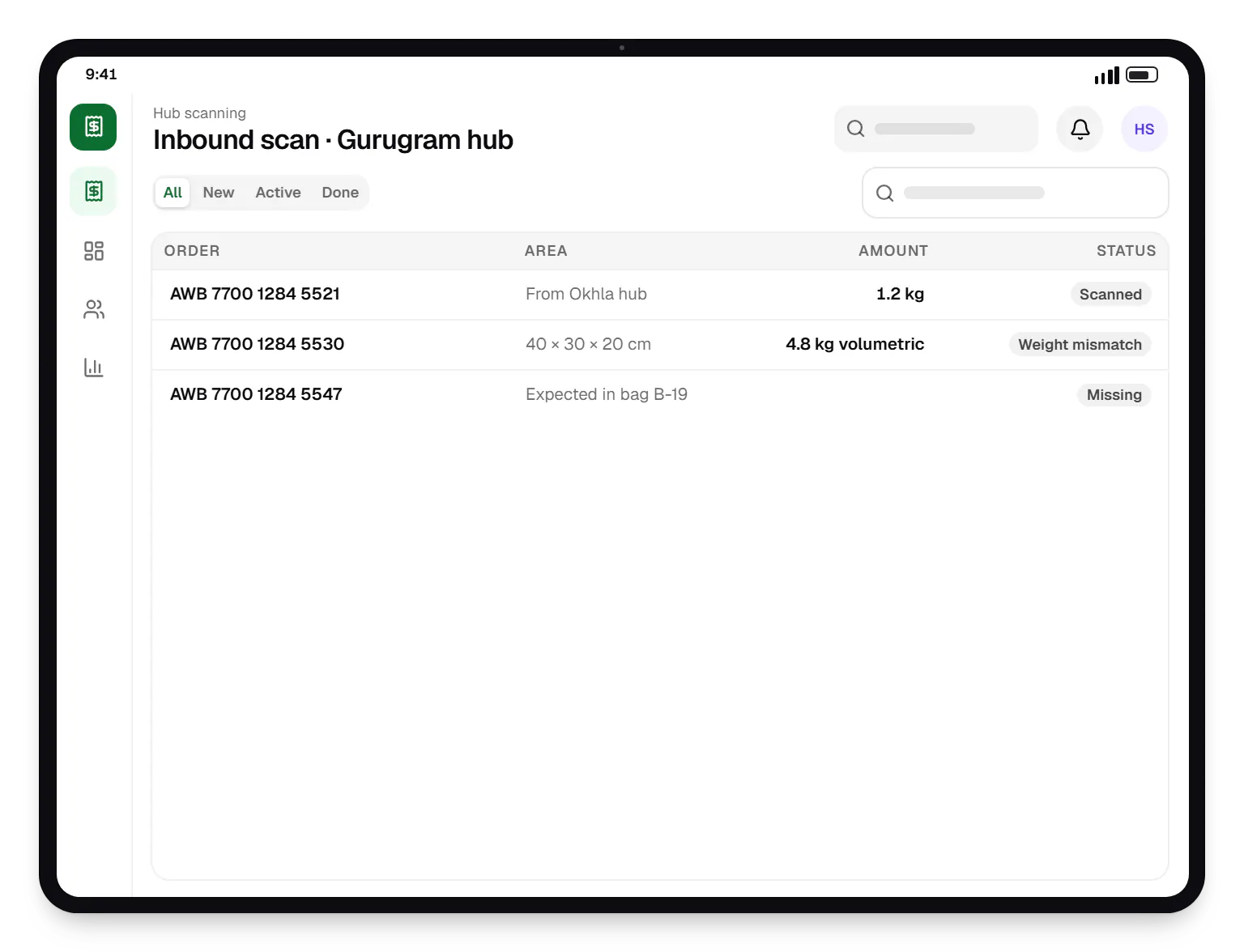
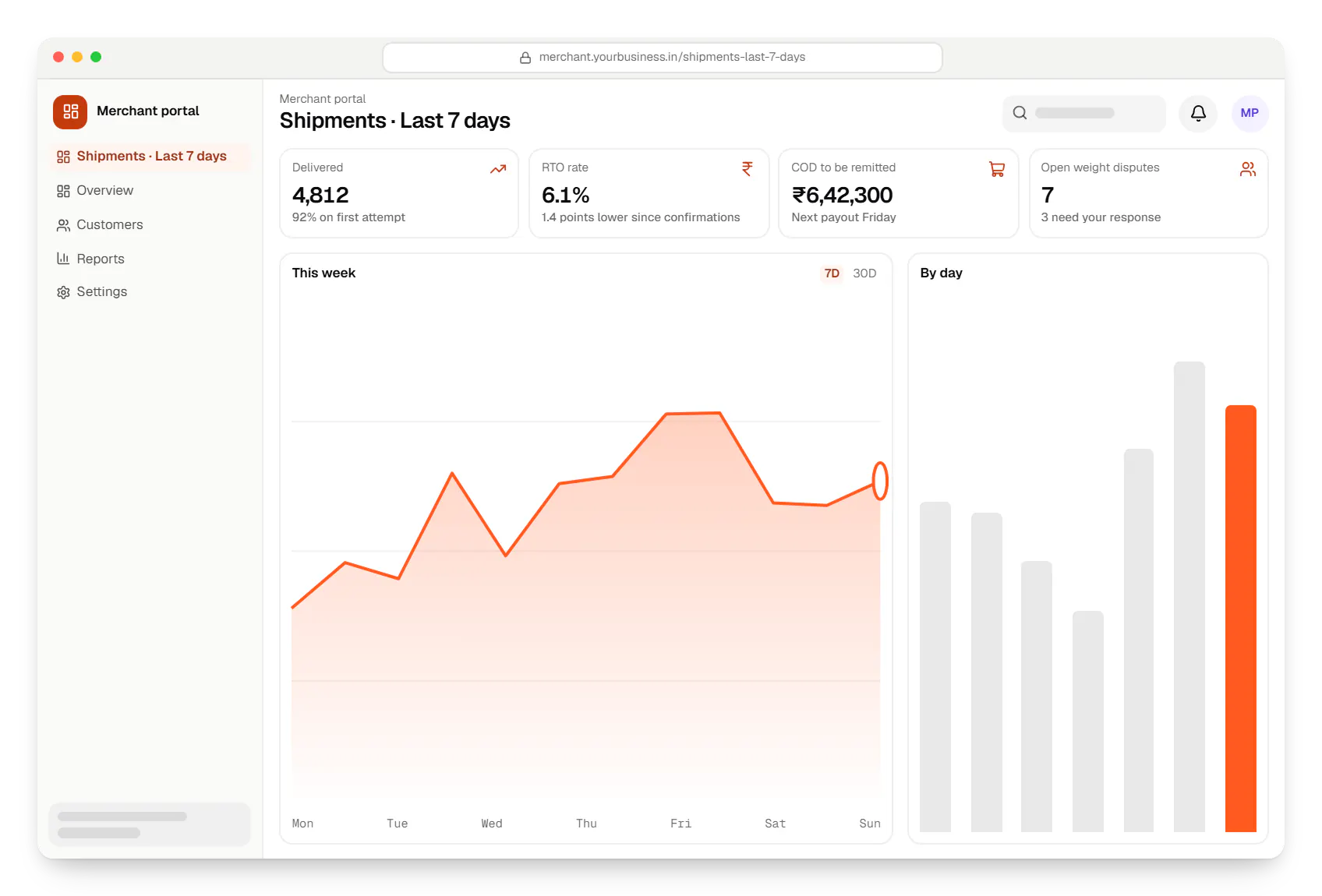
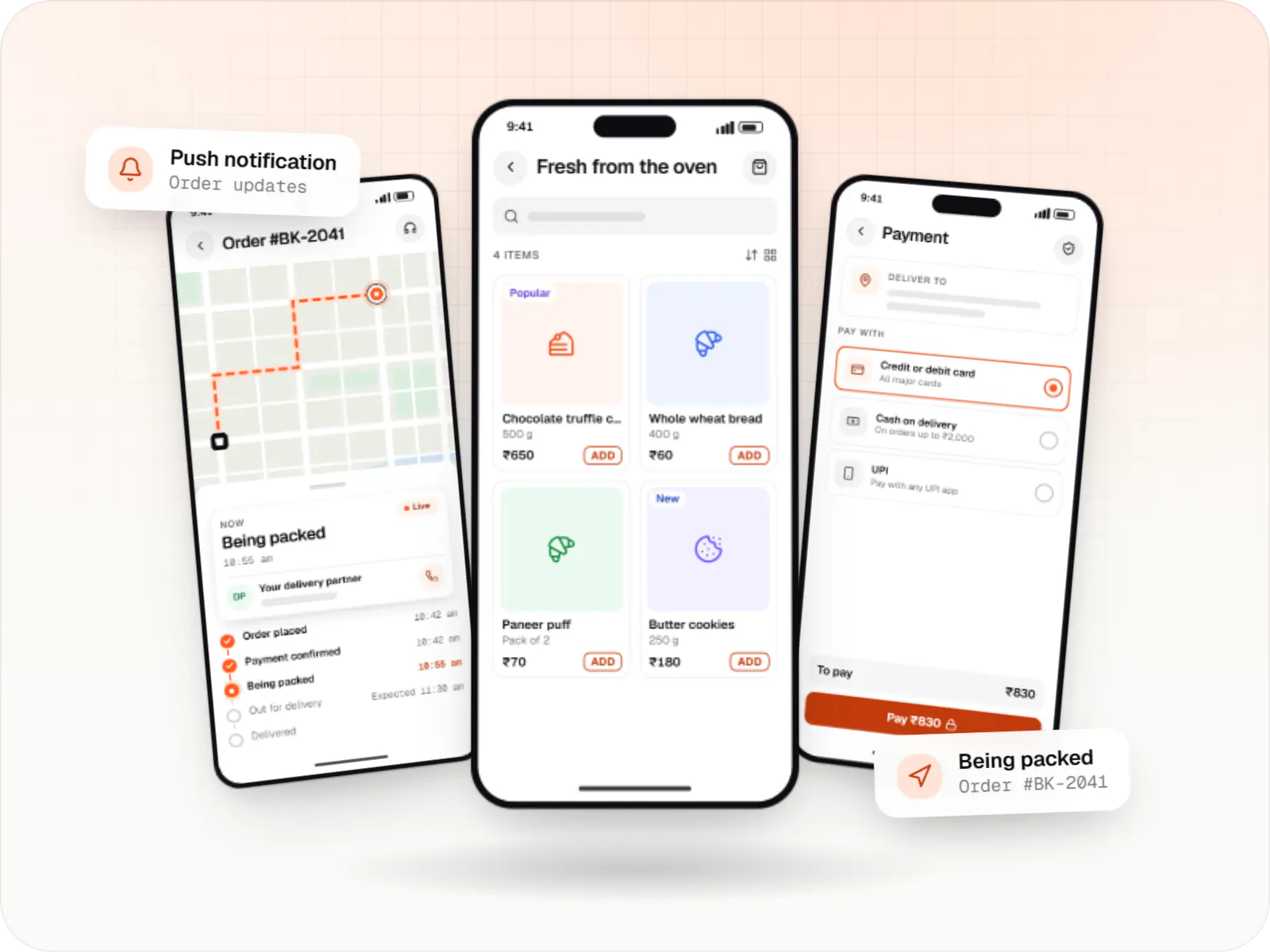
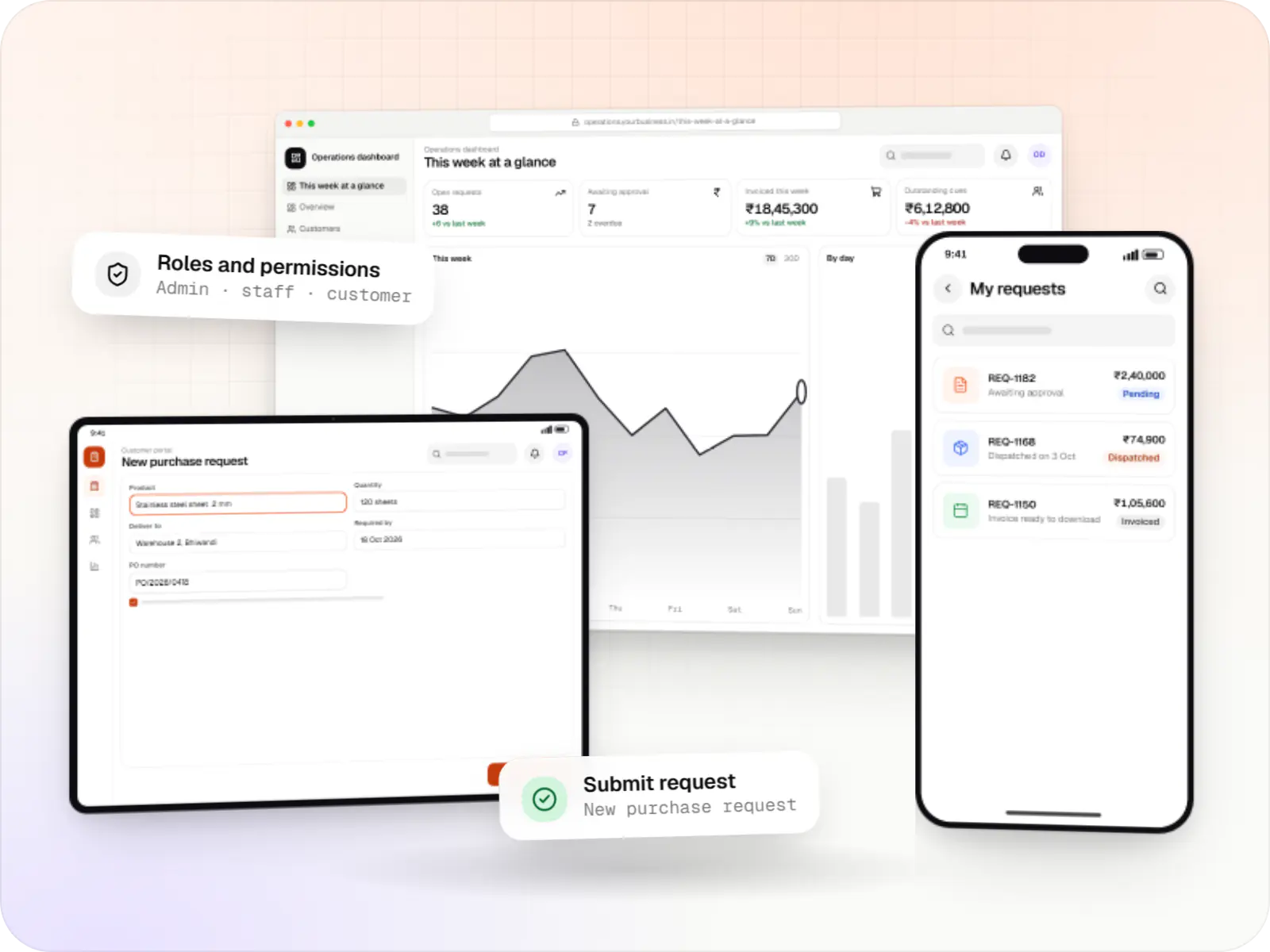
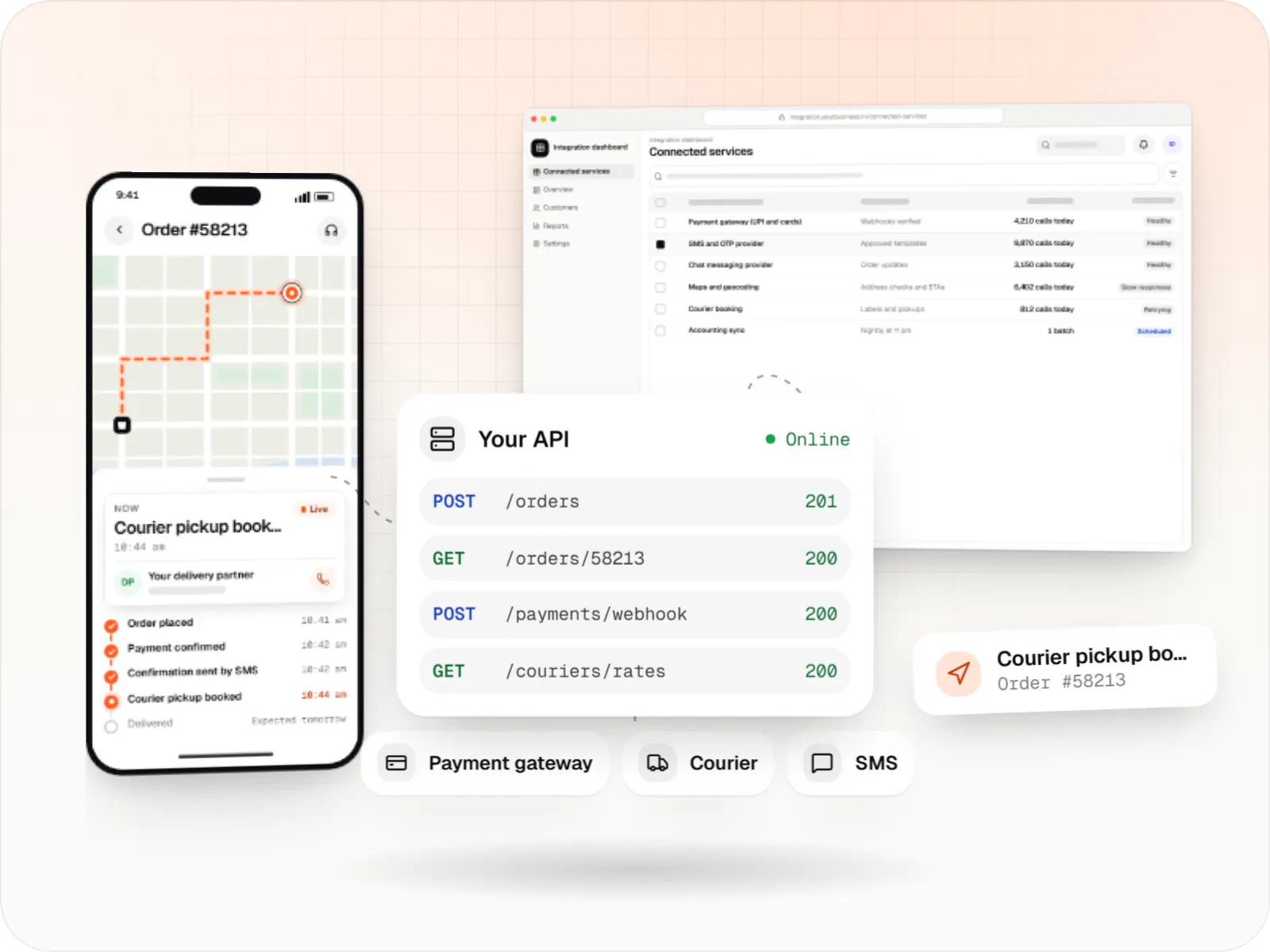
Sample screens: names, prices and figures are examples, not client data.
Cost drivers
Own hubs, franchise partners or a mix change permissions, settlements and reporting.
E-commerce plugins and client APIs add development and ongoing support.
Simple sequencing is quicker to build than optimisation aware of capacity and time windows.
Estimates are written from your scope, with the effort and assumptions behind each line item.
How pricing worksServices
The design and engineering services our in-house team combines on projects in this sector.
Native and cross-platform Android and iOS apps, from first release through regular store updates, built by our in-house designers and engineers.
Browser-based products, customer portals, dashboards and internal tools, built on clean data models with secure roles and integrations.
Secure, documented REST and GraphQL APIs, plus integrations that connect your apps to payment, logistics, GST, messaging and business systems.
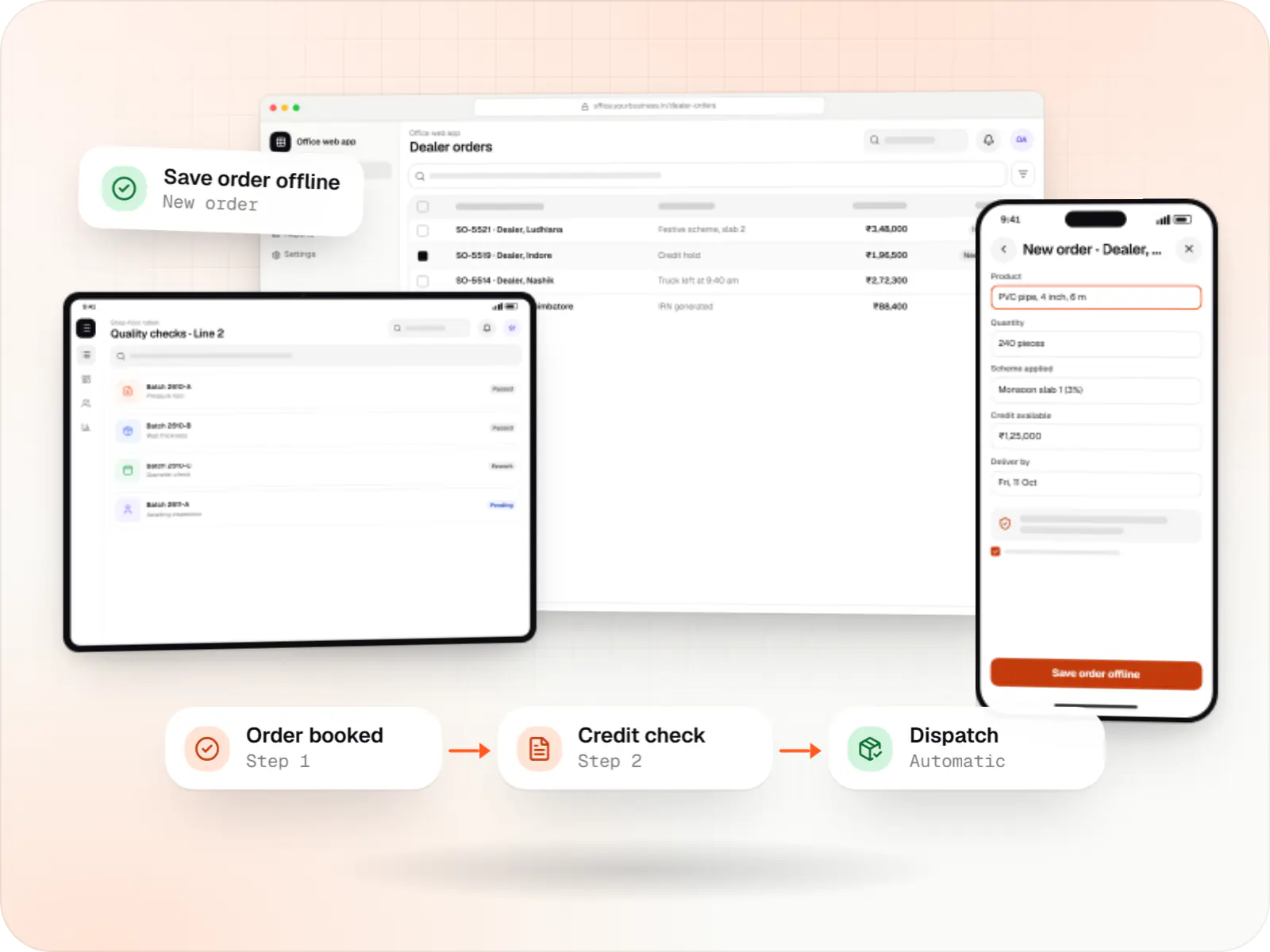
Software shaped around how your business runs, from approvals and inventory to billing and reports, replacing spreadsheets and disconnected tools.
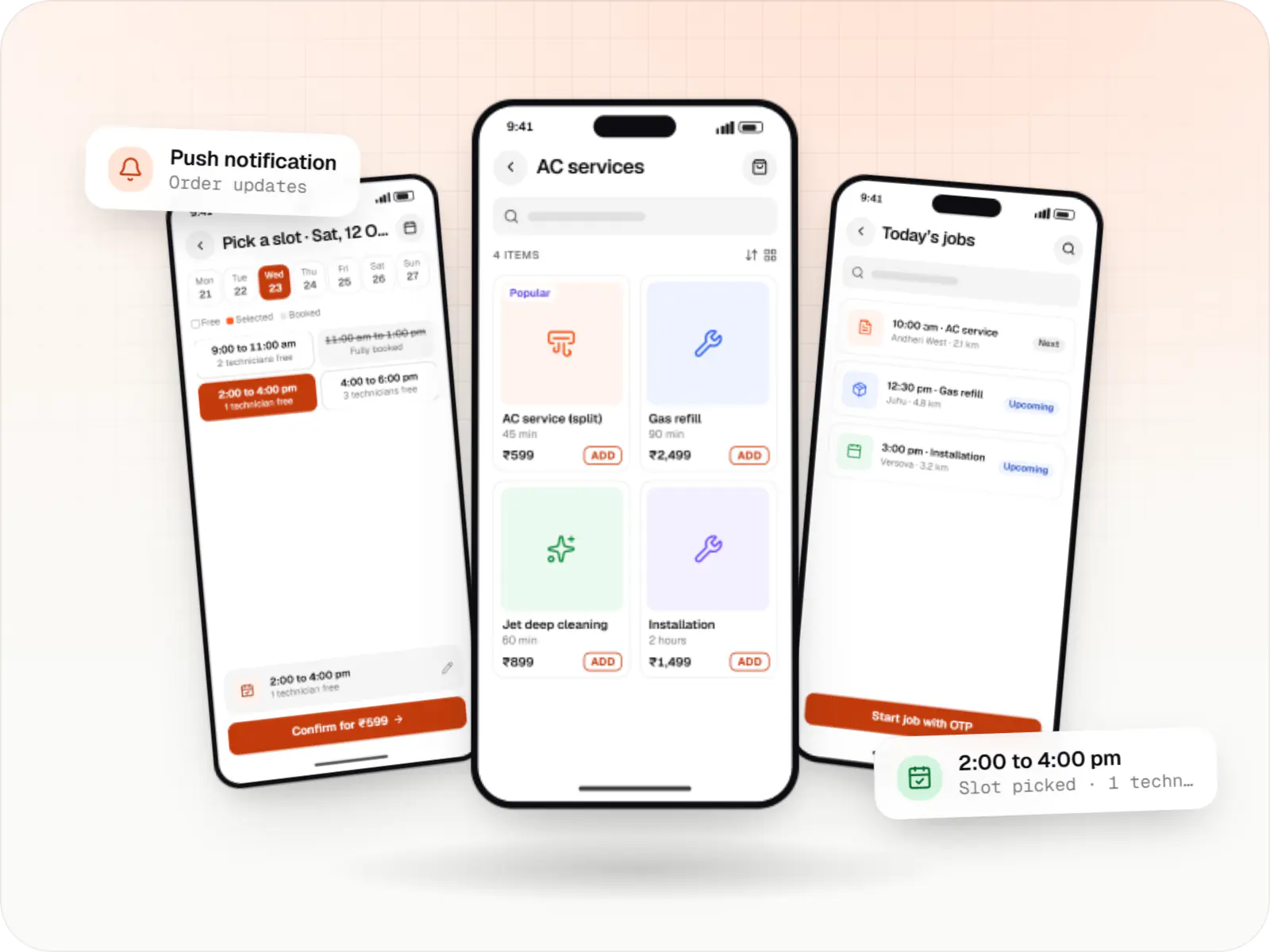
Android and iOS apps from one Dart codebase, built by engineers who know when Flutter is the right call and when native code is needed.
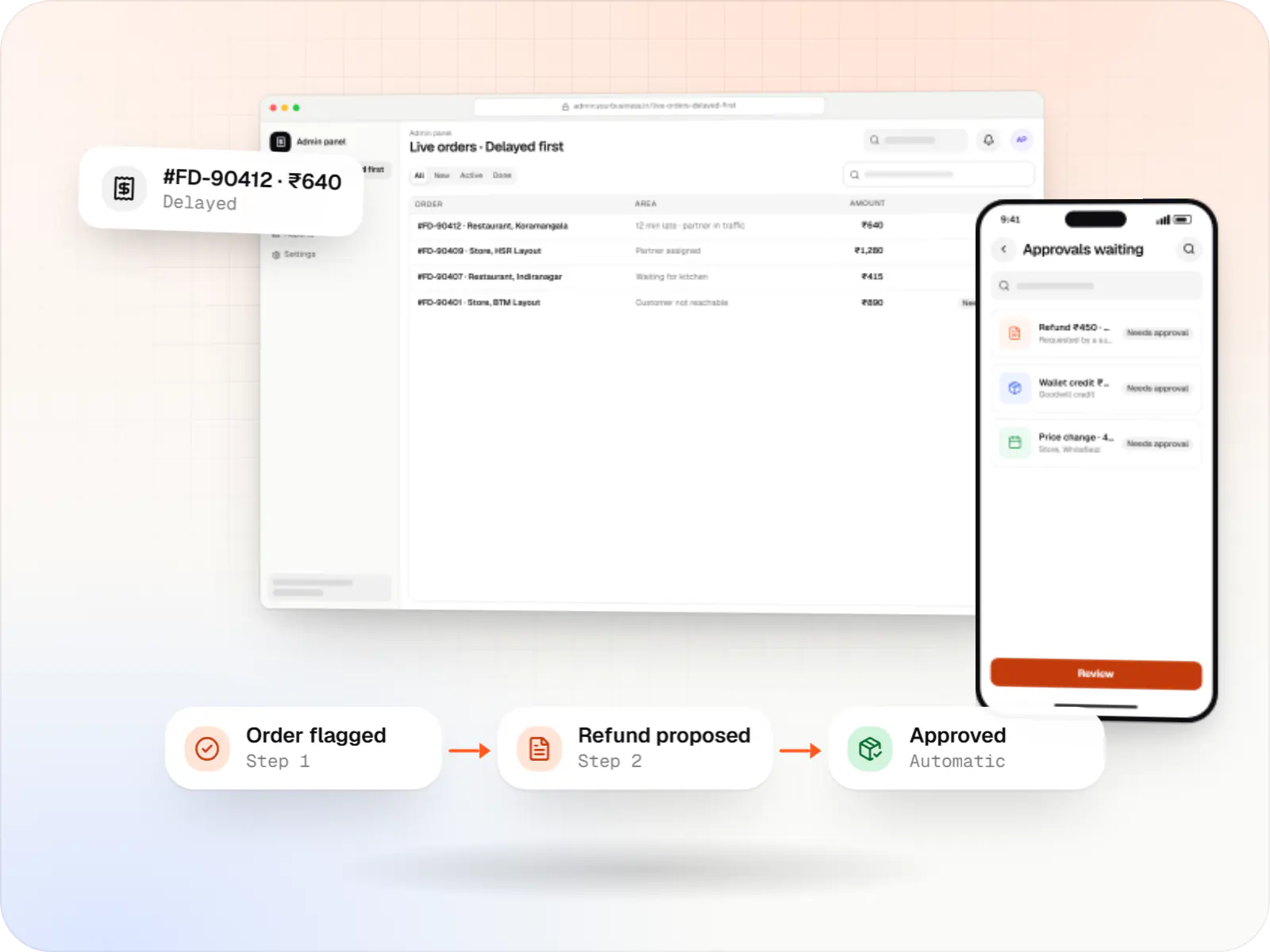
Back-office dashboards built around your team's daily tasks: order queues, approvals, catalogue management, payouts, reports and audit logs.
Work
Illustrative projects that show how we would approach a product in this sector.
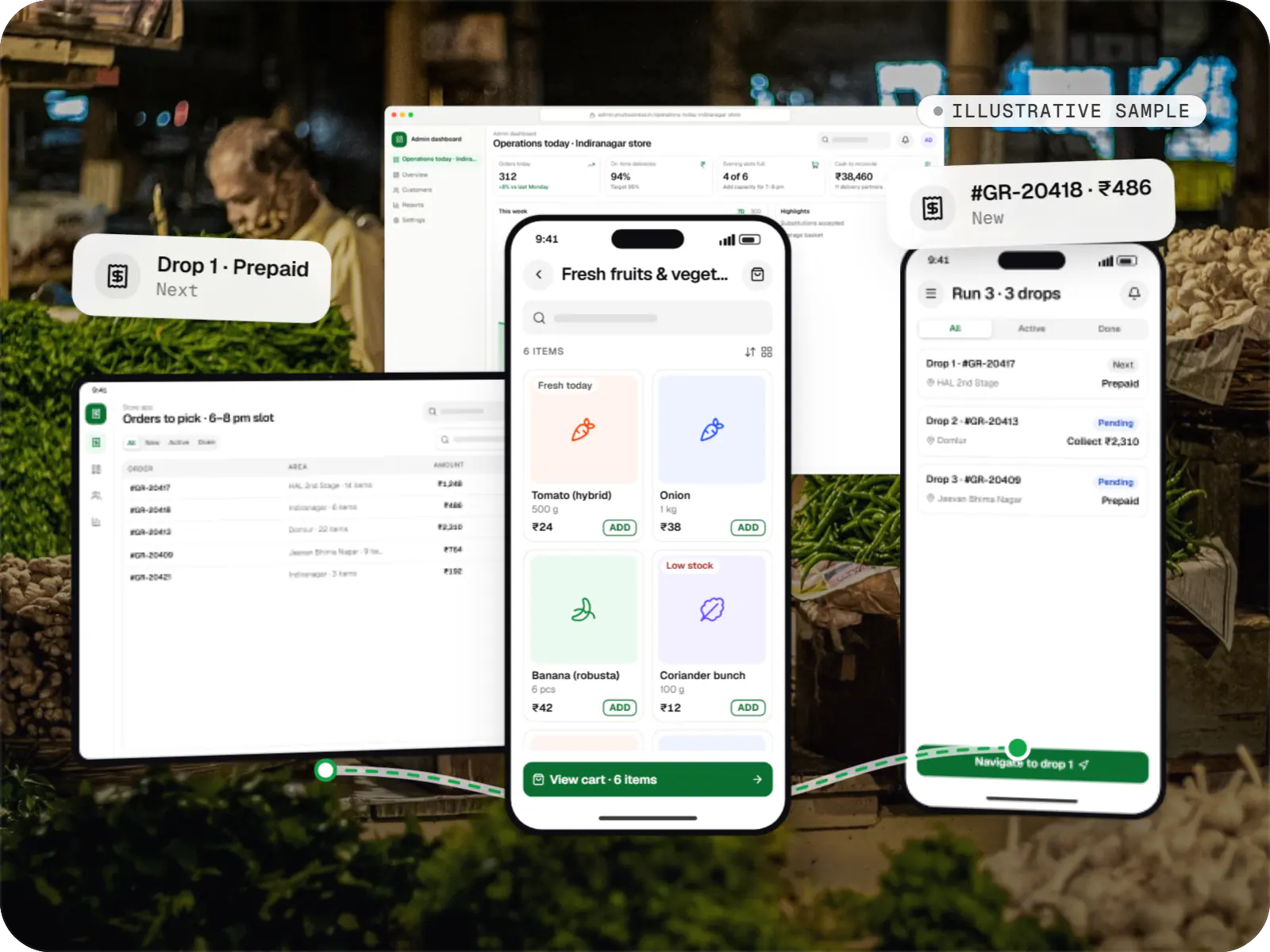
Delivery app development
An illustrative platform for neighbourhood grocery stores: slot or express delivery, store picking, batched delivery runs, and payment by UPI or cash on delivery.
Runs on
Built with
Business software
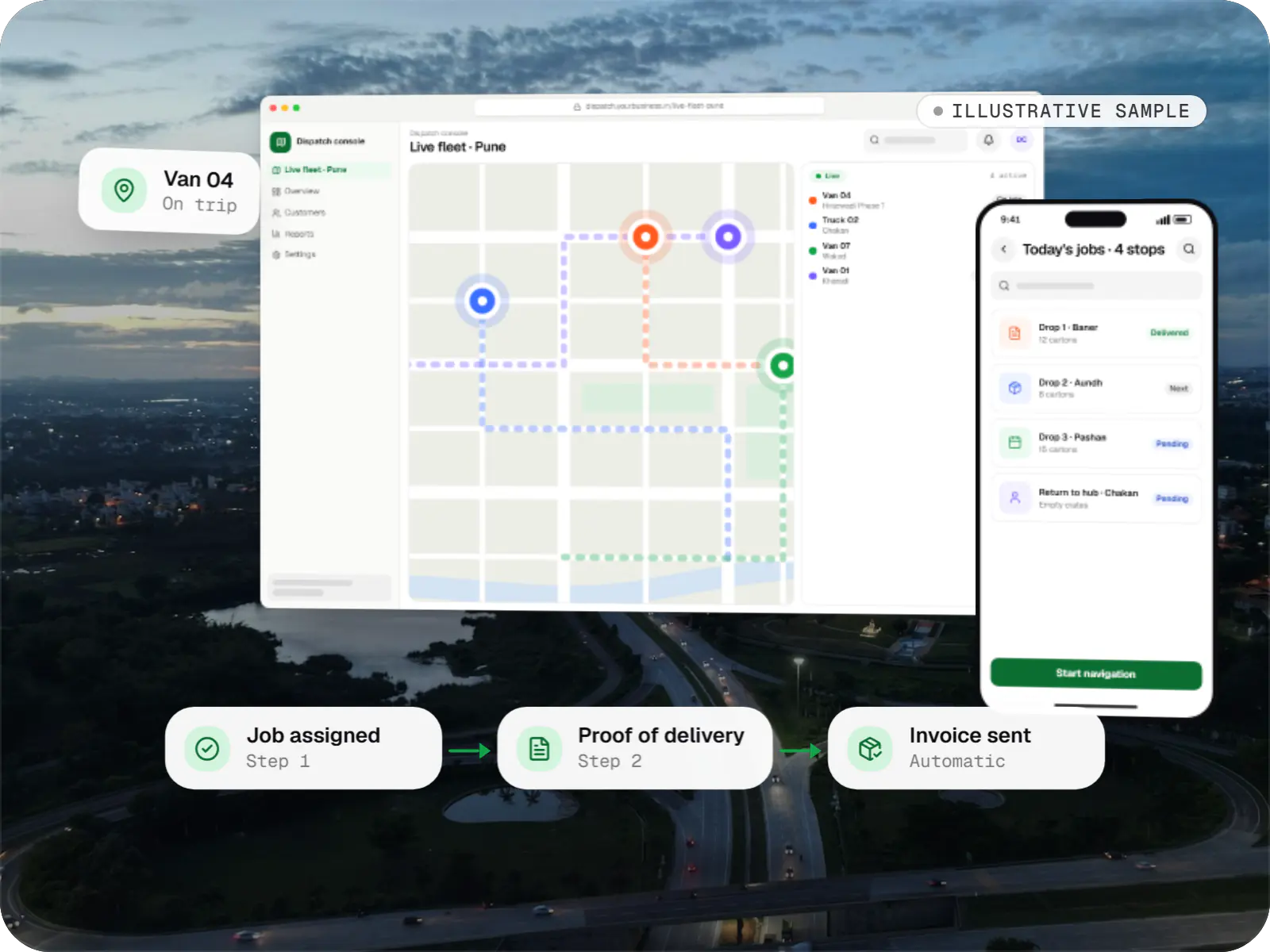
An illustrative SaaS for businesses running their own vehicles: live dispatch on a map, driver proof of delivery and per-trip billing for each customer.
Runs on
Built with
FAQ
Several small steps add up. Address validation at booking catches incomplete pincodes and landmarks. A WhatsApp or SMS confirmation before dispatch lets customers confirm or cancel, and flags risky orders to the merchant. After a failed attempt, the NDR flow asks the customer to pick a new slot or correct the address instead of waiting for a call. Masked calling lets partners reach customers without exposing numbers, and we track which steps work for your merchants.
Yes, that is our baseline. We build for entry-level Android phones with limited memory, use the phone camera for barcode scanning instead of requiring handhelds, and keep the app small. Scans and PODs are stored locally and sync when the network returns, with their original timestamps. Navigation hands off to a maps app rather than rendering heavy maps in-app, which saves battery and data over long delivery days.
Hub scanning can record actual weight from a connected scale, dimensions from manual entry or a dimensioning device, and a photo of the parcel on the scale. The system calculates volumetric weight with your divisor, compares it with the declared weight and raises a discrepancy with the evidence attached. Merchants accept or dispute it in the portal within the window you set, so disputes are resolved on records rather than email threads.
Next step
Tell us your volumes, hub structure and how merchants book with you today. We will scope the apps and back office and estimate each part.