




Backend
NestJS
A structured way to build back ends on Node.js, so large business systems stay organised, testable and easy to hand over.
Used for
- Business app back ends
- SaaS platforms
- Marketplaces
- Admin panel back ends
Transportation & logistics
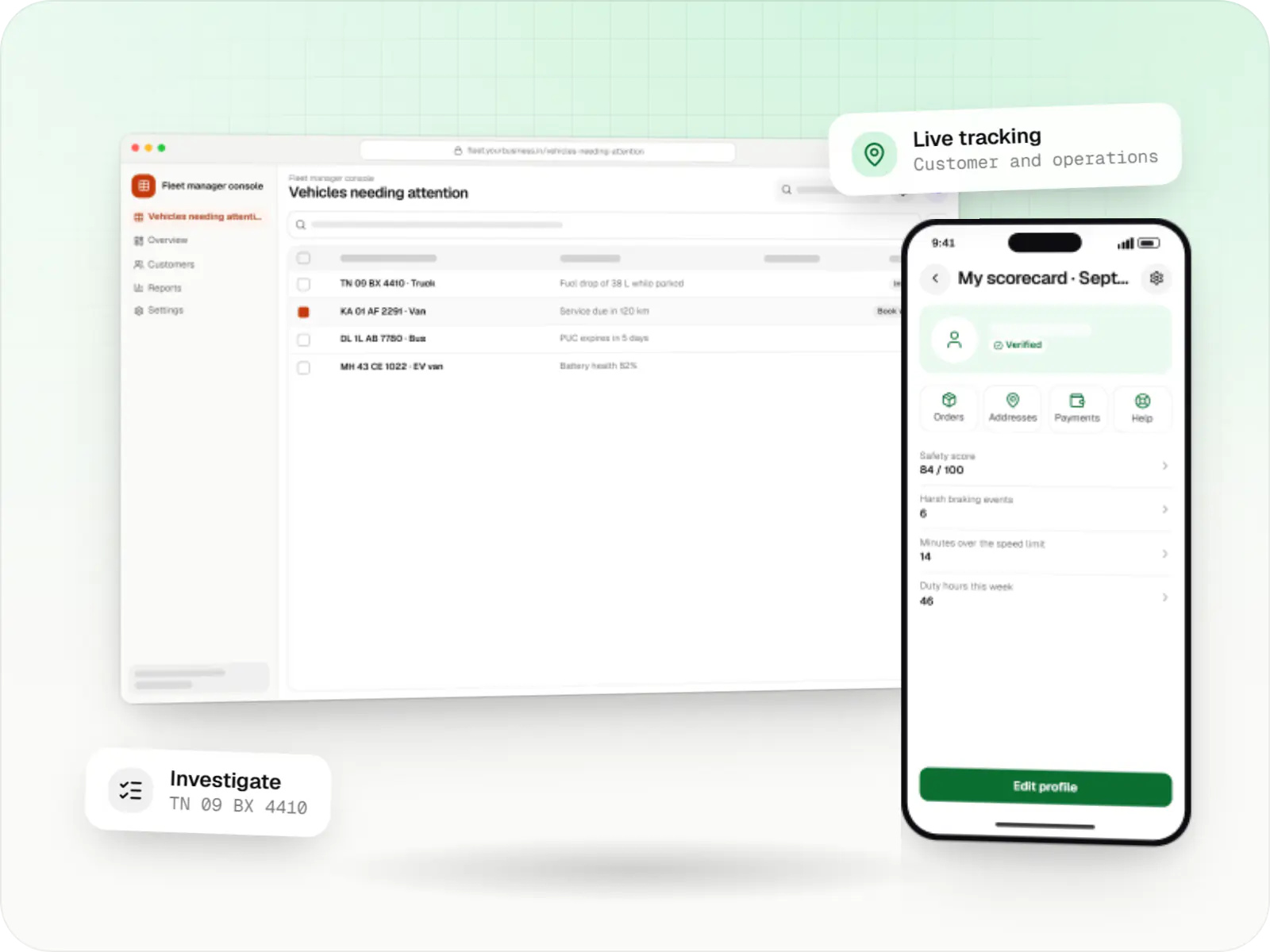
Software for businesses that own or lease vehicles: live tracking, fuel and maintenance control, driver management, document compliance and cost per kilometre.
At a glance
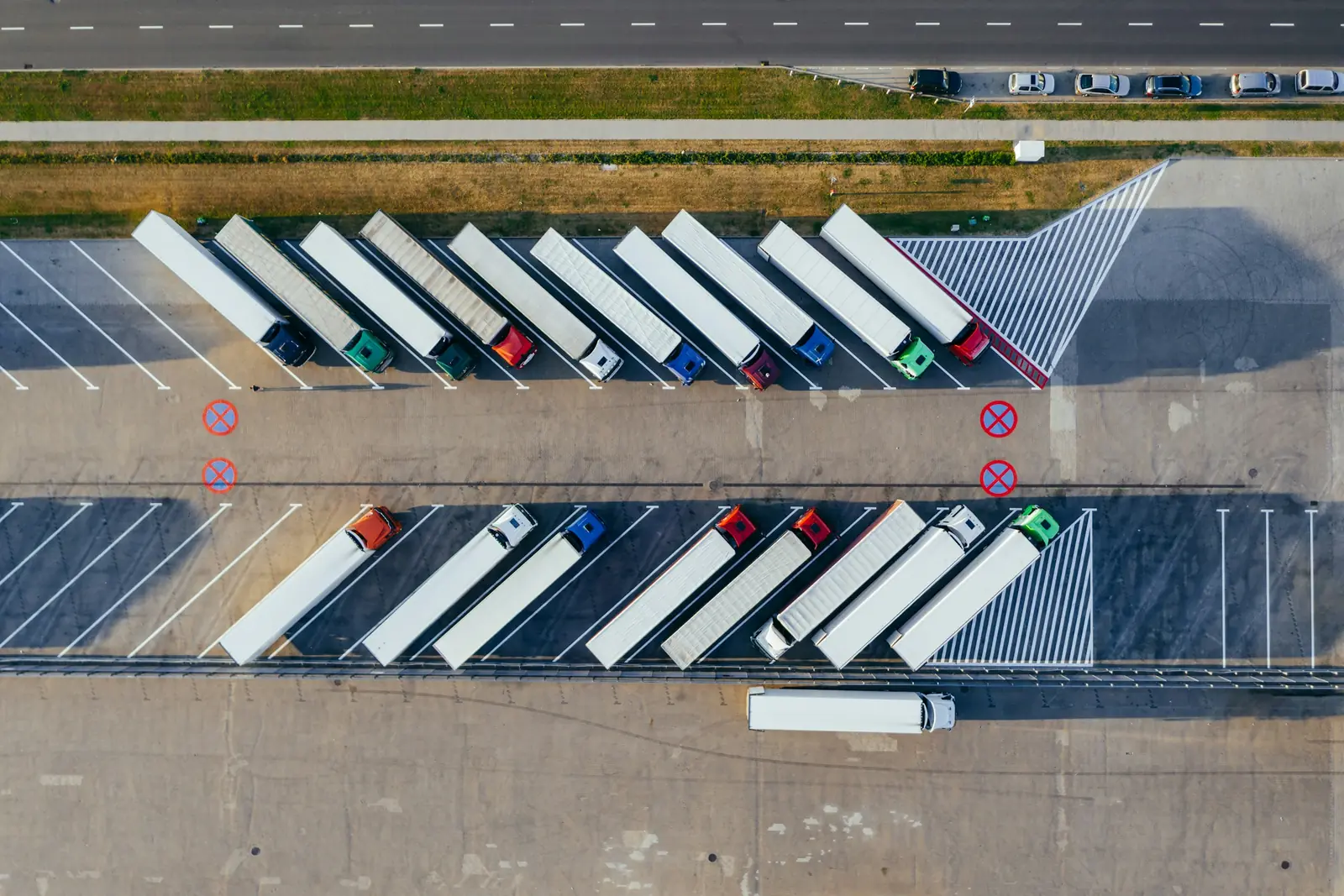
We build fleet systems for companies operating trucks, vans, buses, cars or two-wheelers: telematics integration, fuel monitoring, preventive maintenance, tyre and spares records, driver behaviour scoring, document expiry tracking and cost-per-kilometre reporting.
Flutter and the related logo are trademarks of Google LLC. We are not endorsed by or affiliated with Google LLC.
How to start
Tell us what you need in your own words. You talk to the developers who would build it and get a written, line-item estimate.
Get a project estimateWhether you run delivery vans, staff buses, cement trucks or a mixed fleet, the questions are the same: where is each vehicle, is it driven well, when is it due for service, and what does it actually cost per kilometre? Tracking devices answer the first question; the rest usually sit in workshop registers and fuel slips.
We build fleet software that connects telematics data to maintenance, fuel, documents and drivers, so fleet managers act on patterns rather than monthly surprises. It works for any vehicle type, including electric vehicles with battery and charging data.
Challenges
Fuel entries do not match distance travelled, and tank sensors or fuel cards are not reconciled.
Service intervals tracked on paper get missed, and vehicles fail on the road.
Insurance, permits, fitness certificates and PUC lapse and attract fines or off-road days.
Overspeeding, harsh braking and long driving hours go unnoticed until an accident.
Solutions
Across 2 areas
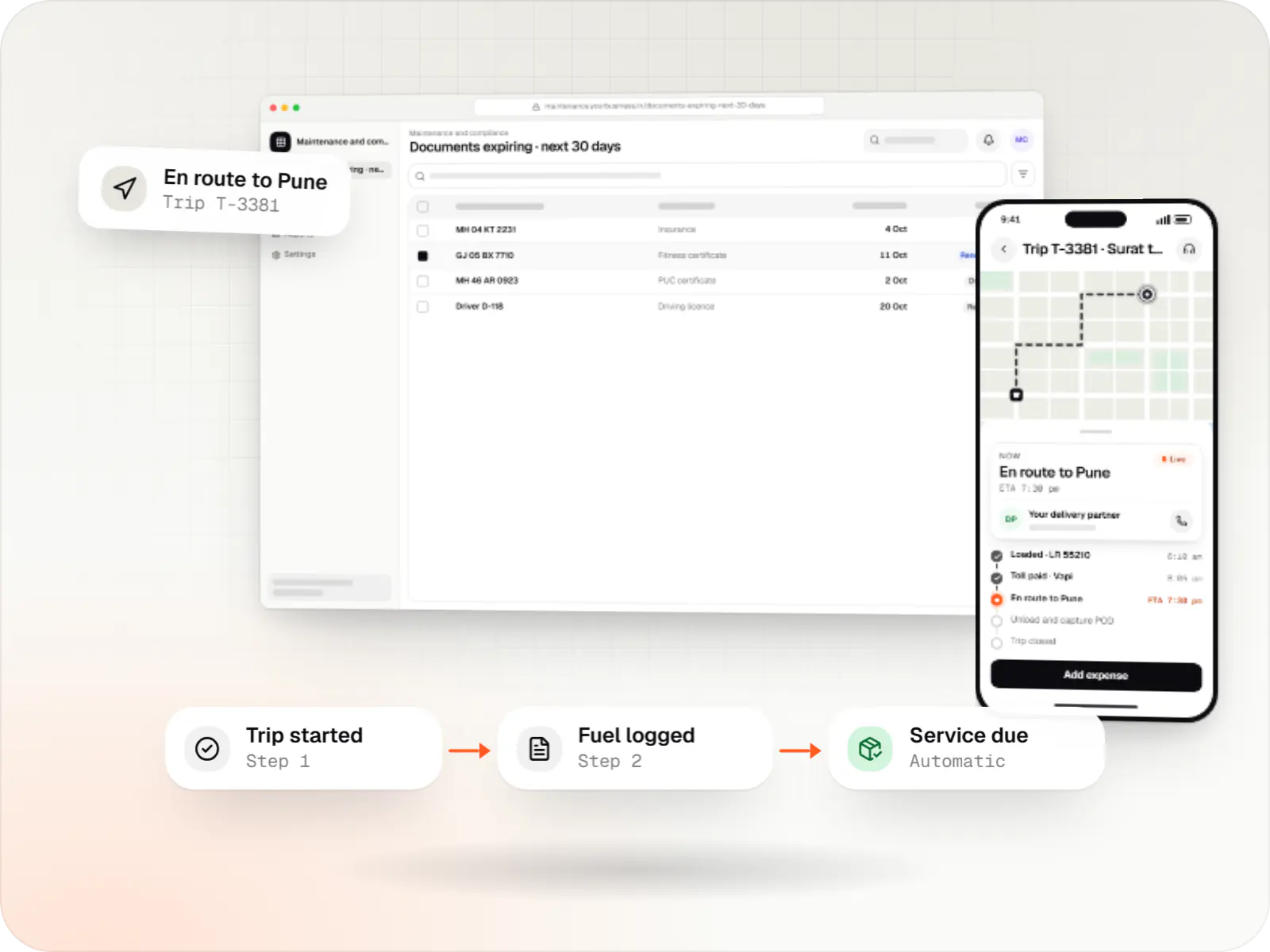
Custom fleet management software for GPS tracking, trips, driver apps, compliance reminders, maintenance and freight billing.
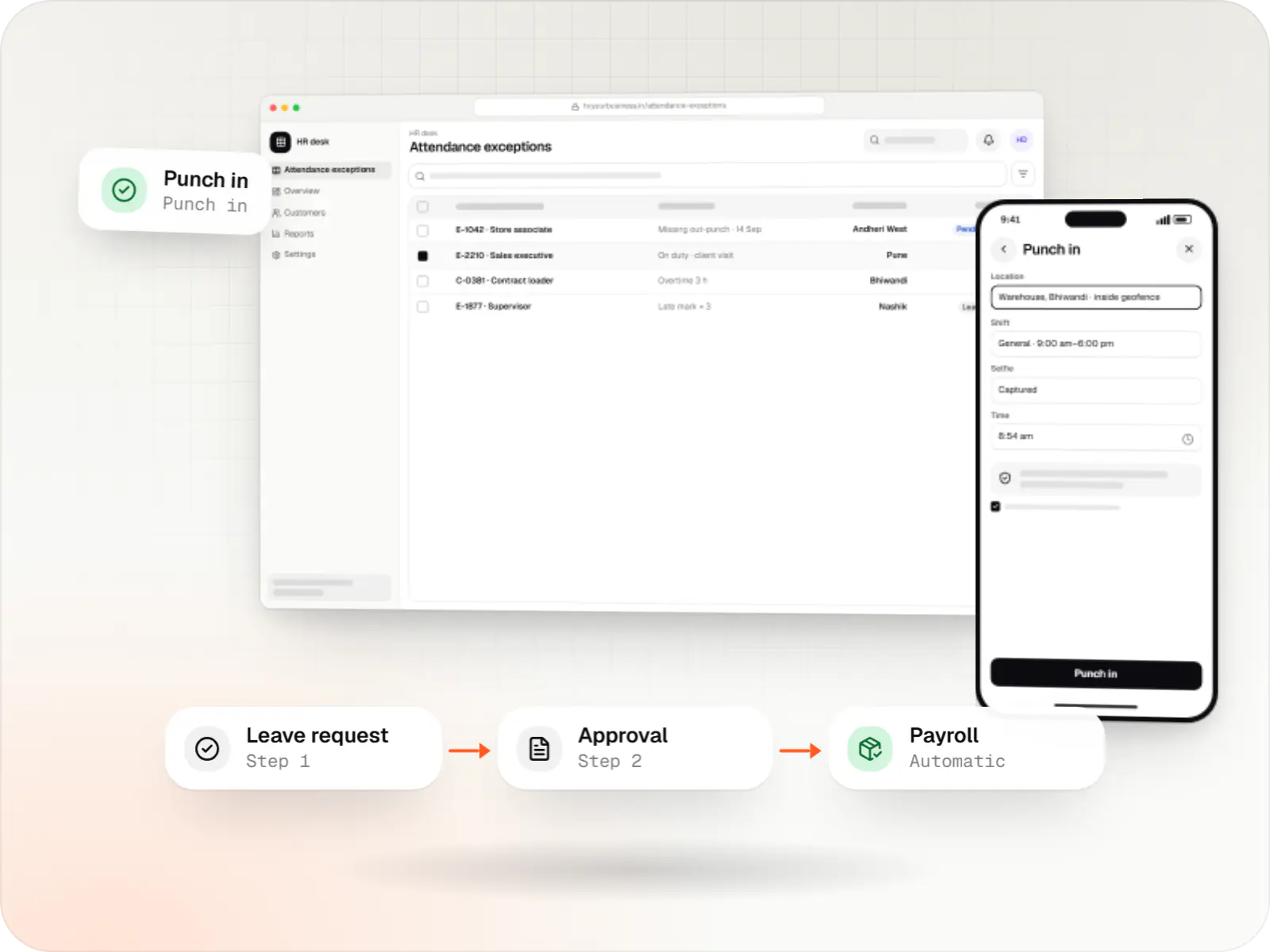
Custom HRMS covering attendance, leave, payroll with Indian statutory deductions, onboarding and an employee self-service app.
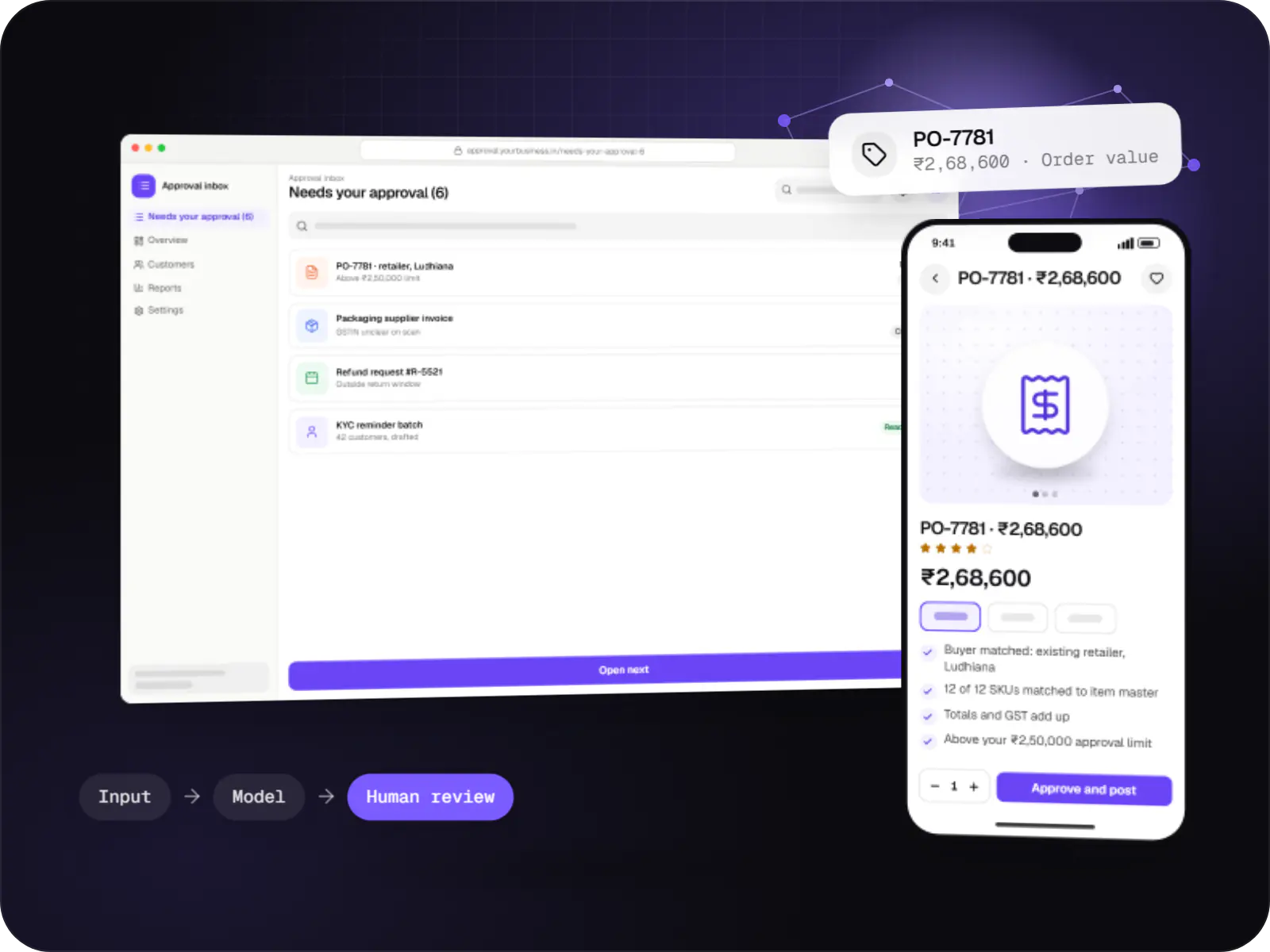
Automations for repetitive back-office work, with AI steps that read, classify and draft, and approvals where decisions matter.
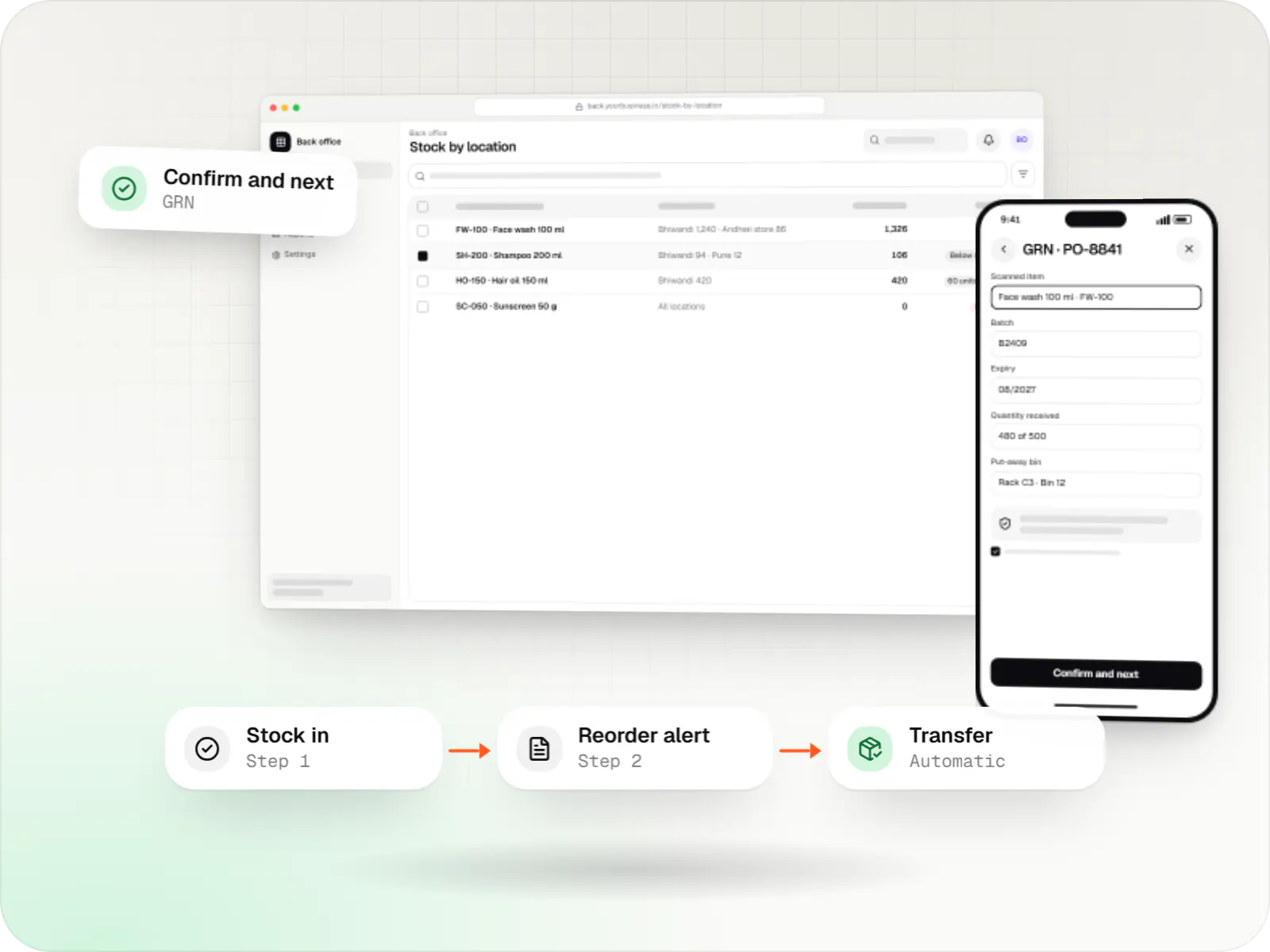
Custom inventory software for multi-location stock, batch and expiry tracking, barcode scanning and marketplace stock sync.
Location, ignition, speed and sensor data from GPS devices, including AIS-140 units, normalised across vendors.
Fuel card imports, tank sensor readings, mileage benchmarks and anomaly alerts.
Service schedules by kilometres or days, job cards, workshop costs and spare parts usage.
RC, insurance, permit, fitness and PUC expiry alerts with renewal records.
Behaviour events, duty hours, incident history and coaching notes per driver.
Fuel, maintenance, tyres, tolls and driver costs rolled up by vehicle, route or client.
How it works
Data flows in continuously, so the loop from device reading to management decision never stops.
Location, ignition, speed and fuel-tank readings arrive from each vehicle's telematics unit, whichever vendor supplied it.
Each vendor's data is translated into a common format, so every vehicle is compared on equal terms.
Overspeeding, sudden fuel drops and unplanned stops create alerts for the fleet manager, instead of a flood of raw location points.
Service intervals by kilometres or days open job cards automatically, and parts and labour costs are recorded against the vehicle.
Harsh braking, speeding and duty hours roll into a scorecard used for coaching conversations, not only penalties.
Fuel, maintenance, tyres, tolls and driver costs are totalled by vehicle, route or client every month.
Then it starts again at step 1: Devices report from every vehicle
Platforms
Browser-based applications with logins, roles and workflows, such as customer portals, SaaS products and internal tools.
Apps for Android phones and tablets, tested on budget and mid-range devices and published on Google Play or privately.
Back-office panels for operations, support and finance teams: orders, users, content, reports and permissions.
Technology
NestJS services accept device data from any vendor, PostgreSQL and Redis handle millions of location points without slowing down, and Python spots fuel and driving patterns worth a manager's attention.
Backend
A structured way to build back ends on Node.js, so large business systems stay organised, testable and easy to hand over.
Used for
Backend
A programming language for AI features, data processing and automation: the engine behind document reading, reports and smart search.
Used for
Data
A reliable database for the records your business runs on: orders, payments, bookings and stock, kept accurate and easy to report on.
Used for
Data
Keeps frequently used data in fast memory, so apps stay quick on busy days and live features like order tracking feel instant.
Used for
Payments & maps
Adds maps, address search, live tracking and travel-time estimates to delivery, ride and field apps, so orders reach the right door.
Used for
Mobile
Build Android and iOS apps from one shared codebase, so you launch on both platforms faster with a consistent experience.
Used for
Cloud & DevOps
Cloud hosting for your app, website and data, with data centres in India and room to grow when traffic rises.
Used for
Flutter and the related logo are trademarks of Google LLC. We are not endorsed by or affiliated with Google LLC.
Plain-English glossary
Product preview
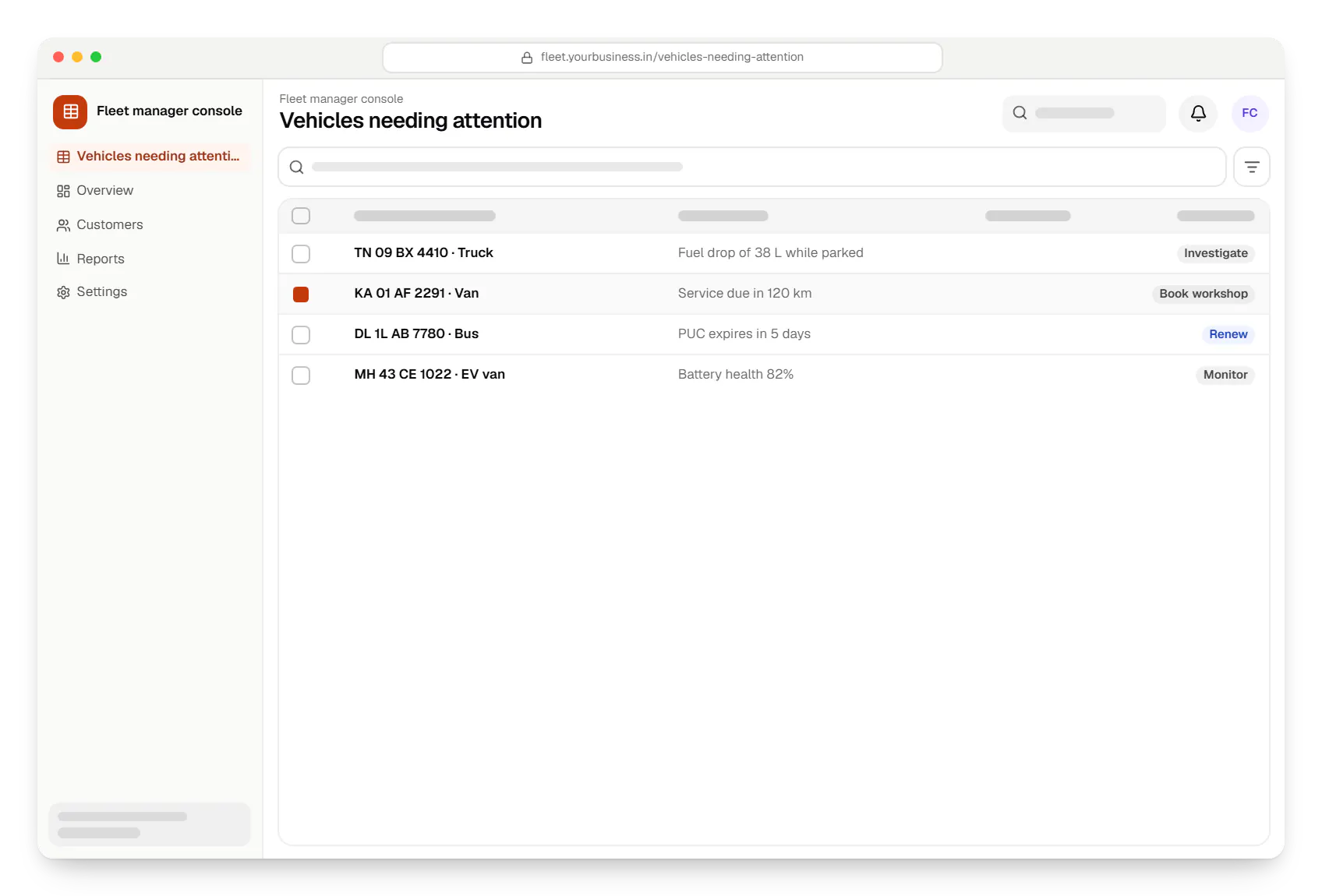
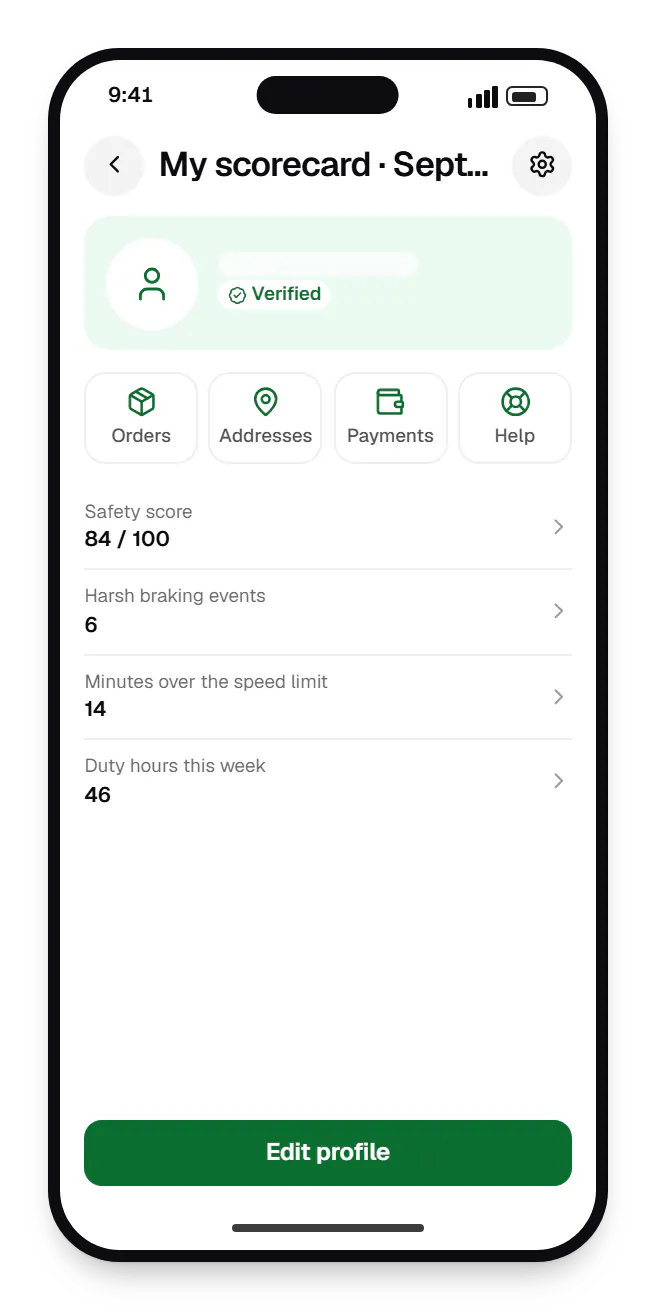
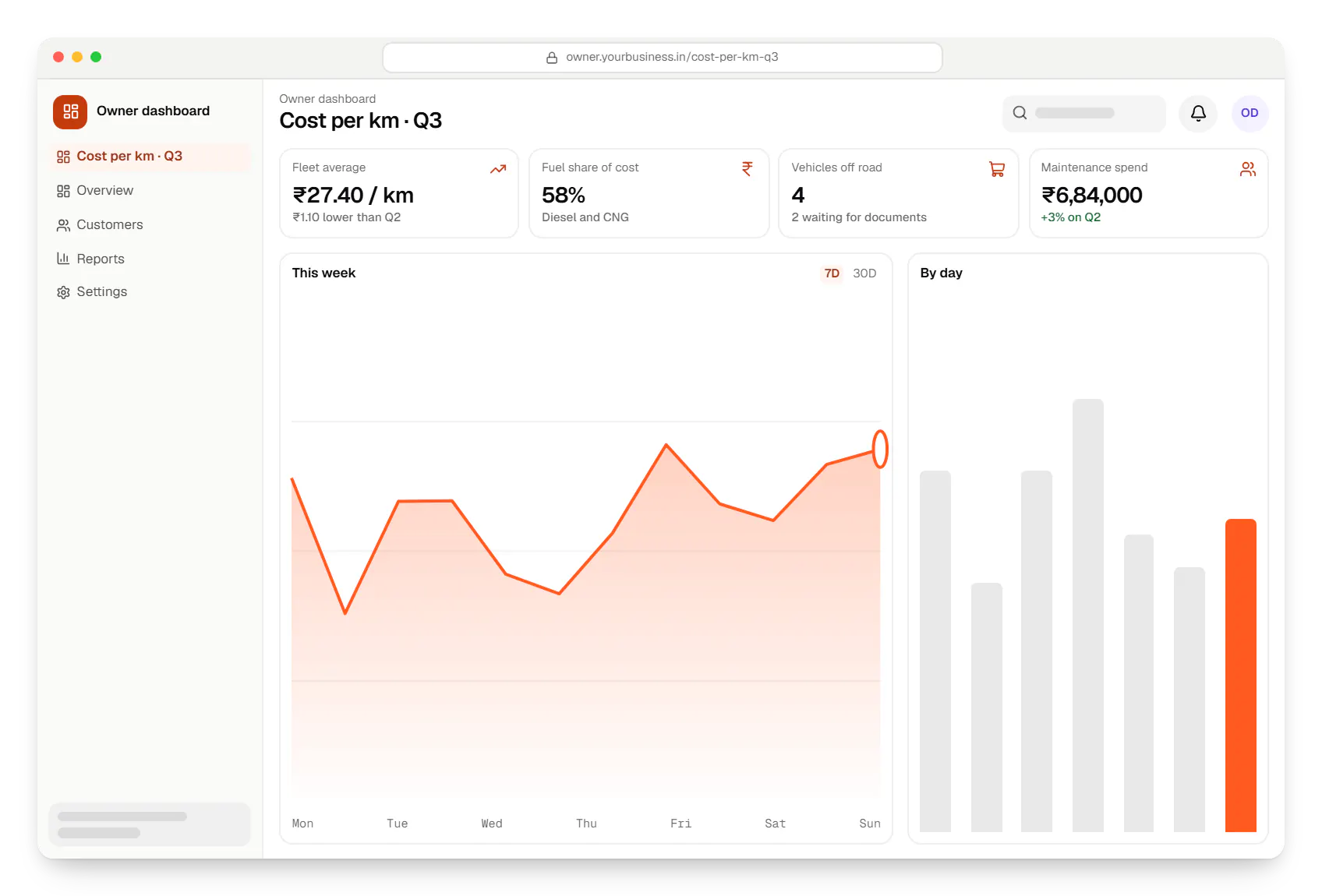
Sample screens: names, prices and figures are examples, not client data.
Work
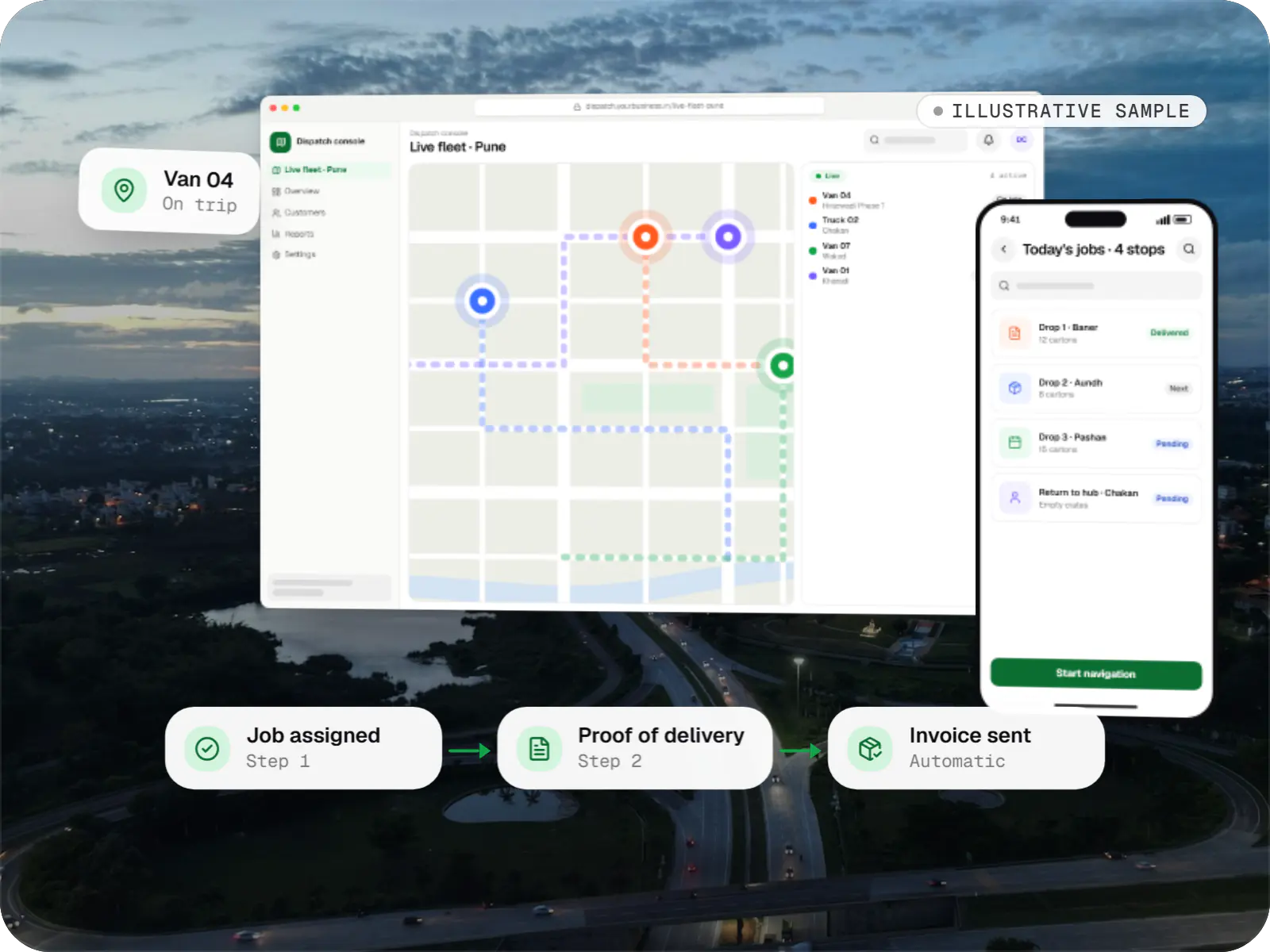
Business software
An illustrative SaaS for businesses running their own vehicles: live dispatch on a map, driver proof of delivery and per-trip billing for each customer.
Runs on
Built with
Cost drivers
Each telematics vendor's API or raw device protocol needs its own parser and testing.
Frequent location pings from large fleets need time-series storage and efficient queries.
Battery state, charging sessions and range estimates need vehicle or charger integrations.
Estimates are written from your scope, with the effort and assumptions behind each line item.
How pricing worksServices
The design and engineering services our in-house team combines on projects in this sector.
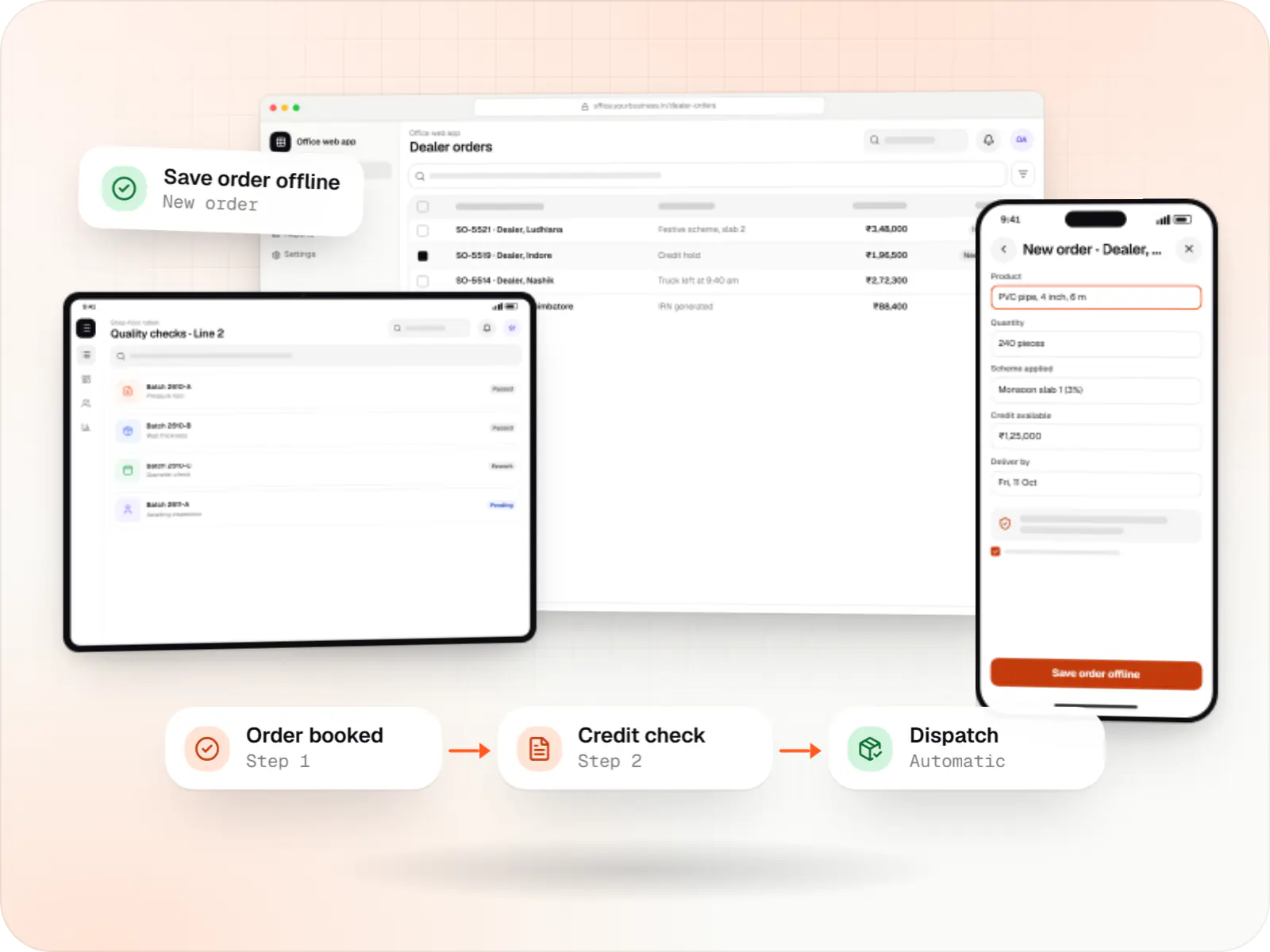
Software shaped around how your business runs, from approvals and inventory to billing and reports, replacing spreadsheets and disconnected tools.
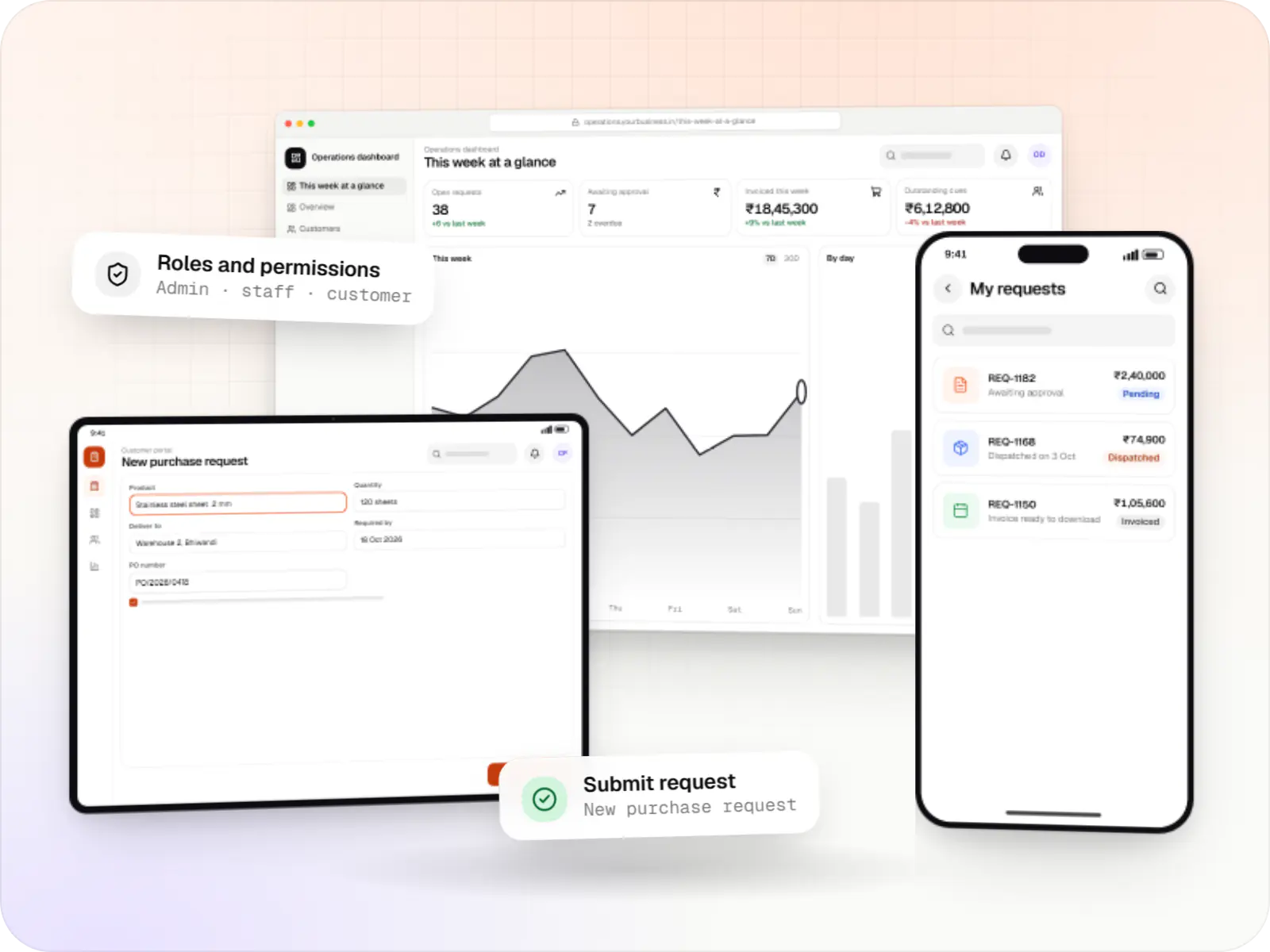
Browser-based products, customer portals, dashboards and internal tools, built on clean data models with secure roles and integrations.
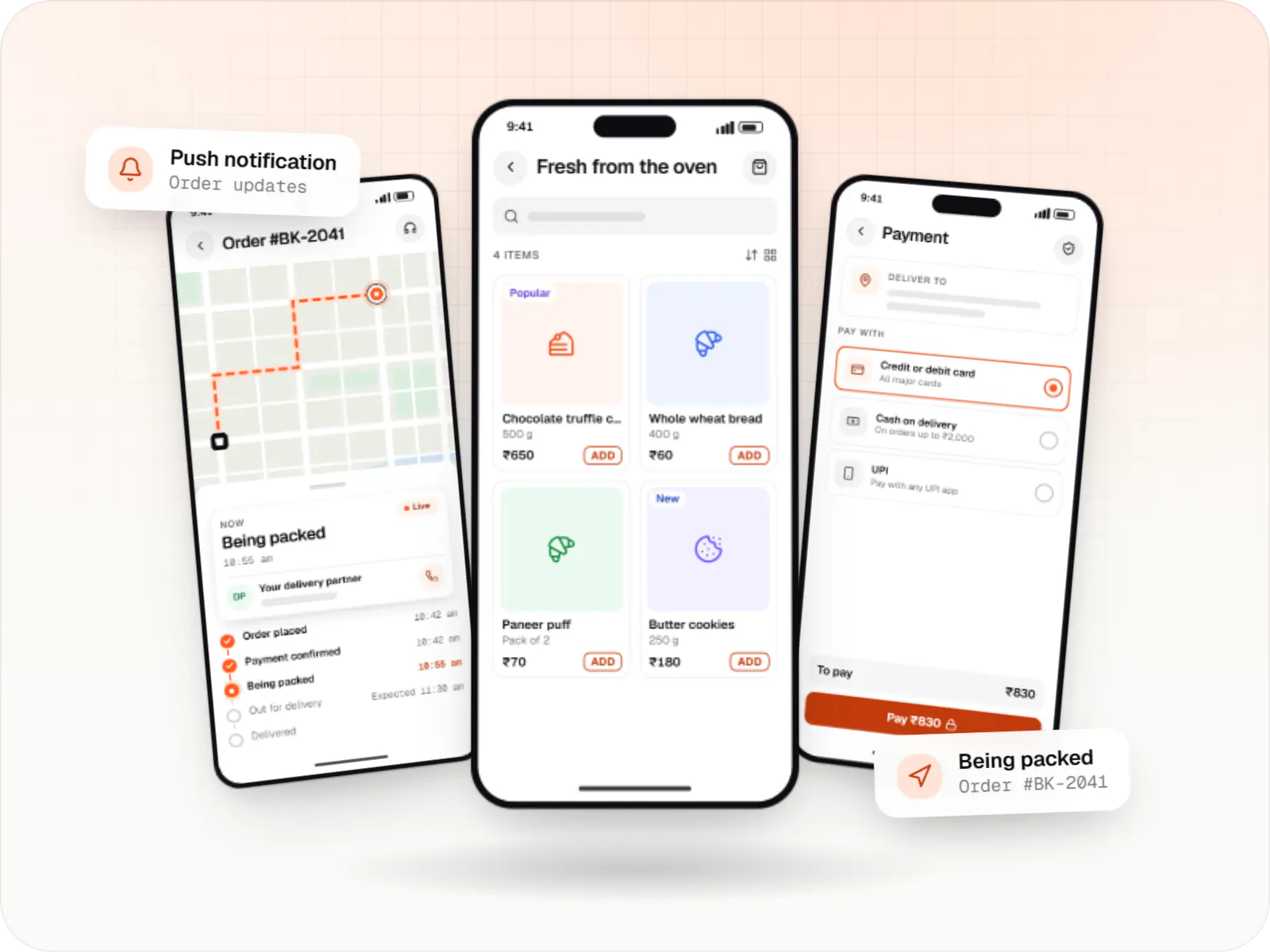
Native and cross-platform Android and iOS apps, from first release through regular store updates, built by our in-house designers and engineers.
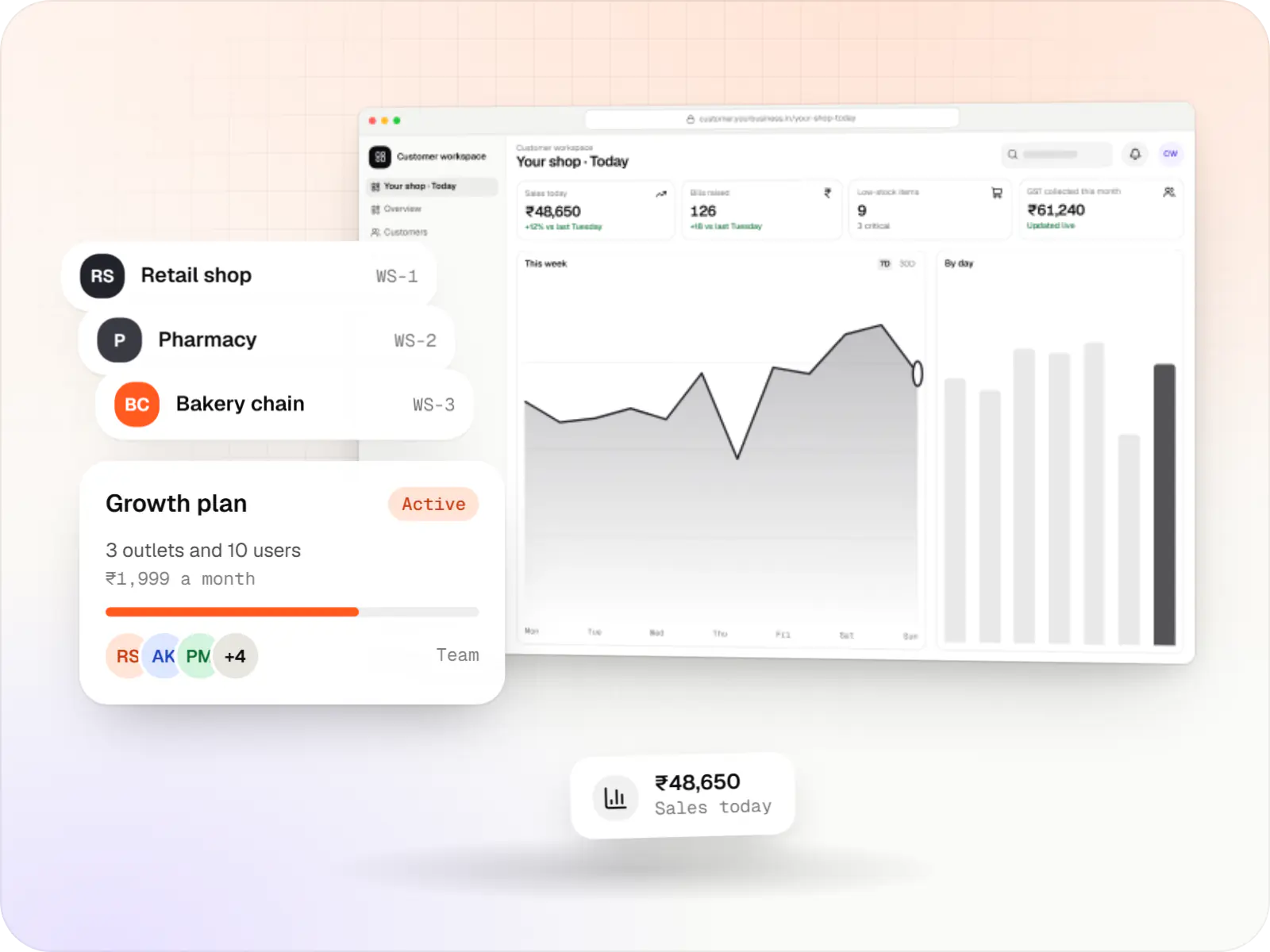
Multi-tenant SaaS products with subscription billing, team roles, onboarding and usage analytics, from first MVP to paying customers.
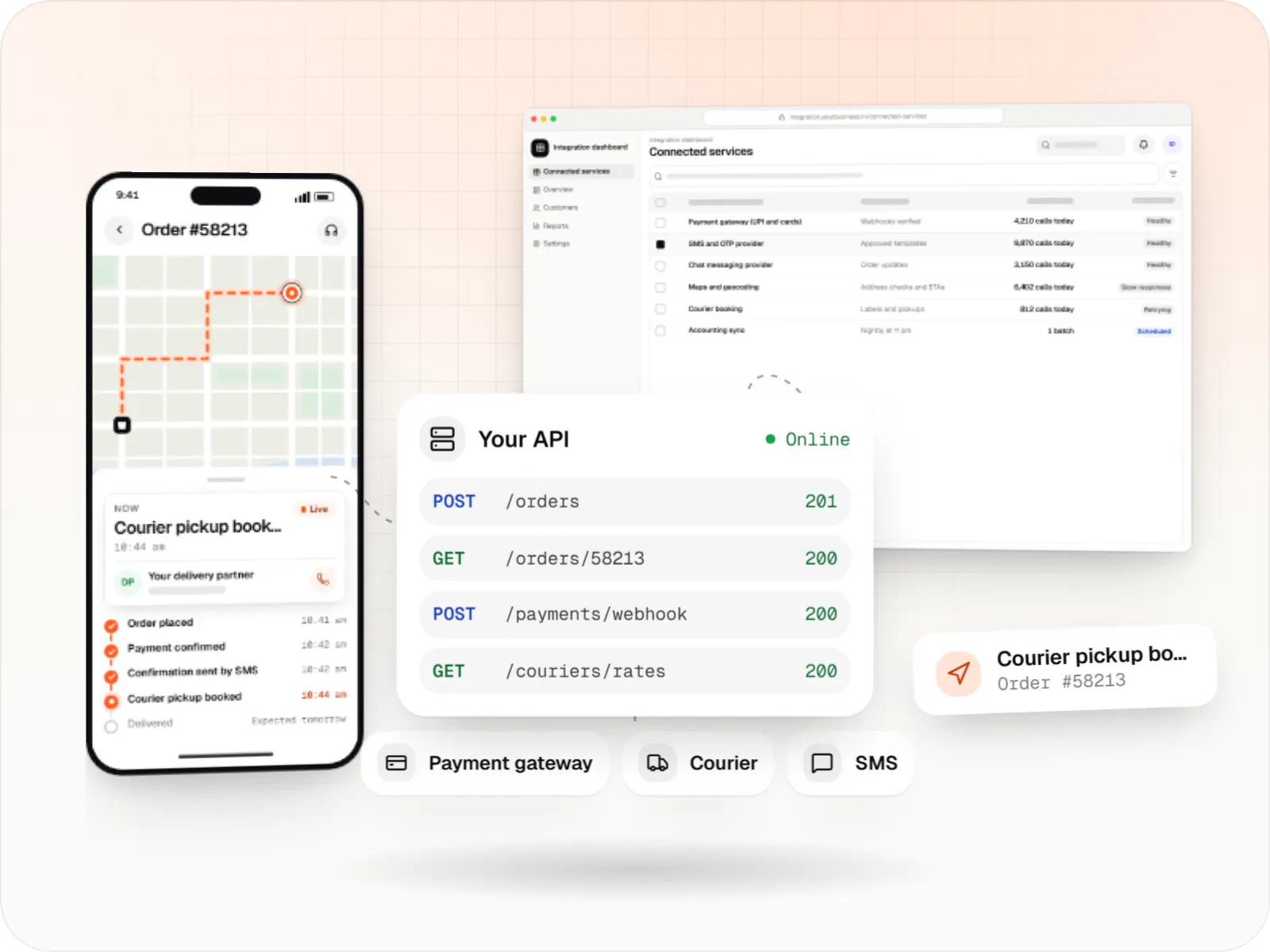
Secure, documented REST and GraphQL APIs, plus integrations that connect your apps to payment, logistics, GST, messaging and business systems.
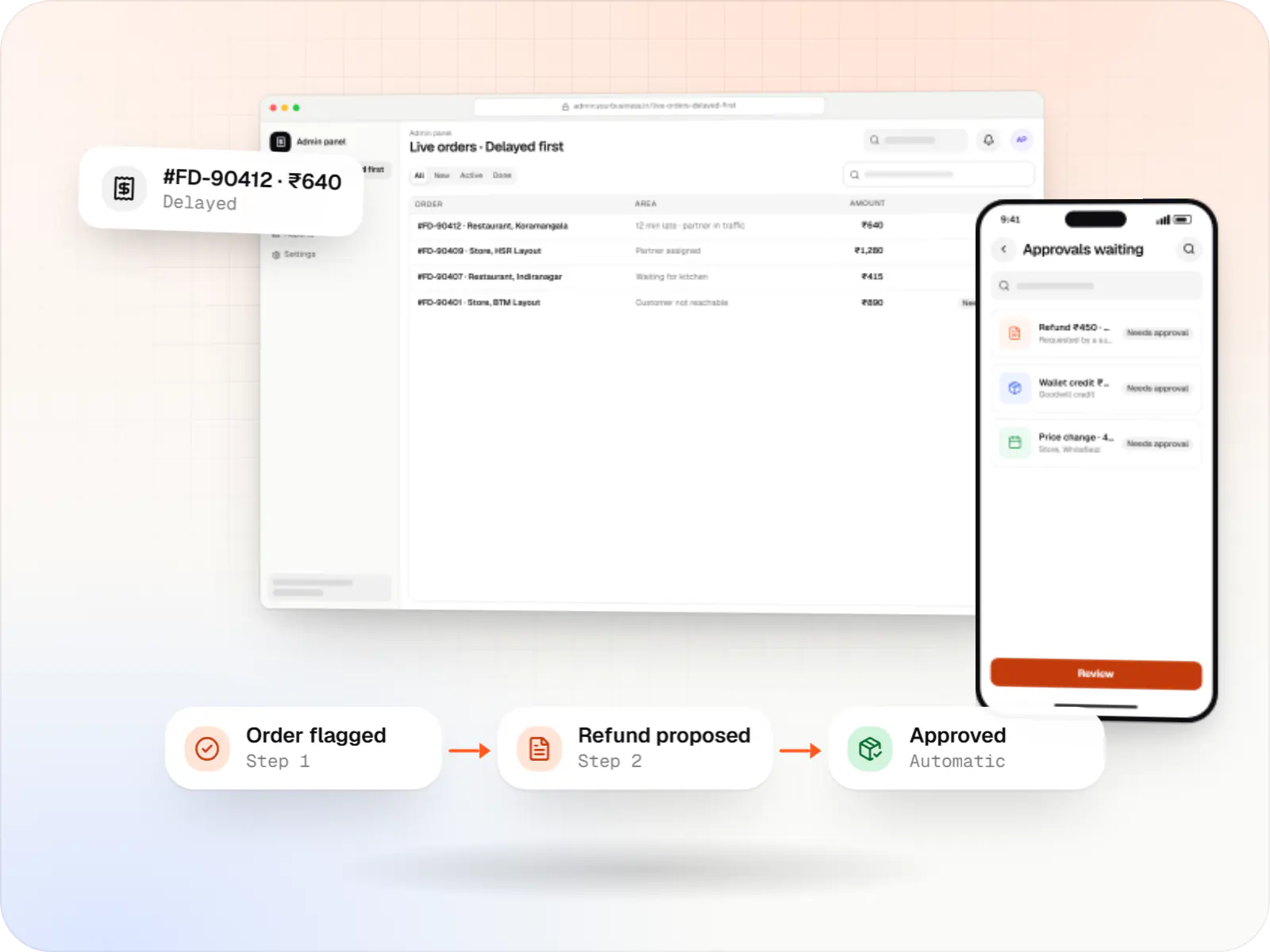
Back-office dashboards built around your team's daily tasks: order queues, approvals, catalogue management, payouts, reports and audit logs.
FAQ
Usually. Most device vendors offer an API or can forward data to a server we specify. We write an adapter per vendor that normalises location, ignition, speed and sensor data into one format. If a device only speaks a raw protocol, we can build a listener for it, which takes more effort. We ask for sample data and documentation early, because device data quality varies and decides which reports are reliable.
We compare fuel added, from fuel cards, receipts or tank sensors, with fuel consumed, estimated from distance, vehicle type, load and historical mileage. Sudden tank drops while the vehicle is stationary, refuels far off the planned route, or mileage well below the vehicle's baseline raise alerts for review. Tank sensors make detection far more reliable than estimates alone. Alerts show where to look; a person confirms before action is taken against a driver.
Partly. Tracking, drivers and documents work the same way, but EV fleets also need state of charge, range estimates, charging sessions and charger availability. That data comes from the vehicle's telematics or the manufacturer's API and from charging networks. Maintenance differs too, with fewer engine services but battery health to watch. We design the data model so mixed diesel, CNG and electric fleets report comparable cost per kilometre.
Next step
Tell us your vehicle types, fleet size and the tracking devices you already use. We will propose an integration plan and estimate it.