

Web
Next.js
A modern web technology for fast, search-friendly websites, online stores and web applications that load quickly on mobile.
Used for
- Business websites
- Online stores
- Web apps
- Customer portals
Industries · Electronics
Sell phones, appliances and accessories with the detail buyers compare and the unit tracking electronics requires.
At a glance
What it is
Commerce software for electronics sellers: spec-rich catalogues, IMEI and serial tracking, EMI, exchange offers and installation booking.

For consumer electronics retailers, mobile phone stores and electronics brands selling in store and online.
How to start
Tell us what you need in your own words. You talk to the developers who would build it and get a written, line-item estimate.
Get a project estimateElectronics shoppers compare specifications, prices and offers across sites before buying, and high ticket sizes make EMI and exchange offers part of most sales. Behind the counter, each unit has an IMEI or serial number that must be recorded for warranty, returns and theft checks.
We build electronics commerce around structured product data and unit-level tracking: filterable specifications, accessory compatibility, serial capture at billing and dispatch, and offer logic that combines bank discounts, EMI and exchange values correctly.
Challenges
Specs pasted as text can't be filtered or compared, so shoppers compare elsewhere.
Returns fraud and warranty disputes follow when IMEI or serial numbers aren't captured.
Bank discounts, no-cost EMI and exchange bonuses interact in ways that break checkout totals.
Launch pricing and competitor moves need updates across stores and web together.
Solutions
Across 3 areas
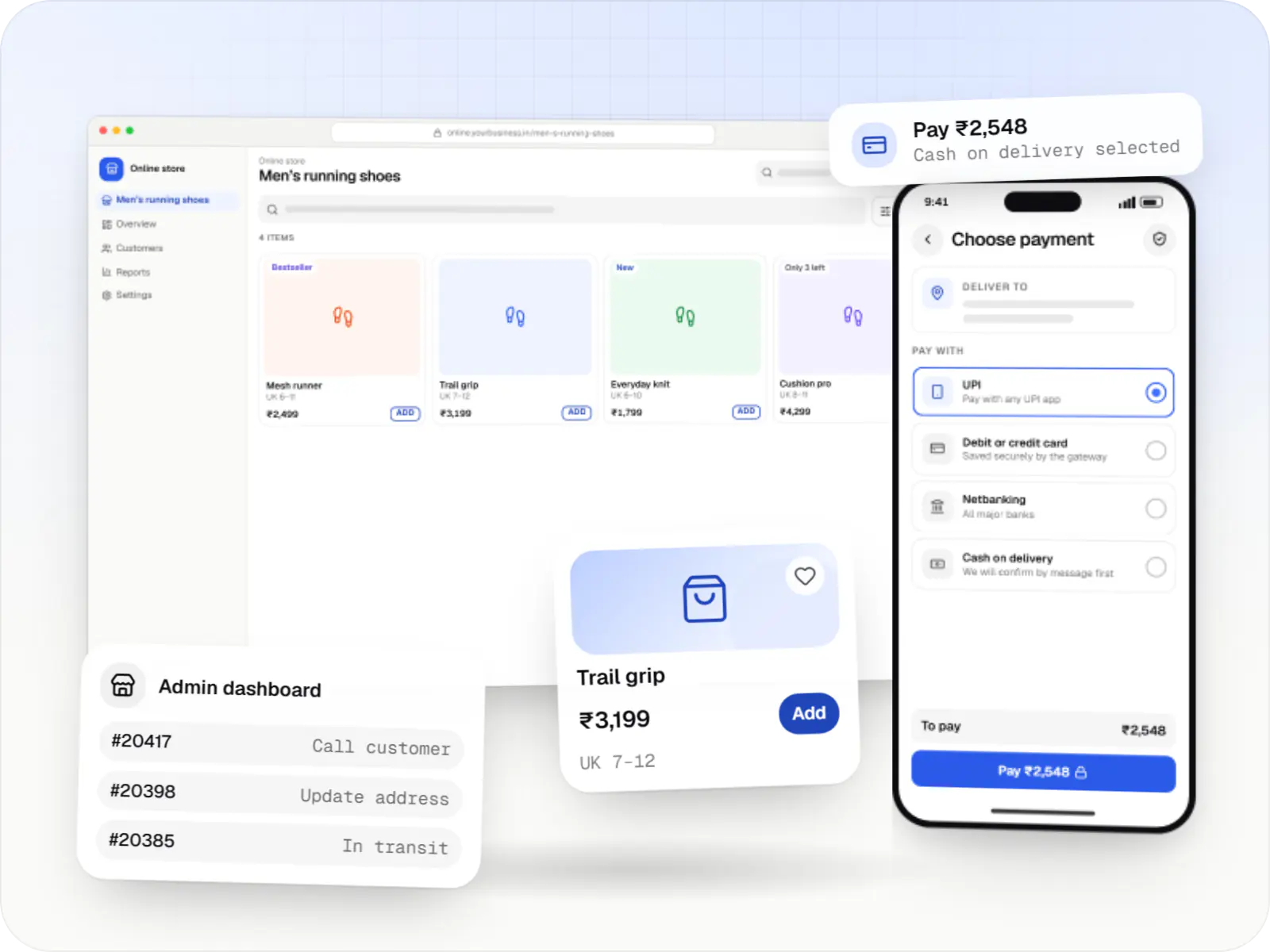
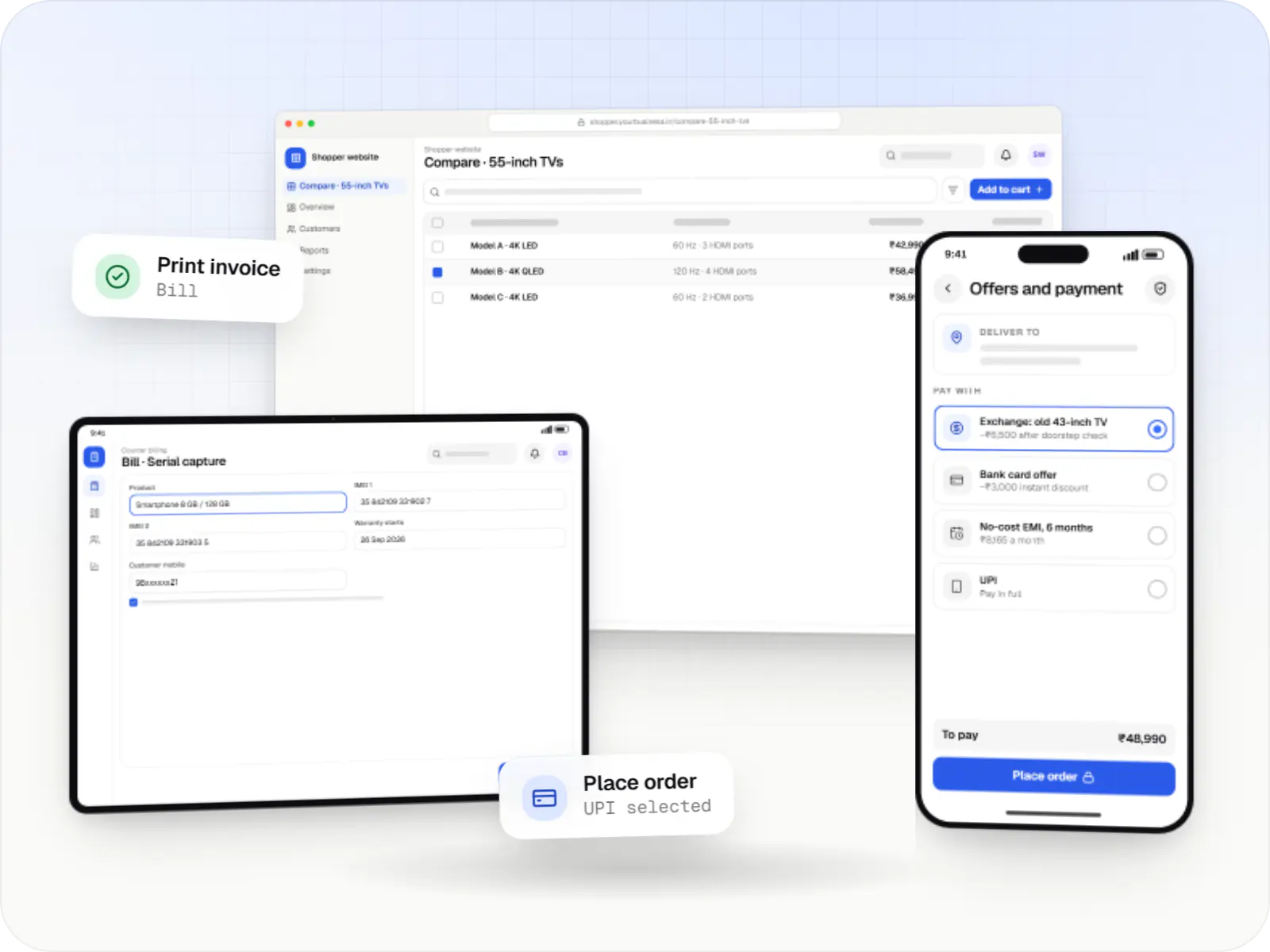
Fast, search-friendly online stores with UPI, card and COD checkout, GST invoices and courier integrations, on a hosted platform or custom code.
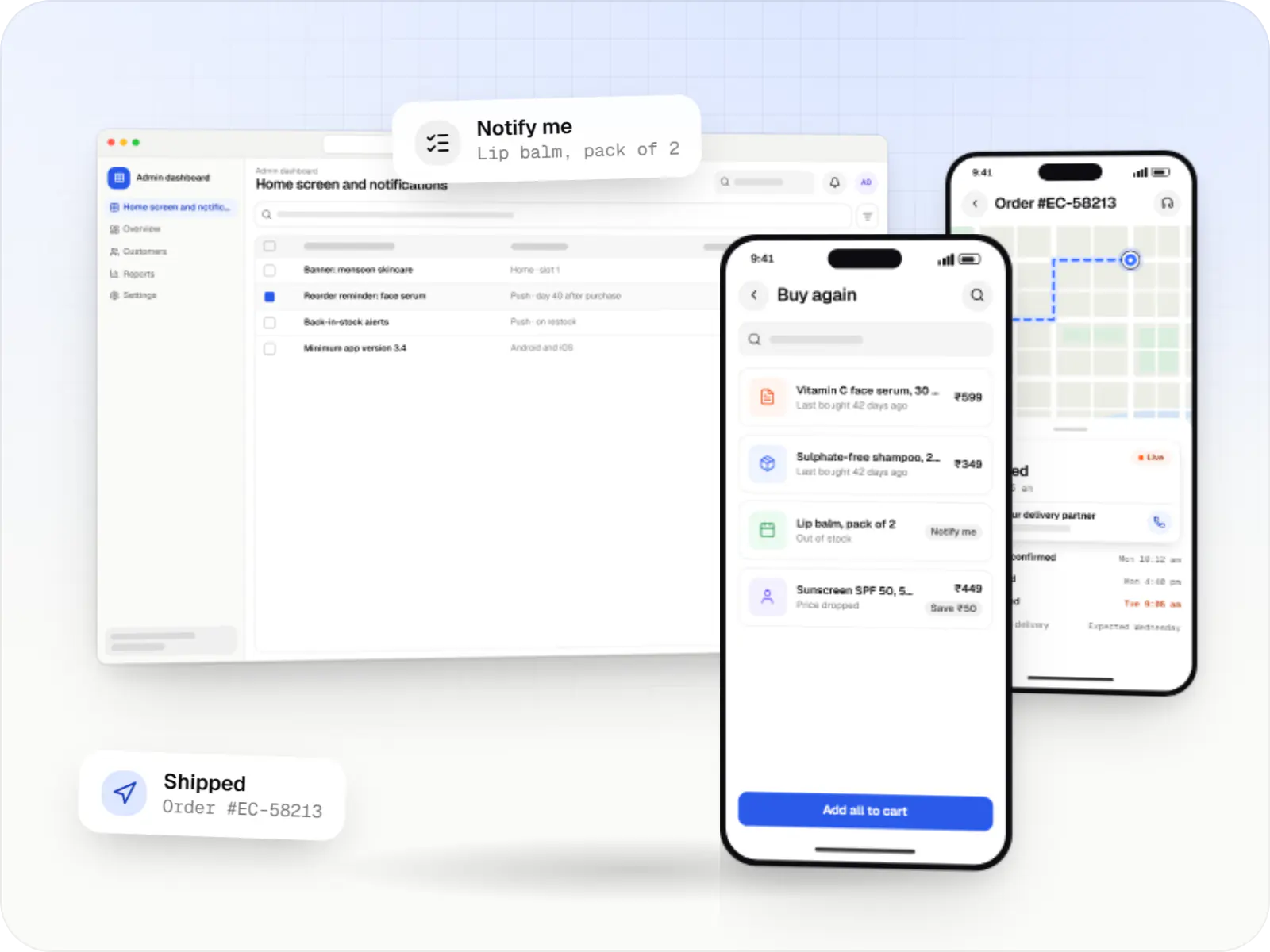
Android and iOS shopping apps with quick browsing, UPI checkout and push notifications, sharing one backend with your website.
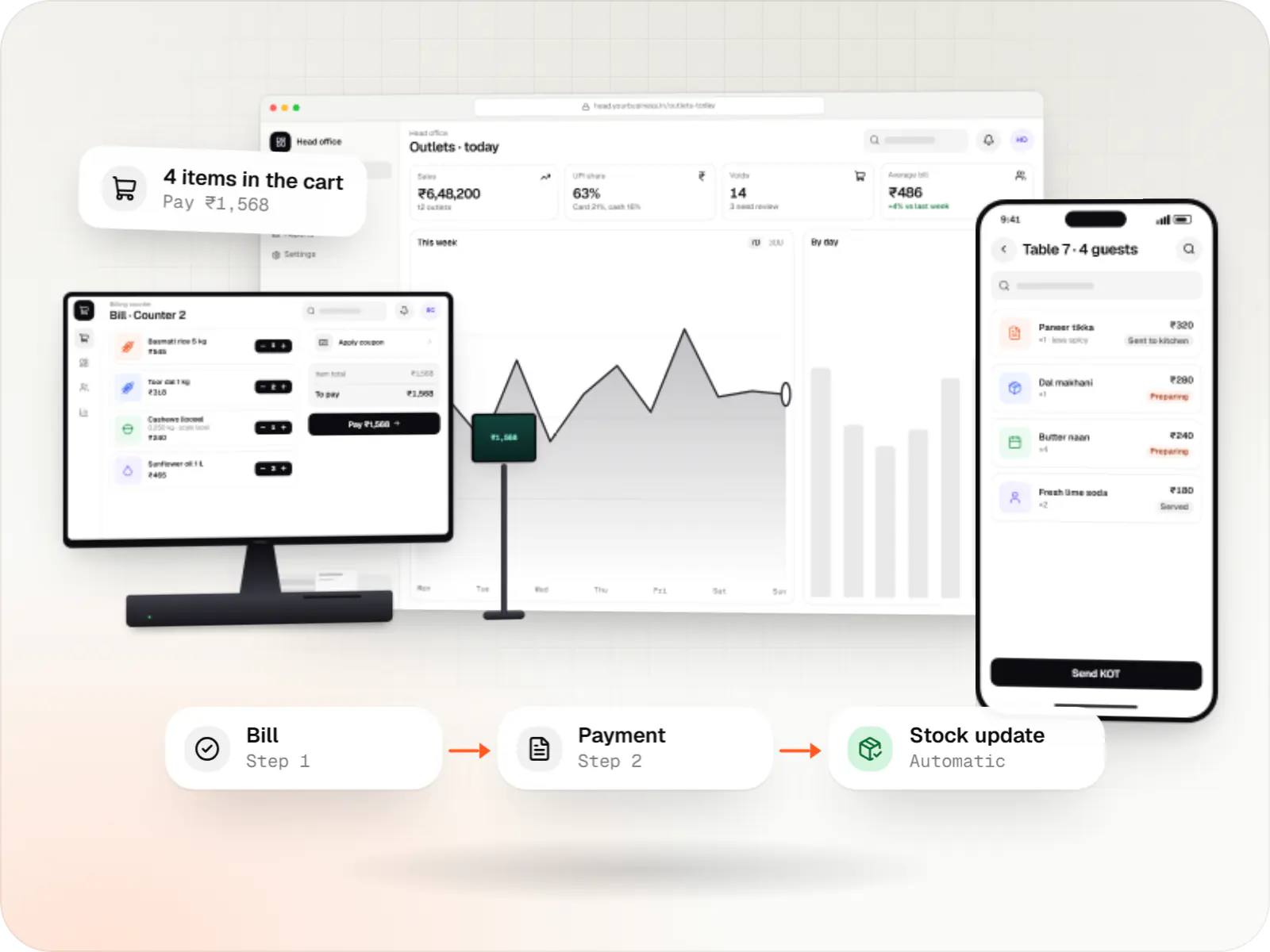
Custom point-of-sale software with offline billing, UPI QR payments, GST invoices, hardware integration and central control for multiple outlets.
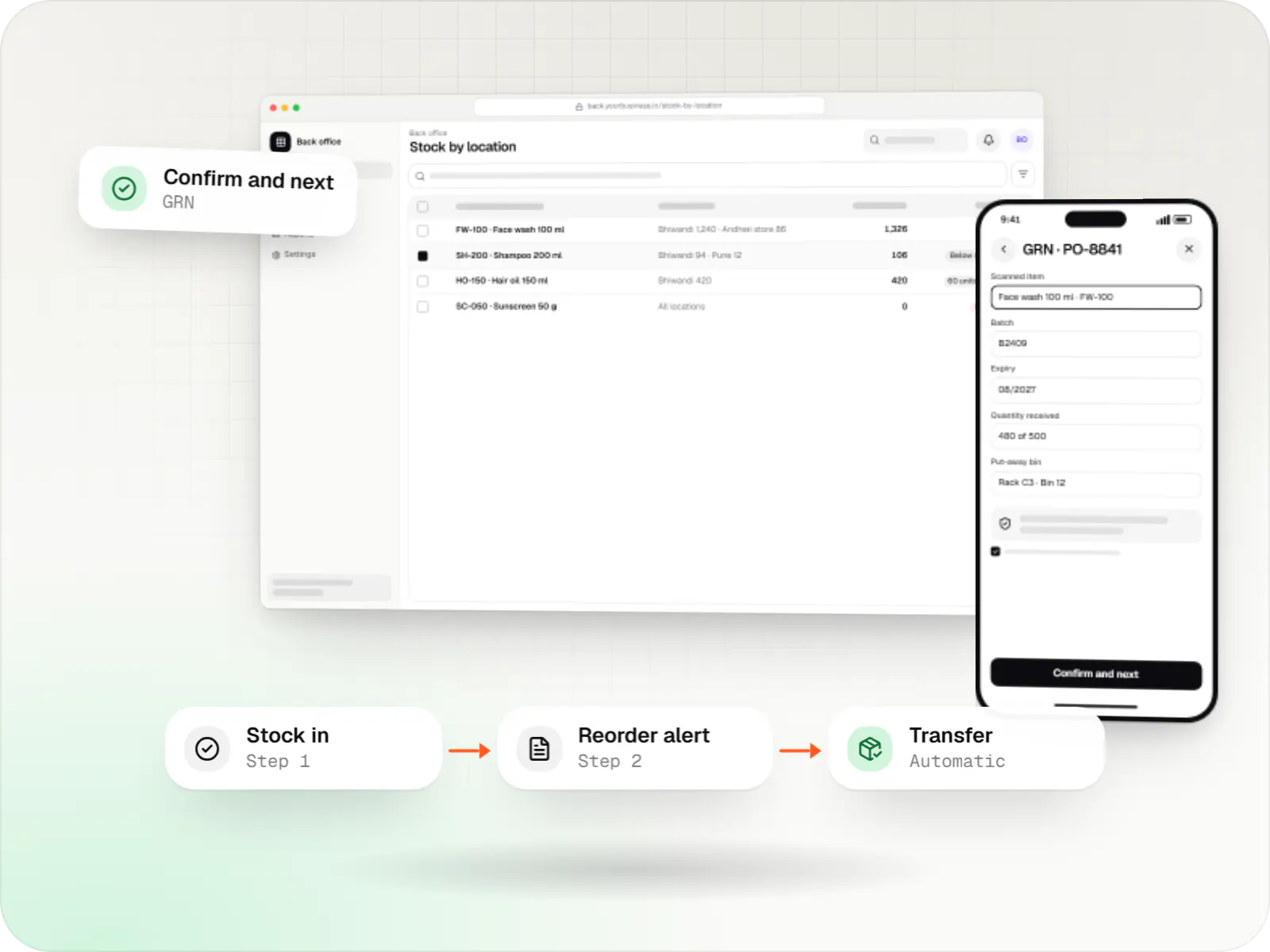
Custom inventory software for multi-location stock, batch and expiry tracking, barcode scanning and marketplace stock sync.
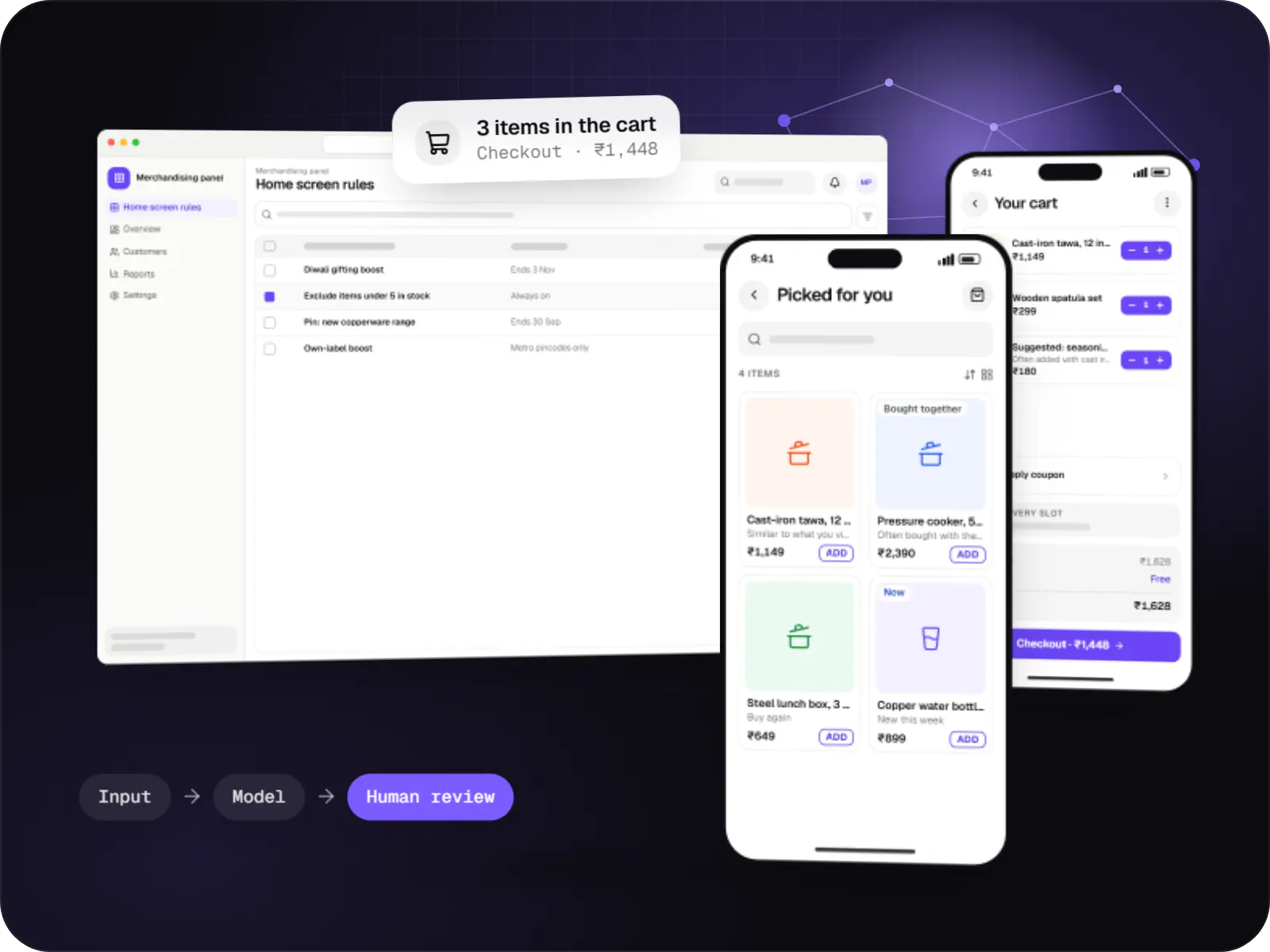
Product, content and offer recommendations built from your behavioural data, with business rules, cold-start handling and A/B testing.
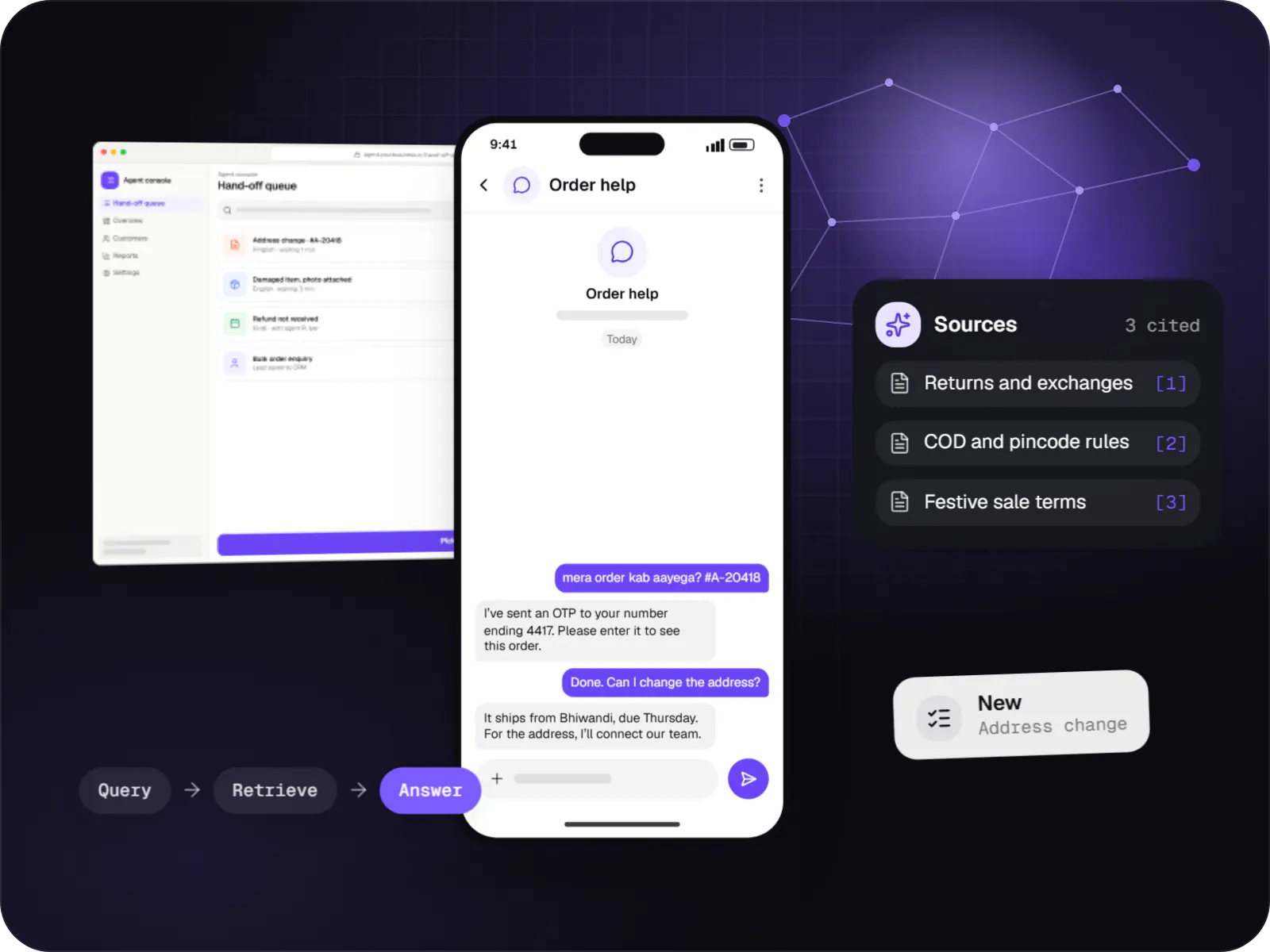
Support and sales chatbots for web, app and WhatsApp that answer from your own content and hand off to your team.
Attribute-based catalogue with side-by-side product comparison.
Scan at billing and dispatch; look up by serial for returns and warranty.
Card EMI, cardless EMI and bank discounts via your gateway's offer engine.
Question-based device valuation, deducted at checkout and verified at pickup.
Slots for TV, AC and appliance installation, assigned to technicians.
Chargers, cases and cables matched to the device a customer owns or is buying.
How it works
Every unit is tied to its IMEI or serial number from the bill to the installation visit.
Attribute filters and side-by-side comparison answer the questions buyers would otherwise take to another site.
Exchange value, bank discount and no-cost EMI are applied in the right order, so the total matches the GST invoice.
The IMEI or serial of the exact unit is scanned onto the invoice for warranty, returns and theft checks.
The exchange device is inspected in an app against the customer's answers before its value is honoured.
TV, AC and appliance installations go to technicians with the model and serial number already on the job card.
Chargers, cases and cables that fit the device the customer now owns are suggested, never a case for a different model.
Platforms
Marketing and content websites: fast, search-friendly pages with a CMS your team can update without a developer.
Apps for Android phones and tablets, tested on budget and mid-range devices and published on Google Play or privately.
Apps for iPhone and iPad, built to Apple's guidelines and released through TestFlight and the App Store.
Browser-based applications with logins, roles and workflows, such as customer portals, SaaS products and internal tools.
Back-office panels for operations, support and finance teams: orders, users, content, reports and permissions.
Technology
Web
A modern web technology for fast, search-friendly websites, online stores and web applications that load quickly on mobile.
Used for
Web
Builds interactive screens in the browser, such as dashboards, admin panels and portals, that respond instantly as your team works.
Used for
Backend
Runs the server side of apps: fast, scalable back ends that power your app, website and integrations.
Used for
Data
A reliable database for the records your business runs on: orders, payments, bookings and stock, kept accurate and easy to report on.
Used for
Data
Keeps frequently used data in fast memory, so apps stay quick on busy days and live features like order tracking feel instant.
Used for
Payments & maps
Lets customers in India pay by UPI, cards, netbanking or wallets, and handles subscriptions, refunds and payouts to sellers or partners.
Used for
Plain-English glossary
Product preview
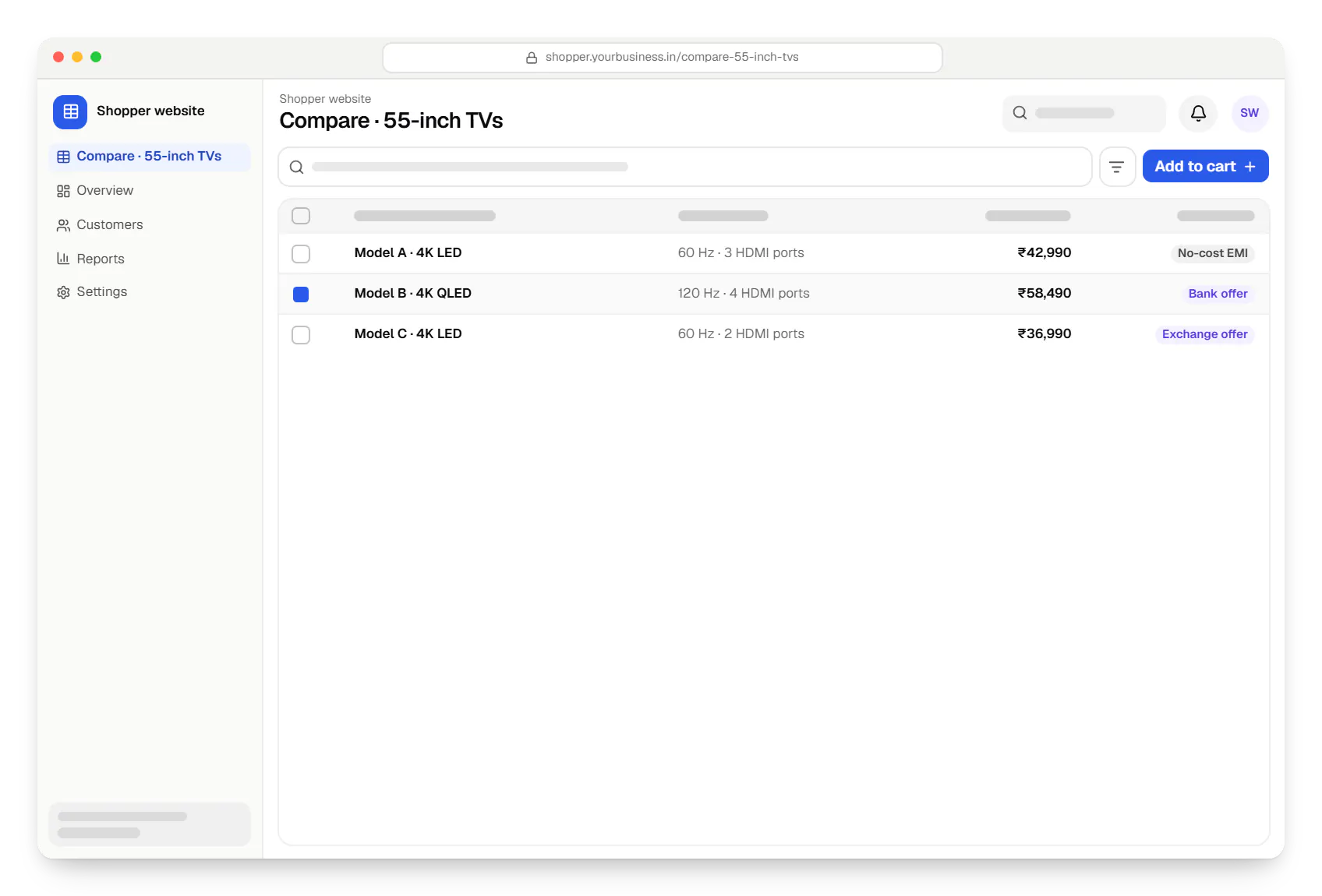
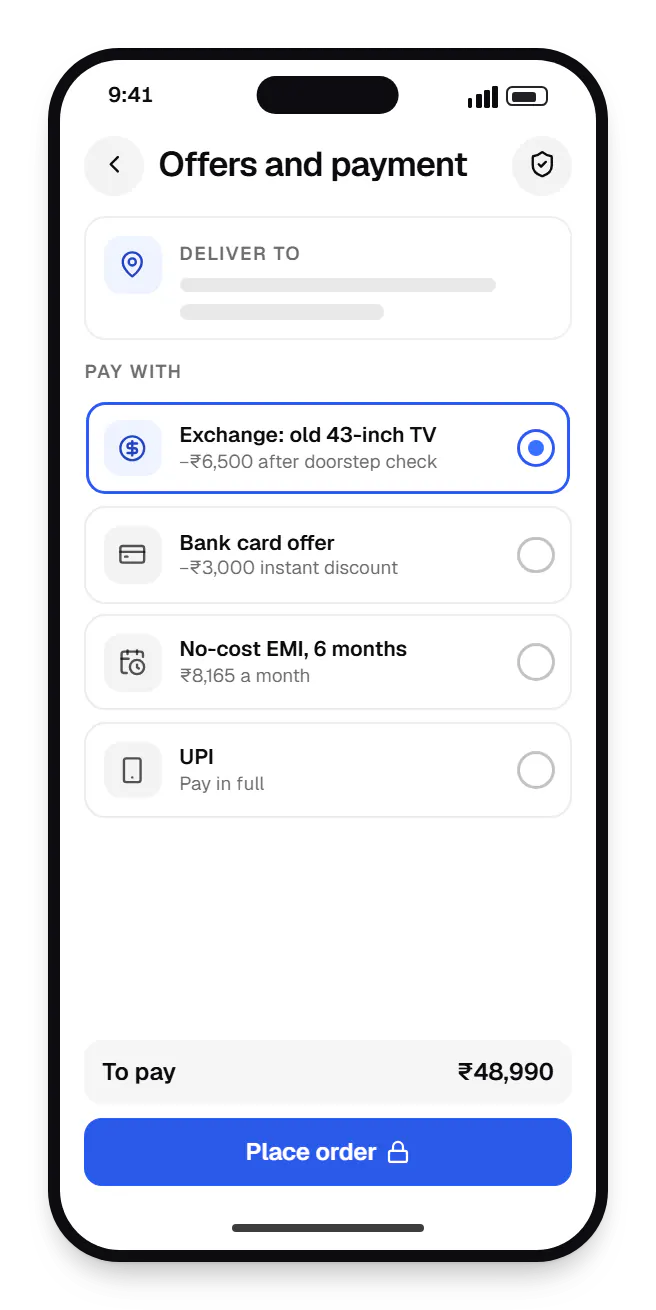
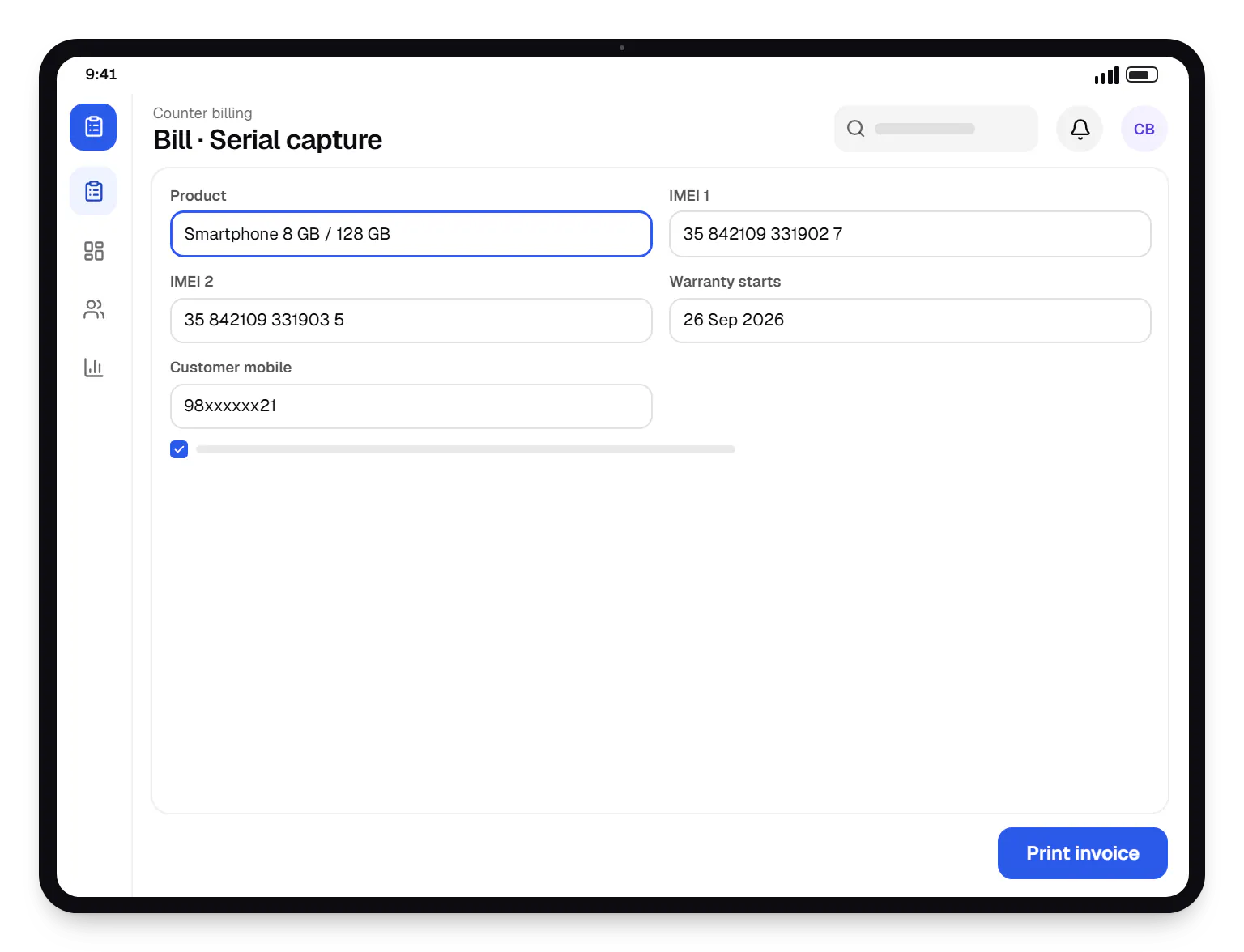
Sample screens: names, prices and figures are examples, not client data.
Cost drivers
Defining spec templates per category and cleaning supplier data is real upfront work.
Combining EMI, bank offers and exchange requires careful rule design and testing.
Serial tracking across POS and online adds integration and hardware scope.
Estimates are written from your scope, with the effort and assumptions behind each line item.
How pricing worksServices
The design and engineering services our in-house team combines on projects in this sector.
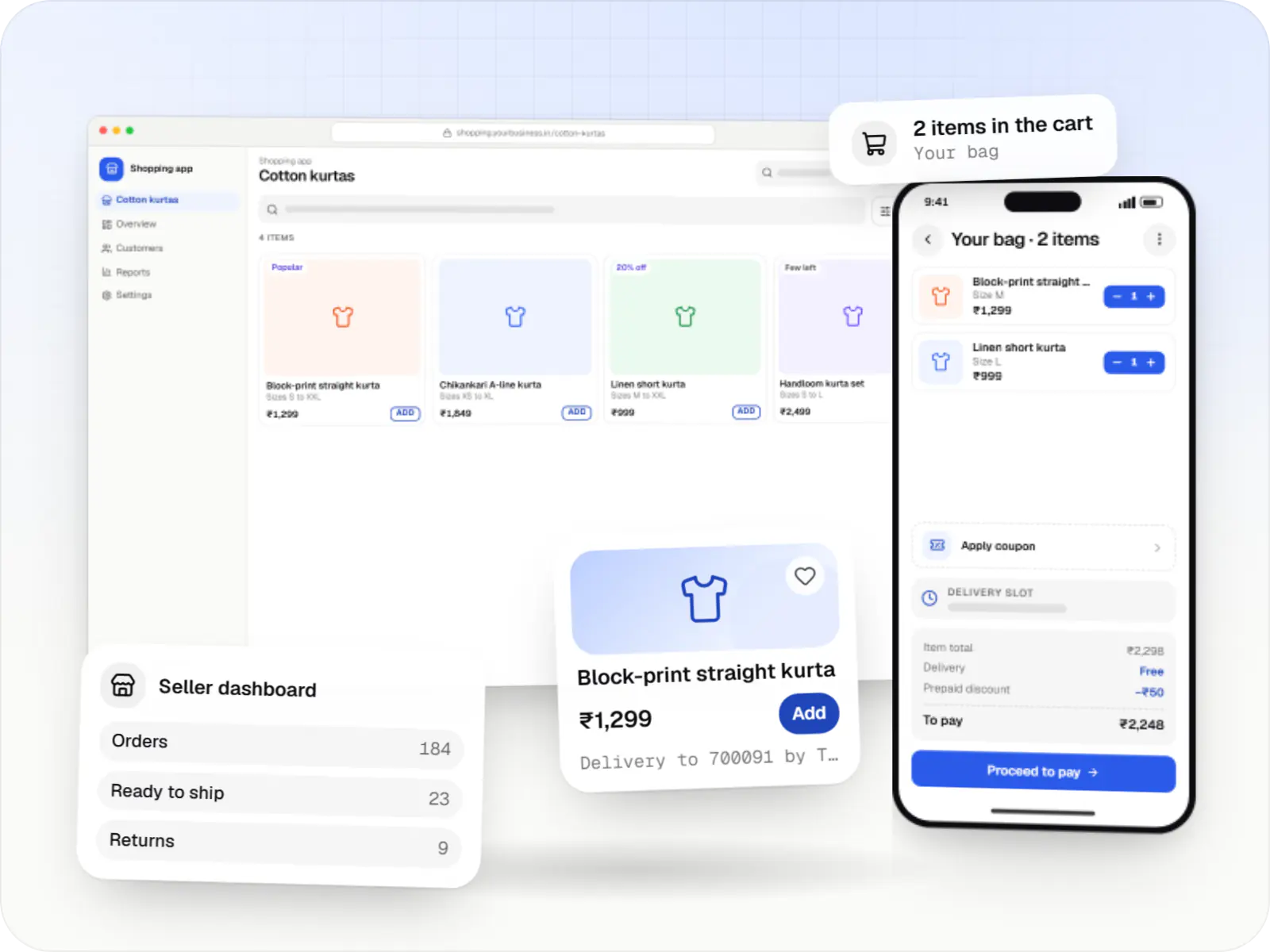
Online stores, shopping apps and B2B ordering portals on Shopify, WooCommerce or custom stacks, wired to Indian payments, couriers and GST invoicing.
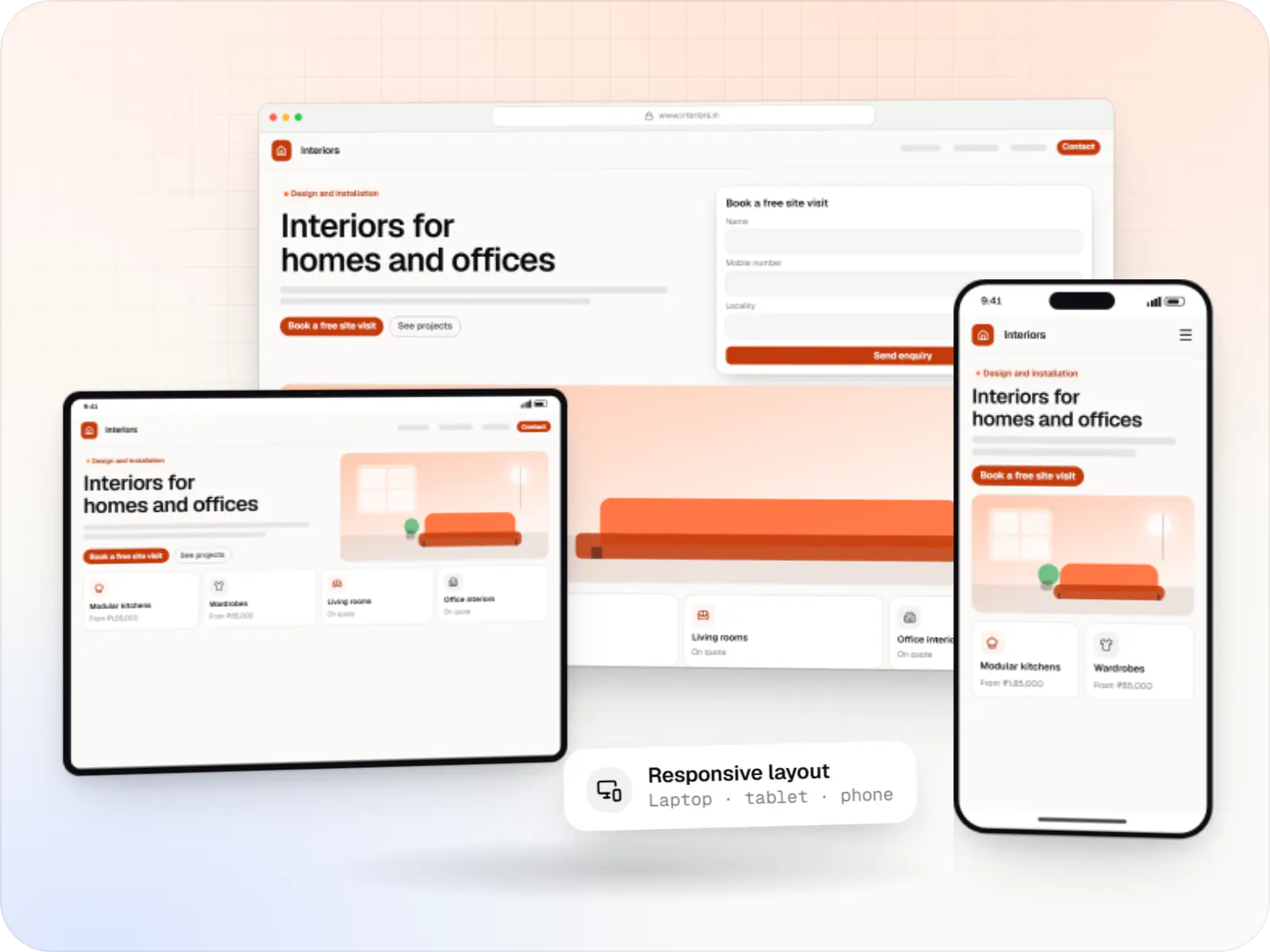
Fast, SEO-ready company and marketing websites with a CMS your team can edit, designed and built by our in-house team.
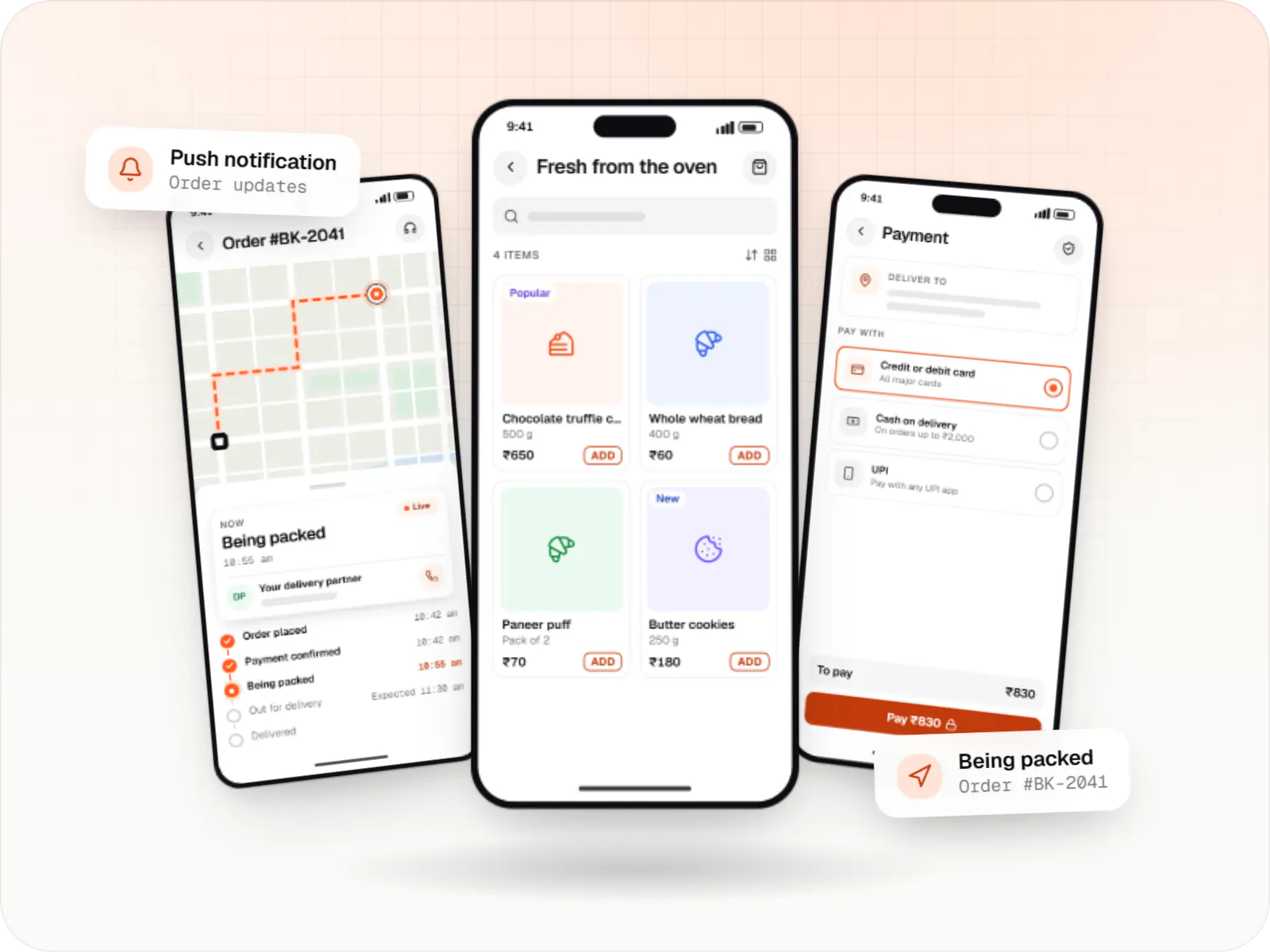
Native and cross-platform Android and iOS apps, from first release through regular store updates, built by our in-house designers and engineers.
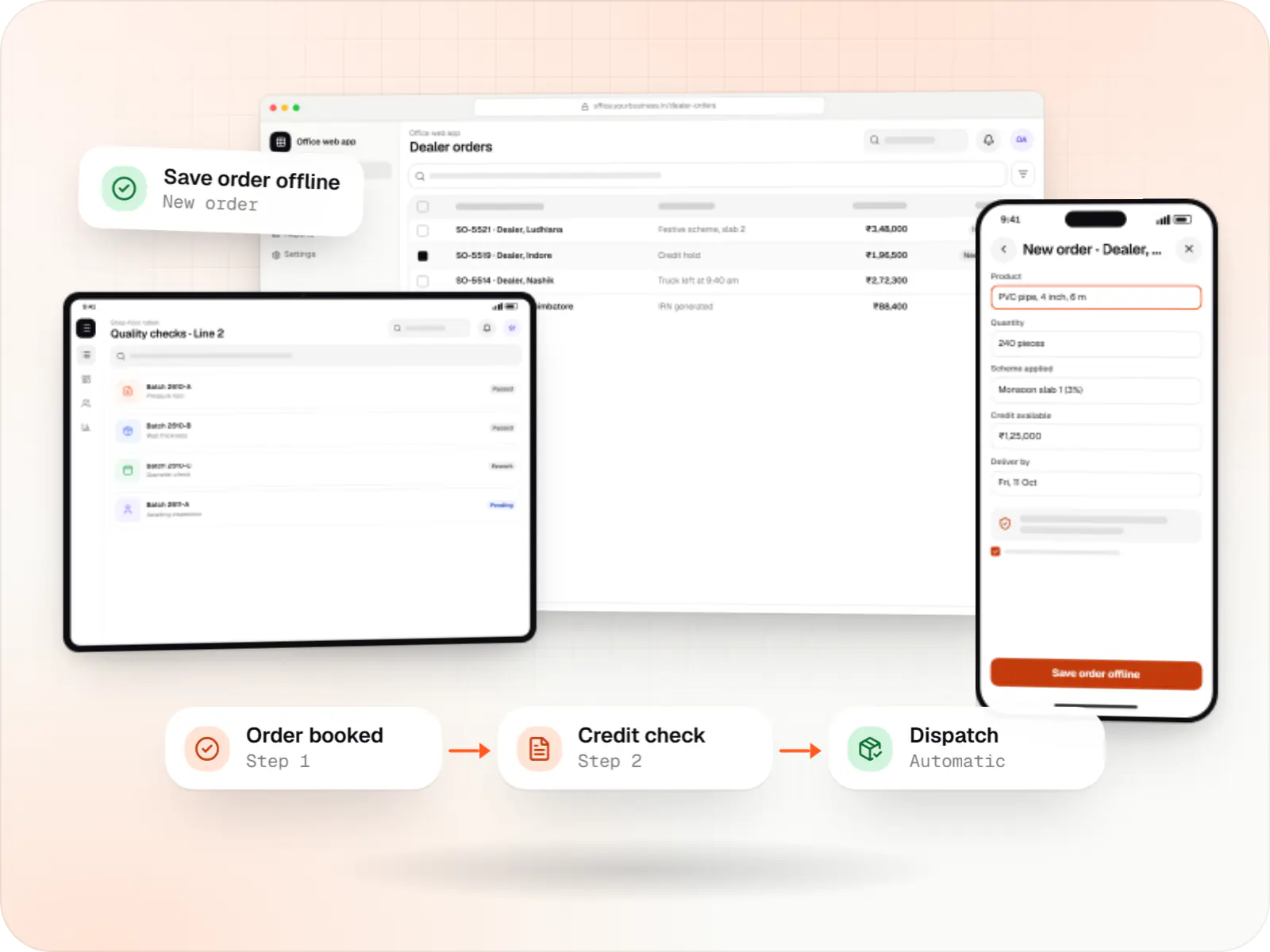
Software shaped around how your business runs, from approvals and inventory to billing and reports, replacing spreadsheets and disconnected tools.
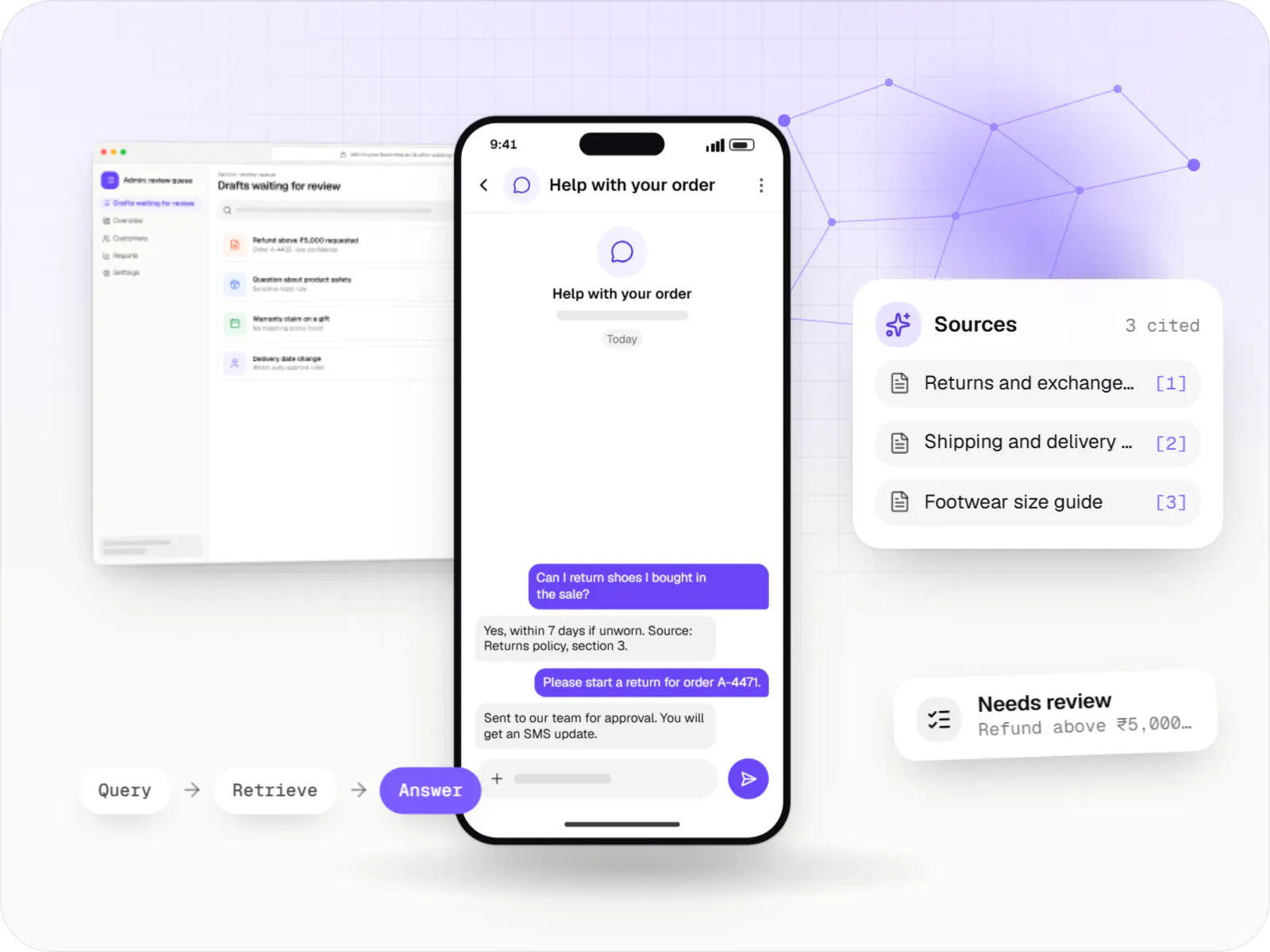
AI features and AI-first apps built on model APIs, retrieval over your own data, workflow automation or custom ML, with evaluation and human review.
Work
Illustrative projects that show how we would approach a product in this sector.
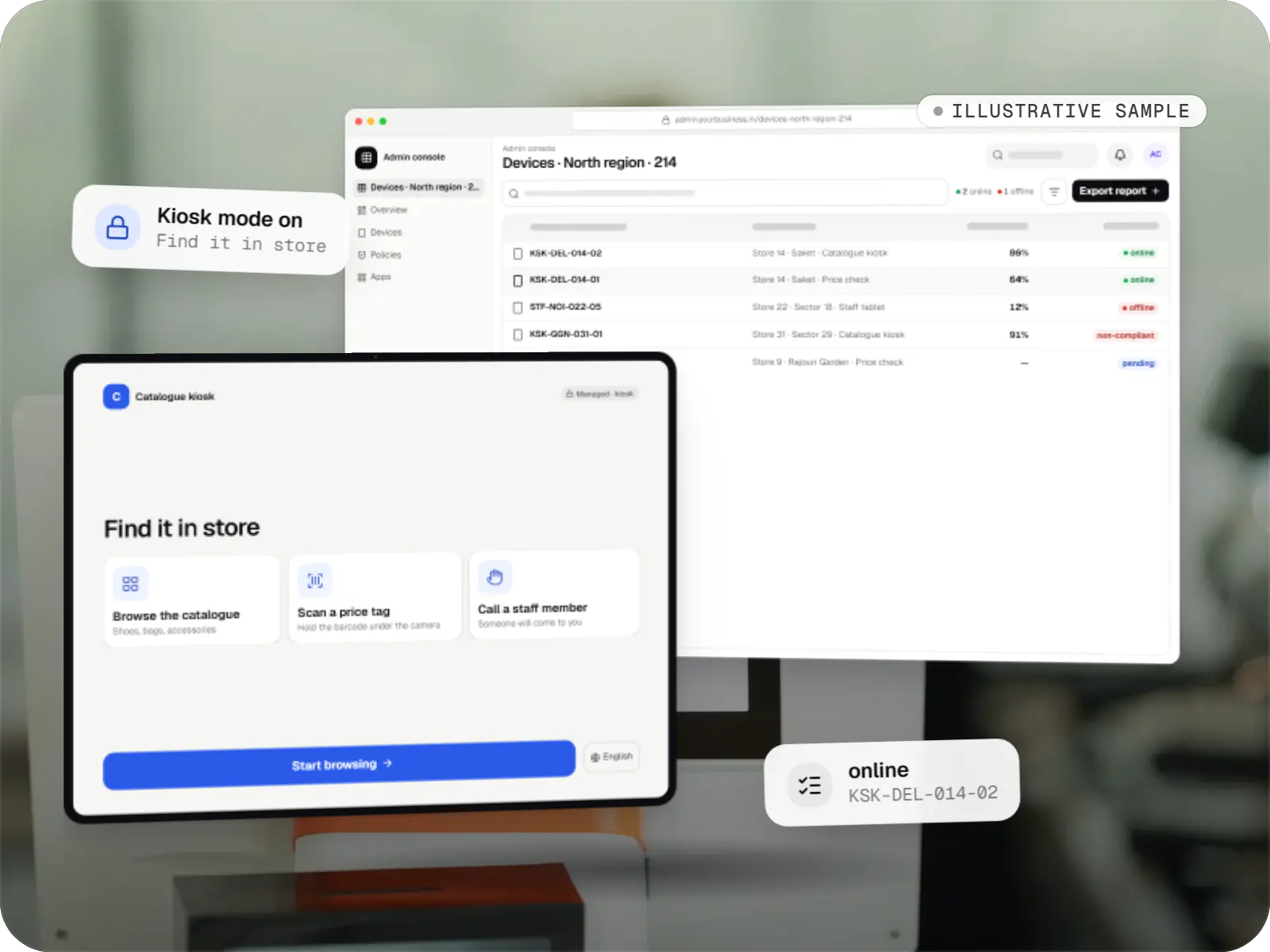
Device management & kiosk solutions
An illustrative kiosk product for retail chains: locked Android tablets for catalogues and price checks, a staff launcher, and a console to enrol, update and monitor every device.
Runs on
Built with
FAQ
The customer answers a short set of questions about the old device, covering model, condition, screen and accessories, and the system calculates an exchange value from a price table you maintain or a valuation partner's API. That value is deducted at checkout. At delivery, the executive checks the device against the answers in an app, and adjusts or cancels the exchange if it doesn't match.
Yes, through your payment gateway. Gateways such as Razorpay, PayU and Cashfree support card EMI and cardless EMI, and no-cost EMI is usually structured as a discount equal to the interest, funded by you or the brand. We build product-level eligibility rules, show EMI options clearly on product pages, and make sure invoices reflect the discount correctly for GST.
Rule-based compatibility is the reliable starting point: mapping chargers, cases and screen guards to specific models in your catalogue. Once there is enough order history, a recommendation system can learn frequently-bought-together patterns and rank suggestions. We combine both, so a customer never sees a case that doesn't fit their phone just because a model predicted a click.
Next step
Share your categories and current systems. We'll outline the catalogue and offer logic you need.