


Web
Next.js
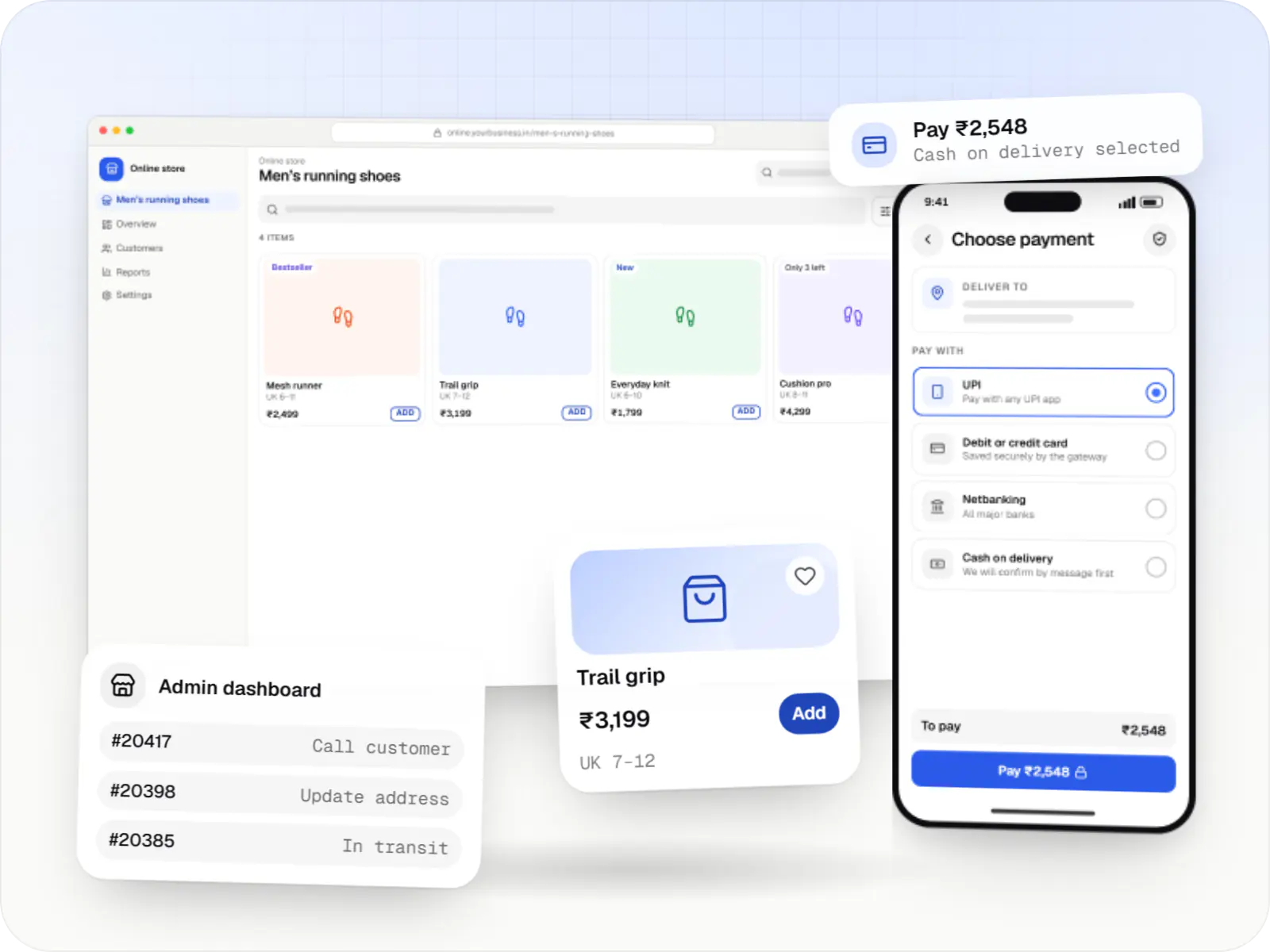
A modern web technology for fast, search-friendly websites, online stores and web applications that load quickly on mobile.
Used for
- Business websites
- Online stores
- Web apps
- Customer portals
Subscription commerce
Recurring orders and memberships on UPI AutoPay, card mandates and eNACH, with controls customers manage themselves.
At a glance
What it is
Subscription stores and memberships on UPI AutoPay, card mandates and eNACH, with pause, skip and swap controls and fulfilment planning.
Flutter and the related logo are trademarks of Google LLC. We are not endorsed by or affiliated with Google LLC.
How to start
Tell us what you need in your own words. You talk to the developers who would build it and get a written, line-item estimate.
Get a project estimateA subscription is a promise to charge and ship correctly, again and again. In India that runs on mandates: UPI AutoPay or a card e-mandate the customer authenticates once, or eNACH for bank-account debits. RBI's rules for recurring payments require a pre-debit notification and fresh authentication above set amounts, which shapes what happens when a renewal fails.
Our subscription commerce development designs the billing engine around those rules first, then builds plans, delivery calendars, skip and pause, and a cancellation as easy as sign-up.
Challenges
Renewals fail on expired cards, mandate limits or low balances, and customers drop off without deciding to leave.
Customers who cannot pause, skip or change a product often cancel outright.
Without a renewal forecast, packing and procurement are guesswork.
Hidden cancel buttons frustrate customers; the Central Consumer Protection Authority's 2023 dark-pattern guidelines name subscription traps.
What is included
Platform: Website and app
Platform: Backend
Platform: Admin dashboard
Platform: Admin dashboard
How it works
Sign-up happens once; this cycle runs every week or month for every subscriber, so each step is automated and logged.
They pick product, quantity and frequency, then approve a UPI AutoPay, card or eNACH mandate once.
Before each renewal the customer is told the amount and date, as RBI rules require, with a link to skip or pause.
The debit runs within the approved mandate limit; amounts above the auto-debit threshold ask the customer to authenticate again.
Retries run in the permitted window, a payment link goes out as a fallback, and the shipment waits until payment clears.
Confirmed renewals join a batch with pick lists and labels, planned from the upcoming-shipments forecast.
The box arrives, and the subscriber can swap, skip, pause or cancel before the next cut-off.
Then it starts again at step 1: Customer sets up a plan and mandate
Integrations
Plans, mandates and renewal webhooks across cards, UPI and eNACH.
An alternative mandate and subscription API.
Mandates approved and managed in the customer's UPI app.
Bank-account mandates via netbanking or debit card, for higher-value plans.
Renewal reminders, receipts and skip-this-week prompts.
Batch labels for each renewal cycle.
Privacy & security
Cards are tokenised by the gateway under RBI's card-on-file rules; the platform stores only token and mandate references.
Every mandate, notification, debit attempt and cancellation is logged for support and disputes.
Subscriber data is used for stated purposes, with retention periods designed around the DPDP Act, 2023.
Platforms
A website and apps for Android and iOS where subscribers manage deliveries and payment, and an admin dashboard for renewals, shipments and reports.
Marketing and content websites: fast, search-friendly pages with a CMS your team can update without a developer.
Apps for Android phones and tablets, tested on budget and mid-range devices and published on Google Play or privately.
Apps for iPhone and iPad, built to Apple's guidelines and released through TestFlight and the App Store.
Back-office panels for operations, support and finance teams: orders, users, content, reports and permissions.
Technology
Razorpay handles mandates and renewals, NestJS and PostgreSQL keep an exact billing ledger, Redis schedules retries and reminders, and Next.js and Flutter give subscribers their controls.
Web
A modern web technology for fast, search-friendly websites, online stores and web applications that load quickly on mobile.
Used for
Backend
A structured way to build back ends on Node.js, so large business systems stay organised, testable and easy to hand over.
Used for
Data
A reliable database for the records your business runs on: orders, payments, bookings and stock, kept accurate and easy to report on.
Used for
Data
Keeps frequently used data in fast memory, so apps stay quick on busy days and live features like order tracking feel instant.
Used for
Payments & maps
Lets customers in India pay by UPI, cards, netbanking or wallets, and handles subscriptions, refunds and payouts to sellers or partners.
Used for
Mobile
Build Android and iOS apps from one shared codebase, so you launch on both platforms faster with a consistent experience.
Used for
Cloud & DevOps
Cloud hosting for your app, website and data, with data centres in India and room to grow when traffic rises.
Used for
Flutter and the related logo are trademarks of Google LLC. We are not endorsed by or affiliated with Google LLC.
Plain-English glossary
Product preview
Illustrative screens, using a coffee subscription as the example.
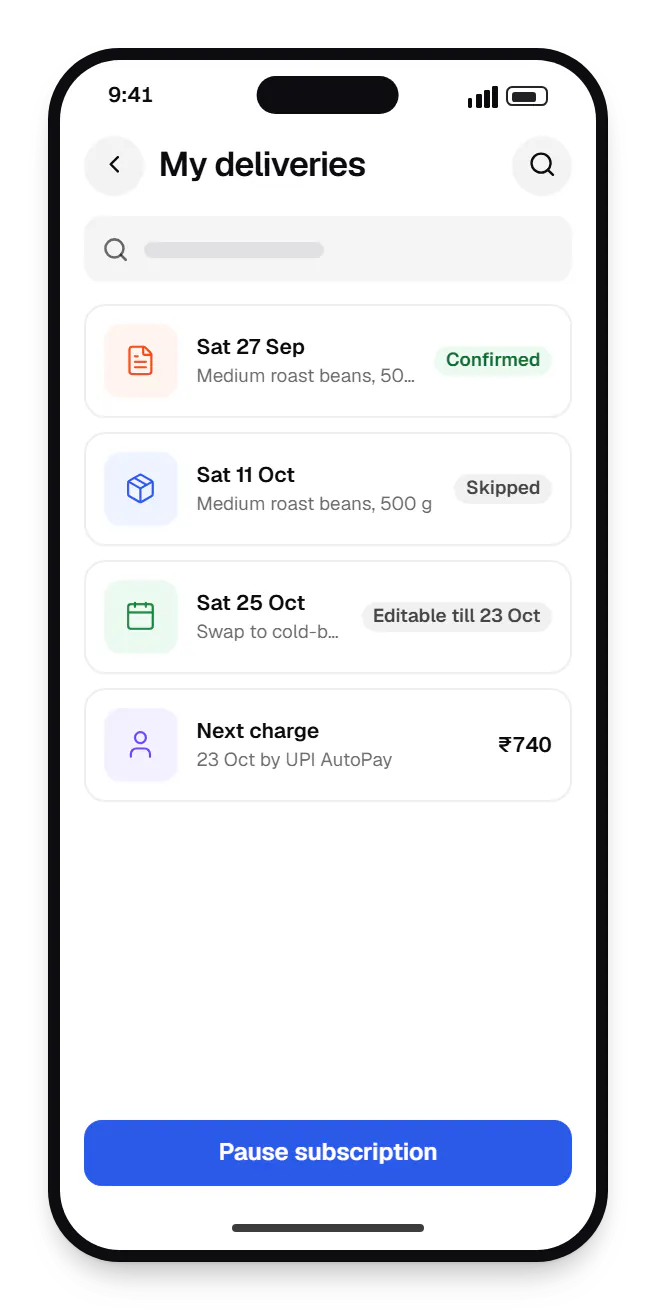
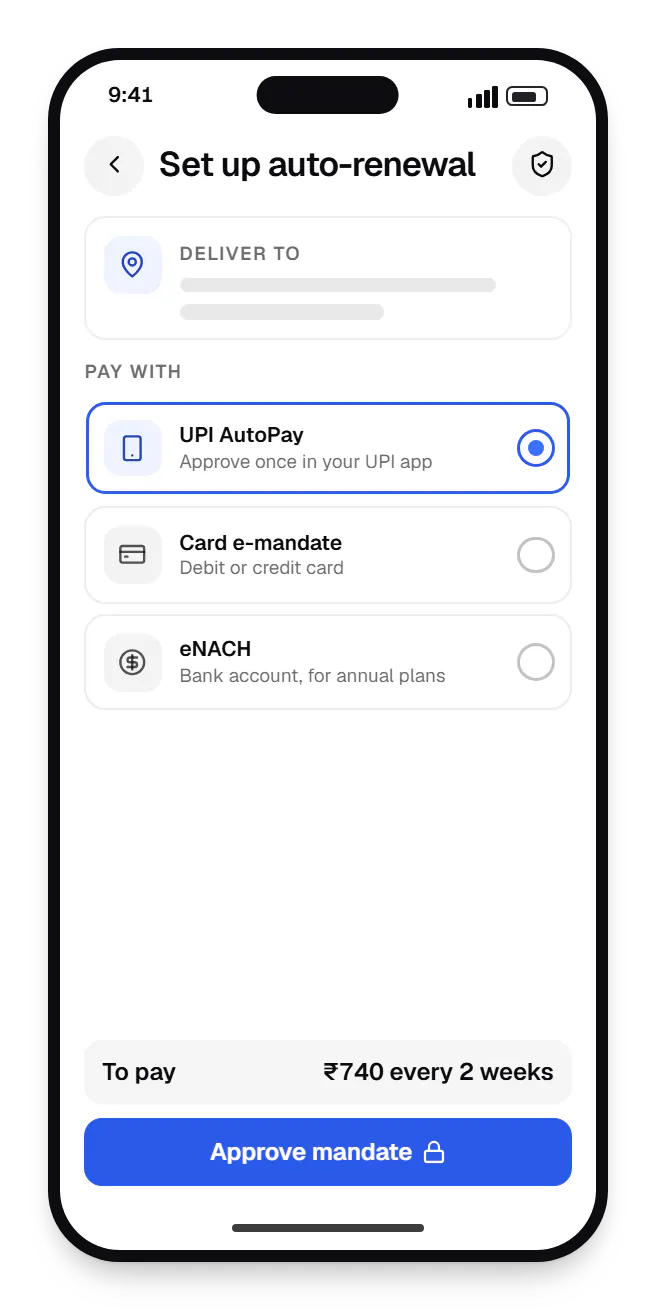
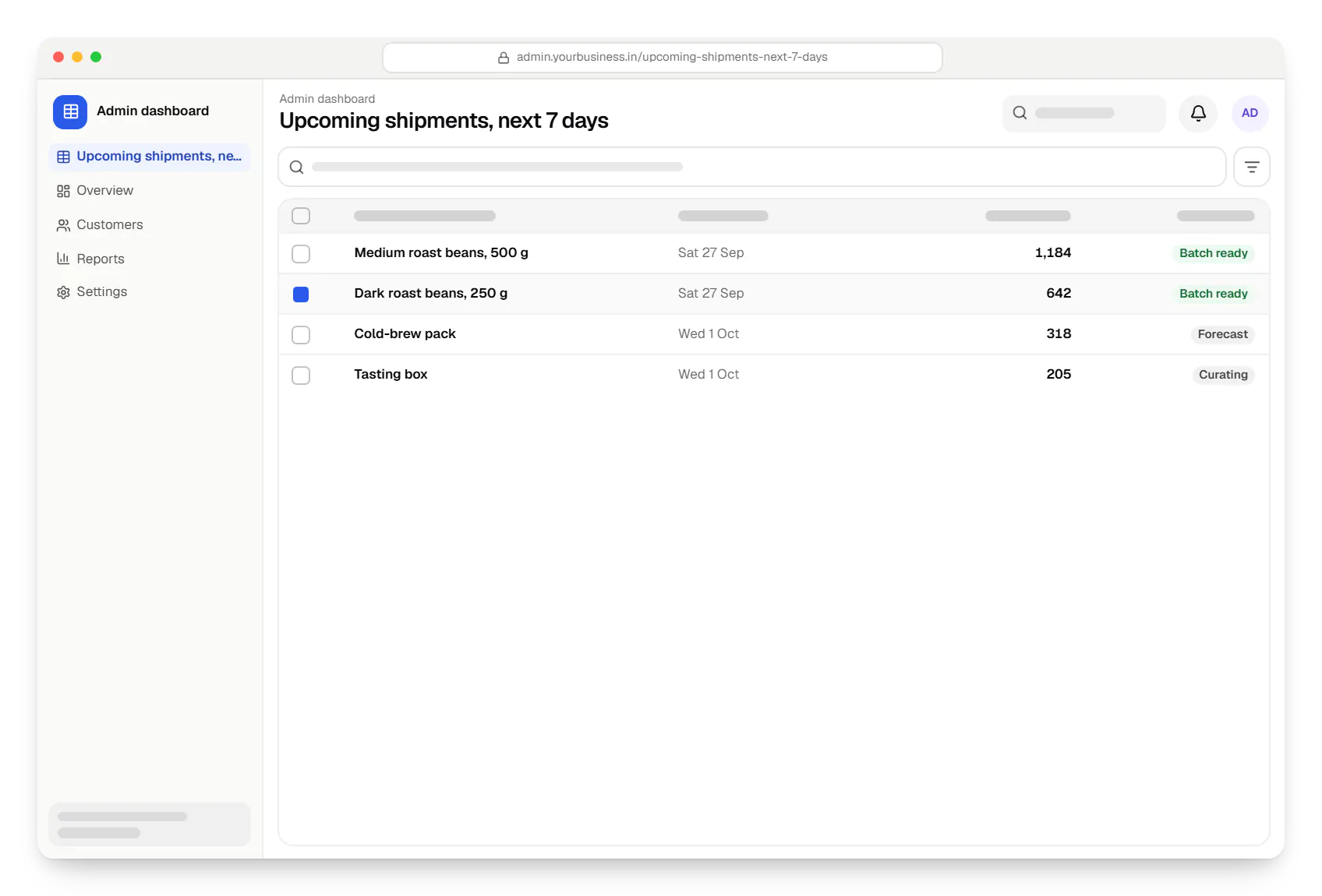
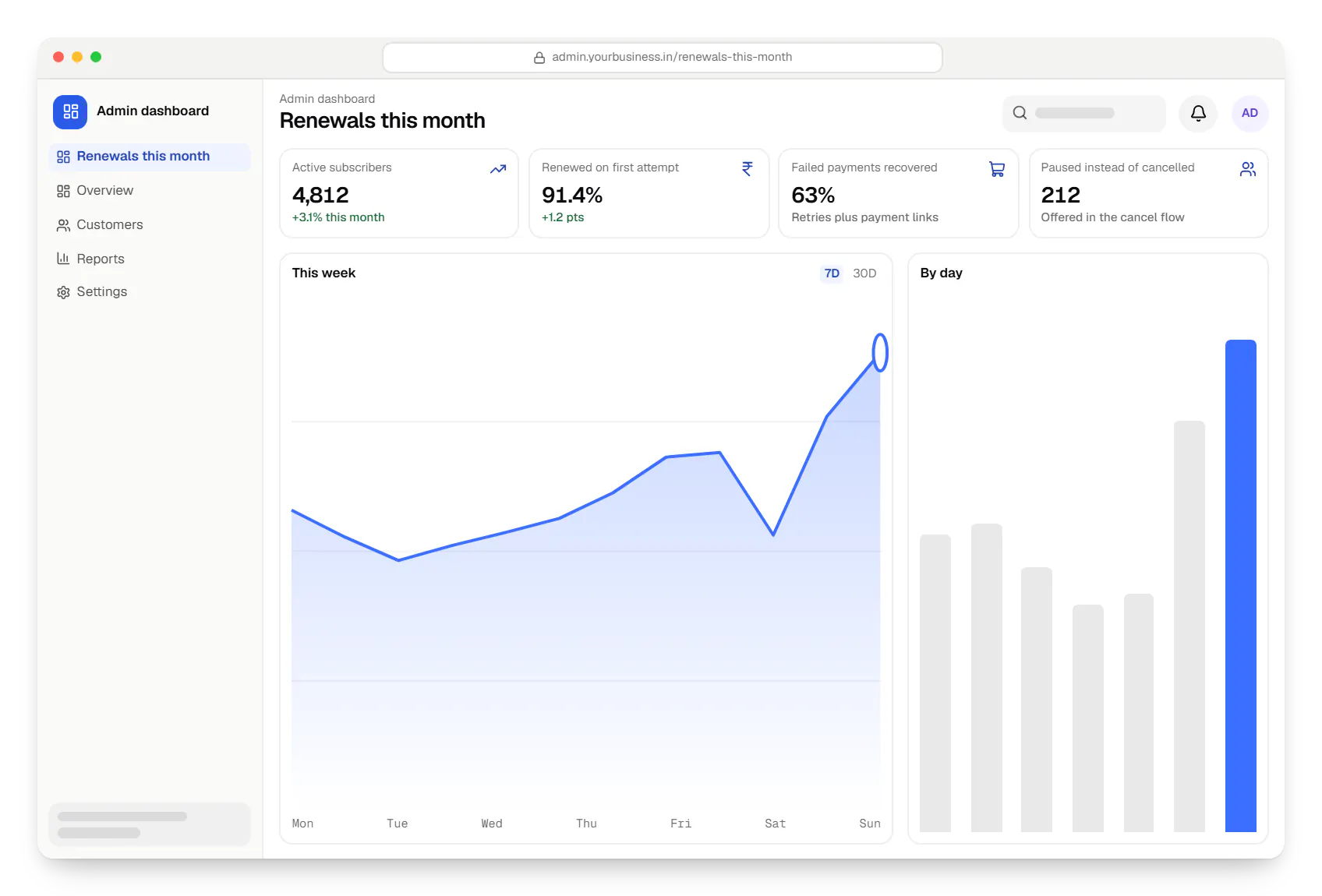
Sample screens: names, prices and figures are examples, not client data.
Industries
Services
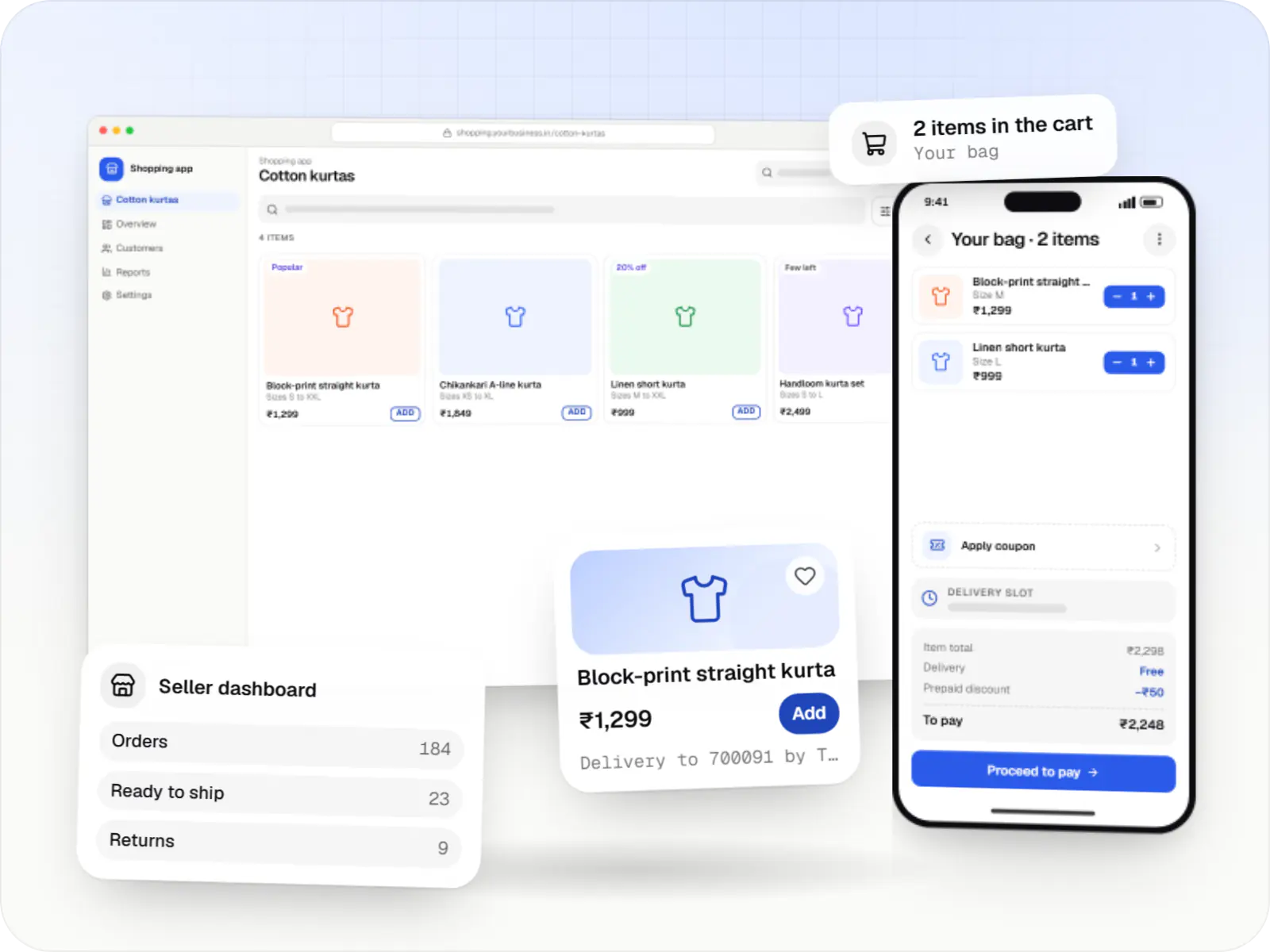
Online stores, shopping apps and B2B ordering portals on Shopify, WooCommerce or custom stacks, wired to Indian payments, couriers and GST invoicing.
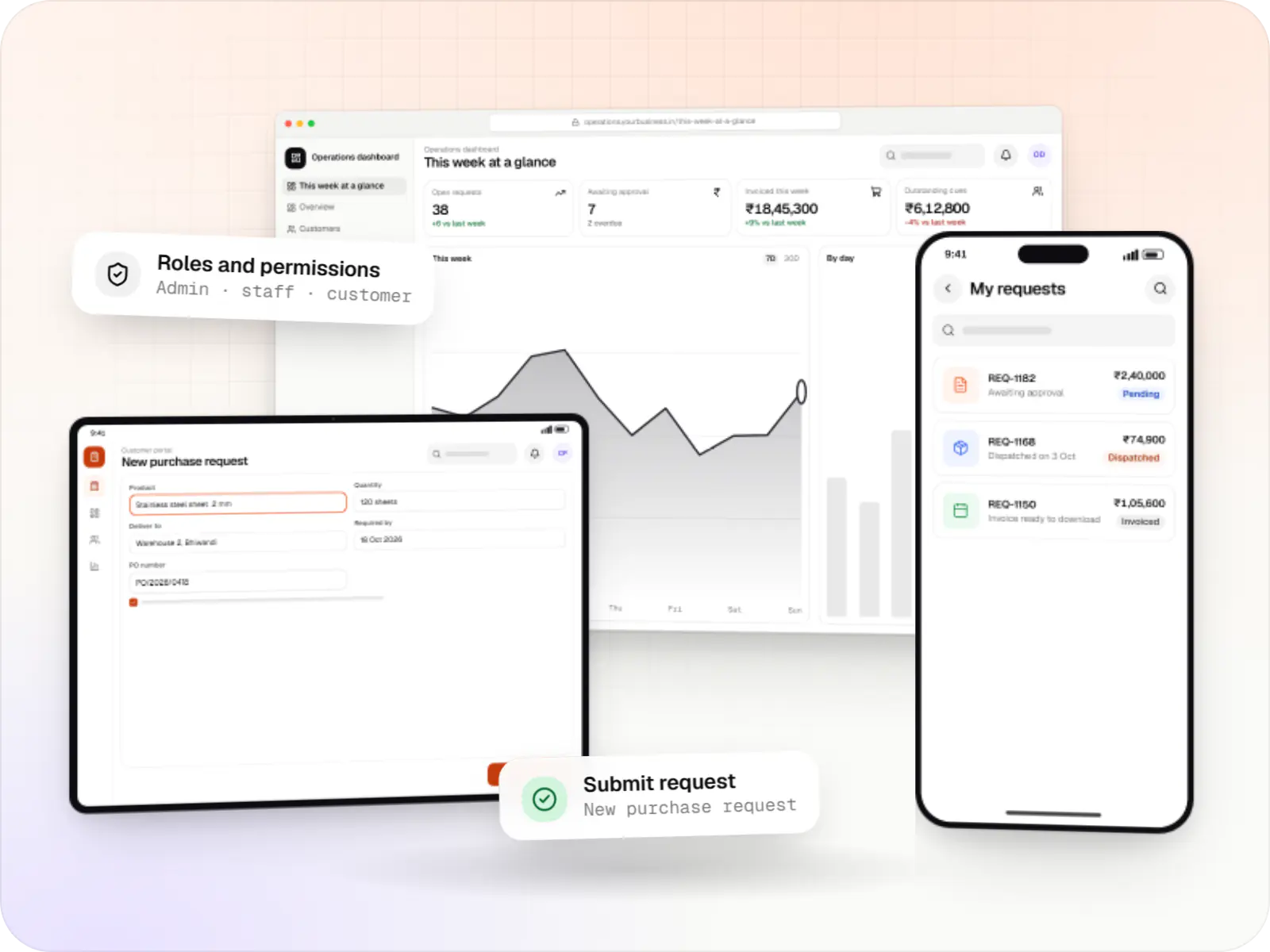
Browser-based products, customer portals, dashboards and internal tools, built on clean data models with secure roles and integrations.
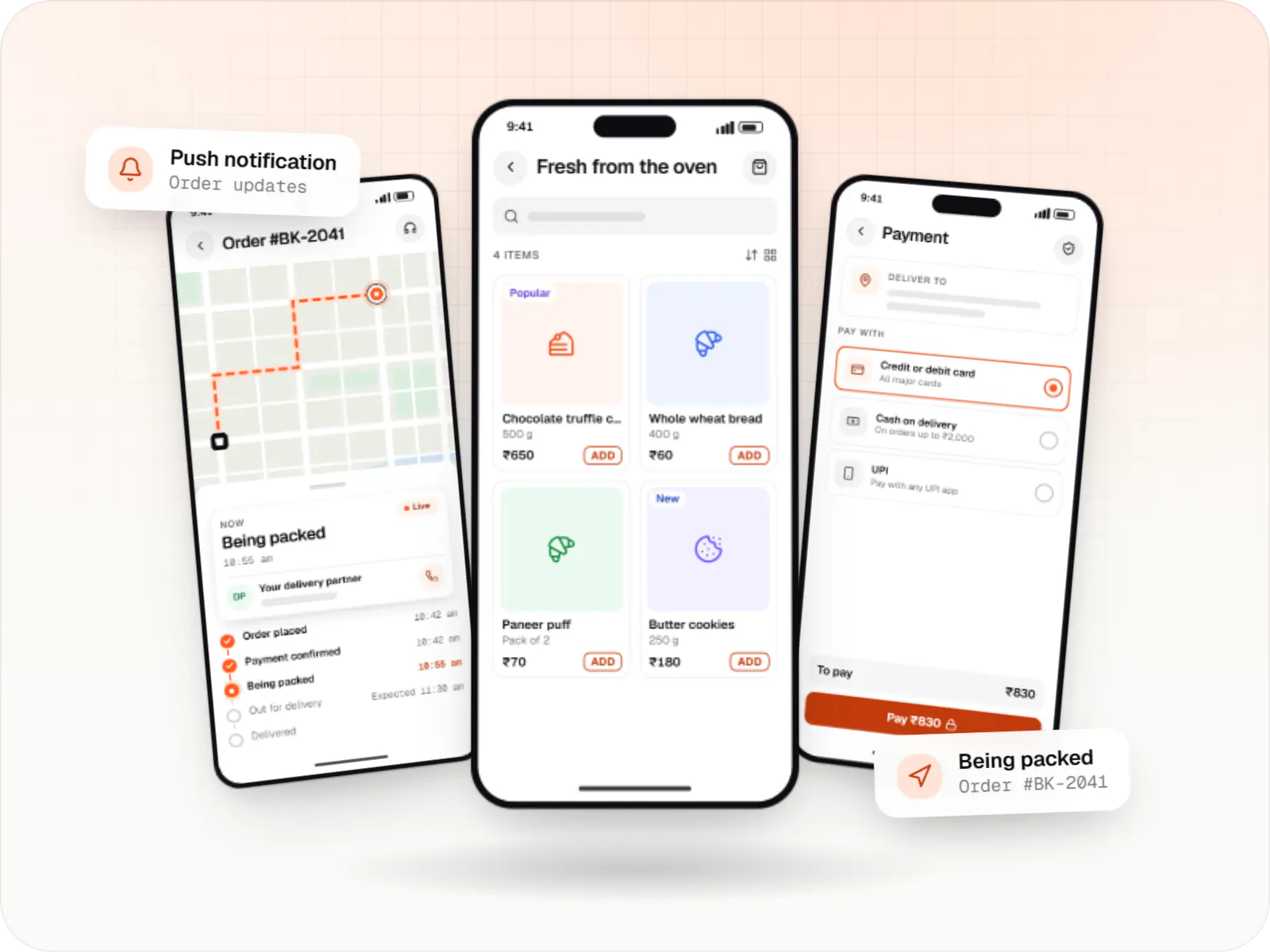
Native and cross-platform Android and iOS apps, from first release through regular store updates, built by our in-house designers and engineers.
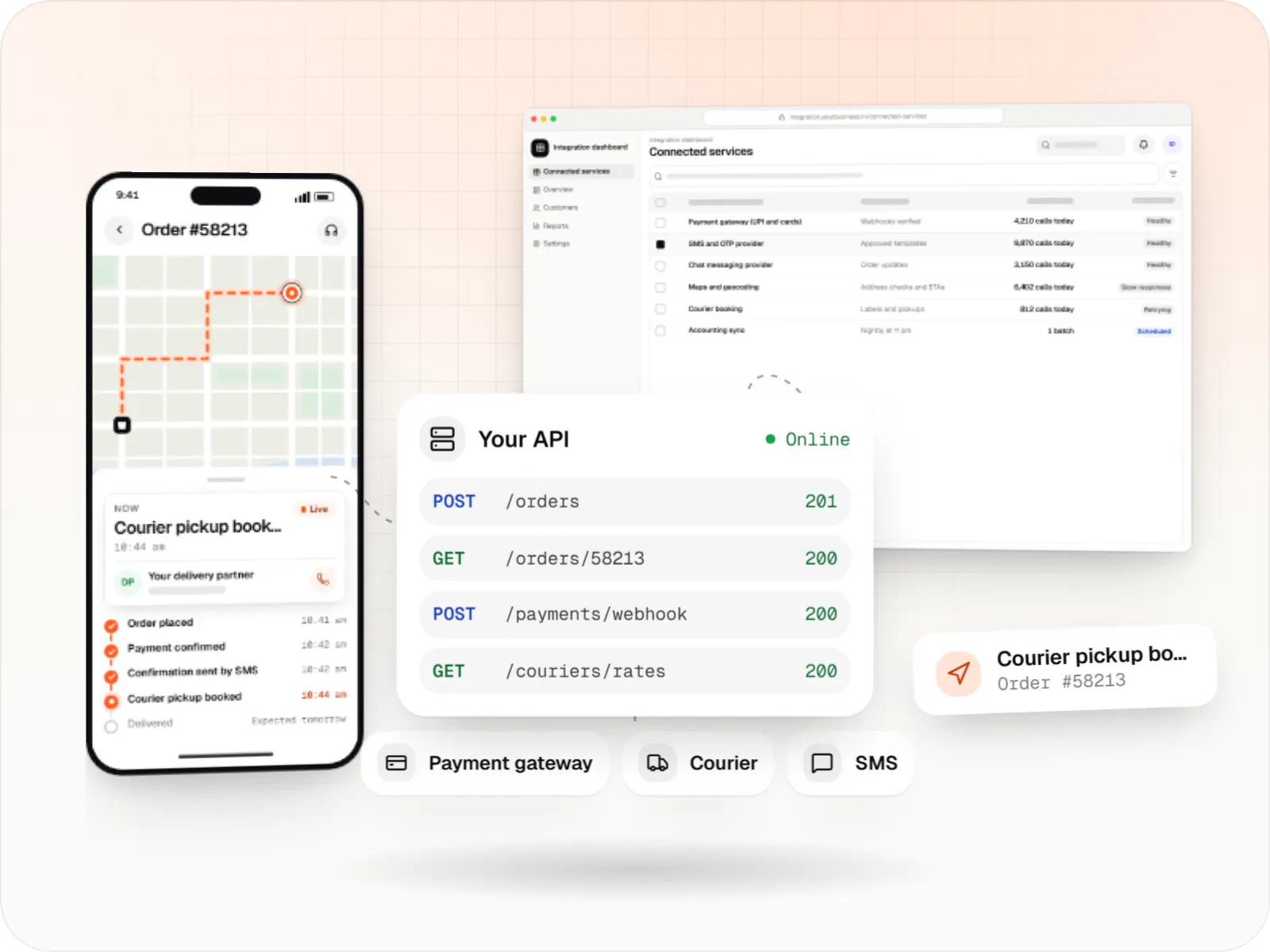
Secure, documented REST and GraphQL APIs, plus integrations that connect your apps to payment, logistics, GST, messaging and business systems.
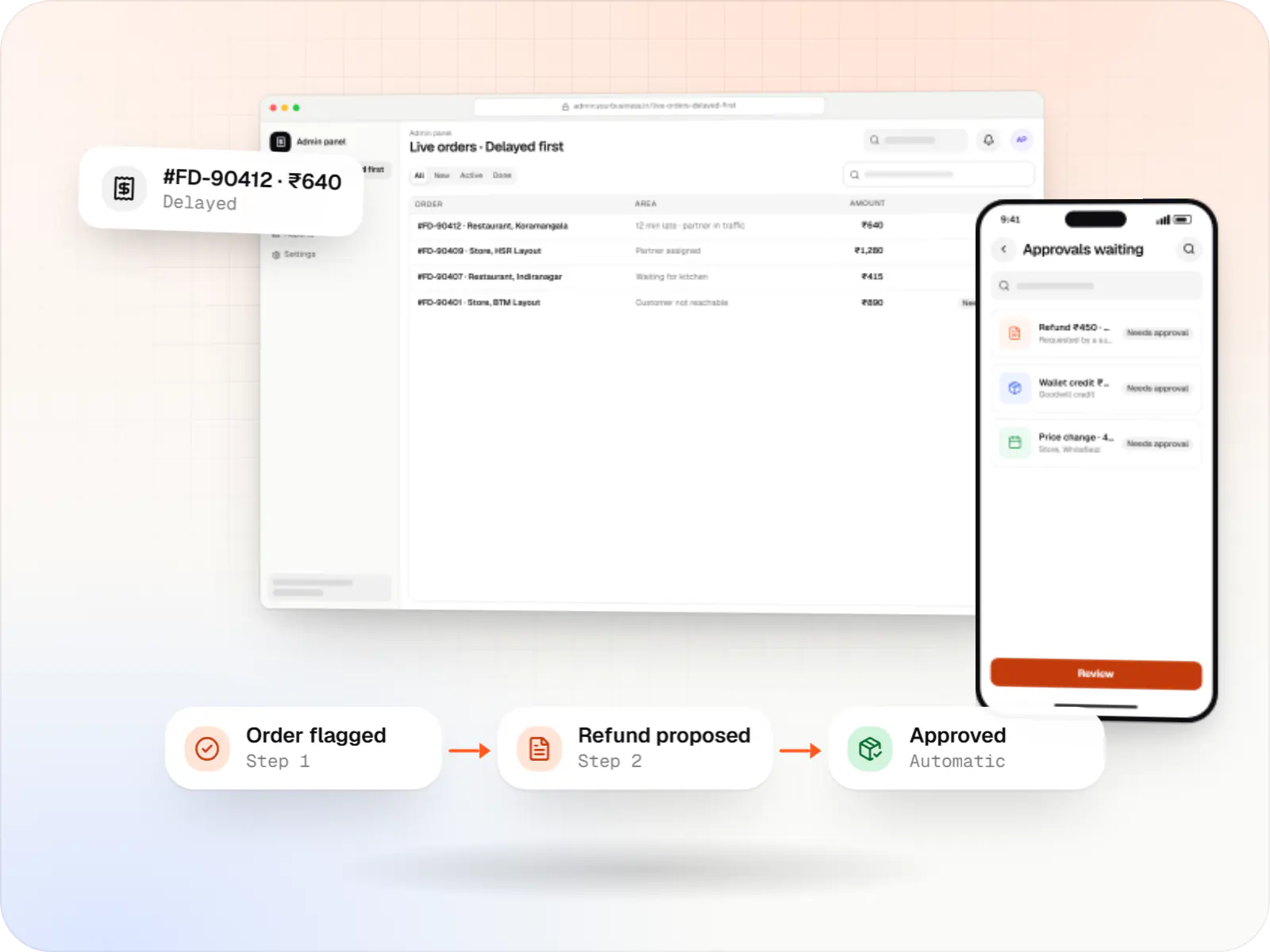
Back-office dashboards built around your team's daily tasks: order queues, approvals, catalogue management, payouts, reports and audit logs.
Cost drivers
Supporting UPI AutoPay, card mandates and eNACH together means more flows and edge cases.
Skip, pause, swap, proration and upgrades multiply billing scenarios.
Fixed boxes are simpler than curated or customer-built boxes.
Adding subscriptions to a live store means syncing products, customers and orders.
Estimates are written from your scope, with the effort and assumptions behind each line item.
How pricing worksFAQ
The customer approves a mandate once in their UPI app, setting the maximum amount and frequency. Before each renewal, a pre-debit notification goes out through the gateway, and the debit then runs without the customer entering their PIN, provided it stays within the approved limit and NPCI's threshold for auto-debits. Larger amounts need fresh authentication. Customers can pause or revoke mandates from their UPI app.
We design a recovery sequence, not a single attempt. Within the rules of the rail and gateway, the system retries in the permitted window, sends the customer a payment link as a fallback, and holds the next shipment until payment clears. Each outcome is logged against the subscriber, and the dashboard shows renewal success and recovery rates so you can tune timing and messages.
Yes, and we recommend offering both. Skip drops a single delivery; pause holds the subscription until a date the customer picks, with the mandate kept or paused depending on the rail. We show these as options within the cancellation flow, not obstacles, so a customer who still wants to cancel can do so in a click or two.
Often, yes. On a hosted platform, subscription apps may cover simple replenishment plans; we build custom services when you need Indian mandate rails, box logic or memberships they do not support. For custom stores, the subscription engine sits beside your catalogue and order services and creates an order at each renewal, so fulfilment and reporting stay in one place.
Next step
Tell us what customers will subscribe to and how often. We will map the billing rules, payment rails and a phased build.