

Web
Next.js
A modern web technology for fast, search-friendly websites, online stores and web applications that load quickly on mobile.
Used for
- Business websites
- Online stores
- Web apps
- Customer portals
Industries · Footwear
Make sure the right size is where the customer is, whether that's a store shelf or a courier bag.
At a glance
What it is
Software for footwear brands and retailers: size-run inventory, cross-store availability, size conversion and exchange-friendly logistics.

For footwear brands, multi-brand shoe retailers and manufacturers with dealer networks or factory outlets.
Flutter and the related logo are trademarks of Google LLC. We are not endorsed by or affiliated with Google LLC.
How to start
Tell us what you need in your own words. You talk to the developers who would build it and get a written, line-item estimate.
Get a project estimateFootwear sales often hinge on one question: is my size available? Stock is bought in size runs, sizes sell unevenly, and a single missing size can cost a sale even when the style is well stocked. Online, buyers hesitate over UK, EU and US size labels and brand-specific fits.
We build footwear software that tracks stock at size level by location, shows cross-store availability to staff and shoppers, and keeps exchanges quick so a wrong size does not turn into a refund.
Challenges
Replenishment by style ignores which sizes actually sold.
Staff cannot check whether another outlet holds the size a customer wants.
Buyers unsure between UK, EU and brand fits order two sizes, or none.
Dealers order size sets by phone, with no view of brand stock.
Solutions
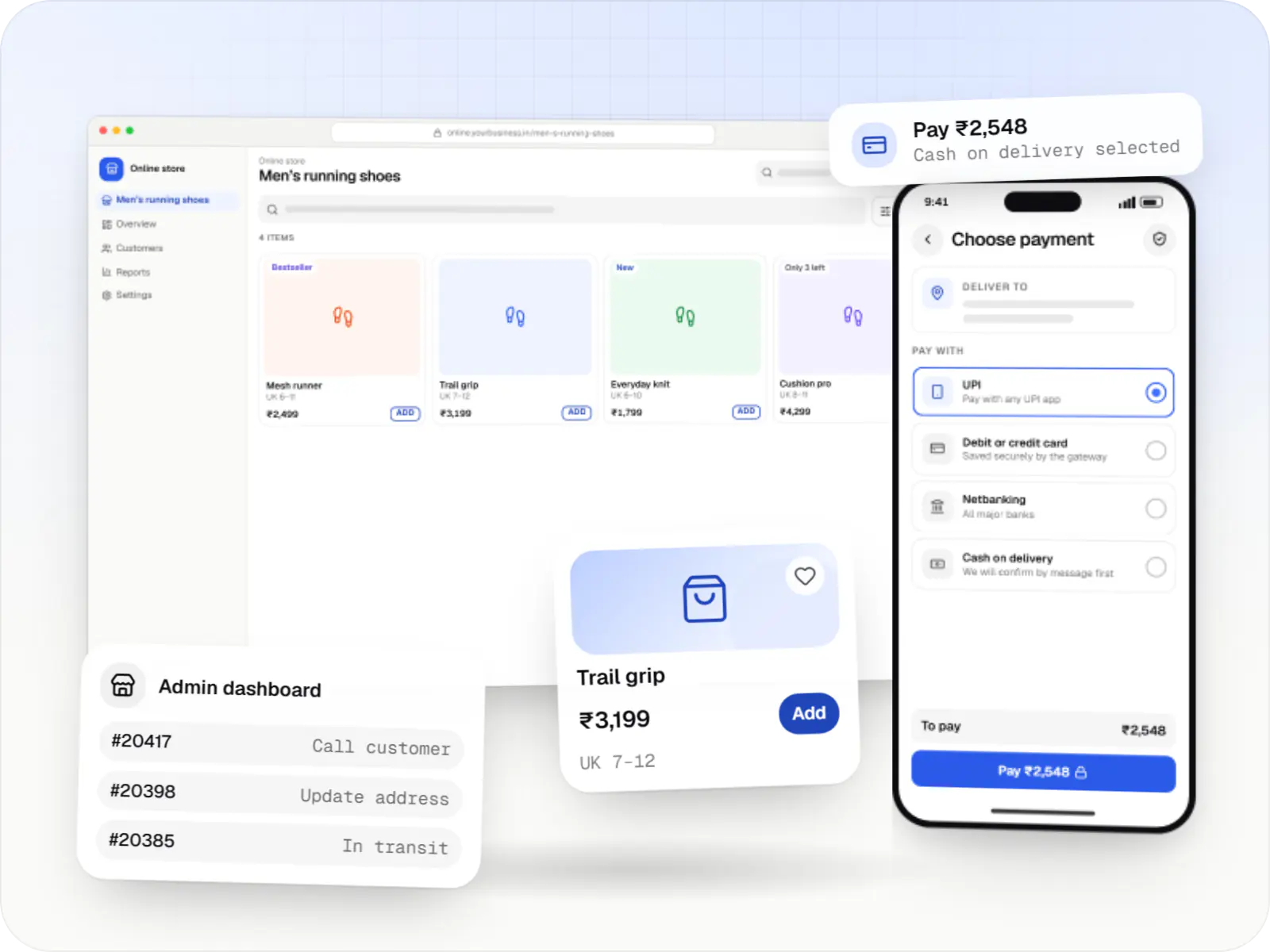
Fast, search-friendly online stores with UPI, card and COD checkout, GST invoices and courier integrations, on a hosted platform or custom code.
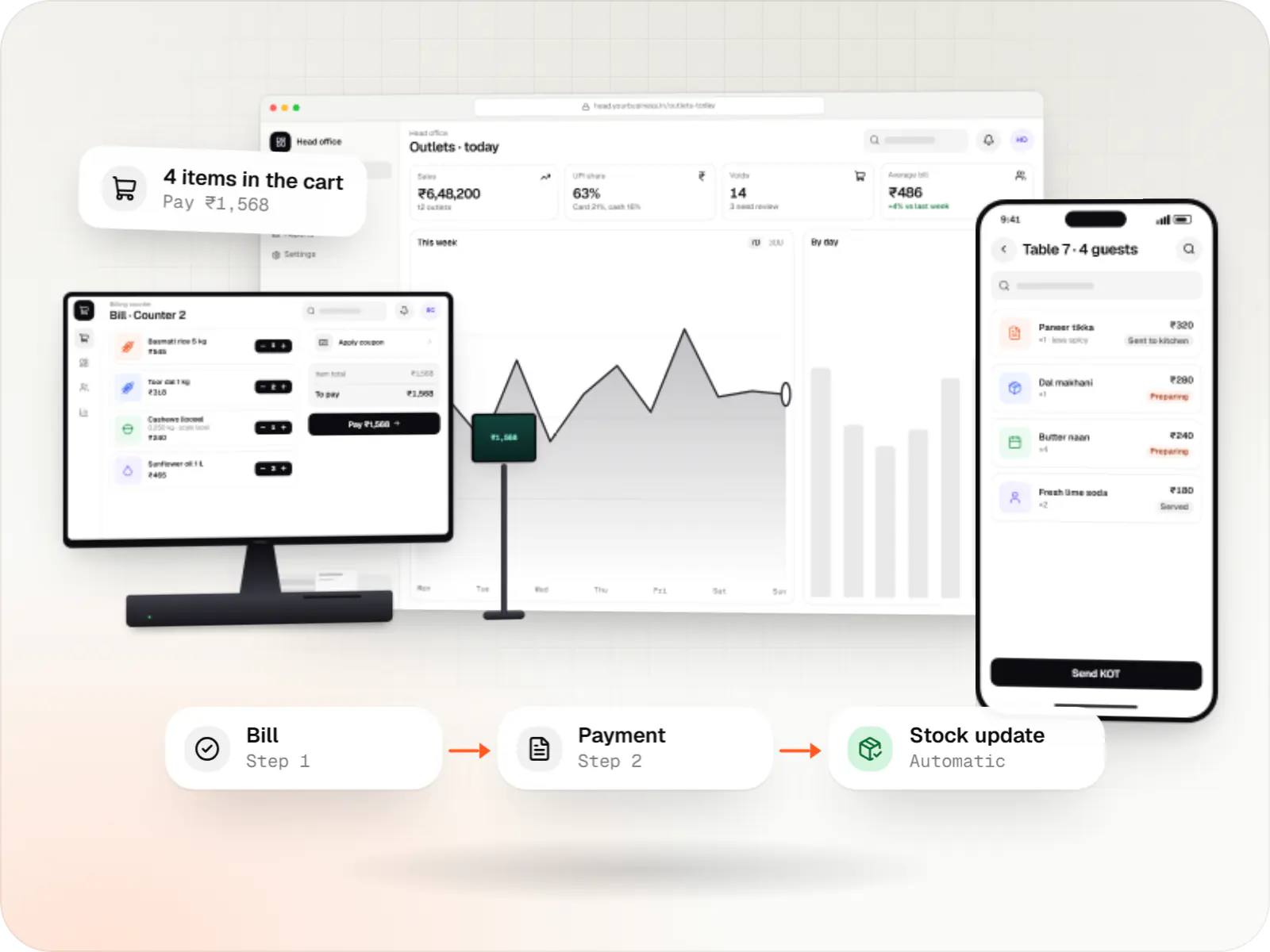
Custom point-of-sale software with offline billing, UPI QR payments, GST invoices, hardware integration and central control for multiple outlets.
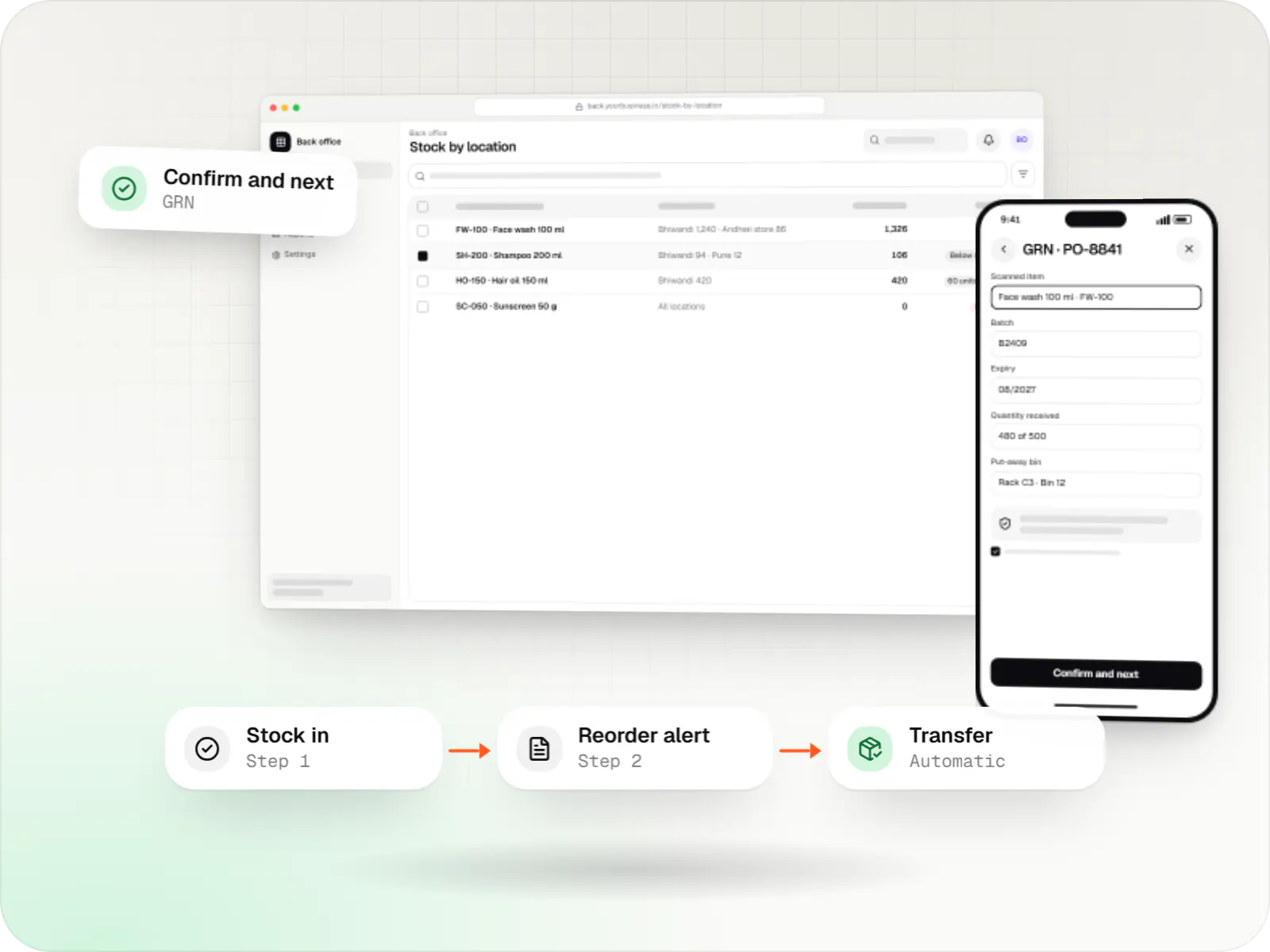
Custom inventory software for multi-location stock, batch and expiry tracking, barcode scanning and marketplace stock sync.
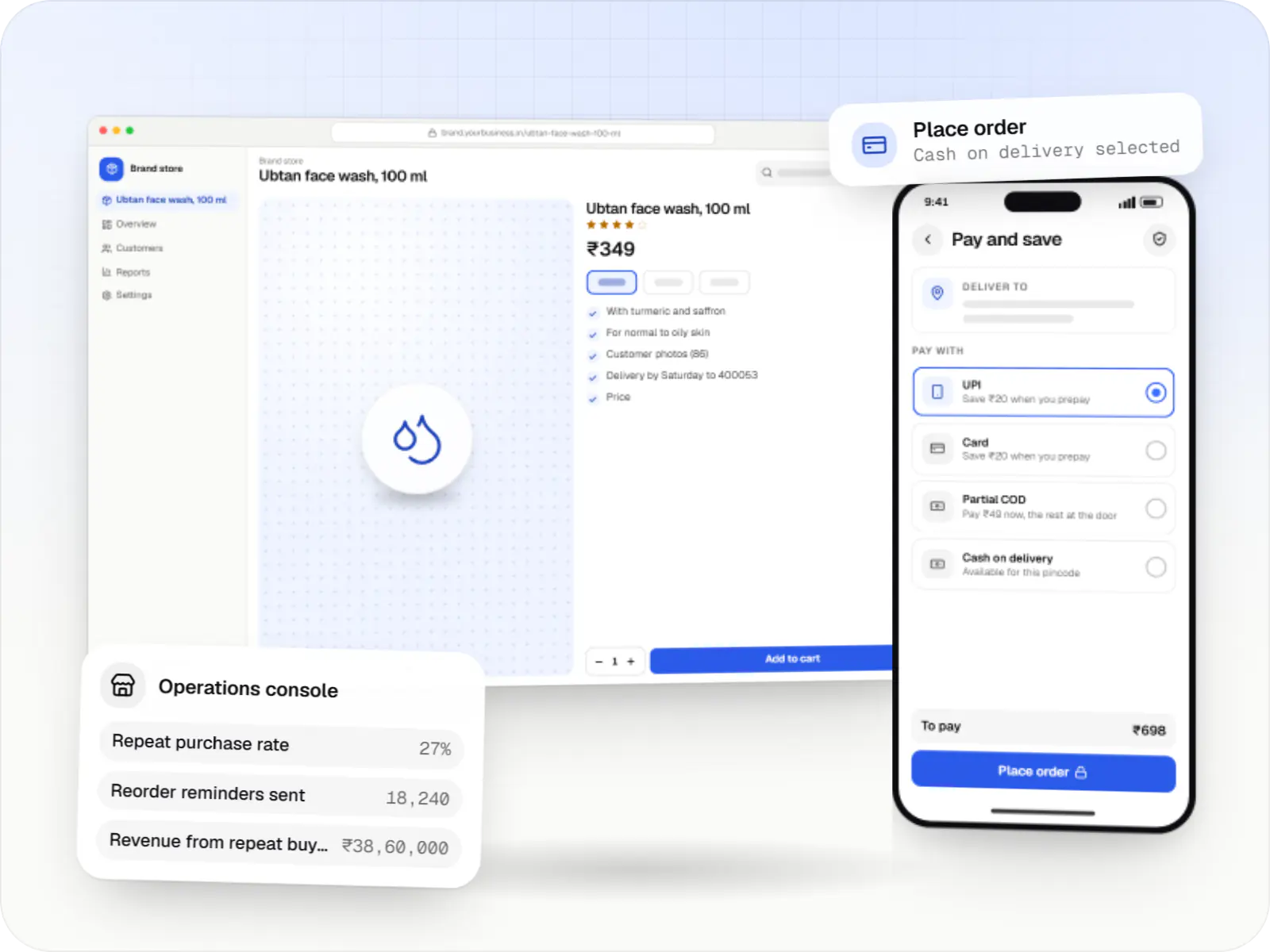
Brand-owned online stores for D2C companies, with conversion-focused checkout, retention tools, server-side tracking and multichannel stock sync.
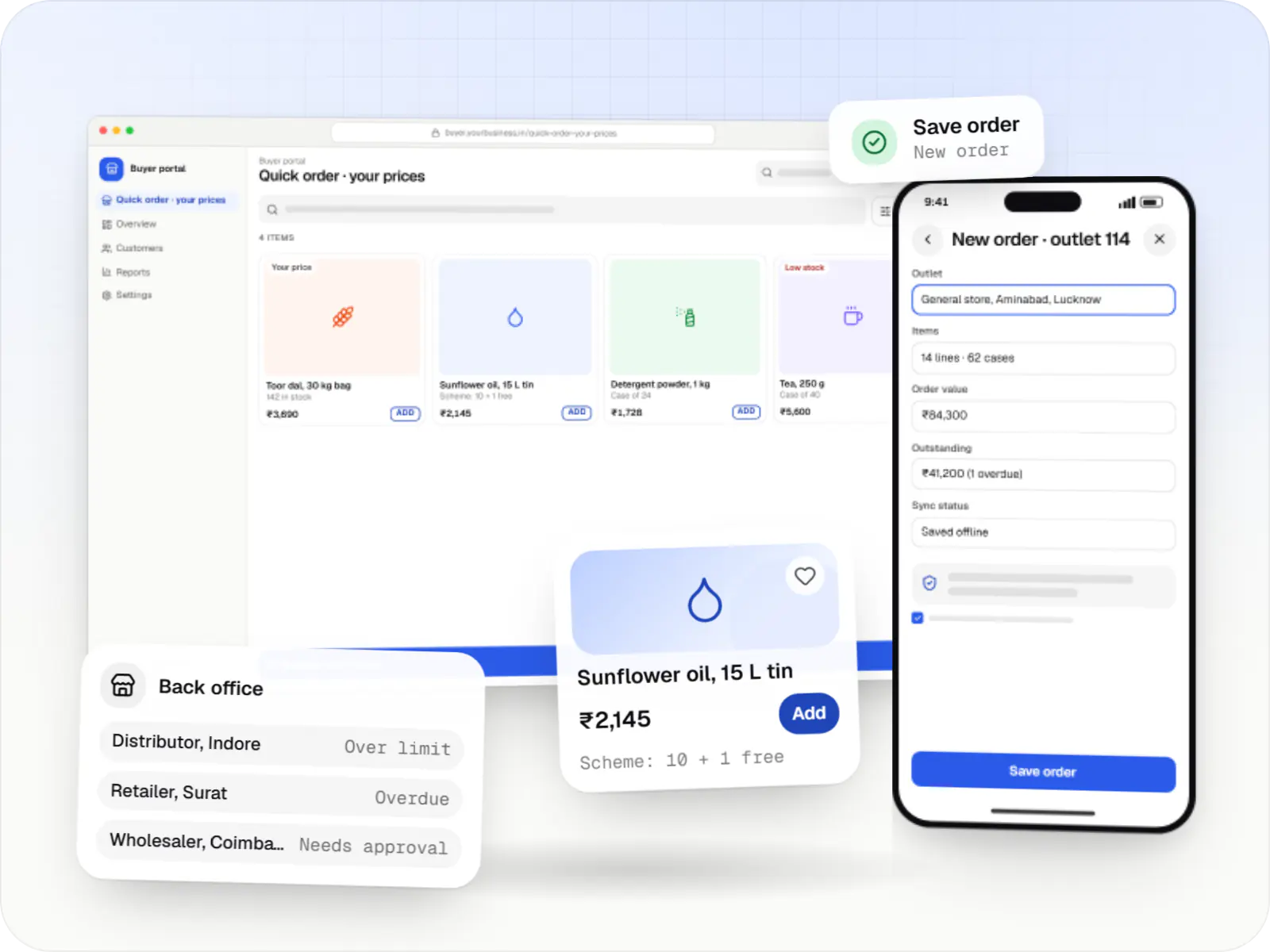
Ordering portals and apps for manufacturers, distributors and wholesalers, with buyer-specific pricing, credit limits, bulk ordering and ERP sync.
Inventory per style, colour and size across warehouses and stores.
Staff find the size at a nearby outlet and order it for delivery or pickup.
UK, EU and US conversions with brand-specific fit guidance.
Reorder suggestions per size from sell-through, not just style totals.
B2B ordering in size sets or assortments with scheme pricing.
How it works
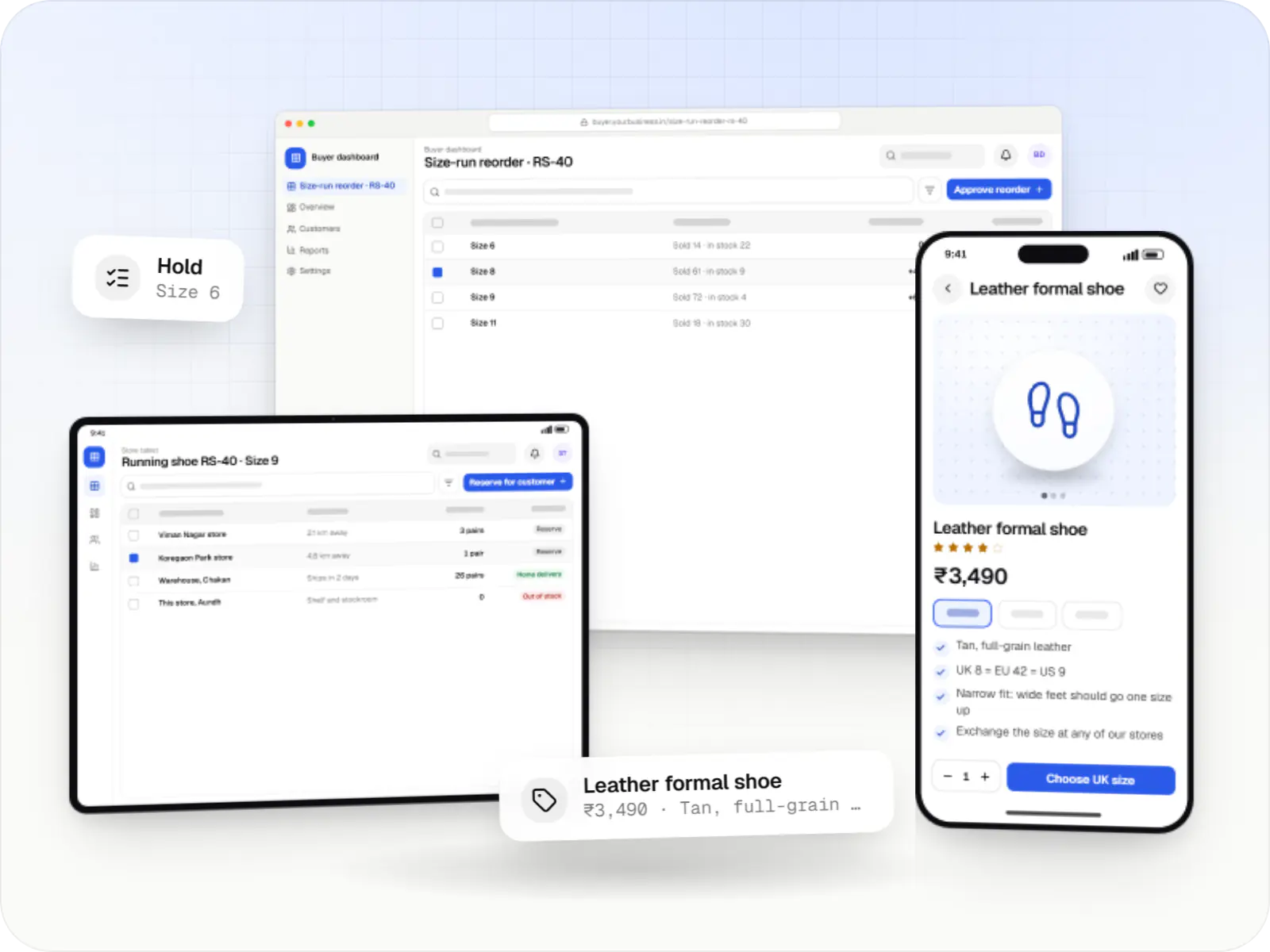
Staff find and reserve the size at another location while the customer is still in the store.
The style fits, but size 9 is not on the shelf at this outlet.
The POS or a store tablet shows which stores and which warehouse hold that size right now.
The pair is held at the other location so it can't be sold twice while the customer decides.
The customer pays now for home delivery, or a stock transfer is raised for pickup at the store they prefer.
Sell-through by size and location becomes a reorder suggestion per size, which a buyer approves or adjusts.
Platforms
Marketing and content websites: fast, search-friendly pages with a CMS your team can update without a developer.
Apps for Android phones and tablets, tested on budget and mid-range devices and published on Google Play or privately.
Windows and macOS apps for billing counters, kiosks and offline-heavy work, where a browser isn't enough.
Back-office panels for operations, support and finance teams: orders, users, content, reports and permissions.
Technology
Web
A modern web technology for fast, search-friendly websites, online stores and web applications that load quickly on mobile.
Used for
Web
Builds interactive screens in the browser, such as dashboards, admin panels and portals, that respond instantly as your team works.
Used for
Backend
Runs the server side of apps: fast, scalable back ends that power your app, website and integrations.
Used for
Data
A reliable database for the records your business runs on: orders, payments, bookings and stock, kept accurate and easy to report on.
Used for
Mobile
Build Android and iOS apps from one shared codebase, so you launch on both platforms faster with a consistent experience.
Used for
Payments & maps
Lets customers in India pay by UPI, cards, netbanking or wallets, and handles subscriptions, refunds and payouts to sellers or partners.
Used for
Flutter and the related logo are trademarks of Google LLC. We are not endorsed by or affiliated with Google LLC.
Plain-English glossary
Product preview
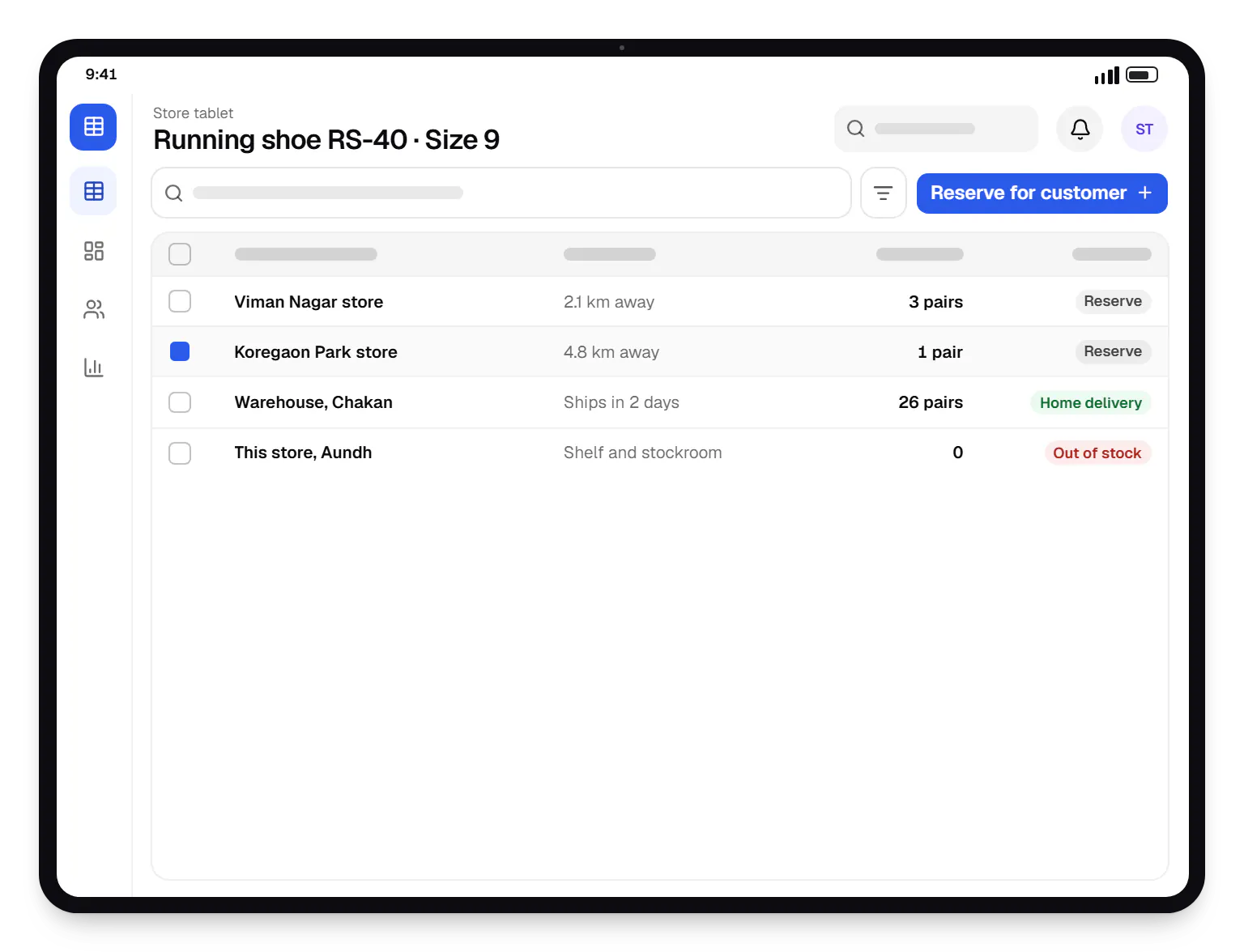
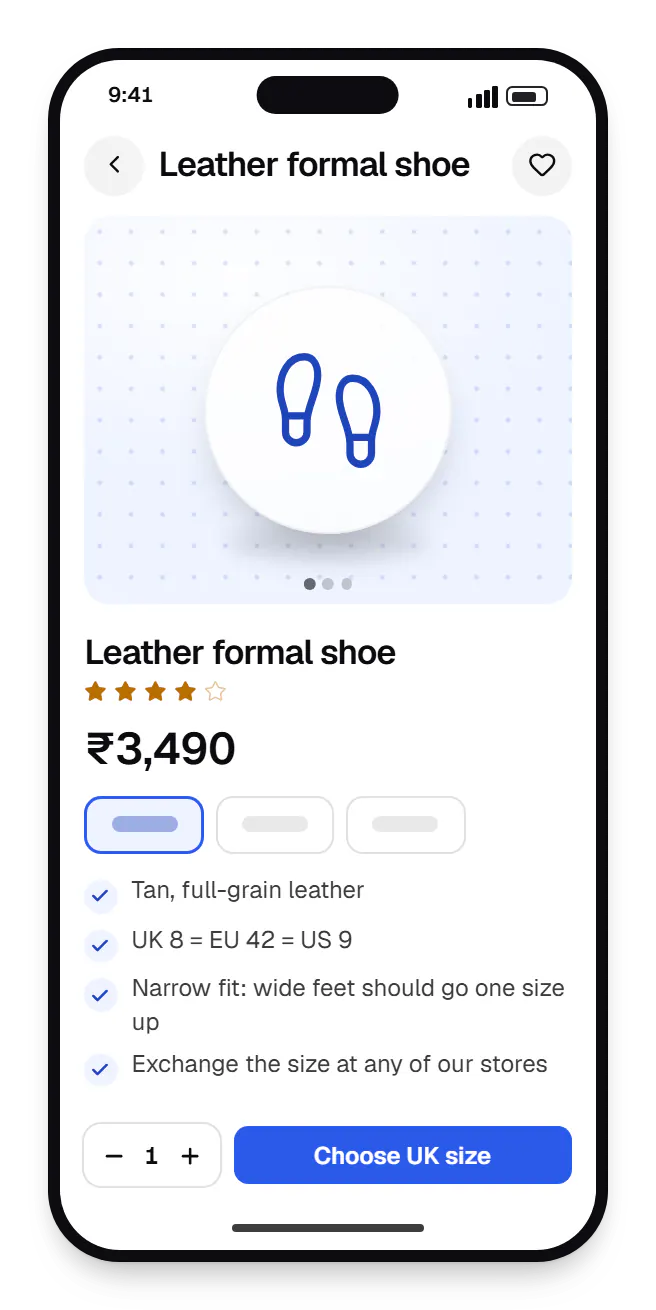
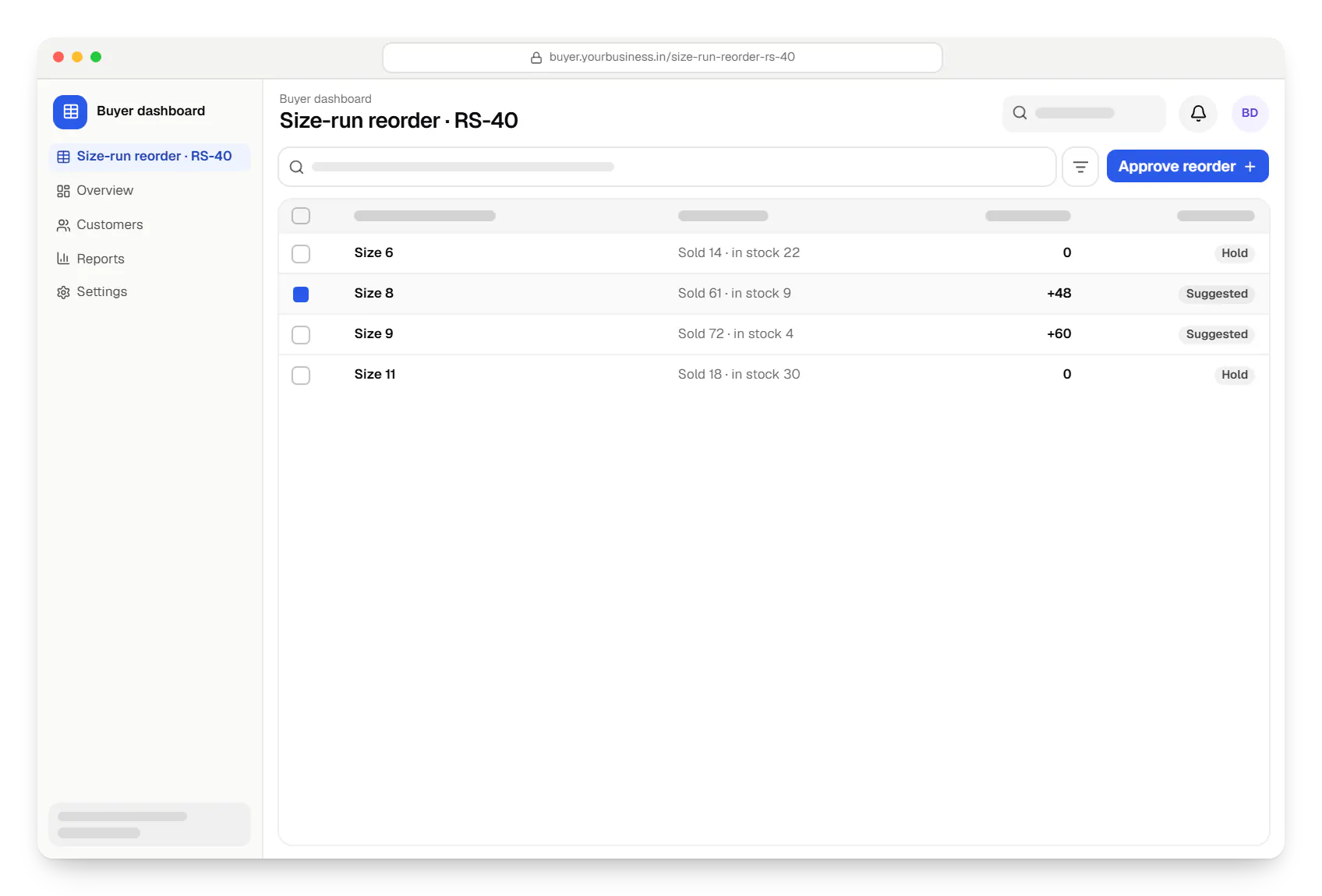
Sample screens: names, prices and figures are examples, not client data.
Cost drivers
More stores and warehouses increase stock sync and transfer workflow scope.
Size-set B2B ordering adds a portal, pricing rules and credit checks.
Replacing store billing costs more than integrating with the POS you have.
Estimates are written from your scope, with the effort and assumptions behind each line item.
How pricing worksServices
The design and engineering services our in-house team combines on projects in this sector.
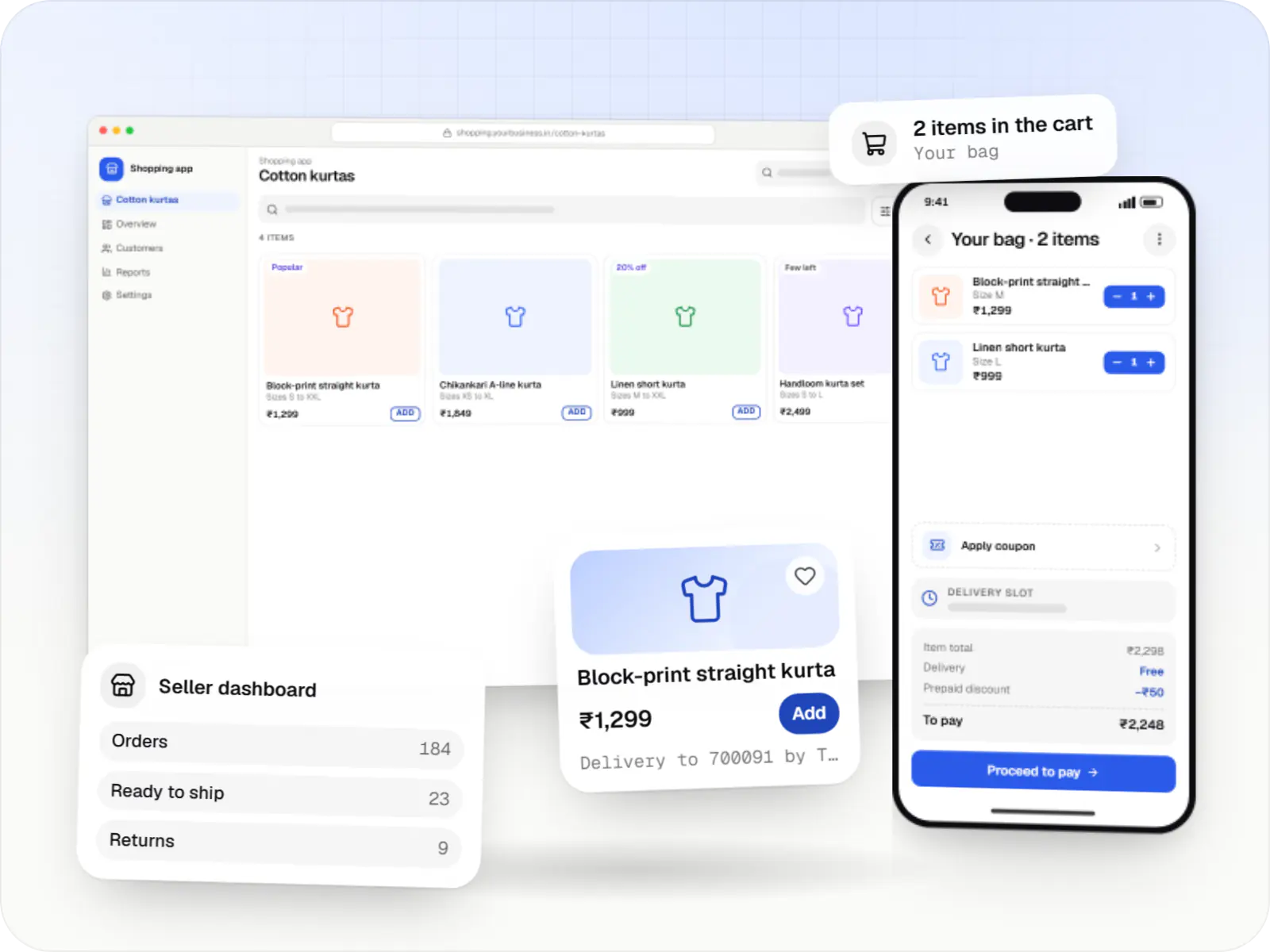
Online stores, shopping apps and B2B ordering portals on Shopify, WooCommerce or custom stacks, wired to Indian payments, couriers and GST invoicing.
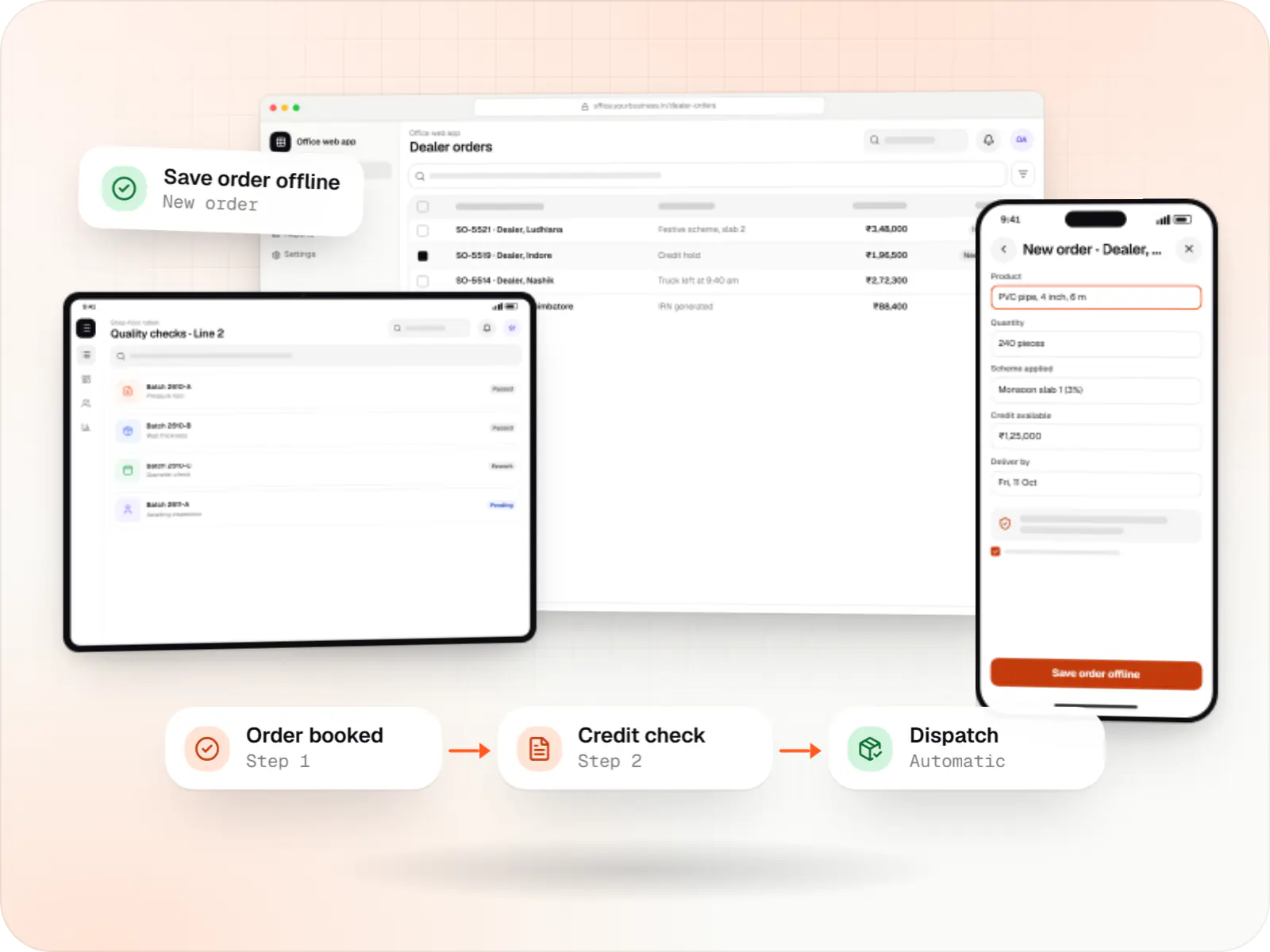
Software shaped around how your business runs, from approvals and inventory to billing and reports, replacing spreadsheets and disconnected tools.
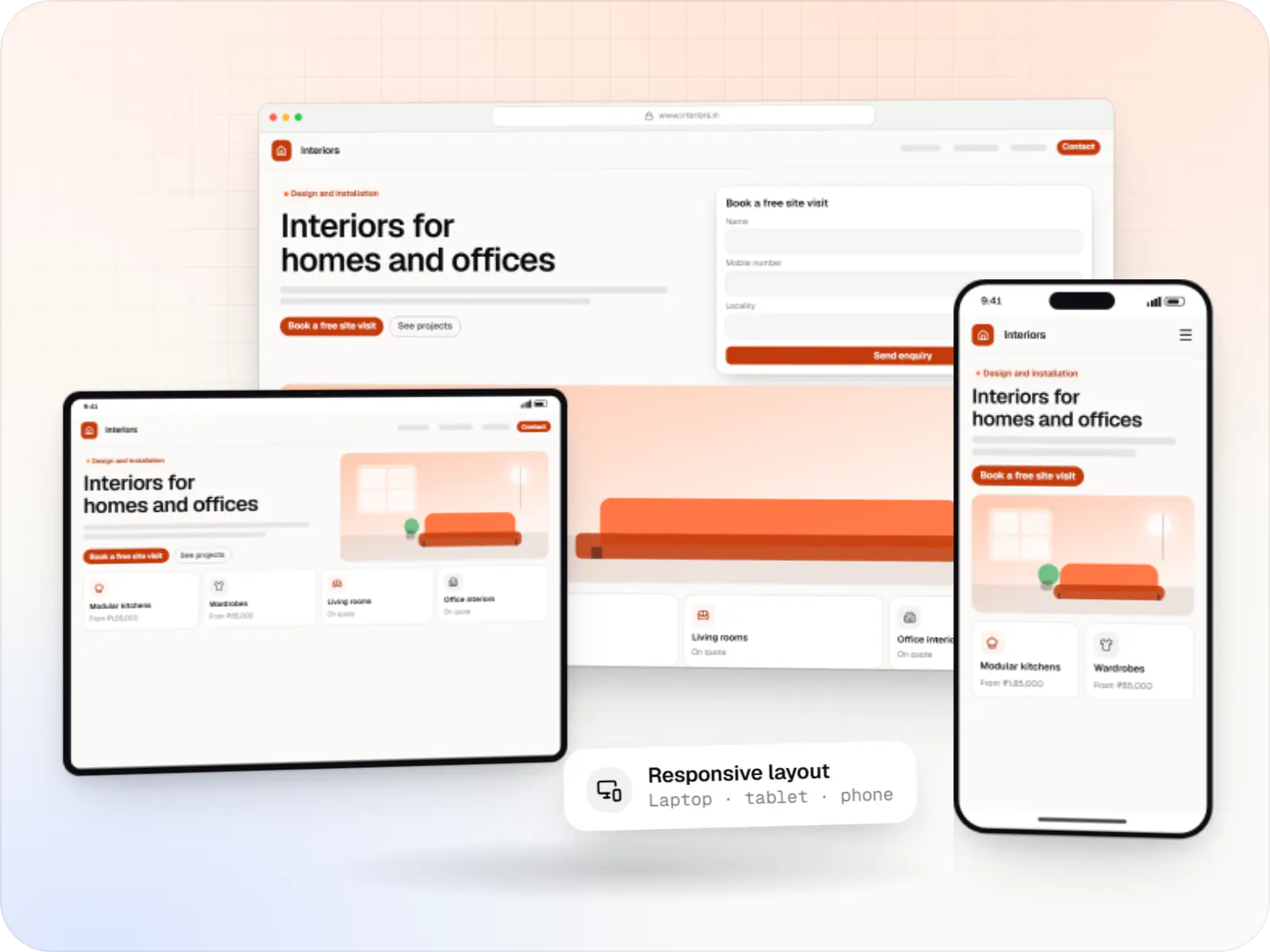
Fast, SEO-ready company and marketing websites with a CMS your team can edit, designed and built by our in-house team.
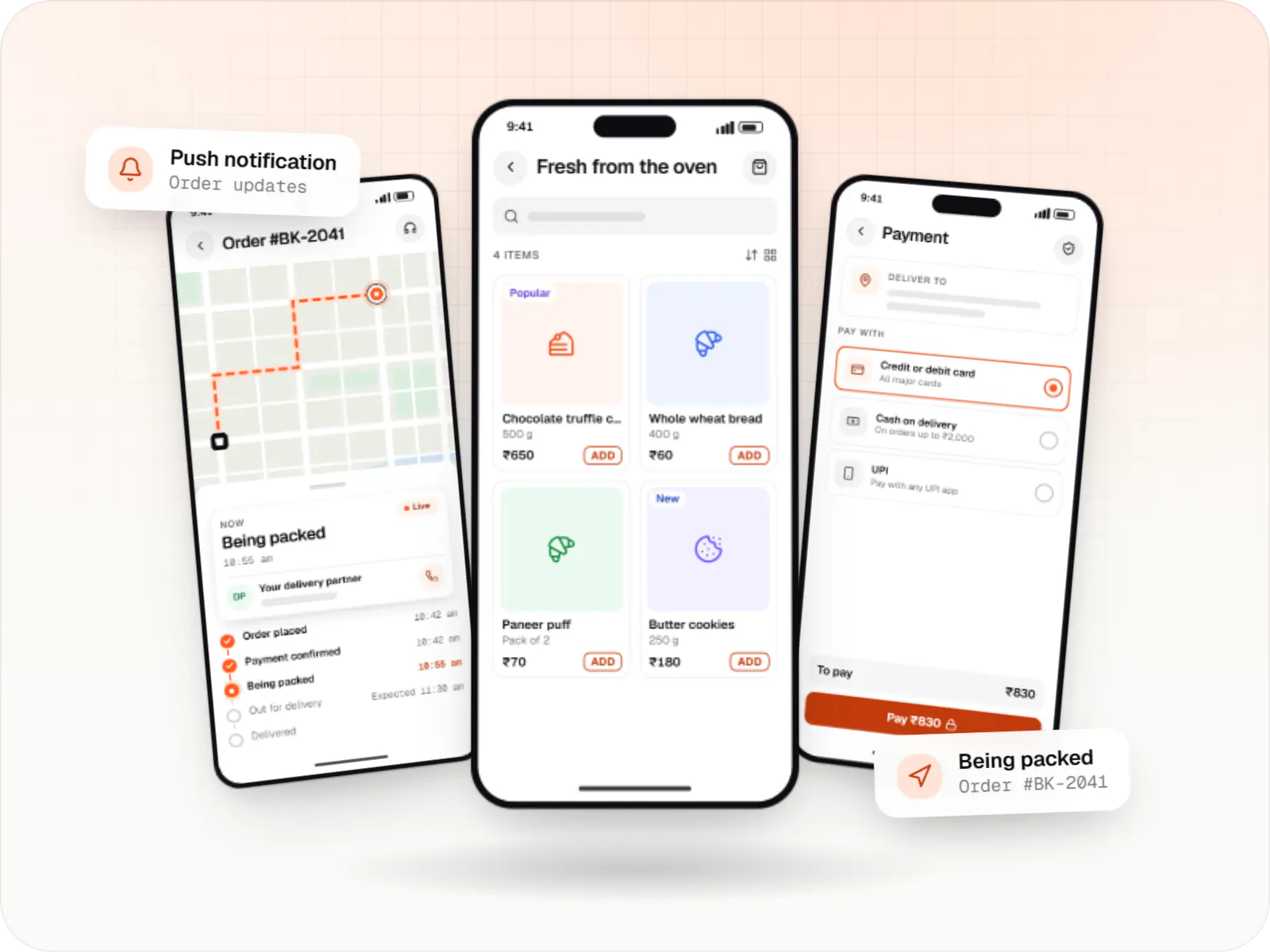
Native and cross-platform Android and iOS apps, from first release through regular store updates, built by our in-house designers and engineers.
Work
Illustrative projects that show how we would approach a product in this sector.
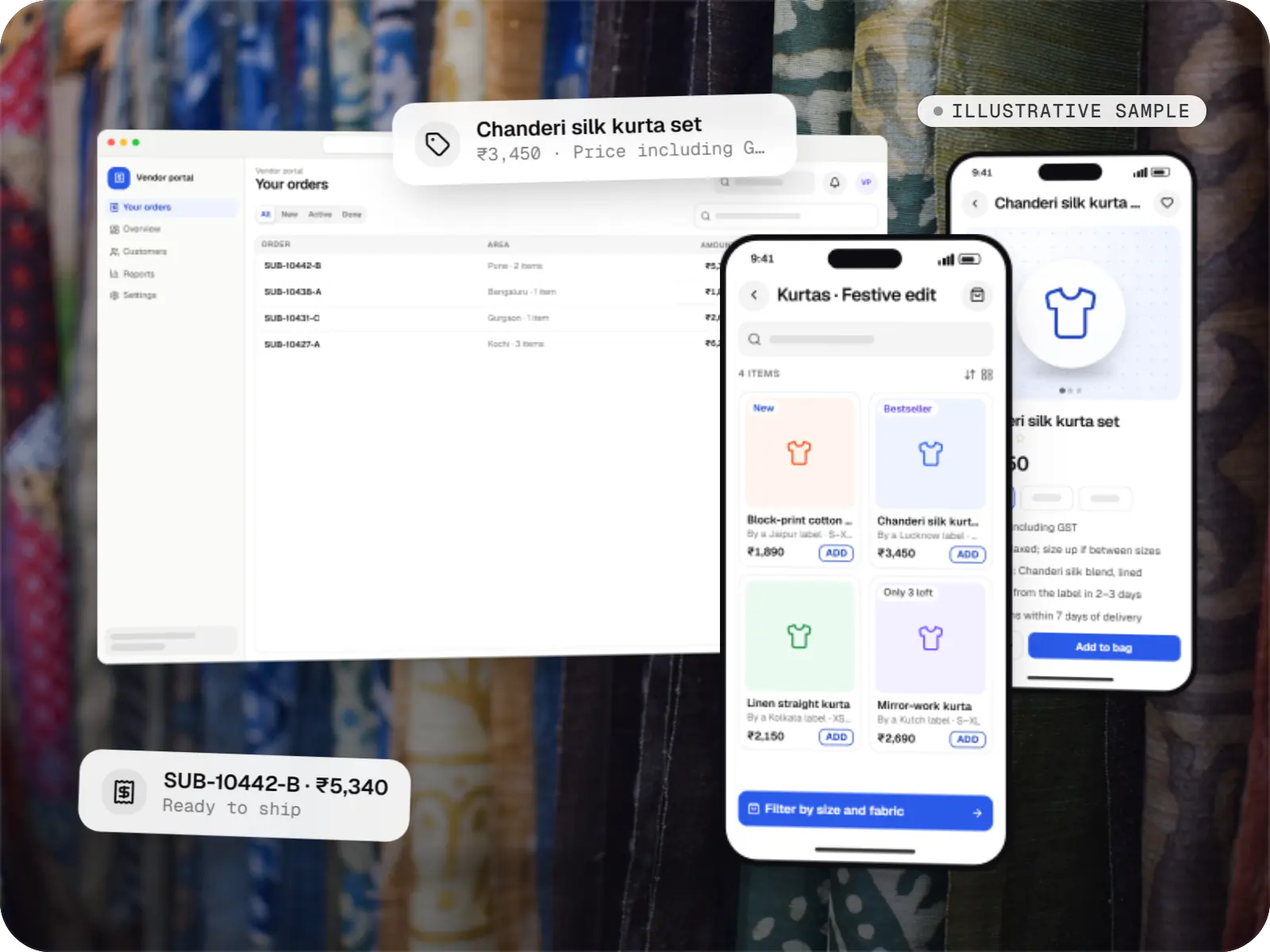
E-commerce & marketplaces
An illustrative marketplace where independent fashion labels sell through one storefront, with vendor onboarding, commission rules, multi-pickup shipping, returns and scheduled payouts.
Runs on
Built with
FAQ
Each outlet's billing updates a central stock service in near real time. When a customer asks for a size that isn't on the shelf, staff search the style on a tablet or the POS and see which nearby stores or the warehouse hold it. They can place an order for home delivery or request a transfer for pickup, and the stock is reserved so it isn't sold twice.
We recommend treating it as suggestions that a buyer or store manager approves. The system looks at sell-through by size and location over a period you choose, current stock and pending orders, then proposes quantities per size. Early on the suggestions are simple rules; as history builds, forecasting can refine them. Keeping a human approval step avoids overstocking when a trend turns.
Yes. Dealer ordering can be set up in size sets, meaning a fixed ratio of sizes per carton, as well as open sizes. The portal applies dealer pricing, checks credit and shows brand warehouse stock by set. Sets can be broken into individual sizes at the warehouse when needed, and the system tracks both so your stock records stay accurate.
Next step
Tell us how stock moves between your warehouse and outlets. We'll show where software can help.