



Skip to content
Softcoderz

Healthcare · Delhi

Healthcare software development in Delhi

Patient apps, clinic systems and lab software for Delhi healthcare providers, planned in workshops at your facility.

This page brings together

Runs on
  • Android
  • iOS
  • Web app
  • PWA
  • Admin

Flutter and the related logo are trademarks of Google LLC. We are not endorsed by or affiliated with Google LLC.

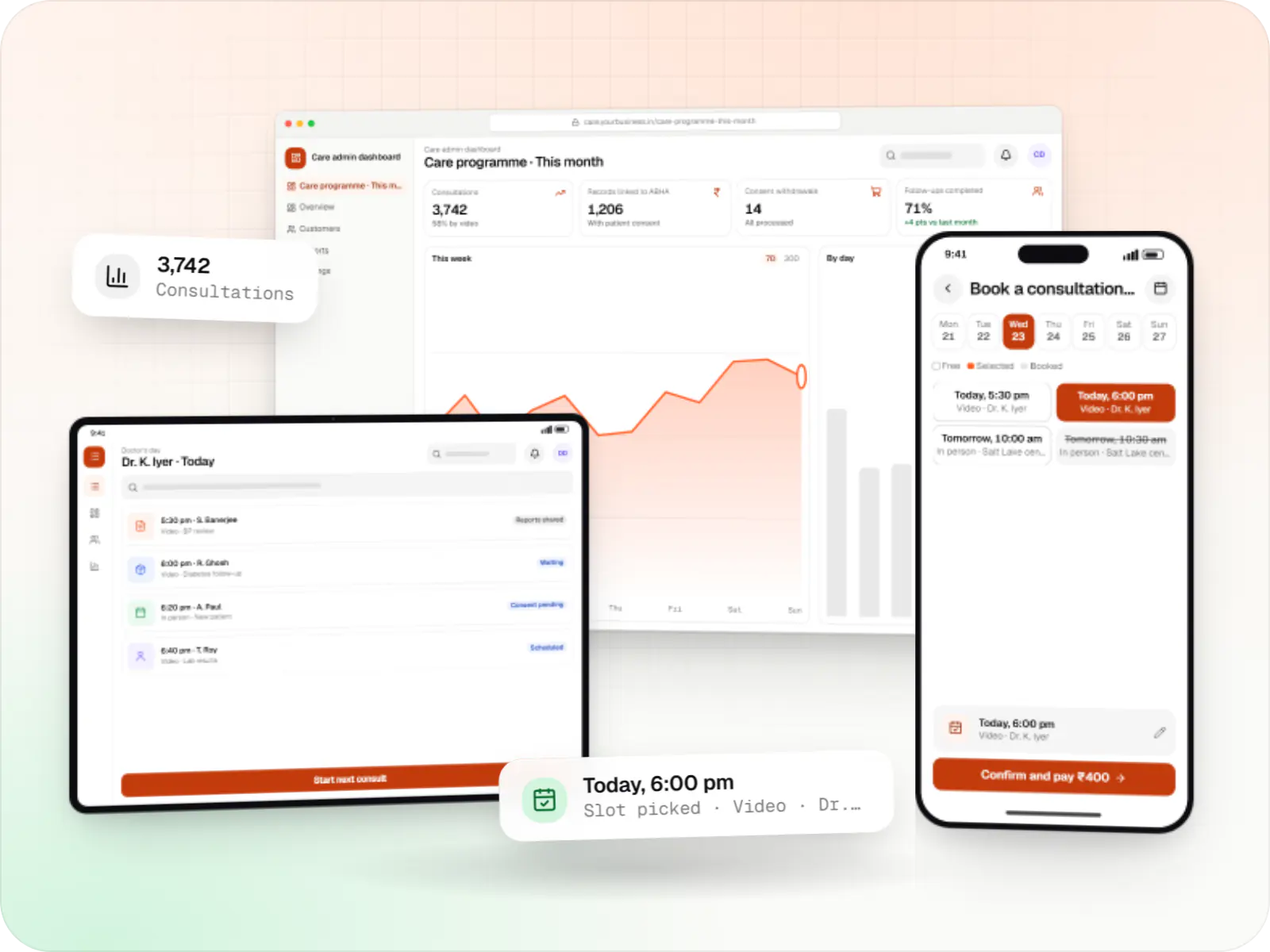
Healthcare software screens: care admin dashboard in a browser and doctor's day dr. K. iyer on a tablet
Illustrative preview

Where software helps Delhi's clinics, labs and hospitals

Healthcare in Delhi runs on very different models side by side: multi-speciality hospitals with international patient desks, nursing homes that grew from a single practice, polyclinics in residential colonies and diagnostic chains collecting samples from homes every morning.

Each needs different software. A polyclinic wants booking and tokens its receptionist can run through the evening OPD rush. A lab needs collection slots, phlebotomist routes and reports on WhatsApp. A hospital needs OPD, billing and pharmacy on one patient record. Our healthcare software development in Delhi starts from that operating model, and we keep the first release small enough for staff to adopt without disrupting care.

Local context

What Delhi's healthcare market asks of software

Delhi draws patients from across NCR and neighbouring states, and one provider may see CGHS beneficiaries, insured employees and walk-ins paying by UPI on the same day.

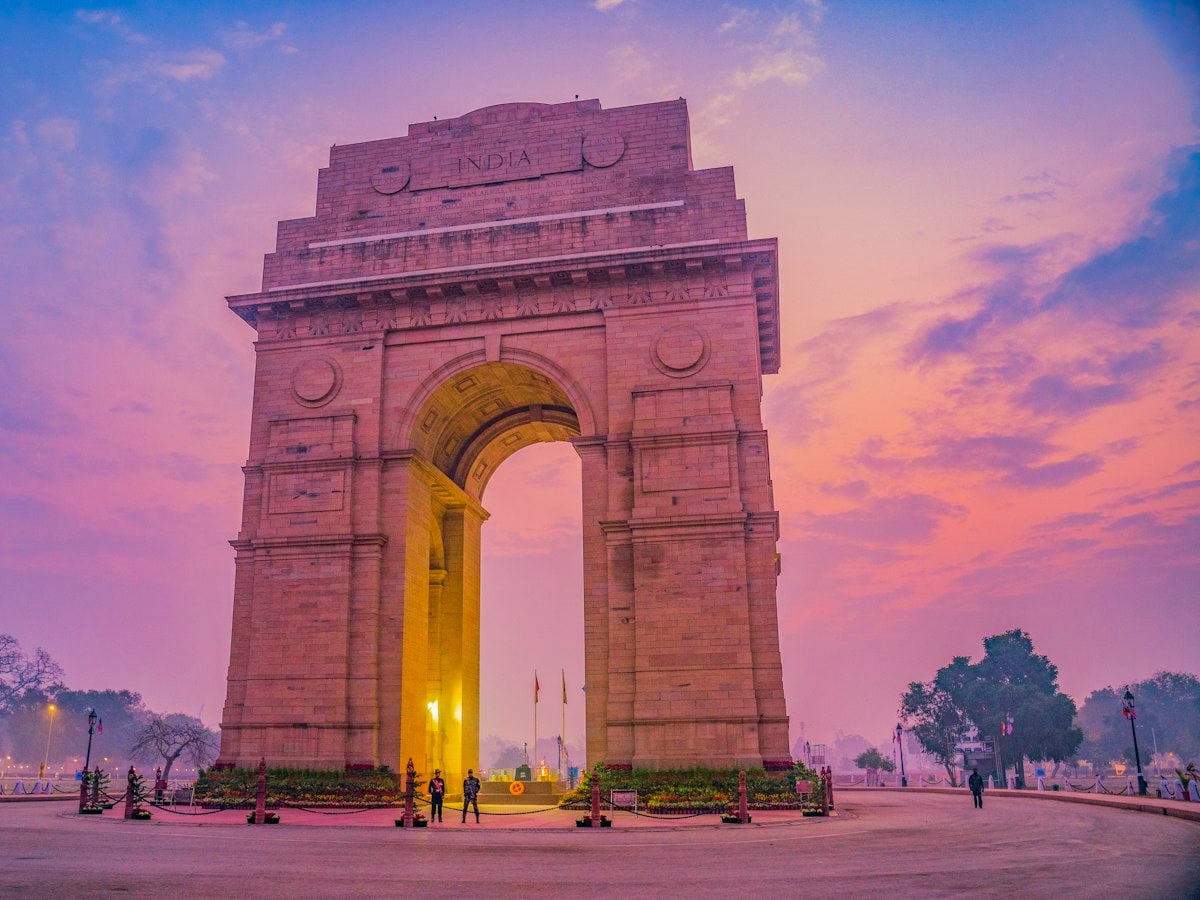
India Gate war memorial on Kartavya Path, New Delhi, lit at its base under a pink twilight sky
  • Out-of-town patients need pre-visit instructions, document uploads and directions before they arrive, not at the front desk.

  • CGHS-empanelled hospitals and TPA tie-ups need scheme, cashless and self-pay billing separated from registration onwards.

  • Home sample collection is routine, so lab slots by area, phlebotomist routing and tube barcodes matter as much as the report.

  • Families often book for elderly parents, so apps need linked profiles and Hindi alongside English.

  • Traffic makes waiting time costly; live token status on WhatsApp lets patients leave home closer to their turn.

Systems Delhi providers most often ask us to build

  • OPD tokens and queue display

    Walk-ins and bookings in one queue, a waiting-room screen and WhatsApp position updates.

  • Home collection for labs

    Pin-code slots with capacity limits and a phlebotomist app with routes and barcode scanning.

  • Multi-branch booking

    Doctor rosters across branches, fees paid by UPI or card, and visit reminders.

  • ABDM-ready records

    ABHA creation and linking at registration, with consent-based record sharing once your facility is registered.

  • Teleconsultation follow-ups

    Video or audio follow-ups with prescriptions formatted as the Telemedicine Practice Guidelines (2020) expect.

  • International patient desk

    Enquiries, report uploads, estimate approvals and arrival coordination in one place.

Industries

Healthcare segments we build for in Delhi

Solutions

Healthcare solutions for Delhi providers

  • Hospital management software

    Hospital management software covering registration, OPD, IPD, billing, pharmacy, lab and insurance workflows, with ABDM options and role-based access.

  • Doctor appointment app development

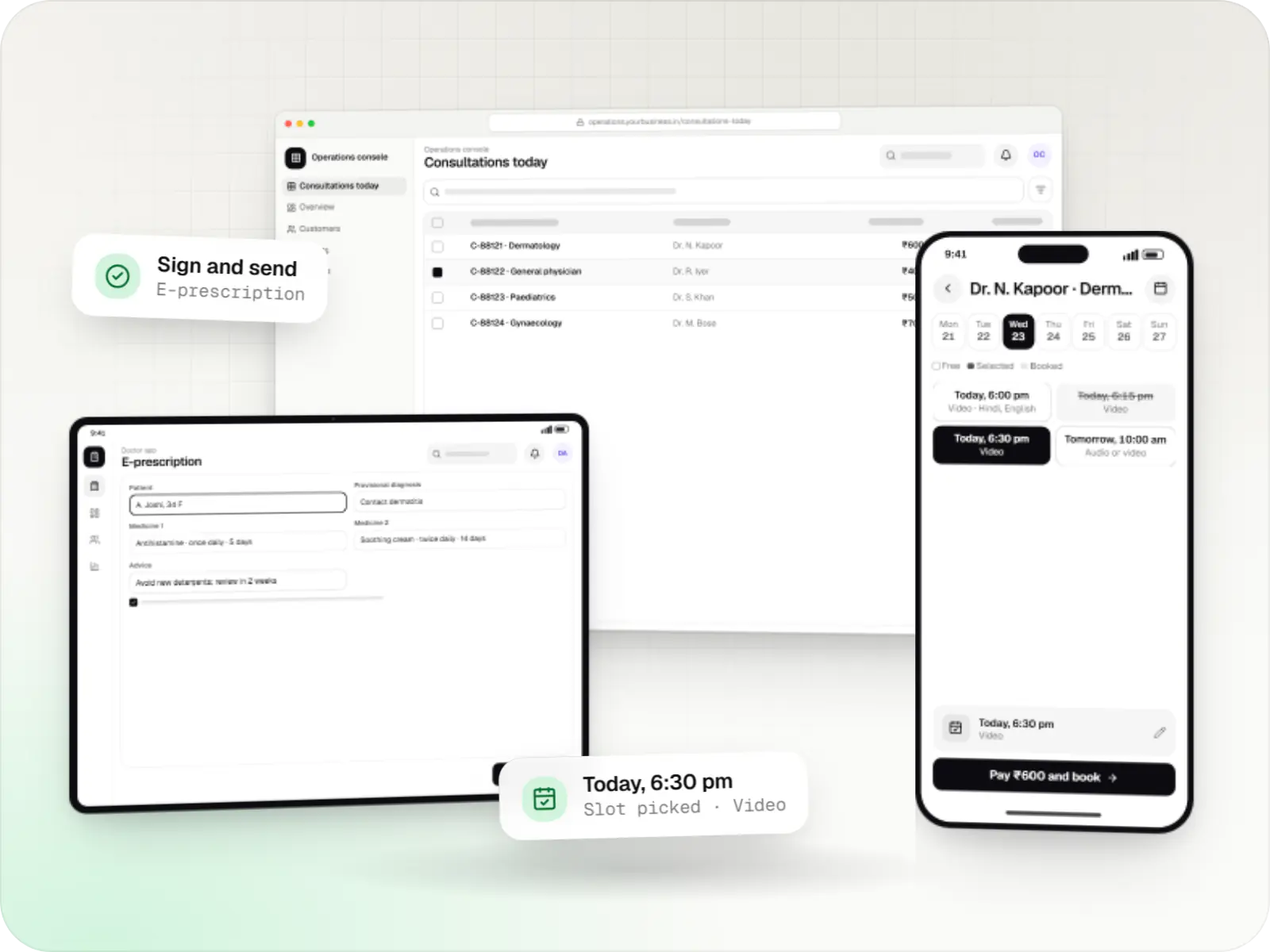
    Appointment apps for clinics, polyclinics and hospital OPDs with slot and token booking, live queue status, reminders, prepayment and a reception console.

  • Telemedicine app development

    Video, audio and chat consultation platforms with scheduling, e-prescriptions, payments and records, designed around the Telemedicine Practice Guidelines.

  • Patient management system

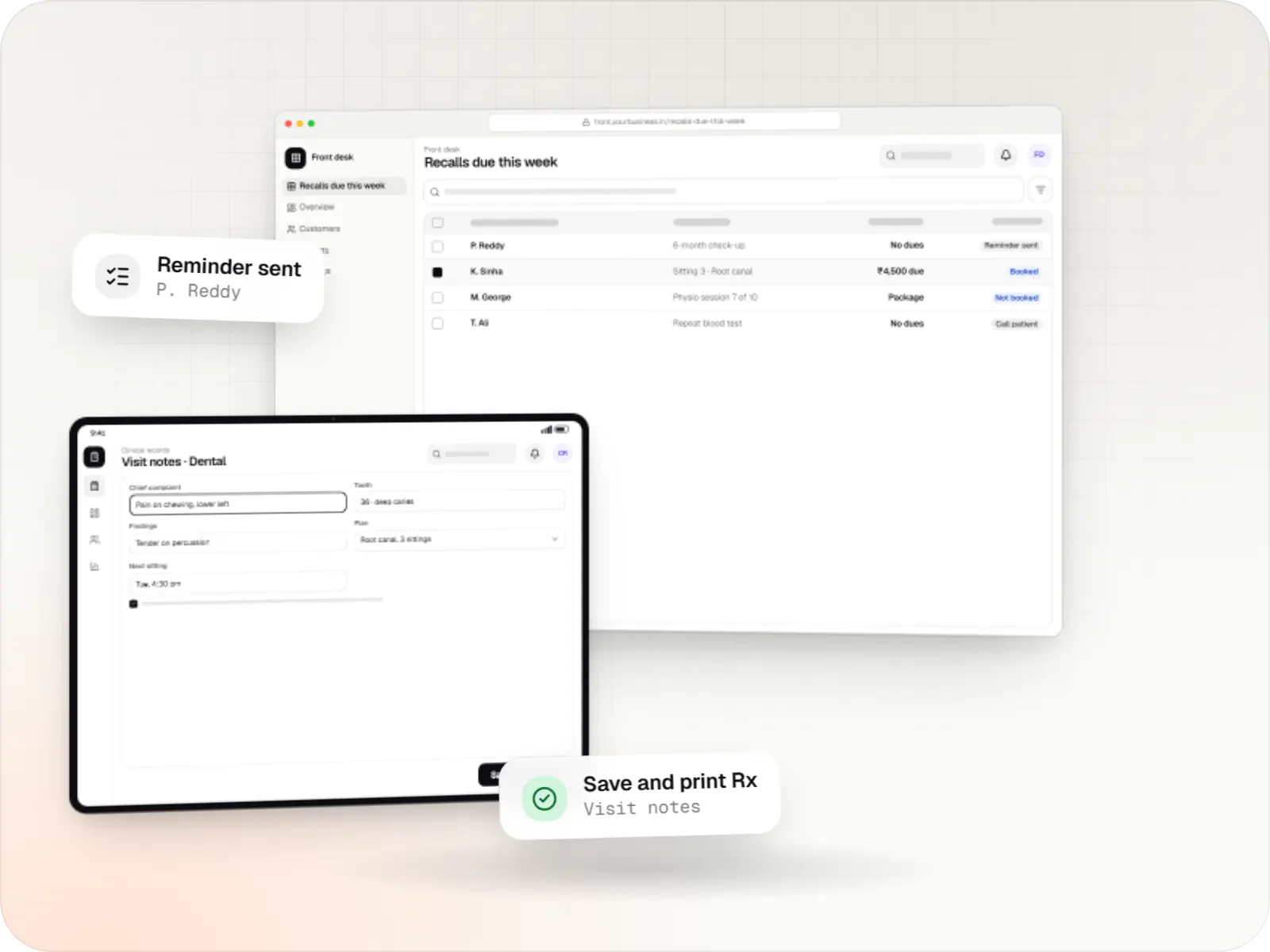
    Patient records, visit notes, treatment plans, billing and recalls for clinics, dental and physiotherapy practices, diagnostic centres and speciality care.

  • Pharmacy delivery app development

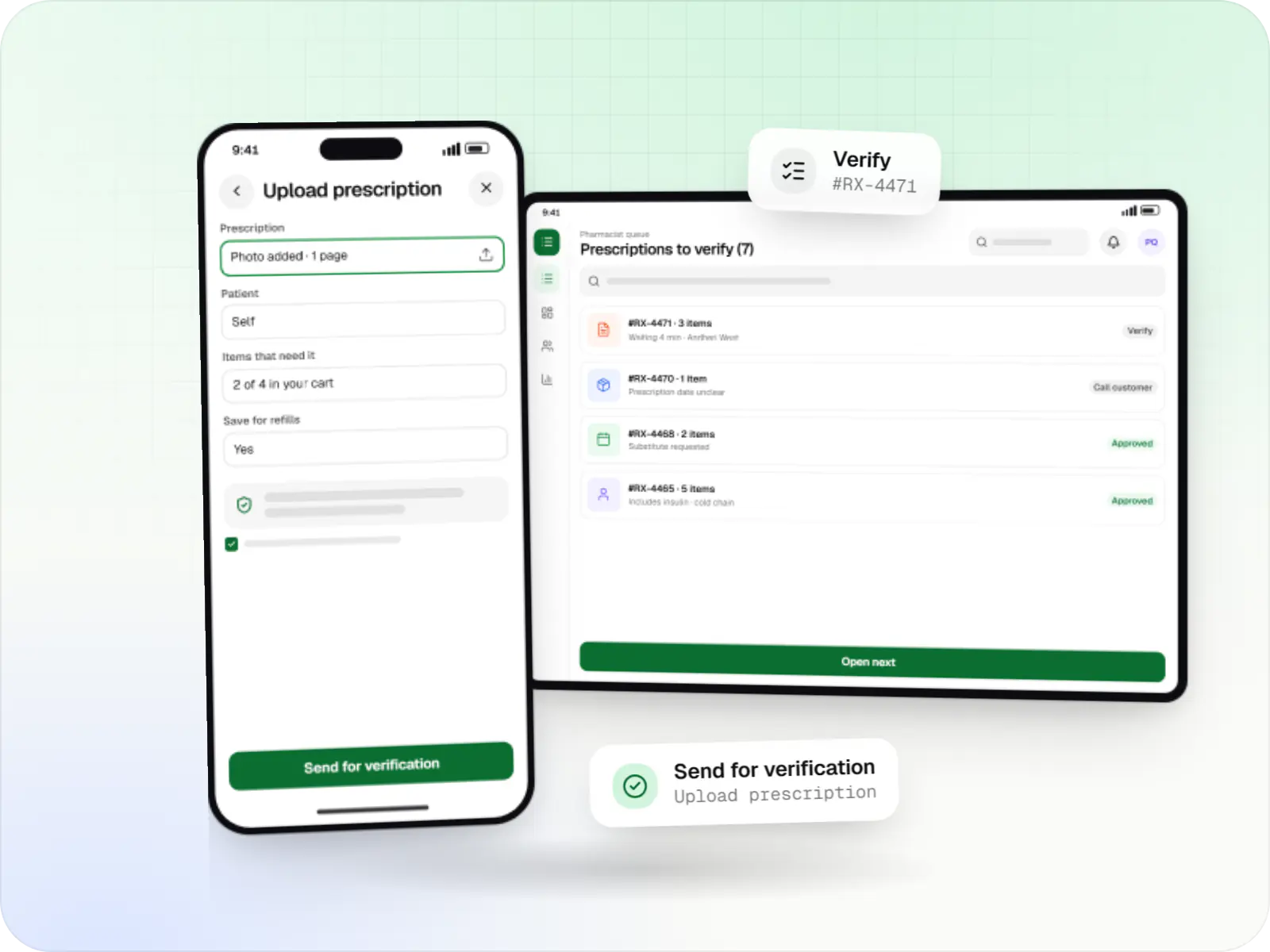
    Medicine delivery apps with prescription upload, pharmacist verification, salt-based search, refill reminders and protected health data.

Cost drivers

What shapes the budget for a Delhi healthcare project

  1. Branches and departments

    Each branch adds rosters, branch reporting and pharmacy stock transfers.

  2. Payer mix

    CGHS, TPA and corporate tie-ups add pre-authorisation steps, package rates and claim paperwork.

  3. ABDM scope

    ABHA verification is a modest addition; sharing and fetching records adds consent flows and sandbox testing.

  4. Existing systems

    Links to lab analysers, an existing HIS or Tally are estimated per interface.

Estimates are written from your scope, with the effort and assumptions behind each line item.

How pricing works

Process

How we work with healthcare teams in Delhi

  1. On-site walkthrough

    We watch registration, OPD, billing and sample flow at your facility, without handling identifiable patient data.

    You getWorkflow map and problem list

  2. Scope and data plan

    We agree the first release and how consent is captured under the Digital Personal Data Protection Act, 2023.

    You getScope and data inventory

  3. Prototype and build

    Front-desk staff test a prototype first, then we ship working software every two weeks.

    You getFortnightly demo builds

  4. Pilot and rollout

    One branch goes live first with us on site; the others follow with training and support.

    You getPilot log and support plan

Work

Sample healthcare project

  • Healthcare software

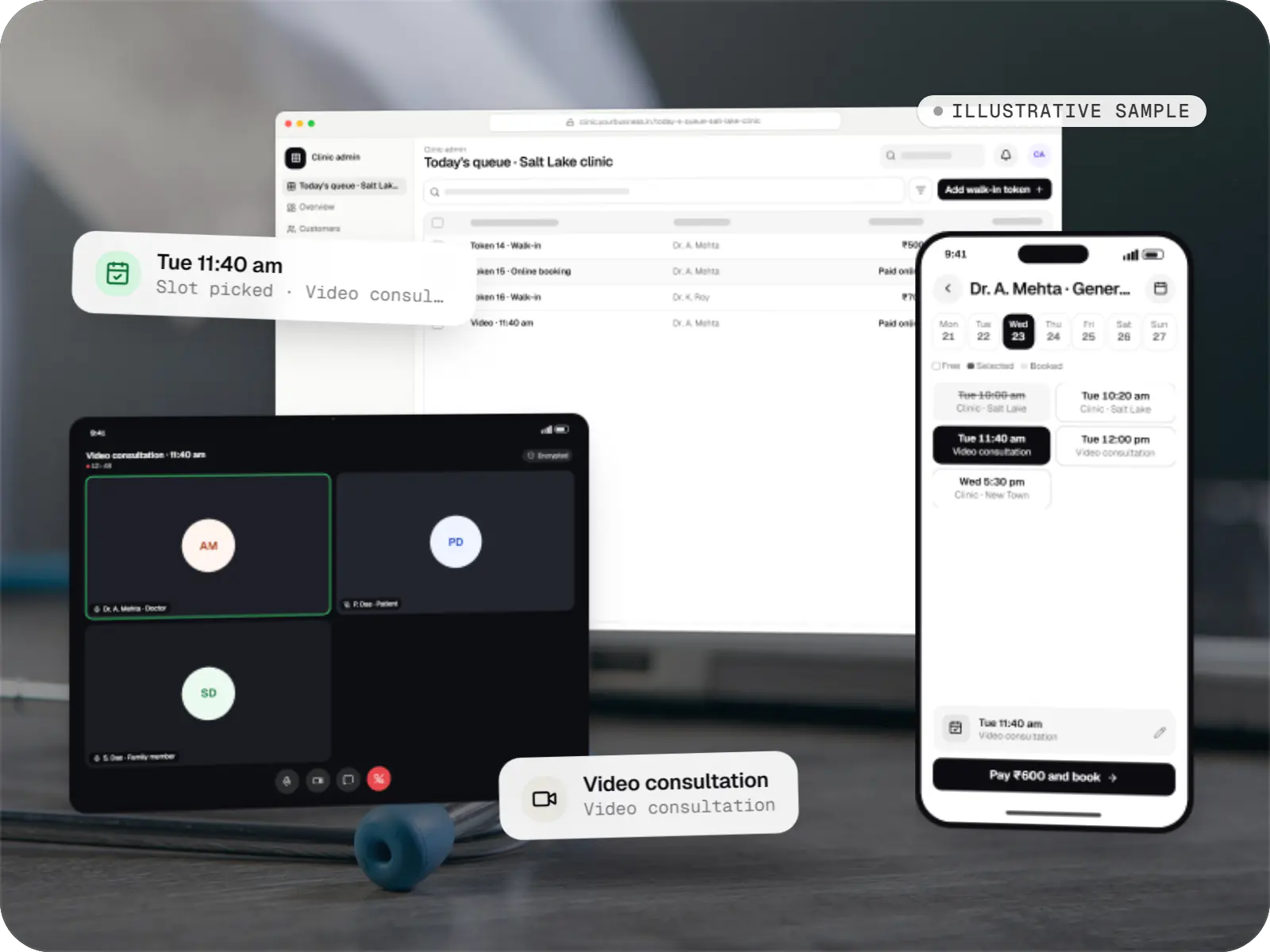
    Illustrative sample

    Clinic booking & telemedicine app

    An illustrative patient app, doctor app and clinic admin for in-person and video consultations, with digital prescriptions and consent-based record access.

    • Clinics
    • Patient + doctor apps

    Runs on

    • Android
    • iOS
    • Cross-platform
    • Admin

    Built with

    • Flutter
    • NestJS
    • PostgreSQL
    • AWS
    • Firebase
    • +1 more

FAQ

Frequently asked questions

Can your team visit our clinic or hospital in Delhi before giving an estimate?

Yes. For providers in Delhi and the rest of NCR we visit to observe registration, OPD flow, billing and, for labs, sample handling, without viewing identifiable patient records. Cost drivers such as counters, payer types and existing systems are easier to spot on the floor than in a brief, and afterwards we share a workflow map and a line-item estimate.

Is ABDM integration mandatory for a private clinic in Delhi?

For most private providers, joining the Ayushman Bharat Digital Mission is currently voluntary, but rules change, so confirm your position with your advisers. If you opt in, the work typically covers registering the facility and doctors in the ABDM registries, ABHA verification at registration and consent-based record sharing. Integrations are tested in the ABDM sandbox and reviewed before production access, which adds calendar time we plan for.

Our lab collects samples from homes across Delhi. Can software plan phlebotomist routes?

Yes. Each booking carries a pin code and slot, and the system caps slots per area so you never accept more collections than staff can cover. Each morning it groups visits by area and time window and suggests an order from map distances for a coordinator to adjust. The phlebotomist app scans tube barcodes against the booking, so a missing sample can be traced.

How long does it typically take to move a Delhi clinic from paper registers to software?

For a single clinic or polyclinic, a first release covering registration, appointments, tokens, consultation notes and billing typically takes eight to twelve weeks from workshop to pilot. ABDM integration, a lab module or a patient app extends that. We usually plan the switch-over for a quieter week and keep paper as a fallback for the first few days while staff build confidence.

Next step

Running a clinic, lab or hospital in Delhi?

Tell us how patients reach you and what slows your team down. We will suggest a first release and a line-item estimate.

Or reach us directly

Mon–Sat, 10:00–19:00 IST