

Web
Next.js
A modern web technology for fast, search-friendly websites, online stores and web applications that load quickly on mobile.
Used for
- Business websites
- Online stores
- Web apps
- Customer portals
Real estate & construction
Engineering for PropTech startups: listing marketplaces, rental platforms, broker SaaS, map-based search and property data products.
At a glance

We build PropTech products from MVP to scale: listing ingestion and moderation, map and filter search, verified listings, lead routing and broker subscriptions, rental agreements and payments, and B2B SaaS for property professionals. We focus on the engineering that decides whether a property platform can be trusted and searched.
How to start
Tell us what you need in your own words. You talk to the developers who would build it and get a written, line-item estimate.
Get a project estimatePropTech companies build technology products for the property market: rental marketplaces, broker SaaS, home-loan and interiors marketplaces, co-living platforms and property data products. Unlike a single developer's website, the product lives or dies on data quality and search, because stale listings, duplicates and fake owners destroy trust quickly.
We engineer the systems underneath: ingestion pipelines, geospatial search, moderation and verification, lead monetisation, and the operations consoles your team needs. If your model involves fractional ownership, SEBI's small and medium REIT framework is now relevant, so we plan the product with your legal advisers from the start.
Challenges
Duplicate, outdated and fraudulent listings erode trust faster than a thin catalogue does.
People search by commute, locality and budget, not just city and BHK.
Broker subscriptions, lead credits and featured listings need metering and billing.
Owners, brokers and seekers each need a reason to return, with separate roles and journeys.
Solutions
Across 3 areas
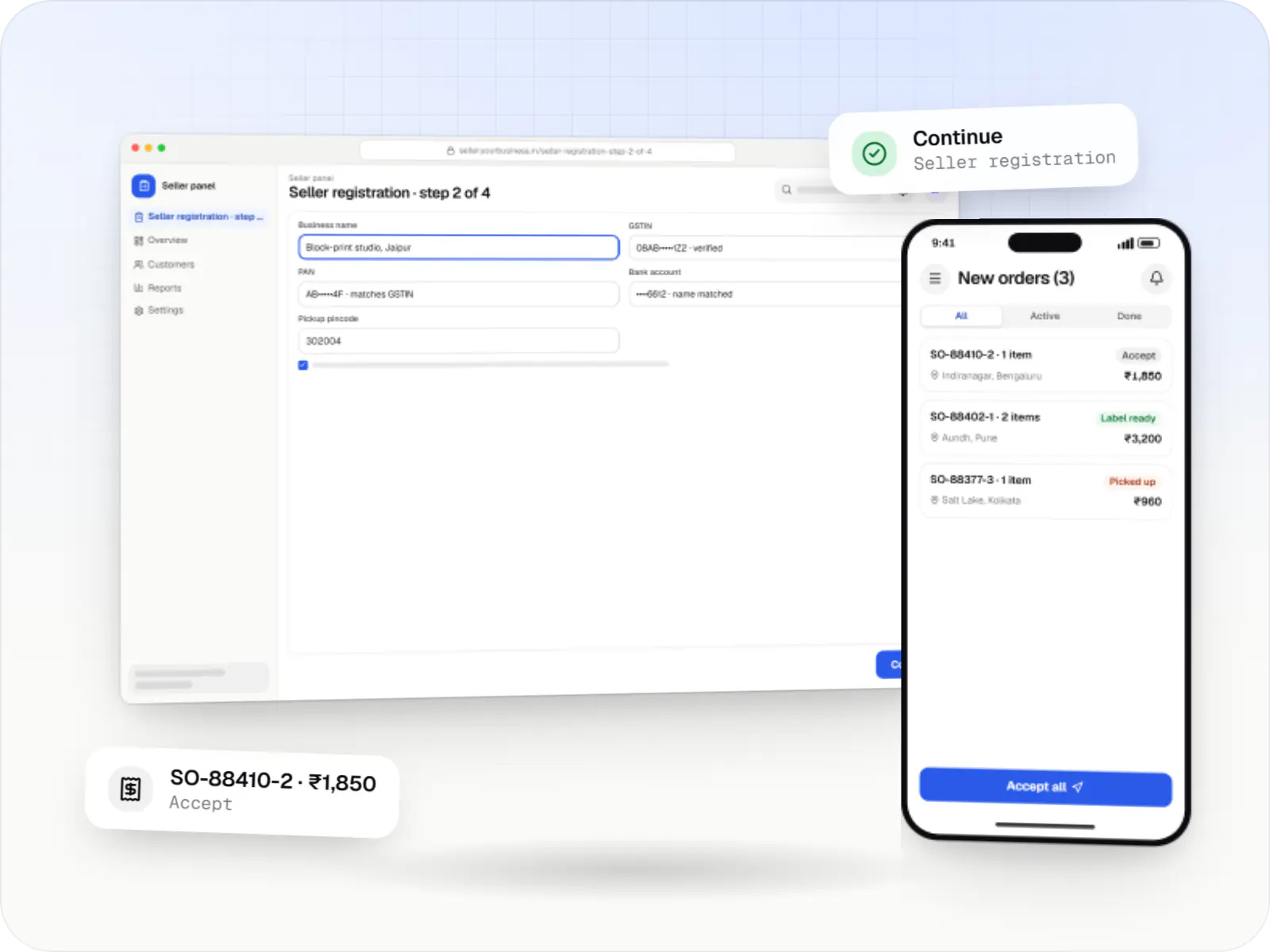
Multi-vendor marketplaces with seller onboarding, commission rules, split payouts, per-seller invoicing and catalogue moderation.
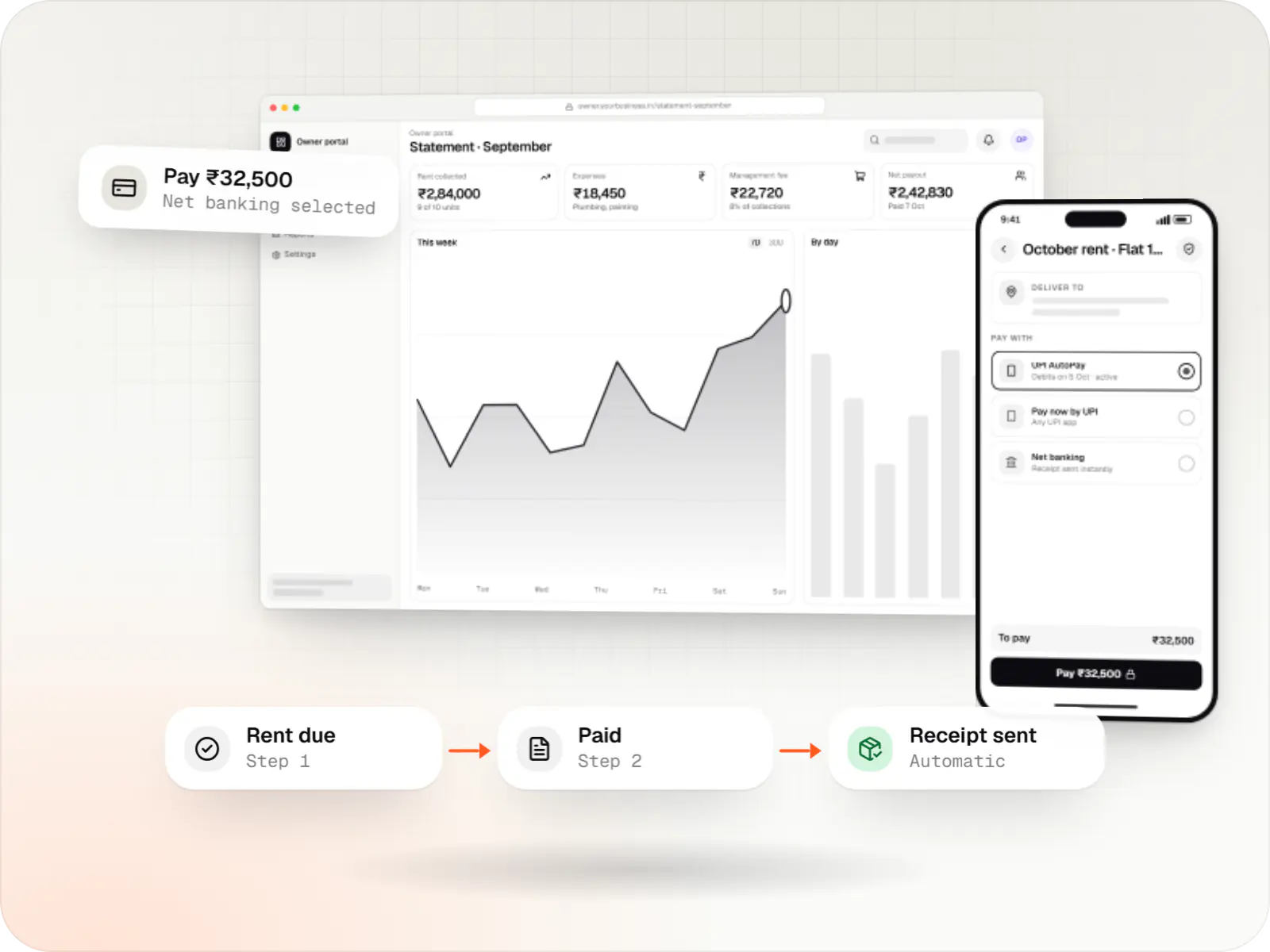
Custom property management software for leases, rent collection with UPI AutoPay, maintenance requests, owner statements and society operations.
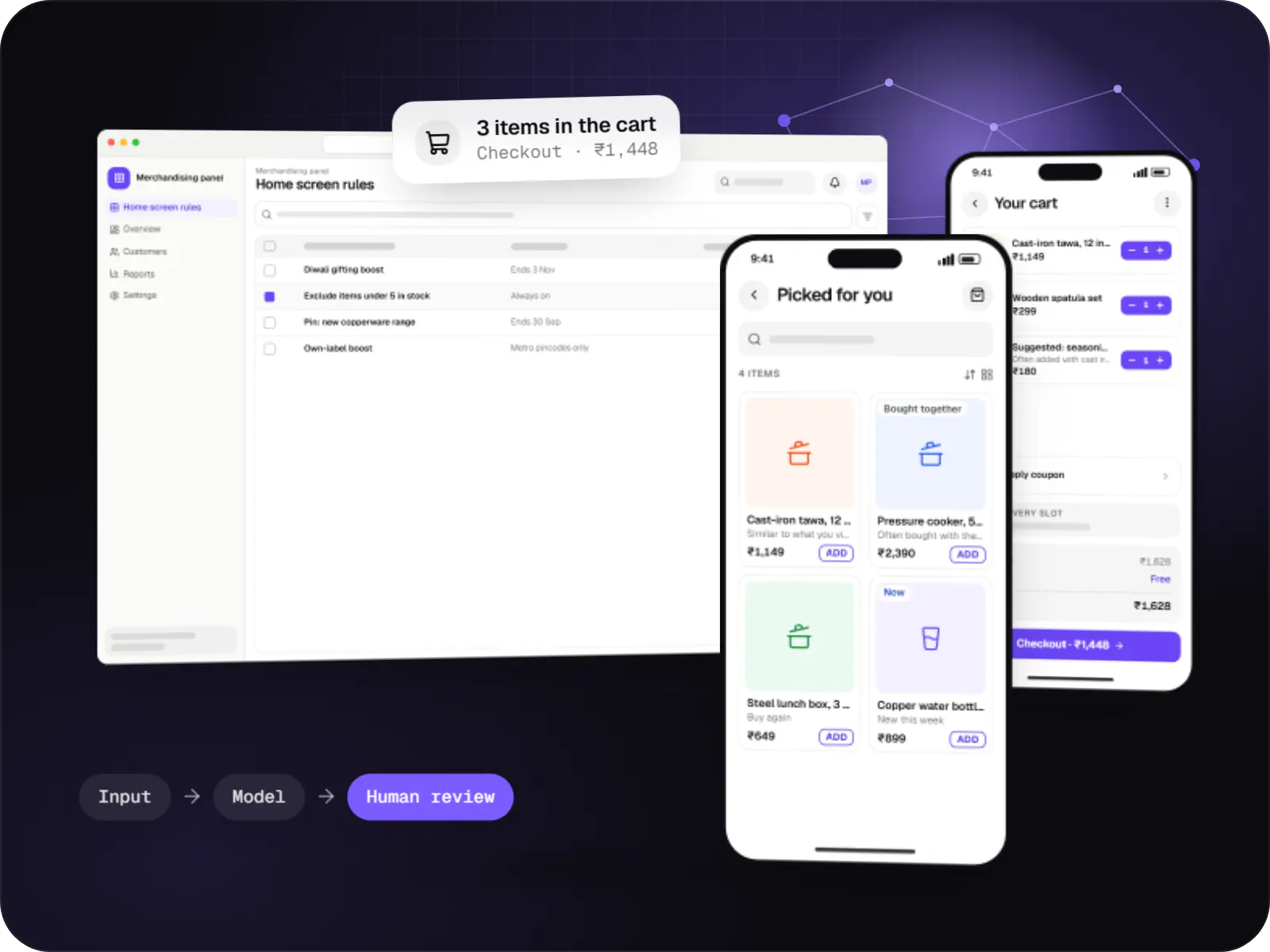
Product, content and offer recommendations built from your behavioural data, with business rules, cold-start handling and A/B testing.
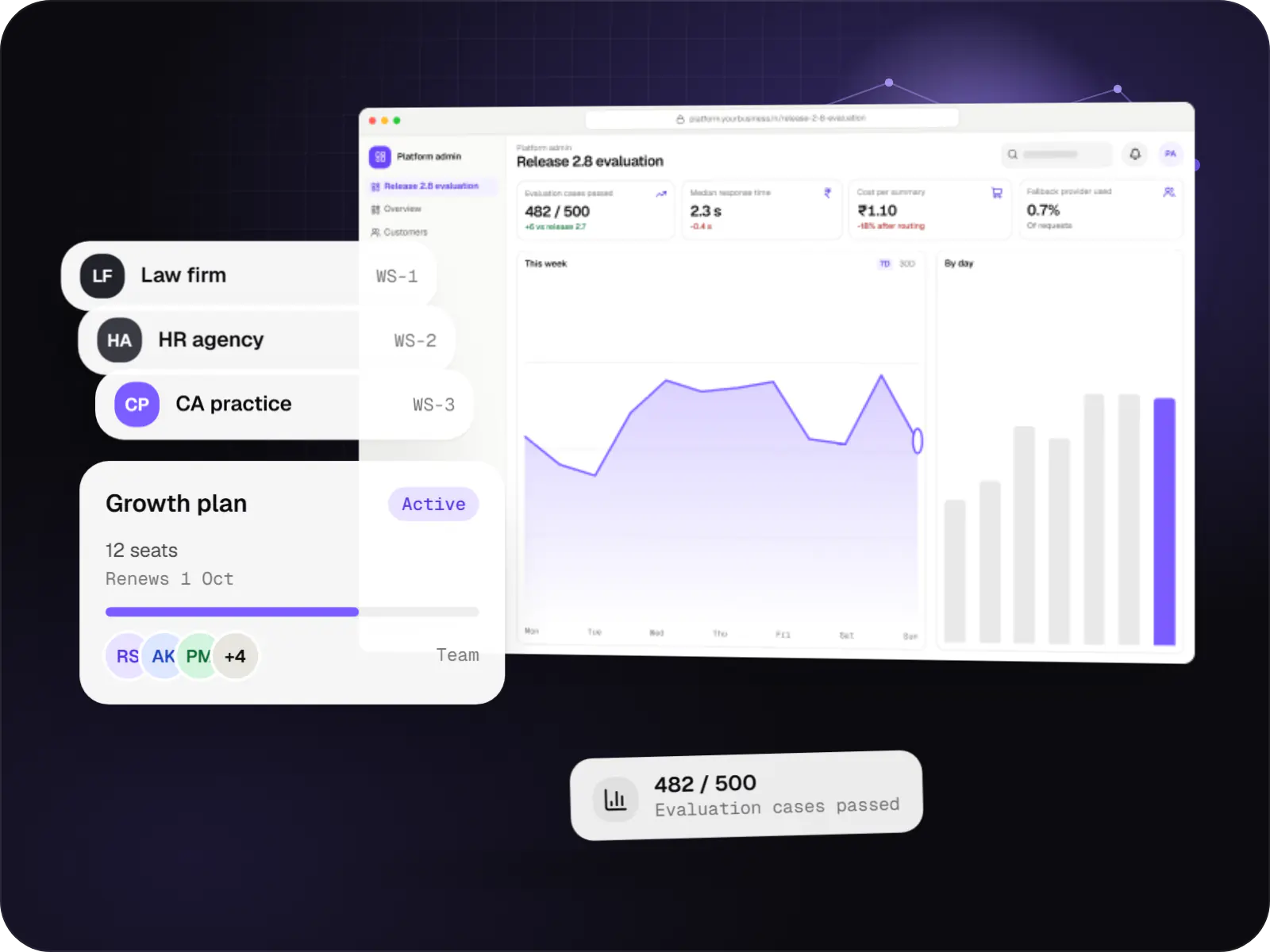
Multi-tenant SaaS products with AI at their core, built with tenant isolation, usage metering, model routing, evaluation and subscription billing.
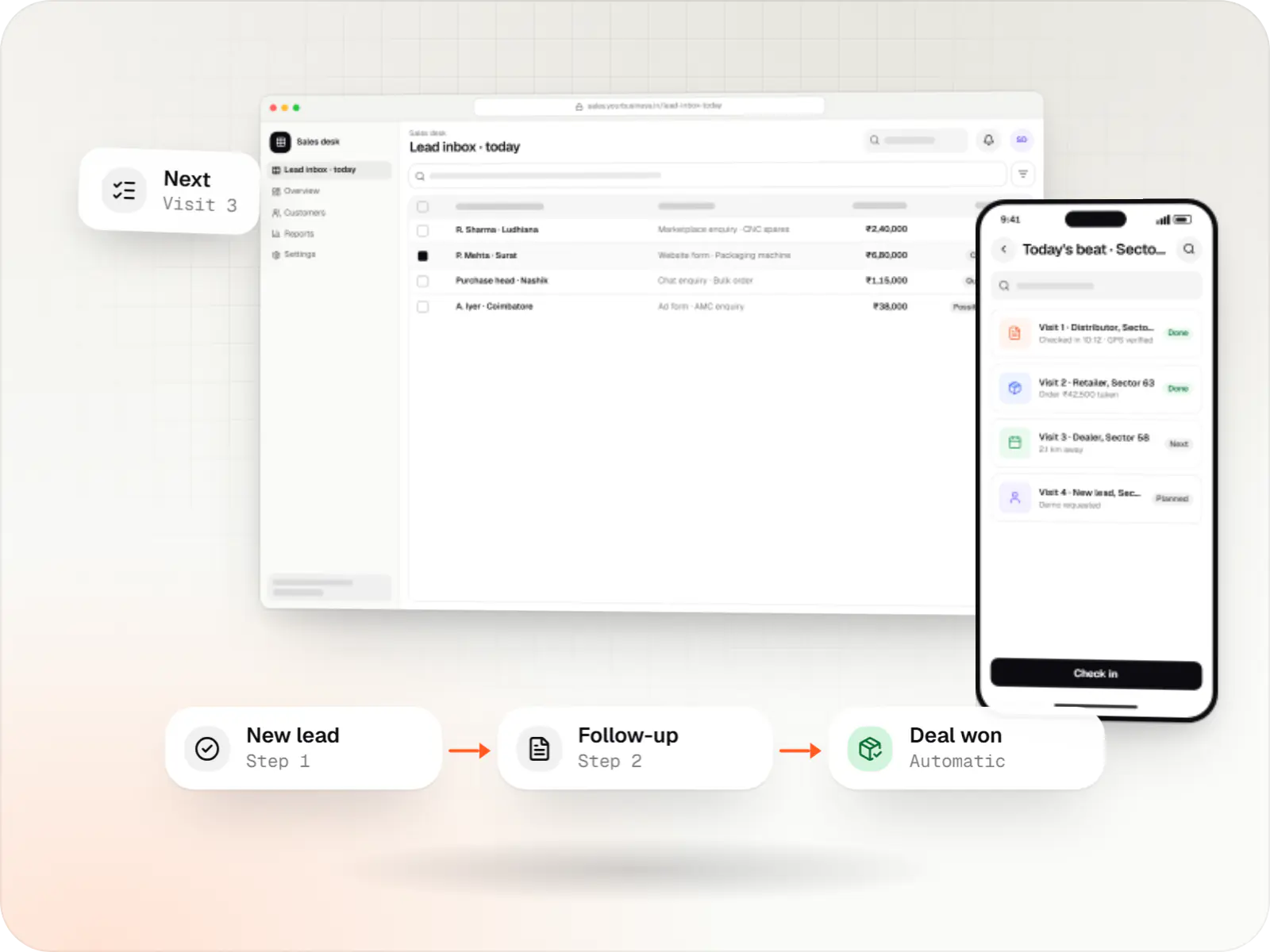
Custom CRM software that captures leads from every channel, keeps follow-ups on schedule and shows managers a live pipeline.
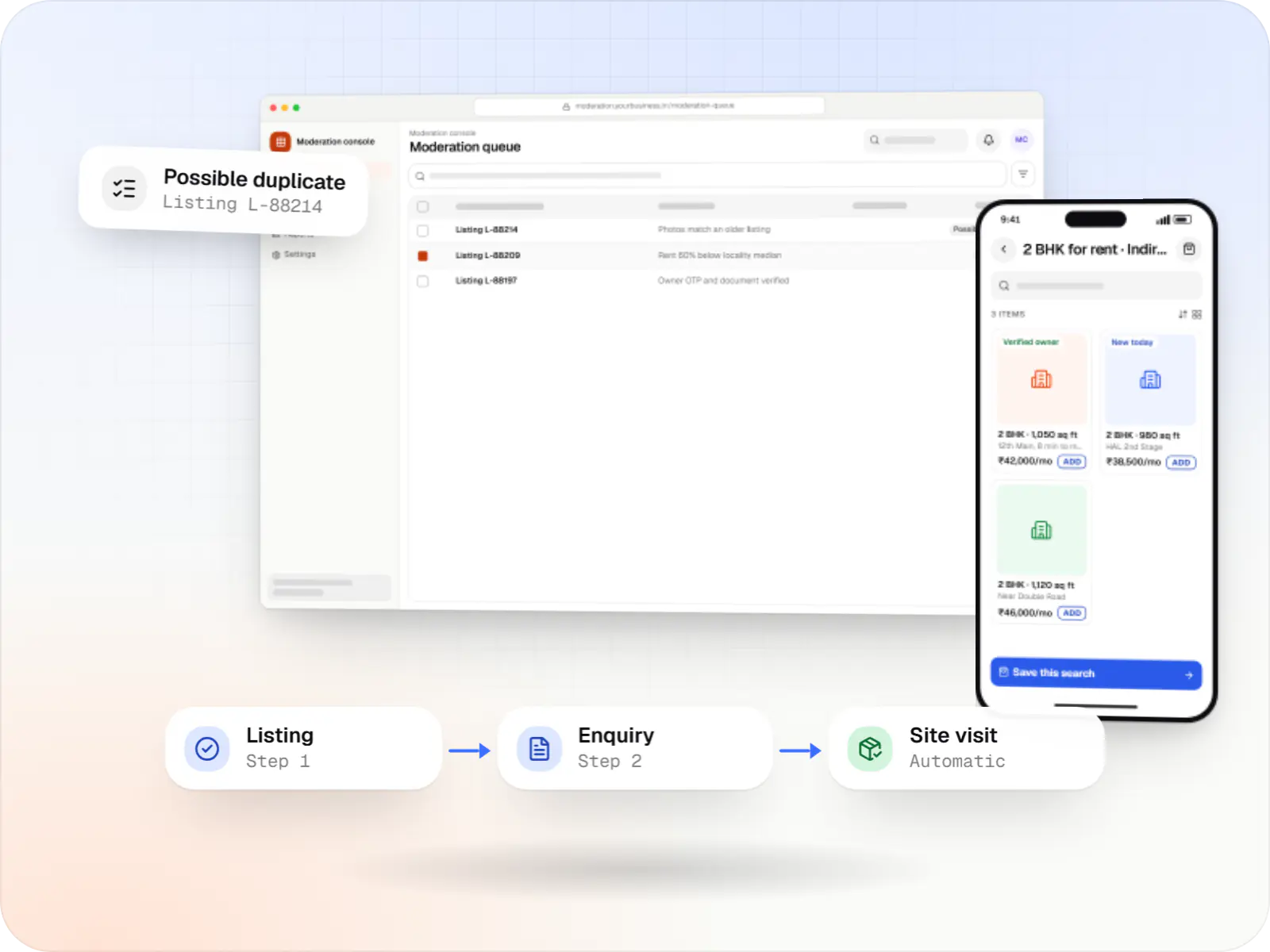
Owner and broker uploads, bulk feeds, duplicate detection by address and photo, and a moderation queue.
Map-drawn areas, radius and commute filters using PostGIS and Google Maps Platform.
Document and OTP checks, verified badges and fraud reporting.
Lead credits, subscriptions, featured listings and GST invoices.
Similar listings and saved-search alerts based on behaviour, with filters users can see and change.
How it works
Photos, rent or price, locality and amenities are entered, while larger brokers send listings in bulk through a feed.
Address, phone and photo similarity checks flag duplicates and suspicious prices for a moderator instead of deleting them blindly.
Document and OTP checks earn the listing a verified badge that seekers can see in search results.
Search by a drawn area, commute time and budget returns listings ranked by relevance, not just by upload date.
A contact request spends a broker's lead credit or uses their subscription, and both sides are notified at once.
New listings that match a saved search trigger alerts, which keeps both sides of the marketplace active.
Platforms
Marketing and content websites: fast, search-friendly pages with a CMS your team can update without a developer.
Apps for Android phones and tablets, tested on budget and mid-range devices and published on Google Play or privately.
Apps for iPhone and iPad, built to Apple's guidelines and released through TestFlight and the App Store.
Browser-based applications with logins, roles and workflows, such as customer portals, SaaS products and internal tools.
Back-office panels for operations, support and finance teams: orders, users, content, reports and permissions.
Technology
Next.js renders locality pages that search engines can read, PostgreSQL answers map and radius searches, Google Maps supplies geocoding and commute times, and Redis keeps popular searches fast.
Web
A modern web technology for fast, search-friendly websites, online stores and web applications that load quickly on mobile.
Used for
Mobile
Build Android and iOS apps in the same language as a React website, so one team can share code and skills across web and mobile.
Used for
Backend
Runs the server side of apps: fast, scalable back ends that power your app, website and integrations.
Used for
Data
A reliable database for the records your business runs on: orders, payments, bookings and stock, kept accurate and easy to report on.
Used for
Payments & maps
Adds maps, address search, live tracking and travel-time estimates to delivery, ride and field apps, so orders reach the right door.
Used for
Backend
A programming language for AI features, data processing and automation: the engine behind document reading, reports and smart search.
Used for
Data
Keeps frequently used data in fast memory, so apps stay quick on busy days and live features like order tracking feel instant.
Used for
Plain-English glossary
Product preview
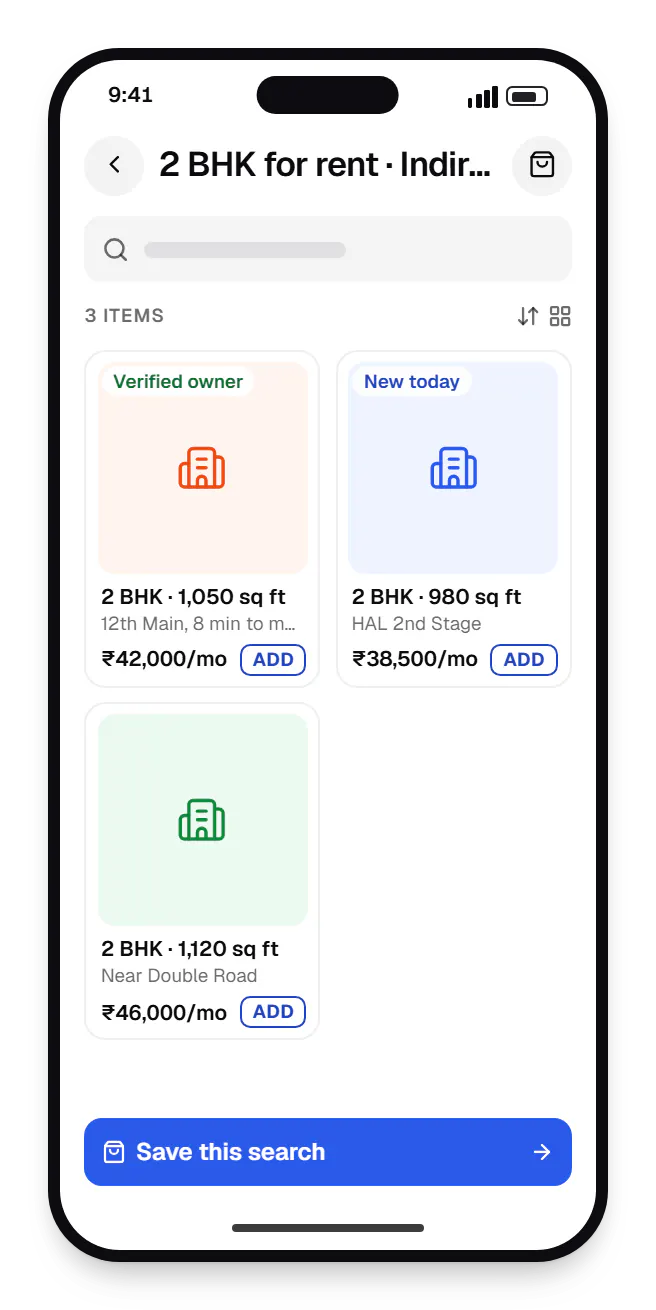
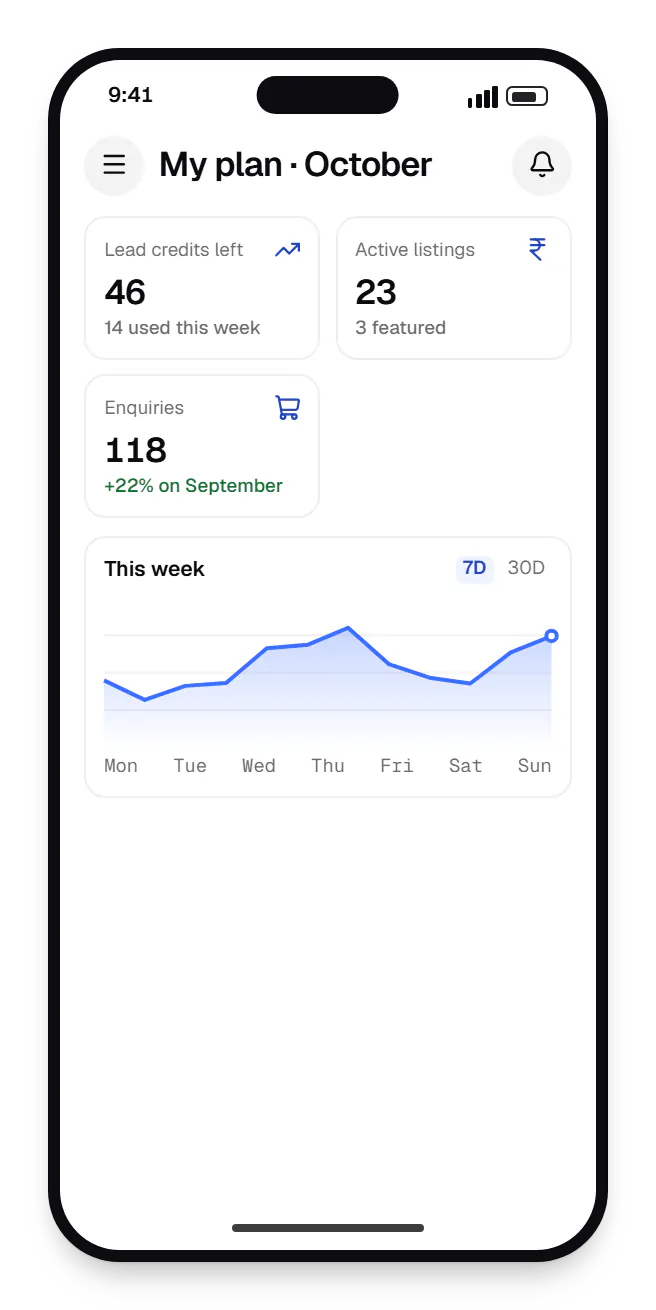
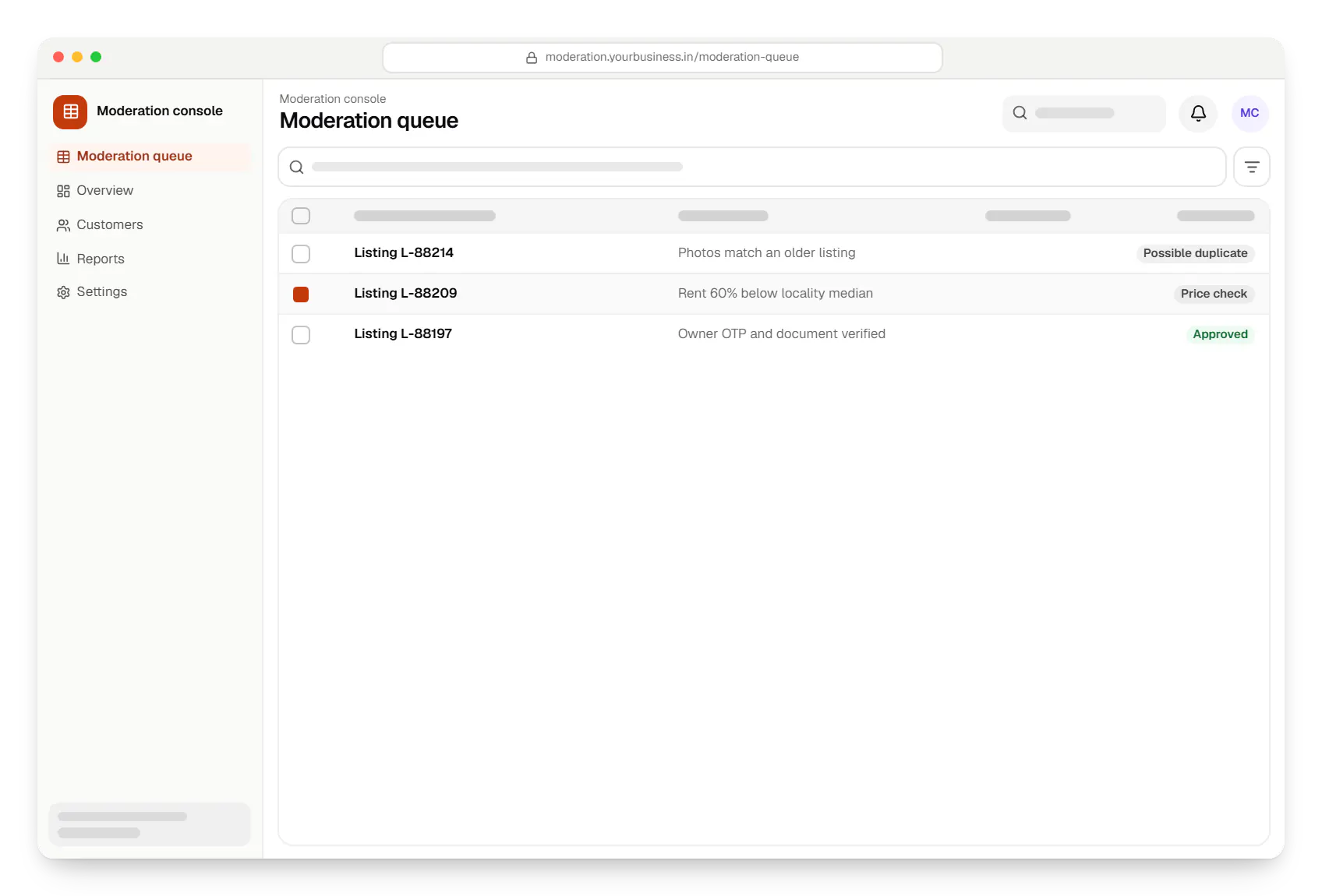
Sample screens: names, prices and figures are examples, not client data.
Cost drivers
Seekers, owners, brokers and moderators each need distinct flows and permissions.
Bulk feeds, partner APIs and image processing add pipelines beyond manual listing forms.
Thousands of locality and project pages need server rendering, structured data and crawl control.
Estimates are written from your scope, with the effort and assumptions behind each line item.
How pricing worksServices
The design and engineering services our in-house team combines on projects in this sector.
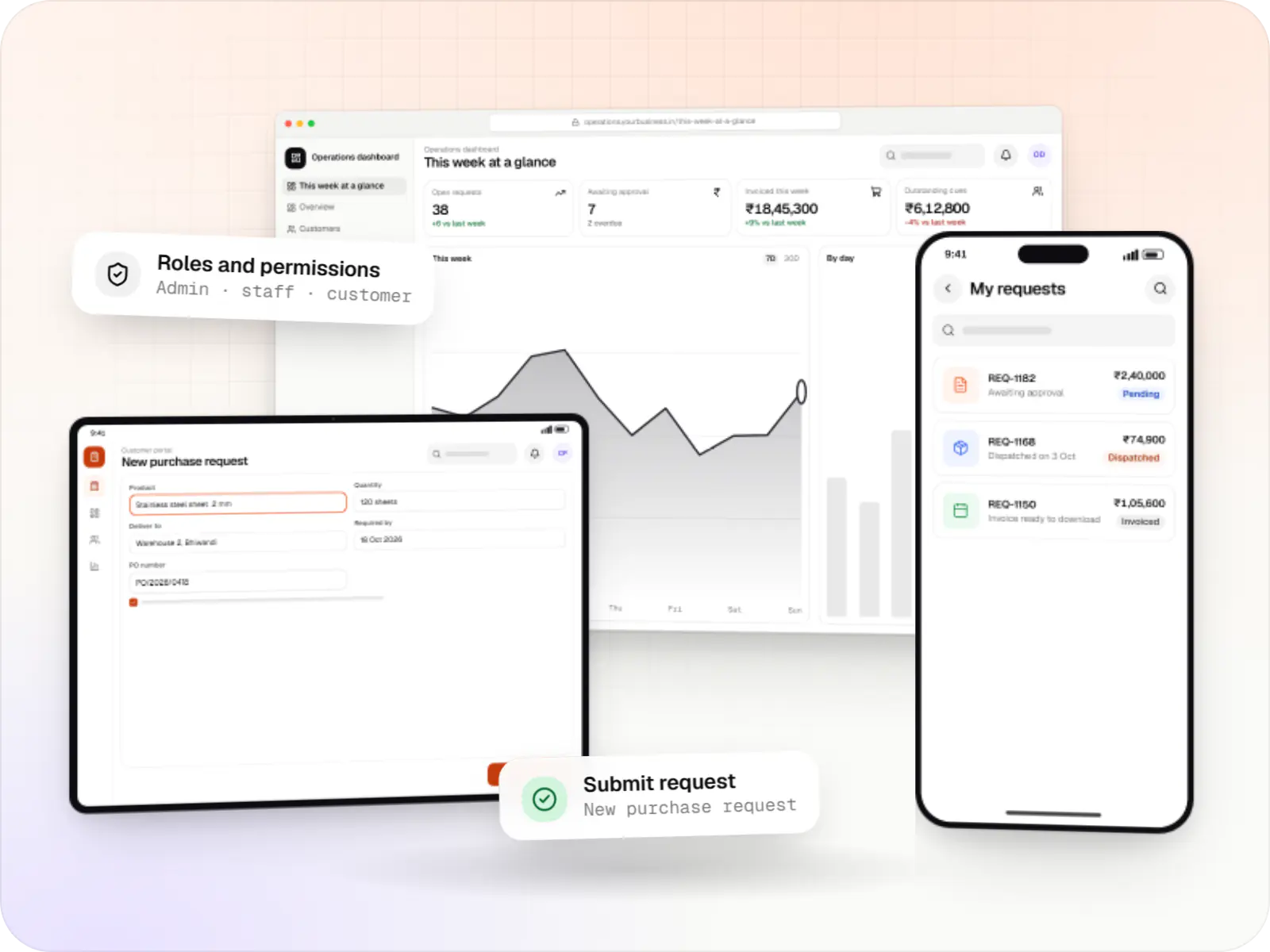
Browser-based products, customer portals, dashboards and internal tools, built on clean data models with secure roles and integrations.
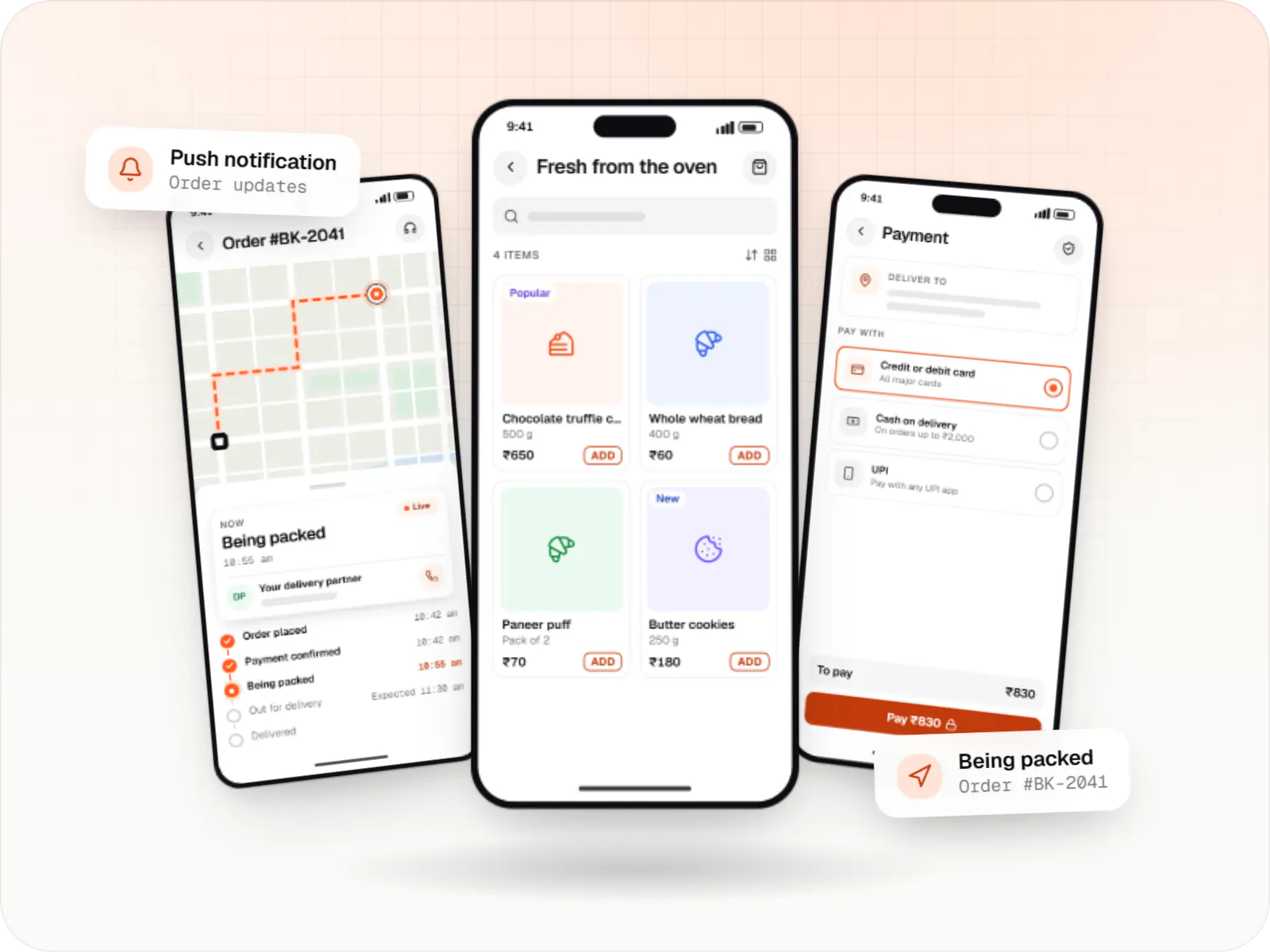
Native and cross-platform Android and iOS apps, from first release through regular store updates, built by our in-house designers and engineers.
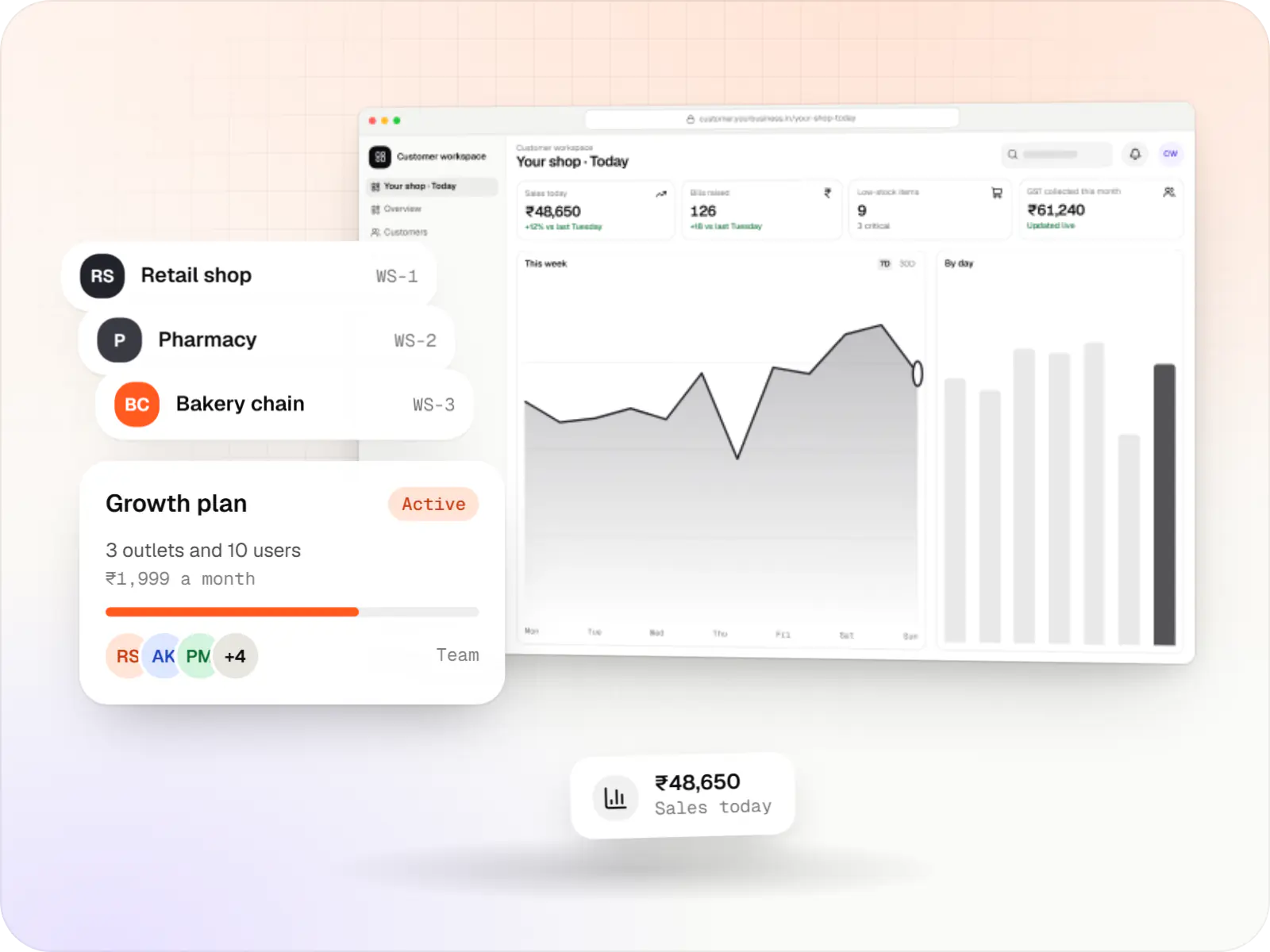
Multi-tenant SaaS products with subscription billing, team roles, onboarding and usage analytics, from first MVP to paying customers.
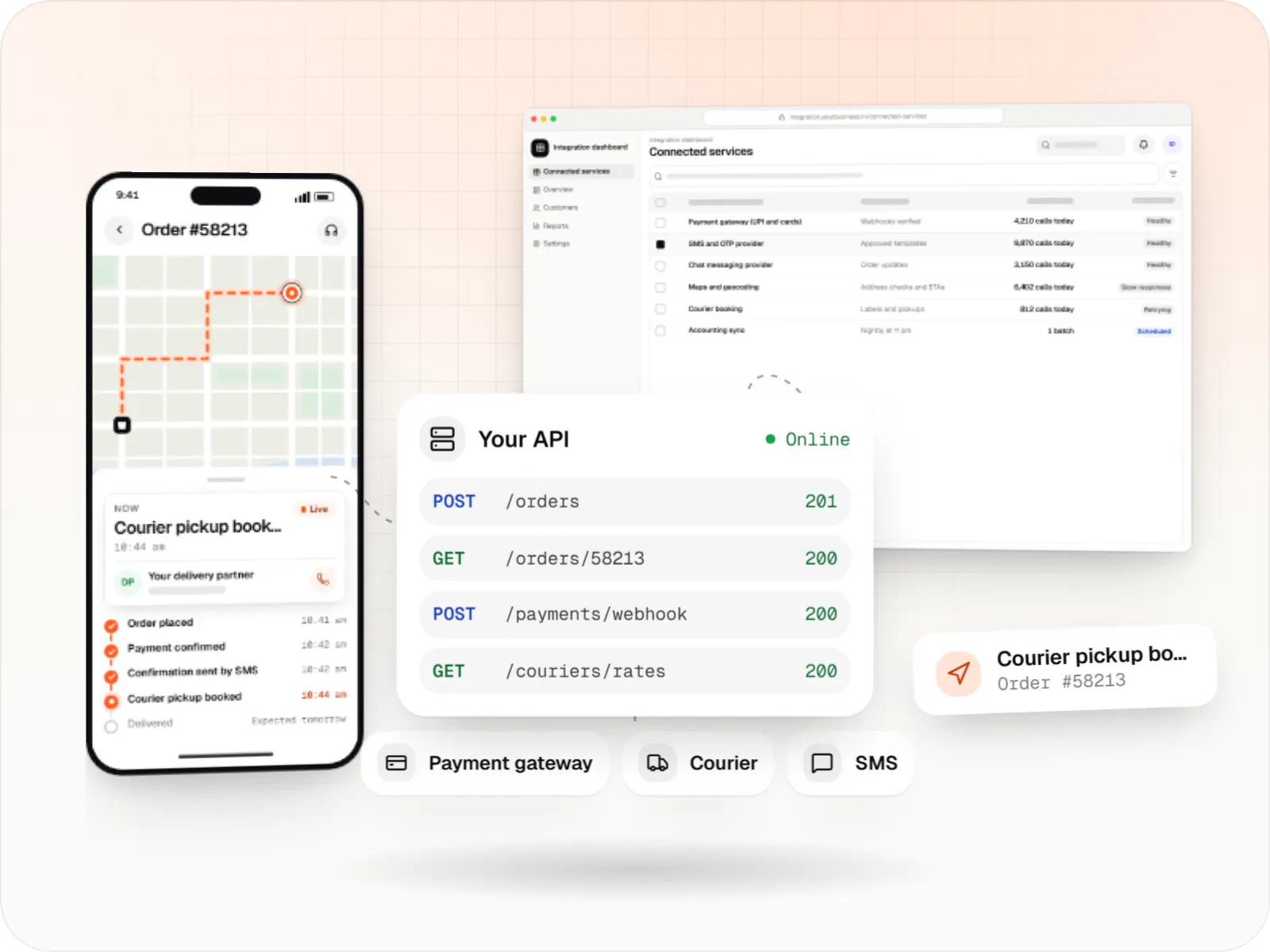
Secure, documented REST and GraphQL APIs, plus integrations that connect your apps to payment, logistics, GST, messaging and business systems.
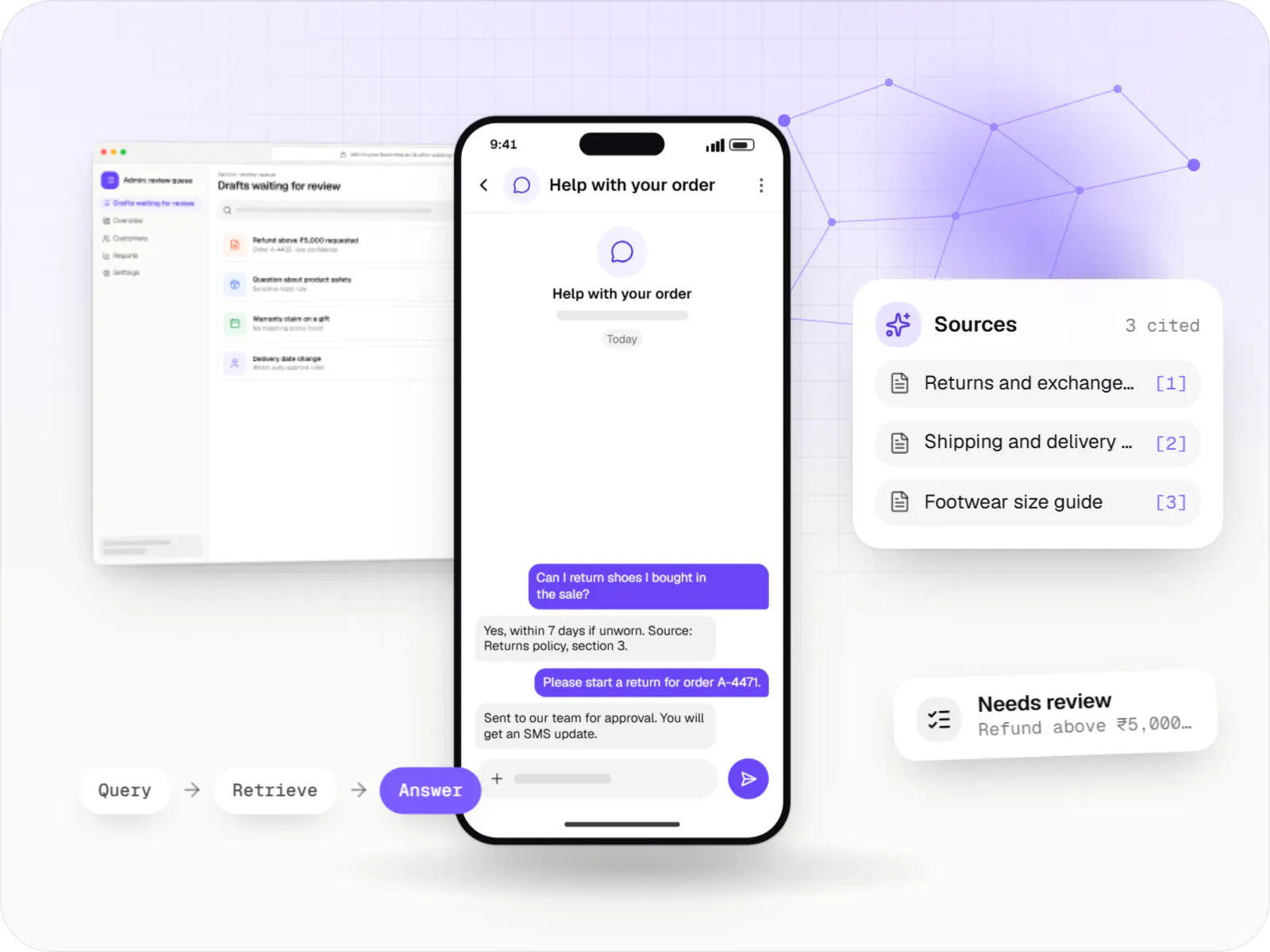
AI features and AI-first apps built on model APIs, retrieval over your own data, workflow automation or custom ML, with evaluation and human review.
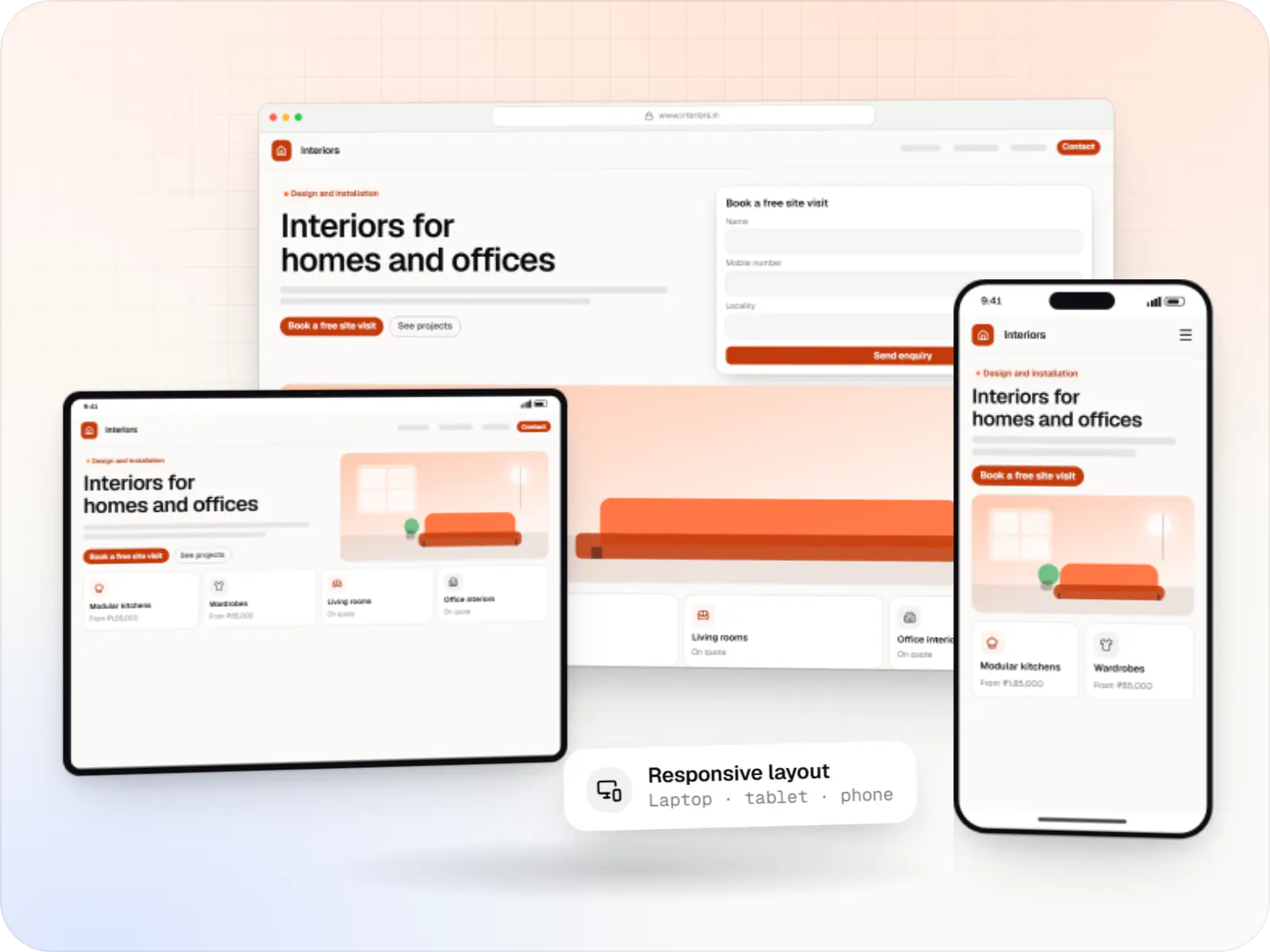
Fast, SEO-ready company and marketing websites with a CMS your team can edit, designed and built by our in-house team.
FAQ
We combine signals: normalised addresses and geocodes, phone numbers reused across accounts, image similarity to catch recycled photos, and prices far from nearby listings. Suspicious listings go to a moderation queue rather than being deleted automatically, and user reports feed the same queue. Verified owners earn a visible badge. No method catches everything, so moderators get tools and metrics to tune the rules over time.
It can be built to be crawlable and useful, which is what engineering controls: server-rendered locality and project pages with unique content, structured data for listings, canonical tags that handle filter combinations, and sitemaps that drop expired listings. Rankings also depend on competition, content and authority, which no developer can promise. We build the technical foundation and give your team tools to publish locality content worth indexing.
Typically PostgreSQL with the PostGIS extension for spatial queries, which handles radius, polygon and nearest-neighbour search well for most Indian portals. Google Maps Platform supplies geocoding, maps and commute estimates, with caching to control API costs. For very large catalogues with complex text relevance, we add a dedicated search engine alongside. Next.js renders locality pages on the server so search engines can read them.
Next step
Share your model, target cities and the users you serve. We will outline an MVP scope and the architecture to grow into.