



Mobile
Flutter
Build Android and iOS apps from one shared codebase, so you launch on both platforms faster with a consistent experience.
Used for
- Mobile apps
- Delivery apps
- E-commerce apps
- Booking apps
Local & on-demand services
Two-sided platforms that connect customers with independent local professionals, built with verification, payouts and trust controls.
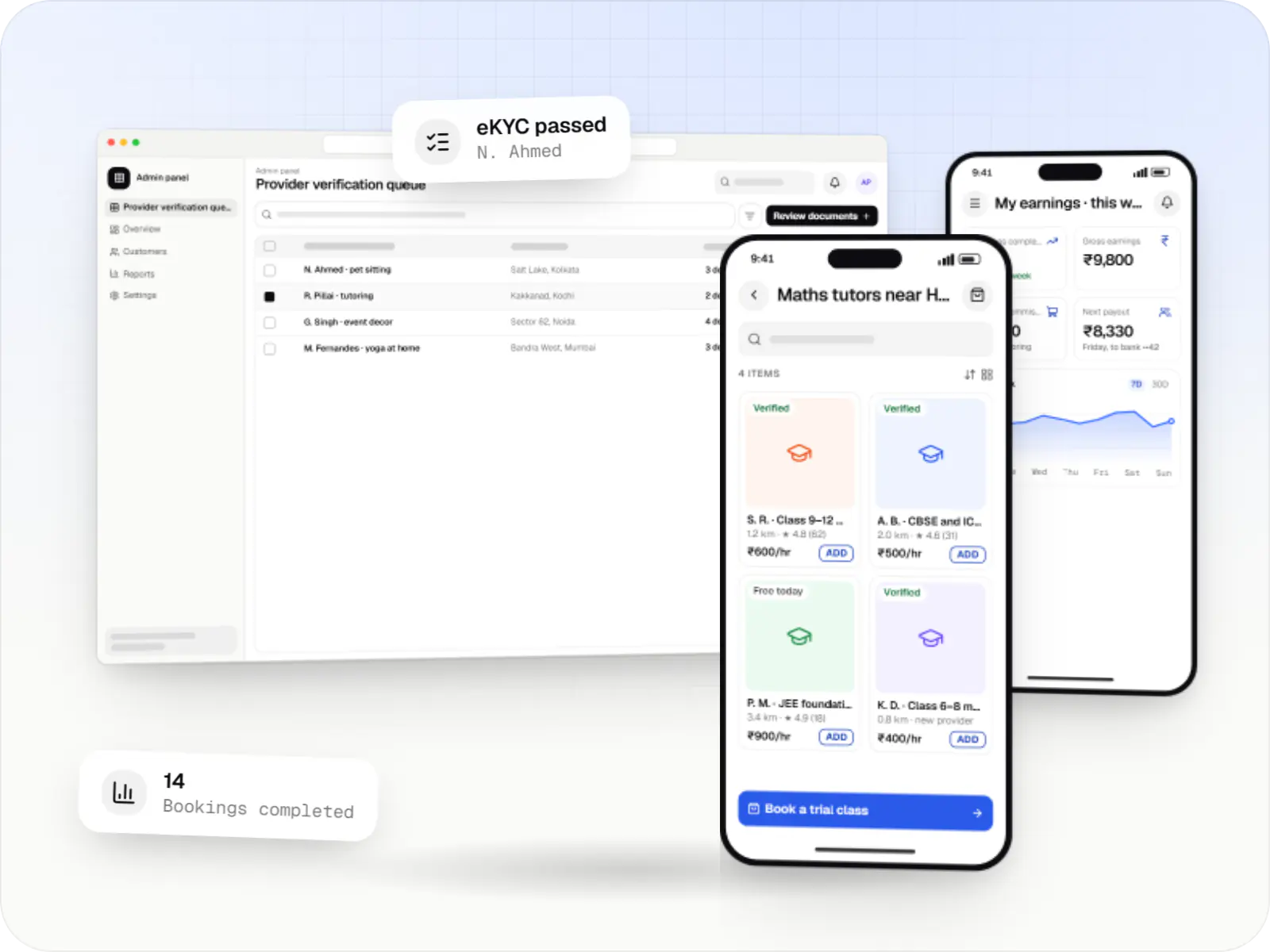
At a glance

A local service marketplace works when trusted providers are available near every customer. We build both apps and the tools behind them: onboarding, verification, commissions and payouts.
Flutter and the related logo are trademarks of Google LLC. We are not endorsed by or affiliated with Google LLC.
How to start
Tell us what you need in your own words. You talk to the developers who would build it and get a written, line-item estimate.
Get a project estimateMarketplaces for tutors, pet sitters, event vendors or home professionals face a cold start in every locality: customers leave if nobody is nearby, and providers leave if bookings do not come.
Technology controls the levers (where you open, how fast providers onboard, how search ranks them), and we make them adjustable from the admin panel.
Challenges
eKYC via licensed providers or DigiLocker, plus background checks where needed.
Masked calls and platform-only benefits discourage swapped numbers.
Split settlements and payouts need reconciliation, not manual transfers.
Operators may have GST TCS and income-tax TDS obligations to report.
Solutions
Across 3 areas
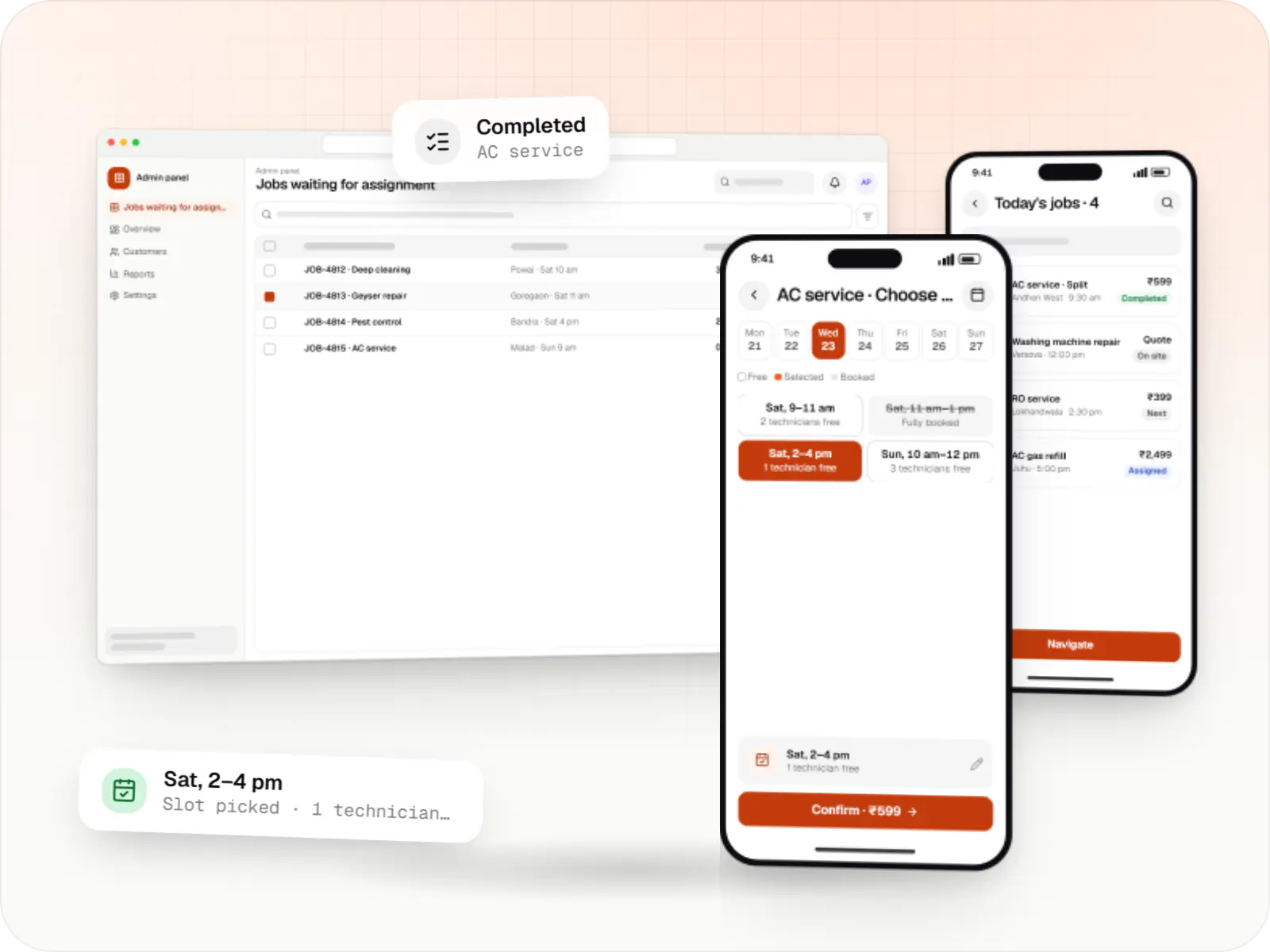
Customer app, professional app and admin panel for repairs, cleaning, appliance servicing and beauty at home, with slot booking, on-site quotes and payouts.
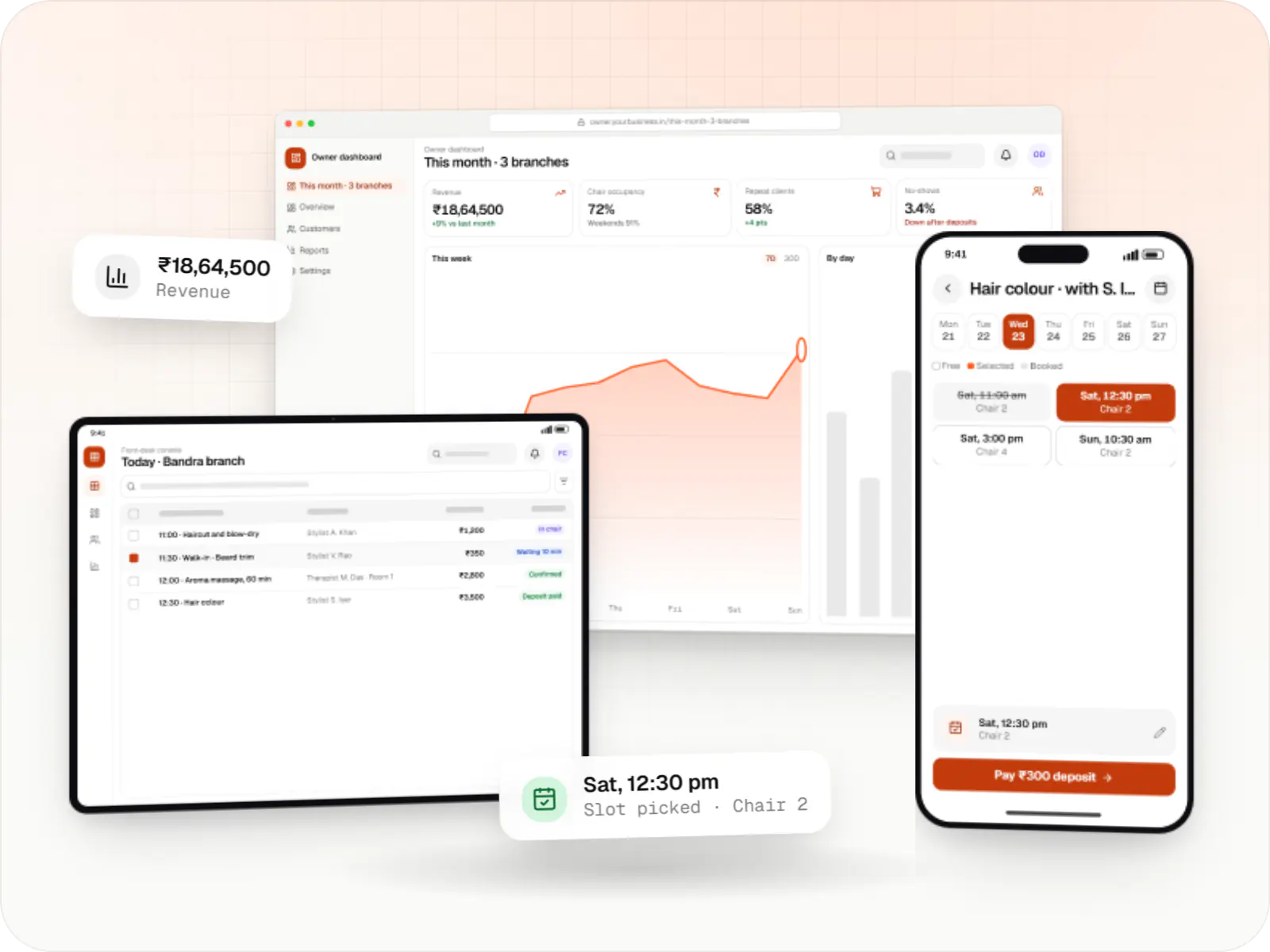
Booking apps and front-desk software for salons, spas and beauty chains: stylist calendars, packages, memberships, product billing and reminders.
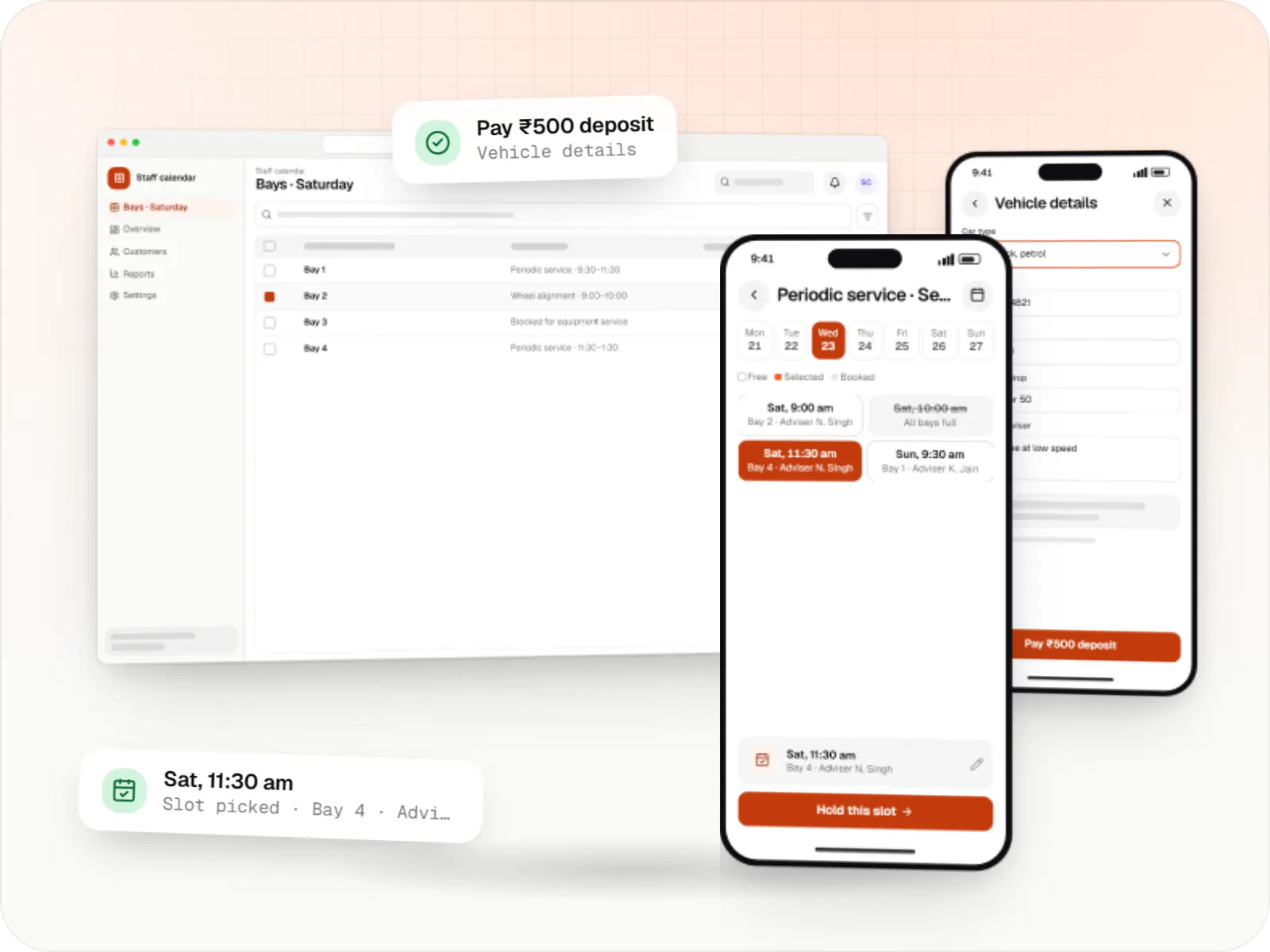
Custom scheduling software for consultants, service centres, labs and multi-location businesses: availability rules, reminders, payments and calendar sync.
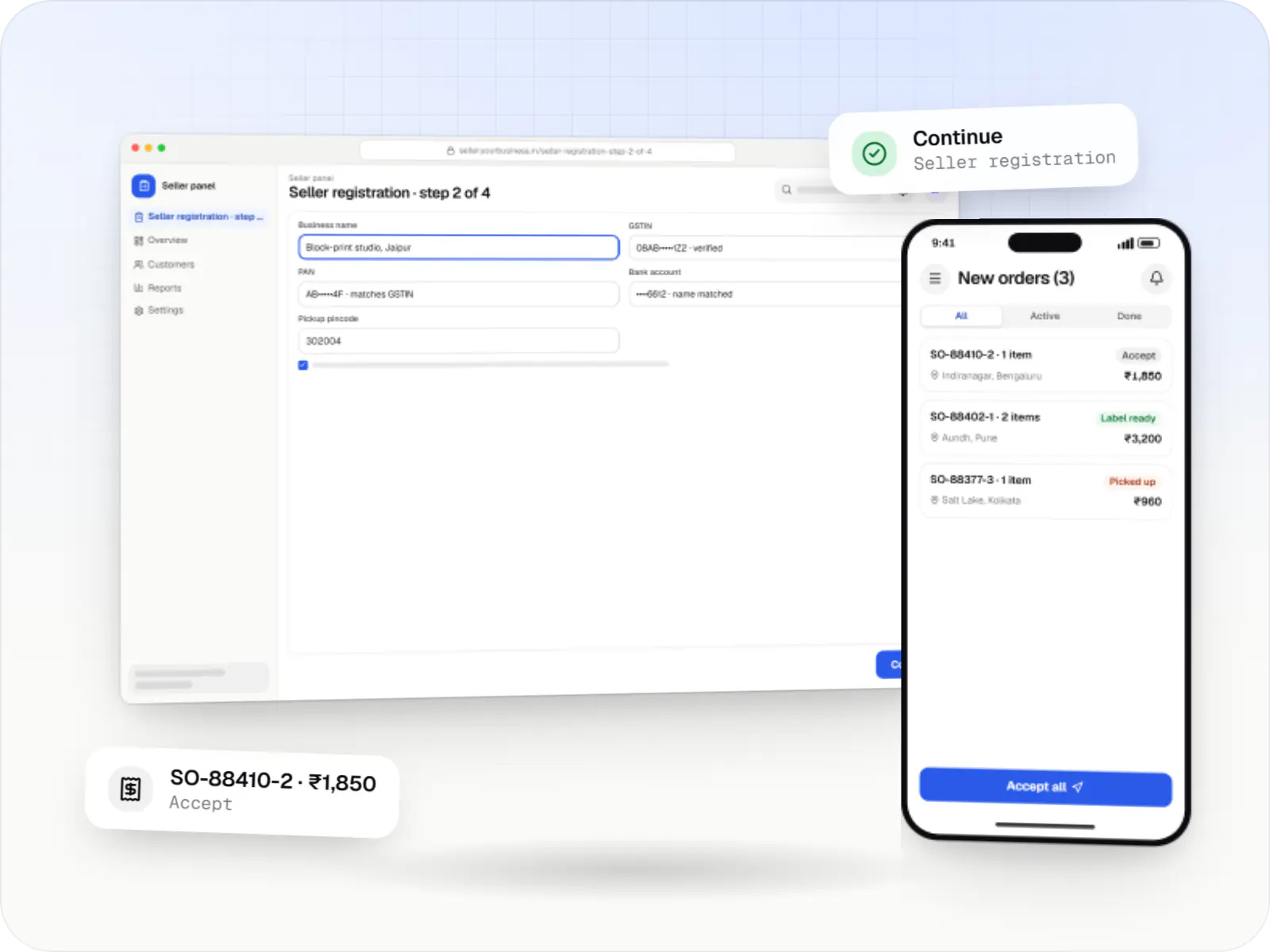
Multi-vendor marketplaces with seller onboarding, commission rules, split payouts, per-seller invoicing and catalogue moderation.
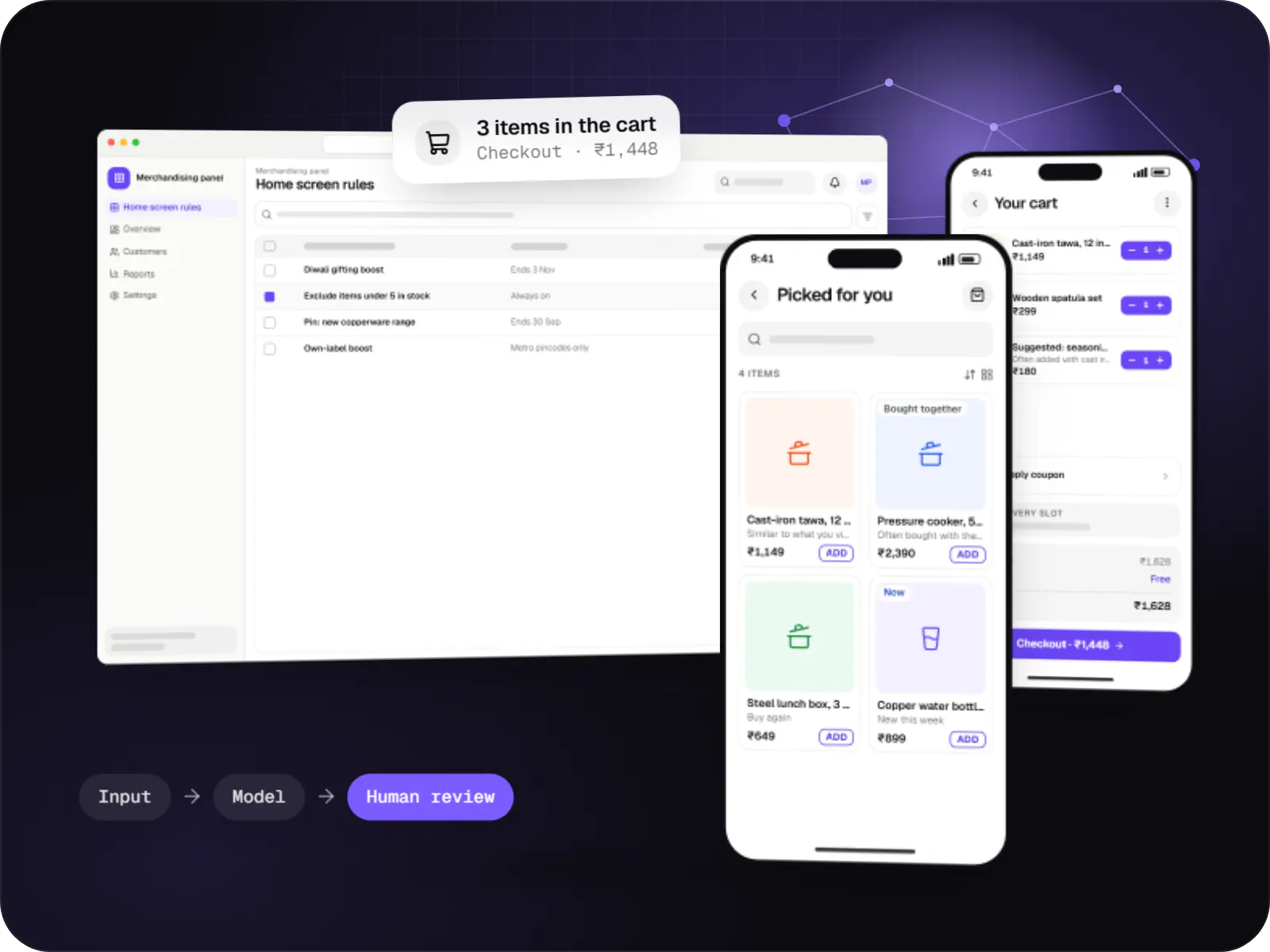
Product, content and offer recommendations built from your behavioural data, with business rules, cold-start handling and A/B testing.
Providers matched by distance, availability and rating.
Documents, service areas, rate cards and bank details.
Category-wise commissions, provider plans and promotions.
Verified-booking reviews, moderation and refunds.
Scheduled bank settlements with provider statements.
How it works
The platform sits between customer and provider at every step, which is what keeps bookings and payments on it.
A tutor or pet sitter uploads documents, sets service areas and rates, and completes eKYC. Your team approves them before they appear in search.
Search ranks verified providers by distance, availability and rating for the chosen category and locality.
The customer books a slot and pays through the platform, upfront or after the service depending on your model, so the money never changes hands off the app.
The provider starts and completes the booking in the app. Calls run through masked numbers, so contact details stay private.
Only customers with a completed booking can leave a review. A complaint opens a dispute that your team settles with a full or partial refund.
The ledger deducts the category commission and pays providers on a fixed cycle, each payout with its own statement.
Platforms
One Flutter or React Native codebase for Android and iOS, with native modules where a feature needs them.
Apps for Android phones and tablets, tested on budget and mid-range devices and published on Google Play or privately.
Browser-based applications with logins, roles and workflows, such as customer portals, SaaS products and internal tools.
Back-office panels for operations, support and finance teams: orders, users, content, reports and permissions.
Technology
Redis keeps provider availability quick to search, Google Maps Platform measures the distance to each provider, and Razorpay can split every payment between provider and platform.
Mobile
Build Android and iOS apps from one shared codebase, so you launch on both platforms faster with a consistent experience.
Used for
Web
A modern web technology for fast, search-friendly websites, online stores and web applications that load quickly on mobile.
Used for
Backend
A structured way to build back ends on Node.js, so large business systems stay organised, testable and easy to hand over.
Used for
Data
A reliable database for the records your business runs on: orders, payments, bookings and stock, kept accurate and easy to report on.
Used for
Data
Keeps frequently used data in fast memory, so apps stay quick on busy days and live features like order tracking feel instant.
Used for
Payments & maps
Adds maps, address search, live tracking and travel-time estimates to delivery, ride and field apps, so orders reach the right door.
Used for
Payments & maps
Lets customers in India pay by UPI, cards, netbanking or wallets, and handles subscriptions, refunds and payouts to sellers or partners.
Used for
Flutter and the related logo are trademarks of Google LLC. We are not endorsed by or affiliated with Google LLC.
Plain-English glossary
Product preview
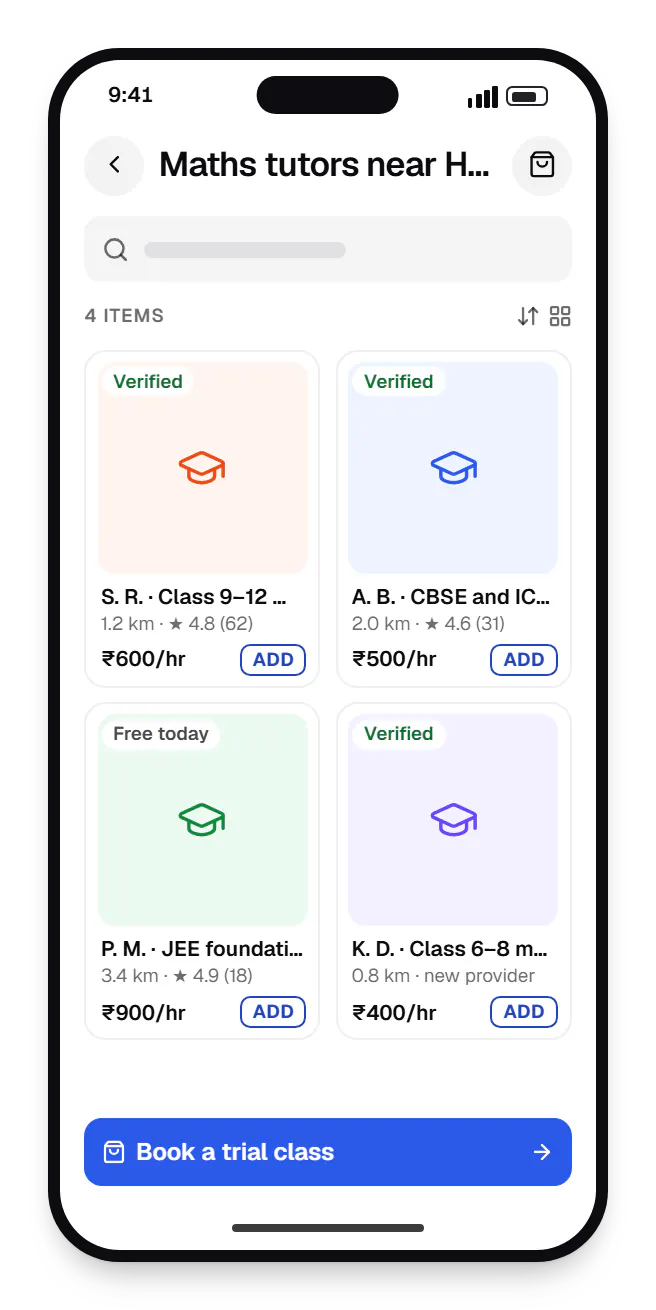
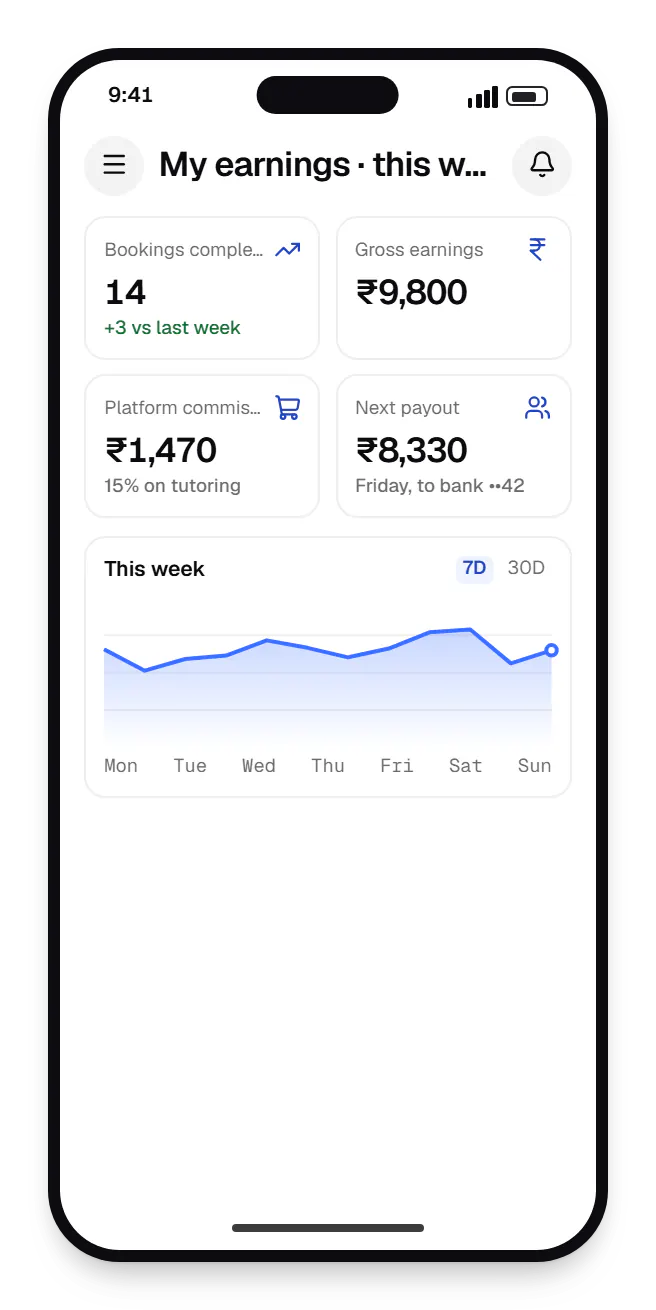
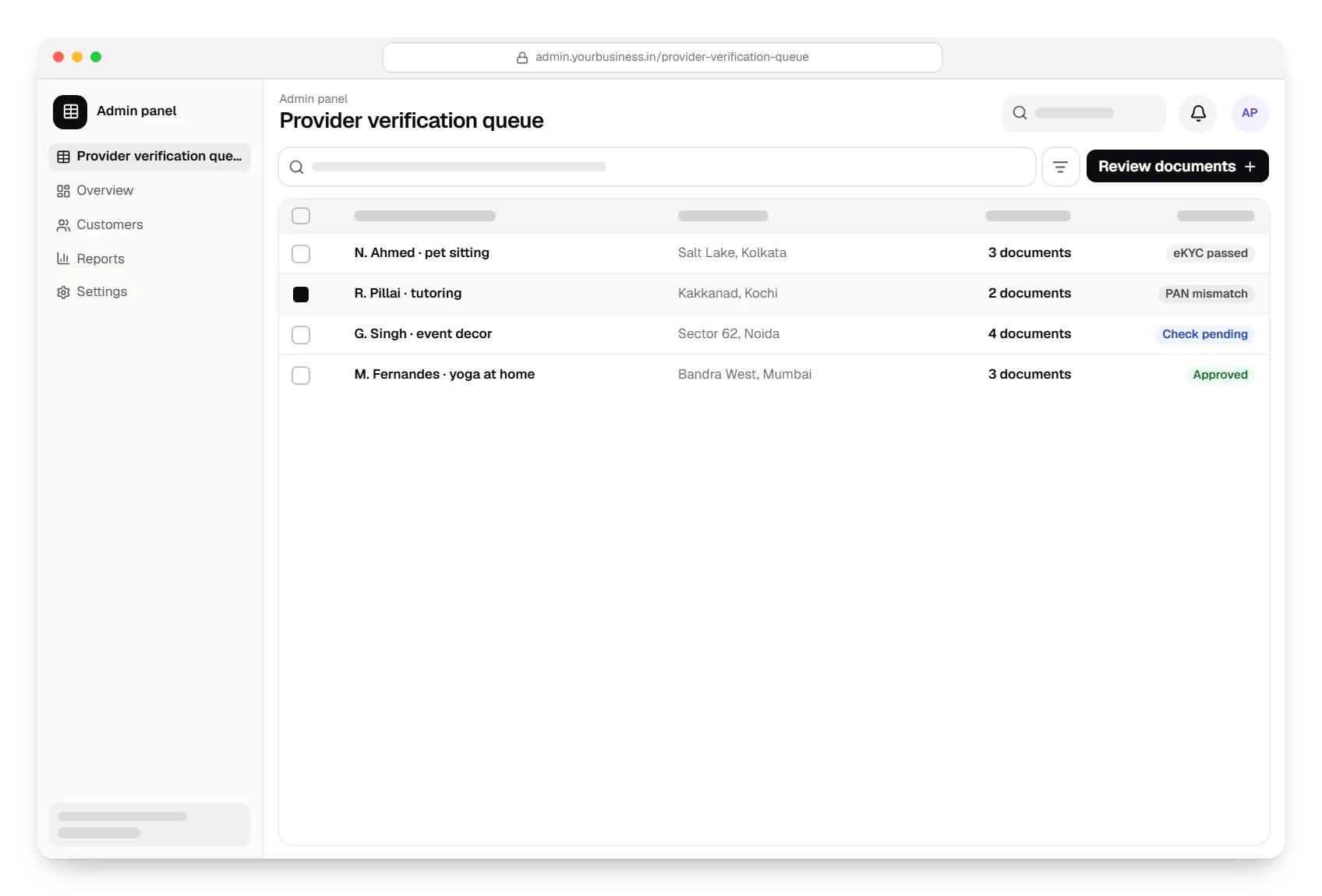
Sample screens: names, prices and figures are examples, not client data.
Cost drivers
Each category can bring its own booking flow, pricing and checks.
Pay-on-service is simpler than holds with split payouts.
KYC, moderation queues and dispute handling scale with risk.
Estimates are written from your scope, with the effort and assumptions behind each line item.
How pricing worksServices
The design and engineering services our in-house team combines on projects in this sector.
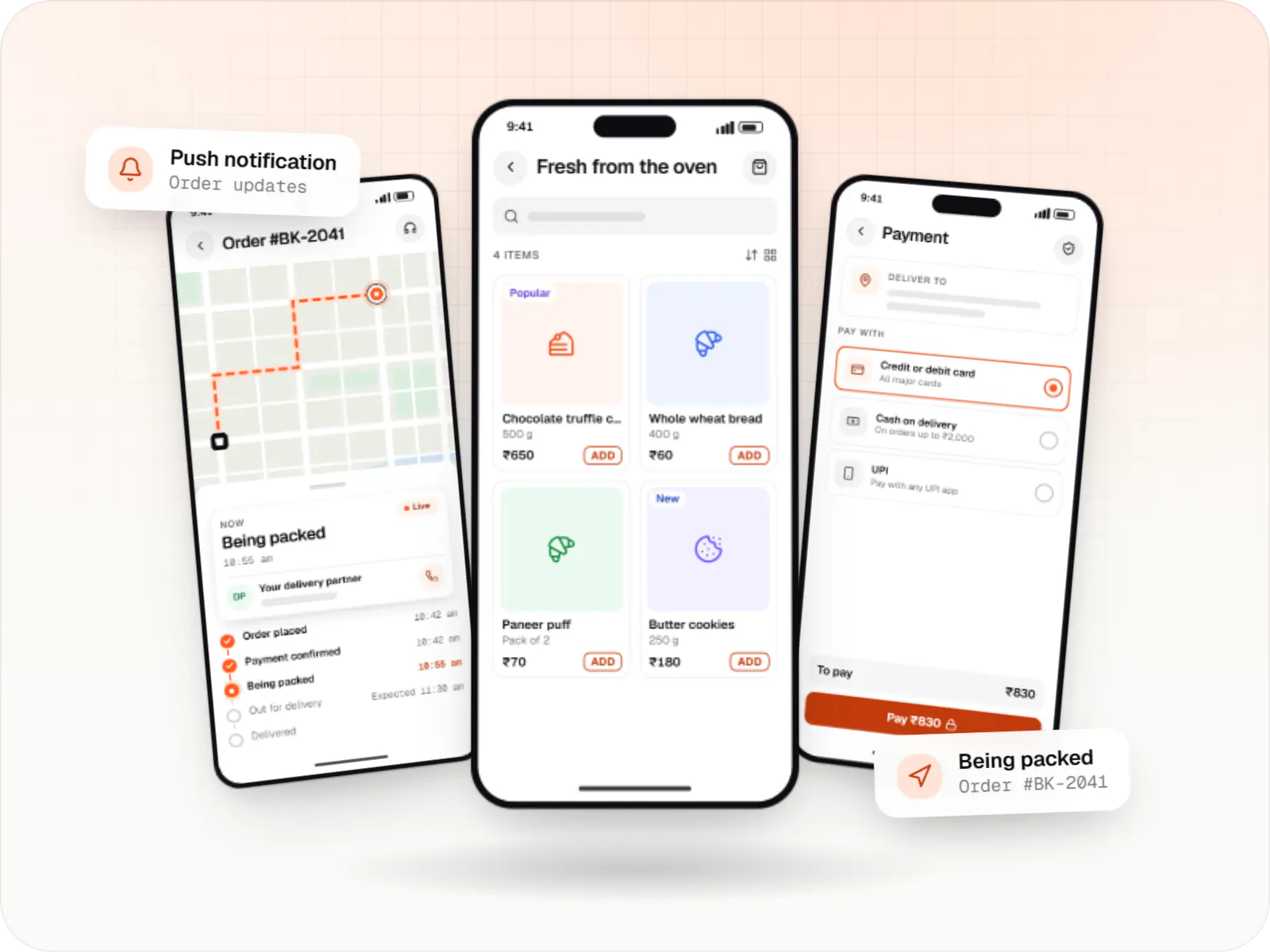
Native and cross-platform Android and iOS apps, from first release through regular store updates, built by our in-house designers and engineers.
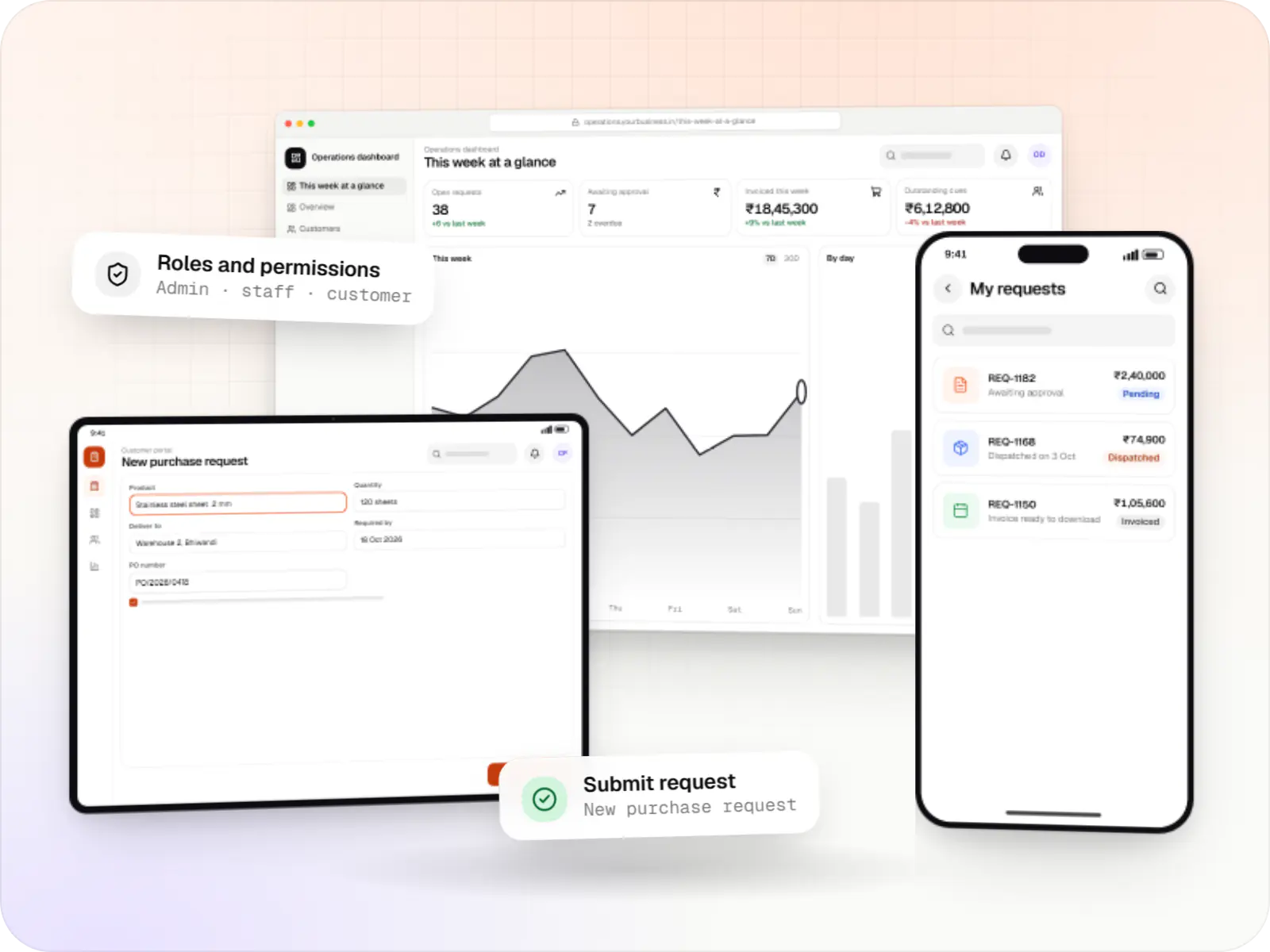
Browser-based products, customer portals, dashboards and internal tools, built on clean data models with secure roles and integrations.
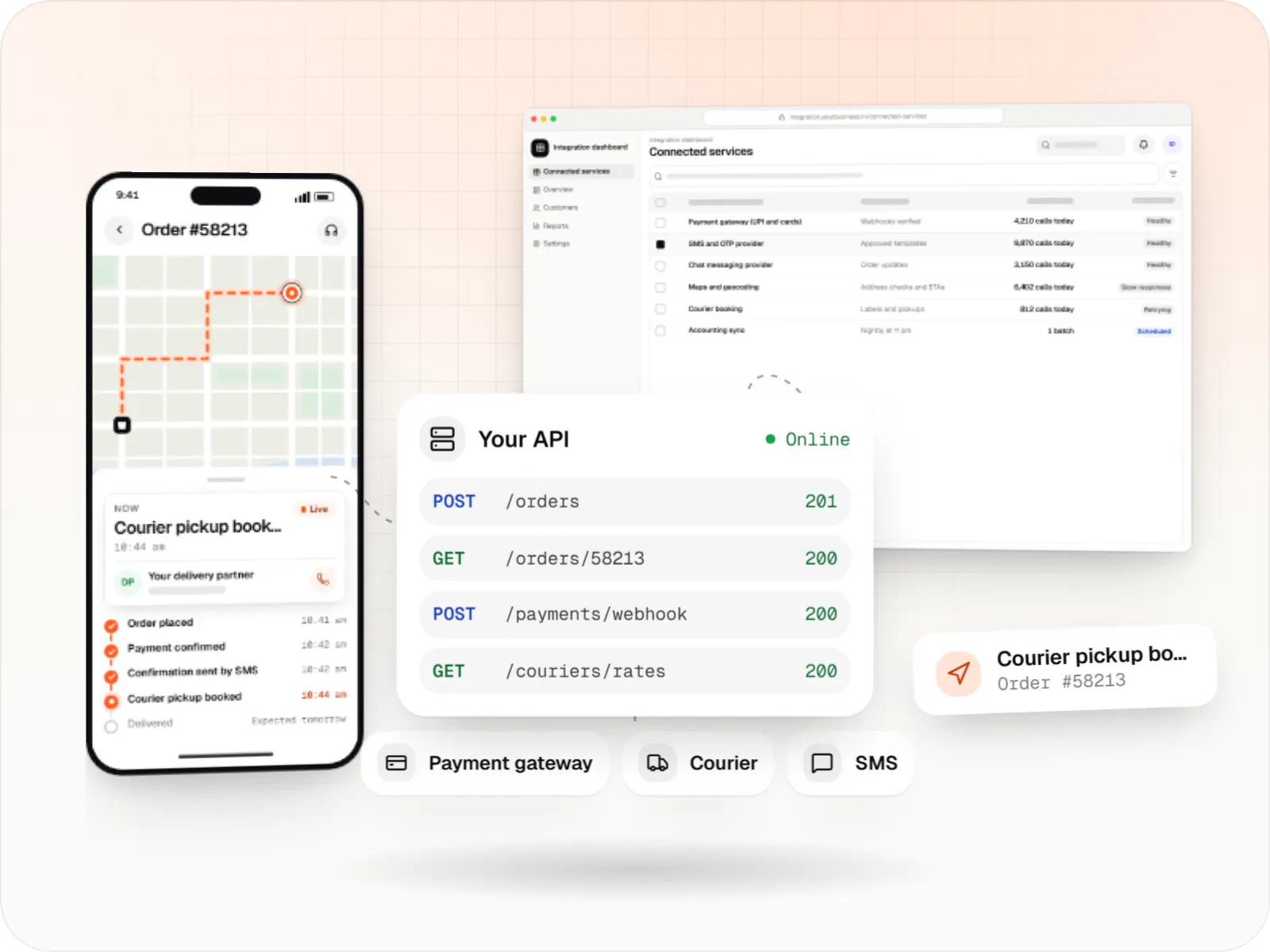
Secure, documented REST and GraphQL APIs, plus integrations that connect your apps to payment, logistics, GST, messaging and business systems.
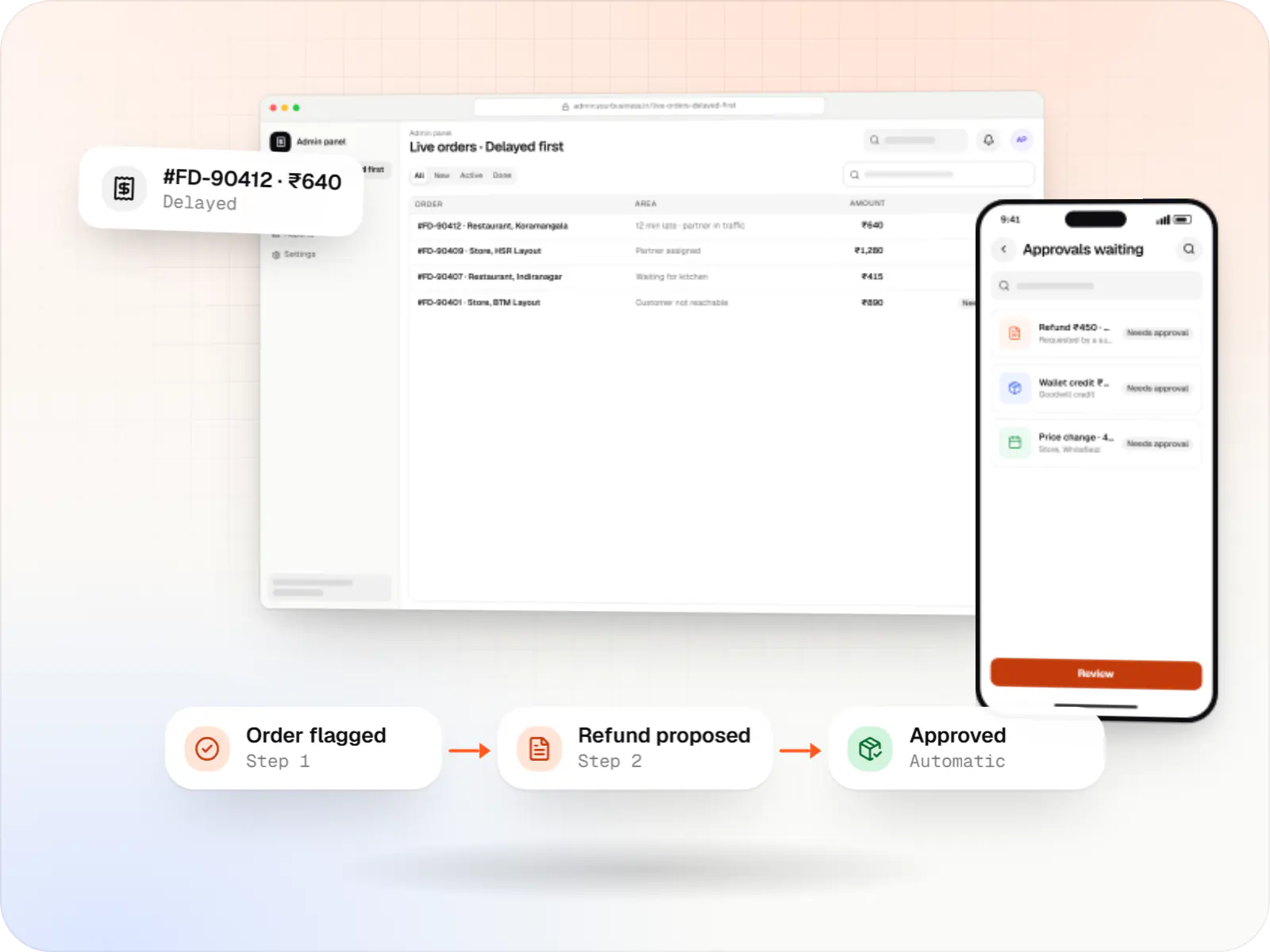
Back-office dashboards built around your team's daily tasks: order queues, approvals, catalogue management, payouts, reports and audit logs.
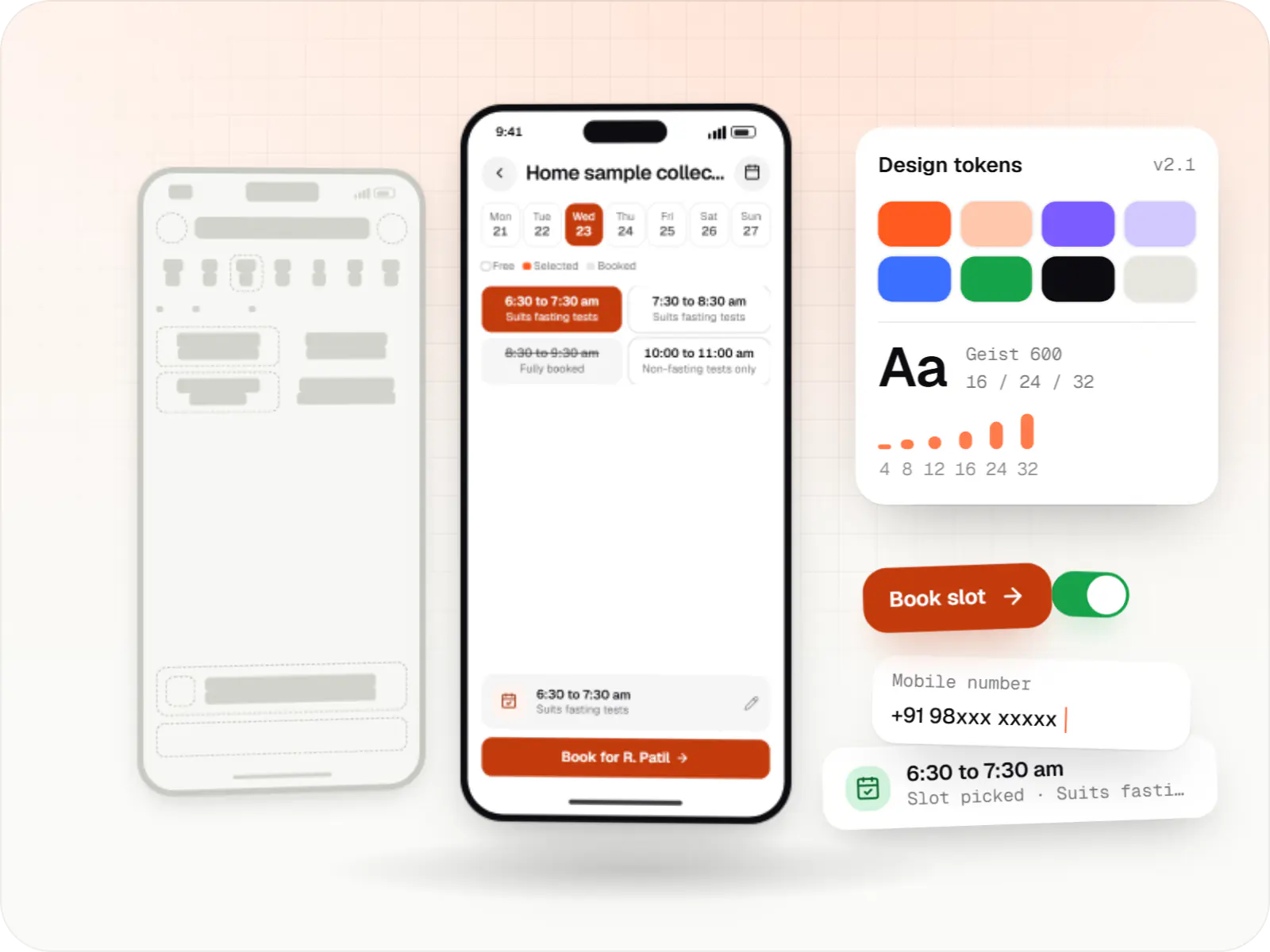
Product design for web and mobile apps: research, user flows, wireframes, prototypes and design systems that engineers can build from.
FAQ
We integrate licensed verification providers for Aadhaar-based eKYC and PAN checks, and fetch documents such as driving licences through DigiLocker with the provider’s consent. Categories involving home visits or children may need police verification or background checks, tracked in the provider profile. Documents are stored encrypted, with limited access and only what verification needs.
Usually the platform collects the full amount, deducts commission and pays providers on a fixed cycle. Split-settlement products such as Razorpay Route or Cashfree’s split payments automate this, so funds settle through the gateway rather than your own account. A ledger records every booking, commission, refund and payout, so provider statements reconcile.
Yes, and it is usually the sensible route. Categories, their booking questions, pricing rules and verification requirements are configuration, so adding pet grooming after tutoring does not need a new app. Genuinely different flows, such as multi-day event bookings versus hourly services, may need new screens, which we estimate separately.
Next step
We can scope a launch version for one city and category, then expand as supply builds.