

Backend
Node.js
Runs the server side of apps: fast, scalable back ends that power your app, website and integrations.
Used for
- App back ends
- Live order tracking
- Chat and notifications
- Payment processing
Media & technology
Game backends, esports platforms, companion apps and web games for studios and gaming communities, built around your game.
At a glance

We work with studios and esports organisers on what surrounds the game. We don't build AAA game engines or real-money gaming products.
How to start
Tell us what you need in your own words. You talk to the developers who would build it and get a written, line-item estimate.
Get a project estimateStudios usually build the game client in Unity, Unreal or Godot and need help with what surrounds it: player accounts, cloud saves, leaderboards, live-ops tools and analytics. We also build esports platforms, companion apps and casual HTML5 games.
India's Promotion and Regulation of Online Gaming Act, 2025 prohibits online money games, so we work only on esports, social and casual games.
Challenges
Leaderboards and lobbies must absorb surges without lag.
Events and offers should ship without an app release.
Virtual goods generally require Google Play Billing or Apple in-app purchase.
Server-side validation protects rankings from tampered clients.
Solutions
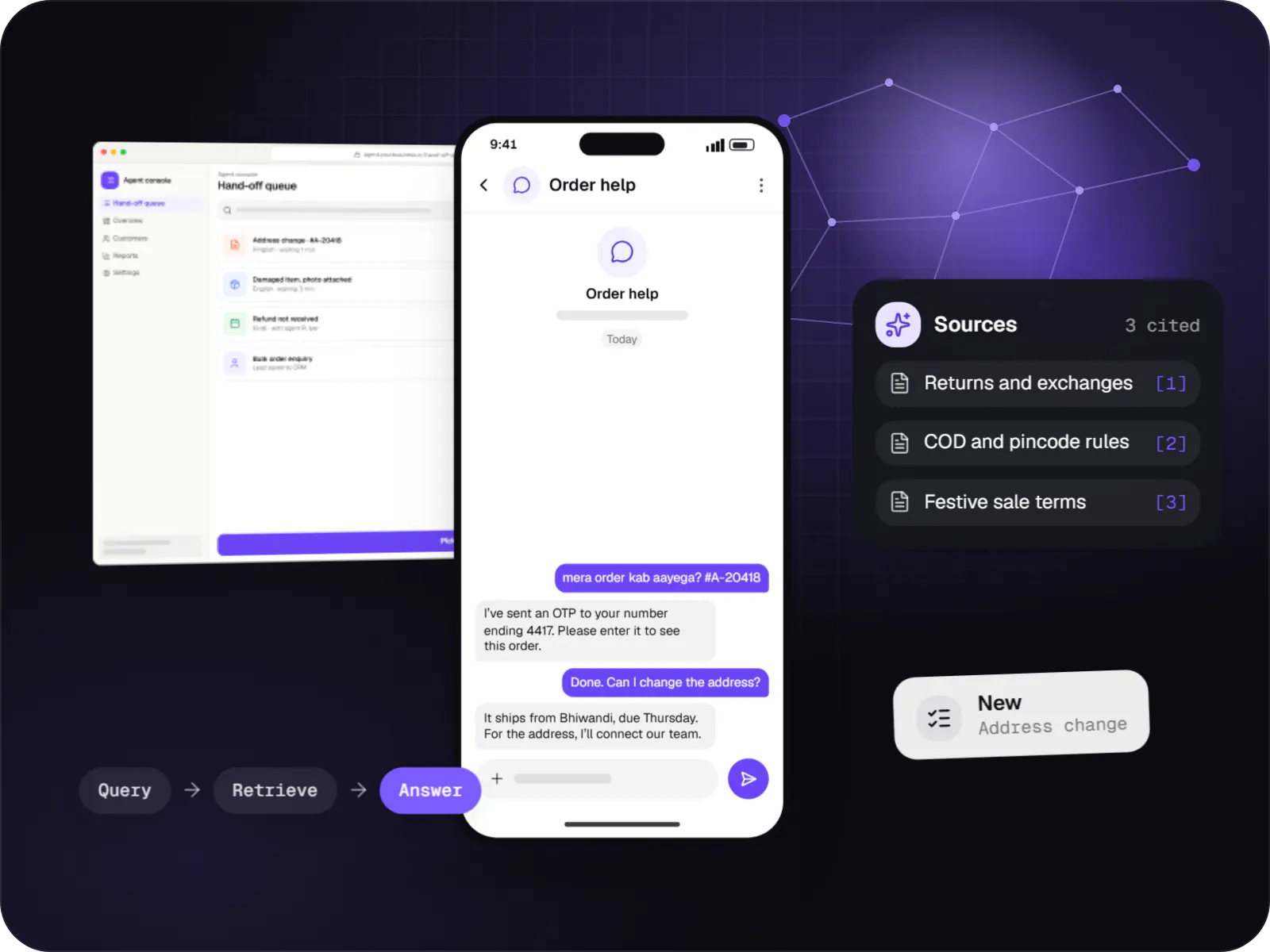
Support and sales chatbots for web, app and WhatsApp that answer from your own content and hand off to your team.
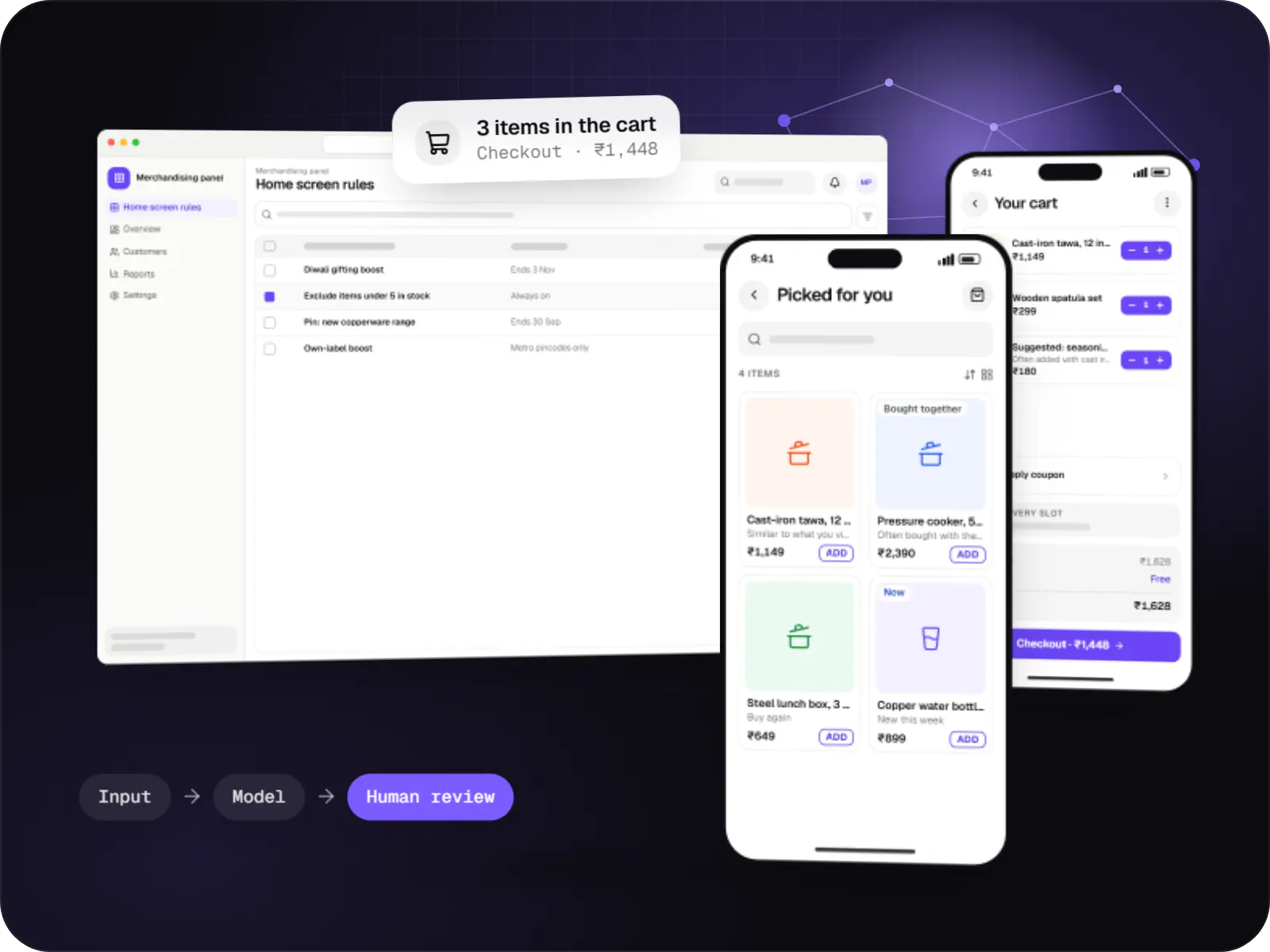
Product, content and offer recommendations built from your behavioural data, with business rules, cold-start handling and A/B testing.
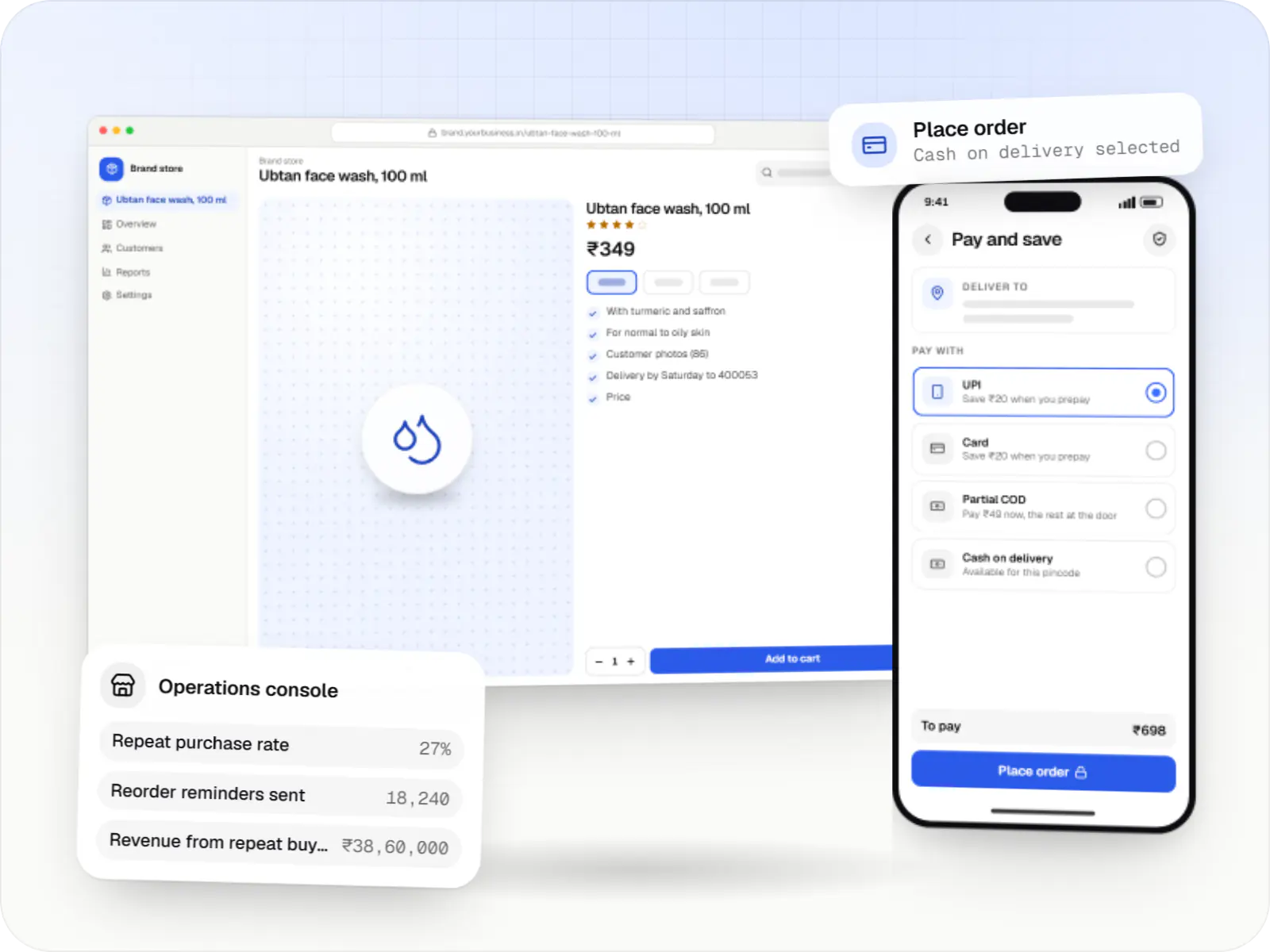
Brand-owned online stores for D2C companies, with conversion-focused checkout, retention tools, server-side tracking and multichannel stock sync.
Accounts, cloud saves and inventories as APIs.
Registrations, brackets, seasons and leaderboards for esports.
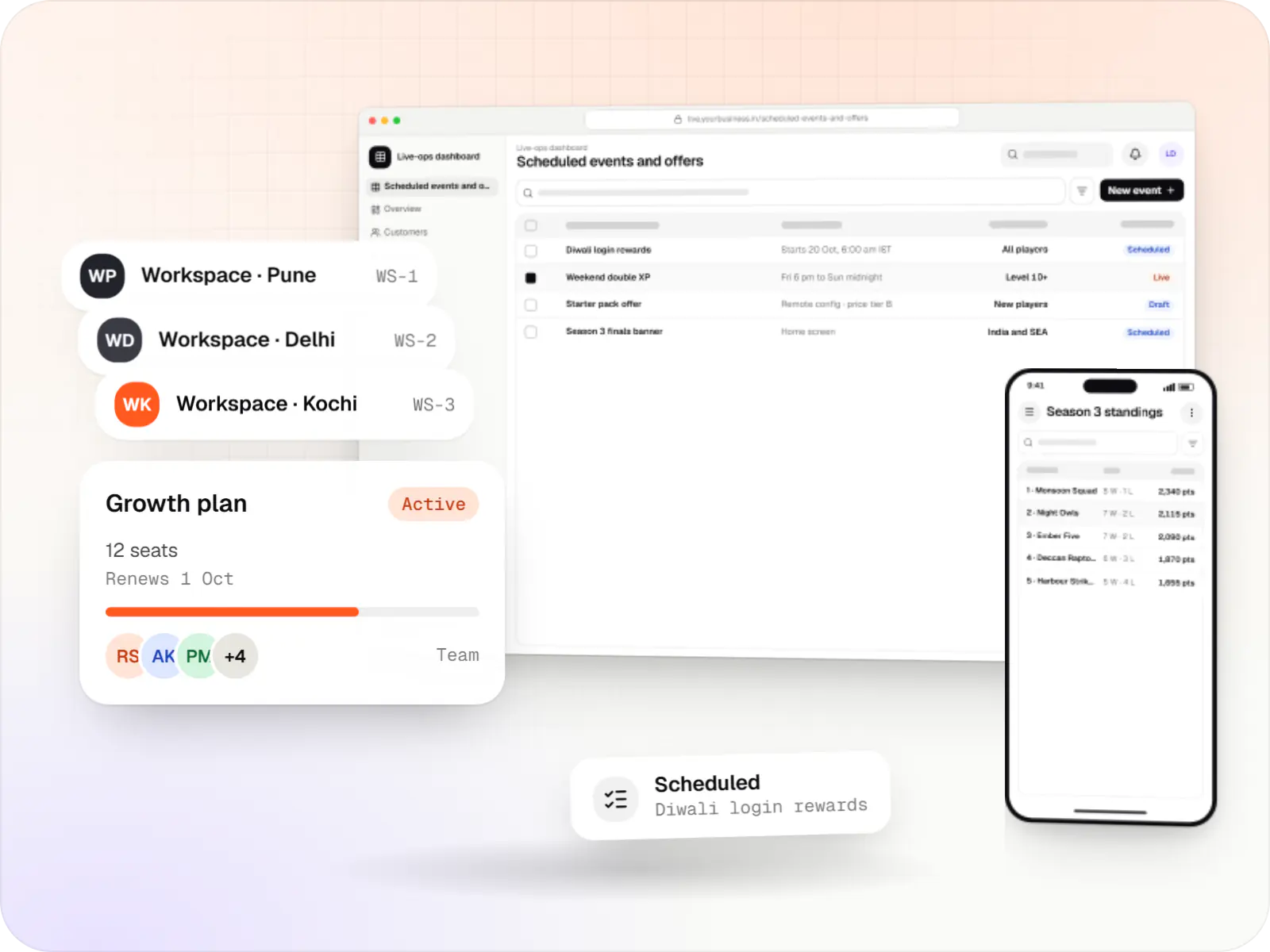
Remote config, event scheduling and offer management.
Team chat, stats and match schedules.
HTML5 games for campaigns and communities.
How it works
The same player accounts and leaderboards also serve your game between tournaments.
Captains create a team, invite players and verify their in-game IDs before the registration deadline.
When registration closes, the platform seeds teams into a single-elimination, round-robin or Swiss bracket and publishes the match schedule.
Teams confirm within a window before start time; no-shows forfeit automatically, which keeps the schedule on time.
After the match, captains submit the score with a screenshot, or results arrive from the publisher's API where one exists.
If the two captains disagree, an admin reviews the evidence and confirms the result.
Rankings and season points update for everyone following, calculated on the server so a tampered game client cannot change them.
Platforms
One Flutter or React Native codebase for Android and iOS, with native modules where a feature needs them.
Browser-based applications with logins, roles and workflows, such as customer portals, SaaS products and internal tools.
Back-office panels for operations, support and finance teams: orders, users, content, reports and permissions.
Installable web apps with offline support and notifications, useful when an app-store listing isn't essential or phones have little storage.
Technology
Node.js and NestJS run player services, Redis keeps leaderboards instant under load, and Docker lets the backend scale out quickly on launch day.
Backend
Runs the server side of apps: fast, scalable back ends that power your app, website and integrations.
Used for
Backend
A structured way to build back ends on Node.js, so large business systems stay organised, testable and easy to hand over.
Used for
Data
Keeps frequently used data in fast memory, so apps stay quick on busy days and live features like order tracking feel instant.
Used for
Data
A reliable database for the records your business runs on: orders, payments, bookings and stock, kept accurate and easy to report on.
Used for
Data
A flexible database for records that vary a lot from one to the next, such as mixed product catalogues, content and activity logs.
Used for
Cloud & DevOps
Cloud hosting for your app, website and data, with data centres in India and room to grow when traffic rises.
Used for
Cloud & DevOps
Packages your software so it runs the same way on every laptop and server, which makes releases predictable and moving hosts easier.
Used for
Web
Builds interactive screens in the browser, such as dashboards, admin panels and portals, that respond instantly as your team works.
Used for
Plain-English glossary
Product preview
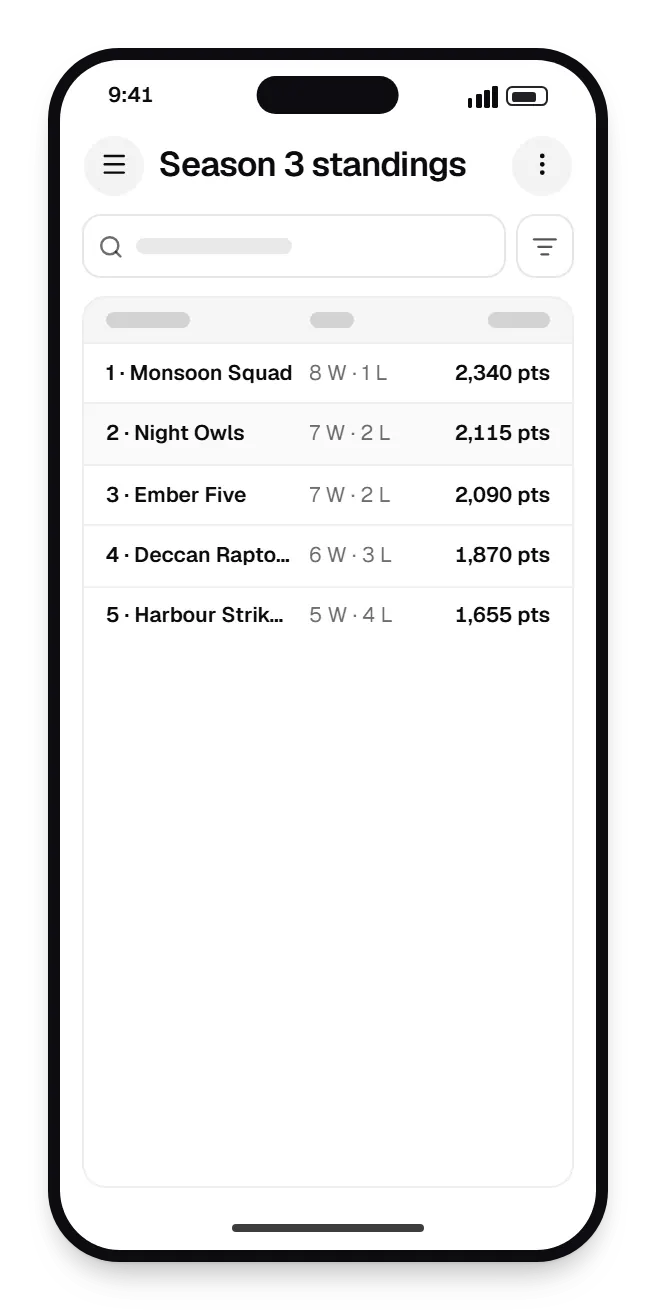
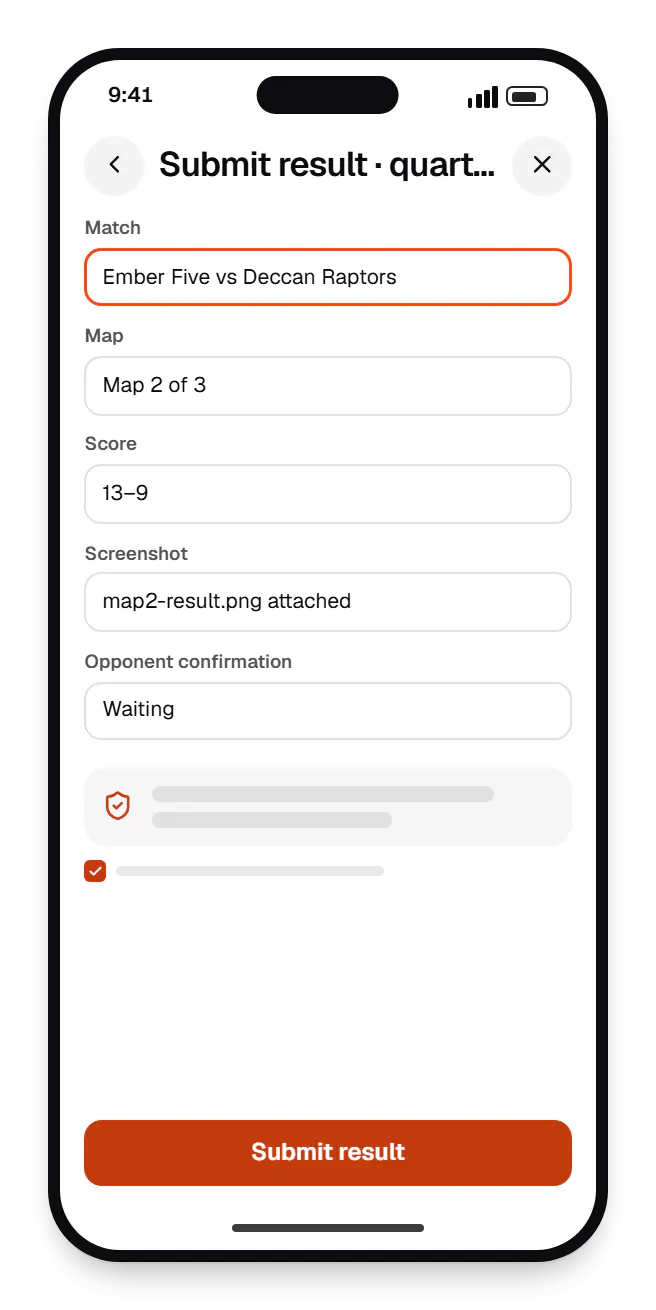
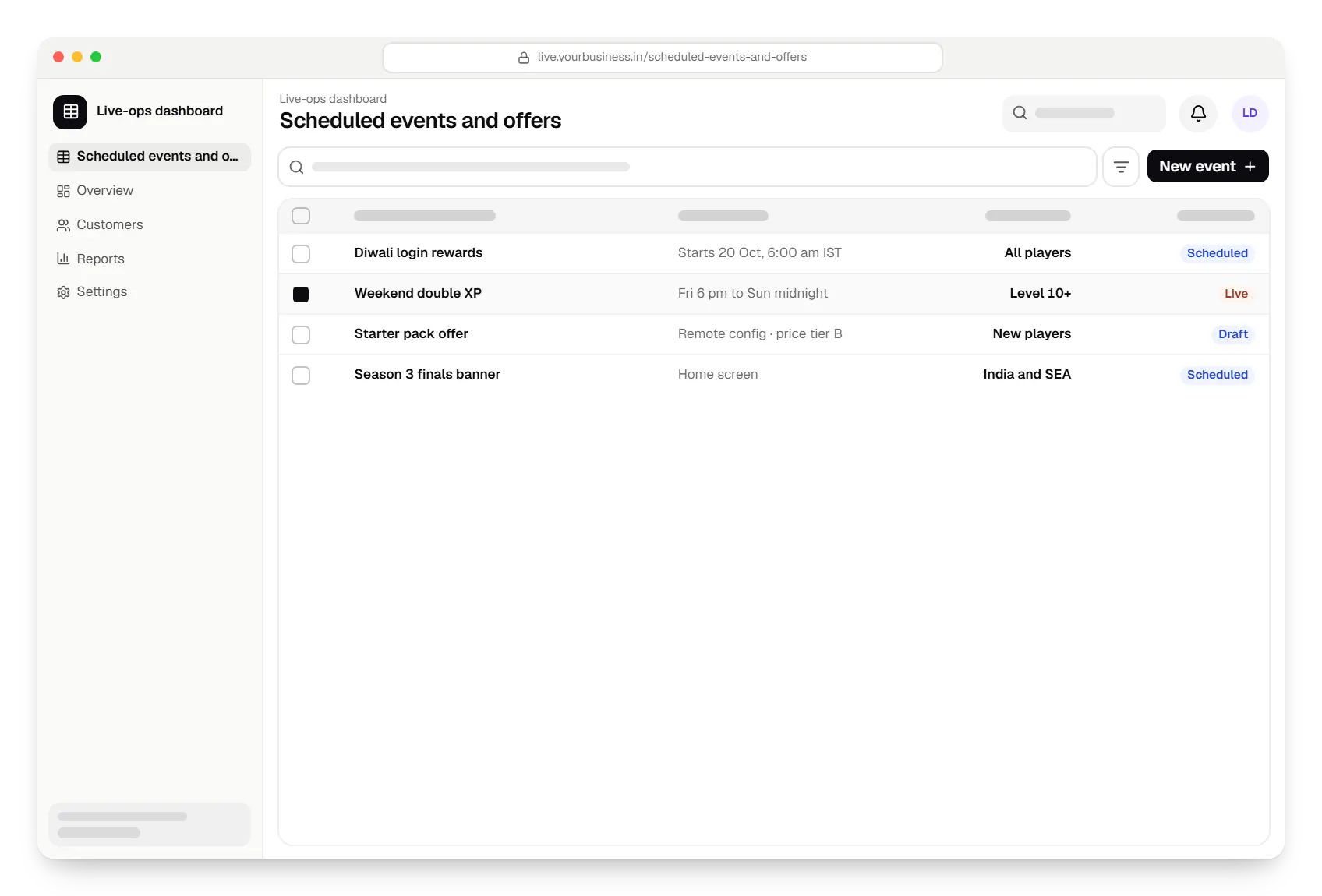
Sample screens: names, prices and figures are examples, not client data.
Cost drivers
Real-time multiplayer state is harder than turn-based play.
Checks beyond basic server validation add ongoing work.
Global launches need multi-region hosting and load testing.
Estimates are written from your scope, with the effort and assumptions behind each line item.
How pricing worksServices
The design and engineering services our in-house team combines on projects in this sector.
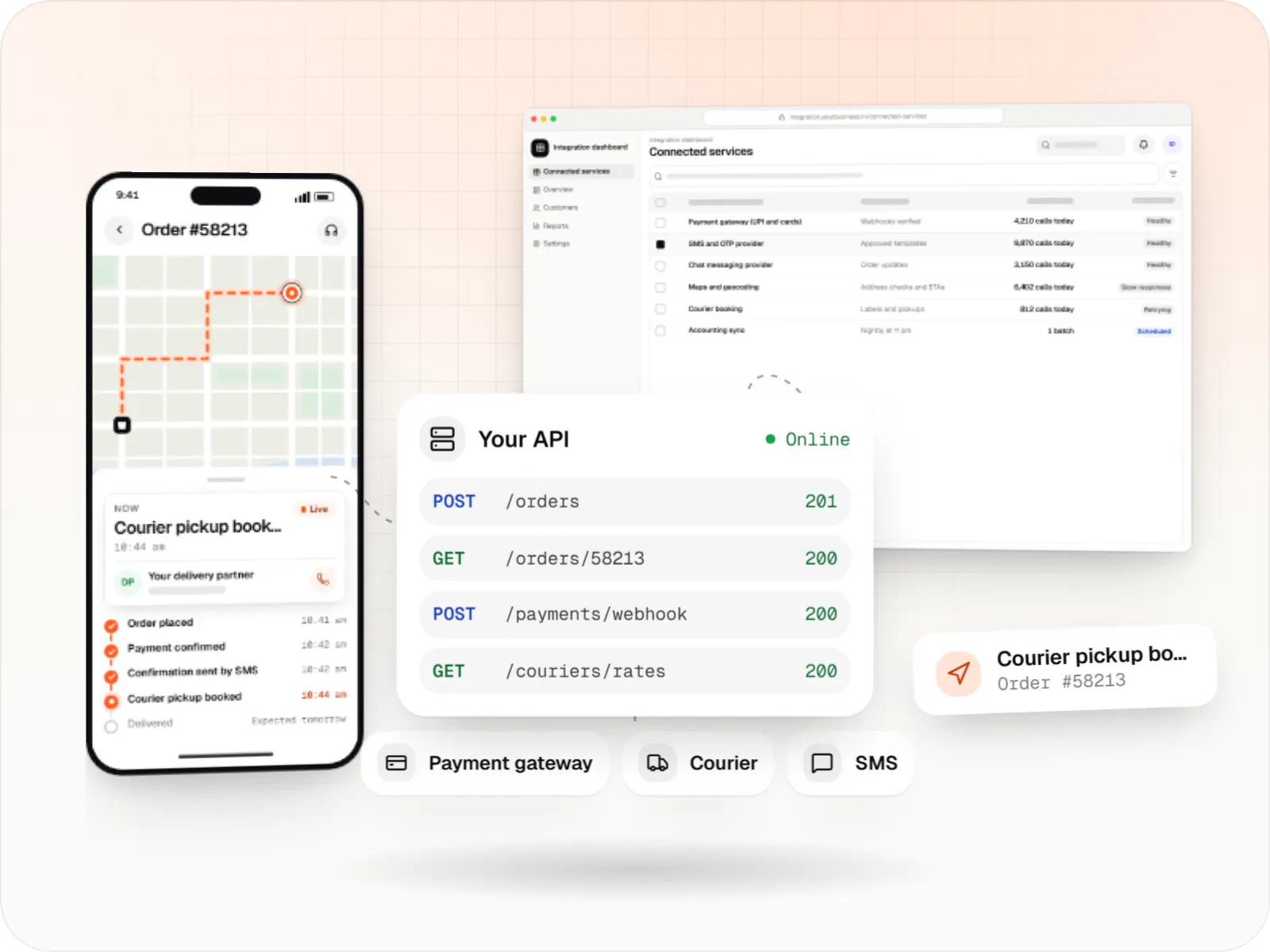
Secure, documented REST and GraphQL APIs, plus integrations that connect your apps to payment, logistics, GST, messaging and business systems.
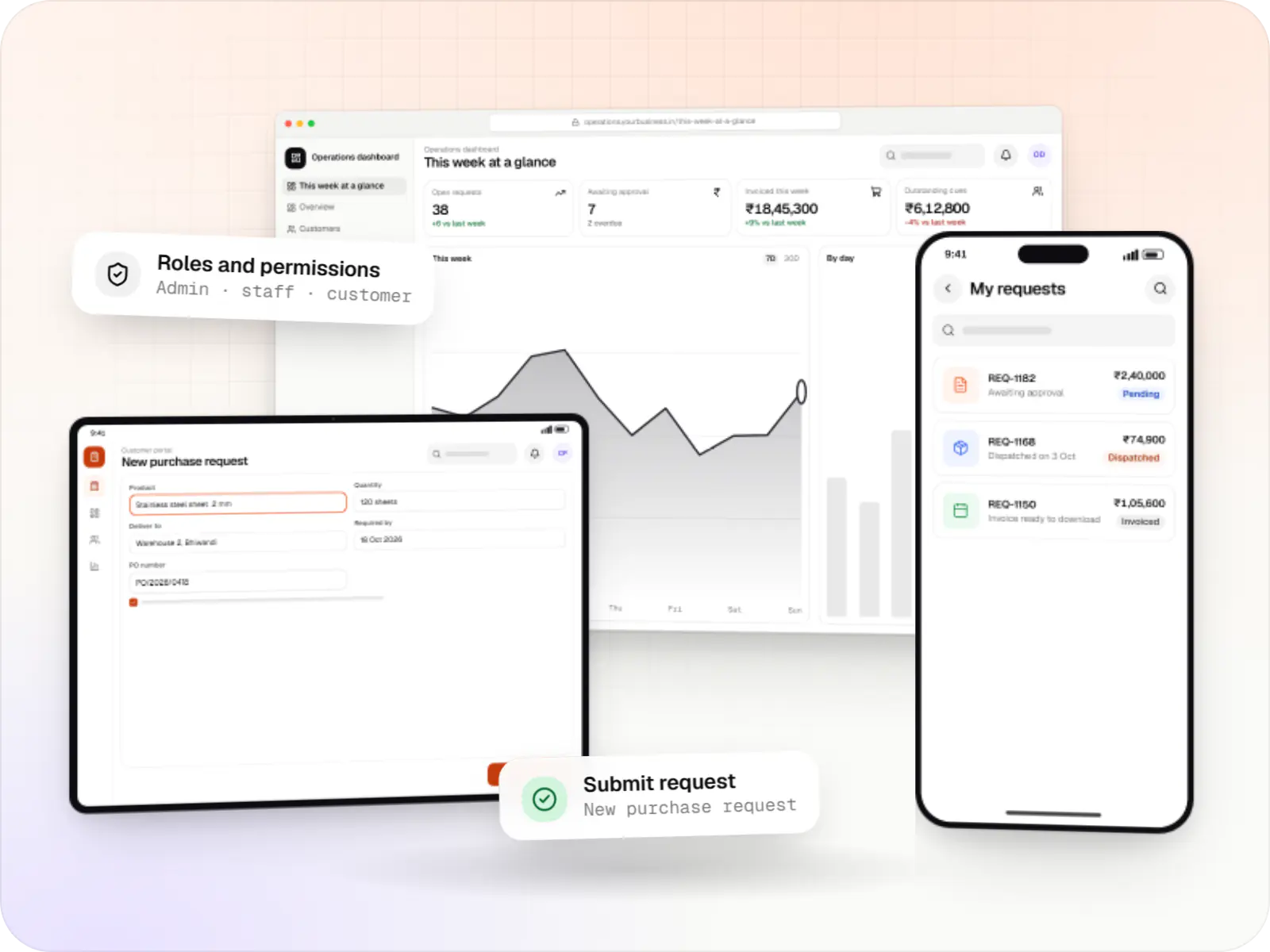
Browser-based products, customer portals, dashboards and internal tools, built on clean data models with secure roles and integrations.
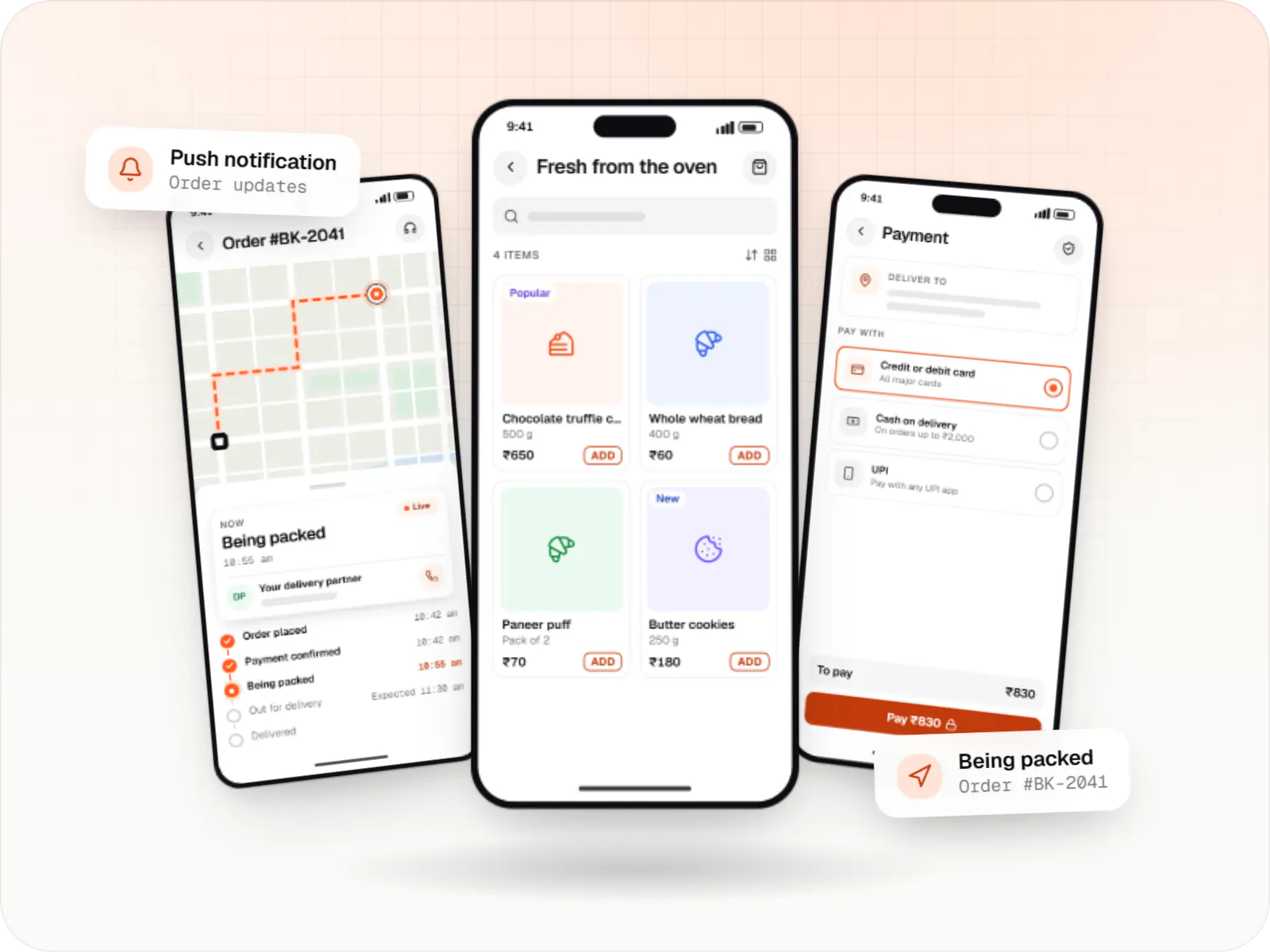
Native and cross-platform Android and iOS apps, from first release through regular store updates, built by our in-house designers and engineers.
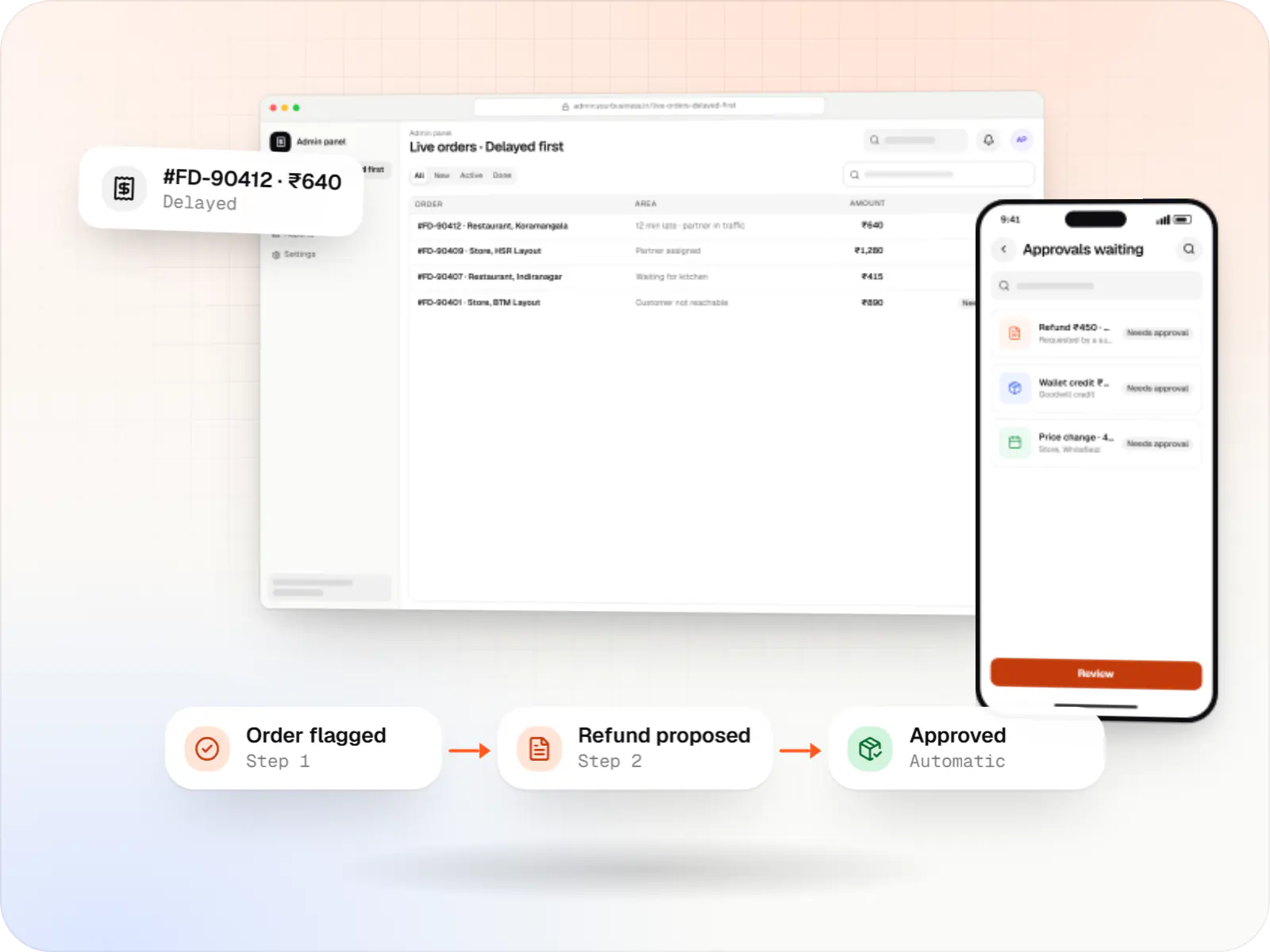
Back-office dashboards built around your team's daily tasks: order queues, approvals, catalogue management, payouts, reports and audit logs.
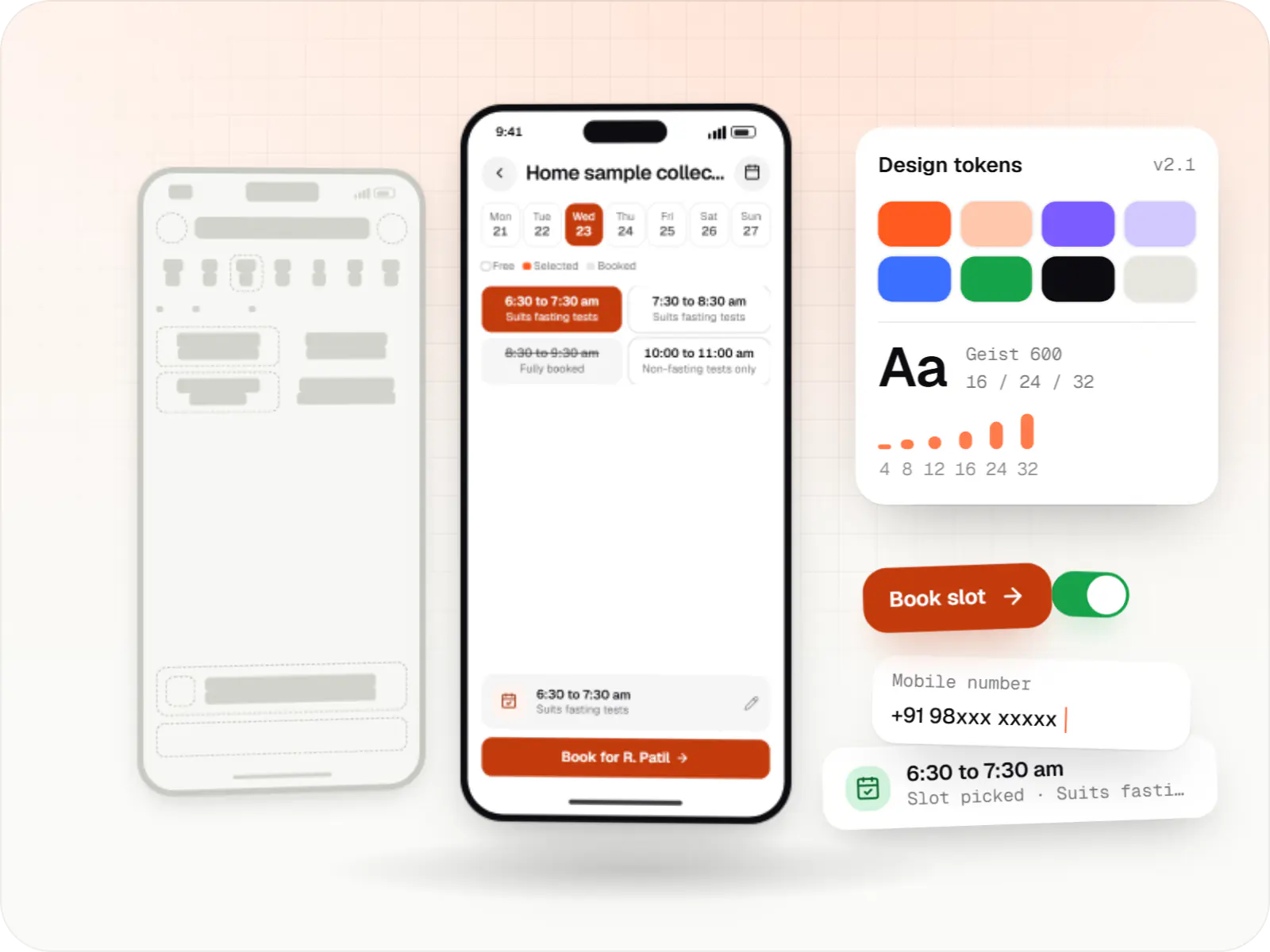
Product design for web and mobile apps: research, user flows, wireframes, prototypes and design systems that engineers can build from.
FAQ
Game-client development is not our focus. We build the services a Unity, Unreal or Godot client calls: authentication, leaderboards, inventories, matchmaking lobbies, live-ops and analytics. For lighter projects, such as branded web games, we build HTML5 games end to end. For a 3D game from scratch, we will point you to a specialist studio.
Yes. Typical platforms cover team registration, verified game IDs, bracket formats (single or double elimination, round-robin, Swiss), check-ins, score submission with screenshots, disputes and leaderboards. Where a publisher offers a results API, scores flow in automatically; otherwise admins verify them. Prizes are organiser-funded; we do not build entry-fee formats.
Digital items sold inside Android and iOS apps generally must use Google Play Billing and Apple’s in-app purchase. We verify every receipt server-side before granting items, process refunds from store notifications and keep a ledger of player balances. Physical merchandise sold on your website can use a regular gateway such as Razorpay.
Next step
Share your engine, platforms and launch plans; we will scope the work.