


Backend
NestJS
A structured way to build back ends on Node.js, so large business systems stay organised, testable and easy to hand over.
Used for
- Business app back ends
- SaaS platforms
- Marketplaces
- Admin panel back ends
Agriculture
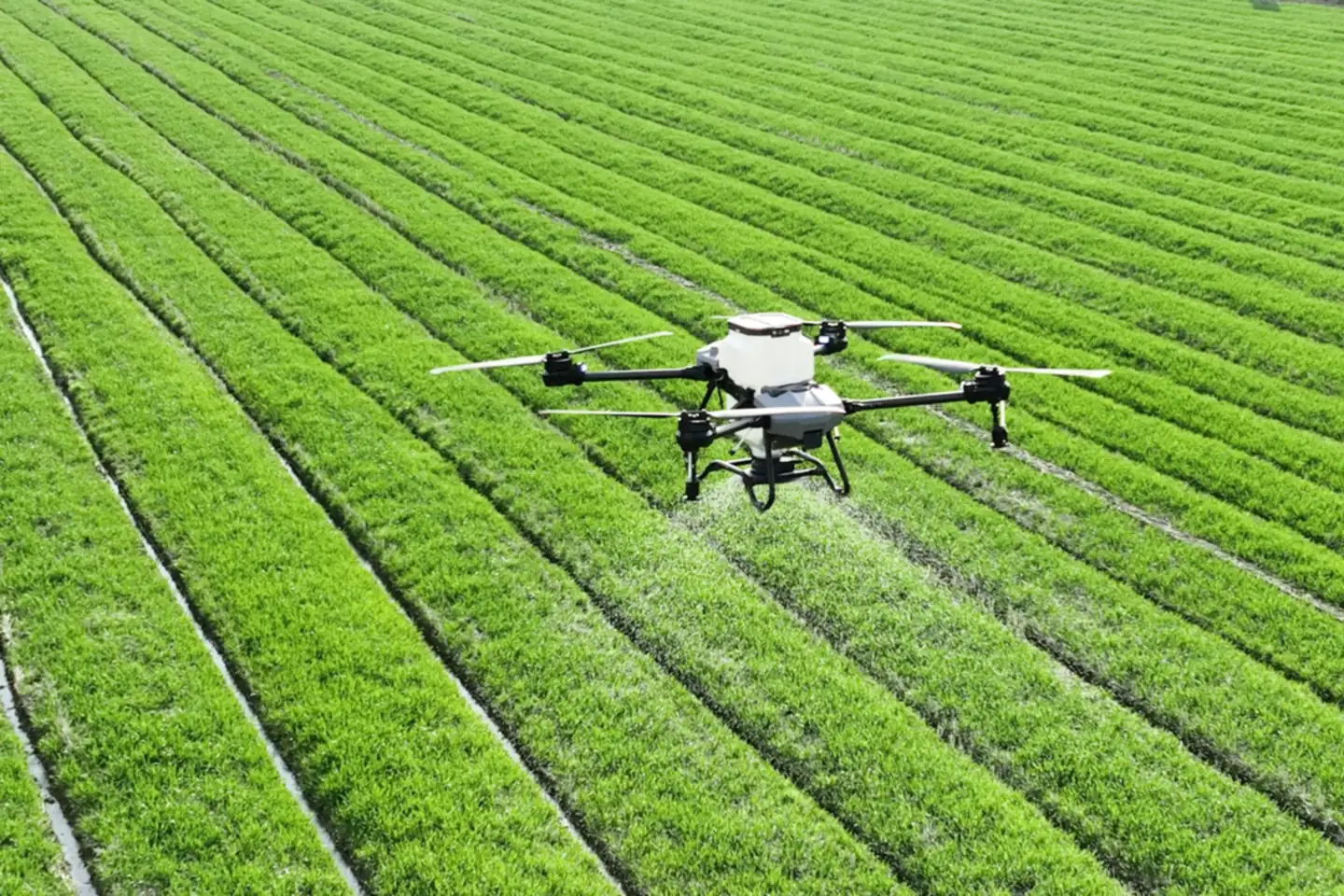
Procurement, grading, cold-chain monitoring, traceability and B2B distribution software for fresh produce and food supply businesses.
At a glance
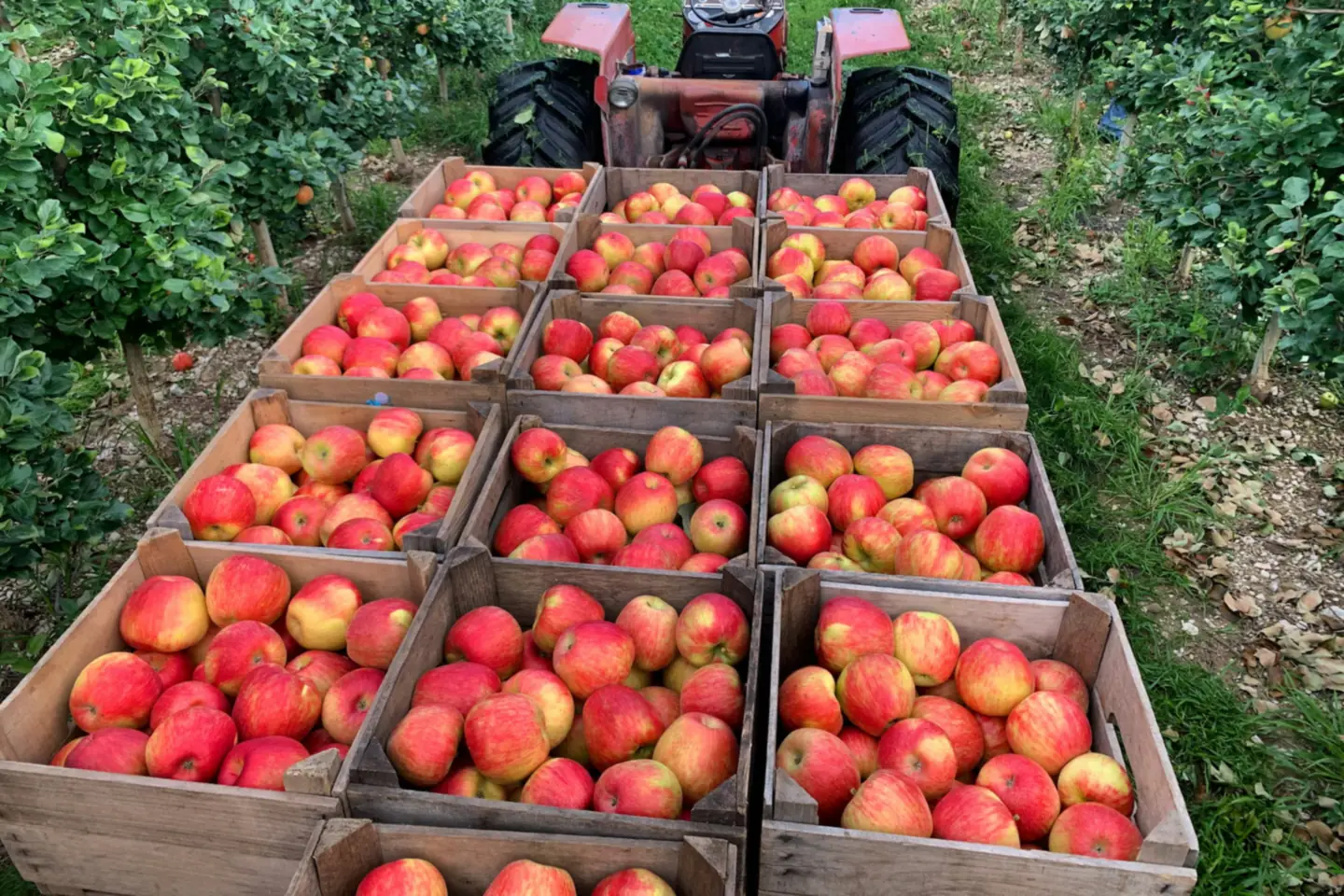
Food supply businesses buy perishables, sort them and deliver to kitchens and retailers within hours. We build software that tracks quality, temperature and lots along the way.
Flutter and the related logo are trademarks of Google LLC. We are not endorsed by or affiliated with Google LLC.
How to start
Tell us what you need in your own words. You talk to the developers who would build it and get a written, line-item estimate.
Get a project estimateFresh produce aggregators, meat and seafood suppliers, and distributors to hotels, restaurants and caterers (HoReCa) buy from farms and mandis, grade and pack at collection centres, and deliver on tight morning schedules. Prices change daily, quality varies by lot and wastage eats margins. Software brings order by capturing lot-level data at purchase, tracking time and temperature, and letting buyers order against a daily price list.
Challenges
Rates change every morning, and price lists go out as WhatsApp images.
Losses from grading, spoilage and returns aren't recorded by lot or cause.
Reefer and cold room temperatures checked only occasionally.
Restaurants and retailers buy on credit, tracked in paper ledgers.
Solutions
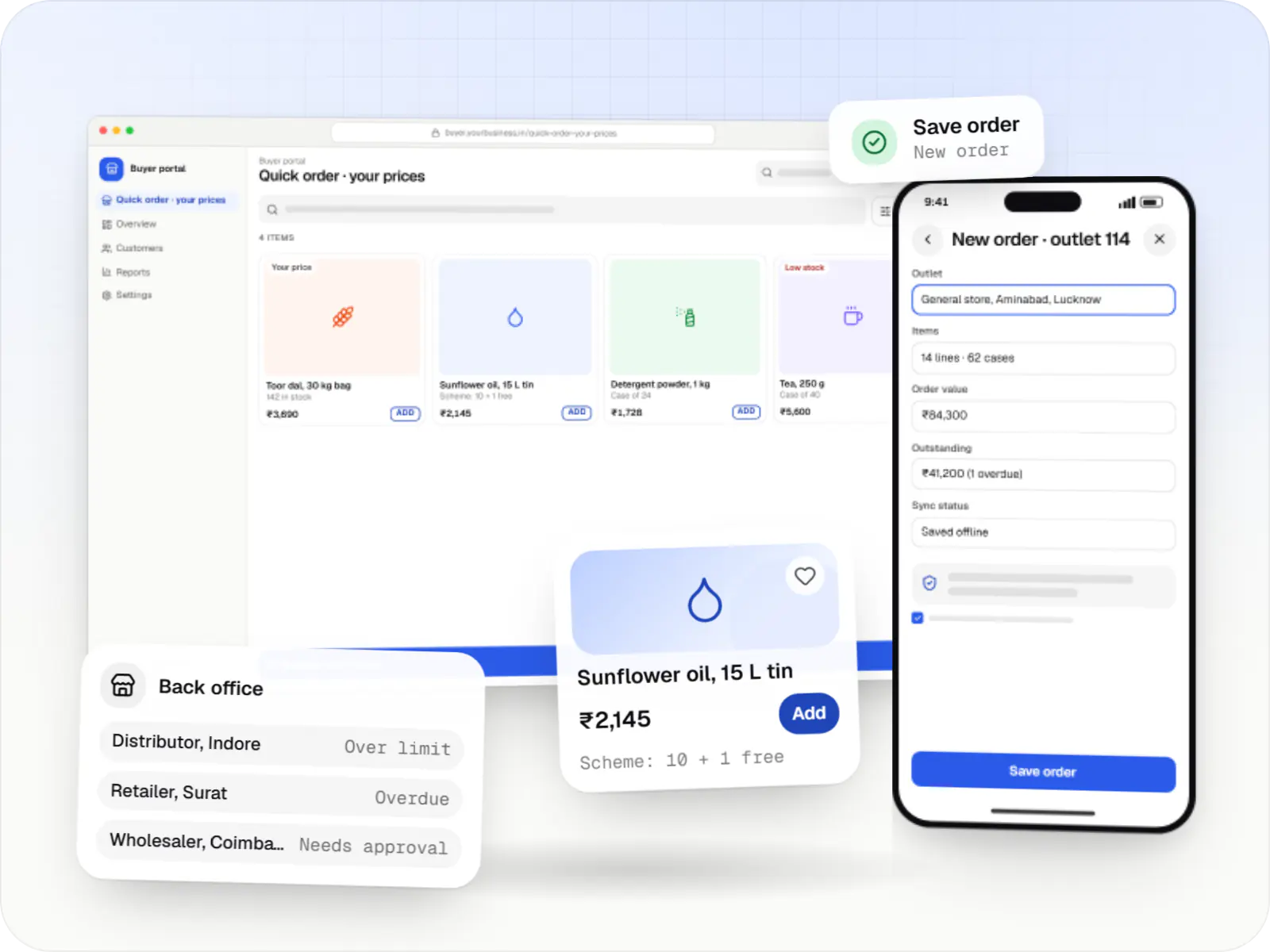
Ordering portals and apps for manufacturers, distributors and wholesalers, with buyer-specific pricing, credit limits, bulk ordering and ERP sync.
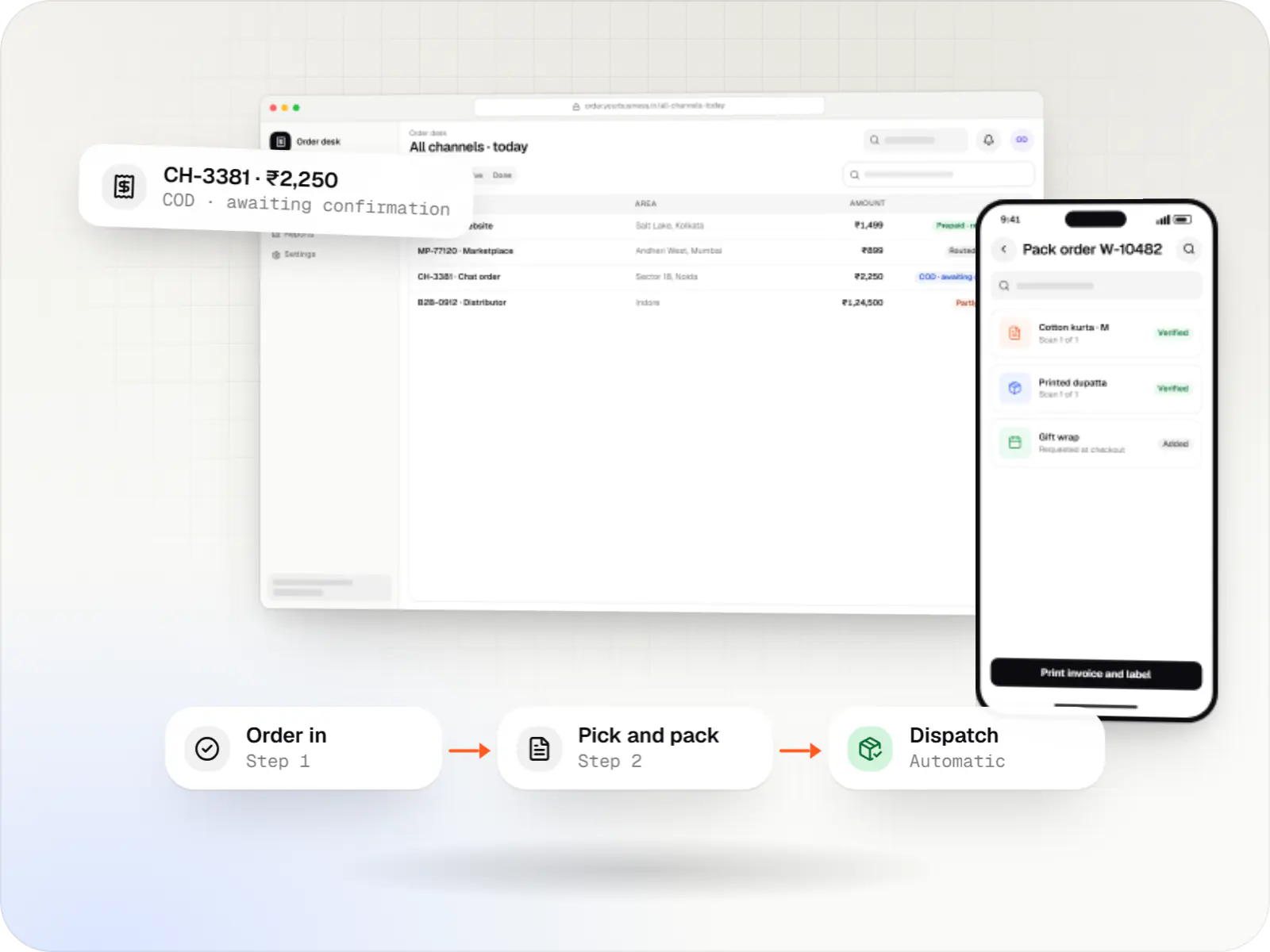
A central order management system that collects orders from every channel, routes them to the right location and tracks them to delivery and payment.
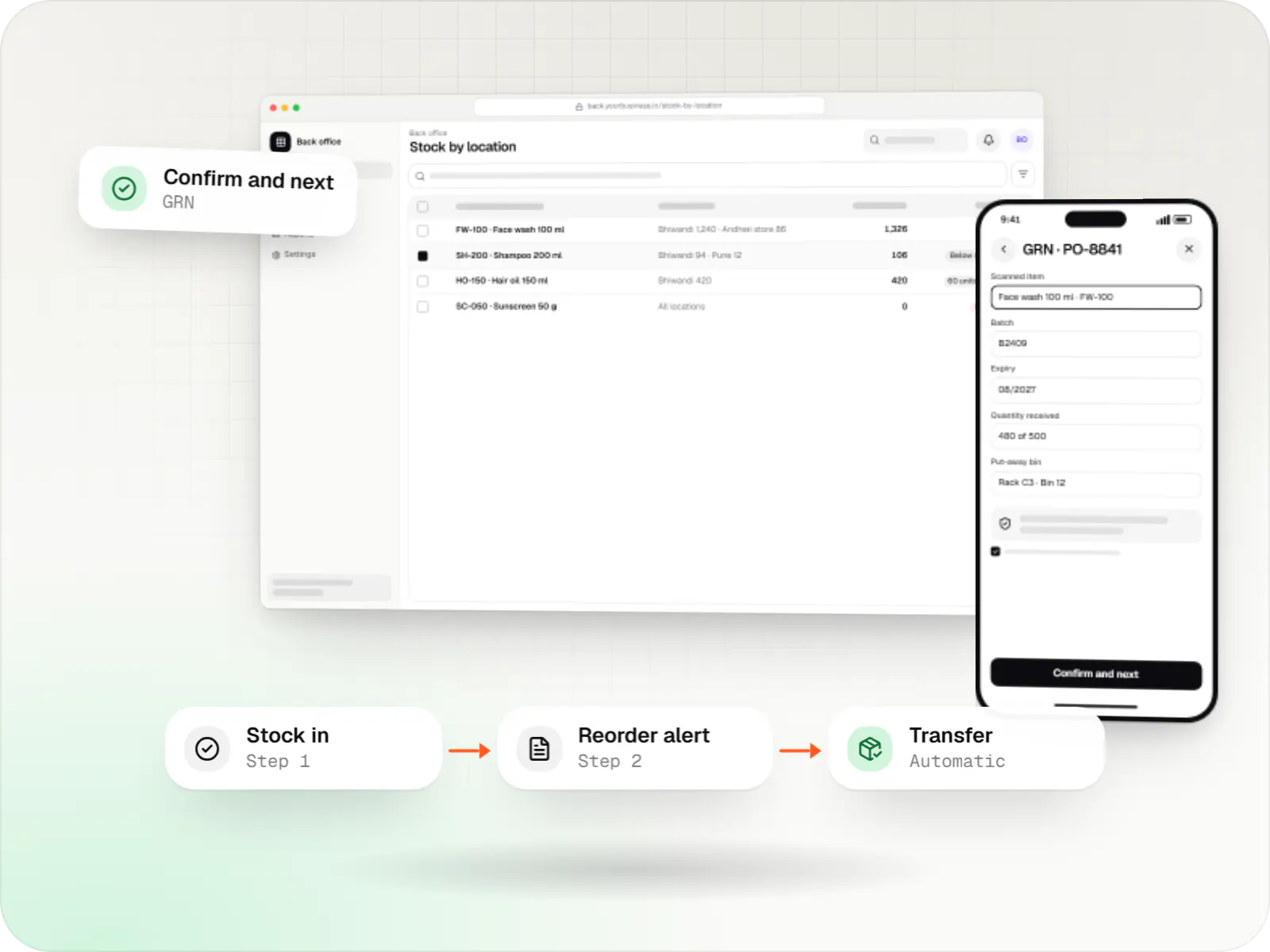
Custom inventory software for multi-location stock, batch and expiry tracking, barcode scanning and marketplace stock sync.
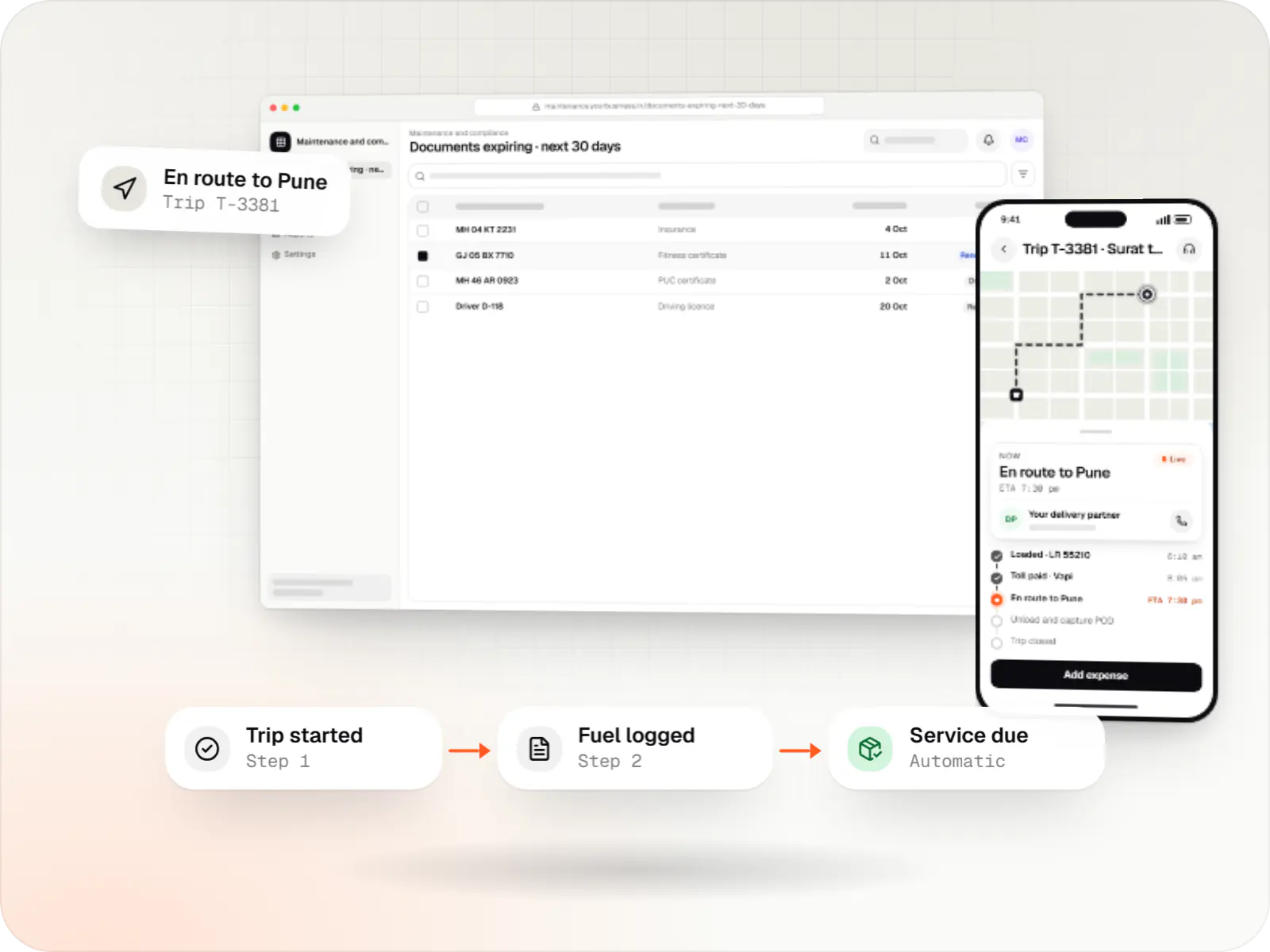
Custom fleet management software for GPS tracking, trips, driver apps, compliance reminders, maintenance and freight billing.
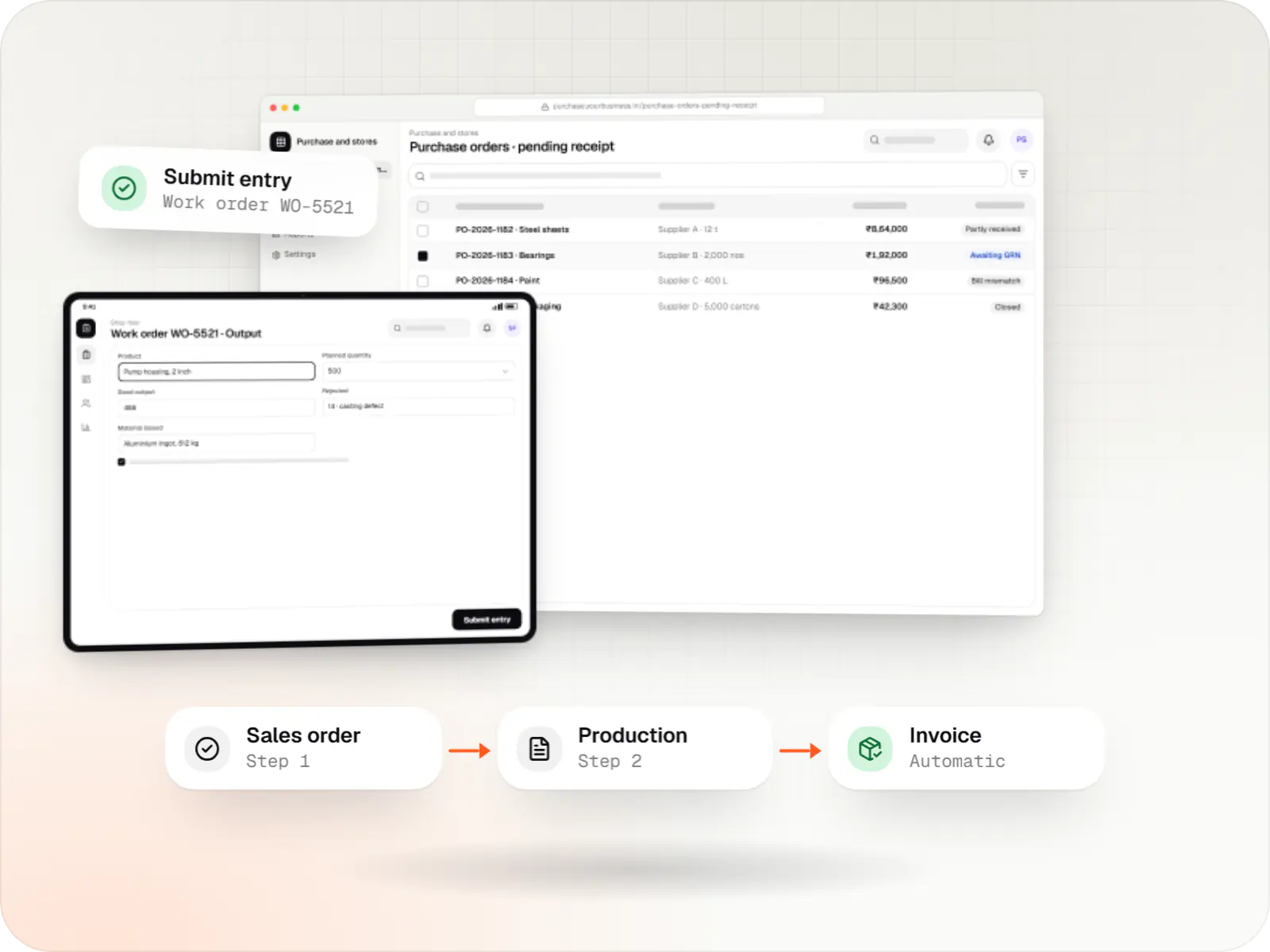
Custom ERP software connecting purchase, inventory, production, sales and GST compliance, alongside your existing accounting system.
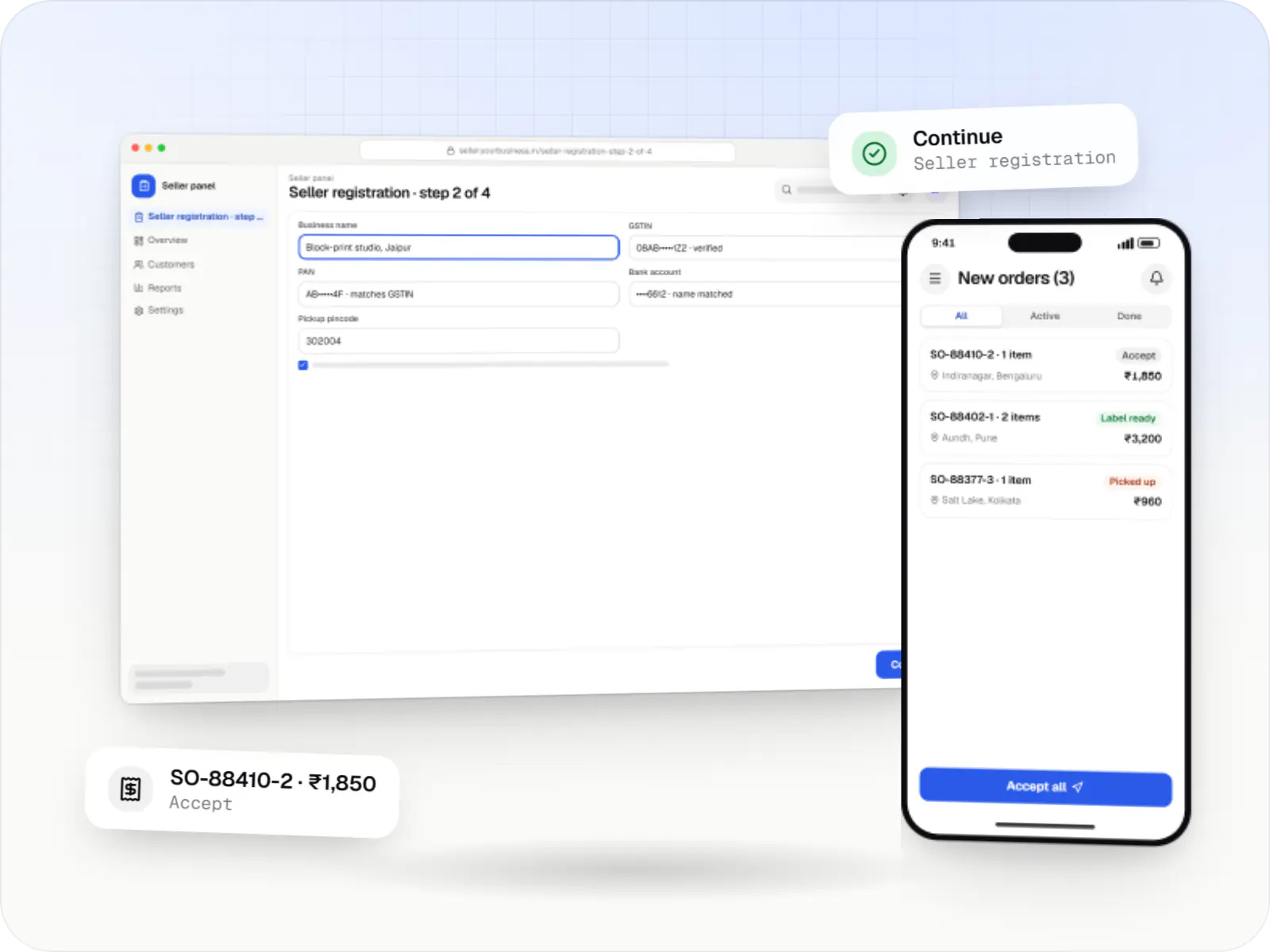
Multi-vendor marketplaces with seller onboarding, commission rules, split payouts, per-seller invoicing and catalogue moderation.
Purchases at farm or mandi with weight, grade, price and supplier, creating lot IDs.
Lot-wise sorting results, pack sizes and wastage reasons.
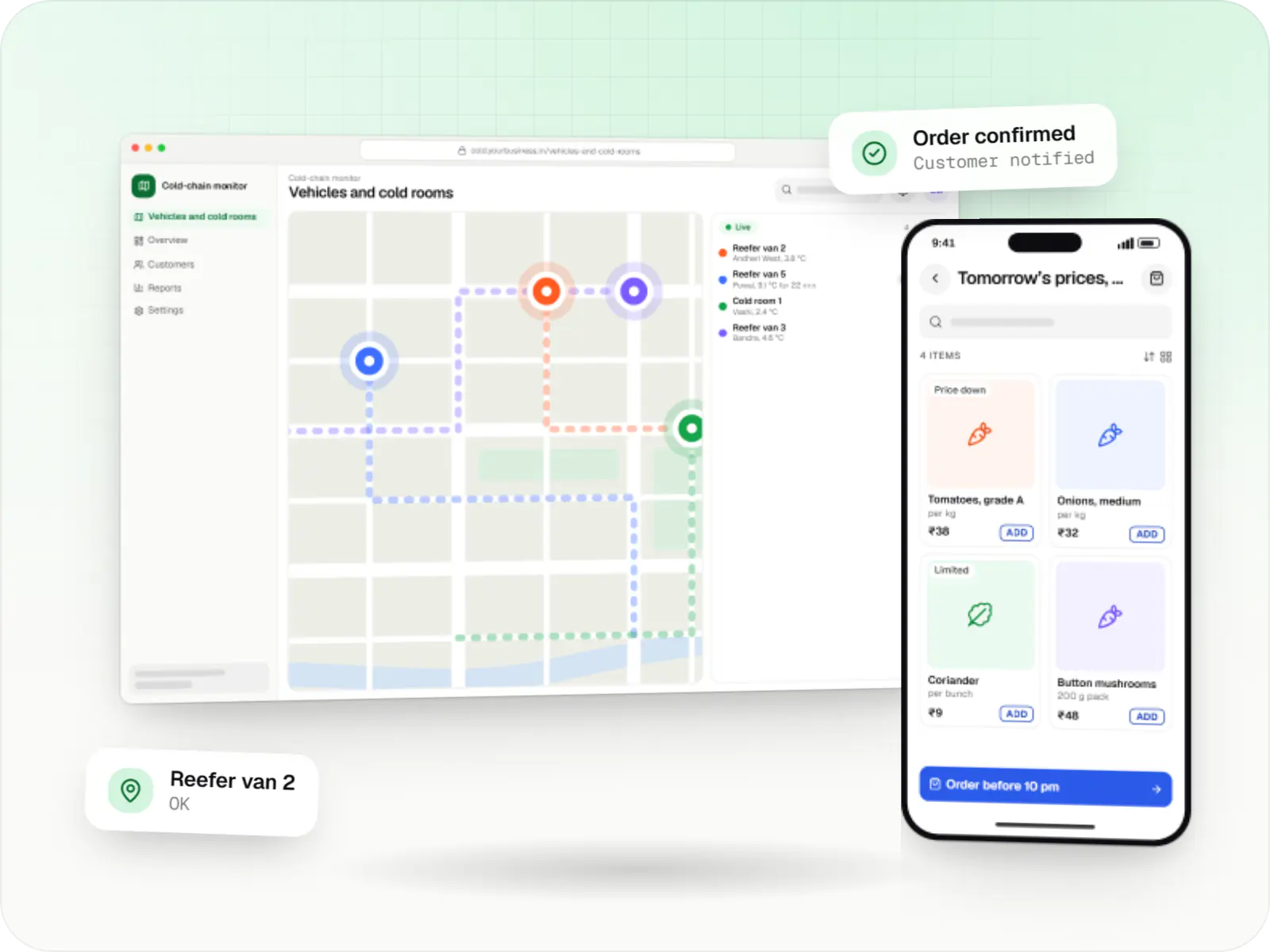
Readings from IoT loggers in vehicles and cold rooms, with excursion alerts.
Daily price lists, cut-offs, delivery slots, credit limits and invoices.
Trace a delivery back to supplier, date and handling for FSSAI records and complaints.
How it works
Each purchase records supplier, weight, grade and price on a phone and receives a lot ID that follows it all the way to the buyer.
Lots are sorted and packed by size and grade, and every kilogram rejected is logged with a reason such as bruising or size.
HoReCa buyers order from tomorrow’s price list in the app before the evening cut-off, within their credit limit.
Reefer and cold-room temperatures stream in, and an excursion alerts the team with the affected lots listed.
Route sheets guide the run, and proof of delivery, shortages and returns are recorded at the kitchen door.
Invoices match the price locked at ordering, reminders go out before due dates, and any complaint traces back to its lot and supplier.
Then it starts again at step 1: Bought at the farm or mandi
Platforms
Apps for Android phones and tablets, tested on budget and mid-range devices and published on Google Play or privately.
One Flutter or React Native codebase for Android and iOS, with native modules where a feature needs them.
Browser-based applications with logins, roles and workflows, such as customer portals, SaaS products and internal tools.
Back-office panels for operations, support and finance teams: orders, users, content, reports and permissions.
Technology
A backend that handles daily price changes and sensor streams, with apps for trade buyers and field teams.
Backend
A structured way to build back ends on Node.js, so large business systems stay organised, testable and easy to hand over.
Used for
Data
A reliable database for the records your business runs on: orders, payments, bookings and stock, kept accurate and easy to report on.
Used for
Data
Keeps frequently used data in fast memory, so apps stay quick on busy days and live features like order tracking feel instant.
Used for
Mobile
Build Android and iOS apps from one shared codebase, so you launch on both platforms faster with a consistent experience.
Used for
Cloud & DevOps
Cloud hosting for your app, website and data, with data centres in India and room to grow when traffic rises.
Used for
Payments & maps
Adds maps, address search, live tracking and travel-time estimates to delivery, ride and field apps, so orders reach the right door.
Used for
Flutter and the related logo are trademarks of Google LLC. We are not endorsed by or affiliated with Google LLC.
Plain-English glossary
Product preview
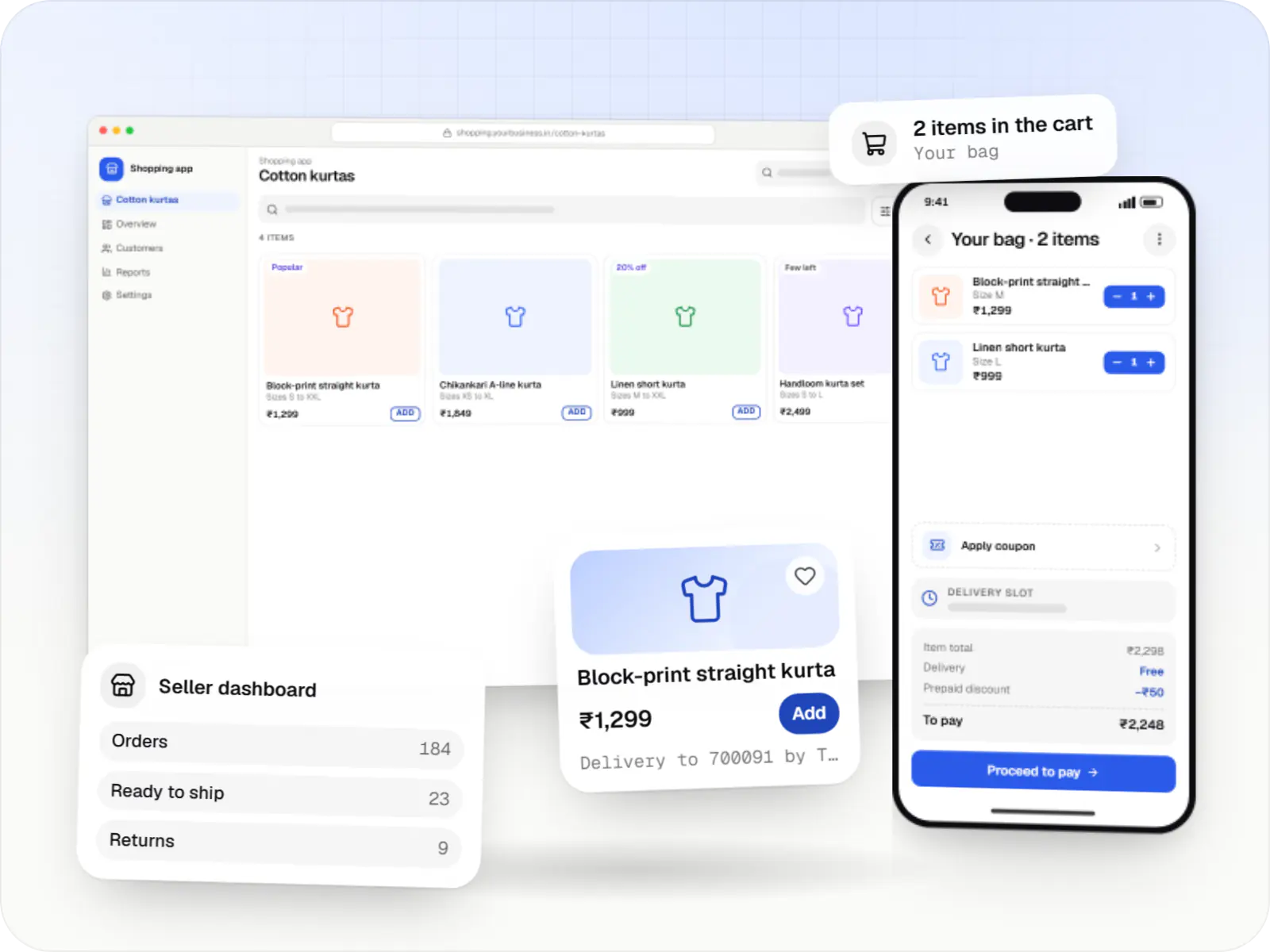
Sample screens for a fresh produce supplier serving Mumbai kitchens; prices are illustrative.
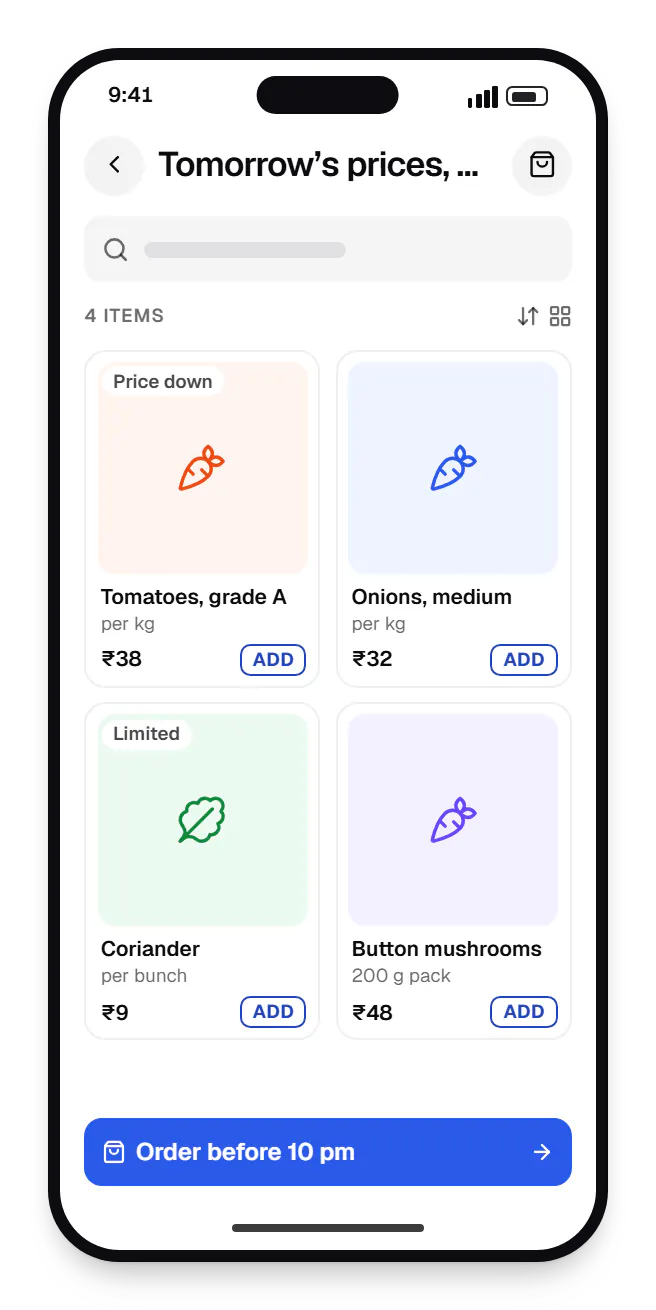
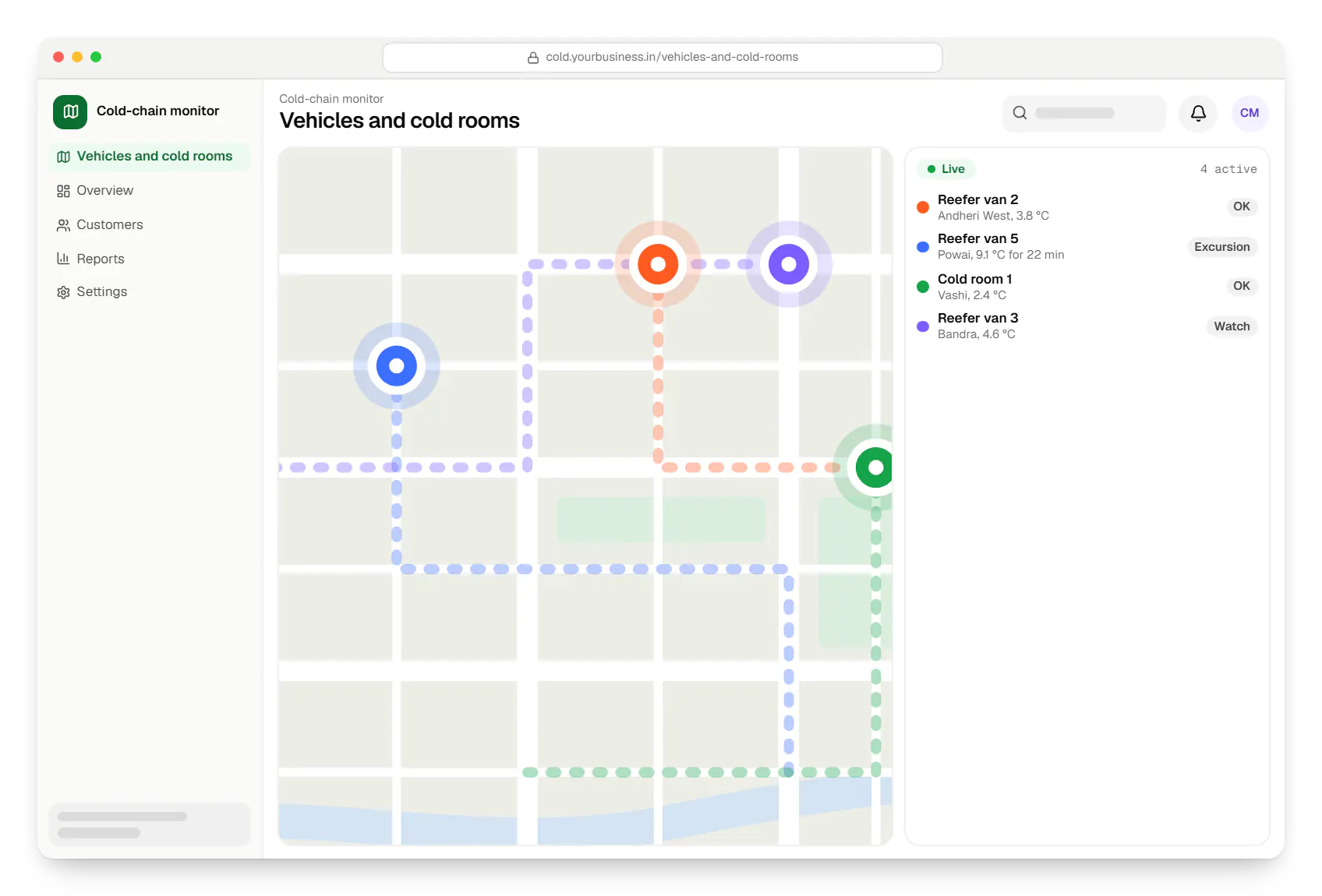
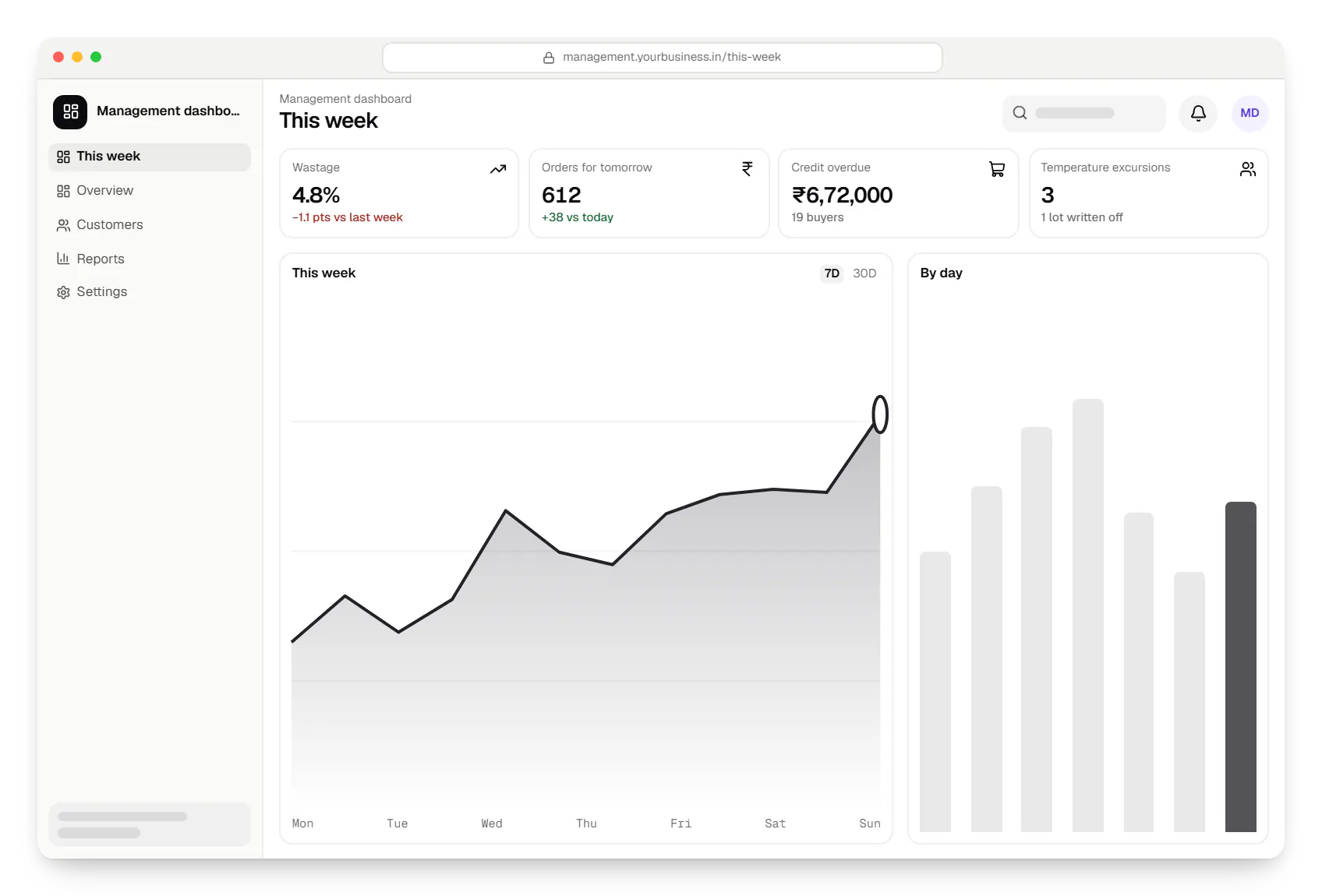
Sample screens: names, prices and figures are examples, not client data.
Cost drivers
Farm-to-buyer traceability needs data capture at every handover.
Loggers and gateways vary in connectivity and data formats.
B2B ordering with credit and pricing rules is a product in itself.
Estimates are written from your scope, with the effort and assumptions behind each line item.
How pricing worksServices
The design and engineering services our in-house team combines on projects in this sector.
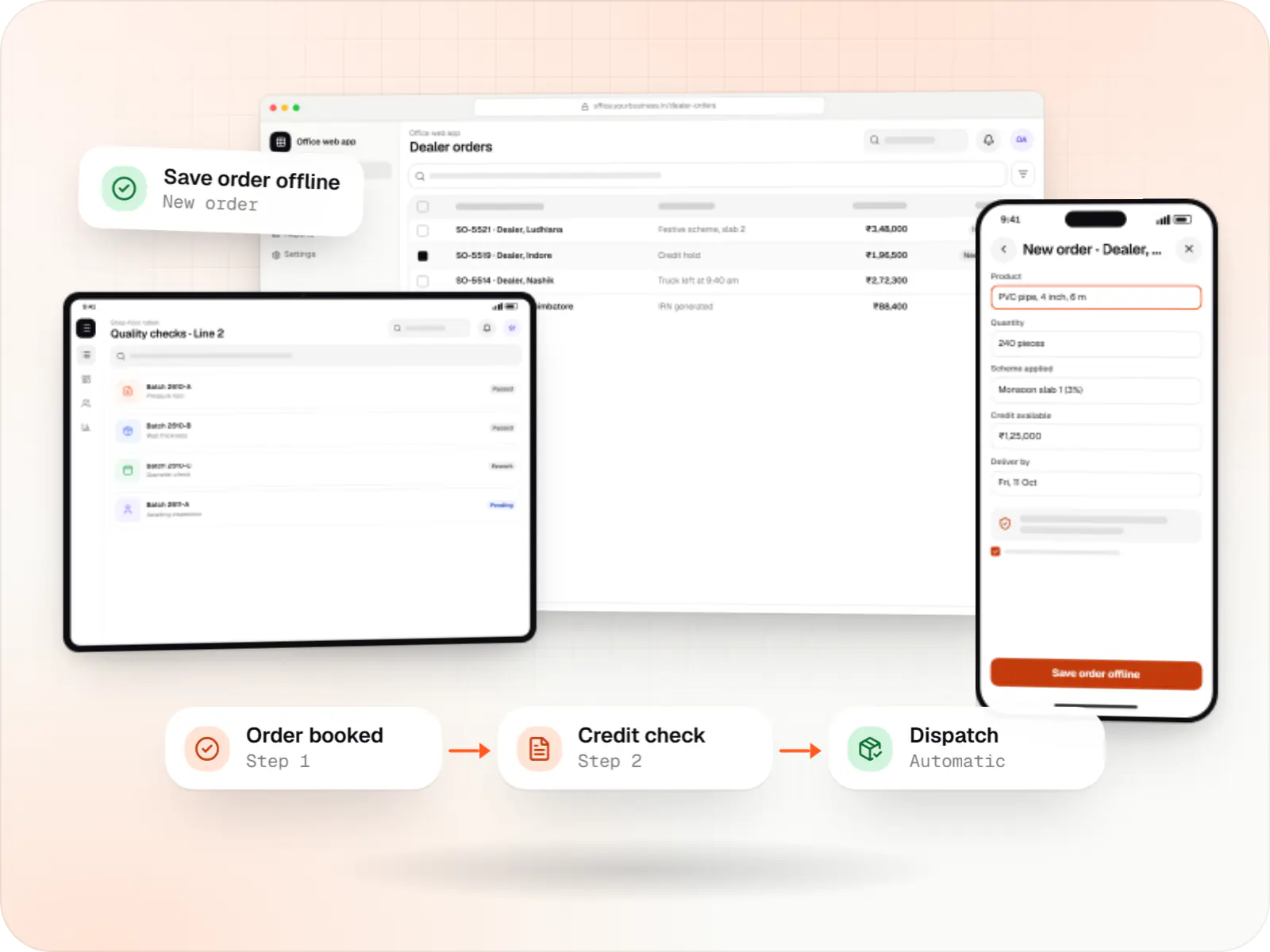
Software shaped around how your business runs, from approvals and inventory to billing and reports, replacing spreadsheets and disconnected tools.
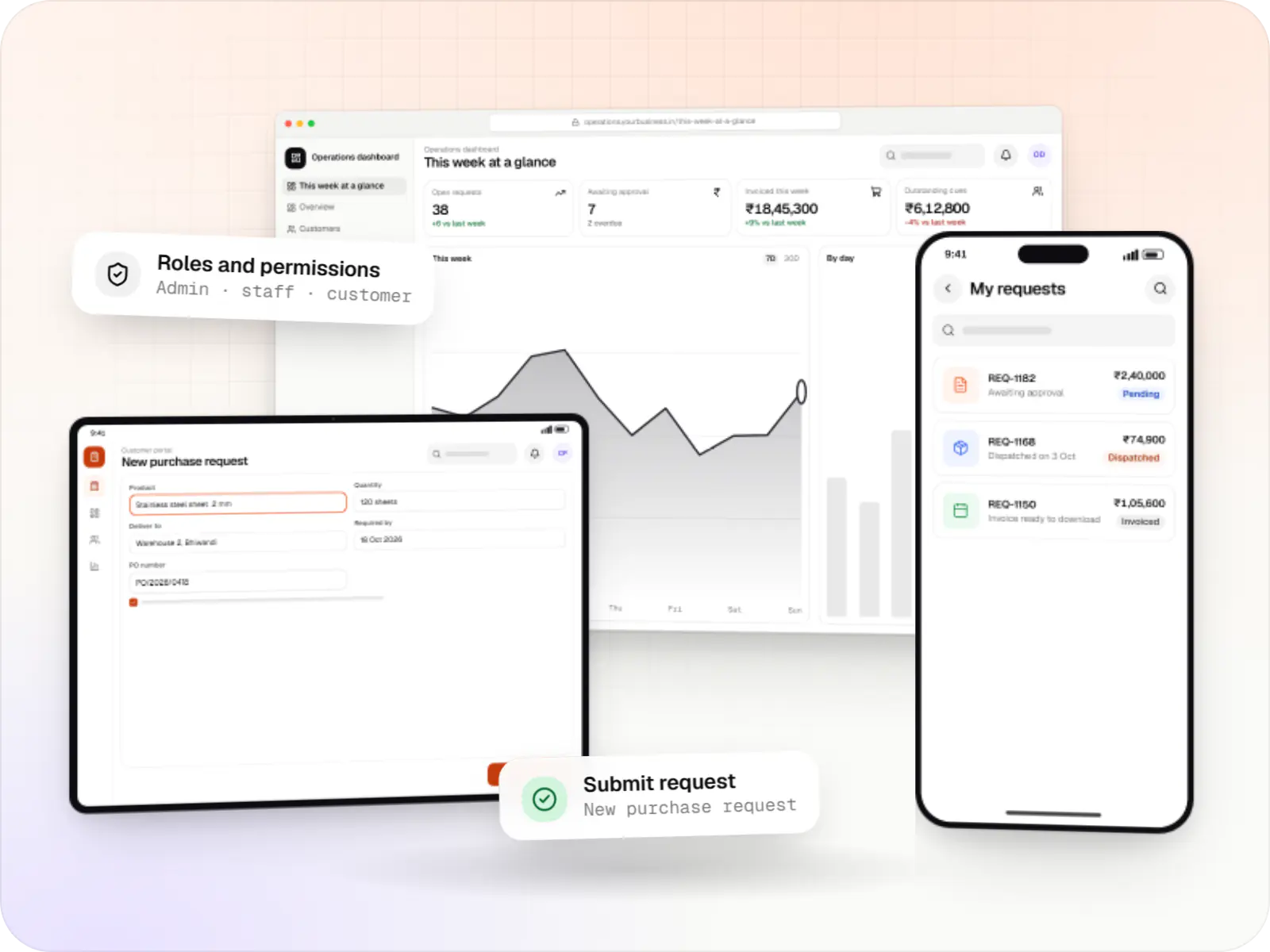
Browser-based products, customer portals, dashboards and internal tools, built on clean data models with secure roles and integrations.
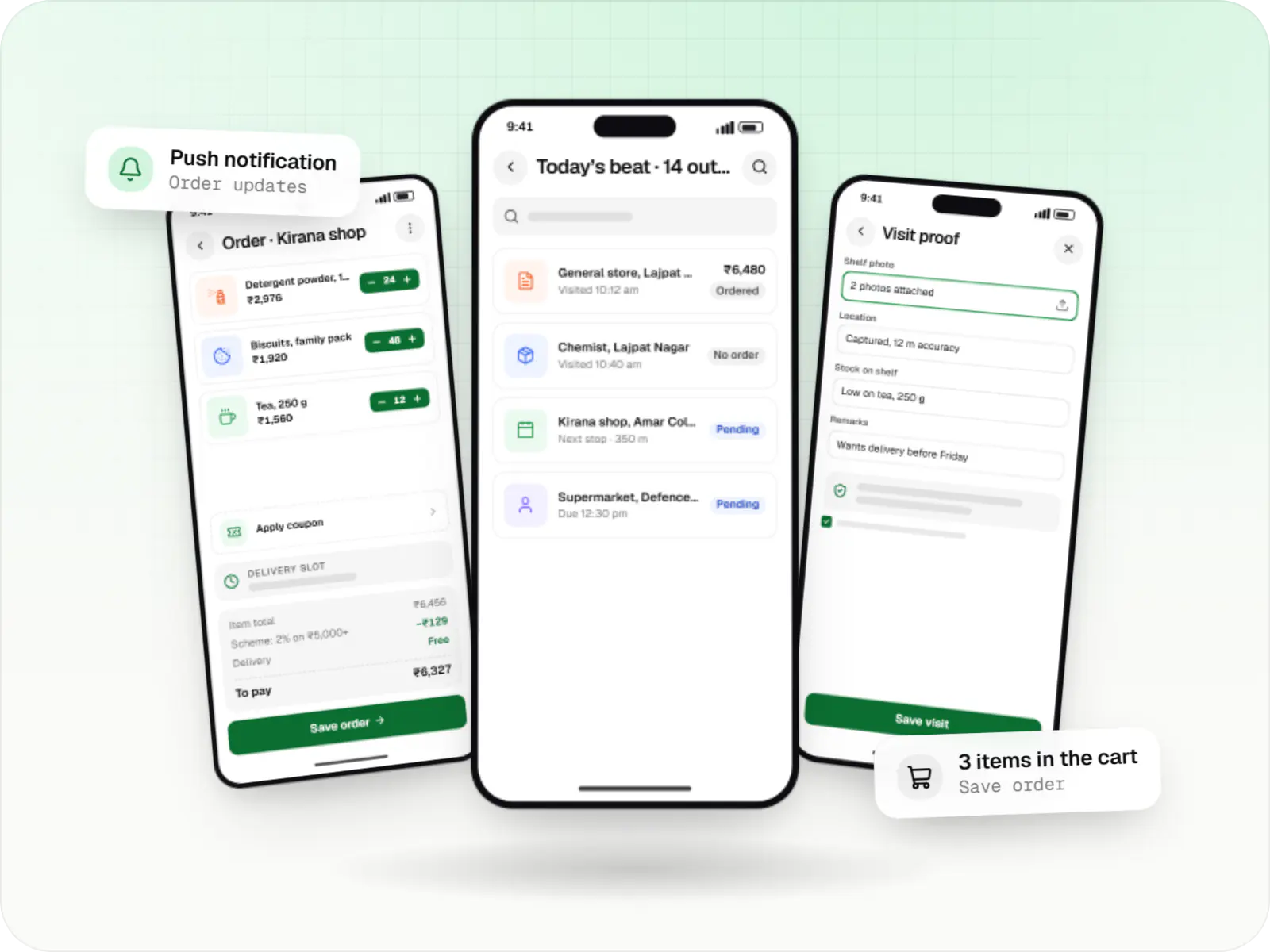
Native Android apps in Kotlin and Jetpack Compose, designed for entry-level phones, patchy networks and the background limits of popular Android brands.
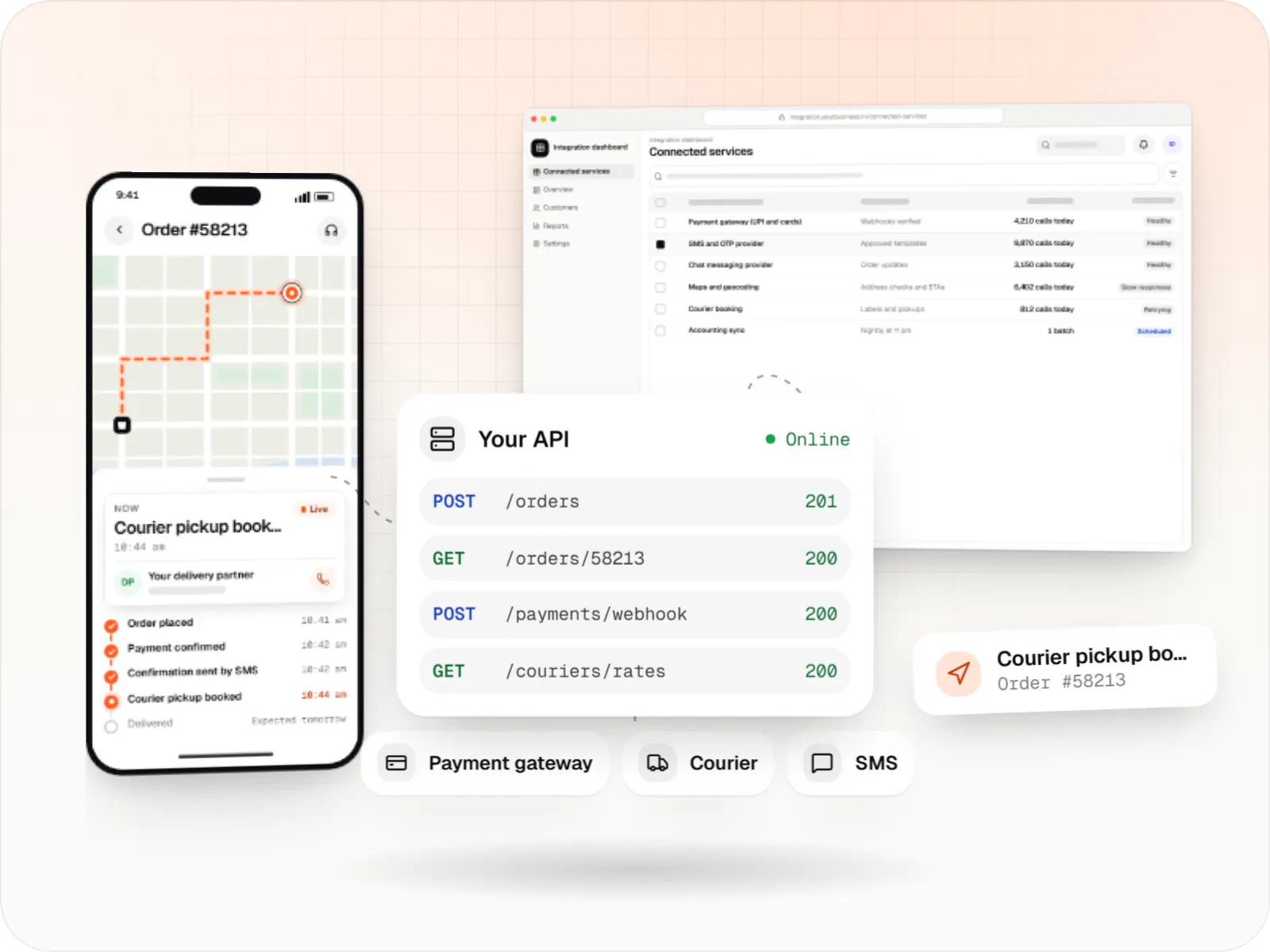
Secure, documented REST and GraphQL APIs, plus integrations that connect your apps to payment, logistics, GST, messaging and business systems.
Online stores, shopping apps and B2B ordering portals on Shopify, WooCommerce or custom stacks, wired to Indian payments, couriers and GST invoicing.
Locations
Cities where this sector is a significant part of the local economy. We work remotely with teams across India and meet in person where practical.

Kerala
FAQ
Buying and selling price lists are versioned by date and, where needed, by buyer group. Your team sets the next day's prices in the dashboard, and buyers see them in the ordering app before cut-off. Orders lock the price when placed, so invoices match what was agreed. Price history also shows product margins over time, which helps when negotiating contract rates.
Most IoT temperature loggers send data through a cellular or Wi-Fi gateway to a vendor cloud that offers an API or webhook; some post directly over MQTT or HTTP. We integrate at whatever level the device supports, store readings against the vehicle or cold room and the lots inside, and alert your team when readings stay outside limits for too long.
Yes. Each buyer has a credit limit and payment terms. The app shows the outstanding balance, blocks new orders or asks for payment when limits are crossed, and sends WhatsApp reminders before due dates. UPI and bank transfers are matched to invoices automatically where the gateway or statement allows. Your finance team can override limits for trusted buyers.
Next step
Tell us what you buy, where from and who you sell to, and we will suggest what to track first.