

Backend
NestJS
A structured way to build back ends on Node.js, so large business systems stay organised, testable and easy to hand over.
Used for
- Business app back ends
- SaaS platforms
- Marketplaces
- Admin panel back ends
Manufacturing
Component traceability, serial-number genealogy, test data and RMA software for EMS providers and electronics brands.
At a glance

Electronics production depends on thousands of small components, strict traceability and test data for every unit. We build software that tracks it from receiving to returns.
How to start
Tell us what you need in your own words. You talk to the developers who would build it and get a written, line-item estimate.
Get a project estimateEMS providers and electronics brands assemble boards from thousands of parts, often from several approved vendors, and every finished unit carries a serial number that customers and warranty teams will ask about later. Moisture-sensitive components have limited floor life once opened, and test stations generate data that must link to each unit. Generic ERPs rarely go this deep, so we build traceability, test and returns software that sits beside your ERP.
Challenges
Components issued without scans, so a supplier defect can't be traced to affected units.
Moisture-sensitive parts exceed exposure limits because open time is tracked on paper.
Station results stored locally and never linked to serial numbers.
RMAs handled without failure history, so recurring faults go unnoticed.
Solutions
Across 2 areas
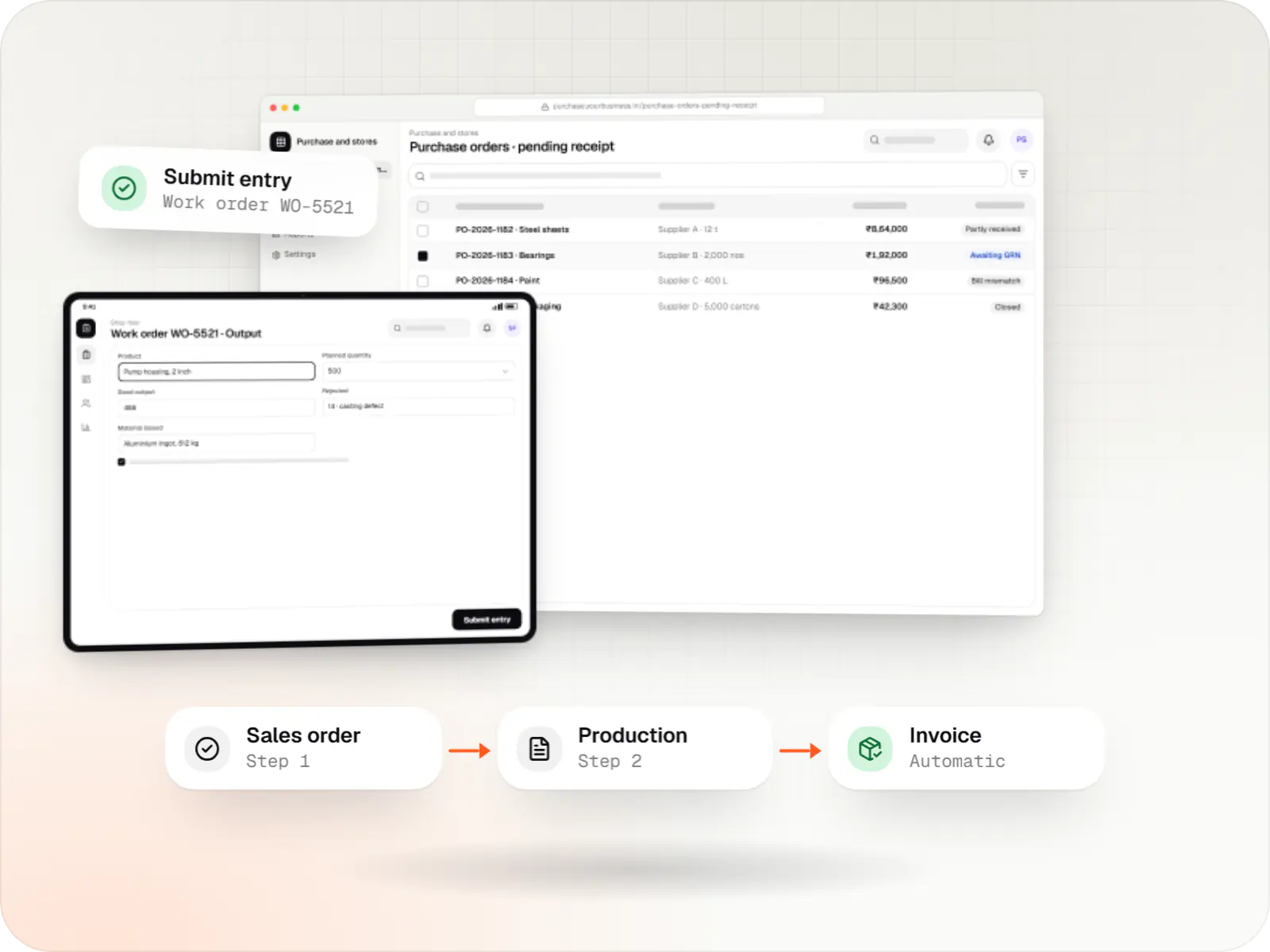
Custom ERP software connecting purchase, inventory, production, sales and GST compliance, alongside your existing accounting system.
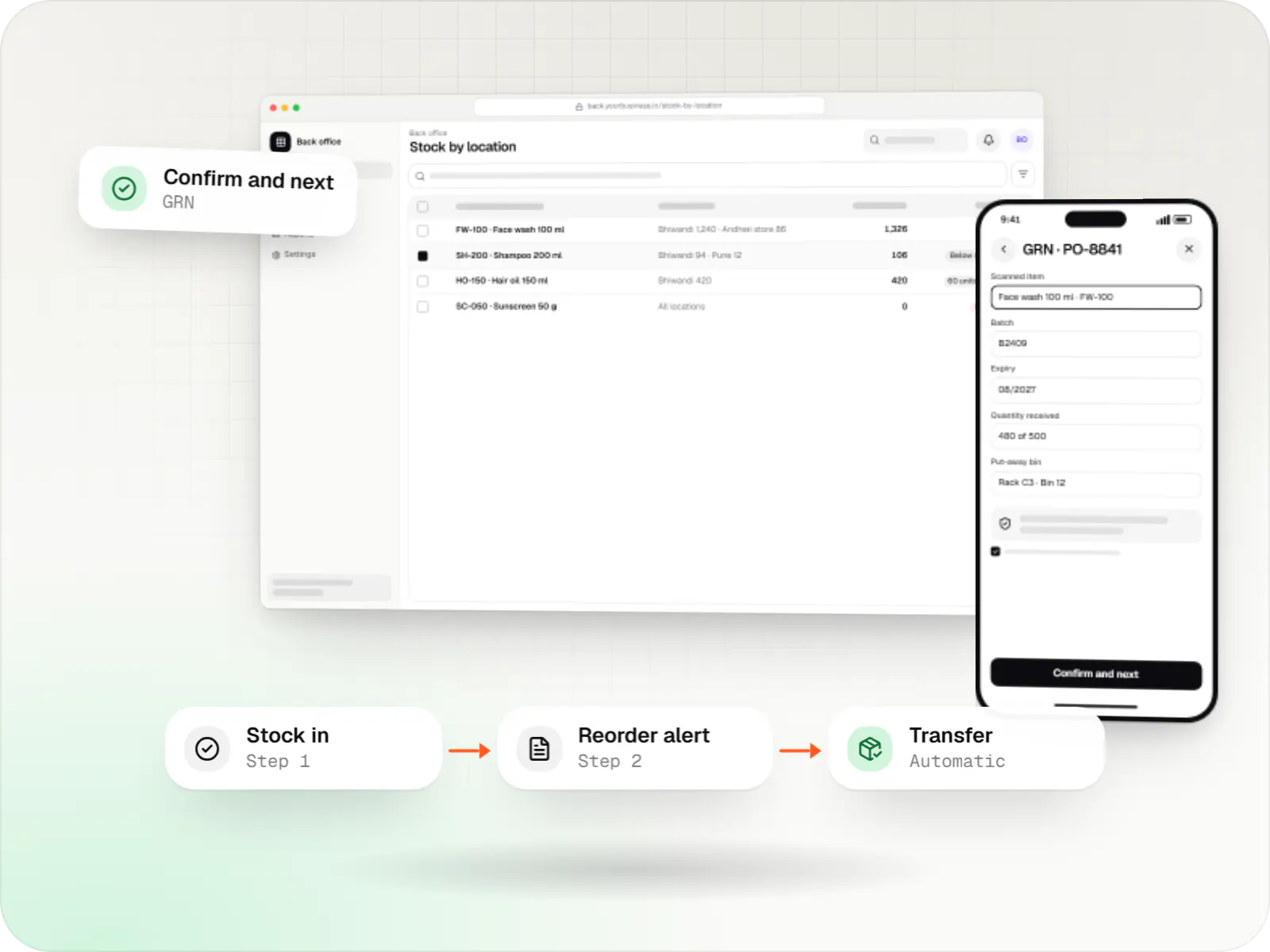
Custom inventory software for multi-location stock, batch and expiry tracking, barcode scanning and marketplace stock sync.
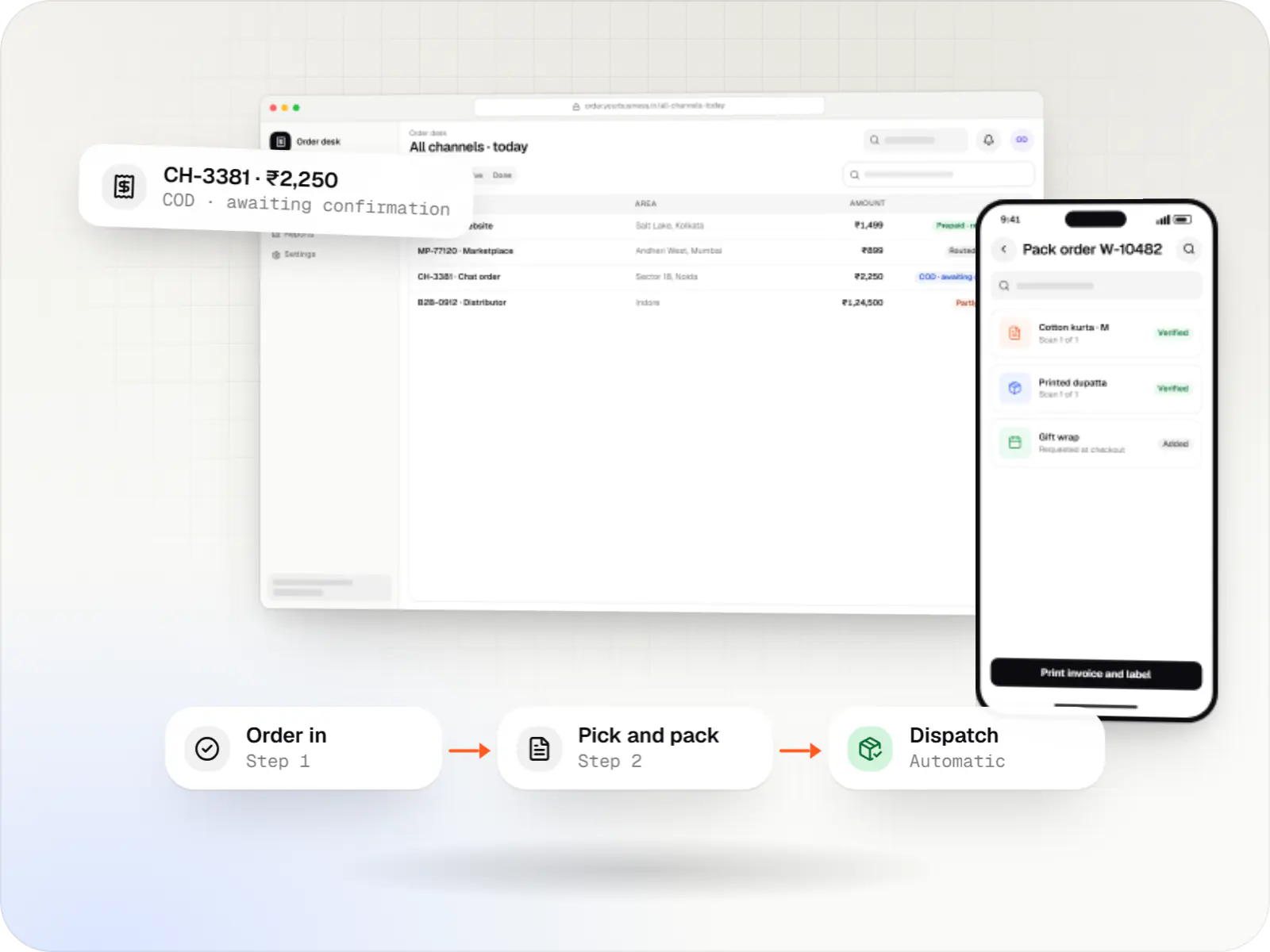
A central order management system that collects orders from every channel, routes them to the right location and tracks them to delivery and payment.
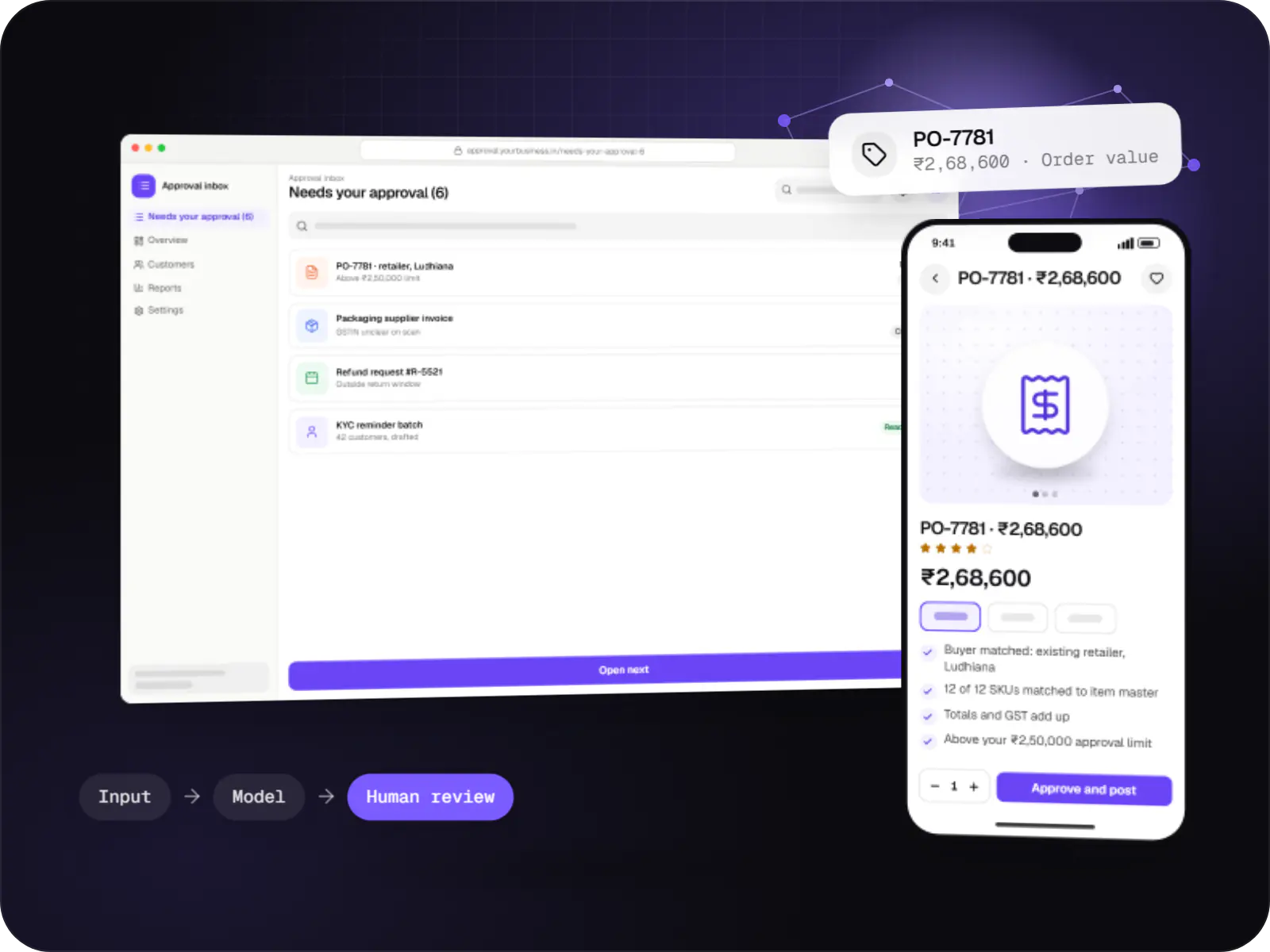
Automations for repetitive back-office work, with AI steps that read, classify and draft, and approvals where decisions matter.
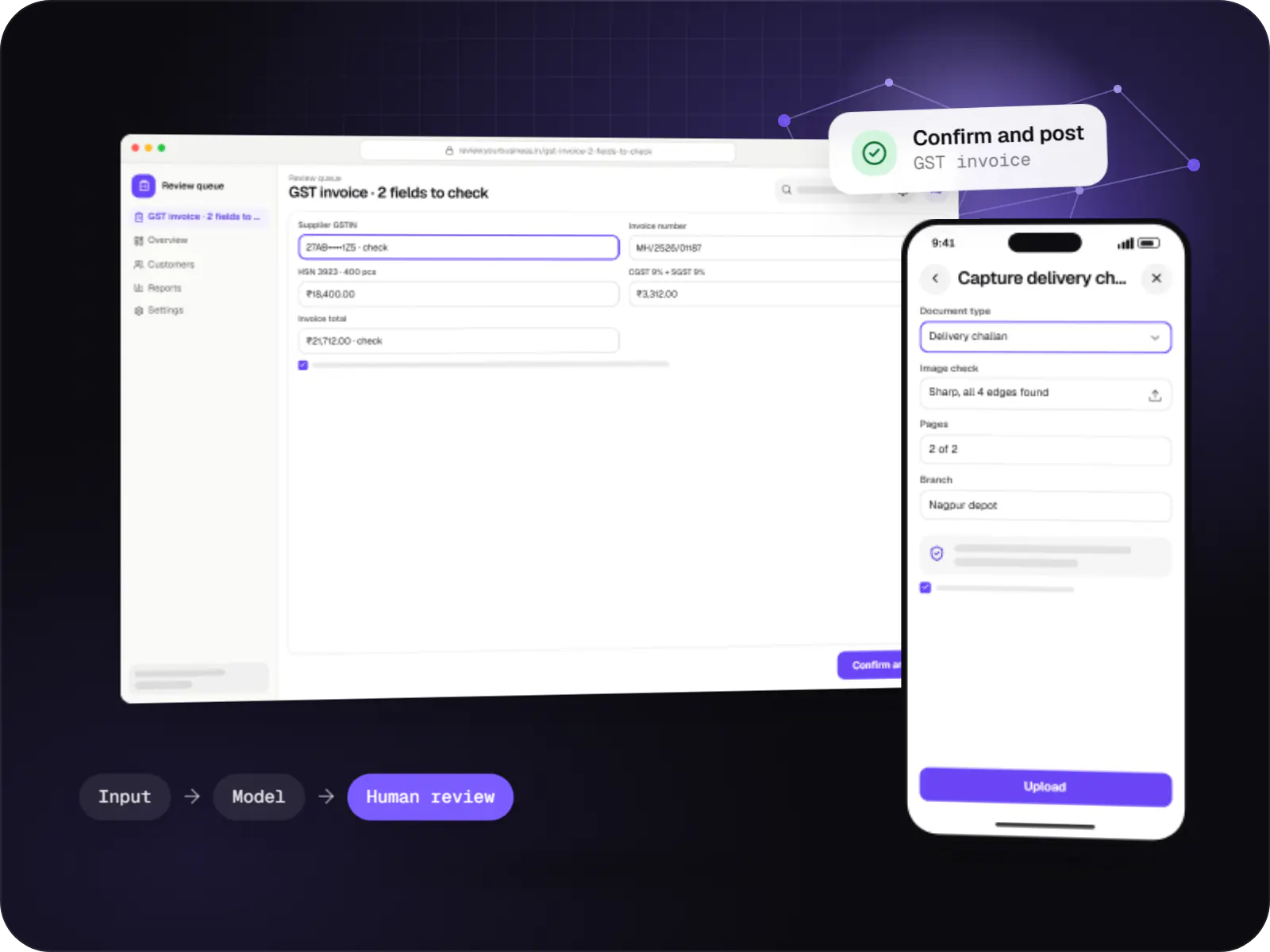
Data extraction from invoices, KYC documents, statements and forms into your systems, with validation rules and human review for uncertain fields.
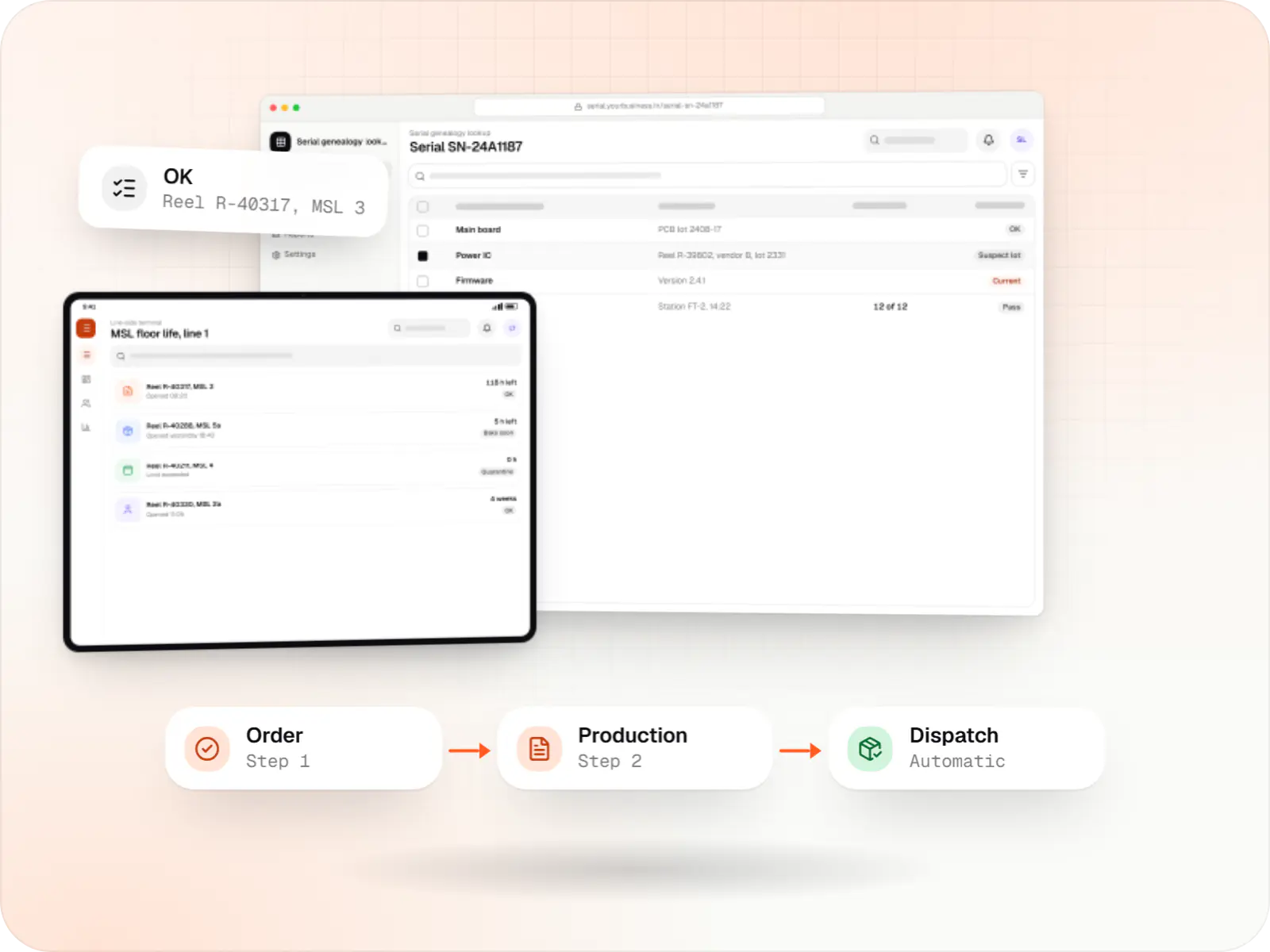
Reel IDs, date codes and lot numbers captured at goods receipt with barcode labels.
Open-time timers per reel, alerts before limits, and baking records.
Each unit linked to board lots, sub-assemblies, firmware version and operator.
Pass/fail results and measurements imported from test stations per serial.
Returns logged by serial, failure analysis, repair decisions and trend reports.
How it works
Reel IDs, date codes and lot numbers are captured at goods receipt, and every reel gets a barcode label before it goes on the shelf.
Each reel is scanned as it is loaded on the placement machine, and moisture-sensitive parts start an open-time countdown.
Each board or unit receives a serial number linked to the component lots, firmware version and operator that went into it.
Pass or fail results and measurements are collected from the station’s output files and stored against the serial number.
Shipment records list the serials in every carton, so traceability reports are ready when an OEM customer asks.
A returned unit is looked up by serial with its full build and test history, and the failure analysis feeds supplier and process trend reports.
Platforms
Browser-based applications with logins, roles and workflows, such as customer portals, SaaS products and internal tools.
Windows and macOS apps for billing counters, kiosks and offline-heavy work, where a browser isn't enough.
Apps for Android phones and tablets, tested on budget and mid-range devices and published on Google Play or privately.
Back-office panels for operations, support and finance teams: orders, users, content, reports and permissions.
Technology
Dependable databases for unit-level records, and small data collectors that read your machines’ and test stations’ files.
Backend
A structured way to build back ends on Node.js, so large business systems stay organised, testable and easy to hand over.
Used for
Backend
A programming language for AI features, data processing and automation: the engine behind document reading, reports and smart search.
Used for
Data
A reliable database for the records your business runs on: orders, payments, bookings and stock, kept accurate and easy to report on.
Used for
Web
Builds interactive screens in the browser, such as dashboards, admin panels and portals, that respond instantly as your team works.
Used for
Cloud & DevOps
Packages your software so it runs the same way on every laptop and server, which makes releases predictable and moving hosts easier.
Used for
Plain-English glossary
Product preview
Illustrative screens with sample reel, lot and serial numbers.
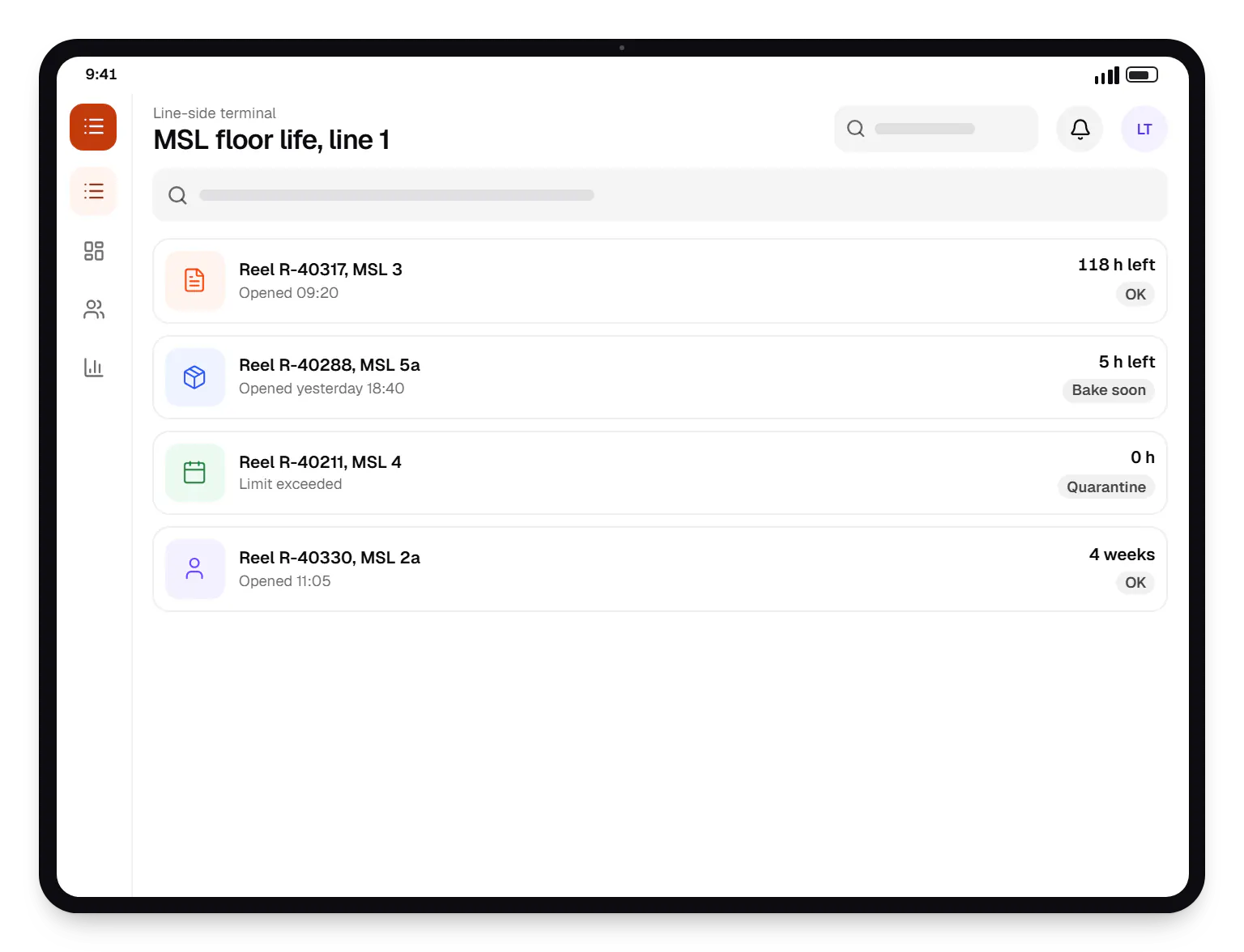
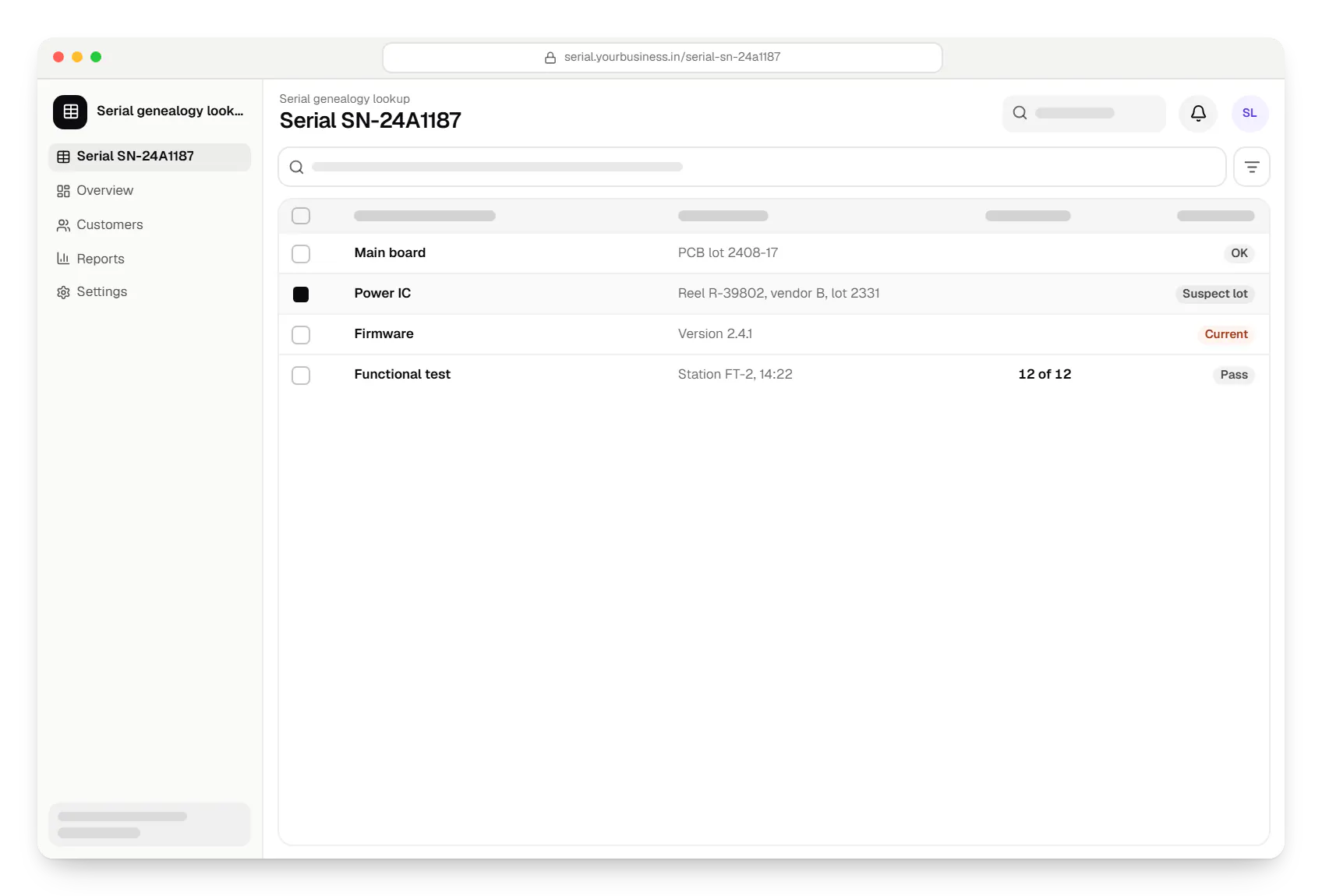
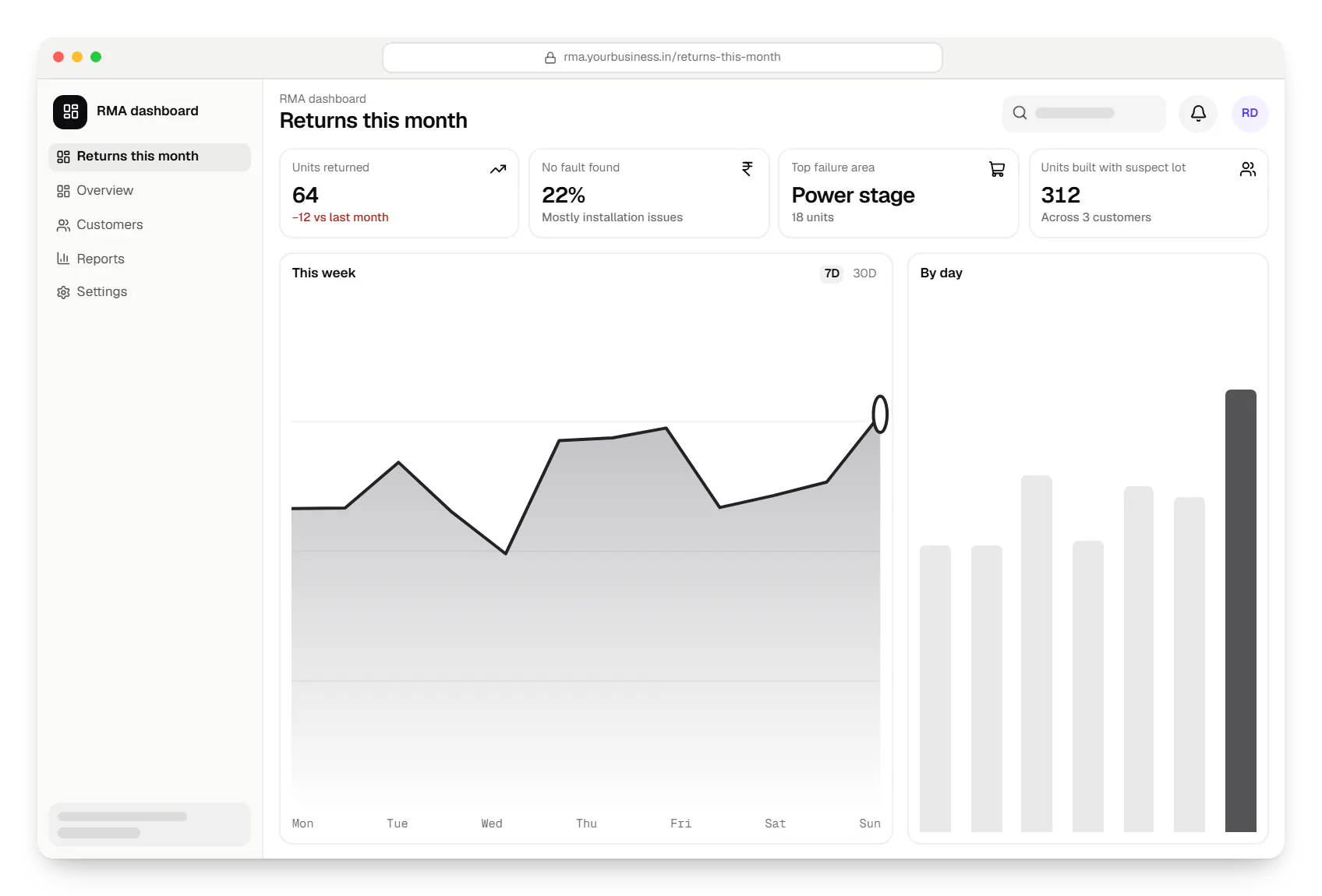
Sample screens: names, prices and figures are examples, not client data.
Cost drivers
Each test station, placement machine or AOI system exports data differently.
Unit-level genealogy with component lots costs more than batch-level tracking.
OEM customers may require specific traceability reports or formats.
Estimates are written from your scope, with the effort and assumptions behind each line item.
How pricing worksServices
The design and engineering services our in-house team combines on projects in this sector.
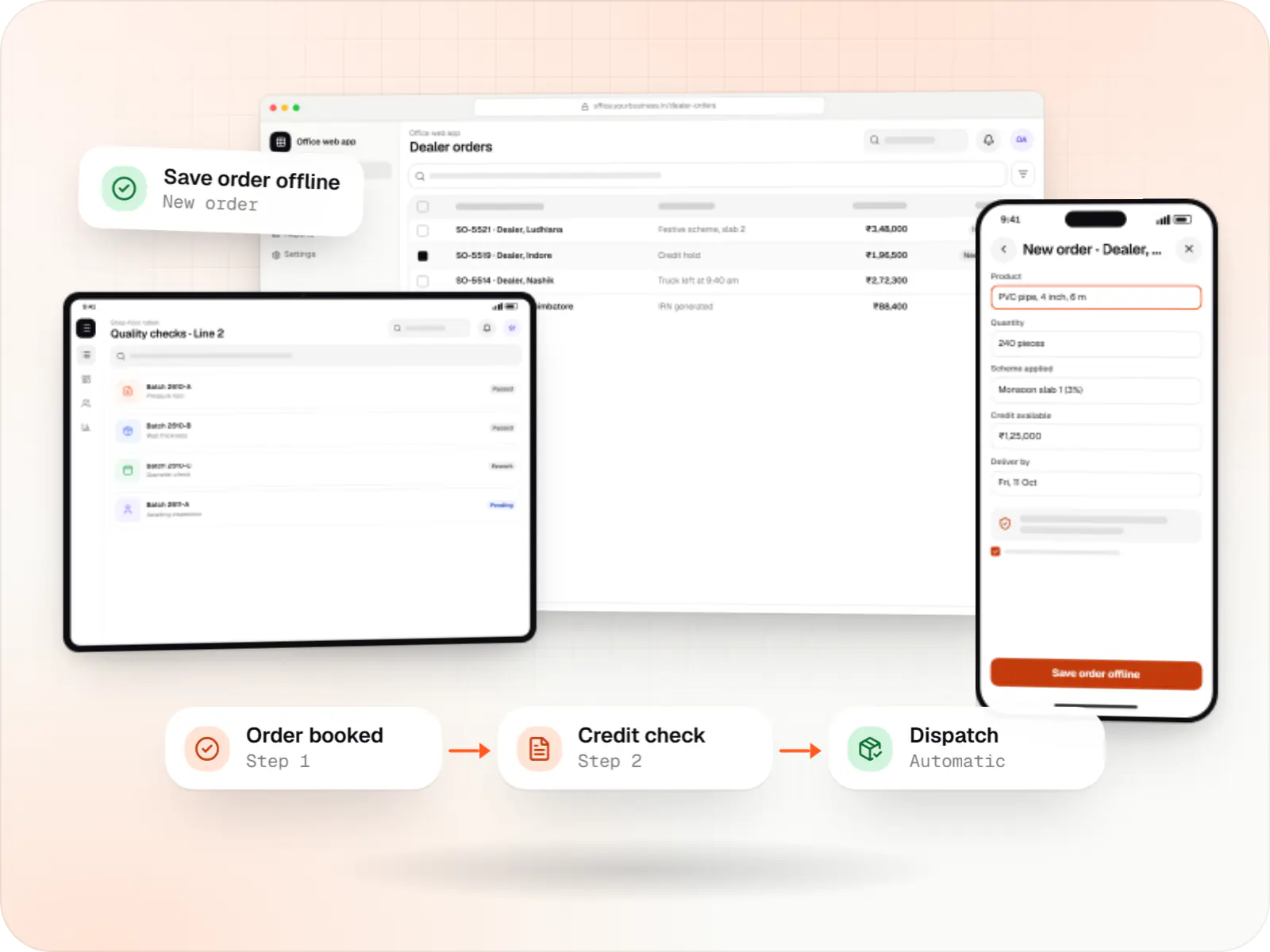
Software shaped around how your business runs, from approvals and inventory to billing and reports, replacing spreadsheets and disconnected tools.
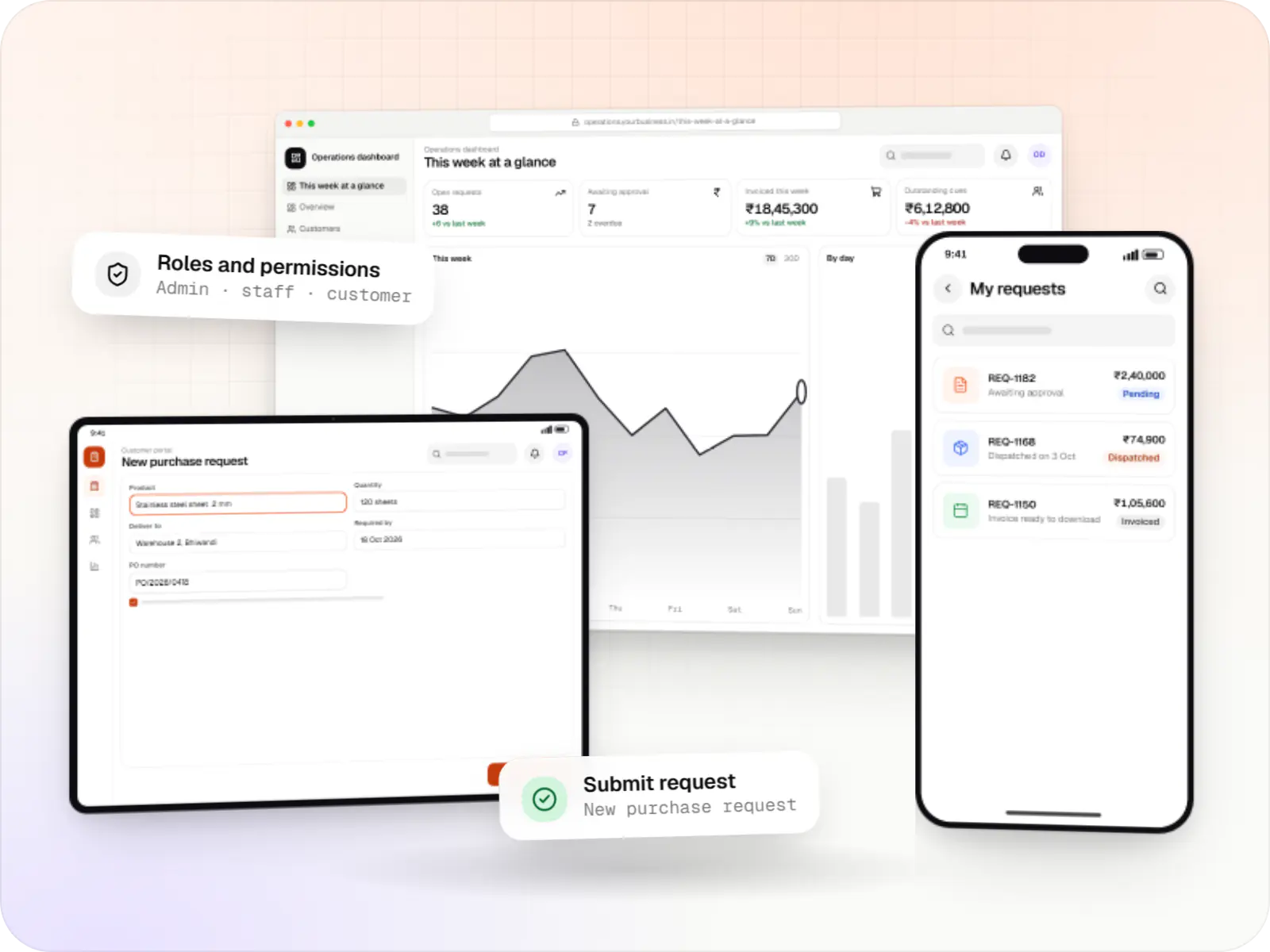
Browser-based products, customer portals, dashboards and internal tools, built on clean data models with secure roles and integrations.
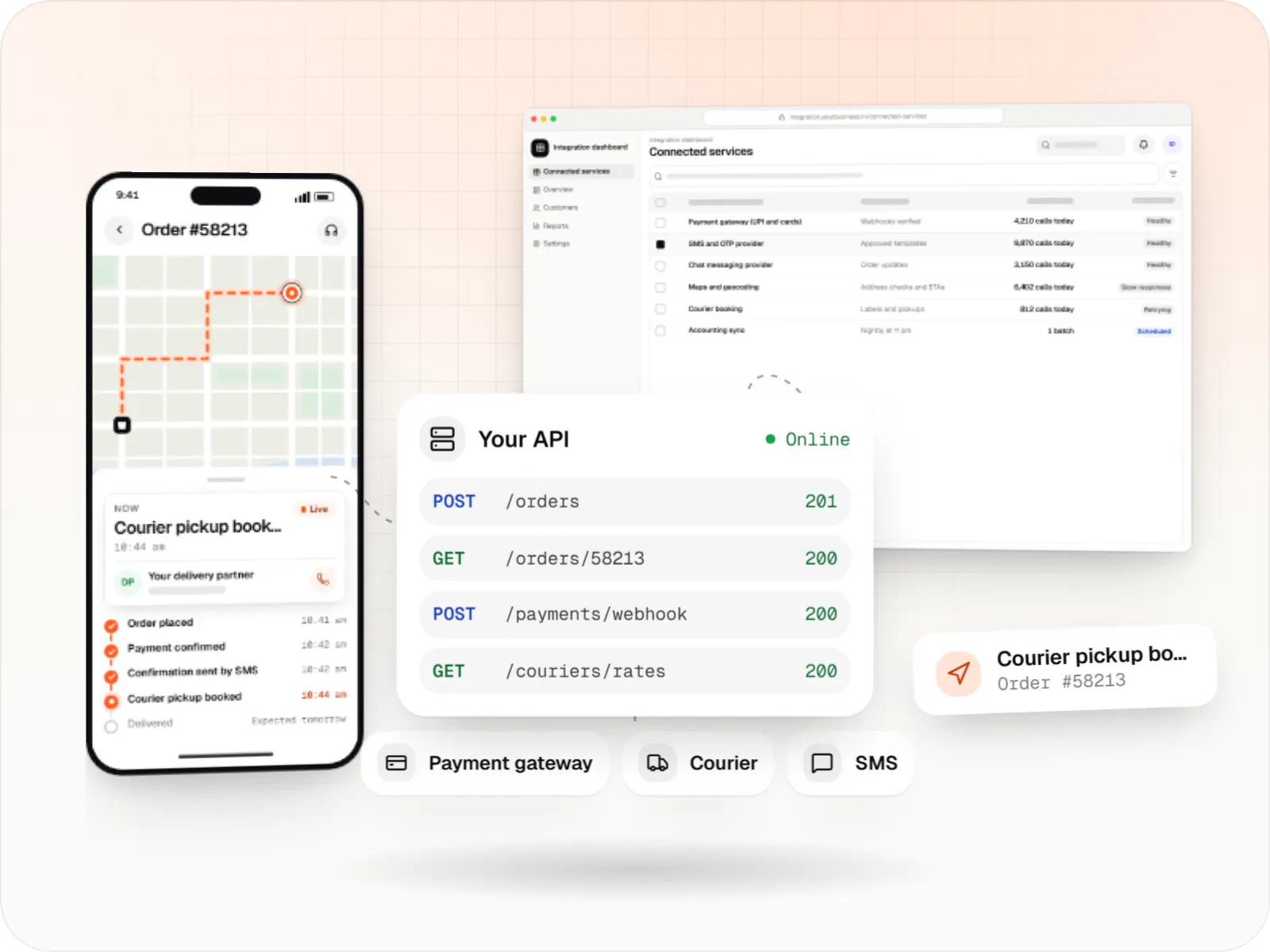
Secure, documented REST and GraphQL APIs, plus integrations that connect your apps to payment, logistics, GST, messaging and business systems.
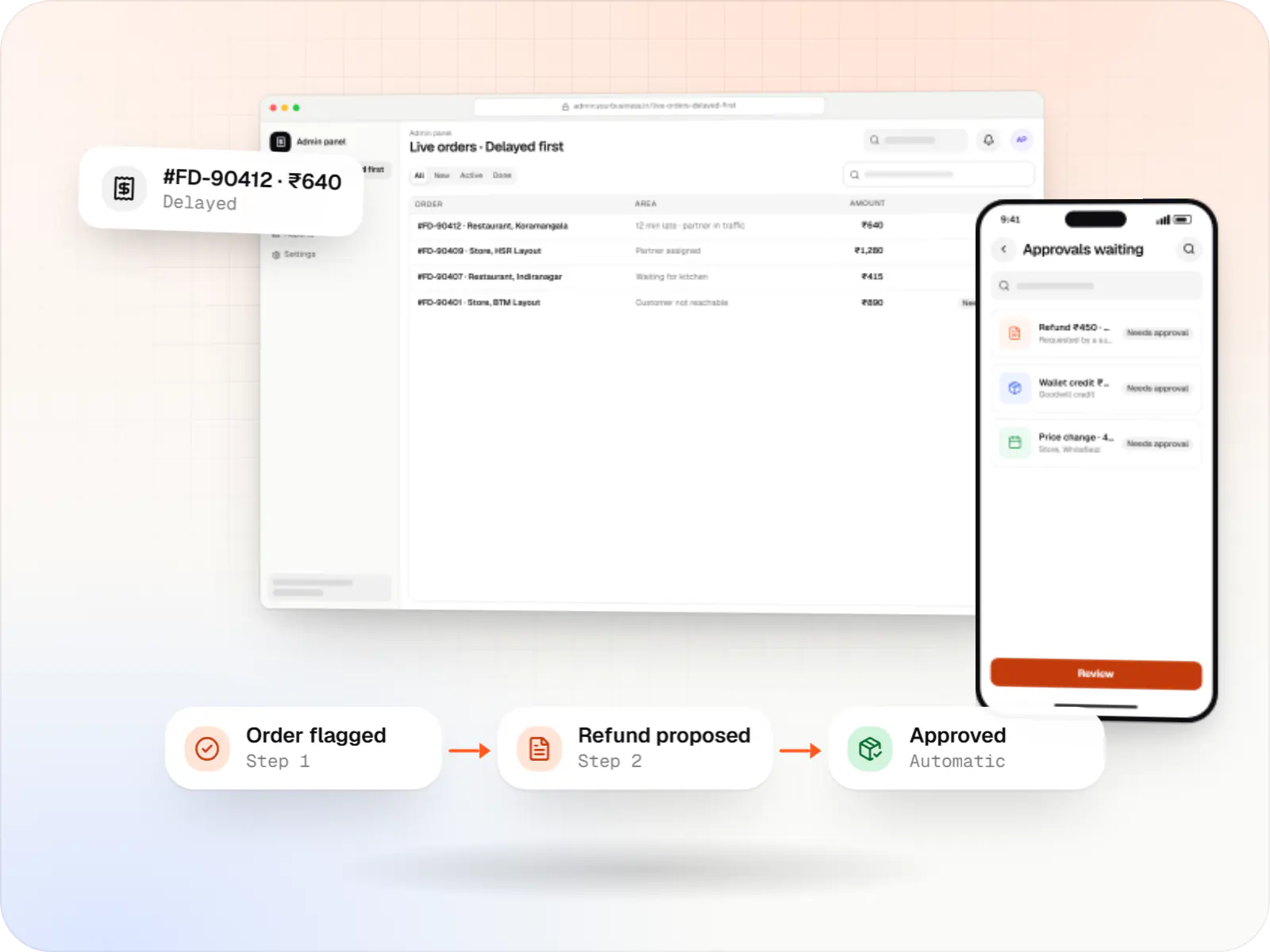
Back-office dashboards built around your team's daily tasks: order queues, approvals, catalogue management, payouts, reports and audit logs.
FAQ
Usually. Many machines write log files, CSV exports or database records, and some support factory communication standards. We build small collectors that read these outputs, match them to serial or panel IDs and send them to a central database. Where equipment is locked down, we work from scheduled exports. We review sample files from each machine before estimating, since formats vary between vendors.
It makes the records easier to produce. The software can store certificates, test reports and approved-vendor details against each product and model, and generate traceability reports per shipment. It doesn't replace certification itself: BIS registration under the Compulsory Registration Scheme, for example, involves testing at BIS-recognised labs and an application your compliance team manages.
Scanning at key points (receiving, issue to the line, reel changes on the machine and final assembly) is what makes traceability work, so some scanning is unavoidable. We keep it quick with handheld or fixed scanners, pre-printed labels and screens that only ask for what is missing. The effort pays off the first time you need to find which units used a suspect lot.
Next step
Share your line layout, test stations and ERP, and we will map a traceability plan.