

Web
React
Builds interactive screens in the browser, such as dashboards, admin panels and portals, that respond instantly as your team works.
Used for
- Web apps
- Admin panels
- Dashboards
- Customer portals
Industries · Medical equipment
Keep track of every installed device, its service contract and its next maintenance visit.
At a glance
What it is
Software for medical device makers and distributors: hospital and dealer ordering, installed-base tracking, AMC and CMC contracts, field service and home-care rentals.
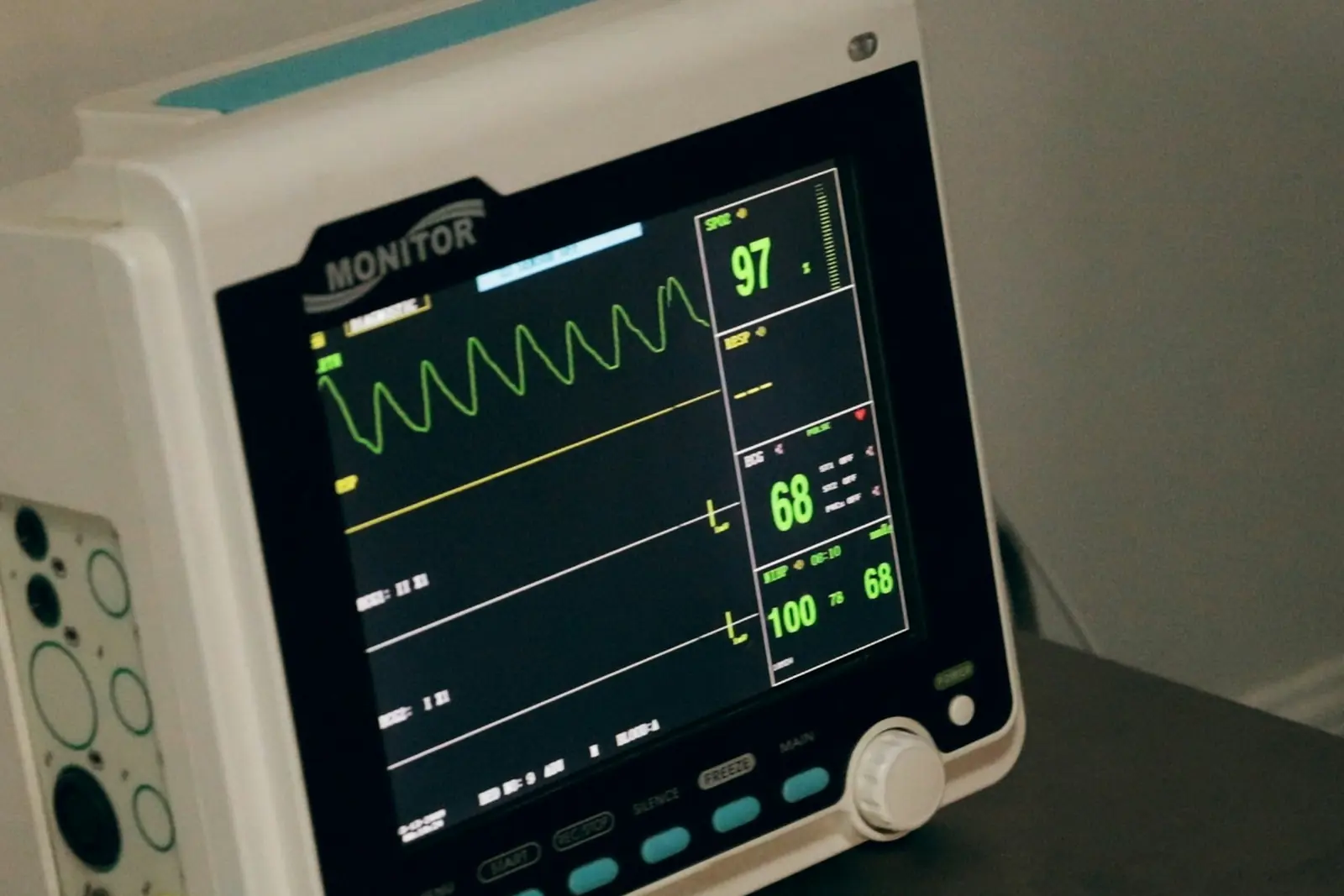
For manufacturers, importers and distributors of medical devices, diagnostic equipment and hospital furniture, and home-care equipment rental businesses.
Flutter and the related logo are trademarks of Google LLC. We are not endorsed by or affiliated with Google LLC.
How to start
Tell us what you need in your own words. You talk to the developers who would build it and get a written, line-item estimate.
Get a project estimateMedical equipment businesses sell through tenders, dealers and direct hospital relationships, then support what they sell for years. Every installed unit has a serial number, a warranty, perhaps an AMC or CMC, preventive maintenance schedules, and calibration records that hospitals ask for during audits.
We build software that manages that installed base: device records by serial number, service contracts and renewals, engineer scheduling and job reports, spare parts, and dealer or hospital ordering. For home-care equipment, rental and deposit workflows can be added.
Challenges
Devices in the field are not linked to contracts or service history.
Preventive visits and calibration due dates slip.
AMC and CMC expiries go unnoticed until a breakdown.
Quotations and compliance documents are assembled by hand each time.
Solutions
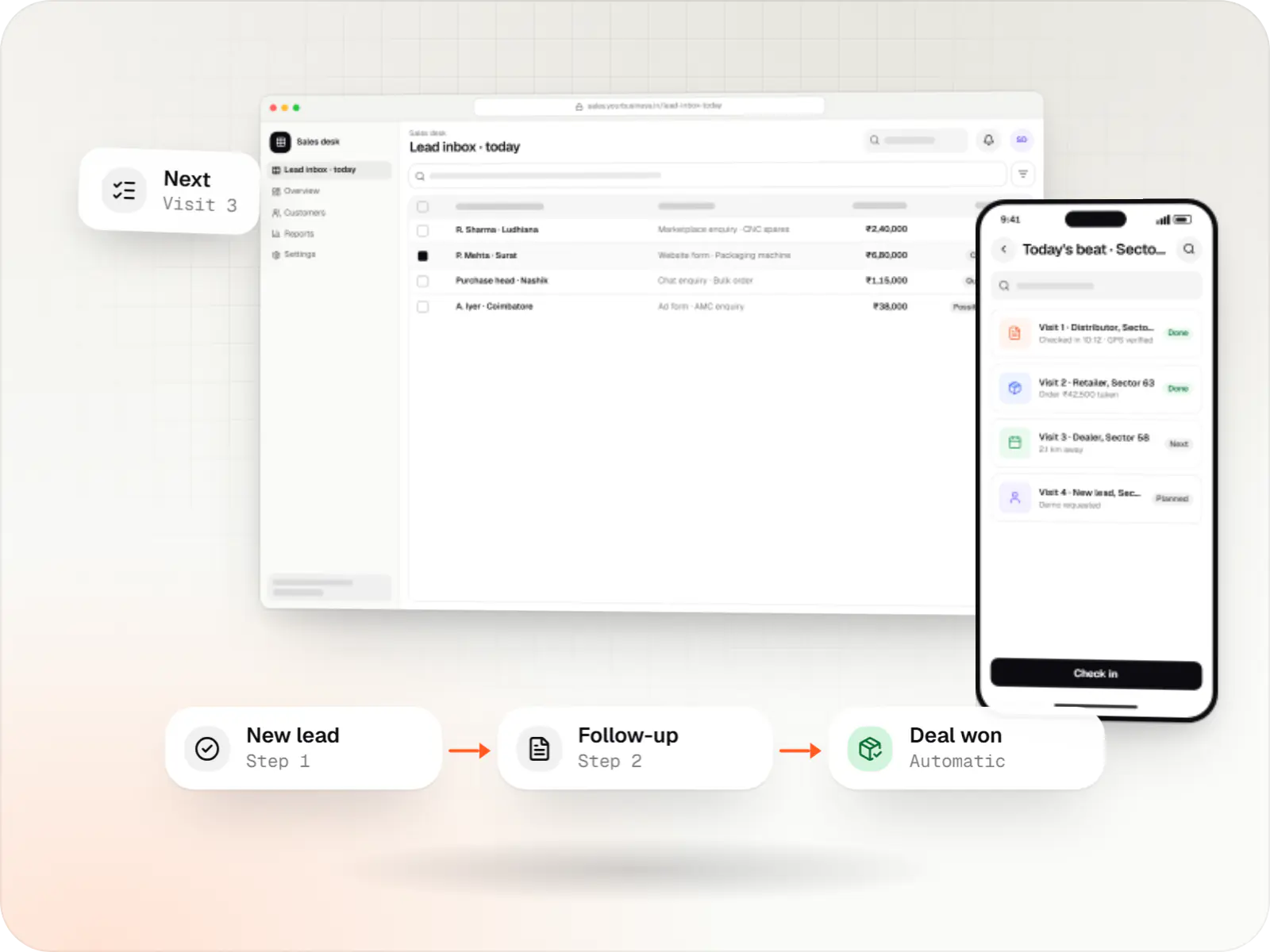
Custom CRM software that captures leads from every channel, keeps follow-ups on schedule and shows managers a live pipeline.
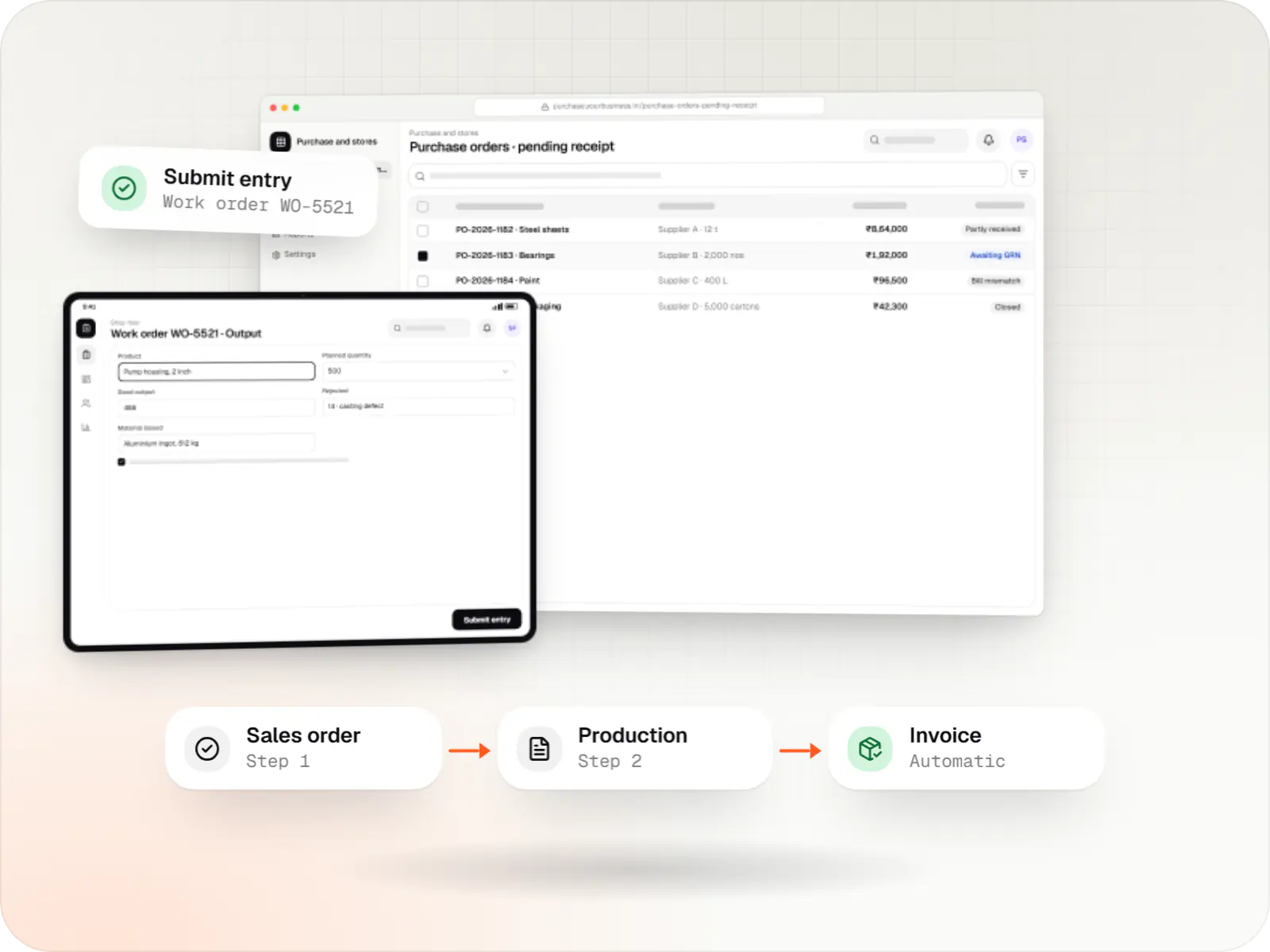
Custom ERP software connecting purchase, inventory, production, sales and GST compliance, alongside your existing accounting system.
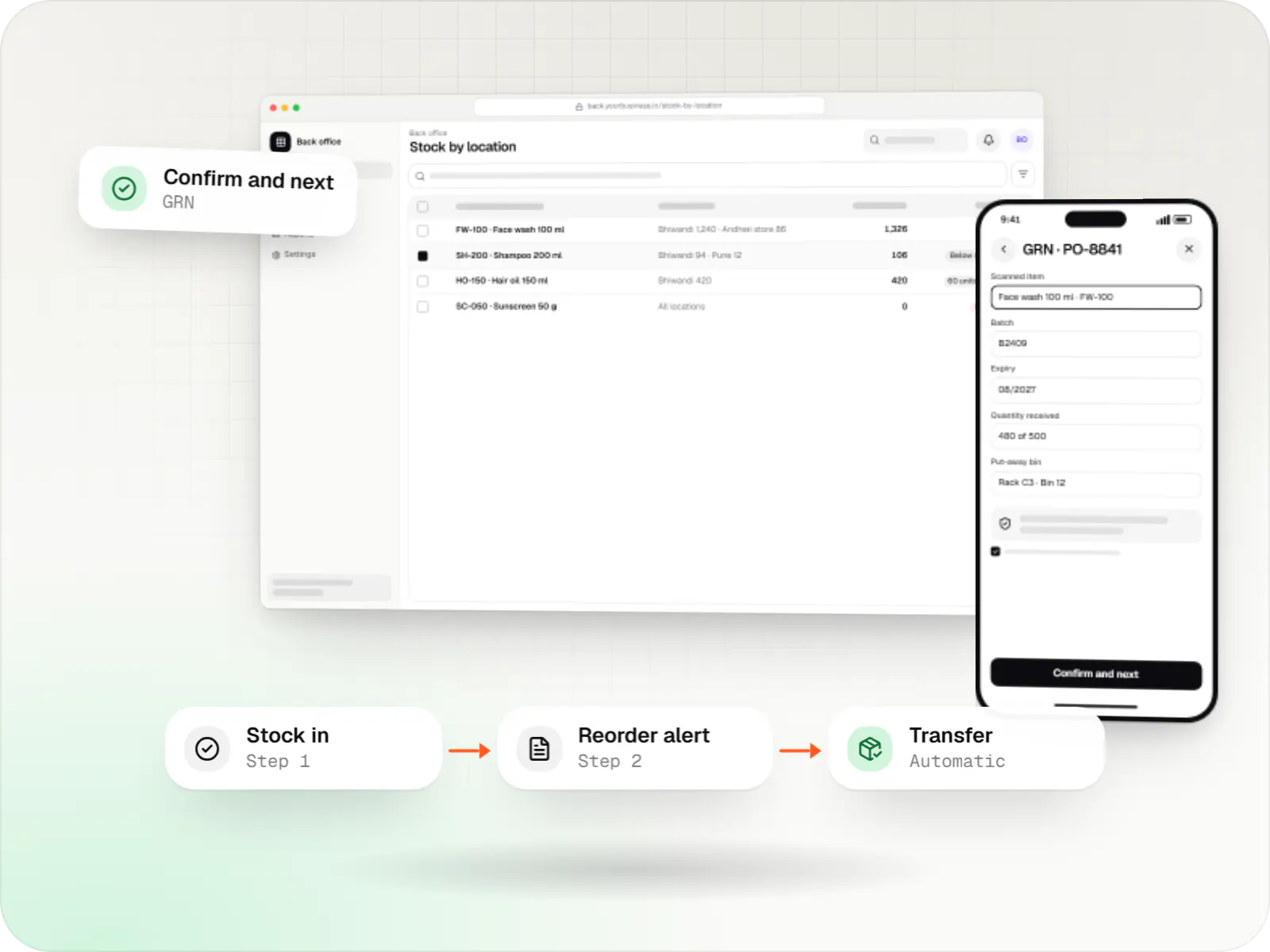
Custom inventory software for multi-location stock, batch and expiry tracking, barcode scanning and marketplace stock sync.
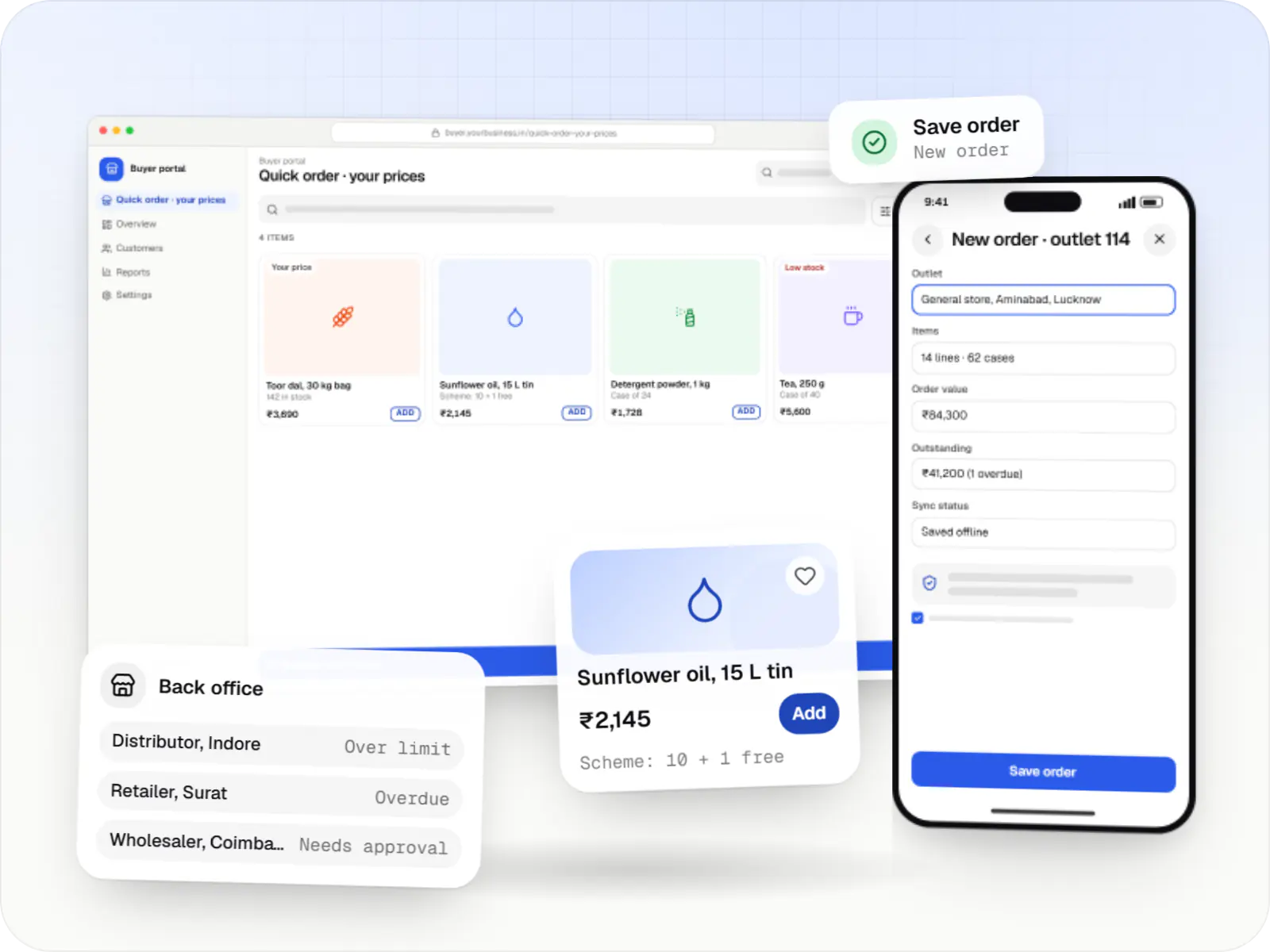
Ordering portals and apps for manufacturers, distributors and wholesalers, with buyer-specific pricing, credit limits, bulk ordering and ERP sync.
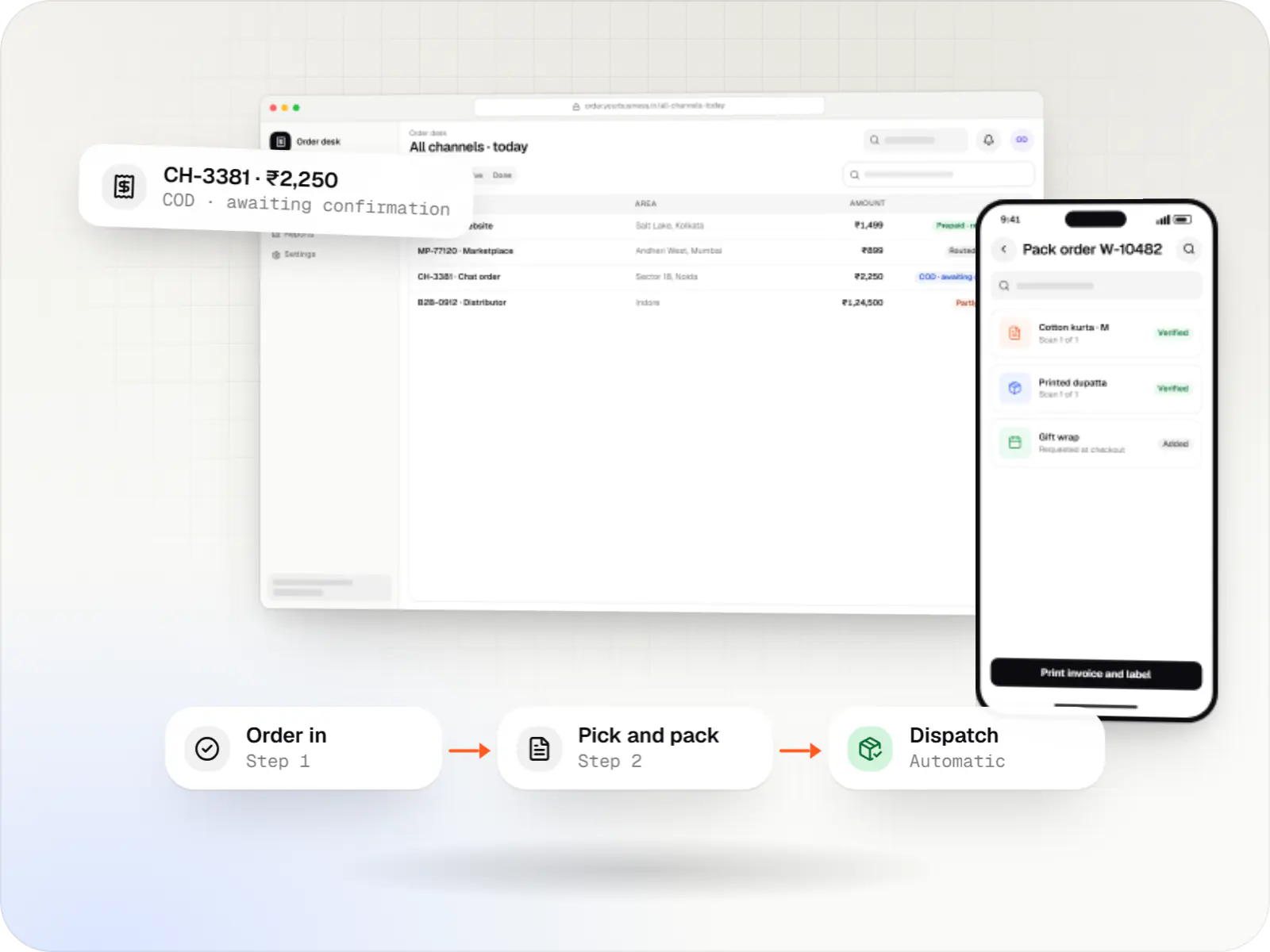
A central order management system that collects orders from every channel, routes them to the right location and tracks them to delivery and payment.
Every device by serial, site, warranty and contract.
Engineer schedules, checklists, photos, parts used and customer sign-off.
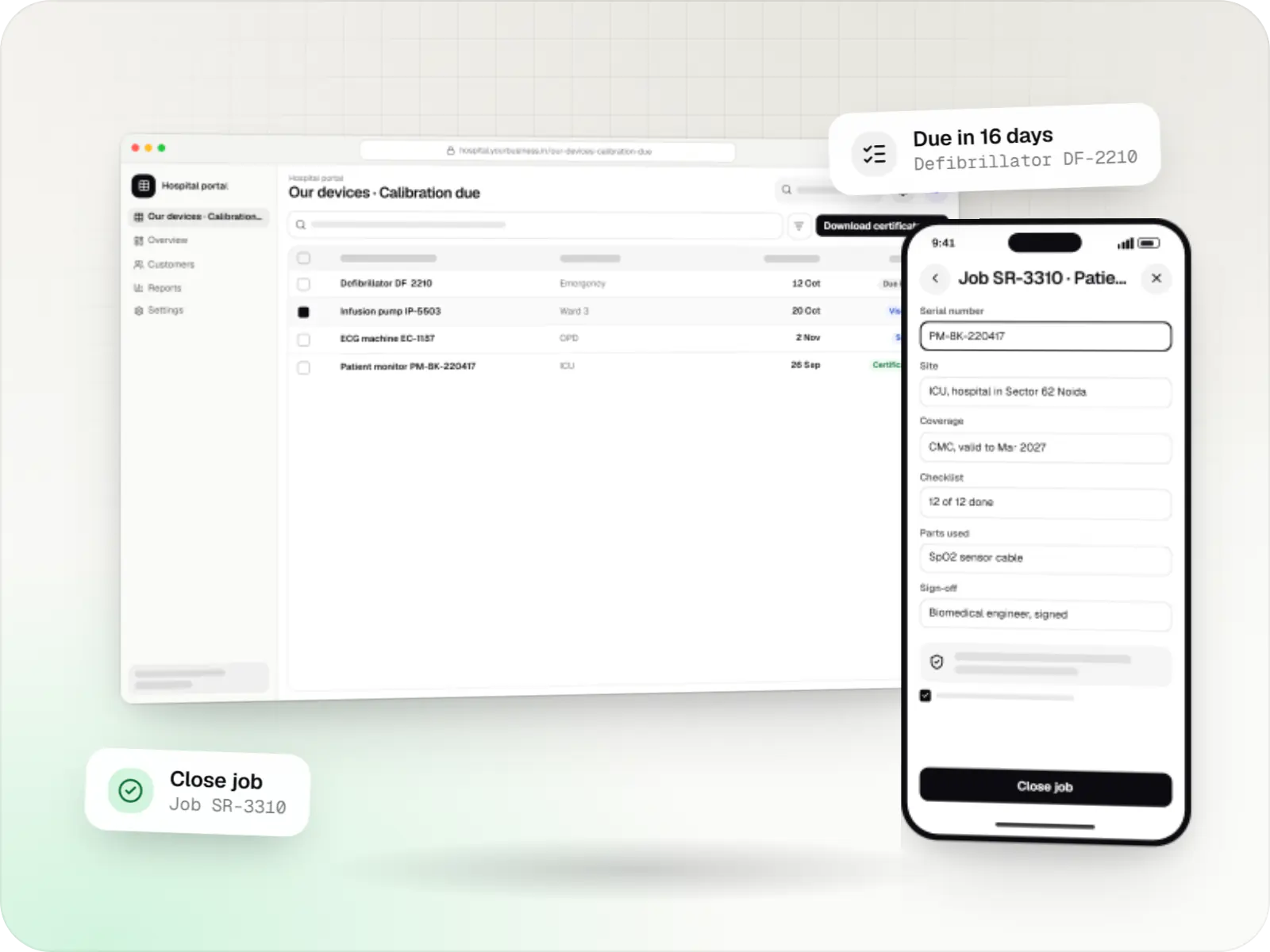
Due dates generated per contract, with certificates stored against each device.
Contract terms, renewals and billing reminders.
Rental periods, deposits, pickups and inspection checks.
How it works
Each serial number carries its contract, maintenance schedule and service history.
Serial number, site, warranty start and the installation report are recorded at handover.
Preventive maintenance and calibration dates are generated from the warranty, AMC or CMC terms.
The request is raised against the serial number, so coverage is known before an engineer is sent.
Checklists, photos, parts used and the hospital's sign-off are captured on site, even without a signal.
Calibration certificates and job reports are attached to the device record, ready for audits.
AMC or CMC renewal quotes go out well before expiry, not after the next breakdown.
Then it starts again at step 1: Device installed and registered
Platforms
Browser-based applications with logins, roles and workflows, such as customer portals, SaaS products and internal tools.
Apps for Android phones and tablets, tested on budget and mid-range devices and published on Google Play or privately.
Marketing and content websites: fast, search-friendly pages with a CMS your team can update without a developer.
Back-office panels for operations, support and finance teams: orders, users, content, reports and permissions.
Technology
Web
Builds interactive screens in the browser, such as dashboards, admin panels and portals, that respond instantly as your team works.
Used for
Backend
A structured way to build back ends on Node.js, so large business systems stay organised, testable and easy to hand over.
Used for
Data
A reliable database for the records your business runs on: orders, payments, bookings and stock, kept accurate and easy to report on.
Used for
Mobile
Build Android and iOS apps from one shared codebase, so you launch on both platforms faster with a consistent experience.
Used for
Cloud & DevOps
Cloud hosting for your app, website and data, with data centres in India and room to grow when traffic rises.
Used for
Payments & maps
Adds maps, address search, live tracking and travel-time estimates to delivery, ride and field apps, so orders reach the right door.
Used for
Flutter and the related logo are trademarks of Google LLC. We are not endorsed by or affiliated with Google LLC.
Plain-English glossary
Product preview
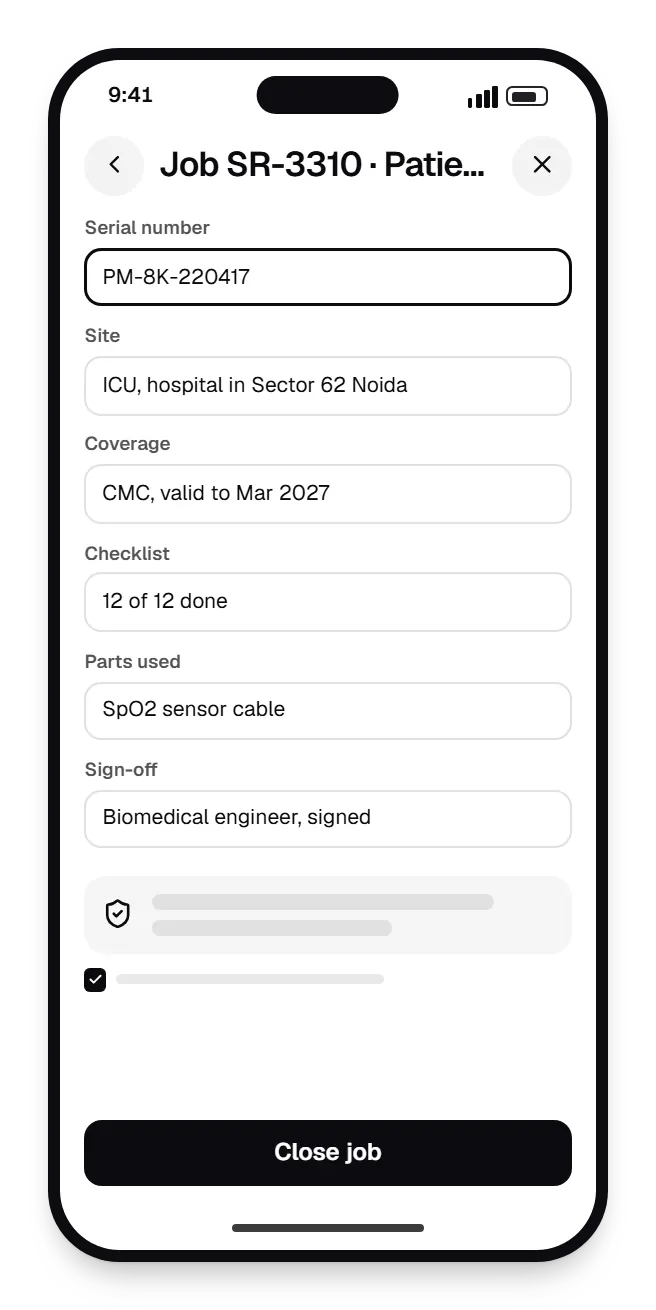
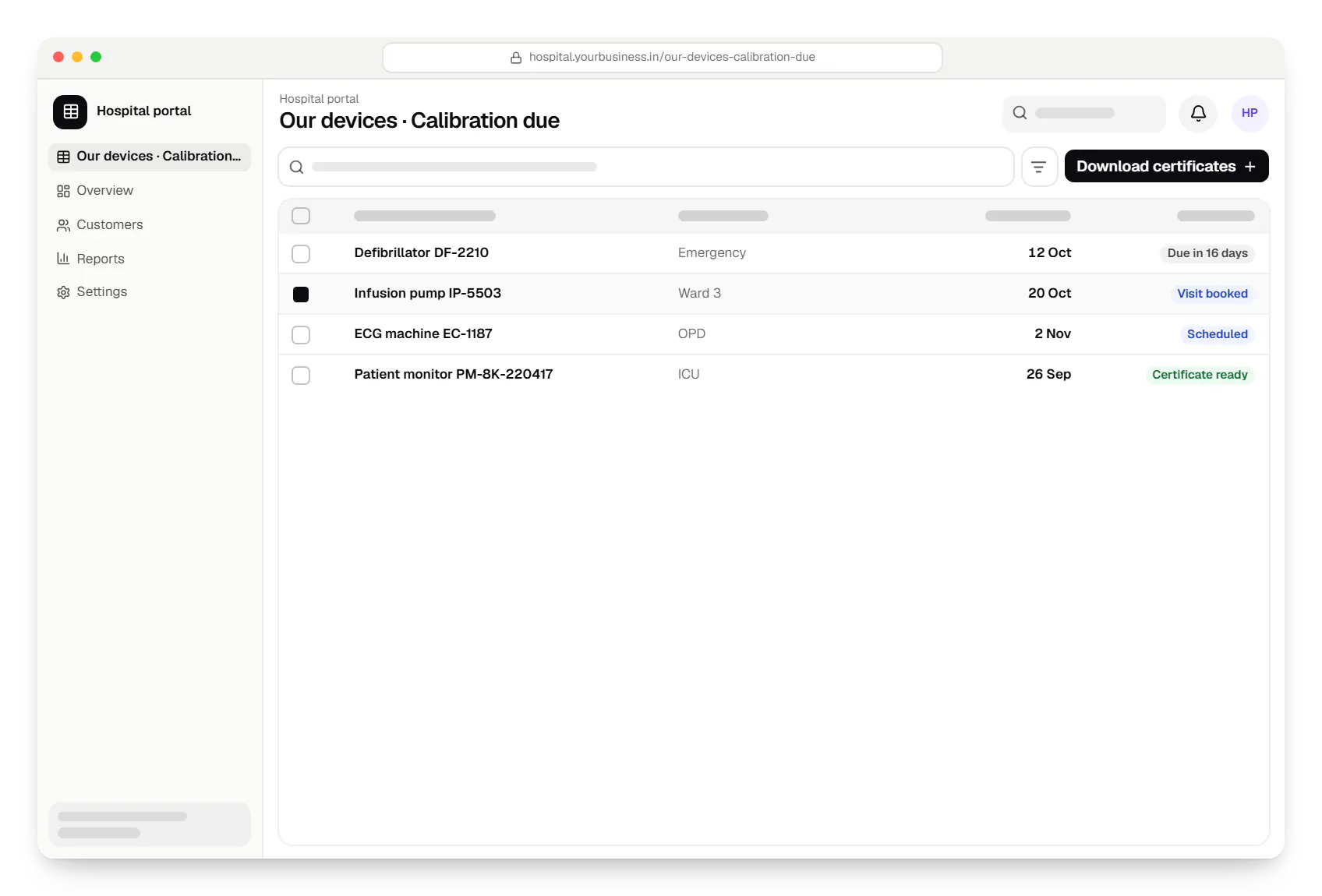
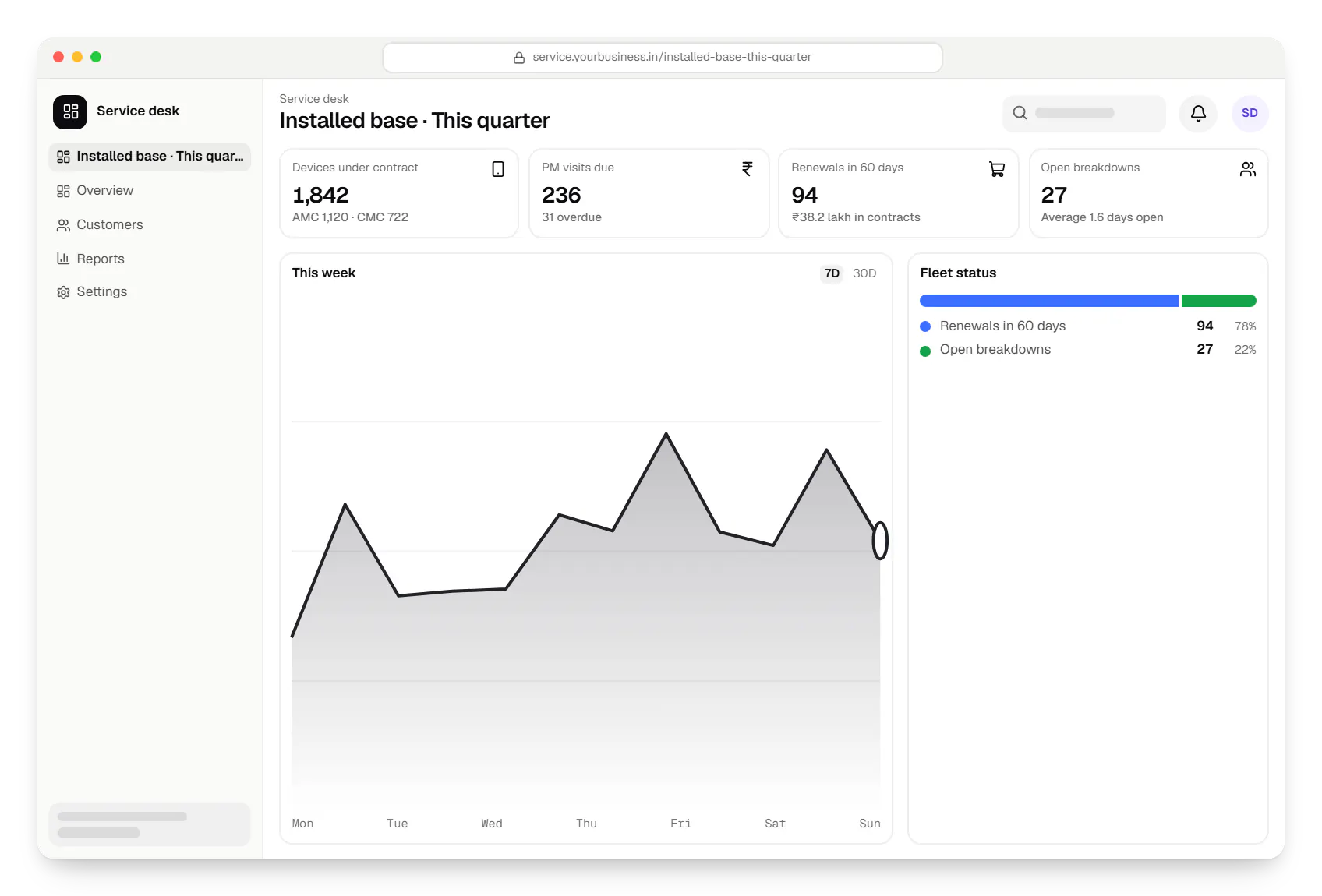
Sample screens: names, prices and figures are examples, not client data.
Cost drivers
Consolidating serials and contracts from spreadsheets needs clean-up time.
Offline engineer apps with parts and sign-off add mobile effort.
Syncing invoices and parts stock with your ERP adds integration work.
Estimates are written from your scope, with the effort and assumptions behind each line item.
How pricing worksServices
The design and engineering services our in-house team combines on projects in this sector.
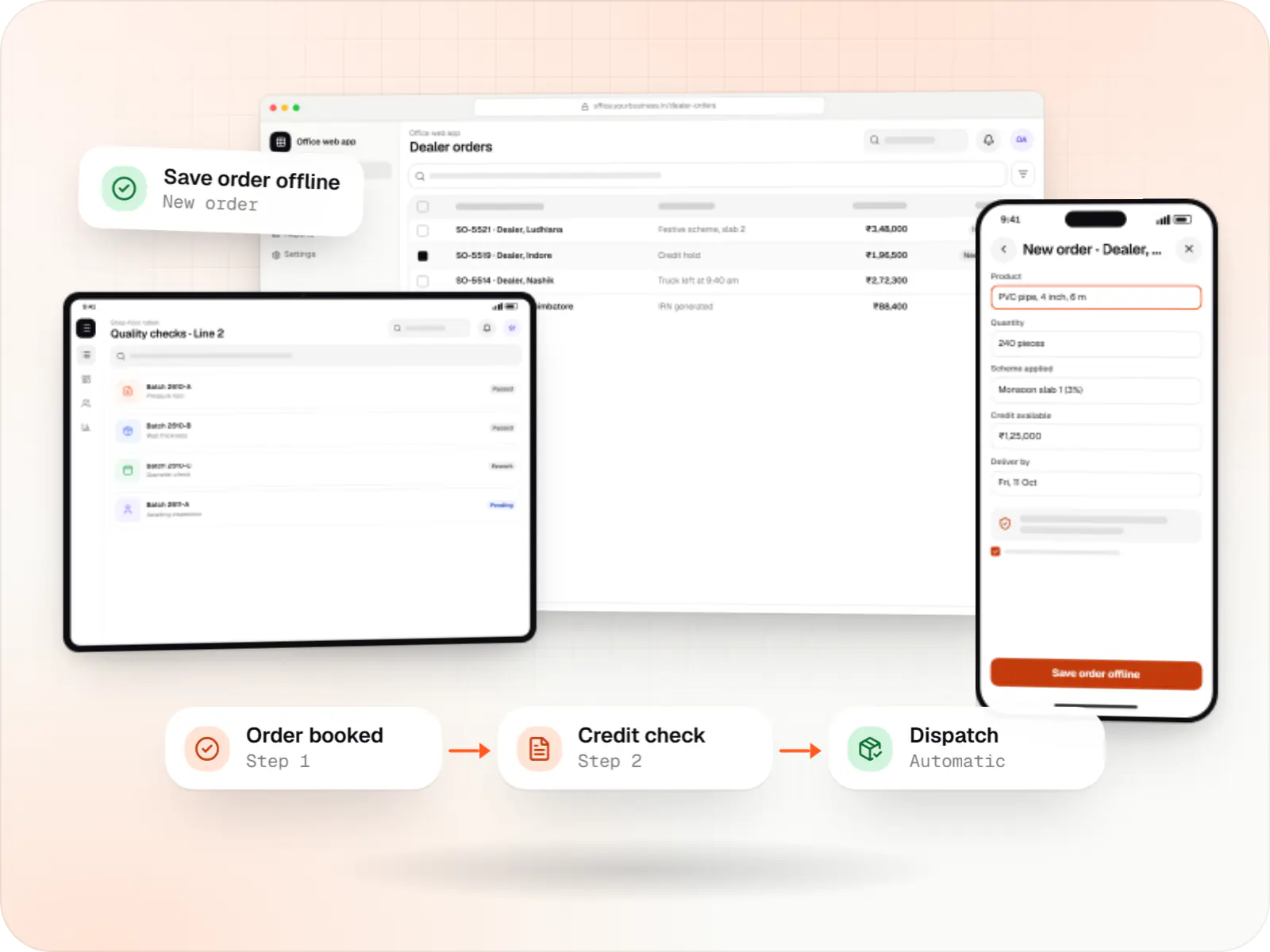
Software shaped around how your business runs, from approvals and inventory to billing and reports, replacing spreadsheets and disconnected tools.
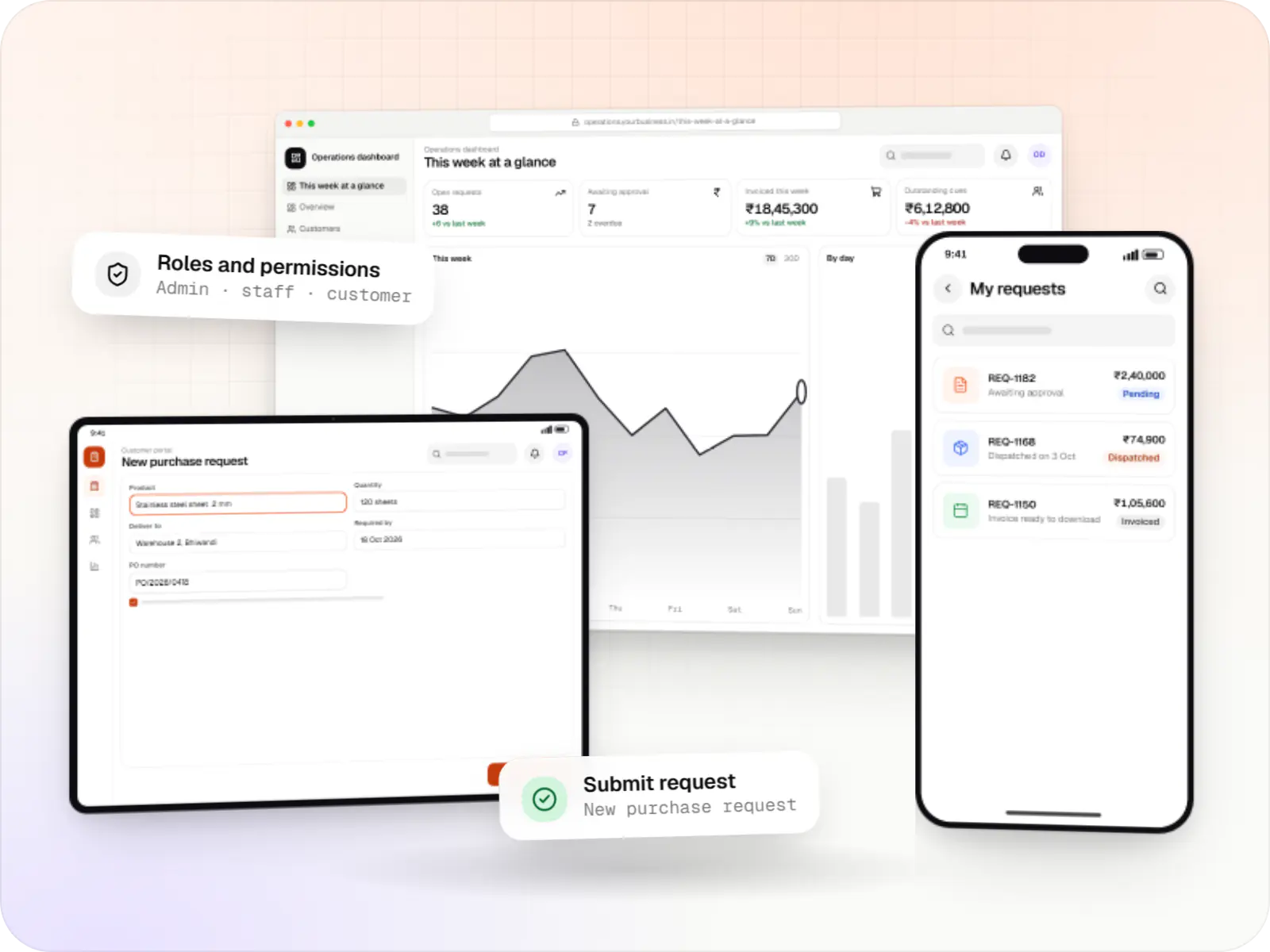
Browser-based products, customer portals, dashboards and internal tools, built on clean data models with secure roles and integrations.
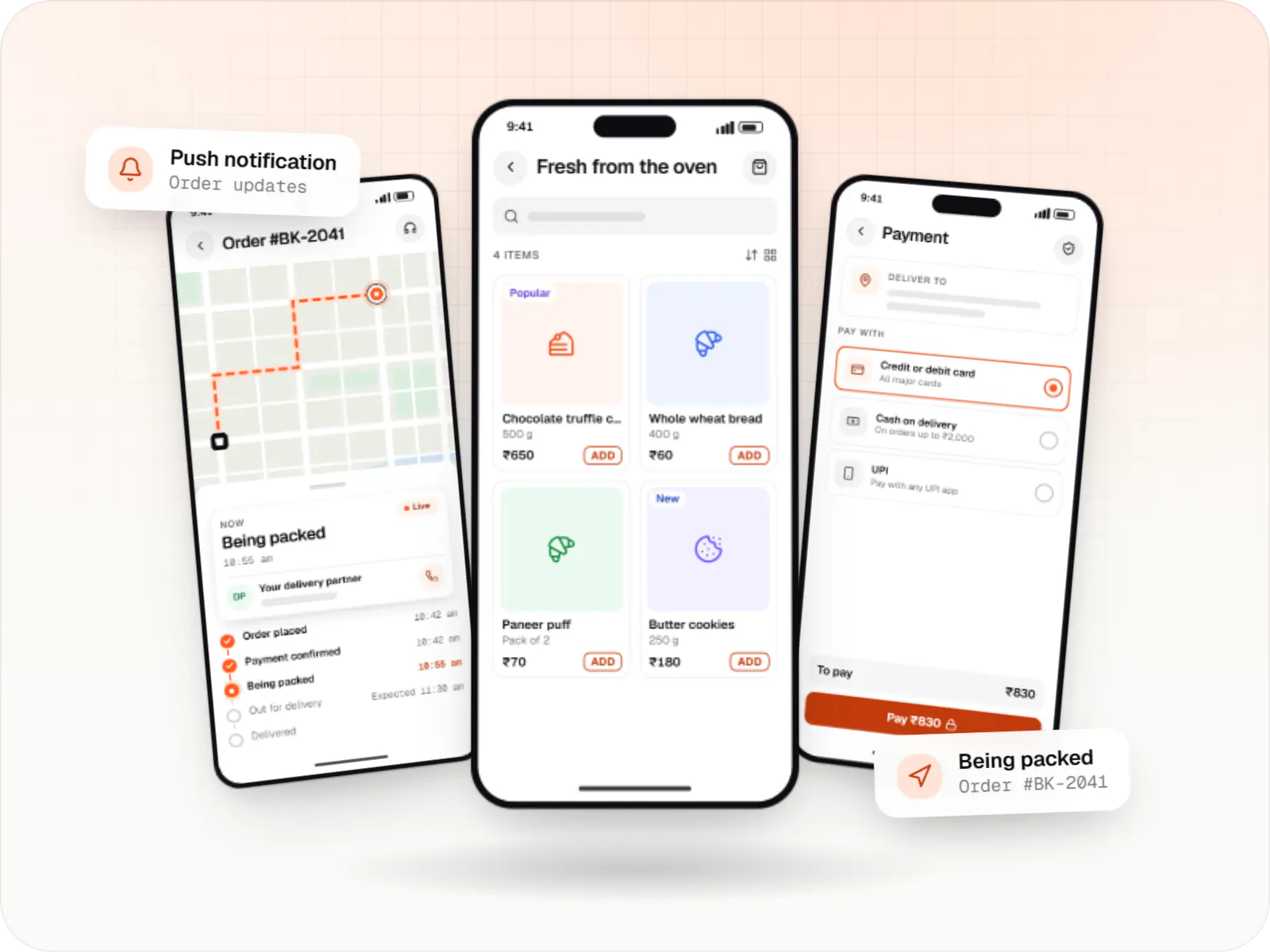
Native and cross-platform Android and iOS apps, from first release through regular store updates, built by our in-house designers and engineers.
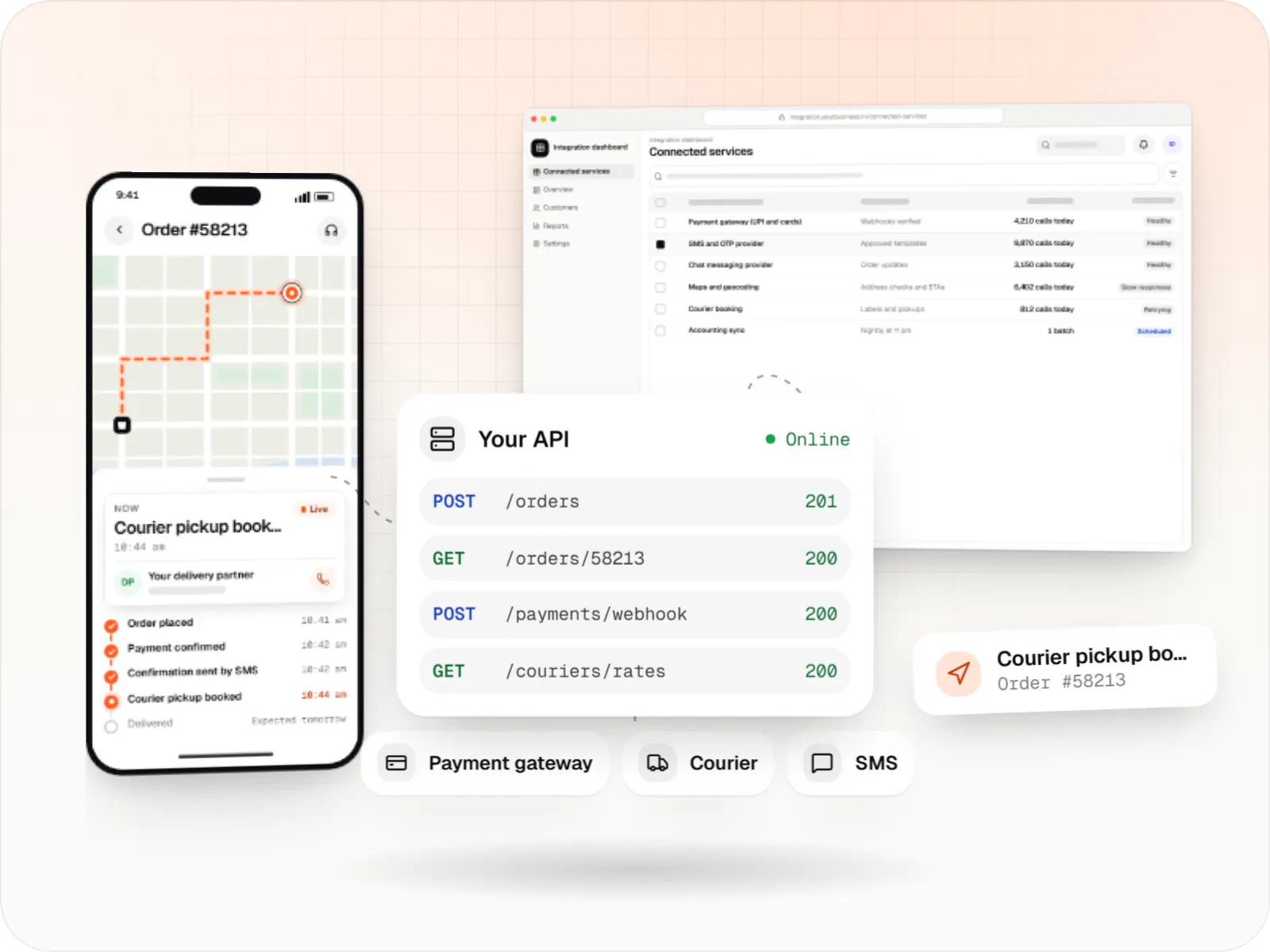
Secure, documented REST and GraphQL APIs, plus integrations that connect your apps to payment, logistics, GST, messaging and business systems.
FAQ
Yes. A hospital portal or simple web form lets biomedical engineering teams log breakdowns against a device's serial number, attach photos and follow status updates. Requests are matched to the contract, so the system knows whether a visit is covered by warranty, AMC, CMC or chargeable. Engineers are assigned by location and skill, and the hospital receives the job report once work is complete.
Each device carries a history of preventive maintenance visits, calibrations, repairs and parts replaced. Engineers complete checklists in the field app, and calibration certificates are uploaded or generated and attached to the device record. Hospitals can download the history for accreditation or audit needs, and reminders go out ahead of the next calibration or maintenance date.
Yes. Rental workflows cover booking, deposit collection, delivery and installation, rental periods with extensions, monthly billing through payment links or mandates, pickup scheduling, and cleaning or inspection checks before a unit goes out again. Each unit is tracked by serial number, so you always know where it is, who has it and when it was last serviced.
Next step
Tell us about your product range and service model. We'll outline a system around it.