Skip to content
Softcoderz

HMS · Hospitals

Hospital management software for private hospitals and nursing homes

OPD, wards, theatre, lab, pharmacy and billing on one patient record, fitted to your hospital and rolled out a department at a time.

This page brings together

Runs on
  • Web app
  • Admin
  • Desktop
  • Android
  • PWA
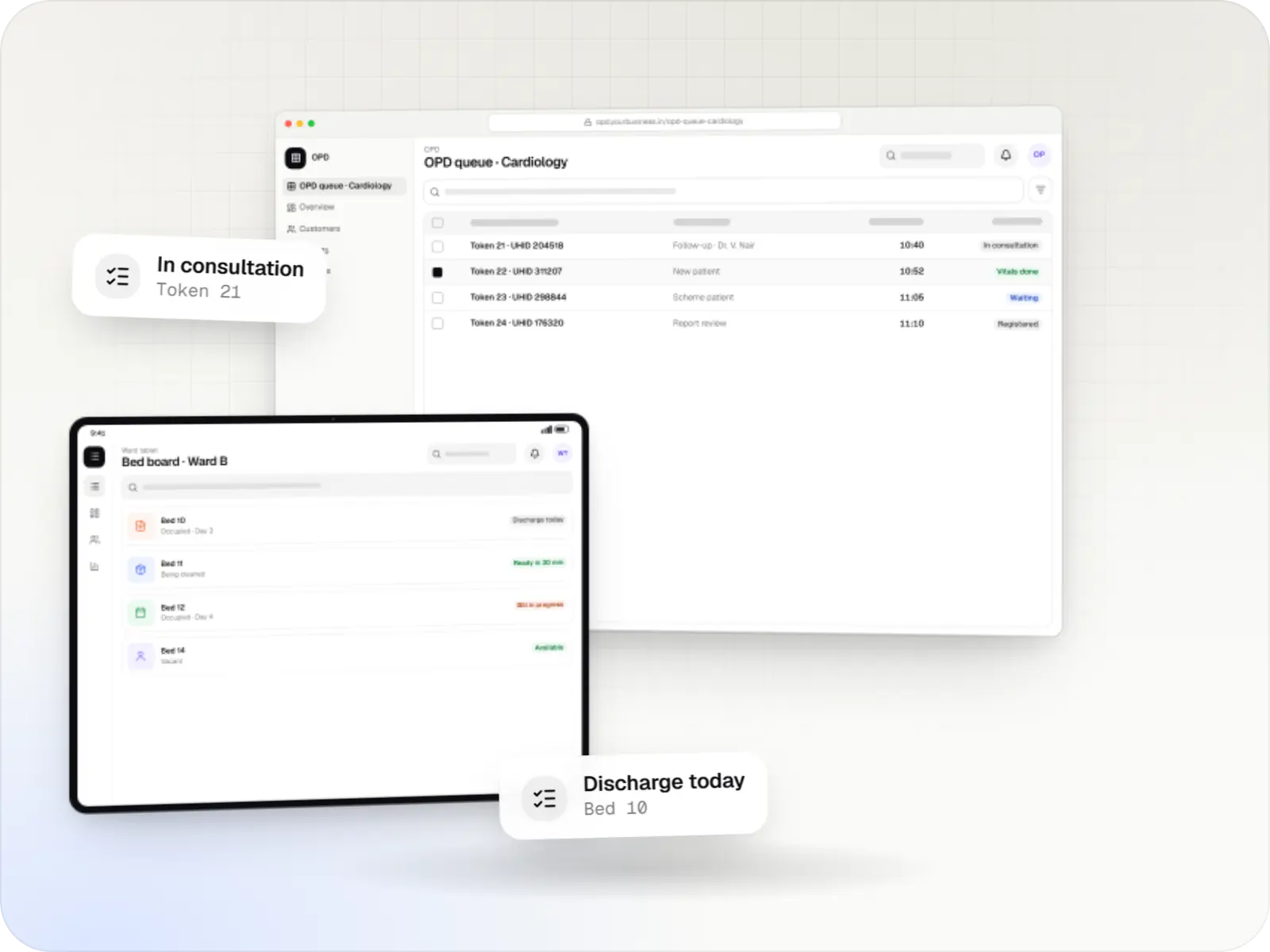
Hospital management software screens: OPD queue table in a browser and ward tablet
Illustrative preview

One patient record across every department

Many private hospitals and nursing homes run a patchwork: billing software at the front desk, a separate lab system, a pharmacy package from another vendor and paper files on the wards. Each part works, but the patient's journey breaks at every hand-off. Theatre consumables miss the bill, lab results are re-typed into discharge summaries and TPA desks chase documents across departments.

Hospital management software earns its keep by joining those pieces around one patient ID. We build it for hospitals that want a system fitted to their departments, payer mix and reporting, and replace existing tools in phases so clinical work never depends on a big-bang switch. Where an existing system works well, we integrate with it instead.


Hospital room with a made patient bed, an IV stand, a bedside panel and a blue sofa for visitors on a tiled floor

Challenges

Gaps that cost hospitals money and bed-days

  1. Unbilled consumables

    Implants and disposables used in theatre or ICU are noted on paper and missed at billing.

  2. Slow discharges

    Final bills and TPA approvals chased by phone keep fit patients in beds.

  3. Claim queries

    Missing documents in cashless claims trigger queries from insurers and TPAs.

  4. Re-typed lab results

    Copying from analyser printouts invites transcription errors.

  5. Traceability for accreditation

    NABH-style documentation expects consents, incidents and medication records to be traceable.

What is included

Departments the system covers

  • Platform: Web app

    Front office and OPD

    • Registration with hospital ID and ABHA linking
    • Appointments, tokens and consultant rosters
    • Speciality templates for notes and e-prescriptions
  • Platform: Web app / tablet

    Wards, ICU and theatre

    • Bed board, admissions and transfers
    • Nursing notes, vitals and medication administration records
    • Theatre scheduling by surgeon, anaesthetist and room
    • Consumables captured at the point of use
    • Discharge summaries drafted from the stay's records
  • Platform: Web app

    Lab and radiology

    • Sample barcodes and worklists
    • Analyser results without re-typing
    • Pathologist validation before release
  • Platform: Web app

    Pharmacy and billing

    • Ward indents, batches and expiry
    • Controlled-drug registers
    • Deposits, interim bills and packages
    • TPA pre-authorisation tracking and claim bundles

Integrations

Interfaces a hospital system needs

  • Health records

    • ABDM

      ABHA verification and consent-based record exchange, following the ABDM integration milestones.

  • Diagnostics

    • Lab analysers

      Results over HL7 or ASTM, directly or through lab middleware.

  • Radiology

    • PACS

      Worklists and report links with your DICOM image archive.

  • Insurance

    • National Health Claims Exchange

      Standardised cashless claims with participating insurers and TPAs.

  • Finance

    • Tally or ERP

      Revenue, collections and purchases posted to accounts.

Privacy & security

Protecting clinical data

  • Role-based access

    Billing staff see bills; clinicians see their own patients' notes.

  • Logged emergency access

    Break-glass access is recorded and reviewed afterwards.

  • Audit trails

    Who viewed or changed each entry, and when.

Solutions

Systems that extend an HMS

  • Patient management system

    Patient records, visit notes, treatment plans, billing and recalls for clinics, dental and physiotherapy practices, diagnostic centres and speciality care.

  • Doctor appointment app development

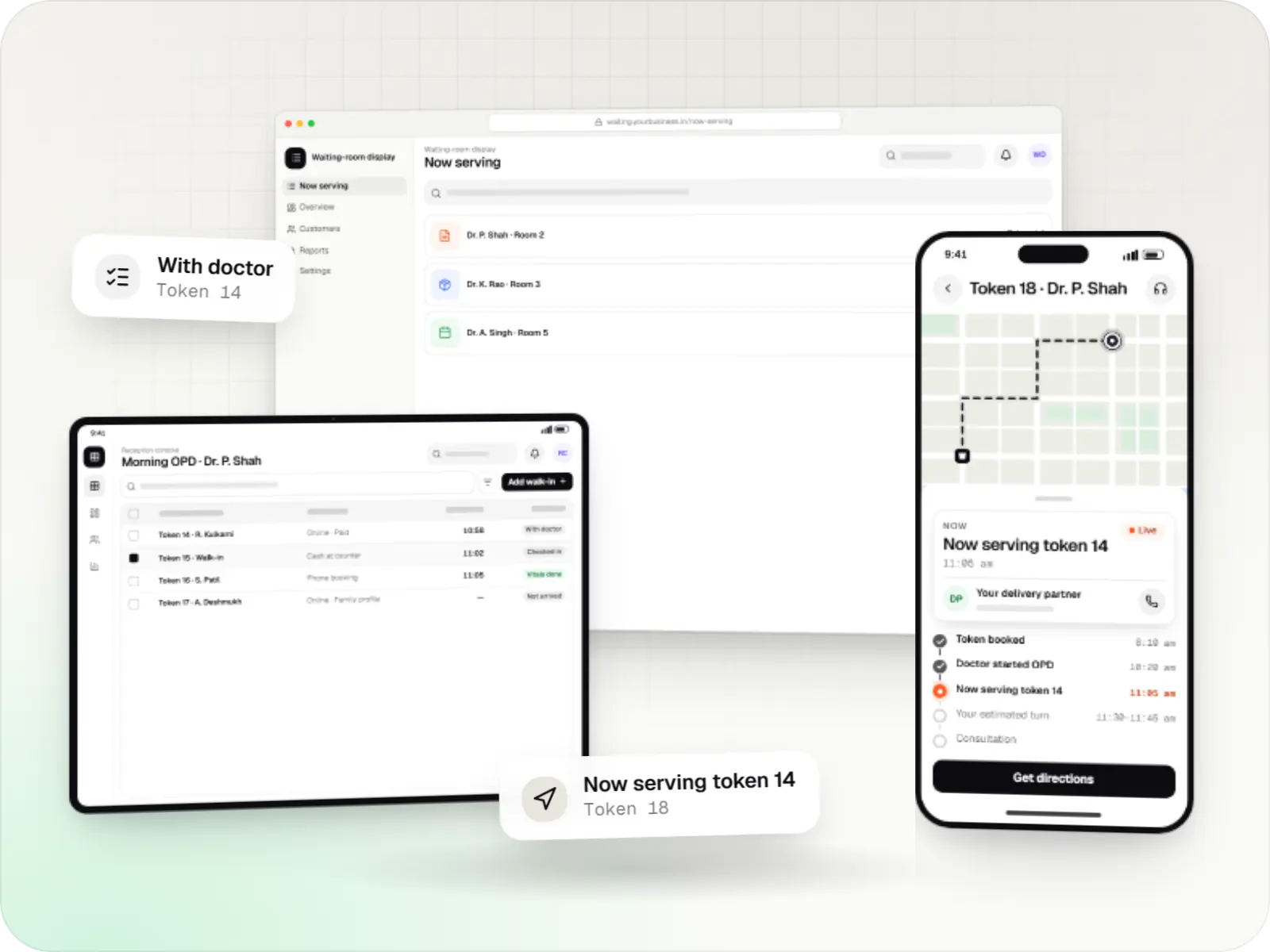
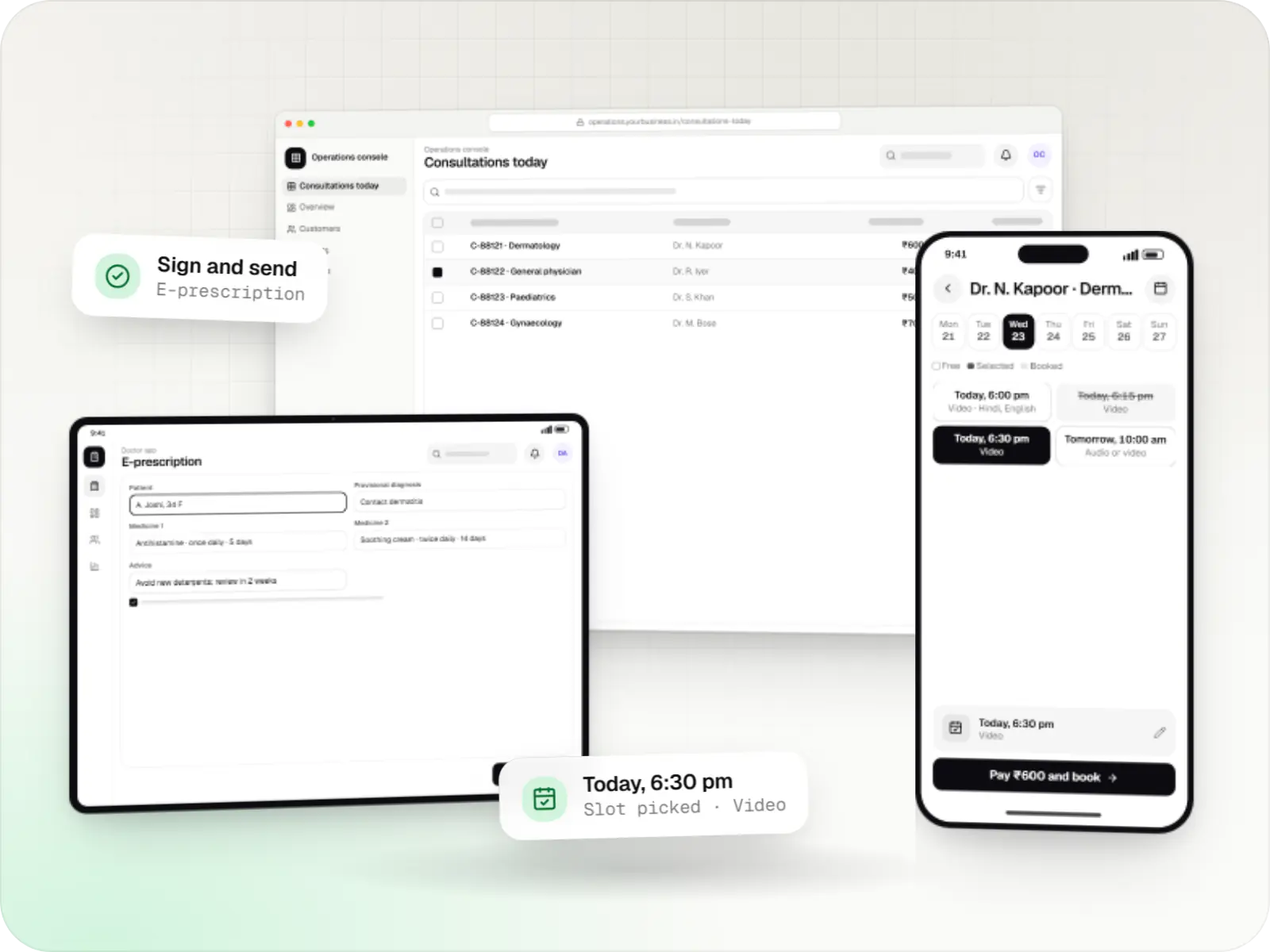
    Appointment apps for clinics, polyclinics and hospital OPDs with slot and token booking, live queue status, reminders, prepayment and a reception console.

  • Telemedicine app development

    Video, audio and chat consultation platforms with scheduling, e-prescriptions, payments and records, designed around the Telemedicine Practice Guidelines.

  • AI document processing

    Data extraction from invoices, KYC documents, statements and forms into your systems, with validation rules and human review for uncertain fields.

Cost drivers

What sets the scope of a hospital build

  1. Beds and departments

    A nursing home needs OPD, IPD, pharmacy and billing; larger hospitals add ICU, theatre, blood bank and more.

  2. Phasing

    A phased rollout lowers risk but needs temporary interfaces with the systems being replaced.

  3. Device and system interfaces

    Each analyser model, PACS and accounting link is estimated separately.

  4. Legacy data

    Migrating patient masters, balances and histories needs mapping and validation.

Estimates are written from your scope, with the effort and assumptions behind each line item.

How pricing works

Work

Clinic platform sample

  • Healthcare software

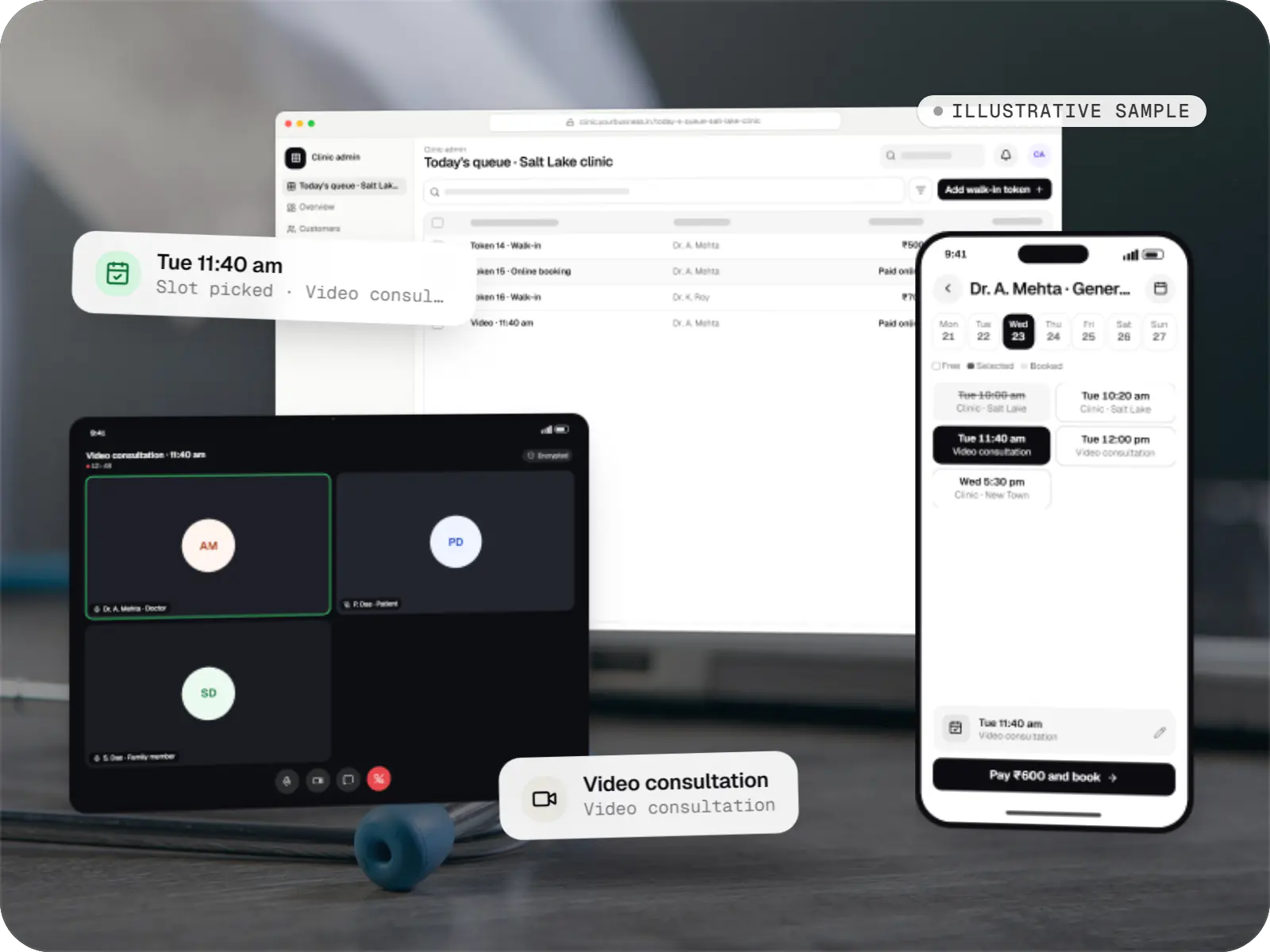
    Illustrative sample

    Clinic booking & telemedicine app

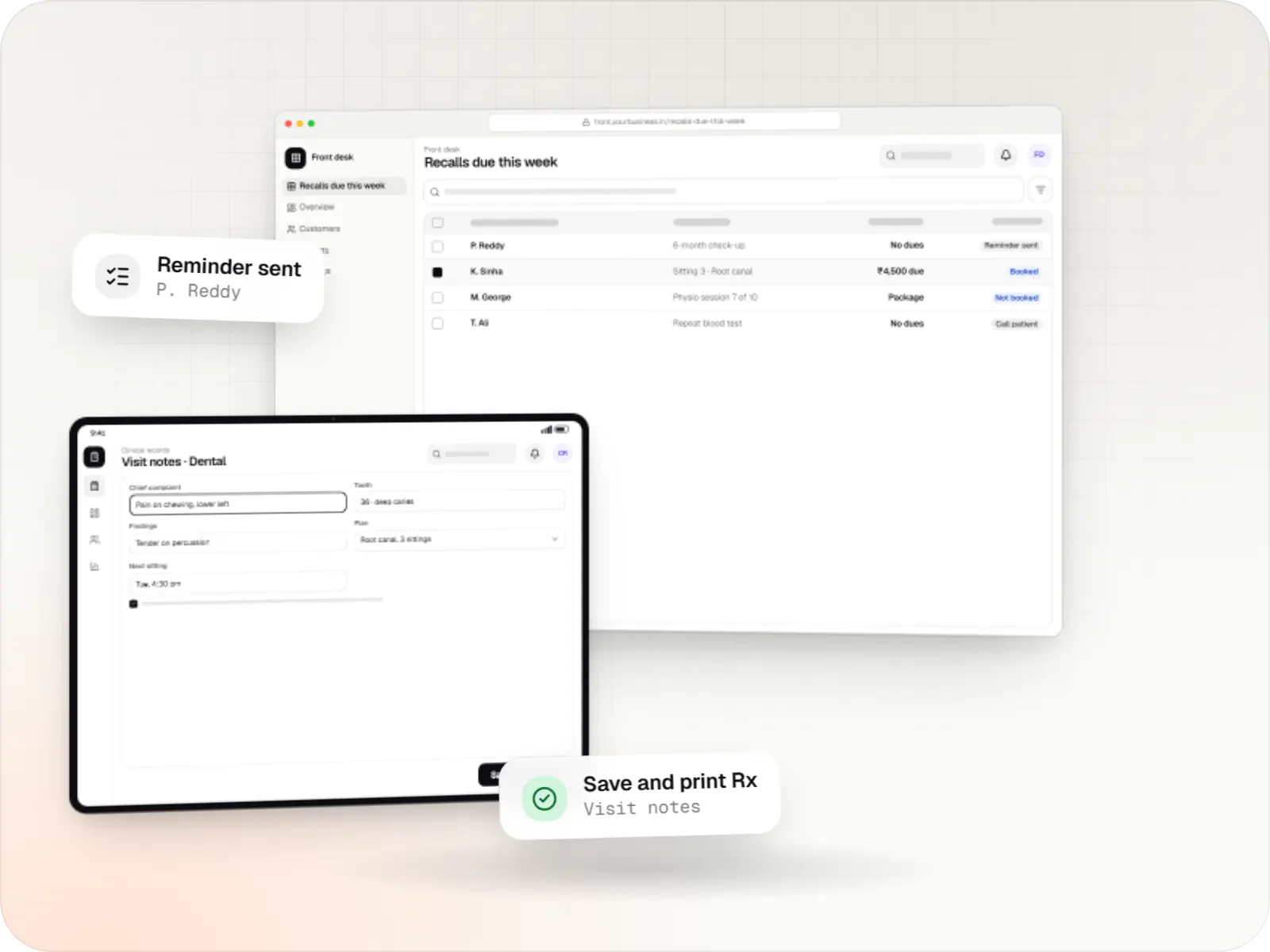
    An illustrative patient app, doctor app and clinic admin for in-person and video consultations, with digital prescriptions and consent-based record access.

    • Clinics
    • Patient + doctor apps

    Runs on

    • Android
    • iOS
    • Cross-platform
    • Admin

    Built with

    • Flutter
    • NestJS
    • PostgreSQL
    • AWS
    • Firebase
    • +1 more

FAQ

Frequently asked questions

Can we replace our hospital system one module at a time?

Yes, and it is usually safer. A common order is registration and billing first, then pharmacy and lab, then wards and theatre. During the transition the new modules exchange data with the systems still in use, for example sending lab orders to your existing lab software. That temporary integration has a cost, but it avoids a single weekend on which every department changes how it works.

Should a hospital system run in the cloud or on a local server?

Both work. Cloud hosting in an Indian region reduces server upkeep and makes multi-site access easy, but depends on reliable internet. A local server keeps working through outages but needs backups, power and someone to maintain it. Many hospitals choose a hybrid: cloud as the main system with a local fallback for registration, pharmacy and critical ward functions. We recommend based on your connectivity and IT staff.

How do you handle TPA and cashless insurance workflows?

The billing module tracks each cashless admission from pre-authorisation through enhancements to final approval, with approved amounts visible at the billing desk. Admission notes, investigation reports, discharge summaries and itemised bills are assembled from the patient record into a claim bundle, which reduces queries caused by missing papers. As the National Health Claims Exchange matures, we can connect to it for participating insurers and TPAs.

How do you train staff who work in shifts?

By role and by shift, in short sessions built around the tasks each person does: nurses learn charting and medication records, billing staff learn deposits and packages. We run sessions in person in Delhi NCR or over video elsewhere, record short task videos in simple language and leave quick-reference cards at nursing stations. Early support hours are agreed to cover night shifts.

Next step

Planning to replace or connect your hospital systems?

Tell us which departments struggle most today. We will suggest a phased plan and cost each module separately.

Or reach us directly

Mon–Sat, 10:00–19:00 IST