


Skip to content
Softcoderz

Delhi NCR · Grocery delivery

Grocery delivery app development in Delhi

Customer, picking and delivery apps plus an admin panel for Delhi grocery businesses, built around daily mandi pricing and loose-weight billing.

This page brings together

Runs on
  • Android
  • iOS
  • Cross-platform
  • Web app
  • Admin

Flutter and the related logo are trademarks of Google LLC. We are not endorsed by or affiliated with Google LLC.

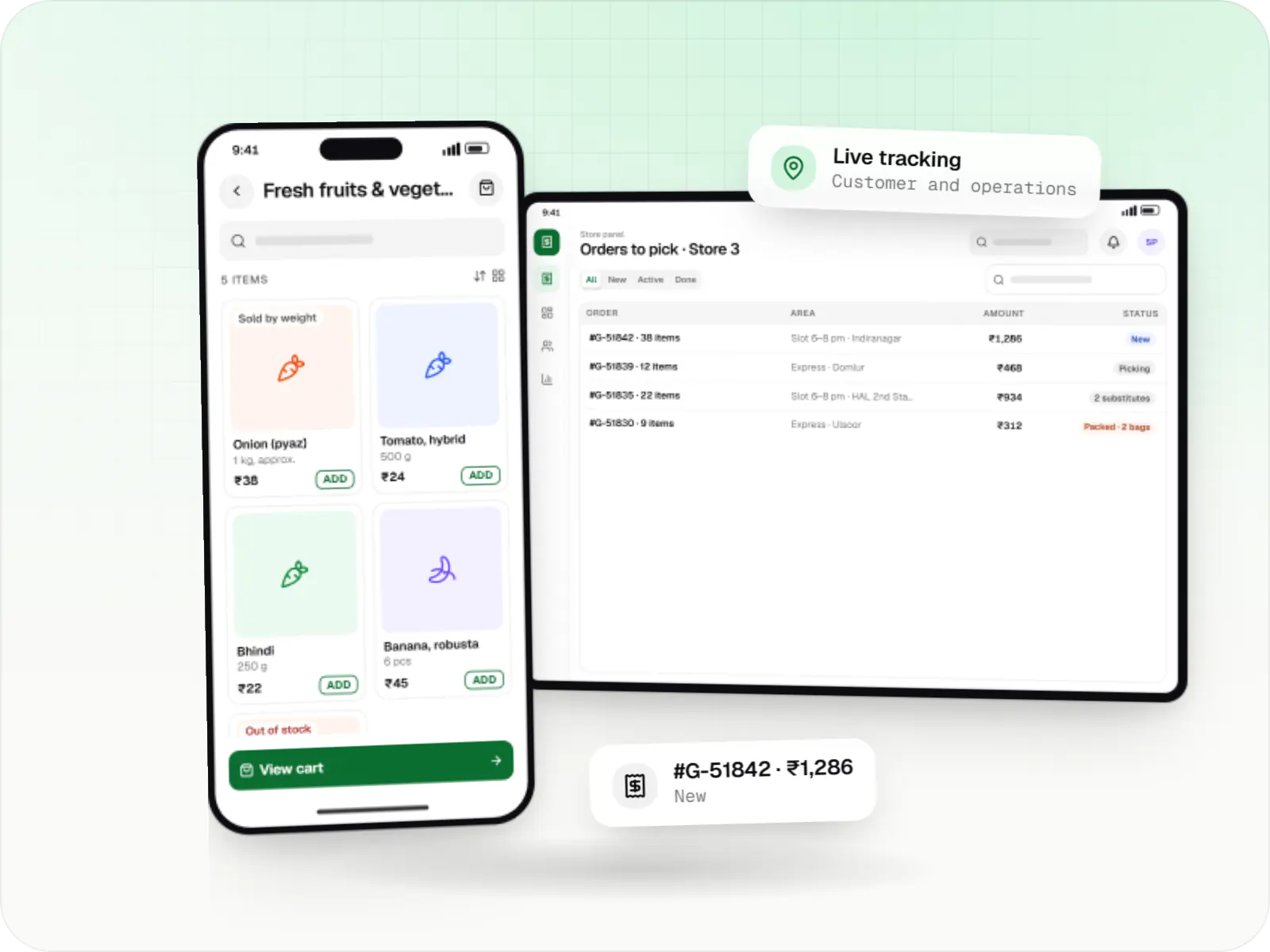
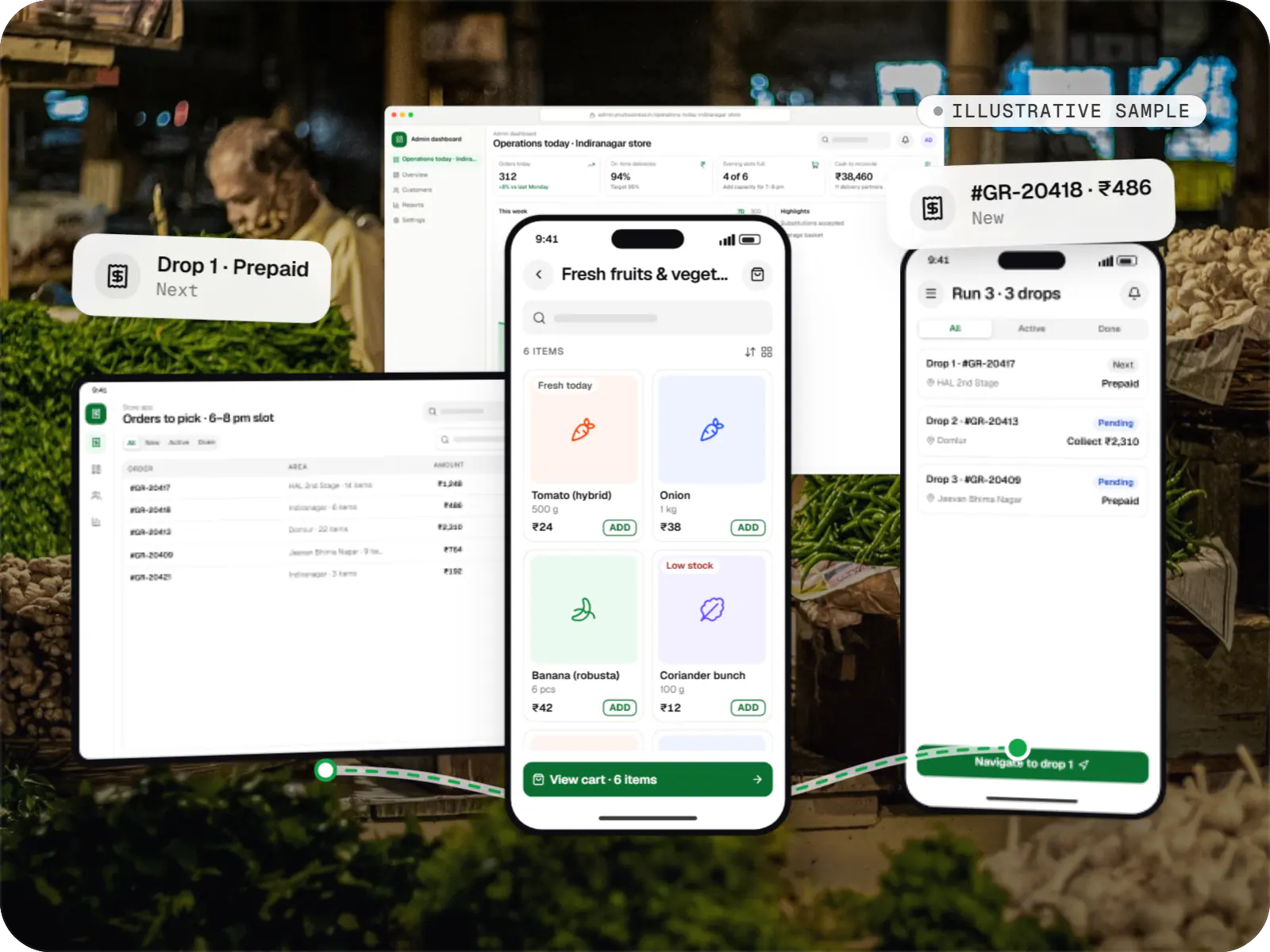
Grocery delivery app screens: customer app on a phone and store panel on a tablet
Illustrative preview

Grocery delivery in Delhi is its own operation

One Delhi grocery order might include vegetables priced off this morning’s Azadpur rate, loose atta billed by actual weight, milk due before 7 a.m. and festival items that sell for a single week. That takes more than a catalogue and a cart.

We build grocery delivery platforms for supermarkets, kirana chains, farm-fresh brands and dark-store operators across Delhi NCR, with the admin panel that ties stock, pricing and dispatch together. Before designing, we can visit your store or dark store to watch picking and packing.

Local context

Delhi grocery realities the platform must handle

Delhi’s grocery trade runs on mandis, kiranas and a crowded festival calendar.

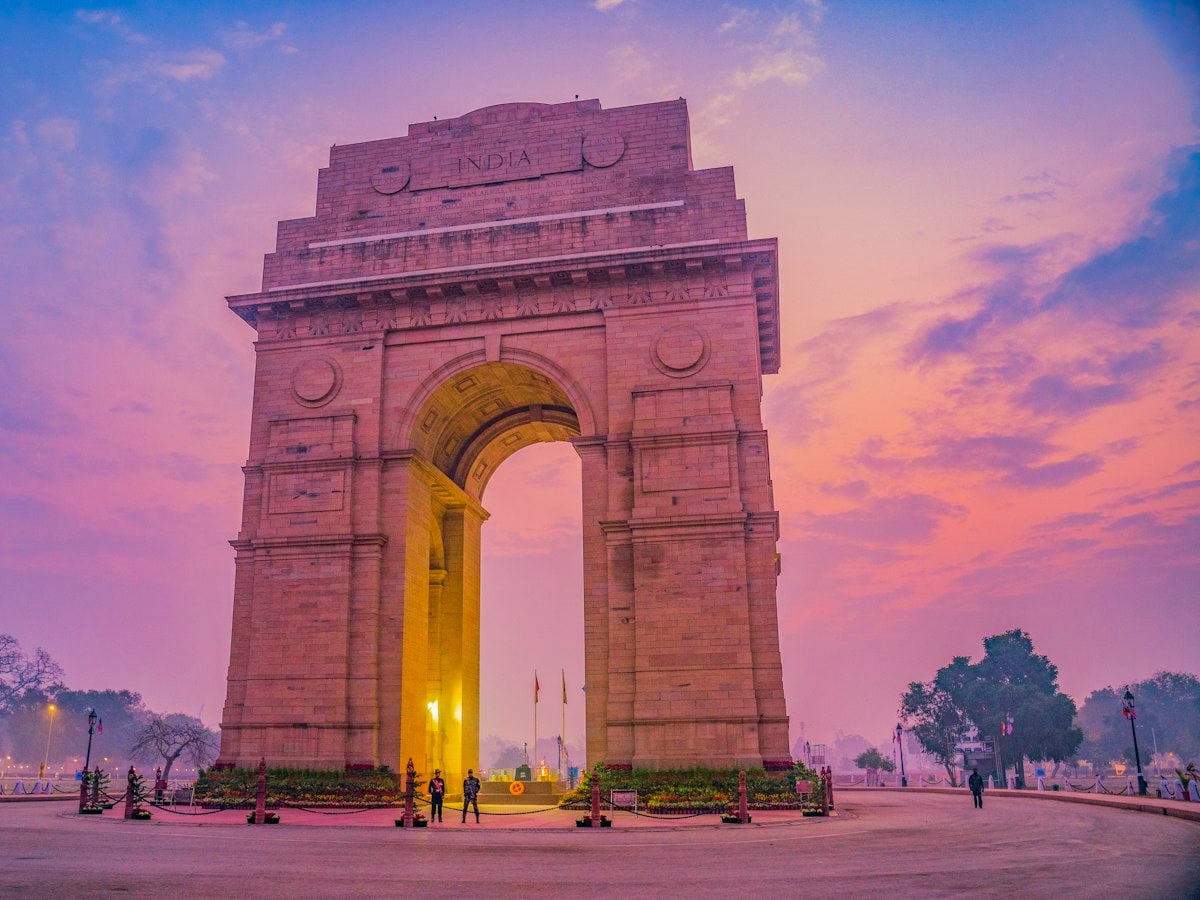
India Gate war memorial on Kartavya Path, New Delhi, lit at its base under a pink twilight sky
  • Produce often comes from Azadpur or Okhla mandi, so prices need daily bulk updates rather than fixed MRPs.

  • Loose atta, rice, dal and dry fruits are billed by weight, so totals change after picking and customers need to see why.

  • Navratri vrat items, Karva Chauth sargi, Chhath puja supplies, Diwali dry-fruit boxes and Eid sewaiyan each need scheduled categories and stock caps.

  • Deliveries run from gated colonies with RWA-controlled gates to Old Delhi lanes where only two-wheelers fit and pin-drop locations matter.

  • Dark stores in Delhi, Noida and Gurgaon fall under different state GST registrations, so invoices must follow the fulfilling store.

  • Summer heat and winter fog affect delivery windows and cold-chain handling for dairy and frozen goods.

What is included

Four apps, one grocery operation

  • Platform: Android, iOS and web

    Customer app

    • Search that understands “aloo”, “potato” and misspellings
    • Express and scheduled slots by pin code
    • Substitution preferences approved before packing
    • UPI, cards, wallets and COD with order limits
    • Reorder lists and daily milk subscriptions
  • Platform: Android handheld

    Picking app

    • Pick lists sorted by aisle
    • Weight capture with price recalculation
    • Out-of-stock and substitution requests
    • Packing checks and crate labels
  • Platform: Android

    Delivery partner app

    • Batched orders in route sequence
    • Landmark notes and masked calls
    • OTP handover and COD collection
    • Cash deposit summary
  • Platform: Web

    Admin panel

    • Bulk daily price updates from a sheet
    • Store-wise stock, slots and delivery radius
    • Festival category scheduling
    • GSTIN-wise invoicing and settlement reports

Services

Services behind the platform

  • Mobile app development

    Native and cross-platform Android and iOS apps, from first release through regular store updates, built by our in-house designers and engineers.

  • Flutter development

    Android and iOS apps from one Dart codebase, built by engineers who know when Flutter is the right call and when native code is needed.

  • Admin panel development

    Back-office dashboards built around your team's daily tasks: order queues, approvals, catalogue management, payouts, reports and audit logs.

  • UI/UX design

    Product design for web and mobile apps: research, user flows, wireframes, prototypes and design systems that engineers can build from.

  • API development

    Secure, documented REST and GraphQL APIs, plus integrations that connect your apps to payment, logistics, GST, messaging and business systems.

Cost drivers

Pricing considerations for a Delhi grocery platform

  1. Stores and states

    One store in one state is simplest; dark stores across Delhi, Noida and Gurgaon need multi-GSTIN invoicing and store-level stock.

  2. Catalogue source

    Syncing items and stock from your POS or ERP is more work upfront but removes daily double entry.

  3. Weight and substitution logic

    Loose-weight billing, payment adjustments and substitution approvals add complexity to checkout and refunds.

Estimates are written from your scope, with the effort and assumptions behind each line item.

How pricing works

Process

How we build with Delhi grocery teams

  1. Store visit

    We watch a shift of picking, packing and dispatch at your store in Delhi NCR.

    You getOperations map

  2. Pilot scope

    A first release for one store and a few pin codes, with clear success measures.

    You getPilot scope and estimate

  3. Floor and route testing

    Picking and delivery apps tested in the store and on real routes first.

    You getPilot-ready apps

  4. Pilot, then expand

    Launch in the pilot area, fix what the data shows, then add stores, slots and localities.

    You getRollout plan

Work

Grocery platform sample

  • Delivery app development

    Illustrative sample

    Hyperlocal grocery delivery platform

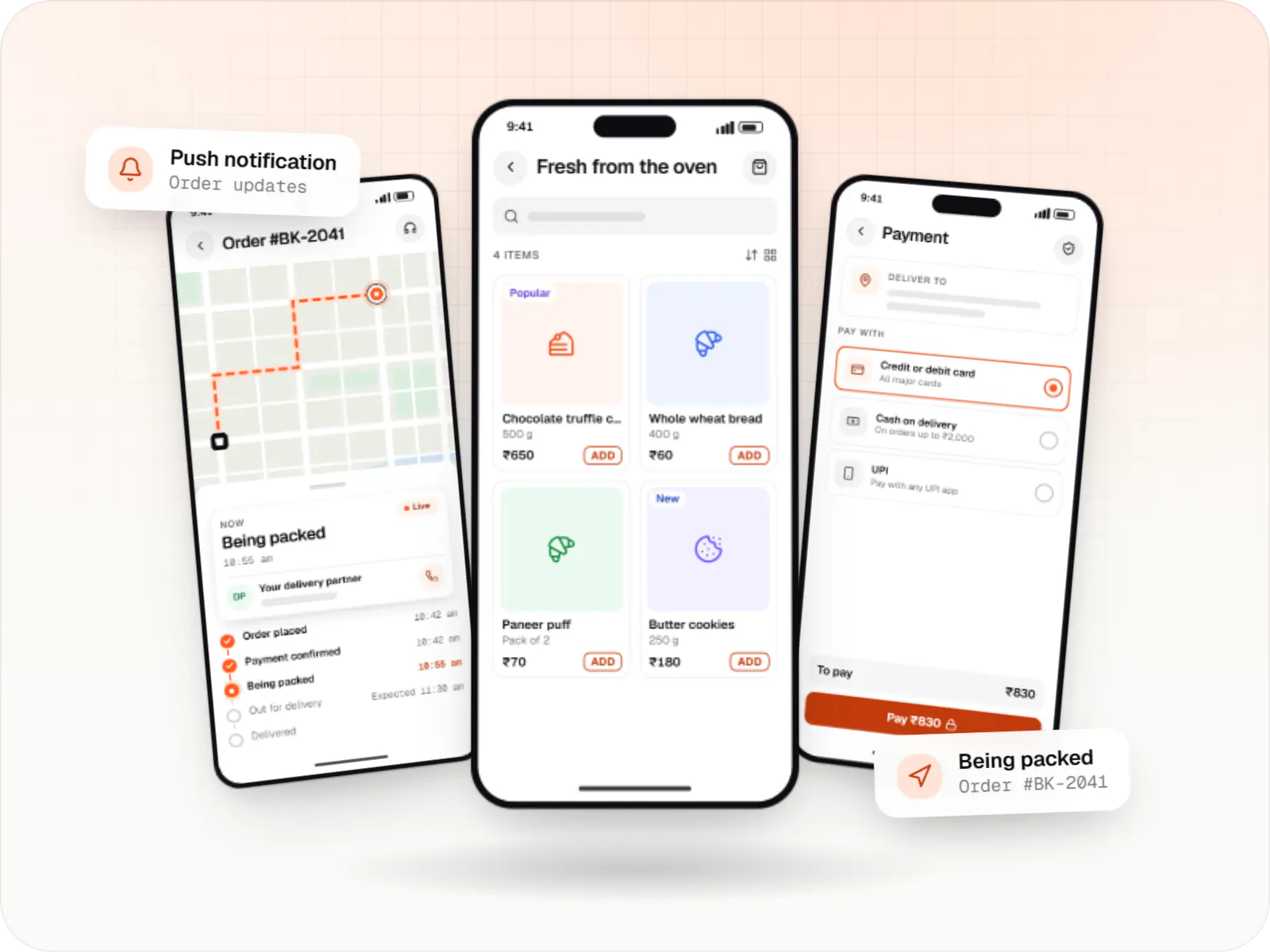
    An illustrative platform for neighbourhood grocery stores: slot or express delivery, store picking, batched delivery runs, and payment by UPI or cash on delivery.

    • Retail
    • Mobile + web platform

    Runs on

    • Android
    • iOS
    • Cross-platform
    • Admin

    Built with

    • Flutter
    • NestJS
    • PostgreSQL
    • Redis
    • AWS
    • +1 more

FAQ

Frequently asked questions

How do you handle loose items billed by weight?

The customer orders an approximate quantity and the app states that the final amount may vary within a set range. When the picker weighs the item, the picking app recalculates the price and the customer sees the adjusted bill before delivery. For prepaid orders, the difference is either charged against a slightly higher authorised amount or refunded automatically, depending on what your payment gateway supports.

Can one platform run dark stores in Delhi, Noida and Gurgaon?

Yes. Each store gets its own stock, slots, delivery area and GST registration. When an order comes in, the platform assigns the fulfilling store by location and stock, and the invoice is issued under that store’s GSTIN. Delhi, Uttar Pradesh and Haryana are separate states for GST, so your accountant should confirm registrations; the software applies whatever structure you set up.

Should we run our own delivery fleet or use a logistics partner?

Many grocery businesses use a mix. An in-house delivery partner app gives you control over batching, timing and customer experience in your core localities. For overflow or distant pin codes, handing orders to a hyperlocal logistics provider through its API is quicker to set up but gives you less control. Our dispatch logic can support both, so you can shift the balance as volumes change.

How quickly can prices change when mandi rates move?

Your team can update prices in bulk from a spreadsheet or the admin panel each morning, and changes reach the app as soon as they are published. We can also set rules, such as a margin over a purchase price you enter, so staff update one number per item instead of recalculating by hand. Every price change is logged with who made it and when.

Next step

Starting or rebuilding a grocery app in Delhi NCR?

Tell us about your stores, catalogue and delivery model. We will visit, scope a pilot and share a line-item estimate.