
Web
React
Builds interactive screens in the browser, such as dashboards, admin panels and portals, that respond instantly as your team works.
Used for
- Web apps
- Admin panels
- Dashboards
- Customer portals
Industries · Cloud kitchens
Run several delivery brands from one kitchen without losing track of tickets, stock or margins.
At a glance
What it is
Kitchen operations software for delivery-only brands: multi-brand order intake, kitchen display, prep tracking, recipe costing and outlet analytics.
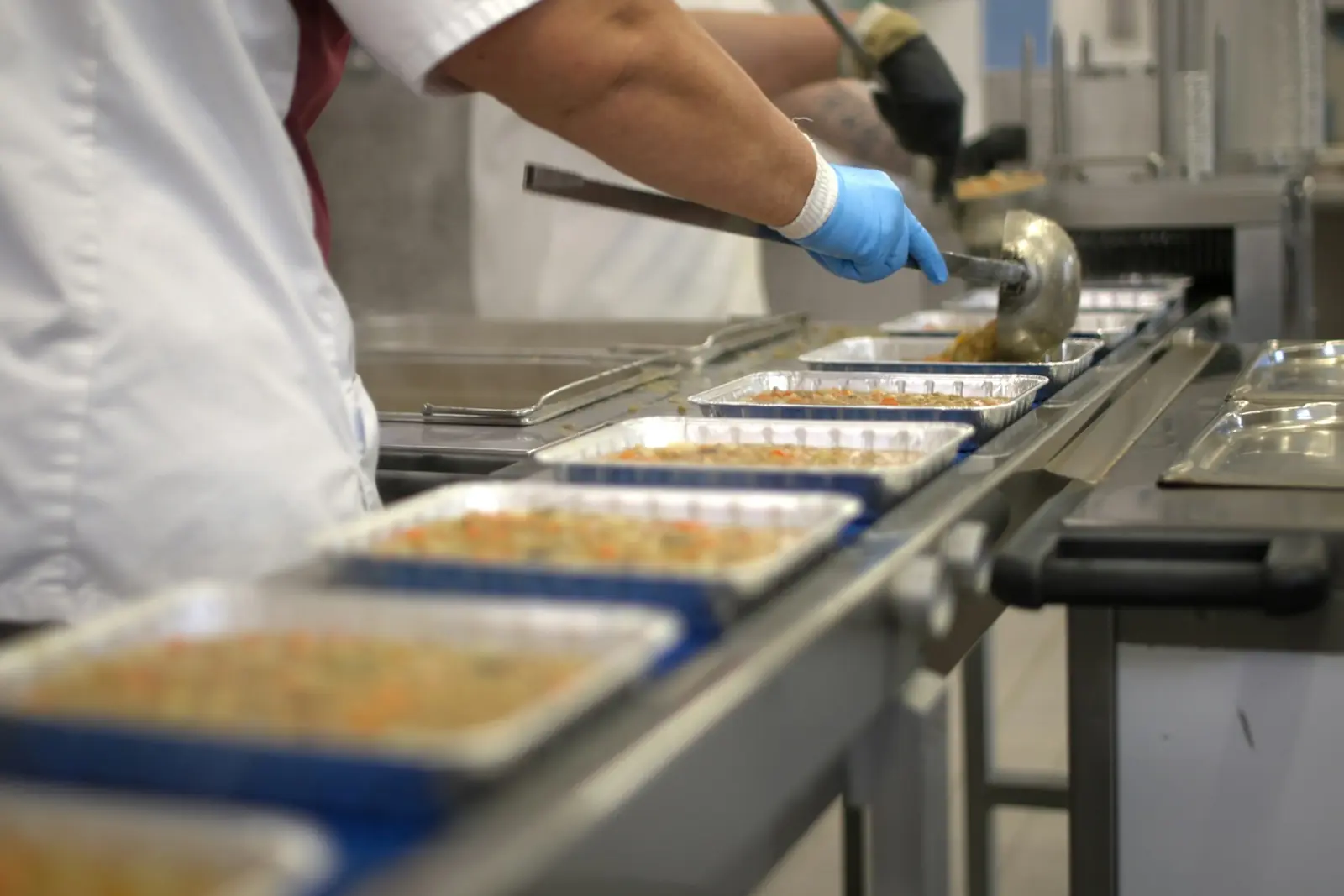
For cloud kitchen operators running one or several virtual brands from shared kitchens, and hosts leasing kitchen space to brands.
How to start
Tell us what you need in your own words. You talk to the developers who would build it and get a written, line-item estimate.
Get a project estimateA cloud kitchen may run four or five virtual brands from the same line, each with its own menu and aggregator listings. Speed decides ratings, and ratings decide visibility, so the kitchen needs clear tickets, realistic prep times and warnings before orders run late.
We build cloud kitchen software that consolidates orders by station rather than by brand, tracks prep and handover times, links recipes to shared ingredient stock and reports margin per brand after commissions and packaging.
Challenges
Tickets from different brands compete for the same stations and chefs.
Late or incorrect orders quickly hurt listing visibility.
Stock used across brands makes per-brand costing difficult.
Most orders arrive through platforms that own the customer relationship.
Solutions
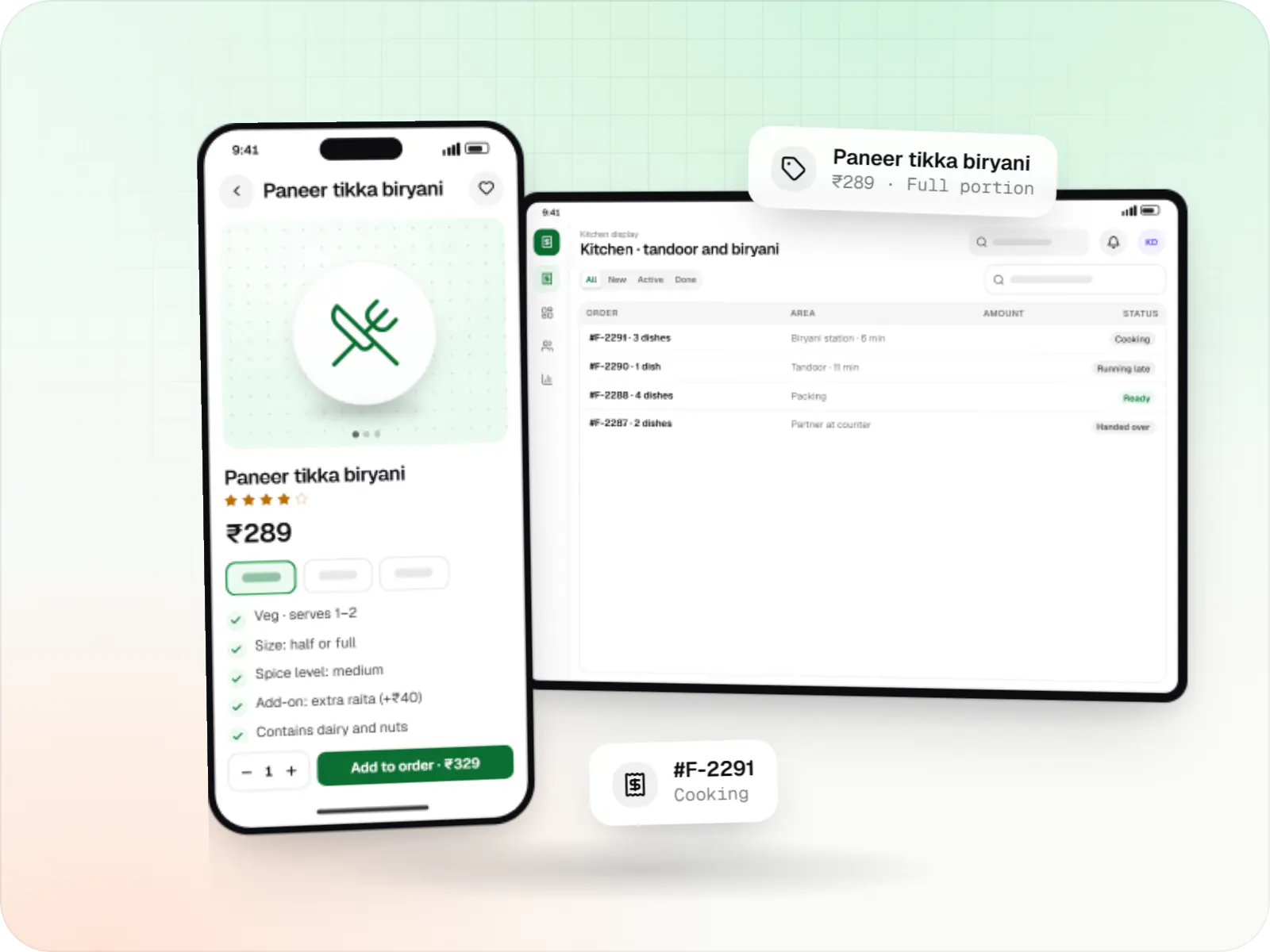
Food ordering and delivery apps for restaurants, chains and cloud kitchens, with menus and add-ons, kitchen displays, prep-time ETAs and delivery tracking.
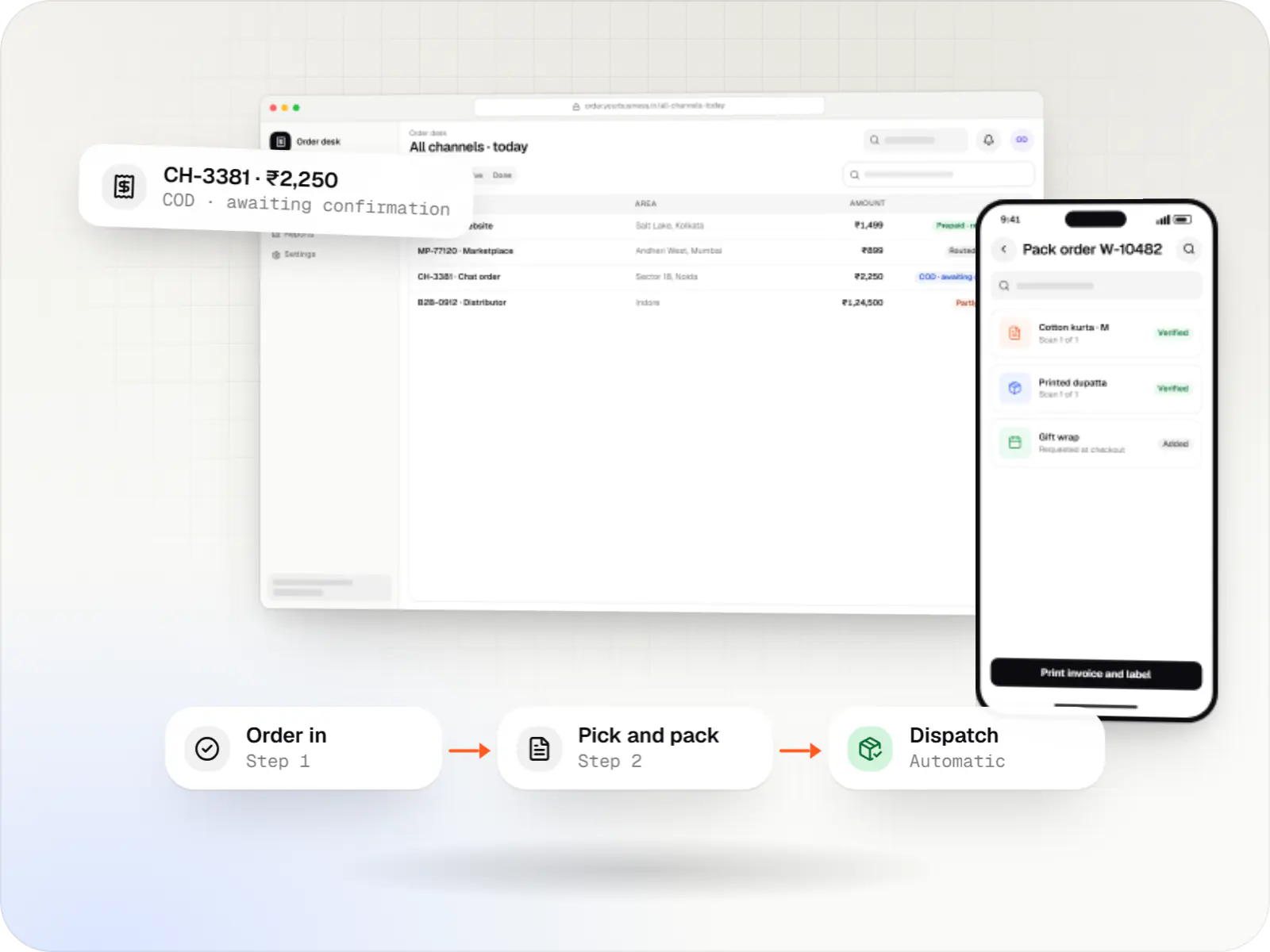
A central order management system that collects orders from every channel, routes them to the right location and tracks them to delivery and payment.
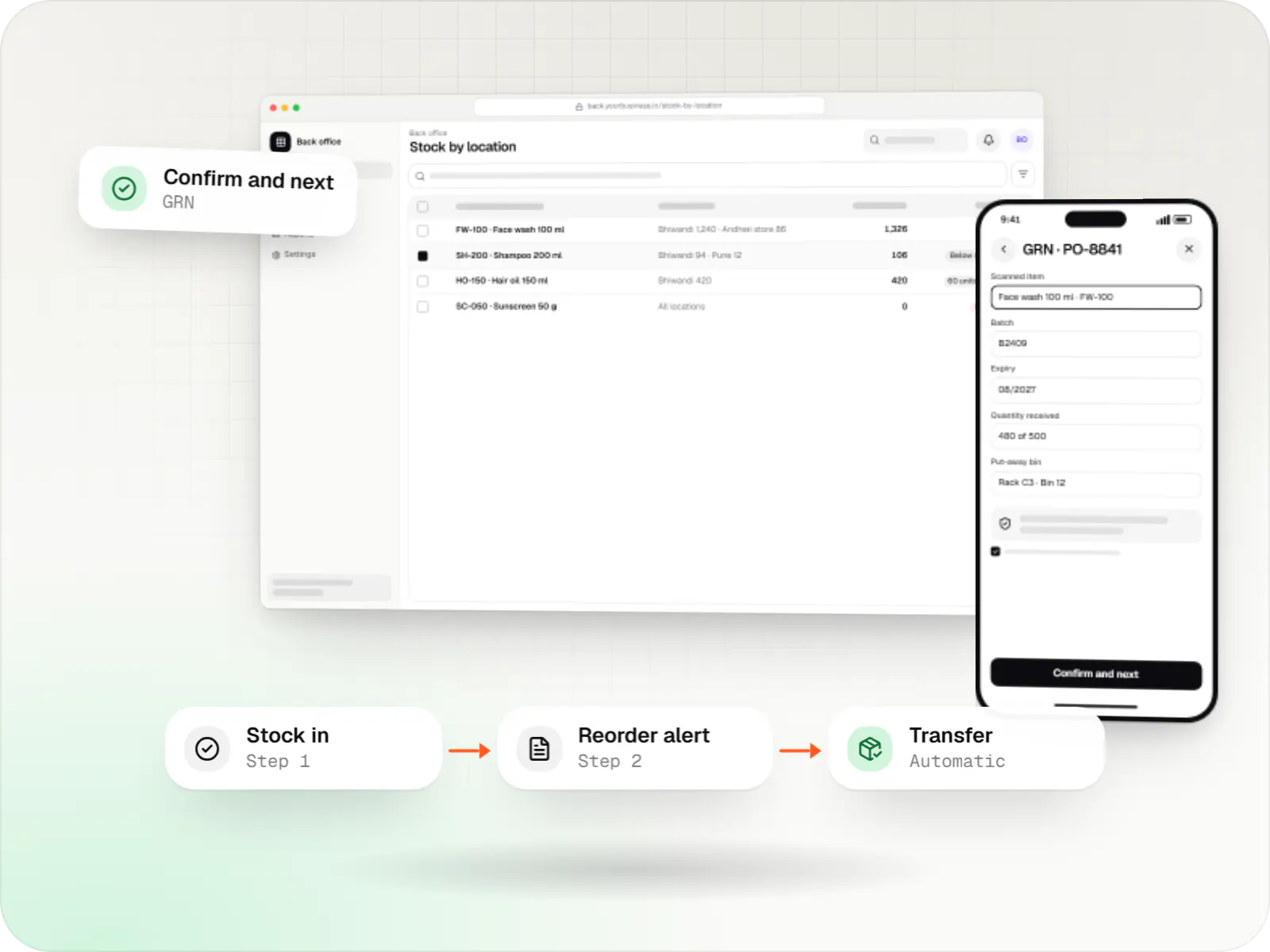
Custom inventory software for multi-location stock, batch and expiry tracking, barcode scanning and marketplace stock sync.
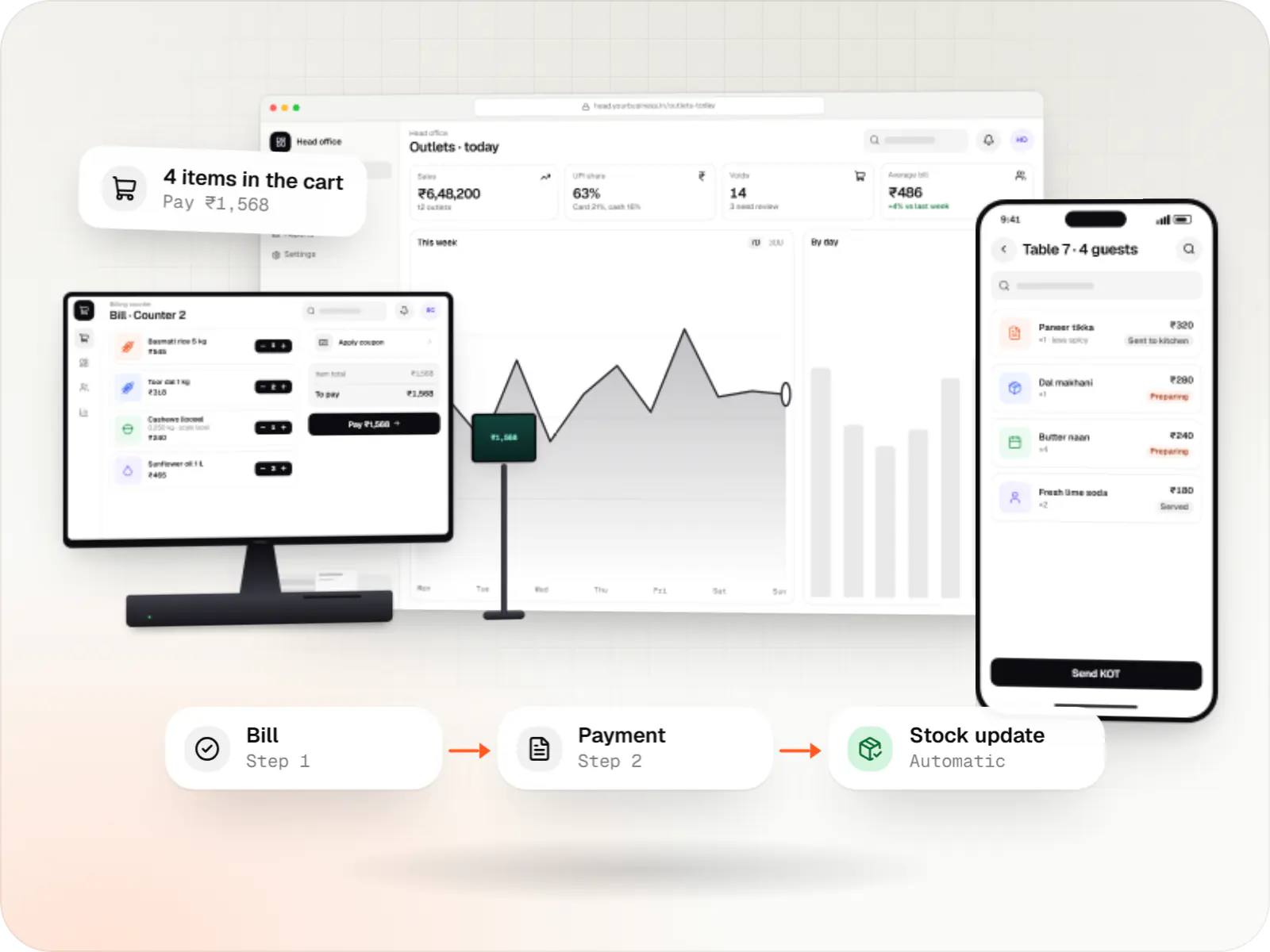
Custom point-of-sale software with offline billing, UPI QR payments, GST invoices, hardware integration and central control for multiple outlets.
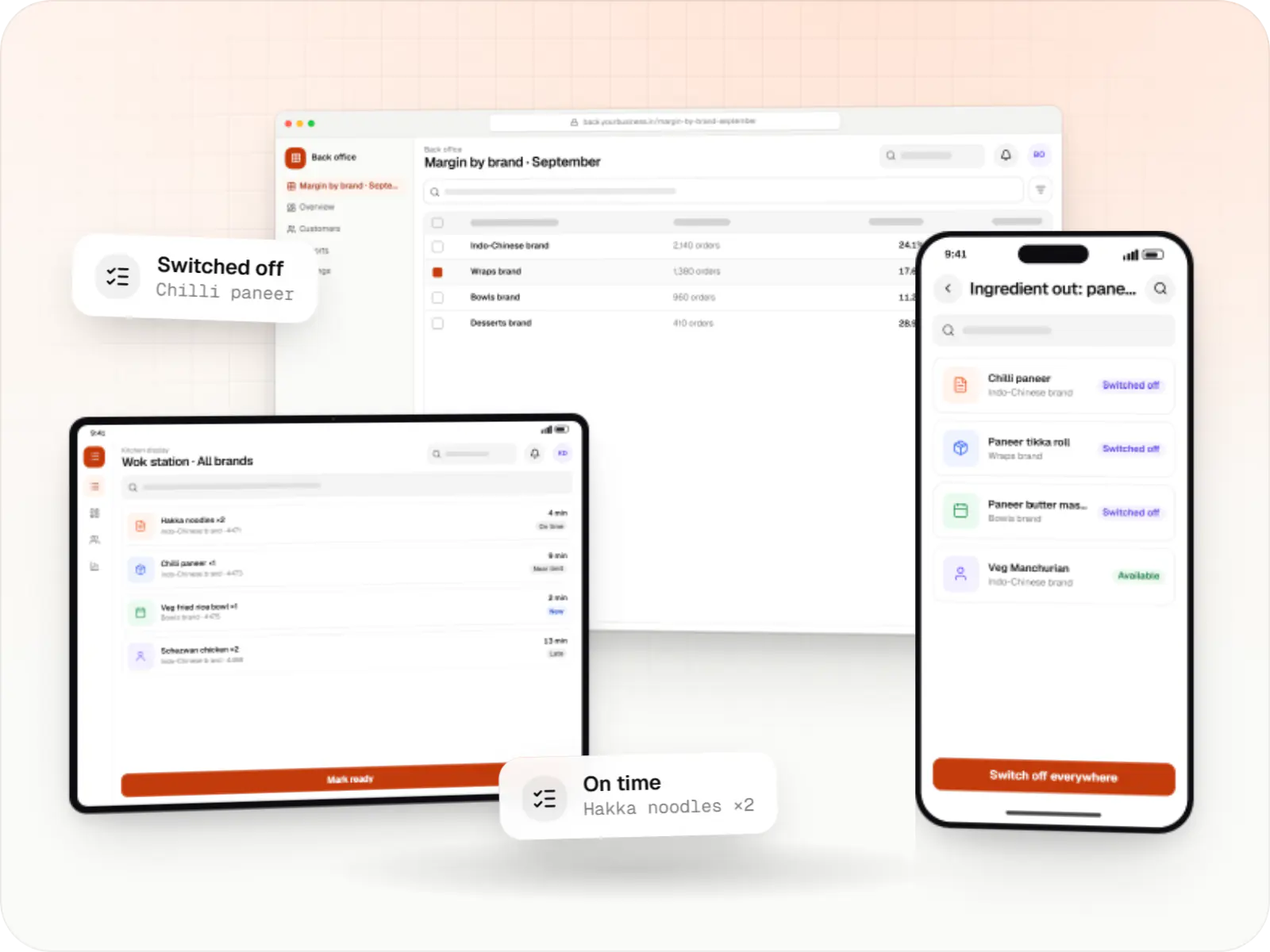
Items routed by station across brands, with prep timers and delay alerts.
Time from order to ready to rider pickup, logged per item and shift.
Ingredient-level recipes with margin per brand after commissions.
Switch an item off across every brand when an ingredient runs out.
Peak hours, slow items and delay causes by kitchen location.
How it works
Orders are grouped by station, not by brand, so one line can cook for every menu.
Platform orders come in through your POS or an integration partner, alongside any direct orders.
A biryani from one brand and a wrap from another land on the stations that actually cook them.
Each item has a target time, tickets change colour as they near it, and managers are alerted when several run late.
A label printer marks each bag with brand, order number and items for a clean handover.
The handover time is logged, which shows whether a delay came from the kitchen or the pickup.
Recipe cost, packaging, commission and discounts are applied to every order and grouped by brand.
Platforms
Browser-based applications with logins, roles and workflows, such as customer portals, SaaS products and internal tools.
Back-office panels for operations, support and finance teams: orders, users, content, reports and permissions.
Apps for Android phones and tablets, tested on budget and mid-range devices and published on Google Play or privately.
Installable web apps with offline support and notifications, useful when an app-store listing isn't essential or phones have little storage.
Technology
Web
Builds interactive screens in the browser, such as dashboards, admin panels and portals, that respond instantly as your team works.
Used for
Backend
Runs the server side of apps: fast, scalable back ends that power your app, website and integrations.
Used for
Data
A reliable database for the records your business runs on: orders, payments, bookings and stock, kept accurate and easy to report on.
Used for
Data
Keeps frequently used data in fast memory, so apps stay quick on busy days and live features like order tracking feel instant.
Used for
Cloud & DevOps
Ready-made building blocks for mobile apps, such as push notifications, phone OTP login and crash reports, so you launch sooner.
Used for
Plain-English glossary
Product preview
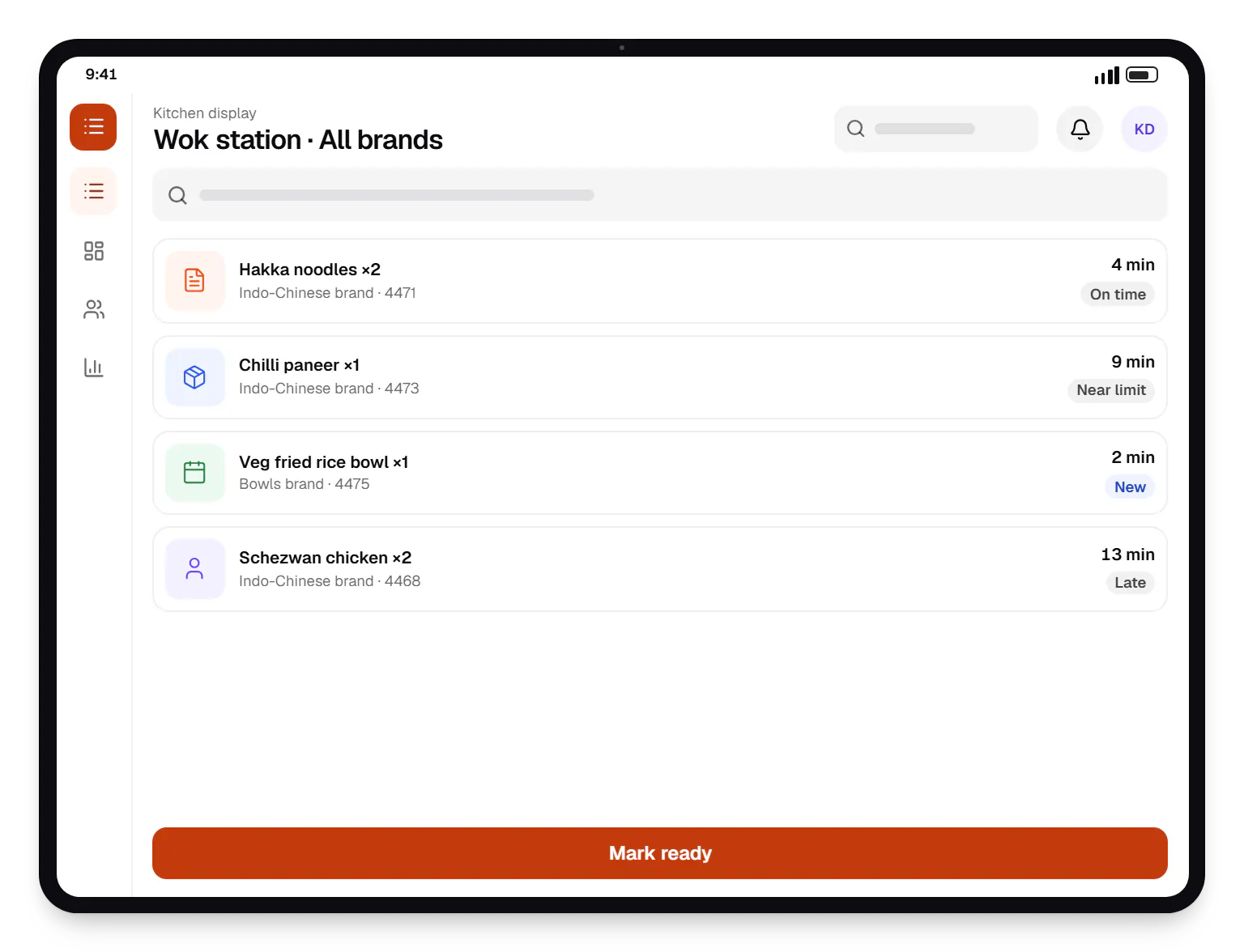
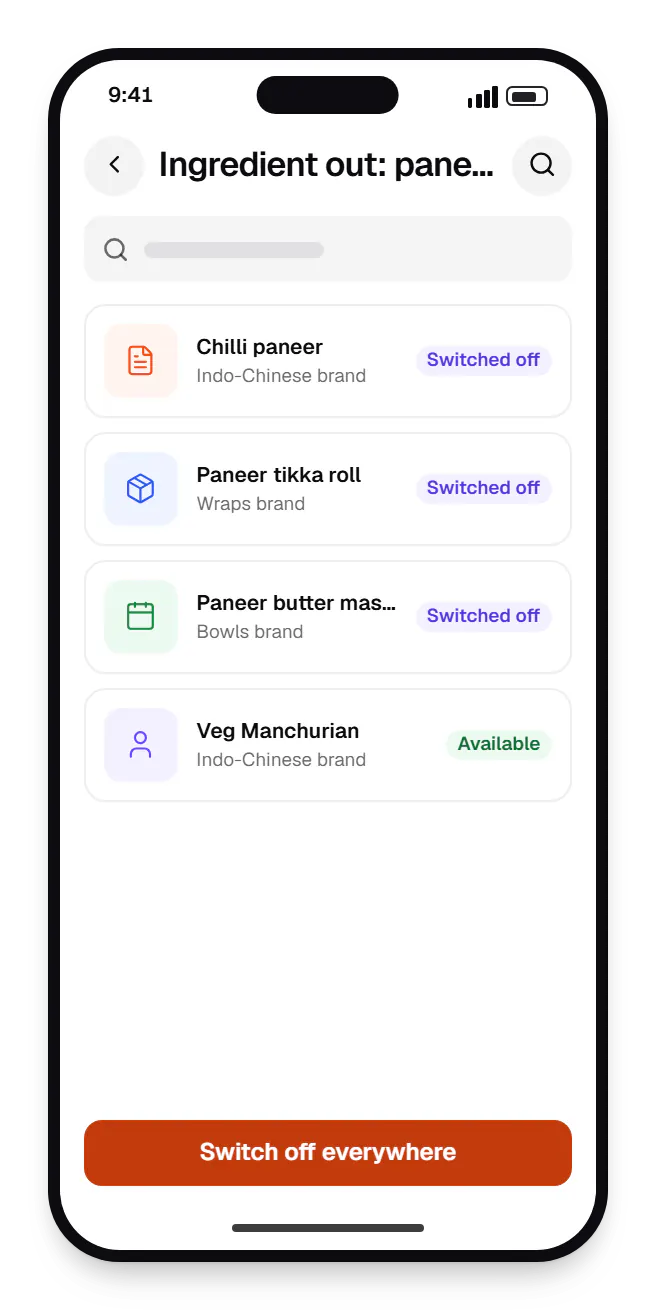
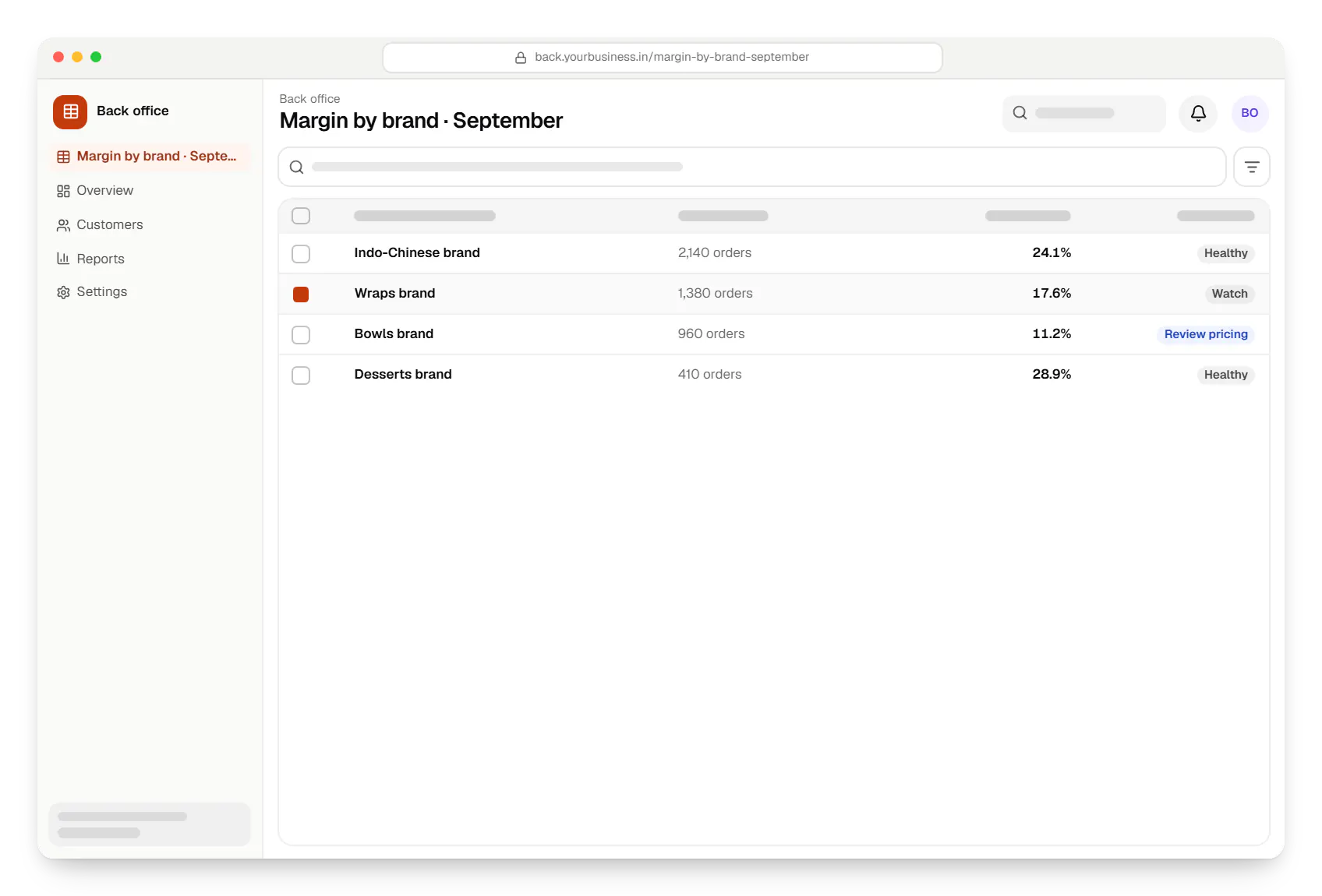
Sample screens: names, prices and figures are examples, not client data.
Cost drivers
Pulling orders through your POS or an integration partner shapes the backend.
Screens, printers and label printers need setup and testing in every kitchen.
Adding your own multi-brand ordering app expands scope considerably.
Estimates are written from your scope, with the effort and assumptions behind each line item.
How pricing worksServices
The design and engineering services our in-house team combines on projects in this sector.
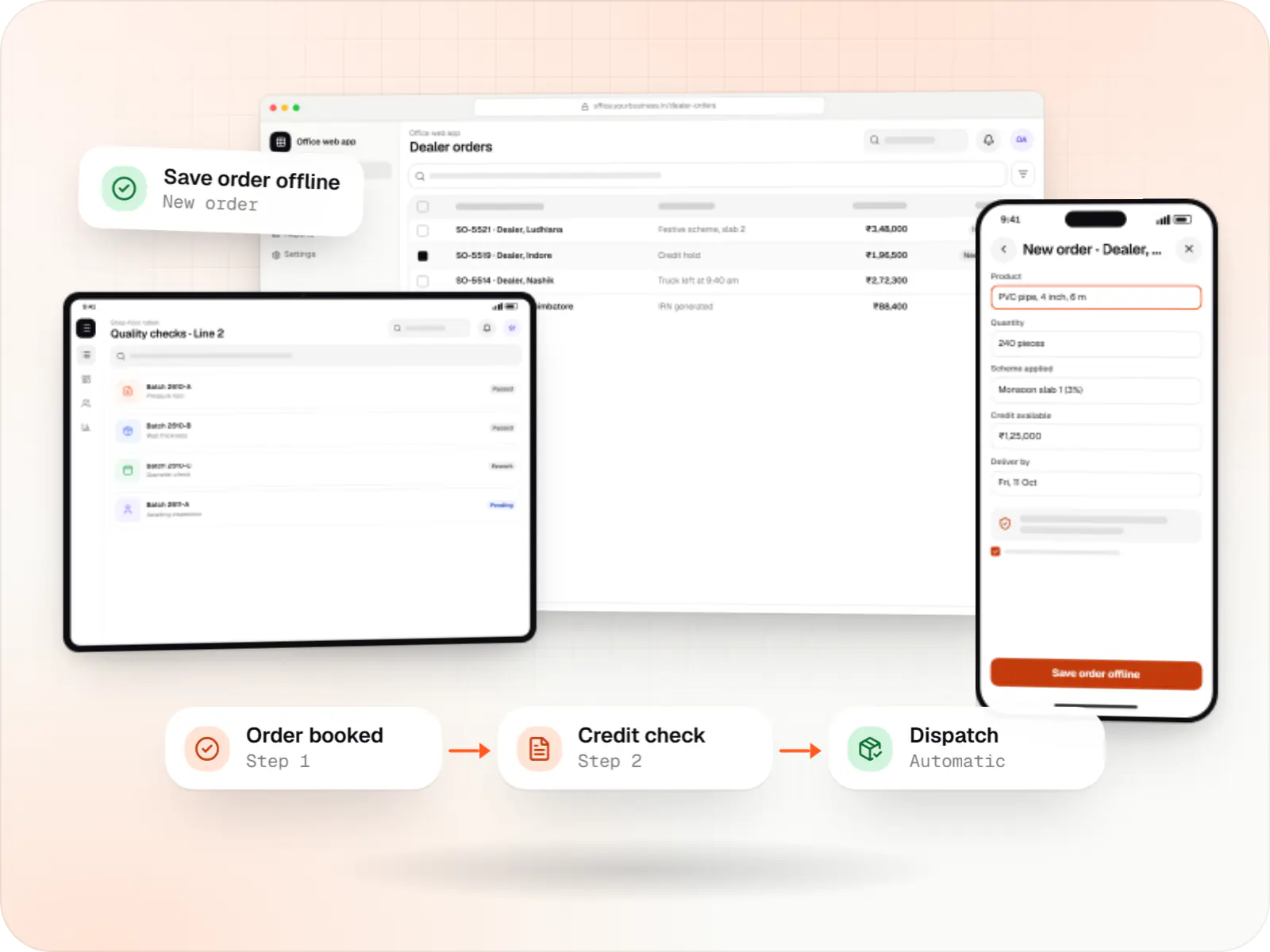
Software shaped around how your business runs, from approvals and inventory to billing and reports, replacing spreadsheets and disconnected tools.
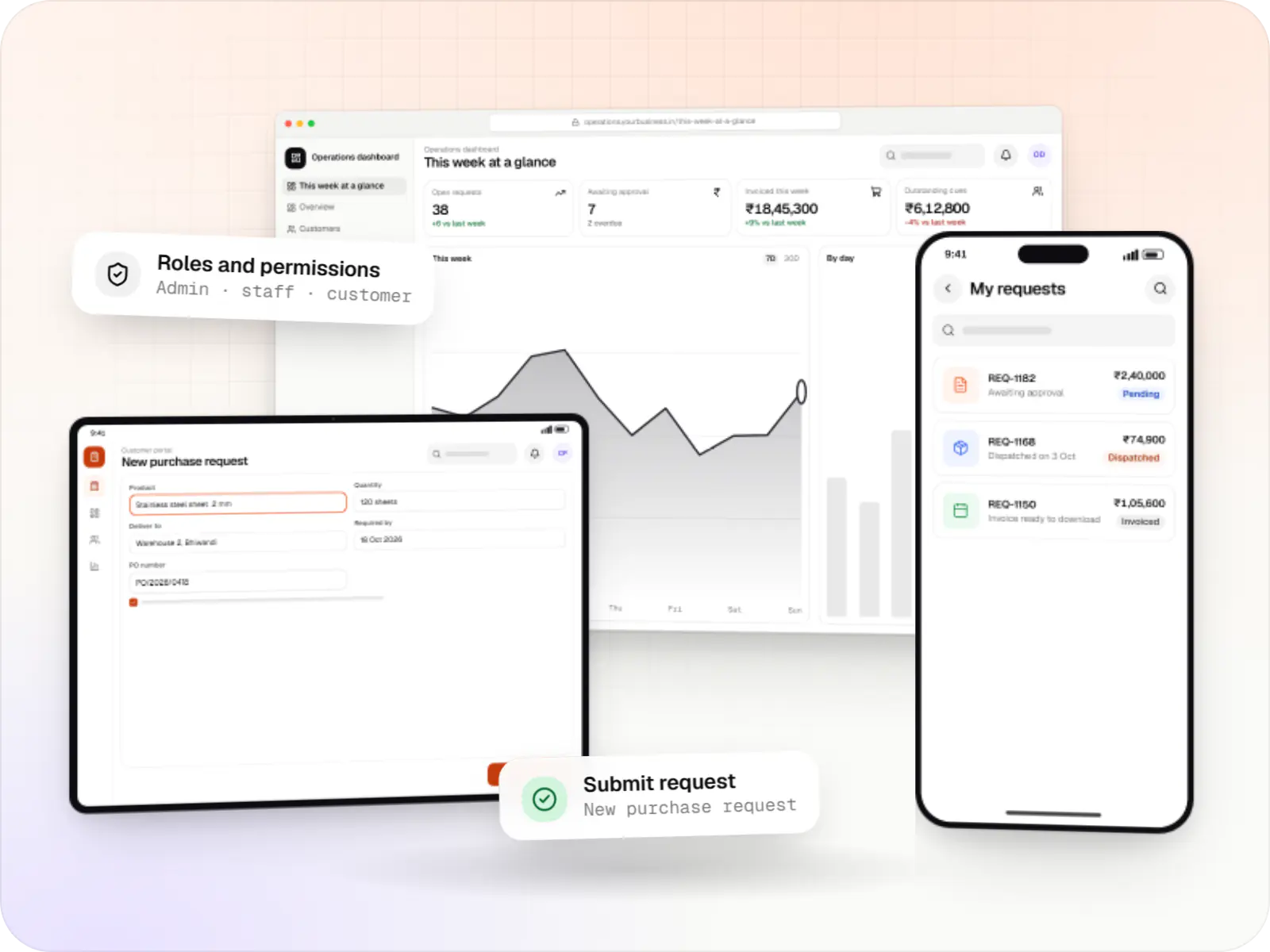
Browser-based products, customer portals, dashboards and internal tools, built on clean data models with secure roles and integrations.
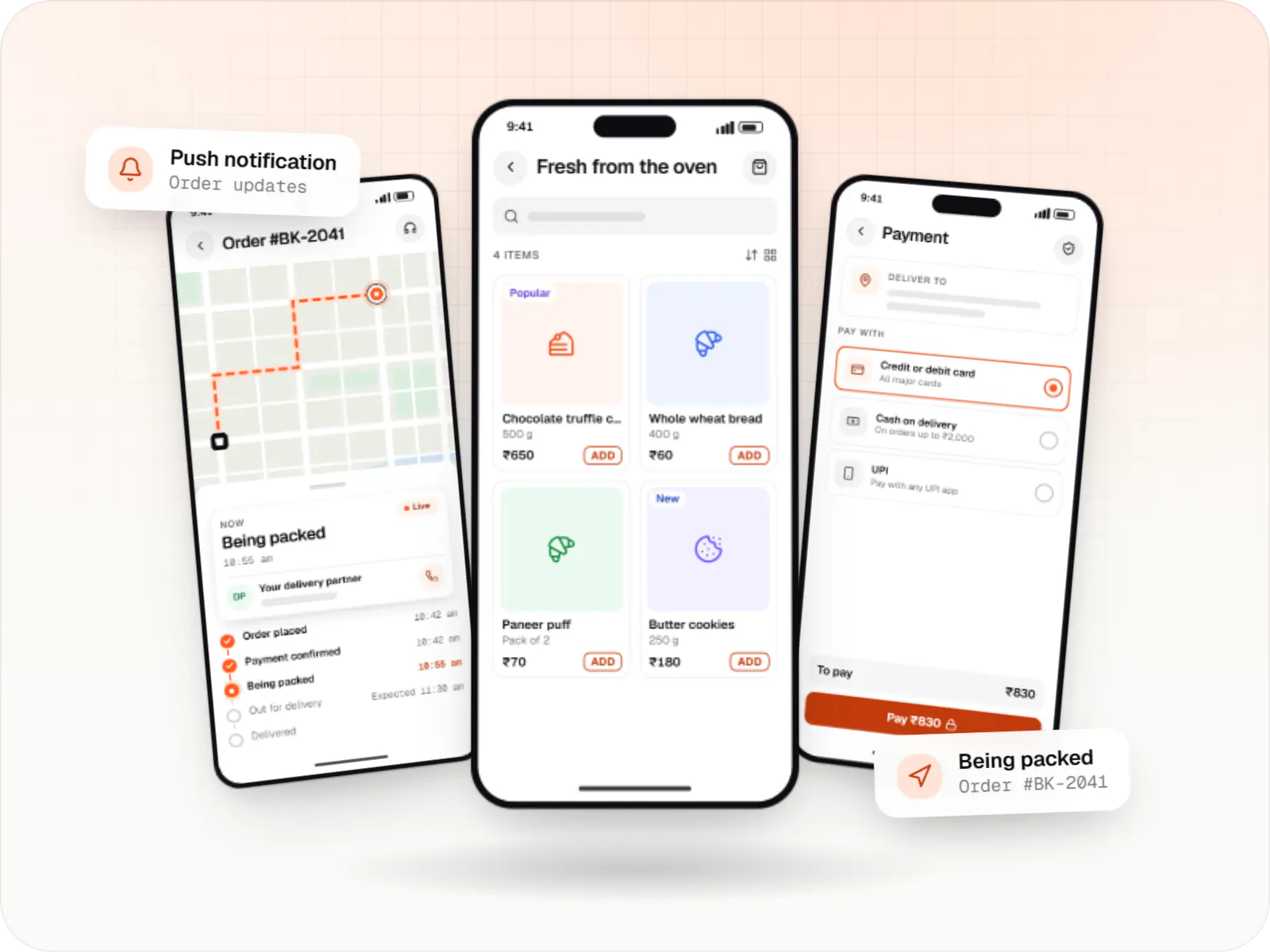
Native and cross-platform Android and iOS apps, from first release through regular store updates, built by our in-house designers and engineers.
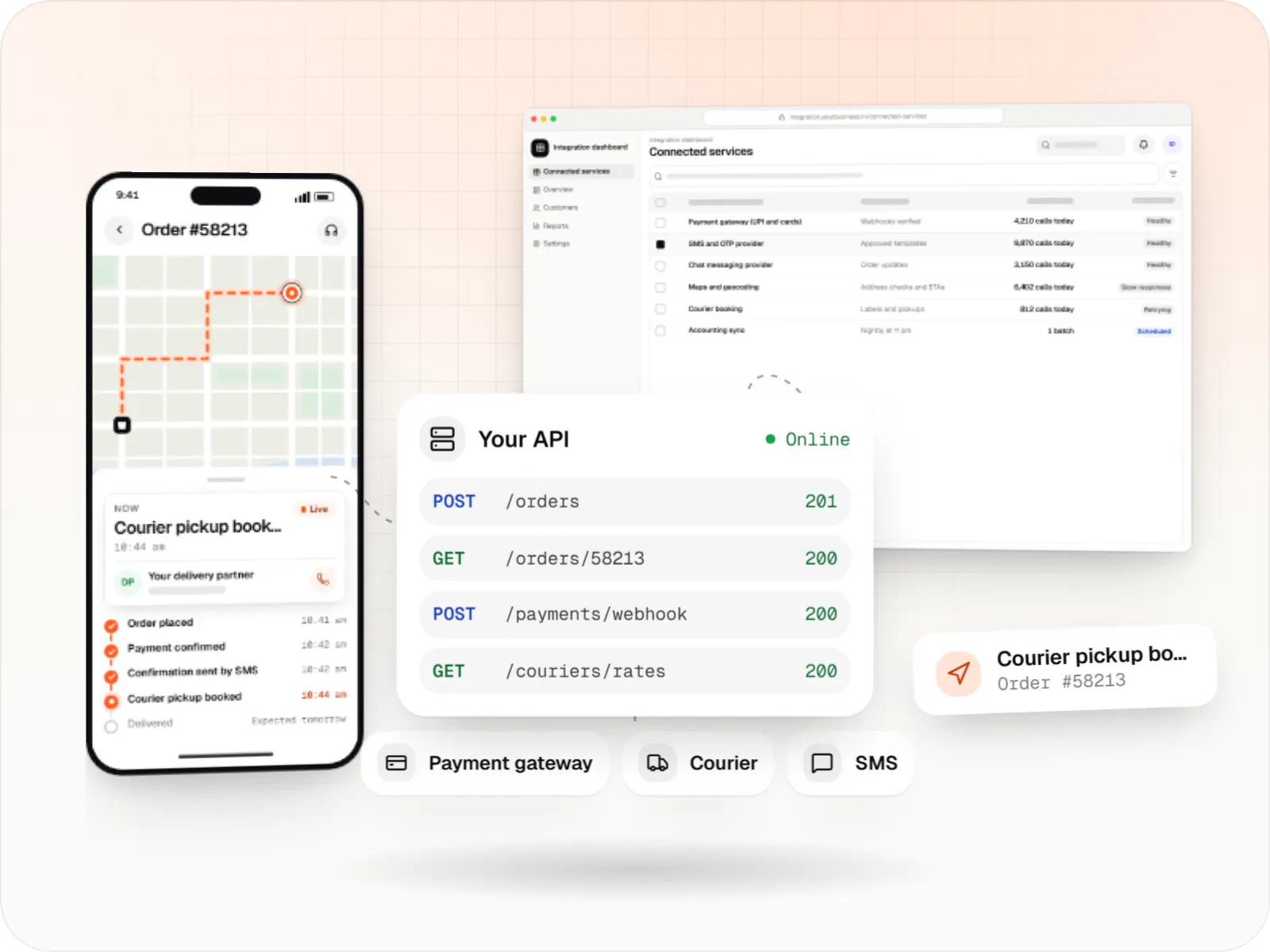
Secure, documented REST and GraphQL APIs, plus integrations that connect your apps to payment, logistics, GST, messaging and business systems.
FAQ
Yes. A multi-brand ordering app or website can present each brand separately while letting customers combine items from brands cooked in the same kitchen into one order and one delivery. That combined basket is a practical reason to invest in direct ordering. The kitchen still sees items by station, and delivery can use your own riders or a hyperlocal delivery partner through an API.
Each menu item has a recipe with ingredient quantities, and each ingredient has a current cost from purchase entries. Every sale therefore carries a theoretical food cost, plus packaging and the platform commission and discounts for that order. Grouping by brand gives contribution margin per brand and per item, and regular stock counts reveal the gap between theoretical and actual usage.
Yes. Each item has a target prep time, and the kitchen display tracks elapsed time against it, changing colour as tickets approach their limit. Managers can see which station is holding orders back, and alerts fire when several tickets are delayed at once. Over time, the recorded times help you set realistic prep estimates on each platform instead of optimistic defaults.
Next step
Share your brands, locations and order sources. We'll outline a kitchen system that fits.