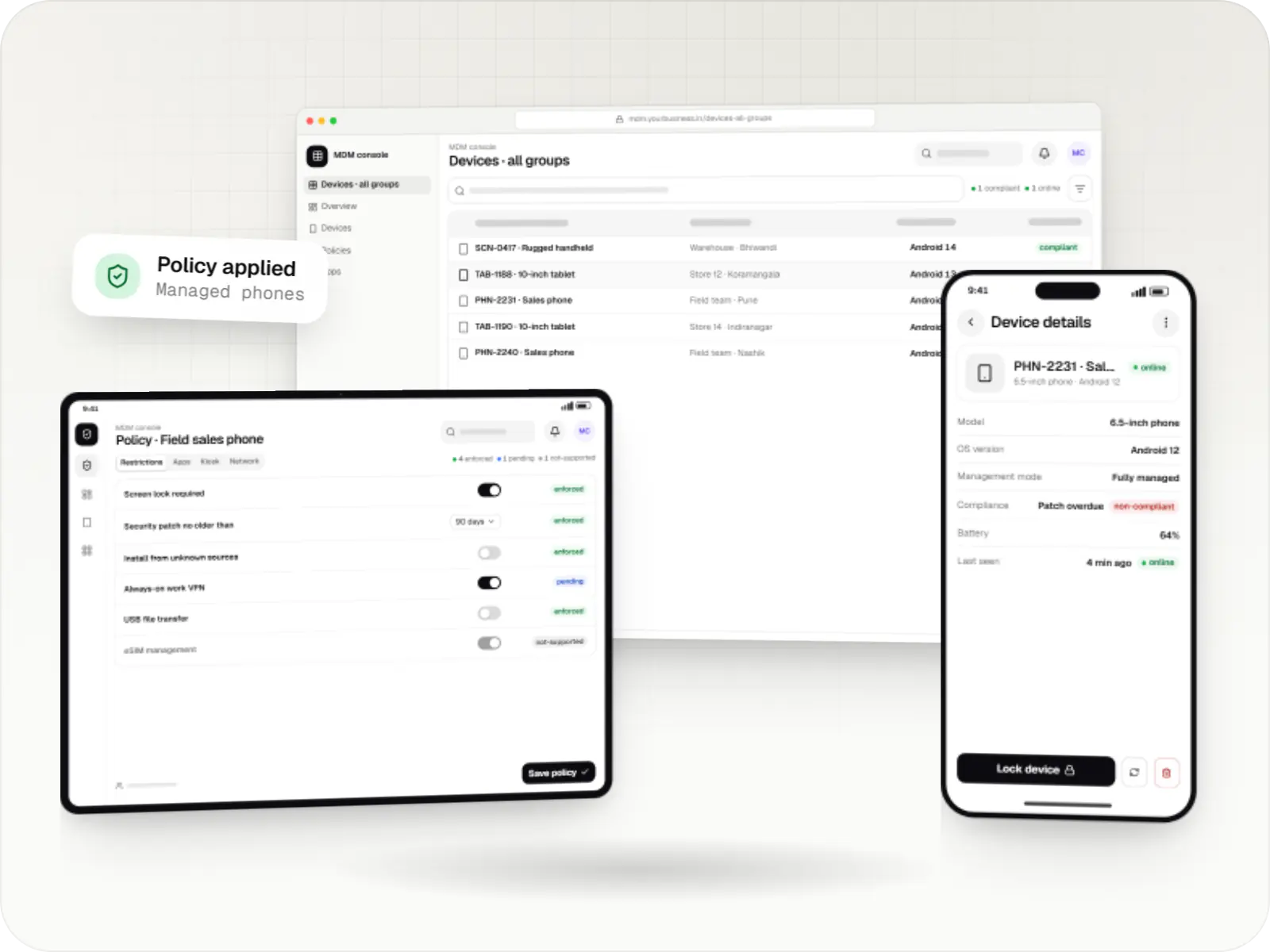
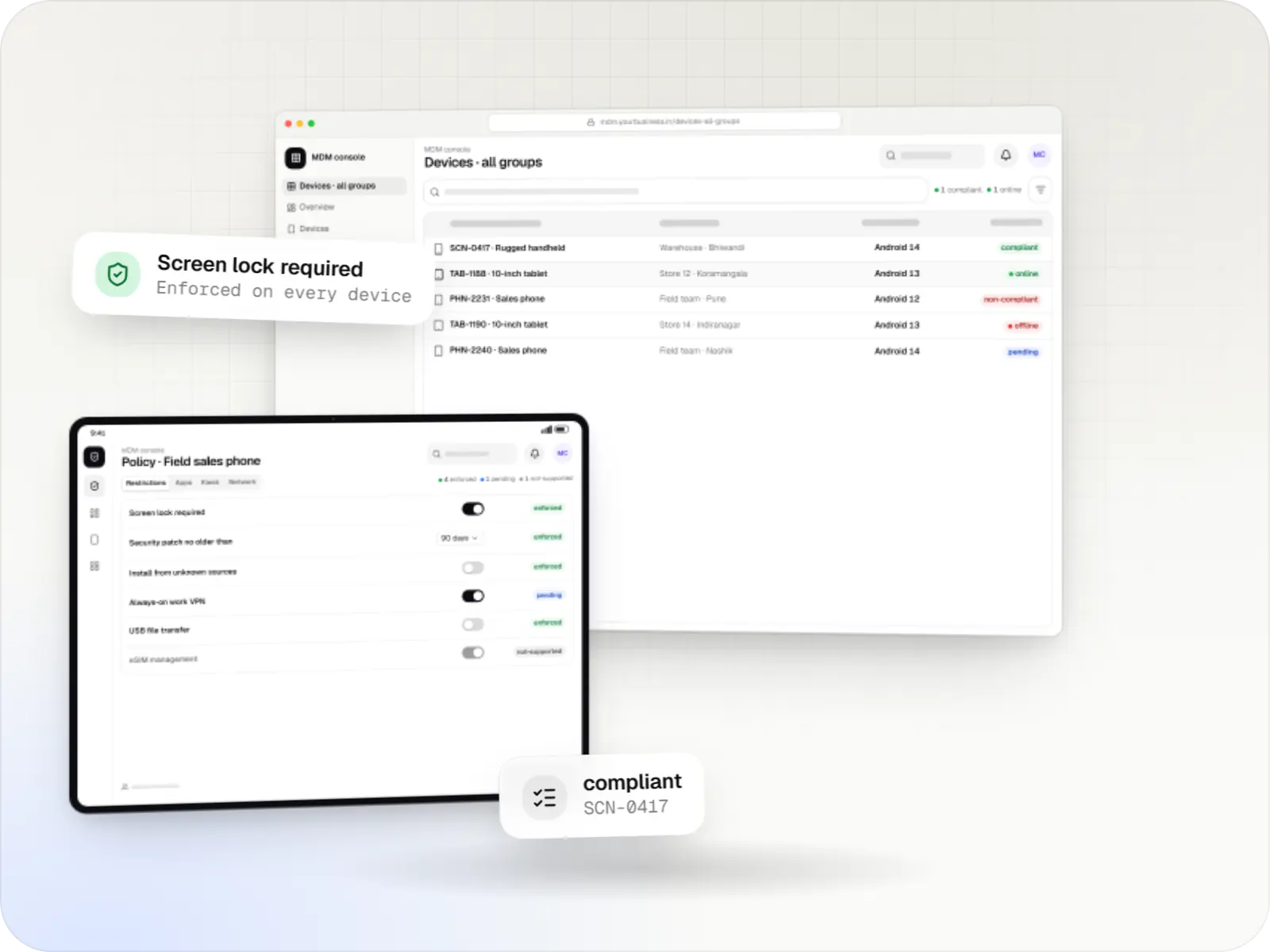
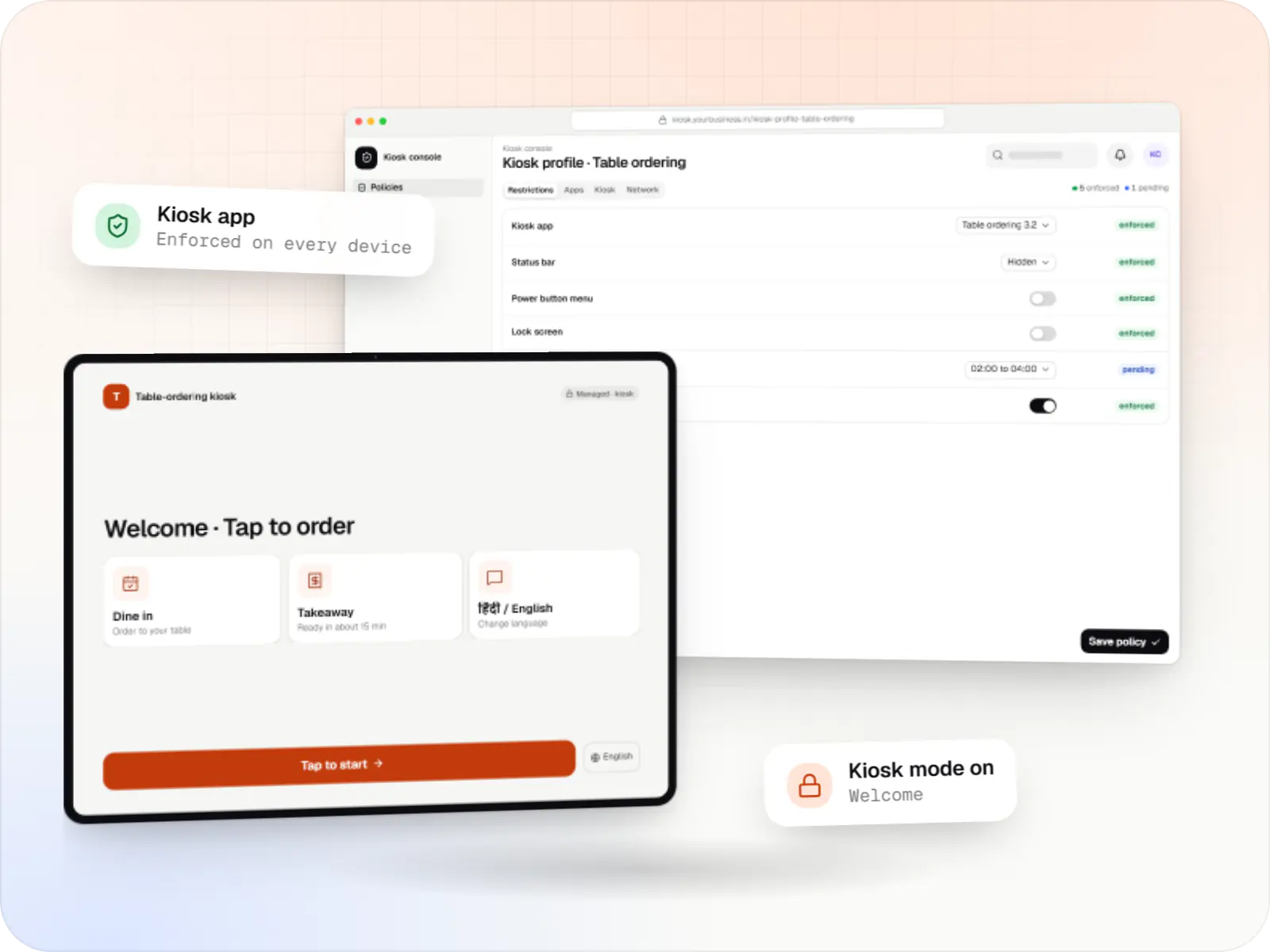
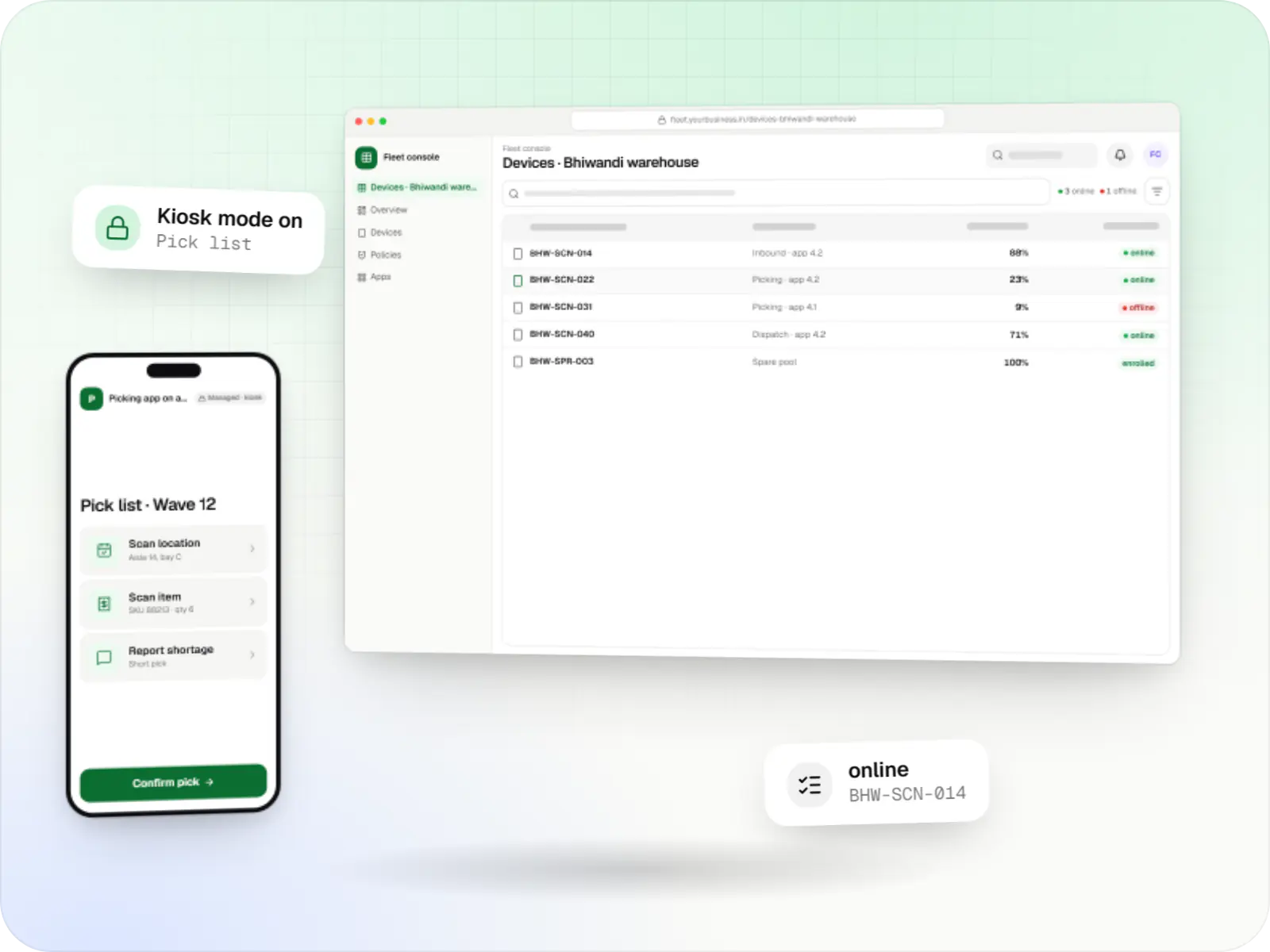
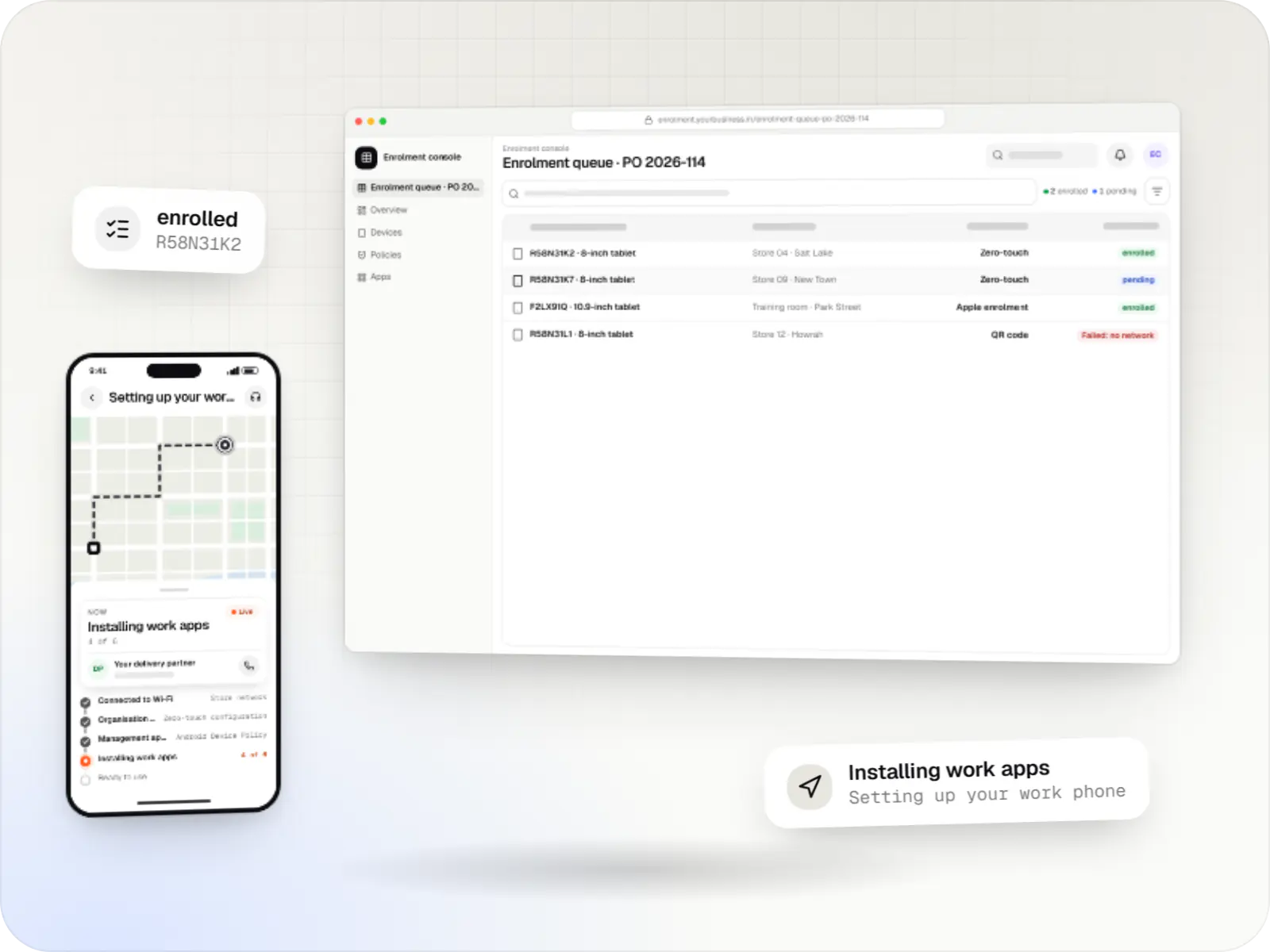
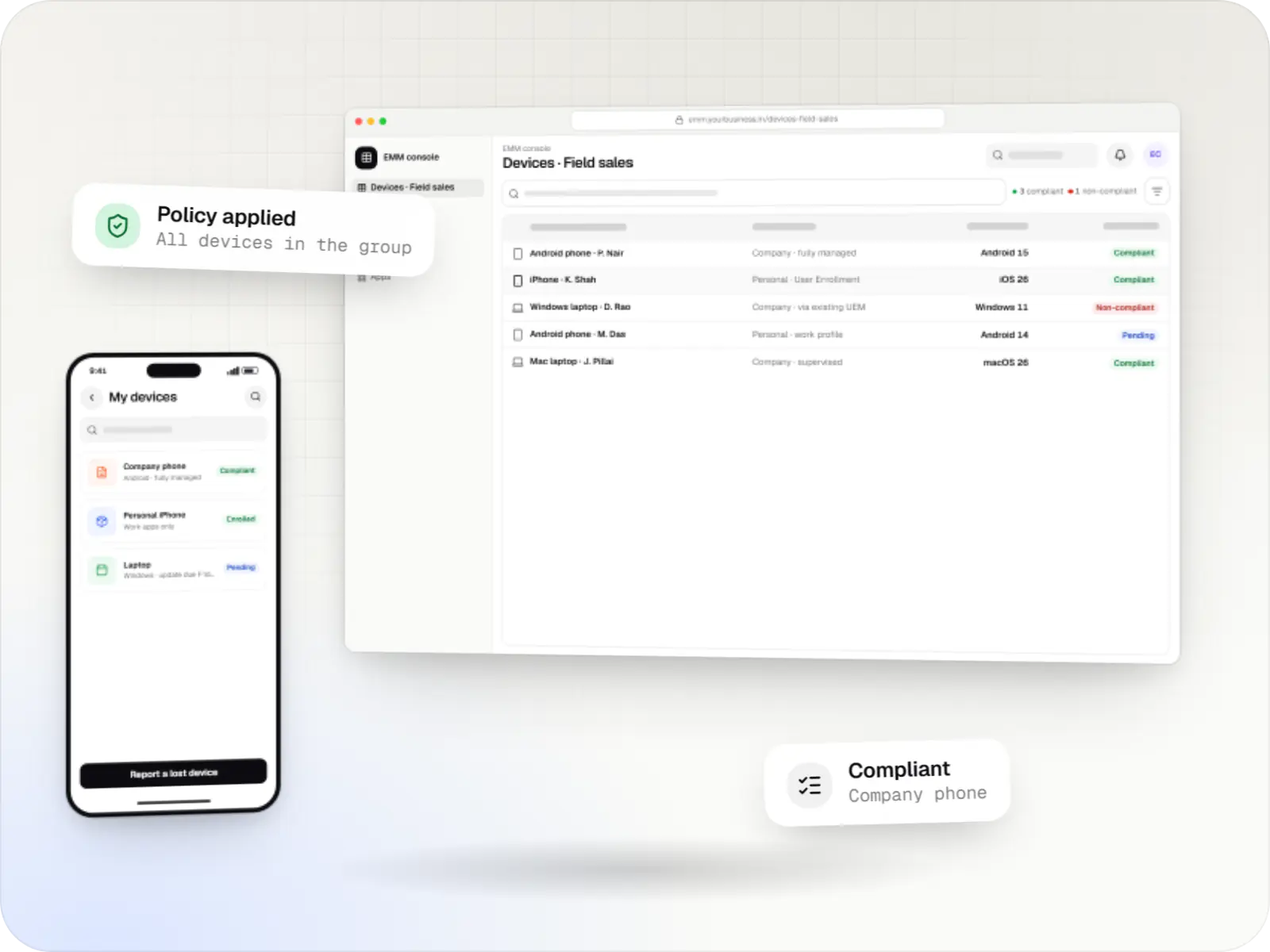
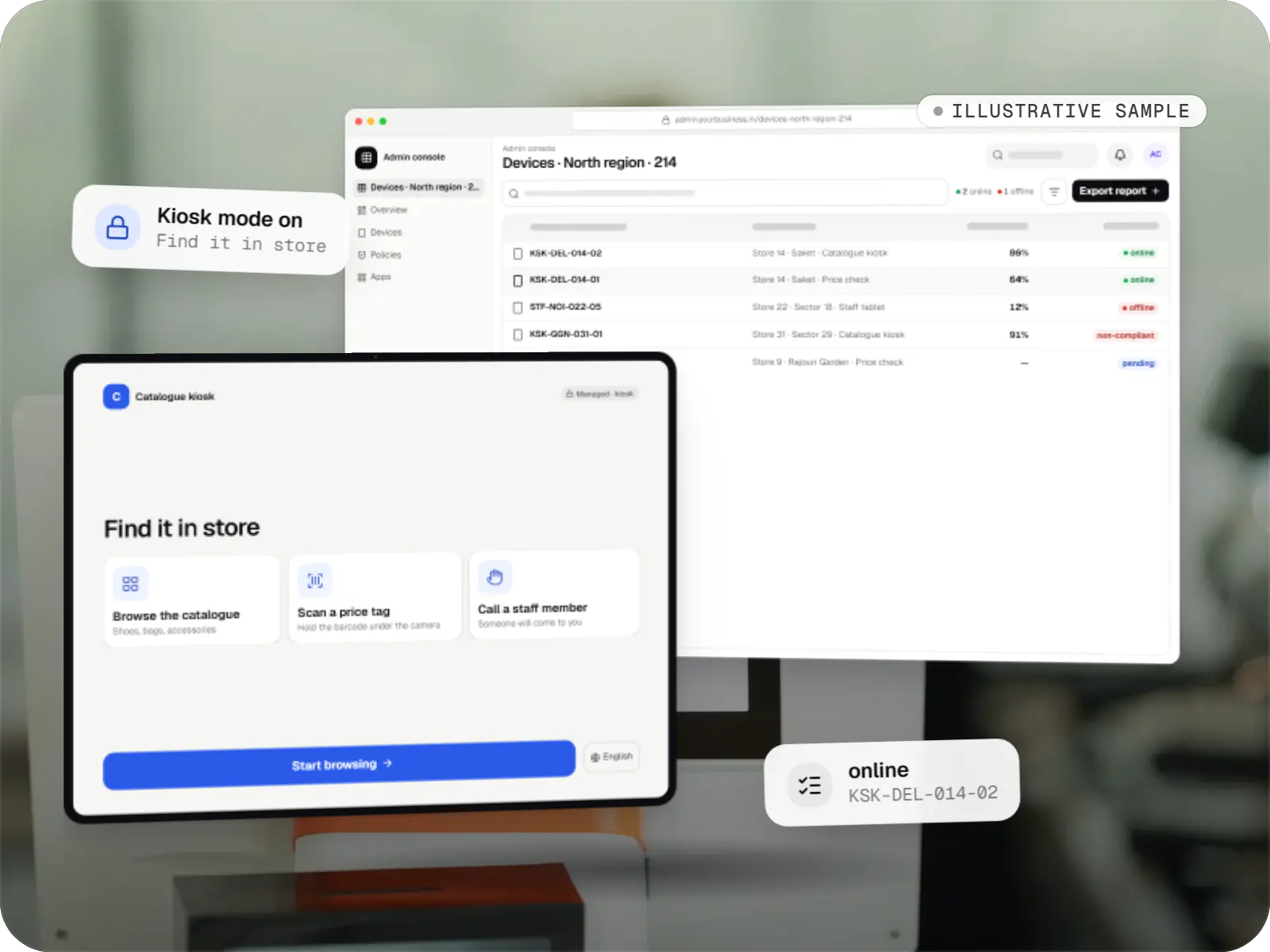
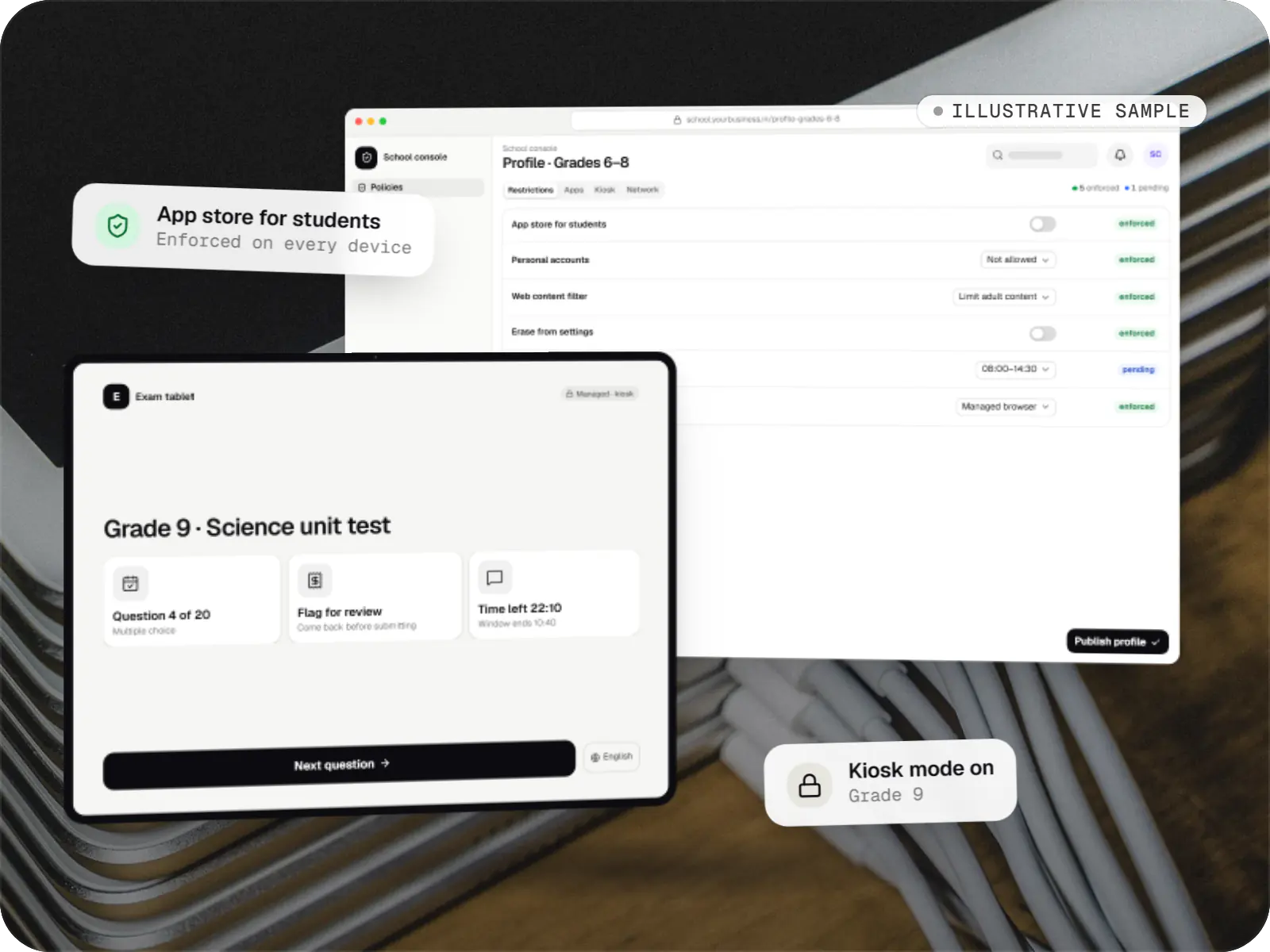
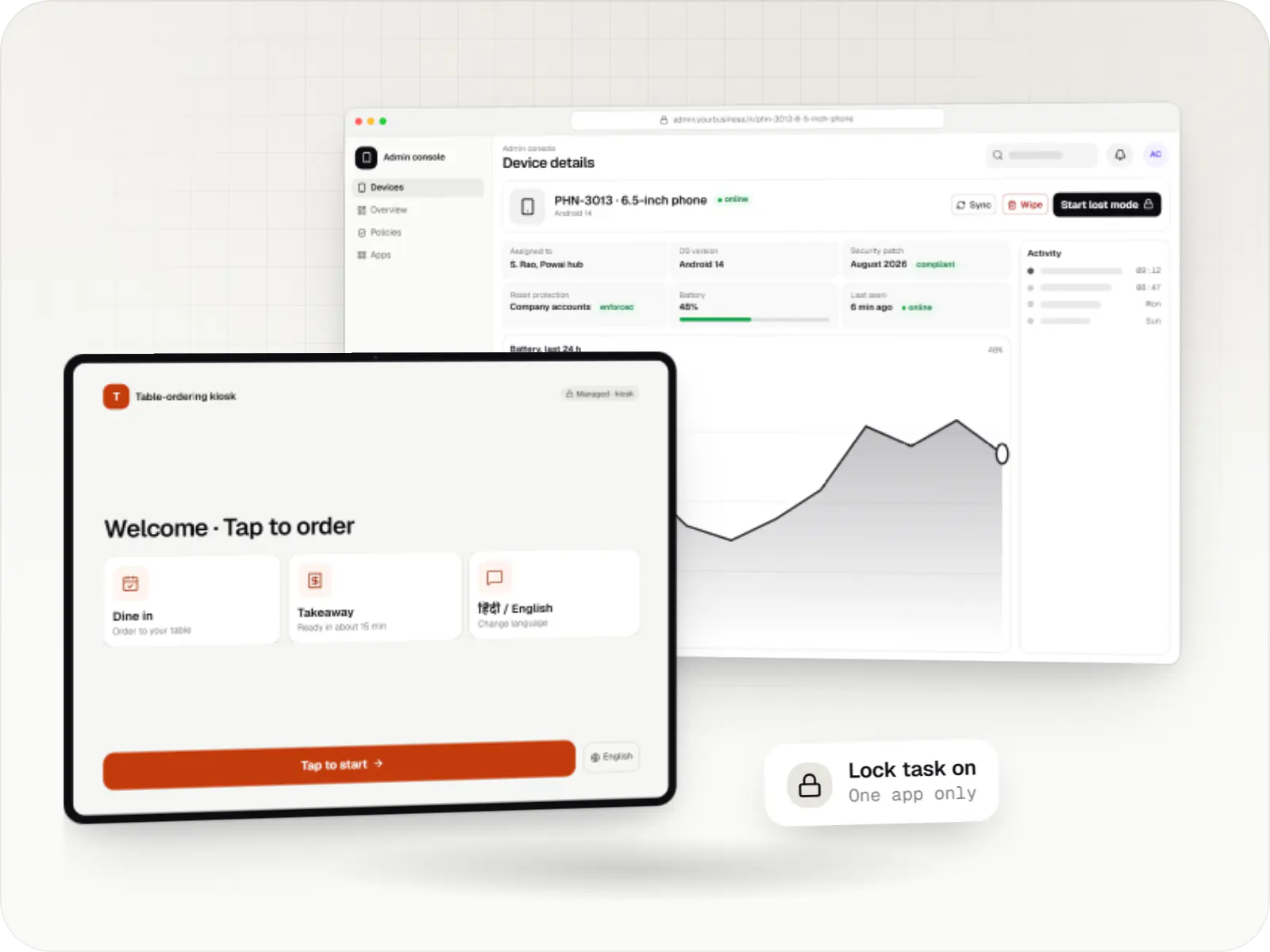
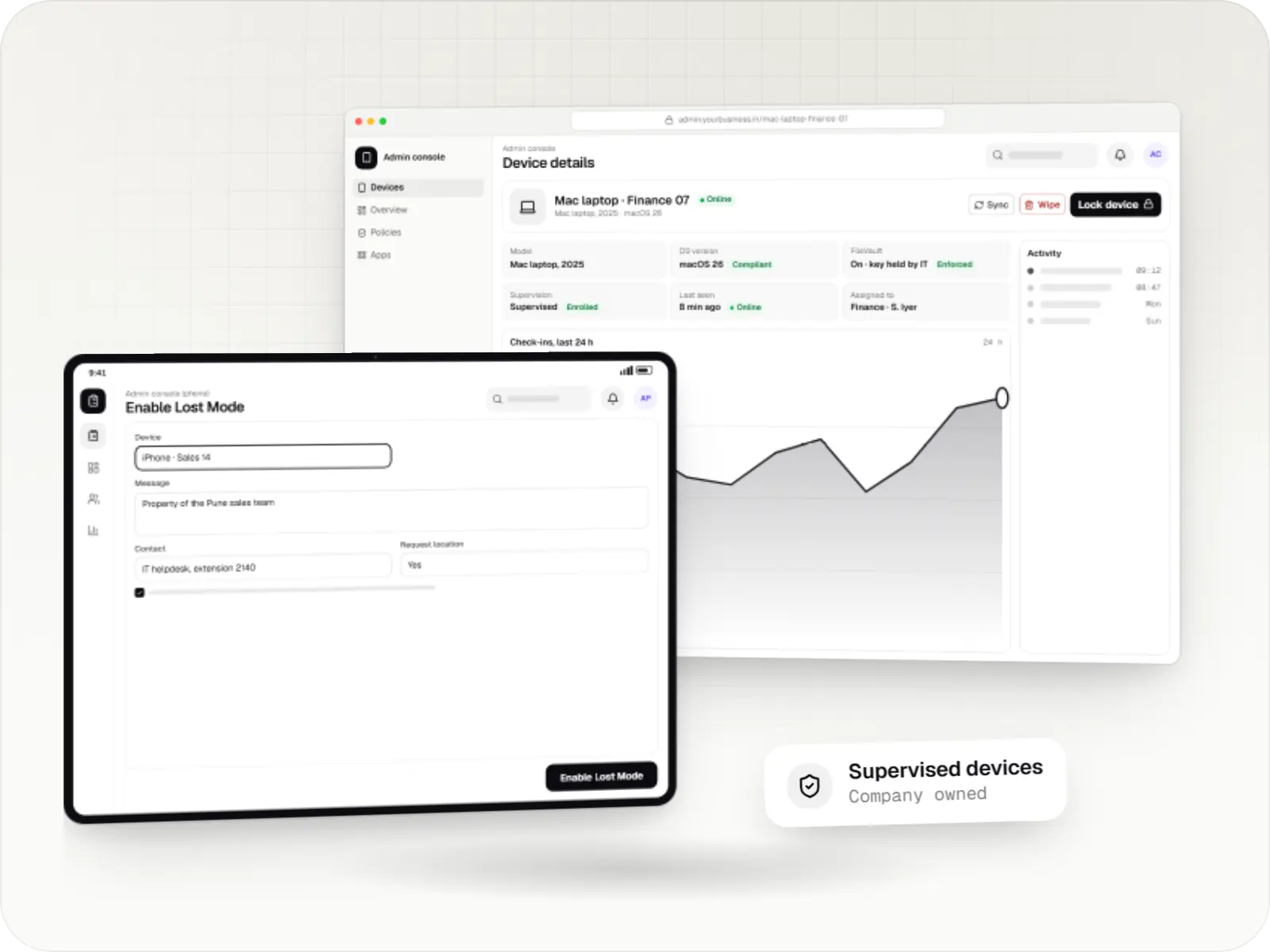
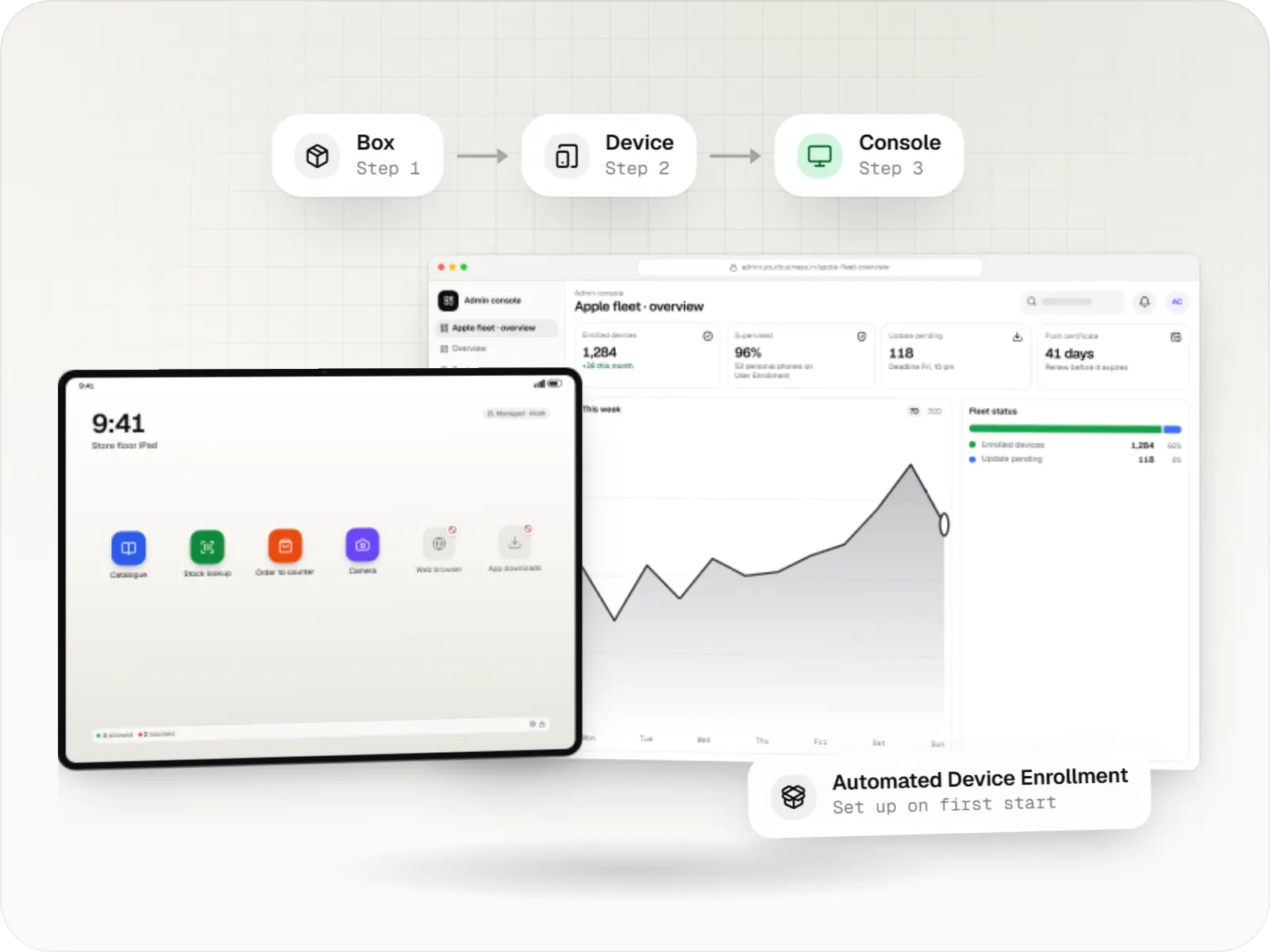
The Android Management API is a cloud API from Google for managing company Android™ devices. A product built on it does not need its own device agent. It sends a policy to the API (which apps to install, what to block, whether the screen is locked to one app, when updates may run), and Google's Android Device Policy app applies that policy on each phone, tablet or kiosk. Devices report their state back, and your console shows it.
For a business, the appeal is maintenance. Google updates the on-device app for each new Android version, so your budget goes into the console, workflows and kiosk apps rather than low-level device code. The API covers the common Android Enterprise set-ups: fully managed company devices, dedicated devices such as kiosks, and work profiles on company-owned or personal phones.
There is one condition that shapes every project. Google's usage policy makes the API available to commercial EMM developers, Device Trust providers and device makers. It excludes solutions built and used only for a company's own in-house purposes, device-financing locks and tools made only to monitor people. A new project has to request an initial quota of up to 500 devices with a business justification, and larger fleets need a further application to Google. So we recommend it when you are building a management or kiosk product for customers, and we check each project against the current policy before writing code.